Importance of Testing Rarer Alleles (CYP3A5*6 and CYP3A5*7) for Genotype-Guided Tacrolimus Dosing
By
Ivy Xue, PharmD Candidate
Honors Thesis
UNC Eshelman School of Pharmacy University of North Carolina at Chapel Hill
February 10, 2020
Approved:
ABSTRACT
Purpose: In many studies of the pharmacogenetic effects of dosing the immunosuppressant drug, tacrolimus, a single allele of CYP3A5 (*3) is often the only one considered as it is the most frequent variant. This study’s purpose was to evaluate the incidence of two other CYP3A5 alleles when using single-SNP assays for genotype-guided tacrolimus dosing. Here, we investigated three CYP3A5 alleles including the wildtype (*1) and nonfunctional (*3, *6, *7) alleles. CYP3A5 non-expressers have two nonfunctional alleles, whereas patients with at least one wildtype allele are considered CYP3A5
expressers and are recommended to be started on a higher tacrolimus dose. Pharmacogenomic studies have often only attempted to detect the presence of *3 for nonfunctional status and used a default to call of *1 in the absence of the *3 allele. The *3 allele is most common in Caucasians. The *6 and *7 alleles are more common in African Americans but are not routinely genotyped, resulting in potentially
miscalled CYP3A5 genotypes and reduced clinical benefit from genotype-guided dosing.
Methods: Initial genotyping (N=115) was conducted using a CLIA-validated TaqMan assay based on the presence of CYP3A5*3 (absence of *3 defaulted to *1). To determine if patients had miscalled genotypes, we also retrospectively determined the number of patients found to have CYP3A5*6 or *7 alleles after further genotyping. A TaqMan allelic discrimination, qualitative polymerase chain reaction (qPCR) assay was used to test for *6 and *7 alleles.
Results: Out of 115 patients, 64 CYP3A5 expressers were retested for nonfunctional status based on *6 and *7. Patients that were already designated as *3/*3 were not tested again. Of the 23 patients who were *1/*1, 12 patients (52.2%) had a miscalled genotype: 11 patients had one copy of *6 or *7, and one patient had two nonfunctional alleles. Of the 41 patients who were *1/*3, 11 patients (26.8%) had a miscalled genotype and had two nonfunctional alleles. Altogether, 23 (36.0%) of the 64 patients had a miscalled genotype.
Conclusion: This study assessed the importance of testing *6 and *7 alleles in a racially diverse kidney transplant recipient population. A comprehensive gene analysis may be beneficial for CYP3A5
INTRODUCTION
Tacrolimus, a calcineurin inhibitor, is the cornerstone of immunosuppression in solid organ
transplantation, including kidney transplantation. Tacrolimus is a narrow therapeutic index drug, which means that levels above the therapeutic range increase risk of toxicity, and levels below the therapeutic range increase risk of organ rejection. Maintaining therapeutic tacrolimus levels poses a challenge due to large intra- and inter-patient variability, which is partly attributed to pharmacogenomic variations in the
CYP3A5 gene, which determines the metabolism and clearance of tacrolimus by the CYP3A5 enzyme.1,2
This variability is particularly distinct between Caucasian and African American populations.
Single-nucleotide polymorphisms (SNP) result in changes in the CYP3A5 gene, creating a nonfunctional protein or loss of expression of the functional protein.2 The functional (wildtype) allele is CYP3A5*1, whereas the notable nonfunctional alleles are CYP3A5*3, CYP3A5*6, and CYP3A5*7.1 CYP3A5 non-expressers have any combination of two nonfunctional alleles, whereas patients with at least one copy of the wildtype allele are CYP3A5 expressers. Expressers are further classified into extensive metabolizers (*1/*1) and intermediate metabolizers (one wildtype and one nonfunctional allele: 1/*3, *1/*6, or *1/*7). Non-expressers or poor metabolizers could express any of the following genotypes: *3/*3, *6/*6, *7/*7, *3/*6, *3/*7, or *6/*7. Expressers have decreased dose-adjusted tacrolimus trough concentrations compared to non-expressers and require a higher total daily dose.1,4 Thus, the Clinical Pharmacogenetics Implementation Consortium (CPIC) recommends an initial tacrolimus dose 1.5 – 2 times higher than standard dose for CYP3A5 expressers as they metabolize tacrolimus to a greater extent than CYP3A5 non-expressers.1 Initial genotype-guided tacrolimus dosing has also been suggested to decrease time to reach stable therapeutic concentrations.1,5
The current gap in knowledge is the utility of genotype-guided tacrolimus dosing in a racially diverse patient population. Pharmacogenomic studies in this area historically have used a single-SNP assay to determine patients’ metabolism status, where the assay detects for the presence of CYP3A5*3 for nonfunctional status and defaults to call the patient CYP3A5*1 in the absence of the CYP3A5*3 allele. Standard dosing is based on CYP3A5 non-expressers, where 80-85% of Caucasians are homozygous for the variant CYP3A5*3 allele.6 Whereas, this is often an adequate approach for transplant in Caucasian populations with the high frequency of the *3 allele and very low frequency of *6 and *7, transplant in patients particularly with African lineage, but also other ethnic groups, requires closer examination of CYP3A5 alleles. The variant CYP3A5*6 and CYP3A5*7 alleles are more common in African Americans but are rarely genotyped, resulting in potentially miscalled CYP3A5 wildtype genotypes and reduced clinical benefit from genotype-guided tacrolimus dosing. This is compelling because the US kidney transplant recipient population comprises approximately 30% African Americans, with even higher proportions in the southeast region of the country.4,7
In the racially diverse US kidney transplant population, the consequence of not genotyping the correct alleles could be inappropriate immunosuppressant dose selection and worse patient outcomes. Our study aims to explore the importance of genotype testing CYP3A5*6 and CYP3A5*7 in addition to CYP3A5*3
OBJECTIVES
The objectives of this study were 1) to evaluate the differences in CYP3A5 alleles that were identified using two different assays for genotype-guided tacrolimus dosing in racially diverse kidney transplant recipients and 2) to determine the incidence of miscalled CYP3A5 genotypes when using a single-SNP
CYP3A5*3 assay.
METHODS
Patients
Data for this study was obtained from an ongoing single-center, open-label, phase-4 trial conducted at University of North Carolina (UNC) Medical Center in Chapel Hill, NC. The study was approved by the institutional review board and an informed consent was obtained from each patient before study
enrollment. Patients aged 18-65 years old who were kidney transplant recipients or those on the waitlist to receive kidney transplantation were studied. All patients received genotype testing at time of study consent. The patients’ races were collected through the electronic health record (EHR) as self-reported by the patient (Caucasian, African American, Hispanic, Asian, American Indian, or other).
Genotype testing
CYP3A5 genotype testing was performed on de-identified patient DNA isolated from a buccal swab. All
patients received genotype testing of CYP3A5*3 alleles (rs776746,g.6986A>G), at time of study consent. Single-nucleotide polymorphisms CYP3A5*6 (rs10264272, g.14690 G>A) and CYP3A5*7 (rs41303343, g.27131-27132insT) were genotyped retrospectively, as these alleles were found to be significant in our target population.2,4
Assay 1
All patients received initial genotype testing using a CLIA (Clinical Laboratory Improvement
Amendment) -validated TaqMan assay. This single-SNP assay tested for metabolism status based on the presence of CYP3A5*3. The absence of CYP3A5*3 defaulted in classifying the patient as CYP3A5*1.
This assay was chosen for initial genotype testing because it was most readily available and used in historical pharmacogenomic studies. Patient genotype was recorded (*1/*1, *1/*3, or *3/*3).
Assay 2
To determine if any patients had miscalled wildtype genotypes, all CYP3A5 expressers identified using Assay 1 were retested for nonfunctional metabolism status based on CYP3A5*6 and CYP3A5*7. CYP3A5 non-expressers were not eligible for retesting because they were already confirmed to having two copies of CYP3A5*3. A TaqMan allelic discrimination qualitative polymerase chain reaction (qPCR) assay was used to test for the CYP3A5*6 and CYP3A5*7 alleles. Patient genotype was reassigned (*1/*1, *1/*3, *1/*6, *1/*7, *3/*3, *6/*6, *7/*7, *3/*6, *3/*7, or *6/*7).
RESULTS
Assay 1
Patients
There were 115 patients who were genotyped for the presence of CYP3A5*3 allele. Notably, the majority of our patients were African American (53%), followed by Caucasian (34%) or other race (10%). A total of 51 patients had 2 copies of CYP3A5*3 and were described as non-expressers. There were 41 patients with one copy of CYP3A5*3 and were described as intermediate metabolizers or expressers. The remaining 23 patients were called as CYP3A5*1/*1 due to the absence of CYP3A5*3 and were described as extensive metabolizers or expressers.
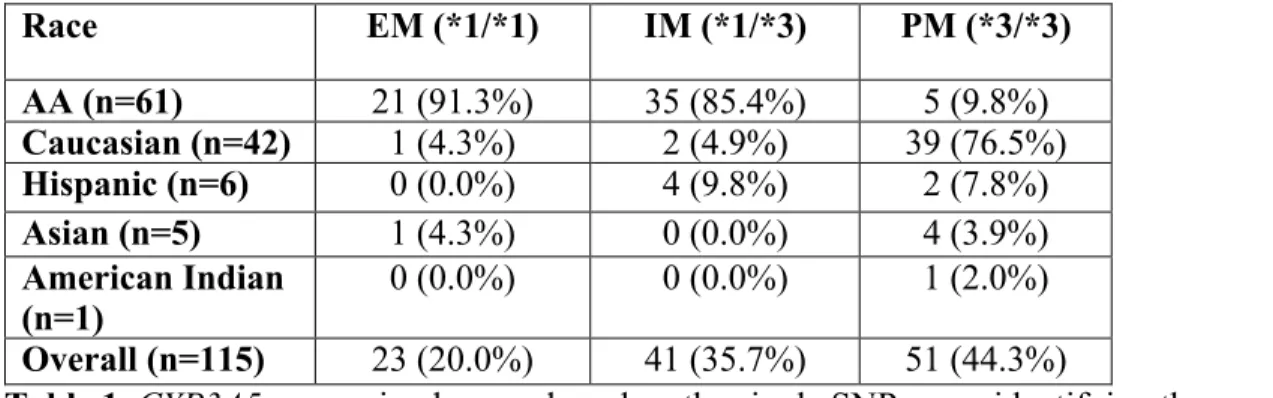
Table 1 stratifies the CYP3A5 expression results based on race and genotype. The table depicts the number and proportion of extensive, intermediate, and poor metabolizers by race based on Assay 1. Of the 64 CYP3A5 expressers (extensive and intermediate metabolizers), 56 patients (87.5%) were African American and 3 were Caucasian (4.7%). Of the 51 CYP3A5 non-expressers (poor metabolizers), 39 patients (76.5%) were Caucasian and 5 were African American (9.8%). Of the 61 African American patients, 56 (91.8%) were CYP3A5 expressers. Of the 42 Caucasian patients, 39 (92.9%) were CYP3A5
non-expressers.
Race EM (*1/*1) IM (*1/*3) PM (*3/*3)
AA (n=61) 21 (91.3%) 35 (85.4%) 5 (9.8%)
Caucasian (n=42) 1 (4.3%) 2 (4.9%) 39 (76.5%)
Hispanic (n=6) 0 (0.0%) 4 (9.8%) 2 (7.8%)
Asian (n=5) 1 (4.3%) 0 (0.0%) 4 (3.9%)
American Indian
(n=1) 0 (0.0%) 0 (0.0%) 1 (2.0%)
Overall (n=115) 23 (20.0%) 41 (35.7%) 51 (44.3%)
Table 1. CYP3A5 expression by race based on the single SNP assay identifying the presence of *3.
Assay 2
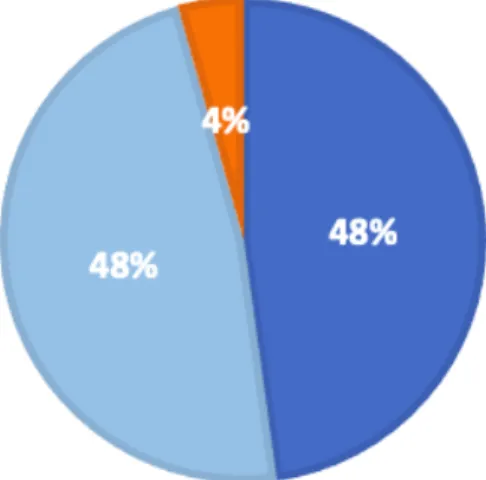
Figure 1 illustrates the proportion of extensive, intermediate, and poor metabolizers after initial genotype testing using Assay 1.
After the 64 CYP3A5 expressers were retested using Assay 2 for nonfunctional status based on *6 and *7, 23 patients (36.0%) were found to have at least one copy of *6 or *7, illustrating miscalled initial genotypes.
Of the 23 patients who were originally classified as *1/*1, 12 patients (52.2%) had a miscalled genotype: 11 patients (48%) had one copy of *6 or *7, and one patient (4%) had two copies of the nonfunctional allele (Figure 2).
Figure 4 illustrates the proportion of extensive, intermediate, and poor metabolizers after re-genotype testing using Assay 2.
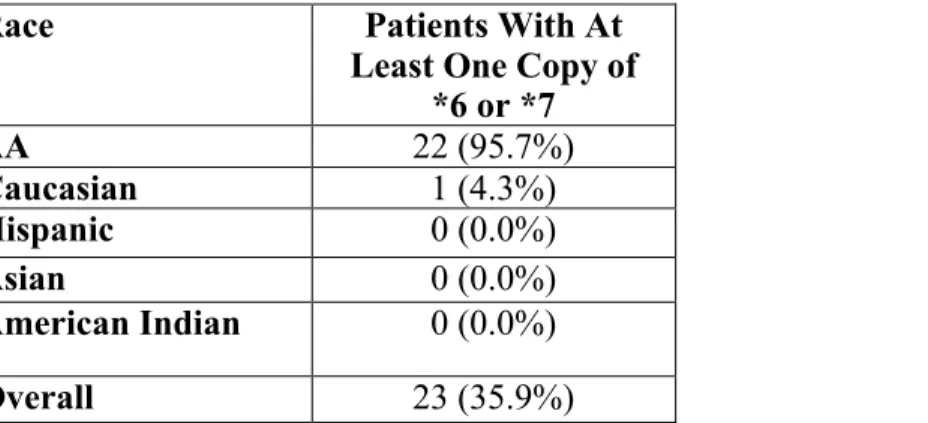
Of the 23 patients who had a miscalled genotype, 22 patients (95.7%) were African American, and 1 patient (4.3%) was Caucasian (Table 3).
Figure 1. The total proportion of extensive, intermediate, and poor metabolizers based on presence of only CYP3A5*3 using Assay 1 (n=115).
Figure 2. Patients who were found to be extensive metabolizers based on Assay 1 were retested for
Figure 3. Patients who were found to be intermediate metabolizers based on Assay 1 were retested for
CYP3A5*6 and CYP3A5*7 using Assay 2. This figure shows the subsequent re-classification of patients after testing via Assay 2 (n=41).
Figure 4. The total proportion of extensive, intermediate, and poor metabolizers based on presence of
CYP3A5*3, CYP3A5*6, and CYP3A5*7 after using Assay 2 (n=115).
Race Patients With At
Least One Copy of *6 or *7
AA 22 (95.7%)
Caucasian 1 (4.3%)
Hispanic 0 (0.0%)
Asian 0 (0.0%)
American Indian 0 (0.0%)
Overall 23 (35.9%)
DISCUSSION
While tacrolimus is the mainstay immunosuppressant agent in solid organ transplantation, including kidney transplantation, ensuring its therapeutic efficacy and safety poses several challenges.
Pharmacogenomic variations in the CYP3A5 gene have been studied as a key determinant of variability in therapeutic tacrolimus trough levels between individual patients and different races, particularly between Caucasians and African Americans.
The CYP3A5 gene has a high estimated allele frequency across various populations. Specifically, the nonfunctional allele CYP3A5*3 has a difference in frequency across populations, including Caucasians (88% to 95%), Japanese (85%), Southeast Asians excluding Japanese and Chinese (67%), Chinese (65%), Pacific Islanders (65%), Southwest American Indians (40%), and African Americans (18-33%).2,3,6,8-13 Conversely, in African Americans, the variants CYP3A5*6 and CYP3A5*7 alleles have a minor frequency of 16-18% and 10-12% respectively.2,3,11-12,14-15 Furthermore, these nonfunctional alleles are virtually absent in Caucasians.
The current gap in knowledge is the utility of genotype-guided tacrolimus dosing in a racially diverse patient population. Pharmacogenomic studies in this area historically use single-SNP assays to
determine patients’ metabolism status, wherein the assay only detects for the presence of CYP3A5*3 for nonfunctional status and defaults to call the patient CYP3A5*1 in the absence of the CYP3A5*3 allele. Standard tacrolimus dosing is based on CYP3A5 non-expressers, where the vast majority of Caucasians are homozygous for the variant CYP3A5*3 allele and are therefore non-expressers.6,8 As a result, genotype-guided dosing (or the lack thereof) in a primarily Caucasian population does not have a great clinical impact because the functional CYP3A5 enzyme is not common in this population. A
randomized controlled trial conducted in the Netherlands evaluated the clinical outcomes of genotype-guided dosing versus standard dosing and did not conclude any statistically significant results.16 This is likely due to Caucasians representing the majority of their study population (78%), and thus receiving the same standard dose regardless of being placed into the genotype-guided dosing study arm. This study only comprised 15% CYP3A5 expressers.
Genotype-guided dosing is only beneficial for patients with a functional CYP3A5 enzyme. It has been understood that African Americans are more likely than Caucasians to have the functional CYP3A5 enzyme; however, this premise is also based on the traditional CYP3A5*3 single-SNP assay. The other variant CYP3A5*6 and CYP3A5*7 alleles are more common in African Americans and virtually not present in Caucasians.4 This illustrates the wide range of genotypes African Americans can express.2 The presence of two CYP3A5*6 or CYP3A5*7 alleles in an African American would warrant the standard tacrolimus dose, similar to most Caucasians. Furthermore, CYP3A5*6 and CYP3A5*7 are rarely genotyped, resulting in potentially miscalled CYP3A5 wildtype genotypes and reduced clinical benefit from genotype-guided tacrolimus dosing. This is compelling because the US kidney transplant recipient population comprises approximately 30% African Americans, with even higher proportions in the southeast region of the country.2,7
As a prominent kidney transplant center in the US southeast region, UNC Medical Center conducts approximately 80 kidney transplants per year. Of those 80 kidney transplant recipients, approximately 60% are Caucasian and 40% are African Americans. Thus, we expected a higher proportion of African Americans in our study compared to historical studies.4,5,16 A racially diverse study population allowed us to better assess the utility of genotype-guided dosing. The majority of our study population was African American (53%) and the minority was Caucasian (36.5%) or other race (10.5%).
expressers whereas Caucasians were more commonly non-expressers. When CYP3A5*6 and CYP3A5*7
were tested among the 64 CYP3A5 expressers, over 1/3 (36%) of patients had a miscalled initial genotype.
Of these patients who had at least one copy of CYP3A5*6 or CYP3A5*7, 96% were African American. Our allele frequencies are consistent with existing literature. A study conducted in Eastern North Carolina evaluated the prevalence of CYP3A5 variants across race-ethnicities and found that African Americans were the only population to express CYP3A5*6 or CYP3A5*7.4Caucasians, Hispanics, Asians, and Native Americans only expressed the variant CYP3A5*3 allele. Another study that
examined similar alleles reported 90-95% of their Caucasian population having at least one CYP3A5*3
allele as opposed to the other CYP3A5 variants.2 Both of these studies reported that CYP3A5*6 and
CYP3A5*7 have dose requirements equivalent to CYP3A5*3, which is consistent with CPIC
guidelines.1,2,4 Among the 64 patients initially classified as expressers in our study, 12 patients (19%) were actually found to be non-expressers, which would warrant a dose change based on genotype-guided dosing. The clearance of tacrolimus in the 12 non-expressers was initially overestimated by up to 50%.2 Consequently, our data suggests that only genotype testing for CYP3A5*3 in African American patients may be harmful.
In our study, when CYP3A5*6 and CYP3A5*7 were tested, more patients were classified as poor metabolizers and less patients were classified as extensive metabolizers than when CYP3A5*3 was tested alone. CYP3A5*6 and CYP3A5*7 are not routinely tested, resulting in potentially miscalled wildtype genotypes, especially among African Americans. Potentially miscalled CYP3A5 wildtype genotypes may reduce clinical benefit from genotype-guided tacrolimus dosing, resulting in
inappropriate immunosuppressant dose selection which could cause negative clinical outcomes. Our study suggests that a comprehensive multi-allele panel (CYP3A5*3, CYP3A5*6, and CYP3A5*7) may provide increased accuracy of CYP3A5 genotypes.
When pharmacogenomic testing is conducted in a racially diverse patient population, it is important that all of the relevant alleles are represented. Our study addresses this gap in knowledge by exploring the prevalence of CYP3A5*6 and CYP3A5*7 in a racially diverse kidney transplant recipient population. The impact of our study may guide future research in determining the long-term clinical utility of using a comprehensive gene analysis for CYP3A5 genotype-guided tacrolimus dosing.
Addendum
1. Acknowledgements: I would like to thank the members of my study team: Ricardo Gonzalez, Cecilia Lee, Lauren Hothem PharmD, Hitesh Patel PharmD, Cristina Benton PharmD PhD, Ruthann Lee PharmD, Prani Paka PharmD, Kristen Szempruch PharmD, Robert Dupuis
PharmD, Tomasz Kozlowski MD, Alexander Toledo MD and my faculty mentor Tim Wiltshire PhD.
2. Funding Support: Study and funding sponsor was UNC Eshelman School of Pharmacy and Center for Pharmacogenomics and Individualized Therapy
3. Conflicts of Interest: No conflicts of interest to disclose
4. Dissemination Plan: I am currently in the process of drafting a manuscript to be submitted to
Pharmacogenomics journal focusing on CYP3A5*6 and CYP3A5*7 and tacrolimus dosing.
References
1. Birdwell KA, Decker B, Barbarino JM, et. al. Clinical Pharmacogenetics Implementation Consortium (CPIC) Guidelines for CYP3A5 Genotype and Tacrolimus Dosing. Clin Pharmacol Ther. 2015 Jul;98(1):19-24. doi: 10.1002/cpt.113.
2. Sanghavi K, Brundage RC, Miller MB, et al. Genotype-guided tacrolimus dosing in African-American kidney transplant recipients. Pharmacogenomics J. 2017 Jan;17(1):61-68. doi: 10.1038/tpj.2015.87.
3. Kuehl P, Zhang J, Lin Y, et al. Sequence diversity in CYP3A promoters and characterization of the genetic basis of polymorphic CYP3A5 expression. Nat Genet. 2001; 27: 383–391.
4. Maldonado AQ, Asempa T, Hudson S, Rebellato LM. Prevalence of CYP3A5 genomic variances and their impact on tacrolimus dosing requirements among kidney transplant recipients in
Eastern North Carolina. Pharmacotherapy. 2017;37(9):1081-1088. Doi:10.1002/phar.1970. 5. Thervet E, , Loriot MA, Barbier S. et. Al. Optimization of Initial Tacrolimus Dose Using
Pharmacogenetic Testing. Clin Pharmacol Ther. 2010 Jun;87(6):721-6. doi: 10.1038/clpt.2010.17.
6. van Schaik, R.H., van der Heiden, I.P., van den Anker, J.N., Lindemans, J. CYP3A5 variant allele frequencies in Dutch caucasians. Clin Chem. 2002 Oct;48(10):1668-71.
7. Organ Procurement and Transplantation Network (database). Transplants in the US by Recipient Ethnicity; 2019. Available from: https://optn.transplant.hrsa.gov/data/view-data-reports/national-data/#. Accessed July 17, 2019.
8. Lamba, J., J.M. Hebert, E.G. Schuetz, T.E. Klein, and R.B. Altman. PharmGKB summary: very important pharmacogene information for CYP3A5. Pharmacogenet Genomics. 2012
Jul;22(7):555-8. doi: 10.1097/FPC.0b013e328351d47f.
9. Birdwell KA, Grady B, Choi L, et al. The use of a DNA biobank linked to electronic medical records to characterize pharmacogenomic predictors of tacrolimus dose requirement in kidney transplant recipients. Pharmacogenet Genomics. 2012 Jan;22(1):32-42. doi:
10.1097/FPC.0b013e32834e1641.
10. Lee SJ, Usmani KA, Chanas B, et al. Genetic findings and functional studies of human CYP3A5 single nucleotide polymorphisms in different ethnic groups. Pharmacogenetics. 2003
Aug;13(8):461-72.
12. Thompson EE, Kuttab-Boulos H, Witonsky D, Yang L, Roe BA, Di Rienzo A. CYP3A variation and the evolution of salt-sensitivity variants. Am J Hum Genet. 2004;75(6):1059–1069.
doi:10.1086/426406.
13. Zhang J, Zhang X, Liu L, Tong W. Value of CYP3A5 genotyping on determining initial dosages of tacrolimus for Chinese renal transplant recipients. Transplant Proc. 2010 Nov;42(9):3459-64. doi: 10.1016/j.transproceed.2010.06.028.
14. Roy JN, Lajoie J, Zijenah LS, et al. CYP3A5 genetic polymorphisms in different ethnic populations. Drug Metab Dispos. 2005 Jul;33(7):884-7.
15. Lee SJ, Goldstein JA. Functionally defective or altered CYP3A4 and CYP3A5 single nucleotide polymorphisms and their detection with genotyping tests. Pharmacogenomics. 2005
Jun;6(4):357-71.