
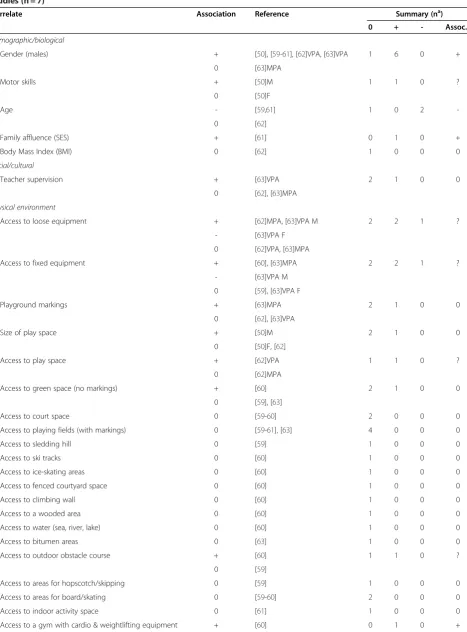
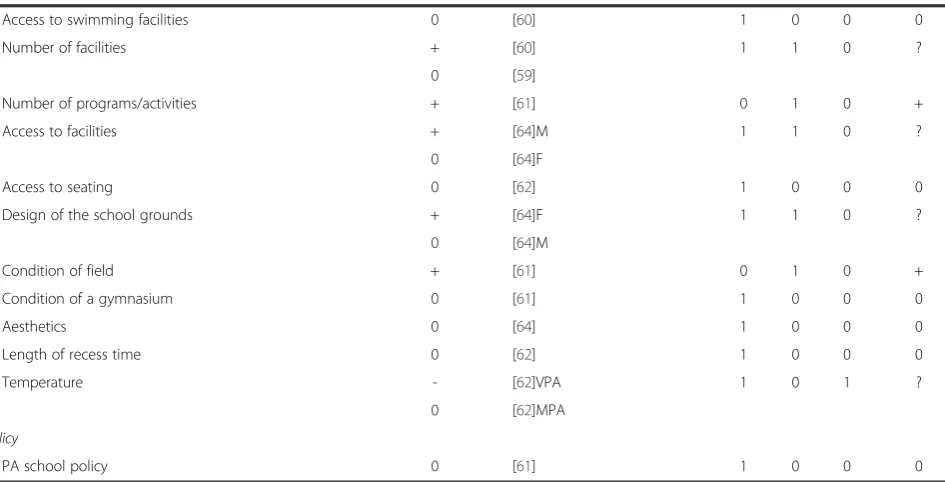
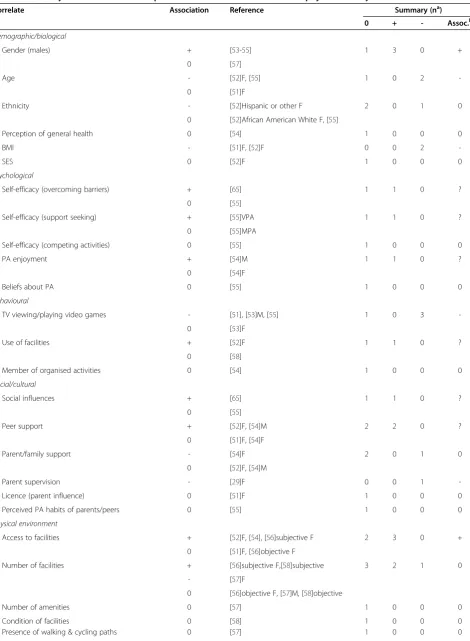
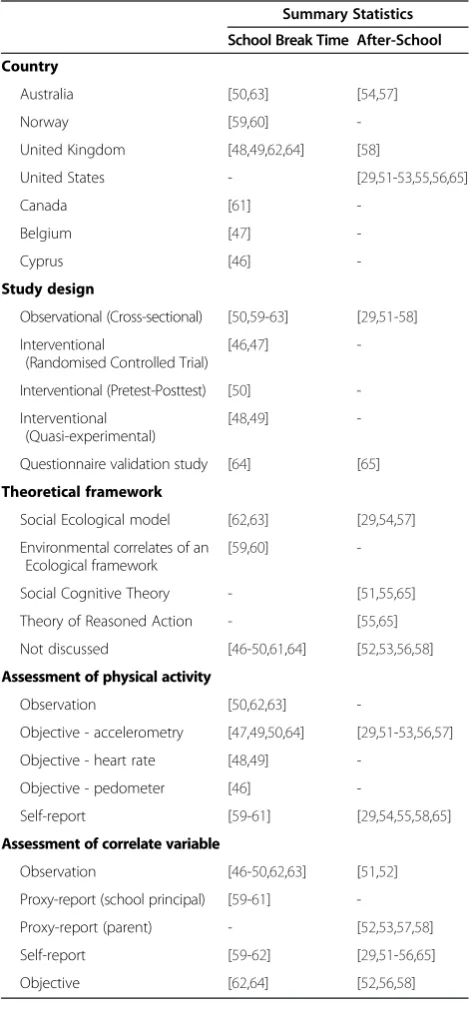
Correlates of children’s time-specific physical activity: A review of the literature
Full text
Figure


Related documents
Background: The purpose of this study was to investigate the prevalence of adolescent physical activity-related injuries in sports club activities, leisure time physical activity
Thus, our aim was to examine how competitive sports in youth, and exercise in late adolescence, and opinions on physical education (PE) in childhood determined adulthood
Out of School Activity Project The project would centre around making provision for young people of upper primary and secondary school age (10-17) to participate in sport or
Review of Physical Activity Prevalence of Asian School-age Children and Adolescents.. Visit the following link for
The purpose of this study was to determine if task motivated individuals are more likely to engage in leisure time physical activity outside of a structured exercise
This thesis aimed to study the diversity of sport activities in adolescence and leisure-time physical activity in adulthood, as well as, associations between the
This chapter of the paper will synthesize what the critical mass articles concluded regarding physical activity for children and adolescents with intellectual disability, and
When referencing Russell and Limle (2013), the current findings represent several interesting insights into young adults perceptions of their youth sport experiences, physical
