R E S E A R C H
Open Access
Impact of vitamin E and selenium on
antioxidant capacity and lipid oxidation of
cheddar cheese in accelerated ripening
Maryam Batool
1, Muhammad Nadeem
1*, Muhammad Imran
2, Nabila Gulzar
1, Muhammad Qamar Shahid
3,
Muhammad Shahbaz
4, Muhammad Ajmal
1and Imran Taj Khan
1Abstract
Background:Ripening of cheddar cheese is a time taking process, duration of the ripening may be as long as one year. Long ripening time is a big hindrance in the popularity of cheese in developing countries. Further, energy resources in these countries are either insufficient or very expensive. Therefore, those methods of cheese ripening should be discovered which can significantly reduce the ripening time without compromising the quality characteristics of cheddar cheese. In accelerated ripening, cheese is usually ripened at higher temperature than traditional ripening temperatures. Ripening of cheddar cheese at high temperature with the addition of vitamin E and selenium is not previously studied. This investigation aimed to study the antioxidant activity of selenium and vitamin E in accelerated ripening using cheddar cheese as an oxidation substrate.
Methods: The ripening of cheddar cheese was performed at 18 °C and to prevent lipid oxidation, vitamin E and selenium were used alone and in combination. The treatments were as: cheddar cheese without any addition of vitamin E and selenium (T1), cheddar cheese added with 100 mg/kg vitamin E (T2), 200 mg/kg vitamin E (T3),
800 μg/kg selenium (T4), 1200 μg/kg selenium (T5), vitamin E 100 mg/kg + 800μg/kg selenium (T6) and vitamin E
200 mg/kg + 1200μg/kg selenium (T7). Traditional cheddar cheese ripne ripened at 4-6 °C for 9 months was used as
positive control. Cheese samples were ripened at 18 °C for a period of 12 weeks and analyzed for chemical and oxidative stability characteristics at 0, 6 and 12 weeks of storage. All these treatments were compared with a cheddar cheese without vitamin E, selenium and ripened at 4 °C or 12 weeks. Vacuum packaged cheddar cheese was ripened 18 °C for a period of 12 weeks and analyzed for chemical and oxidative stability characteristics at 0, 4 and 8 weeks of storage period.
(Continued on next page)
* Correspondence:[email protected]
1Department of Dairy Technology, University of Veterinary and Animal Sciences, Lahore, Pakistan
Full list of author information is available at the end of the article
© The Author(s). 2018Open AccessThis article is distributed under the terms of the Creative Commons Attribution 4.0 International License (http://creativecommons.org/licenses/by/4.0/), which permits unrestricted use, distribution, and reproduction in any medium, provided you give appropriate credit to the original author(s) and the source, provide a link to the Creative Commons license, and indicate if changes were made. The Creative Commons Public Domain Dedication waiver
(Continued from previous page)
Results:Addition of Vitamin E and selenium did not have any effect on moisture, fat and protein content of cheddar cheese. After 6 weeks of ripening, total antioxidant capacity of T1, T2, T3, T4, T5, T6, T7and standard cheese were 29.61%,
44.7%, 53.6%, 42.5%, 41.4%, 64.1%, 85.1% and 25.4%. After 6 weeks of ripening, reducing power of T1, T2, T3, T4, T5, T6, T7
and SC cheese were 14.7%, 18.1%, 26.3%, 19.2%, 25.3%, 33.4%, 40.3% and 11.6%. After 6 weeks of ripening, 1, 1-diphenyl-2-picrylhydrazyl (DPPH) free radical scavenging activity of T6 and T7 were 54.2% and 66.9%. While,
DPPH free radical scavenging activity of T1 and standard cheese after 6 weeks of ripening were, 19.1 and 18.
5%, respectively. Free fatty acids of vitamin E and selenium supplemented, non-supplemented and standard cheese were not significantly influenced from each other in 0, 6 and 12 weeks old cheddar cheese. Peroxide values of T1, T2, T3, T4, T5, T6, T7 and standard cheese after 6 weeks of accelerated ripening were 1.19, 1.05, 0.
88, 1.25, 0.29, 0.25, 0.24 and 0.28 (MeqO2/kg). After 6 weeks of ripening, anisidine value of T6 and T7 were 6.
55 and 6.14. Conjugated dienes of T1, T2, T3, T4, T5, T6, T7 and standard cheese, after 6 weeks of accelerated
ripening were 0.61, 0.55, 0.42, 0.77, 0.65, 0.17, 0.15 and 0.19. After 6 weeks of accelerated ripening, concentrations unsaturated fatty acids in T1, T2, T3, T4, T5, T6, T7and standard cheese decreased by18.19%, 17.45%, 16.82%, 16.19%, 12.
71%, 8.48%, 6.92% and 14.71%. After 12 weeks of accelerated ripening, concentration of unsaturated fatty acids in T1,
T2, T3, T4, T5, T6and T7and standard cheese decreased by 26.2%, 21.2%, 18.7%, 14.2%, 10.4%, 4.84%, 1.03% and 6.78%.
Cheddar cheese samples added with vitamin E, selenium and their combinations produced more organic acids during the ripening period of 12 weeks. After 6 and 12 weeks of ripening, flavor score of T6and T7was better than standard
ripened cheddar cheese.
Conclusions:After 6 weeks of accelerated ripening, sensory characteristics of T6and T7were similar to cheddar cheese
that was ripened at 4 °C for 9 months. Ripening time of cheddar cheese may be reduced to 6 weeks by elevated temperature (18 °C) using vitamin E and selenium as antioxidants at T6 and T7 levels.
Keywords: Cheddar cheese, Accelerated ripening, Vitamin E, Selenium, Oxidative stability
Background
Cheddar is recognized as a hard cheese, it is widely used in sandwiches, burgers, pizza topping and dressing of salads [1]. It frames a noteworthy extent of international trade in cheese [2]. In terms of volume and overall con-sumption, cheddar is the largest variety of cheese in the world [3]. Cheddar is popular all over the world due to its unique flavor characteristics that are produced during the ripening. Ripening is a process in which several bio-chemical changes take place that convert chalky curd to a flavorful cheese. Biochemical and metabolic processes lead to the significant changes in flavor and texture of cheese. These processes are generally referred as glycoly-sis, lipolysis and proteolysis. Lactose is metabolized into lactic acid, citrate diacetyl and alcohol [4]. Lipolysis and proteolysis play an important role in the breakdown of triglycerides of milk fat, generation of free fatty acids, or-ganic acids, free amino acids, peptides, large number of flavoring compounds such as, thio-esters, alkan-2-ones, alkane-2-ols, ethyl alcohols, lactones etc. [5]. Cheddar cheese requires a long ripening time for the develop-ment of flavor and textural attributes in ripened cheese. Cheddar cheese is usually ripened for 6–12 months [6]. Few techniques are used to accelerate the ripening process of cheddar cheese, for example, utilizing elevated temperatures and enzymes [7]. The utilization of ele-vated temperatures for the ripening of cheese is the least complex procedure to accelerate the ripening of cheese
singlet oxygen in milk [13]. Vitamin E can inhibit the ac-tivity of plasmin, a proteolytic enzyme and secondly it can directly scavenge the free radicals [14]. Vitamin E, as the primary lipid-soluble antioxidant found in foods in-hibits the process of lipid peroxidation in foods and in the biological lipid-protein complexes [15]. Selenium plays an important role in the antioxidant defense system due to its requirement by the Se-dependent Glutathione Peroxidase (GSH-Px), which is involved in cellular antioxidant protection. It has been suggested that the synergistic relationship between selenium and vitamin E enhanced the antioxidant activity, because GSH-Px continues the work of vitamin E by detoxifying hydroperoxides [16]. Ripening of cheddar cheese is mandatory for the development of typical flavor and tex-tural characteristics. Cheddar cheese is usually ripened for 6–12 months at 4-6 °C. Ripening of cheese on such a lower temperature for a fairly large period of time requires massive refrigeration. Higher ripening temperature can ac-celerate the metabolic processes in cheese. During rapid ripening, cheddar cheese may develop oxidized flavor. Use of natural antioxidants of milk origin in accelerated ripen-ing of cheddar cheese is not previously investigated. This investigation aimed to study the antioxidant activity of sel-enium and vitamin E in accelerated ripening using ched-dar cheese as an oxidation substrate.
Methods
Cheddar cheese was prepared using the facilities of Acchha Foods, Lahore. Vitamin E (Catalogue No. 10191-41-0) and selenomethionine (Catalogue No. 3211-76-5) were purchased from Sigma Aldrich (St. Louis MO, USA). Rennet and calcium chloride were purchased from Christian Hansen, Denmark. HPLC grade chemi-cals, were obtained from Sigma Aldrich, USA.
Preparation of cheddar cheese and experimental plan
Experiment was planned in a completely randomized de-sign; each treatment was replicated three times. For the preparation of cheddar cheese, cow milk was heated to 60 °C, passed through a cream separator for the removal of excess fat. Standardized milk was used for the manu-facturing of cheese. Fat, protein, lactose, minerals con-tent, solids not fat and total solids of the standardized milk were 3.50%, 3.21%, 4.45%, 0.73%, 8.52% and 12. 02%, respectively. Pasteurized in a batch pasteurizer at 68 °C for 30 min followed by cooling to 31 °C, 2% bulk starter culture comprised of Streptococcus lactis spp. lactis and Streptococcus lactis spp. cremoriswere added and pre-acidification of milk was performed for 45 min, then CaCl2(15 ml/100-l milk, 35% solution) and rennet
(0.02%) were mixed to the cheese milk. Curd was allowed to form for 30 min then it was cut into 1.5-2 cm cubes, cooking of the curd was performed at 39 °C for
45 min, whey was drained and cheddarding was per-formed till pH 5.2. Batch size for every treatement of cheese was 10 kg, quanitities of vitamin E and seleno-methionine were calculated for 10 kg. The detail of treatments with calculation of vitamin E and selenium is as, cheddar cheese without any addition of vitamin E and selenium (T1), cheddar cheese was added with
100 mg/kg vitamin E (1 g vitamin E/T2), 200 mg/kg
vita-min E (2 g vitavita-min E/T3), 800 μg/kg selenomethionine
(8 mg selenomethionine/T4), 1200 μg/kg
selenomethio-nine (12 mg selenomethioselenomethio-nine/T5), vitamin E 100 mg/
kg + 800 μg/kg selenomethionine (1 g vitamin E + 8 mg selenomethionine/T6) and vitamin E 200 mg/kg +
1200 μg/kg selenomethionine (2 g vitamin E + 12 mg selenomethionine/T7). Traditional cheddar cheese ripne
ripened at 4-6 °C for 9 months was used as positive con-trol. Vitamin E and selenium were mixed with the milled curd at the stage of salting, followed by molding, press-ing and vacuum packagpress-ing (LEVAC C46). Each treat-ment was replicated three times. Cheese samples were ripened at 18 °C for a period of 12 weeks and analyzed for chemical and oxidative stability characteristics at 0, 6 and 12 weeks of storage. Chemical and sensory charac-teritics of all the treatments were compared with a posi-tive control i.e. cheddar cheese ripened at 4 °C for a period of 9 months. All these treatments were compared with a cheddar cheese without any addition of vitamin E and selenium and ripened at 4 °C or 12 weeks, it was written as standard cheese in this draft.
Compositional analysis
Fat, protein and moisture content in cheese were deter-mined at 0, 6 and 12 weeks by the standard methods [17].
Total antioxidant capacity
Total antioxidant capacity of cheese was determined by following the method [18]. Briefly, 0.3 ml sample was mixed with 3 ml of 0.6 M sulfuric acid and 28 mM so-dium phosphate and 4 mM ammonium molybdate). Test tubes were put in hot air oven at 85 °C for 90 min, ab-sorbance of the samples was recorded at 695 nm using ascorbic acid as standard. Total antioxidant capacity was expressed in Ascorbic Acid Equivalent/g.
Reducing power
the samples were recorded at 700 nm using a double beam spectrophotometer.
1,1-diphenyl-2-picrylhydrazyl (DPPH) free radical scavenging activity
DPPH free radical scavenging was estimated by follow-ing the method [19]. One ml sample was mixed with 1 ml (1 mM) solar solution of DPPH in methanol. Samples were incubated at room temperature for 20 min and absorbance of the samples were recorded on a double beam spectrophotometer at 517 nm and expressed in percentage.
Antioxidant activity in linoleic acid
Sample 0.5 ml was mixed with 0.13 ml linoleic acid (99.8% in ethanol and 10 ml sodium phosphate buffer (0.2 M), volume of mixture was raised to 25 ml. Solu-tions were incubated in an incubator at 40 °C and thiocyanate method was used to determine the extent of oxidation. Briefly, 10 ml 75% ethanol and 0.2 ml ammonium thiocyanate and 0.2 ml ferrous chloride (20 mM in 3.5% hydrochloric acid) were mixed for three min and absorbance was recorded at 500 nm and expressed in percentage [20].
Estimation of lipid oxidation
Free fatty acids, peroxide value, anisidine value and con-jugated dienes were determined at 0, 4 and 8 weeks of ripening period [21].
Organic acids
Grated cheese samples (5 g) were mixed with 0.1 N Phosphoric acid, homogenized at 1500 Rpm (Heidolph Diax 900, Schwabach, Germany) for the extraction of or-ganic acids, then centrifugation was performed for 15 min at 7000 Rpm, followed by the filtration. Organic acids were determined by high performance liquid chro-matography (LCM, Waters Corp., Milford, MA, USA) fitted with ion exchange chromatography column (Supelcogel C-610H, 300 × 7.8 mm, Supelco Inc., Bellefonte, PA, USA). Mobile phase consisted of phos-phoric acid, flow rate was kept at 1 ml/min, 40 μl was injected and measurements were carried out at 210 nm. Internal standards of citric acid, lactic acid, formic acid and propionic acid (99% pure, Sigma Aldrich, USA) were used. Concentration of organic acids were calculated on a calibration curve, coefficient of corre-lations for all the measurements were not less than 0.988. Concentration of organic acids was reported as mg/kg dry matter [22].
Sensory evaluation
Sensory evaluation of cheese samples was performed in sensory evaluation laboratory at 20 °C, in individual
sensory evaluation booths. Before sensory evaluation, samples of all types of cheese were tempered to 12 °C, coded with three digit random numbers and offered in a completely randomized manner. A panel of trained judges comprising of 7 males and 3 females (age 30– 50 years) performed the sensory evaluation of cheese samples for color, flavor and texture on a 9 point scale at 0, 4 and 8 week of ripening period. Sensory evaluation for every treatment was performed at least three times and coefficient of correlations was not less than R2= 0. 9682 [23].
Statistical analysis
The current investigation was arranged in a Completeley Randomized Desigh (CRD). Data were analyzed by two way analysis of variance technique. For the determin-ation of significant difference, means were compared by Tukey’s HSD Test by SAS 9.1 statistical software [24]. Results and discussion
Chemical composition of cheddar cheese
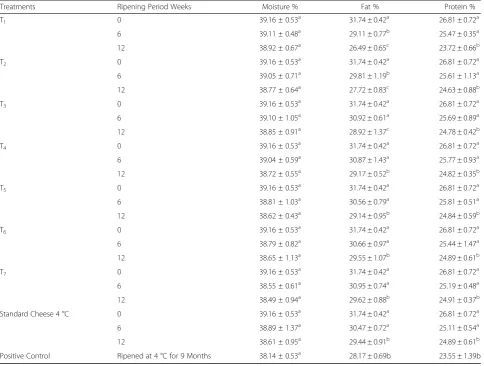
Addition of Vitamin E and selenium did not have any effect on moisture, fat and protein contents of cheddar cheese. Ripening of cheddar cheese at elevated temperature had a significant effect on fat and protein content of all the treat-ments (p< 0.05). After 12 weeks of accelerated ripening, fat content of T1, T2, T3, T4, T5, T6and T7 decreased by 16.
54%, 12.66%, 8.88%, 8.09%, 8.05%, 6.892% and 6.67%, re-spectively (Table1). After 12 weeks of accelerated ripening, protein content of T1, T2, T3, T4, T5, T6and T7decreased
by 11.52%, 7.68%, 7.57%, 7.42%, 7.45%, 7.16% and 7.08%. The decline in fat and protein content of cheddar cheese was due to the breakdown of lipids and protein during the ripening of cheddar cheese. The decreasing trend in protein and fat content of buffalo cheddar cheese during the ripen-ing is reported [25]. Khan et al. [26] reported that fat and protein content of Gouda cheese decreased during the 60 days of ripening period. Ahmad et al. [27] also reported that fat and protein content of cheddar cheese decreased during the ripening period of 60 days. Folkertsma et al. [28] studied the effect of accelerated ripening on chemical composition of cheddar cheese, concentration of fat and protein decreased in both types of cheese with no effect on moisture content.
Total antioxidant capacity (TAC)
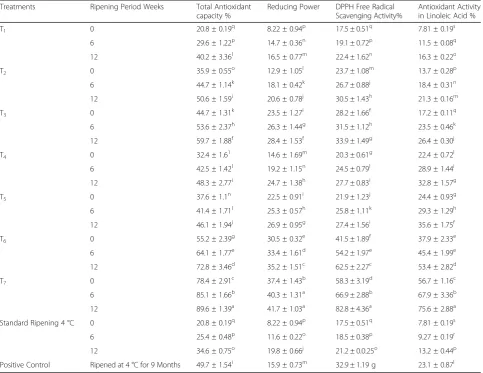
buffalo milk. Results of TAC of cheddar cheese added with vitamin E and selenium are presented in Table2. In current investigation, vitamin E, selenium and their blends were used as antioxidants in cheddar cheese ex-posed to accelerated ripening. Addition of vitamin E and selenium enhanced the TAC of un-ripened cheese. At zero-day, TAC of T1, T2, T3, T4, T5, T6, T7and SC were
20.8%, 35.9%, 44.7%, 32.4%, 37.6%, 55.2%, 78.4% and 20. 8%. TAC of standard cheese, vitamin E and selenium supplemented and non-supplemented cheese increased throughout the ripening period of 12 week. After 6 weeks of ripening, TAC of T1, T2, T3, T4, T5, T6, T7 and SC
were 29.61%, 44.7%, 53.6%, 42.5%, 41.4%, 64.1%, 85.1% and 25.4%. TAC of 12 weeks old T1, T2, T3, T4, T5, T6,
T7 and SC were 40.2%, 50.6%, 59.7%, 48.3%, 46.1%, 72.
8%, 89.6% and 34.6%, respectively. During cheese ripen-ing, several biochemical changes take place in cheese matrix which lead to the production of water soluble peptides that have antioxidant properties [30]. Antioxi-dant capacity of probiotic cheese increased with the pro-gression of ripening [31]. Transition in antioxidant capacity of cheddar cheese in accelerated ripening is not previously reported. Supplementation of yoghurt with red ginseng increased the antioxidant capacity [32]. Surai [33] studied the synergistic effect of selenium and vita-min E on the antioxidant system of the yolk and the de-veloping chick used in the maternal diet. The author concluded that nutritional status of the laying hen
Table 1Chemical Composition of Cheddar Cheese in Accelerated Ripening (18 °C)
Treatments Ripening Period Weeks Moisture % Fat % Protein %
T1 0 39.16 ± 0.53a 31.74 ± 0.42a 26.81 ± 0.72a
6 39.11 ± 0.48a 29.11 ± 0.77b 25.47 ± 0.35a
12 38.92 ± 0.67a 26.49 ± 0.65c 23.72 ± 0.66b
T2 0 39.16 ± 0.53a 31.74 ± 0.42a 26.81 ± 0.72a
6 39.05 ± 0.71a 29.81 ± 1.19b 25.61 ± 1.13a
12 38.77 ± 0.64a 27.72 ± 0.83c 24.63 ± 0.88b
T3 0 39.16 ± 0.53a 31.74 ± 0.42a 26.81 ± 0.72a
6 39.10 ± 1.05a 30.92 ± 0.61a 25.69 ± 0.89a
12 38.85 ± 0.91a 28.92 ± 1.37c 24.78 ± 0.42b
T4 0 39.16 ± 0.53a 31.74 ± 0.42a 26.81 ± 0.72a
6 39.04 ± 0.59a 30.87 ± 1.43a 25.77 ± 0.93a
12 38.72 ± 0.55a 29.17 ± 0.52b 24.82 ± 0.35b
T5 0 39.16 ± 0.53a 31.74 ± 0.42a 26.81 ± 0.72a
6 38.81 ± 1.03a 30.56 ± 0.79a 25.81 ± 0.51a
12 38.62 ± 0.43a 29.14 ± 0.95b 24.84 ± 0.59b
T6 0 39.16 ± 0.53a 31.74 ± 0.42a 26.81 ± 0.72a
6 38.79 ± 0.82a 30.66 ± 0.97a 25.44 ± 1.47a
12 38.65 ± 1.13a 29.55 ± 1.07b 24.89 ± 0.61b
T7 0 39.16 ± 0.53a 31.74 ± 0.42a 26.81 ± 0.72a
6 38.55 ± 0.61a 30.95 ± 0.74a 25.19 ± 0.48a
12 38.49 ± 0.94a 29.62 ± 0.88b 24.91 ± 0.37b
Standard Cheese 4 °C 0 39.16 ± 0.53a 31.74 ± 0.42a 26.81 ± 0.72a
6 38.89 ± 1.37a 30.47 ± 0.72a 25.11 ± 0.54a
12 38.61 ± 0.95a 29.44 ± 0.91b 24.89 ± 0.61b
Positive Control Ripened at 4 °C for 9 Months 38.14 ± 0.53a 28.17 ± 0.69b 23.55 ± 1.39b
Within a column, means denoted by a different letter are statistically different by Tukey’s HSD Test (p< 0.05) The results presented in Table1are the outcome of triplicate treatment and triplicate analysis (3 × 3 = 9, Mean ± SD) T1: Without Vitamin E and Selenium
T2: 100 mg Vitamin E
T3: 200 mg Vitamin E
T4: 800μg/kg Selenium
T5: 1200μg/kg Selenium
T6: 100 mg Vitamin E + 800μg/kg Selenium
T7: 100 mg Vitamin E + 800μg/kg Selenium
governs the efficiency of the antioxidant system through-out embryonic and early postnatal development of the offspring.
Reducing power
Vitamin E and selenium increased the reducing power of un-ripened cheddar cheese. At zero day, reducing power of T1, T2, T3, T4, T5, T6, T7and SC cheese were 8.
22%, 12.9%, 23.5%, 14.6%, 22.5%, 30.5%, 37.4% and 8. 22% (Table 2). Reducing power of standard cheese, vitamin E and selenium supplemented and non-supplemented cheese increased throughout the ripening period of 12 week. After 6 weeks of ripening, reducing power of T1, T2, T3, T4, T5, T6, T7and SC cheese were
14.7%, 18.1%, 26.3%, 19.2%, 25.3%, 33.4%, 40.3% and 11.6%. Antioxidant substances in milk can scavenge superoxide radicals, hydroxyl radicals and peroxide radicals [19]. Supplementation of sheep butter with vitamin E consider-ably improved the oxidative stability [34]. Oxidative
stresses can lead to cancer, diabetes, accelerated ageing and breakdown of biochemical compounds such as, lipids and proteins [35]. Demand of food containing natural an-tioxidants is increasing all over the world, researchers are trying to develop functional food containing natural anti-oxidants. Saldamli [36] supplemented Turkish white cheese with selenium to assess their recoveries in cheese, they recorded that recovery of selenium in supplemented cheese was about 71%. This is the pioneer study in which the role of selenium and vitamin as E as antioxidants were determined in accelerated cheese ripening. United States Dietary Guidelines suggest to intake 50μg/day, maximum intake of selenium should be less than 200 μg/day. Antioxidant and antitumor activities of selenium have been reported in literature, intake of selenium reduced the risks of heart diseases, cystic fibrosis and cancer [37]. Antioxidant activity of selenium for the inhibition of superoxide dismutase is scientifically proven [38]. Gluta-thione and selenium enhanced the functional value,
Table 2Effect of Vitamin E and Selenium Supplementation on Antioxidant Capacity of Cheddar Cheese in Accelerated Ripening (18 °C)
Treatments Ripening Period Weeks Total Antioxidant capacity %
Reducing Power DPPH Free Radical Scavenging Activity%
Antioxidant Activity in Linoleic Acid %
T1 0 20.8 ± 0.19q 8.22 ± 0.94p 17.5 ± 0.51q 7.81 ± 0.19s
6 29.6 ± 1.22p 14.7 ± 0.36n 19.1 ± 0.72p 11.5 ± 0.08q
12 40.2 ± 3.36l 16.5 ± 0.77m 22.4 ± 1.62n 16.3 ± 0.22o
T2 0 35.9 ± 0.55o 12.9 ± 1.05l 23.7 ± 1.08m 13.7 ± 0.28p
6 44.7 ± 1.14k 18.1 ± 0.42k 26.7 ± 0.88j 18.4 ± 0.31n
12 50.6 ± 1.59i 20.6 ± 0.78j 30.5 ± 1.43h 21.3 ± 0.16m
T3 0 44.7 ± 1.31k 23.5 ± 1.27i 28.2 ± 1.66f 17.2 ± 0.11q
6 53.6 ± 2.37h 26.3 ± 1.44g 31.5 ± 1.12h 23.5 ± 0.46k
12 59.7 ± 1.88f 28.4 ± 1.53f 33.9 ± 1.49g 26.4 ± 0.30j
T4 0 32.4 ± 1.61 14.6 ± 1.69m 20.3 ± 0.61g 22.4 ± 0.72l
6 42.5 ± 1.42l 19.2 ± 1.15n 24.5 ± 0.79l 28.9 ± 1.44i
12 48.3 ± 2.77i 24.7 ± 1.38h 27.7 ± 0.83i 32.8 ± 1.57g
T5 0 37.6 ± 1.1n 22.5 ± 0.91i 21.9 ± 1.23j 24.4 ± 0.93g
6 41.4 ± 1.71l 25.3 ± 0.57h 25.8 ± 1.11k 29.3 ± 1.29h
12 46.1 ± 1.94j 26.9 ± 0.95g 27.4 ± 1.56i 35.6 ± 1.75f
T6 0 55.2 ± 2.39g 30.5 ± 0.32e 41.5 ± 1.89f 37.9 ± 2.33e
6 64.1 ± 1.77e 33.4 ± 1.61d 54.2 ± 1.97e 45.4 ± 1.99e
12 72.8 ± 3.46d 35.2 ± 1.51c 62.5 ± 2.27c 53.4 ± 2.82d
T7 0 78.4 ± 2.91c 37.4 ± 1.43b 58.3 ± 3.19d 56.7 ± 1.16c
6 85.1 ± 1.66b 40.3 ± 1.31a 66.9 ± 2.88b 67.9 ± 3.36b
12 89.6 ± 1.39a 41.7 ± 1.03a 82.8 ± 4.36a 75.6 ± 2.88a
Standard Ripening 4 °C 0 20.8 ± 0.19q 8.22 ± 0.94p 17.5 ± 0.51q 7.81 ± 0.19s
6 25.4 ± 0.48p 11.6 ± 0.22o 18.5 ± 0.38p 9.27 ± 0.19r
12 34.6 ± 0.75o 19.8 ± 0.66j 21.2 ± 0.0.25o 13.2 ± 0.44p
Positive Control Ripened at 4 °C for 9 Months 49.7 ± 1.54i 15.9 ± 0.73m 32.9 ± 1.19 g 23.1 ± 0.87l
antioxidant capacity of milk [39]. Vitamin E and selenium efficiently inhibited the lipid oxidation in vacuum pack-aged lamb meat [40].
1, 1-diphenyl-2-picrylhydrazyl (DPPH) free radical scavenging activity
DPPH assay is widely used for the antioxidant characterization of dairy products. Ullah et al. [41] used DPPH assay to study the antioxidant capacity of chia oil supplemented cheddar cheese. Supplementation of ched-dar cheese with selenium and vitamin E considerably improved the antioxidant capacity of freshly prepared cheddar cheese. At zero day of ripening, highest antioxi-dant capacity was recorded in cheese supplemented with 100 mg Vitamin E + 800 μg/kg Selenium. DPPH free radical scavenging activity went on increasing in all sam-ples of cheese. However, DPPH free radicals scavenging activity of selenium and vitamin E supplemented sam-ples in accelerated ripening were higher than non-supplemented and standard ripened cheese. Antioxidant capacity of cheese remarkably increased when selenium and vitamin E were used in combination e.g. antioxidant capacity of cheese supplemented with 100 mg Vitamin E + 800 μg/kg Selenium and 2100 mg Vitamin E + 1200 μg/kg Selenium after 6 weeks of accelerated ripen-ing were 54.2% and 66.9%. While the antioxidant cap-acity of non-supplemented and standard ripened cheese after 6 weeks of ripening were 19.1% and 18.5% (Table2). Antioxidant capacity of cheese supplemented with 100 mg Vitamin E + 800 μg/kg Selenium and 2100 mg Vitamin E + 1200 μg/kg Selenium after 12 weeks of accelerated ripening were 62.5% and 82.8%. While the antioxidant capacity of non-supplemented and stand-ard ripened cheese after 6 weeks of ripening were 19. 1% and 18.5%. DPPH free radical scavenging activity of mature cheese was greater than fresh cheese [42]. Barać et al. [43] reported that antioxidant capacity of cheese went on increasing during the ripening period. Antioxidant effect of vitamin E and selenium on omega-3 enriched poultry meat was investigated. Thiobarbituric acid value decreased with the addition of vitamin E and selenium [44].
Antioxidant activity in linoleic acid (ALA)
Supplementation of cheddar cheese with vitamin E and selenium significantly improved the ALA of freshly pre-pared cheddar cheese. Combination of selenium and vitamin E considerably enhanced ALA of un-ripened cheddar cheese. ALA of T5 (100 mg vitamin E and
800 μg/kg selenium) and T6 (200 mg vitamin E and
1200 μg/kg selenium) was 37.9% and 56.7%. ALA of all types of cheese samples increased during the ripening period of 12 weeks, however, cheese samples exposed to accelerated ripening had higher ALA than cheese sample
ripened at 4 °C. Similarly, cheese samples supplemented with combination of vitamin E and selenium exhibited highest ALA, for example, antioxidant activity of 6 weeks old T6and T7were 45.4% and 67.9%. ALA of 12 weeks
old T6 and T7 were 53.4% and 75.6%. Cheese samples
having ALA had lower peroxide value, anisidine value and conjugated dienes with better sensory score. Rashidinejad et al. [45] monitored the antioxidant activity of cheddar cheese added with tea extract, antioxidant activ-ity of cheese increased during the ripened. Branciari et al. [46] reported that phenolic compounds of rosemary leaf significantly improved the antioxidant capacity of cheese and efficiently inhibited the lipid oxidation. Addition of cat-echin, improved the antioxidant capacity of cheese [47]. Supplementation of cow feed with vitamin E and selenium improved the antioxidant status of blood [48].
Lipid oxidation Free fatty acids
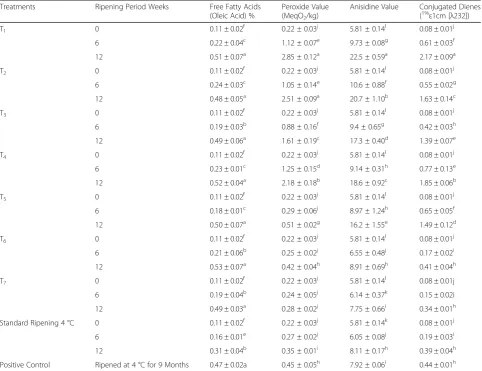
In cheese, free fatty acids are produced as a result of hy-drolysis of triglycerides, catalytic factors include mois-ture content, lipases, storage temperamois-ture, metal ions etc. [49]. Free fatty acid plays an important role in the development of flavor in cheese [50]. Supplementation of vitamin E and selenium did not have any impact on free fatty acids content of cheddar cheese at 0, 6 and 12 weeks of ripening (Table 3). Free fatty acids of trans free margarine increased during the three months stor-age time [51]. Hydrolysis of the triglyerides is the major reason for the production of free fatty acids with no con-nection with auto-oxidation [52]. No correlation was established between free fatty acids and antioxicant [53]. Usually the concentration of free fatty acids increase during cheese ripening. Concentration of free fatty acids in mature cheese was more than fresh cheese [54]. Free fatty acid may accelerate the auto-oxidation in fats by speeding up breakdown of peroxides to oxidation prod-ucts [55]. Supplmentatio of hen diet with vitamin E and selenium significantly rasied the antioxidant characteri-tics of eggs [56].
Peroxide value
cheese with vitamin E and selenium alone and in com-bination significantly inhibited the auto-oxidation in cheese samples. After 6 weeks of accelerated ripening, peroxide values of T1, T2, T3, T4, T5, T6, T7and standard
cheese were 1.19, 1.05, 0.88, 1.25, 0.29, 0.25, 0.24 and 0. 28 (MeqO2/kg). After 12 weeks of accelerated ripening,
peroxide value of T1, T2, T3, T4, T5, T6 and standard
cheese were 2.85, 2.51, 1.61, 2.18, 0.51, 0.42, 0.28 and 0. 35(MeqO2/kg). Peroxide value may be used to anticipate
the oxidative stability/ shelf life of fat rich foods, lower peroxide value is usually linked with excellent storage stability [53]. Peroxide value and concentration of anti-oxidants were strongly correlated (R2 = 0.992). It is worth mentioning that peroxide value was strongly correlated with flavor score, treatments having higher peroxide value had lower flavor score. Khan et al. [59] studied the effect of mango kernel oil on oxidative stability of Gouda cheese, natural antioxidant substances efficiently inhibited the auto-oxidation in cheese. Natural
antioxidants of mango kernel oil altered the auto-oxidation of milk fat, protected fatty acids from auto-oxidation [58]. Peroxide value of butter and ice cream increased during the storage period [60]. Combined supplementa-tion of vitamin E and selenium considerably improved the lipid stability of veal [61].
Anisidine value
Anisidine value is hundred times the optical density of a chemical reaction taking place between 2-alkenals and anisidine. It is a good measure of secondary and tertiary oxidation products [62]. Anisidine value is usually not used during the cheese related studies, in current inves-tigation, it was included as an important parameter to measure the magnitude of secondary and tertiary oxida-tion products in accelerated cheese ripening. Vitamin E and selenium supplemented cheese samples revealed lower anisidine value than non-supplemented cheese samples (Table3). After 6 weeks of accelerated ripening
Table 3Effect of Selenium and Vitamin E Supplementation on Oxidative Stability of Cheddar Cheese in Accelerated Ripening (18 °C)
Treatments Ripening Period Weeks Free Fatty Acids (Oleic Acid) %
Peroxide Value (MeqO2/kg)
Anisidine Value Conjugated Dienes (1%ε1cm [λ232])
T1 0 0.11 ± 0.02f 0.22 ± 0.03j 5.81 ± 0.14l 0.08 ± 0.01j
6 0.22 ± 0.04c 1.12 ± 0.07e 9.73 ± 0.08g 0.61 ± 0.03f
12 0.51 ± 0.07a 2.85 ± 0.12a 22.5 ± 0.59a 2.17 ± 0.09a
T2 0 0.11 ± 0.02f 0.22 ± 0.03j 5.81 ± 0.14l 0.08 ± 0.01j
6 0.24 ± 0.03c 1.05 ± 0.14e 10.6 ± 0.88f 0.55 ± 0.02g
12 0.48 ± 0.05a 2.51 ± 0.09a 20.7 ± 1.10b 1.63 ± 0.14c
T3 0 0.11 ± 0.02f 0.22 ± 0.03j 5.81 ± 0.14l 0.08 ± 0.01j
6 0.19 ± 0.03b 0.88 ± 0.16f 9.4 ± 0.65g 0.42 ± 0.03h
12 0.49 ± 0.06a 1.61 ± 0.19c 17.3 ± 0.40d 1.39 ± 0.07e
T4 0 0.11 ± 0.02f 0.22 ± 0.03j 5.81 ± 0.14l 0.08 ± 0.01j
6 0.23 ± 0.01c 1.25 ± 0.15d 9.14 ± 0.31h 0.77 ± 0.13e
12 0.52 ± 0.04a 2.18 ± 0.18b 18.6 ± 0.92c 1.85 ± 0.06b
T5 0 0.11 ± 0.02f 0.22 ± 0.03j 5.81 ± 0.14l 0.08 ± 0.01j
6 0.18 ± 0.01c 0.29 ± 0.06j 8.97 ± 1.24h 0.65 ± 0.05f
12 0.50 ± 0.07a 0.51 ± 0.02g 16.2 ± 1.55e 1.49 ± 0.12d
T6 0 0.11 ± 0.02f 0.22 ± 0.03j 5.81 ± 0.14l 0.08 ± 0.01j
6 0.21 ± 0.06b 0.25 ± 0.02j 6.55 ± 0.48j 0.17 ± 0.02i
12 0.53 ± 0.07a 0.42 ± 0.04h 8.91 ± 0.69h 0.41 ± 0.04h
T7 0 0.11 ± 0.02f 0.22 ± 0.03j 5.81 ± 0.14l 0.08 ± 0.01j
6 0.19 ± 0.04b 0.24 ± 0.05j 6.14 ± 0.37k 0.15 ± 0.02i
12 0.49 ± 0.03a 0.28 ± 0.02j 7.75 ± 0.66i 0.34 ± 0.01h
Standard Ripening 4 °C 0 0.11 ± 0.02f 0.22 ± 0.03j 5.81 ± 0.14k 0.08 ± 0.01j
6 0.16 ± 0.01e 0.27 ± 0.02j 6.05 ± 0.08j 0.19 ± 0.03i
12 0.31 ± 0.04b 0.35 ± 0.01i 8.11 ± 0.17h 0.39 ± 0.04h
Positive Control Ripened at 4 °C for 9 Months 0.47 ± 0.02a 0.45 ± 0.05h 7.92 ± 0.06i 0.44 ± 0.01h
at 18 °C, anisidine vaue of T6and T7was 6.55 and 6.14.
After 12 weeks of accelerated ripening anisidine values of T6and T7and T1were 8.91, 7.75 and 22.5. Anisidine
value of T6 and T7was less than the standard limit of
10. The lower anisidine value in vitamin E and selenium supplemented cheese was due to their antioxidant activ-ity in cheese matrix. Anisidine value is extensively used for the assessment of oxidation products in butter, butter oil, cottonseed oil, ice cream and cheese [52,58, 63, 64]. Soliman et al. [65] stated the synergistic effect of vitamin E and selenium on some physiological and productive characteristics of ewes and their lambs. There is improved growth performance, immune responses and viability as a result of favorable signs in their physiological reactions.
Conjugated dienes (CD)
Results of specific extinction coefficients of different cheese samples measured at 230 nm are presented in Table 3. CD measure the extent of primary oxidation products produced as a result of auto-oxidation in fats and oils [66]. Supplementation of cheese with vitamin E and selenium considerably inhibited the formation of CD in accelerated ripening. CD of T1, T2, T3, T4, T5, T6 and
T7, after 6 weeks of accelerated ripening were 0.61, 0.55,
0.42, 0.77, 0.65, 0.17, 0.15 and 0.19. While, CD of 6 weeks old standard cheese was 0.19. After 12 weeks of accelerate ripening, CD of T1, T6 and T7 was 2.17, 0.41 and 0.34.
After 12 weeks, CD of T7 and standard ripened cheese
were not significantly influence from each other. Few studies have been reported regarding the inhibition of oxi-dative breakdown in dairy products.Moringa oleiferaleaf extract significantly inhibited CD of butter during the storage period of 90 days [52]. Sesame (Sesamum indicum L.) cake extract inhibited the formation of CD in olein based butter. CD of olein based ice cream increased dur-ing the storage period of 180 days [64]. Conjugated dienes of sunflower oil increased during the storage period [35]. Chatha et al. [67] also described an increasing trend in the magnitude of conjugated dienes, when canola oil was sub-jected to storage. Limited information is available regard-ing the antioxidant activity of selenium in dairy products. Concentration of oxidation products increased during the one-year storage of vegetable oil blends [68]. Oxidation status of dairy products changed during the storage [69]. Habibian et al. [70] investigated the effects of dietary sel-enium and vitamin E on growth performance, meat yield, and selenium content and lipid oxidation of breast meat of broilers reared under heat stress. They concluded that supplementation of selenium and vitamin E improved the antioxidant capacity of breast meat.
Fatty acid profile
Fatty acid profile is one of the most significant parameter to determine the oxidation status of fats and oils [71].
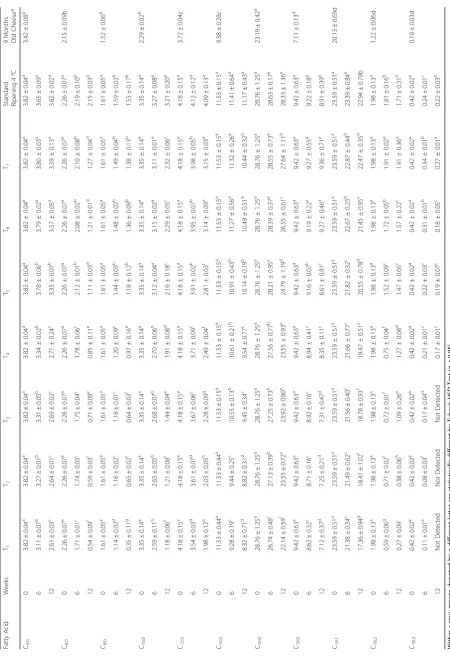
In current investigation, effect of vitamin E and selen-ium supplmenttion on fatty acid profile of cheddar cheee was determined in accelerated ripening. For the assessment of oxidative stability of dairy products, fatty acid profile is used, the techniques of accelerated oxidation are traditionally not employed to forecast the oxidative stability of cheese and other dairy prod-ucts. Nadeem et al. [53] used fatty acid profile as an important parameter to adjudge the antioxidant cap-acity of whey butter. Ullah et al. [41] while studying the effect of chia oil on antioxidant capacity of ched-dar cheese used fatty acid profile as a marker of oxi-dative stability. Addition of selenium and vitamin E alone and in combination did not have any effect on fatty acid profile of fresh cheese. Fatty acid profile of all the treatments and standard cheese considerably changed during the rapid and traditional ripening. However, the magnitude of transition was dependent upon the ripening temperature, type and dose of anti-oxidant added in cheese. Concentration of short-chain, medium-chain and long-chain fatty acids de-creased during the ripening period of 12 weeks. After 6 weeks of accelerated ripening, concentrations short-chain fatty acids in T1, T2, T3, T4, T5, T6, T7 and
standard cheese decreased by 22.55%, 20.10%, 19.2%, 18.29%, 5.25%, 4.89%, 4.89%, 3.08% (Table 4). After 6 weeks of accelerated ripening, concentrations medium-chain fatty acids in T1, T2, T3, T4, T5, T6, T7
and standard cheese decreased by10.59%, 9.27%, 6. 49%, 5.69%, 3.15%, 2.02%, 1.41% and 5.95%. After 6 weeks of accelerated ripening, concentrations unsat-urated fatty acids in T1, T2, T3, T4, T5, T6, T7 and
standard cheese decreased by18.19%, 17.45%, 16.82%, 16.19%, 12.71%, 8.48%, 6.92% and 14.71%. After 12 weeks of accelerated ripening, concentration of short-chain fatty acids in T1, T2, T3, T4, T5, T6 and
T7 decreased by 33.5%, 30.7%, 17.1%, 9.94%, 8.13%, 1.
9% and 1.08%, from their initial values. Concentration of short-chain fatty acids in standard cheese decreased by 3.17%, from the initial value. After 12 weeks of accelerated ripening, concentration of medium-chain fatty acids in T1,
T2, T3, T4, T5, T6and T7 and standard ripened cheddar
cheese decreased by 15.4%, 13.4%, 11.02%, 7.34%, 4.73%, 0.81%, 0.55% and 10.79%, respectively. After 12 weeks of accelerated ripening, concentration of unsaturated fatty acids in T1, T2, T3, T4, T5, T6and T7and standard cheese
decreased by 26.2%, 21.2%, 18.7%, 14.2%, 10.4%, 4.84%, 1. 03% and 6.78%. Unsaturated fatty acids are more suscep-tible to auto-oxidation as compared to saturated fatty acids, oxidation rate of oleic acid, linoleic acid and linoleic acid is 15, 25 and 35 times higher than stearic acid [71]. Vitamin E and selenium when used in combination (T6
and T7) considerably inhibited the auto-oxidation of
Minimum values for conjugated dienes and anisidine value were observed for T6and T7after 12 weeks of
accel-erated ripening. Arif et al. [72] described that concentra-tion of short-chain, medium-chain and long-chain fatty acids decreased in butter oil during the storage period of 2 months. Nadeem et al. [52] observed that antioxidants of Moringa oleifera leaves efficiently inhibited the lipid oxidation in butter oil, treatments added with natural anti-oxidant revealed minimum changes in fatty acid profile. Rayman et al. [73] studied the effect of various levels of selenium supplementation on total cholesterol and HDL, supplementation of selenium at 100–300 mcg/ day decreased total cholesterol and increased HDL. Neutracueticals may be very useful to prevent/ cor-rect dyslipidemia [74].
Organic acids
Ripening of cheddar cheese is a complex phenomenon, several biochemical changes take place that influence the flavor and texture perspectives of the cheese. In current investigation, effect of accelerated ripening, vita-min E and selenium was recorded on the production of organic acids. Accelerated ripening, vitamin E and selen-ium significantly influenced the production of organic acid. After 12 weeks of ripening at 4 °C, cheddar cheese revealed the lowest concentration of organic acids. Concentrations of formic acid, pyruvic acid, lactic acid, acetic acid and citric acid in 12 weeks old standard rip-ened cheddar cheese (4 °C) were 519, 88, 8463, 262 and 649 ppm, respectively. Cheddar cheese samples added with vitamin E, selenium and their combinations pro-duced more organic acids during the ripening period of 12 weeks. Concentrations of formic acid, pyruvic acid, lactic acid, acetic acid and citric acid in 12 weeks old T1
were 627, 115, 9253, 311 and 691 ppm. Concentrations of formic acid, pyruvic acid, lactic acid, acetic acid and citric acid in 12 weeks old T2were 659, 128, 9642, 339
and 728 ppm. Concentrations of formic acid, pyruvic acid, lactic acid, acetic acid and citric acid in 12 weeks old T3were 676, 144, 10,118, 362 and 814 ppm.
Concen-trations of formic acid, pyruvic acid, lactic acid, acetic acid and citric acid in 12 weeks old T4 were 697, 155,
10,237, 391 and 849 ppm. Concentrations of formic acid, pyruvic acid, lactic acid, acetic acid and citric acid in 12 weeks old T5 were 751, 192, 10,663, 427 and
914 ppm. Concentrations of formic acid, pyruvic acid, lactic acid, acetic acid and citric acid in 120 days old T6
were 923, 269, 125,539, 633 and 1162 ppm. Concentra-tions of formic acid, pyruvic acid, lactic acid, acetic acid and citric acid in 12 weeks old T7 were 1156, 295,
12,987, 751 and 1264 ppm. Hough et al. [75] observed that flavor characteristics of Reggianio cheese improved with the production of organic acids. Accelerated ripening boosted the production of organic acids [76].
However, the production of organic acids in accelerated ripening of cheddar cheese in presence of antioxidants is not previously studied.
Sensory characteristics
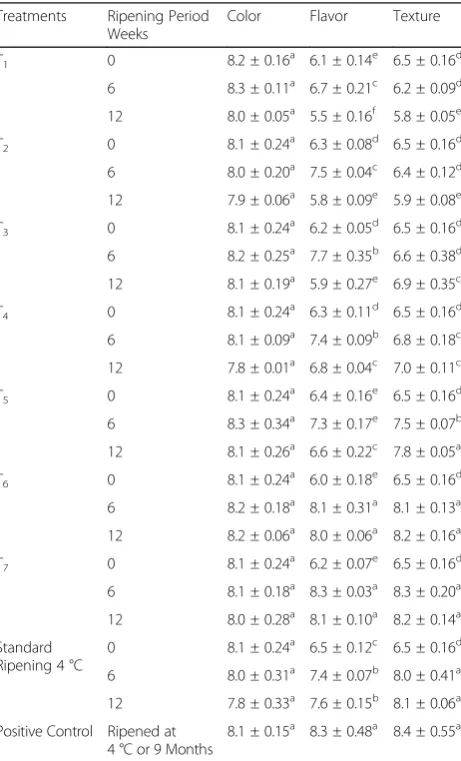
Addition of vitamin E and Selenium alone and in com-bination did not have any effect significant effect on color, flavor and texture of fresh cheddar cheese. Color score of all the treatments at 0, 6 and 12 weeks of ripen-ing were not different from the standard cheese. Ripening temperature significantly affected the sensory characteritics of cheese, cheddar cheese exposed to ac-celerate ripening ripened earlier than standard cheese. Flavor score of 6 weeks old T2, T3, T4 and T5were not
different from 12 weeks old standard ripened cheddar
Table 5Effect of Selenium and Vitamin E Supplementation on Sensory Characteristics of Cheddar Cheese in Accelerated Ripening (18 °C)
Treatments Ripening Period Weeks
Color Flavor Texture
T1 0 8.2 ± 0.16a 6.1 ± 0.14e 6.5 ± 0.16d
6 8.3 ± 0.11a 6.7 ± 0.21c 6.2 ± 0.09d
12 8.0 ± 0.05a 5.5 ± 0.16f 5.8 ± 0.05e
T2 0 8.1 ± 0.24a 6.3 ± 0.08d 6.5 ± 0.16d
6 8.0 ± 0.20a 7.5 ± 0.04c 6.4 ± 0.12d
12 7.9 ± 0.06a 5.8 ± 0.09e 5.9 ± 0.08e
T3 0 8.1 ± 0.24a 6.2 ± 0.05d 6.5 ± 0.16d
6 8.2 ± 0.25a 7.7 ± 0.35b 6.6 ± 0.38d
12 8.1 ± 0.19a 5.9 ± 0.27e 6.9 ± 0.35c
T4 0 8.1 ± 0.24a 6.3 ± 0.11d 6.5 ± 0.16d
6 8.1 ± 0.09a 7.4 ± 0.09b 6.8 ± 0.18c
12 7.8 ± 0.01a 6.8 ± 0.04c 7.0 ± 0.11c
T5 0 8.1 ± 0.24
a
6.4 ± 0.16e 6.5 ± 0.16d
6 8.3 ± 0.34a 7.3 ± 0.17e 7.5 ± 0.07b
12 8.1 ± 0.26a 6.6 ± 0.22c 7.8 ± 0.05a
T6 0 8.1 ± 0.24
a
6.0 ± 0.18e 6.5 ± 0.16d
6 8.2 ± 0.18a 8.1 ± 0.31a 8.1 ± 0.13a
12 8.2 ± 0.06a 8.0 ± 0.06a 8.2 ± 0.16a
T7 0 8.1 ± 0.24a 6.2 ± 0.07e 6.5 ± 0.16d
6 8.1 ± 0.18a 8.3 ± 0.03a 8.3 ± 0.20a
12 8.0 ± 0.28a 8.1 ± 0.10a 8.2 ± 0.14a
Standard Ripening 4 °C
0 8.1 ± 0.24a 6.5 ± 0.12c 6.5 ± 0.16d
6 8.0 ± 0.31a 7.4 ± 0.07b 8.0 ± 0.41a
12 7.8 ± 0.33a 7.6 ± 0.15b 8.1 ± 0.06a
Positive Control Ripened at 4 °C or 9 Months
8.1 ± 0.15a 8.3 ± 0.48a 8.4 ± 0.55a
Within a column, means denoted by a different letter are statistically different by Tukey’s HSD Test (p< 0.05)
cheese (Table 5). After 6 weeks of accelerated ripening, flavor score of T6and T7and positive control (cheddar
cheese ripened at 4 °C for 9 months) was not different from each other. Flvor score was closely related with peroxide value (R2 = 0.9987). A strong correlation between peroxide value and flavor characteristics of dairy product is recorded by [64]. Nadeem et al. [53] observed that flavor score of whey butter decreased with the rise in peroxide value. Addition of sesame cake extract as antioxidant in olein based butter considerably inhibited the auto-oxidation [53]. Flavor score of fresh and 90 days old cheese was different from each other [54].
Limitations
In this investigation, a significant reduction in ripening time of cheddar cheese has been achieved using natural antioxidants. An appropriate mechanism should be adopted to dispose off the ripened/ matured cheese without any further storage. The storage of ripened and matured cheese is not feasible from quality and commer-cial aspects. Cheese manufacturers who want to adopt rapid ripening of cheddar cheese should establish an ap-propriate marketing/ dispose off mechanism to avoid unnecessary storage of ripened/ matured cheese.
Conclusions
An innovation in the accelerated ripening of cheese was achieved. The time required for the ripening of cheddar cheese was reduced half year to 6 weeks only. Sensory characteristics of 6 weeks old cheddar cheese that was ripened at 18 °C was similar to the traditionally ripened chese for 9 monhts at 4 °C. Selenium and vitamin E sig-nificantly inhibited the lipid oxidation during accelerated ripening of cheese. Selenium and vitamin E can be used at T6 and T7 concentrations as antioxidants in
acceler-ated ripening.
Acknowledgements
The authors are highly obliged to the Library Department, University of Veterinary and Animal Sciences (UVAS), Government College University Faisalabad (GCUF) and IT Department, Higher Education Commission (HEC, Islamabad) for access to journals, books and valuable database.
Funding
Financial assistance for this study was provided by Higher Education Commission of Pakistan.
Availability of data and materials
The dataset supporting the conclusions of this article is included within the article.
Authors’contributions
MB conceptualized and MN provided the technical assistance; NG, QS, MS, MA and ITK performed the study, guided in the data collection and analyze
the data; MI helped for drafting the manuscript.“It’s also confirmed that all
the authors read and approved the final manuscript”.
Ethics approval and consent to participate Not Applicable.
Competing interests
The authors declare that they have no competing interests.
Publisher’s Note
Springer Nature remains neutral with regard to jurisdictional claims in published maps and institutional affiliations.
Author details 1
Department of Dairy Technology, University of Veterinary and Animal Sciences, Lahore, Pakistan.2Institute of Home and Food Sciences, Faculty of Life Sciences, Government College University, Faisalabad, Pakistan. 3Department of Livestock Production, University of Veterinary and Animal Sciences, Lahore, Pakistan.4Department of Food Science and Technology, Muhammad Nawaz Sharif University of Agriculture, Multan, Pakistan.
Received: 2 February 2018 Accepted: 3 April 2018
References
1. Banks JM. Cheddar-type cheese. Hannah Research Institute. Ayr: Elsevier,
Science Publication; 2002.
2. Murtaza MA, Rehman SU, Anjum FM, Huma N, Hafiz I. Cheddar cheese
ripening and flavor characterization: a review. Crit Rev Food Sci Nutr. 2014;
54(10):1309–21.
3. Guinee TP, O’Callaghan DJ. Control and prediction of quality characteristics
in the manufacture and ripening of cheese. In: Law BA, Tamime AY, editors. Technology of Cheese making. 2nd ed. Chichester, West Sussex: John Wiley
& Sons Ltd; 2010. p. 260–329.
4. Estikomah SA, Sutarno AP. Ripening for improving the quality of inoculated
cheese Rhizopus oryzae. Nusantara. Bioscience. 2010;2(1):1–6.
5. Singh TK, Drake MA, Cadwallader KR. Flavor of cheddar cheese: a chemical
and sensory perspective. Comp Rev Food Sci Food Safety. 2003;2(4):166–89.
6. Chopde SS, Deshmukh MA, Kalyankar SD, Changade SP. High pressure
technology for cheese processing-a review. Asian J Dairy and Food Res.
2014;33(4):239–45.
7. Azarnia S, Robert N, Lee B. Biotechnological methods to accelerate cheddar
cheese ripening. Crit Rev Biotechnol. 2006;26:121–43.
8. Law BA. Controlled and accelerated cheese ripening: the research base for
new technology. Int Dairy J. 2001;11(4):383–98.
9. Usta B, Yilmaz-Ersan L. Antioxidant enzymes of milk and their biological
effects. J Agric Fac of Uludag Univ. 2013;27:123–30.
10. Yazdanparast R, Ardestani A. In vitro antioxidant and free radical scavenging
activity of Cyperus rotundus. J Med Food. 2007;10:667–74.
11. Lahucky R, Nuernberg K, Kovac L, Bucko O, Nuernberg G. Assessment of the
antioxidant potential of selected plant extracts–in vitro and in vivo
experiments on pork. Meat Sci. 2010;85(4):779–84.
12. Jensen SK, Nielsen KN. Tocopherols, retinol,β-carotene and fatty acids in fat
globule membrane and fat globule core in cow’s milk. J Dairy Res. 1996;63:
565–74.
13. O’Connor TP, O’Brien NM. Lipid oxidation. In: Fox PF, McSweeney PLH,
editors. Advanced dairy chemistry: volume 2: lipids. New York: Springer;
2006. p. 557–600.
14. Politis I. Reevaluation of vitamin E supplementation of dairy cows:
bioavailability, animal health and milk quality. Animal. 2012;6(9):1427–34.
15. Fellenberg MA, Speisky H. Antioxidants: their effect on broiler oxidative
stress and its meat oxidative stability. Worlds Poult Sci J. 2006;62:53–70.
16. Stanley GV, Chakwu H, Thompson DD. Singly and combined effects of
organic selenium (Se-Yeast) and vitamin E on ascites reduction in broilers. Proc. Poult Sci. Assoc, Confer Abst. 1998;111.
17. AOAC. Official methods of analysis. American association of official analytical
chemists. Gaithersburg: 17th ed; 2000.
18. Nabasree D, Bratati D. Antioxidant activity of some leafy vegetables of India:
a comparative study. Food Chem. 2007;101:471–4.
19. Cervato G, Cazzola R, Cestaro B. Studies on the antioxidant activity of milk
caseins. Int J Food Sci Nutr. 1999;50:291–6.
20. Yen GC, Duh PD, Tsai CL. Relationship between antioxidant activity and maturity
of peanut hulls. J Agric Food Chem. 1993;41:67–70.
21. AOCS. Official Methods of Analysis of AOCS. 4th ed. Method Cd 8-53. Official
22. Buffa M, Guamis B, Saldo J, Turijillo AJ. Changes in organic acids during ripening of cheeses made from raw, pasteurised or high-pressure treated
goats milk. Lebensm Wiss Tech. 2004;37:247–53.
23. Larmond E. Laboratory methods for sensory evaluation of foods. Canada:
Reasearch Branch, Department of Agriculture, Ottawa Publications; 1987. p. 153–6.
24. Steel RGD, Torrie JH, Dickey DA. Principals and procedures of statistics: a
biometrical approach. 3rd ed. New York: McGraw Hill Book Co. Inc; 1997.
25. Murtaza MA, Rehman SU, Anjum FM, Huma N, Tarar OM, Mueen-Ud-Din G.
Organic acid contents of buffalo milk cheddar cheese as influenced by
accelerated ripening and sodium salt. J Food Biochem. 2012;36(1):99–106.
26. Khan IT, Nadeem M, Imran M, Ayaz M, Ajmal M, Yaqoob E, Khalique A.
Antioxidant capacity and fatty acids characterization of heat treated cow and buffalo milk. Lipids Health Dis. 2017;16:163.
27. Ahmad S, Nadeem M, Ayaz M, Jaspal MH. Effect of low-melting fractions of milk
fat on lipolysis of cheddar cheese. J Food Process and Preserv. 2015;39:2516–22.
28. Folkertsma B, Fox PF, McSweeney PLH. Accelerated ripening of cheddar cheese
at elevated temperatures. Int Dairy J. 1996;6:1117–34.
29. Sies H. Total antioxidant capacity: appraisal of a concept. J Nutr. 2007;137:
1493–5.
30. Gupta A, Mann B, Kumar R, Sangwan R. Antioxidant activity of cheddar
cheeses at different stages of ripening. Int J Dairy Technol. 2009;62:339–47.
31. Songisepp E, Kulisaar T, Hütt P, Elias P, Brilene T, Zilmer M, Mikelsaar M. A
new probiotic cheese with antioxidative and antimicrobial. J Dairy Sci. 2004;
87:2017–23.
32. Jung J, Paik HD, Yoon HJ, Jang HJ, Jeewanthi RKC, Jee HC, Li X, Lee NK, Lee SK.
Physicochemical characteristics and antioxidant capacity in yogurt fortified
with red ginseng extract. Korean J Food Sci An. 2016;36(3):412–20.
33. Surai PF. Effect of selenium and vitamin E content of the maternal diet on
the antioxidant system of the yolk and the developing chick. Br Poult Sci.
2000;41(2):235–43.
34. Abbas G, Nadeem M, Abdullah M, Ilyas M. Effect of vitamin E on storage
stability of sour cream butter made from sheep milk. Carpathian. J Food Sci
Technol. 2011;3(2):21–5.
35. Anwar F, Qayyum HMA, Hussain AI, Iqbal S. Antioxidant activity of 100%
and 80% methanol extracts from barley seeds (Hordeum vulgare L.):
stabilization of sunflower oil. Grasas Aceites. 2010;61:237–43.
36. Gulbas SY, Saldamli I. The effect of selenium and zinc fortification on the
quality of Turkish white cheese. Int J Food Nutr. 2005;56:141–6.
37. Tapiero H, Townsend DM, Tew KD. The antioxidant role of selenium and
seleno-compounds. Biomed Pharmacother. 2003;57:134–44.
38. Geissler C and H Powers. Human Nutrition South African Indigenous goat
milk. Food Control, London: Churchill Livingstone. 2011;509–532.
39. SretenovićL, AleksićS, PetrovićMP, MiščevićB. Nutritional factors influencing
improvement of milk and meat quality as well as productive and reproductive
parameters of cattle. Biotech Anim Husbandry. 2007;23:217–26.
40. Ripoll G, Joy M, Muñoz F. Use of dietary vitamin E and selenium (se) to
increase the shelf-life of modified atmosphere packaged light lamb meat.
Meat Sci. 2011;87:88–93.
41. Ullah R, Nadeem M, Imran M. Omega fatty acids, phenolic compounds, and
lipolysis of cheddar cheese supplemented with chia (Salvia hispanica L.) oil.
J Food Process Preserv. 2018;13566https://doi.org/10.1111/jfpp.13566.
42. Hernández-Galán L, Cardador-Martínez A, Picque D, Spinnler HE, Lozano M
L-d-C, del Campo STM. ACEI and antioxidant peptides release during ripening
of Mexican Cotija hard cheese. J Food Res. 2016;5:85–91.
43. BaraćM, SmiljanićM,ŽilićS, PešićM, StanojevićS, VasićM, VučićT. Protein
profiles and total antioxidant capacity of water soluble and insoluble protein fractions of white cow cheese at different stage of ripening.
Mljekarstvo. 2016;66:187–97.
44. Taulescu C, Mihaiu M, Bele C, Matea C, Dan SD, Mihaiu R, Lapusan A. Antioxidant
effect of vitamin E and selenium on omega-3 enriched poultry meat. Bull Univ
Agr Sci Vet Med Vet Med. 2011;68:293–9.
45. Rashidinejad A, Birch EJ, Everett DW. Antioxidant activity and recovery of
green tea catechins in full-fat cheese following astrointestinal simulated
digestion. J Food Comp Anal. 2016;48:13–24.
46. Branciari R, Ranucci D, Trabalza-Marinucci M, Codini M, Orru M, Ortenzi R,
Forte C, Ceccarini MR, Valiani A. Evaluation of the antioxidant properties and oxidative stability of pecorino cheese made from the raw milk of ewes fed
Rosmarinus officinalisL. leaves. Int J Food Sci Technol. 2015;50:558–65.
47. Rashidinejad A, Birch EJ, Sun-Waterhouse D, Everett DW. Effects of catechin
on the phenolic content and antioxidant properties of low-fat cheese. Int J
Food Sci Technol. 2013;48(12):2448–55.
48. Zhao L, Liu D, Yang P, Chen P, Dong WX, Wang DM. Supplementation with
selenium and vitamin E improves milk fat depression and fatty acid composition
in dairy cows fed fat diet. Asian-Aust J Anim Sci. 2008;21(6):838–44.
49. McSweeney PL. Biochemistry of cheese ripening. Int J Dairy Tech. 2004;
57(2–3):127–44.
50. McSweeney PL, Sousa MJ. Biochemical pathways for the production of
flavour compounds in cheeses during ripening: a review. Lait. 2000;
80(3):293–324.
51. Nadeem M, Imran M, Taj I, Ajmal M, Junaid M. Omega-3 fatty acids, phenolic
compounds and antioxidant characteristics of chia oil supplemented margarine. Lipids Health Dis. 2017;16:102.
52. Nadeem M, Abdullah M, Hussain I, Inayat S, Javid A, Zahoor Y. Antioxidant
potential of Moringa oleifera leaf extract for the stabilisation of butter at
refrigeration temperature. Czech J Food Sci. 2013;31:332–9.
53. Nadeem M, Mahmud A, Imran M, Khalique A. Enhancement of the oxidative
stability of whey butter through almond (Prunis dulcis) peel extract. J Food
Proc Preserv. 2015;39(6):591–8.
54. Ahmad S, Nadeem M, Ayaz M, Jaspal MH. Effect of low melting fractions of milk
fat on lipolysis of cheddar cheese. J Food Process Preserv. 2015;39:2516–22.
55. Frega N, Mozzon M, Lercker G. Effects of free fatty acids on oxidative stability
of vegetable oil. J Am Oil Chem Soc. 1999;76:325–9.
56. Zduńczyk Z, Drażbo A, Jankowski J, Juśkiewicz J, Antoszkiewicz Z, Troszyńska
A. The effect of dietary vitamin E and selenium supplements on the fatty
acid profile and quality traits of eggs. Archiv Tierzucht. 2013;56:719–32.
57. Nadeem M, Abdullah M, Javid A, Mahmood T. Evaluation of functional fat
from interesterified blends of butter oil and Moringa oleifera oil. Pak J Nutr.
2012;11:725–9.
58. Nadeem M, Ulla R, Ullah A. Improvement of the physical and oxidative stability
characteristics of ice cream through interesterified Moringa oleifera oil. Pak J
Scienti Ind Res Ser B: Biol Sci. 2016;59(1):38–43.
59. Khan IT, Nadeem M, Imran M, Ajmal M. Antioxidant Activity and fatty acids
characterization of Gouda Cheese supplemented with mango (Mangifera
indica L.). J Food Sci Technol. 2018:5(3):992–1002.
60. Gonzalez S, Duncan SE, O'keefe SF, Sumner SS, Herbein JH. Oxidation and
textural characteristics of butter and ice cream with modified fatty acid
profiles. J Dairy Sci. 2003;86:70–7.
61. Skřivanová E, Marounek M, De Smet S, Raes K. Influence of dietary selenium
and vitamin E on quality of veal. Meat Sci. 2007;76:495–500.
62. Shahidi F. Baileys’industrial edible oil and fat products. 6th ed. NY: John
Willey and Sons, Pub. Co; 2005.
63. Azeem MW, Nadeem M, Ahmad S. Stabilization of witnerized cottonseed oil
through chia (Salvia hispanic L.) seed extract at ambient temperature. J Food
Sci Technol. 2015;52:7191–9.
64. Nadeem M, Situ C, Abdulla M. Effect of olein fractions of milk fat on oxidative
stability of ice cream. Int J Food Prop. 2015;18(4):735–45.
65. Soliman EB, Abd El-Moty AKI, Kassab AY. Combined effect of vitamin E and
selenium on some productive and physiological characteristics of ewes and
their lambs during suckling period. Egypt J Sheep & Goat Sci. 2012;7(2):31–42.
66. Anwar F, Hussain AI, Iqbal S, Bhanger MI. Enhancement of the oxidative
stability of some vegetable oils by blending with Moringa oleifera oil. Food
Chem. 2007;103:1181–91.
67. Chatha SAS, Hussain AI, Bajwa JR, Sherazi STH, Shaukat A. Wheat bran
extracts: a potent source of natural antioxidants for the stabilization of
canola oil. Grasas Aceites. 2011;62(2):190–7.
68. Gulla S, Waghray K. Effect of storage on physico-chemical characteristics
and fatty acid composition of selected oil blends. J Lipid Sci. 2011;3:35–46.
69. Chen S, Bobe G, Zimmerman S, Hammond EG, Luhman CM, Boylston TD.
Physical and sensory properties of dairy products from cows with various
milk fatty acid compositions. J Agric Food Chem. 2004;52:3422–8.
70. Habibian M, Ghazi S, Moeini MM. Effects of dietary selenium and vitamin E
on growth performance, meat yield, and selenium content and lipid oxidation of breast meat of broilers reared under heat stress. Biol Trace Elem Res. 2016;
169(1):142–52.
71. Rj B, Ryali J, Dj S, Km K, Dc D, Ar H, Franklin ST. Composition and properties
of milk and butter from cows fed fish oil. J Dairy Sci. 2001;84:345–53.
72. Arif AM, Javed I, Abdullah M, Imran M, Mahmud A, Nadeem M, Ayaz M.
Chemical characteristics of mango (Mangifera indica l.) kernel oil and palm
oil blends for probable use as vanaspati. J Oil Palm Res. 2016;28:344–52.
73. Rayman MP, Stranges S, Griffin BA. Effect of supplementation with
high-selenium yeast on plasma lipids: a randomized trial. Annals of Internal Med.
74. Pietro S, Matteo C, Maria M, Pietro AM, Maria LM, Salvatore N, Pasquale P, Pier SS, Roberto P, Marco MC. Nutraceuticals and Dyslipidaemia: beyond the
common therapeutics. J functional Foods. 2014;6:11–32.
75. Hough G, Martinez E, Barbieri T, Contarini A, Vega MJ. Sensory profiling during
ripening of Reggianito grating cheese, using both traditional ripening and in
plastic wrapping. Food Qual Prefer. 1994;5(4):271–80.
76. Hannon JA, Kilcawley KN, Wilkinson MG, Delahunty CM, Beresford TP. Flavor
precursor development in cheddar cheese due to Lactococcal starters and