NSW immunisation performance: continuing
progress but no room for complacency
Kristine K. Macartney
A,Cand David N. Durrheim
B ANational Centre for Immunisation Research and Surveillance, The Children’s Hospital at Westmead
B
Hunter New England Population Health
CCorresponding author. Email: [email protected]
Complacency is the greatest threat to successful immunisa-tion programs. This has recently been demonstrated in many countries in Europe with resurgence of vaccine preventable diseases that were previously well controlled, particularly
measles.1Thus in New South Wales (NSW), despite having
a successful immunisation program, we must continue to review performance carefully, identify signals of compla-cency and strive to protect vulnerable members of our community with the wide range of vaccines that we have at our disposal.
This issue of theNSW Public Health Bulletinpresents the
second in a series of annual reports which provide a comprehensive overview of the current epidemiology of vaccine-preventable diseases in NSW and the status of our immunisation program. 2010 was the third year of NSW’s
second immunisation strategy (in place from 2008 to 2011)2
and saw further progress in a number of areas such as vaccine coverage and timeliness. Changes in vaccine recom-mendations, the ongoing pertussis challenge and the adverse events associated with seasonal influenza vaccine use in young children, are some of the features highlighted.
In theNSW Annual Vaccine Preventable Disease Report,
2010, by Spokes and Gilmour, it is gratifying to see that most
notifiable vaccine preventable diseases in NSW remain
under good control. For example, cases of Haemophilus
influenzaeserotype B (Hib), meningococcal C and
pneumo-coccal disease remain at low levels. Although rates of invasive pneumococcal disease are still highest in children below 5 years of age, almost all strains (94%) identified in cases were those not covered by the 7-valent conjugate pneumococcal vaccine (7vPCV). The introduction of a
13-valent PCV nationally in 2011, to replace the 7-valent vaccine, holds promise for further decline in disease inci-dence due to the additional six vaccine serotypes.
The ongoing pertussis epidemic poses important
chal-lenges.3 2010 saw changes in the epidemiology of the
disease; notification rates decreased in children under 4 years of age (although these rates continue to be high) and increased in the 5–14-year age group. As seen in the Annual Coverage report by Hull et al, two high school-based cohorts of adolescents were provided with the adult and adolescent formulation of the diphtheria, tetanus and acel-lular pertussis-containing (dTpa) vaccine in 2010 (year 7 and year 10). This immunisation program aimed to increase and bring forward protection for adolescents, in whom immunity may be waning after the fourth booster dose (at 4 years of age). It was reassuring to see a more than 50% decline in notification rates among infants below 12 months of age. Earlier receipt of the first dose of pertussis-contain-ing vaccine for infants (at 6 weeks rather than 2 months of age) has been recommended in NSW since 2009 in response
to the current epidemic.4 As reported by Hull et al, this
earlier schedule has resulted in a large increase in the proportion of babies (over 60%) receiving the first dose before 8 weeks of age and thus being afforded at least partial protection against severe disease. Another strategy has been the provision of free vaccine to the parents and carers of
young infants, funded in NSW as the ‘cocoon program’.4
This strategy is currently being formally evaluated for its impact on infant disease which should inform ongoing policy in this area. Clearly the focus of pertussis vaccination efforts must remain on preventing disease in those most vulnerable to severe morbidity and mortality – infants, especially those below 6 months of age.
Cases of measles, often introduced by young unimmunised
Australians returning from travel overseas to
measles endemic areas, or visitors from these areas, led to sporadic outbreaks of the disease across NSW in 2010, particularly in those aged 10–19 years. Index cases (the first to contract disease in an outbreak) often passed
NSW PUBLIC HEALTH
BULLETIN
the infection to unvaccinated family members. However, due to high population immunity and rapid public health
responses, these outbreaks were usually quickly
contained and, consequently, the re-establishment of endemic measles virus was prevented. This rapid con-tainment is in contrast to the experience of other coun-tries, such as New Zealand, the UK and Europe where measles outbreaks have been sustained and the endemic
circulation of measles has been re-established.1,5These
situations highlight the importance of ensuring that two doses of measles-mumps-rubella (MMR) vaccine are given to all non-immune persons: as adolescents and young adults are less likely to have received a second dose, and should therefore be targeted for vaccination. It is encour-aging that since 2009, there has been sustained improve-ment in the timeliness of the second childhood dose of MMR vaccine, scheduled at 4 years of age, including in Aboriginal children. Australia is rapidly approaching the elimination of measles and should develop a specific measles elimination plan to build on the legacy of the enhanced control already achieved.
The NSW Immunisation Coverage Report, 2010, has
extensive data on coverage and timeliness for all vaccines funded through the National Immunisation Program (NIP), for each Local Health District. NSW has reached coverage benchmarks of 90% for children at 12 and 24 months of age in almost all areas, with a substantial increase in coverage at 5 years to just below 90%. This latter improvement has occurred nationally, and probably arises from changes in overdue rules (the rules guiding when children are overdue for receipt of vaccinations), linked to incentive payments for parents and immunisation providers. Coverage of vaccines delivered to secondary school students remained steady, although at lower levels than for early childhood vaccines. These data are valuable to inform practitioners and programs, particularly in areas where coverage remains low, such as the Mid North Coast and Northern NSW. Across NSW, vaccine coverage continues to remain lower in Aboriginal compared with non-Aboriginal chil-dren in the first year of life, when chilchil-dren are generally most vulnerable to severe disease. However, the disparity in receipt of infant vaccines has almost disappeared by 24 months, suggesting further attention to timeliness could reap rewards in this population.
As described by Mahajan et al. in theNSW Annual Report
on Adverse Events Following Immunisation, 2010, 2010
saw some landmark events in the field of vaccine safety. High reporting rates for adverse events following immu-nisation (AEFI) with influenza vaccine both within NSW and nationally reflect the major unexpected increased risk of fever and febrile convulsions in young children following the introduction of the 2010 seasonal influenza
vaccine, FluvaxÒ(CSL Biotherapies).6Although reporting
to passive surveillance systems for AEFI cannot provide population attributable rates of AEFI or determine
causality, signal detection can occur. In 2010, signal detection led to the rapid suspension of the use of influenza vaccines in children under 5 years of age, and the detailed epidemiological investigations which followed identified the administration of the CSL vaccine in young children as
the cause.6Overall, reports of AEFI with the two influenza
vaccine types available in 2010, PanvaxÒ (monovalent
pandemic influenza vaccine, CSL Biotherapies) and seasonal influenza vaccines, dominated, representing
65% of all reports. Many reports for PanvaxÒ were
received directly from members of the public, as this was encouraged by the Therapeutic Goods Administration (TGA). However, most reports were of mild or expected events. This level of severity is consistent with that expected following the introduction of a new vaccine, as historical data in the Annual Report shows. Overall, after excluding reports for influenza vaccines, there was a three-fold decrease in reports of AEFI due to routine vaccines in children below 7 years of age. The comprehensive data and interpretation of reporting trends for AEFI within NSW provided by Mahajan et al are important to continually assess and ensure the safe, as well as effective, use of vaccines. The increased reporting by community members highlights the public’s interest in participating in, and being informed about, vaccine safety signals. An open dialogue with the public to ensure ongoing trust is crucial to the success of the program.
Immunisation programs in NSW continue to make impor-tant contributions to the health of our state’s population. Although some challenges remain, such as the control of pertussis, the detailed reports provided in this issue of the Bulletin will inform the delivery of the NSW immunisation strategy.
References
1. Cottrell S, Roberts RJ. Measles outbreak in Europe.BMJ2011; 342: d3724. doi:10.1136/bmj.d3724
2. NSW Immunisation Strategy 2008–2011. North Sydney: NSW Department of Health; 2007.
3. Spokes PJ, Quinn HE, McAnulty JM. Review of the 2008–2009 pertussis epidemic in NSW: notifications and hospitalisations. N S W Public Health Bull2010; 21(7–8): 167–173. doi:10.1071/ NB10031
4. New South Wales Department of Health. Whooping cough (Pertussis). Available at: http://www.health.nsw.gov.au/ PublicHealth/Infectious/whoopingcough/index.asp (Cited 28 September 2011).
5. Centers for Disease Control and Prevention (CDC). Notes from the field: Multiple cases of measles after exposure during air travel. Australia and New Zealand, January 2011.MMWR Morb Mortal Wkly Rep2011; 60(25): 851.
NSW Annual Vaccine-Preventable
Disease Report, 2010
Paula J. Spokes
A,Band Robin E. Gilmour
AA
Communicable Diseases Branch, NSW Department of Health B
Corresponding author. Email: [email protected]
Abstract: Aims: To describe trends in case notification data for vaccine-preventable diseases
in NSW for 2010.Methods:Risk factor and
vacci-nation status data were collected from cases through public health unit follow-up. Data from the NSW Notifiable Conditions Information Management System (NCIMS) were analysed by: local health district of residence; age; vaccination status; and
sub-organism, where available.Results:Outbreaks
of measles and pertussis were notified in 2010, associated with unimmunised groups (measles) or as a result of waning immunity (pertussis).
Conclusion:With the exception of pertussis, most vaccine-preventable disease notifications remain low in NSW. Ensuring high levels of vaccination for travellers is important to prevent future outbreaks of vaccine-preventable disease, particularly measles.
The objectives of vaccine-preventable disease surveillance are to: detect and investigate outbreaks of vaccine-preventable disease; identify contacts of patients who may be at risk of infection; identify cases of potential
vaccine failure; and understand the epidemiology
of vaccine-preventable disease to inform the development of prevention strategies. Notified cases of vaccine-preventable disease were defined according to national
criteria.1Under the NSW Public Health Act 1991, since
1991: medical practitioners have been required to notify patients diagnosed with measles and pertussis; laboratories have been required to notify patients diagnosed with
measles, pertussis, rubella, Haemophilus influenzae
sero-type b invasive infection, meningococcal disease, mumps and rubella; and hospital general managers have been required to notify patients diagnosed with measles,
pertus-sis,H. influenzaeserotype b invasive infection, and
menin-gococcal disease, to NSW Health (via public health units). Laboratories have also been required to notify patients with invasive pneumococcal infections since 2002.
Notifications ofH. influenzaeserotype b invasive infection,
measles, meningococcal disease, pertussis, pneumococcal disease (people aged less than 5 years and 50 years and over) and tetanus prompt public health follow-up according to
NSW case definitions and response protocols.2
Notifica-tions of mumps and rubella are not routinely followed-up by
public health units in NSW.2Public health unit staff enter
data gathered on notified cases into the statewide Notifiable Conditions Information Management System (NCIMS). This report describes notifications of vaccine-preventable diseases in New South Wales (NSW) in 2010 and compares this with recent trends in surveillance data.
Methods
Notification data from the NSW NCIMS were reviewed for cases of vaccine-preventable diseases with a date of onset in 2010. All rates were calculated using Australian Bureau of Statistics population estimates for the relevant year. Rates are presented as annual rates per 100 000 total population or population in age groups. Risk factor and vaccination status data were collected from notified cases through public health unit follow-up. In NSW, laboratories provide serotype data for measles, meningococcal and pneumococcal disease. Notified cases were analysed by place of usual residence according to geographical regions served by the relevant local health districts’ public health unit.
Results
Haemophilus influenzaeserotype b invasive infection
H. influenzaeserotype b (Hib) is a bacillus which may form
part of the flora of the upper respiratory tract. The bacteria are spread through contact with droplets from the nose or throat of a person with the infection, usually in household-like settings. Infection can result in invasive disease including meningitis, epiglottitis, septic arthritis, cellulitis and
pneu-monia.3Since 1993, vaccination againstH. influenzae
sero-type b has been available and is provided for infants at 2, 4, 6
and 12 months of age.4In 2006, theH. influenzaeserotype b
vaccine changed to PRP-T from PRP-OMP.
Summary of notified cases
In 2010, six cases of H. influenzaeserotype b infection
Vaccination status of cases
Of the four cases of H. influenzae serotype b infection
notified in children in 2010, one was unvaccinated and three were fully vaccinated for their age (an infant aged 7 months with three doses and two children aged 3 years with four doses).
Comment
H. influenzae serotype b is now rarely seen in NSW
children.H. influenzaeserotype b vaccination has
success-fully reduced the rate of disease incidence in unvaccinated populations.
Measles
Measles is an acute, highly infectious viral disease that can have serious complications. Prodromal symptoms of mea-sles include fever, tiredness, cough, runny nose, sore red eyes and feeling unwell. A characteristic rash appears 3–7 days after the prodrome, beginning on the face and
spread-ing down the body. The rash usually lasts 4–7 days.3
Summary of notified cases
In 2010, 26 cases of measles were notified in NSW, com-pared to 19 in 2009. The highest notification rates were reported among young people aged at onset of their illness 10–14 years (10 cases, 2.2 per 100 000 population) and 15–19 years (seven cases, 1.5 per 100 000 population) (Figure 1). Eighteen cases (69%) were male; no cases were notified in Aboriginal people. Geographically, the highest notifica-tion rates were reported from the Northern NSW Local Health District (4.0 per 100 000 population) (Table 1).
Vaccination status of cases
Of the 26 cases, 18 (69%) were unvaccinated, two (8%) were vaccinated, two (8%) were partially vaccinated and
four adult cases (15%) were unable to recall their vaccina-tion status.
Outbreaks
Most cases of measles in NSW are notified either in non-immune travellers who return with the infection from countries where measles is endemic, or in non-immune
people who are exposed to a known case.5Of the 26 cases
notified in 2010, six (23%) were associated with overseas travel. Three of these cases resulted in further transmission affecting 20 people. One case who acquired the infection overseas was associated with transmission to one unvacci-nated family member and one unvacciunvacci-nated community contact. A second case who acquired the infection overseas was associated with transmission to three unvaccinated family members and one airplane contact with uncertain vaccination history. A third overseas case, from the North-ern NSW Local Health District, was associated with transmission in a high school (eight cases), a prison (four cases) and the community (two cases).
Genotype
There are different genotypes of the measles virus. In 2010, eight cases had measles genotype information identified. Of these, one were identified as H1 (associated with travel to Vietnam), one was D8 (associated with travel to Sri Lanka), one was D4 (associated with travel to Italy), and five were D9 (one associated with travel to China, and four from the Northern NSW Local Health District cluster initially associated with travel to Malaysia).
Comment
People at risk of contracting measles are those who have never had measles or who have never been vaccinated. A second dose of measles-mumps-rubella (MMR) vaccine
0 0.5 1 1.5 2 2.5
0–1 1–4 5–9 10–14 15–19 20–59 60⫹
Notification r
ate per 100 000 population
Age group (years)
Figure 1. Annual notification rates of measles disease by age group, NSW, 2010.
was added to the National Immunisation Program in 1992.4 Endemic genotypes of the measles virus have disappeared through control. The variety of genotypes described indi-cates that most cases are imported.
Invasive meningococcal disease
Invasive meningococcal disease is an acute bacterial disease that typically causes septic shock or meningitis
(or a combination of both).3 Invasive meningococcal
disease is caused by infection with meningococcus bacte-ria, of which there are several serogroups. A vaccine against serogroup C meningococcal disease was added to the National Immunisation Program in 2003 for children at 12 months of age and offered to all people aged 1–19 years
between 2003 and 2004.4
Summary of notified cases
In 2010, 74 cases of invasive meningococcal disease were notified in NSW (66 confirmed and eight probable), com-pared with 92 cases notified in 2009. Five deaths were notified in 2010 (three caused by serogroup B, one ser-ogroup W135, and one with an unknown serser-ogroup) com-pared to four deaths in 2009 (two caused by serogroup B, one serogroup W135, and one with an unknown serogroup).
The highest notification rates of invasive meningococcal disease were among children aged less than 5 years at onset of illness (29 cases, 6.2 per 100 000 population) and young
people aged 15–19 years (10 cases, 2.1 per 100 000 population). Of the notifications among children aged less than 5 years, the highest rates were reported from children aged 12–24 months (10 cases, 10.1 per 100 000 population) and infants aged less than 12 months (eight cases, 8.4 per 100 000 population) (Figure 2).
In 2010, 36 cases (49%) of invasive meningococcal disease were in males. Seven cases were notified in Aboriginal people. Geographically, the highest notification rates were from the Central Coast (3.2 per 100 000 population) and Illawarra Shoalhaven Local Health Districts (2.1 per 100 000 population) (Table 1).
Vaccination status of cases
Information describing vaccination status was complete for 60 cases (81%). Of the cases with known vaccination status, 37 (62%) were vaccinated against serogroup C. Of the vaccinated cases, 29 (78%) were from serogroup B (for which there is no vaccine), one (3%) was from serogroup W135 and six (16%) were unable to be typed. No cases reported in people who were vaccinated were due to serogroup C.
Serogroup
Of the 74 cases notified in NSW in 2010, serogroup information was recorded for 62 (84%). Of the cases with known serogroup information, 49 (79%) were caused by
0 1 2 3 4 5 6 7
0–4 5–9
10–14 15–19 20–24 25–29 30–34 35–39 40–44 45–49 50–54 55–59 60–64 65–69 70–74 75–79 80–84 85
⫹
Notification r
ate per 100 000 population
5-year age group 0
2 4 6 8 10 12
<1 1 2 3 4
Notification r
ate per 100 000
population
Age (years) 0–4 years, 2010
Figure 2. Annual notification rates of invasive meningococcal disease by 5-year age groups, NSW, 2010. Inset: Annual notification rates for children aged below 5 years for 2010 for each year of age.
serogroup B (for which there is no vaccine), six (10%) were serogroup C, four (6%) were serogroup W135 and three (5%) were serogroup Y. Of the 12 cases (19%) with unknown serogroup information, the serogroup could not be typed for five cases and seven cases were clinical diagnoses.
Comment
The number of notified cases of invasive meningococcal disease has declined significantly since the National Meningococcal C Immunisation Program commenced in 2003. The greatest reduction in notified cases of meningo-coccal disease has been for serogroup C, from 44 cases (29%) with known serogroup in 2003 to six cases (10%) in 2010. Serogroup C meningococcal disease is now mainly reported from young adults (aged 15–29 years) and unim-munised children. The number of cases of meningococcal disease associated with serogroup B has also decreased over time. However, due to reductions in serogroup C disease, notifications of serogroup B disease now account for a larger proportion of the meningococcal disease notifications in NSW. Serogroups not included in vaccines (W135 and Y) have remained relatively stable over time.
Mumps
Mumps is an acute infectious disease caused by the mumps virus. Common symptoms of mumps include fever, loss of appetite, tiredness and headaches followed by swelling and tenderness of the salivary glands. Illness is usually more
severe in people who contract the infection after puberty.3
In NSW, vaccination is provided using MMR vaccine at 12
months and 4 years of age.4
Summary of notified cases
In 2010, 38 cases of mumps were notified in NSW compared to 40 in 2009. The highest notification rates of mumps were among young adults aged 25–29 years at onset of illness (10 cases, 2.0 per 100 000 population). In 2010, 13 cases (34%) were male. Geographically, the highest rates were notified from the Sydney Local Health District (1.1 per 100 000 population) (Table 1).
Comment
In NSW, notified cases of mumps are not routinely followed up by public health units. A significant increase in mumps notifications (largely from young adults in the South Eastern Sydney Local Health District) was reported
in 2007.6No outbreaks or clusters of mumps cases were
notified in 2010.
Pertussis
Pertussis (or whooping cough) is a disease caused by
infection of the throat with the bacteriaBordetella
pertus-sis. Pertussis can be very serious in small children. Older
children and adults may have a less serious illness, with bouts of coughing that continue for many weeks regardless
of treatment.3 Pertussis vaccination is combined with
diphtheria and tetanus (DTPa) in a primary course at 2, 4 and 6 months of age (can be given at 6 weeks of age) and a booster at 4 years of age (can be given from 3½ years). A second booster dose is given between 15 and 17 years of
age using the adult dTpa formulation.4
Summary of notified cases
In 2010, 9287 cases of pertussis were notified in NSW compared with 12 448 in 2009. Following an epidemic
period during 2008 and 2009,7 notifications of pertussis
declined and stabilised in the first half of 2010 (2376 notified to 30 June 2010) compared to the same period in 2009 when 8777 cases were notified. Notifications of pertussis increased during the second half of 2010 (6911), peaking in November at 1866 cases.
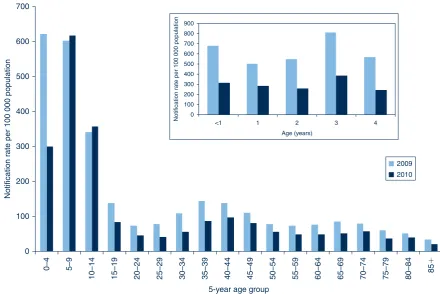
The highest pertussis notification rates were in children aged 5–9 years (2730 cases, 616.9 per 100 000 population) and 10–14 years (1614 cases, 356.5 per 100 000 popula-tion). The age groups 5–9 and 10–14 years were the only age groups showing an increase in notification rates in 2010 compared with 2009, in contrast to younger age groups. Notifications of pertussis in children aged 0–4 years were significantly lower in 2010 (1394 cases, 298.8 per 100 000 population) compared to 2009 (2821 cases, 621.6 per 100 000 population). Of the cases aged less than 5 years, the highest notification rates were in children aged 3 years (364 cases, 384.7 per 100 000 population) and infants aged less than 12 months (302 cases, 315.4 per 100 000 population) (Figure 3).
In 2010, 4026 cases (43%) were male. Of the 1394 cases aged 0–4 years (who are followed up by public health units), 49 (4%) were notified in Aboriginal children. Geographi-cally, the highest notification rates were reported in the Far West (260.3 per 100 000 population), Murrumbidgee (196.8 per 100 000 population) and North Sydney (195.5 per 100 000 population) Local Health Districts (Table 1).
Vaccination status of cases
In 2010, 302 cases were notified in infants aged less than 12 months of age. Of these, 204 (68%) were infants too young to be fully vaccinated. Of the 1092 cases of pertussis notified in children aged 1–4 years, 83 (8%) had no immunisation recorded, 123 (10%) had less than three doses of vaccine recorded, and 882 (81%) had three or more doses recorded.
Comment
(315.4 per 100 000 population in 2010 compared to 677.2 per 100 000 population in 2009).
The reduction in notifications in these age groups may be in part due to a statewide community awareness campaign to protect infants. The key messages were: for infants to receive their first dose of vaccine at 6 weeks (from 8 weeks); for children to receive their first booster dose of vaccine at 3½ years (from 4 years); and to promote free vaccination for
new parents, grandparents and carers of infants.8
Pneumococcal disease (invasive)
Pneumococcal disease is caused by infection with the
bacteriaStreptococcus pneumoniaand is a frequent cause
of serious bacterial infections.3 There are more than 90
different serotypes that can cause the disease. Vaccines for children aged less than 5 years (7-valent pneumococcal conjugate vaccine – 7vPCV) and adults older than 65 years
(23-valent pneumococcal polysaccharide vaccine –
23vPPV) were introduced into the National Immunisation
Program in 2005.4In NSW, cases of all ages are notified,
but only those aged less than 5 years or older than 50 years are routinely followed up by public health units to gather vaccination and serotype data.
Summary of notified cases
In 2010, 503 cases of invasive pneumococcal disease were notified compared to 478 in 2009. Forty-six deaths
were identified in 2010 compared to 53 in 2009. Two deaths were notified in fully vaccinated children aged less than 2 years (disease caused by serotypes not included in the vaccine), five in people aged 5–49, and 39 in people aged older than 50 years.
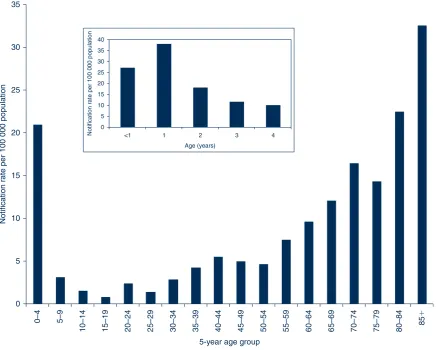
The highest notification rates of invasive pneumococcal disease were in adults aged older than 85 years (45 cases, 32.6 per 100 000 population), 80–84 years (34 cases, 22.5 per 100 000 population) and children aged less than 5 years (98 cases, 21.1 per 100 000 population) (Figure 4). Of the cases aged less than 5 years, the highest notification rates were in children aged 12–23 months (35 cases, 38.0 per 100 000 population) and infants aged less than 12 months (26 cases, 27.2 per 100 000 population).
Fifty-six percent of cases were male. Of the 371 cases aged 0–4 years or older than 50 years (who are followed up by public health units), 13 (4%) were notified in Aboriginal people. Geographically, the highest notification rates were reported in the Western NSW (10.0 per 100 000 population), South Eastern Sydney (8.7 per 100 000 popu-lation) and Nepean Blue Mountains (8.3 per 100 000 population) Local Health Districts (Table 1).
Serotype
Of the 503 cases of invasive pneumococcal disease notified in 2010, 400 (80%) had complete serotype 0
100 200 300 400 500 600 700
Notification r
ate per 100 000 population
0–4 5–9
10–14 15–19 20–24 25–29 30–34 35–39 40–44 45–49 50–54 55–59 60–64 65–69 70–74 75–79 80–84 85
⫹
5-year age group 0
100 200 300 400 500 600 700 800 900
<1 1 2 3 4
Notification r
ate per 100 000 population
Age (years)
2009
2010
Figure 3. Annual notification rates of pertussis by 5-year age groups, NSW, 2009 and 2010. Inset: Annual notification rates for children aged below 5 years for 2009 and 2010 for each year of age.
information. For children aged less than 5 years with known serotype information, 92 (94%) were notified with serotypes not included in the 7vPCV, two (2%) were notified with invasive disease caused by a serotype included in the 7vPCV (19F and 23F), and four (4%) were unable to be typed. For people aged 5–49 years with known serotype information, 95 (81%) were notified with sero-types not included in the 7vPCV, 17 (15%) were notified with invasive disease caused by a serotype included in the 7vPCV, and five (4%) were unable to be typed. For adults aged older than 50 years, 70 cases (28%) were caused by a non-vaccine-related serotype.
Comment
Invasive pneumococcal disease has significantly decre-ased in children aged less than 5 years, with moderate reductions in adults aged older than 50 years, following the addition of pneumococcal vaccine onto the National
Immunisation Program in 2005.9 In children, disease
caused by serotypes included in the 7vPCV are uncom-mon, however, disease caused by serotypes not included in the 7vPCV has continued to increase (particularly disease caused by serotype 19A).
Rubella
Rubella (or German measles) is an infectious viral disease. Although a mild infection in most people, infection in early pregnancy can cause serious birth defects or mis-carriage. Rubella is spread from a person with the infection
by droplets from the nose or mouth or by direct contact.3
Rubella is easily spread to people who have not been vaccinated or not previously had the infection. Rubella vaccination is provided using MMR vaccine at 12 months
and 4 years of age.4
Summary of notified cases
In 2010, 13 cases of rubella were notified in NSW compared to seven in 2009. All cases were notified in adults aged 20–50 years. Six cases (46%) were male. Geographically, the highest notification rates were in the Central Coast Local Health District (0.6 per 100 000 population) (Table 1).
Comment
It is likely that many cases of rubella are diagnosed clinically and are never confirmed by pathology tests. Therefore, the notifications are likely to represent an 0
5 10 15 20 25 30 35
Notification r
ate per 100 000 population
0–4 5–9
10–14 15–19 20–24 25–29 30–34 35–39 40–44 45–49 50–54 55–59 60–64 65–69 70–74 75–79 80–84 85
⫹
5-year age group 0
5 10 15 20 25 30 35 40
<1 1 2 3 4
Notification r
ate per 100 000 population
Age (years)
Figure 4. Annual notification rates of invasive pneumococcal disease by 5-year age groups, NSW, 2010. Inset: Annual notification rates in children aged below 5 years for 2010 for each year of age.
underestimation of the true incidence of rubella in the community. Rubella cases are not routinely followed up by public health units in NSW. Notifications have declined over time.
Tetanus
Tetanus is a disease caused by the bacteria Clostridium
tetani. Toxin made by the bacteria, which grows at the site
of an injury, attacks a person’s nervous system. Although now rare due to immunisation, tetanus can be fatal.
C. tetanibacteria are found in dust and animal faeces and
infection may occur after minor injury (sometimes unno-ticed punctures to the skin that are contaminated with soil, dust or manure) or after major injuries such as open
fractures, dirty or deep penetrating wounds, and burns.3
Tetanus is not passed from one person to another. Vacci-nation against tetanus is given to children with diphtheria and pertussis (DTPa) in a primary course at 2, 4 and 6
months of age. A booster dose of DTPa is given at 4 years.4
A second booster dose has been included in the National Immunisation Program for those aged 15–17 years since 2004 using the adult dTpa formulation.
Summary of notified cases
In 2010, one case of tetanus was notified in NSW. The case, an elderly man, was unsure of his vaccination history.
Comment
The number of notified cases of tetanus has remained relatively stable over the past 5 years, ranging from one to two cases annually. In Australia, tetanus mostly occurs in older adults who are not adequately immunised.
Discussion
The numbers of notified cases of many vaccine-preventable diseases remain low in NSW, however, outbreaks do occur. High rates of pertussis infection have been notified in recent years, in part due to waning immunity and increased use of more sensitive tests. Outbreaks of measles have occurred as a result of non-vaccinated people travelling to countries where vaccine-preventable disease is more common. Maintaining high levels of vaccination coverage for overseas travellers is important for future vaccine-preventable disease control, particularly for measles.
Notification data for vaccine-preventable diseases are sub-ject to several limitations and are likely to underestimate the true incidence of disease. Firstly, some infections can be mild, so people may not present for medical attention. Secondly, for those who do present to healthcare providers, notification relies on a diagnosis being made and in the absence of a doctor notifying the case, appropriate
laboratory tests being ordered. Thirdly, positive diagnoses may not be notified by the doctor, laboratory or hospital to public health units as required under the Public Health Act for a variety of reasons. Nonetheless, assuming these biases are relatively stable over time, vaccine-preventable disease notification data do provide a useful indication of the trends in disease incidence in NSW.
Conclusion
With the exception of pertussis, most vaccine-preventable diseases are currently notified in low numbers in NSW. This is the result of reaching and maintaining high vaccination coverage levels. Notification and disease estimates from surveillance systems can be affected by changes in disease awareness, laboratory diagnostic tests and testing protocols, case definitions, and reporting practices over time. Howev-er, ongoing surveillance for vaccine-preventable disease is important to identify changes to disease incidence and to inform appropriate public health action.
Acknowledgments
The authors would like to thank and acknowledge the NSW public health network including laboratory staff for their work in identi-fying and managing cases of vaccine-preventable disease in NSW.
References
1. Australian Government Department of Health and Ageing. Australian national notifiable diseases case definitions. Available from: http://www.health.gov.au/internet/main/ publishing.nsf/content/cdna-casedefinitions.htm (Cited June 2011.)
2. Communicable Diseases Branch. NSW Department of Health. Disease Control Guidelines. Available from: http://www.health. nsw.gov.au/publichealth/Infectious/controlguide.asp (Cited June 2011.)
3. Heymann DL, ed. Control of Communicable Diseases Manual. 19th ed. Washington: American Public Health Association; 2008.
4. National Health and Medical Research Council. The Australian Immunisation Handbook. 9th ed. Canberra: Australian Government Department of Health and Ageing; 2008.
5. Brotherton J. EpiReview: Measles in NSW, 1991–2000.N S W Public Health Bull2001; 12(7): 200–4. doi:10.1071/NB01068 6. Ferson MJ, Konecny P. Recent increases in mumps incidence in
Australia: the ‘forgotten’ age group in the 1998 Australian Measles Control Campaign.Med J Aust2009; 190(5): 283–4. 7. Spokes PJ, Quinn HE, McAnulty JM. Review of the 2008–2009
pertussis epidemic in NSW: notifications and hospitalisations. N S W Public Health Bull2010; 21(7–8): 167–73. doi:10.1071/ NB10031
8. Whooping Cough information campaign, NSW Department of Health. Available from: http://www.health.nsw.gov.au/ PublicHealth/Infectious/whoopingcough/index.asp (Cited June 2011).
NSW Annual Immunisation Coverage
Report, 2010
Brynley Hull
A,D, Aditi Dey
A,
Sue Campbell-Lloyd
B, Robert I. Menzies
A,Cand Peter B. McIntyre
A,CA
National Centre for Immunisation Research and Surveillance, The Children’s Hospital at Westmead
BAIDS and Infectious Diseases Branch, NSW Department of Health
C
Sydney Medical School, The University of Sydney D
Corresponding author. Email: [email protected]
Abstract: This annual report, the second in the series, documents trends in immunisation cover-age in NSW for children, adolescents and the
elderly, to the end of 2010.Methods:Data from
the Australian Childhood Immunisation Register, the NSW School Immunisation Program and the NSW Population Health Survey were used to calculate various measures of population cover-age, coverage for Aboriginal children and
vacci-nation timeliness for all children. Results:Over
90% coverage has been reached for children at 12 and 24 months of age. For children at 5 years of age there was an improvement during 2010 in timeliness for vaccines due at 4 years and coverage almost reached 90%. Delayed receipt of vaccines is still an issue for Aboriginal children. For adolescents, there is good coverage for the first and second doses of human papillomavirus vaccine and the dose of diphtheria, tetanus and acellular pertussis. The pneumococcal vaccination rate in the elderly has been steadily rising, although it has remained lower than the influenza
coverage estimates. Conclusion: Completion of
the recommended immunisation schedule at the earliest appropriate age should be the next public health goal at both the state and local health district level. Official coverage assessments for ‘fully immunised’ should include the 7-valent pneumococcal conjugate and meningococcal C vaccines, and wider dissemination should be considered.
This is the second New South Wales (NSW) Annual
Immunisation Coverage Report. This series of annual
reports provides information on trends and issues in immunisation coverage in NSW to facilitate the monitor-ing of NSW immunisation programs. This report uses the longstanding international practice of reporting coverage at key milestone ages to measure coverage against national benchmarks and to track trends over time. It is adapted from annual national immunisation reports published since
2009.1
High levels of reporting to the Australian Childhood Immunisation Register are maintained by a system of incentive payments for immunisation providers and carers.
These have been discussed in detail elsewhere.2However,
changes to immunisation policy, the incentive payment system and changes to the ‘fully immunised’ coverage algorithms may have an impact on reported vaccination coverage; some recent changes are highlighted in Box 1 and also referred to in this report.
The Australian Childhood Immunisation Register was established on 1 January 1996 by incorporating demo-graphic data from Medicare on all enrolled children aged
less than 7 years.3 The operations of the Australian
Childhood Immunisation Register have been discussed in
detail elsewhere.2
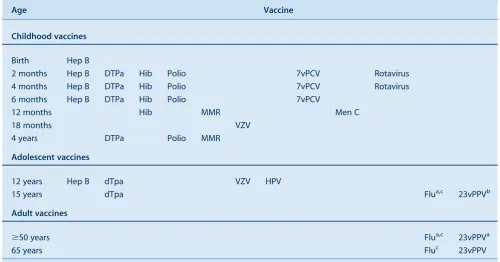
Table 1 presents the vaccines delivered through the NSW Immunisation Program for children in 2010. No new vaccines were introduced into the NSW Immunisation Program during 2010.
Methods
Measuring immunisation coverage using the Australian Childhood Immunisation Register
The cohort method has been used for calculating coverage
at the population level (national and state/territory)4since
the inception of the Australian Childhood Immunisation Register. Cohort immunisation status is assessed at 12 months of age (for vaccines due at 6 months), 24 months of age (for vaccines due at 12 months), and 5 years of age (for vaccines due at 4 years). A 3-month lag period is allowed for the late notification of immunisations to the
Australian Childhood Immunisation Register.4If a child’s
Table 1. Schedule of vaccines delivered through the NSW Immunisation Program, to children, adolescents and adults in 2010
Age Vaccine
Childhood vaccines
Birth Hep B
2 months Hep B DTPa Hib Polio 7vPCV Rotavirus
4 months Hep B DTPa Hib Polio 7vPCV Rotavirus
6 months Hep B DTPa Hib Polio 7vPCV
12 months Hib MMR Men C
18 months VZV
4 years DTPa Polio MMR
Adolescent vaccines
12 years Hep B dTpa VZV HPV
15 years dTpa Flua,c 23vPPVb
Adult vaccines
$50 years Flua,c 23vPPVa
65 years Fluc 23vPPV
Hep B: hepatitis B vaccine; DTPa: diphtheria, tetanus and acellular pertussis-containing vaccine; dTpa: adolescent and adult formulation DTPa; Hib:Haemophilus influenzaetype b vaccine; MMR: measles-mumps-rubella vaccine; VZV: varicella zoster virus vaccine; 7vPCV: 7-valent
pneumococcal conjugate vaccine; Men C: meningococcal C vaccine; HPV: human papilloma virus vaccine (females only); Flu: influenza vaccine; 23vPPV: 23-valent pneumococcal polysaccharide vaccine
aAll Aboriginal adults only
bAboriginal adults with medical risk factors
cAnnual vaccination, all aged$6 months with medical risk factors, Aboriginal adults$15 years, non-Aboriginal adults$65 years
Source: National Immunisation Program Schedule.
Box 1. Recent significant changes in immunisation policy, immunisation incentives and coverage calculation algorithms
December 2009– Changes in the coverage calculation algorithms that tightened the rules regarding receipt ofHaemophilus influenzaetype b and hepatitis B vaccines for children aged 12 and 24 months to lead to more accurate measures ofHaemophilus influenzaetype b and hepatitis B vaccine coverage in Australia.
October 2009– The recommendation by the Australian Technical Advisory Group on Immunisation that the fourth dose of
diphtheria, tetanus and acellular pertussis (DTPa)-containing vaccine can be given from 3½ years of age instead of the previously recommended 4 years of age.
March 2009– The recommendation by NSW Health and the Australian Technical Advisory Group on Immunisation to parents and
immunisation providers to consider bringing the first dose of DTPa forward to 6 weeks of age to provide earlier protection.
January 2009– Changes to the overdue rules so that children were classified as overdue for pre-school boosters at 4 years
and 1 month instead of the previous 5 years of age. This applied to parental and provider incentive payments.
The Maternity Immunisation Allowance changed from a full payment at 18–24 months of age to being paid in two instalments: the first when the child is fully immunised and aged between 18 and 24 months; and the second when the child is fully immunised and aged between 4 and 5 years. This payment applied only to children who had not yet already received the full payment at 2 years of age.
October 2008– The General Practice Immunisation Incentive Service Incentive Payment ($18.50 for completing a schedule point)
ceased. Information payments of $6 were retained.
assumed that earlier vaccinations in the sequence have
been given. This assumption has been shown to be valid.5,6
The proportion of children designated as ‘fully immunised’ was calculated using the number of Medicare-registered children who were completely immunised with the vac-cines of interest by the designated age as the numerator and the total number of Medicare-registered children in the age cohort as the denominator. ‘Fully immunised’ at 12 months of age was defined as a child having a record on the Australian Childhood Immunisation Register of three doses of a diphtheria, tetanus and pertussis (DTP)-containing vaccine, three doses of polio vaccine, three
doses ofHaemophilus influenzaetype b (Hib) vaccine and
three doses of hepatitis B vaccine. ‘Fully immunised’ at 24 months of age was defined as three or four doses of a DTP-containing vaccine, three doses of polio vaccine, four doses of Hib vaccine, three doses of hepatitis B vaccine, and one dose of a measles- mumps- rubella-containing (MMR) vaccine. ‘Fully immunised’ at 5 years of age was defined as four or five doses of a DTP-containing vaccine, four doses of polio vaccine and two doses of an MMR-containing vaccine.
Immunisation coverage estimates were also calculated for individual National Immunisation Program vaccines, including those not included in calculations for incentive payments and ‘fully immunised’ status. They were: the third dose of 7-valent pneumococcal conjugate vaccine (7vPCV) and the second dose of rotavirus vaccine by 12 months of age; and one dose each of varicella and meningococcal C vaccines by 24 months of age.
Timeliness
Age-appropriate immunisation was defined as receipt of a scheduled vaccine dose within 30 days of the recom-mended age. We categorised vaccination at 1–6 months or more than 6 months after the recommended age as delayed. All children included in the analysis were old enough to potentially experience delays in immunisation greater than 6 months for immunisation due by 24 months of age or earlier. Timeliness of different vaccines and doses was also compared by plotting the cumulative percentage receiving each vaccine dose by age, with the proportion ever immunised set as 100%.
Local health districts
Immunisation coverage estimates and vaccination delay estimates are presented in this report by NSW local health district (LHD). LHDs were introduced in January 2011, replacing area health services. There are 18 LHDs in NSW, eight in metropolitan NSW, seven in rural and regional NSW, two specialist networks focusing on Children’s and Paediatric Services, and one specialist network focus-ing on Forensic Mental Health. Another geographical area,
Network with Victoria, consists of two postcodes (2640 and 2641) both of which are in Albury NSW.
Aboriginal status
Indigenous status on the Australian Childhood Immunisa-tion Register is recorded naImmunisa-tionally as ‘Indigenous’, ‘non-Indigenous’ or ‘unknown’, as reported by the child’s carer to Medicare, or by the immunisation provider to the Australian Childhood Immunisation Register. For this report we considered two categories of children: ‘Aboriginal’ (Indigenous) and ‘non-Aboriginal’ (non-Indigenous). Children with unknown Aboriginal status were presumed to be ‘non-Aboriginal’. Coverage estimate time trends are presented from 2004 only, due to poor rates
of reporting of Aboriginal status before that time.7
Small area coverage
Coverage was calculated for Australian Bureau of
Statis-tics (ABS)-defined statistical subdivisions.8 We chose
ABS-defined statistical subdivisions as areas to be mapped because they provide more detail than LHDs but are not too small to render maps unreadable (child population sizes for statistical subdivisions in NSW range from 90 to 7000 children). Maps were created using MapInfo mapping software (version 10, MapInfo Corporation, New York, USA) and the ABS Census Boundary Information. As postcode is the only geographical indicator on the Australian Childhood Immunisation Register, the ABS Postal Area to Statistical Local Area Concordance 2006 was used to match Australian Childhood Immunisation Register residential postcodes of the children to statistical
subdivisions.9
Conscientious objection and no vaccine recorded
A child must be registered with Medicare before his or her parent(s) can lodge a conscientious objection to immunisa-tion with the Australian Childhood Immunisaimmunisa-tion Register. Conscientious objectors are eligible for immunisation incentive payments without the need for immunisation, 50
55 60 65 70 75 80 85 90 95 100
31 Mar 00 30 Sep 00 31 Mar 01 30 Sep 01 31 Mar 02 30 Sep 02 30 Mar 03 30 Sep 03 31 Mar 04 30 Sep 04 31 Mar 05 30 Sep 05 31 Mar 06 30 Sep 06 31 Mar 07 30 Sep 07 31 Mar 08 30 Sep 08 31 Mar 09 30 Sep 09 31 Mar 10 30 Sep 10
Co
v
e
rage (%)
Coverage assessment date for each cohort ACIR-fully vaccinated by 12 months
ACIR-fully vaccinated by 24 months ACIR-fully vaccinated by 5 years ACIR-fully vaccinated by 6 years
Coverage at 24 months now greater than at 12 months
Target 18-month dose of DTPa
removed from schedule
Combination vaccines introduced, leading
to fewer injections
Coverage algorithm changed to assess
children at 5 years, not 6 years
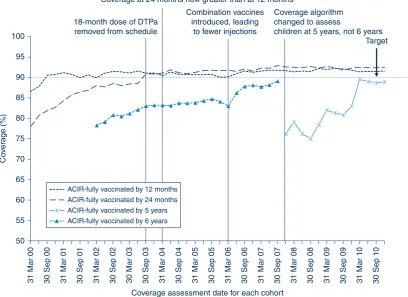
Figure 1. Trends in ‘fully immunised’a,b,cvaccination coverage, NSW, 2000–2010, for four age cohorts
aThree doses of a diphtheria, tetanus and acellular pertussis-containing (DTPa) vaccine, three doses of polio vaccine, two or three
doses of PRP-OMP-containingHaemophilus influenzaetype b (Hib) vaccine or three doses of any other Hib vaccine, and two or three
doses of Comvax hepatitis B vaccine or three doses of all other hepatitis B vaccines.
bThree or four doses of a DTPa-containing vaccine, three doses of polio vaccine, three or four doses of PRP-OMP-containing Hib
vaccine or four doses of any other Hib vaccine, three or four doses of Comvax hepatitis B vaccine or four doses of all other hepatitis B vaccines, and one dose of a measles, mumps and rubella (MMR)-containing vaccine.
cFour or five doses of a DTPa-containing vaccine, four doses of polio vaccine, and two doses of an MMR-containing vaccine.
ACIR: Australian Childhood Immunisation Register
but parents may also object to immunisation but refuse to lodge any official objection. We used the percentage of children with no vaccines recorded on the Australian Childhood Immunisation Register as a proxy measure of the total number of children whose carers were opposed to immunisation, whether or not they are registered as
such. Proportions of conscientious objectors and
children with no vaccines recorded by LHD were cal-culated from the cohort of children registered with Medicare and born between 1 January 2004 and 31 December 2009; at the time of data extraction these children were aged between 12 and 72 months. We chose this cohort when calculating proportions so that children under the age of 12 months were not included, to allow sufficient time for registration of objection and to exclude infants late for vaccination.
Coverage in the elderly and adolescents
Influenza and pneumococcal vaccination coverage
estimates in elderly people were obtained from the NSW Population Health Survey. This is a rolling random
digit-dialled telephone survey, with vaccination status determined from patient recall at the time of the interview.
Influenza and pneumococcal vaccination coverage
estimates are based on 3568 and 3342 respondents in NSW, respectively. Methods and results are presented in
more detail elsewhere.10Coverage for vaccines given to
adolescents was collected from the NSW School Immuni-sation Program. Vaccination status is recorded by school immunisation teams and counts collated by LHDs and NSW Health. The denominator is the school population, start of year enrolments. The coverage rates may under-estimate the true vaccination coverage as they represent only those vaccinations received through the school pro-gram and do not include doses received from general practitioners or other immunisation providers. Methods
are presented in more detail elsewhere.11
Results
Overall coverage estimates
In the majority of LHDs in NSW, coverage for all individ-ual vaccines (except rotavirus) for the 12-month age group 75
80 85 90 95 100
31 Mar 00 30 Sep 00 31 Mar 01 30 Sep 01 31 Mar 02 30 Sep 02 30 Mar 03 30 Sep 03 31 Mar 04 30 Sep 04 31 Mar 05 30 Sep 05 31 Mar 06 30 Sep 06 31 Mar 07 30 Sep 07 31 Mar 08 30 Sep 08 31 Mar 09 30 Sep 09 31 Mar 10 30 Sep 10
Co
v
e
rage (%)
Coverage assessment date for each cohort DTPa
Polio Hib* Hep B* 7vPCV Rotavirus
Revised algorithm for hepatitis B and Hib*
Target
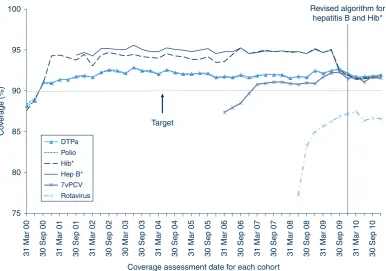
Figure 2. Trends in vaccination coverage estimates for individual vaccines at 12 months of age (third dose of DTPa, polio, hepatitis B, Hib, rotavirus and 7vPCV), NSW, 2000–2010
By 3-month birth cohorts born between 1 January 1999 and 31 December 2009. Coverage assessment date was 12 months after the last birth date of each cohort.
*Prior to September 2009, the algorithm stated that receipt of two or three doses ofHaemophilus influenzaetype b (Hib)
and hepatitis B vaccines rendered a child ‘fully immunised’ for these vaccines. After September 2009, changes to the algorithm were made to tighten the rules regarding ‘fully immunised’ for Hib and hepatitis B vaccines.
7vPCV: 7-valent pneumococcal conjugate vaccine
DTPa: diphtheria, tetanus, pertussis (acellular) – paediatric formulation
is greater than 90%. Two LHDs (Mid North Coast and Northern NSW) had 12-month coverage estimates ranging from 81.8% to 88.6% for all individual vaccines for the 12-month age group (Table 2). Similarly, in all LHDs except Northern NSW, coverage for all individual vaccines (except varicella) for the 24-month age group is also higher than 90% (Table 3). Recorded coverage for the 5-year age group is slightly below 90% for all vaccines (Table 4). Figure 1 shows time trends in ‘fully immunised’ childhood vaccination coverage at three milestone ages in NSW. The proportion ‘fully immunised’ at 1 and 2 years of age has been at high levels since 2003 whereas coverage at 5 years of age increased markedly in 2009 and 2010.
Coverage estimates for children aged less than 3 years
In NSW before 2009, coverage for the 12-month and 24-month age groups for Hib and hepatitis B vaccines was greater than for DTPa and polio, due to a less stringent algorithm for calculating coverage. Since the change in algorithm in the latter half of 2009, coverage estimates for Hib and hepatitis B have lowered and become similar
to those of DTPa and polio at just under 95% (Figures 2 and 3). These newer estimates more accurately reflect the true proportion of children fully vaccinated for these vaccines.
Coverage for 7vPCV has remained at high levels, with an increase from 87.4% in March 2006 to 91.6% in the last cohort assessed in December 2010 (Figure 2). It was similar in all LHDs at greater than 90% except in the Mid North Coast and Northern NSW (Table 2).
Rotavirus vaccine was added to the National Immunisation Program in July 2007; coverage for two doses at 12 months of age was calculated only from the July 2008 quarter onwards. Coverage increased in NSW from 77.3% in July 2008 to 86.6% in December 2010 (Figure 2) and was lower and had greater variation between LHDs compared to other vaccines given at 2, 4 and 6 months of age (Table 2).
In 2010, coverage for the MMR and meningococcal C vaccines for the 24-month age group was around 94% and 93% respectively. Coverage for meningococcal C has remained at high levels since first calculated for NSW in 70
75 80 85 90 95 100
Co
v
e
rage (%)
Coverage assessment date for each cohort DTP
Polio Hib Hep B MMR Varicella Men C
Revised algorithm for hepatitis B and Hib 18-month dose of DTPa removed
from schedule
31 Mar 00 30 Sep 00 31 Mar 01 30 Sep 01 31 Mar 02 30 Sep 02 30 Mar 03 30 Sep 03 31 Mar 04 30 Sep 04 31 Mar 05 30 Sep 05 31 Mar 06 30 Sep 06 31 Mar 07 30 Sep 07 31 Mar 08 30 Sep 08 31 Mar 09 30 Sep 09 31 Mar 10 30 Sep 10
Target
Figure 3. Trends in vaccination coverage estimates for individual vaccines at 24 months of age (DTPa, polio, hepatitis B, Hib, MMR, varicella, Men C),afor NSW 3-month birth cohorts between 1999 and 2008
By 3-month birth cohorts born between 1 January 1999 and 31 December 2008. Coverage assessment date was 24 months after the last birth date of each cohort.
aThird dose of DTPa (fourth dose – pre-Sept 2003); third dose of polio; third dose of hepatitis B, third dose of Hib; MMR; one dose
of varicella and one dose of Men C).
DTPa: diphtheria, tetanus, pertussis (acellular) – paediatric formulation Hep B: hepatitis B
Hib:Haemophilus influenzaetype b
Men C: meningococcal C MMR: measles-mumps-rubella
early 2006 though it was added to the National Immunisa-tion Program in January 2003. It was greater than 91% in all LHDs except Northern NSW (Table 3).
Varicella vaccine coverage for all LHDs was much lower than for meningococcal C (Table 3), ranging from 75.3% in Northern NSW to 89% in Albury (Network with Victoria).
Coverage estimates for children aged 5–6 years
The trends in childhood vaccination coverage in NSW for individual vaccines (DTPa, polio and MMR) at 6 years of age (5 years of age from December 2007) are shown in Figure 4. Coverage for all three vaccines was almost identical and remained steady across the whole period until mid-2006 when a sharp increase of almost 5% was recorded, likely due to the introduction of combi-nation vaccines. Coverage at 5 years of age was substan-tially lower than at 6 years of age due to the shorter time for the recording of delayed vaccinations. However, in 2010, the 5-year coverage for DTPa, polio and MMR increased markedly to be slightly above 89%. The overall ‘fully immunised’ rate for 5-year coverage was appro-ximately 89% in NSW, which was similar to the national
5-year coverage rate of 89.1%. All LHDs in NSW had more than 85% 5-year coverage rates for all vaccines, except Northern NSW which had approximately 83% (Table 4).
Coverage estimates for Aboriginal children
Vaccination coverage estimates for the three milestone ages for individual vaccines for Aboriginal status for 2010 are shown in Tables 5 and 6. These tables show that coverage is lower for Aboriginal children than non-Aboriginal children at the 12-month and 5-year age mile-stones, but there was little difference at 24 months of age.
At 12 months of age, at the LHD level, coverage was lower among Aboriginal children in all LHDs except Northern Sydney (91.1% non-Aboriginal; 100% Aboriginal) and Central Coast (92.6% non-Aboriginal; 93.0% Aboriginal). The extent of the difference varied among LHDs, ranging from 0.1% to 12%. However, by the age of 24 months, coverage disparities between Aboriginal and all other NSW children had almost disappeared in most LHDs, with the proportion ‘fully immunised’ at 91.5% for Aboriginal and 92.1% for all other NSW children (Tables 3 and 6). All LHDs in NSW had more than 90% coverage for Aboriginal 70
75 80 85 90 95 100
31 Mar 02 30 Sep 02 30 Mar 03 30 Sep 03 31 Mar 04 30 Sep 04 31 Mar 05 30 Sep 05 31 Mar 06 30 Sep 06 31 Mar 07 30 Sep 07 31 Mar 08 30 Sep 08 31 Mar 09 30 Sep 09 31 Mar 10 30 Sep 10
Co
v
e
rage (%)
Coverage assessment date for each cohort DTPa at 5 years
DTPa at 6 years
Polio at 5 years
Polio at 6 years
MMR at 5 years
MMR at 6 years
Coverage algorithm changed to assess children at 5 years,
not 6 years Target
Figure 4. Trends in vaccination coverage estimates for individual vaccines (DTPa, polio and MMR)aat 5 years of age (6 years up to December 2007)
Coverage assessment date was 72 months after the last birth date of each cohort up to December 2007 and then 60 months after the last birth date of each cohort.
aFourth dose of DTPa and polio and second dose of MMR
DTPa: diphtheria, tetanus, pertussis (acellular) – paediatric formulation MMR: measles-mumps-rubella
children with the highest 24-month coverage for Aborigi-nal children observed in the Illawarra Shoalhaven LHD.
At 5 years of age, the proportion recorded as being ‘fully immunised’ was lower than that at earlier age milestones. There was a small difference between Aboriginal and other NSW children (84.4% and 88.9% respectively) while, for individual LHDs, coverage in Aboriginal children ranged from 0.8% lower (in Albury [Network with Victoria]) to 14% lower (in Southern NSW) than in non-Aboriginal children (Tables 4 and 6).
Coverage in adolescents
NSW Adolescent Vaccination Program coverage data for high school students for 2010 are shown in Table 7. Cover-age varies by vaccine and dose with better coverCover-age for the first and second doses of human papillomavirus vaccine
(HPV) and the dose of dTpa in Year 7 attendees. Vaccine coverage by LHD was not available for 2010.
Vaccines for the elderly (pneumococcal and influenza)
The proportion of people aged 65 years and over who were vaccinated for influenza in the past 12 months has remained relatively stable and is over 70% in NSW for the period 2002–2010. However, pneumococcal vaccination (23-valent pneumococcal polysaccharide vaccine; 23vPPV) in the previous 5 years has been steadily rising, although it has remained lower than the influenza coverage estimates. The highest coverage rate for pneumococcal vaccination in the elderly was observed in 2006, the year after its inclu-sion on the National Immunisation Program (Figure 5).
In 2010, influenza (in the previous 12 months) and pneu-mococcal (in previous 5 years) vaccine coverage in the
Table 5. Vaccination coverage estimates for NSW children by age, disease and Aboriginal status, 2010
Vaccine Milestone age Aboriginal Non-Aboriginal
Diphtheria-tetanus-pertussis 12 monthsa 87.3 92.4
24 monthsb 94.3 94.7
5 yearsc 84.8 89.6
Poliomyelitis 12 monthsa 87.2 92.4
24 monthsb 94.3 94.6
5 yearsc 84.7 89.6
Haemophilus influenzatype b 12 monthsa 87.2 92.2
24 monthsb 95.0 94.8
5 yearsc NI NI
Hepatitis B 12 monthsa 87.2 92.0
24 monthsb 94.3 94.1
5 yearsc NI NI
Measles-mumps-rubella 12 monthsa NI NI
24 monthsb 93.6 93.8
5 yearsc 85.2 89.4
Varicella 12 monthsa NI NI
24 monthsb 81.0 82.1
5 yearsc NI NI
Meningococcal C 12 monthsa NI NI
24 monthsb 93.3 93.4
5 yearsc NI NI
7-valent pneumoccocal conjugate vaccine 12 monthsa 87.1 91.7
24 monthsb NI NI
5 yearsc NI NI
Rotavirus 12 monthsa 80.6 86.6
24 monthsb NI NI
5 yearsc NI NI
aBirth cohort born 1 January 2009–31 December 2009
bBirth cohort born 1 January 2008–31 December 2008
cBirth cohort born 1 January 2005–31 December 2005
elderly was highest in the Central Coast and Hunter New England LHDs and lowest in the Nepean Blue
Mountains LHD.10
Timeliness of immunisation
For the third dose of DTPa, there was significantly greater delay in immunisation for Aboriginal children than non-Aboriginal children, with a 16.8% differential at 7 months of age (Figure 6). A smaller differential of 6% was found for the second dose of MMR at 49 months of age (Figure 7). There was a marked improvement in the timeliness of the second dose of MMR from 2009 for both population groups, with 28.6% and 33.3% of doses given by 50 months of age in Aboriginal and non-Aboriginal children respectively in 2009, compared to 45.2% and 51.3% in 2010.
A similar pattern is seen when vaccination delay is categorised into 1–6 months and greater than 6 months (Tables 8 and 9). The Northern Sydney LHD had the lowest degree of vaccination delay 1–6 months in length for both Aboriginal and non-Aboriginal children. The Far West LHD had the lowest degree of vaccination delay greater than 6 months in length for both Aboriginal and non-Aboriginal children. The LHDs experiencing the greatest overall delay were Northern NSW and the Mid North Coast. The degree of vaccination delay for the second dose of MMR vaccine was substantially higher for all LHDs in NSW and for both Aboriginal and non-Aboriginal children (Table 9). Compared to 2009, the proportion of doses delayed in 2010 by more than 6 months decreased by 4.5% in Aboriginal and 7.5% in non-Aboriginal children, while the 1–6-month delays increased by 0.3% and 3.8% respectively.
In response to the current pertussis epidemic and to provide early protection for young infants, it was recommended in March 2009 that NSW immunisation providers give the first dose of DTPa vaccine (given in a hexavalent combination of DPTa, Hep B, Hib and inactivated polio-virus) at 6 weeks of age instead of 8 weeks of age. Figure 8 shows the age at which children in NSW were given the first dose of DTPa by month of vaccination during 2009 and 2010. Before the recommendation, very few children received the vaccine dose at 6 weeks of age but the percentage rose over the 2 years with more than 60% of children receiving the dose before 8 weeks of age in November 2010.
Conscientious objectors and no vaccines recorded
The percentage of children with no vaccines recorded in NSW is greater than those recorded as conscientious objectors (Table 10). Both indicators varied by LHD with a high percentage of objectors and children with no vaccines recorded in the Northern NSW LHD and the lowest in the Western NSW LHD.
Small area coverage
‘Fully immunised’ coverage in NSW by statistical sub-division for the 5-year milestone age group in 2010 varies substantially within the state, with many areas having recorded coverage below 90%, putting them at higher risk of outbreaks of highly contagious diseases such as measles and pertussis (Figure 9). However, coverage across the state improved markedly from 2009 with many
Table 7. Vaccination coverage estimates for individual vaccines, NSW adolescent school attendees in NSW, 2010
Vaccine Coverage
(%)
Doses administered
(n)
HPV dose 1a 77 32 975
HPV dose 2a 72 30 793
HPV dose 3a 66 28 537
Hepatitis B dose 1a 63 54 701
Hepatitis B dose 2a 57 49 507
dTpaa 70 61 262
Varicellaa 32 27 775
dTpab 63 56 384
aYear 7 school attendees
bYear 10 school attendees
HPV: human papillomavirus
dTpa: diphtheria, tetanus, pertussis (acellular) – adolescent and adult formulation
Source: NSW School Immunisation Program.
30 40 50 60 70 80 90 100
2002 2003 2004 2005 2006 2007 2008 2009 2010
Co
v
e
rage (%)
Year Funded* 23vPPV (pneumococcal)
Influenza
Figure 5. Trends in vaccination coverage estimates for individual vaccines (23vPPV and influenza) for adults aged 65 years and overain NSW, 2002–2010
aVaccinated against pneumococcal disease in the last 5 years
and vaccinated against influenza in the last 12 months *In 2005, 23vPPV was included in the National Immunisation Program
23vPPV: 23-valent pneumococcal polysaccharide vaccine
0 10 20 30 40 50 60 70 80 90 100
5 6 7 8 9 10 11 12⫹
Co
v
e
rage (%)
Age child received dose of DTP3 (months) 16.8%
Age DTP3 due
Non-Aboriginal
Aboriginal
Figure 6. Timeliness of the third dose of diphtheria, tetanus and acellular pertussis-containing (DTPa) vaccine for the cohort of Aboriginal and non-Aboriginal children born in 2007 in NSW
Percentage covered5number of children who received vaccine dose at particular ages/the total number of children who received the vaccine dose
DTP3: third dose of DTPa – paediatric formulation
Source: Australian Childhood Immunisation Register.
0 10 20 30 40 50 60 70 80 90 100
47 48 49 50 51 52 53 54 55⫹
Co
v
e
rage (%)
Age child received second dose of MMR (months) 6.1%
Non-Aboriginal
Aboriginal
Figure 7. Timeliness of the second dose of measles-mumps-rubella (MMR) vaccine for the cohort of Aboriginal and non-Aboriginal children born in 2004 in NSW
Percentage covered5number of children who received vaccine dose at particular ages/the total number of children who received the vaccine dose
MMR: measles-mumps-rubella