Turkish Journal of Fisheries and Aquatic Sciences 18: 859-870 (2018)
www.trjfas.org ISSN 1303-2712 DOI: 10.4194/1303-2712-v18_7_04
RESEARCH PAPER
© Published by Central Fisheries Research Institute (CFRI) Trabzon, Turkey in cooperation w ith Japan International Cooperation Agency (JICA), Japan
Can Shifting Codend Mesh Shape and Mesh Size Increase the Size
Selectivity of Red mullet (
Mullus barbatus
) in the Black Sea?
Introduction
Red mu llet, a mong species of demersal fishery resources, is one of the most important co mme rcia l species preferred by the consumer. Mullus spp. and the other demersal species have been caught proportionally and effectively by bottom trawls. It has been recently noted that there is an over-catching and over-e xploitat ion on red mullet stocks declared by General Fisheries Co mmission for the Mediterranean (GFCM ) and therefore, it is reco mmended to change the design of fishing gears to reduce the overall fishing pressure and the percentage of undersized fish in the total catch (FAO, 2011; GFCM, 2011). For this reason, GFCM has encouraged the studies aiming to improve selectivity and reducing discards of the Mediterranean demersal trawl fleet (GFCM, 2010).
Among the countries in the Blac k Sea (Mediterranean sub-regional fisheries code: GSA 29 in the Mediterranean basin), Turkey was a significant producer with the 83% o f total landing a mount of
Mullus spp. in 2014 (STECF, 2015). There withal, 70% of annual landing of Mullus spp. in Turkey was provided fro m the Black Sea in 2015 (Anonymous, 2016a). Therefore , the Blac k Sea coast of Turkey is of great importance fo r the catching of these species.
Vast ma jority (96%) of the Mullus spp. on the Blac k Sea coast of Turkey has been caught with bottom trawls (Knudsen, Zengin, & Koçak, 2010). Two species of Mullus spp. have been caught with the trawls in this reg ion. St riped red mullet (Mullus surmuletus) usually constitutes only a very small (4%) section of the total Red mu llet fishing in and around the Istanbul Stra it, whereas Red mullet (Mullus barbatus) is a common ly caught species in the whole Black Sea. These two species are easily distinguishable fro m each other morphologically. However, in some p laces, the red mullet’s minors are also called as a “striped red mullet” (STECF, 2015) due to local Turkish na ming errors and it is reported that there is no striped red mullet in Turkish coast of the Black Sea (Keskin, 2012). There is no minimu m landing size (M LS) for the M. surmuletus in the Blac k Sea regulated by European Union (EU, 2006), while in Turkey there are 13 and 11 c m M LS regulation for the red mullet and striped red mullet, respectively (Anonymous, 2016b). Currently, Turkish Fisheries Regulation (TFR, No. 4/ 1, 2016) define 40 mm minimu m mesh size fo r the dia mond mesh in the Black Sea, and 44 mm fo r both the Aegean and the Levantine Seas. The use of 40 mm square mesh has been left to the preference of the fisherman according
M. Hakan Kaykac
1,*, Mustafa Zengin
2, Zafer Tosunoglu
11
Ege University, Faculty of Fisheries, 35100, Bornova, İzmir, Turkey .
2 Central Fisheries Research Institute, Trabzon, Turkey .
* Corresponding Author: Tel.: +90 530 2120505; Fax: +90 232 3747450; E-mail: [email protected]
Received 12 July 2017 Accepted 16 October 2017
Abstract
M ore than half of the landing (70%) of Red mullet (Mullus barbatus)in Turkey is provided from the Black Sea, which is almost all (96%) with bottom trawls. The effect of demersal trawl codend mesh shape and size on the s electivity of Red mullet in the Black Sea was investigated. Selectivity trials were conducted in August 2014 on a commercial trawl boat with conventional (40D), 36 and 40 mm square mesh (36S and 40S) and turned mesh codends (40T90). Data were collected using the covered codend method with a total of 21 valid hauls and selection parameters were obtained by fitting a logistic equatio n using maximum likelihood method. The L50 value was found to be very low at 9.79 cm in the 40D trawl codend, while the L50
value of 40S (11.89 cm) and 36S (10.59 cm) codends was obtained 21.5% and 8.2% better compared to the 40D, respectively. According to the traditional trawl codend, a L50 value increase of 5.1% was observed in 40T90 (10.29 cm). Although all these
values are below the M inimum Landing Size of the species, changes to the traditional mesh, especially in the shape of the mesh, can lead to significant improvements in size selectivity.
of a ce rtain size group in the trawl codend is the basic principle of mesh selection. All of the trawl nets in the Black Sea have been constructed by diamond mesh. The mesh tends to close in the net under the smallest force applied, which affects mesh selectivity negatively (Robertson & Stewart, 1988; Guijarro & Massuti, 2006). In the last quarter of a century, many selectivity studies have been conducted to increase codend selectivity in bottom tra wl nets in order to ensure the sustainability of de mersal fishery resources and to protect the fish stocks (Lök, To kaç, Tosunoğlu, Metin, & Ferro, 1997; Tokaç, Lö k, Tosunoğlu, Metin, & Ferro, 1998; Sa la, Priour, & He rrmann 2006; Sa la, Lucchetti, & Buglioni, 2007; Tosunoğlu, Aydın, & Özaydın, 2008; Tokaç, Özb ilg in, & Kay kaç, 2010; Aydın, Tokaç, Ulaş, Maktay, & Şensurat, 2011; Özbilgin, Tokaç, & Kaykaç, 2012; Eryaşar et al., 2014; Sala , Lucchetti, Perdichizzi, Herrmann, & Rinelli, 2015; Özb ilg in et al., 2015). In addition, the GFCM constantly encourages scientists to conduct selectivity studies for sustainable fisheries resource (GFCM, 2010).
Although the greatest amount of red mullet is provided from the Black Sea, there have been very few selectiv ity studies related to this species until today (Zengin, Genç, & Tabak, 1997; Genç et al., 2002; Özdemir, 2006). So me researchers have indicated that the mesh size, wh ich must be used in legal regulations, is not preferred by a vast majority of fishermen (Ceylan, Şahin, & Kalaycı, 2014; Zengin, Gü müş, Kay kaç, Tosunoğlu, & Akp ınar, 2017). Th is leads to an increase in the number of s ma ll indiv iduals and by-catch rates. The size of red mu llet landed in this region has decreased from 13.7 c m in 1990 to 10.5 c m in 2005 (Knudsen et al., 2010). In Eastern Black Sea, Genç (2000) reported that the first sexual maturity of the red mu llet is attained at 10.2 c m in ma les and 11.3 c m in fe ma les. These declines in the length of the red mullet caught is a dangerous situation for these stocks when considering the length of the first maturity (LFM) and the minimu m landing size (MLS) group.
Only one study was conducted on square mesh panel codend and the results showed that this panel was more selective than the diamond mesh (Özdemir,
preferred by the fisherman. T90 codend, in wh ich the standard diamond mesh netting orientation is turned 90°, has more mesh opening than the standard dia mond mesh and easy to apply and repair for the fishermen (Moderhak, 1995,1997,1999; Wienbeck, Hermann, Moderhak, & Stepputtis, 2011). There is no study in the Black Sea on the T90, wh ich positively effects on the size selectivity of various fish species with different morphometrics.
In recent years, fishermen and consumers have confronted with large ly sma ll ind ividuals of red mu llet in catching stocks and on the market to a large e xtent. Scientists dealing with fisheries manage ment are e mphasizing that this problem is moving fo rward in two main ways. The over-fishing and illegal fishing have gradually increased since the beginning of the 2000s, and the other is the use of non-selective trawl codends suitable for MLS and LFM (Ulman et al., 2013; STECF, 2015). To avoid this situation, there is a need for more selective studies toward the target species in order to be a quic k solution in practice . The lack of mon itoring selectivity studies in that region in about last 10 years is of great importance to understand the current situation. The aim of this study was to determine the effect of different mesh shapes (square and T90) and mesh size (36 and 40 mm square and 40 mm d ia mond mesh codends) selectivity on the red mu llet in the Blac k Sea de mersal t rawl fishery.
Materials and Methods
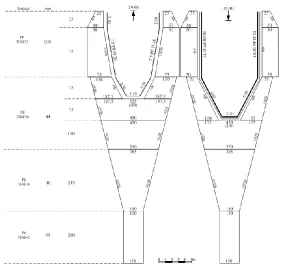
The selectivity tria ls were carried out on-board the commercial trawler “Malkoç Bey” (31 LOA, 1300 HP main engine) fro m 20th to 27th August 2014 in the Western part of the Blac k Sea (Figure 1). All hauls were made at depths ranging from 15 to 30 m and muddy grounds. The towing duration was between 60 and 90 minutes, and the towing speed ranged from 2.8 to 3.0 knots (mean 2.9) as in comme rcia l trawling. All tows were performed during daytime. The gear e mp loyed in the selectivity test was conducted using a conventional bottom tra wl with 900 meshes around the mouth (Figure 2).
861
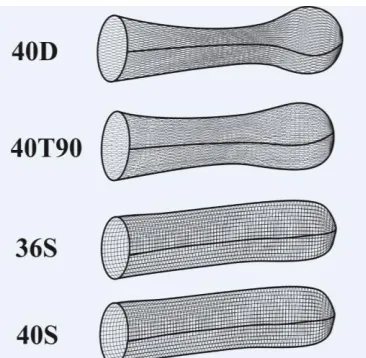
codends with a total of 21 va lid hauls. The first one was the commerc ially used nominal 40 mm polythene (PE) codend with 300 meshes on its circumference (three seems of 100 meshes panels -40D). The second codend was made of nomina l 40 mm PE materia l and turned 90º T-90 with 300 meshes on its circu mference (three seems of 100 meshes panels -40T90). The third codend was constructed as constructed as 150 bars on its circu mference full square mesh codend with
nomina l 36 mm PE netting (36S). Finally, the fourth one was150 bars on its circu mference fu ll square mesh codend with nominal 40 mm PE netting (40S) (Figure 3). All the codends were approximately 4-4.5 m in stretched lengths. They were attached to the end of the funnel wh ich was 300 meshes in its circu mfe rence and made of 40 mm mesh size PE netting.
The hooped-covered codend method was used to
Figure 1. Study area in the Western part of the Black Sea.
collect selectiv ity data (Wile man et al., 1996). A 8.2 m long, and 24 mm mesh size knotless PA (polyamide) netting cover was used to collect the individuals that escaped. The cover was supported by two hoops (PVC Ø 1.6 m) to avoid the masking effect and to provide water flo w between the codend and the cover. These hoops were mounted on the cover at distances of 2.2 and 5.2 meters fro m the attachment point at the end of the funnel.
The mean mesh size of each codends was measured using a calliper rule . A 4 kg weight was tied vertically to the stationary jaw of the rule . A total of 60 meshes (3 lines of 20 meshes in the towing direction) near to the aft of each codend were measured (Table 1).
At the end of each tow, once the net was hauled onboard, the cover catch was first e mptied, the catch was sorted by s pecies, and then weighed. The same procedure was followed for the codend catch. Total lengths of full or subsamples of the target species were then measured to the nearest cm belo w. Selectiv ity data were co llected using the covered codend method and selection curves of the individual hauls were obtained by fitting a logistic function:
1
exp(
)
/
)
exp(
)
(
l
v
1v
2l
v
1v
2l
r
where r(l) is the retained proportion of length class l, given that it entered the codend (Wile man et al., 1996), and ν=(ν1, ν2)T is the vector of the
selectivity parameters. The values of L50 were estimated from the expressions:
2 1 50
v
v
L
These parameters were ca lculated by ma ximu m like lihood using the software CC 2000 (ConStat,
1995). For red mullet, mean selectivity curves using EC Model software (ConStat, 1995) were estimated by taking into account the between-haul variation of the selectivity parameters according to Fryer (1991).
A likelihood ratio test (McCullagh & Nelder, 1989) was carried out to evaluate if the selection curves estimated for the red mu llet were statistically diffe rent for the two co mpared codends (Ca mpos, Fonseca & Henriques, 2003; Deval, Bö k, Ateş, Ulutürk, & Tosunoğlu, 2009).
Results
Mean values of totally 60 mesh measurements fro m 3 different lines of each codends were shown in table 1. 40D, 40T90, 36S and 40S codends on the same traditional tra wl were carried out 4, 7, 6 and 4 valid hauls, respectively. A total of 21 valid hauls were performed during the trials. 6869.9 kg total catching was made by 4 tra wl codends with diffe rent mesh shapes and sizes during 1595-minute haul duration. 33%, 17%, 21% and 29% of the total catch were gathered with 40D, 40T90, 36S and 40S codends, respectively. Weight of red mullet and its percentage in total catch were 2231.6 kg and 32% in all hauls. Catch per hour in a ll hauls was calculated 83.9 kgh-1 for the red mullet and 258.4 kgh-1 for total catch.
40 mm Diamond Mesh Codend (40D)
In the 40D tra wl codend (used by fisherman), a total of we ight 2277.4 kg was carried out in both codend and cover for 4 valid hauls. In terms of weight, 35.6% of the total catch was constituted by the red mu llet and the species were caught totally 162.3 kgh-1 by 40D codend. In total, 47316 red mu llets we re counted 67.8 % in the codend and 32.2% in the cover. The numbers of red mullets both codend
Figure 3. Illustration of trawl codends used in the experiments: 40 mm diamond mesh (40D), 40 mm 90° turned-mesh
863
Table 1. Characteristics of the codends used in the experiments
Codend Name 40D 40T90 36S 40S
Nominal mesh length (mm) 40 40 36 40
M easured mesh opening (mm) 41.29 39.47 35.95 39.85
SE (mm) 0.39 0.09 0.12 0.08
N 60 60 60 60
M in. - M ax. (mm) 39-52 38-41 34-38 39-42
M aterial (Knotted) PE PE PE PE
Circumference mesh number 300 300 150 150
Table 2. Total numbers and percentage values below and above M LS (M inimum Landing Size= 13 cm) of the red mu llet in
codend (retained) and cover (escape) according to 40D, 40T90, 36S and 40S
M LS = 13 cm 40D 40T90 36S 40S
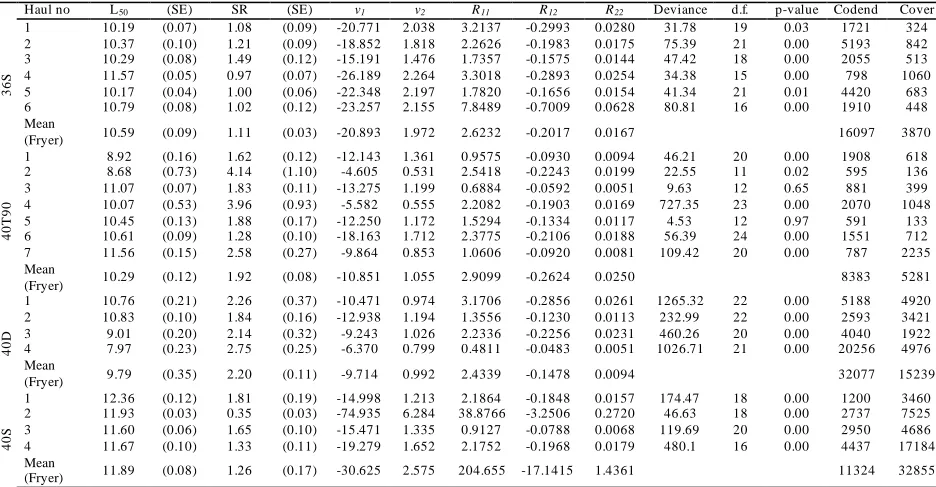
Codend Cover Codend Cover Codend Cover Codend Cover <M LS n 26429 15027 5724 4991 11072 3830 6662 32426 % 63.8 36.2 53.4 46.6 74.3 25.7 17.0 83.0 >M LS n 5648 212 2659 290 5025 40 4662 429 % 96.4 3.6 90.2 9.8 99.2 0.8 91.6 8.4 Total 32077 15239 8383 5281 16097 3870 11324 32855
Table 3.Selectivity parameter estimates and number of specimens in the codend and cover for red mullet in 36S, 40T90,
40D, and 40S codends [L50 (cm), length at 50% retention; SR (cm) selection range; SE standard error; v1 and v2 maximum
likelihood estimators of selectivity parameters; R11, R12, and R22 variance matrix measuring within haul-variation; d.f. degrees
of freedom]
Haul no L50 (SE) SR (SE) v1 v2 R11 R12 R22 Deviance d.f. p-value Codend Cover
36S
1 10.19 (0.07) 1.08 (0.09) -20.771 2.038 3.2137 -0.2993 0.0280 31.78 19 0.03 1721 324 2 10.37 (0.10) 1.21 (0.09) -18.852 1.818 2.2626 -0.1983 0.0175 75.39 21 0.00 5193 842 3 10.29 (0.08) 1.49 (0.12) -15.191 1.476 1.7357 -0.1575 0.0144 47.42 18 0.00 2055 513 4 11.57 (0.05) 0.97 (0.07) -26.189 2.264 3.3018 -0.2893 0.0254 34.38 15 0.00 798 1060 5 10.17 (0.04) 1.00 (0.06) -22.348 2.197 1.7820 -0.1656 0.0154 41.34 21 0.01 4420 683 6 10.79 (0.08) 1.02 (0.12) -23.257 2.155 7.8489 -0.7009 0.0628 80.81 16 0.00 1910 448 Mean
(Fryer) 10.59 (0.09) 1.11 (0.03) -20.893 1.972 2.6232 -0.2017 0.0167 16097 3870
40T90
1 8.92 (0.16) 1.62 (0.12) -12.143 1.361 0.9575 -0.0930 0.0094 46.21 20 0.00 1908 618 2 8.68 (0.73) 4.14 (1.10) -4.605 0.531 2.5418 -0.2243 0.0199 22.55 11 0.02 595 136 3 11.07 (0.07) 1.83 (0.11) -13.275 1.199 0.6884 -0.0592 0.0051 9.63 12 0.65 881 399 4 10.07 (0.53) 3.96 (0.93) -5.582 0.555 2.2082 -0.1903 0.0169 727.35 23 0.00 2070 1048 5 10.45 (0.13) 1.88 (0.17) -12.250 1.172 1.5294 -0.1334 0.0117 4.53 12 0.97 591 133 6 10.61 (0.09) 1.28 (0.10) -18.163 1.712 2.3775 -0.2106 0.0188 56.39 24 0.00 1551 712 7 11.56 (0.15) 2.58 (0.27) -9.864 0.853 1.0606 -0.0920 0.0081 109.42 20 0.00 787 2235 Mean
(Fryer) 10.29 (0.12) 1.92 (0.08) -10.851 1.055 2.9099 -0.2624 0.0250 8383 5281
40D
1 10.76 (0.21) 2.26 (0.37) -10.471 0.974 3.1706 -0.2856 0.0261 1265.32 22 0.00 5188 4920 2 10.83 (0.10) 1.84 (0.16) -12.938 1.194 1.3556 -0.1230 0.0113 232.99 22 0.00 2593 3421 3 9.01 (0.20) 2.14 (0.32) -9.243 1.026 2.2336 -0.2256 0.0231 460.26 20 0.00 4040 1922 4 7.97 (0.23) 2.75 (0.25) -6.370 0.799 0.4811 -0.0483 0.0051 1026.71 21 0.00 20256 4976 Mean
(Fryer) 9.79 (0.35) 2.20 (0.11) -9.714 0.992 2.4339 -0.1478 0.0094 32077 15239
40S
1 12.36 (0.12) 1.81 (0.19) -14.998 1.213 2.1864 -0.1848 0.0157 174.47 18 0.00 1200 3460 2 11.93 (0.03) 0.35 (0.03) -74.935 6.284 38.8766 -3.2506 0.2720 46.63 18 0.00 2737 7525 3 11.60 (0.06) 1.65 (0.10) -15.471 1.335 0.9127 -0.0788 0.0068 119.69 20 0.00 2950 4686 4 11.67 (0.10) 1.33 (0.11) -19.279 1.652 2.1752 -0.1968 0.0179 480.1 16 0.00 4437 17184 Mean
(Fryer) 11.89 (0.08) 1.26 (0.17) -30.625 2.575 204.655 -17.1415 1.4361 11324 32855
and cover for every hauls were in given table 3. About 87.6% of the total red mu llet we re constituted below the MLS va lue. 36.2% in the cover and 63.8% in the codend of the value were calculated for this tria l. Percentage distribution of the codend by numbers was shown in table 2.
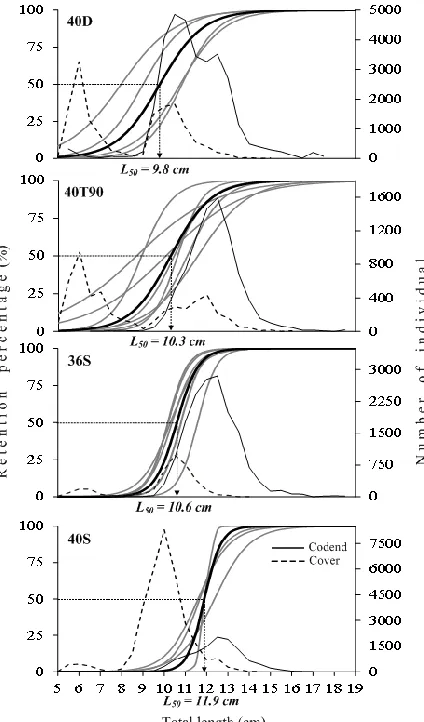
Figure 4 presents the length frequency distributions (ranged between 5 and 18 cm) of the red mu llet that entered and escaped. Length frequency
retention (L50) and Selection Range (SR) values were 9.8 (s.e. 0.35) and 2.2 (s.e. 0.11) c m for the codend, respectively (Table 3).
40 mm Turned Mesh Codend (40T90)
A total of 525-minute operation time was carried out 7 valid hauls during the experiment. A total of 13664 ind ividuals were caught 8383 in the codend and 5281 in the cover. 22.2% of the total catch (1143 kg) in this codend comprised of this species. In this value (254.3 kg), a total red mu llet of 30.1 kgh-1 was caught via 80% in the codend and 20% in the cover. Nu mbers of red mullets in both codend and cover for every hauls were given in table 3. 53.4% in the codend and 46.6% in the cover number of indiv iduals below 13 c m we re caught by 40T90 (Table 2). Only 9.8% of the indiv iduals above the MLS va lue were detected in the cover.
The length frequency of distribution showed two peaks in the cover with a ma jor peak at 6 c m and a minor pea k at about 12 c m and unimodal in the codend with the mode at about 12.5 c m. Ind ividual
haul and mean selectivity curves are shown in figure 4. The mean L50 and SR values were 10.29 and 1.92 cm for the codend, respectively (Table 3). The 40T90 codend provided higher mean L50 and lower SR values than the commerc ia l codend (40D). According to selectivity parameter values, about 5.1% better L50 value was detected with 40T90 codend. However, the L50 value of the 40T90 codend is still considerably lower than MLS.
36 mm Square Mesh Codend (36S)
A total of 6 valid hauls we re ca rried out during the trial in 425 minutes. In totally 19967 red mullets were caught by 36S codend (Table 3). 31.1% o f the total catch (1407 kg) was constituted by the red mu llet. In terms of we ight, 11.6% of the indiv iduals were caught in cover. At the sa me time , 62.0 kg red mu llet was caught in an hour. 74.3% in the codend and 25.7% in the cover of captured red mullet were determined to be belo w M LS value. 99.2% of the individuals above MLS value were retained in the codend. Only 0.8% of individuals above the MLS
Figure 4. Individual (grey line) and mean selective curves (black line) with L50 values for all codends, and length
865
value were detected in the cover. Percentage distribution of the codend by numbers was shown in table 2.
The length of red mu llets varied between 5 and 18.5 c m and showed a main peak at 12 c m in the codend and two peaks in the cover (a minor peak 6 cm and a ma jor peak 10.5 c m). Indiv idual haul and mean selectivity curves are shown in figure 4. Selectiv ity and regression parameters with their standard errors, variance matrix va lues and number of the fish caught in the codend and cover every s ingle haul as well as mean curves (according to Fryer 1991) for each codend are given Table 3. Length at fifty percent retention (L50) and Selection Range (SR) values were 10.59 (s.e. 0.09) and 1.11 (s.e. 0.03) c m for the 36S, respectively (Table 3). According to selectivity para meter values, about 8.2% better L50 value was detected with 36S codend. However, the L50 value of the codend is still considerably lo wer than MLS.
40 mm Square Mesh Codend (40S)
A total of 4 valid hauls were made in 345 minutes and 44179 indiv iduals were caught in this trial. In terms of we ight, the red mullet, about 35.7% of the total catch (728.6 kg), were caught totally 133.7 kgh-1 by 40S codend. Furthermore, nearly 64% o f the species were we ighted in the cover. The nu mber of red mullets both in the codend and in the cover for every hauls was given in table 2. 83% of 39088 individuals below M LS va lue were determined in the cover. While 91.6% of the indiv iduals above MLS value were escaped to from the codend, only 17% of the red mullet below M LS value was retained in the codend (Table 2).
The length frequency of distribution showed two peaks in the cover with a ma jor peak at 6 c m and a minor pea k at about 10 c m and unimodal in the codend with the mode at about 12.5 c m. Ind ividual haul and mean selectivity curves are shown in figure 4. The mean L50 and SR values were 11.89 and 1.26 cm fo r the codend, respectively (Table 3). The 40S codend provided higher mean L50 values than the 40D codend. According to selectivity parameter va lues, about 21.5% better L50 value was detected with 40S codend. This codend was given the best L50 value of the codends used in the experiments. However, L50 value of the codend is still considerably lower than MLS.
According to the MLS value, the best of the mean selective curve was given to 40S tra wl codend. Although L50 mean value of this codend was determined above the LM50 va lue, the opposite was true for the other tra wl codends used in the tria l (Figure 5).
The statistical co mparison of the selections curves (36S, 40S and 40T90) co mpared to the 40D by the like lihood ratio test revealed significance at the 0.05 level for red mullet.
Discussion
In this study, we compared the effect of the codend mesh shape and mesh size on the selectivity of red mullet wh ich is the most important species in the Black Sea tra wl fishery. For this purpose, traditional trawl codend (40D), 90° turned mesh codend (40T90) and square mesh codends (36S and 40S) which have two different mesh sizes were tested for the species. It is the first selectivity study on the 36S, 40S and 40T90 tra wl codends because of the mesh shape, size and overall applicat ion of the codend in the region. The results show that selectivity of co mme rcia l t rawl codend (40D) used in the region is rather poor, whereas square mesh substantially increased overall selectivity for the red mullet.
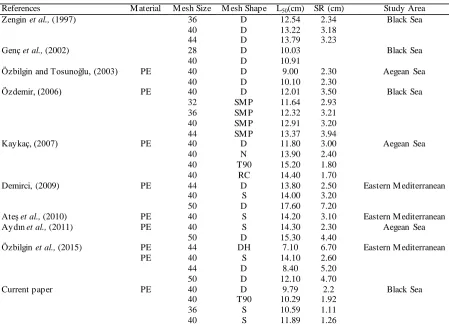
There are limited studies on the size selectivity of the red mullet in the region (Zengin et al., 1997; Genç et al., 2002) (Tab le 4). Özdemir (2006) has
revealed that the selectivity values he obtained in the determination of the location of the 36, 40 and 44 mm square mesh panels were higher compared to those of traditional t rawl codends with 40 mm d ia mond mesh (L50 = 12.01 cm).
The previous studies and the results obtained in this study indicate that when the MLS values are taken into consideration, the size s elect ivity of the red mu llet in the current co mmerc ia l t rawl codend is considerably low (Özb ilg in & Tosunoğlu, 2003; Tosunoğlu, Özbilg in, & Özbilgin, 2003; Kay kaç, 2007; Sa la, Lucchetti, Picc inetti, & Ferrett i, 2008). Many researchers point out that in round shaped fish such as the red mullet, high selectivity values are obtained as a result of square mesh use in the codend (Stewart , 2002). Because dia mond mesh nets tend to close under load compared to square mesh nets, hence reducing the escape area and accordingly, preventing the escape of small indiv iduals (Robertson & Stewa rt, 1988; Guijarro & Massuti, 2006).
fished and properties of the fishing gears.
In the Black Sea, the total a mount of fishing in each tow is quite la rge e xcept for the target species during operation, and the ma jority of the m consist of bycatch fishing and discards. Ceylan et al. (2014)
stated that the bycatch fishing was about 54% in the trawls in this region. This may be thought to be also effective on the selectivity para meters, however, Sa la and Luchetti (2011) reported that the L50 and SR values of codend fishing a mount in the Mediterranean
Figure 5. M ean selective curves in all codends. M inimum Landing Size (M LS) and Length of the first maturity (LM50)
values are shown in the figure.
Table 4. Results of previous selectivity studies and the current work for red mullet in Turkey
References M aterial M esh Size M esh Shape L50(cm) SR (cm) Study Area
Zengin et al., (1997) 36 D 12.54 2.34 Black Sea 40 D 13.22 3.18
44 D 13.79 3.23
Genç et al., (2002) 28 D 10.03 Black Sea
40 D 10.91
Özbilgin and Tosunoğlu, (2003) PE 40 D 9.00 2.30 Aegean Sea
40 D 10.10 2.30
Özdemir, (2006) PE 40 D 12.01 3.50 Black Sea
32 SM P 11.64 2.93
36 SM P 12.32 3.21
40 SM P 12.91 3.20
44 SM P 13.37 3.94
Kaykaç, (2007) PE 40 D 11.80 3.00 Aegean Sea
40 N 13.90 2.40
40 T90 15.20 1.80
40 RC 14.40 1.70
Demirci, (2009) PE 44 D 13.80 2.50 Eastern M editerranean
40 S 14.00 3.20
50 D 17.60 7.20
Ateş et al., (2010) PE 40 S 14.20 3.10 Eastern M editerranean Aydın et al., (2011) PE 40 S 14.30 2.30 Aegean Sea
50 D 15.30 4.40
Özbilgin et al., (2015) PE 44 DH 7.10 6.70 Eastern M editerranean
PE 40 S 14.10 2.60
44 D 8.40 5.20
50 D 12.10 4.70
Current paper PE 40 D 9.79 2.2 Black Sea
40 T90 10.29 1.92
36 S 10.59 1.11
40 S 11.89 1.26
867
generally have no significant effect on the selectivity of the red mu llet. However, it is also known that the garbage and non-target catch accumulated in the codend prevent the fish escapes by creating a load in the codend and closing the mesh holes.
Graha m et al. (2003) reported that full square mesh cod-ends are unpopular with the fishing industry because they lack strength, the knots can be unstable and the nets are awkward to handle and repa ir. In addition to the afore mentioned d isadvantages of the use of the square mesh nets, the fact that it is e xcessively selective compared to the fisherman is also an important factor. So much so that, in our study, fishermen reco mmended us to try the 36S codend thinking that the 40S would be e xcessively selective. Although 36S is mo re selective than the 40D codend, it is we ll belo w the M LS value. In the 36 mm square panel application, as well, the selectivity values were found to be above 40D and belo w 40S (Özdemir, 2006). Red mu llet is subjected to a MLS of 13 c m in Tu rkish territoria l waters according to Turkish Fisheries Regulation to ensure contribution to the future stock before e xplo itation (Anonymous, 2016b).
In the model study he conducted, Tokaç et al.
(2016) reported that mesh openness (OP) had a re markable effect over L50 value in Red mullet size selectivity in both square mesh and diamond mesh nets. In the study, OP va lue is an important factor in the fact that the square mesh nets are more selective than diamond mesh nets. Obtaining low L50 values may result fro m the fact that the OP value cannot be fixed and many variable factors as mentioned above. Many studies have clearly de monstrated that square mesh codends capture fewer juveniles than diamond mesh codends because of OP (Sa la et al., 2008; Aydın et al., 2011; Özbilgin et al., 2012, 2015; Tokaç et al., 2016; Tosunoğlu et al., 2003; Tosunoğlu, Aydın,
Salman, & Fonseca, 2009).Therefore , TFR de fine a minimu m mesh size of 44 mm d ia mond or 40 mm square mesh netting for de mersal tra wl codends used in the Mediterranean. TFR reports that 40 mm dia mond mesh use is required for bottom t rawls in the Black Sea, and 44 mm d ia mond mesh will be applied after 1 September 2020.
Fishermen do not prefer to use the square mesh application in the bottom trawl codends with the thought that they will bring e xtra work load for the m (their being equipped and repaired). In terms of ease of use, it is known that trawl codends with diamond meshes are more advantageous than codends with square mesh (Wienback et al., 2011). It is also stated that square mesh application in the selectivity of laterally flattened fish indicates low selectivity (Lö k
et al., 1997; Sala et al., 2008). So me studies have demonstrated that T90 trawl codends, which are obtained by rotating a dia mond mesh net by 90°, are more selective than the e xisting trawl codend (40D=T0) (Madsen, Herrmann, Frandsen, & Krag, 2012). In fact, it has been detected that the studies
carried out on the T90 trawl codends in the Ba ltic Sea have improved the selectivity and contributed to the improve ment of fish resources (Moderhak 1995;1999; Moderhak et al., 1999; Hansen, 2004; Digre , Hansen, & Erikson, 2010). With this study, T90 t rawl codend was tested for the first time in the Black Sea. The results obtained indicated that the 40T90 t rawl codend was more selective co mpared to the 40D t rawl codend at red mullet selectiv ity. The use of trawl codends of the same net mesh size as T90 has been observed to have a positive effect on the selectivity of the red mu llet in both experimental studies (Kaykaç, 2005) and in the model experiments (Tokaç et al., 2014).
In conclusion, changes in net mesh shape (square mesh and T90) and net mesh size (36S and 40S) were found to increase the length selectivity of the red mullet in the Black Sea co mpared to traditional tra wl codends. In particular, it was observed that 40S codends selected larger size groups than the others. In recent years, escape mortality (due to skin injures and exhaustion) as well as selectivity of trawl codends is of great importance. In this context, it has been reported that 40S (26.3%) t rawl codend for the red mullet gives the lo west escape morta lity rate compared to the 44D (46.3%) and 50D (27.4%) trawl codends. However, it is stated that this condition is not re lated to the mesh size or shape (Dü zbastılar, Laleli, Özgül & Metin, 2015; Düzbastılar et al., 2017). 40S codend contributes to the protection of stockpiles of the red mu llet. There is a limited nu mber of selectivity studies for sustainable fisheries in the Blac k Sea , wh ich constitutes an important part in terms of red mu llet production. However, it was reported that the use of 44 mm dia mond will be started in 2020. At present, the current red mu llet size groups are quite low. But the increase in the size groups put ashore can lead to even better pricing. More e xtensive and detailed selectivity studies are needed during commerc ial fishing to protect fisheries management and sustainable red mu llet stocks in such an area where production is intensive.
Acknowledgments
This work was financed by the European Project “BENTHIS (EU-FP7-312008)”. The authors would like to thanks and gratitude to the project leader Prof. Dr. Adrian RJINSDORP and Prof. Dr. Aysun GÜMÜŞ providing all kinds of support. Thanks are also due to Murathan ÖZDEMİR and a ll the project researchers for participating the sea trials.
References
Anonymous (2016a). Fishery Statistics 2015. State Institute of Statistics Prime M inistry Republic of Turkey.
Retrieved from
Medit. Mar. Sci., 15(1), 156-164. https://doi.org/10.12681/mms.421
Campos, A., Fonseca, P., & Henriques, V. (2003). Size selectivity for four fish species of the deep ground fish assemblage off the Portuguese southwest coast: evidence of mesh size, mesh configuration and cod end catch effects. Fish. Res., 63, 213–233. https://doi.org/10.1016/S0165-7836(03)00060-2 ConStat, (1995). CC Selectivity. Granspaettevej 10,
DK-9800 Hjjlarring, Denmark.
Demirci, S. (2009). Selectivity of square and diamond mesh trawl codend for some fish species in north east Mediterranean (PhD Thesis). University of M ustafa Kemal, Hatay, Turkey.
Deval, M. C., Bök, T., Ateş, C., Ulutürk, T., & Tosunoğlu, Z. (2009). Comparison of the size selectivity of diamond (PA) and square (PE) mesh codends for deepwater crustacean species in the Antalya Bay, eastern M editerranean. J. Appl. Ichthyol., 25, 372– 380. https://doi.org/10.1111/j.1439-0426.2009.01239.x
Digre, H., Hansen, U.J., & Erikson, U. (2010). Effect of trawling with traditional and ‘T90’ trawl codends on fish size and on different quality parameters of cod Gadus morhua and haddock Melanogrammus aeglefinus. Fisheries Science, 76(4), 549–559. https://doi.org/10.1007/s12562-010-0254-2
Düzbastilar, F.O., Breen, M., Aydın, C., Özbilgin, H., Özgül, A., Ulaş, A., Metin, G., Gül, B., & Lök, A. (2017). Seasonal variation in mortality of red mullet (Mullus barbatus) escaping from codends of three different sizes in the Aegean Sea. Sci. Mar., 81(3), 339-349. http://doi.org/10.3989/scimar.04600.19A Düzbastılar, F.O., Laleli, T., Özgül, A., & Metin, G. (2015).
Determining the severity of skin injuries of red mullet, Mullus barbatus (Actinopterygii: Perciformes: M ullidae), inflicted during escape from trawl codend. Acta Ichthyol. Piscat., 45(1): 75–83. http://doi.org/10.3750/AIP2015.45.1.08
EC (2006). Council regulation (EC 1967/2006) concerning management measures for the sustainable exploitation of fishery resources in the M editerranean Sea, amending Regulation (EEC) No. 2847/93 and repealing Regulation (EC) No.1626/94. Off. J. Eur. Union 409, 75.
Eryaşar, A.R., Özbilgin H., Gökçe G., Özbilgin Y.D., Saygu I., Bozaoğlu A.S., & Kalecik, E. (2014). The Effect of Codend Circumference on Selectivity of Hand-Woven Slack Knotted Codend in the North Eastern M editerranean Demersal Trawl Fishery. Turkish
Trabzon Su Ürünleri Merkez Araştırma Enstitüsü, Sonuç Raporu Proje No: TAGEM/IY/97/17/03/006, 114 pp (In Turkish).
Genç, Y. (2014). Red mullet fisheries in the Black Sea In: E. Düzgüneş, B. Öztürk, & M . Zengin, (Eds.), Turkish Fisheries in the Black Sea. (pp. 340-360). İstanbul, Turkey, Turkish M arine Research Foundation. GFCM (2010). Report of the Transversal Workshop on
Selectivity Improvement, By -Catch Reduction and Alternative Gears, Alexandria, Egypt, 25–27 October. GFCM (2011). Report of the SCSA Working Group on
Stock Assessment of demersal species, Istanbul, Turkey, 18–23 October 2010. GFCM : SAC13/2011/Inf.19.
Graham, N., Kynoch, R.J., & Fryer, R.J. (2003). Square mesh panel in demersal trawls: Further data relating haddock and whiting selectivity to panel position. Fish. Res., 62(3), 361-375. https://doi.org/10.1016/S0165-7836(02)00279-5 Guijarro, B., & M assuti, E. (2006). Selectivity of diamond
and square mesh codends in the deepwater crustacean trawl fishery off the Balearic Island (western M editerranean). ICES J. Mar. Sci., 63, 52–67. https://doi.org/10.1016/j.icesjms.2005.08.011
Hansen, U.J. (2004). Performance of a trawl made from 90º turned netting (T90) compared with that of traditional codends. Gydynia: ICES Fishing Technology and Fish Behaviour Working Group M eeting.
Kaykaç, M.H. (2005). Geleneksel dip trol ağında torba ağ göz açılımını artırmaya yönelik çalısmalar (PhD Thesis). Ege Üniversitesi Fen Bilimleri Enstitüsü, Izmir, Turkey.
Kaykaç, M.H. (2007). Selectivity of standard and narrow trawl codends for the red mullet (Mullus barbatus L., 1758) and annular sea bream (Diplodus annularis L.,1758). Ege J. Fish. Aqua. Sci., 24, 261–266. Keskin, Ç. (2012). A preliminary study on demersal fishes
in the south-western Black Sea shelf (NW Turkey). J. Black Sea/Mediterranean Environment, 18(3), 341-349.
Knudsen, S., Zengin, M., & Koçak, M.H. (2010). Identifying drivers for fishing pressure. A multidisciplinary study of trawl and sea snail fisheries in Samsun, Black Sea coast of Turkey. Ocean and Coastal Management, 53, 252-269. http://doi.org/10.1016/j.ocecoaman.2010.04.008 Lök, A., Tokaç, A., Tosunoğlu, Z., Metin, C., & Ferro,
869
https://dx.doi.org/10.1016/S0165-7836(97)00048-9 M adsen, N., Herrmann, B., Frandsen, R.P., & Krag, L.A.
(2012). Comparing selectivity of a standard and turned mesh T90 codend during towing and haul-back. Aquatic Living Resources, 25, 231–240. https://doi.org/10.1051/alr/2012021
M cCullagh, P., & Nelder, J.A. (1989). Generalized linear models (2nd ed.). M onographs on Statistics and Applied Probability 37. Chapman & Hall, London, M oderhak, W. (1995). On properties of codend meshes
differently oriented with respect to direction of motion. ICES Fish Capture Committee, B21, 1–9. M oderhak, W. (1997). Determination of selectivity of cod
codends made of netting turned through 90°. Bulletin of the Sea Fisheries Institute, 1(1), 3-14.
M oderhak, W. (1999). Investigations of the selectivity of cod codends with meshes turned through 90°. Bulletin of the Sea Fisheries Institute, Gdynia, 1(146), 39–55. O’Neill, F.G., Kynoch, R.J., Blackadder, L., Fryer, R.J.,
Eryaşar, A.R., & Sala, A. (2016). The influence of twine tenacity, thickness and bending stiffness on codend selectivity. Fish. Res., 176, 94–99. https://doi.org/10.1016/j.fishres.2015.12.012
Özbilgin, H., & Tosunoğlu, Z. (2003). Comparison of the selectivities of double and single codends. Fish. Res., 63, 143–147. https://doi.org/10.1016/S0165-7836(03)00005-5
Özbilgin, H., Tokaç, A., & Kaykaç, H. (2012). Selectivity of commercial compared to larger mesh and square mesh trawl codends for four fish species in the Aegean Sea. J. Appl. Ichthyol., 28, 51–59. https://doi.org/10.1111/j.1439-0426.2011.01916.x Özbilgin, H., Eryaşar, A.R., Gökçe, G., Özbilgin, Y.D.,
Bozaoğlu, A.S., Kalecik, E., & Herrmann, B. (2015). Size selectivity and hand and machine woven codends and short term commercial loss in the Norteastern M editerranean. Fish. Res., 164, 73–85. https://doi.org/10.1016/j.fishres.2014.10.022
Özdemir, S. (2006). The effect of position and mesh size of square mesh panel applied in bottom trawl on catchability of different species (PhD Thesis). Ondokuz Mayıs University, Science Institute, Samsun, Turkey.
Robertson, J.H.B. & Stewart, P.A.M . (1988). A comparison of size selection of haddock and whiting by square and diamond mesh codends. ICES J. Mar. Sci., 44, 148–161.
Sala, A., Priour, D., & Herrmann, B. (2006). Experimental and theoretical study of redmullet (Mullus barbatus) selection in codends of M editerranean bottom trawls. Aquat. Living Resour., 19, 317–327. https://doi.org/10.1051/alr:2007002
Sala, A., Lucchetti, A., & Buglioni, G. (2007). The influence of twine thickness on the size selectivity of polyamide codends in a M editerranean bottom trawl. Fish. Res., 83, 192–203. https://dx.doi.org/10.1016/j.fishres.2006.09.013 Sala, A., Lucchetti, A., Piccinetti, C., & Ferretti, M . (2008).
Size selection by diamond and square mesh codends in multi-species M editerranean demersal trawl fisheries. Fish. Res., 93, 8–21. https://doi.org/10.1016/j.fishres.2008.02.003
Sala, A., & Lucchetti, A. (2011). Effect of mesh size and codend circumference on selectivity in the M editerranean demersal trawl fisheries. Fish. Res.,
110, 252–258.
https://doi.org/10.1016/j.fishres.2011.04.012
Sala, A., Lucchetti, A., Perdichizzi, A., Herrmann, B., & Rinelli, P. (2015). Is square-mesh better selective than larger mesh? A perspective on the management for M editerranean trawl fisheries. Fish. Res., 161, 182– 190. https://doi.org/10.1016/j.fishres.2014.07.011 STECF (2015). Scientific, Technical and Economic
Committee for Fisheries (STECF) – Black Sea assessments (STECF-15-16). Publications Office of the European Union, Luxembourg, EUR 27517 EN, JRC 98095, 284 pp.
Stewart, P.A.M. (2002). A review of studies of fishing gear selectivity in the M editerranean. FAO COPEM ED, 57 pp.
Tokaç, A., Lök, A., Tosunoğlu, Z., Metin, C., & Ferro, R.S.T. (1998). Codend selectivities of a modified bottom trawl for three species in the Aegean Sea. Fish. Res., 39, 17–31. https://doi.org/10.1016/S0165-7836(98)00172-6
Tokaç, A., Özbilgin, H., & Kaykaç, H. (2010). Selectivity of conventional and alternative codend design for five fish species in the Aegean Sea. J. Appl. Ichthyol., 26, 403–409. https://doi.org/10.1111/j.1439-0426.2009.01379.x
Tokaç, A., Herrmann, B., Aydın, C., Kaykaç, H., Ünlüler, A., & Gökçe, G. (2014). Predictive models and comparison of the selectivity of standard (T0) and turned mesh (T90) codends for three species in the Eastern M editerranean. Fish. Res., 150, 76–88. https://doi.org/10.1016/j.fishres.2013.10.015
Tokaç, A., Herrmann, B., Gökçe, G., Krag, L.A., Nezhad, D.S., Lök, A., Kaykaç, H., Aydın, C., & Ulaş, A. (2016). Understanding the size selectivity of red mullet (Mullus barbatus) in M editerranean trawl codends: A study based on fish morphology. Fisheries Research, 174, 81-93. https://doi.org/10.1016/j.fishres.2015.09.002
Tosunoğlu, Z., Özbilgin, Y.D. & Özbilgin, H. (2003). Body shape and trawl codend selectivity for nine commercial fish species. Journal of the Marine Biological Association of the UK., 83, 1309- 1313. http://doi.org/10.1017/S0025315403008737
Tosunoğlu, Z. (2007). Trawl codend design (44 mm diamond PE mesh) and the effect on selectivity for Pagellus erythrinus and Pagellus acarne, two species with different morphometrics. Journal of Applied Ichthyology, 23, 578-582. http://doi.org/10.1111/j.1439-0426.2007.00859.x Tosunoğlu, Z. Aydın, C., & Özaydın, O. (2008). Selectivity
of a 50-mm diamond mesh knotless polyethylene codend for commercially important fish species in the Aegean Sea. Journal of Applied Ichthyology, 24, 311-315. http://dx.doi.org/10.1111/j.1439-0426.2008.01067.x
Tosunoğlu, Z., Aydın, C., Salman, A., & Fonseca, P. (2009). Selectivity of diamond, hexagonal and square mesh codends for three commercial cephalopods in the M editerranean. Fisheries Research, 97, 95–102. http://dx.doi.org/10.1016/j.fishres.2009.01.006 Ulman, A., Bekişoğlu, Ş., Zengin, M ., Knudsen, S., Ünal,
V., M athews, C., Harper, S., & Pauly, D. (2013). From bonito to anchovy: a reconstruction of Turkey's marine fisheries catches (1950-2010). Mediterranean Marine Science, 14(2), 309-342. https://doi.org/10.12681/mms.414