Vol. 6, No. 6 (2016): 1698-1704 Review Article
Open Access
I
ISSSSNN::22332200--66881100
Efficacy of Macrolides versus Penicillins against
Streptococcal pharyngitis
: a meta-analysis of
randomized controlled trials
Ayman M. Satti
1, Hanan A. Alkenany
1, Mazin Y. Alsafi
2and Mohamed A. Hussain
1*
1
Department of Pharmaceutical Microbiology, International University of Africa, Khartoum, Sudan.
2
Department of Pharmacology, International University of Africa, Khartoum, Sudan.
* Corresponding author: Mohamed A. Hussain, e-mail: [email protected]
ABSTRACT
This review aimed to compare Penicillins with Macrolides treatment for Streptococcal Pharyngitis, in terms of clinical and bacteriological efficacy, by performing a meta-analysis of randomized controlled trials (RCTs). We searched MEDLINE/PubMed, MEDLINE Plus, ClinicalTrials.gov, and Google Scholar (from their commencements until current date), for all randomized controlled trials (RCTs) comparing Penicillins versus Macrolides treatment regarding Streptococcal Pharyngitis. Two authors independently extracted the data. To assess the risk of bias, Jadad score was used. Both Fixed and random effects models were used to generate an odd ratio (OR), and evaluate
heterogeneity (I2). Review Manager (RevMan) Version 5.3 was used for statistics. We included 13 studies and 5957
patients. Overall, Macrolide use was not associated with a statistically significant different compared with Penicillins use, for clinical efficacy (3050 patients; FEM: OR: 1.05, p =0.68), and no heterogeneity was found (p=0.04), whereas for bacteriologic efficacy (2907 patients; REM: OR: 1.02, p =0.96), and no homogeneity was found (p<0.00001). In the present meta-analysis study, the work could not identify any significant differences when comparing Penicillins and Macrolides concerning the treatment of streptococcal pharyngitis.
Keywords: Meta-analysis, Systematic review, Macrolides, Penicillins, pharyngitis.
1. INTRODUCTION
Acute pharyngitis defined as an infection of posterior pharynx and tonsils is a common condition perceived in outpatients seeking health care provision [1, 2], It is usually stated to as a sore throat, though this term is often used roughly and is poorly defined [3]. Acute pharyngitis is one of the most frequent conditions for which pediatricians, family physician, and other primary care physicians are consulted [4-10]. When a doctor treats a patient with acute pharyngitis, the medical decision that usually needs to be made [6, 9]. Pharyngitis accounts for an estimated 40 million adult admitted to medical facilities and estimated 7 million cases of acute pharyngitis diagnosed in children annually in the United States [11].
Several viruses and bacteria can cause acute pharyngitis; however, Streptococcus pyogenes (also
known as Lancefield group A β-hemolytic streptococci) causes 37% of cases of acute pharyngitis in children older than 5 years and is the only agent that requires an etiologic diagnosis and specific treatment [1, 2, 12]. Thus, it should be given therapy with an antimicrobial agent in a dosage and for a period that is likely to eradicate the infecting organism from the pharynx [9]. Pharyngitis triggered by group A beta-hemolytic streptococci, commonly called “strep throat” or streptococcal pharyngitis [9, 13]. Recognizing the source of pharyngitis, particularly group A beta-hemolytic streptococcus (GABHS), is imperative to stop potential lethal complications [14].
Group A beta-hemolytic streptococci are typically spread through large droplets from respiratory secretions and nasal discharges. Also by direct
to- person contact, rather than by oral contact, and it has an incubation period less than five days and is most common in children from five to twelve years of age [13, 15-18]. Unpasteurized milk and contaminated foodstuff have also been identified as sources of numerous well-documented S. pyogenes outbreaks [15, 16].
S. pyogenes are of major clinical importance because it can trigger post-infection systemic obstacles, rheumatic disease, and post-streptococcal glomerulonephritis, which occur 1-3 weeks after the pharynx infection [2]. Streptococcal pharyngitis has a peak incidence in the early school years (children from 5 to 15 years of age), and it is uncommon before 3 years of age. Illness occurs most often in winter and spring [19, 20].
Pharyngitis, or a sore throat, is the most common manifestation of infection with Streptococcus pyogenes. A sore throat is a frequent presenting complaint about outpatient medical visits, and infection with S. pyogenes are diagnosed in 20 to 40% of pharyngitis cases in children and in 5 to 15% in adults [1, 8]. A number of antibiotics have been shown to be effective in treatment for group A streptococcal pharyngitis. These agents comprise Penicillins, Cephalosporins, Macrolides, and Clindamycin. Though, Penicillin remains the treatment of choice because of its established efficacy, safety, narrow spectrum, and low cost [9]. Meta-analysis is the statistical analysis of a large collection of analysis results from separate studies in order to integrate the findings [21].
Outcomes from a meta-analysis may include a more precise estimation of the outcome of treatment or risk factor for disease, than any individual study contributing to the pooled analysis [22]. Under this perspective, we sought to compare Penicillins with Macrolides treatment for streptococcal pharyngitis in terms of clinical and bacteriological efficacy, by performing a meta-analysis of randomized controlled trials (RCTs).
2. MATERIALS AND METHODS
2.1 Inclusion criteriaWe included all high-quality RCTs comparing Penicillins with Macrolides in patients with streptococcal pharyngitis.
The eligibility of each study was assessed independently by two investigators. The studies also needed to have the following characteristics:
(i) The study must measure both outcomes: clinical and bacteriological efficacy
(ii) The study must be RCTs, and it must be written in English.
(iii) The study must be of high quality regarding randomization and blinding processes.
2.2 Search Strategy
Major widely used electronic databases were selected for the search, including MEDLINE/PubMed, MEDLINE Plus, ClinicalTrials.gov, and Google Scholar (from their commencements until current date), for antibiotics used for treatment of streptococcal Pharyngitis. All relevant reference lists were checked to identify additional relevant studies. A search strategy was designed using the search terms (‘Penicillins,’ ‘Macrolides,’ and ‘Streptococcal Pharyngitis,’) combined with specific terms (AND, OR) to retrieve any relevant studies.
2.3 Study Selection
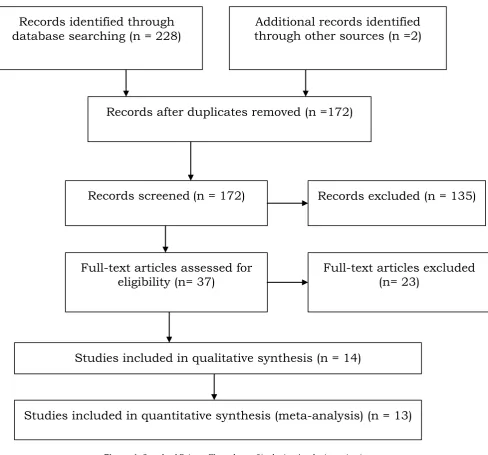
Initially identified articles were screened on title and abstract to determine their appropriateness for inclusion. Studies Categorized into Relevant (R) and non-Relevant (NR), The (NR) will be excluded automatically depending on inclusion and exclusion criteria. An Article written in another language rather than English was excluded based on the language restrictions. The relevant studies based on their title or abstract, a full article was retrieved (detailed steps seen in figure 1)
2.4 Data extraction and management
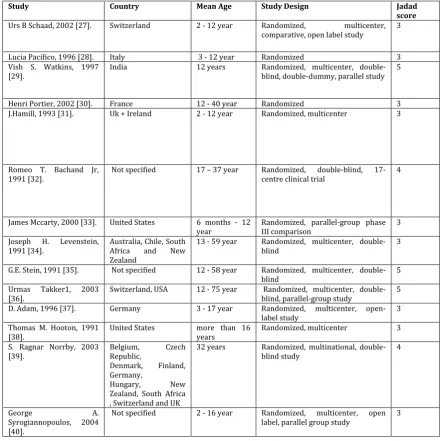
Two authors independently extracted data of each potential article for eligibility, any disagreement was resolved by the opinion of a third author. A pre-developed standardized data abstraction form was used to extract the following information from the included studies: author(s), country, publication year, study design, mean age. Full text was red and then each study characteristics extracted in table (1).
2.5 Assessment of the methodological quality of the included reviews
Five-point quality scale system (Jadad et al., 1996) used to assess the methodological quality of each review included [23], which examines whether there is randomization, blinding, and information on withdrawals from the study. It also evaluates the appropriateness of randomization and blinding, if present. Depending on whether these conditions are met, 1 point was given for the presence of each of the former 3 criteria, whereas the latter 2 criteria could be awarded values of –1 (inappropriate), 0 (no data), or +1 (appropriate). Thus, a study may receive 5 points maximum. A study with a Jadad score ≥3 is considered as being of adequate quality [23, 24].
2.6 Data synthesis
The synthesis steps began with the organization of the extracted data by the author. A narrative description of the most common factors identified from the review was reported and discussed in the results and discussion sections.
Copenhagen: The Nordic Cochrane Centre, the Cochrane Collaboration, 2014. For dichotomous data, the numbers of events in the control and intervention groups of each study will be used to calculate the odd ratio and 95% confidence intervals. During Meta-analysis, the homogeneity and heterogeneity among studies were checked. A random effect model was
chosen when substantial heterogeneity was observed. Otherwise, we selected a fixed-effect model [25].
3. RESULTS AND DISCUSSION
3.1 Prisma Flow DiagramThe standard prisma flow chart diagram (The PRISMA Group) [26] was used to conduct the main systematic review steps, which was shown in figure 1 .
Figure 1: Standard Prisma Flow chart of inclusion/exclusion criteria.
3.2 Study characteristics
Table 2 shows the characteristics of the included randomized controlled trials (RCTs), six trials were double-blind RCTs, two were open-label RCTs, eight were multicenter RCTs, and two were parallel-group studies. In all 14 included studies, informed consent was obtained and in 2 of the studies, institutional
review board approval was obtained as well. No significant sex differences were occurring among studies (49.7 % for males versus 50.3 % For females). Among the patients included, (63.6 % for Adult versus 36.4 % for Children) with mean age = 22.3 year.
Studies included in qualitative synthesis (n = 14)
Studies included in quantitative synthesis (meta-analysis) (n = 13)
Records identified through
database searching (n = 228)
through other sources (n =2)
Additional records identified
Records after duplicates removed (n =172)
Records screened
(n = 172)
Records excluded (n = 135)
Full-text articles assessed for
Table 1: Extraction data from full-text articles
Table 2: The Characteristics of included studies
Study Country Mean Age Study Design Jadad
score
Urs B Schaad, 2002 [27]. Switzerland 2 - 12 year Randomized, multicenter, comparative, open label study 3
Lucia Pacifico, 1996 [28]. Italy 3 - 12 year Randomized 3 Vish S. Watkins, 1997
[29]. India 12 years Randomized, multicenter, double-blind, double-dummy, parallel study 5
Henri Portier, 2002 [30]. France 12 - 40 year Randomized 3 J.Hamill, 1993 [31]. Uk + Ireland 2 - 12 year Randomized, multicenter 3
Romeo T. Bachand Jr,
1991 [32]. Not specified 17 – 37 year Randomized, centre clinical trial double-blind, 17- 4
James Mccarty, 2000 [33]. United States 6 months - 12
year Randomized, parallel-group phase III comparison 3 Joseph H. Levenstein,
1991 [34]. Australia, Chile, South Africa and New Zealand
13 - 59 year Randomized, multicenter,
double-blind 3
G.E. Stein, 1991 [35]. Not specified 12 - 58 year Randomized, multicenter,
double-blind 5
Urmas Takker1, 2003
[36]. Switzerland, USA 12 - 75 year Randomized, multicenter, double-blind, parallel-group study 5 D. Adam, 1996 [37]. Germany 3 - 17 year Randomized, multicenter,
open-label study 3
Thomas M. Hooton, 1991
[38]. United States more than 16 years Randomized, multicenter 3 S. Ragnar Norrby, 2003
[39]. Belgium, Republic, Czech Denmark, Finland, Germany,
Hungary, New Zealand, South Africa , Switzerland and UK
32 years Randomized, multinational,
double-blind study 4
George A.
Syrogiannopoulos, 2004 [40].
Not specified 2 - 16 year Randomized, multicenter, open label, parallel group study 3
Study Population Intervention Comparison
Urs B Schaad, 2002 [27]. Patient aged 2 - 12 year,
with pharyngitis once daily for 3 days or an oral suspension of penicillin V (100000
IU/kg/day) for 10 days the oral suspension of Azithromycin (10 mg/kg to a maximum of 500 mg/day) Lucia Pacifico, 1996 [28]. Patient aged 3 - 12 year,
with pharyngitis 3-day course of penicillin V (50,000 U/kg/day in two divided doses) 3-day course of azithromycin oral suspension (10 mg/kg of body weight once daily) Vish S. Watkins, 1997
[29]. Patient aged 12 years, with pharyngitis 10 days Penicillin VK (250 mg four times daily) Dirithromycin was given at a dosage of 500 mg (two 250-mg tablets) once daily for 10 days. Henri Portier, 2002 [30]. Patient aged 12 - 40 year,
with pharyngitis penicillin 590 mg tds for 10 days clarithromycin MR 500 mg od for 5 days J.Hamill, 1993 [31]. Patient aged 2 - 12 year,
with tonsillitis +pharyngitis
10 days Oral Suspension Penicillin V (250 mg/5 mL). The daily dose was either 250 mg qid (patient weight * 20 kg), or 125 mg qid (patient weight <
3.3 Test for Homogeneity
A homogeneity test was performed to check the results of each study. For clinical efficacy the statistical I2 =
[45%] which indicate no heterogeneity was found (p=0.04), and therefore, all 13 studies were homogeneous. For bacteriologic efficacy the statistical I2 = [83%] which indicate no homogeneity was found
(p<0.00001), and therefore, all 13 studies were heterogeneous.
3.4 Outcomes
3.4.1 Clinical Success
Therapeutic outcomes data in the study populations were provided in all 13 included RCTs [27-40].
Differences in clinical success did not reach statistical significance (p =0.68) between the Penicillins treatment and Macrolides treatment of streptococcal pharyngitis (FEM: OR: 1.05 (Figure 2).
3.4.2 Bacteriologic Efficacy
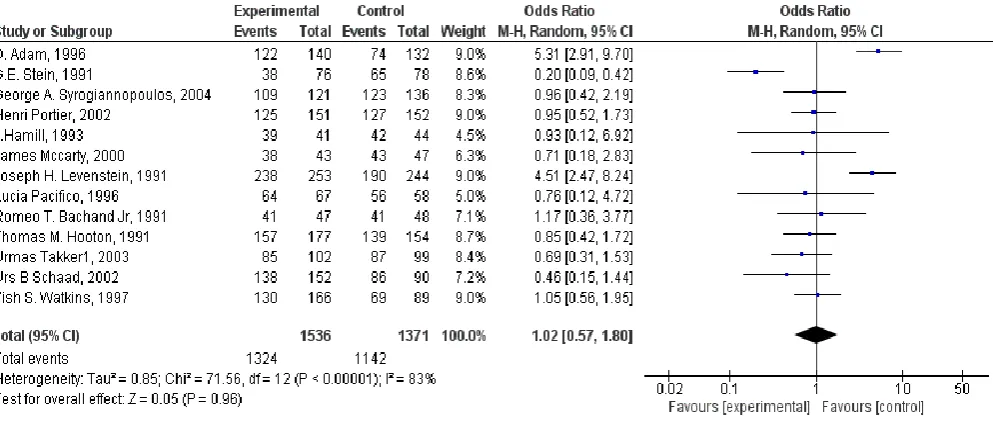
Bacteriologic efficacy data were provided in all 13 of the included RCTs [27-40]. There were no statistically significant differences in bacteriologic efficacy (p =0.96) between the Penicillins treatment and Macrolides treatment of streptococcal pharyngitis (REM: OR: 1.02 (Figure 3).
Figure 2: Forest plot of clinical efficacy against streptococcal pathogens treated with Macrolides versus Penicillins antibiotic for pharyngitis. For each study, the risk ratio and its 95% confidence intervals from 13 repeated measures were plotted with
squares and horizontal line using fixed effect model. The diamond donates overall effect. Joseph H. Levenstein,
1991 [34]. Patient aged 13 - 59 year, with pharyngitis oral penicillin VK (the potassium salt of phenoxymethylpenicillin) 250 mg
every 6 h oral clarithromycin 250 mg every 12 h G.E. Stein, 1991 [35]. Patient aged 12 - 58 year,
with pharyngitis 250 mg penicillin V four times a day for 10 days 250 mg clarithromycin twice daily Urmas Takker1, 2003
[36].
Patient aged 12 - 75 year, with tonsillitis
+pharyngitis penicillin V 500 mg three times daily for 10 days clarithromycin ER 500 mg once daily for 5 days D. Adam, 1996 [37]. Patient aged 3 - 17 year,
with tonsillitis +pharyngitis
penicillin V (30 mg/kg/d in three divided doses for ten days)
erythromycin estolate (40 mg/kg/d in two divided doses for five days)
Thomas M. Hooton, 1991
[38]. Patient aged more than 16 years, with pharyngitis
penicillin V 250 mg every 6 hours for 10 days.
Azithromycin 500 mg once on day 1 followed by 250 mg once daily for 4 days
S. Ragnar Norrby, 2003
[39]. Patient aged 32 years, with tonsillitis
+pharyngitis 10 d of penicillin V 500 mg 3 times daily 5 days of telithromycin 800 mg once daily
George A.
Syrogiannopoulos, 2004 [40].
Patient aged 2 - 16 year, with tonsillitis
Figure 3: Forest plot of bacteriologic efficacy against streptococcal pathogens treated with Macrolides versus Penicillins antibiotic for pharyngitis. For each study, the risk ratio and its 95% confidence intervals from 13 repeated measures were
plotted with squares and horizontal line using random effect model. The diamond donates overall effect.
Despite numerous controlled trials, clinical practice guidelines and cost-effective analysis, controversy persists regarding the appropriate management strategy for adult pharyngitis. In this Meta-analysis, we explore this controversy by comparing two competing clinical treatments. Systematic reviews and meta-analyses have become progressively vital in health care, clinicians read them to keep up to date with their field, and they are often used as a starting point for developing clinical practice guidelines [26].
To our knowledge, based on a literature search, no meta-analysis addressing the comparison of Penicillins versus Macrolides regarding the treatment of streptococcal pharyngitis has been previously published, although there is a meta-analysis comparing Cephalosporins and Penicillins in the treatment of streptococcal upper respiratory tract infection.
Our meta-analysis did not find neither clinical nor bacteriological significant differences between Macrolides and Penicillins in the treatment of streptococcal pharyngitis. The evaluation of the validity of the primary studies has been recognized as one of the crucial constituents of systematic reviews [41, 42], for more than 10 years it has been recommended that the validity or quality of primary trials should be evaluated under blind conditions in order to diminish or evade the outline of selection bias into meta-analyses and systematic reviews [43].
Jadad Scores have the theoretical benefit over the other methods in that they offer quantitative estimations of quality that could be replicated simply and combined
3.5 Limitations
Several limitations of this study should be considered. Firstly, substantial heterogeneities among bacteriologic efficacy (I2 from 25% to 75%) existed in this
meta-analysis, which may partly due to intervention type, dose regimen, and treatment duration. Whereas no heterogeneity exist among clinical efficacy outcome. Secondly, studies included this review were from 1991 to 2004 which indicate that no recent research has been conducted regarding this topic, besides none of the included studies were conducted in developing countries. Lastly, the quality and quantity of the primary evidence; High-quality data from long-term randomized were sparse, and the sample size of most included studies was quite small.
4. CONCLUSION
In the present meta-analysis study, the work could not identify any significant differences when comparing Penicillins and Macrolides concerning the treatment of streptococcal pharyngitis. However, results should be interpreted with caution due to bacteriological heterogeneity in the included studies.
5. REFERENCES
1. Shaikh, N., Leonard, E., & Martin, J. M. (2010). Prevalence of streptococcal pharyngitis and streptococcal carriage in children: a meta-analysis. Pediatrics, 126(3), e557-e564. 2. Wessels, M. R. (2011). Streptococcal pharyngitis. New
England Journal of Medicine, 364(7), 648-655.
3. Renner, B., Mueller, C. A., & Shephard, A. (2012). Environmental and non-infectious factors in the aetiology of pharyngitis (sore throat). Inflammation Research, 61(10), 1041-1052.
1-6. Katzenell, U., Shemer, J., & Bar-Dayan, Y. (2001). Streptococcal contamination of food: an unusual cause of epidemic pharyngitis. Epidemiology and infection, 127(02), 179-184.
7. Gerber, M. A. (1998). Diagnosis of group A streptococcal pharyngitis. Pediatric annals, 27(5), 269-273.
8. Ebell, M. H., Smith, M. A., Barry, H. C., et al. (2000). Does this patient have strep throat? Jama, 284(22), 2912-2918. 9. Bisno, A. L., Gerber, M. A., Kaplan, E. L., et al. (1997).
Diagnosis and management of group A streptococcal pharyngitis: a practice guideline. Clinical infectious diseases, 25(3), 574-583.
10.Bisno, A. L., Gerber, M. A., Gwaltney, J. M., et al. (2002). Practice guidelines for the diagnosis and management of group A streptococcal pharyngitis. Clinical infectious diseases, 35(2), 113-125.
11.Vukmir, R. B. (1992). Adult and pediatric pharyngitis: a review. The Journal of emergency medicine, 10(5), 607-616. 12.Nakhoul, G. N., & Hickner, J. (2013). Management of adults
with acute streptococcal pharyngitis: minimal value for backup strep testing and overuse of antibiotics. Journal of
general internal medicine, 28(6), 830-834.
13.Weber, D. J., Rutala, W. A., & Denny, F. W. (1996). Management of healthcare workers with pharyngitis or suspected streptococcal infections. Infection Control &
Hospital Epidemiology, 17(11), 753-761.
14.Singer, K. (2001). The 15-minute visit (acute pharyngitis). Patient Care, 35, 20-23.
15.Dublin, T. D., Rogers, E. F., Perkins, et al. (1943). Milk-borne Outbreaks Due to Serologically Typed Hemolytic Streptococci*. American Journal of Public Health and the
Nations Health, 33(2), 157-166.
16.Kemble, S. K., Westbrook, A., Lynfield, et al. (2013). Foodborne outbreak of group a streptococcus pharyngitis associated with a high school dance team banquet— Minnesota, 2012. Clinical infectious diseases, 57(5), 648-654. 17.Kirkpatrick, G. L. (1996). The common cold. Primary Care:
Clinics in Office Practice, 23(4), 657-675.
18.Pickering, L. K. (2003). Red book®: 2003 report of the
committee on infectious diseases: American Academy of
Pediatrics.
19.Danchin, M. H., Rogers, S., Kelpie, et al. (2007). Burden of acute sore throat and group A streptococcal pharyngitis in school-aged children and their families in Australia.
Pediatrics, 120(5), 950-957.
20.Gerber, M. (2007). Nelson, textbook of pediatrics: Amsterdam: Group A Streptococcus.
21.Glass, G. V. (1976). Primary, secondary, and meta-analysis of research. Educational researcher, 5(10), 3-8.
22.Higgins, J. P., & Green, S. (2008). Cochrane handbook for
systematic reviews of interventions (Vol. 5): Wiley Online
Library.
23.Jadad, A. R., Moore, R. A., Carroll, D., et al. (1996). Assessing the quality of reports of randomized clinical trials: is blinding necessary? Controlled clinical trials, 17(1), 1-12.
24.Khan, K. S., Daya, S., & Jadad, A. R. (1996). The importance of quality of primary studies in producing unbiased systematic reviews. Arch Intern Med, 156(6), 661-666.
25.Darroch, J. N. (1981). The Mantel-Haenszel Test and Tests of Marginal Symmetry; Fixed-Effects and Mixed Models for a Categorical Response, Correspondent Paper. International
Statistical Review/Revue Internationale de Statistique,
285-307.
26.Liberati, A., Altman, D. G., Tetzlaff, et al. (2009). The PRISMA statement for reporting systematic reviews and meta-analyses of studies that evaluate health care interventions: explanation and elaboration. Annals of internal medicine, 151(4), W-65-W-94.
27.Schaad, U. B., Kellerhals, P., Altwegg, M., & Group, S. P. S. (2002). Azithromycin versus penicillin V for treatment of acute group A streptococcal pharyngitis. The Pediatric
infectious disease journal, 21(4), 304-308.
28.Pacifico, L., Scopetti, F., Ranucci, A., et al. (1996). Comparative efficacy and safety of 3-day azithromycin and 10-day penicillin V treatment of group A beta-hemolytic streptococcal pharyngitis in children. Antimicrobial agents
and chemotherapy, 40(4), 1005-1008.
29.Watkins, V. S., Smietana, M., Conforti, P. M., et al. (1997). Comparison of dirithromycin and penicillin for treatment of streptococcal pharyngitis. Antimicrobial agents and
chemotherapy, 41(1), 72-75.
30.Portier, H., Filipecki, J., Weber, P., et al. (2002). Five day clarithromycin modified release versus 10 day penicillin V for group A streptococcal pharyngitis: a multi-centre, open-label, randomized study. Journal of Antimicrobial
Chemotherapy, 49(2), 337-344.
31.Hamill, J. (1993). Multicentre evaluation of azithromycin and penicillin V in the treatment of acute streptococcal pharyngitis and tonsillitis in children. Journal of
Antimicrobial Chemotherapy, 31(suppl E), 89-94.
32.Bachand, R. T. (1991). A comparative study of clarithromycin and penicillin VK in the treatment of outpatients with streptococcal pharyngitis. Journal of Antimicrobial
Chemotherapy, 27(suppl A), 75-82.
33.McCarty, J., Hedrick, J. A., & Gooch, W. M. (2000). Clarithromycin suspension vs penicillin V suspension in children with streptococcal pharyngitis. Advances in therapy, 17(1), 14-26.
34.Levenstein, J. H. (1991). Clarithromycin versus penicillin in the treatment of streptococcal pharyngitis. Journal of
Antimicrobial Chemotherapy, 27(suppl A), 67-74.
35.Stein, G., Christensen, S., & Mummaw, N. (1991). Comparative study of clarithromycin and penicillin V in the treatment of streptococcal pharyngitis. European Journal of Clinical
Microbiology and Infectious Diseases, 10(11), 949-953.
36.Takker, U., Dzyublyk, O., Busman, T., et al. (2003). Comparison of 5 days of extended-release clarithromycin versus 10 days of penicillin V for the treatment of streptococcal pharyngitis/tonsillitis: results of a multicenter, double-blind, randomized study in adolescent and adult patients. Curr Med Res Opin, 19(5), 421-429.
37.Adam, D., Scholz, H., Aspe, C., et al. (1996). Five days of erythromycin estolate versus ten days of penicillin V in the treatment of group A streptococcal tonsillopharyngitis in children. European Journal of Clinical Microbiology and
Infectious Diseases, 15(9), 712-717.
38.Hooton, T. M. (1991). A comparison of azithromycin and penicillin V for the treatment of streptococcal pharyngitis.
The American journal of medicine, 91(3), S23-S26.
39.Norrby, S. R., Chang, J., Stewart, J. A., et al. (2003). Relief of Symptoms in Patients with Group A ß-Hemolytic Streptococcus Tonsillopharyngitis: Comparison Between Telithromycin and Penicillin V. Scandinavian journal of infectious diseases, 35(4), 223-225.
40.Syrogiannopoulos, G. A., Bozdogan, B., Grivea, I. N., et al. (2004). Two dosages of clarithromycin for five days, amoxicillin/clavulanate for five days or penicillin V for ten days in acute group A streptococcal tonsillopharyngitis. The
Pediatric infectious disease journal, 23(9), 857-865.
41.Chalmers, I., Enkin, M., & Keirse, M. J. (1989). Effective care in
pregnancy and childbirth: Pregnancy (Vol. 1): Oxford
University Press, USA.
42.Oxman, A. D., & Guyatt, G. H. (1988). Guidelines for reading literature reviews. Cmaj, 138(8), 697.
43.Chalmers, T. C., Smith, H., Blackburn, B., et al. (1981). A method for assessing the quality of a randomized control trial. Controlled clinical trials, 2(1), 31-49.
*****
© 2016; AIZEON Publishers; All Rights Reserved