Qualitative investigation into a wearable
system for chronic obstructive
pulmonary disease: the stakeholders
’
perspective
Reem Kayyali,1Vilius Savickas,1Martijn A Spruit,2Evangelos Kaimakamis,3 Roshan Siva,4Richard W Costello,5John Chang,4Barbara Pierscionek,1 Nikki Davies,4Anouk W Vaes,2Rita Paradiso,6Nada Philip,1Eleni Perantoni,4 Shona D’Arcy,5Andreas Raptopoulos,7Shereen Nabhani-Gebara1
To cite:Kayyali R,
Savickas V, Spruit MA,et al. Qualitative investigation into a wearable system for chronic obstructive pulmonary disease: the stakeholders’ perspective.BMJ Open 2016;6:e011657.
doi:10.1136/bmjopen-2016-011657
▸ Prepublication history for this paper is available online. To view these files please visit the journal online (http://dx.doi.org/10.1136/ bmjopen-2016-011657).
Received 8 March 2016 Revised 23 May 2016 Accepted 17 June 2016
For numbered affiliations see end of article.
Correspondence to Dr Reem Kayyali; [email protected]
ABSTRACT
Objectives:To ascertain the stakeholders’views and devise recommendations for further stages of the Wearable Sensing and Smart Cloud Computing for Integrated Care to Chronic Obstructive Pulmonary Disease (COPD) Patients with Co-morbidities
(WELCOME) system development. This system aims to create a wearable vest to monitor physiological signals for patients concerned incorporating an inhaler adherence monitoring, weight, temperature, blood pressure and glucose metres, and a mobile health application for communication with healthcare professionals (HCPs).
Design:A study of qualitative data derived from focus groups and semistructured interviews.
Setting:4 participating clinical sites in Greece, the UK, Ireland and the Netherlands.
Participants:Purposive sampling was used to recruit 32 patients with COPD with heart failure, diabetes, anxiety or depression, 27 informal carers and 23 HCPs from 4 European Union (EU) countries for focus groups and interviews.
Results:Most patients and HCPs described the WELCOME system as‘brilliant and creative’and felt it gave a sense of safety. Both users and HCPs agreed that the duration and frequency of vest wear should be individualised as should the mobile application functions. The parameters and frequency of monitoring should be personalised using a multidisciplinary approach. A‘traffic light’alert system was proposed by HCPs for abnormal results. Patients were happy to take actions in response. Conclusions:WELCOME stakeholders provided valuable views on the development of the system, which should take into account patient’s individual
comorbidities, circumstances and concerns. This will enable the development of the individualised system in each member state concerned.
INTRODUCTION
Exacerbations of chronic obstructive pulmon-ary disease (COPD) are major contributors
to healthcare expenses1 2 and cause distress to patients and their families.3 4One-third of hospital COPD admissions could be pre-vented by earlier diagnosis and manage-ment.1 However, COPD is complicated by a large number of comorbidities, such as chronic heart failure (CHF),5 diabetes6 as well as symptoms of anxiety and/or depression.7 8
Strengths and limitations of this study
▪ The strengths of this study are the insights into the individualisation of the system design that it provides and the noting of any issues or con-cerns that may need to be taken into account during the Wearable Sensing and Smart Cloud Computing for Integrated Care to Chronic Obstructive Pulmonary Disease (COPD) Patients with Co-morbidities (WELCOME) system development.
▪ These findings have broad applicability and can be extended to any telehealth and wearable systems developed for chronic conditions monitoring.
▪ Interviews with various stakeholders, including the service users, their carers and healthcare providers, were a strength as they allowed for tri-angulation which added credibility to any themes emerging from the study.
▪ Elderly patients over 80 years of age formed a minority of service users interviewed and may not have been representative of the demograph-ics of the ageing COPD population.
▪ The study did not take into account the views of tax payers and service commissioners, which should be considered as part of the costing exer-cise, and only one general practitioner (GP) was involved in the interview phase even though GPs might have to lead the system implementation in primary care setting in some countries.
on September 22, 2020 by guest. Protected by copyright.
Advanced information technologies have made the functioning of multidisciplinary COPD management teams more feasible in recent years.9 10With patient tel-emonitoring, results or symptoms are obtained, and ana-lysed via a predetermined decision support system.11–13 This can include informing the patient about actions to be taken or referring them to appropriate healthcare professionals (HCPs).14–16
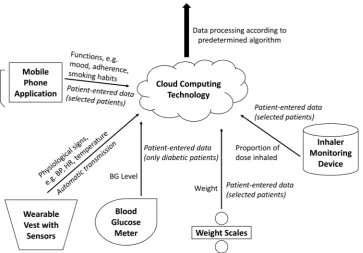
Wearable Sensing and Smart Cloud Computing for Integrated Care to COPD Patients with Co-morbidities (WELCOME) is an innovative European Union tele-health project that aims to develop a wearable vest with sensors for the monitoring of physiological signals using cloud computing technology (figure 1). The system uses a number of patient-held devices, such as a blood glucose metre and an inhaler adherence monitoring device to assess the patient’s inhaler technique. This is accompanied by a patient support system through a mobile phone application providing lifestyle advice, mental health assessment and other functions.17 The WELCOME project is currently in its third year.
The WELCOME system will be validated in patients with COPD suffering from CHF, diabetes, anxiety or depression in four countries: Greece, the UK, Ireland, and the Netherlands. It is hypothesised that continuous monitoring and detection of worsening events will lead to improved care for patients with COPD and reduced rate of hospital admissions.
The WELCOME system framework adopts a user-centred approach. For a successful system design, user
requirements of key stakeholders from each of the valid-ating countries were determined following focus groups and interviews. The aim of this study was to confirm the current state of COPD care and determine the stake-holders’ views about the overall telehealth system pro-posed; the vest, the mobile application, the triage service and potential monitoring parameters in order to guide the system development in each participating country.
MATERIALS AND METHODS Study subjects and design
This study used a mixed-method approach eliciting per-ceptions of stakeholders through focus groups and inter-views. Phenomenology was selected as the main methodological orientation for this study since it was aimed at determining the perceptions of stakeholders regarding the current COPD care and potential integra-tion of technology.
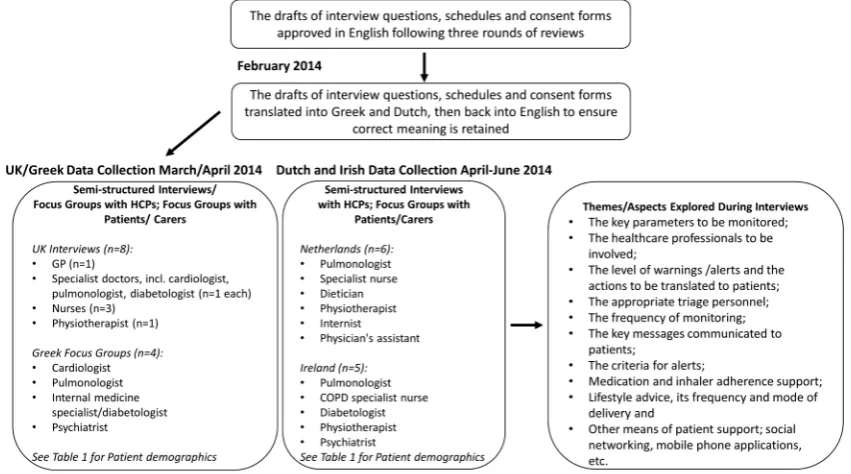
Purposive sampling was used to recruit 32 patients with COPD, 27 informal carers and 23 HCPs in four countries (table 1, figure 2). Each participant was pro-vided with an information sheet and asked to sign a consent form prior to taking part in the study.
Nine patients refused to participate in the study due to lack of interest (n=3), the unfamiliarity with research procedures (n=2), the unwillingness to take part in a group interview (n=2), the inability to attend the focus group in the hospital setting (n=1) or lack of time (n=1). None of the patients dropped out of the study.
Figure 1 A summary of components involved in WELCOME system to aid data collection for further processing, reporting and appropriate action. For further information, seefigure 3below. BG, blood glucose; BP, blood pressure; HR, heart rate;
WELCOME, Wearable Sensing and Smart Cloud Computing for Integrated Care to Chronic Obstructive Pulmonary Disease Patients with Co-morbidities.
on September 22, 2020 by guest. Protected by copyright.
The sources of listed evidence complemented each other allowing for triangulation to establish credibility within and across stakeholders.
Methods (interview process)
The focus groups and interviews were conducted in cor-responding clinical sites. A total offive interviewers were involved (2 in the UK and 1 in each other country). All interviewers were members of the WELCOME project consortium and held appropriate research qualifications or had advanced expertise in the subject area. All inter-viewers had a virtual meeting whereby they discussed the interview schedule and agreed with the methodology for running the focus groups/interviews.
The intercultural harmonisation during the study was ensured by having native speakers in each country con-ducting the corresponding interviews and approving all schedules following the English translation. Participants
were informed about the inclusion/exclusion criteria for the study through participant information sheets which were translated in different languages as appropriate. With minor exceptions, interviewees did not have an established working or patient–clinician relationship with interviewers prior to study initiation.
Focus groups lasted ∼2 hours. Two short question-naires relating to medication adherence were also given to patients and carers to complete anonymously during the focus groups. The one-on-one semistructured inter-views for HCPs lasted ∼1 hour. All sessions were audio recorded and subsequently transcribed and translated into English.
Analyses
Thematic analysis was conducted in a manual constant comparative manner enabled by deductive and inductive processes. One member of the research team transcribed
Table 1 Demographics of the patients from four countries who took part in the focus groups
Nationality
Number of patients
Sex Age group Comorbidities
M F 51–60 61–70 71–80 81–90 CHF T2DM Asthma HTN Dep. Anx. Ins.
British 10 7 3 3 2 4 1 3 2 3 3 5 2 1
Greek 7 6 1 1 3 3 0 3 2 0 2 3 2 1
Dutch 8 1 7 6 2 0 0 1 1 1 0 0 1 0
Irish 7 3 4 2 2 2 1 1 2 5 1 1 1 4
Total 32 17 15 12 9 9 2 8 7 9 6 9 6 6
Percentage of total
NA 53.1 46.9 37.5 28.1 28.1 6.3 25.0 21.9 28.1 18.8 28.1 18.8 18.8
Anx., anxiety; CHF, chronic heart failure; Dep., depression; F, female; HTN, hypertension; Ins., insomnia; M, male; NA, not applicable; T2DM, type 2 diabetes mellitus.
Figure 2 A flow chart depicting the preparation and data collection during the focus group sessions and semistructured interviews conducted as part of the present study. COPD, chronic obstructive pulmonary disease; GP, general practitioner/family doctor; HCPs, healthcare professionals.
on September 22, 2020 by guest. Protected by copyright.
the data; however, two researchers conducted the analysis including coding. These codes were later compared, altered and modified during the consolidated analysis based on the full picture of the data as ideas developed. On the basis of these emergent codes, overarching themes from these interviews and focus groups were iden-tified to generate overall stakeholder needs and frame-work recommendations. The themes derived from the three groups of stakeholders in one country were com-pared and contrasted with those from the other three countries to enable the individualisation of the system for each state during the future stages of development.
RESULTS
Current care and challenges
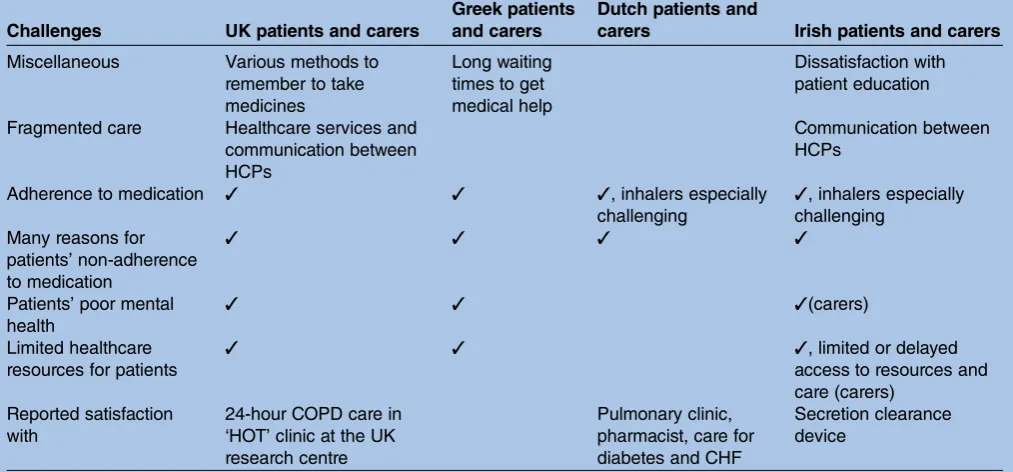
The level of satisfaction with current care varied between patients and carers of the four countries (table 2). UK patients/carers were generally happy with the current level of care and appreciated the Hot (urgent care) clinic which offered 24-hour personalised care. However, together with the Irish respondents they expected better communication between HCPs. This was echoed by HCPs of both countries who felt they lacked appropriately trained staff and resources.
Greek and Dutch patients/carers reported long waiting times when accessing healthcare. According to the Dutch patients, general practitioners (GPs) were not able to tackle some of the problems independently claiming that, in pulmonary clinics, the support was better. Poor mental health was reported as a challenge by all but the Dutch cohort.
A varying degree of non-adherence to medicines was reported by patients and carers of all countries despite the fact that a significant number of patients obtained support from their pharmacist, for example, regular checks for inhaler technique in the Netherlands. A number of reasons for this emerged, including health beliefs, generic versus brand-name drug substitution, desperation, financial issues or forgetfulness. Poor patient engagement in their own care and non-adherence to lifestyle recommendations was also
identi-fied as a challenge by HCPs in all countries.
Acceptance of concepts proposed
Most Dutch patients were sceptical about telehealth, had mixed views about the WELCOME project or the inhaler monitoring device and were cautious about the vest (table 3). A few carers were also more cautious as they thought the system would target people from spe-cific age groups that were technology-naive.
Other cohorts of patients/carers were receptive to tel-ehealth and thought it was creative and gave a feeling of safety. The idea of the vest was well received.
WELCOME was seen as a system that could help patients decide when to seek medical assistance, thus reducing the necessity of patients having to travel to and from the doctors. However, Dutch patients had concerns about being constantly monitored.
The majority of non-Dutch respondents felt that the inhaler monitoring device would be helpful in confi rm-ing correct use. The Dutch postulated that such a device might be a ‘superfluous addition’ and may only be
Table 2 A summary of current challenges reported by patients/carers involved in the study in all four countries; theme expressed/accepted is indicated as✓; if box empty, no opinion was expressed on the theme; for Irish and Dutch data: brackets show by whom theme is expressed (patients and/or carers)
Challenges UK patients and carers
Greek patients and carers
Dutch patients and
carers Irish patients and carers
Miscellaneous Various methods to remember to take medicines
Long waiting times to get medical help
Dissatisfaction with patient education
Fragmented care Healthcare services and communication between HCPs
Communication between HCPs
Adherence to medication ✓ ✓ ✓, inhalers especially
challenging
✓, inhalers especially challenging
Many reasons for patients’non-adherence to medication
✓ ✓ ✓ ✓
Patients’poor mental health
✓ ✓ ✓(carers)
Limited healthcare resources for patients
✓ ✓ ✓, limited or delayed
access to resources and care (carers)
Reported satisfaction with
24-hour COPD care in
‘HOT’clinic at the UK research centre
Pulmonary clinic, pharmacist, care for diabetes and CHF
Secretion clearance device
If no differentiation, then the theme is expressed only by patients, with no contribution from carers. CHF, chronic heart failure; COPD, chronic obstructive pulmonary disease; HCPs, healthcare professionals.
on September 22, 2020 by guest. Protected by copyright.
helpful at the start of treatment. The mobile application was welcomed by all but UK patients.
All HCPs were overall receptive to the WELCOME concepts, except two pulmonologists (Dutch and Irish) who felt that ‘published results about telehealth have been varied’ and that the system success depended on patients’training. A multidisciplinary effort in delivering the system and providing patients’ training and advice was sought by most HCPs.
The vest
No significant patient/carer consensus was reached on the duration of vest wear (ranging from daily to wearing whenever unwell). Most respondents disagreed with con-tinuous wear, as it may be too stressful for the patient.
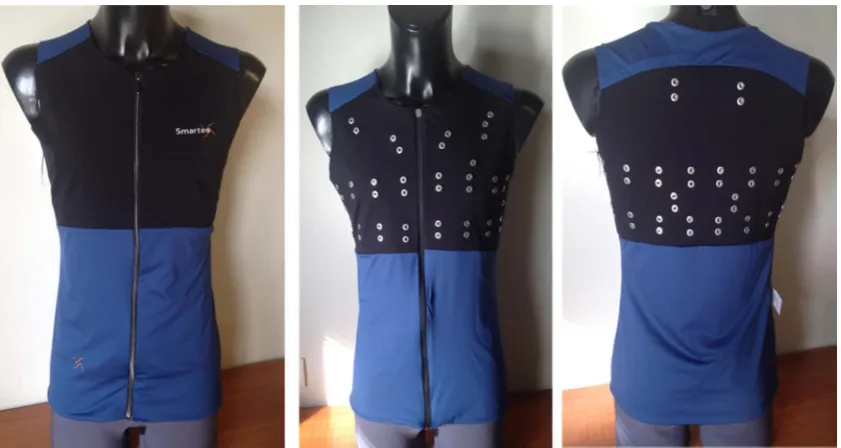
The development of male/female versions of the vest was favoured by UK and Greek patients (seefigure 3for concept vest).
HCPs from all countries conformed with the fact that the vest should be worn both indoor and outdoor, and for a period of time both during day and night. They agreed that the frequency and duration of wear should be individualised taking into account factors such as adherence, frequency of exacerbations and comorbid-ities. All HCPs agreed that increased duration of wear should be considered postexacerbation/hospitalisation, during and postexercise.
HCPs proposed a number of different ways the bio-signals’sensors should be located in the vest. For respira-tory sensors this ranged from four sensors per quadrant
Figure 3 The proposed concept vest and sensors for Wearable Sensing and Smart Cloud Computing for Integrated Care to Chronic Obstructive Pulmonary Disease Patients with Co-morbidities (WELCOME) system. Acknowledgement Smartex s.r.l.
Table 3 A summary of acceptance of the concepts proposed by patients/carers of all four countries involved in the study; theme expressed/accepted is indicated as✓; theme not desired is indicated as ×; if box empty, no opinion was expressed on the theme; For Irish and Dutch data: brackets show by whom theme is expressed (patients and/or carers)
Acceptance of the overall concept of:
UK patients and carers
Greek patients
and carers Dutch patients and carers Irish patients and carers
Telehealth ✓ ✓ Mixed (most: × and sceptical) ✓(Patients and carers)
WELCOME ✓ ✓ Patients mixed views, carers
✓ ✓(Patients and carers)
The vest ✓ ✓ ✓ ✓
The inhaler monitoring device
✓ ✓ Patients: mixed views (believe
their technique is correct), carers✓
✓(Patients and carers)
WELCOME application
× ✓ ✓(Patients and carers) Patients and carers:✓incl.
educational advice that the app can provide
If no differentiation, then the theme is expressed only by patients, with no contribution from carers.
WELCOME, Wearable Sensing and Smart Cloud Computing for Integrated Care to Chronic Obstructive Pulmonary Disease Patients with Co-morbidities.
on September 22, 2020 by guest. Protected by copyright.
and matrix-like positioning to four sensors each for basal and dorsal parts of the lungs or sensors arranged in two matrices (left and right). HCPs agreed that the classical 12-lead ECG might be suitable for cardiac moni-toring together with sensors over the apex of the heart, basal parts and heart valves (opinions varied).
Primary concerns related to the vest design and use included its weight ( patients/carers from all countries), availability of sizes, safety, potential skin irritation, over-heating and thickness of the material ( patients/carers from 2 countries each). Concerns about confidentiality, for example, whether the vest would record surrounding sounds and location detection was raised by British patients/carers.
Monitoring results and parameters
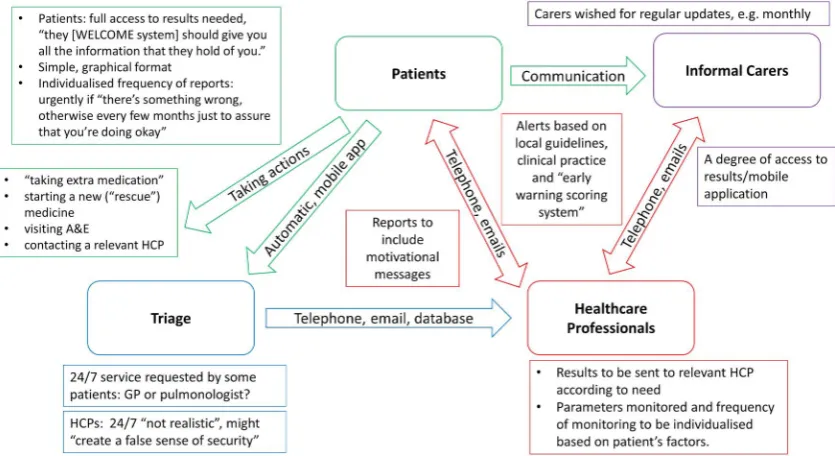
The majority of patients/carers agreed that a 24/7 manned triage service run by GPs or pulmonologists was needed whereas HCPs were not as supportive of such a service preferring a time-defined, HCP-led service and welcoming a small degree of automated triage (figure 4). They also felt that abnormal results should be sent to all HCPs involved.
Patients demanded access to the complete set of their results, and apart from Dutch respondents, the general consensus was to enable carers to have a similar degree of access as patients. HCPs felt that patients/carers should have limited access to graphically presented results.
According to HCPs, the interpretation of results should be individualised and based on local guidelines, clinical practice and predetermined early warning
scoring system, for example, green/amber/red colour alerts with relevant actions according to the results.
A variety of methods to alert the patients to abnormal
findings were proposed by patients/carers, with text messages and emails being the most popular. Those with access to email preferred this format and graphical rep-resentation of results. Patients and carers wished to be informed as soon as possible or at least within 24 hours if it were urgent. In other cases, the desired frequency of reports varied.
The format of communication between the triage and relevant HCPs included emails, text messages, diagrams or verbal prompts. Communication between different parties should be individualised based on each patient’s clinical status, ranging from once weekly to daily and real-time.
Patients/carers were willing to take individual actions in response to any alerts. Nevertheless, some carers would prefer human intervention before their response. HCPs generally agreed for patients to initiate certain actions, such as taking extra medication, in response to alerts. Both patients and HCPs asked for non-urgent communications to include motivational or reassuring feedback/messages.
All interviewed HCPs agreed that the parameters to be monitored should be individualised based on individual comorbidities (figure 5). HCPs referred to numerous guidelines/tools that may be used for populating the parameters and assisting in monitoring and decision-making, such as the Modified Medical Research Council Dyspnoea Scale. No consensus on monitoring frequency was reached between HCPs.
Figure 4 A summary of concepts relating to result monitoring, result display and alerts for patients as well as HCPs derived during WELCOME interviews and qualitative analysis. 24/7, 24 hours a day, 7 days a week; A&E, accident and emergency department; App, application; GP, general practitioner; HCPs, healthcare professionals; WELCOME, Wearable Sensing and Smart Cloud Computing for Integrated Care to Chronic Obstructive Pulmonary Disease Patients with Co-morbidities.
on September 22, 2020 by guest. Protected by copyright.
WELCOME mobile phone application
Despite generally positive reception of the application, some patients/carers as well as certain HCPs expressed concerns based on patient age preventing adaptation to new technology or resulting in fatigue.
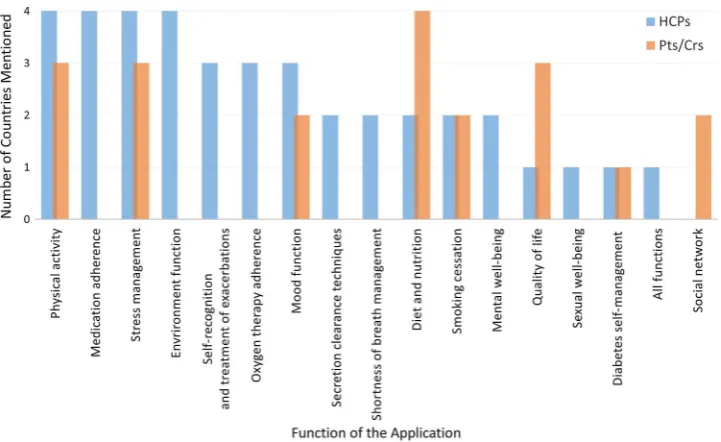
A range of functions to be included, as part of the mobile phone application, were proposed by HCPs, patients and carers (figure 6). Patients/carers and HCPs from Greece and the UK felt that it should incorporate educational videos from reputable sources personalised depending on patients’comorbidities.
Patients/carers from all countries were interested in the diet/nutrition function of the application. All but the Dutch patients also wished for the physical activity and stress management functions whereas the mood and social network functions were positively appraised by patients/carers from two countries each, namely the UK/Ireland and the Netherlands/Ireland, respectively.
UK and Greek patients, and Irish patients/carers wanted an additional feature to enable question and answer sessions with HCPs, for example, GPs. The Greek and Dutch patients/carers proposed reminder and diary
Figure 5 A range of monitoring parameters proposed by healthcare professionals interviewed, which might be included in the WELCOME system and individualised according to patient’s comorbidities. CAT, chronic obstructive pulmonary disease (COPD) assessment test; WELCOME, Wearable Sensing and Smart Cloud Computing for Integrated Care to COPD Patients with Co-morbidities.
Figure 6 A range of functions proposed by healthcare professionals (HCPs) and patients/carers (Pts/Crs) of the four countries to be included as part of the Wearable Sensing and Smart Cloud Computing for Integrated Care to Chronic Obstructive
Pulmonary Disease Patients with Co-morbidities (WELCOME) mobile application.
on September 22, 2020 by guest. Protected by copyright.
functions that correlated with the proposals from HCPs. The Greek carers suggested an integrated accelerometer to automatically record the patient’s physical activity.
The majority of functions were welcomed by HCPs from all countries who wished to be involved depending on their specialty. Clinical guidelines should be used and extra caution exercised when developing certain applications, for example, secretion clearance due to associated risks. HCPs also made suggestions to include: sexual well-being, medication and panic management functions, and a function to help detect behavioural changes.
While UK and Greek patients were happy for carers to be alerted about patients’dyspnoea, the general consen-sus was for carers not to have access to the functions of the application. In contrast, HCPs felt the application should be used jointly by patients and their carers depending on needs, that is, from daily to weekly consid-ering patients’individual circumstances.
DISCUSSION
This thematic analysis provided an in depth view into the current state of care in four EU member states along with how the proposed WELCOME project could be implemented to integrate care and improve outcomes in patients with COPD. Even though these results consti-tuted the backbone of the WELCOME system’s user requirements, they can be extrapolated to aid the plan-ning of potential technology-enabled care services.
With regards to current care received, one of the important points raised by all patient/carer cohorts centred on the challenges they face in current health-care systems including fragmented health-care, lack of commu-nication and long waiting times. Fragmented healthcare has been previously identified as a potential issue in several EU countries due to increasing morbidity and associated costs.18–20 Since WELCOME offers an alterna-tive approach to tackling such fragmentation by provid-ing a virtual cloud-based dynamic network between patients, carers and HCPs, it was well received by the majority of the participants.
Non-adherence to treatment emerged as one of the key themes, and some patients were very honest about how often they had forgotten or chosen not to take their prescribed medicines. Health beliefs are well docu-mented in the literature and are known to influence the adherence rates.21It should be noted that patients inter-viewed never discussed adherence issues with their HCP, while HCPs interviewed were unaware of the existence of such issues. This was not surprising as it is often widely accepted that HCPs underestimate the incidence of non-adherence among their patients.22
Poor inhaler techniques is a known reason for non-adherence,23 and a number of methods have been pro-posed to address this.24The WELCOME system includes an inhaler monitoring device aimed at improving patient’s technique leading to better adherence. With
minor exceptions, the inhaler monitoring device pro-posed was considered a positive feature by users and HCPs. Information on inhaler technique and a reminder to take medicines/inhalers were among the proposed functions for the mobile application. Some of the medication-related problems identified could be tackled through appropriate patient education.25 This has been reflected in the interviews with HCPs who highlighted the importance of detailed educational ses-sions to train the patients and their carers about the WELCOME system.
Despite general acceptance of the WELCOME frame-work, the Dutch cohort of users were generally less posi-tive about the system or its concepts regardless of their comparatively young age and familiarity with mobile technologies. The main limiting factor of the proposed vest was its comfort. Such concerns were expected from patients with COPD who already suffered from symptom-atic chest discomfort.26
The majority of patients did not own smartphones and wanted to receive information via text messages. This correlated well with concerns expressed by HCPs about ability of patients to engage with the WELCOME system or the mobile application. While such limitations may need to be considered when recruiting participants for the validation study, they should not constitute the exclusion criteria. Most patients demonstrated their enthusiasm about WELCOME regardless of the level of IT skills. Similar to other studies,27 this suggests that technology-naïve patients/carers should not be excluded from opportunities to enhance their health using novel technologies based on their lack of prior experience. Instead, non-patient factors, such as poor mobile or internet reception, or technical malfunctions, may need to be considered and addressed as potential barriers to system development.13
Most HCPs in this study welcomed the system, however, with a defined monitoring time. This contra-dicts the literature that shows resistance from frontline staff due to perceived additional workload that telemoni-toring may introduce,28 a negative perceived impact on clinician–patient relationship,29 or due to potentially unclear benefits of telemonitoring.13 The latter was only expressed by two pulmonologists in this study.
The results show that an individualised frequency and duration of vest wear and monitoring should be chosen for each patient, particularly for patients with COPD whose daily lifestyle is often affected by the disease itself.30 This may also be influenced by factors such as the history of exacerbations and the diagnosed disease stage. Therefore, patients should be involved when the schedule of self-monitoring is decided and should be consulted at each stage of vest design.
Parameters’ monitoring and feedback brought up a significant amount of debate. While some patients and most HCPs agreed for carers to have access to vital statis-tics, others were quite reluctant due to the burden for carers and/or lack of privacy. This was not unexpected
on September 22, 2020 by guest. Protected by copyright.
since the relationships between patients with COPD and carers are often complex.31The suggestion might be for carers’ access to the results to be personalised in agree-ment with the patients.
In terms of alerts, HCPs felt that these also need to be generated in an individualised fashion. Clinical teams might thus consider using retrospective data from each clinical site based on their patients in order to identify the level of change/thresholds and to develop a ‘traffic light’-based algorithm to be used for alerts. A threshold average (different for every parameter) will mark a minor deviation from the personal baseline, whereas other thresholds will mark major abnormalities.
Patients mostly preferred doctors to receive and screen alerts, and wanted access to their results to view their progress. However, some also wanted pharmacists, physiotherapists and nurses to be responsible for man-aging/checking their monitoring parameters, thus sug-gesting that all HCPs should have access to data, as was also emphasised by most HCPs interviewed.
Unless urgent, most patients and HCPs wanted to receive results regularly and requested positive motiv-ational or reassurance feedback. It has been reported that the provision of such information may enhance physical activity.32
The ability of patients with COPD to self-manage exacerbations is known to improve quality of life and reduce hospital admissions.33 WELCOME users were happy to adhere to action plans based on alerts or auto-mated advice; however, self-management advice should be appropriately formulated in a language that is sensi-tive to patients’ needs. Furthermore, HCP-led support and education for service users is of paramount import-ance, particularly at the start of system implementation to ensure optimal uptake of self-management strategies.34
Patients were less receptive to the smartphone applica-tion. It might have been perceived as an add-on com-pared with the vest, which may have been perceived as a life-saving measure. Patient’s limited interaction with technology was one factor that was highlighted as infl u-encing their acceptance of the application. However, other factors including socio-demographics, health-related factors or level of education may have had an influence.35 36
HCPs emphasised that the range of application func-tions should offer patients a choice depending on their needs without jeopardising their autonomy. HCPs from all four countries asked for the environment (eg, weather update) and medication adherence functions, the latterfitting well with adherence issues identified by patients/carers.
Diet, physical activity, smoking cessation and mood and stress management functions were preferred by HCPs and patients/carers. It is known that as many as 20% of patients with COPD suffer from depression,37 38 but they do not always seek adequate help despite an increased risk of related morbidity and mortality.38 39
Therefore, the WELCOME application will include a tool to discretely assess mood while providing education about its impact on health. Patients with COPD are known to be relatively socially isolated with their condi-tion,40 thus it was not surprising that patients/carers requested the development of the social network function.
Overall, HCPs, patients and carers were very receptive to the WELCOME framework proposed and were happy to engage in it constructively. A number of themes have been derived during the interview process with a range of stakeholders and have been developed into appropri-ate recommendations through triangulation. Most importantly, our study demonstrated the need to person-alise and integrate different parts of the system: the vest, the mobile application and various external devices. This is particularly important in light of the literature which shows that neither regular monitoring of physio-logical signs (eg, oxygen saturations) nor patient-submitted daily electronic reports can reduce the fre-quency of COPD exacerbations alone.13
The recommendations presented in this paper will be considered in the later stages of system development and design. While the backbone of the system developed should be based on the recommendations derived, the specifications of the system will need to be adjusted to each participating EU member state based on their indi-vidual healthcare system and needs of the service users. As part of this process, any output of the vest components proposed (eg, ECG or oxygen saturations) should be mapped using a predetermined algorithm ‘traffic light’ system in a manner similar to that previously described.41
The cost-effectiveness and cost-utility of the system will also have to be evaluated to determine the core compo-nents needed (eg, the application functions) and the extent of personalisation to meet the individual’s needs while still remaining cost-effective.42 This needs to be compared with structured systematic approaches43 or simple face-to-face educational interventions44 which may lead to benefits similar to those of advanced technologies.
The recommendations outlined should be interpreted with caution due to the limited number of participants interviewed ( particularly elderly patients over 80 years of age) and differences in the interview process between the users and providers of healthcare services. The study also did not take into account the views of tax payers and service commissioners, which should be considered as part of the costing exercise. In addition, only one GP was involved in the interview phase despite the fact that GPs might have to lead the system implementation in primary care setting.
Author affiliations
1Faculty of Science, Engineering and Computing, Kingston University,
Kingston-Upon-Thames, UK
2Department of Research and Education, CIRO+, Centre of Expertise for
Chronic Organ Failure, Horn, The Netherlands
on September 22, 2020 by guest. Protected by copyright.
3Pulmonary Clinic, General Hospital G.P. Papanikolaou, Thessaloniki, Greece 4Chest Clinic and Research and Development, Croydon University Hospital,
Croydon, UK
5RCSI Education & Research Centre, RCSI, Dublin, Ireland 6Research and Development, Smartex s.r.l, Pisa, Italy
7Research and Development, Exodus Information Technology S.A, Athens,
Greece
Twitter Follow Vilius Savickas at @viliussavickas
Contributors RK and SN-G contributed to the study design, data analysis and
drafting of the manuscript. VS contributed to the data analysis and drafting of the manuscript. MAS, EK, RWC, JC, BP and AWV contributed to the study design and drafting of the manuscript. RS, ND, RP, NP, EP, SD and AR contributed to the study design.
Funding This work was supported by the European Commission under the
Information and Communication Technologies (ICT) 7th Framework Programme grant number FP7-611223.
Competing interests None declared.
Ethics approval This study was approved by the: Beaumont Hospital Ethics
(Medical Research) Committee (Dublin, Ireland), Scientific Board of the G. Papanikolaou General Hospital (Thessaloniki, Greece), Medical Research Ethics Committees United (Nieuwegein, the Netherlands) and Croydon Health Services NHS Trust Information Governance (London, UK).
Provenance and peer review Not commissioned; externally peer reviewed.
Data sharing statement Detailed interview transcripts are stored at Kingston
University and available on request.
Open Access This is an Open Access article distributed in accordance with
the Creative Commons Attribution Non Commercial (CC BY-NC 4.0) license, which permits others to distribute, remix, adapt, build upon this work non-commercially, and license their derivative works on different terms, provided the original work is properly cited and the use is non-commercial. See: http:// creativecommons.org/licenses/by-nc/4.0/
REFERENCES
1. Medical directorate.Overview of potential to reduce lives lost from
Chronic Obstructive Pulmonary Disease (COPD). NHS England,
2014. https://www.england.nhs.uk/wp-content/uploads/2014/02/rm-fs-6.pdf (accessed online Aug 2016).
2. British Thoracic Society and British Lung Foundation.Ready for
Home: improving hospital discharge care for people living with
COPD. 2011. https://www.brit-thoracic.org.uk/document-library/
clinical-information/copd/ready-for-home-improving-hospital-discharge-care-for-people-living-with-copd/ (accessed online Aug 2016).
3. Andenaes R, Kalfoss MH, Wahl AK. Coping and psychological
distress in hospitalized patients with chronic obstructive pulmonary
disease.Heart Lung2006;35:46–57.
4. Marques A, Jácome C, Cruz J,et al. Family-based psychosocial
support and education as part of pulmonary rehabilitation in COPD:
a randomized controlled trial.Chest2015;147:662–72.
5. Rutten FH, Cramer MJ, Grobbee DE,et al. Unrecognized heart
failure in elderly patients with stable chronic obstructive pulmonary
disease.Eur Heart J2005;26:1887–94.
6. Mannino DM, Thorn D, Swensen A,et al. Prevalence and outcomes
of diabetes, hypertension and cardiovascular disease in COPD.
Eur Respir J2008;32:962–9.
7. Kunik ME, Roundy K, Veazey C,et al. Surprisingly high prevalence
of anxiety and depression in chronic breathing disorders.
Chest2005;127:1205–11.
8. Ng TP, Niti M, Tan WC,et al. Depressive symptoms and chronic
obstructive pulmonary disease: effect on mortality, hospital readmission, symptom burden, functional status, and quality of life.
Arch Intern Med2007;167:60–7.
9. Steventon A, Bardsley M, Billings J,et al. Effect of telehealth on use
of secondary care and mortality: findings from the Whole System
Demonstrator cluster randomised trial.BMJ2012;344:e3874.
10. Nicolucci A, Cercone S, Chiriatti A,et al. A randomized trial on home
telemonitoring for the management of metabolic and cardiovascular
risk in patients with type 2 diabetes.Diabetes Technol Ther
2015;17:563–70.
11. Thokala P, Baalbaki H, Brennan A,et al. Telemonitoring after
discharge from hospital with heart failure: cost-effectiveness modelling
of alternative service designs.BMJ Open2013;3:e003250.
12. Dawson G, Collinge M, Roberts J,et al. P27 the use of
telemonitoring to assist in the early supported discharge for patients
admitted with an exacerbation of COPD.Thorax2014;69:A89.
13. Pinnock H, Hanley J, McCloughan L,et al. Effectiveness of
telemonitoring integrated into existing clinical services on hospital admission for exacerbation of chronic obstructive pulmonary disease: researcher blind, multicentre, randomised controlled trial.
BMJ2013;347:f6070.
14. Williams V, Price J, Hardinge M,et al. Using a mobile health
application to support self-management in COPD: a qualitative
study.Br J Gen Pract2014;64:e392–400.
15. Segrelles Calvo G, Gómez-Suárez C, Soriano JB,et al. A home
telehealth program for patients with severe COPD: the PROMETE
study.Respir Med2014;108:453–62.
16. Nield M, Hoo GW. Real-time telehealth for COPD self-management
using Skype.COPD2012;9:611–19.
17. Chouvarda I, Philip NY, Natsiavas P,et al. WELCOME—innovative
integrated care platform using wearable sensing and smart cloud
computing for COPD patients with comorbidities.Conf Proc IEEE
Eng Med Biol Soc2014;2014:3180–3.
18. Frandsen BR, Joynt KE, Rebitzer JB,et al. Care fragmentation,
quality, and costs among chronically ill patients.Am J Manag Care
2015;21:355–62.
19. Nolte E, Knai C, Hofmarcher M,et al. Overcoming fragmentation in
health care: chronic care in Austria, Germany and The Netherlands.
Health Econ Policy Law2012;7:125–46.
20. Otte-Trojel T, de Bont A, Aspria M,et al. Developing patient portals
in a fragmented healthcare system.Int J Med Inform
2015;84:835–46.
21. van Grunsven PM, van Schayck CP, van Kollenburg HJ,et al. The
role of“fear of corticosteroids”in nonparticipation in early intervention with inhaled corticosteroids in asthma and COPD in
general practice.Eur Respir J1998;11:1178–81.
22. Byerly M, Fisher R, Whatley K,et al. A comparison of electronic
monitoring vs. clinician rating of antipsychotic adherence in
outpatients with schizophrenia.Psychiatry Res2005;133:
129–33.
23. Lurslurchachai L, Krauskopf K, Roy A,et al. Metered dose inhaler
technique among inner-city asthmatics and its association
with asthma medication adherence.Clin Respir J2014;8:
397–403.
24. Chan AH, Stewart AW, Harrison J,et al. The effect of an electronic
monitoring device with audiovisual reminder function on adherence to inhaled corticosteroids and school attendance in children with
asthma: a randomised controlled trial.Lancet Respir Med
2015;3:210–19.
25. Incorvaia C, Riario-Sforza GG. Effect of patient education on
adherence to drug treatment for chronic obstructive pulmonary
disease.Ann Thorac Med2011;6:242–3.
26. Vestbo J, Hurd SS, Agustí AG,et al. Global strategy for the
diagnosis, management, and prevention of chronic obstructive
pulmonary disease: GOLD executive summary.Am J Respir Crit
Care Med2013;187:347–65.
27. Lind L, Karlsson D. Telehealth for“the digital illiterate”—elderly heart
failure patients experiences.Stud Health Technol Inform
2014;205:353–7.
28. Hibbert D, Mair FS, May CR,et al. Health professionals’responses
to the introduction of a home telehealth service.J Telemed Telecare
2004;10:226–30.
29. Fairbrother P, Pinnock H, Hanley J,et al. Continuity, but at what
cost? The impact of telemonitoring COPD on continuities of care: a
qualitative study.Prim Care Respir J2012;21:322–8.
30. Rodriguez Gonzalez-Moro JM, de Lucas Ramos P, Izquierdo Alonso
JL,et al. Impact of COPD severity on physical disability and daily
living activities: EDIP-EPOC I and EDIP-EPOC II studies.Int J Clin
Pract2009;63:742–50.
31. Wang KY, Sung PY, Yang ST,et al. Influence of family caregiver
caring behavior on COPD patients’self-care behavior in Taiwan.
Respir Care2012;57:263–72.
32. Moy ML, Weston NA, Wilson EJ,et al. A pilot study of an internet
walking program and pedometer in COPD.Respir Med
2012;106:1342–50.
33. Zwerink M, Brusse-Keizer M, van der Valk PD,et al. Self
management for patients with chronic obstructive pulmonary
disease.Cochrane Database Syst Rev2014;(3):CD002990.
34. Voncken-Brewster V, Tange H, de Vries H,et al. A randomized
controlled trial evaluating the effectiveness of a web-based, computer-tailored self-management intervention for people with
on September 22, 2020 by guest. Protected by copyright.
or at risk for COPD.Int J Chron Obstruct Pulmon Dis
2015;10:1061–73.
35. Or CK, Karsh BT. A systematic review of patient acceptance of
consumer health information technology.J Am Med Inform Assoc
2009;16:550–60.
36. Illiger K, Hupka M, von Jan U,et al. Mobile technologies:
expectancy, usage, and acceptance of clinical staff and patients at a
university medical center.JMIR Mhealth Uhealth2014;2:e42.
37. Schneider C, Jick SS, Bothner U,et al. COPD and the risk of
depression.Chest2010;137:341–7.
38. Maurer J, Rebbapragada V, Borson S,et al. Anxiety and depression
in COPD: current understanding, unanswered questions, and
research needs.Chest2008;134(4 Suppl):43S–56S.
39. Pooler A, Beech R. Examining the relationship between anxiety and
depression and exacerbations of COPD which result in hospital
admission: a systematic review.Int J Chron Obstruct Pulmon Dis
2014;9:315–30.
40. Keele-Card G, Foxall MJ, Barron CR. Loneliness, depression, and
social support of patients with COPD and their spouses.Public
Health Nurs1993;10:245–51.
41. Burton C, Pinnock H, McKinstry B. Changes in telemonitored
physiological variables and symptoms prior to exacerbations of chronic
obstructive pulmonary disease.J Telemed Telecare2015;21:29–36.
42. Stoddart A, van der Pol M, Pinnock H,et al. Telemonitoring for
chronic obstructive pulmonary disease: a cost and cost-utility
analysis of a randomised controlled trial.J Telemed Telecare
2015;21:108–18.
43. Kainu A, Pallasaho P, Piirila P,et al. Increase in prevalence of
physician-diagnosed asthma in Helsinki during the Finnish
Asthma Programme: improved recognition of asthma in primary care?
A cross-sectional cohort study.Prim Care Respir J2013;22:64–71.
44. Rice KL, Dewan N, Bloomfield HE,et al. Disease management
program for chronic obstructive pulmonary disease: a randomized
controlled trial.Am J Respir Crit Care Med2010;182:890–6.
on September 22, 2020 by guest. Protected by copyright.