R E S E A R C H
Open Access
Development and validity evidence of the
multidimensional scale of sexual
self-concept in a Spanish-speaking context
Rodrigo Ferrer-Urbina
1*, Geraldy Lorena Sepúlveda-Páez
2, Diego-Tomás Henríquez
2,
Daniel Ignacio Acevedo-Castillo
2and Débora Alejandra Llewellyn-Alvarado
2Abstract
Background/objective:STIs and HIV/AIDS are an important public health problem, transmitted by risky sex behaviours. In this context, it is necessary to identify protective factors, of those behaviours, as sexual self-concept. Sexual self-concept is a multidimensional trait (i.e. sexual self-esteem; sexual self-efficacy; and sexual assertiveness), but, in an extensive review, we did not find any measure to assess this multidimensional construct in a Spanish-speaking context. The objective of this research is development a scale to assess sexual self-concept in young people and adults.
Method:Time-space sampling with a total size of 792 participants, coming from the two Chilean cities (i.e. Arica and Iquique) with the highest HIV rates, aged between 17 and 53 years old (ME = 23.42; SD = 6.33), with 66.2% women (N= 500), 33.6% men (N= 258).
Results:Final scale has 16 items and 4 dimensions: sexual self-esteem, sexual self-efficacy, assertive sexual communication, and assertive sexual behaviour. The identified structure provides satisfactory levels of reliability (ω > .8) and presents robust evidence of validity, based on the internal structure of the test, using ESEM (RMSEA = .060; CFI = .99; TLI = .98), evidence of validity based on relationship to other variables (i.e. risky sexual behaviour) and measurement invariance between men and women.
Conclusions: The multidimensional scale of sexual concept has adequate psychometric properties to assess sexual self-concept in equivalent samples.
Keywords:Sexual self-concept, Sexual self-esteem, Sexual self-efficacy, Sexual assertiveness, ESEM
Introduction
Sexually transmitted infections (STIs), including human immunodeficiency virus (HIV) and its active manifest-ation, acquired immunodeficiency syndrome (AIDS), are health problems to millions of people (Lee et al.,2017). Despite public and private efforts to control STIs and HIV/AIDS, available evidence indicates that both prob-lems are still growing (Del Romero et al.,2019).
In Chile, STIs, including HIV/AIDS, are concentrated mainly in urban districts of the country (Ministerio de salud, 2010), with a heterogeneous regional distribution, with the highest rates of HIV/AIDS in the first two
regions of the north end, being the rates of new notifica-tions of HIV/AIDS, per 100,000 inhabitants, of 54.4 in Arica and Parinacota and 48.3 in Tarapacá regions, while was 27.7 in the whole of Chile (ISP, 2016).
STIs and HIV/AIDS are concentrated in young people more than any other sexually active age group, observing the highest prevalence in those aged 20–29 years (Elattabi et al.,2017), which is associated with being the group with the highest frequency of risky sex behaviour (Folch et al., 2015); this is why they are the group of greatest interest for public health policies on STIs and HIV/AIDS (Ministerio de salud,2018).
STIs and HIV can be contracted in multiple ways, al-though the main route of transmission is through direct sexual contact with carriers without the proper use of protective barriers, that is, risky sexual behaviours (Folch
© The Author(s). 2019Open AccessThis article is distributed under the terms of the Creative Commons Attribution 4.0 International License (http://creativecommons.org/licenses/by/4.0/), which permits unrestricted use, distribution, and reproduction in any medium, provided you give appropriate credit to the original author(s) and the source, provide a link to the Creative Commons license, and indicate if changes were made.
* Correspondence:[email protected]
1Escuela de Psicología y Filosofía, Universidad de Tarapacá, 18 de septiembre
#2222, Arica, Chile
et al., 2015). In this context, behavioural sciences have made efforts to identify and modify psychological factors associated with sexual risk behaviours, developing mul-tiple research focused on identifying risk factors, such as poor sex education and early sexual initiation (e.g. Shegog et al., 2017). However, there is broad evidence that prevention should focus not only on reducing risk factors but also on promoting protective factors, such as the organisation of gender identities and roles (e.g. Alimoradi et al., 2017; Rohleder et al., 2017), parental communication (e.g. Simons et al., 2016), access to in-formation (e.g. Villegas et al.,2016), and active participa-tion in organisaparticipa-tions (e.g. Frumence et al.,2014).
Within these protective factors, one that has been con-sistently referred is sexual self-concept (e.g. Hensel et al., 2011; O’Sullivan et al.,2006). Self-concept can be consid-ered as a multidimensional construction that refers to the perceptions and positive/negative feelings that an individ-ual has as a sexindivid-ual being (e.g. Talley and Stevens,2017), bringing together a large number of concepts (e.g. sexual-anxiety, sexual self-efficacy, sexual self-consciousness, sexual-preoccupation, sexual self-assertiveness, sexual self-esteem), ranging from proposals that include a few di-mensions (e.g. Ziaei et al.,2013; Rostosky et al., 2008) to ones that include as many as 20 (e.g. Snell,1998).
Among the multiple aspects included in the definitions of sexual self-concept, those that present the most stud-ies in their relationship with risky sexual behaviours and STI studies are those that allude to the following: feel-ings about one’s own sexuality (i.e. sexual self-esteem) (e.g. Bermudez et al.,2019; Rohleder et al.,2017); beliefs about one’s own sexual ability (i.e. sexual self-efficacy) (e.g. Espinosa et al., 2019; Rosenthal et al., 2012; Træen et al., 2014); and expressions of own sexual desires (i.e. sexual assertiveness) (e.g. Uribe-Alvarado et al., 2017; Santos-Iglesias and Sierra,2010).
In general terms, self-esteem refers to a subjective and individual experience corresponding to the evaluation that each person makes of themselves, which can be positive or negative, constructed from the interaction of the sub-ject with their social and cultural environment (Donnellan et al.,2011). Sexual self-esteem refers to the positive evalu-ation of oneself that gives the ability to experience sexual-ity in a healthy and satisfying way (e.g. Brassard et al., 2015). Sexual self-esteem has been associated with lower risk sexual behaviour, favouring the use of contraceptives (Adler and Hendrick, 1991); it seems that those who accept themselves as sexually active can prepare for sexual interactions in a favourable and safe way (Toro et al., 2008).
Self-efficacy is a concept developed by Bandura and National Inst of Mental Health (1986) in his cognitive social theory and refers to perceptions of one’s own skills and abilities (Schwarzer, 1992). In sexual domain,
self-efficacy refers to belief in one’s capacity to success-fully achieve behaviours and affective responses in a sex-ual context (Bailes et al., 2011). The concept of sexual self-efficacy is closely related to safe sexual practices (Soler et al.,2000). In addition, the high levels of sexual self-efficacy are related to a lower probability of develop-ing risky sexual behaviour (Rosenthal et al.,2012).
In the case of sexual assertiveness, there are two differ-ent facets: (1) assertive sexual behaviour, which refers to the ability to initiate sexual activity, reject unwanted sex-ual activity, and negotiate the desired sexsex-ual behaviour (Morokoff et al.,1997); and (2) assertive sexual communi-cation, which refers to the social skills that facilitate the communication of preferences or needs between sexual partners (Loshek and Terrell, 2015; Santos-Iglesias et al., 2014). Both aspects have been shown to predict the use of condoms, safe sexual practices (Kelly and Kalichman, 1995), lower risk sexual behaviour, HIV (Brown et al., 2018), and greater sexual satisfaction (Sánchez-Fuentes et al.,2016).
In order to identify and study these factors, it is neces-sary to have measurement instruments to evaluate them at low cost and based on evidence. The latter implies carrying out the necessary procedures to ensure that the inferences and interpretations of the observed scores are adequate and have the minimum ethical guarantees to support the conclusions and decisions that derive from the measurement process (American Educational Re-search Association, American Psychological Association,, and National Council on Measurement in Education, 2014). These guarantees correspond to two essential as-pects: reliability and evidence of validity (Prieto and Delgado,2010).
Currently, in the world-wide literature, there are mul-tiple measurement instruments designed to evaluate sex-ual self-concept (e.g. Snell, 1998; Hensel et al., 2011; Ziaei et al., 2013) and others focused on specific factors, mainly: sexual self-esteem (e.g. Bornefeld-Ettmann et al., 2018); sexual self-efficacy (e.g. Bailes et al., 2011); and sexual assertiveness (e.g. Hurlbert,1991; Morokoff et al., 1997; Quina et al., 2000; Santos-Iglesias et al., 2014). However, none of them is adapted, with evidence of reli-ability and validity, for use in the Spanish-speaking population.
research and intervention related to the prevention of STIs and HIV/AIDS in at-risk populations.
Method
Design and participants
This study has a cross-sectional and instrumental design (Ato et al.,2013).
A time-space sample, also referred to as time-location sample (Semaan, 2010), was used. Seven hundred ninety-two young people and adults from the largest cit-ies in the far north of Chile: Arica (n= 424) and Iquique (n= 336), regional capitals of Arica and Parinacota and Tarapacá, respectively. 90.1% (n= 718) claimed be het-erosexual, 87.7% (n = 666) claimed to have had sex in the last 2 years, and 59.8% (n= 484) claimed to currently have at least one sexual partner. In Arica, 301 (71%) par-ticipants were women, 121 (28.5%) men, and 3 (0.5%) in-tersexuals, with a mean age of 25.10 years (SD = 7.43); in Iquique, 199 (59.2%) were women and 137 (40.8%) men, with a mean age of 21.62 years (SD = 4.08).
Instruments
Multidimensional scale of sexual self-concept: ad-hoc de-veloped scale, designed to assess 4 dimensions: (1) sexual self-esteem; (2) sexual self-efficacy; (3) assertive sexual behaviour; (4) assertive sexual communication. Reagents are 4-point Likert behavioural/attitudinal statements (1 =‘Never’to 4 = ‘Always’; 1 =‘Strongly disagree’to 4 = ‘Strongly agree’).
Initially, 74 items were created (20 items for sexual self-esteem; 19 for sexual self-efficacy; 15 for assertive sexual behaviour; and 20 for assertive sexual communi-cation), which were evaluated by four judges with ex-perience in psychometrics, who suggested keeping 53 items, with which a pilot application was developed on-line, in university students samples (n= 210). Then, the scale was refined, based on items analysis and reliability. Finally, a 38-item version was applied for this study (see Additional file1). The final version and its psychometric evidences are reported in the‘Results’section.
Sexual risk behaviour scale(Ferrer-Urbina et al.,2019): a 12-item scale, designed to assess three dimensions of risky sexual behaviour: (1) sexual activity with multiple partners (items = 4); (2) inadequate or insufficient use of protection barriers (items = 4); and (3) sexual activity
under the influence of alcohol or drugs (items = 4). The questions are behavioural/attitudinal statements on a Likert-type scale of 4 points (0‘never’to 3‘always’), con-ditioning to report only the behaviour of the past 2 years. Scale reported validity evidence based on the in-ternal structure and good reliability (ω > .8) (Ferrer-Urbina et al.,2019).
Procedure
Eight 4th- and 5th-year psychology students were trained to provide instructions, answer participants’ questions, and apply both pencil and paper question-naires, in Arica and Iquique cities. Participants were contacted by surveyors in the recreation areas of higher education institutions, explaining the objectives of the study and inviting them to respond on the spot. In-formed consent was applied, where research objectives, participant´s rights, confidentiality, and anonymity were stated. Anonymity was safeguarded by anonymous re-turn in a sealed envelope, without any form of personal identification. The response procedure lasted less than 15 min.
Both the instrument and the entire procedure were known and approved by the scientific ethics committee of the University of Tarapacá.
Statistical analysis
To test the internal structure of the scale, an exploratory structural equation modelling (ESEM) with TARGET ro-tation (Asparouhov and Muthén, 2009) and robust weighted least squares estimation method (WLSMV), which is robust with non-normal discrete variables (Asparouhov,2007), was made from the polychoric cor-relation matrix (Barendse, Oort, and Timmerman,2015). In addition, to evaluate the plausibility of the integration of scale dimensions, a second-order confirmatory factor analysis (CFA) was performed, using WLSMV estima-tion method and the polychoric correlaestima-tion matrix. Overall model fit was assessed using the following indi-ces: comparative fit index (CFI), Tucker-Lewis index (TLI), and root mean square error of approximation (RMSEA), cut-off point recommendations of Schreiber (2017) (e.g. CFI > .95; TLI > .95; RMSEA<.06). Reliability was estimated, for each dimension, through Cronbach’s alpha and McDonald’s hierarchical omega coefficients,
Table 1Global fit of measurements models
Model N
Par χ
2
DF P CFI TLI RMSEA RMSEA CI 90%
Low Up
ESEM (38) 262 2845.187 557 .00 .96 .95 .072 .069 .075
ESEM (16) 107 236.530 62 .00 .99 .98 .060 .052 .068
Second-order CFA (16) 67 2030.898 101 .00 .91 .89 .155 .149 .161
NPar, numbers of parameters in the model;χ2
in their non-ordinal versions. In order to assess the sta-bility of the scale between people of different sexes, scale and metric invariance testing were performed, regarding decreases in CFI under .005 and increases in RMSEA under .010 as evidence of invariance (Chen, 2007).
Finally, evidence of validity based on convergence was established from a structural equation model of the relationship of scale dimensions with dimensions of the sexual risk behaviour scale, using WLSMV esti-mation method and the polychoric correlation matrix.
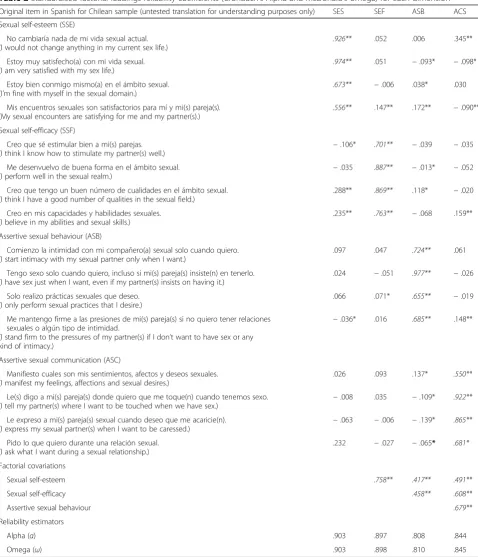
Table 2Standardised factorial loadings reliability coefficients (Cronbach’s Alpha and McDonald’s omega) for each dimension
Original item in Spanish for Chilean sample (untested translation for understanding purposes only) SES SEF ASB ACS Sexual self-esteem (SSE)
No cambiaría nada de mi vida sexual actual. (I would not change anything in my current sex life.)
.926** .052 .006 .345**
Estoy muy satisfecho(a) con mi vida sexual. (I am very satisfied with my sex life.)
.974** .051 −.093* −.098*
Estoy bien conmigo mismo(a) en el ámbito sexual. (I’m fine with myself in the sexual domain.)
.673** −.006 .038* .030
Mis encuentros sexuales son satisfactorios para mí y mi(s) pareja(s). (My sexual encounters are satisfying for me and my partner(s).)
.556** .147** .172** −.090**
Sexual self-efficacy (SSF)
Creo que sé estimular bien a mi(s) parejas.
(I think I know how to stimulate my partner(s) well.) −
.106* .701** −.039 −.035
Me desenvuelvo de buena forma en el ámbito sexual. (I perform well in the sexual realm.)
−.035 .887** −.013* −.052
Creo que tengo un buen número de cualidades en el ámbito sexual. (I think I have a good number of qualities in the sexual field.)
.288** .869** .118* −.020
Creo en mis capacidades y habilidades sexuales. (I believe in my abilities and sexual skills.)
.235** .763** −.068 .159**
Assertive sexual behaviour (ASB)
Comienzo la intimidad con mi compañero(a) sexual solo cuando quiero. (I start intimacy with my sexual partner only when I want.)
.097 .047 .724** .061
Tengo sexo solo cuando quiero, incluso si mi(s) pareja(s) insiste(n) en tenerlo. (I have sex just when I want, even if my partner(s) insists on having it.)
.024 −.051 .977** −.026
Solo realizo prácticas sexuales que deseo. (I only perform sexual practices that I desire.)
.066 .071* .655** −.019
Me mantengo firme a las presiones de mi(s) pareja(s) si no quiero tener relaciones sexuales o algún tipo de intimidad.
(I stand firm to the pressures of my partner(s) if I don’t want to have sex or any kind of intimacy.)
−.036* .016 .685** .148**
Assertive sexual communication (ASC)
Manifiesto cuales son mis sentimientos, afectos y deseos sexuales. (I manifest my feelings, affections and sexual desires.)
.026 .093 .137* .550**
Le(s) digo a mi(s) pareja(s) donde quiero que me toque(n) cuando tenemos sexo. (I tell my partner(s) where I want to be touched when we have sex.)
−.008 .035 −.109* .922**
Le expreso a mi(s) pareja(s) sexual cuando deseo que me acaricie(n).
(I express my sexual partner(s) when I want to be caressed.) −
.063 −.006 −.139* .865**
Pido lo que quiero durante una relación sexual. (I ask what I want during a sexual relationship.)
.232 −.027 −.065* .681*
Factorial covariations
Sexual self-esteem .758** .417** .491**
Sexual self-efficacy .458** .608**
Assertive sexual behaviour .679**
Reliability estimators
Alpha (α) .903 .897 .808 .844
Omega (ω) .903 .898 .810 .845
All the analyses were carried out using the MPlus program (7.4).
Results
Table 1 shows the settings of the ESEM measurement models, both in the original version (38 items) and in the debugged version (16 items). Debugged scale was tested, in two models: covariate ESEM and second-order CFA.
According to the most common fit criteria in the litera-ture (CFI > .95; TLI > .95; RMSEA < .06: Schreiber et al., 2006), the original model is not an enough explanation of the observed covariation matrix; therefore, debugging of the instrument was carried out by considering three cri-teria: (1) selection of strong factor loadings (λ> .5); (2) re-moval of redundant items; and (3) rere-moval of items whose cross-loadings were strong (> .3).
The final debugged scale consisted of 16 items divided into four dimensions (sexual esteem, sexual self-efficacy, assertive sexual behaviour, and assertive sexual communication), each comprising 4 items. Fit indicators (Table1), both comparative (CFI; TLI) and absolute (e.g. χ2
/DF; RMSEA), indicate that the debugged ESEM model is a good population representation of the ob-served relationships, but only in the covariate ESEM ver-sion. Factorial loadings, factorial covariances, and reliability estimates for each dimension are presented in Table2.
The factorial loadings evidence adequate representa-tions of each factor (λ > .5), with low levels of cross-loadings (λ ≤ .3). Structural relationships are moder-ate (r > .3) or high (r > .5) (Cohen, 1988). Reliability estimates are higher than .80 (i.e. ω = .90, sexual self-esteem; ω = .89, sexual self-efficacy; ω = .81, assertive sexual behaviour; ω = .84, assertive sexual communi-cation), showing high levels of internal consistency in all dimensions (Prieto and Delgado, 2010).
Results of measurement invariance testing, between men and women, of the final version of the scale (version of 16 items), are shown in Table 3. CFI and RMSEA deltas non-evidence practical fit changes in metric or scalar model, compared with configural model, so it can be assumed that measurement equivalence between sexes.
Finally, Table4shows the relationships between latent dimensions of the multidimensional scale of sexual
self-concept and sexual risk behaviour scale. Proposed model has adequate fit (χ2DF = 329; pχ2= .00; CFI = .98; TLI = .97; RMSEA = .05).
According to the observed relationships, SES has medium (> .3; Cohen, 1988) and large (> .5; Cohen, 1988) inverse effects on risky sexual behaviours; SEF also has medium (< − .3; Cohen, 1988) and large (< − .5; Cohen, 1988) but inverse effects; ASB has only small in-verse effects (<−.1; Cohen,1988); and ACS has small to large direct effects.
Discussion
The purpose of this study was to develop a multidi-mensional scale for the assessment of sexual self-concept, for use in Spanish-speaking young people and young adults. Global model’s fit, factor loadings sizes, non-existence of relevant cross-loadings allow supporting the model’s structure, providing evidence, based on the internal structure, for the dimensional scale scores interpretation. In this same direction, di-mensional reliability estimates allow us to assume that each dimension has levels of internal consistency that minimise measurement errors, despite being of a re-duced length.
Regarding the evidence of validity based on the re-lationship with other variables, rere-lationships are found according to the literature in the case of the dimen-sions of sexual self-esteem (e.g. Adler and Hendrick, 1991; Brassard et al., 2015; Toro et al., 2008) and as-sertive sexual communication (e.g. Loshek and Terrell, 2015). However, in the case of sexual self-efficacy and behavioural assertiveness, inverse relationships are ob-served, contrary to what is expected in the reference literature. These contradictory results can be attrib-uted to the fact that many of the scales of sexual self-efficacy and behavioural assertiveness are oriented towards the use of condoms (e.g. Baele et al., 2001; Uribe-Alvarado et al., 2017), while, in this scale, the definitions are oriented towards one’s own perceived sexual competence, being probable that those who ex-perience greater sexual activity with multiple partners and, therefore, more risks, possess a perception of greater ability, which would increase their perception of self-efficacy and a more assertive sexual behaviour.
Table 3Measurement invariance testing
NPar χ2 DF
P CFI RMSEA Δχ2 ΔDF PΔχ2 ΔCFI ΔRMSEA
Configural 140 850.599 196 .000 .971 .092
Metric 128 851.804 208 .000 .972 .089 10.750 12 .550 .001 −.003
Scalar 100 897.076 236 .000 .971 .084 78.258 40 .000 .000 −.008
Factorial covariations allow four dimensions of the instrument (sexual self-esteem, sexual self-efficacy, as-sertive sexual communication, and asas-sertive sexual be-haviour) to be considered as interdependent aspects of sexual self-concept, but they must be analysed independ-ently, because the second-order model is an inadequate explanation of the observed relationships, which is reflected in poor adjustment indicators.
According with Chen (2007) invariance suggested standards, structural and metric measurement invari-ance, between sexes, are supported, making possible to apply the scale to both men and women, since factorial loadings are equivalent between groups.
The main restriction of this study corresponds to the non-probabilistic sampling used, which makes it neces-sary to realise new psychometric studies in order to in-crease the generalisation of the scale. It is therefore recommended that this instrument be applied, when ap-propriate, in health, medical, and educational contexts in order to obtain additional evidence of validity and repre-sentativeness in new contexts (e.g. new countries, high-risk populations, other languages, migrants).
Finally, despite contextual limitations, this scale is not only a new instrument developed according to the current state of the psychometric techniques, but it also establishes a novel proposal that collects and integrates a broad spectrum of specific sexual health concepts that provide good evidence for their potential role in risky sexual behaviour, with the notorious advantage of being a short scale, which can be easily incorporated into series of measuring instruments, in health contexts, where quick applications are required in conjunction with other scales.
Conclusions The final version (16 items) of the
multidi-mensional scale of sexual self-concept has evidence of reliability, validity, based on the internal structure of the test and on the convergence with other measures, and measurement invariance between sexes, which support the interpretation of scores in equivalent samples of women and men. Initial evidence suggests that the current scale can be used for the development of re-search on psychological factors involved in sexual behaviours.
Supplementary information
Supplementary informationaccompanies this paper athttps://doi.org/10. 1186/s41155-019-0136-1.
Additional file 1.Original Spanish scale 38.
Authors’contributions
RF planned the study and wrote the manuscript; DH and GS helped to plan the study and support the manuscript review; RF and DH conducted the data analysis; GS, DA, and DL made contribution to items creations and data collection; GS, DA, and DL made contribution to the literature review and summarisation. All authors read and approved the final manuscript.
Funding
The authors acknowledge the partial support of FONDECYT through the grant of the FONDECYT INICIACIÓN N ° 11170395 and the UNIVERSIDAD DE TARAPACÁ through the grant of the PROYECTO DE INVESTIGACIÓN PARA ESTUDIANTES DE PREGRADO UTA 2017, N°3746-17.
Availability of data and materials
The datasets used and analysed during the current study are available to general use.
Ethics approval and consent to participate
All procedures performed in studies involving human participants were in accordance with the ethical standards of the institutional and/or national research committee and with the 1964 Helsinki declaration and its later amendments or comparable ethical standards. Informed consent was obtained of all participants.
Competing interests
The authors declare that they have no competing interests.
Author details
1Escuela de Psicología y Filosofía, Universidad de Tarapacá, 18 de septiembre
#2222, Arica, Chile.2Carrera de Psicología, Universidad de Tarapacá, Arica,
Chile.
Received: 10 June 2019 Accepted: 15 October 2019
References
Adler, N. L., & Hendrick, S. S. (1991). Relationships between contraceptive behaviour and love attitudes, sex attitudes, and self-esteem.Journal of Counseling & Development,70(2), 302–308https://doi.org/10.1002/j.1556-6676. 1991.tb01601.x.
Alimoradi, Z., Kariman, N., Simbar, M., & Ahmadi, F. (2017). Contributing factors to high-risk sexual behaviours among Iranian adolescent girls: A systematic review.International journal of community based nursing and midwifery,5(1), 2–12.
American Educational Research Association, American Psychological Association, & National Council on Measurement in Education (2014).Standards for educational and psychological testing. Washington, DC: American Educational Research Association.
Asparouhov, T. (2007).Wald test of mean equality for potential latent class predictors in mixture modeling. Technical appendix. Los Angeles: Muthén & Muthén.
Table 4Standardised relationships between latent dimensions of the multidimensional scale of sexual self-concept and sexual risk behaviour scale
SES SEF ASB ACS
Sexual activity with multiple partners −.694** .814** −.287** .348**
Inadequate or insufficient use of protection barriers −.321** .457** −.218** .569** Sexual activity under the influence of alcohol or drugs −.535** .576** −.177* .251**
Asparouhov, T., & Muthén, B. (2009). Exploratory structural equation modeling. Structural Equation Modeling: A Multidisciplinary Journal,16(3), 397–438 https://doi.org/10.1080/10705510903008204.
Ato, M., López-García, J. J., & Benavente, A. (2013). A classification system for research designs in psychology.Anales De Psicología / Annals of Psychology, 29(3), 1038–1059https://doi.org/10.6018/analesps.29.3.178511.
Baele, J., Dusseldorp, E., & Maes, S. (2001). Condom use self-efficacy: Effect on intended and actual condom use in adolescents.Journal of Adolescent Health,28(5), 421–431https://doi.org/10.1016/S1054-139X(00)00215-9. Bailes, S., Creti, L., Fichten, C. S., Libman, E., Brender, W., & Amsel, R. (2011). Sexual
self-efficacy scale for female functioning (SSES F). In T. D. Fisher, C. M. Davis, W. L. Yarber, & S. L. Davis (Eds.),Handbook of sexuality-related measures, (3rd ed., pp. 551–554). New York: Routledge.
Bandura, A., & National Inst of Mental Health (1986). Prentice-Hall series in social learning theory. InSocial foundations of thought and action: A social cognitive theory. Englewood Cliffs: Prentice-Hall, Inc..
Barendse, M. T., Oort, F. J., & Timmerman, M. E. (2015). Using exploratory factor analysis to determine the dimensionality of discrete responses.Structural Equation Modeling: A Multidisciplinary Journal,22(1), 87–101https://doi.org/10. 1080/10705511.2014.934850.
Bermudez, L. G., Yu, G., Lu, L., Falb, K., Eoomkham, J., Abdella, G., & Stark, L. (2019). HIV risk among displaced adolescent girls in Ethiopia: The role of gender attitudes and self-esteem.Prevention Science,20(1), 137–146https://doi.org/ 10.1007/s11121-018-0902-9.
Bornefeld-Ettmann, P., Steil, R., Höfling, V., Weßlau, C., Lieberz, K. A., Rausch, S.,… Müller-Engelmann, M. (2018). Validation of the German version of the sexual self-esteem inventory for women and its application in a sample of sexually and physically abused women.Sex Roles,79(1-2), 109–122https://doi.org/10. 1007/s11199-017-0849-5.
Brassard, A., Dupuy, E., Bergeron, S., & Shaver, P. R. (2015). Attachment insecurities and women’s sexual function and satisfaction: The mediating roles of sexual self-esteem, sexual anxiety, and sexual assertiveness.The Journal of Sex Research,52(1), 110–119https://doi.org/10.1080/00224499.2013.838744. Brown, D. L., Blackmon, S. K., & Shiflett, A. (2018). Safer sexual practices among
African American women: Intersectional socialisation and sexual assertiveness.Culture, Health & Sexuality,20(6), 673–689https://doi.org/10. 1080/13691058.2017.1370132.
Chen, F. F. (2007). Sensitivity of goodness of fit indexes to lack of measurement invariance.Structural Equation Modeling: A Multidisciplinary Journal,14(3), 464–504https://doi.org/10.1080/10705510701301834.
Cohen, J. (1988).Statistical power analysis for the behavioural sciences, (2nd ed., ). Hillsdale: Erlbaum.
Cohen, Y., Gafni, N., & Hanani, P. (2007).Translating and adapting a test, yet another source of variance; the standard error of translation. Baku: In Annual meeting of the IAEA.
Del Romero, J., García-Pérez, J. N., & Espasa-Soley, M. (2019). Prevención y tratamiento de las infecciones de transmisión sexual en personas con alto riesgo, incluyendo pacientes infectados por el VIH.Enfermedades Infecciosas y Microbiología Clínica,37(2), 117–126https://doi.org/10.1016/j.eimc.2018.11.008. Donnellan, M. B., Trzesniewski, K. H., & Robins, R. W. (2011). Self-Esteem. Enduring
issues and controversies. In T. Chamorro-Premuzic, S. von Stumm, & A. Furnhan (Eds.),The Wiley-Blackwell handbook of individual differences. Chichester: Blackwell Publishinghttps://doi.org/10.1002/9781444343120.ch28. Elattabi, M., Ruiz-Algueró, M., Hernando, V., & Díaz, A. (2017). Vigilancia
epidemiológica del VIH/sida: situación en Europa y en España, 2015.Boletín epidemiológico semanal,24(10), 147–152.
Espinosa, I., Acatitla, A., & Torres, I. (2019). Evaluación de la susceptibilidad y autoeficacia ante el VIH/SIDA en profesionales de Estomatología.Revista Información Científica,98(1), 64–76.
Ferrer-Urbina, R., Leal-Soto, F., Bravo, N., Huaranca, C., Perez, J., Salinas, T., & Villegas, N. (2019). Scale of risk behaviours, associated with STI/HIV-AIDS, for young Chileans. The European Proceedings of Social & Behavioural Sciences EpSBS, LX, 800-809.https://doi.org/10.15405/epsbs.2019.04.02.99
Folch, C., Álvarez, J. L., Casabona, J., Brotons, M., & Castellsagué, X. (2015). Determinantes de las conductas sexuales de riesgo en jóvenes de Cataluña. Revista Española de Salud Pública,89(5), 471–485https://doi.org/10.4321/ S1135-57272015000500005.
Frumence, G., Emmelin, M., Eriksson, M., Kwesigabo, G., Killewo, J., Moyo, S., & Nystrom, L. (2014). Access to social capital and risk of HIV infection in Bukoba urban district, Kagera region, Tanzania.Archives of Public Health,72(1), 1–11 https://doi.org/10.1186/2049-3258-72-38.
Hensel, D. J., Fortenberry, J. D., O’Sullivan, L. F., & Orr, D. P. (2011). The developmental association of sexual self-concept with sexual behaviour among adolescent women.Journal of Adolescence,34(4), 675–684 https://doi.org/10.1016/j.adolescence.2010.09.005.
Hurlbert, D. F. (1991). The role of assertiveness in female sexuality: A comparative study between sexually assertive and sexually nonassertive women.Journal of Sex and Marital Therapy,17(3), 183–190https://doi.org/10.1080/ 00926239108404342.
Kelly, J. A., & Kalichman, S. C. (1995). Increased attention to human sexuality can improve HIV-AIDS prevention efforts: Key research issues and directions. Journal of Consulting and Clinical Psychology,63(6), 907–918https://doi.org/ 10.1037/0022-006X.63.6.907.
Lee, Y., García, A., Speck, A., Cantillo, A., & Bustabad, D. (2017). Nivel de conocimientos sobre manejo de pacientes con VIH/sida en Estomatología. Revista Información Científica,96(3), 445–453.
Loshek, E., & Terrell, H. K. (2015). The development of the Sexual Assertiveness Questionnaire (SAQ): A comprehensive measure of sexual assertiveness for women.Journal of Sex Research,52(9), 1017–1027https://doi.org/10.1080/ 00224499.2014.944970.
Ministerio de salud (2010). Estrategia nacional de salud para el cumplimiento de los objetivos sanitarios de la década 2011-2020.Retrieved from:http://www. minsal.cl/portal/url/item/c4034eddbc96ca6de0400101640159b8.pdf Ministerio de salud (2018). Ministerio de Salud presenta Plan Nacional de VIH/
SIDA e ITS con énfasis en la prevención.Retrieved from:https://www.minsal. cl/ministerio-de-salud-presenta-plan-nacional-de-vih-sida-con-enfasis-en-la-prevencion/
Morokoff, P. J., Quina, K., Harlow, L. L., Whitmire, L., Grimley, D. M., & Gibson, P. R. (1997). Sexual Assertiveness Scale (SAS) for women: Development and validation.Journal of Personality and Social Psychology,73(4), 790–804https:// doi.org/10.1037/0022-3514.73.4.790.
O’Sullivan, L. F., Meyer-Bahlburg, H. F. L., & McKeague, I. W. (2006). The development of the sexual self-concept inventory for early adolescent girls. Psychology of Women Quarterly,30(2), 139–149 https://doi.org/10.1111/j.1471-6402.2006.00277.x.
Prieto, G., y Delgado, A. (2010). Fiabilidad y Validez. Papeles del Psicólogo,31(1), 67-74. Quina, K., Harlow, L. L., Morokoff, P. J., Burkholder, G. J., & Deiter, P. J. (2000).
Sexual communication in relationships: When words speak louder than actions.Sex Roles,42(7-8), 523–549https://doi.org/10.1023/A:1007043205155. Rohleder, P., McDermott, D. T., & Cook, R. (2017). Experience of sexual self-esteem
among men living with HIV.Journal of Health Psychology,22(2), 176–185 https://doi.org/10.1177/1359105315597053.
Rosenthal, L., Levy, S. R., & Earnshaw, V. A. (2012). Social dominance orientation relates to believing men should dominate sexually, sexual self-efficacy, and taking free female condoms among undergraduate women and men.Sex Roles,67(11-12), 659–669https://doi.org/10.1007/s11199-012-0207-6. Rostosky, S. S., Dekhtyar, O., Cupp, P. K., & Anderman, E. M. (2008). Sexual
self-concept and sexual self-efficacy in adolescents: A possible clue to promoting sexual health?Journal of Sex Research,45(3), 277–286https://doi.org/10.1080/ 00224490802204480.
Sánchez-Fuentes, M., Salinas, J. M., & Sierra, J. C. (2016). Use of an ecological model to study sexual satisfaction in a heterosexual Spanish sample.Archives of Sexual Behaviour,45(8), 1973–1988https://doi.org/10.1007/s10508-016-0703-9. Santos-Iglesias, P., & Sierra, J. C. (2010). El papel de la asertividad sexual en la
sexualidad humana: una revisión sistemática.International Journal of Clinical and Health Psychology,10(3), 553–577.
Santos-Iglesias, P., Vallejo-Medina, P., & Sierra, J. C. (2014). Equivalencia y Baremos del Hurlbert Index of sexual assertiveness Entre Hombres y Mujeres Españoles.Anales de Psicología,30(1), 232–237https://doi.org/10.6018/ analesps.30.1.143321.
Schreiber, J. B. (2017). Update to core reporting practices in structural equation modeling.Research in Social and Administrative Pharmacy,13(3), 634–643 https://doi.org/10.1016/j.sapharm.2016.06.006.
Schreiber, J. B., Nora, A., Stage, F. K., Barlow, E. A., & King, J. (2006). Reporting structural equation modeling and confirmatory factor analysis results: A review.The Journal of Educational Research,99(6), 323–338https://doi.org/10. 3200/JOER.99.6.323-338.
Schwarzer, R. (1992).Self-efficacy: Thought control of action. Washington, DC: Hemisphere.
Shegog, R., Rushing, S., Jessen, C., Lane, T., Gorman, G., Gaston, A.,…Markham, C. (2017). Native IYG: Improving psychosocial protective factors for HIV/STI and teen pregnancy prevention among youth in American Indian/Alaska native communities.Journal of Applied Research on Children,8(1), 1–29. Simons, L. G., Sutton, T. E., Simons, R. L., Gibbons, F. X., & Murry, V. M. (2016).
Mechanisms that link parenting practices to adolescents’risky sexual behaviour: A test of six competing theories.Journal of Youth and Adolescence,45(2), 255–270https://doi.org/10.1007/s10964-015-0409-7. Snell, W. E. (1998). The Multidimensional Sexual Self-concept Questionnaire. In
Davis, Yarber, Bauseman, Schreer, & Davis (Eds.),Handbook of sexuality-related measures, (pp. 521–524). Newbury Park: Sage.
Soler, H., Quadagno, D., Sly, D. F., Riehman, K. S., Eberstein, I. W., & Harrison, D. F. (2000). Relationship dynamics, ethnicity and condom use among low-income women.Family Planning Perspectives,32(2), 82–101https://doi.org/10.2307/ 2648216.
Talley, A. E., & Stevens, J. E. (2017). Sexual orientation self-concept ambiguity: Scale adaptation and validation.Assessment,24(5), 632–645https://doi.org/10. 1177/1073191115617016.
Toro, D. C., Restrepo, S. A., Portilla, N. D., & Ramírez, H. D. (2008). Autoestima y sexualidad en adolescentes: validación de una escala.Revista Investigaciones Andina,10(16), 57–66.
Træen, B., Hald, G. M., Noor, S. W., Iantaffi, A., Grey, J., & Rosser, B. R. S. (2014). The relationship between use of sexually explicit media and sexual risk behaviour in men who have sex with men: Exploring the mediating effects of sexual self-esteem and condom use self-efficacy.International Journal of Sexual Health,26(1), 13–24https://doi.org/10.1080/19317611.2013.823900. Uribe-Alvarado, J. I., Bahamón, M. J., Reyes-Ruíz, L., Trejos-Herrera, A., &
Alarcón-Vásquez, Y. (2017). Percepción de autoeficacia, asertividad sexual y práctica sexual protegida en jóvenes colombianos.Acta Colombiana de Psicología, 20(1), 203–211https://doi.org/10.14718/ACP.2017.20.1.10.
Villegas, N., Cianelli, R., Santisteban, D., Lara, L., & Vargas, J. (2016). Factores que Influencian la Adquisición de Infecciones de Transmisión Sexual y VIH en Mujeres Jóvenes Chilenas que Participaron en la Intervención Online I-STIPI (Factors that influence the acquisition of sexually transmitted infections and HIV in Chilean young women who participated in the online intervention I-STIPI).Hispanic Health Care International,14(1), 47–56https://doi.org/10.1177/ 1540415316629682.
Ziaei, T., Khoei, E. M., Salehi, M., & Farajzadegan, Z. (2013). Psychometric properties of the Farsi version of modified Multidimensional Sexual Self-concept
Questionnaire.Iranian Journal of Nursing and Midwifery Research,18(6), 439–445.
Publisher’s Note