Iranian journal of educational Sociology
(Interdisciplinary Journal of Education)Available online at: http://www.iase-idje.ir/
Volume 2, Number 2, July2019
Developing a Standard Model of Teachers' Professional Competence
on the Basis of Iran’s high Level Documents
Kolsoum Gholami1, Ebrahim Salehi Omran2, Samad Izadi3, Hojjat Saffar Heidari4
1.Ph.D. Student ofcurriculum planning, Mazandaran University, Faculty Member of Farhangian University, Babolsar, Iran 2.Professor ofcurriculum planning, Mazandaran University, Faculty of Humanities and Social Sciences, Babolsar, Iran
3.Associate Professor ofcurriculum planning, Mazandaran University - Faculty of Humanities and Social Sciences, Babolsar, Iran 4.Associate Professor ofcurriculum planning Mazandaran University, Faculty of Humanities and Social Sciences. Babolsar, Iran
Article history:
Received date: 21 January 2019 Review date: 11 March 2019 Accepted date: 22 March 2019
Abstract
Purpose: The aim of this study was to develop a standard model of teachers' professional competence on the basis of high-level documents. Methodology: This was an applied research in terms of purpose and was a sequential exploratory mixed study in terms of data collection. Data collection tools in the qualitative phase were the analysis of the content of high-level documents to extract the components. In order to ensure the validity of the content analysis checklist, content and face validity method and expert opinion were used. The data in qualitative phase were analyzed through three open, axial and selective coding methods. The findings included 69 symbols in the open coding, where they were classified in the form of 4 concepts including recruitment, teacher education, teacher retention & promotion and evaluation in the axial coding. The research instrument in the quantitative phase was a researcher-made. Findings: The face and content validity of the questionnaire was confirmed by experts in the field of education. Confirmatory factor analysis, convergent validity, and divergent validity were used to evaluate the construct validity, and hybrid reliability was used to evaluate the construct reliability. As well as, in the quantitative phase of research, structural equations under Smart PLS software were used to evaluate the standard model of teachers' professional competence. All factor loadings were significant at 99% confidence level in developing the standard model of teachers' professional competence on the basis of high-level documents of Education. Conclusion: The results indicated that Managers, teachers, and administrators can employ the symbols, concepts, and categories identified in this study in their future planning to make the teachers' professional competence.
Keywords:
Professional Competence, Teachers, High-Level Documents, Education
Please cite this article: Gholami K, Salehi Omran E, Izadi S, Saffar Heidari H.(2019). Identifying the status of the influential components of citizenship education for citizens' cultural and social development. Iranian journal of educational Sociology. 2(2):44-59.
Corresponding author: [email protected]
| Developing a Standard Model of …Volume 2, Number 2, 2019
__________________________________________________________________ 45
1. Introduction
Teachers are the founders of scientific thought and missionaries of social values and responsibilities, and are the most essential element in the education system, which plays the role of paradigm, instructor, and leader of students and guide the education process. The levels of teachers' competence, efficiency, interest, professional mastery and knowledge are the determinants of the learning process (Azizi, 2016: 4). In the meantime, the evaluation of teachers' performance with incentives such as promoting education levels, improving recruitment, as well as promoting professional knowledge has been always considered as a helpful option by officials of regulatory bodies, because the outcome of all existing international, regional, and local research indicates the direct and unparalleled influence of teachers' professional competencies on promoting the quality of the education system as well as improving the learning levels of students (Kiani et al., 2011; Hattie, 2008 ؛ Clotfelter et al., 2010; Cochran-Smith et al., 2013; Cochran-Smith, 2010). The International Board of Standards for Training, Performance and Instruction (2006) defines the competency as a single set of skills, knowledge and attitudes that enables a person to effectively perform the job or task activities according to the standards expressed in the Recruitment (Sanchez, 2010). Professional competencies of teachers are a set of knowledge, attitudes and skills that the teachers, by acquiring them, can help the physical, intellectual, emotional, social and spiritual fostering of learners in the course of education, and these competencies are classified in three cognitive, emotional and skill areas (Karimi, 2013). Teachers need a variety of competencies to teach that provide the necessary information about students to them and help them to understand educational systems and structures, to be aware of a variety of teaching and learning methods, to know content knowledge, and to be equipped with knowledge of how to manage a classroom, use of teaching resources, and evaluation methods (Dreer, Dietrich & Kracke, 2017).
Fullan & Steigelbauer (1991) believe that teachers' competence includes the ability of teachers to meet the needs and demands of the teaching profession, which is achieved using an integrated set of knowledge, skills, and attitudes, so that this set should be reflected and manifested in the performance of teachers. They also extended the teaching competencies to "the sum total of formal and non-formal learning experiences throughout a profession from pre-service teacher training to retired teacher training." These competencies with long-term training lead to the continuous professional development of teachers (Avalos, 2011; and Edwards, 2012).
In the theoretical foundations of the Fundamental Reform Document of Education (FRDE), the mean of competencies is a hybrid set of attributes, abilities, and skills related to all aspects of identity that instructors must acquire in order to understand and act for the continuous improvement of their position (the Fundamental Reform Document of Education (FRDE), 2011). In another definition, professional competence is a set of competencies consisting of knowledge, skills and attitudes that are determined proportional to each job or profession and acquired by the individual in educational and experimental processes in education, work and community environments and transformed into professional behavior (Mohammadian and Zaheri Abdehvand, 2016: 54).
Overall, professional competence is defined as a set of interdependent knowledge, attributes, attitudes, and skills that have a great impact on a person's job, and are correlated with individual performance in the work, which can be evaluated by accepted standards and improved and developed them through training. Teachers working in education include graduates of Farhangian University, whom they have passed training courses alongside specialized courses, or graduates from other academic centers in the country, who have often entered education through recruitment exams and have been recruited after passing a two-semester course at a Farhangian University where they learn basic teacher skills. According to the report of Ingvarson et al. (2013), confirming the competence of teachers to enter the profession arena may be one of the most important decisions and can have a substantial impact on the improvement of teaching and learning in education systems. When a teacher is formally entered into the field of education, he/she may wish to teach for 30 or more years and thus affect the growth of hundreds of students. Preparing the teachers to achieve
professional competencies, with an understanding of what is going on and having a prospect of the future and taking into account a constant change at the national and international levels, need to adopt serious measures (Mahdavi Hazarouh et al., 2017: 48).
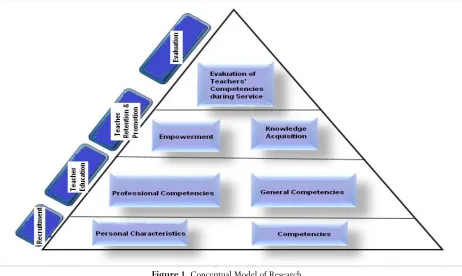
A lot of attention and emphasis have been also paid on the acquisition, evaluation and promotion of teachers' professional competencies and skills in the high-level documents of Education. According to Fundamental Reform Document of Education (FRDE), teachers undergo the required trainings in a lifelong process. In this document, education and training of teachers include the four areas of recruitment, teacher education, retention & promotion and evaluation. The recruitment dimension as an introductory section specifies the conditions of entry. This dimension provides the possibility to select individuals with high levels of attributes, mental and physical abilities, knowledge and professional skills. The teacher education dimension is the main part that the major educational and training activities are carried out in this dimension. The retention & promotion dimension as a part of maintenance and training of manpower during service. This dimension based on in-service training is an integral part of the job promotion process of human resources at all levels.
Of course, with the aim of continuous improvement of the general, professional competencies, the evaluation dimension is considered as the completing part of the previous steps, where the involvement of veteran and experienced teachers in teacher training keeps this cycle active and dynamic and achieves the recommendation of high-level documents for lifelong learning. This dimension is based on the level of efficiency and effectiveness of trainers' work results (during the training period until the end of the course) at three levels of product, output and outcome in formal and public education system. However, one of the problems in this regard is the lack of an organized system for examining, recognizing and measuring teachers' professional competencies.
To realize this, teacher education and all its components including the recruitment, preparation, retention & promotion and evaluation should rely on the theoretical and value system of Islam and be consistent with the cultural, social and indigenous characteristics of the country and be designed with the relevant high-level documents. The high-level document set of formal and public education system has been passed by the policy-making body, the Supreme Council of the Cultural Revolution. These documents serve as a roadmap, standard, and guide for basic decisions to direct and establish the country's desirable education system. Considering the above mentioned policies and the macro and strategic objectives of Education in the field of teacher education, no defined and compiled list of standards has not yet been developed for the teachers. Furthermore, based on the lived experience of the researcher obtained from graduates of teacher training and involved for a long time at various levels of management in the field of education, either in recruitment level or in training and retention and empowerment levels in the field of human resources of Education, especially group of teachers, there is no a certain standard. Recently, with the creation of Farhangian University, criteria for recruiting human resources have not been considered, but the characteristics, criteria, and standards that a teacher will have upon entering the university and after completing the course of study and graduating during his/her teacher period have not exclusively predicted. Therefore, the present study seeks to develop a standard model of teachers' professional competence based on the high-level documents.
Nowadays, the issue of teachers' professional competence is among the main concerns of educational systems that several researches have been carried out in this field. For example, research conducted by Yusnita et al. (2018) suggests that training of teachers through holding various courses will be effective in enhancing their knowledge and improving and upgrading their training and assessment skills. Livingston & Hutchinson (2017) in a study examined three issues including the way of teachers' understanding and evaluation in conjunction with their students' learning, curriculum and educational choices, capacity of using the evaluation to improve the students. Teachers learning can be developed through professional training. Considering these issues, regarding learning and evaluation, as well as empirical evidence of the development
| Developing a Standard Model of …Volume 2, Number 2, 2019
__________________________________________________________________ 47
and implementation of assessment processes in this paper, the importance of having a dynamic framework for training needs of teachers and the consequent need for professional and appropriate learning opportunities with diverse combinations of support and challenge recognized at school, local and national levels in Scotland is emphasized. Kuznetsova et al. (2015) performed a research entitled "The Professional Abilities of English Language Teachers". In this study, a batch of competencies was obtained, which include perceptual competence, design, manufacture and attention to specific methods, communication ability and research-organization ability (Nazari, 2016).
Zygaitienė et al. (2013), in their article entitled "Professional Competence of Teachers over the Course of Educational Development in Lithuania", stated that professional development of human resources implied the individual and organizational outcomes. Moreover, in the area of organizational factors, the components of organizational culture, education, participation, and corporate communication affect the professional development of teachers. Marinkovic et al. (2012) conducted a study entitled "Competence of Teachers as an Indicator of the Quality and Conditions of Education".The results of this study revealed that there was a direct relationship between competencies of teachers and increasing the quality of education. The more the teachers enjoy required competencies to teach, the quality of education goes up as well. Finally, the competencies required by the teacher to enhance the quality of education were identified in six categories including competence of the organization, educational thinking, assessment, training, knowledge, and counseling. According to reports of Malaysia (2009), the education system in Malaysia has three different indices including Malaysian Teachers' Standards "MTS"/"PTC" for present teachers in the classroom which focuses on teachers' knowledge capabilities and the "LNPT" index which focuses on teachers' performance (Bourgonje & Tromp, 2015: 76). Javidan et al. (2018) in a study developed a model of teachers' characteristics and competencies, the results of which represented that, among all eight factors to assess teacher competency model, values, knowledges, motivations, health, abilities, interests, beliefs and moral competence have the highest factor loads and factor weights respectively on the second order factor of teacher competency model. Askari Matin & Kiani (2018) in a study entitled Model for Teacher Professional Competence Criterion at the level of Islamic Republic of Iran have developed a (comprehensive and standard) model for measuring the professional competence. The seven aspects of this model are: 1. Planning and preparation for training; 2. Planning and designing for learning; 3. Surrounding management and learning environment; 4. Effective education; 5. Organizational responsibility and professional development; 6. Social capital and cultural activity; and 7. Spirituality, ethics, and theism. The outcome of this research suggests that (a) the model applies to teacher training in the Islamic value system; (b) the model is the first step in the way of professional assessment of teachers; (c) the model meets the domestic need for policy making and providing evaluation tests; (d) the model is in line with the theoretical & practical conditions and considerations of assessment at the level of the Islamic Republic of Iran.
In a study conducted by Razi et al. (2017), they have presented a conceptual framework for effective teacher education and training. According to the investigations done, 37 properties in 5 dimensions of professional competencies, personality traits, classroom management, teaching skills, supervision, and evaluation were summarized and categorized. Keshavarz & Moghaddasi (2017) in a study have explained the components of the teacher education system according to the reform documents of the formal and public education system. The findings from this study included 10 guidelines related to the components of recruitment and selection and 27 guidelines related to the components of teacher retention and promotion. The guidelines of reform documents of Education for the teacher recruitment and selection component in the teacher education system represent that the teacher education course is of great importance to empowering and achieving student-teacher to an appropriate level of competencies. As well as, in the case of the guidelines for the reform documents of education for the retention and promotion of teachers, it can be stated that promoting job satisfaction and professional abilities, participation in the process of programs production and programs monitoring and evaluation, providing scientific and welfare support and necessary
mechanism for teacher investigation and research, etc. are essential necessities. Khoroushi et al. (2017) in a study examined the approach of teacher education based on the reform documents of education in the Islamic Republic of Iran. The findings of the study revealed general categories that included as a theoretical model in six categories: a) Primary and central category: Teachers' competencies, b) Causal conditions: goal setting, curriculum, c) Contextual factors: Governmental and non-governmental institutions, organizations and agencies involved in public official education, d) Intermediate factors: individual and social characteristics, and organizational factors, e) Strategies: planning, professional development, and f) Implications: The monotheistic integrated identity, process, and relations between different dimensions of teacher competence are reflected in the reform documents of Education in the Islamic Republic of Iran. Based on the proposed background indicating the role of teachers' professional competence in the dynamics of education and consequently the community, considering the studies conducted in the literature of this area, there is a tangible gap in exploring ideas associated with teachers' professional competence. This is while the educational system will always be vulnerable due to the lack of quality supervision, especially in the four areas of student-teacher recruitment, teacher education, retention & promotion and evaluation of teachers.
2. Methodology
This was an applied research in terms of purpose and was a sequential exploratory mixed study (first qualitative method and then quantitative method) in terms of data collection. The content analysis of (Fundamental Reform Document of Education (FRDE), National Curriculum, Comprehensive Scientific Map of the Country, and 20-Year Perspective Document for Iran) has been investigated to extract the components. The measurement tools in the document analysis section were taking notes tabs of the information and in the content analysis section were also researcher-made checklist. In order to develop it, a considerable number of theoretical and research resources related to teachers' professional competencies have been examined and the relevant components were extracted. To ensure the validity in the content analysis checklist, content & face validity method and expert opinion were used. Thus, the initial form of content analysis, which included all conceptual components related to teachers' professional competencies, was provided to a group of education experts for change and reform that, after applying their comments, checklists were prepared.
To ensure the reliability of the checklist, a retest technique was used. So that the final form prepared simultaneously and separately was provided to a specialist content analyst familiar with the subject of the research, who separately analyzed the several parts of some documents. The correlation coefficient of the data obtained from the simultaneous analyzes performed was calculated by the principal specialist researcher, the result of which indicates a correlation coefficient of 89%. In order to collect data at the quantitative step of research, given the lack of a questionnaire in this field based on the existing components, a researcher-made questionnaire derived from concepts of the qualitative section was used. The questionnaire included items with the same weights designed using a five-point scale (very low to very high). The questionnaire consisted of two parts of general items including demographic characteristics and specialized items related to the evaluation of recruitment (with two sub-components of personal attributes with 9 items and competence with 11 items), teacher education (including two sub-components of general competence with 13 items and professional competence with 19 items), retention and promotion (including two sub-components of empowerment with 5 items, and knowledge acquisition with 4 items), and evaluation (including a sub-component of assessing the competencies of in-service teachers with 8 items).
The face and content validity of the questionnaire was confirmed by experts in the field of education after making the necessary modifications. Confirmatory factor analysis, convergent validity, and divergent validity were used to evaluate the construct validity, and hybrid reliability was used to evaluate the construct reliability that the results of which were provided in Tables (2 and 3). In the quantitative phase of the
| Developing a Standard Model of …Volume 2, Number 2, 2019
__________________________________________________________________ 49
research, descriptive statistics method was used to describe the demographic characteristics of participants under SPSS 20 software and structural equations under Smart PLS 3.00 software. The statistical population of the research in the qualitative section includes the high-level documents related to the field of education and higher education (Fundamental Reform Document of Education (FRDE), National Curriculum, Comprehensive Scientific Map of the Country, and 20-Year Perspective Document for Iran). In the quantitative section, all faculty members of Farhangian University were 820 people. According to Cochran formula, 262 individuals were selected as statistical sample.
3. Findings
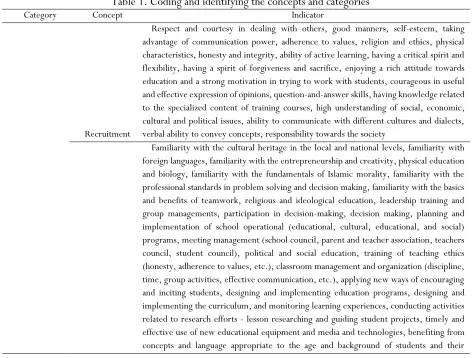
The process of data analysis in grounded theory is based on three stages of open coding (creating the concepts and categories), axial coding (identifying the category) and selective coding (creating the theory). Initially, all the high-level documents of Education (Fundamental Reform Document of Education (FRDE), National Curriculum, Comprehensive Scientific Map of the Country, and 20-Year Perspective Document for Iran) were analyzed and key points were extracted, coded. After examining and analyzing them, similar codes were allocated to specific concepts. In the second stage of data analysis, axial coding is addressed. The purpose of this stage is to establish relationships between categories generated in the open coding phase. At this stage, the analysis of concepts, indicators, and selective coding was discussed based on the professional competence of the teachers on the basis of high-level documents. The indicators were classified in terms of the concept including personal attributes, competencies, general competencies, professional competencies, empowerment, knowledge acquisition, and evaluation of teachers' in-service competencies (Table 1).
Table 1. Coding and identifying the concepts and categories
Category Concept Indicator
Recruitment
Respect and courtesy in dealing with others, good manners, self-esteem, taking advantage of communication power, adherence to values, religion and ethics, physical characteristics, honesty and integrity, ability of active learning, having a critical spirit and flexibility, having a spirit of forgiveness and sacrifice, enjoying a rich attitude towards education and a strong motivation in trying to work with students, courageous in useful and effective expression of opinions, question-and-answer skills, having knowledge related to the specialized content of training courses, high understanding of social, economic, cultural and political issues, ability to communicate with different cultures and dialects, verbal ability to convey concepts, responsibility towards the society
Familiarity with the cultural heritage in the local and national levels, familiarity with foreign languages, familiarity with the entrepreneurship and creativity, physical education and biology, familiarity with the fundamentals of Islamic morality, familiarity with the professional standards in problem solving and decision making, familiarity with the basics and benefits of teamwork, religious and ideological education, leadership training and group managements, participation in decision-making, decision making, planning and implementation of school operational (educational, cultural, educational, and social) programs, meeting management (school council, parent and teacher association, teachers council, student council), political and social education, training of teaching ethics (honesty, adherence to values, etc.), classroom management and organization (discipline, time, group activities, effective communication, etc.), applying new ways of encouraging and inciting students, designing and implementing education programs, designing and implementing the curriculum, and monitoring learning experiences, conducting activities related to research efforts - lesson researching and guiding student projects, timely and effective use of new educational equipment and media and technologies, benefiting from concepts and language appropriate to the age and background of students and their
Teachers' Professional Competence
Teacher Education
guidance, learning the use of knowledge and preserving the environment, teaching verbal abilities to convey concepts to students, knowledge of teaching methods and techniques, skills in using technology and virtual space (cyberspace) in education, designing and implementing and monitoring skills on learning experiences, familiarity with high-level documents of Education, learning the skills to relate educational content to students' real life, verbal and nonverbal communication skills,
familiarity with educational psychology and developmental characteristics of students, familiarity with rules and regulations and job instructions
Retention & Promotion
Participation in short-term and practical training courses to update their specialized knowledge, awarding special rewards and privileges for participants of skill generation courses, familiarity with assessment methods and tools, and educational control and academic achievement, creating a database of academic and educational records during the service, lifelong learning, observing the behavior and status of the teaching profession during the service, strengthening and improving the skills in the IT field with regard to day-to-day (update) changes, interacting and communicating with students, parents, colleagues, governmental and non-governmental organizations, familiarizing with rules and regulations and guidelines, developing - designing and reviewing educational content tailored to the needs of students
Evaluation
Critical attitude to their teaching (evaluation, implementation and test methods), benefiting from professional organizations and journals as resources for their development, self-assessment, regular analysis and attention to the process of evaluation results and their application, ability of appropriate design and measurement of students' learning content, ability of receiving and giving feedback to students, familiarity with different methods of analysis and learning outcomes, ability of regular analysis and paying attention to the process of evaluation results and their application, evaluation by peer and coworker and manager groups.
In the next step, based on the results of open and axial coding, the researcher deals with the selective coding and the presentation of the theory. According to the results, in order to reach the standard model of teachers' professional competence, the concept of personality traits in the recruitment stage needs to be considered. Personal characteristics are durable features of an individual that are related to one's physical abilities or his/her personal characteristics and are a general representation of behavior in a certain direction (Kanaga, 2007) (Quoted by Dibaei Saber et al., 2016), which include respect and courtesy in dealing with others, having good manners, self-confidence, enjoying the power of communication etc. in this research. The next step in teachers' professional competence is to determine the qualifications needed for teachers in the recruitment phase, including question-and-answer skills, having knowledge related to the specialized content of training courses, high understanding of social, economic, cultural and political issues, ability to communicate with different cultures and dialects, through which people are selected for teacher education. In the teacher education phase, which is the most important stage in preparing the teachers and the major educational and training activities carried out in this dimension, training in the field of general competencies representing the common attitudes that are essential to any teacher includes familiarity with the cultural heritage in the local and national levels, familiarity with foreign languages, familiarity with the entrepreneurship and creativity, physical education and biology, familiarity with the fundamentals of Islamic morality, familiarity with the professional standards in problem solving and decision making, and so on, which is considered in this section. The next step in the teacher education is training in the fields of professional competence including classroom management and organization (discipline, time, group activities, effective communication, etc.), applying new ways of encouraging and inciting students, designing and implementing education programs, etc., which encompass the activities that the teachers require them.
| Developing a Standard Model of …Volume 2, Number 2, 2019
__________________________________________________________________ 51
In order to maintain and promote teachers, increasing knowledge of teachers is essential, including participation in short-term and practical training courses to update their specialized knowledge, awarding special rewards and privileges for participants of skill generation courses, familiarity with assessment methods and tools, and educational control and academic achievement. Moreover, at this stage, empowerment of teachers is a process whereby teachers can improve their performance by acquiring knowledge, skills and motivation, which includes lifelong learning, strengthening and improving the skills in the IT field with regard to day-to-day (update) changes, interacting and communicating with students, parents, colleagues, governmental and non-governmental organizations. The last step in the standard model of teachers' professional competencies is the evaluation of in-service teachers, including critical attitude to their teaching (evaluation, implementation and test methods), benefiting from professional organizations and journals as resources for their development, self-assessment, regular analysis and attention to the process of evaluation results and their application etc. This step is used as a valid measure in determining the degree of formal teachers' competencies to direct the learning of teachers and improve their programs (Figure 1).
Figure 1. Conceptual Model of Research
In the case of quantitative evaluation of the results obtained from the qualitative phase, a questionnaire containing closed questions (5-point Likert scale) was prepared. The questionnaire was filled by faculty members of Farhangian University, 52% of whom were male and 48% female, 69% had Ph.D. degree and the rest had master degree and their average teaching experience was between 20-30 years. As well as, to confirm the standard model of teachers' professional competence based on high-level documents, Smart PLS software was used. According to the results of confirmatory factor analysis, it can be said which index has a significant role in the construct measurement of research and which index has no a significant role. Based on the results, it we can say that all indices have created a significant weight and could have a significant factor load at 99% confidence level (Table 2).
Table 2. Factor Loads
Component Variable Factor Load T Sig
Latent Observed
Professional Competencies of
Teachers
Recruitment Personal Characteristic Competencies 0.71 0.70 8.31 7.98 0.001 0.001
Teacher Education General Competencies Professional Competencies 0.80 0.89 10.2 13.1 0.001 0.01 Teacher Retention &
Promotion Knowledge Acquisition Empowerment 0.87 0.88 11.2 13.7 0.01 0.01 Evaluation Evaluation of Teachers
Competencies during Service 0.86 12.5 0.01 Furthermore, Table 3 illustrates the validity and reliability indices for the main variables.
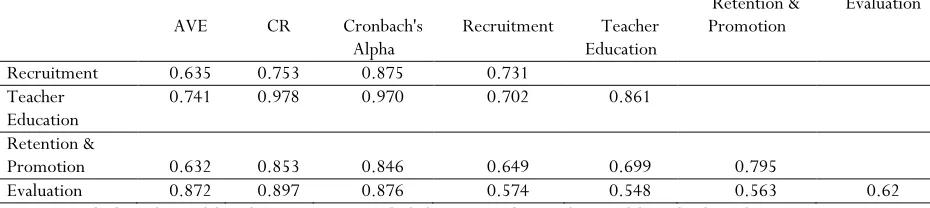
Table 3. Correlation coefficients, divergent and convergent validity and reliability of the research structures
AVE CR Cronbach's Alpha
Recruitment Teacher Education
Retention &
Promotion Evaluation
Recruitment 0.635 0.753 0.875 0.731
Teacher Education
0.741 0.978 0.970 0.702 0.861
Retention &
Promotion 0.632 0.853 0.846 0.649 0.699 0.795
Evaluation 0.872 0.897 0.876 0.574 0.548 0.563 0.62
As provided in the Table, the composite reliability (CR) for each variable is higher than 0.7, representing a good internal consistency of the model. The Average Variance Extracted (AVE) is for the purpose of convergent validity that indicates the degree of correlation of a variable with its questions. The higher the correlation of a variable, the fitting will be greater. The minimum value of 0.5 indicates an appropriate convergent validity of the indices. This means that a latent variable can represent more than half of the variance of its (observed variables) indexes on average and Cronbach's alpha, as is known. Because the appropriate value is 0.7 for Cronbach's alpha, 0.7 for composite reliability and 0.5 for variance and all criteria have appropriate factor loads, the suitability of convergent reliability and validity status of the research can be confirmed. Another important criterion that is determined by divergent validity is the degree of relationship of a variable with its questions compared to the relation of that variable to other variables, so that the acceptable divergent validity of a model suggests that a variable in the model has a more interaction with its questions than with other variables. According to the results of Table (3), it can be said that the divergent validity of the model is in a proper level (Table 3).
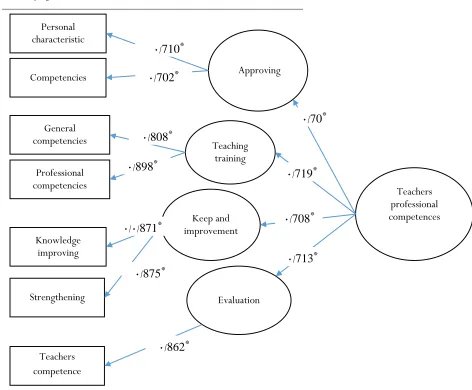
Figure 2 illustrates the structural equation model in the estimation mode of standard coefficients. All variables of the research are converted into two categories of latent and observed variables. The explicit or observed variables are directly measured by the researcher, while the latent or hidden variables are not measured directly, but are inferred from the relationships or correlations between the measured variables. According to the model, the factor loads and path coefficients can be estimated in the coefficient estimation mode. Based on the factor loads, the index having the highest factor load will have the greater share in the measurement of the relevant variable and the index having the least coefficients plays the smaller share in the measurement of the relevant structure. In this model, the determination index is also represented.
| Developing a Standard Model of …Volume 2, Number 2, 2019
__________________________________________________________________ 53
Figure 2. Standard Coefficients of Teachers' Professional Competence Model
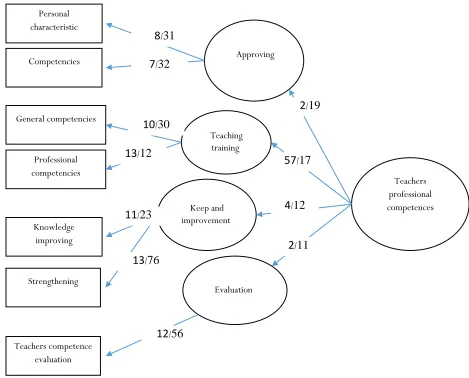
Figure 3 also indicates the research model in a significance status of (t-value) coefficients. This model actually tests all measurement equations (factor loads) and path coefficients using the statistic.
Teachers professional competences Approving
Teaching training
Keep and improvement
Evaluation
0/713*
0/708*
0/719*
0/70*
Personal characteristic
Competencies
General competencies
Professional competencies
Knowledge improving
Strengthening
Teachers competence evaluation
0/710*
0/702*
0/808*
0/898*
0/0/871*
0/875*
0/862*
Figure 3. T values of the teachers' professional competence model
According to this model, factor load or path coefficient at the level of t statistic should be outside the interval of (1.96 to -1.96) and if the t statistic is within this interval, then factor load or path coefficient will not be significant. According to the results of the t-statistic, all factor loads were significant at the 99% confidence level and played a significant role in measuring their structures (Figure 3). According to the results of the t-statistic between personal characteristics (8.31) and the recruitment variable and the t-statistic between the competencies (7.98) and the recruitment variable that are greater than 1.96 and the confidence level equal to 0.01, it can be concluded that the relationship between the personal characteristics and the recruitment variable and the relationship between the competencies and the recruitment variable have been confirmed. As well as, the personal characteristics with a factor load of (0.710) have the highest and the competencies with a factor load of (0.702) have the lowest share in explaining the recruitment variable and, due to the positive path coefficient, this impact is positive. In the teacher education variable, according to the t-statistic for index of professional competencies (13.12) and the t-statistic for general competencies (10.21) that are greater than 1.96 and the confidence level equal to 0.01, it can be concluded that the relationship between professional competencies and teacher education variables and the relationship between general competencies and teacher education variables have been confirmed. The professional competencies with a factor load of 0.897 and general competencies with a factor load of 0.808 have the highest and the lowest share in explaining teacher education variable, respectively and, due to the positive path coefficient, this impact is positive. According to the results of the t-statistic between empowerment (13.76) and the retention
Teachers professional competences Approving
Teaching training
Keep and improvement
Evaluation
2/11
4/12
57/17
2/19
Personal characteristic
Competencies
General competencies
Professional competencies
Knowledge improving
Strengthening
Teachers competence evaluation
8/31
7/32
10/30
13/12
11/23
13/76
12/56
| Developing a Standard Model of …Volume 2, Number 2, 2019
__________________________________________________________________ 55
& promotion variable and the t-statistic between knowledge acquisition (11.23) and the retention & promotion variable that are greater than 1.96 and the confidence level equal to 0.01, it can be concluded that the relationship between empowerment and retention & promotion variable and the relationship between knowledge acquisition and retention & promotion variable have been confirmed.
Empowerment with a factor load of (0.885) and knowledge acquisition with a factor load of (0.871) respectively have the highest and the lowest share in explaining the retention & promotion variable, and the path coefficient of this impact is positive. The t-statistic between evaluation of teachers' competencies during the service and evaluation variable (12.56) that is greater than 1.96 and the confidence level equal to 0.01, it can be concluded that the relationship between the evaluation of teachers' competencies during the service and the evaluation variable has been confirmed. Evaluation of teachers' competencies during the service with a factor load of (0.864) explains more than half of the evaluation variable and, due to the positive path coefficient, this impact is positive. According to the results of the t-statistic among the variables of recruitment with t-statistic (2.19), teacher education with t statistic (5.71), retention & promotion with t statistic (4.12) and evaluation with t statistic (3.11) and the variable of professional competence of teachers that are greater than 1.96, as well as the confidence level equal to 0.01, it can be concluded that the relationship between the variables of recruitment, teacher education, retention & promotion and evaluation and the variable of professional competence of teachers has been confirmed. The variable of teacher education with a factor load of (0.716) has the highest and the variables of evaluation with a factor load of (0.713), retention & promotion with a factor load of (0.708) and recruitment with a factor load of (0.70), respectively, have the lowest share in explaining the professional competencies of teachers and, due to the positive path coefficient, this impact is positive. The value of determination coefficient obtained for the variable of teachers' professional competencies is 0.769 that this value represents the better fit of the model (Figures 2 and 3).
4. Discussion
This study was carried out with the aim to present a standard model of teachers' professional competence on the basis of high-level documents of Education in Iran. According to the results of Smart PLS, structural equation modeling and conceptual model testing using the structural equations and its output in the form of standard coefficients estimation in Figure 2 and significant coefficients t in Figure 3, the results demonstrated that the components of recruitment, teacher education, retention & promotion and evaluation had a positive and significant effect on the variable of teachers' professional competence at 99% confidence level. Eventually, the structural equations model of teachers' professional competence was fitted and confirmed. So the comparison, examination and explanation for the reasons of results of this research based on its background will be discussed in this section. In the expression of the research results, it can be said that the recruitment variable is measured by two sub-components of personal characteristics and competence. Personal characteristics with t-statistic of 8.31 and a factor load of 0.710 have a significant and positive relationship with the recruitment variable at the confidence level of 0.01 and have the highest share in explaining the recruitment variable. Therefore, it can be said that the personal characteristics of a teacher are among the important issues in the recruitment of teachers, because the training process is influenced by the personality of the teacher and how he/she thinks. According to Huang & Lin (2014), some teachers are very popular and accepted because of their unique personality traits and students wish to attend their class. They have features that deeply attract students that all teachers have no those features. According to the results of the study, it can be said that the personal characteristics of teachers are considered as an effective element in education and training. The results of this study are consistent with the researches of Zari et al. (2017) and Keshavarz & Moghaddasi (2017).
As well as, competencies with a t-statistic of 7.98 and a factor load of 0.702 have a significant and positive relationship with the recruitment variable at the confidence level of 0.01 and explain more than half of the recruitment variable. Competencies are a set of teacher interests in issues and topics related to education and
training. The first essential competency for teachers is the enjoyment of knowledge related to the specialized content of educational courses that is referred to and emphasized in most of the resources. Teachers should enjoy specialized knowledge in their field of work. The lack of specialized knowledge is a deterrent factor to teachers' proper implementation of the lesson. As well as, the verbal ability to convey concepts, question and answer skills, etc. was among the codes identified in this study, which is consistent with the results of Kuznetsova et al. (2015) and Askari Matin & Kiani (2017). The variable of recruitment with t statistic of 2.19 and a load factor of 0.70 has a significant and positive relationship with the variable of professional competence of teachers at 0.01 confidence level and explains more than half of the variables teachers' professional competence, which is measured by the components of personal characteristics and competencies. According to the results of the study, it can be said that considering the conditions of recruitment and teachers' recruitment, paying attention to the guidelines of the Islamic model of Iran and development in different dimensions will result in realizing the justice, creating the right atmosphere and high economic and social leap and provide the ground for recruiting talented forces, and promote the dynamics and development of the country's education system, which is in line with the researches of Zari et al. (2017), Keshavarz & Moghaddasi (2017), Kuznetsova et al. (2015) and Askari Matin & Kiani (2017).
The variable of teacher education is measured by two sub-components of professional competencies and general competencies. The professional competencies with t-statistic of 13.12 and a factor load of 0.897 has a significant and positive relationship with the variable of teacher education at 0.01 confidence level and has the highest share in explaining the variable of teacher education. Professional competencies are a set of knowledge, skills, and abilities in a particular job that allows individuals to accomplish success in their tasks (Farzaneh et al., 2015). Teacher professional competencies consist of all teacher efforts to manage classroom activities that include social interaction, student behavior, and learning, which are measured in his study with the dimensions of classroom management, teaching skills, etc. and can play a key role in the motivation and achievement of students. The results of this study are in line with the findings of Marinkovic et al. (2015), Žygaitienė et al. (2013), the index of different competencies of standards for Malaysian teachers (2009) and Keshavarz and Moghaddasi (2017). General competencies with a t-statistic of 10.21 and a factor load of 0.808 have a significant and positive relationship with the variable of teacher education at 0.01 confidence level and explain more than half of the teacher education variable. The general competencies are shared attitudes and prescriptive general principles to serve as a benchmark and guideline in the process of education of teachers, which is essential and binding for any teacher. In this study, factors such as familiarity with foreign languages, familiarity with entrepreneurship and creativity, familiarity with professional standards in problem solving and decision making, familiarity with the basics and benefits of teamwork and ... were among the identified codes in this research. It can be said that the general competencies can be obtained through theoretical training that the teachers acquire during the student-teacher period at Farhangian University. The results of this study are consistent with the research of Marinkovic et al (2012). The variable of teacher education with a t statistic of 5.71 t and a factor load of 0.716 has a significant and positive relationship with the professional competence of teachers at 0.01 confidence level and has the highest share in explaining the variable of teachers' professional competence, which is measured by the components of professional competence and general competence. Teacher education can be considered as one of the most sensitive and most important components of the education and training system, because the success and failure in the creation of reform of educational systems depends on the professional abilities and capabilities of the teachers who are the main implementers (executors) of the programs in the real environment (Mehrmohammadi, 2000). Based on the results of this study and theoretical foundations raised, it can be said that teacher education as a continuous process should seriously consider pre-service education and in-service training and provide the ground for preparing instructors proportional to the real needs and challenges of the classroom and learning environment. While increasing the professional capacity of instructors, teacher education facilitates the involvement of teachers in the process of curriculum planning and provides the ability to adapt curriculum to the present and future
| Developing a Standard Model of …Volume 2, Number 2, 2019
__________________________________________________________________ 57
needs of instructors. The results of this research are consistent with the researches of Marinkovic et al. (2012), Žygaitienė et al. (2013), the index of different competencies of standards for Malaysian teachers (2009) and Keshavarz and Moghaddasi (2017).
The variable of retention & promotion is measured by the sub-components of empowerment and knowledge acquisition. Empowerment with t statistic of 13.74 and a factor load of 0.885 has a positive and significant relationship with the variable of retention & promotion at 0.01 confidence level, having the highest share in explaining the variable of retention & promotion. Empowerment is a process whereby employees can improve their performance by acquiring knowledge, skill and motivation (Savage, 2001). Based on the results of this study, the degree of teachers' empowerment can be considered as a key factor in improving their quality of performance. Teachers' understanding and perception of their empowerments can provide the proper platform for achieving the critical objectives of education. The results of this study are consistent with the research of Khoroushi (2017). Knowledge acquisition with t statistic of 12.23 and a factor load of 0.871 has a significant and positive relationship with retention & promotion variable at 0.01 confidence level and explains more than half of retention & promotion variable. Knowledge acquisition in this study is examined by identified codes such as attending short-term and practical training courses to update their specialized knowledge, familiarity with evaluation methods and tools, and monitoring education and academic progress, and so on. Spending in-service courses related to length of service is a common point of many developed countries (Salmulla et al., 2012). According to the results of this study, it can be said that increasing the knowledge and knowledge of teachers of Education can lead to the desirable performance of educational systems in order to facilitate the use of their role in accordance with environmental conditions and requirements in education and improve the quality of teachers’ performance. One of the approaches to invest in and ultimately achieve growth and excellence in teachers is attending in-service courses that impact on knowledge, skill, empowerment, and development of teachers. The results are in line with the researches of Javid et al. (2018) and Yusnita et al. (2018). The variable of retention & promotion with t statistic of 4.12 and a load factor of 0.708 has a significant and positive relationship with the variable of teachers 'professional competence at 0.01 confidence level and explains more than half of the teachers' professional competence, which is measured by the components of empowerment and knowledge acquisition. Based on what has been said, promoting and acquiring new knowledge and skills of teachers is considered as one of the main concerns of the education and training system. Hence, providing the organized opportunities through holding in-service training courses for teachers of this course can provide them with the opportunity to develop their continuous professional competencies, which can be useful and effective in enhancing the level of knowledge and job skills, creating the necessary specializations appropriate to the field of education, improving the teaching methods, developing the spirit of study, research and innovation, updating the knowledge, information and creating the necessary opportunities and contexts for adaptation commensurate with the changes. These results are consistent with the investigations conducted by Khoroushi (2017), Javid et al. (2018) and Yusnita et al. (2018).
Evaluation of teachers' competencies during the service with t statistic of 12.56 and a factor load of 0.864 has a positive and significant relationship with the evaluation variable at 0.01 confidence level and explains more than half of the evaluation variable. Evaluation of teachers' competencies during the service in this study has been investigated using the sub-components of critical attitude to their teaching (evaluation, implementation, and test procedures), benefiting from professional organizations and journals as resources for their growth, self-evaluation, regular analysis and attention to the process of evaluation results and its application, ability of appropriate design and measurement of students' learning content, ability of receiving and giving feedback to students etc. Based on the results of this study, teachers should evaluate their teaching methods and provide tasks related to the objectives and course contents as well as the capacity of students. Teachers should deal with the continuous evaluation of students' academic achievement. While using different strategies of evaluation, teachers should provide significant feedback to students and fit their education to the
levels and needs of academic achievement of students, as well as keep their knowledge up to date in various fields and evaluate themselves. The results of this study are consistent with investigations of Marinkovic et al. (2012) and Razi et al. (2017) and inconsistent with the results of research done by Livingston & Hutchinson (2017). The variable of evaluation with t-statistic of 3.11 and a factor load of 0.713 has a significant and positive relationship with the professional competence of teachers at 0.01 confidence level and explains more than half of the variable of teachers 'professional competence, which is measured by the evaluation component of teachers' competencies during the service.
The objective of this study was to provide the development of a standard model of teachers' professional competence based on the high-level documents of Education in Iran. According to the evaluation indices of the model general fitness, it can be said that the final model has a good fit and is confirmed. The researcher tried to analyze and compare the backgrounds of the components extracted from the high-level documents of Education through a search and examine part of the components in each of the researches. In summary, taking into account the research backgrounds, it can be said that the model proposed with four components of recruitment, teacher education, teacher retention & promotion, and evaluation offered a more comprehensive and holistic model than the previous studies. In line with the results of the research, it can be said that recruitment of teachers in education is one of the things that is of great importance because committed and skilled workforce plays a key role in the education of students. Teachers who have personality traits such as honesty and integrity, strong motivation to work with students as well as knowledge and communication skills, etc. should be considered in the recruitment process, and Farhangian University, as one of the administrator’s n this regard, can do this using the competent people in line with the targets set in the country's educational documents. As well as, according to the results of the research, the teacher education phase is the most important step in promoting the competencies of teachers. At this stage, the development of teachers 'general and professional competencies, i.e. establishment of sustainable skills as well as attention to the development of teachers' professional skills from the entrance to the Farhangian University is emphasized. Therefore, the Farhangian University can lead to promotion of teachers’ competencies by recruiting faculty members who are in line with the objectives of the high level documents of Education as well as developing strategic plans in the field of general professional education and specific professional education of teachers. Based on the examinations conducted and results achieved in the field of teacher retention & promotion, it can be said that education should provide the ground for the promotion of teachers through determining short-term and long-term strategies for retraining teachers and empowering them in student-centered teaching methods and holding in-service training courses. As the teachers' performance is one of the most important pillars of educational systems in this evaluation, it is essential that the teacher be tested in a meritocratic system, based on competitive and functional evaluations, and be placed in an appropriate rank commensurate with the specialized and professional qualifications and the personal and social competencies. As mentioned, all the dimensions, components and items of the model proposed are of great importance, and the recent framework can serve as a tool to evaluate the professional competencies of teachers in the country. Because the professional competencies of teachers has been taken into account in the reform document of Education, the results of such research can be employed as tools to help the educational evaluators and planners in the country and promote the competencies of teachers. Moreover, the model presented in this study can also be used as a conceptual framework for studying the professional competence of teachers at the Farhangian University and policy makers in this field. This model is based on the high level documents and perception and experience of the majority of participants in the process of professional development at Farhangian University and offers a comprehensive and clear picture of the factors influencing the process of teachers' professional competencies at Farhangian University and provides a measure for comparing their experiences at the teacher level. This measure provides the ground for better understanding of teachers' views and experiences, internal and external discussions of influencing factors, and a deeper
| Developing a Standard Model of …Volume 2, Number 2, 2019
__________________________________________________________________ 59
understanding of the process of teachers' professional competencies and use of these experiences to improve this process.
References
Askari Matin S, Kiani G. (2018). Model of Teacher Professional Competence Criteria at the Level of the Islamic Republic of Iran, Quarterly Journal of Education. 34(2):134-153.
Avalos B. (2011). Teacher professional development in teaching and teacher education over ten years, Teaching and Teacher education. 27 (1): 10 - 20.
Azizi S. (2016). Identifying the Dimensions of Teachers' Professional Competencies from the Perspectives of Students and Teachers of Tehran Farhangian University, Master's Thesis, Faculty of Psychology and Educational Sciences, Allameh Tabatabaee University.
Bourgonje P, Tromp R. (2015). Indicators and Standards of Teacher Competence (An International Study) Translators: Samad Izadi, Somayeh Ghazi. Tehran, Solar Publications.
Clotfelter C T, Ladd H F, Vigdor J L. (2010). Teacher credentials and student achievement in high school: A cross-subject analysis with student fixed effects. Journal of Human Resources. 45 (3): 655-681.
Cochran-Smith M, Piazza P, Power C. (2013). The politics of accountability: Assessing teacher education in the United States. Educational Forum. 77 (1): 6-27.
Dibaei S M, Abbasi E, Fathi V, Safaei Movahed S. (2016). Explaining the Components of Teachers' Professional Competence and Analyzing Its Position in High-Level Documents of Education in Iran, Two Scientific-Research Quarterly Journal of Teaching and Learning. 13(2):24-38.
Dreer B, Dietrich J, Kracke B. (2017). From in-service teacher development to school improvement: factors of learning transfer in teacher education. Teacher Development. 21 (2):208-224.
Hattie J. (2008). Visible learning: A synthesis of over 800 meta-analyses relating to achievement. London: Routledge.
Hung Y C, Lin S H. (2014). Assessment of charisma as a factor in effective teaching. Educational Technology and Society. 17 (2): 284-295.
Javidan L, Esmaili A, Shojaei A. (2018). Developing a Model of Teacher Characteristics and Competencies on the Basis of High-Level Documents of Education, Quarterly Journal of Research in Educational Systems. 12(40):47-56.
Karimi F. (2013). Teacher Professional Competencies, Islamic Azad University of Khorasgan (Isfahan).
Keshavarz S, Moghaddasi Z. (2017). Explaining the Components of the Teacher Education System Based on Reform Documents of the Formal and Public Education System, Journal of Family and Research. 40(2):132-142.
Khoroushi P, Naser A R, Mirshah Jafari S, Mousapour N. (2017). Examining the Approach of Competent Teacher Training Based on the Reform Documents of Education of the Islamic Republic of Iran, Scientific-Research Journal of Cultural Strategy, 10(37): 163-186.
Kiani Gh R, Navidinia H, Momenian M. (2011). Criticism and Evaluation of the National Plan: A Review of the National Curriculum Approach to Teaching the Foreign Languages. 2(2): 185-209.
Livingston K, Hutchinson C. (2017). Developing teachers' capacities in assessment through career-long professional learning. Assessment in Education: Principles, Policy & Practice. 24 (2):290-307.
Mahdavi H M, Maleki H,Mehr Mohammadi M, Abbaspour A. (2017). Elementary Teacher Education Curriculum to Provide a Model in Line with the Fundamental Reform Document of Education (FRDE) System, Journal of Research in Education of Farhangian University. 1(3):47-74.
Marinkovic S B, Dragana B, Zlatic L. (2012) Teachers' Competence as the Indicator of the Quality and Condition of Education. University of Kragujevac, Serbia
Mohammadian M, Zaheri Abdehvand M. (2016). Pathology of Professional Competencies of Managers and Instructors of Free Technical & Vocational Training (Case Study: Instructors and Managers of Khuzestan Free Technical & Vocational Schools), Fifth National Conference and Fourth International Conference on Training and Employment Skills. 12:45-60.
Nazari P. (2017). Secondary School Teachers' Professional Competencies from the Perspective of Teachers and Administrators of Eslamabad-e-Gharb (Kermanshah Province), Master's Thesis, Supervisor Parvin Ahmadi, Faculty of Education and Psychology, Al-Zahra University.
Razi J, Emam Jomeh M R, Ahmadi Gh. (2017). Extracting the Dimensions of Effective Teachers in order to Provide a Conceptual Framework for Effective Teacher Education and Training and its Accreditation, Two Quarterly Journal of Research in Teacher Education. 1(1):78-96.
Salmulla FL, Hunter J E. (2012). The validity and utility of selection methods in personnel psychology: Practice and theoretical implications of research findings. Psychological Bulletin. 124:262-274.
Žygaitienė B, Barkauskaitė M, Miškinienė M. (2013). Professional competences of a teacher during the period of educational paradigm transformation in Lithuania. Procedia-Social and Behavioral Sciences. 83:165-169.