ISSN Print: 2152-7245
DOI: 10.4236/me.2019.107118 Jul. 26, 2019 1829 Modern Economy
Fiscal Policy and the Informal Sector in
Developing Countries: The Case of Gabon
Medard Mengue Bidzo
Faculty of Law and Economics, Omar Bongo University, Libreville, Gabon
Abstract
Tax pressure is pointed out as one of the main causes for the development of informality. To the extent that the informal economy is perceived, inter alia, as a response to excessive and inappropriate public regulation. The purpose of our study is mainly to verify such a relationship in the context of the Ga-bonese economy thanks to the estimation of a model with changes of regimes of the individual time series at the Hansen [1]. Overall, the impact of tax re-pression on the informal economy differs depending on the level of the tax rate. In other words, there are two growth regimes in the informal sector conditional on a tax threshold of 7.10%.
Keywords
Informal Sector, Taxation, Gabonese Economy, Regime Change Model, TAR, Tax Rate Threshold
1. Introduction
The persistence of high unemployment rates in the formal sector of developing countries while their informal sector is experiencing a certain dynamism espe-cially in terms of job creation, on the one hand, and the objective displayed by the public authorities of these countries to fight effectively against the informal economy1, accused of creating a revenue shortfall, on the other hand, revive the discussions around the problem of determining the factors which are at the ori-gin of the informality, in the its interactions with the formal sector.
The economic literature generally presents three dominant approaches,
con-1The informal or informal economy refers to informal activities with totally heterogeneous social
and economic characteristics that combine complex situations of legality and illegality (Lautier 2004, Verna 2011). In fact, the informal economy includes all economic activities that are outside the control of the government. It is a confused assortment in which one can identify various branches: traffic, subcontracting, popular economy, neoclanic economy, etc. [2] (Latouche, 1998).
How to cite this paper: Mengue Bidzo, M. (2019) Fiscal Policy and the Informal Sector in Developing Countries: The Case of Ga-bon. Modern Economy, 10, 1829-1841. https://doi.org/10.4236/me.2019.107118
Received: May 25, 2019 Accepted: July 23, 2019 Published: July 26, 2019
Copyright © 2019 by author(s) and Scientific Research Publishing Inc. This work is licensed under the Creative Commons Attribution International License (CC BY 4.0).
http://creativecommons.org/licenses/by/4.0/
DOI: 10.4236/me.2019.107118 1830 Modern Economy cerning the origins and causes of informality [2] [3]. First, the “dualistic” ap-proach, which builds on the work of Lewis [4] and Harris-Todaro [5], and is thus based on a dual labor market model, where the informal sector is consi-dered a residual component of this market that does not have a link with the formal economy. It is therefore a subsistence economy that exists only because the formal economy is unable to provide sufficient jobs. Second, the Marx-ist-inspired “structuralist” approach emphasizing interdependencies between the informal and formal sectors [6] [7]. It considers that the informal sector fits into the capitalist system according to a relationship of subordination; by providing cheap labor and products to formal enterprises, the informal sector increases the flexibility and competitiveness of the economy.
Thirdly, the “legalistic” or liberal approach, which considers that the informal sector is made up of micro-entrepreneurs who prefer to operate informally to escape economic regulations [8]. The informal sector is seen as the ideal achieve-ment of pure and perfect competition. Specifically, the seminal aspects of this approach believe that the choice of informality is voluntary and linked to the excessive legalization costs associated with formal status and registration. The tax burden is pointed out as one of the main causes of the development of in-formality [9]2. High compulsory taxes make trade profitable, whether it is hid-den work or illegal traffic [10]. So much so that the informal economy is per-ceived, among other things, as a response to excessive and inappropriate public regulation. In other words, the increase in the weight of taxes and social charges (more generally regulation) in labor relations and trade in the structured econ-omy encourages informality. In a dual way, a depression in the tax system would lead to a decline in the informal sector. Primarily attributing the development of the informal sector to the importance of formal taxation.
This last approach is of interest to our study on Gabon. We are concerned about the links between taxation and informality. Related literature supports the nexus fiscal-informal sector repression. In other words, repressive taxation and informality, like finance and growth [11], are linked by a knot of simple, solid and robustly established relationships. Taxation and the informal sector are tied in a positive and linear correlation.
The mixed results on the effect of fiscal policy on the dynamics of the infor-mal sector challenge the nexus and suggest instead a non-linear relationship. To our knowledge, no study on the subject formulates a non-linear relationship between taxation and informality.
The purpose of our reflection is to account for the existence of a level of taxa-tion beyond which fiscal repression (sustained increase in the tax rate) encourages rather informality. In fact, it is a question of highlighting the non-linearities in the effect of taxation on the informal economy from a model with changes of re-gime.
The intuition of regime change is as follows. Fiscal repression tends to
dis-2More generally, economic reasoning holds common causes posing obstacles to trade in the formal
DOI: 10.4236/me.2019.107118 1831 Modern Economy courage informality in a first phase to a point. Its exacerbation above this level, motivated moreover by the desire to increase tax revenues, leads economic agents to take refuge in informality, further boosting the informal sector. The growth of the informal sector therefore follows a curve in J.
The determination of the inflection point, which represents the optimal tax rate, seems important for better management of the transition to the formal in-formal economy.
Also, let us look more generally at the determination of the growth of the in-formal sector in Gabon with a view to considering more effective measures against the causes or origins of its development.
An examination of the relationship between informal sector growth and the tax rate is relevant for Gabon for a number of reasons:
1) In the absence of serious and regular studies, very little information exists on the informal economy in Gabon. The statistics on the private sector, its composition by size category and the identification of the obstacles that each faces in terms of investment, are very limited.
2) As is the case in several developing countries, the informal sector in Gabon seems to be positioned as a potential source of income and a way of so-cio-occupational integration due to recurrent economic crises due mainly to fluctuations in oil prices. The Gabonese economy is highly dependent on oil ac-tivity (42% of GDP in 2014). A survey of the 1990s shows that 82% of urban en-terprises are informal micro-enen-terprises. This proportion is still relevant, ac-cording to the authorities of the Ministry of Economy of Gabon (2017). For ex-ample, out of 1400 companies listed in the most commercial center of the capital of the country where 70% of the population resides, 487 would exercise in the most total informal. Also, Gabon is the country of Central Africa where the in-formal sector is the most important. It would represent between 40% and 50% of GDP [12].
3) The heaviness of the formal taxation, associated with reforms aiming at the increase of the tax pressure with the aim of the recovery of the effective public finances in Gabon, can incite to the informality in spite of the fiscal repression. Also, accelerated urbanization with a low-skilled labor force to qualify for the jobs offered by the formal economy, feeds the informal sector more appropriate to such demand in such an economy [12].
The importance of the informal sector in the Gabonese economy therefore seems undeniable. The improvement of the knowledge of this sector to imple-ment appropriate policies, at a time when the diversification of the economy is at the center of the concerns of the authorities, appears for this country, as a major stake of its economic and financial emergence.
The present study is organized around two parts: the first part presents the theoretical model (I) and the second part realizes empirical evidence (II).
2. The Theoretical Model
DOI: 10.4236/me.2019.107118 1832 Modern Economy on the growth of the informal sector. This amounts to considering the contra-dictory effects (effect obtained and expected effect) of tax policy on the evolution of the informal sector.
2.1. The Theoretical Analysis Framework
We consider a Barro [13] growth model that reproduces a closed economy with two agents (an agent representative of the informal sector and a government) that relies, ceteris paribus, on informal activity and in which government ex-penditures can, because they are productive, act positively not only on the levels of the variables but also on the rate of growth of the informal economy. But the financing of these expenses obviously affects him negatively on the levels and on this rate of growth. This results in an optimal level of these expenses.
The state buys goods produced by the private sector and supplies them “free” to companies. These goods are rival and excludable goods.
It is assumed that the State finances these expenditures g by the proportional tax on the income of the informal sector 0 < τ < 1 and the budget is balanced as in Minea and Villieu [14]:
g=τy (1)
The output of the informal economy is thus generated from private capital and public capital. Production technology is intensive. It is formulated as fol-lows:
(
;)
1t g
y f k g Ak g Ak
k
α α α
−
= = =
, (2) where k is private capital and g is public capital or productive public expendi-ture.
We denote by 0 < α < 1 the elasticity of income to public capital. We consider the normalized population to be one unit, which makes it possible to interpret the variables per capita. There is neither technical progress nor capital wear. We assume constant returns to allow for a long-term stationary growth path.
The representative agent of the informal sector maximizes its intertemporal utility U induced by its consumption c1, with u c
( )
1 an isoelastic instant utility function,σ
the inverse of the intertemporal elasticity of substitution of con-sumption and ρ the rate of subjective discount:( )
(
)
( )
( )
10
1, 1
exp d , 1
log , 1
c si
U u c t t avec u c
c
σ
σ
ρ σ
σ
−
∞ − ≠
= − = −
=
∫
(3)In addition, the representative agent of the informal sector pays taxes that are proportional to his income, with a tax rate of 0 < τ < 1 constant. Its budget con-straint can therefore be written as follows (with 0 < δ < 1, the depreciation of private capital):
(
1)
DOI: 10.4236/me.2019.107118 1833 Modern Economy It thus determines the rate of growth of its consumption by the maximization of [2] under the budgetary constraint [3]:
(
)
1 1 Pmk
γ τ ρ
σ
= − − (5)
2.2. The J Curve of Informality
It is therefore sufficient for us to evaluate the marginal productivity of capital calculated by the decentralized agent. We will express this one according to (g/y), the size of the State3:
With (2) we calculate: y
(
1)
A g(
1)
A11 g 1k k y
α
α α
α
α α − −
∂ = − = −
∂
The growth rate of the informal sector is expressed as follows:
(
1)(
1)
A11 g 1y
α α α
γ τ α − − ρ
= − − −
(6)
One can observe the existence of a convex curve between the growth rate of the informal sector γ and the tax rate, with τ* the optimal rate γ.
In other words, fiscal repression of the informal sector (τ =g y) has two ef-fects on the rate of growth of the informal economy: a negative effect by in-creasing, a positive effect by increasing (g/y). Thus an increase of (g/y) increases the marginal productivity of capital and thus the rate of growth of the informal sector γ .
Fiscal repression or the increase of the tax rate in trade in the official economy thus distorts the accumulation of private capital (penalizes the informal sector), with a negative effect on the rate of growth of the informal economy. This result is interpreted in the light of the economic theory of crime which predicts that an increase in anticipated penalties pushes up the cost of participation in illegal markets and reduces it [15]. It is recognized that the establishment of a heavier penalty reduces the informal economy [10].
Its accentuation reduces profitability in official trade and encourages them to be carried out in the informal sector, thus encouraging tax evasion. Indeed, con-sidered as an obstacle to the exchange, the intense tax pressure leads to an in-crease of the marginal cost of production, a reduction of the supply, an inin-crease of the price and a decrease of the requested quantity of the aimed good. The re-sult is informal sector development to satisfy consumer demand through created profit opportunities [16].
The evolution of the informal sector over time following a tightening of fiscal repression thus takes the form of a curve in J. We thus obtain the curve J of in-formality.
3We use ( )
( )
1 1
Ak g k
g g y g g A
k y k y k y
α
α −
= = =
to express the marginal productivity of capital as a
DOI: 10.4236/me.2019.107118 1834 Modern Economy In fact, the behavior of the informal sector in the face of a tightening of fiscal repression gives rise to an inverted Laffer curve of growth in the informal sector.
3. Empirical Evidence
The J relationship between the growth of the official tax rate and the growth rate of the informal sector refers to the assumption that the impact of fiscal repres-sion on the informal economy differs according to the level of the tax rate. In other words, there are several informal sector growth regimes conditional on a tax threshold. The demonstration of this type of non-linear effect is made possi-ble in one country by means of the regime change models of the individual time series.
Also, would we want to empirically test the J relationship between tax rate growth and informal sector growth on Gabonese economy data using a TAR-type regime change model [1], allowing estimate threshold effects with sudden transi-tion in time series in order to reproduce the expected non-linearity.
We first specify the empirical model before proceeding with its estimation.
3.1. The Specification of the Empirical Model
Generally, threshold models are composed of a transition mechanism that is based on an observable transition variable, a threshold and a transition function. More precisely, two transition mechanisms can be envisaged depending on the form of the transition function.
First, we distinguish models with sudden transition thresholds whose transi-tion from one regime to another is immediate. These are the autoregressive Threshold AutoRegressive Model (TAR) models proposed by Tong [17] and Tong & Lim [18]. These models initially made it possible to correctly account for the asymmetrical dynamics of the cycle of a series, following shocks of different size and sign.
Two categories of models make it possible to model a sudden transition thre-shold effect [19]. First, there are models whose threshold is set exogenously [20]. These exogenous threshold effect models have the flexibility of modeling, but their ad hoc characteristics mitigate the analytical scope.
Then, we find endogenous threshold effect models according to Hansen’s method [1] [21].
Secondly, there are Smooth Transition Autoregressive (Smooth Transition Autoregressive) threshold models where the transition from one regime to another is gradual. They were originally proposed by Chan and Tong [22] and Luukkonen and al. [23], in response to criticism of the brutality of the transition between regimes in TAR models.
DOI: 10.4236/me.2019.107118 1835 Modern Economy its evolution.
Two main criticisms, however, are often precisely formulated on this model. As a first step, the distance of the value of the transition variable to the thre-shold does not modify the coefficients of the explanatory variables of the regime. Only affects being above or below the threshold.
In a second step, the dynamics of a series can only be described by a limited number of regimes. Of course the number of regimes can be greater than two but it is finished knowing that each regime must contain a minimum of points in order to be estimated.
These limits do not affect our analysis based on the assumption of two re-gimes.
Hansen’s [1] [21] method of identifying endogenously determined thresholds consists of a scan in which a reference equation is estimated for different values of the threshold variable. In this case, we model the impact of fiscal repression, based on the relationship between a tax rate and the output gap of the informal sector of a country at time t.
(
)
(
)
* *
0
t t t t t t
y =a +
β
X+δτ
∗Iτ
≤ρ θτ
+ ∗Iτ
>ρ
+ε
(7)δ and θ denote the marginal effects that may be different depending on the fiscal policy regime.
The variable to be explained is the log of GDP growth of the informal sector. The vector X makes it possible to control for the action of the variables of envi-ronment and economic policy other than the tax rate.
0
a denotes a constant.
X represents a vector of control variables.
ρ denotes the threshold of the country.
I(.) Represents an indicator function that takes the value 1 if the condition in parenthesis is respected and 0 otherwise.
The specification sets out two regimes: a first regime for which the tax rate is below the threshold ρ and this regime is said to be normal; and a second regime for which the tax rate is greater than the threshold ρ this regime is said to be critical. In other words, we obtain a normal regime when the tax rate is less than or equal to the threshold (ρ), and a critical regime when it is higher.
In this case, I
(
τ ρ≤)
is equal to 1 when τ ρ≤ and 0 otherwise. Similarly, I(
τ ρ>)
is equal to 1 when τ ρ> and 0 otherwise.Indeed, the impact of fiscal repression on the activity of the informal sector is assumed negative in normal regime (δ < 0) thus reflecting an expected effect of formalization.
Similarly, in critical terms, the impact of taxation on the growth of the infor-mal sector is assumed to be negative (θ > 0), reflecting a retrograde effect.
Our equation can be rewritten as follows: * 0
* 0
t t t t
t t t t
y a X si
y a X si
β δτ ε τ ρ
β θτ ε τ ρ
= + + + ≤
=
+ + + >
DOI: 10.4236/me.2019.107118 1836 Modern Economy The index t represents the observation period. εt denotes an independent and identically distributed white noise of zero mean and constant variance.
The variable explained is the growth rate of the informal sector (yt). Two main approaches to evaluate informal activities animate the economic literature.
The first approach, described as a direct approach, consists mainly of two methods: the tax audit method and the survey method.
First, the tax audit method seeks to estimate the size of the informal economy from the underreporting of taxable income. It consists in selecting, on the basis of administrative information or various statistical overlaps, a sample of house-holds with a significant probability of under-reporting, and then to audit the in-dividuals in this sample. The adjustments made as a result of this audit then make it possible, after extrapolation to the entire population and corrections, to obtain an order of magnitude of the undeclared national income.
Secondly, the survey method consists of directly consulting the population from a questionnaire. One of the advantages of this method is that one can have sociodemographic data concerning individuals.
The second approach, described as an indirect approach, consists mainly of two methods: the national accounting method and the monetary method.
First of all, the general principle of the national accounts method is to evaluate the informal economy by the difference between the gross domestic product measured by expenditure and that measured by income, while taking into ac-count any statistical noise.
Secondly, the monetary method shows that if the majority of transactions in the informal economy are in cash, then the importance of the informal economy can be understood by observing changes in money demand.
We opt for the method of national accounting of the gap technique to capture the activity of the informal sector in Gabon.
The variable of interest is the growth of the official tax (τ) captured by the official tax rate. This variable makes it possible to test our working hypothesis, namely the existence of a J curve between the growth of the informal sector and that of the tax rate.
We control the relationship by the other determinants of growth in the in-formal economy proposed by the literature. These are education, national sav-ing, gender, residency, public expenditure, openness and unemployment.
Education is seized by the enrollment rate at the higher level (tinscritensup). National saving is represented by the ratio of gross national savings to gross domestic product (ebrutpib).
Gender is captured by the female labor force ratio calculated by the ratio of women’s labor force to total population (tpopaf).
DOI: 10.4236/me.2019.107118 1837 Modern Economy Public expenditure is captured by the ratio of public expenditure to gross do-mestic product (depubpib).
The degree of openness is captured by the ratio of exports of goods and ser-vices to gross domestic product (exportpib). In the case of this study, it specifi-cally captures the effect of economic conditions on the growth of the informal sector. Given that the Gabonese economy is fundamentally extroverted.
Unemployment is represented by the unemployment rate captured by the ra-tio of unemployed labor force to total populara-tion (tchmf).
3.2. The Estimation of the Model
Equation [8] is estimated using the software Eviews 9 on the quarterly data of the Gabonese economy over the period 1990-2015. They are generated through the application of the Goldstein and Khan [24] interpolation procedure on an-nual data. All data is first extracted from the World Bank’s World Development Indicator [25].
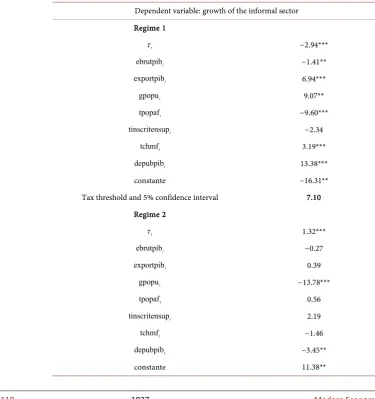
[image:9.595.157.533.346.746.2]The estimation results of Equation 1 are reported in Table 1.
Table 1. Results of the Hansen model estimation of the growth pattern of the informal sector.
Dependent variable: growth of the informal sector Regime 1
t
τ −2.94***
ebrutpibt −1.41**
exportpibt 6.94***
gpoput 9.07**
tpopaft −9.60***
tinscritensupt −2.34
tchmft 3.19***
depubpibt 13.38***
constante −16.31**
Tax threshold and 5% confidence interval 7.10
Regime 2
t
τ 1.32***
ebrutpibt −0.27
exportpibt 0.39
gpoput −13.78***
tpopaft 0.56
tinscritensupt 2.19
tchmft −1.46
depubpibt −3.45**
DOI: 10.4236/me.2019.107118 1838 Modern Economy
Continued
2
R 0.74
F-Fisher 15.03
P-Value 0.0000
Number of observations 104
Number of observations regime 1 32
Number of observations regime 2 72
significance: 1% (***), 5% (**), 10% (*)
Source: Author’s calculations.
Hansen’s specification test is used to reject, with a first-species error of less than 1%, the null hypothesis of linearity for the tax threshold of 7.10%. There-fore, the existence of a non-linear relation between the growth of the informal sector and the growth of the tax rate is allowed at the remarkably stable optimal threshold since the P-value is significantly weak compared to the critical value of 1%.
Moreover, the distribution of the number of observations above and below the endogenous threshold gives each regime a sufficiently large number of observa-tions to allow an acceptable identification of the regimes of behavior of the in-formal sector.
In fact, the optimal tax threshold estimated at 7.10% is the level of taxation at which regime change occurs in the behavior of informal sector growth. That is to say that below this threshold, the tax rate negatively affects the growth of the in-formal sector. While above, the inin-formal sector is decelerating. It is clear that the informal sector is evolving in the form of a J curve.
In a normal regime or the transition from the informal economy to the formal economy, fiscal repression has the desired effects, namely a lessening of the in-formal sector. On the other hand, savings, women’s labor force growth, and educational attainment negatively and significantly influence the growth of the informal sector, according to theory. While urban residence, external openness, growth in public spending and female unemployment significantly motivate the development of the informal sector. This means that the transition from the in-formal economy to the in-formal economy in Gabon requires considerable savings, a large female labor force and a high level of education. It should also be accom-panied by a control of the rural exodus, a few measures of commercial protec-tion, a better management of the public expenses and especially a reduction of the unemployment of the women.
DOI: 10.4236/me.2019.107118 1839 Modern Economy hand, it is the high level of education, the external openness and growth of women’s labor force that encourage the informal economy in such a regime. Generally, the State resorts to the hardening of the fiscal repression on the pre-text that it favors the transfer of the whole of the informal activities in the formal economy, thus contributing to an increase of the tax receipts, the existence of this regime critical in the behavior of the informal sector in Gabon rejects this hypothesis. This is the place to think that the informal economic activities that intense tax repression prevents the company, are not recovered in the formal sector. In fact, the pressing weight of taxation also discourages formal activity. In other words, following Petkantchin [26], increased government repression, without modification of the regulatory and fiscal framework, is likely to destroy economic opportunities and the revenues associated with them.
In addition, the average effective tax rate in the order of 28.5% of Gabon over the period under study, which is higher than the optimal threshold of 7.10%, suggests that this country is in the ascending part of this country, which we call the J-curve of informality. In other words, the Gabonese state exerts a tax burden at a level that places fiscal policy in an area where it encourages informal activity. All in all, tax repression, which is probably the usual means used by the Gabo-nese authorities to collect more tax revenue and fight against informality, is not adequate to promote the transition from the informal economy to the economy formal. This is actually a procyclical solution. Better still, this option is counter-productive in that it is costly in terms of resources and bureaucratization of the economy [26]. In other words, fiscal repression against informality is undesira-ble in the Gabonese economy.
On the other hand, the sustainable solution, as also advocated by Enste [27], is the adequate treatment of the causes of informality. This refers to the change in public policies responsible for the informal economy, on the one hand, and to an optimal management of formal taxation based on a reduction of taxation within the limits of the optimal tax rate (more generally better regulation management)
[28], on the other hand.
4. Conclusions
It was a question of examining the behavior of the informal economy in a de-veloping country faced with the choice of the authorities of hardening of the re-pression notably fiscal to envisage a transition of the informal economy towards the formal economy and to increase tax revenues accordingly.
In the majority of developing countries, the informal sector is indeed a huge part of the economy.
DOI: 10.4236/me.2019.107118 1840 Modern Economy economy.
The results of the estimation confirm the non-linearity. They also reveal that there is an optimal tax threshold of 7.10% from which taxation encourages in-formality. Also, with an average effective tax rate of around 28.5%, Gabon is po-sitioned on the growing side of what we call the J-curve of informality. Which is to say that the tax pressure encourages informality in this country.
Thus, intensive fiscal repression is not effective in promoting the transition from an informal economy to a legal market.
The long-term solution to fight informality is ultimately to address the causes of growth in the informal sector and to loosen the repressive tax burden on the formal economy.
Conflicts of Interest
The author declares no conflicts of interest regarding the publication of this pa-per.
References
[1] Hansen, B.E. (1999) Threshold Effects in Non-Dynamic Panels: Estimation, Testing, and Inference. Journal of Econometrics, 93, 345-368.
https://doi.org/10.1016/S0304-4076(99)00025-1
[2] Roubaud, F. (1994) L’économie informelle au Mexique: De la sphère domestique à la dynamique macro-économique, Karthala, ORSTOM, 453 p.
[3] Bacchetta, M.E.E. and Bustamante, J.P. (2009) Globalization and Informal Jobs in Developing Countries. OIT et OMC, Genève.https://doi.org/10.30875/f801556b-en
[4] Lewis, W.A. (1954) Economic Development with Unlimited Supplies of Labour.
The Manchester School, 22, 139-191.
https://doi.org/10.1111/j.1467-9957.1954.tb00021.x
[5] Harris, J.R. and Todaro, M.P. (1970) Migration, Unemployment, and Development: A Two-Sector Analysis. American Economic Review, 60, 126-142.
[6] Moser, C.O.N. (1978) Informal Sector or Petty Commodity Production: Dualism or Dependence in Urban Development? World Development, 6, 1041-1064.
https://doi.org/10.1016/0305-750X(78)90062-1
[7] Portes, A.M.C. and Benton, L.A. (1989) The Informal Economy: Studies in Advanced and Less Developed Countries. The John Hopkins University Press, Baltimore, MD. [8] De Soto, H. (1994) L’autre sentier: La révolution informelle dans le tiers monde, La
Découverte, Paris.
[9] Loayza, N.V., Oviedo, A.M. and Serven, L. (2006) The Impact of Regulation on Growth and Informality Cross-Country Evidence. In: Guha-Khasnobis, B., Kanbur, R. and Ostrom, E., Eds., Linking the Formal and Informal Economy, Concepts and Policies, Oxford University Press, Oxford.
[10] Schneider, F. and Enste, D.H. (2000) Shadow Economies: Size, Causes, and Consé- quences. Journal of Economic Literature, 38, 77-114.
https://doi.org/10.1257/jel.38.1.77
Pal-DOI: 10.4236/me.2019.107118 1841 Modern Economy
grave Macmillan, London. https://doi.org/10.1057/9780230374270_2
[12] IMF (2017) Restarting Growth, Regional Economic Outlook, Sub-Saharan Africa. [13] Barro, R.J. (1990) Government Spending in a Simple Model of Economic Growth.
Journal of Political Economy, 8, 103-125.https://doi.org/10.1086/261726
[14] Minea, A. and Villieu, P. (2009) Tax, Deficit and Economic Growth: A Re-Exami- nation of the Laffer Curve. Journal of Political Economy, 119, 653-675.
https://doi.org/10.3917/redp.194.0653
[15] Becker, G.S. (1968) Crime and Punishment: An Economic Approach. Journal of Po-litical Economy, 72, 169-217.https://doi.org/10.1086/259394
[16] Thornton, M. (1991) the Economics of Prohibition. University of Utah Press, Salt Lake City,UT.
[17] Tong, H. (1978) On a Threshold Model in Pattern Recognition and Signal Processing. In: Chen, C., Ed., Pattern Recognition and Signal Processing, Sijhoff and Noordhoff, Amsterdam, 575-586.
[18] Tong, H. and Lim, K.S. (1980) Threshold Autoregression, Limit Cycles and Data.
Journal of the Royal Statistical Society: Serie B, 42, 245-292.
https://doi.org/10.1111/j.2517-6161.1980.tb01126.x
[19] Ben Salem, M. and Perraudin, C. (2001) Linearity Tests, Specification and Estimation of Threshold Models: A Comparative Analysis of the Methods of Tsay and Hansen.
Economy & Forecast, 148, 157-176. https://doi.org/10.3406/ecop.2001.6284
[20] Tsay, R.S. (1989) Testing and Modeling Threshold Autoregressive Processes. Journal of the American Statistical Association, 84, 231-240.
https://doi.org/10.1080/01621459.1989.10478760
[21] Hansen, B.E. (1996) Inference When a Nuisance Parameter Is Not Identified under the Null Hypothesis. Econometrica, 64, 413-430.https://doi.org/10.2307/2171789
[22] Chan, K.S. and Tong, H. (1986) On Estimating Thresholds in Autoregressive Models.
Journal of Time Series Analysis, 7, 179-190.
https://doi.org/10.1111/j.1467-9892.1986.tb00501.x
[23] Luukkonen, R., Saikkonen, P. and Teräsvirta, T. (1988) Testing Linearity in Univa-riate Time Series Models. Scandinavian Journal of Statistic, 15, 161-175.
[24] Goldstein M. and Kahn M. (1976) Large Versus Small Prices Changes and the De-mand for Imports. IMF Staff Papers, 23, 553-556.
[25] Mondiale, B. (2016) CD ROM Word Development Indicator.
[26] Petkantchin, V. (2013) Les causes fiscales et réglementaires de l’ “économie souter- raine. Note économique de l’IEM.
[27] Enste, D.H. (2005) The Shadow Economy in OECD and EU Accession Countries- Empirical Evidence for the Influence of Institutions, Liberalization, Taxation and Regulation. In: Schneider, F., Ed., Size, Causes and Consequences of the Under- ground Economy, Taylor & Francis Group, Oxfordshire, 23-138.
https://doi.org/10.4324/9781351149044-7
[28] Dobla-Norris, E. and Feltenstein, A. (2003) An Analysis of the Underground Economy and Its Macroeconomic Consequences. IMF Working Paper, No. 23.