warwick.ac.uk/lib-publications
A Thesis Submitted for the Degree of PhD at the University of Warwick
Permanent WRAP URL:
http://wrap.warwick.ac.uk/80028
Copyright and reuse:
This thesis is made available online and is protected by original copyright. Please scroll down to view the document itself.
Please refer to the repository record for this item for information to help you to cite it. Our policy information is available from the repository home page.
Error Control in
Bacterial Quorum Communications
Chenyao Bai
A thesis Submitted to the University of Warwick
in partial fulfilment of the requirements for the degree of
Doctor of Philosophy
School of Engineering
i
Table of Contents
List of Tables ... vi
List of Figures ... vii
Acknowledgements ... xii
Declaration ... xiv
List of Publications ... xv
Abstract ... xvi
Abbreviations ... xvii
CHAPTER 1. Introduction ... 1
1.1 Background ... 1
1.1.1 Nanotechnology ... 1
1.1.2 Nanomachines ... 2
1.1.3 Interaction between nanomachines ... 4
1.1.4 Nanoscale communication requirements ... 5
1.1.5 Open challenges ... 6
1.2 Motivation of this work... 8
1.3 Research objectives... 10
1.4 Thesis contributions ... 13
1.5 Thesis outline ... 15
CHAPTER 2. Molecular communications ... 17
2.1 Introduction ... 17
2.2 MC architectures... 18
2.2.1 MC components ... 19
2.2.2 MC process... 20
2.3 MC types ... 21
2.3.1 Wired MC ... 21
2.3.2 Wireless MC ... 23
2.4 MC characteristics ... 27
ii
2.5.1 Modulation techniques ... 31
2.5.2 Channel modelling and noise analysis ... 33
2.5.3 Coding techniques ... 35
2.5.4 Network architectures and protocols ... 36
2.5.5 Simulation tools ... 39
2.6 Applications of MC ... 40
2.6.1 Biomedical applications ... 40
2.6.2 Industrial applications ... 41
2.6.3 Environmental applications ... 42
2.6.4 Information technology applications ... 42
2.7 Summary ... 43
CHAPTER 3. Bacterial communications ... 45
3.1 Introduction ... 45
3.2 Capabilities of bacteria ... 48
3.3 Quorum sensing ... 52
3.3.1 QS: an overview ... 52
3.3.2 QS in gram-negative bacteria ... 54
3.3.3 QS in gram-positive bacteria ... 62
3.4 QS applications ... 64
3.4.1 Engineered QS system ... 65
3.4.2 Biosensors ... 66
3.4.3 Biofouling control ... 66
3.5 Summary ... 67
CHAPTER 4. Communication model... 70
4.1 Introduction ... 70
4.2 Existing models of QS ... 71
4.3 Two QS systems in V. fischeri bacteria ... 74
4.4 Bacterial communication scheme ... 75
4.4.1 Bacteria functionality model ... 75
4.4.2 Environmental illustration... 79
4.4.3 Transmitter and receiver model ... 81
4.5 Channel model ... 85
iii
4.5.2 The diffusion medium ... 86
4.5.3 The communication channel model ... 90
4.5.4 Communication discussions ... 99
4.6 Channel capacity analysis ... 100
4.7 Summary ... 105
CHAPTER 5. FEC in bacterial communications ... 107
5.1 Introduction ... 107
5.2 Existing error correction coding for MC... 110
5.3 FEC mechanisms ... 112
5.3.1 Digital communication system ... 112
5.3.2 Linear block codes ... 117
5.3.3 Cyclic codes ... 119
5.3.4 Convolutional codes ... 120
5.3.5 Turbo codes ... 122
5.3.6 Discussion ... 123
5.4 Hamming coding ... 124
5.4.1 Introduction of Hamming codes ... 124
5.4.2 Analytical results ... 128
5.5 Minimum Energy Coding ... 132
5.5.1 Introduction of MECs ... 132
5.5.2 Analytical results ... 135
5.6 Luby Transform (LT) coding ... 137
5.6.1 Introduction of LT codes ... 137
5.6.2 Analytical results ... 141
5.7 Summary ... 143
CHAPTER 6. ARQ in bacterial communications ... 145
6.1 Introduction ... 145
6.2 Existing transmission protocols for MC ... 147
6.3 ARQ mechanisms ... 151
6.3.1 Overview ... 151
6.3.2 Cyclic redundancy check (CRC) codes ... 153
6.3.3 ARQ implementation ... 156
iv
6.4 Simulation results for SW-ARQ ... 167
6.4.1 Parameter setup ... 167
6.4.2 Simulation process ... 169
6.4.3 Results and discussions ... 171
6.5 Simulation results for GBN-ARQ ... 184
6.5.1 Parameter setup ... 184
6.5.2 Simulation process ... 185
6.5.3 Results and discussions ... 187
6.6 Simulation results for SR-ARQ ... 197
6.6.1 Parameter setup ... 197
6.6.2 Simulation process ... 198
6.6.3 Results and discussions ... 199
6.7 Comparisons of different ARQ schemes ... 209
6.8 Summary ... 211
CHAPTER 7. Throughput and energy efficiency based packet size optimization of ARQ ... 216
7.1 Introduction ... 216
7.2 Engineered molecular communication ... 219
7.2.1 Synthetic biology hierarchy ... 219
7.2.2 Technical advances ... 223
7.2.3 Synthetic biological examples ... 225
7.2.4 Discussions ... 230
7.3 Energy model ... 231
7.4 Mathematical analysis of throughput and energy efficiency ... 238
7.4.1 SW-ARQ ... 238
7.4.2 GBN-ARQ ... 242
7.4.3 SR-ARQ ... 244
7.5 Numerical results ... 245
7.5.1 Parameter setup ... 246
7.5.2 SW-ARQ ... 246
7.5.3 GBN-ARQ ... 249
7.5.4 SR-ARQ ... 251
v
CHAPTER 8. Conclusions and future works ... 256
8.1 Concluding remarks ... 257
8.2 Future work ... 270
Appendix A ... 273
Appendix B ... 278
vi
List of Tables
Table 2.1 Comparison of communication characteristics. ... 28
Table 3.1 Summary of characteristics of typical bacterial cell structures. ... 50
Table 4.1 Parameter settings [186]. ... 84
Table 4.2 Binary Channel Model (Possibility Representation). ... 92
Table 5.1 Parameters of Hamming coding path. ... 125
Table 6.1 Standard generator polynomials [240]. ... 154
vii
List of Figures
Figure 2.1 Generic communication architecture. ... 18
Figure 2.2 Microtubule motor proteins [37]. ... 23
Figure 2.3 Calcium signalling MC based on (a) gap junction and (b) diffusion [5]. 25 Figure 2.4 Flow of information through a MC network. ... 37
Figure 2.5 A set of functions provided by each layer [79]. ... 39
Figure 3.1 The structural components of a typical bacterial cell... 49
Figure 3.2 The symbiotic relationship between bacteria and the host. ... 58
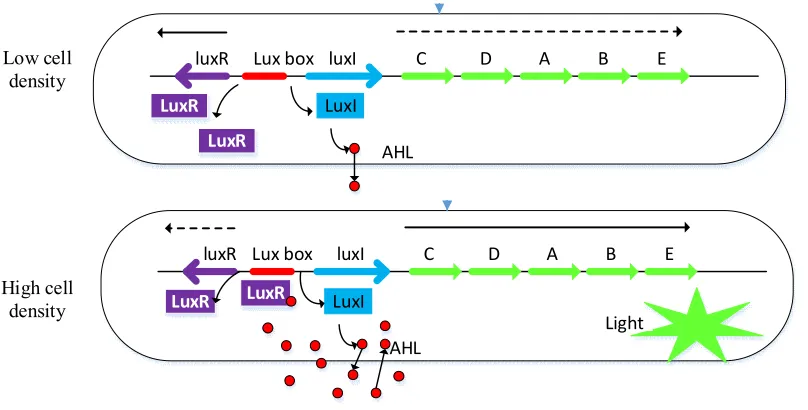
Figure 3.3 The LuxI/LuxR QS system. ... 59
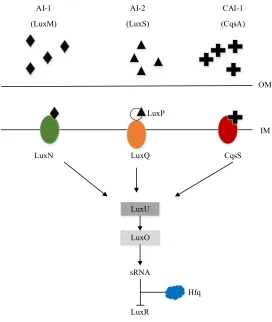
Figure 3.4 QS system in V. harveyi. ... 61
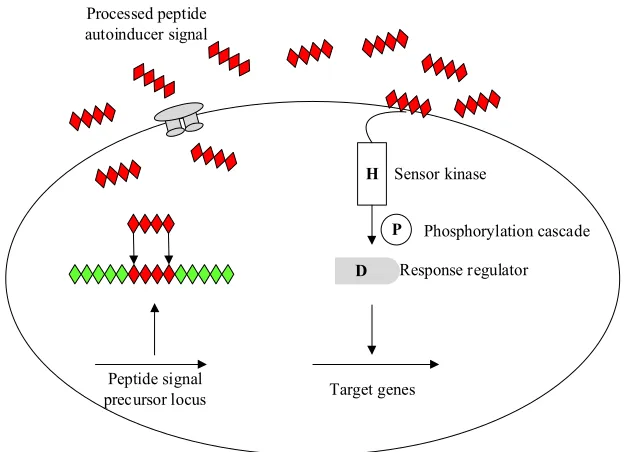
Figure 3.5 A general model for peptide-mediated QS in gram-positive bacteria. .... 63
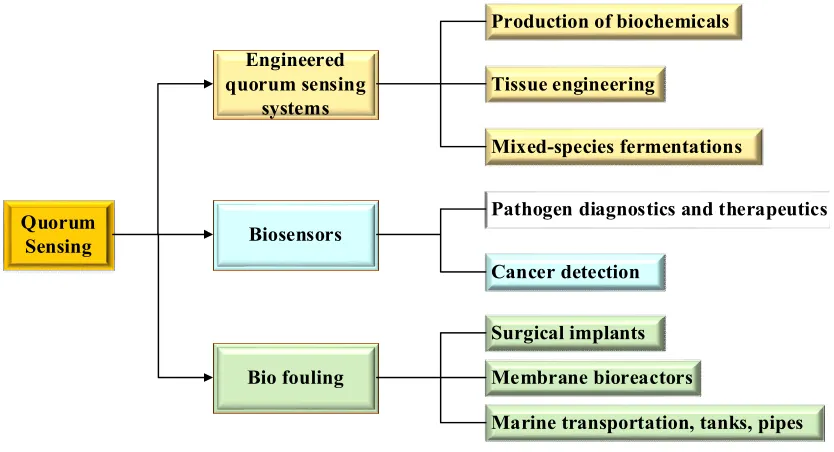
Figure 3.6 Overview of current QS applications. ... 65
Figure 4.1 Bacterial communication: (a) bacterium structure; (b) GFP production.. 77
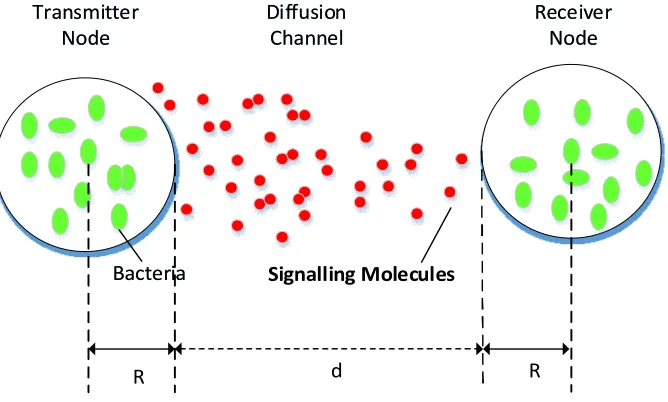
Figure 4.2 Bacterial communication setup consisting of the transmitter node, the diffusion channel and the receiver node... 79
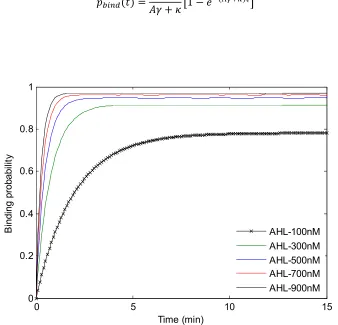
Figure 4.3 AHL/LuxRbinding probability for different concentration of signalling molecules surrounding the bacterium. ... 83
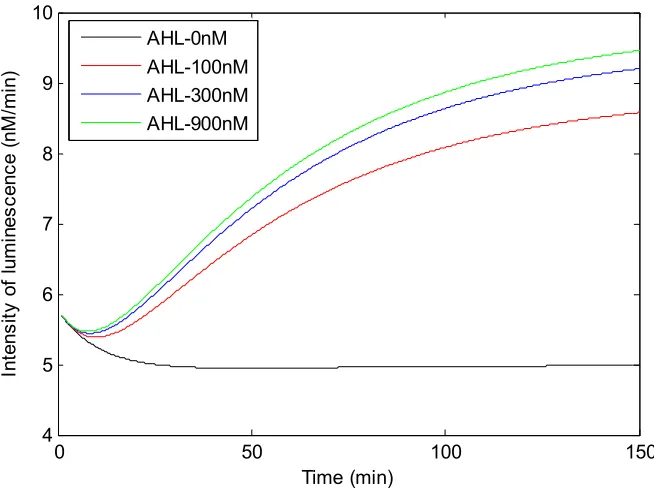
Figure 4.4 Luminescence over time for different AHL concentrations. ... 85
Figure 4.5 Channel BER performance. ... 95
Figure 4.6 BER considering more than one previous time slot. ... 99
Figure 4.7 Binary asymmetric channel (BAC). ... 102
Figure 4.8 Effect of threshold on the mutual information. ... 104
Figure 4.9 Channel capacity. ... 105
Figure 4.10 Selected threshold when calculating capacity. ... 105
viii
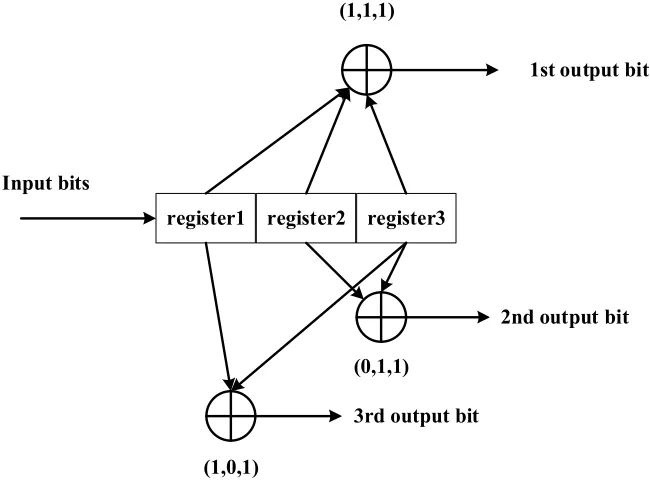
Figure 5.2 (3,1,3) convolutional encoder with constraint length 3. ... 122
Figure 5.3 Hamming coding path. ... 125
Figure 5.4 BER comparison between (7, 4) and (15, 11) Hamming codes for transmission distance of 4μm. ... 128
Figure 5.5 Average energy per bit comparison between (7, 4) and (15, 11) Hamming codes for transmission distance of 4μm. ... 130
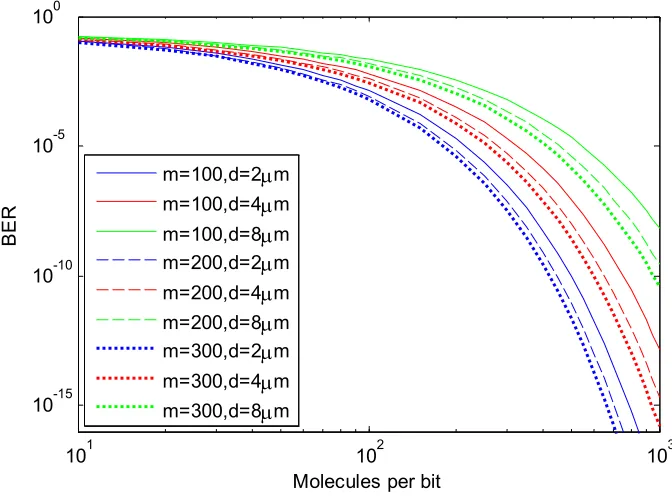
Figure 5.6 BER comparison between (7, 4) and (15, 11) Hamming codes for the number of molecules per bit of 500. ... 131
Figure 5.7 BER comparison between MECs and Hamming codes. ... 136
Figure 5.8 Average energy per bit comparison between MECs and Hamming codes. ... 136
Figure 5.9 BER comparison between LT codes and Hamming codes. ... 142
Figure 5.10 Average energy per bit comparison between LT codes and Hamming codes... 142
Figure 6.1 Relationship between packets and frames in ARQ. ... 152
Figure 6.2 Block diagram of the basic ARQ system. ... 156
Figure 6.3 Basic elements of ARQ [225]. ... 158
Figure 6.4 Example of SW-ARQ... 160
Figure 6.5 Examples of GBN-ARQ and SW-ARQ schemes. ... 163
Figure 6.6 Sliding window example. ... 165
Figure 6.7 Channel performance of SW-ARQ for different transmission distances: (a) Transmission delay; (b) Efficiency; (c) BER; (d) channel throughput... 172
Figure 6.8 Channel performance of SW-ARQ for different number of bacteria: (a) Transmission delay; (b) Efficiency; (c) BER; (d) channel throughput. ... 174
Figure 6.9 Channel performance of SW-ARQ for different CRC polynomials: (a) Transmission delay; (b) Efficiency; (c) BER; (d) channel throughput. ... 175
ix
Figure 6.11 Transmission time of SW-ARQ for different combinations of the main
factors discussed in the text. ... 179
Figure 6.12 Transmission efficiency of SW-ARQ for different combinations of main
factors discussed in the text. ... 181
Figure 6.13 Error performance of SW-ARQ for different combinations of the main
factors discussed in the text. ... 182
Figure 6.14 Channel throughput of SW-ARQ for different combinations of the main
factors discussed in the text. ... 184
Figure 6.15 Channel performance of GBN-ARQ for different transmission distances:
(a) Transmission delay; (b) Efficiency; (c) BER; (d) channel throughput... 188
Figure 6.16 Channel performance of GBN-ARQ for different window sizes: (a)
Transmission delay; (b) Efficiency; (c) BER; (d) channel throughput. ... 189
Figure 6.17 Channel performance of GBN-ARQ for different number of bacteria: (a)
transmission delay; (b) efficiency; (c) BER; (d) channel throughput. ... 191
Figure 6.18 Channel performance of GBN-ARQ for different frame lengths: (a)
transmission delay; (b) efficiency; (c) BER; (d) channel throughput. ... 192
Figure 6.19 Transmission time of GBN-ARQ for different combinations of the main
factors discussed in the text. ... 194
Figure 6.20 Transmission efficiency of GBN-ARQ for different combinations of the
main factors discussed in the text. ... 195
Figure 6.21 Error performance of GBN-ARQ for different combinations of the main
factors discussed in the text. ... 196
Figure 6.22 Channel throughput of GBN-ARQ for different combinations of the
main factors discussed in the text. ... 197
Figure 6.23 Channel performance of SR-ARQ for different transmission distances: (a)
Transmission delay; (b) Efficiency; (c) BER; (d) channel throughput. ... 200
Figure 6.24 Channel performance of SR-ARQ for different window sizes: (a)
transmission delay; (b) channel throughput. ... 202
Figure 6.25 Channel performance of SR-ARQ for different number of bacteria: (a)
x
Figure 6.26 Channel performance of SR-ARQ for different frame lengths: (a)
transmission delay; (b) efficiency; (c) BER; (d) channel throughput. ... 204
Figure 6.27 Transmission time of SR-ARQ for different combinations of the main factors discussed in the text. ... 206
Figure 6.28 Transmission efficiency of SR-ARQ for different combinations of the main factors discussed in the text. ... 207
Figure 6.29 Error performance of SR-ARQ for different combinations of the main factors discussed in the text. ... 208
Figure 6.30 Channel throughput of SR-ARQ for different combinations of the main factors discussed in the text. ... 209
Figure 6.31 Comparisons of channel performance for different ARQ schemes: (a) transmission delay; (b) efficiency; (c) BER; (d) channel throughput. ... 210
Figure 7.1 A hierarchal analogy between computer engineering and synthetic biology [179]. ... 222
Figure 7.2 Toggle switch design. ... 227
Figure 7.3 Oscillator design. ... 228
Figure 7.4 Synthetic encoder and decoder for CRC-8. ... 233
Figure 7.5 Four synthetic logic gates employed to establish the energy model. ... 234
Figure 7.6 Throughput efficiency versus frame length for SW-ARQ ... 247
Figure 7.7 Energy efficiency versus frame length for SW-ARQ ... 248
Figure 7.8 SW-ARQ optimal frame length versus molecules per bit to maximize the throughput and energy efficiency, for different CRC polynomials. ... 249
Figure 7.9 Throughput efficiency versus frame length for GBN-ARQ ... 250
Figure 7.10 Energy efficiency versus frame length for GBN-ARQ ... 250
Figure 7.11 GBN-ARQ optimal frame length versus molecules per bit to maximize the throughput and energy efficiency, for different window sizes. ... 251
Figure 7.12 Throughput and energy efficiency performances for SR-ARQ. ... 252
xi
Figure B.1 Comparison of BER performances between the proposed model in this
xii
Acknowledgements
I would never have been able to accomplish my thesis without the guidance of my
supervisor, my friends, and support from my family.
First and foremost, I would like to express my deepest appreciation to my supervisor
Dr Mark S. Leeson for the continuous support of my Ph.D. study and research, for
his patience, motivation, enthusiasm, and immense knowledge. He has been
supportive since the days I began working on nano-communications as an M.Sc.
student. Since then, Mark has supported me not only by providing research guidance
over four years, but also academically and emotionally through the rough road to
finish this thesis. And during the most difficult times in my Ph.D. life, he gave me
the moral support and the freedom I needed to move on.
I would also like to thank my second supervisor, Dr Matthew D. Higgins, for his
encouragement, productive discussions and helping me to revise and submit my
papers for the past few years.
I acknowledge the financial support of School of Engineering, University of
Warwick. I am grateful to students in the Communication Networks (ComNet)
Laboratory, especially Xiayang Wang, Yi Lu, Enzo and Roy, for providing fun and
stimulating research environment. Also, I would thank my friend Yipei Ye and Hu
Yuan. My experience at Warwick has been enjoyable thanks to the members of
different nationalities and research interests.
Special thanks to my boyfriend Ji Hu, who was always there cheering me up and
xiii
Finally, and most importantly, I would like to express my thanks to my parents and
my brother for their smile, support and motivation that helped me to get through
many ups and downs. They always give me the strength and wisdom during these
xiv
Declaration
This thesis is submitted in partial fulfilment for the degree of Doctor of Philosophy
under the regulations formulated by the School of Engineering of the University of
Warwick. I herewith declare that this thesis contains my own research performed
under the supervision of Dr. Mark S. Leeson and Dr. Matthew D. Higgins, without
assistance of third parties, unless stated otherwise. The research materials have not
been submitted in any previous application for a degree at any other university. All
xv
List of Publications
Published Journals:
[1]. Chenyao. Bai, M. S. Leeson, and M. D. Higgins, "Minimum energy channel codes for molecular communications," Electronics Letters, vol. 50, no. 23, pp.
1669-1671, 2014. DOI: 10.1049/el.2014.3345.
[2]. Chenyao. Bai, M. S. Leeson, and Matthew D. Higgins, "Performance of SW-ARQ in bacterial quorum communications," Nano Communication Networks, vol.
6, no. 1, pp. 3–14, 2015. DOI: 10.1016/j.nancom.2014.11.001.
[3]. Chenyao Bai, M. S. Leeson, and M. D. Higgins, "Analysis of ARQ protocols for bacterial quorum communications," Nano Communication Networks, vol. 7, no.
1, pp. 65–79, 2016. DOI: 10.1016/j.nancom.2015.12.001.
[4]. Chenyao Bai, M. S. Leeson, M. D. Higgins and Yi Lu, “Throughput and Energy Efficiency Based Packet Size Optimization of ARQ Protocols in Bacterial
Quorum Communications," Transactions on Emerging Telecommunications
Technologies, accepted for publication, 2016.
Published Book Chapter:
[5]. M. S. Leeson, M. D. Higgins, Chenyao Bai, Y. Lu, X. Wang and R. Yu, “The Use of Coding and Protocols within Molecular Communication Systems”, for
Modeling, Methodologies and Tools for Molecular and Nano-scale
Communications, J. Suzuki, T. Nakano and M. J. Moore (eds.), Springer, due
xvi
Abstract
Quorum sensing (QS) is used to describe the communication between bacterial cells,
whereby a coordinated population response is controlled through the synthesis,
accumulation and subsequent sensing of specific diffusible chemical signals called
autoinducers, enabling a cluster of bacteria to regulate gene expression and behavior
collectively and synchronously, and assess their own population. As a promising
method of molecular communication (MC), bacterial populations can be
programmed as bio-transceivers to establish information transmission using
molecules. In this work, to investigate the key features for MC, a bacterial QS
system is introduced, which contains two clusters of bacteria, specifically Vibrio
fischeri, as the transmitter node and receiver node, and the diffusive channel. The
transmitted information is represented by the concentration of autoinducers with
on-off keying (OOK) modulation. In addition, to achieve better reliability and energy
efficiency, different error control techniques, including forward error correction
(FEC) and Automatic Repeat reQuest (ARQ) are taken into consideration. For FEC,
this work presents a comparison of the performance of traditional Hamming codes,
Minimum Energy Codes (MEC) and Luby Transform (LT) codes over the channel.
In addition, it applied several ARQ protocols, namely Stop-N-Wait (SW-ARQ),
Go-Back-N (GBN-ARQ), and Selective-Repeat (SR-ARQ) combined with error
detection codes to achieve better reliability. Results show that both the FEC and
ARQ techniques can enhance the channel reliability, and that ARQ can resolve the
issue of out-of-sequence and duplicate packet delivery. Moreover, this work further
addresses the question of optimal frame size for data communication in this channel
capacity and energy constrained bacterial quorum communication system. A novel
energy model which is constructed using the experimental validated synthetic logic
gates has been proposed to help with the optimization process. The optimal fixed
frame length is determined for a set of channel parameters by maximizing the
xvii
Abbreviations
3-oxo-C12-HSL: N-(3-oxododecanoyl)-L-homoserine lactone
3-oxo-C6-HSL: N-(3-oxo-hexanoyl)-L-homoserine lactone
ABC: ATP-binding cassette
ACK: positive acknowledgement frames
ADP: adenosine diphosphate
AHL: N-acyl homoserine lactones
AI-1: N-(3-hydroxybutanoyl) homoserine lactone
AIGN: additive inverse Gaussian noise
ARP: address resolution protocol
ARQ: Automatic Repeat reQuest
ASK: amplitude-shift keying
ATP: adenosine triphosphate
BAC: binary asymmetric channel
BAN: body area networks
BER: bit error rate
BSC: binary symmetric channel
C4-HSL: N-butanoyl-L-homoserine lactone
C8-HSL: N-3-oxo-octanoyl-L-Homoserine lactone
CA: concentration aware
CAI-1: (S)-3-hydroxytridecan-4-one
CPEC: Circular Polymerase Extension Cloning
CRC: cyclic redundancy check
CSK: Concentration Shift Keying
xviii
FBD: furanosyl borate diester
FEC: Forward Error Correction
FSK: frequency-shift keying
GBN-ARQ: Go-Back-N Automatic Repeat reQuest
GFP Green fluorescent protein
HARQ hybrid automatic repeat request
HLDC: High-Level Data Link Control
HSL: homoserine lactone
ICMP: Internet Control Message Protocol
ICT: Information and Communication Technologies
IP: Internet Protocol
IRSK: isomer-based ratio shift keying
ISI: Inter-symbol interference
LDPC: Low-Density Parity-Check
LT: Luby Transform
MAC: Medium Access Control
MAP: Maximum A Posteriori
MARCO: Molecular ARray-based Communication
MC: molecular communication
MEC: Minimum Energy Codes
ML: maximum likelihood
MoSK: Molecule Shift Keying
MTSK: Molecular Transition Shift Keying
NAK: negative acknowledgement frames
NAODV: Nano Ad hoc On-Demand Distance Vector
NEMS/MEMS: nano- and micro-electromechanical systems
xix
OOK: On-Off Keying
OSI: Open System Interconnection
PAM: Pulse Amplitude Modulation
PCR: polymerase chain reaction
PMF: Poisson-Binomial probability mass function
PMID: PubMed Identifier
PPM: pulse position modulation
PSK: phase-shift keying
QAM: quadrature amplitude modulation
QS: quorum sensing
RM: Reed Muller
RS: Reed Solomon
SLIC: ligation-independent cloning
SOCC: self-orthogonal convolutional codes
SOVA: Soft Output Viterbi Algorithm
SR-ARQ: Selective-Repeat Automatic Repeat reQuest
ssDNA: single-stranded DNAs
SW-ARQ: Stop-N-Wait Automatic Repeat reQuest
TCP: Transmission Control Protocol
UAS: upstream activating sequences
1
CHAPTER 1.
I
NTRODUCTION
1.1
Background
1.1.1 Nanotechnology
Nanotechnology is a new interdisciplinary field, based on the knowledge of diverse
scientific areas such as chemistry, physics, molecular biology, materials science,
computer science, and engineering [1]. It focuses on the design, characterization,
production and application of functional materials, devices, and systems through the
control of matter on the nanoscale (1-100 nanometres) and the exploitation of novel
phenomena and properties (physical, chemical, and biological) at that length scale
[2], where the Newtonian approximations are no longer applicable, resulting in
quantum physics. One of the top concerns regarding the future of nanotechnology is
molecular manufacturing, which involves the use of nanoscale tools and
non-biological processes to build structures, devices and systems at the molecular level,
with virtually no defects. Also, it is expected that more wonders occur in the medical
field. Due to the fact that the research of nanotechnology is not mature, it would be
almost impossible to predict the future developments over the next ten or twenty
years in this field. However, it has been proved that nanotechnology could be a huge
contributor in shaping the world from atom up, using atomic level manipulation to
transform and construct a broad range of new materials, devices, living organisms
2
utilized in many fields such as biomedical engineering, information and
communication, environmental research and industrial technology. The detailed
applications will be discussed in the following chapter.
1.1.2 Nanomachines
One of the main objectives of nanotechnology is to successfully arrange
nanomachines, which can be considered as the most basic functional unit [4].
Generally, nanomachines are devices consisting of nanoscale components and being
able to perform specific tasks at nano-level, such as communicating, computing, data
storing, sensing and/or actuation [5]. The actual molecular biological systems
existing in the human body are nanomachines themselves. However, nowadays only
some primitive nanomachines have been tested. Most of them are still in the
theoretical research and development stage. In addition, nanomachines can be
employed as building blocks for more complex systems, such as nano-robots [6]. A
single nanomachine is fairly sensitive to its environment, especially when perturbed
by thermal collisions with the surrounding molecules. There are three different
approaches for the development of nanomachines, namely, the top-down, bottom-up
and bio-hybrid approaches [5]. Among them, the top-down approach is the most
commonly used technique currently, especially in electronic fields such as
microelectromechanical systems (MEMS) technologies. Top-down nanomachines
are developed by scaling down existing microelectronic components, without atomic
level manipulation [7]. Bottom-up technology, which is also called molecular
nanotechnology or molecular manufacturing, is a promising method which creates
nanomachines from molecular components either manually or through self-assembly,
operated with the chemical, biological and physical forces between molecules [5].
3
mechanisms as components in synthetically engineered bio-nanomachines [8]. It is
beneficial particularly to biomedical applications due to their inherent compatibility
with natural biological processes and reduced energy requirements [9]. At the
present stage, complex nanomachines cannot be established following the top-down
approach. However, the development of nanomachines following the bottom-up and
bio-hybrid approaches can offer promising solutions in the near term.
Generally, a nanomachine may consist of one or more components, with different
levels of complexity. For a fairly comprehensive nanomachine, the components
include the control unit, the communication unit, the reproduction unit, the power
unit and sensor and actuators [5]. The control unit is the central processing unit,
dealing with instructions of particular tasks and controlling all the other components
of the nanomachine. The communication unit (e.g., gap junctions and ligand
receptors in living cells) is used to transmit and receive the transmitted information.
The reproduction unit intends to fabricate each component of a nanomachine using
external sources and then assemble them to duplicate the nanomachine. The power
unit provides energy to the components of the nanomachine when it is in operation,
by scavenging energy from external sources (e.g., light, temperature) and reserving
this power for later consumption. Sensors and actuators are used to sense the
fluctuation of the environment and react accordingly, acting as the interface between
the environment and the nanomachine [5]. However, such nanomachines have not
been constructed artificially because of the extremely high complexity and the lack
of fabrication technologies to handle and assemble molecular structures precisely.
Considering the components of the typical nanomachine stated above, nanomachines
have some significant expected features, including self-assembly, self-replication,
4
the ability of a nanomachine to form an organized structure from disordered
elements, without external forces. Self-replication allows a nanomachine to make
copies of itself using external elements, in order to implement complex and
macroscopic tasks. Locomotion is the ability to move from one place to another.
Communication between nanomachines, just as in living cells, is required, enabling
them to complete more complex tasks in a cooperative manner and achieving
decentralized and distributed intelligence [5]. In addition, to become self-contained,
each nanomachine contains a set of instructions to realize the intended task, which
can be embedded in their molecular structure [5].
1.1.3 Interaction between nanomachines
As stated above, nanomachines cannot execute complex tasks individually.
Nanonetworks, the interconnection of different nanomachines, will expand the
capabilities of single nanomachines by providing them with a method to cooperate
and exchange information and commands, allowing the fulfilment of more complex
tasks [10]. Also, instead of the extremely limited workspace of a single nanomachine,
nanonetworks will enable the interaction with remote nanomachines by means of
broadcasting and multi-hop communication mechanisms, expanding the application
range from metres to kilometres [11]. Communication between nanomachines can be
realized through nano-mechanical, acoustic, electromagnetic, chemical or molecular
communications (MC) [11]. Among them, MC, inspired by the communication
mechanisms in living organisms and defined formally as the use of molecules as
messages between transmitters and receivers, is considered as the most promising
approach for nanonetworks. The process of MC consists of the encoding of
information inside the molecules, the release of these molecules as a response to a
5
particular signal-transducing mechanisms at the receiver. The reasons that MC
outperforms the other communication schemes are as follows. On one hand, unlike
the other communication techniques, the integration process of molecular
transceivers, which are intrinsically at the nanoscale, is more feasible due to the size
and natural domain, making MC a novel and promising way to transmit information
between nanomachines [5]. On the other hand, in nanomechanical communication,
transceivers need to be in direct contact; this is not a restriction for MC over large
areas, where the transmitter can be located remotely as long as the transmitted
molecules are able to reach the intended receiver [5]. There are several MC modes,
some of which will be presented in Chapter 2. A promising method of MC is
bacterial quorum sensing (QS), exchanging chemical signals to estimate the bacterial
population [12]. A brief introduction of QS will be given in the following sections. It
should be noted that this thesis focuses on the diffusion-based MC through QS,
where information symbols are encoded into the number of signalling molecules and
propagate within the medium undergoing diffusion. The receiver observes the
received concentration of the molecules at its location and thus decodes the
information accordingly.
1.1.4 Nanoscale communication requirements
In order to establish MC networks, bio-nanomachines must have the ability to
encode messages with molecules using either concentration encoding or molecular
encoding. The former involves modulating the concentration of molecules in order to
transmit information. The latter uses the physical shape or the structure of a molecule
to encode information [13]. Both encoding techniques must be decodable at the
intended receiver. This indicates that the bio-nanomachines should have the
6
that the implementation of MC protocols is required. For instance, the IEEE P1906.1
Standards Working Group for Nanonetworking was established in 2011 to promote
the standardization of MC [14]. In addition, synthetic biology is helpful to the
implementation of MC, providing methods of reusing and reengineering existing
genetic, enzymatic and cellular systems to design and create synthetic molecular or
genetic computational parts (e.g., promoter, transcription factors, degradation tags
and transcriptional terminators), devices and circuits such as oscillators, toggle
switches and biologic gates [15].
1.1.5 Open challenges
The progress and the potential of nanonetworks have been presented in the previous
sections. Although it is very promising that nanomachines will possibly be built in
the near future, it is still not clear how nanomachines will actually communicate [7].
At current stage, communication between nanomachines is experiencing several key
challenges that are required to be overcome before the development of the system
design.
The rapid increase of the propagation delay as a function of the transmission distance
will become a significant limitation in diffusion-based MC networks, making it
expensive for the application of some handshake-based protocols and retransmission
protocols in some situations where the transmission delay is fairly large [16]. Also,
due to the propagation delay, synchronization among nanomachines will be another
challenging task.
Channel attenuation is another restriction, which will limit the transmission range of
nanomachines in an MC network [16]. One possible solution is to use a cooperative
approach for the transmission of information. Moreover, MC is a very slow ( to
7
communications [17]. For example, for messenger molecules with a radius of 5
diffusing in human blood, it takes 60 for the maximum number of messenger
molecules to reach the receiver which is located 100 away from the transmitter
[18]. Thus, improving the communication speed is another big challenge in MC. In
addition, most of the currently investigated MC systems are based on molecular
diffusion. In these situations, because of the stochastic nature of Brownian motion,
the molecular channel distorts the transmitted signals, which leads to a further
challenge to the successful detection of the signals and represents the main limitation
in the achievable bandwidth in diffusion-based MC. Apart from these effects, the
signal distortion will cause intersymbol interference (ISI), resulting in a highly
unreliable communication system [19]. Therefore, novel techniques to combat the
effect of ISI need to be investigated.
Furthermore, it has been stated above that synthetic biology will help with the
development of MC but it remains an appreciable challenge to combine the protocols
of both domains. For example, engineering an interface for a chemical enzyme-based
logic circuit to control an existing and entirely separate calcium signalling process in
a biological cell is difficult. Taking a bio-hybrid approach does have the advantage
of bio-compatibility but significant constraints still need to be addressed in the
integration of distinct biological processes [20]. In addition, when using existing
biological mechanisms to design and create MC networks, the characteristics of
these biological components and processes may become significant challenges. For
example, some biological components (e.g., viruses or DNA) have a degradation rate
or half-life, which will have an impact on the effective communication range.
Moreover, biological signalling mechanisms, such as calcium signalling, have a
8
generate or forward signals [20]. This is considered as a key constraint in multiple
access channels which contain more than one transmitting nanomachine.
1.2
Motivation of this work
Nanotechnology in general, and nanonetworks in particular, are research areas that
have attracted a great deal of attention over the last couple of decades, and this
interest will continue to increase in the future. The first significant motivation of this
study is to discover new schemes for the communication between nanomachines. For
MC, synchronization between elements of a nanonetwork is a commonly required
feature to build any network architecture, which, however, is not easy to accomplish
due to the inherent characteristics of the nanomachines, including issues involving
operation complexity and energy requirements. It would be possible to maintain
nanomachines working continuously using individual clocks but this is not energy
efficient. Also, a global clock is not suitable for diffusion-based MC networks
because of the low transmission speed of information [21]. Thus, these factors
inspire this work to apply natural existing biological mechanisms, in particular
bacterial QS [12], to achieve synchronization between two bacterial colony nodes in
a nanonetwork. QS is the mechanism for bacteria to communicate with each other
using signalling molecules; and describes the phenomenon whereby the
accumulation of signalling molecules in the surrounding environment enables a
single cell to sense the number of bacteria, or cell density, and therefore the
population as a whole can make a coordinated response [12]. In particular, if the
concentration of molecular signals in the medium exceeds a certain threshold, an
individual bacterium in a population releases more molecules into the environment
[12], which will in turn increase the density of signalling molecules over time
9
various forms and one example is the production of luminescence [22]. Also,
because of the fact that many biological mechanisms found in biological cells are
able to provide interfacing and switching functions that could be re-purposed for MC
[20], in this thesis, it is believed that QS can provide nanomachines with
communication capabilities to enable synchronization or coordination with the nodes
within the environment.
In diffusion-based MC, the molecules which propagate undergoing Brownian motion
arrive at the receiver in a probabilistic manner. In other words, not all of the
molecules transmitted can reach the receiver located at a given distance from the
transmitter at a given time, resulting in concentration attenuation. Although the
diffusion mechanism has been known for more than a hundred years [23], the
concept of using diffusion as a communication technique is relatively new [5]. Thus,
inspired by the phenomenon of bacterial QS which depends on the diffusion of
signalling molecules, an MC system based on diffusion is presented in this thesis.
Across all branches of communications, a primary concern has always been on the
reliability of the channel, and being able to control or correct any errors that have
been introduced into the channel. The majority of diffusion-based MC channels are
characterized by a poor quality physical link, caused by the random diffusion process.
As a result, the channel error performance is often not good enough. Generally, the
MC channel experiences time-varying signal fading due to random walk motion of
the molecules, which will contribute to the ISI effect that this thesis has focused on.
In particular, ISI degrades the performance of a diffusion-based MC system,
especially at high transmission rates, possibly resulting in data corruption. Thus, to
establish reliable communication over such a channel, error correction techniques,
10
required by which erroneously received data packets are corrected or retransmitted
[24]. In addition, due to their extremely small size and limited energy storage
capabilities, nanomachines can only utilise limited energy, which makes it essential
to develop energy efficient communication techniques. Thus, any error control
schemes for MC should consider energy dissipation as an essential metric. Generally,
ARQ protocols are always implemented together with error detection techniques.
Compared with FEC techniques, ARQ protocols can ensure in-sequence delivery and
are considered to be energy efficient because error detection requires much simpler
decoding operations than error correction does [7]. Furthermore, since the
bio-entities are constrained by information transmission rate, channel capacity and
energy limitations [9], the optimal frame lengths for different ARQ schemes should
be investigated to obtain better throughput and energy performances. Although there
have been several studies on packet size optimisation in traditional wireless and
wired networks [10], none of them are directly applicable to the bacterial scenario. In
addition, inspired by the advancement of MC and other relevant fields, the
implementation of coding or protocol components can be achieved by using
biological computation techniques and components from synthetic and molecular
biology, for example, using existing synthetic biological logic gates [25] to design
and develop cell-based protocol components that can be integrated with the physical
channel.
1.3
Research objectives
The focus of this Ph.D. thesis is on bacterial QS based, diffusive MC, where the
propagation of information molecules between two populations of bacteria is
realized through free diffusion in the medium. It has been stated in the previous
11
in Chapter 2, the diffusion-based approach is identified as the most fundamental type
of MC among different communication modes discussed in the literature; (b) QS is
supposed to be an efficient method for the synchronization of transceivers. Also, as a
consequence of the differences between MC and classical electromagnetic
communication paradigms that will be described in detail in Section 2.4, the classical
communication engineering models and techniques are not directly applicable to the
design of QS based diffusive MC systems. Therefore, an entirely new MC paradigm
is required to be built from scratch. The research objectives addressed in this thesis
have been identified to meet this requirement, and are summarized in the following.
The first research objective is to develop a bacterial QS based diffusive MC model,
involving the mathematical characterization of the main communication processes,
including the transmission, propagation and reception of molecules for the exchange
of transmitted information between the transmitter and receiver nodes. In this design,
both the transmitter and receiver nodes are composed of a population of bacteria. In
addition, this design models the three physical processes, including the transmitter
model involved in the emission of molecules at the transmitter, the channel model
involved in the diffusion of molecules within the medium, and the receiver model
involved in the chemical reaction. The probability distribution function has been
provided for each of the three processes.
Besides the mathematical modelling of the transceivers and the communication
channel, the second research objective is to identify and model the noise that affects
the system performance. For a communication system, it is fundamental to model the
noise source to help the design of system components, achieving a better reliability
of exchanging information between the transmitter and receiver. In this thesis, the
12
account. A mathematical analysis of the physical processes which generate the ISI
effect has been presented in Chapter 4. The diffusion-based MC system has two
main features, including a channel and a signal-dependent noise. Based on some
simplifying assumptions, a pure theoretical approach has been made to achieve
analytical closed-form expressions that relate the channel performances, including
bit error rate (BER) and channel capacity, to physical parameters, such as the
diffusion coefficient, the bacterial population in the transceivers, the transmission
distance, and the number of molecules released at the start of each time slot.
The third research objective is to apply classical channel coding techniques in MC
systems. Specifically, the scope is to show that conventional error correction codes
are sufficient to provide acceptable error performance when transmitting information
messages over noisy MC channels. The objective is intended to be achieved by
performing numerical simulations, in order to observe the performance of various
kinds of channel codes in the proposed MC system. Also, under some simplifying
assumptions, the energy consumption of implementing channel codes will also be
investigated.
The fourth research objective is the mapping of conventional protocols, in particular,
ARQ protocols, to MC systems, to enhance system reliability. Specifically, an
investigation into how the existing communication protocol concepts can be applied
to bio-nanomachines to successfully use MC paradigms for communication among
nanomachines has been made. The aim of an ARQ protocol is to organize
retransmission of erroneously received frames or packets. Various system parameters
need to be investigated to help design and develop an ARQ protocol which is as
13
Based on the fourth objective, the fifth objective is to utilise synthetic biological
components for protocol enhancement, in particular, optimising the throughput and
energy efficiency by controlling the packet size. The central idea of this optimization
is to estimate the throughput efficiency or energy efficiency and adjust the packet
size accordingly.
It should be noted that all the simulation work throughout this thesis is implemented
using the industry standard tool MATLAB.
1.4
Thesis contributions
It is believed that this thesis makes significant contributions to the research of MC
and bio-nanotechnology. The main achievements contained in the thesis are
summarised in this section.
In this thesis, the first contribution is the establishment of a bacterial QS based MC
system, transmitting information over ranges up to a few hundred micrometres via
the diffusion of identical signalling molecules within the medium containing the
transmitter node and the receiver node. Both the transmitter and receiver nodes are
composed of a population of the well-studied bacteria species, Vibrio fischeri, which
is most famous for bioluminescence and has been used to study the toxicity of
aquatic environments. The transmitter releases carrier molecules into the medium in
which the nanomachines are suspended and then the molecules diffuse by means of
Brownian motion which causes noisy reception in terms of arrival time at the
receiver. The transmitted information is represented by the concentration of
signalling molecules, which will then be encoded into data frames, with the release
of molecules represented by a binary ‘1’ and no release represented by a binary ‘0’.
14
diffusion of signalling molecules, presents a major challenge for the robust function
and performance of natural and engineered QS networks [6]. For the bacterial
communication system proposed in the thesis, the effect of ISI caused by molecular
diffusion is considered as a primary source of impairment, which makes it necessary
to apply error correction techniques for reliable transmission.
Thus, the second major contribution is to enhance the channel reliability using
channel codes, including minimum energy codes (MEC), and Luby Transform (LT)
codes, which have been applied for the first time in MC and compared with the more
traditional Hamming codes, both in in respect to BER and energy consumption.
Moreover, although ARQ techniques, including Stop-N-Wait (SW-ARQ),
Go-Back-N (GBGo-Back-N-ARQ) and Selective-Repeat (SR-ARQ), are well-known concepts in
networking and coding theory, this is their first use in a bacterial quorum
communication system to enhance reliability, which is considered as the third major
contribution of this thesis. Specifically, this research maps existing protocol concepts
to biological QS processes and shows how different protocols and parameters can be
fitted to different modes of bacterial communications. Also, transmission delay,
transmission efficiency, BER and channel throughput of the system are evaluated
when different parameters are applied. Results show that the parameter settings are
quite different compared with that of the ARQ techniques used in traditional
communication fields. This work could be used in improving the sensitivity of
bacterial biosensors and drug delivery systems.
Finally, another contribution is that this is the first time that the application of known
experimentally validated genetic logic gates has been proposed for mapping existing
ARQ protocols to QS based MC. Instead of applying the previously presented
15
the recently invented synthetic biological logic gates in [20]. Also, it addresses the
question of optimal frame size for data transmission in channel capacity and energy
constrained bacterial quorum communication system to enhance throughput and
energy efficiency. Specifically, this research shows how different protocols and
frame lengths can be chosen to optimize various modes of bacterial communication.
The results presented show that the throughput and energy efficiency depend on both
channel conditions and characteristics of transceivers. Also, when a certain number
of molecules are released at the start of each transmission, there is an optimal frame
length to achieve the best throughput and energy efficiency.
1.5
Thesis outline
This Ph.D. thesis is organized as follows:
In Chapter 1, the background, the motivation, the research objectives and the
contributions of this thesis are presented.
In Chapter 2, a general discussion of MC is presented. The communication
components, communication processes and communication types of MC are
introduced and explained at first, followed by the research aspects and potential
applications that could benefit from it.
In Chapter 3, the characteristics of bacterial communications are outlined. The
capabilities of bacteria are discussed, as well as the QS mechanisms in both the
gram-negative and gram-positive bacteria. Also, the potential applications of QS are
presented.
In Chapter 4, the proposed bacterial communication model, which includes the
transmitter and receiver model and the channel model, is discussed. Before the
16
models are reviewed. Also, the QS systems of the bacteria used in the proposed
model, specifically V. fischeri, are analysed. Besides, channel capacity analysis is
also been presented.
In Chapter 5, the existing error correction coding schemes for MC are reviewed,
followed by a brief description of FEC mechanisms. In addition, two kinds of
channel codes, specifically MEC and LT codes, are applied to the diffusion-based
MC channel and compared with traditional Hamming codes. Both error performance
and energy consumption are considered to analyse the channel performances.
In Chapter 6, a brief review of the existing transmission protocols for MC is given,
followed by the description of ARQ mechanisms. In addition, the ARQ protocols,
including SW-ARQ, GBN-ARQ, SR-ARQ, and error detection codes, are applied to
enhance the system performance, and the simulation results and discussions in terms
of transmission delay, transmission efficiency, error performance and channel
throughput are presented. Moreover, this chapter makes a comparison of the three
different ARQ schemes.
In Chapter 7, a brief discussion of synthetic biology, including the technical
advances and some synthetic biological examples, is presented. Also, with the
introduction of a new energy model, applying existing synthetic logic gates to
achieve the implementation of ARQ protocols as well as error detection codes, the
mathematical analysis of the throughput and energy efficiency is introduced. This is
followed by the numerical results and discussions, where the optimal packet size is
determined in order to maximize the throughput and energy efficiency.
Finally, Chapter 8 gives the concluding remarks of the thesis and possible future
17
CHAPTER 2.
M
OLECULAR COMMUNICATIONS
2.1
Introduction
MC is a novel and promising approach for the nanoscale communication paradigm,
enhancing capabilities for nano-devices, and at the same time opening new
opportunities for numerous applications. It has been used for the intracellular,
inter-cellular, inter-organ and inter-species communications [26]. Also, MC has been used
extensively as one of the key technologies in the synthetic biology and
bio-manufacturing fields of research [27]. As a bio-inspired communication paradigm, it
uses molecules to transport information between bio-nanomachines over a short
(nanoscale or microscale) range, which can be realized based on molecular diffusion
or molecular motor-based microtubules [14]. The nanomachine is defined as the
most basic functional unit, which is able to perform various tasks, such as computing,
data storage, sensing and actuation [5]. In MC, information is encoded onto and
decoded from molecules, for example protein and DNA molecules, rather than
utilising electrons or electromagnetic waves as in conventional telecommunication
schemes. Information molecules are transmitted by the communication sender,
propagated in the environment, and received by the communication receptor, which
in turn decodes the information (i.e., some chemical reacts to the information
molecules). Currently, research on MC demands novel solutions, including the
18
molecular information theory, and the development of architectures and networking
protocols for nanomachines. This chapter addresses the architectures and features of
MC, as well as the current research topics of this new communication paradigm.
This chapter is organized as follows: in Section 2.2, MC architectures, including the
communication components and communication process, are introduced, followed
by the description of MC types in Section 2.3. In Section 2.4, the key features and
characteristics of MC are explained. After that, a brief review of the current research
aspects of MC is given in Section 2.5, followed by the illustration of application
fields in Section 2.5.5. Finally, Section 2.7 presents a brief summary of the chapter.
2.2
MC architectures
From Information and Communication Technologies (ICT) theory, the components
of a typical MC system are similar to those of the traditional communication system.
The five ordinary primary components are the transmitter, the receiver, the
information message, the carrier and the propagation medium. All of these
components are indispensable. Figure 2.1 shows a schematic diagram of the generic
communication architecture.
Information
source Transmitter Propagation Receiver
Information sink
Reaction Reaction
Environment noise
19
2.2.1 MC components
As shown in Figure 2.1, the generic MC system consists of information molecules,
such as proteins or ions, which represent the information to be transmitted,
transmitter nanomachines that emit the information molecules, receiver
nanomachines that receive and react to information molecules and the environment
in which the information molecules propagate from the transmitter to the receiver.
The communication system may also include transport carrier molecules, such as
myosin and dynein molecular motors [14], which can transport information
molecules through the environment using chemical energy.
In Figure 2.1, the information source, such as some events and chemical reactions,
has information to send through a transmitter to a receiver. The information sink is
the destination where the desired biological reaction is performed. For a MC system,
the transmitter, which is always a modified living cell or a biomedical implant, is
used to encode a sensed chemical reaction onto information molecules and releases
the information molecules into the environment. Some molecules reach the
destination by free diffusion, while others need a carrier (e.g., the aforementioned
molecular motors which will be discussed later) to bind and facilitate transport of
information molecules. Upon arriving, the information molecules are detected and
decoded by the receiver, resulting in a desired biological reaction at the information
sink. The receiver should have the ability to extract the information molecules from
the medium. Here, the information molecule is supposed to have a specific structure
which can be easily recognized by the receiver and not to react with other molecules
in the medium. In MC, information can be described as a biological reaction at a
receiver; and the information molecules are used to store such reaction information.
20
molecular carriers are used to protect molecules from external noise sources from the
environment, making it possible for the creation of multiple independent channels
within the same medium [5]. The most widely used information molecules in
biological systems are molecular motors, including some specific proteins such as
kinesin, dynein and myosin, and calcium ions. For MC, the medium, which
represents the space in which the information molecules propagate, can be either
in-body or environmental monitoring medium. Generally, the medium should be
aqueous with necessary molecules at appropriate biological conditions (e.g., human
body temperature) [8].
2.2.2 MC process
The communication processes of MC include encoding, sending, propagation,
receiving and decoding. Encoding is the process by which a transmitter nanomachine
senses some information (e.g., biological reaction or stimulus) inside or outside the
nanomachine and translates the information into information molecules that the
receiver can capture or detect. The information can be encoded by the polarity,
motion, magnetization and structures of molecules according to [28]. Also,
information can be encoded in the environment, for example, by having the
transmitter release molecules that modify the environment and by having a receiver
detect the changes in the environment [29]. Sending is the process by which the
transmitter releases the information molecules into the environment. For example, a
transmitter may emit ligands towards corresponding ligand receptors of nearby cells,
leading to the generation of calcium waves which can propagate between cells [29].
Propagation is the process by which the information molecules travel through the
medium (e.g., undergoing Brownian motion or along microtubules). Receiving is the
21
propagating in the environment by the receiver. The receiver may contain a selective
receptor, such as a receptor that is sensitive to calcium ions or specific peptides, to
capture molecules, or contain gap junctions that allow molecules to flow into the cell.
Decoding refers to the process of extracting the useful information from the carrier
molecules by means such as some specific reaction with the cell membrane, data
storage and actuation commands.
2.3
MC types
Generally, MC can be divided into wired and wireless branches [30]. In wired MC,
information is transmitted via some specific types of physical link, including the
neuron, blood vessel and microtubule [31]. However, in wireless MC, information is
transmitted through the diffusive propagation of chemical molecules, and can be
further classified depending on whether there is energy consumption during the
propagation process.
2.3.1 Wired MC
In wired MC, a separate physical mechanism is used to guide the transport of
information molecules. Several such mechanisms exist in nature providing wired
transport directionality for molecule payloads that can be applied to create
nanonetworks. For example, membrane nanotubes, which have important functions
in various processes throughout cell biology, are considered as a significant type of
molecular channel for both inter- and intracellular communications [32]. This
approach represents a novel mechanism that could enable the formation of supra
cellular structures where nutrients, genetic material and signalling molecules could
be efficiently shared between interconnected cells [32]. Besides, molecular motor
transport is also a promising method for MC. Generally, in intracellular transport,
22
molecular motors, which are always proteins or protein complexes that can transform
chemical energy into mechanical work at the molecular scale [33]. Instead of free
diffusion in the intermediate environment, the molecular motors walk internally
along cytoskeletal tracks. This means that molecules move in the direction
corresponding to the cytoskeletal track, which is made up of microtubules or actin
filaments and is organized by a cell for various functionalities [34]. Microtubules are
responsible for a great amount of cell movements, for example, the intracellular
transport, the positioning of membrane vesicles and organelles, the chromosome
segregation during the process of cell mitosis, and the beating of cilia and flagella
[35]. Microtubules can be considered as tracks within the cell, on which biological
materials such as vesicles or organelles can be transported. Movement along
microtubules relies on the action of motor proteins (e.g., kinesin and dynein) which
utilize energy from ATP hydrolysis to produce force and movement [35]. Generally,
kinesin and dynein move along microtubules in opposite directions, specifically,
kinesin moves towards the positive end while dynein moves towards the negative
end. The movements of both motors are shown in Figure 2.2 [15]. Thus, molecular
motors can control the directionality of transport by using different kinesin and
dynein ratios. For example, more active kinesin motors will result in walking
towards the positive end of a microtubule, while more dynein will lead to the reverse
effect. In addition, actin filaments can also function as tracks for intracellular traffic
in a similar fashion to microtubules. A molecular motor, named myosin, moves
23
Figure 2.2 Microtubule motor proteins [37].
Kinesin and dynein move along microtubules in opposite directions,
towards the plus (i.e., away from the centre of the cell) and minus (i.e.,
towards the centre of the cell) ends, respectively. Both groups of motor
proteins have some features in common. For example, both of them have
a globular ATP-binding heads that function as the motor domain and
interact with the microtubules. Also, both of them have a tail domain that
is involved in binding the cargo.
The wired approaches of MC provide a direct physical connection between the
transmitter and receiver, which can operate in a unicast mode. Compared with the
wireless approaches discussed later, the wired solutions will not suffer from
attenuation or dilution due to transmission distance and noise. Thus they do not need
to transmit as many message molecules as in the case of wireless approaches, leading
to a more energy efficient transmission. In the next section, the wireless approaches
will be discussed to support these features.
2.3.2 Wireless MC
Compared with conventional wireless communications which typically use
electromagnetic waves as information carriers to propagate through space, MC
perspective utilises molecules for communication among nanomachines. In wireless
24
In passive transport, the signalling molecules propagate through the medium by
diffusion undergoing Brownian motion, while in active transport, the signalling
molecules propagate in a particular direction, ideally towards the intended receiver,
with the involvement of some form of propulsion using chemical energy.
A. Passive transport based MC
Passive transport provides a simple method of transmitting signalling molecules for
both intra- and intercellular communications [33]. In passive transport, signalling
molecules randomly diffuse in the intermediate environment, uniformly distributed
in all available directions, making the method particularly suited to environments
that are highly dynamic, unfeasible and unpredictable [33]. Generally, passive
transport requires a large number of molecules to be transmitted to reach a remote
destination.
Passive transport can be classified into two mechanisms: (a) calcium signalling MC
which is either free diffusion-based or gap junction mediated diffusion-based; (b)
reaction-diffusion-based MC [33].
In MC based on calcium signalling, the information is represented by the
concentration level of molecules, modulated in frequency or in amplitude. There are
two different communication schemes for calcium signalling based communication.
One is through indirect contact, termed free diffusion-based MC, where
nanomachines are located in separated places without any physical contact. Most of
the research in wireless MC is based on the molecular diffusion process, whereby the
transmitter emits a quantity of molecules which diffuse passively to the receiver. The
communication steps are as follows. In the initial step, the information molecules,
which may be of the order of hundreds or even thousands, are released into the
![Figure 5.1 A general framework for digital communications [202].](https://thumb-us.123doks.com/thumbv2/123dok_us/9489152.454992/137.595.116.519.226.445/figure-general-framework-digital-communications.webp)