A Thesis Submitted for the Degree of PhD at the University of Warwick Permanent WRAP URL:
http://wrap.warwick.ac.uk/99177/
Copyright and reuse:
This thesis is made available online and is protected by original copyright. Please scroll down to view the document itself.
Please refer to the repository record for this item for information to help you to cite it. Our policy information is available from the repository home page.
A Multicentre Case Study of Evidence-Based Decision-Making:
Exploring the Process of Knowledge Mobilisation in NHS
Orthopaedic Practice.
Amy Louise Grove MSc BSc MBPsP
A thesis submitted in partial fulfilment of the requirements for the
degree of
Doctor of Philosophy in the Health Sciences
The University of Warwick,
Warwick Medical School, Division of Health Sciences
Contents
i. ABSTRACT ... vii
ii. LIST OF TABLES ... xi
iiI. LIST OF FIGURES ... xii
1 INTRODUCTION ... 12
1.1 CONTEXT AND RATIONALE ... 12
1.2 THE RESEARCH QUESTIONS ... 16
1.3 ORIGINAL CONTRIBUTION ... 17
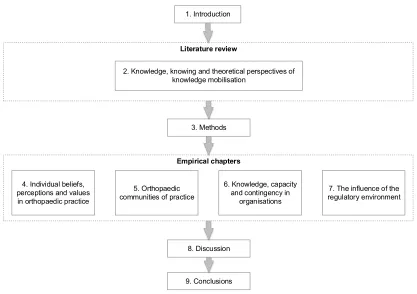
1.4 OVERVIEW THESIS STRUCTURE ... 18
1.5 CHAPTER SUMMARY ... 20
2 LITERATURE REVIEW: KNOWLEDGE, KNOWING AND THEORETICAL PERSPECTIVES OF KNOWLEDGE MOBILISATION ... 21
2.1 INTRODUCTION ... 21
2.2 DEFINITIONS OF KNOWLEDGE AND KNOWING ... 21
2.3 THE CHARACTERISTICS OF KNOWLEDGE AND KNOWING ... 22
2.4 THEORETICAL PERSPECTIVES OF KNOWLEDGE MOBILISATION ... 26
2.5 CHAPTER SUMMARY ... 37
3 RESEARCH METHODS ... 39
3.1 INTRODUCTION ... 39
3.2 STUDY METHODOLOGY ... 39
3.3 INDIVIDUAL RESEARCH COMPONENTS ... 43
3.4 CHAPTER SUMMARY ... 71
4 RESULTS 1: INDIVIDUAL BELIEFS, PERCEPTIONS AND VALUES IN ORTHOPAEDIC PRACTICE ... 73
4.1 INTRODUCTION ... 73
4.2 DEFINING CONCEPTS AND DETERMINING MEANINGS FOR THIS CHAPTER ... 73
4.3 INDIVIDUAL DIFFERENCES AND CHARACTERISTIC TYPES OF SURGEON ... 76
4.4 AUTONOMY, DISCRETION AND DECISIVE DECISION-MAKING ... 86
4.5 INDIVIDUAL CONTINGENCIES OF SURGICAL PRACTICE ... 99
4.6 CROSS-CASE ANALYSIS:INDIVIDUALS ... 118
4.7 SUMMARY OF THE THEME ... 119
5 RESULTS 2: ORTHOPAEDIC COMMUNITIES OF PRACTICE ... 122
5.1 INTRODUCTION ... 122
5.2 DEFINING CONCEPTS AND DETERMINING MEANINGS FOR THIS CHAPTER ... 122
5.3 CHARACTERISTICS AND PROFESSIONAL NORMS OF ORTHOPAEDIC SURGEON GROUPS .. 123
5.4 TYPES OF KNOWLEDGE THAT ACT AT THE LEVEL OF THE GROUP ... 128
5.5 CROSS-CASE ANALYSIS:GROUPS ... 156
5.6 SUMMARY OF THE THEME ... 158
6 RESULTS 3: KNOWLEDGE, CAPACITY AND CONTINGENCY IN ORGANISATIONS 160 6.1 INTRODUCTION ... 160
6.2 DEFINING CONCEPTS AND DETERMINING MEANING FOR THIS CHAPTER ... 160
6.3 HOSPITAL STRATEGY, EXTERNAL DEMANDS AND ENVIRONMENTAL PRESSURES ... 162
6.4 ORGANISATIONAL CAPACITY TO IMPLEMENT CHANGE TO MOBILISE KNOWLEDGE ... 171
6.5 TYPES OF KNOWLEDGE THAT INFLUENCED DECISION-MAKING IN THE ORGANISATION 186 6.6 THE ROLE OF CLINICAL MANAGERS FOR IMPROVED KNOWLEDGE SHARING ... 194
6.7 PROFESSIONAL HIERARCHIES IN THE TRUSTS ... 197
6.8 CROSS-CASE ANALYSIS:ORGANISATIONS ... 200
7 RESULTS 4: THE INFLUENCE OF THE REGULATORY ENVIRONMENT ... 205
7.1 INTRODUCTION ... 205
7.2 ENVIRONMENTAL PRESSURE ACTING ON HOSPITALS ... 206
7.3 SUMMARY OF THE THEME ... 222
8 DISCUSSION ... 225
8.1 INTRODUCTION ... 225
8.2 THE EVIDENCE AND KNOWLEDGE LITERATURE ... 225
8.3 RESEARCH AIM, KEY FINDINGS AND SUMMARY OF THEMES ... 226
8.4 SUMMARY OF THE RESEARCH QUESTIONS ... 228
8.5 EXTENDED CASE PROFILES ... 230
8.6 KEY DIMENSIONS FOR EBM AND KNOWLEDGE MOBILISATION IN ORTHOPAEDIC SURGERY 233 8.7 KEY DIMENSIONS OF KNOWLEDGE MOBILISATION ... 237
8.8 KNOWLEDGE MOBILISATION APPLIED TO EBM ... 242
8.9 ORIGINAL CONTRIBUTION ... 245
8.10 STRENGTHS AND LIMITATIONS OF THE RESEARCH ... 247
8.11 RESEARCH IMPLICATIONS FOR POLICY, PRACTICE AND RESEARCH ... 252
8.12 CHAPTER SUMMARY ... 257
9 CONCLUSION ... 259
9.1 INTRODUCTION ... 259
9.2 ANSWERS TO THE THREE RESEARCH QUESTIONS ... 259
9.3 CONTRIBUTION OF MY RESEARCH ... 260
9.4 SUMMARY ... 262
10 REFERENCES ... 263
Acknowledgments
I am most grateful for my supervisors, Professor Aileen Clarke and Professor
Graeme Currie. Their knowledge, support and encouragement throughout the project was exceptional.
I would like to thank my parents, my family, colleagues and my friends for their collective encouragement and unmitigated support during my Fellowship.
I thank the three NHS Hospitals and all my interviewees for their time, and honesty in contribution to my research, and the NIHR for funding my Doctoral Research Fellowship. I would also like to thank the Director of Research Degrees and Research Degrees Coordinators at Warwick Medical School.
Declaration
All material contained in this thesis is the candidate’s own work. The thesis has not been submitted for a degree at another university. The author has
published the following articles which are linked to the research. A copy of each can be found in the appendix:
Grove, A., Johnson, R., Clarke, A., and Currie, G,. 2016. Evidence and the Drivers of Variation in Orthopaedic Surgical Work: A Mixed Methods Systematic Review. Health Syst Policy Res. 3(1).
Grove, A., Currie, G., and Clarke, A., 2015. The barriers and facilitators to the implementation of clinical guidance in elective orthopaedic surgery: a qualitative study protocol. Implementation Science. 10(1)81 doi 10.1186/s13012-015-0273-6.
Johnson, R,. Grove, A., Clarke, A., 2017. Pillar Integration Process: A technique to integrate data in mixed methods research. Journal of Mixed Methods Research. In Press.
Abstract
Background:
Healthcare policy encourages the use of scientific evidence in clinical practice. The complex reality of practice means that dissemination of this evidence in clinical guidelines is insufficient to change behaviour and reduce variation. This study took a knowledge mobilisation perspective to assess the role of evidence-based medicine in orthopaedic practice decisions for hip replacement surgery.
Objectives:
The research sought to identify where, when and how evidence and knowledge were used in decision-making and how this contributed to variation in practice. It discovered factors which influenced orthopaedic surgery decision-making through an in-depth exploration of real life evidence use in practice.
Methods:
Three in-depth case studies were conducted at NHS hospitals over 12-months. Data collected included 64 interviews with surgeons and NHS staff,
observations of day-to-day practice and the collection of 121 supplementary documents. A case study road map method was performed using thematic analysis to generate four themes: individuals, groups, organisations and regulation.
Results:
The findings combined individuals and groups, the organisational dynamics and environmental regulation to provide a nuanced understanding of knowledge mobilisation in orthopaedics. Group level knowledge was crucial in explaining variation to evidence-based medicine, specifically how it influenced
organisational capacity and the socialisation of medical professionals. The characteristics of surgeons also contributed to the wider definition of evidence which was important for clinical decisions.
Conclusion:
contributed to variation. Decision-making was dependent on a range evidence and knowledge sources that were influential across the entire knowledge domain. A conceptual framework was produced to demonstrate how
Abbreviations
ACAP Absorptive Capacity AHP Allied Health Professional BOA British Orthopaedic Association BMI Body Mass Index
BPT Best Practice Tariff EBM Evidence-Based Medicine CCG Clinical Commissioning Groups CD Clinical Director
CoP Communities of Practice CQC Care Quality Commission DH Department of Health GMC General Medical Council GP General Practitioner KII Key Informant Interview
LPP Legitimate Peripheral Participation NHS National Health Service
NICE National Institute for Health and Care Excellence NIHR National Institute for Health Research
NJR National Joint Registry
OA Osteoarthritis
ODEP Orthopaedic Device Evaluation Panel OSOP One Sheet of Paper
PACAP Potential Absorptive Capacity PbR Payment by Results
PROMs Patient Reported Outcome Measures RACAP Realised Absorptive Capacity
RCS The Royal College of Surgeons RCT Randomised Controlled Trial R&D Research and Development RQ Research Question
List of Tables
Table 1. Research questions and research objectives ... 39
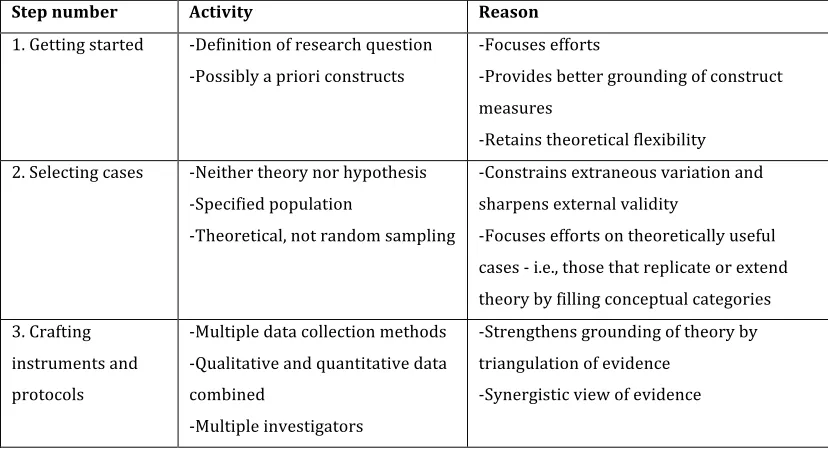
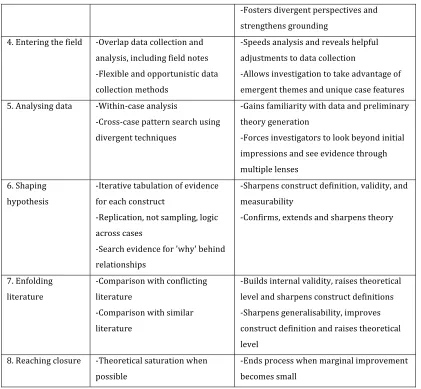
Table 2. Four general strategies for mixed methods research (Creswell 2009) 42 Table 3. The process steps of building theory from case study research (Eisenhardt, 1989) ... 47
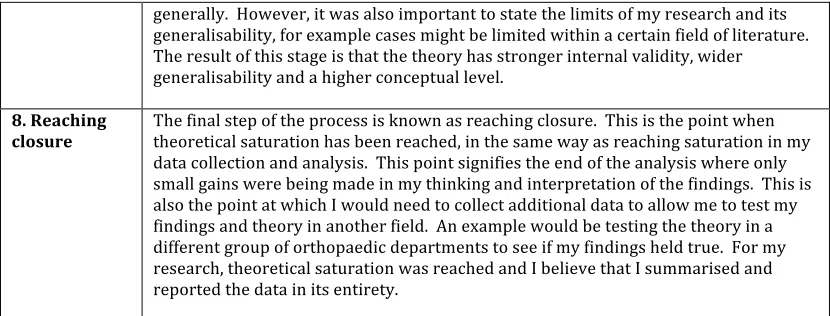
Table 4. A detailed account of each roadmap stage ... 48
Table 5. A description of the three cases included in my study ... 55
Table 6 A matrix representation of the three vertical levels of participants within each case ... 58
Table 7. Participant numbers detailed by site and by professional group ... 60
Table 8. Document type and quantity by case study site ... 61
Table 9. Final categories and codes in thematic analysis ... 64
Table 10. An overview of the individual level factors by hospital ... 119
Table 11. Overview of the group level factors by hospital ... 157
Table 12. Variation in NICE guideline implementation processes ... 170
Table 13. Overview of the organisational level factors by hospital ... 200
Table 14. CQC's five key questions ... 215
Table 15. Participant description of the processes used to respond to CQC requests ... 217
Table 16. Case study description and their approach to knowledge mobilisation ... 231
List of Figures
Figure 1. Overview of thesis structure ... 20
Figure 2. A framework to represent the theory of ACAP (adapted from Zahra and George, 2002) ... 35
Figure 3. Diagrammatic representation of the study design used during primary data collection ... 43
Figure 4. Example OSOP process flowchart ... 68
Figure 5. Example of a category and its organisation and OSOP production ... 69
Figure 6. Overview data structure diagram ... 70
Figure 7. An example image from typical computer software used for orthopaedic surgery planning (OBS notes general) ... 105
Figure 8. Anonymous NJR data recorded for one surgeon (A Operation type primary, B Implant type, C Operation type primary and revision, D Surgeon risk adjusted 90-day mortality) ... 110
Figure 9. A segment of the OA pathway for hip replacement at site C ... 213
Figure 10. Sources of evidence and knowledge identified during the case studies ... 234
1
Introduction
“In medicine, sometimes we think we know better and maybe we don’t…
…unfortunately, in my experience there’s always a way of justifying whatever you want.”
(Anonymised surgeon participants)
This chapter presents the context and rationale underpinning my research, which assessed the role of evidence-based medicine in orthopaedic surgical practice decisions, together with the research questions, objectives and methods. I provide an overview of the findings in the context of knowledge mobilisation and indicate my contribution in understanding variation in NHS practice bought about by the existence and use of different types of knowledge and the wider definitions of evidence that exists. Finally, I describe the structure of this thesis.
1.1
Context and rationale
In 2013-2014, my team and I were involved in production of National Institute for Health and Care Excellence (NICE) guidance on hip implants for total hip replacement (THR) for end stage arthritis (NICE TA304, 2014). This provided a golden opportunity to explore the understanding and use of NICE guidance in the context of evidence-based medicine (EBM). I used a specific case of orthopaedic surgery to address the empirical problem of practice variation and variation to guideline uptake through a knowledge mobilisation perspective.
1.1.1. Hip replacement surgery
In 2015/16, a total of 98,211 hip replacement procedures were carried out in England, in 151 NHS Trusts (247 hospitals) (NJR, 2016). Individual patient characteristics for THR remain fairly stable. In 2015/16, 60% of the primary procedures were carried out on women and the median age at first THR across the entire group was 69 years (NJR, 2016). National Joint Registry data show an increased risk of revision for younger patients (NJR, 2016). This need to replace existing hip implants adds to the increasing demand for services and resources in the NHS. In 2015/16, this 'revision burden' comprised 14.8% of total hip activity (NJR, 2016). This focuses attention on how surgeons select treatments. Revision is a result of ‘failure’ of the primary operation and an increasing
revision burden is anticipated in line with the ageing population in the UK (Briggs, 2012).
1.1.2. Evidence of variation in practice of THR
Nationally, there is inconsistency in the treatment, procedure and type of hip implant used to treat patients, which cannot be explained by differences in patient needs (NHS Atlas, 2016).
The 2013/14 NHS Atlas of Variation reported that for Clinical Commissioning Groups (CCGs) in England, there was a 3.8-fold variation in use of primary hip replacement procedures (range 55 to 208 per 100,000 population) (NHS Atlas, 2016). Even after excluding warranted variation linked to the prevalence of disease, there is still clearly substantial variation in access to hip replacement surgery. There is also variation in timing of referral from primary care to secondary care, in criteria established for undertaking surgery and in patient eligibility criteria (NHS Atlas, 2016). Research has demonstrated that
differences exist between the provision of, and the need for, surgery (Judge et al, 2010). Patient reported outcome measures (such as the “EQ5D” five dimensions quality of life questionnaire) reveal that variation between the best (31%) and worst (49%) performing hospitals is large (Appleby and Devlin, 2010). The cost-effectiveness of interventions also varies considerably between hospitals
More recently, the Royal College of Surgeons of England investigated variation in hip replacement and described a situation that was creating a “postcode lottery for access to surgical treatment” (RCS, 2015). In their research, they sampled a group of CCGs and indicated that 73% either did not follow NICE guidance on referral for hip replacement, or had no commissioning policy for this procedure. This variation led to too many or too few referrals. Forty four percent of the CCGs required patients to be in various degrees of pain or immobility (with no consistency across the country) or required patients to lose weight before surgery (RCS, 2015).
Together these studies demonstrate significant variation in the practice of THR as patients in some areas are able to have hip replacements sooner, potentially when they have less pain or disability (Judge et al, 2010), and some will be more likely to experience revision.
1.1.3. The research gap
Research on the views and attitudes of orthopaedic surgeons about treatment selection, surgical methods and intervention types is limited and we lack understanding of their attitudes towards clinical guidance and evidence use in practice. Little is known about how best to influence their behaviour to enhance effective decision-making in the face of the substantial unjustified variation, the increasing demand for hip replacements and the growing revision burden. There is a need to investigate evidence use in practice and in context to determine what factors are important in decision-making.
My study set out to uncover what is required to overcome this gap in our
1.1.4. Evidence-Based Medicine
Prior to the development of EBM, reliance on expert opinion and subjective experience were believed to be the approach to medical decision-making. This led to variation in clinical practice, which was known to exist when EBM was first defined (Sackett et al, 1996). The drive to develop EBM was grounded in the belief that changes were needed in the way decisions were made by healthcare professionals. It was assumed that these changes could be achieved by the widespread dissemination and uptake of relevant research evidence in practice (Walshe and Rundall, 2001; Kovner and Rundall, 2006). However, the
practicality of achieving this in day-to-day work of orthopaedic surgeons is debatable and variation occurs in practice (Grove et al, 2016). The important questions for my research are how surgeons determine what is appropriate and acceptable evidence for them, and how it is mobilised, adopted and used in practice.
EBM and clinical guidelines make suggestions about ‘what works’ and ‘what does not work’ for patients being treated in the NHS. These concrete and codified sources of knowledge are based on ‘gold-standard’ evidence, such as systematic reviews and randomised controlled trials (RCTs). The premise is that this explicit evidence will provide valid and reliable results which can be generalised into healthcare practice. However, it is difficult to maintain this view of evidence in real world healthcare settings. We need to acknowledge the unpredictable, uncertain and contingent nature of these environments (Pope, 2002), coupled with the knowledge and context-dependent decision-making processes that clinicians go through (Dopson et al, 2003).
1.1.5. Can knowledge mobilisation help understand variation?
There is a perception in healthcare that knowledge and evidence are one in the same (Nutley et al, 2007). In reality, they are contested concepts in both
literature and practice (Nicolini et al, 2008). Distinctions are made between tacit and explicit knowledge (Nonaka, 1994). In my study, clinical guidelines are a form of explicit knowledge grounded in clinical science and EBM. They contribute towards, but do not explain all knowledge that influences clinical decisions. Variation occurs in practice when other sources of evidence and knowledge drive decision-making.
Tacit knowledge reflects what we ‘know’ and is linked to our embedded capability i.e., what we ‘do’ (Orlikowski, 2002; Nonaka 1994). The weight attached to it is problematic for EBM, where context has been removed from research findings and evidence from RCTs are considered most important
(Davies et al, 2000a). In my study, I sought to identify what constitutes evidence and knowledge for orthopaedic clinical-decision makers, and how evidence and knowledge is mobilised in practice. Understanding the context-dependent nature of healthcare was important to explore the differences in the way decisions are made.
Previous research has demonstrated how evidence and objects, people and communities move knowledge inside and outside organisations and across disciplinary boundaries (Contandriopoulos et al, 2010; Cooper and Levin, 2010; Fournier, 2012; Hislop, 2013; Davies et al, 2015). In my research, I use the viewpoint of knowledge mobilisation to investigate how factors spanning the entire knowledge domain interact to produce a system where variation in use and uptake of guidelines exists despite the continued efforts from policy-makers to instil their use in practice.
1.2
The research questions
decision-making spans the boundary between these domains. The research questions are as follows:
RQ1. What types of evidence and knowledge are considered important by orthopaedic surgeons when making clinical practice decisions?
RQ2. How are evidence and knowledge mobilised in the real-world practice of orthopaedic surgery in the NHS?
RQ3. What are the key dimensions of knowledge mobilisation which influence variation in decision-making in the orthopaedic surgery NHS environment?
In order to answer these questions, I developed three main research objectives: 1 To undertake observations and interviews with orthopaedic surgeons and associated staff working in the NHS in England, and analysis of associated documentation, to identify what types and evidence and knowledge are considered important for decisions-making.
2 To integrate the findings from three case studies of clinical practice to develop a framework to understand knowledge mobilisation in the context of UK orthopaedic surgery decision-making.
3 To generate themes which summarise where, when and how evidence and knowledge are used in decision-making, and to describe where the mobilisation of knowledge has the greatest influence on variation in practice.
1.3
Original contribution
My research crosses disciplinary boundaries and brings together organisational and clinical sciences to examine knowledge mobilisation in the professionalised environment of orthopaedics. By answering the research questions, I provide an empirical study of knowledge mobilisation using NICE guidelines collected within the orthopaedic departments of three NHS hospitals England. I demonstrate the real world practice of knowledge mobilisation for evidence-based clinical decisions.
separate levels of influence operating in isolation (Mitton et al, 2007; Nicolini et al, 2008; Contandriopoulos, et al 2010; Ferlie et al, 2012; Davies et al, 2015). In my study, I bring together individuals and groups, organisational dynamics and environmental regulation to provide a more nuanced understanding of
knowledge mobilisation. I explain the outcome of particular knowledge mobilisation activities and how and why they lead to variation from clinical guidelines. To achieve this more nuanced understanding, I conducted three in-depth case studies over a 12-month period which included 64 interviews with surgeons and NHS staff. I was embedded in the day-to-day practice of each of the case study hospitals for three months (9 months in total) and I collected 121 supplementary documents to support my analysis.
My study demonstrates that knowledge mobilisation is mediated at different levels, each of which contributes to variation. Group level knowledge was crucial in explaining variation, specifically in how it influenced organisational capacity and the socialisation of medical professionals. The characteristics of surgeons also contributed to the wider definition of evidence which was important for clinical decisions. Together, these findings go beyond previous explanations in the existing EBM and knowledge mobilisation literature. I produced a
conceptual framework to demonstrate how evidence and knowledge are mobilised in this highly professionalised organisationally regulated context.
1.4
Overview thesis structure
This section provides a brief overview of the structure of the thesis.
Chapter three presents detailed research methodology for the case study research, including the rationale, setting, research design and the particular methods chosen.
Chapters four to seven present the qualitative research results as four distinct levels of analysis. Chapter four discusses the findings related to individual beliefs, perceptions and values of the orthopaedic surgeons in practice. Chapter five considers the influence of orthopaedic communities of practice on the use of evidence in decision-making. Chapter six reviews the knowledge, capacity and contingencies that existed in the three hospital organisations. These were the main factors which influenced evidence use and knowledge mobilisation in my study. Chapter seven discusses the influence of the regulatory environment in which the three other levels (individual, groups and organisations) were situated.
Chapter eight summarises and discusses the findings from each phase of the research. I discuss the themes that were introduced in the results chapters, and analyse my findings in relation to the research questions. I state my original contributions to knowledge to the field of EBM through a theoretical lens of knowledge mobilisation. I provide an in-depth overview of the strengths and limitations of my research and finally I offer my interpretations of the
implications of the findings for policy, practice and research.
Chapter nine is the conclusion, and demonstrates how the research questions have been answered.
Figure 1. Overview of thesis structure
1.5
Chapter Summary
In this chapter, I have introduced this research and presented the main concepts and issues behind the study rationale. I have described the overarching
structure of my thesis. In the next chapter I begin my literature review.
1. Introduction
Literature review
2. Knowledge, knowing and theoretical perspectives of knowledge mobilisation
3. Methods
Empirical chapters
4. Individual beliefs, perceptions and values in orthopaedic practice
6. Knowledge, capacity and contingency in
organisations
7. The influence of the regulatory environment 5. Orthopaedic
communities of practice
8. Discussion
2
Literature Review: Knowledge, knowing and
theoretical perspectives of knowledge mobilisation
2.1
Introduction
I use the viewpoint of knowledge mobilisation to investigate how factors across the knowledge domain interact to produce a system where variation in use and uptake of guidelines exists despite the continued efforts from policy-makers to instil their use in practice. I sought to identify what constitutes evidence and knowledge for orthopaedic clinical decision-makers and how that evidence and knowledge can be mobilised. The purpose of this chapter is to provide an overview of the concepts of knowledge and knowledge mobilisation and the implications of understanding of these concepts for healthcare delivery and practice. This chapter introduces three theoretical perspectives to explain knowledge mobilisation.
2.2
Definitions of knowledge and knowing
The challenge of defining knowledge has given rise to a field of philosophy called epistemology, which investigates the theory of knowledge. It demonstrates that the study of knowledge is subjective, context-dependent and changeable (Hislop, 2013; Ferlie et al, 2012; Crilly et al, 2013). The Oxford English Dictionary (2015) defines knowledge as:
“The fact or condition of knowing something: the fact of knowing or being acquired with a thing or person etc., and familiarity gained by experiences” (OED, 2015)
This definition implies that there are several different types of knowledge and that these depend on our experiences. In the western philosophical tradition, knowledge is described as a justified true belief i.e., a person who holds
2010; Crilly et al, 2013; Ferlie et al, 2015; Kislov et al, 2014; Davies et al, 2015), and knowledge may be viewed as socially constructed and variable between different individuals, organisations and contexts.
Policy-makers promote clinical guidelines, but if knowledge is a fundamentally socially created and dynamic construct, then guidelines may not be appropriate in all situations. One of the dominant themes in the literature concerns the debate about ‘what is knowledge?’ (Crilly et al, 2013). The terminology is not concrete and the words ‘research’, ‘evidence’ and ‘knowledge’ are used often interchangeably in healthcare. More commonly, the terms are viewed as existing in a hierarchical relationship where research is a type of evidence and evidence is a source of knowledge (Nutley et al, 2007).
What is considered knowledge is highly contested and influenced by the environment in which it is used (Swan et al, 2016). For example, power
relationships can impact upon our access to knowledge and the legitimacy over knowledge claims (Crilly et al, 2013). This implies that a rational definition and interpretation of knowledge may be inadequate and is too simplistic for my research on the complexities of knowledge and evidence used in practice. More explanation and understanding is required to demonstrate how knowledge exists in various forms and changes over time and between contexts.
2.3
The characteristics of knowledge and knowing
2.3.1 What is meant by knowledge?
There has been a preference to assume a hierarchy of knowledge in the academic literature (Rowley, 2007), in which data sits at the lowest position and requires minimal human judgement, information sits in the middle, and knowledge and wisdom at the highest points requiring maximal judgement and interpretation (Tsoukas and Vladimirou, 2001; Rowley, 2007). Cook and Brown (1999)
cannot. The difference between tacit and explicit knowledge has been discussed to a great extent in the literature (Polanyi, 2012; Nonaka, 1994).
2.3.1.1 Explicit-Tacit knowledge
The distinction between the knowledge types, such as tacit and explicit, became a major theme in the knowledge mobilisation literature (Nonaka, 1994). The term tacit knowledge was first introduced by Polanyi in 1958 who presented the idea that ‘we know more than we can tell’ (Polanyi, 2012). Tacit knowledge can be described as informal, as knowledge that people just know and can often find difficult to describe easily. For example a surgeon might be able to recognise their patient in a waiting room, but would struggle to be able to explain in words how they recognise their face. According to Lam (2000) they are not conscious of their knowledge of the individual features of a patient’s face, but rather they recognise it as a whole, as someone who is familiar to them. Explicit knowledge on the other hand is formal and codifiable, it can easily be explained and possibly understood by another person (Hislop, 2013).
Explicit-tacit knowledge types are linked. When an individual possesses knowledge, it is not ‘in’ the activity they are performing but in the knowledge they use in doing the activity. For example, a surgeon still possesses the tacit knowledge of how to perform an operation, even when they are not physically doing the activity in the hospital theatre. Similarly, a trainee surgeon may have the explicit knowledge to perform the operation, obtained from studying
textbooks. However, they do not necessarily have the tacit knowledge needed to undertake the activity in the real world. In order to acquire tacit knowledge, the trainee needs to spend a certain amount of time actually doing the operation, gaining procedural knowledge and learning all the complexities involved, and complications which might be faced.
individuals undertake. The relationship between group and individual knowledge is also important.
2.3.1.2 Individual-Group knowledge
There has been a tendency to privilege individual over group knowledge, on the premise that all learning takes place inside the heads of individuals. Hence, group knowledge is considered as fundamentally made up of lots of individuals who possess their own knowledge. This focus on the individual has changed in recent years with the growing literature which treats groups and organisations as objects in their own right (Davies et al, 2015). Organisations are able to possess knowledge which is distinct from that of its individual members (Brown and Duguid, 1991; Lave and Wenger, 1991).
This literature investigates how individuals function as a group by performing actions that are characteristic of that group’s knowledge. The group (not the individuals) is taken as the primary unit of analysis and can be examined (Brown and Duguid, 1991; Lave and Wenger, 1991; Wenger, 1998). According to Cook and Brown (1999), individuals and groups each do epistemic work that the other cannot, for example, a consultant can know how to diagnose a patient based on their symptoms, but only the wider group of surgeons working in England hold the collective knowledge of all acceptable surgical practice in England. The group body of knowledge is held in common by the individual members of the group, each one possessing bits of knowledge in their area of expertise
(Blackmore, 2010). It is not possible for individual members to possess all the knowledge of their group. Instead members draw on the body of knowledge to perform actions, in the same way the group draws on the knowledge to perform group actions (Lave and Wenger, 1991). This demonstrates that work done by a group, informed by the body of knowledge it possesses, is epistemically distinct from work performed by individuals (Cook and Brown, 1999).
2.3.2 Knowing as distinct knowledge
Orlikowski (2002) emphasises the role of the person in the activity to distinguish between knowing (action, doing and practice) and knowledge (facts and
knowing and doing are inextricably linked. By making this distinction, the human agency is acknowledged as an important factor. According to Tsoukas and Vladimirou (2001), individuals do not understand codified explicit
knowledge until they are able to test it against their personal experience. People, therefore ‘know’ by relating explicit knowledge to their particular circumstance and the contingencies they face.
The act of knowing signifies an action or a practice because it is something that people do, not something they possess (Tsoukas and Vladimirou, 2001). If I want to examine what a clinician knows, I will have to understand both what they can do as well as what knowledge they possess (Cook and Brown, 1999). Practice in this sense means the real world work of individuals and groups that is informed by their environment, training or organisational and group context. This more inclusive concept is useful in my study of healthcare as it includes not only the knowledge of surgery for example, but the daily practice that has
evolved and is contributed to by the individuals working in the field. This distinguishes knowledge in action and practice as ‘knowing’, compared to knowledge in possession, which is ‘knowledge’. Both are important to study for people and organisations
For my research, knowledge is considered as the knowledge that an individual possesses, that is used in practice to address a particular problem, for example deciding on a treatment plan for a patient. Knowing requires an activity and context and makes use of knowledge in a productive and skilful way, for
example, it is knowing that enables a treatment plan to be amended, for instance due to lack of resource in a hip preservation clinic. The action of doing
2.4
Theoretical perspectives of knowledge mobilisation
The use or non-use of evidence in clinical decision-making is a knowledge problem or a problem related to knowledge mobilisation (Crilly et al, 2010; 2013; Ferlie et al, 2012; 2015). Variation in the uptake of clinical guidelines in practice is potentially a problem of knowledge acquisition, mobilisation and transfer. Variation could also be associated with the way knowledge is privileged and adopted by individuals and groups within the organisation.
The focus of literature has moved away from traditional approaches which emphasised linear, rational, instrumental evidence transfer towards the broader field of knowledge mobilisation (Davies et al, 2015). This perspective
acknowledges reported challenges, and incorporates the social and relational processes in healthcare, rather than excluding them (Kislov et al, 2014; Oborn et al, 2010). Many theoretical frameworks have been developed which aim to explain knowledge mobilisation issues. Those most applicable for my research are those that evolved from the organisational sciences field as applied to healthcare. Unlike traditional clinical science models of EBM, theories from organisational sciences take the context of practice into account. Using this approach acknowledges that clinical guidelines are only one source of many types of knowledge that interact in the social world of healthcare.
The key theoretical frameworks relating to knowledge mobilisation are, clinical mindlines (Gabbay and Le May, 2004), Communities of Practice (CoP) (Lave and Wenger, 1991), organisational and knowledge boundaries (Carlile 2002, 2004) and capabilities of healthcare organisations to absorb and use knowledge in practice, known as Absorptive Capacity (ACAP) (Cohen and Levinthal ,1989; 1990).
2.4.1 Replacing guidelines with clinical mindlines
"The internalised, collectively reinforced tacit guidelines that are informed by clinicians training, own and each others experience, interactions with role sets, reading, how they have learnt to handle conflicting demands and by their understanding of local circumstance and systems" (Gabbay and Le May, 2004)
Mindlines are an all-encompassing concept and have been the focus of much research in the past decade (Wieringa and Greenhalgh, 2015). They
demonstrate a more flexible, complex, and adaptable approach to evidence and knowledge compared to clinical guidelines. They incorporate clinicians’ multiple roles, values, past training and experience (Gabbay and Le May, 2011).
According to Gabbay and Le May (2011) mindlines develop in medical training but are continuously developed, amended, refined and reinforced through a clinician’s career in conjunction with their experience and contact with others. This flexibility allows the collective experience of a group to be considered as an additional source of evidence to influence decisions. The same could be
suggested for the influence of the wider organisational, political and contextual factors. These are the issues that critics of EBM reported were missing in the traditional approach (Dopson and Fitzgerald, 2005; Timmermans and Berg, 2010; Greenhalgh et al, 2014).
Since mindlines can include multiple sources of evidence, they reportedly give clinicians the capability to make decisions that consider more than just technical and clinical elements (Gabbay and Le May, 2011). Clinicians become more flexible to change, and generate new knowledge and continue to improve their performance by reflecting on their decisions and outcomes (Gabbay and Le May, 2011). This reinforced and embedded knowledge therefore allows clinicians to function by giving them a sense of who they are, what they need to do and how all the potential sources of evidence fit into their practice (Wieringa and
Greenhalgh, 2015). The mindline approach is interesting. However, mindlines are challenging to identify, as they are not concrete objects and cannot be easily traced and understood.
within the group (Gabbay and Le May, 2011). So not only is it challenging to identify an individual mindline, it may be problematic to reveal how collective mindlines, like the legitimate knowledge present in Communities of Practice, influence clinical practice within orthopaedic surgery.
The key point here is that clinicians supposedly default to mindlines when making decisions or when their practice is challenged. However, it does not predict that mindlines are fixed. According to Gabbay and Le May (2011) new knowledge created through mindlines does not replace the knowledge that went before. Instead it becomes integrated. However, the stickiness of this
experiential knowledge means that ‘bad’ ideas can also spread between
individuals and groups working in healthcare. Unlike guidelines, mindlines are not right or wrong, good or bad, they develop as required.
Mindlines are created as part of a continual social process of negotiation between clinicians (Gabbay and Le May, 2011). This process may result in multiple sources of evidence and knowledge linked to the contingent
requirements of the environment. What is important to consider in decision-making for one surgeon at one point in time may not be relevant later. The negotiation process can transform explicit knowledge from research evidence into knowledge that is internalised in mindlines so that they are useful in practice (May et al, 2006). Over time, surgeons could favour or privilege these different sources of evidence over others available to them. In this sense, they create their own hierarchy of evidence which incorporates their mindlines. This hierarchy could help broker the sources of evidence important during decision-making. However, this knowledge mobilisation process is unpredictable, sometimes unplanned and lacks transparency.
Wenger’s (1991) instrumental book entitled ‘Situated learning: legitimate peripheral participation’ depict how individuals learn new knowledge.
They suggest that in order to absorb and mobilise knowledge, the person who is acquiring knowledge needs to do more than observe a group in action. The aim of knowledge mobilisation in Communities of Practice (CoP) is via active
participation. Individuals learn by absorbing and being absorbed into the context and culture of a group. Over time, these contexts and cultures become embedded, and the individual can intuitively understand what it is to be part of the community (Lave and Wenger, 1991). This type of learning occurs beyond the context of the individual at one point in time, as it takes into account wider cultural practices and the norms of the group. Therefore, it is said to alter the identity and skills of individuals (Lave and Wenger, 1991).
Legitimate Peripheral Participation (LPP) is a method of active learning in context and is important in the hospital setting, as clinicians in communities exist in a constantly changing environment where NHS hospital staff,
infrastructure, resources and systems are unstable (Walshe and Davies, 2013). Therefore, knowledge of what it is to be a clinician is constantly changing, gets renegotiated and is updated in an endless cycle with the social environment (Timmermans and Kolker, 2004). The negotiation and renegotiation of the meaning of knowledge and evidence is important as it suggests that experience and behaviour constantly interact with meaning. Knowledge that develops has a particular meaning for the individual, but is also reproduced in the wider
community. In this sense, Lave and Wenger (1991) suggest that legitimate peripheral participation is:
"both the development of knowledgeably skilled identities in practice and the reproduction and transformation of communities of practices" (Lave and Wenger, 1991).
1991). The characteristics of the group reflect the social context in which the CoP is located (e.g., academic clinicians may be more likely to work in a University hospital and form a CoP around the use of clinical trials). Lave and Wenger (1991) referred to this continual process of knowledge mobilisation in context as a generative process of a CoP producing their own future.
I have highlighted that the shared understanding, norms and values of groups are important for obtaining membership of the community. This notion is transferable to healthcare settings where strong occupational groups exist and where clinicians develop natural epistemic communities around their clinical specialties and professional roles (Crilly et al, 2010; Kislov et al, 2011; Kirmayer, 2012). In my empirical work, examining knowledge use in practice will be important to reveal how CoP reinforce their knowledge and shape the behaviour and actions of their community members (Szulanski, 2000). This theory is important for my research as it acknowledges the importance of the interactions between the individual, the activity (the clinical decision) and knowledge and knowing in the social world.
2.4.3 Knowledge boundaries and boundary spanning
Not all groups within organisations are CoP (Oborn and Dawson, 2010a). Some groups might work together because of an organisational or professional
association; they represent a functional group (Oborn and Dawson, 2010b). Divides between these groups are often referred to as cross-community
boundaries (Hislop, 2013). The collaboration and knowledge mobilisation that occurs between functional groups is known as boundary spanning (Carlile, 2004). It describes how individuals who sit on either side of a theoretical or practical boundary have divergent identities and knowledge that can be bridged by spanning the boundary.
2.4.3.1 Knowledge sharing between functional groups
could even extend to policy-makers and whole hospital organisations. Each one of these groups could have distinct interpretations of what knowledge is.
The identities that people have in the groups or contexts influence the dynamics and interpersonal relationships that develop. Consequently, these impact on the inter-personal knowledge processes (Carlile, 2002). The knowledge processes between different contexts and functional groups are likely to be more complex and challenging to manage compared to those that exist within a CoP. This is because identities, meanings and interpretations are not shared in the same way.
Nevertheless, collaboration between individuals and groups is required for organisations such as hospitals to function. We cannot expect entire
organisations to develop as a CoP. To understand knowledge mobilisation in healthcare, it is important to understand how knowledge can be shared across boundaries and how the lack of common knowledge and shared identity shapes knowledge dynamics. The contextual nature of knowledge develops within distinct functions of an organisation because each function has a specific focus, distinctive problems and localised practices that become the norm (Carlile, 2002). This implies that what works for the surgeon may not necessarily work for a finance manager within the same organisation. Collaboration across the distinct functional boundaries, for example to purchase hip replacement
prosthesis constitutes a boundary spanning process. The delivery of healthcare services involves multidisciplinary cross professional collaboration.
2.4.3.2 Knowledge processes across boundaries
Members of CoP share a tacit understanding of knowledge processes which makes knowledge sharing easier (Van Den Hooff et al, 2003). When examining functional groups who work across boundaries, knowledge processes are not as straightforward. Individuals working in large hospitals might not necessarily have common knowledge, similar values and shared identity. This can lead to ineffective knowledge mobilisation, as the social relations between individuals who are not members of the same group are less conducive to effective
knowledge sharing (Currie and White, 2012).
There are two key factors that make the process of cross-boundary knowledge sharing challenging for healthcare and particularly for orthopaedic surgery. These are the weak shared sense of identity between groups, and the difference in the accepted and privileged knowledge of each boundary group (Hislop, 2013). The epistemic differences between the groups in my research may also limit knowledge sharing that takes place, for example between managers,
clinicians and administrative staff (Jacobson, 2007). This is because the different knowledge types are based on different assumptions, values and world views about what is true and correct (Jacobson, 2007).
2.4.3.3 Different types of boundaries
The different types of boundary which have to be crossed are also important for knowledge mobilisation and are worthy of investigation. Three distinct
boundary categories have been described in the literature (Carlile, 2004).
Syntactic boundaries are presumed to be the easiest to cross because individuals share a common set of ideas and values (Carlile, 2004). This boundary describes knowledge sharing between two surgeons in the same specialty who mobilise knowledge and information together with ease. The second type of boundary is called a semantic boundary. Knowledge sharing here is slightly more
boundary (Carlile, 2004). This type of boundary is problematic because
individuals have significantly different views and beliefs about knowledge, and also contrasting interpretations of the politics of practice and of how work should be conducted (Currie et al, 2007). Knowledge mobilisation across pragmatic boundaries is not easy to achieve, as both sides are invested in their way of thinking and behaving, and knowledge sharing is restricted (Kimble et al, 2010).
A key factor in all three boundaries described by Carlile (2004) is the ability to work across the boundary through the introduction of a common ground. This could be an object, a specific knowledge artefact or a knowledge broker, e.g., an individual with knowledge and identify across both sides of the boundary. These knowledge objects or brokers can act as a vehicle to help smooth the crossing of boundaries because groups perceive themselves to be equal from both sides (Star and Griesemer, 1989). In this sense, boundaries do not always have to engender the identity and epistemic challenges described earlier, if groups can develop a shared understanding or aim. However, in practice it might be difficult to achieve when common knowledge is absent, for example when evidence-based knowledge is in direct competition with the practice-evidence-based knowledge of clinicians.
Knowledge mobilisation is nevertheless necessary for healthcare and is fundamental for the effective use of clinical guidelines in practice. Hence, focusing on understanding and improving the interaction and communication that takes place across knowledge boundaries will be important for my research. Effective knowledge mobilisation implies those involved in healthcare appreciate and are accepting of the differences in perspectives and knowledge which exist in the real world NHS.
2.4.4 Absorptive capacity and the capabilities of healthcare organisations to mobilise knowledge
The theory of Absorptive Capacity (ACAP) is recommended as a way of
an organisation to identify, assimilate, value, transform and exploit new knowledge from its environment (Easterby-Smith et al, 2008, Oborn et al, 2013a). ACAP can be applied to various units of analysis, including groups of surgeons, departments, or the entire hospital organisation.
ACAP originated from the study of innovation and learning within organisations (Cohen and Levinthal, 1989). The theory implies that organisations should strive to increase their ACAP because they will be in a better position to obtain and understand external sources of evidence and knowledge to support their work (Cohen and Levinthal, 1989).
ACAP predicts that the cost of obtaining external knowledge is small when the organisation has invested resources (such as time and money in staff training) to develop its skill in identifying, assimilating and exploiting knowledge from the environment (Cohen and Levinthal, 1989).
ACAP may be particularly salient for healthcare. However, Easterby-Smith and colleagues (2008) argue that the literature has failed to develop insights into the processes of ACAP. They suggest that a process perspective on ACAP should include the role of power in how knowledge is absorbed by organisations, and should provide better understanding of the nature of boundaries within and around organisations (Easterby-Smith et al, 2008).
2.4.4.1 The ACAP framework
A framework to represent the theory of understanding ACAP was developed by Zahra and George (2002) (see Figure 2). This framework presents four
components of ACAP that are important for knowledge mobilisation. This warrants its inclusion in my study. These distinctive components can help to explain the variation found in knowledge mobilisation in healthcare. The components are:
• Transforming the knowledge within the organisation (Zahra and George, 2002).
Figure 2. A framework to represent the theory of ACAP (adapted from Zahra and George, 2002)
Zahra and George (2002) proposed two further types of ACAP. Potential Absorptive Capacity (PACAP) which represents an organisation’s ability to acquire and assimilate knowledge, and Realised Absorptive Capacity (RACAP), which represents the organisation’s skill at putting new knowledge into practice through the process of transformation and exploitation. The overarching aim of the organisation is to close the gap between potential and realised ACAP. In order to achieve this, a hospital or department has to understand their organisational capabilities (Volberda et al, 2010). These are the factors that allow knowledge to be assimilated, understood and used in healthcare practice.
2.4.4.2 Organisational capabilities
Organisational capabilities describe the capabilities or tools that an organisation such as a hospital requires to enable it to obtain and exploit knowledge from its environment (Volderba et al, 2010). Capabilities allow new sources of
knowledge to be identified, incorporated and used within the organisation. Volderba and colleagues (2010) described three tools which could be used to improve organisational capabilities. These are co-ordination, systems and socialisation capabilities (Volderba et al, 2010). Co-ordination capabilities are the skills owned by staff members who work in the organisation. In my study, this may be the communication skills or the education and training of clinicians and staff. The use of boundary spanners, and networked CoP may also increase co-ordination capability by increasing the use of decentralised authority (Waring et al, 2014).
Knowledge source Experience
Potential
Acquisition Assimilation
Realised
Transformation
Exploitation Competitive advantage
Systems capabilities, on the other hand, represent formal knowledge of an
organisation and can include policies, procedures and clinical pathways aimed at transferring codified knowledge across the organisation (Volderba et al, 2010). Systems capabilities can, however, limit the discovery of new knowledge because staff become fixated on maintaining procedures and regulating the behaviour of individuals, rather than searching for new information elsewhere (Waring et al, 2014). Therefore, the way in which the knowledge is created and shared within the organisation may influence whether it is used or not.
Finally, socialisation capabilities reflect the cultural factors within the
organisation which influence knowledge sharing. They represent the shared norms and understandings of people working in an organisation (Volderba et al, 2010). As expected, staff with similar norms and understanding are better able to transform and exploit new knowledge as they have the same frame of
reference. However, as mentioned previously, norms can also limit knowledge mobilisation when they restrict knowledge assimilation because it does not fit with what is expected (Volderba et al, 2010).
According to Cohen and Levinthal (1990) it is easier to absorb external
knowledge when it is linked to knowledge that already exists in the organisation. To improve this process an organisation needs to be able to appreciate and understand the potential value of the new external knowledge for their current situation, e.g., why would the NICE guidance help them in their practice? It will be important to examine and understand the system and wider organisational cultures of the hospitals in the empirical setting to examine the organisational knowledge and how it is used.
To improve knowledge sharing within hospitals, it is necessary to recognise the different processes (i.e., capabilities) underlying internal and external drivers of knowledge and the interactions between them. In a similar way to the concept of clinical mindlines, ACAP is not an object that can be explicitly examined in
improving ACAP, for example, local competition between hospitals and new regulations may restrict or facilitate ACAP activities. The internal environment is similarly important as it will potentially influence the efficiency and
effectiveness of organisational ACAP, but it may also constrain what knowledge can be integrated and used. In order to focus on knowledge mobilisation, organisations might need to move away from rigid structures towards a more flexible approach. A focus on ACAP could influence the strategies that hospital managers tend to adopt to change the existing structures and processes towards learning and innovation.
2.5
Chapter summary
The epistemological debates surrounding knowledge and knowing may, at first glance, seem inappropriate for the study of how surgeons working in the NHS make decisions for patients. However, it is essential for me to ground the research in the theoretical understanding of what knowledge is and how it is mobilised. The use of evidence in clinical decision-making for orthopaedic surgery is a knowledge problem, as variation has been found in the process of knowledge acquisition, the way evidence and knowledge are mobilised in
hospitals and the knowledge brokering that occurs in individual surgeons’ heads (Grove et al, 2016). Each of these may be important for understanding variation in practice.
The theoretical perspectives introduced in this chapter have been developed to explain and improve knowledge mobilisation between individuals and groups and in organisations. The aim of including these theories was to provide a context and background from which to develop my empirical research. I
described clinical mindlines, Communities of Practice, organisational knowledge, boundary spanning and Absorptive Capacity.
The theories of knowledge mobilisation are clearly useful and applicable to my study, specifically because they take account of context, rather than excluding context. They help us to understand how healthcare organisations can
encourage the sharing of knowledge among individuals and groups. Theories facilitate ideas about the creation of social or contextual situations which support people and organisations to develop new ways of knowing and new ways of practising knowledge mobilisation in healthcare.
3
Research Methods
3.1
Introduction
In this chapter I present my research questions and objectives. I begin by outlining the study setting and my epistemological approach. I describe my research methods and the methodological approaches taken to achieve each research objective. I provide a detailed account of the stages of the case study method. I end the chapter by outlining the data collected and the analysis techniques I used.
3.1.1 Research questions, objectives and study outline
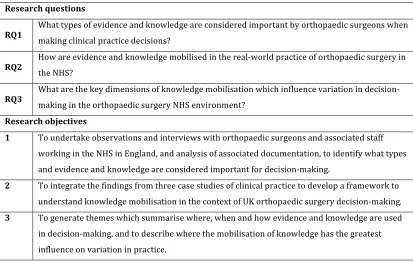
[image:40.595.91.504.403.665.2]This study has three research questions, and three research objectives which were developed to answer the questions. They are displayed in Table 1.
Table 1. Research questions and research objectives
Research questions
RQ1 What types of evidence and knowledge are considered important by orthopaedic surgeons when making clinical practice decisions?
RQ2 How are evidence and knowledge mobilised in the real-world practice of orthopaedic surgery in the NHS?
RQ3 What are the key dimensions of knowledge mobilisation which influence variation in decision-making in the orthopaedic surgery NHS environment?
Research objectives
1 To undertake observations and interviews with orthopaedic surgeons and associated staff working in the NHS in England, and analysis of associated documentation, to identify what types and evidence and knowledge are considered important for decision-making.
2 To integrate the findings from three case studies of clinical practice to develop a framework to understand knowledge mobilisation in the context of UK orthopaedic surgery decision-making.
3 To generate themes which summarise where, when and how evidence and knowledge are used in decision-making, and to describe where the mobilisation of knowledge has the greatest influence on variation in practice.
3.2
Study methodology
about what constitutes knowledge claims, the strategies of inquiry (e.g.,
qualitative, quantitative and mixed methods) and the detailed procedures of the research (Crotty, 1998; Creswell, 2009).
3.2.1 Philosophical assumptions
A knowledge claim implies that the individual conducting research holds certain assumptions about how knowledge is developed and what will be learnt during the process. These philosophical assumptions are referred to as epistemologies and ontologies (Crotty, 1998). Ontology is a claim about a worldview, i.e., what knowledge is, whereas epistemology describes how we know what we know. It is made up of our values or axiologies (Creswell, 2009). My research takes a pragmatic stance as it uses methods deemed appropriate for understanding the real world variation in the mobilisation of knowledge and evidence used in decision-making in orthopaedic surgery.
At the beginning of the work I did not set out to conduct the research through a particular theoretical lens. Nevertheless, it is important to recognise that my research questions and objectives align to a constructivist understanding as I seek to explore the meanings that groups of NHS staff hold towards different forms of evidence and knowledge in practice. The traditional constructivist approaches in qualitative research assume that truths are socially constructed and do not exist separately from the subjective interpretation of a person (Sale et al, 2002).
I was able to group these with my own perspectives and understanding of the context. This idea of multiple representations and experiences is important in the pragmatic approach and it emphasises the key role of context in my study, for example, how context interacts with knowledge mobilisation in practice. Ultimately this approach helped me to understand real-world phenomena as they unfolded throughout the research (Johnson and Onwuegbuzie, 2004).
3.2.2 Strategies of enquiry and research design
Mixed methods approaches are becoming increasingly popular to investigate complex phenomena (Creswell, 2009). In this research, I used a mixed qualitative design. I chose to combine and interpret the findings of different methods together throughout the case studies. All strategies of enquiry have limitations. Using mixed methods helped to reduce the biases of a single method by overcoming the weaknesses inherent in any one particular qualitative
method. Together the mixed methods approach helped to expand my
understanding from one method to another, for example allowing sense checking of data from observations during the interviews, and in combining or
corroborating findings from different data sources across cases (Jick, 1979).
I chose qualitative methods for the empirical work because they allowed me to account for the subjective attitudes and beliefs of staff, and to explore the context of organisational norms that influence the delivery of orthopaedics services. I considered my research findings in the context of each of the individual services to contextualise them in terms of the knowledge, theory and practice that were elucidated through my literature review.
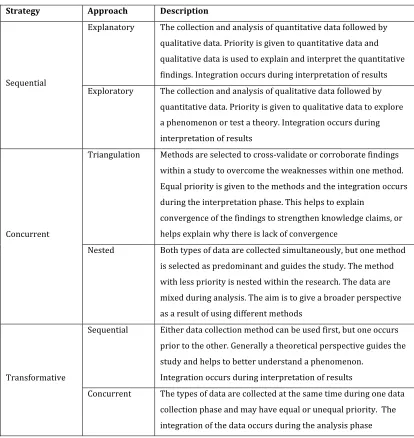
Three procedures for mixing methods have been developed, these are termed sequential, concurrent and transformative study designs (Creswell, 2009; Tashakkori and Teddlie, 2003). Each design differs in the priority it gives to the data type, the sequence of data collection and the time at which the data
Table 2. Four general strategies for mixed methods research (Creswell 2009)
Strategy Approach Description
Sequential
Explanatory The collection and analysis of quantitative data followed by qualitative data. Priority is given to quantitative data and qualitative data is used to explain and interpret the quantitative findings. Integration occurs during interpretation of results Exploratory The collection and analysis of qualitative data followed by
quantitative data. Priority is given to qualitative data to explore a phenomenon or test a theory. Integration occurs during interpretation of results
Concurrent
Triangulation Methods are selected to cross-validate or corroborate findings within a study to overcome the weaknesses within one method. Equal priority is given to the methods and the integration occurs during the interpretation phase. This helps to explain
convergence of the findings to strengthen knowledge claims, or helps explain why there is lack of convergence
Nested Both types of data are collected simultaneously, but one method is selected as predominant and guides the study. The method with less priority is nested within the research. The data are mixed during analysis. The aim is to give a broader perspective as a result of using different methods
Transformative
Sequential Either data collection method can be used first, but one occurs prior to the other. Generally a theoretical perspective guides the study and helps to better understand a phenomenon.
Integration occurs during interpretation of results
Concurrent The types of data are collected at the same time during one data collection phase and may have equal or unequal priority. The integration of the data occurs during the analysis phase
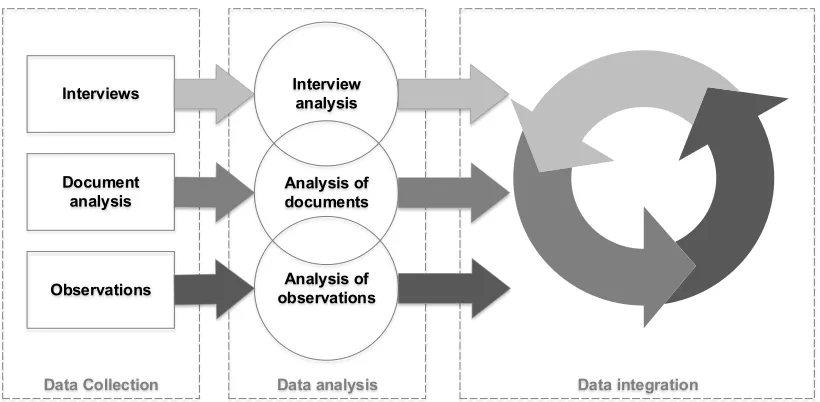
I selected a concurrent triangulation strategy as all the data were collected simultaneously within each case. Even though the cases were entirely qualitative, the approach to mixing qualitative methods aligns to the general strategy outlined by Creswell (2009) and provided a helpful framework to follow. This design combines three types of qualitative data and each type was treated equally in the analysis where appropriate. A diagrammatic
Figure 3. Diagrammatic representation of the study design used during primary data collection
In this design, the data is integrated during the interpretation phase of the research. The process of integration and interpretation helps to explain the convergence of the findings within and across the cases, therefore strengthening the knowledge claims. It can also help to explain why a lack convergence or deviant instances might occur across findings. The purpose of mixing the
qualitative methods was to measure the overlapping but also different aspects of decision-making within orthopaedic surgery. According to Greene and
colleagues (1989), this process helps to ensure an enriched and elaborated understanding of the phenomenon.
In this section I have outlined my epistemological approach and have described the rationale, structure and design of the research. The next section will provide a more detailed description of the study and the methodological approaches taken to achieve each research objective.
3.3
Individual research components
This section presents a detailed description of the research methods. Each research component will be described below including the analysis techniques used.
Interviews
Document analysis
Observations
Interview analysis
Analysis of documents
Analysis of observations
Data analysis
3.3.1.1 Study setting
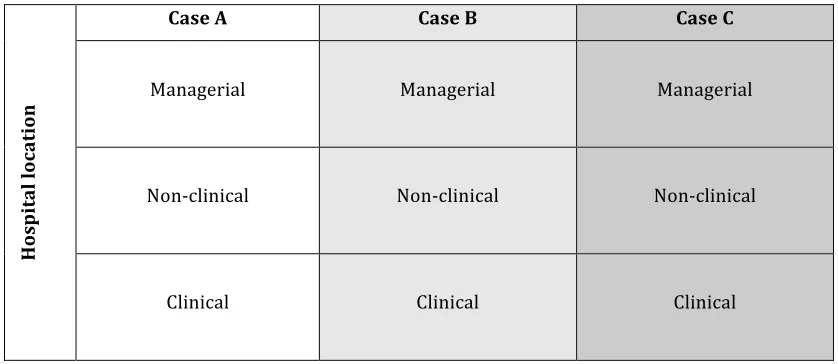
This study was conducted in three National Health Service (NHS) hospital Trusts across England, one in the North, one the Midlands and one in the South West. The core study was confined to public sector services although some private sector and third party organisations were included as key stakeholder organisations due to their interaction with the NHS. See Box 1 for