warwick.ac.uk/lib-publications
A Thesis Submitted for the Degree of PhD at the University of Warwick
Permanent WRAP URL:
http://wrap.warwick.ac.uk/97281
Copyright and reuse:
This thesis is made available online and is protected by original copyright.
Please scroll down to view the document itself.
Please refer to the repository record for this item for information to help you to cite it.
Our policy information is available from the repository home page.
A Micro Note Taking Approach:
The Student Experience
By
Maram S. Al Zaidi
A thesis submitted in partial fulfilment of the requirement for the degree of
Doctor of Philosophy in Computer Science
Supervisors
Professor M. S. Joy and Dr J. E. Sinclair
University of Warwick, Department of Computer Science
ii
Contents
Contents
... ii
List of Figures
... v
List of Tables
………..…viii
Acknowledgements
... ix
Declaration
………..…xi
Glossary
... xii
Publications
... xiii
Abstract
... xiv
Chapter 1
... 1
1
Introduction
... 1
1.1 Research Background and Motivation ... 1
1.2 Research Problem ... 3
1.3 Research Questions and Objectives ... 4
1.4 Research Scope ... 6
1.5 Research Design ... 6
1.5.1. Investigation Phase ... 10
1.5.2. Development Phase ... 10
1.5.3. Evaluation Phase ... 11
1.6 Thesis Outline ... 12
1.7 Summary ... 14
Chapter 2
... 15
2
Literature Review
... 15
2.1 Introduction ... 15
2.2 Shift in Learning Style: From Traditional to Modern ... 15
2.3 Mobile Technology: Benefits and Challenges for Learning ... 18
2.4 Shift from Web 1.0 to Web 2.0: Emerging Technologies for Learning ... 20
2.4.1. Social Networks and Learning Activities ... 24
2.5 Microblogging as a Learning Activity ... 26
2.6 Note Taking as Learning Activities ... 28
2.6.1. Note Taking Functions and Purposes ... 29
2.6.2. Note Taking Issues ... 31
2.6.3. Previous Studies on Note Taking Technology ... 33
2.6.4. Review of Other Note Taking Apps in the Market ... 40
2.7 Existing Gaps in the Literature ... 43
2.8 Discussion ... 44
2.9 Summary ... 46
iii
3
Investigative Study about Current Students’ Note Taking
... 47
3.1 Introduction ... 47
3.2 Investigative Study Research Method ... 48
3.2.1. Data Collection ... 48
3.2.2 Data Analysis ... 51
3.3 Discussion ... 65
3.4 Summary ... 68
Chapter 4
... 70
4
The Development of the Mobile Micro Note Taking Application (M2NT)
... 70
4.1 Introduction ... 70
4.2 Mobile Micro Note Taking Application ... 70
4.2.1. Methodology ... 72
4.2.2. Requirements for the Application ... 73
4.2.3. Design and Architecture ... 74
4.2.4. Implementation Details ... 78
4.2.5. Testing the M2NT Application ... 83
4.3 Summary ... 85
Chapter 5
... 87
5
Methodology of theEvaluation
... 87
5.1 Introduction ... 87
5.2 The Evaluation Approaches... 87
5.2.1. Experiment ... 89
5.3 Analysis ... 96
5.3.1. Analysis of Data from Questionnaires and Open-ended Questions... 96
5.3.2. Analysis of Students’ Notes Taken via M2NT Application ... 100
5.3.3. Analysis of Post Focus Group Discussions ...102
5.4 Summary ... 103
Chapter 6
...105
6
Results and Discussions
...105
6.1 Introduction ... 105
6.2 Discussion on the Findings of Questionnaires ... 106
6.2.1. Demographics ... 106
6.2.2. Comparison between Students’ Experience and their Perceived Usefulness Using Traditional Pen and Paper, Mobile Micro Note Taking Application and Electronic Word Processor ... 107
6.2.3. Comparison between Students’ Experience and their Perceived Usefulness Using a Mobile Micro Note Taking and Traditional Pen and Paper and Comparison between Students’ Experience and their Perceived Usefulness Using a Mobile Micro Note Taking and Electronic Word Processor ... 111
iv 6.3 Discussion on the Findings on the Students’ Micro Notes and their Feedback . 117
6.3.1. The Positive Features of M2NT ... 119
6.3.2. The Negative Features of M2NT ... 122
6.4 Discussion on Findings on Focus Group ... 124
6.4.1. Perceptions of Positive Features of the Mobile Micro Note Taking Application ... 125
6.4.2. Perceptions about Negative Features of the Mobile Micro Note Taking Application ... 126
6.4.3. Perception about Using 140 Characters for Writing Notes ... 127
6.4.4. Suggestions to Improve the Mobile Micro Note Taking Application ... 128
6.5 Conclusion ... 130
6.6 Summary ... 134
Chapter 7
...135
7
Conclusion and Future Work
...135
7.1 Introduction ... 135
7.2 Discussion ... 135
7.3 Research Contribution ... 141
7.4 Research Limitations ... 143
7.5 Future Work and Recommendations ... 144
References
...146
Annex I: Approvals Letters and Consent Form
...158
Annex II: Exploratory Survey
...162
Annex III: Figures and App Guidance Sheet
...167
Annex IV: Questionnaires for Evaluation
...183
v
List of Figures
Figure 1-1: Design science research (Offermann et al. [124]) ... 8
Figure 1-2: Research design with this thesis ... 9
Figure 1-3: Mapping of research questions and research objectives across the research design ... 14
Figure 2-1: Collaborative note taking (Singh et al. [57]) ... 34
Figure 2-2: StuPad (Truong and Abowd [66]) ... 35
Figure 2-3: Note taker (Ward [111]) ... 36
Figure 2-4: Livenotes (Kam et al.[152]) ... 37
Figure 2-5: Groupnotes (Reilly and Shan [56]) ... 38
Figure 2-6: Notepals (Landay et al. [149]) ... 39
Figure 2-7: ZenPad (Abowd [151]) ... 40
Figure 2-8: ColorNote (Hindy [182]) ... 41
Figure 2-9: Apple pencil (Miller [59])………...………42
Figure 3-1: Demographics: Age ... 51
Figure 3-2: Demographics: Gender ... 52
Figure 3-3: The importance of note taking during lectures ... 52
Figure 3-4: The use of note taking during lectures ... 53
Figure 3-5: The percentage of respondents who asked their friends for their notes ... 54
Figure 3-6: Reasons from students for asking their friends notes ... 54
Figure 3-7: Reasons for note taking during lectures ... 55
Figure 3-8: Motivational factors for taking notes during lectures ... 56
Figure 3-9: Note taking approaches used during lectures ... 56
Figure 3-10: The percentage of students' who share their notes ... 57
Figure 3-11: Methods for sharing notes between students ... 57
vi
Figure 3-13: The use of note taking application ... 58
Figure 3-14: Reasons for not using note taking applications ... 59
Figure 3-15: Type of mobile devices carried during lectures ... 60
Figure 3-16: Most popular Web 2.0 platforms used among students ... 60
Figure 3-17: The Percentage of students who accessed Web 2.0 platforms in classrooms ... 61
Figure 3-18: Reasons for accessing Web 2.0 applications in classroom ... 61
Figure 3-19: Reasons for not accessing Web 2.0 applications in classroom ... 62
Figure 3-20: Students that appreciate using a mobile note taking application with a note sharing feature ... 63
Figure 3-21: Students’ future preference to use note taking approaches ... 63
Figure 3-22: Students' perception of different features of Web 2.0 ... 64
Figure 3-23: Web 2.0 features platforms to use for new note taking application ... 65
Figure 3-24: Outcomes from students’ perspective for current note taking ... 66
Figure 3-25: Outcomes from students’ perspective for mobile smartphones ... 67
Figure 3-26: Outcomes from students’ perspectives for microblogging ... 68
Figure 4-1: M2NT requirement illustration ... 74
Figure 4-2: The M2NT Application Architecture ... 76
Figure 4-3: The description of M2NT Application Architecture ...76
Figure 4-4: Dataflow for a micro note taking application ... 79
Figure 4-5: The M2NT GUI for editing ... 82
Figure 4-6: Snippet from Database ... 84
Figure 4-7: Snippet from Database ... 85
viii
List of Tables
Table 2-1: Examples of common note taking apps' basic functions in the market ... 42
Table 3-1: Likert scale used in the investigative questionnaire ... 49
Table 3-2: Investigative questionnaire design ... 50
Table 4-1: The client side of the proposed application architecture ... 77
Table 4-2: The server side of the proposed application architecture ... 78
Table 5-1: Experimental research design-repeated measure within this thesis ... 90
Table 5-2: Questionnaires used with main experiment ...97
Table 6-1: Results for usefulness question RQ2 ... 107
Table 6-2: Pairwise comparison results RQ2 ... 112
Table 6-3: Results for comparison of usefulness questions for RQ2 ... 115
Table 6-4: Results related to micro notes analyses within this thesis ... 118
Table 6-5: Content analysis of positive comments ... 119
Table 6-6: Content analysis of negative comments ... 122
ix
Acknowledgements
Throughout this thesis from the initial stages to its final draft, I have many reasons to be
grateful to my supervisors, Dr Mike Joy and Dr Jane Sinclair. The value of their wise
advice, clear and valuable guidance and always insightful criticism cannot be overstated.
I would also like to express my deep appreciation for the constant, consistent support and
guidance of Dr Alexandra Cristea and Dr Sara Kalvala.
x To my loving and supportive family
My husband, Mazin My sons Wabil and Hattan
Words are not enough to express my appreciation
xi
Declaration
This thesis is submitted to the University of Warwick in support of my application for the
degree of Doctor of Philosophy. I hereby declare that, except where acknowledged, the
work in this thesis has been composed by myself, and has not been submitted elsewhere
for the purpose of obtaining an academic degree.
Maram S. Al Zaidi
Signature: ______________________________________
xii
Glossary
Mobile devices in this research refer to smartphones that are carried by students in the classroom.
Micro notes are short texts of notes (140 character) that are created using the short content creation feature of microblogging.
Microblogging refers to a Web 2.0 technology that contains two main features: short content creation and social communication.
Short content creation refers to the short content created by users, usually 140 characters for each chunk of information.
Twitter is a social network platform that is built on the technology of microblogging.
xiii
Publications
Below, the conference papers published from this PhD research are listed:
1. Al-Zaidi, M.S., Joy, M.S. and Sinclair, J.E. (2013) Exploring the Use of Micro
Note-Taking with Social Interaction Features for Education. In: International Conference on
Education and New Learning Technologies (EDULEARN13), 1-3 July 2013, Barcelona, Spain. (In Press)
2. Al-Zaidi, M.S., Joy, M.S. and Sinclair, J.E. (2014) Micro Notes Application for
Education: a Proposed Mobile Micro Note-taking Architecture. In: 13th European
conference on e-learning (ECEL 2014), 29-30 October 2014, Copenhagen, Denmark.
(In press).
3. Al-Zaidi, M.S., Joy, M.S. and Sinclair, J.E. (2016) Micro Note-Taking on Smartphone:
The Learner Experience. In: 8th international conference on mobile, hybrid, and on-line
xiv
Abstract
Note taking is one of the most widely-practised and commonly used activities among students in the classroom. However, despite the massive advancement of technology in education, pen and paper still seem to be the (most) favoured note taking approach among students. This, however, could be the result of not having note taking technology that provides students with relative advantages and substantial value in comparison to pen and paper. On the other hand, social media has been growing in popularity. Short messages can be easily conveyed via microblogging applications, such as Twitter. Therefore, the research aims to investigate the effect of using the short content creation feature of microblogging (140 characters) as a note capturing approach in the classroom.
This research adopted a design science research methodology consisting of three phases. The first phase, investigation, reviewed the literature and conducted an exploratory study. The literature review showed that there is an increased interest in using technology for learning activities. However, the existent technological support for note taking, in particular, is not popular. In addition, an exploratory study was conducted with 254 undergraduate students at the University of Warwick. The study showed that students had a lack of interest in taking notes using current note taking application on their mobile devices. Hence, to tackle this issue, the developmentphase proposed a micro note taking mobile application to support students’ note taking at university-level. In addition, this phase included the development and implementation of the mobile micro note taking application (M2NT) based on microblogging technology for data collection purposes.
Finally, the evaluation phase included a main experiment conducted with 42 students using three types of note taking approach (i.e. pen and paper, word processor, and the micro note taking application). This was followed up with questionnaires distributed to students after experiencing each note taking approach. In addition, the experiment ended with a final comparison questionnaire and focus group discussions. Furthermore, the students’ micro notes and their feedback were analysed to investigate the implications of mobile micro note taking.
1
Chapter 1
1
Introduction
1.1 Research Background and Motivation
The main aim of this research is to support students’ note taking activity at university level
by effective utilisation of advanced mobile and Web 2.0 technologies. Note taking is a
common activity used by students during lectures [1]. In addition it is an important
technique used in learning processes that has been demonstrated to have a positive
impact on student achievement [2]. Traditionally, this course of action by students has
been conducted manually, using pen and paper. Additionally, the pen and paper method still seems to be the most favoured means of capturing notes in the classroom [3].
However, taking notes using mobile devices remains unpopular among students in the
classroom. This could be the result of not having a mobile note taking technology that can
provide students with relative advantages and substantial value, in comparison to the traditional pen and paper approach. Furthermore, with massive uptake in the domain of
information and communication technology, there is considerable potential for integrating
new technologies with the learning activities at universities, and specifically for note
taking, in ways that can eventually lead to a more effective note capturing experience.
Accordingly, this research involves the integration of note taking from the education
discipline with mobile and Web 2.0 technologies. This is achieved by developing a new
note taking approach based on the employment of the short content creation feature of
microblogging in a mobile application. This thesis postulates that the use of innovative
technologies in providing a new approach for note taking practice would be fruitful for
2 There has currently been a noticeable increase in the number of students carrying mobile
devices into the classroom, including laptops, smartphones and tablet devices. Sharples
[11] highlighted the growth in the use of mobile phones amongst students as well as
across all educational areas. New generations of smartphones support fast Internet
connections through 3G and 4G wireless technology, in addition to faster Wi-Fi
connections. Moreover, with new iPhone and Android phones providing millions of
applications, there has been a dramatic increase in interest levels in using these devices
for education [12]. Indeed, in the last decade, and due to these advances, researchers
have shown an increased interest in using new technologies and computing devices in
note taking practice.
Microblogging is a new form of publishing and sharing content ([4][5][6]) that falls under
the umbrella of Web 2.0 technology and is becoming an emergent promising tool in
education [7]. Moreover, microblogging is increasingly gaining interest among researchers
in mobile learning [6]. In addition, many researchers have argued that microblogging has high potential to enhance learning [178].
One of the main features behind microblogging is that it allows users to post brief online
messages that are limited to 140 characters [8]. Twitter is seen as one of the most popular
microblogging platforms that has been used for educational purposes. In addition, the
majority of research in the field of microblogging in higher education has focused on
Twitter as a support tool for learning [94].
Tang and Hew [95] examined a decade (2006 - 2015) of research on how Twitter has
been used in education. They identified six ways of using Twitter in education: capturing,
communication, collaboration, class organisation, assessment and reflection. Moreover,
they found that Twitter was used mainly as a communication and assessment tool.
However, only two studies from a total of 51 publications ([96][119]) focused on using
3 examine specific education activities that could be supported by using short content
creation. In addition, Gao et al. [178] examined 21 publications in educational
microblogging between 2008 – 2011, and found only one experimental focused study,
while the remaining were descriptive focused.
Therefore, based on these two recent comprehensive reviews [178] and [95], it is clear
that further research is needed when using microblogging in education activities.
Additionally, current research has given little attention to the capturing activity (i.e. short
content creation) of microblogging.
This research seeks to understand the activity of note taking from the students’ perspective, and develop a new mobile micro note taking application to support students’
note taking experience. This is achieved by using the microblogging feature of short
content creation in a mobile application to produce a new educational note taking approach called ‘micro notes’.
1.2 Research Problem
This research addresses the following problems related to note taking activity:
• The current note taking approach of using traditional pen and paper produces
incomplete and inaccurate notes which may not provide students with the best
note taking experience ([15][16] );
• There is lack of mobile note taking application usage for education purposes,
despite the fact that Smart phones are popular ([11][12]);
• There is lack of research in the use of advanced technologies for note taking
practices in the classroom environment, despite its significance ([3][18]).
This research addresses the stated problems related to current note taking practice and
4 approach. This is then evaluated through a mobile note taking application using
microblogging that has been designed and implemented by the researcher. The perceived
experience of students is measured based on students’ interaction with the mobile note
taking application, using the short content creation feature. These problems will be
addressed through an extensive literature review in the field of note taking. Next, the
current note taking from the perspective of students towards note taking in mobile
applications will be investigated. A new note taking approach using Web 2.0 technology
will be used and evaluated via an implemented note taking application on Android-supported smart phones, called mobile micro note taking, to access students’ experience
as well as students’ perceived usefulness. It is deemed that this research will contribute
to the Web 2.0 feature of the employment of microblogging short content creation for note taking on smartphones, and investigate students’ experience compared to what has been
the case hitherto with either traditional pen and paper or electronic word processor applications. In addition, for better understanding of the features and factors influencing the students’ experience while note taking through microblogging, the short content
creation feature is explored.
Accordingly, this thesis will contribute to the literature by evaluating the short content
creation feature of microblogging for note taking activity in relation to the experience of
students, and in addition, this research touches on practice of usefulness [19][20] to
create a list of features affecting both measurements. Further details of the measurements
can be found in Chapter 5.
1.3 Research Questions and Objectives
In order to address the research problem, this research aims to answer the following main
research question: How does short content creation on a mobile application influence students’ perceived experience?
5
• RQ1: What are the students’ perspectives regarding mobile note taking applications in
the classroom?
• RQ2: What is students’ perceived experience and usefulness of using a mobile micro
note taking application in comparison to traditional pen and paper and electronic word
processors?
• RQ3: How does using a mobile micro note taking application affect students’
perceived experience and their perceived usefulness in practice?
This research aims to investigate the effect of using the microblogging short content
creation feature (140 characters) as a note capturing approach for note taking practice in
the classroom environment in terms of perceived usefulness and students’ experience. In
order to answer the research questions, the following objectives need to be achieved.
OB1. Review the literature in the field of note taking activity in the classroom environment
and the use of advancement of technologies in education for learning activities.
OB2. Conduct an investigative study that explores current students’ note taking and
propose a new way of note taking.
OB3. Design and implement a mobile micro note taking application along with the
identified gap in literature, as well the outcomes from the investigative study. This is to be used for data collection purposes.
OB4. Conduct an experimental study to collect data relating to students’ experience of using mobile micro note taking.
OB5. Evaluate the students’ experience of using the mobile micro note taking application
to better understand how limits such as the 140 characters of microblogging support note taking experience in mobile applications, and draw findings to make a final conclusive
6
1.4 Research Scope
This research investigates students’ experience of using a mobile micro note taking
application as a note capturing tool in a classroom environment. Although students in the
classroom carry more than one mobile device, they do not use these devices for note
taking activities in the classroom. For instance, the students use their mobile devices to
access Web 2.0 platforms.
Bearing in mind the advances in technology use in education, as well the features of Web
2.0 that could provide students the best experience for note taking in a mobile application,
the focus of this research is mainly on investigating the experience of students in using
short content creation of microblogging technology for note taking activities in the classrooms in mobile applications.
1.5 Research Design
Design Science Research Methodology was the main methodological approach
adopted throughout this research. A methodology of design science research is extended
for use in information systems research [123]. Design science research is based on a
design history as a component of engineering and computer science research [123]. Design science… “creates and evaluates IT artefacts intended to solve identified
organisational problems” [121, p.77]. The main component of design science is “design
and the proof of its usefulness” [123, p.33]. In recent years, many researchers have
succeeded in using design science research methodology in information systems
research [121].
Since the goal of this research is to evaluate the students’ experience and subsequently
extend this evaluation to touch on the usefulness of a developed application to support students’ note taking, design science research is deemed suitable. It is essentially a
7 produce solutions [121]. The development of a micro note taking application uses the
short content creation feature of microblogging technology for note taking, which is
adopted in this research to represent the new approach to note taking.
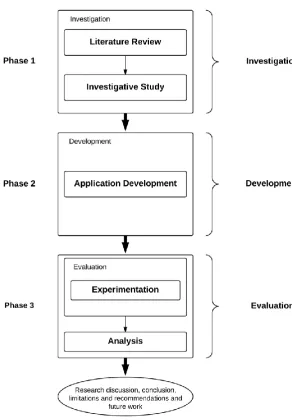
Offermann et al. [124] propose a research process for design science research in
information systems. The three parts of Figure 1-1 below illustrate the phases that
researchers can follow throughout the research process. This process has three main phases: the first phase is “problem identification”, the second phase is “solution design”
and the third phase is “evaluation”. These phases can be summarised briefly as follows.
• Phase1: Problem identification
In this phase the problem is identified and an investigative study is carried out to explore
the problem in depth. Throughout the first phase, a literature review is assessed, the
problem is identified and what is relevant to resolving the problem is examined.
• Phase 2: Design artefact
In this phase, the solution is designed and implemented. During phase two, the literature
supports the idea of the solution under review, the solution is designed and the previous
literature review related to the research may be re-visited in order to increase the understanding by closely relating the problem to the designed solution.
• Phase 3: Evaluation
Evaluation is the third and final point of design science research methodology. Expert
survey, laboratory experiment and case study/action research can be conducted in the evaluation phase. Hypotheses are refined in this phase. Additionally, phase one and
phase two are re-visited if necessary when the process reaches the final phase.
The following Figure 1-1 illustrates the three parts of the research process. The phases
8
Figure 1-1: Design science research (Offermann et al. [124])
The bold arrows indicate the main transaction between the steps, whereas the dotted
arrows indicate that the previous phases can be re-visited before the process starts in the
next phase, if necessary. At the end of this execution process, design science research
delivers comprehensive outcomes.
Design science research methodology has been chosen to conduct this research [124],
because this work is rooted in the domain of information systems. The next section shows
9 In the light of the design science research process discussed above, the following Figure
1-2 illustrates the three parts that have been used with slight changes to the methods and
approaches for gathering the data to meet the current research process needs. The three
[image:24.595.191.484.219.640.2]parts of the phases deployed throughout this research are as follows.
10 1.5.1. Investigation Phase
In this phase, the literature review is the first step in the journey of any research. It works
as a guidance approach to reviewing the research which has been conducted so far in
the field of note taking activity. It aims to investigate the existing research on students’
note taking activity and the associated technologies of note taking. Chapter 2 presents the
literature review including note taking, note taking technologies, Web 2.0 technology,
microblogging technology and previous related studies. In addition, an investigative study
was conducted to explore current student note taking activities. Moreover, through the investigative study, students’ opinions in relation to note taking were gathered to provide
additional insights. The output of this phase resulted in identifying a need to design new
approaches to support students’ note taking experience. Thus, the insights from the first phase of the research contributed to the design of the proposed research application.
1.5.2. Development Phase
This phase involved the proposed application which was informed by the literature review
on note taking practice, as well as new technologies employed in education, and the
investigative study of current note taking activities, to contribute knowledge helping to fill
the gap in the existing literature as discussed in Chapter 2.
The area of note taking activity using technology has been extensively researched to keep
track of the massive development in the use of technology for note taking activity (Chapter
2). This work has developed an application that used a short content creation feature of
microblogging technology for note taking activity on Android smart phones. The main
reason for developing the application on only the Android platform was the open source
nature of Android, compared to the restrictions and additional requirements to develop
applications in Apple, for instance. This meant that the software can be reused easily.
11 researcher made the implementation and testing much easier. Furthermore, time limitation
did not allow implementation on several devices consecutively, especially as the research
gain would have been minimal. It was thus decided to develop the on-going application
research on the Android platform, instead of other platforms. The research application
was developed to support the data collection process.
Further details of implementation can be found in Chapter 4.
1.5.3. Evaluation Phase
Following the development of a mobile micro note taking application (M2NT) students
were asked to use this application through an experiment. The evaluation phase is the
final stage of this research. In this phase the implications of short content creation for note
taking activity were extensively evaluated. The main aim of the evaluation was to evaluate
the experience of students and their perceptions of usefulness of using the short content
creation feature for note taking that was developed on smart phones.
Various methods were used throughout the evaluation to deliver comprehensive
outcomes of the short content creation feature of microblogging technology for note
taking. The new application was used as an experimentation tool evaluated throughout the experiment conducted within this thesis to collect and analyse students’ experience.
The target in this research is students’ experience related to usefulness. A quantitative
approach was used to analyse students’ feedback on the three different note taking
approaches (that are developed application (M2NT) and existing approaches: traditional
pen and paper and electronic word processor). Moreover, a qualitative approach was
used to understand the implications of M2NT. Therefore, data items were collected from experiment. These items are students’ micro notes, focus groups and other qualitative
12
1.6 Thesis Outline
The thesis structure is as follows:
Chapter 2: Literature Review
This chapter reviews the state-of-the-art literature in this interdisciplinary research relating
to note taking and the advancement of educational technology. In addition, it explores the
new trends of technology existing in education for supporting learning activities. The
chapter also identifies gaps within the existing literature of note taking activity.
Chapter 3: Investigative Study about Current Students’ Note taking
This chapter explores the current students’ note taking activity and identifies the
perspective of students regarding integrating Web 2.0 features with mobile applications for
note taking.
Chapter 4: Development for Mobile Micro Note Taking Application (M2NT)
Based on the literature review and the outcome from the investigative study conducted in
the previous chapter, a Mobile Micro Note Taking application (M2NT) was formulated to fill
the gap in the current state of the art as well as to fulfill the requirements extracted from
the investigative study. This chapter describes the micro note taking application with a
short content creation feature of microblogging as a desirable feature that has been
explored in the investigative study. The chapter also describes the mobile micro note
taking application (M2NT) used in this research as an experimentation tool.
Chapter 5: Evaluation of M2NT
After the mobile micro note taking was developed, data from students was required to
evaluate the experience of students using a new format note taking approach proposed by
the researcher. This chapter elaborates on the methodological approaches, methods and
13
Chapter 6: Results and Discussions
In the light of what students reported through the evaluation of mobile micro note taking
the findings are discussed, this final chapter deals with the two sub questions. It discusses
the results from the quantitative approach and the results from the qualitative one.
Chapter 7: Conclusions and Future Work
This chapter delivers the final conclusive findings for this research and highlights the
research contribution of these findings. This chapter also outlines the limitations of this
14
1.7 Summary
This chapter has introduced the main background of the study. The chapter has also
defined the research problem and scope. In addition, the research questions, objectives
and research design are presented. The following figure describes how the research
questions are mapped to the research objectives across the research design phases.
Finally, the figure shows where each objective is addressed, and in which chapter of the
thesis.
15
Chapter 2
2
Literature Review
2.1 Introduction
The literature review is the first step in the investigative phase of this research. The aim of
this chapter is to explore current note taking activities. In addition, this chapter critically
reviews the existing literature in order to develop a clear understanding of the related
concepts and technologies. Moreover, the chapter reviews the previous related research
in the field of note taking. It explores the state-of-the-art in the field of mobile technology,
Web 2.0 technology, microblogging technology and different note taking approaches, in order to identify the existing gaps in the literature.
As previously mentioned in Chapter 1, this research is interdisciplinary in nature, and
therefore, the focus of the reviewed literature consists of two areas: computer science (i.e.
mobile technology) and education (i.e. note taking). Hence, this chapter explores the field
of note taking practice in class, and highlights the use of technology for note taking
activities in the classroom.
Accordingly, this chapter serves as an essential basis for the research, given that it
formulates the theoretical background basis that the research is based upon. Additionally,
the output of this chapter fulfils the OB1 research objective.
2.2 Shift in Learning Style: From Traditional to Modern
Traditional learning based on memorizing and reproduction cannot meet the abilities and
challenges required by modern society [22]. Despite recent rapid advances in mobile
technology and the Internet, including Web 2.0 technology, traditional pen and paper
16 This, however, could be the result of not having a note taking solution that can provide
students with relative advantage and substantial value in comparison to the pen and
paper approach. Therefore, a need has emerged to use innovative technologies so as to
offer new ways for note taking practice that would help in achieving a positive student
experience.
The web has dramatically changed almost everything, including the way in which we live
our lives, the way business is conducted, and the way learning is practiced. According to
Greenhow et al. [23], the nature of the web and contexts for learning have been altered,
along with the emergence of the technological capabilities offered to students. Indeed, the
Internet is becoming increasingly ubiquitous in schools, universities, homes, places of
work and communication [23]. Accordingly, the domain of educational technology has emerged. Educational technology can be defined as “the study and ethical practice of
facilitating learning and improving performance by creating, using and managing appropriate technological processes and resources” [24,p.283]. According to Kozma [25]
using technological tools and resources within classrooms supports students’ practices.
This is in fact not a surprise, given that students in colleges are the heavy users and early
adopters of the Internet [26] . Eighty six percent of college students are online, compared
to fifty nine percent of the general population [26]. In fact, the role of technological
competencies has replaced traditional rhetorical activities [23], thus enhancing college students’ education.
With rapid advances in technology, there has been a massive shift in the way learning is
practiced and the way educational tools are used. Indeed, many technologies have a
powerful influence on numerous domains, including education [27]. For instance, students
may choose to use an e-text for their learning on mobile devices as an alternative to
traditional textbooks, thus effectively influencing their learning [28]. Mobile devices and
PDAs are widely becoming natural tools used for mobile learning [29]. Moreover, there is
17 mobile devices as alternative learning tools [30]. Mobile technology also facilitates
collaboration, and engages the students in creating content in Web 2.0 applications [31]
and much more.
In recent years, Web 2.0 technologies such as blogs, wikis, and social networking sites
have been used to transform teaching and learning in higher education, given that such
technologies offer software developers and end-users the ability to create and modify
content online. These technologies facilitate the way in which students can share content
compared to the past. Additionally, such technologies have an influence on the way
documents are created, used and shared with others [32]. Through the use of Web 2.0
technologies including social networks, the role of students is becoming more about
creating content than merely consuming information and knowledge [33]. Students also
become producers and consumers in their own education by using Web 2.0 and social networks [27].
It would seem that as students engage with Web 2.0 applications in their daily lives, new
fruitful opportunities are emerging in the domain of the educational environment [34].
Although these applications are not designed for educational purposes, they do have
numerous affordances that can bring benefits to learning [35]. The blooming of Web 2.0 is
opening the door for new practices and attitudes in the learning domain [33], and also improving students’ learning experience and writing ability [36].
For these reasons, the current research combines a Web 2.0 approach with educational
18
2.3 Mobile Technology: Benefits and Challenges for Learning
Up until now, and even with the massive advances in technology, students in education
still use traditional pen and paper for learning activities such as note taking [3]. However,
traditional pen and paper has no advantage due to its lack of efficiency for such learning
activities, thus rendering itself unappealing to students ([37][38]). In fact, the efficiency and
effectiveness of learning activities can be significantly augmented with the use of mobile
technology for learning [39]. Mobile technology has offered a new educational approach
that enables students to access the content of the material, or any other information
related to the course, on the go whenever they are located ([40][41]).
In recent years, the rapid growth of mobile technologies is promising a new revolution that
might be comparable with that of the web [42]. In the education sector, mobile technology
has increasingly been used in learning and teaching in higher education. Mobile technologies in education can help in supporting teaching and learning, such as affecting
personal organization without explicitly being part of the learning activity themselves [39].
According to Traxler [41], using wireless, mobile and handheld devices has gradually
increased, and this use has been disseminated across educational sectors. Moreover,
mobile devices are ubiquitous amongst student populations in universities [38].
Mobile learning (m-learning) may be considered as a learning tool for accessing content,
which can be locally stored on the device or can be reached through interconnection [42].
The most obvious use of mobile devices for educational purposes is in fact a direct
application of e-learning techniques on smaller devices instead of those on a desktop PC
[42]. Other research indicates additional benefits related to mobile learning. Mobile
technologies are convenient to students, as they offer a relaxed fit, a simple, small size
19 mobility, content review, enhanced communication, and support interactive and
collaborative learning [44].
Recently, rapid advances in mobile learning have been viewed as a major trend in higher
education. Georgiev et al. [45] pointed out that m-learning offers a new way of learning
and teaching which redresses the deficiencies of traditional education. Indeed, Georgiev
et al. [45] have highlighted the fact that m-learning is becoming a new form of learning
worldwide that is based on mobile devices such as the PDA, cell phone and Tablet PC.
According to Herrington et al. [38] and Sharples [11], the use of mobile devices has
already grown amongst students as well as across all educational areas. Sharples et al.
[47] argued that handheld computers and mobile communication are technologies that
can be used in supporting individuals to learn anytime, anywhere. Similarly, Naismith et
al. [39] have claimed that mobile devices and personal digital assistants are the most prevalent technologies for mobile learning. Moreover, Traxler [41] emphasises the fact
that mobile learning has been growing obviously and significantly in higher education.
Alexander [48] has stated that students learn more effectively with mobile devices than
they do with desktop computers. According to Evans [49], using m-learning as a teaching
and learning strategy for college students appears to be an effective tool in higher
education. Another study by Fozdar and Kumar [50] has indicated that using m-learning
could help to improve student retention by enhancing the delivery of education. Traxler
[51] highlighted the fact that m-learning is a new educational format. Scornavacca et al.
[90] also found that for handling questions in a large classroom, traditional text messages
on the mobile devices can be used as a more practical and efficient way than the
traditional raising-hand method. Hence, this strongly suggests that m-learning is an
innovative educational tool, since many researchers attempted to investigate how these
20 The rise of m-learning could well be due to the fact that mobile devices are ubiquitous
amongst student populations in universities [38]. Indeed, mobile devices perform many of the functions of desktop computers with the advantage of simplicity, in that they are ‘easy
to carry’ and give improved access anywhere, anytime [52]. The widespread ownership of
mobile devices and the availability of other portable and wireless devices have been the
landscape of technology-supported learning ([148][53]). These technologies turn out to be
well aligned with strategic educational goals such as improving student retention [54].
On the basis of the aforementioned discussion, we can easily argue that mobile
technology has reshaped the way we learn in the classroom. Hence, the current thesis takes the mobile approach to enhance the student experience in note taking.
2.4 Shift from Web 1.0 to Web 2.0: Emerging Technologies for
Learning
Web 1.0 is a read-only web [60] which can be described by Aghaei [61] as a “Web of information connection”. Web 1.0 has been accessed in classrooms as a repository of
information and the students in Web 1.0 can be viewed as information recipients rather
than as producers of knowledge [23]. The main goal of web pages on the Internet in the
age of Web 1.0 was to publish information for people at any time and in one direction only
[62]. However, Web has been transformed and improved over time in order to allow
two-way communication where users can consume and produce knowledge- the so-called
Web 2.0.
Web 2.0 is the second generation of the World Wide Web [63]. The concept was first introduced by O’Reilly [64] who coined this concept in a conference brainstorming session
in 2004 which was hosted by O’Reilly and Media Live International. Web 2.0 is diversely
21 and/or “social software” [7]. Web 2.0 features and capabilities can be highlighted as
follows [63]:
• Provides a rich user interface;
• Facilitates collaborative content creation and modification;
• Establishes social networks of people with common interests;
• Supports collaboration.
To summarise the difference between Web 1.0 and Web 2.0 in simple terms, one can
argue that Web 1.0 Internet users can merely find and retrieve information online, but with
Web 2.0, users can do much more in terms of creating and uploading content [60].
In the education sector, it seems that Web 2.0 technologies are significant in the domain of learning, given that such technologies are popular across students’ everyday lives [33].
Kaplan and Haenlein [67] stated that Web 2.0 represents the foundation for User
Generated Content (UGC). Web 2.0 combines multiple features such as the dissemination
of multimedia content, socializing and blogging [175]. One of the main ideas behind Web
2.0 is that it allows the individual to produce and generate content, and this seems to be
very significant from a learning perspective. Thus, Web 2.0 has been widely used in the
education sector for a number of reasons: ease of use, readiness availability, individual
affordances and network effects [68]. According to Alexander et al. [68], two essential
features differentiate Web 2.0 from other Web sites: micro-content and social media. The
micro-content feature refers to the format of information generated on Web 2.0. This
feature enables users to create small chunks of content, where each chunk reflects a
main idea. Indeed, Web 2.0 was created to enable users to share small chunks of information between different users who share the same interests [68]. Accordingly, and
given that Web 2.0 is mainly focused on content, it is increasingly becoming more and
more attractive in the education sector in terms of making the process of learning more
22 refers to the fact that Web 2.0 is more organised around people compared to Web 1.0.
Web 2.0 makes creating and sharing content as well as interacting with other people
readily possible, compared to the static web or so-called Web 1.0 [33].
In the education sector, Web 2.0 refers to a group of powerful tools that are being used in
classrooms [65]. These tools include, but are not limited to, blogs, wikis, Really Simple
Syndication (RSS), podcasting, and social networking sites which are growing rapidly in
education [34]. Wikis are a collection of web pages designed to enable users to add or
edit the content. They are mainly used for easy collaboration amongst many individuals
and thus it is usually utilised to build collaborative websites [69]. According to Conole et al.
[70], wikis are considered to be an ideal tool for facilitating cooperative learning. On the
other hand, Blogs refer to personal publishing spaces and this concept was derived from a
personal home page. They have been labelled as reflective diaries, as they emphasise
the personal reflective parts of sharing ideas [70]. Bloggers formerly used to write blogs
on their personal web pages. However, nowadays, most bloggers use social networking
sites such as Facebook to write their blogs or viewpoints. Accordingly, blogging as a practice has been relocated from a private and personal space to a shared, collaborative
space [70]. Moreover, podcasts also seem to be useful for learning. In fact, podcasts are
digital media files, usually video or audio, that are available for free download from the
Internet, or through a subscription model.
The literature indicates that the use of Web 2.0 technologies will positively influence students’ learning and make it more effective [147]. There are some examples in the
literature that highlight the positive influence that Web 2.0 technologies have on learning.
Uzunboylu et al. [5] argued that the integration of Web 2.0 tools with the virtual learning
environment revealed that using such tools with all activities in traditional classrooms can
support students in better understanding the course, and thus make students’ learning
more effective. Another example is related to a study that was conducted by Bennett et al.
23 to create content on social networks and share materials such as images, video and audio
with their colleagues. Another study by Churchill [72] indicated that blogging facilitates
learning for undergraduate students. The activities that were observed during that study
with students focused on accessing the materials of the course, posting reflections,
featuring artefacts created through the learning tasks, commenting on each other’s
contributions and otherwise participating on a regular basis throughout the experiment
period. The students in this study reported with agreement that integrating blogging with
their learning activities facilitates and encourages them in their learning. Focusing on
wikis, another study conducted by Wang and Turner [73] found them to be more useful
and effective for enhancing learning in classrooms. The study indicated that the original
wiki is usable in the education environment, but pointed out that it only accepts one
update where two students try to update simultaneously. The wiki extension that was
developed aimed to allow course content to be created and updated collaboratively and simultaneously, which proved to be positive for learning. A study conducted by Chen et al.
[179] has found that students felt significantly more satisfied with using blogs for note
taking than students taking notes using a wiki. Moreover, according to Lockyer et al. [74],
the potential for integrating Web 2.0 technology with education in postgraduate classes
would support the formal educational experience, and result in a positive learning
outcomes and experience. Apparently, and according to previous relevant literature, the
use of Web 2.0 tools is advantageous, and has a positive impact on the learning process.
Learning activities have become more interesting to students, and have enhanced their
learning skills [75].
This discussion of the differences between Web 1.0 and Web 2.0 aims at highlighting how
significantly the web has changed in a relatively small amount of time. This opens the
window to assuming that the rapid development of the web and its supporting technology
24 in this thesis focuses on the potential of the web and what it can offer for students in the
domain of note taking activities.
2.4.1. Social Networks and Learning Activities
Social networking sites have been defined by Boyd and Ellison [76, p.211] as “web-based
services that allow individuals to (1) construct a public or semi-public profile within a
bounded system, (2) articulate a list of other users with whom they share a connection,
and (3) view and traverse their list of connections and those made by others within the system”. Users on social networking sites such as Facebook are allowed to post profile
information to communicate with others online in several ways, such as sending either a
public or private message or sharing photos or videos [77]. According to the Pew Internet
and American life project [78], 74% of American online adults were found to be users of
social networking sites in 2014. The number of social network users worldwide in 2014
reached 1.87 billion, and it is estimated that the number of users in 2018 will reach 2.55
billion [79]. The Pew Internet survey reported that 70% of social networking site users are
college students [80]. Accordingly, it seems there is no doubt that the number of users on social networking sites is significantly growing.
Social Network Sites have been used recently as a new trend in learning and teaching in
higher education. Indeed, such sites have a huge potential to shape how people learn
[81]. This is to be expected, given that most current students have grown up in the digital
age where such technologies are heavily used in all areas of their lives including their
learning and teaching activities. In fact, Twitter is one of the most popular platforms to
have been employed recently in teaching and learning. For example, Dhir et al. [82] show
that a significant growth in the popularity of Twitter is already present in the educational
sector. According to Harris and Rea [84], Twitter is a combination of social networks and a
micro-blog service that enables users to compose and read a message known as tweets
25 per post compared to Facebook. Twitter offers a faster way for collaboration and
communication as the length of the post is short and brief [83].
Twitter is one of the most popular micro-blogging tools [83], with more than 41 million
users as of July 2009 [85]. Junco et al. [87] found that Twitter has been used in teaching
and learning amongst the students. Twitter has been deployed in a number of ways in
higher education [88]. Recent evidence shows that Twitter has a significant impact on students’ engagement in learning processes. To give just a few examples, it was found by
Tyma [89] that one of the advantages of using Twitter in a classroom setting was that it
offers students an additional channel for communication. This study reported that Twitter
has been used in a large lecture, and suggested that Twitter provides a way to present
and share ideas and shape the discussion and that it is also a cost effective tool for
engaging students. Junco et al. [87] argued that using Twitter changes the way traditional activities take place in classrooms and leads to keeping students engaged.
As reported by Kassens-Noor [91], Twitter as an active and informal tool for learning has benefits and challenges compared to traditional learning. Twitter facilitates sharing beyond
the walls of the classroom, whilst it is a convenient tool for discussion amongst students
that can be used at any time/anywhere. On the other hand, Kassens-Noor [91] has argued
that the challenges of Twitter are related to the strict word limit and require the
constraining of critical thinking and self-reflection. Further, a survey of faculty members,
guests, and students on a pharmacy management course that was conducted by Fox et
al. [92] showed that although 80% of the sample found that Twitter facilitates class
participation, 71% and 69% of the sample respectively indicated that Twitter was
distracting, and actually prevented note taking.
Accordingly, the literature shows inconsistent results regarding the appropriateness of
using Twitter in classroom settings and for educational purposes. A plausible explanation
26 usefulness, are not specifically designed as an educational tool that supports the learning
process. Therefore, a new application in this research was built for educational purpose
such as note taking activities in classrooms.
2.5 Microblogging as a Learning Activity
Microblogging, also known as mini-blogging, is a Web 2.0 technology that has rapidly
gained huge interest over the past decade [125]. Microblogging is defined as a Web2.0
technology and a new form of blogging that allows the users publish online brief text
updates, usually less than 140-200 characters, sometimes images too [6]. Additionally,
Ross et al. [128, p.4] describe Microblogging as “a variant of . . . blogging which allows
users to quickly post short updates, providing an innovative communication method that
can be seen as a hybrid of blogging, instant messaging, social networking, and status notifications.” Ebner et al. [4], on the other hand, describe microblogging in the classroom
as posted thoughts and information pieces.
Moreover, microblogging in education is considered to enhance the activities of the
classroom learning experience [10] and facilitate informal learning [4]. In addition,
microblogging is used as a form of mobile learning technology [176] and as a learning
enhancement in university formal courses [177].
Furthermore, microblogging can be described based on the three key concepts of blogging: creating short text content, user’s ownership of created content and the
aggregation of the created content ([128][164]). In addition, Java et al. [83] state that there
are three main microblogging activities: sharing information, seeking information and
building friendship relationships. These microblogging activities are based on the unique
feature of 140 characters [119].
As noted in a previous study by Ebner et al, [4], the successful use of microblogging for
27 include obtaining informal learning through informal communication, collaboration support, and the ability to reflect on one’s own thoughts. These and other benefits show that there
is great potential for using microblogging in education.
One of the most popular micro-blogging tools is Twitter, with more than 310 million users
as of the first quarter of 2016 [165]. In addition, about a third of Twitter users in the UK are
under the age of 25 [86].
Twitter has been deployed in a number of ways in higher education [88]. For example a
study by Tyma [89] used Twitter in a classroom setting as an additional channel for
communication. Also, Ebner et al. [4] studied microblogging as an informal learning tool
for communication, and found that it supports the information flow between students in the
classroom and also with teachers.
However, a survey of faculty members, guests, and students on a pharmacy management
course that was conducted by Fox et al. [92] showed that although 80% of the sample found that Twitter facilitates class participation, 71% and 69% of the sample indicated that
Twitter was distracting, and actually prevented note taking, respectively. Hence,
technology in general is sometimes distracting in class [93].
Furthermore, a study conducted by Hus et al. [119] sought to explore how best to
enhance learning in an online undergraduate course in meaningful contexts. The course
used in this study requested that students use Twitter on their mobile devices to collect,
share and comments on authentic design examples found in their lives. The results
generated from this study indicate that students had a positive perspective towards mobile
microblogging activities for learning. The study also investigated the value of
microblogging to enhance learning in online course in authentic contexts.
A real live setting experiment was carried out using microblogging to track students’ usage
28 the students’ questions, and the authors concluded that the use of microblogging is
substantial in learning and provides facilitates beyond the class [4].
Holotescu and Grosseck [6] designed a microblogging platform especially for education,
known as Cirip. The platform aimed to deliver online courses in the form of
video/live/audio messages and offered facilities such as collaborative groups and monitor
feeds. On this platform, users were able to write notes privately, create private groups
and public groups, embed any multimedia resources like image, video and document in
notes, subscribe and search feeds provided by slides, social network and web for both
users and groups. This study provided outcomes of mobile learning through microblogging
for such activities like posting notes and sharing materials in online courses and virtual
space.
It may be concluded that there is a great deal of potential for the use of microblogging
technology for learning. A number of the studies mentioned above discussed ways in
which this technology has contributed to valuable outcomes across various activities in
education, including promoting learning and ultimately achieving a positive experience for
students. Although a large amount of research has explored the usage of microblogging in
different fields, there is still a need for further research to improve the usage of
microblogging in learning and teaching [4]. Hence, the work in this thesis integrates microblogging with note taking activities to enhance students’ note taking experience.
2.6 Note Taking as Learning Activities
The rich body of research conducted surrounding the practice of note taking has
concerned itself with the functions of note taking in learning, why students take notes in
class, how they take the notes and what the issues of note taking are. This section aims to
29 challenges attached to this activity that have motivated this research, as introduced earlier
in the opening of this thesis. It further explores the tools and applications for note taking
activity.
2.6.1. Note Taking Functions and Purposes
Note taking activity is popular across most students at different levels of education, which
reflects its importance [97]. It is an essential skill for transmitting and archiving any
information for studying in all courses [98].
Di Vesta and Gray [99] classified the note taking activity function into two categories: the
process known as encoding and also the product known as external storage. Encoding
records the presented information for long term use [99], whereas external storage is the
construction of a stable memory to store the notes captured in a format that can be used
later [99]. According to Hartley et al. [97], students hold the belief that note taking serves
both these functions: process and product.
Numerous purposes for note taking have been highlighted in the literature. Beginning with
Di Vesta and Gray [99] the process of note taking as encoding helps students to maintain attention and transfer the knowledge delivered in the lectures to long term memory. The
product of note taking thus serves as external storage for what was noted in the lectures
for later review. Boch et al. [100] add that note taking seems to ease the load on working
memory. Indeed, note taking was highlighted by Bonner and Holliday [101] as a useful
tool for students to note down information in class rather than depend on their memories.
Furthermore, Carrier et al. [102] stated that note taking is used to increase the retention of
information. Similarly, Van Meter et al. [103] showed that the aims of note taking are
learning and organising the materials presented in the class, and the notes themselves
are to be used later for doing homework and studying for exams. Boch et al. [100]
confirmed that the aim of note taking is to create external storage for the notes, reordered
![Figure 1-1: Design science research (Offermann et al. [124])](https://thumb-us.123doks.com/thumbv2/123dok_us/9453122.452480/23.595.119.552.69.486/figure-design-science-research-offermann-et-al.webp)
![Figure 2-2: StuPad (Truong and Abowd [66])](https://thumb-us.123doks.com/thumbv2/123dok_us/9453122.452480/50.595.138.524.70.314/figure-stupad-truong-and-abowd.webp)
![Figure 2-3: Note taker (Ward [111])](https://thumb-us.123doks.com/thumbv2/123dok_us/9453122.452480/51.595.113.553.70.350/figure-note-taker-ward.webp)
![Figure 2-4: Livenotes (Kam et al.[152])](https://thumb-us.123doks.com/thumbv2/123dok_us/9453122.452480/52.595.116.532.70.405/figure-livenotes-kam-et-al.webp)
![Figure 2-5: Groupnotes (Reilly and Shan [56], redrawing)](https://thumb-us.123doks.com/thumbv2/123dok_us/9453122.452480/53.595.120.473.308.586/figure-groupnotes-reilly-shan-redrawing.webp)
![Figure 2-6: Notepals (Landay et al. [149])](https://thumb-us.123doks.com/thumbv2/123dok_us/9453122.452480/54.595.112.555.498.722/figure-notepals-landay-et-al.webp)