
Integrating High Performance Computing into a
Tanzanian IT Engineering Curriculum
Moses Nkundwe Mwasaga*‡, Mikko Apiola‡, Jarkko Suhonen‡, Mike Joy†
*Dar es Salaam Institute of Technology (DIT)
Dar es Salaam, Tanzania
‡University of Eastern Finland, School of Computing, Joensuu, Finland
Email: [email protected], [email protected], [email protected] †Warwick University, Computer Science
Coventry, UK
Email: [email protected]
Abstract—Integrating high performance computing (HPC) into a Tanzanian computer engineering curriculum poses a number of challenges. Those challenges arise partly from the students’ educational background, and the country's educational history. In this research, the challenges of integrating HPC into Dar es Salaam Institute of Technology (DIT) in Tanzania was studied from an educational point of view, and especially from the viewpoint of the students. A mixed-methods approach was used to collect both qualitative and quantitative data about students’ perceptions of the biggest challenges in learning HPC, and about their improvement suggestions. The results reveal the students’ perceptions about the challenges, pinpointing a number of improvement needs in the teaching and learning environment. The most acute improvement needs include improved teaching that is based on project-based and problem-based approaches, and developing teaching of the prerequisite topics required to learn HPC. This study provides important practical suggestions for developing the teaching of HPC in this and other institutions, and points future research directions for improving the teaching of HPC.
Keywords—HPC; pedagogy; Tanzania
I. INTRODUCTION
Dar es Salaam Institute of Technology (DIT) is a fully accredited Tanzanian higher education institution (HEI) that offers a range of professional engineering qualifications and courses in computer engineering and information technology, including Bachelor of Engineering (BEng). The institute is undergoing significant administrative and academic transformations to match the expectations of the Tanzanian National Technology Education and Training Policy and National Higher Education Policy, as well as Tanzania Development Vision for 2025. The grand challenges include transforming DIT into a world-class centre of excellence in Engineering, Applied Sciences, and Entrepreneurship [1]. This is also in line with wider reforms for improving research and development (R&D), and science, technology and innovation (STI) capacities in HEIs of sub-Saharan Africa (SSA).
One recent area where DIT is working to improve its curriculum has been high performance computing (HPC). The
development of HPC teaching originates from a process that led DIT to be the first institution in Tanzania to receive a supercomputer, and to start related research, education, and development activities. Currently, DIT is in the initial phases of introducing HPC into its curriculum, and the visions for the future include training students in DIT to understand basics of HPC and to establish connections to such research groups and research efforts that can use HPC in the future. Typically, research that benefits from HPC includes topics that require substantial computing power, including, for example, research in quantum mechanics, weather forecasting, climate research, oil and gas exploration, molecular modeling, physical simulations, and cryptography. Currently, HPC is introduced in the DIT curriculum as a compulsory course module to all computing engineering students.
DIT has been introducing several changes to its curriculum in relation to HPC. This article describes those efforts, and focuses especially on the new HPC course module that has been introduced. The course module has now been delivered twice, for a total of 90 students. This article uses both qualitative and quantitative research methods to gain the students’ perspectives in challenges related to introducing HPC into the teaching and learning environment of DIT. The article then provides recommendations for further development of the course module as well as the curriculum in relation to HPC, and also discusses further research directions in relation to HPC especially from an educational point of view.
A. Background
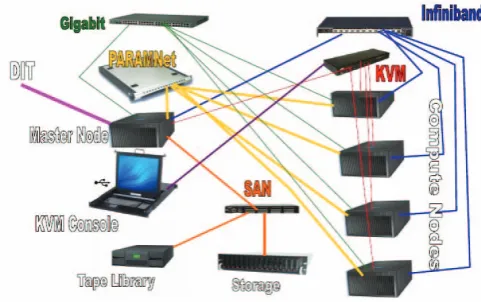
Fig. 1. The architecture of SERENGETI Supercomputer Courtesy of Centre for Development of Advanced Computing (C-DAC)
The SERENGETI Supercomputer of DIT is part of the project sponsored by the Government of India that created a Centre of Excellence in ICT (CoEICT), which has been hosted by DIT. This project was part of a memorandum of Understanding (MoU) that was signed between the Government of the Republic of India and the United Republic of Tanzania. The SERENGETI project was implemented by Centre for Development of Advanced Computing (C-DAC) and DIT, and the SERENGETI Supercomputer is based on indigenous technologies integrated and developed by C-DAC. C-DAC provided technical assistance for system installation, maintenance and administration, and provides a resident engineer for technology transfer in HPC.
C-DAC set up a Linux based Supercomputer cluster with an interconnect named SERENGETI at DIT. This facility is a national facility that has been deployed and hosted in DIT. The supercomputer cluster has a high speed network built using PARAMNet III High Performance Low latency Interconnect, Storage Area Network (SAN) of 20TB of storage and 12TB of tape backup along with relevant backup software, and essential management software is installed. In addition, the facility includes a backup network based on Gigabit Ethernet technology. The aim of the SERENGETI Supercomputer is to support education of HPC and advanced research in Tanzania including support for curriculum development in computer science and engineering in Tanzania. The facility can currently be used to run various applications in the field of scientific applications for educational purposes. These applications may include: weather forecasting, computational fluid dynamics, bioinformatics, finite element analysis, oceanography, seismic research, material modeling, climatology, and data visualization. This facility is ported with clustering software, tools, debuggers and compilers along with parallel programming tools with all licenses.
An initiating event for acquiring clusters of the RANGER supercomputer activities at DIT was the SADC High Performance Computing (HPC) Workshop that was held in February 2011 in Cape Town, South Africa. The leading thought of the workshop was that HPC has huge potential as an enhancing factor for innovation within the SADC nations, and as an enabler for competitiveness. In addition, HPC was considered to have high potential in helping to address various socioeconomic challenges that could benefit from research
activities. Outlined examples of such areas for benefits included research in gene alignment and sequencing, climate change models, mitigation of communicable diseases, and drug discovery, all of which would hold potential in increasing the capacity of the SADC region in dealing with these challenges. One main outcome of the SADC HPC workshop was the donation of RANGER supercomputer from Texas Advanced Computing Center (TACC) at University of Texas, Austin, USA, to be co-hosted by the United Republic of Tanzania in DIT and Republic of South Africa in Meraka Institute.
The RANGER, when installed in the US in 2008, was benchmarked at 504 teraflops in performance. Each year, RANGER has provided more than 500 million hours of computing time to the science community, performing well over 200,000 years of computational work in the areas of weather predictions, financial simulation, big data analytics, vehicle crash tests (virtual tests), subsurface oil exploration, airplane design and animation movies.
The operating system of RANGER is Linux (based on a CentOS distribution). The system components are connected via a full-CLOS InfiniBand interconnect. Eighty-two compute racks house the quad-socket compute infrastructure, with additional racks housing login, I/O, and general management hardware. Compute nodes are provisioned using local storage. Global, high-speed file systems are provided, using the Lustre file system, running across 72 I/O servers. Users can interact with the system via four dedicated login servers, and a suite of eight high-speed data servers. Resource management for job scheduling is provided with Sun Grid Engine (SGE). One of the main requirements for the donation of RANGER, in addition to provision of the physical facility and space, the datacenter requirements, heat, ventilation and air conditioning, was that the receiving institute (DIT) must have a curriculum of computer science or computer engineering or engage in research that demands high performance computing for civilian purposes.
B. Introducing HPC into DIT curriculum
After the HPC activities started at DIT including both RANGER for academic purposes and PARAM SERENGETI for educational uses, one active area has been to integrate HPC into the DIT engineering curriculum, and DIT is currently taking initial steps to introduce HPC into its curriculum. The visions for future include training students to understand HPC well, and to connect their coursework with research projects, research groups, and research efforts that can use HPC. Those may include the research projects that DIT is currently hosting, for example in the areas of forestry, biotools for water quality monitoring, e-infrastructures, drug management applications, community health services, living lab frameworks for innovation support, wireless monitoring in aquaculture systems, and clean energy research. Also building connections to other universities’ and research institutions’ work is important.
The module High Performance Computing (9 study credits) has currently been taught for two academic years (2012-2013 and 2013-2014). The intended learning outcomes for the module have been set as follows:
computers, and to use these to understand the tradeoffs between different designs.
• To understand how to apply Flynn’s taxonomy of parallel computer architectures, and to understand the distinction between shared memory and distributed memory parallel.
• To understand Amdahl’s law, parallel efficiency, and scalability, and to understand the main causes of inefficiency in parallel systems.
• To gain skills to design and implement simple parallel programs using shared memory and message passing constructs.
• To gain skills to design and implement simple parallel programs using MPI, OpenMP and CUDA. The course has been taught through a set of lectures, laboratory work and guided independent work. The assessment of the course has been based on continuous assessment of student progress (40%) and end of semester examination (60%).
II. RELATING TO EXISTING THEORIES AND WORK This section will outline a pedagogical framework and other studies that are related to teaching HPC. There are currently no studies available about teaching HPC in Tanzania or in the SADC region, or in SSA. However, studies about challenges in relation to teaching and learning computer science and information technology at higher education level in Tanzania and other developing countries do exist, which makes a reasonable connection point for understanding the development of teaching HPC from both the teachers’ and the students’ perspectives.
A. Pedagogical Framework
In recent years, a number of IT education programs have been launched in Tanzania, and other developing countries. One typical way has been to copy the curriculum as well as the pedagogical approaches directly from western institutions, but the weaknesses of this approach have been well known already for some time [2], [3]. It has been argued that understanding the local aspects of education as well as the social, cultural, and physical factors that are affecting the educational situation should be understood well [3].
Common challenges include lack of relevant jobs, poor literacy, poor background in science, lack of industry-academia interaction, and lack of internship training in industry [3]. On the other hand, implementing western pedagogical practices, such as problem-based learning into the developing world has faced many challenges [4]. Factors that affect especially Tanzania include educational infrastructure, facilities, university organization, competence of staff, but most importantly, differences in pedagogical viewpoints [5], [6].
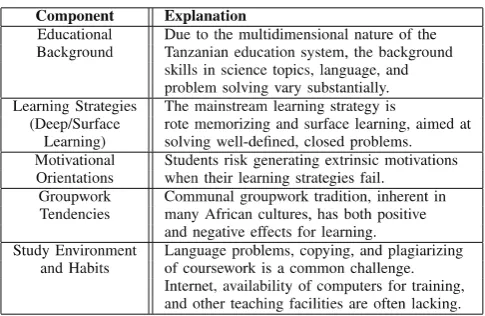
TABLE I: FIVE-FACTOR MODEL OF CHALLENGES IN PROGRAMMING COURSES [10]
One critical challenge is that that promising engineers cannot always find a proper context for using and developing their skills further. A study in Botswana showed that IT graduates rarely ended up in software development or information systems related jobs, but typical job descriptions were “user support and training”, “system administration”, and “network administration” [7]. Another study [8] argued that in Africa, in too many cases “graduates leave universities: 1. jobless, 2. without the capacity to find solutions for African problems, 3. pressurized by the family that expects their support, since they have helped them to reach that point, 4. brain draining from rural areas to cities or other countries when the opportunity arises”.
[image:3.595.309.552.54.212.2]The cornerstones of training competent computer and soft- ware engineers are computer programming, other core computer science areas such as data structures, concurrency, networking, all of which are related to each other. This section introduces a pedagogical framework that is based on studies conducted in a Tanzanian university-level IT program for understanding the challenges of teaching and learning programming [9], [10], and other computer science topics. The pedagogical framework is explained in the forthcoming sections, and is summarised in Table I. This study utilises this pedagogical framework in analysing the research data to find similarities and differences in teaching HPC and the results found in other studies about pedagogical challenges.
1) Educational Background: The multidimensional nature of the Tanzanian education system [11] generates a situation where students’ educational backgrounds may vary substantially depending on the quality of primary and secondary education, which may differ substantially between locations and between private and public schools. Primary and secondary education faces severe shortages in terms of competent teachers, educational equipment, facilities, and resources in general [12]. Teaching in Tanzania has been criticized for too much reliance on rote-memorizing and surface-level learning [13], which is common in other parts of Africa as well [14], [15]. In a study about teaching programming in Tanzania, the teachers considered students’ mathematical backgrounds to be insufficient [9].
to have two qualitatively different approaches to learning. The deep approach aims for a thorough understanding and involves intense studying and problem solving, while the surface approach is based on memorizing material in order to pass exams [16]. A large amount of research has demonstrated the superiority of deep learning in producing higher learning outcomes [17]. In Tanzania, the educational background may result in students orienting towards surface learning, which is inappropriate for learning programming and computer science topics. Changing the dominant learning approach involves the need for students to learn how to master the deep learning approach, including new problem-solving skills and the ability to actively learn by experimenting in a constructive manner. To support the switch to a different set of cognitive and metacognitive skills that students are used to poses a challenge for teachers of computer science [9].
3) Motivational Orientations: In previous research about Tanzanian IT programs [9], students’ motivational orientations have been observed through self-determination theory [18], which differentiates between intrinsic motivation and extrinsic motivation. In intrinsic motivation, the learning activity is characterized by interest, enjoyment, and satisfaction. In extrinsic motivation, activities are performed mainly to satisfy external demands, and often involve feelings of being controlled, not valuing an activity, not feeling competent to do it, or not feeling that the learning activities can result in a desired outcome [18]. According to the literature, extrinsic motivation is connected with surface learning approaches, while intrinsic motivation connects with deep learning [19]. Extrinsic motivation has been found to grow within IT students if they do not see a connection between learning computer science topics and their future work, if they consider the learning activities as excessively hard, or if they possess erroneously negative views about their own abilities to learn [9].
4) Groupwork Tendencies: It has been found that Tanzanian IT students strongly prefer working in groups [9], and group work has also been found to be deeply rooted in many African cultures [20]. While group work has many positive sides in learning, the help that students are willing to give other group members sometimes manifests in unproductive ways if the focus of a group is to use the skills of the most competent members of the group to complete assignments [9]. On the other hand, well functioning group work dynamics provides a basis for learning which has strong potential. Groupwork based learning can be seen to be in direct contrast to more individually oriented learning environments that are typically found in Western institutions [9]. From the teacher’s perspective, how to direct group learning in the most productive ways in terms of learning poses one challenge in Tanzanian information technology higher education.
5) Study Environment and Habits: Challenges that originate from extrinsic sources of motivation and surface learning approaches may result in unproductive activities such as plagiarism and copying of coursework [9]. While all higher education institutions strongly discourage such activities, it has been found that in some cases it takes time for new students to learn the academic rules [21]. Other environmental challenges identified by previous research include scarcity of facilities, limited access to computers and equipment, limited access to the
Internet, and resource limitations in terms of learning materials, software, hardware and IT support [9].
III. RESEARCH APPROACH
The aim of this research was to investigate the students’ perceptions about issues affecting HPC education at this particular university. The research question for this study was: “What are the students’ perceptions about improving HPC education?” The students’ viewpoints were studied by using a mixed-methods research design [22], and more specifically an exploratory sequential design where qualitative exploration is followed by quantitative data collection [22].
First, two group interviews were conducted. The first interview was conducted with the five top performing students in the HPC course, and the second was conducted with five other randomly chosen students from that same course. The first group consisted of five males, and the second group of four males and one female. The interviews were conducted at an office in College of Business Education (CBE) campus, and each interview took approximately one and a half hours. The interviews were built around the themes “Biggest obstacles in learning HPC”, and “Ways to improve teaching of HPC.”
Second, the interview data were analyzed by identifying central themes from the collected research data. This was done independently by the researchers of this study. Based on the identified themes, a questionnaire was generated and was administered for a comprehensive sample (n = 90) students who had taken the course on HPC. The questionnaire received a 45% (n = 41) response rate. The collected quantitative data were analysed both by using basic descriptive statistics, as well as basic measures of statistical association in relevant parts.
IV. FINDINGS
The research results of this study are divided to two sections. The next section (Section IV-A) will present the results from the qualitative data collection and analysis, followed by results from quantitative data analysis (Section IV-B).
A. Interview Data
The next subsection will present results from the group interviews. The interviews brought out a number of themes that were partly similar to other studies conducted in Tanzania about information technology and computer science higher education, but also presented issues unique to this learning environment and to this specific course topic. One of the important things that the results reveal is that the students’ views about improving the HPC course are well aligned with generally acknowledged development challenges in relation to education. The broad themes that were identified from the interview data were:
curiosity towards HPC as a topic, perceived relevance of HPC, lack of problem-based orientation, technical orientations, learning environment challenges, and background education.
most interesting topics ... it helps to understand many things ... like how can international tech companies manage millions of users in the server.”
The data also revealed that motivation was boosted by the novelty value and uniqueness of having HPC in their curriculum and having the only supercomputer of the country in their institution. A student explained: “HPC is one of the interesting subjects, in Tanzania it is just starting .. new .. because we are the first students in DIT to take that course.” Possible future uses for HPC were also visioned: “Because our population is growing. We have many challenges. I see this as very promising. It is a very nice endeavour for this country.”
The second theme, which was brought out from the interview data was perceived relevance of HPC. This theme showed that, while curiosity towards the topic had a positive impact on motivation, the perceived relevance of the topic, and the perceived applicability of the learned knowledge and skills to one’s future career affected motivation towards HPC negatively: “I have been trying to get some ideas about how to
[boost my career], hoping that in the near future I can work somewhere where they have this, you know, but up to now I have not found any places.” Another student noted: “So I am stuck with this bunch of knowledge, this urge to [apply and develop it] ... but I don’t know how to apply that knowledge.” This was in some cases considered to apply to other study topics also, and is related to the complex and challenging situation of lack in available software related jobs in Tanzania: “Even now we are trying to do something that helps us to employ ourselves” ... “The jobs are not available.”
The data revealed two contradictory factors affecting on students’ motivation: the positive impact of personal development and interest and the low perceived connection between studying HPC with the students’ future career.
The third theme, which the interviews brought out was lack of problem-based orientation. This was considered to be high priority, and a big challenge both in teaching HPC as well as in many other courses in the curriculum of the university. A student explained: “[problem-orientation] is the most thing I have always wanted. To have the skills that can help me do something. I am not interested in filling my head with some theoretical knowledge.” Another student commented in relation to another study topic: “They just teach that there is a linked list and this and that but actually, how can I apply when I am writing a software or a program, they start at the middle and end at the middle. You need to know how to apply data structures.”
The students were aware of the pedagogical models used for example in some institutions in the US, and all students considered problem-based and project-based learning to be of utmost importance for the future of this institution also. One student explained: “For example, there were students from Harvard, they came, and helped us, we discussed with them, they told us that they study 4 hours per week, or two days per week, and rest of the days they use for assignments ... So the assignments are project-based. Something like that would be very very helpful.”
The fourth theme that was brought from the interview data was different technical orientations that the students seemed to
have. For example, one student noted: “I am so interested in data mining and big data ... and I think if I will study in the future, I am going to do masters in these kind of things, so HPC is very interesting to me”. Another student noted: “Actually for me, it [most interesting topic] is graphical design. Because I design some of the posters. I got some money. It has become useful compared to other skills that I have never been able to drive them effectively”. In relation to this, as one development suggestion for the curriculum, it was suggested that there would be different tracks for differently oriented students. A student commented: “HPC and other related topics could be like an option to choose, with other core subjects, to get very interested people to the subjects, so people would choose, people would select.”
The fifth theme that the interview data revealed was
“Learning environment challenges.” This theme consisted of a number of factors that were perceived to have an impact on teaching and learning. In general, low resources in relation to computing and teaching equipment, practice halls, and learning materials was considered to be a serious challenge. Another issue was time-allocation between courses in terms of fixed timetables, which was sometimes considered to cut down possibilities to focus on topics of students’ own interests. Other topics included: a tendency of copying coursework, assignments and exam questions between students; predictable exam questions; group work issues in cases where the work of a student group manifests in unproductive ways; a perceived insufficiency in regards of prerequisite courses (concurrency, networking, programming), and a need to restructure the order of the courses in order to support more efficient learning of the prerequisites; time constraints resulting from a high workload from other courses that students took at the same time with HPC. The final broad theme brought out by the interview data was background education. This included some of the students’ low educational backgrounds, and was related to intake procedures of the graduate program, and brought out the need for supplementary training. A student explained: “Sometimes, a teacher may need to prepare learning materials in the most simplified ways ... Because most of the students are not coming from these urban places... The first year I was taking my diploma, in our class, there were some of the students who saw the computer for the first time ... Like this is the mouse ... Now, these students are given PDF documents, with so many complicated jargons about computing ... all that ... one thousand pages. Then he may end up looking for shortcuts [copying of coursework, cheating], if he finds answers somewhere, ...” B. Questionnaire Data
The questionnaire was generated by combining the broad themes together with related literature, resulting in a structured questionnaire based on the results from qualitative data analysis. The questionnaire contained demographic data (gender, age, and study year), and 41 items on a seven point Likert scale (1=not at all true, 2=very little true, 3=slightly true, 4=moderately true, 5=quite true, 6=very true, 7=completely true). The survey was administered to all students that had completed the HPC course (n = 90), and received a response rate of 45% (n = 41).
years, 62% to the age group of 23–26 years, 21% belonged to the age group 27–35 years, and 14% were over 35 years old. 72% of the respondents had already completed all their coursework at DIT, and were waiting for graduation, while the rest 28% were still completing their studies.
The results from the questionnaire supported the findings from the interviews that most students are highly interested towards HPC as a topic of study. The response for the statement
“To me, HPC is a very interesting topic” resulted in a mean of 6.14 with a mode of 7 (completely true). It seems that HPC was indeed very interesting to many students. The statement “If I had the choice, I would study more HPC related topics” resulted in a mean of 5.43 with mode 6 (very true), and the statement
“Developing teaching of HPC is very important for the future of Tanzania” resulted in a mean of 6.57 with mode 7 (completely true).
In regards of the perceived applicability of HPC to students’ future careers, the quantitative data showed that most respondents perceived HPC as relevant to their future careers, with the statement “Learning HPC is not very relevant to my future career” resulting in a mean of 2.39 with mode 1 (not at all true). However, the students’ perceptions about how HPC would be relevant to their future career varied. The responses to statement “For me it is clear how I can apply the skills learned in HPC in my future career” were divided with a mean of 4.07 (ı = 2.089) and modes 2 (very little true) and 4 (moderately true). The response to statement “Learning HPC does not help me to find a job” resulted in a mean of 4.21 with mode 6 (very true). Thus, the quantitative data did not confirm that students do not see a connection between HPC and their future (qualitative data), but quantitative data showed that students actually saw a connection between HPC and their future careers, but were unsure about the exact nature of that connection.
Quantitative data confirmed that most students perceive lack of problem-based and practical learning to be a big challenge in learning HPC but also more generally on whole curriculum-level. The statement “Lack of practical learning is a big challenge in many courses at DIT” resulted in a mean of 6.11 and mode 7 (completely true). The statement “The amount of practice in the HPC course is enough” resulted in a mean of 2.32 with mode 1 (not at all true). In addition, statement “Many of the courses at DIT are too theoretical” resulted in mean 5.36 with mode 6 (very true), and the statement “Too many courses in DIT includeonly reading books” resulted in mean 4.64 with mode 6 (very true).
In regards of students’ varying interests and perception of providing differently oriented students with optional study paths, the statement “The DIT curriculum should have different study paths for students of different interests” resulted in mean 5.75, mode 7 (completely true). However, in regards of the HPC course, the statement “HPC should be an optional course in the DIT curriculum” resulted in mean 3.21 with mode 1 (not at all true), which indicates that a large part of the respondents consider that HPC should be given to all students. Thus, the support different study paths as a good idea. However, they consider HPC as a topic that should be given to everyone.
The fourth theme that was brought from the interview data was different technical orientations that the students seemed to
have. For example, one student noted: “I am so interested in data mining and big data ... and I think if I will study in the future, I am going to do masters in these kind of things, so HPC is very interesting to me.” Another student noted: “Actually for me, it [most interesting topic] is graphical design. Because I design some of the posters. I got some money. It has become useful compared to other skills that I have never been able to drive them effectively.” In relation to this, as one development suggestion for the curriculum, it was suggested that there would be different tracks for differently oriented students. A student commented: “HPC and other related topics could be like an option to choose, with other core subjects, to get very interested people to the subjects, so people would choose, people would select.”
At curriculum level, plagiarism was found to be a serious challenge in the students’ perception. The statement “Answers to exam questions can be easily found from internet or other sources” resulted in mean 4.61, with mode 6 (very true), and
“Students at DIT often copy coursework from the internet or from each other”, resulted in mean 4.68, with mode 5 (quite true). In regards of the students’ background education, that was perceived to be a major issue, and the statement “The students’ educational background is a big challenge for learning”
resulted in mean 5.43, with mode 7 (completely true). Another statement “In DIT courses, the learning materials are too difficult for first year students”, resulted in mean 4.11, with mode 5 (quite true).
The free improvement suggestions emphasized the improvement of practical learning activities, both in quality and in quantity. One representative list of improvement suggestions is as follows: “1. providing much practical training + assignments, 2. promoting HPC to various sectors i.e. farming, irrigation, wether forecasting, industrial, etc. so as to increase employment areas, 3. supplying adequate HPC background to lower levels i.e. certificate & diploma levels, 4. Enough lectures on HPC are required, 5. Providing awards to well performed students on HPC module.” Another respondent commented:
“Nice lectures but more practicals should be added, both in hardware (like architectural design / supercomputer system design) and in software (this include parallel & serial programming exercises and testing performance/computing ability of a complex problem in a supercomputer and in a normal computer).”
TABLE I: STUDENTS’ PERCEPTIONS TO CHALLENGES IN LEARNING HPC: BROAD SUMMARY OF MOST RELEVANT
V. DISCUSSION
Table II broadly summarizes the most important aspects of the research data. The results of this study strengthen our understanding about the factors that contribute to the challenges of teaching and learning HPC, as well as other topics of the curriculum. We wanted especially to go deeper to the issue and view it from the student perspective to gain a broader understanding about different sides of the learning and teaching equation. Many issues revealed by this study were partly similar compared to those identified in previous studies about Tanzanian information technology higher education, but some of the issues were unique to this context and this course.
First, the interview data revealed two broad factors that were found to have have an impact towards students’ motivation about HPC. The positive motivation of curiosity towards HPC as a topic was offset by the low perceived relevance of HPC to students’ future careers. However, the quantitative data deepened the issue by confirming the students’ high curiosity towards the topic, but by rejecting the claim that students perceive HPC as irrelevant for their future career. Instead, the quantitative data showed that students did not perceive HPC as irrelevant for their future, but they were unsure about he exact nature of the connection. Thus, these results about motivation are partly aligned with previous research about Tanzanian information technology teaching and learning, where it was found that a perceived relevance of teaching topics to one’s future career did cut down motivation [9].
However, the issue of students’ future careers is relevant curriculum-wise and poses a challenge as the software industries and other technology engineering related jobs are only starting to become available in Tanzania. Possible solutions may include establishing connections with entrepreneurship training hubs, incubators, and other services that are emerging in Dar es Salaam. In the future, it will be important to build connections to potential possibilities in HPC computing that may be found for example in academic fields and research groups.
Second, lack of problem-based orientation was confirmed as a major challenge both by the qualitative as well as the quantitative data. The challenge has been identified in previous research about Tanzanian information technology education [9]. The lack of constructivist pedagogies has also been recognized as a country-wide educational challenge in all levels of
education (see for example: [13]). Although the Ministry of Education in Tanzania has, already for a good number of years, strongly advised towards constructivist pedagogies, learning is often still based on rote-memorizing of facts presented by a teacher [14], [15]. The higher education curricula used to be geared towards producing civil servants and public sector employees, and it has been argued that partly because of the history of higher education, “graduate skills do not appear to match the needs of the employment system in the changed national and global environment” [23].
Third, the different technical orientations of students and their varying interests in the different topics of the curriculum opens up the question of whether it would be reasonable to open up varying tracks for the studies. As some students are more oriented towards topics such as graphical design, and some are more interested in core computer science topics such as networking, data mining and HPC, the possibility of separating the curriculum into core and optional parts, is something to consider. Opening the learning environment in this way would also support students’ autonomy in selecting their study paths, and could probably increase their motivation towards studies. It is worthy of note that while students considered differing study paths as a good idea, they still considered HPC to be so interesting that it should be given as a compulsory course to all students.
Fourth, other learning environment challenges that the re- search data revealed include deficiencies in teaching equipment, practice halls, computers, learning materials, and all resources in general. However, HPC students did not con- sider access to computers as a restricting factor compared to deficiencies in prerequisite knowledge and lack of problem- based orientation. In relation to recruiting more teachers, some restrictions apply. For example, the widely used practice in universities worldwide to hire the most competent students as teaching assistants or teachers is partly restricted by a law which requires all hiring in universities to be based on an open call. This regulation makes it complicated for an institution to hire someone they want, for example a top performing student from their own class.
A. Pedagogical Considerations and Practical Suggestions
While it is an important step to acknowledge the pedagogical as well as other challenges that have an impact on teaching and learning of HPC and other computer science topics, finding effective ways for solving the pedagogical challenges is at least equally important.
in other universities around the globe, but with necessary contextual adaptations. Fresh classroom interaction teaching styles might also be introduced, which can be designed for example based on the coding-while-lecturing techniques, where programming and other computing activities are performed by the teacher in addition to and instead of typical lecturing.
Possible practical improvements to the learning environment would include utilisation of educational technology, such as MOOC-based learning platforms, automatic assessment, and code visualisations. Connections should be drawn to existing and new research activities and research groups, such as those described in subsection I-B above, and projects underway in other universities and research institutions in Tanzania, such as at the College of Business Education (CBE) (see research projects [24]) and at the University of Dar es Salaam (UDSM).
One important thing is that development, teaching, and research efforts are not restricted to only teaching of HPC, but in the best case, they would be comprehensively aligned with other courses in the DIT engineering curriculum. This requires collaborative efforts between the teaching staff, administration, and students. The pedagogical suggestions apply not only to HPC, but also to other courses that are taught in the curriculum of DIT.
[image:8.595.92.229.560.680.2]It is important to add educational action research (for example: [25]) as a part of the improvement efforts to gain more systematic understanding about different proposed educational interventions, and the benefit of, for example different educational technology tools. This can include for example the utilization of an action research based model of extending the traditional teaching activities by adding several research-oriented activities to the teaching. For example, the teaching activities can be extended by conducting, in a cyclical process, a background study, a literature study, a detailed plan for teaching, designing of teaching, teaching and researching in collaboration with teachers, students, researchers, and other participants of the study by using observations, interviews, surveys and controlled experimental research setups, then combining the results systematically, and iterating the cycle (see Fig 2).
Fig. 2. Cycle of activities in research based teaching [10]
VI. CONCLUSIONS
Dar es Salaam Institute of Technology (DIT) is taking the initial steps in introducing HPC into its curriculum. However, providing an optimal learning environment for the HPC students faces a number of challenges, which originate partly from curriculum-level challenges in teaching computer engineering, as well as from background factors including the country's educational system and educational history. Thus, the equation of integrating a new topic that involves teaching hi-tech knowledge and skills is not straightforward.
This paper has outlined a number of learning and teaching related challenges that apply to teaching HPC as well as to other topics in the curriculum. The paper has also made a number of concrete suggestions about the way forward in improving the teaching and learning of HPC at DIT. The efforts in developing teaching of HPC into a well-functioning part of the curriculum, integrating the HPC learning activities with ongoing academic research, and providing top performing students with pathways to the world of academic research that is related to supercomputing holds huge potential for the future. As in other technology related educational development, technology cannot be transferred as is to a learning environment, but development of teaching and learning activities requires building the activities from a grassroots perspective. This article has provided some insights about how that may be done.
REFERENCES
[1] Dar es Salaam Institute of Technology, “The Curriculum for Higher Diploma in Computer Engineering Progamme (NTA-7),” Curriculum Information Report, March 2012.
[2] JK. Mgaya, “Development of information technology in Tanzania,” in Information Technology in Selected Countries, E. P. Drew and F. G. Foster, Eds. Tokyo, Japan: United Nations University, 1994.
[3] A. A. Zaky, “Developing engineers: Some reflections on university education in developing countries,” IEE Review, vol. 35, no. 6, pp. 229– 232, June 1989.
[4] M.Schweisfurth,“Learner-centred education in developing country con- texts: From solution to problem?” International Journal of Educational Development, vol. 31, no. 5, pp. 425–432, September 2011.
[5] J. Kemppainen, “Building ICT facilities for education in a develop- ing country. Analysis of an ICT project at Tumaini University/Iringa University College 2000–2004,” Master’s thesis, University of Joensuu, Department of Computer Science and Statistics, Joensuu, Finland, December 11 2006.
[6] M. Tedre, F. D. Ngumbuke, N. Bangu, and E. Sutinen, “Implementing a Contextualized IT Curriculum: Ambitions and Ambiguities,” in
Proceedings of the 8th Koli Calling International Conference on Computing Education Research, Lieksa, Finland, 2009.
[7] Y. Ayalew, K. V. Mgaya, J. Renken, and T. Z. Nkgau, “Developing a Contextualized Information Systems Curriculum for an Emerging Econ- omy,” The Electronic Journal on Information Systems in Developing Countries, vol. 52, no. 2, pp. 1–19, 2012.
[8] G. van Stam, “Towards an africanised expression of ict,” in Keynote address at Africomm 2012 Conference, Yaounde, Cameroon, October 2012.
[9] M. Apiola and M. Tedre, “New Perspectives on the Pedagogy of Programming in a Developing Country Context,” Computer Science Education, vol. 22, no. 03, pp. 285–313, 2012.
[10] M. Apiola, N. Moisseinen, and M. Tedre, “An Action Research Ap- proach for Designing CS1 Learning Environments in Tanzania,” in
FIE’12 Frontiers in Education Conference, Seattle, WA, USA, October 3–6 2012.
Literature Survey Background
Study
Teaching Plan
Research Design Teaching
Data Collection Analysis &
[11] A. F. Lwaitama, E. G. Mtalo, and L. Mboma, Eds., The Multi- Dimensional Crisis of Education in Tanzania: Debate and Action. Dar es Salaam, Tanzania: University of Dar es Salaam Convocation, 2001. [12] F. Vavrus, “The cultural politics of constructivist pedagogies: Teacher
education reform in the united republic of tanzania,” International Journal of Educational Development, vol. 29, no. 3, pp. 303–311, 2009. [13] S. Tao, “Why are teachers absent? Utilising the Capability Approach and
Critical Realism to explain teacher performance in Tanzania,”
International Journal of Educational Development, vol. 33, no. 1, pp. 2 – 14, 2013. [Online]. Available:
http://www.sciencedirect.com/science/article/pii/S0738059312000041
[14] G. Farrell and I. Shafika, Survey of ICT and Education in Africa: A Summary Report, Based on 53 Country Surveys, ser. ICT and Education Series. Washington, D.C., USA: infoDev / World Bank, 2007.
[15] L. Sikoyo, “Contextual challenges of implementing learner-centred pedagogy: The case of the problem-solving approach in Uganda,”
Cambridge Journal of Education, vol. 40, no. 3, pp. 247–263, 2010.
[16] F. Marton and R. Säljö, “On Qualitative Differences in Learning – 2: Outcome as a Function of the Learner’s Conception of the Task,” British Journal of Educational Psychology, vol. 46, no. 2, pp. 115–127, 1976 [17] K. Trigwell, M. Prosser, and F. Waterhouse, “Relations Between Teach-
ers’ Approaches to Teaching and Students’ Approaches to Learning,”
Higher Education, vol. 37, no. 1, pp. 57–70, 1999.
[18] R. M. Ryan and E. L. Deci, “Self-Determination Theory and the Facilitation of Intrinsic Motivation, Social Development, and Well- Being,” American Psychologist, vol. 55, no. 1, pp. 68–78, 2000. [19] S. L. Hoskins and S. E. Newstead, “Encouraging Student Motivation,” in
A Handbook for Teaching and Learning in Higher Education, 3rd ed., H. Fry, S. Ketteridge, and S. Marshall, Eds. New York, NY, USA: Routledge, 2009, pp. 27–39.
[20] J. S. Farrant, Principles and Practice of Education, 2nd ed. UK: Longman, 1981.
[21] S. Loft Rasmussen and E. Larsen, “Social empowerment through ICT education: An empirical analysis of an ICT-educational program in Tanzania,” Master’s thesis, IT University of Copenhagen, Copenhagen, Denmark, March 3 2008.
[22] J. W. Creswell, Research Design: Qualitative, Quantitative, and Mixed Methods Approaches, 4th ed. California, USA, Sage Publications, 2014. [23] L. K. Rutashobya and D. R. Olomi, “The making of an entrepreneur,” in
The Multi-Dimensional Crisis of Education in Tanzania: Debate and Action, A. F. Lwaitama, E. G. Mtalo, and L. Mboma, Eds. Dar es Salaam, Tanzania: University of Dar es Salaam Convocation, 2001, pp. 144–152. [24] M. Apiola, J. Suhonen, A. Nangawe, and E. Sutinen, “Building CS
Research Capacity in sub-Saharan Africa by Implementing a Doctoral Training Program,” Proceedings of the 46th ACM SIGCSE Technical Symposium on Computer Science Education, Kansas City, MO, USA, March 4–7, pages 633-638, 2015.

![Fig. 2. Cycle of activities in research based teaching [10]](https://thumb-us.123doks.com/thumbv2/123dok_us/9516821.457143/8.595.92.229.560.680/fig-cycle-activities-research-based-teaching.webp)
