Munich Personal RePEc Archive
The Impact of Recentralization on Public
Services: A Difference-in-Differences
Analysis of the Abolition of Elected
Councils in Vietnam
Malesky, Edmund and Nguyen, Cuong and Tran, Anh
15 August 2013
Online at
https://mpra.ub.uni-muenchen.de/54187/
1
The Impact of Recentralization on Public Services:
A Difference-in-Differences Analysis of the Abolition of Elected Councils in Vietnam
Edmund J. Malesky Associate Professor Duke University
Department of Political Science
Cuong Viet Nguyen Researcher
National Economics University Hanoi, Vietnam
Anh Tran Assistant Professor Indiana University Bloomington School of Public & Env. Affairs
Abstract: Comparative political economy offers a wealth of hypotheses connecting decentralization to improved public service delivery. In recent years, influential formal and experimental work has begun to question the
underlying theory and empirical analyses of previous findings. At the same time, many countries have grown
dissatisfied with the results of their decentralization efforts and have begun to reverse them. Vietnam is particularly
intriguing because of the unique way in which it designed its recentralization, piloting a removal of elected People’s
Councils in ninety-nine districts across the country and stratifying the selection by region, type of province, and
urban versus rural setting. We take advantage of the opportunity provided by this quasi-experiment to test the core
hypotheses regarding the decision to shift administrative and fiscal authority to local governments. We find that
recentralization significantly improved public service delivery in areas important to central policy-makers, especially
in transportation, healthcare, and communications.
Acknowledgements: We are grateful to Jairo Acuna-Alfaro and the United Nations Development Program (UNDP) in Hanoi for sharing the respondent-level data for the Public Administration Performance Index Annual Survey.Early versions of this paper were presented at comparative politics seminars at Columbia University, University of Madison Wisconsin, University of California – San Diego, and Stanford University, and Duke University. The project was also presented at the Australia National University conference on Applied Microeconomics Research on Vietnam, the Freiburg University Conference on Methodologies for studying Southeast Asia, and the Brown University
2 In the past few decades, few comparative political economy debates have been as exciting as those concerning
whether decentralization leads to greater public service delivery. The literature has offered a wealth of intriguing
hypotheses connecting greater public participation, oversight, and accountability (often through elected councils) to
a variety of local outcomes.1 Although these studies have been highly influential for policy decisions and
international aid activities (see World Bank 1994), more recent formal and experimental work has begun to question
their underlying theory and empirical analyses (Treisman 2007). At the same time, many countries have grown
dissatisfied with the results of their decentralization efforts and have begun to reverse them (Dickovick 2011).
Unfortunately, the literature is ill suited to offer empirical predictions on recentralization efforts for two reasons: 1)
recentralization is a new phenomenon and therefore is under-theorized; and 2) the extant literature on
decentralization is fiercely contested, offering few findings that withstand theoretical and empirical scrutiny.
In this paper, we attempt to address these oversights by taking advantage of a unique quasi-experiment in
Vietnam that sheds light on the effects of allocating authority to subnational governments. When Vietnamese
leaders first began to consider the removal of District People’s Councils (DPCs), the topic was hotly debated both
within the Communist Party of Vietnam (CPV) and the Vietnamese National Assembly (VNA).2 Advocates claimed
that DPCs complicated decision-making by adding an extra node to policy design and implementation, which led to
sustained hold-ups and extra costs in service delivery, infrastructure rollouts, and land conversion, all of which were
necessary for economic development (TPCS 2009). Opponents contested the proposal on democratic grounds,
arguing that the councils represented an important forum enabling citizens to check the power of leaders and rein in
local corruption (CPV 2010). The dispute was contentious enough that Vietnamese officials followed a grand
history of pilot programs in Marxist-Leninist regimes3 and confined the recentralization intervention to ten
provinces (containing ninety-nine districts); this decision allowed them to observe the effects of DPC removal in a
1
See Wibbels (2006), Bardhan and Mookerjee (2008), and Treisman (2007) for helpful reviews.
2 Debates took place at the 5th Plenum of the CPV Central Committee 2008 and the 4th Session of the 12th VNA.
3 contained setting before considering a full-scale rollout to Vietnam’s other fifty-three provinces and national-level
cities (National Assembly 2008).
What makes Vietnam particularly intriguing for researchers is the careful way in which it designed its
recentralization experiment. To ensure that the conclusions were not rooted in the particular selection of provinces,
officials stratified their selection by region, by urban versus rural, and by whether the province shared an
international border (GSRV 2009). In addition, they made sure to include provinces that varied in their initial
endowments, previous economic performance, and initial quality of public administration. Although not a
randomized control trial (RCT), the research design ensured balance on a range of pre-treatment covariates between
selected and non-selected locations. In other words, it is reasonable to consider the non-selected provinces a
plausible control group for isolating the causal effects of recentralization.
We take advantage of this quasi-experiment to test the core hypotheses of decentralization in the literature. Our
research design offers an overtime (diff-in-diff) analysis of real institutional change (not an artificial intervention)
with a clearly identified counterfactual performed at scale within one country; this design allows us to hold constant
the unobserved historical and cultural confounders that have limited previous work. As far as we know, this is the
first-ever empirical analysis with clear control and treatment groups on the abolishment of an elected council
affecting more than ten million people. The existing work on institutional change was conducted on a much smaller
scale and involved NGO or multilateral donor projects rather than national governments’ own initiatives and
ownership.
Studying a large number of services helps us avoid the temptation to cherry-pick particular outcomes that
confirm our hypotheses (Kramon and Posner 2012). We find that recentralization significantly improved a spectrum
of public services that were considered important to central policy-makers, ranging from quality of roads to
healthcare to the presence of post offices. By contrast, the intervention had no discernible effect on services
In a more speculative final section of the paper, we study the causal mechanism through which the DPC pilot
generated positive performances for services favored by central leaders. There are three candidate mechanisms that
might explain these results, including the removal of vertical accountability to citizens and improved efficiency
resulting from bureaucratic restructuring. We demonstrate that the most compelling explanation, however, is that
the pilot unblocked elite capture of the policy-making process. As researchers have argued in other contexts, the
purported benefits of decentralization for grassroots monitoring (Cheema and Rondinelli 1983; Huther and Shah
1998) can be undermined by local elites (politicians, businessmen, notables), who take advantage of their
concentrated political resources to manipulate public decisions in their favor (Reinikka and Svensson 2004; Bardhan
and Mookherjee 2006; Campos and Hellman 2005). We probe the observable implications of the elite capture
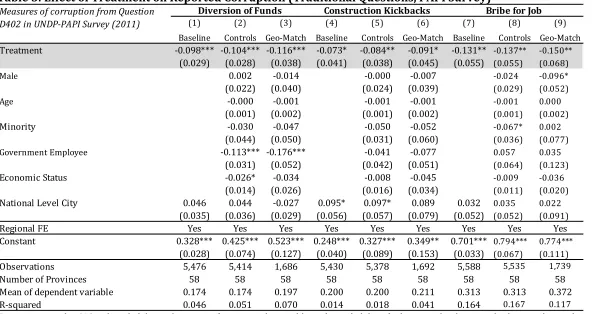
mechanism through a nationally representative public opinion poll of 9,452 respondents (UNDP 2011), showing
how recentralization reduced elite corruption in treatment districts.
1. The Literature on Decentralization
The past two decades have brought forth a rich debate in political science on the relative merits of locally
elected governments. Camps of scholars and practitioners disagree on the theoretical benefits of granting authority
to subnational units and the lessons learned from extant empirical work. At the same time, the rapid spread of
decentralization worldwide, which at its peak led to elections of local governments in 90% of countries around the
world (Rodden 2006), has subsided. A recent World Bank review of almost 500 studies reveals that the excitement
about the benefits of locally elected bodies was not met by real-world improvements in outcomes (Mansuri and Rao
2013). As a result, Argentina, Brazil, Chile, Columbia, Uruguay, South Africa, and a number of other countries have
Types of Decentralization
It is important to be clear from the start about where the Vietnamese DPC pilot fits into larger debates in the
literature. The pilot involved a specific Vietnamese governmental unit (the second-tier district) and a specific body
(the directly elected legislature). Scholars generally distinguish between modes of decentralization according to three
considerations:
1) The arenas in which power has been granted to local authorities: fiscal, administrative, or political (Faletti 2010;
Green 2005). A series of legal documents developed prior to the pilot provided DPCs with important fiscal
authority (over budget allocation, approval, and implementation). DPCs also have the authority to elect and remove
any member of the local executive (the District People’s Committees (DPCOMs)), procuracies, and courts. In
addition, they have oversight powers over all People’s Councils and People’s Committees of communes within their
jurisdiction.4 Thus, there are elements of fiscal and administrative decentralization (Fforde 2003). The DPCOM was
not removed in the pilot, however, so this is only partly administrative recentralization. National legislation on local
governmental organization also claimed to influence political decentralization through the DPCs’ universal election
by district citizens, but thisclaim is contestable. In fact, a key feature of the debate in Vietnam has concerned the
extent to which the DPC elections are actually democratic and the extent to which they provide downward
accountability to citizens (Nguyen Anh 2010).
2) The extent of the power provided: deconcentration, delegation, or devolution (Cheema and Rondinelli 1983; White
and Smoke 2005). Disentangling these three distinctions is tricky; most governments experience different types of
decentralization at the same time (Grindle 2007). Nevertheless, it is fair to say that the DPCs, because they are
under the hierarchal oversight of the Provincial People’s Council (PPC) and the leadership of the CPV, are
predominantly recipients of powers of delegation: their independent decision-making is highly circumscribed. The
ongoing recentralization experiment essentially makes district leaders agents of the province and thereby reinstitutes
deconcentration to the leaders of the treatment provinces. Following O’Donnell (1994), we can say that the move
toward recentralization has shifted oversight of DPCOMs from horizontal accountability by DPCs to upward
accountability to provincial overseers.5
3) The level or node in the government hierarchy invested with authority: first tier (Rodden 2006), second tier
(Bardan and Mookerjee 2008), or below. The Vietnamese DPC is a second-tier unit, as it is accountable to the
provincial authorities above it and oversees the communes below it. What differentiates this study from previous
work on subnational elections in single-party regimes (see Tsai 2007 and Martinez-Bravo et al. 2010) is that the
district is an official part of the Vietnamese hierarchy, as opposed to the villages analyzed in China, which have very
limited authority.
The Costs and Benefits of Decentralization
The literature on decentralization is rife with controversy. A strong theoretical literature linked to some of the
most esteemed political thinkers has proffered a range of positive benefits to local engagement in politics. More
recently, a formal economic literature has generated a series of positive hypotheses regarding public service delivery
and economic performance.
Specifically, economists have argued that greater local authority in decision-making improves the efficiency of
public service delivery, because government outputs can be provided in small units and tailored directly to local
tastes (Oates 1972; Besley and Coate 2003). In addition, decentralization creates competition for capital and labor,
leading to improved governance outcomes; brings decision-making closer to citizens; and limits the role of central
government intervention in economic performance (Tiebout 1956; Inman and Rubinfeld 1997). Lab experiments by
Walker et al (2000) and Kroll et al (2007) provide suggestive evidence for the link between direct democracy and
efficient public good provision under ideal conditions. Furthermore, Hamman et al. (2011) find that democratic
5 Note that O’Donnell (1994) did not address upward accountability. He differentiated the horizontal accountability
delegation helps lab subjects avoid the free-rider problem and frequently achieve more efficient and equitable social
outcomes. Similar results are also found in psychology experiments (e.g. Wilke et al. 1986)
As Wibbels (2006) notes, however, work in political economy has laid bare the underlying assumptions of
decentralization theories (Weingast 1995) and in many cases has demonstrated that they are not met. Thus, the
economic benefits of decentralization often fail to appear in practice (Prud’homme 1995). Citizens and
entrepreneurs are often not fully informed about which level of government provides a particular service and
therefore either cannot take advantage of relocation (Rodden and Rose-Ackerman 1997) or are simply limited in
their mobility due to sticky labor markets and cultural differences within a country (Pepinsky and Wihardja 2011).
Newly empowered local authorities may not have the needs of citizens at heart, and they may not understand local
preferences better than their national counterparts (or than agents of the central government in the localities) (Cai
and Treisman 2004; Treisman 2007). A number of scholars have found that there is actually no clear division of
authority between the different nodes in a multi-tiered government (Bolton and Farrell 1990). As a result, service
delivery may even be less efficient, as decisions and implementation are held up by different levels of government
(Cox and McCubbins 1992; Treisman 2007) or by the loss of scale economies in provision as services are divided up
too narrowly (Bardan and Mookherjee 2008). In the language of the discipline, decentralization increases the
number of veto points in policy making, which biases toward status-quo policy choices and service provision
(Tsebelis 2002) so that multiple levels of government jointly provide poor public goods (Volden 2005; Wibbels
2005). Correspondingly, a lab-in-field experiment by Grossman (2012) suggests that centralized decision-making
(via democratic institutions) improves group outcomes.
Most importantly for our research, a subset of this literature has found that decentralization can actually
facilitate capture of the policy-making apparatus by local elites, especially by wealthy notables and large enterprises,
creating a company town atmosphere in which elections are undermined and policy is diverted to the benefit of the
powerful at the expense of other citizens (Reinikka and Svensson 2004; Campos and Hellman 2005).
H1: The removal of local councils will increase the efficiency of public service delivery.
Of course, recentralization may not have the same impact on all public services equally. More likely, recentralization
may shift public services closer to the priorities set by the central government over those favored by the locality.
Martinez-Bravo et al. (2010) demonstrate that village elections and increased downward accountability in China
generated policy outcomes that were associated with local preferences. In this paper, we hypothesize that removing
locally elected councils will have the opposite effect.
In general, we can group Vietnamese public services into three very broad categories. The first category includes
transportation and communication infrastructure, such as local roads, public transport, post offices, radio, and
television networks. The second category includes health and education services to citizens, such as preventive
healthcare, health insurance, and local schools. The third category includes localized employment generation
programs, such as household business support, agricultural extension, veterinary services, tax exemptions,
subsidized credit, and the construction of market places.
The Vietnamese central government funds all categories of public services, but clearly gives top priority to
infrastructure, followed by health and education. Following an economic model in which state companies control
the leading national industries and give priority to large investors (both foreign and domestic), the central
government has offered little support to private, household farms and businesses. This order of priorities was made
clear in the 2001-2010 National Strategy for Socio-Economic Development (Central Committee 2000), which states:
“Infrastructure must move first to meet demands of socio-economic development as well as of national
defense and security. The transport system is to be smooth and safe all the year round, and modernized. The
rural transport network is to be expanded and upgraded. The dyke systems are to be fortified; the water
conservancy systems developed and most of them solidified. Electricity, telephone, other basic postal and
telecommunication services, dispensaries, solidly built schools, cultural and sports facilities are to be
schoolchildren to learn all-day at school. To provide enough hospital beds to patients” (“Strategic Goals
Section” 8-10).
The Strategy also emphasizes the leading role of government corporations (p. 10). The strategy discusses
state-owned enterprises (SOEs) at eleven points, while it mentions small and medium enterprises only three times.
Reducing agricultural output to 16-17% of the GDP and the employment rate to 50% of the total labor force are
considered two of the state’s “strategic goals.” These priorities have been operationalized in many official
documents, such as the National Five-Year Plan and the Action Plan of the Government.
Local citizens, however, seem to have a different order of priorities, according to Vietnamese responses in the
MyWorld survey. Out of 16 items, Vietnamese citizens prioritized: education (76%), healthcare (62%), responsive
government (51%), and job opportunities (45%). Better transportation and communications infrastructure ranked
much further down the list: water and sanitation (32%), transport and roads (31%), and phone and internet access
(15.4%).6 Further disaggregating preferences, health services are more frequently needed than educational services.
The 2008 VHLSS shows that 68% of citizens report that their families use local health services, while only 38% of
citizens report that their families use secondary schools. Thus, we expect:
H2. The removal of local councils will shift public service delivery toward the priorities set by the central government.
In particular, we expect that improvements in infrastructure for transportation and communication are more
likely than those in health and education, which are favored by both the public and the central government, and far
more likely than those in household farm and business support, areas in which the central government has
demonstrated little interest.
6 See http://data.myworld2015.org/ for details (see Online Appendix A for full results). The MyWorld survey is an
Extant Empirical Analyses
In addition to the theoretical limitations of the decentralization hypothesis, the literature has also been sharply
criticized for the quality of empirical evidence justifying the causal relationships hypothesized. Treisman (2007), for
instance, devotes the entire eleventh chapter of his book to demonstrating the contradictory empirical findings,
weak evidence, and lack of robustness of previous work. He summarizes his conclusions by quoting Litvack et al.
(1998).
“Much of the discussion of decentralization reflects a curious combination of strong preconceived beliefs
and limited empirical evidence…. It is not an exaggeration to say that one can prove or disprove almost any
proposition about decentralization by throwing together some set of cases or data” (13).
Previous work generally falls into three categories. A large number of scholars have examined the
decentralization process within individual countries both quantitatively and qualitatively, trying to derive
generalizable conclusions from their studies. While this work has shed light on the particular forms of
decentralization, these deep single-country studies have had difficulty establishing causality. In almost every case,
decentralization occurs as a uniform policy, affecting every subunit of government at a particular level at the same
time. Thus, there is no control group and no way to see the trajectory a subunit would have followed in the absence
of the decentralization policy. This is particularly problematic because decentralization almost always occurs in the
midst of other major institutional and policy reforms (democratization, economic opening, end of conflict). There is
simply no way to hold constant the multiple policy, economic, and socio-cultural changes taking place at the same
time that could generate the same causal outcome.
An alternative approach has been to leverage large cross-national datasets to search for patterns in the data. Do
countries with greater amounts of authority invested to subunits demonstrate better economic performance, public
service delivery, lower inequality, and better governance? Numerous studies have taken this approach, resulting in a
wide range of diverse but often contradictory findings. Although most of the scholars behind these studies
exogenously assigned across countries. States choose to decentralize for a variety of reasons: some hope to distance
themselves from an authoritarian past (e.g. Indonesia); others hope to avoid civil conflict between regionally
concentrated ethnic groups (e.g. Kosovo, the Czech Republic, and Russia (Hale 2004)); some face pressure from
international financial institutions (Eaton 2004); some are accommodating electoral outcomes or the career
aspirations of local officials (Grindle 2004); and still others expect economic benefits. If these decisions are
correlated with the outcome variables, the underlying motivation may generate the causal outcome; decentralization
may be just one of many policies symptomatic of the desire to achieve that goal.
A final strand of the literature has sought to test particular implications of decentralization using randomized
controlled trials (RCTs) in which treatment is randomly assigned to a set of locations within a country, allowing the
researcher to observe the effects of decentralization in the treatment group and compare the outcomes to a control
group of similar units. This technique simultaneously resolves the problem of the missing counterfactual in the
case-study literature and the unobserved heterogeneity in the cross-national literature, as the experiment takes place
within one country and scholars know that the assignment of the treatment is orthogonal to any underlying
economic conditions or cultural factors within that one country. This work is just in its infancy, but it has begun to
yield findings that question the logic of decentralization. Olken (2007), for instance, has used RCTs in Indonesia to
demonstrate that participation in village councils is not associated with reductions in corruption. Humpreys et al.
(2006) use an RCT to study how participatory processes may be influenced and coopted by local leaders.
While RCTs such as these certainly represent a positive development in terms of their ability to isolate causal
effects, on the question of decentralization they are often constrained by artificiality and political feasibility.
“Accountability meetings” and comment cards designed to elicit community participation are often new innovations
in the locations being researched. They did not preexist the experiment and will not continue afterward. Findings
from studies like these therefore pose a challenge to government officials who are deciding to alter institutions with
long histories in a given locality and impose a new set of institutional rules that citizens will perceive as permanent.
best make use of them (Knight 1992). Moreover, the shadow of the future matters as well. The effort and time a
citizen invests in using a new institution may be strongly related to how long he or she expects it to operate in his or
her locality. Because of this, limited information can be drawn from mechanisms of decentralization that are only
conceived and tested within the experimental setting. Another limitation of RCTs is that they are constrained to
small settings, usually at the village level, by budget and political parameters. It is hard to imagine the political
feasibility of an RCT trying to abolish a democratic institution at the district level, an experiment that could
potentially affect millions of people.
Ideally, then, researchers need experiments put forward by governments themselves that seek to test the impact
of real institutions currently existing in the country or institutions that will be employed if the experiment proves
successful. Our study follows in this vein. In 2008, Vietnamese authorities sought to remove a local institution that
had been enshrined in the 1992 Constitution and that had been empowered by a series of decentralization reforms
thereafter. Because the removal was internally controversial and potentially unconstitutional, Vietnamese authorities
chose to pilot the program in a limited sample, providing a unique opportunity to observe changes in treatment and
control areas over time. We explore the motivation and selection processes for the recentralization pilot below.
2. DPCs and Vietnam’s Government Hierarchy
Vietnam’s government architecture has both horizontal and vertical dimensions. Horizontally, the system is
separated into executive, legislative, and judiciary branches. Vertically, the system consists of the central, provincial,
district, and commune levels (Figure 1 reproduced from Fforde 2003).7 The horizontal division is then replicated at
each subnational level, so that branches of the executive (People’s Committee), legislature (People’s Council), and
judiciary (People’s Court/Procuracy) exist in every subnational unit in the country (Fforde 2003). Certainly, Vietnam
is a single-party regime, so all government institutions are subordinate to the CPV at each level. In a combination of
its French and Marxist-Leninist legacies, Vietnam follows a parliamentary system, which means that citizens vote to
elect their representatives in the legislative branch (National Assembly (NA) and People’s Councils (PCs)), who in
turn elect the leadership of the executive branch and appoint the heads of the judiciary branch. Citizens vote to
directly elect each of these legislative bodies at national, provincial, district, and commune elections.
[Figure 1 about Here]
District People’s Councils
Districts, the focus of this paper, are intermediate administrative units, lower than provinces in the government
hierarchy and higher than communes.8 In terms of function, DPCs perform three major tasks: appointing district
personnel, making district policies, and overseeing district authorities.
Under the first task, DPCs elect the executive branch of the district authority, which is the District People’s
Committee (often abbreviated as DPCOM to distinguish from the elected councils). DPCs maintain the authority to
elect or dismiss the chairperson and all members of the DPCOM. Members of DPCs have the ability to formally
question the Chairperson of the DPCOM, as well as the heads of the procuracy, courts, and other district offices
during DPC sessions. Under the second task, DPCs approve annual socio-economic development plans, determine
the district budget, and make district policies in most public policy areas, including infrastructure, agricultural
extension, education, and healthcare. DPCs make decisions by passing resolutions, which are conducted through
majority-rule votes. Under the last task, DPCs oversee all of the government offices of communes within their
borders. This oversight task includes reviewing periodic reports, making queries, reviewing legal documents, making
oversight visits, and conducting votes of confidence.
In terms of organization, DPCs have between 25 and 35 members, depending on the size of the district’s
population.9 Each includes one chairperson, one vice chairperson, and several standing members, all of whom work
8 The average district population is roughly 120,000 people.
for the DPC on a full-time basis as part of the standing committee. Other members work part-time for the DPC
(i.e. participate in DPC meetings) and have separate full-time jobs. DPCs have very limited authority to raise
revenue on their own; funding and resources for DPC operations come mainly from provincial government
budgets.
Each DPC maintains a walk-in office, which is open daily to consider, receive, and respond to constituent
requests. DPCs are expected to hold regular public meetings with constituents and report to them about the
activities of the DPC and the District People’s Committee. Because of these functions, opponents of DPC removal
often present an idealized version of DPCs as bastions of democracy (Nguyen Anh 2010).
Limits on DPC Authority
It is important not to exaggerate the importance of DPCs, which operate in a highly constrained political
environment. The true amount of downward accountability to voters is highly disputed. Vietnam remains a
single-party regime, and candidates for public office are vetted by the CPV. While seats are contested by multiple
candidates and turnout is high10 because voting is mandatory, it is not clear how much information Vietnamese
citizens actually possess about the candidates or the district election process. In the 2011 UNDP-PAPI survey, only
5.8% of citizens could correctly answer all three basic questions on a civics test of which institutions were subject to
elections and the length of officials’ terms. 14.8% missed all three questions (UNDP-PAPI 2011). Rather than
providing vertical accountability (O’Donnell 1994), low-quality elections and limited voter information allow DPCs
to be captured by local elites who can nominate favored candidates for positions, manipulate candidate vetting in
their favor, and use their informational advantage to make sure their choices are elected (Malesky and Schuler 2011).
Because these same local elites are also represented on the DPCOM, the DPC has a very hard time fulfilling its
oversight role of the local executive (Vu 2012, p19; Van Arkadie et al. 2010, p155). As Van Arkadie et al (2010)
10 The UNDP-PAPI (2012) found that 68% participated in the 2012 election, with 10% answering no, and 21%
colorfully put it in a review of Vietnam’s decentralization efforts, “Local government is seldom transparent; so that
decentralization has sometimes seemed to have resulted in a kind of bureaucratic patrimonial localism (p185).”
Prior to the pilot, DPCs were considered to be paper tigers by most analysts of local governance (Kerkvliet
2004). As in China, DPC officials are generally party members and therefore must be accountable to party superiors
in their district and province, which limits their decision-making authority (Whiting 2004). By convention, the
district Party Secretary usually serves as Chair or Vice-Chair of the DPC as well, allowing the local party to influence
DPC decision-making. In addition, full DPCs only meet twice a year and are represented by small standing
committees when out of session. Finally, the DPC is only one of three assemblies that operate at the local level, so
their initiatives must consider the framework imposed by Provincial PCs and anticipate the implementation of
Commune PCs. Together, these limitations bias against finding a significant effect of the removal treatment.
Removal of DPCs
The idea of abolishing DPCs was proposed from the top down. In August 2007, the Central Committee of the
CPV debated and passed Resolution 17-NQ/TW, directing the government to take stronger action regarding public
and local government reform. The resolution pointed out the problems of the current public administrative system
in Vietnam, and hinted that it was facilitating abuses, waste, and hold-up problems created by local leaders:
“Our public administration has many limitations and weaknesses… The functions and responsibilities of
various bodies within the public administration system are vague, overlapping and missing; the state
hierarchy is burdensome and inappropriate. The qualifications of the cadre and officials do not meet the
requirements; red tape and waste are pervasive. Institutions and regulations for public finance management
have many problems” (Central Committee of CPV 2007, p1).
One of the main solutions laid out in Resolution 17 was to abolish DPCs and simplify current district
governments into provincial government administrative agencies for handling district tasks (p. 8-9). However, this
Opponents of this solution pointed out that DPCs are a key democratic institution for promoting the interests of
local populations. Pham Minh Tuyen, Chairman of the National Assembly’s Committee for Delegate Activities,
asked: “Who would examine and keep checks on the administration at the same level? Wouldn’t increasing
members of the Provincial People’s Council and increasing meeting times also add extra costs to the budget?”
Objections were also registered in the highest echelons of the political hierarchy, including by the Vice Chairman of
the National Assembly, Nguyen Duc Kien (Nguyen Anh 2010).
On the other side of the debate, supporters of the removal emphasized the inefficiency and ineffectiveness of
DPCs, claiming that the time, money, human resources, compromises, and impasses involved in DPC deliberations
were considerable. Pham Phuong Thao, Chairwoman of the Ho Chi Minh City People’s Council, estimated that the
removal of each DPC in Ho Chi Minh City would save up to $85,000 each year (Pham Thao 2008). Furthermore,
Vietnam had four such representative bodies, raising the question of whether the cost of maintaining DPCs was
justified by the benefits (Nguyen Thao 2010; Van Tat Thu 2010). Removal advocates pointed out that DPC
functions could easily be handled by “upper and lower bodies” (Nguyen Thao 2010).
When resolution could not be reached in the debate, a consensus quickly emerged that the impact of DPCs was
essentially an empirical question that should be addressed by experimentation.
3. Experimentation with DPC Removal
In December 2008, the National Assembly passed Resolution 26, allowing for the piloting of DPC removal.
Given its paramount importance, the government created a National Steering Committee headed by the Prime
Minister to coordinate this institutional experiment. Under the direction of the National Steering Committee, the
Ministry of Home Affairs (MOHA) and various government agencies actively prepared for the launch of the policy
Selection of Treatment
MOHA was given the task of designing the pilot in order to “provide an objective and scientific evaluation of
DPC removal (GSRV 2009, p1).” One of the key issues in the design was the selection of the treatment group.
Researchers from MOHA conducted a series of workshops across the country to receive input from policymakers,
social scientists, and the public. They then came up with a set of selection criteria, which they presented and on
which they received feedback from line ministries and committees of the VNA. In January 2009, the government
submitted a proposal to the VNA, which laid out four criteria for the selection of the treatment group:
1. The sample size of the treatment should be sufficient for scientific evaluation of impact.11
2. The sampling should be stratified by region and subregion of the country.
3. The sampling should be stratified by city versus rural, lowland versus highland, midland versus
internationally bordered land.
4. The sampling should be stratified by socio-economic and public administration performance.
Upon reviewing this proposal, the Standing Committee of the VNA passed Resolution 724, listing ten provinces
(99 districts) in the treatment group, which had been selected according the four criteria above. The remaining 53
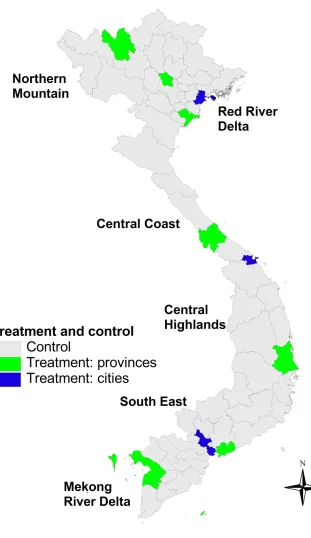
provinces (498 districts) would serve as the control group. Figure 2 demonstrates how the selection was stratified by
subregion and national-level city.
[Figure 2 about Here]
While the MOHA researchers were careful, the experiment is certainly not an RCT. Consequently, it is
important to assess whether the treatment and control groups are balanced on observable characteristics. Such
information would provide tentative evidence that the selection criteria were exogenous to the outcomes and
therefore that the intervention can be treated as a quasi-experiment (Dunning 2008).12 Table 1 provides a balance
11
The statistical power calculated by the Ministry of Home Affairs (MOHA) indicated that the treatment sample size should be around 16% of the total localities in the country (GSRV 2009).
12 A more stringent test would consider whether the process approximates “as if” randomness and therefore can be
table of 46 economic, natural, demographic, governance, infrastructural, and legal indicators, measured prior to the
intervention. The first two columns show the simple means of the two groups in these indicators. Since
national-level cities13 were oversampled to test whether the experiment was applicable in urban settings, they comprise 30%
of the treatment group and only 4% of the control group. Consequently, the treatment provinces appear to perform
better in several areas. When excluding national-level cities, however, the differences between the two groups
virtually disappear.
[Table 1 about Here]
In addition to cities, MOHA also stratified their selection by region, so to ensure that each of the country’s
seven regions was represented (excluding the Central Highlands for security reasons). This makes it necessary to
perform a true balance test within each region, as if analyzing an RCT with a stratification strategy. To this end, we
regress these 46 indicators on the treatment dummy and control for two key criteria used for stratification
(national-level city and region-fixed effect). Column ‘P-treatment’ in Table 1 reports the p-values of treatment in these 46
regressions and shows that the treatment is not significantly correlated with 45 of these characteristics. In other
words, the balance between the treatment and control groups seems to be as good as in stratified randomization, at
least in all observable dimensions.
Selection based on unobservables is a possibility, as MOHA may have selected leaders that were considered
more pliant or more likely to implement successfully. Because of the approach, we can never know for certain, but
we do test to see whether the treatment provinces differ on leadership questions used in the Vietnamese Provincial
Competitiveness Index (PCI), an annual survey of 10,000 Vietnamese firms (Malesky 2009). These questions are
included in the governance panel of Table 1. We find no evidence that the 2008 respondents thought their
provincial leaders were better at working within the law, more creative and clever, or more likely to risk punishment
than leaders of control provinces.
13 They are metropolises with the status of provinces: Treatment: (Hai Phong Da Nang, and Ho Chi Minh City);
Implementing the Pilot Intervention
Following Resolution 26 of the VNA, the Government and Ministries issued a series of documents guiding the
DPC abolishment experiment. The 2004-2009 DPC term ended on April 25, 2009, and DPC elections were not
held in experimental locations after this date. The existing personnel of DPCs had their responsibilities transferred
to executive People’s Committees in the same districts or provinces. The three existing functions of DPCs were
transferred to different government bodies. The selection and dismissal of DPC personnel was assigned upward to
Provincial People’s Committees, which were also charged with appointing the new body. Policy-making and
budget-approval functions were also transferred to the Provincial People’s Committees. Finally, general oversight was
transferred to the Provincial People’s Councils. This transfer of power clearly implies that the nesting of districts
within provinces will impact our ability to draw correct inferences, and that districts cannot be considered as
independently drawn.
The abolition of the DPC system could have critical implications for public services and programs as well as for
general wellbeing within each district. As we discuss in Section 1, the theoretical literature does not provide a clear
guide as to whether this abolition would lead to improvement or deterioration of public services and governance at
the district and commune levels.
4. Our Empirical Design
To analyze whether DPC abolishment improved public service delivery, we take advantage of a unique panel
dataset that allows for a difference-in-difference (diff-in-diff) analysis on key outcome variables considered
important by local and national leaders.
Data Source
To ensure reliable estimates of local performance over time, we use commune data from the three most recent
the General Statistics Office of Vietnam (GSO) with technical support from the World Bank. The 2006 and 2008
VHLSSs use the 1999 Population and Housing Census as a sampling frame, while the 2010 VHLSS uses the 2009
Population and Housing Census as a sampling frame.
The VHLSS has two components. The first is a stratified welfare survey of around 9,000 households. In
addition, research teams are instructed to collect “hard data” from commune leaders and are provided a checklist to
help gauge whether basic services are being met, such as whether or not the commune has a post office or an
agricultural extension center. Information on commune characteristics was collected from 2,280, 2,219, and 2,199
randomly selected rural communes in the 2006, 2008, and 2010 surveys, respectively. Commune data includes
information on commune demography as well as on general economic conditions and aid programs, non-farm
employment, agriculture production, local infrastructure and transportation, education, health and health facilities,
and social problems in the communes. Importantly, the commune dataset only includes rural communes, omitting
the ward, the equivalent bureaucratic unit within cities. All analysis, therefore, only studies the impact of
recentralization on rural localities using the hard data collected from communes.14
Estimation methods
To examine the effect of the removal of People’s Councils, we employ a difference-in-differences estimator and
commune data from the 2008 and 2010 VHLSSs using the following specification:
,
it it it t it t
it
T
D
T
D
X
Y
=
α
+
β
+
γ
+
θ
+
δ
+
ε
where Yit is the outcome of rural commune i at time t. Tt is a dummy time variable that equals 1 for 2010 and 0
for 2008, the baseline year before the treatment commenced in 2009; the 2010 year is the follow-up year after
14 More technically, Vietnam divides communes into three categories: 1) rural communes (xa); 2) rural district
capitals (thi tran); and 3) urban wards (phuong). Category 3 is not covered by the VHLSS rural data. Urban, however
is a slippery concept and some peri-urban areas certainly sneak back into the sample in two ways. First, all five national-level cities include both wards and rural communes, which are more urbanized and densely populated than
the average huyen. Secondly, thi tran can be highly developed and populated in some areas. Dropping peri-urban
treatment implementation. Dit is the treatment variable that equals 1 for communes that had their DPCs abolished
and 0 otherwise. We interact Tt and Ditto produce the coefficient θ, which is the Average Treatment Effect (ATE)
of the treatment on commune outcomes over time. Xit is a vector of control variables that are employed to capture
minor imbalances in commune characteristics resulting from the fact that the VHLSS commune sampling strategy
was not perfectly aligned with the DPC experiment.
The nested nature of the data poses a unique challenge. Communes can certainly not be treated as independent
as they are clustered within districts, which control important financial and administrative decisions. The standard
approach in such a situation is to cluster standard errors at the treatment level (the district), which will limit biases
caused by the correlation of errors within a unit. The nature of the selection process, however, poses an additional
conundrum. The selection of all districts within ten provinces (with only limited exceptions) implies an additional
level of clustering that must be taken into account, especially as the district responsibilities had by that time been
transferred upward to the provincial councils. To deal with this problem, we adopt the multiway clustering
technique of Cameron et al. (2011), which allows us to address the correlation of errors among communes at both
the district and provincial levels simultaneously.15
Choosing the appropriate dependent variable for the analysis is also not trivial. As Treisman (2007, Chapter 11)
notes, the analyst’s choice of variable for gauging public service delivery has critical implications for whether
decentralization is deemed successful. Kramon and Posner (2012) lodge a similar complaint about the
cherry-picking of dependent variables in analyses of redistributive politics. To avoid this temptation, we employ as many
outcome variables as we can find in the VHLSS that meet two criteria: 1) They are in areas under the authority of
DPCs according to the 2003 Law on the Organization of People’s Councils and People’s Committees
(infrastructure, communication, public health, education, agricultural extension services); and 2) They are factors
15 Implemented using STATA’s ivreg2 procedure. In an even more conservative approach, we also re-run the core
that could possibly be altered by local leadership within the one-year time frame under investigation. For instance,
measures of household wealth and productivity are available, but it is hard to imagine that district policies could
radically alter the career choices and income streams of respondents within one year. We identify thirty outcome
variables that fit these criteria, employing the exact same specification for all of them.16
As noted above, provincial selection was stratified, so treatments are representative of every region (except the
Central Highlands) and national-level city by design.17 As suggested by Bruhn and Mackenzie (2009), we include
dummy variables for regions and cities in order to ensure that these design choices do not lead to over-estimation of
treatment effects. Other control variables include commune location and population density. It should be noted that
control variables should not be affected by the treatment variable, i.e., the removal of the People’s Councils in our
case (Heckman et al. 1999; Angrist and Pischke 2008). Thus we limit control variables to more exogenous variables
where minimal non-balance has been detected at the commune level. Our results are robust to eliminating these
controls.
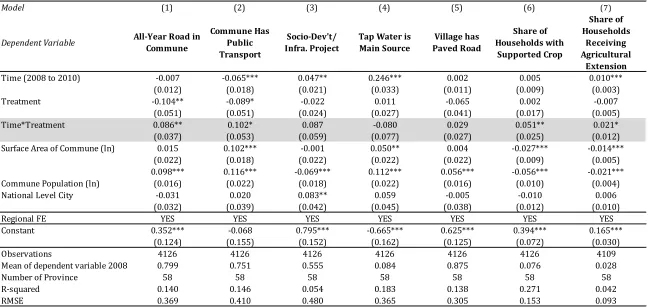
Table 2 presents the regressions of commune outcomes on time, treatment, and interaction between time and
the treatment variable, as well as other control variables for the first seven of the selected outcome variables.18 We
provide mean values of the dependent variable in 2008 in order to estimate the amount of room available for
improvement. The highlighted row (time*treatment) depicts the ATE for our analysis. In this set of outcome
variables, we find that the ATE was positive and statistically significant. For instance, all-year roads have grown
8.7% faster in the treatment than in the control group; public transportation has grown 10.2% faster. Of course, not
16
A listing of the exact wording used on the data collection instrument for each indicator is included in Appendix C2.
17 We dropped observations from the Central Highland regions, since the government did not conduct the
experiment of the People’s Council removal in this region. A dummy is needed for national-level city, as these predominantly urban metropolises also include rural districts (huyen) that are included in the VHLSS survey but have access to services that are different from rural districts in rural provinces.
18 Please see Online Appendix C1 for descriptive statistics for all independent and dependent variables used in the
all outcome variables were significant, but as Figure 3 shows, the experiment revealed a disproportionately high
number of positive effects.
[Table 2 about Here]
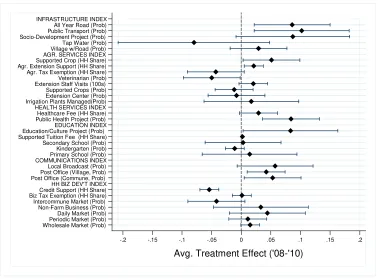
In Figure 3, we present the ATE along with a 90% confidence interval. Intervals that do not cross the dashed
line are significantly different from zero. ATE results are organized by type of public service. Here, we see that the
effect of District People’s Council removal is statistically significant for 11 out of 30 outcomes (over one third!),
nine of which are in a positive direction. Such a large number of significant findings would not be predicted by
frequentist statistics, an inference to which we return below.
[Figure 3 about Here]
A few additional patterns emerge from careful inspection. The treatment appears to have been particularly
successful at improving transportation infrastructure (road, public transport, and socio-economic projects),
communication infrastructure (television broadcasting and post offices), and health care (assistance with fees and
public health projects). Under the current law, DPCs have the authority to shape local policies and decisions in
these sectors. The effects we find here suggest that removing such authority actually improves these public services.
Most other outcome variables, particularly educational measures and agricultural extension, did not show significant
improvement. On two outcomes, the treatment had a deleterious effect. Treatment provinces were less likely to
have business credits and veterinary visits.
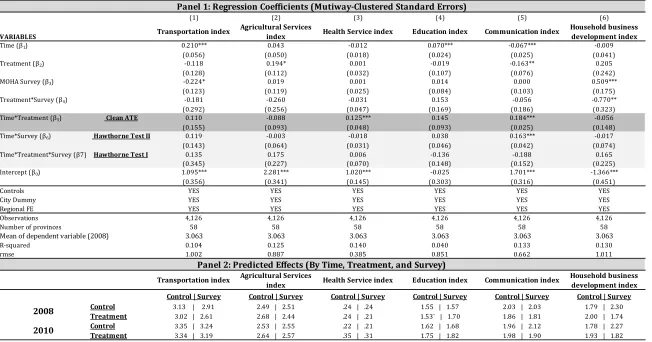
To probe these aggregate patterns more directly, we construct six additive indices for: 1) transportation
infrastructure; 2) agricultural support services; 3) public health services; 4) education services; 5) communication
infrastructure; and 6) support for household business development. The variables can be identified directly under
the respective headings, which are capitalized in Figure 3. The indexing strategy is as conservative as possible,
simply a sum of all the dichotomous measures. In a few cases, the variable under investigation is continuous (e.g.
the share of households receiving credit). In these cases, we re-scale the variable to range between 0 and 1 and add it
Table 3. The results confirm H2. Removing DPCs definitely generated positive improvements for districts in areas
that were of strategic importance to central leaders (infrastructure and public health). These results are quite
substantial and statistically significant. In areas where citizens may have preferred more assistance, the treatment
appears to have been less effective (agriculture, education, and household business development). While individual
indicators prove significant in each one, these are undermined by lack of improvement in other areas.
<Table 3 About Here> 5. Robustness Tests
At first blush, the findings appear compelling and confirm that recentralization can improve the efficiency of
public service delivery (H1), especially in arenas that are of explicit importance to the central government (H2).
Nevertheless, the nature of selection and the implementation of the rollout pose a number of threats to validity. In
this section we tackle these threats one by one: 1) The Parallel Paths Assumption; 2) Spurious Correlation; 3) Motivated
Interference by Central Officials; and 4) Hawthorne Effects.
The Parallel Paths Assumption
The diff-in-diff estimator identifies the impact of the treatment under the assumption that the unobserved
difference between the treatment and control groups is time-constant between survey rounds. In other words, we
should not observe differential trending between treatment and control groups in the same direction as in the
experiment in prior periods. We test this assumption by running diff-in-diff regressions using commune data from
the 2006 and 2008 VHLSSs. The two surveys were conducted before the intervention in 2009, and therefore we
should expect that the effect of the interaction between the time and treatment variables should not be statistically
significant. The lower panel of Table 3 depicts the results of this analysis for the six aggregate indices,19 which
confirm the assumptions of the model. Only two out of 30 outcome variables are significant and positive in the
pre-treatment period. In only one case is the ATE for an index statistically significant, but it is in the wrong direction.
Infrastructure was actually worse for treatment provinces before the removal of DPCs. For instance, road quality
improved at a slower rate in treatment than control provinces between 2006 and 2008, so that treatment provinces
were starting from a slight deficit at the time of the intervention. A few individual variables also demonstrate this
pattern, but these deficits should only make it more difficult to identify effects of the treatment. Far more
dangerous would be positive trending continuing into the experimental period, which would lead to bias in the
treatment effect coefficient. We observe no such cases, however, indicating that pre-experiment trending in the
treatment provinces did not contribute to the results observed in 2010.20
Randomization Inference Test
Another empirical concern is that the effects of the treatment are simply the result of a lucky draw from the
universe of possible outcome variables. In other words, a critic might conjecture that there is nothing special about
the treatment at all. If we simply repeat the analysis post-hoc and randomly assign a “treatment” across the
observed differences, 11 significant outcomes would be well within the range of possible outcomes.
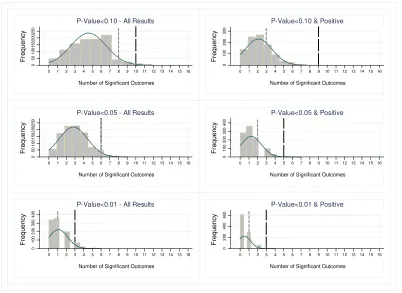
To this end, we conduct a randomization inference test, where we perform 1000 Monte Carlo Simulations,
randomly assigning an artificial treatment and then regressing outcome variables on our treatment with the exact
same specification used above. Figure 4 presents the results of this analysis. Here, we show the number of total
significant and significantly positive outcomes observed in the DPC experiment (long-dashed line), the
treatment 2006-2008 analysis (short-dashed line), and each Monte Carlo simulation. Notice that while the
pre-treatment trends fall well within the range of significant outcomes that could be obtained by pure chance, the DPC
experimental results were not reached in a single one of the 1000 simulations.21
[Figure 4 about here]
20 Online Appendix E tests the parallel paths assumption using only provincial-level aggregates as well.
The DPC experiment’s positive effect on public service delivery cannot be brushed aside as pure coincidence. It
seems quite clear that abolishing the elected council improved the efficiency-important set of public services,
supporting H2.
Motivated Interference by Central Officials
Skeptics might argue that central officials wanted the experiment to be successful and, despite pretending to be
careful about selection, actually manipulated the results by providing greater resources to the treatment group. This
bias would explain the positive results but destroy our ability to draw theoretical inferences regarding the impact of
recentralization. To test for such interference, we collect data on direct and indirect central transfers to each
province between 2006 and 2012. If transfers diverged significantly between treatment and control groups over this
period, this would provide strong evidence of elite manipulation of the experiment.
The results of this analysis are presented in Figure 5. Panel 1 presents the trend in total transfers per capita over
time, where treatment provinces are depicted with straight lines and control provinces with dashed lines. Panels 2
and 3 divide overall transfers into non-targeted (or equalizing) transfers (to make up for local budget deficits) and
targeted transfers for central government programs in infrastructure, poverty alleviation, and environment. Finally,
Panel 4 depicts the share of provincial own-source revenue that the location is allowed to retain. Eleven wealthy
provinces must share between 75% and 10% of own-source revenue with the central government, providing an
implicit transfer that is embedded in the target amount. In all four cases, we can see clearly that control provinces
received a greater share of resources per capita over the entire period under investigation, beginning in 2006 before
the experiment and continuing afterward. While all four charts show increases in transfers after the experiment,
there is no evidence at all suggesting that special treatment was given to treatment locations. A t-test provided in the
increases in any form of transfers between 2008 and 2010. We also investigate a tranche of funds available to the
Vietnamese Government for special projects to see if they were employed in a biased manner.22
Vietnam also engages in indirect transfers to subnational governments through state-owned banks and centrally
managed state-owned conglomerates (Pincus et al. 2012). State-owned banks do not release their lending portfolios,
but it is commonly estimated that 70% of their loans go to SOEs (Malesky and Taussig 2009). Because we cannot
access state-owned bank balance sheets, we rely on firm-level data from the GSO Enterprise Census over the
research period. Using the annual census, we create measures of aggregate liabilities held by centrally managed
SOEs in the province as a proxy for state bank lending in Panel 5. We also track ‘owner’ equity, which gives us a
sense of the share of capital introduced to the SOE through the national budget in Panel 6.23 We standardize both
figures by nominal, provincial GDP. Treatment provinces do have larger average allocations of state lending and
slightly higher owner equity over the research time period. There is no evidence, however, of disproportionate
increases in these figures. In fact, liabilities in the control group actually grew at a faster rate after 2008.
<Figure 5 about Here>
Hawthorne Effects
A related concern is known as the Hawthorne effect, whereby a treatment group experiences gains not because
of the experiment, but because they received special treatment and observation (French 1950). In the Vietnamese
case, this may have come in the form of a special unit from the Ministry of Home Affairs (MOHA) observing
progress. Fortunately, a limited budget prevented MOHA from evaluating all ten treatment provinces. Rather, they
chose to evaluate and survey citizens from five treatment and five control provinces, allowing us to disentangle the
effect of having central officials in suits roaming the province from the actual effects of DPC removal.24
22 Results are available in Online Appendix K.
23 In addition, we collect data on Central SOE investments, assets, and new construction outlays. These are
presented in Online Appendix L. Results are very similar to these measures.
24
To test for Hawthorne effects, we replicate the analysis in Section 4 but with a slight twist – we impose a triple
interaction of time, treatment, and whether the province received a MOHA delegation to survey citizens (survey).
These results can be observed in Table 4. Panel 1 reports the regression coefficients. The first thing to notice is the
interaction term (time*treatment), as this term represents the treatment effect without the contamination of MOHA
visitors. Even though only five treatment provinces were surveyed, making statistical significance more difficult to
achieve, the ATE remains sizable and positive for transportation, health, and communication. Moreover, it is still
strongly significant for health and communication, indicating that MOHA visitors did not influence these results.
[Table 4 about Here]
Two further differences are critical for assessing whether Hawthorne effects inhibit the experiment. First and
most important is the set of ten treatment provinces. If the provinces that received MOHA delegations within that
treatment group significantly out-perform the non-treatment provinces, this would be evidence of bias. We can
conclude that this is not the case. The coefficient on the triple interaction (time*treatment*survey), which is the effect
of the survey in treated provinces, is not significant for all six indices. This indicates that the visit did not have any
special effect on the final ATEs observed in Section 4. A secondary test involves comparing the control group that
was surveyed to the control provinces that were not surveyed. If surveyed provinces outperform other control
locations, this would be a cause for concern, as it would suggest that the visiting delegation generated additional
effort from local leaders. Once again, we can rest assured that this is not the case.
Certainly, with such a small number of province-level units, statistical significance may not be particularly
compelling. Consequently, we calculate the predicted effects for each of the cells generated by the experimental
conditions in Panel 2 for the six aggregate indices. Probing further into the three indices where the DPC experiment
appeared to be most effective (transportation, health, communication), we find that the score of the treatment
group that did not receive a MOHA delegation is actually higher than that of the group that was visited. In other
words, provinces that received a MOHA delegation did marginally worse, not better.
In sum, after repeated robustness tests, it is clear that the removal of DPCs had a significant impact on the
delivery of public services that were most important to central officials. This is a surprising result that offers a useful
corrective to the extant decentralization literature.
6. Testing the Causal Mechanism- Unblocking Political Capture
Three general mechanisms may explain the above results. First, DPC abolition may have reduced citizen
influence over policies, allowing the center to drive through its favorite initiatives. A second basket of mechanisms
can be grouped under the heading of bureaucratic restructuring possibly leading to efficiency improvements. DPC
removal eliminated a key veto point in the implementation of central policies, but maintained other assemblies to
capture citizen views. In addition, oversight of DPCOMs was shifted to provincial authorities, substituting upward
accountability for horizontal accountability to the DPC. Third, DPC removal reduced capture of the
decision-making process by local elites, who had exploited the extra veto point to hold up central programs in exchange for a
share of the rents and demanded bribes from citizens trying to comply with regulatory procedures. The capture
story combines elements of the first two mechanisms, as it requires imperfectly implemented local elections in the
control group and bureaucratic restructuring in the treatment group that shifts accountability upward and unblocks
decision-making.
Unfortunately, the research design was not fine-grained enough to reveal for certain which mechanism
generated the underlying findings. In an ideal experimental setting, one could disentangle these mechanisms, but in
this project, the fact that only one treatment occurred means we can only speculate. One way to advance the
discussion, however, is to test the observable implications of the above mechanisms. Specifically, the diff-in-diff
analysis generated a number of downstream puzzles: 1) Why did DPC removal expedite progress on central
projects with relatively long gestation periods (i.e. all-year roads, post offices)? 3) Why was the achievement of
control provinces worse on nearly all services than that of the pilot group, despite transfers to control provinces?
Where did the money not spent on public services go?
Removal of vertical accountability to citizens cannot answer the first question. Control provinces should have
had better performance on services favored by citizens; instead, we observe non-effects of the treatment on the
aggregate indices and sporadic positive performance on individual indicators. Bureaucratic restructuring can answer
the first two questions, but it provides only a partial answer to the third. Provincial oversight may reduce waste, but
it does not answer the question of why the horizontal accountability of executives to DPCs in the control group was
unsuccessful. In addition, we were unable to find evidence for two potential tracers of a pure bureaucratic
restructuring story. The pilot did not appear to effect the distribution of service delivery among districts or the
turnover of local leaders, as might have been expected from increased provincial authority over district policies.25
One causal mechanism, however, provides an answer for all three puzzles – the elite capture mechanism. DPC
removal did not impact progress on citizens’ service preferences because the DPCs in both treatment and control
were not acting on behalf of voters in the first place. Policy was being directed to an elite group of local
decision-makers. Rapid progress could be made on long-term projects, because capture was holding up implementation of
central-level projects that were “shovel ready” (e.g. Chinh Trung 2011; Tri Tin 2013). They had already been
decided upon at the highest levels and just needed local authorities to approve and pass the appropriate
implementing documents. The conflict between local elites and central policymakers can be intense, dampening
project implementation (Tuan Ngoc 2009) and public scrutiny of local projects (Nguoi Dua Tin 2012). A post-pilot
report from the Da Nang People’s Committee (2012), for instance, credits reductions in decision delays and
administrative expenses for improved service delivery. Finally, transfers were higher to control provinces without
25 See Online Appendices I and J for regressions of public service inequality and leadership turnover on the