Bridge21 – A Model for Team Based,
Technology, Mediated Learning
In and Out of School Context
A Thesis Submitted in Fulfilment of the Requirements
for the Award of Doctor of Philosophy
2016
By John Lawlor
I declare that this thesis has not been submitted as an exercise for a degree at this or any other university and it is entirely my own work. I agree to deposit this thesis in the University’s Open Access Institutional Repository or allow the library to do so on my behalf, subject to Irish Copyright Legislation and Trinity College Library conditions of use and acknowledgement.
Signed: ______________________________ John Lawlor
mediated learning in an out of school context
Abstract
There have been calls for decades by many educational writers and commentators for a new model of learning to facilitate what is generally described as 21st Century (21C) Learning but there is a dearth of practical implementable models to facilitate such learning. This is expressed as a challenge to education to develop skilled learners rather than reproductive knowers of information who learn only to the test -‐ the very antithesis of what is considered 21st Century Learning. Formal educational structures, given the system demands to which they are constrained, have been shown to be inhibited in adopting the significant change required to move away from an behaviourist pedagogy that is heavily reliant on extrinsic student motivation.
Technology was presented as a driver of change in formal education but current system and practice has shown itself to be impervious to change driven solely by ICT (Hallissy et al., 2015). Additionally, it is argued for technology to be deeply effective in learning would require an adoption of a new pedagogy that rooted in accepted theory. Such a pedagogy should be rooted in accepted theory and social constructivism (Fullan & Langworthy, 2013; Conole, 2010).
It is evident that non-‐formal educational systems show greater promise in their facilitation of 21st Century Learning. A common thread in such non-‐formal systems is the inclusion of collaborative working. A learning model seeking to facilitate 21st Century Learning could usefully embrace teamwork to provide a structure for collaborative working and to act as a vehicle for transferring responsibility in the learning to the learner.
model heavily influenced by the learning model of the world’s largest non-‐formal educational movement, The World Scout Movement with its Patrol System (small group) educational method and is also aligned to the principles of social
constructivism.
This thesis, through a case study, describes the design and assembly of the elements of Bridge21 and its implementation over three academic years in an out of school context and in a specially designed learning space, on the author’s university campus. The model has been tested by this author and other researchers in a wide range of learning contexts and implementations, and has shown itself to be robust, flexible and effective in promoting 21C Learning.
The Bridge21 model is presented as a mix of key elements and while it can be said that nothing is new in that the individual elements are well comprehended in theory and literature, everything is new in their systematic application as constituent parts of a combined learning model and a ‘jazz ensemble’ of collaborative improvisation (Sawyer, 2004).
The thesis and research validates Bridge21 as an effective pragmatic model for 21st century team-‐based learning that promotes intrinsic student motivation, encourages personal responsibility for learning and offers a potential model for use in other learning contexts.
I wish to acknowledge the encouragement, support and generousity of my supervisor, Professor Brendan Tangney, in guiding me through the work on this thesis and also in providing me with the unique opportunity to engage with the work that led to Bridge21.
My colleague and collaborator at Bridge2College and Bridge21, Ms. Claire Conneely, was a constant source of expertise, support and friendship. I wish to thank my colleagues in the Centre for Research in IT in Education and particularly Ms. Elizabeth Oldham and Ms. Ann Fitzgibbon for their kindness, insight and expert advice. My post-‐graduate colleagues and friends in the Bridge21 programme have been a wonderful source of inspiration and support.
I also wish to thank our wonderful volunteer mentors at Bridge21 and of course the participant students who brought the idea of the learning model to life.
I am indebted to my friends and colleagues: Dr. Paula Tracy, Dr. Kevin Marshall, Mr. Matt Kavannagh and Mr. John T. Murphy for helping proof read and critique the work. I wish to thank Ms. Hilary Raeside and Mr. Colm Kavanagh for their assistance with the document and images.
My wife Nóra has been my loyal companion, friend and supporter through this long process. Our children, John Michael and Grace, have been unstinting in their support and belief for ‘Team Dad’.
Awards
Journal Articles
Lawlor, J., Marshall, K., & Tangney, B. (2015). Bridge21–exploring the potential to foster intrinsic student motivation through a team-‐based, technology-‐mediated learning model. Technology, Pedagogy and Education, 1-‐20.
Tangney, B., Oldham, E., Conneely, C., Barrett, E., Lawlor, J., (2010), Pedagogy and processes for a computer engineering outreach workshop – the B2C model, IEEE Transactions in Education, vol 53 no 1, pp53-‐60.
Lawlor, J., Conneely, C., Oldham, E., Marshall, K., & Tangney, B. (2015). Bridge21: Teamwork, Technology and Learning -‐ A pragmatic model for effective 21C Team-‐ based Learning. Technology, Pedagogy and Education (Accepted for publication subject to revision)
Book Chapter
Conneely, C., Girvan, C., Lawlor, J., Tangney, B., An Exploratory Case Study into the Adaption of the Bridge21 Model for 21st Century Learning in Irish Classrooms, in editor(s) Butler, D., Marshall, K., Leahy, M., Shaping our Future: How the lessons of the past can shape educational transformation, Dublin, Liffey Press. 2015, pp 348-‐ 381.
Peer Reviewed Conference Paper
Lawlor J., Conneely C., Tangney B. (2010), Towards a pragmatic model for group-‐ based, technology-‐mediated, project-‐oriented learning – an overview of the B2C model, Proceedings of the 2010 TechEduca Conference.
Conference Presentations
(1) Computers and Learning Conference, Brighton, 2008 (CAL08) (2) TechEduca Conference, Athens May 19-‐21 2010
(3) Educational Studies Association of Ireland (ESAI) Conference, Dublin, April 15 2011
(4) Re-‐Imagining Learning Conference (Educate Together), April 8 2011
(5) Poster Presentation, International Conference on Engaging Pedagogy (ICEP) Conference, Dublin, December 15 2011
Awards
The author has been a recipient and co-‐recipient of prestigious national awards for the work with the Bridge21 model with colleagues Brendan Tangney and Claire Conneely.
1. Irish Learning Technology Association, Jennifer Burke Award (2009) for Innovation in Teaching and Learning with Claire Conneely and Brendan Tangney
http://jenniferburkeaward.ie/2009-‐finalists/ 2. Social Entrepreneurs Ireland 2009 Award
http://socialentrepreneurs.ie/winners/john-‐lawlor-‐2/ 3. Social Entrepreneurs Ireland 2010 Award
http://socialentrepreneurs.ie/winners/john-‐lawlor/
Page
Chapter 1 -‐ Introduction
1 Introduction ……….………. 1
1.1 Background, Context and Need ………...………. 1
1.2 Bridge2College and Bridge21 ………..……… 5
1.3 Research Questions ……… 8
1.4 Research Methodology ……… 8
1.5 The Author’s Contribution ……….………..………. 8
1.5.1 The Design of the Bridge21 Model ………..……….. 9
1.5.2 Bridge21 as a Model for 21st Century Learning ……….……….. ………..……. 9
1.5.3 Effectiveness of the Model in Encouraging Personal Responsibility for Learning ……….… 10
1.5.4 Encouraging Intrinsic Student Motivation ……….... 10
1.5.5 Effectiveness of Bridge21 Model in Facilitating Team-‐Based, Technology Mediated Learning …… 10
1.5.6 Bridge21 as a Research and Educational Development Platform ……….………...……….. 11
1.6 Layout of the Dissertation ………..……….. 12
Chapter 2 – Literature Review 2.1 Introduction ……… 15
2.2 Literature on Influencing Background ……….. 16
2.2.1 21st Century Learning -‐ A New Learning Requirement for a Changing Society ……… 16
2.2.2 ICT in Learning -‐ Presenting a Challenge and Unfulfilled Opportunity ……….. 18
2.2.3 The Development of Learners Rather than Knowers ……… 22
2.2.4 Constructivism and Social Constructivism ……… 23
2.2.5 Experience Based Learning (EBL) ……….………..…. 25
2.2.6 Group Work, Formal Education and ICT ………. 26
2.2.7 Out-‐of-‐School Learning with Technology and Groupwork ……… 28
2.2.8 Learner Motivation ………. 30
2.2.9 Technology and Motivation ……….. 31
2.2.10 Models for Learner Engagement, Autonomy and Motivation ………. 32
2.2.11 Student Autonomy and Motivation ……… 34
2.3 Literature Informing the Design of the Bridge21 Model and Team-‐Based Learning ……….. 36
2.3.1 Team-‐Based Learning ……….. 36
2.3.2 Learning from the Scouts ……… 36
2.3.3 Team Formation ……….. 38
2.3.5 Team Reflection Feedback and Review ………. 39
2.3.6 Tasks to Grow the Team ………..………. 40
2.3.7 Integration of Technology in Team-‐Based Learning ………. 40
2.3.8 Teamwork and Team Interactions ……….. 41
2.3.9 Learning Space: Creating Team Space ……….. 41
2.3.10 Technology and Learning Space ……… 42
2.3.11 Social Protocols – Structured Informality ……….. 43
2.4 Literature Summary ……….. 43
Chapter 3 – Development of a Model for Teamwork – Bridge21 and its Implementation 3.1 Introduction……….……… 45
3.2 The Intuitive to the Informed – The Path to the Bridge21 Model………..…… 46
3.2.1 Influences on the Learning Model Development………. 46
3.2.2 The Pilot……….……….. 49
3.2.3 Learning Approach to Model Development – Objectives for the Pilot………..…. 50
3.2.4 Outputs from the Pilot……….……….. 51
3.2.5 A Model for Team-‐Based Learning……….……….. 52
3.2.6 Thinking about a Model…..……….. 52
3.2.7 The Model from First to Final Versions – Concept and Schematic……….………. 53
3.2.8 The Evolution of the Model………..……….. 55
3.2.9 The Progressive Changes……….………. 57
3.3 Refining the Bridge21 Model – The Key Elements and Design Heuristics……….. 60
3.3.1 The Key Elements of the Bridge21 Model………..………. 61
3.3.2 Structured Team Working………. 63
3.3.3 Use of Technology………..……….. 65
3.3.4 Learning Space……….……….……….. 67
3.3.5 Structuring the Learning Projects……… 69
3.3.6 Establishing the Social Learning Environment……….. 70
3.3.7 Defining the Mentor/Facilitators Role……..……….. 71
3.3.8 Team and Individual Reflection………..……….………. 72
3.3.9 Mastery Goal Orientation……….. 73
3.3.10 Transferability and Adaptability of the Model………….……….. 73
3.4 Summary of the Design of the Bridge21 Model………..……….. 75
3.5 Implementation of the Bridge21 Model……….……….……… 76
3.5.2 The Participants Considered in the Study……….………. 78
3.5.3 The Programme Mentors.………. 79
3.5.4 The Model and the Programme Implementation…..………. 79
3.6 Factors Influencing Implementation……….. 80
3.6.1 Support and Expectations of Stakeholder Partners.……… 80
3.6.2 Targeting Transition Year………. 81
3.6.3 Expectations of the Partner Schools……….……….. 82
3.6.4 Building Partnership with Schools……….……… 83
3.6.5 The Technology Available and Deployed.………. 83
3.6.6 The Coeducational Challenge……….……….. 84
3.6.7 The Computer Clubhouse Influence on Implementation……… 85
3.6.8 Choosing School Time and the Influence of Schools on Implementation……….…………. 85
3.6.9 Influence of the School of Computer Science On Implementation….……….……….. 86
3.6.10 Summary of Influences on Implementation……….……… 86
3.7 Pilot Implementation………...………..………. 86
3.7.1 Lessons from the Pilot Implementation………..……….……….. 87
3.8 Preparing for a Broader Implementation……….……..……… 89
3.8.1 Development of the Mission, Vision and Aims………...………..……….…. 89
3.8.2 Building the Learning Space – Design, Evolution and Construction……….….. 91
3.9 Implementing a Broader Programme – Oriel House….………….……….……… 99
3.9.1 The Programme Implementation Considered in this Study………...……….….……. 99
3.9.2 Structure of Workshops and the Activity Model……….……….. 100
3.9.3 Set-‐Up Phase………..……….……… 101
3.9.4 Warm-‐Up Phase……….………...……….…………. 102
3.9.5 Investigate Phase………..……….. 102
3.9.6 Plan Phase……….……… 103
3.9.7 Create Phase……….………...……….………. 103
3.9.8 Present Phase………..……….. 104
3.9.9 Reflect Phase…….……….……… 104
3.10 Further Extending the Implementation……….………...………. 105
3.10.1 Computer Science Transition Year Programme (CS TY)……….………..…… 105
3.11 Implementation Summary……….………..…… 106
4.1 Framing the Research …….………. 108
4.2 The Researcher in the Research -‐ Subjectivity and Reflexivity……… 108
4.3 Consideration of an Appropriate Research Method and Framework………...……… 109
4.3.1 Action Research..………. 109
4.3.2 Design Based Research (DBR)..……….………. 110
4.3.3 Mixed Methods……….……… 111
4.3.4 Design Typology ……….……… 112
4.3.5 The Case Study………..………… 114
4.3.6 Pragmatic Research Paradigm and an Abductive Approach……..……… 115
4.3.7 Summary of Research Method of Choice ……….………. 116
4.4 Data Collection and Analysis Methods ………..………. 118
4.4.1 Quantitative Data Collection ……….. 119
4.4.2 Qualitative Data Collection ……….. 119
4.4.3 Quantitative Data Analysis ……… 123
4.4.4 Qualitative Data Analysis ……… 123
4.5 Triangulation for Validation of Data ……… 126
4.6 Generalisability of Findings ……….. 126
4.7 Ethics Consideration and Compliance ……… 128
4.8 Summary of Methodology ……… 128
Chapter 5 – Analysis of Data 5 Analysis………. 129
5.1 Circumstances and Context of Student Participation ………. 130
5.2 Exploratory Analysis Unit of the Case Study ……… 131
5.2.1 Workshop Interventions ……… 132
5.2.2 Data Sources Supporting the Exploratory Analysis Unit of the Case Study……….. 132
5.2.3 Pre-‐Activity Data Analysis – Team Based Learning Experience ………. 133
5.2.4 Pre-‐Activity Data Analysis – Propensity to Seek Third Level Learning ……….. 134
5.2.5 Treatment of Post=Activity Qualitative Data – Coding and Theming……….. 135
5.2.6 Treatment of Post-‐Activity Qualitative Data – Content Analysis ……….. 135
5.2.7 Content Analysis -‐ Themes Revealed in Exploratory Analysis of the Case Study ……… 136
5.3 Explanatory Analysis Unit Case Study ………... 138
5.3.1 Workshops and Focus Groups………. 139
5.3.2 Data Sources Supporting the Explanatory Unit of the Case Study ………. 139
5.3.4 Team-‐Based Learning Themes ……….. 140
5.3.5 Intrinsic Motivation – Themes ……….…….. 141
5.3.6 21C Learning -‐ Themes ………..……….. 142
5.3.7 Treatment of Post Activity Quantitative Data ……….. 142
5.3.8 Quantitative Data Related to Team-‐Based Learning ……… 143
5.3.9 Quantitative Data Related to Intrinsic Motivation………. 144
5.3.10 Post-‐Activity Data Analysis – Propensity to Seek Third Level Learning ………..……… 145
5.3.11 Analysis of Data from Exemplar Implementation-‐Computer Science Workshops ……….. 146
5.3.12 Data from Exemplar Computer Science Workshops ………..………. 147
5.4 Summary of Analysis ……….. 148
Chapter 6 – Discussion of Findings 6.1 Exploratory Analysis Unit of Case Study Objectives ……… 149
6.2 Explanatory Unit of the Case Study -‐ Research Questions ………. 149
6.3 The Exploratory Analysis Unit of Case Study ……… 150
6.3.1 Emergent Themes – Exploratory Analysis Unit of the Case Study …………..……….. 152
6.3.2 Supportive Quantative Data ……… 153
6.3.3 Increased Sense of Personal Responsibility for Learning and Self-‐Directed Learning ……….. 153
6.3.4 An Improved Attitude to Technology and its Place in their Learning ………. 155
6.3.5 A Positive Response to the Team Experience and its Role in their Learning ………. 157
6.3.6 Improved Intrinsic Student Motivation ………. 159
6.3.7 Skills Transference to the School and Other Learning Contexts ……….. 160
6.3.8 A Personally Perceived Gain in Confidence ……….. 163
6.3.9 Summary of Exploratory Analysis Unit of Case Study -‐ Discussion ……… 164
6.4 The Explanatory Analysis Unit of the Case Study ………. 165
6.5 The Effectiveness of the Model in Encouraging Intrinsic Student Motivation ……….. 165
6.5.1 Control and Personal Responsibility for Learning ………. 167
6.5.2 Achievement, Self Confidence and the Mastery of Skills ………. 168
6.5.3 Achievement with Peers in a Team ………. 169
6.5.4 Students’ Attitude to ICT in their Learning ……… 170
6.5.5 Meta-‐Cognitive Consideration of Learning ……… 171
6.5.6 A Sense of Fun and Enjoyment in the Learning and Social Connection ………. 172
6.5.7 Summary on the Effectiveness of the Model in Encouraging Intrinsic Student Motivation and in Promoting Student Responsibility for the Learning ……….. 173
6.6.1 Effectiveness of the Teams ……… 174
6.6.2 Team and Task ……… 175
6.6.3 Team Interactions and Peer Working ……….. 176
6.6.4 Comparisons with Formal Experience and Group Work at School ……… 178
6.6.5 Team Leadership ……….. 179
6.6.6 Summary on the Effectiveness of the Model for Team-‐Based, Technology Mediated Learning …. 180 6.7 Bridge21 as a Pragmatic Model for 21st Century Learning ……… 180
6.7.1 Practicality of the Model ………. 181
6.7.2 Robustness and Flexibility in Different Learning Contexts ……… 182
6.7.3 Discussion of an Exemplar Implementation -‐ CSTY……… 183
6.7.4 Development of Generalisable Skills -‐ 21st Century Learning (21C) Skills ……… 186
6.7.5 Bridge21 as a Candidate Model for 21st Century Learning ……… 190
6.7.6 Summary of Discussion of the Case Study ………. 189
Chapter 7 – Contribution and Conclusions 7.1 Introduction ………. 193
7.2 Research Questions ……… 194
7.3 Contribution – The Bridge21 Learning Model ………. 195
7.3.1 Design of the Bridge21 Learning Model ……….. 195
7.3.2 Implementation of the Model and its Impact ……….. 196
7.4 Addressing the Research Questions – Efficacy and Impact of Bridge21 ……… 198
7.4.1 Bridge21 – Encouraging Intrinsic Student Motivation ……… 198
7.4.2 Bridge21 Facilitating Team-‐Based, Technology Mediated Learning ……… 199
7.5 Impact on Participating Schools ………. 200
7.5.1 Effective in Furthering Outreach ……….. 200
7.5.2 In-‐School Programme ……… 201
7.6 Limitations and Self Critique ………. 201
7.7 Reflection on my Learning Journey………..………. 202
7.8 As a Platform for Other Research and Educational Development……….……….. 207
7.9 The Potential for Further Development and Implementation………....……… 208
7.9.1 Potential for Longitudinal Study………..………. 208
7.9.2 Potential to Explore Effectiveness against Formal Curriculum and In-‐School..………. 208
7.9.3 Potential to Explore Effectiveness with Primary School Children……….……….….. 209
7.9.4 Potential to Explore the Potential of the Model Beyond an Irish Context..……… 209
7.10.1 The People – Mentors and Teachers.……… 209
7.11 Conclusion……….210
References References ……….……….. 213
Appendices Appendix 1: Instruments ……….. 235
Appendix 2: Activities ……….. 249
Appendix 3: Ethics and Permissions ……….. 253
Appendix 4: Foundation Documents……….. 267
Appendix 5: Relevant Publications ……….. 277
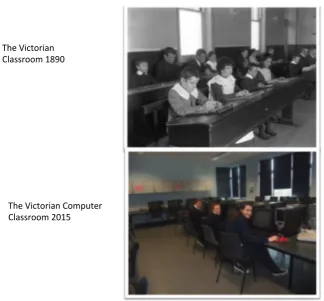
Table of Figures Figure 2.1 Enduring Victorian Pedagogy ………..……….………..…………. 21
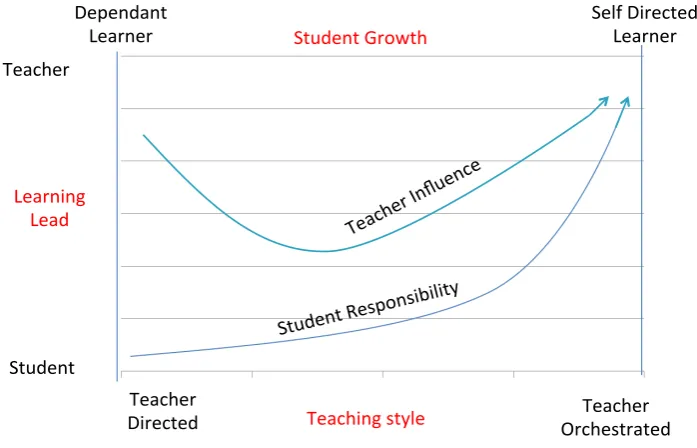
Figure 2.2 Changing the Influence and Responsibility Paradigm………..………. 35
Figure 3.1 Influences Impacting on the Model Development……….……….. 48
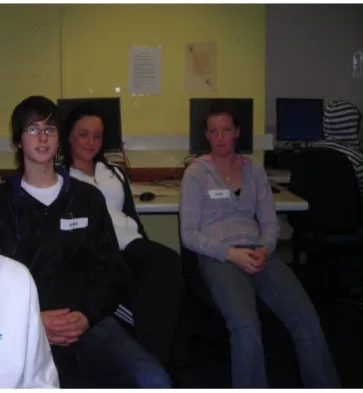
Figure 3.2 Learning Space with students in the Pilot Instantation ……… 50
Figure 3.3 The First Graphic of the Learning Approach (April 2008)………..…….. 53
Figure 3.4 The First Published Version of the Model (2010)……… 54
Figure 3.5 The First and Final Instantiations of the Learning Model Compared ……….. 54
Figure 3.6 The Bridge21 Learning Model………..………..……. 62
Figure 3.7 Team Working in Team Pods ………..………. 68
Figure 3.8 Collaborative Working with Technology in Team Pods..………….……….………. 68
Figure 3.9 Teams Working the Bridge21 Learning Space ..……….. 69
Figure 3.10 Adult Support as a Guide……….……… 72
Figure 3.11 Model Transferred to School Classroom………..……… 74
Figure 3.12 The Team in Classroom………..……….. 74
Figure 3.13 The Pilot Implementation in Action………. 87
Figure 3.14 The Pilot Experience from Different Perspectives……….……….……….. 88
Figure 3.15 Front Room Oriel House Pre-‐Redesign……… 92
Figure 3.16 Rear Room Oriel House Pre-‐Redesign………. 92
Figure 3.17 First Concepts in Learning Space Layout……….……….. 93
Figure 3.18 First Concept of Breakout Room ……….………..……… 94
Figure 3.20 Team Pod Structure Emerging ……….……..………. 95
Figure 3.21 Final Design of Learning Space Layout ……….……….……….……….. 96
Figure 3.22 Construction of the Team Space ……….……..……… 97
Figure 3.23 Construction of the Ideas, Breakout and Presentation Space..………. 97
Figure 3.24 The Completed Forest Room with Team Pods ………. 98
Figure 3.25 The Completed Presentation/Breakout Room ………..………….……….……….. 99
Figure 3.26 The Bridge21 Activity Model (Byrne, Fisher, & Tangney, 2015)……… 101
Figure 3.27 Whiteboards in Team Pods ……….………. 104
Figure 4.1 The Research Design Typology ……….………. 113
Figure 4.2 A Combination of Two Embedded Units within the Case Study ……… 115
Figure 4.3 Summarising the Overall Research Process ……….. 118
Figure 4.4 The Coding and Analysis Process ………..……… 124
Figure 4.5 Triangulation for Validation of Data ……….……… 126
Figure 5.1 Exploratory Analysis Unit of the Case Study ………. 132
Figure 5.2 Coding and Analysis ……… 136
Figure 5.3 Explanatory Analysis Unit of Case Study ………... 139
Figure 6.1 Codes, Categories, Sub-‐Categories and Themes (N=1055)………. 151
Figure 6.2 The Learning Journey (N=1055)………. 153
Figure 7.1 The Bridge21 Model ……… 196
Figure 7.2 The Broader Field of Impact of Bridge21 ……….. 198
Table of Tables Table 1.1 History of Bridge2College Programme and Bridge21 Learning Model……….…….………. 6
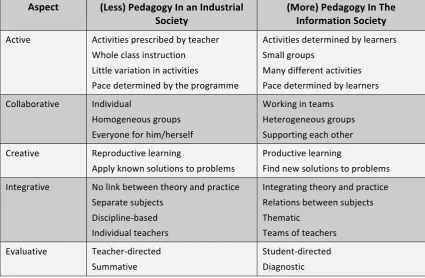
Table 2.1 Pedagogy in a Knowledge-‐Based Society Versus the Information Society……….………..… 18
Table 3.1 Pilot Instantiation Summary……….………..……….. 51
Table 3.2 The Path of Development of the Model.………..……… 56
Table 3.3 Elements of the Bridge21 Model ……….………..……….. 63
Table 3.4 Progression of Engagement and Implementation………..……… 91
Table 3.5 Implementation in this Study ……….………..……….. 100
Table 4.1 Summarising the Overall Research Process………..………. 117
Table 4.2 Data Sources..……….….……….. 119
Table 5.1 Data Sources for Exploratory Unit of Case Study ………..……… 133
Table 5.2 Team Experience Pre-‐Activity Questionnaire (2007-‐2008, n=280)……… 134
Table 5.3 Pre-‐Activity Participant Inclination to Third Level (2007-‐2008, n=280)………. 134
Table 5.5 Themes Emergent in Exploratory Unit of the Case Study ………. 138
Table 5.6 Data Sources for Explanatory Unit of the Case Study ……….. 140
Table 5.7 Themes Relevant to Team-‐Based Learning ………. 141
Table 5.8 Themes Relevant to Intrinsic Motivation……….……….. 142
Table 5.9 Themes Relevant to 21C Skills Development………. 142
Table 5.10 Likert Set -‐ Post-‐Activity Questionnaire (N=425)……… 143
Table 5.11 Likert Question -‐ Post-‐Activity Questionnaire General Experience (N=283)……….. 143
Table 5.12 Correlation Matrix: Participant's Overall Experience……….……… 144
Table 5.13 Summary of Quantitative Data Relevant to Intrinsic Motivation (N=425)……….. 145
Table 5.14 Post Activity Participant Inclination to Third Level (N= 241).………. 146
Table 5.15 Overall Computer Science Workshop Evaluation (N=39)………. 147
Table 5.16 Attitudes to Groups (N=39)……….. 147
Table 5.17 List of Data and Analysis Tables………. 148
Table 6.1 Codes, Category and Student Quotes on Personal Responsibility and Self-‐Direction ………….. 154
Table 6.2 Technology and Its Place in Their Learning….……… 157
Table 6.3 Team Experience and its Role in their Learning ……….. 159
Table 6.4 Intrinsic Student Motivation ……….. 160
Table 6.5 Skills Transference ……… 162
Table 6.6 Gain in Confidence ……… 164
Table 6.7 Markers for Motivation and Emerging Themes ……… 167
Table 6.8 Themes and Sample Quotes for Team Effectiveness and Collaborative ……… 175
Table 6.9 Themes and Sample Quotes for Team and Task ………. 176
Table 6.10 Themes and Sample Quotes for Team Interactions and Peer Working ……….. 177
Table 6.11 Themes and Sample Quotes for Comparison with Formal Experience ……….. 178
Table 6.12 Themes and Sample Quotes for Team Leadership ……… 180
Table 6.13 Overall Workshop Evaluation ……….. 184
Table 6.14 Attitude to Groups .……… 185
Table 6.15 Themes and Sample Quotes Showing 21C Skills Development ……… 187
Chapter 1 -‐ Introduction
1 Introduction
This thesis presents the Bridge21 learning model, designed and developed by the author, as a contribution to teaching and learning. The work introduces Bridge21 as a progressive, implementable model that is rooted in constructionism and social constructivist theory, the effective integration of technology in learning and a belief in the effectiveness of teamwork in learning.
Bridge21 is called a learning model in that it codifies an approach and particular assembly of elements and their systematic application that is developed abductively working from accepted theory and emerging data and applied in this work in a particular out-‐of-‐school, non-‐formal context with a view to its further
implementation in broader learning contexts.
This chapter provides the relevant external context and demand for new learning models that facilitate 21st Century Learning, while introducing the research problem and questions and providing a summary of the influences and the path of
development of this learning model. The introduction also outlines the research methodology and sets out the contribution of the work. The chapter concludes by providing the layout of the dissertation.
1.1 Background, Context and Need
21st Century learning is generally defined by the set of skills that society requires
learners to have so that they can usefully contribute to life and the economy in this century and to a commitment to the concept of learning for life (Trilling & Fadel, 2009). While the set of skills varies from author to author it typically comprehends: creativity; critical thinking; problem solving; initiative; communications skills; and the ability to work with others (Fullan & Langworthy, 2013; Robinson, 2010; Voogt &
Pelgrum, 2005; Wagner, 2010).
While it is evident that there is a growing demand on the education sector to
develop skilled learners, rather than reproductive knowers of information, who learn only to the test, it is argued that there is also an identified weakness and dichotomy in the ability of formal educational systems and practice to comprehend, let alone meet this demand (Fullan & Langworthy, 2013; Voogt & Pelgrum, 2009; Wagner, 2014). It has been argued that existing formal educational structures are not ready to embrace the fundamental change necessary to enable 21st Century Learning, as such change would require a move away from a predominant, essentially
behaviourist pedagogy that is heavily reliant on extrinsic student motivation (Claxton, 2013; Robinson, 2010). Consequently, the prevalent model of behaviourist practice is opposite to that required for engaged, student led learning (Ames, 1992; Robinson, 2010; Ryan & Deci, 2000; Wagner & Compton, 2015).
Effecting change in practice requires practical, implementable learning models and a pedagogy and practice that would facilitate and encourage 21st Century Learning. Central to the challenge in finding a learning approach that facilitates more engaged student learning is the requirement to shift responsibility from teacher to student and to redefine who leads and ‘owns’ the learning from teacher to student (Trilling & Fadel, 2009). Consequently, any candidate pedagogical model for 21st Century
Learning will need to facilitate a transfer of control and ownership of the learning to the learner (Claxton, 2013; Robinson, 2010; Voogt & Pelgrum, 2009).
transfer responsibility for learning to the learner and also integrate the use of technology while maintaining a balance with what has to be learned (Voogt, 2009). There is however a dearth of candidate models for this integration of technology and transfer of learning responsibility. Also, it has been observed that unless the
application of technology is in tandem with a change in pedagogy and rooted in accepted theory its impact will be shallow (Conole, 2009; Fullan & Langworthy, 2013).
It is generally accepted that group work has great potential as an educational resource (Blatchford et al., 2003). There is however a dissonance in the espoused belief in the power of group work, acceptance of the theory underpinning it, and its practice and implementation in formal education (Blatchford et al., 2005). Moreover, what is evident in schools is a ‘soft’ implementation of group work with little
investment or commitment in addressing the factors that are likely to lead to
effective learning groups (Blatchford et al., 2005; Galton & Hargreaves, 2009). This in turn has led to a weak belief among teachers in the power of group work as a
learning mechanism and the continued dominance of whole-‐class, teacher led learning, particularly at second level (Galton et al., 2008). The SPRinG project investigating group work in the classroom, jointly conducted by the University of Cambridge, the University of London and the University of Brighton, suggested that teachers’ view of group work is problematic and that they are prone to give up on group work and resort to more traditional approaches in the face of initial difficulties and that they perceive problems associated with group work rather than the
potential to enrich the learning through group work (Blatchford et al., 2003).
learning in some informal environments and is at variance to a tokenistic approach to group work in school (Vallory, 2012 ; Blatchford et al., 2003). The evolution of a group to become a team involves the resolution of interpersonal and team dynamic challenges as described in Tuckman’s forming, storming, norming model (Tuckman, 1965). To be effective group work and moving to teamwork requires an investment in team development.
It is apparent that within the non-‐formal sector there is more trust in group work as the basis for learning, as evidenced by the commitment to group work as a pillar of the educational method of those agencies that work with children in the non-‐formal learning sector (Morgan et al., 2008; Vallory, 2012).
The educational model of The World Scout Movement is a good example of such a commitment to small group learning in the non-‐formal sector. Teamwork and team based learning is integral to Scouting’s pedagogical model and is encapsulated in its learning approach. The ‘Scout Method’ as its called was conceptualised by Robert Baden Powell 100 years ago, has worked its learning model through, learning by doing, in small groups called ‘The Patrol System’ (Baden Powell & Boehmer, 2005; Bénard, 2002). Peer to peer learning is intrinsic to the model and children learn from each other in teams (Patrols) that take responsibility for tasks. A range of ages spanning of three to four years is typical for a Scout Patrol allowing a peer-‐based skills transfer. This facilitation of interaction with a ‘more expert peer’ sets up a Vygotskyian Zone of Proximal Development and the concept of learning from a ‘more expert other’ (Vygotsky, 1987).
Such approaches to group based learning, as practiced in non-‐formal educational models, offer exemplars to formal education in the power and potential of group work in learning and the learning dividend that can be delivered through a
commitment to the centrality of group work in practice. It can be argued that there is a largely untapped potential for learning through group-‐centred pedagogy and this argument is supported by research in the SPRinG project (Baines et al., 2007;
commitment to the application of group work (Blatchford et al., 2003; Galton & Hargreaves, 2009).
A commitment and belief in the effectiveness in learning of teamwork, social constructivism and particularly the team-‐based learning model of the World Scout Movement, influenced the design of the Bridge21 learning model presented in this thesis.
The focus of this work is to present the Bridge21 learning model, its design and implementation, and to consider it as a candidate model for 21st Century Learning the systematic application of teamwork and the effective integration of technology. The research was conducted through a large-‐scale implementation over three academic years in an out of school environment and in a semi-‐formal learning context.
1.2 Bridge2College and Bridge21
The Bridge21 model was developed by the author through work on the
Bridge2College initiative in the Centre for IT in Education (CRITE) at Trinity College Dublin. Table 1.1 summarises the history and development of the model and the programme.
Table 1.1: History of Bridge2College Programme and Bridge21 Learning Model
Year Programme Model
2007 (May) Bridge2College programme established and designed by the author at Trinity College Dublin in association with Suas Educational Development and Trinity Access Programme
Initial ideas formulated. Other models considered (e.g. Computer Clubhouse)
2007 (Oct) First Implementation with partner schools recruited and students participating.
Intuitive Learning Approach Piloted
2008 Learning space designed and
implemented at Oriel House on the Trinity College campus
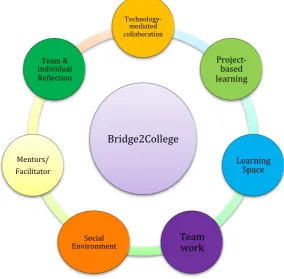
First version of the model implemented. Model conceptualised as comprising key ‘planetary’ elements and first presented in academic contexts
2008-‐2010 Programme extended at Oriel House and an in-‐school programme introduced
Model refined in successive academic years working with second level students from partner schools.
First academic publication of
implementation of the model (Tangney et al., 2010).
2011 Programme renamed Bridge21 Model renamed as Bridge21
2011-‐present Continuing implementation of the model both in Oriel House and on site in partner schools and other
educational contexts
2013 presentation of the model graphic as a ‘swirl’ rather than a discrete set of ‘planetary’ elements to convey the importance of their interplay in the Bridge21 learning model
The Bridge2College (B2C) programme was established in 2007 with the author as its founding Director, as part of the university’s outreach programme for second level schools in areas of social disadvantage, with the support of the Trinity Access Programme (TAP) and in partnership with Suas Educational Development (an NGO committed to social development through education). The Bridge2College initiative was renamed Bridge21 (B21) in 2011 to reflect a broader mission and to create a link to the concept of 21st Century Learning.
the author had extensive personal experience and belief in the pragmatism and effectiveness of the team-‐based learning model of the World Scout Movement (Vallory, 2012; WOSM, 1998).
The initiative is sited on the university campus in a specifically designed learning space at Oriel House that was constructed to support team-‐based, technology mediated learning and is consistent with social constructivist and constructionist principles. The programme commenced in late 2007 and has run continuously since.
The Bridge21 Model was developed in parallel and through implementation within the Bridge2College programme, initially with the partner schools from TAP and later with a broader range of schools. To maintain clarity the development of the model and the Bridge2College programme implementation are discussed separately in Chapters 3 and 6.
The initial deployment of a team-‐based, technology mediated learning model, in the context of the Bridge2College programme, was largely intuitive and based on the experience of the author and the programme team. The Bridge21 model is the product of the refinement of the early models designed as a team-‐based technology mediated learning model. Bridge21 is heavily influenced by the team-‐based learning method of the World Scout Movement, informed by the literature on social
constructivism, team-‐based learning and 21st Century Learning and researched under the guidance and ethos of the CRITE. Since its establishment Bridge21 has become a flagship umbrella project for research in CRITE. Up to the time of
submission of this work, in excess of 10,000, second level students from 80 schools have participated in workshops and interventions using the Bridge21 model. To date 380 teachers have received training at Bridge21 workshops and additionally an introduction to the Bridge21 model has been included in the programme for 270 teachers engaged in the Professional Masters in Education course at Trinity College Dublin since 2014. The Bridge21 model has now been implemented extensively in practice and this thesis traces its origin, design and development by the author and seeks evidence of its effectiveness through the research questions.
1.3 Research Questions
The primary research question and sub-‐questions of this work probe the effectiveness, impact and potential of the Bridge21 educational model as
implemented in a structured out-‐of-‐school implementation. Specifically, the research examines and addresses:
RQ: What are the credentials of Bridge21 as a candidate model for 21st Century Learning?
Sub-‐RQ (a): What is the effectiveness of the model in encouraging intrinsic student motivation?
Sub-‐RQ (b): What is the effectiveness of the model in facilitating team-‐based, technology mediated learning?
1.4 Research Methodology
The research in this thesis is realised through consideration of an integrated Case Study with embedded Exploratory and Explanatory units of analysis, examined in the frame of three successive years of implementation (Yin, 2013). The development of the Bridge21 model moved from the intuitive to the informed through referencing existing theory in the literature and building evidence from data. This approach informed the design of the Bridge21 model as it evolves through testing in a series of instantiations over successive academic years. The data are gathered in conjunction with these interventions though questionnaires and focus groups. A mixed methods approach was adopted to facilitate the combination of qualitative and quantitative viewpoints and so provide a depth of understanding and corroboration. Qualitative data provides understanding of the phenomena evident and emerging in the research in both the Exploratory and Explanatory Analysis Units of the Case Study with the quantitative data supporting the qualitative data (QUAL+qual).
1.5 The Author’s Contribution
as demonstrated through research conducted with students participating over successive academic years at Oriel House. The Bridge21 model and its
implementation has supported and enabled a significant number of contributions in the field of technology and learning, team-‐based learning and has provided a
platform and scaffold for further research in a range of applications and contexts. Published papers and conference presentations by the author and also the receipt of significant prestigious awards validate the contribution (cf. Irish Learning Technology Association, Jennifer Burke Award (2009); Social Entrepreneurs Ireland Award
(2009); Social Entrepreneurs Ireland Award (2010)).
1.5.1 The Design of the Bridge21 Model
The Bridge21 model is based on well understood and in some respects, traditional concepts of teamwork and team learning but is entirely innovative in the assembly of the elements of the model and their systematic implementation to deliver an
effective and implementable learning approach. Bridge21 is a pragmatic model for 21st Century Learning that has teamwork at its core. In particular, the model is a vehicle for giving learners the lead responsibility in their learning and encourages personal growth as learners through their individual and personal contribution to the team effort. This model has had extensive implementation in a range of learning contexts since 2007 and has shown itself to be versatile, flexible and resilient with potential for further deployment in both formal and non-‐formal learning
environments.
1.5.2 Bridge21 as a Model for 21st Century Learning
The Bridge21 model is presented in this work as a pragmatic, candidate model for 21st Century Learning. The work of this author and other researchers has shown
be further applied against the formal curriculum and in an in-‐school context is the focus of other current research (Conneelly et al., 2013).
1.5.3 Effectiveness of the Model in Encouraging Personal Responsibility for Learning
This thesis will show that the Bridge21 model through its structured teamwork approach offers a vehicle for the transfer of control of the learning from the
adult/teacher to the learner and through this promotes student responsibility for the learning. It will be seen that participants who experienced Bridge21 reported a new sense of responsibility and independence in their learning journey and evidenced a personal perception of gain in self-‐confidence.
1.5.4 Bridge21 -‐ Encouraging Intrinsic Student Motivation
The thesis will show that the Bridge21 model exhibits the critical characteristics of learning necessary to encourage intrinsic motivation. The experience of the participants in learning through the Bridge21 model affected their perceptions of their relationship with learning, their sense of responsibility for their learning, their sense of mastery of skills, how they can learn, with and from their peers, their attitude to technology in their learning and their enjoyment of the learning experience. These results echo the ideas espoused for intrinsically motivated learning as published in literature.
1.5.5 Effectiveness of the Bridge21 Model in Facilitating Team-‐Based, Technology Mediated Learning
team model. This approach in integrating ICT in the learning, as a team resource, offers potential in the search for models to facilitate 21st Century Learning.
1.5.6 Bridge21 as a Research and Educational Development Platform
The Bridge21 model has been a subject of interest in other research and has been subject to on-‐going testing and rigor in different learning contexts by other researchers. Additionally, the model has been employed as a research learning method and environment to support research in a significant number of domains to-‐ date supporting Post-‐Doctoral, Doctoral and Masters studies. These cover a range of diverse fields including: introduction to programming, language learning,
mathematics learning, history learning, peer learning, school transformation and teacher development.
(Bauer, Devitt & Tangney, 2015; Bray & O’Donovan, 2015; Bray, Oldham & Tangney, 2015; Bray & Tangney, 2014; Bray & Tangney, 2015; Byrne, Fisher & Tangney, 2015a; Byrne, Fisher & Tangney, 2015b; Conneely, Girvan, Lawlor & Tangney, 2015;
Conneely, Girvan & Tangney, 2012; Conneely et al., 2013; Girvan, 2015; Lawlor et al., 2010; Lawlor et al., 2015a; Lawlor et al., 2015b; Tangney & Bray, 2013; Tangney et al., 2010).
The Bridge21 programme and model has contributed to the research supporting changes to Irish Second Level Education through work commissioned by the National Council for Curriculum and Assessment (NCCA) during the 2011/12 academic year.
Under the auspices of Trinity Access 21 (TA21) and in cooperation with Trinity College Dublin’s Outreach Programme (TAP) and the Schools of Education and Computer Science & Statistics, Bridge21 is providing the pedagogical platform to support a programme offering a suite of initiatives to address educational
disadvantage with a particular focus on 21st Century Learning and STEM (Science, Engineering, Technology and Mathematics). This programme includes a new postgraduate certificate in 21st century STEM education for teachers.
1.6 Layout of the Dissertation
This dissertation follows the succeeding structure and layout:
Chapter 1: Introduction. This chapter provides the relevant external context and background for the thesis. It presents the challenge to education to find practical implementable models to enable 21st century Learning. It also introduces the
problem of integrating ICT effectively in learning. The influences bearing upon the development and the origins of the Bridge21 model are also introduced. The chapter also presents the research questions that probe the efficacy of the model. The chosen research methodology is outlined. The introduction chapter concludes with a summary of the contribution of the work.
Chapter 2: Literature Review. This chapter explores the relevant literature
considering 21st Century Learning, how it is defined and how it might be facilitated. The literature is explored for promoting engaged learning, student autonomy, group work, ICT in learning, learner motivation, out-‐of-‐school programmes and technology mediated group work. The chapter also explores the literature more specifically informing the Bridge21 design including that covering team-‐based learning, team formation, responsibility for learning, reflection, task orientation, technology and learning, learner interactions, team oriented learning space and social learning protocols.
Chapter 3: Model development and Implementation. This chapter introduces the Bridge21 model and describes the path of development of the Bridge21 learning model as it was informed by the results from implementation. The chapter first considers the influences that bore on the inception, deployment and development of the model in the context of the Bridge2College outreach programme and explains its development as implemented in a broader programme. The progression of the model is described as it evolved in parallel with the programme of implementation. The significance of each element of the model is described and considered in its function in facilitating and encouraging teamwork and 21st Century Learning. The
The Bridge2College programme at TCD provided the implementation context for the work presented in this thesis. The development of the Bridge21 model was a product of the Bridge2College programme and this chapter describes the implementation of the model as an integral part of that programme over successive academic years. The original outreach mission of the programme is explained and how the
programme evolved to meet broader educational objectives through leveraging the effectiveness of the emerging learning model. The implementation is described and the structure and activity model of the workshops is presented. The student
participant cohort and partnership with schools and the context of their participation is explained. The significance of the move to a specially designed learning environment at Oriel House on the Trinity College Dublin university campus is explained and the evolution and design of this learning environment is described. The activ