© 2019, IRJET | Impact Factor value: 7.211 | ISO 9001:2008 Certified Journal | Page 3595
"ELECTRIC BICYCLE USING TREADMILL"
Rohit Somnath Sonawane
1, Sagar Kailas Khairnar
2, Shivam Ahir
3, Bhimrao Dabhade
41,2,3
Graduate students, Electrical Department & Guide Guru Gobind Singh College of Engineering and
Research Centre, Nasik.
4
Assistant Professor of Electrical Department & Guide Guru Gobind Singh College of Engineering and
Research Centre, Nasik.
---***---
ABSTRACT - Walking bike is a completely new method of moving. With the electrical assist it takes no more effort to walk then “a walk in the park”. The electric assist in combination with the gear is boosting your walking pace up to the speed of the regular bike. When you are walking on the walking bike, you push the treadmill backward with your feet. The movement of the treadmill gives the signal to the electronic device which will activate the motor. The motor currently supports you to continue the walking movement. Using break motor speed will reduce slowly. The walking bike has a sturdy and balanced base. If there are very little pebbles on the road it'll just cruise on an everyday bike. The rubber of the treadmill has opposed slip structure which is able to prevent you from sliding of bike.“We aspired to build a vehicle that's quicker than walking and easier to ride than a bicycle”.
Keywords: Electric Bike, Walking Bike, Treadmill, battery, BLDC Motor,
CHAPTER NO.:- 1
INTRODUCTION
Bicycles are one of the most pervasive forms of transportation in the world. Most children remember their first bike; with it came the chance to tour the world with more freedom than ever before. As we grow, however, bicycling becomes more than just a infancy rite of passage. Wind in our hair and feet on the pedals, we have some good reasons to climb on and take a trip. Much of the world uses bicycles as a primary form of day-to-day transportation. What would take several hours of travel on foot becomes faster and more effective on two wheels. Some cyclists take trips across entire states or cross-country only on a bicycle. Reaching speeds of 15 km or 30 km an hour is achievable by even beginning cyclists, while more skilled riders can reach speeds equivalent to automobile travel. Not to be constrained by simple
© 2019, IRJET | Impact Factor value: 7.211 | ISO 9001:2008 Certified Journal | Page 3596
CHAPTER NO.:- 2LITERATURE REVIEW
[1] Usage Patterns of Electric Bicycles: An Analysis of the E Bike Project
This paper presents an analysis of data collected through the Water loop We Bike project: a field trial in which over 30 sensor-equipped electric bicycles (e-bikes) were given to members of the University of Water loop for personal use. Our dataset includes e-bike trips and battery charging sessions spanning nearly 3 years, from summer 2014 until spring 2017. We additionally conducted 3 surveys both before and during the trial. Our main findings were that the first purpose of the e-bikes in our trial was for commutation, with most journeys lasting less than twenty minutes and most journeys taking place in the summer months. Our battery charging analysis revealed no proof of range anxiety, and our analysis of survey results showed little correlation between anticipated and actual use. Furthermore, when asked about their opinions about various modes of transportation, our participants rated regular bicycles higher than e-bikes even after becoming familiar with e-bikes through the field trial. Based on our analysis, we have a tendency to draw many conclusions, together with the very fact that the overall population in Canada remains unaware of e-bikes and their potential. Moreover, e-bike manufacturers should target sales to no bike users, such as seniors, rather than trying to displace sales of regular bicycles
[2] “Literature Review on Electric Bike”
The main aim of this review paper is to present the idea of harnessing the various energy and use it in today’s existence of human life. For human being travelling has become vital. In order to sustain in this fast forward world he must travel from place to place. It is very important that time taking for travelling should be less, also it should be economical and easily available. With the fast depleting resources of petrol and diesel, there is need to find intermittent choice. Taking all this into account, a shift away from conventional based fuels to using renewable sources of energy is a must. Electric bike which can be driven with the help of battery and thus provide needed voltage to the motor. The focus of this report is to perform power calculations and system design of this electric Bike. This bike can be driven with the help of electricity or also with the help of solar energy. Therefore the manufacturing of such bike is indispensable.
[3] Electric bicycle using batteries and super capacitors
In this paper, a traction system useful for an autonomous Electric Vehicle of individual use is described. The developed system is constituted in a first approach by two different power sources: one is constituted by batteries or by fuel cells, and the other by super capacitors. This paper describes a technical solution joining and accomplishing the usage of two energy storage systems in the same traction system. In the developed system, the super capacitors run as component that store energy temporarily and that can be used to retrieve energy. Starting from the functional characteristics of typical electrical vehicles and characterization of a typical routing profile, the energy consumption is obtained. In order to characterize and design the system, this is described in detail, namely the super capacitors models, the battery, the power converters and the implemented strategy of control. According to the obtained results, a control strategy that allows an effective management of the stored energy in the system regarding the vehicle’s optimal functioning and increasing its autonomy is also presented and discussed. Based on experimental and simulation results, the advantages and disadvantages of the proposed solution are presented.
[4] Campus Mobility for the Future: The Electric Bicycle
Sustainable and practical personal mobility solutions for campus environments have traditionally revolved around the use of bicycles, or provision of pedestrian facilities. However many campus environments also experience traffic congestion, parking difficulties and pollution from fossil-fuelled vehicles. It appears that pedal power alone has not been sufficient to supplant the use of petrol and diesel vehicles to date, and therefore it is opportune to investigate both the reasons behind the continual use of environmentally unfriendly transport, and consider potential solutions. This paper presents the results from a year-long study into electrical bicycle effectiveness for an oversized tropical campus, characteristic barriers to bicycle use that can be overcome through the availability of public use electric bicycles.
[5] “R&D ON ELECTRIC BIKE”
© 2019, IRJET | Impact Factor value: 7.211 | ISO 9001:2008 Certified Journal | Page 3597
From conventional automobile for transport we tend toexperience issues like traffic congestion, parking difficulties and pollution from fossil fueled vehicles. It appears that only pedal power has not been sufficient to supplant the usage of petrol and diesel automotive to date, and therefore it is necessary to investigate both the reason behind continuous use of surroundings unfriendly transport and consider potential solutions. This paper represents the results from a year-long study into electric bicycle effectively. This paper identifies potential barriers of electric bicycle. Overcomes it by using innovative “redemption Springer forks” ahead suspension with motor for help.
CHAPTER NO.:- 3
Problem Statement
Present modern day world, there are two main issues which are causing trouble for mankind is the global warming which is caused by extensive use of combustibles and automobiles even for short distances also. Due to this there is an immense effect on environment and also depletion of fuel sources. The second concern is that lot of people are now majorly suffering from novice health issues. This is because lack of proper exercise. so i came up with the introduce idea in modern transportation world and named as solar powered health bicycle which can make people walk while they ride.
The star powered health cycle is completely new entrance in transportation with the star powered electrical help it take a awfully lowest effort to run than "a go into park". Its main working comprises of solar panel with voltage regulator and boost converter, a brushless direct current motor, a sealed lead ion battery, and the tread mill belt, all these components makes cycle run smoother, easier and in very conventional way by this the rise in pollution can be greatly minimized and also make people exercise while they travelling to various destinations and ultimately the depletion of natural resources can be minimized.
CHAPTER NO.:- 4
[image:3.612.326.562.450.633.2]System Overview:
Fig : Basic Block Diagram
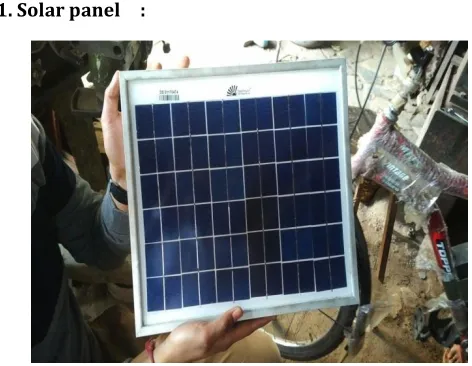
1. Solar panel :
Light hanging a Si semiconductor causes electrons to flow, making electricity. Solar power generating systems take advantage of this property to convert sunlight directly into electrical energy. Solar cells convert the energy of sunlight directly into electricity through the use of the photovoltaic
CHARGER
SOLAR PANEL
BATTERY
PROTECTION DIODE
DC MOTOR SW1
© 2019, IRJET | Impact Factor value: 7.211 | ISO 9001:2008 Certified Journal | Page 3598
effect. The photovoltaic effect involves the creation of avoltage into an electro-magnetic radiation. There are two types of solar power generating systems: grid-connected systems, which are connected to the commercial power infrastructure; and stand-alone systems, which feed electricity to a facility for immediate use, or to a battery for storage. Grid-connected systems are used for homes, public facilities such as schools and hospitals, and commercial facilities such as offices and shopping centers .Stand-alone systems are used in a variety of applications, including emergency power supply and remote power wherever ancient infrastructure is inaccessible
2. Diode Protection Circuit :
A protection diode used in any circuit that allows the flow of current in the forward direction, because the current will not flow in the reverse direction. It protects the components which are responsive to the flow of current through them in the wrong direction.
A protection diode used in a circuit is shown below. The following circuit is built with a protection diode to protect the circuit. For instance, the following project uses a protection diode which is connected in series with a light emitting diode An LED is pretty responsive to current in the reverse direction. It can only knob a certain amount of current in the incorrect direction. If sufficient reverse voltage drops across the LED then it will break down and let current to flow through it in the reverse direction, which can root the LED to be lastingly damaged.
To keep a component safe in a circuit, a protection diode is normally located in reverse bias in parallel with the other component. Whenever a diode is positioned in parallel with the element you want protected reverse biased, if the flow of current through the circuit is in reverse, then the current flows through the diode, go around the motor. With huge amounts of current, some current may still pass through the motor, but it will be split between the diode and the motor. Therefore, all of the current will not flow through the motor, as would be the case if there was no diode present.
3. Hub Motor:
Hub motor electromagnetic fields are provided to the stationary windings of the motor. The outer a part of the motor follows, or tries to follow, those fields, turning the connected wheel. In a brushed motor, energy is transferred by brushes contacting the shaft of the motor. Energy is transferred in a very brushless motor electronically, eliminating physical contact between stationary and moving components. Although brushless motor technology is costlier, most are more efficient and longer-lasting than brushed motor systems.
A hub motor usually is designed in one of 3 configurations. Considered least practical is an axial-flux motor, where the stator coil windings are generally sandwiched between sets of magnets. The other 2 configurations are each radial designs with the motor magnets secured to the rotor; in one, the inner rotation motor, the rotor sits inside the stator, as in a conventional motor. In the other, the outer-rotation motor, the rotor sits outside the stator and rotates around it. The application of hub motors in vehicular uses is still evolving, and neither configuration has become customary.
© 2019, IRJET | Impact Factor value: 7.211 | ISO 9001:2008 Certified Journal | Page 3599
4. Lithium ion battery:
The 3 primary functional elements of a lithium-ion battery are the positive and negative electrodes and electrolyte. Generally, the negative conductor of a conventional lithium-ion cell is created from carbon. The positive conductor may be a metal compound, and therefore the solution may be a lithium salt in an organic solvent.The electrochemical roles of the electrodes reverse between anode and cathode, depending on the direction of current flow through the cell.
The most commercially popular negative electrode is graphite. The positive electrode is usually one in every of three materials: a layered oxide (such as lithium cobalt oxide), a polyanion (such as lithium iron phosphate) or a spinel (such as lithium manganese oxide).Recently, graphene based electrodes (based on 2D and 3D structures of graphene) have also been used as electrodes for lithium batteries.
The electrolyte is typically a mixture of organic carbonates such as ethylene carbonate or diethyl carbonate containing complexes of lithium ions.[78] These non-aqueous electrolytes generally use non-coordinating anion salts such as lithium hexa fluoro phosphate (LiPF6), lithium hexa fluoroarsenate hydrate (LiAsF6), lithium perchlorate (LiClO4), lithium tetra fluoroborate (LiBF4), and lithium triflate (LiCF3SO3).
Depending on materials choices, the voltage, energy density, life, and safety of a lithium-ion battery can change dramatically. Recently, novel architectures exploitation nanotechnology is employed to enhance performance. Drastic change can lead to reverse polarities which are dangerous.
Pure lithium is highly reactive. It reacts vigorously with water to form lithium hydroxide (LiOH) and hydrogen gas. Thus, a non-aqueous electrolyte is often used, and a sealed container rigidly excludes moisture from the battery pack.
Lithium-ion batteries are more expensive than NiCd batteries but operate over a wider temperature range with higher energy densities. They need a protecting circuit to limit peak voltage.
CHAPTER NO.:- 5
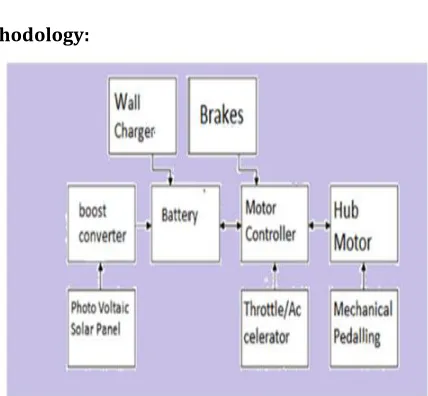
[image:5.612.342.556.118.316.2]Methodology:
Fig. Working Model Block Diagram
Solar energy is captured from the sun using solar panels mounted on the rear end of the bicycle. These panels are connected to a boost converter so as to boost the voltage to the required level. The arrangement is further connected to a battery. The battery is charged using this solar output as the entire power transfer is DC in this case. This battery is connected to a DC motor. The battery can also be charged using a wall charger in case of absence of sun. A brushless DC motor is preferred here because of no maintenance, high efficiency, and low noise and also because of the absence of brushes we don’t find sparking in a BLDC motor. A synchronized motor controller is used here for the working of the motor. Also a throttle is used here to increase the speed of the cycle. This accelerator is also directly connected to the motor controller which in turn controls the motor speed. The bicycle can also be run using mechanical pedaling in the absence of sun or when the battery is drained out.
1. Factors Effecting Efficiency:
© 2019, IRJET | Impact Factor value: 7.211 | ISO 9001:2008 Certified Journal | Page 3600
battery such that this diode acts as a one way passage fromthe panel to the battery. The power output from the solar panel depends on the following Panel angle: The angle at which the sun hits the panels changes the amount of exposure. When the solar panels are mounted flat on the cycle and not faced to the sun, the power generated will be always lower than the rated amount. Anyways the sunlight is always diffused in the atmosphere which reduces this effect. Time of day: Time of the day plays a kind of important role on the power generated as the sun rays hitting a specific area is not the same the entire day. The rays are stronger and maximum power can be obtained between 11 a.m. – 3 p.m. Solar cell reflection: The power generated will be reduced if the solar cell reflects high amount of light rays. Hence a protective layer should be adopted on the top of the panel with a very low reflective coefficient. Clouds: Clouds play a very major role on the bicycle motion. Clear clouds makes the cycle efficient. It isn’t exaggeration that the bicycle cannot be used well during cloudy days as the sun isn’t available at its best.
2. Loads on Bicycle:
Speed of the bicycle always depends on the load mounted on it. If load on bicycle is within the limit then efficiency will be good. If load exceeds the particular limit of the bicycle then motor draws more power from batteries due to which efficiency decreases.
Table: solar module rating
Parameter Value
Maximum Power (Watt) 100
Optimum Operating voltage 18.9V
Open Circuit Voltage Voc 22.5V
Optimum Operating Current (Imp) 5.29A
Short Circuit Current Isc 5.75A
Table: Specifications of Hub Motor
Parameter Corresponding factor/value
Type of Motor Hub motor
Design of Motor BLDC (Brushless DC)
Power Rating 500W Rated Voltage (V) 36
Weight(kg) 5
Efficiency (%) 80
Torque 12 N-m
[image:6.612.334.564.240.487.2]Speed (rpm) 300
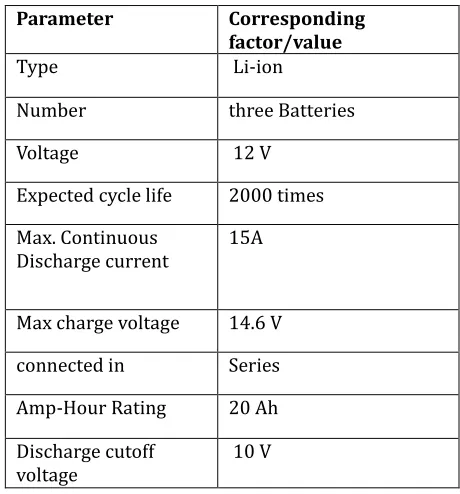
Table : Specifications of Battery
Parameter Corresponding factor/value
Type Li-ion
Number three Batteries
Voltage 12 V
Expected cycle life 2000 times
Max. Continuous
Discharge current 15A
Max charge voltage 14.6 V
connected in Series
Amp-Hour Rating 20 Ah
Discharge cutoff
voltage 10 V
Table: Specifications of Motor Controller
Parameter Values
System voltage (V) 36
Rated current (A) 27
Under voltage protection (V) 31.5 Ambient temperature (ºC) 0-50
CHAPTER NO.:- 6
Future Scope
© 2019, IRJET | Impact Factor value: 7.211 | ISO 9001:2008 Certified Journal | Page 3601
• We will Send Message about location onregistered number.
• We can still ride the bike by switching of the treadmill and can reach the destination with solace
EXPECTED RESULT
Commuting with low fatigue at a top speed of 24 kmph.
Extends the riding range – 30kms on a single charge.
Lesser maintenance cost.
Normal pedaling is possible when not on power assist mode.
Detachable battery can be taken inside the house for charging
Solar panels keep charging the batteries for our continuous use.
The fan produce electricity and hence the battery is charged.
No registration - no insurance – no driver's license.
CHAPTER NO.:- 7
REFERENCE
[1] International Research Journal of Engineering and Technology (IRJET) e-ISSN: 2395-0056 Volume: 05 Issue: 02 | Feb-2018 www.irjet.net p-ISSN: 2395-0072 © 2018, IRJET | Impact Factor value: 6.171 | ISO 9001:2008 Certified Journal | Page 610 “ R&D ON ELECTRIC BIKE “Yashwant Sharma1,Praveen Banker2, Yogesh Raikwar3, Yogita Chauhan4, (M.P)
5Assistant Professor, Department of
Automobile Engineering, OIST Bhopal (M.P)
[2]“Usage Patterns of Electric Bicycles: An Analysis of the We Bike Project” Christian Gorenflo, Ivan Rios, Lukasz Golab, and
Srinivasan KeshavUniversity
ofWaterloo,Waterloo, ON, Canada N2L
3G1Correspondence should be addressed to
Christian Gorenflo;
[email protected] 7 April
2017; Accepted 24 August 2017; Published 9 October 2017
[3] IJRMET Vol. 7, Issue 1, Nov 2016 - Apri l 2017 www. i j r m e t. c o m International Journal of Research in Mechanical Engineering & Technology 73 ISSN : 2249-5762 (Online) | ISSN : 2249-5770 (Print) “Literature Review on Electric Bike” KunjanShinde Dept. of Mechanical Engineering, University of Mumbai, India.
[4] Journal of Transportation Technologies,
2012, 2, 1-12
http://dx.doi.org/10.4236/jtts.2012.21001 Published Online January 2012 (http://www.SciRP.org/journal/jtts) “ Campus Mobility for the Future: The Electric Bicycle”
Ian Vince McLoughlin, I. Komang Narendra, Leong HaiKoh, QuangHuy Nguyen, BharathSeshadri, Wei Zeng, Chang Yao School of Computer Engineering & Energy Research Institute, Nanyang Technological University, Singapore Received September 19, 2011; revised October 16, 2011; accepted November 6, 2011