Babel: A t e s t b e d for research in origins of l a n g u a g e
Angus McIntyre
Sony CSL Paris 6 rue A m y o t Paris 75003, France
Abstract
We believe that language is a complex adaptive system t h a t emerges from adaptive interactions between language users and continues to evolve and adapt through repeated interactions. Our research looks at the mechanisms and processes involved in such emergence and adaptation. To provide a basis for our computer simulations, we have implemented an open-ended, extensi- ble testbed called Babel which allows rapid con- struction of experiments and flexible visualiza- tion of results.
1
Introduction
Over the past few years, a growing number of researchers have begun to look at some of the fundamental questions in linguistics in a new light, using new tools and methodologies to ex- plore a number of unresolved issues. Among these issues are questions about the origin and the evolution of natural languages - how a lan- guage can arise, and how it can continue to de- velop and change over time (see (Steels, 1997) for a summary).
Some workers in the field stick relatively closely to what might be described as the Chom- skyan orthodoxy (see (Chomsky, 1981), (Chore- sky, 1986)) in assuming the existence of a geneticMly-encoded language acquisition device (LAD) which is primarily responsible for deter- mining the properties of language. For these researchers (see for example (Sriscoe, 1997)), computer simulations offer the chance to ex- plore the possible properties and origins of the LAD.
Other researchers choose to focus not on ge- netic evolution of human linguistic faculties, but on the selectionist forces that operate on lan-
guage itself. Kirby and Hurford (Kirby and
Hurford, 1997), for example, have shown that
a model of selectionist processes operating on the language is able to explain both linguis- tic universals and variational constraints. The role of selection effects on language can even be explored independently of any assumed in- herited language faculty; Oliphant (Oliphant, 1996) shows that communication may emerge from the nature of structured and repeated in- teractions between language users, while Steels (Steels, 1996) demonstrates how a coherent shared language can evolve in a population of
agents as a result of repeated language games
- stylised interactions involving the exchange of linguistic information.
Our research views language as a complex adaptive system that emerges as a result of interactions between language users. Contin- ued adaptive interactions lead naturally to the evolution of the language and the diffusion of new linguistic tokens and properties through the community of speakers. Using computer simu- lations of populations of language users, we are investigating the processes that shape natural language and exploring possible learning mech- anisms that can allow coherent shared commu- nication systems to arise in populations.
This paper describes a tool t h a t we have de- veloped to allow rapid implementation of exper- imental simulations within this paradigm. Our description begins with an overview of the prin- cipal requirements we aimed to meet, followed by a more detailed look at the actual imple- mentation of the tool and the facilities that it provides.
2 R e q u i r e m e n t s
Our approach to studying language is based
on multi-agent simulations. Mainstream re-
languages for building simulations (consider, for example, SWARM ( M i n a r e t al., 1996), GAEA (Nakashima et al., 1996), or AKL (Carlson et al., 1994)), but none of these systems have been designed for specifically linguistic experimen- tation. Moreover, we wanted to work within the paradigm proposed by Steels (Steels, 1996), where language-using agents construct a shared language through repeated interactions with a precise structure. Examples of such games in-
clude naming games, in which agents take turns
naming and learning t h e names of objects in
their simulated environment, imitation games
in which one agent attempts to meaningfully imitate a linguistic form presented by another,
and discrimination games, in which agents at-
tempt to build a system that allows them to dis- cern distinctions between objects in the environ- ment. The tool needed to provide a library of re- usable building blocks with which we could de- scribe the formal structure of these games, rep- resent the principal elements of the simulated environment, and develop models of the agents' memories and learning processes. Moreover, it was important that it should be open-ended, so that we would be able to use pre-defined ele- ments to rapidly build new simulations based on new game types or agent properties.
In addition to providing building blocks for simulation development, the system must of- fer an interface for controlling the simulations. This interface should allow users to launch sim- ulations, to modify the environment by adding or removing agents, to change experimental pa- rameters and so forth. To simplify the task of porting the tool and to protect simulation de- velopers from the intricacies of user interface programming, we also wanted to isolate the in- terface code as much as possible from the code defining the (portable) core of the system and from code written by experimenters.
Lastly, the tool was required to provide ways in which the data generated by simulations could be visualized. One of the challenges in this type of simulation, particularly where mul- tiple agents are involved, is in getting an impres- sion of the changes that are taking place. We wanted something that could let us 'look inside' our simulations as they ran and try to get an idea of what was actually happening. It should also, of course, provide the means to export the
data for subsequent analysis or presentation. In summary, the system needed to offer an extensible set of building blocks for simulation development, tools for controlling the simula- tions, and tools for visualizing the progress of simulations. In the next section we will look at the approach taken to meeting these needs.
3 I m p l e m e n t a t i o n
The choice of language for the implementation was determined by the need for a standardized language suitable for rapid prototyping with good symbolic and list-processing capabilities. While the portability of Java was tempting, we eventually decided on Common LISP ((Steele, 1990)) with its more powerful symbol and list manipulation facilities.
Babel was developed using Macintosh Com- mon LISP from Digitool, and has since been ported to Windows under Allegro Common LISP by colleagues at the Vrije Universiteit Brussel. The core of the system is portable Common LISP that can run on any platform, leaving only the interface to be ported to other platforms. In future, when stable implementa- tions of the Common LISP Interface Manager (CLIM) are widely available, it may be possi- ble to produce a single version which will run on any system. The task of porting is, however, not too onerous, since the majority of the code is contained in the portable core. Most important of all, experimenter code - definitions of agents, game types and environments - can typically run without modification on any platform. The high-level services provided by the toolkit mean that experimenters rarely need to get involved in platform-specific interface programming.
3.1 Class l i b r a r y
Building blocks for experimental development are provided by a rich class library of CLOS (Common LISP Object System) objects. Classes present in the library include
• basic agent classes
• classes for capturing information about in- teractions, the contexts in which they take place and the linguistic tokens exchanged
• d a t a structures t h a t can be used to imple- ment agent memories and learning mecha- nisms
The two most i m p o r t a n t kinds of classes
are the agent and the world classes. The
agent classes define the capabilities of individ- ual agents - the way they store information, the kind of utterances they can produce, and the mechanisms they use to learn or to build structure. Depending on the nature of the envi- ronment, agents may also have attributes such as position, age, energy state, social status, or any other property t h a t might be relevant. The core class library provides a root class of agents, together with some specializations appropriate to given interaction types or learning models. Experimenters can use these classes as founda- tions for building agents to function in a specific experimental context.
While agent classes define the capabilities and properties of individual speakers in the language community, the world classes capture the prop- erties of the world and, more importantly, the nature of interactions between the agents. In this way, procedural definitions of the different kinds of language games can be given as part of the definition of a basic world class. The exper- imenter can use a given language game simply by basing their experimental world on the ap- propriate class.
As an example, consider the following code
fragment taken from the ng-world class:
( d e f m e t h o d R U N - G A M E ( ( W o r l d n g - w o r l d ) ) ( l e t *
( ( S p e a k e r ( c h o o s e - s p e a k e r . . . ) ) ( H e a r e r ( c h o o s e - h e a r e r . . . ) ) ( C o n t e x t ( c h o o s e - c o n t e x t ...)) ( U t t e r a n c e ( c o m p o s e - u t t e r a n c e . . .))
(Success
( w h e n U t t e r a n c e
( r e c o g n i s e - o r - s t o r e ...)))) ( u p d a t e - w o r l d - s t a t e ... ) ( r e g i s t e r - i n t e r a c t i o n ...)))
This defines the basic form of the naming g a m e - the choice of speaker and hearer, the
choice of a context (including a topic), and the construction of an utterance by the speaker, fol- lowed by recognition of the utterance by the hearer 1. T h e state of the world - including the
1 To make the code easier to read, function arguments are not shown
object ,~
gurable-
I ' ' . _ ' object
::::::::: ::::::::::/i : :
] r~il wodd reporter monitor
: : : : : : : : : : : : : : : : : : : : : : : : : : : : : : : :
spatial- ii
object wodd-with- i i open- objects [ [ world
i i ~ ~ :_____!! ¢~
i:: : ! ! : : : J : : : : ~ ::::'"
ng-agent ng-wodd ::: : : : : : : : : : : : : : : : : : : : : : : : : : :
i l'uster
I
~" gdng- ~i open-ng----.J Naming! . . . t - - ~,ge~; world i~ wodd Grime
[ ' : : : : : ===================================================
i
~
Geographically-i open-gdng- Distributed
wortd Naming Game
t . . .
Figure 1: Core classes in Babel
agents' own memory structures - is then up- dated and the interaction is registered by the monitoring system (described later). Each of the m e t h o d s called by this m e t h o d can be indi- vidually overridden by subclasses, giving exper- imenters fine control over the procedures used to choose speakers or hearers, formulate utter- ances, store information and so forth.
The class library is implemented in a m o d u l a r fashion, so t h a t experimenters can extend the functionality of the base classes by loading ad- ditional modules. The multiple-inheritance sys- tem in CLOS allows properties to be attached to experimental objects simply by making t h e m inherit from different subclasses. For instance, any object can be given a position by making
it inherit from the class spatial-object de-
fined in the S p a c e module, as shown in Figure 1, which shows a portion of the existing class library.
As Babel evolves, useful classes and d a t a structures defined by experimenters are ab- sorbed into the core library set where they can in turn serve as building blocks for future ex- periments.
3.2 C o n t r o l i n t e r f a c e
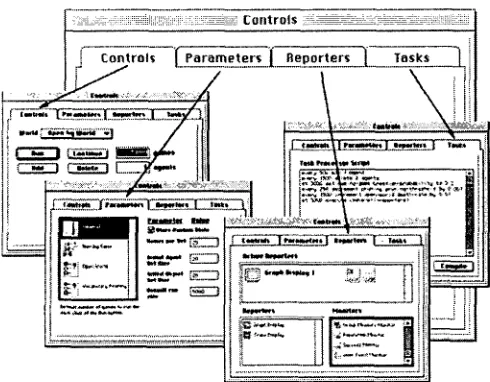
[image:3.612.329.542.54.298.2]Figure 2: Babel's main control window
the simulations. As previously noted, the core Babel functions and the code defining the inter- face are carefully separated, in order to facilitate porting and allow experimenters to write code t h a t does not depend on - or require knowledge o f - any specific operating system platform.
The control interface in Babel is realised by a single window t h a t allows the user to launch simulations, to set experimental parameters, to configure d a t a reporting tools and even to write simple batch scripts to control ongoing simu- lations. The different functionalities are sepa- rated out into subpanes t h a t group related con- trols together. Figure 2 shows a stylised view of the interface, showing each of the main control panes.
Access to interface functions is available to experimenter code through a well-defined API. For instance, experimental parameters can be declared using a simple description language t h a t specifies the type, range and default val- ues for each parameter. Parameters declared in this way are automatically accessible for editing through the parameter editor, and can even be u p d a t e d programmatically at runtime by batch scripts executed by Babel's built-in task proces- sor.
3.3 V i s u a l i z a t i o n t o o l s
A major challenge has been to provide a way to allow experimenters to follow the progress of their experiments and to view and extract d a t a from the simulations. The same consid-
erations t h a t governed design of the interface are applicable here as well: the code needed to display simulation d a t a (for instance by draw- ing a graph onscreen) is typically platform- dependent, but experimenters should not need to get involved in user interface p r o g r a m m i n g
simply to see their results. Moreover, they
should not need to 'reinvent the wheel' each time; once a particular way of visualizing d a t a has been implemented, it should be available to all experiments t h a t can make use of a similar representation.
The approach taken in Babel has been to sep- arate out the task of d a t a collection from the task of d a t a display. We call the d a t a collectors
monitors,
because they monitor the simulation as it proceeds and sample d a t a at appropriate intervals or under specific circumstances. D a t adisplay is handled by
reporters,
which take in-formation from the monitors and present it to the user or export it for analysis by other pro- grams.
Monitors and reporters stand in a many-to- many relationship to each other. The d a t a from a given monitor type can be shown by a range of different possible reporters; in the same way, a single reporter instance can show the out- put from multiple monitors simultaneously. In the case of a graph display, for example, dif- ferent experimental variables or measures may be drawn on the same chart, as shown in Fig- ure 3, where change in population is graphed against communicative success over time. Simi- larly, a m a p might show the positions of individ' ual agents and the zones of occurrence of differ- ent linguistic features. The control interface al- lows users to instantiate and combine monitors and reporters, while a description system allows the Babel framework to ensure t h a t users do not a t t e m p t to combine incompatible reporters and monitors at runtime, issuing a warning if the user a t t e m p t s to make an inappropriate match.
[image:4.612.56.301.51.242.2]] i$~J~-~ Graph Olspla y I I:;I l=l
~ Pelmlatkm
o.. AJI"
011
.16
.12
8
4
0
Figure 3: A graph display with two installed monitors
ify the sampling range of a given monitor - a single agent, a defined group, or the entire pop- ulation - and multiple-inheritance makes it pos- sible to flexibly combine the different types. Ef- forts have been made to provide powerful base classes to perform commonly-required tasks. In some cases, adding new monitoring functional- ity can involve as little as defining and declaring a single sampling function.
4 E v a l u a t i o n a n d s t a t u s
At the time of writing, the Babel toolkit is still under development, and has only been released to a very limited test group. Nevertheless, ini- tial reactions have been generally positive, and the consensus seems to be that it meets its pri- mary goal of simplifying and accelerating the task of developing simulations. A Windows port is in progress, and there are plans to make the software available to a wider community in fu- ture if there is sufficient interest.
5 C o n c l u s i o n
This paper has presented an software environ- ment for the development of multi-agent-based simulations of language emergence and evolu- tion. Among the innovative features of the soft- ware are a class library capable of represent- ing the stylised interactions known as language games which form the basis of our research, and a flexible mechanism for capturing and present- ing data generated by the simulation.
6 A c k n o w l e d g e m e n t s
The Babel environment was developed at the Sony Computer Science Laboratory in Paris. My colleagues Luc Steels and Frederic Kaplan of Sony CSL Paris, and Joris van Looveren and Bart de Boer from the Vrije Universiteit Brus- sel have provided essential feedback and sugges- tions throughout the development process.
R e f e r e n c e s
Ted Briscoe. 1997. Language acquisition: the bioprogram hypothesis and the baldwin ef-
fect. Language. (submitted).
B. Carlson, S. Janson, and S. Haridi. 1994. Akl(fd): A concurrent language for fd pro-
gramming. In Proceedings of the 1994 In-
ternational Logic Programming Symposium.
MIT Press.
Noam Chomsky. 1981. Government and Bind-
ing. Foris, Dordrecht.
Noam Chomsky. 1986. Knowledge of Language.
Praeger.
Simon Kirby and James Hurford. 1997. Learn- ing, culture and evolution in the origin of lin- guistic constraints. In Phil Husbands and In-
man Harvey, editors, Fourth European Con-
ference on Artificial Life. MIT Press.
Nelson Minar, Roger Burkhart, Chris Langton, and Manor Ashkenazi. 1996. The swarm sim- ulation system: A toolkit for building multi- agent simulations. Technical report, SantaFe Institute.
Hideyuki Nakashima, Itsuki Noda, and Kenichi
Handa. 1996. Organic programming lan-
guage gaea for multi-agents. In Mario
Tokoro, editor, Proceedings of the Second In-
ternational Conference on Multi-Agent Sys- tems, pages 236-243, Menlo Park,CA. The AAAI Press.
Mike Oliphant. 1996. The dilemma of saus-
surean communication. BioSystems, 37(1-
2):31-38.
Guy L. Steele. 1990. Common LISP: The Lan-
guage. Digital Press, Bedford, MA., second edition.
Luc Steels. 1996. Self-organizing vocabularies.
In C. Langton, editor, Proceedings of Alife V,
Nara, Japan.
Luc Steels. 1997. The synthetic modeling of
language origins. Evolution of Communica-
[image:5.612.86.297.53.220.2]