A n I n f o r m a t i o n E x t r a c t i o n Core S y s t e m for
Real World G e r m a n T e x t P r o c e s s i n g
G f i n t e r N e u m a n n * R o l f B a c k o f e n t J u d i t h B a u r t M a r k u s B e c k e r ~ C h r i s t i a n B r a u n ~
A b s t r a c t
This paper describes SMES, an informa- tion extraction core system for real world G e r m a n text processing. T h e basic design criterion of the system is of providing a set of basic powerful, robust, and efficient nat- ural language components and generic lin- guistic knowledge sources which can easily be customized for processing different tasks in a flexible manner.
1 I n t r o d u c t i o n
There is no doubt t h a t the amount of textual infor- mation electronically available t o d a y has passed its critical mass leading to the emerging problem t h a t the more electronic text d a t a is available the more difficult it is to find or e x t r a c t relevant information. In order to overcome this problem new technologies for future information m a n a g e m e n t systems are ex- plored by various researchers. One new line of such research is the investigation and development of in- formation extraction (IE) systems. The goal of IE is to build systems t h a t find and link relevant infor- mation from text d a t a while ignoring extraneous and irrelevant information (Cowie and Lehnert, 1996).
Current IE systems are to be quite successfully in automatically processing large text collections with high speed and robustness (see (Sundheim, 1995), (Chinchor et al., 1993), and (Grishman and Sund- heim, 1996)). This is due to the fact t h a t they can provide a partial understanding of specific types of text with a certain degree of partial accuracy using fast and robust shallow processing strategies (basi- cally finite state technology). T h e y have been "made sensitive" to certain key pieces of information and
*DFKI GmbH, Stuhlsatzenhausweg 3, 66123 Saarbriicken, Germany, neumannOdfki, u n i - s b , de
~LMU, Oettingenstrasse 67, 80538 Miinchen, Ger- many, backofen@informatik, uni-muenchen, de
*DFKI GmbH, baur@dfki, u n i - s b , de ~DFKI GmbH, mbecker0dfki, uni-sb, de ~DFKI GmbH, cbraun@dfki, u n i - s b , de
thereby provide an easy means to skip text without deep analysis.
The m a j o r i t y of existing information systems are applied to English text. A m a j o r drawback of previ- ous systems was their restrictive degree of portabil- ity towards new domains and tasks which was also caused by a restricted degree of re-usability of the knowledge sources. Consequently, the m a j o r goals which were identified during the sixth message un- derstanding conference (MUC-6) were. on the one hand, to d e m o n s t r a t e task-independent component technologies of information extraction, and, on the other hand, to encourage work on increasing porta- bility and "deeper understanding" (of. (Grishman and Sundheim, 1996)).
In this p a p e r we report on SMES an information extraction core system for real world G e r m a n text processing. T h e main research topics we are con- cerned with include easy portability and adaptabil- ity of the core system to extraction tasks of differ- ent complexity and domains. In this p a p e r we will concentrate on the technical and implementational aspects of the IE core technology used for achieving the desired portability. We will only briefly describe some of the current applications built on top of this core machinery (see section 7).
2 T h e o v e r a l l a r c h i t e c t u r e o f SMES
T h e basic design criterion of the SMES system is to pr(r,-:de a set of basic powerful, robust, and efficient natural language components and generic linguistic knowledge sources which can easily be customized for processing different tasks in a flexible manner. Hence, we view SMES as a core information extrac- tion system. Customization is achieved in tile fol- lowing directions:
• defining the flow of control between modules (e.g., cascaded a n d / o r interleaved)
• selection of the linguistic knowledge sources
• specifying domain specific knowledge
• defining task-specific additional functionality
A S C I I Text
Tokenizer
Morph./Lex.
Processing
Fragment Processing
Fragment comb. Template gen.
Netscape
_ ~ Browser
HTML Interfac~
Marked-up Text
Templates
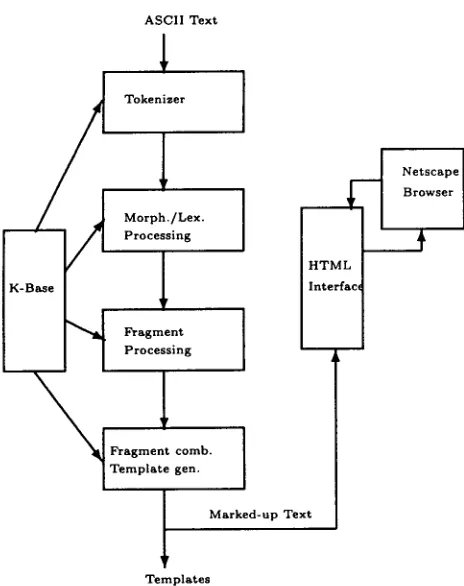
Figure 1: A blueprint of the core system
Figure 1 shows a blueprint of the core system (which roughly follows the design criteria of the generic information extraction system described in (Hobbs, 1992)) . T h e main components are:
A tokenizer based on regular expressions: it scans an ASCII text file for recognizing text structure, spe- cial tokens like date and time expressions, abbrevi- ations and words.
A very efficient and robust G e r m a n morphological component which performs morphological infection and compound processing. For each analyzed word it returns a (set of) triple containing the stem (or a list of stems in case of a compound), the part of speech, and inflectional information. Disambigua- tion of the morphological o u t p u t is performed by a set of word-case sensitive rules, and a Brill-based unsupervised tagger.
A declarative specification tool for expressing fi- nite state grammars for handling word groups and phrasal entities (e.g., general NPs, PPs, or verb groups, complex time and date expressions, proper name expressions). A finite state grammar con- sists of a set of fragment extraction patterns defined as finite state transducers (FST), where modular- ity is achieved through a generic i n p u t / o u t p u t de- vice. F S T are compiled to Lisp functions using an extended version of the compiler defined in (Krieger, 1987).
A bidirectional lexical-driven shallow parser for the combination of extracted fragments. Shal- low parsing is basically directed through frag- ment combination patterns F C P of the form (FSTtelt, anchor, FSTright), where anchor is a lex- ical entry (e.g., a verb like "to meet") or a name of a class of lexical entries (e.g., "transitive-verb"). FCPs are attached to lexical entries (e.g., verbs), and are selected right after a corresponding lexical entry has been identified. T h e y are applied to their left and right stream of tokens of recognized fragments. T h e fragment combiner is used for recognizing and extracting clause level expressions, as well as for the instantiation of templates.
An interface to TDL, a type description language for constraint-based grammars (Krieger and Sch~fer, 1994). T D L is used in SMES for performing type- driven lexical retrieval, e.g., for concept-driven fil- tering, and for the evaluation of syntactic agreement tests during fragment processing and combination.
The knowledge base is the collection of differ- ent knowledge sources, viz. lexicon, subgram- mars, clause-level expressions, and template pat- terns. Currently it includes 120.000 lexical root en- tries, subgra.mmars for simple and complex date and time expressions, person names, company names, currency expressions, as well as shallow grammars for general nominal phrases, prepositional phrases, and general verb-modifier expressions.
Additionally to the above mentioned components there also exists a generic graphical editor for text items and an H T M L interface to the Netscape browser which performs marking of the relevant text parts by providing t y p e d parentheses which also serve as links to the internal representation of the extracted information.
T h e r e are two important properties of the system for supporting portability:
• Each component outputs the resulting struc- tures uniformly as feature value structures, to- gether with its type and the corresponding start and end positions of the spanned input expres- sions. We call these o u t p u t structures text items.
• All (un-filtered) resulting structures of each component are cached so that a component can take into account results of all previous compo- nents. This allows for the definition of cascaded as well as interleaved flow of control. The for- mer case means that it is possible to apply a cascade of finite state expressions (comparable to that proposed in (Appelt et al., 1993))~ and the latter supports the definition of finite state expressions which incrementally perform a mix of keyword spotting, fragment processing: and template instantiation. I
1Of course, it is also possible---and usually the case in our current applications--to combine both sorts of
[image:2.612.79.311.84.377.2]The system has already successfully been ap- plied to classifying event announcements made via email, scheduling of meetings also sent via email, and extraction of company information from on-line newswires (see 7 for more details). In the next sec- tion, we are describing some of the components' properties in more detail.
3 W o r d l e v e l p r o c e s s i n g
T e x t s c a n n i n g Each file is firstly preprocessed by the text scanner. Applying regular expressions (the text scanner is implemented in lex, the well-known Unix tool), the text scanner identifies some text structure (e.g., paragraphs, indentations), word, number, date and time tokens (e.g, "1.3.96", "12:00 h"), and expands abbreviations. T h e o u t p u t of the text scanner is a stream of tokens, where each word is simply represented as a string of alphabetic char- acters (including delimiters, e.g. "Daimler-Benz"). Number, date and time expressions are normalized and represented as attribute values structures. For example the character stream "1.3.96" is represented
as (:date ((:day l)(:mon 3)(:year 96)), and "13:15 h"
as (:time ((:hour 13)(:min 15))).
M o r p h o l o g i c a l p r o c e s s i n g follows text scanning and performs inflection, and processing of com- pounds. The capability of efficiently processing com- pounds is crucial since compounding is a very pro- ductive process of the German language.
The morphological component called MONA is a descendant of MORPHIX, a fast classification-based morphology component for G e r m a n (Finkler and Neumann, 1988). MONA improves MORPHIX in t h a t the classification-based approach has been combined with the well-known two-level approach, originally developed by (Koskenniemi, 1983). Actually, the extensions concern
• the use of tries (see (Aho et al., 1983)) as the sole storage device for all sorts of lexical infor- mation in MONA (e.g., for lexical entries, prefix, inflectional endings) , and
• the analysis of compound expressions which is realized by means of a recursive trie traversal. During traversal two-level rules are applied for recognizing linguistically well-formed decompo- sitions of the word form in question.
The o u t p u t of MONA is the word form together with all its readings. A reading is a triple of the form
(stem, i n f l e c t i o n , p o s ) , where s t e m is a string or a list of strings (in the case of compounds), i n f l e c t i o n
is the inflectional information, and pos is the part of speech.
Currently, MONA is used for the German and Ital- ian language. The German version has a very broad
control flow.
coverage (a lexicon of more then 120.000 stem en- tries), and an excellent speed (5000 words/sec with- out compound handling, 2800 words/sec with com- pound processing (where for each compound all lex- ically possible decompositions are computed). 2
P a r t - o f - s p e e c h d i s a m b i g u a t i o n Morphological ambiguous readings are disambiguated wrt. part- of-speech using case-sensitive rules 3 and filtering rules which have been determined using Brill's un- supervised tagger (Brill, 1995). The filtering rules are also used for tagging unknown words.
T h e filtering rules are determined on the basis of u n a n n o t a t e d corpora. Starting from untagged c o r p o r a , MONA is used for initial tagging, where unknown words are ambiguously tagged as noun, verb, and adjective. Then, using contextual informa- tion from unambiguously analysed word forms, filter rules are determined which are of the form change tag of word f o r m from noun or verb to noun if the previous word is a determiner.
First experiments using a training set of 100.000 words and a set of about 280 learned filter rules yields a tagging accuracy (including tagging of un- known words) of 91.4%. 4
Note t h a t the un-supervised tagger required no hand-tagged corpora and considered unknown words. We expect to increase the accuracy by im- proving the un-supervised tagger through the use of more linguistic information determined by MONA especially for the case of unknowns words.
4 F r a g m e n t p r o c e s s i n g
Word group recognition and extraction is performed through fragment extraction patterns which are ex- pressed as finite state transducers (FST) and which are compiled to Lisp functions using a compiler based on (Krieger, 1987). An F S T consists of a unique name, the recognition part, the o u t p u t de- scription, and a set of compiler parameters.
T h e r e c o g n i t i o n p a r t An F S T operates on a stream of tokens. T h e recognition part of an F S T is used for describing regular patterns over such token
2Measurement has been performed on a Sun 20 using an on-line lexicon of 120.000 entries.
3Generally, only nouns (and proper names) axe writ- ten in standard German with an capitalized initial letter (e.g., "der Wagen" the car vs. "wit wagen" we venture).
Since typing errors are relatively rare in press releases (or similar documents) the application of case-sensitive rules are a reliable and straightforward tagging means for the German language.
4Brill reports a 96% accuracy using a training set of 350.000 words and 1729 rules. However, he does not handle unknown words. In (Aone and Hausman, 1996), an extended version of Brill's tagger is used for tagging Spanish texts, which includes unknown words. They re- port an accuracy of 92.1%.
streams. For supporting modularity the different possible kind of tokens are handled via basic edges, where a basic edge can be viewed as a predicate for a specific class of tokens. More precisely a basic edge is a tuple of the form (name, test, variable), where name is the name of the edge, test is a predicate, and variable holds the current token Tc , if test applied on Tc holds. For example the following basic edge (:mona-cat "partikel" pre) tests whether Tc produced by MONA is a particle, and if so binds the token to the variable pre (more precisely, each variable of a basic edge denotes a stack, so t h a t the current token is actually pushed onto the stack).
We assume t h a t for each component of the sys- tem for which fragment extraction patterns are to be defined, a set of basic edges exists. Furthermore, we assume t h a t such a set of basic edges remains fix at some point in the development of the system and thus can be re-used as pre-specified basic building blocks to a g r a m m a r w r i t e r .
Using basic edges the recognition part of an F S T is then defined as a regular expression using a func- tional notation. For example the recognition part for simple nominal phrases might be defined as follows:
:conc
(:star<_n (:mona-cat "det" det) 1)
(:star (:mona-cat "adj" adj))
(:mona-cat "n" noun))
Thus defined, a nominal phrase is the concatena- tion of one optional determiner (expressed by the loop operator :star<n, where n starts from 0 and ends by 1), followed by zero or more adjectives fol- lowed by a noun.
O u t p u t
description part
T h e o u t p u t structure of an F S T is constructed by collecting together the variables of the recognition part's basic edges fol- lowed by some specific construction handlers. In or- der to support re-usability of F S T to other applica- tions, it is i m p o r t a n t to separate the construction handlers from the F S T definition. Therefore, the o u t p u t description part is realized through a func- tion called BUILD-ITEM which receives as input the edge variables and a symbol denoting the class of the FST. For example, if :np is used as a type name for nominal phrases then the o u t p u t description of the above NP-recognition part is(build-item :type
:np :out
(list det adj
noun)).
T h e function BUILD-ITEM then discriminates ac- cording to the specified type and constructs the de- sired o u t p u t to some pre-defined requests (note, t h a t in the above case the variables DET and ADJ might have received no token. In t h a t case their default value NIL is used as an indication of this fact). Using this mechanism it is possible to define or re-define the o u t p u t structure without changing the whole FST.
Special edges
There exist some special ba- sic edges namely(:var var), (:current-pos
pos) and(:seek
name var). The edge (:var var) is used for
simply skipping or consuming a token without any checks. T h e edge :current-pos is used for storing the position of the current token in the variable pos, and the edge :seek is used for calling the F S T named
name,
wherevar
is used as a storage for the o u t p u t of name. This is similar to the :seek edge known from Augmented Transition Networks with the no- tably distinction t h a t in our system recursive calls are disallowed. Thus :seek can also be seen as a macro expanding operator. T h e :seek mechanism is very useful in defining modular grammars, since it allows for a hierarchical definition of finite state grammars, from general to specific constructions (or vice versa). T h e following example demonstrates the use of these special edges:(compile-regexp
:conc
(:current-pos
start)
(:alt
(:seek time-phase time)
(:conc
(:star_<n (:seek time-expr-vorfield vorfield) 1)
(:seek mona-time time)))
(:current-pos end))
:name time-expr
:output-desc
(build-item :type time-expr :start start
:end end :out (list vorfield time))))
This F S T recognizes expressions like "sp~testens um 14:00 h" (by two o'clock at the latest) with the o u t p u t description ((:out (:time-rel . "spaet") (:time- p r e p . "urn") (:minute. 0) ( : h o u r . 14)) (:end . 4) (:start. 0) (:type. time-expr))
Interface to
T D L T h e interface to T D L , a t y p e d feature-based language and inference system is also realized through basic edges. T D L allows the user to define hierarchically-ordered types consisting of type constraints and feature constraints, and has been originally developed for supporting high-level competence g r a m m a r development.In SMES we are using T D L for two purposes:
1. defining domain-specific type lattices
2. expressing syntactic agreement constraints
T h e first knowledge is used for performing concept-based lexical retrieval (e.g., for extracting word forms which are compatible to a given super- type, or for filtering out lexical readings which are incompatible wrt. a given type), and the second knowledge is used for directing fragment process- ing and combination, e.g., for filtering out certain un-grammatical phrases or for extracting phrases of certain syntactic type.
The integration of T D L and finite state expres- sions is easily achieved through the definition of ba- sic edges. For example the edge
(:mona-cat-type (:and "n .... device") var)
will accept a word form which has been analyzed as a noun and whose lexical entry type identifier is subsumed by "device". As an example of defining agreement test consider the basic edge
(:mona-cat-unify "det"
"[(num %l)(case %2 = gen-val) (gender %3)]"
agr det)
which checks whether the current token is a deter- miner and whether its inflection information (com- puted by
MONA)
unifies with the specified con- straints (here, it is checked whether the determiner has a genitive reading, where structure sharing is expressed through variables like %1). If so, agr is bound to the result of the unifier and token is bound to det. If in the same F S T a similar edge for noun tokens follows which also makes reference to the vari- able agr, the new value for agr is checked with its old value. In this way, agreement information is propa- gated through the whole FST.An important advantage of using T D L in this way is that it supports the specification of very compact and modular finite expressions. However, one might argue that using T D L in this way could have dra- matic effects on the efficiency of the whole system, if the whole power of T D L would be used. In some sense this is true. However, in our current system we only allow the use of type subsumption which is performed by T D L very efficiently, and constraints used very carefully and restrictively. Furthermore, the T D L interface opens up the possibility of inte- grating deeper processing components very straight- forwardly.
Control parameters In order to obtain flexible control mechanisms for the matching phase it is pos- sible to specify whether an exact match is requested or whether an F S T should already succeed when the recognition part matches a prefix of the input string (or suffix, respectively). T h e prefix matching mech- anism is used in conjunction with the Kleene :star and the identity edge :var, to allow for searching the whole input stream for extracting all matching expressions of an F S T (e.g., extracting all NP's, or time expressions). For example the following F S T extracts all genitive NPs found in the input stream and collects them in a list :
(compile-regexp
(:star
(:alt
(:seek gen-phrase x)
(:var dummy)))
:output-desc (build-item :type list :out x )
:prefix
T
:suffix NIL
5 F r a g m e n t c o m b i n a t i o n a n d t e m p l a t e g e n e r a t i o n
Bidirectional shallow parsing The combina- tion of extracted fragments is performed by a lexical- driven bidirectional shallow parser which operates on fragment combination patterns F C P which are attached to lexical entries (mainly verbs). We call these lexical entries anchors.
The input stream for the shallow parser consists of
a double-linked list of all extracted fragments found in some input text, all punctuation tokens and text tokens (like newline or paragraph) and all found an- chors (i.e., all other tokens of the input text are ig- nored). T h e shallow parser then applies for each anchor its associated FCP. An anchor can be viewed as splitting the input stream into a left and right in- put part. Application of an F C P then starts directly from the input position of the anchor and searches the left and right input parts for candidate frag- ments. Searching stops either if the beginning or the end of a text has been reached or if some punc- tuation, text tokens or other anchors defined as stop markers have been recognized.
General f o r m o f f r a g m e n t c o m b i n a t i o n pat- terns A F C P consists of a unique name, an recog- nition part applied on the left input part and one for the right input part, an o u t p u t description part and a set of constraints on the type and number of col- lected fragments. As an prototypical case, consider the following F C P defined for intransitive verbs like
t o c o m e or to begin:
(com pile-a nchored-regexp
((:set
(cdr (assoc
:start ?*))
anchor-pos)
(:set
((:np (1 1) (nom-val (1 1)))) nec)
(:set ((:tmp (0 2))) opt))
((:dl-list-left
(:star
(:alt
(:ignore-token (", .... ;"))
(:ignore-fragment :type (:time-phase
:pp))
(:add-nec (:np :name-np)
:np nec Icompl)
(:add-opt (:time-expr :date-expr)
:tmp opt Icompl))))
(:dl-list-right
(:star
(:alt
(:ignore-token (", .... ;" ))
(:add-nec
(:np) :np nec rcompl)
(:add-opt (:time-expr :date-expr)
:name gen-star)
Additionally, a boolean parameter can be used to specify whether longest or shortest matches should be prefered (the default is longest match, see also (Appelt et al., 1993) where also longest subsuming phrases are prefered).
:tmp opt rcompl)))))
:name
intrans
:output-desc (build-item :type :intrans
:out (list anchor-pos Icompl rcompl)))
The first list remembers the position of the active anchor and introduces two sets of constraints, which are used to define restrictions on the type and num- ber of necessary and optional fragments, e.g., the first constraint says t h a t exactly one :np fragment (expressed by the lower and upper bound in (1 1)) in nominative case must be collected, where the sec- ond constraint says t h a t at most two optional frag- ments of type :tmp can be collected. The two con- straints are maintained by the basic edges :add-nec and :add-opt. :add-nec performs as follows. If the current token is a fragment of type :np or :name-np then inspect the set named nec and select the con- straint set t y p e d :np . If the current token agrees in case (which is tested by type subsumption) then push it to lcompl and reduce the upper bound by 1. Since next time the upper bound is 0 no more fragments will be considered for the set nec. 5 In a similar manner :add-opt is processed.
T h e edges :ignore-token and :ignore-fragment are used to explicitly specify what sort of tokens will not be considered by :add-nec or :add-opt. In other words this means, t h a t each token which is not men- tioned in the F C P will stop the application of the F C P on the current input part (left or right).
C o m p l e x v e r b c o n s t r u c t i o n s In our current system, F C P s are attached to main verb entries. Expressions which contain modal, auxiliary verbs or separated verb prefixes are handled by lexical rules which are applied after fragment processing and before shallow processing. Although this mech- anism t u r n e d out to be practical enough for our current applications, we have defined also complex verb group fragments VGF. A V G F is applied after fragment processing took place. It collects all verb forms used in a sentence, and returns the underlying dependency-based structure. Such an V G F is then used as a
complex anchor
for the selection of appro- priate fragment combination patterns as described above. T h e advantage of verb group fragments is t h a t they help to handle more complex construc- tions (e.g., time or speech act) in a more systematic (but still shallow) way.Template generation
An F C P expresses restric- tions on the set of candidate fragments to be col- lected by the anchor. If successful the set of found fragments together with the anchor builds up an in- stantiated template or frame. In general a template is a record-like structure consisting of features and their values, where each collected fragment and the5In some sense this mechanism behaves like the sub- categorization principle employed in constraint-based lexical grammars.
anchor builds up a feature/value pair. An F C P also defines which sort of fragments are necessary or op- tional for building up the whole template. FCPs are used for defining linguistically oriented general head- modifier construction (linguistically based on depen- dency theory) and application-specific database en- tries. T h e "shallowness" of the template construc- tion/instantiation process depends on the weakness of the defined F S T of an FCP.
A major drawback of our current approach is t h a t necessary and optional constraints are defined to- gether in one FCP. For example, if an F C P is used for defining generic clause expressions, where com- plements are defined through necessary constraints and adjuncts through optional constraints then it has been shown t h a t the constraints on the adjuncts can change for different applications. Thus we ac- tually lack some modularity concerning this issue. A b e t t e r solution would be to attach optional con- straints directly with lexical entries and to "splice" them into an F C P after its selection.
6 C o v e r a g e o f k n o w l e d g e s o u r c e s
T h e lexicon in use contains more t h a n 120.000 stem entries (concerning morpho-syntactic information).
T h e time and date subgrammar covers a wide range of expressions including nominal, preposi- tional, and coordinated expressions, as well as com- bined date-time expressions (e.g., "vom 19. (8.00 h) his einschl. 21. Oktober (18.00 h)" yields: (:pp
(from
:np (day.
19)(hour. 8) (minute. 0)) (to :np
(day. 21) (month. 10) (hour. 18) (minute. 0))))
T h e N P / P P subgrammars cover e.g., coordinate NPs, different forms of adjective constructions, gen- itive expressions, pronouns. T h e o u t p u t struc- tures reflects the underlying head-modifier relations (e.g., " Die neuartige und vielf~ltige Gesellschaft "
yields: (((:sere (:head "gesellschaft") (:mods "neuar-
tig
.... vielfaeltig")
(:quantifier "d-det")) (:agr
nom-acc-
val) (:end. 6) (:start. 1) (:type. :np)))
30 generic syntactic verb subcategorization frames are defined by fragment combination patterns (e.g, for transitive verb frame). Currently, these verb frames are handled by the shallow parser with no or- dering restriction, which is reasonably because Ger- man is a language with relative free word order. However, in future work we will investigate the in- tegration of shallow linear precedence constraints.
T h e specification of the current d a t a has been performed on a tagged corpora of a b o u t 250 texts (ranging in size from a third to one page) which are about event announcement, appointment scheduling and business news following a b o t t o m - u p g r a m m a r development approach.
7
Current applications
On top of SMES three application systems have been implemented:
1. appointment scheduling via email: extraction of co-operate act, duration, range, appointment, sender, receiver, topic
2. classification of event announcements sent via email: extraction of speaker, title, time, and location
3. extraction of company information from news- paper articles: company name, date, turnover, revenue, quality, difference
For these applications the main architecture (as described above), the scanner, morphology, the set of basic edges, the subgrammars for t i m e / d a t e and phrasal expressions could be used basically un- changed.
In (1) SMES is embedded in the COSMA system, a German language server for existing appointment scheduling agent s y s t e m s (see (Busemann et al., 1997), this volume, for more information). In case (2) additional F S T for the text structure have been added, since the text structure is an i m p o r t a n t source for the location of relevant information. How- ever, since the form of event announcements is usu- ally not standardized, shallow NLP mechanisms are necessary. Hence, the main strategy realized is a mix of text structure recognition and restricted shallow analysis. For application (3), new subgrammars for company names and currency expressions have to be defined, as well as a task-specific reference resolution method.
Processing is very robust and fast (between 1 and 10 CPU seconds (Sun UltraSparc) depending on the size of the text which ranges from very short texts (a few sentences) upto short texts (one page)). In all of the three applications we obtained high coverage and good results. Because of the lack of compara- ble existing IE systems defined for handling German texts in similar domains and the lack of evaluation standards for the German language (comparable to that of MUC), we cannot claim that these results are comparable.
However, we have now started the implementa- tion of a new application together with a commer- cial partner, where a more systematic evaluation of the system is carried out. Here, SMES is applied on a quite different domain, namely news items concern- ing the German I F O R mission in former Yugoslavia. Our task is to identify those messages which are about violations of the peace treaty and to extract the information about location, aggressor, defender and victims.
The corpus consists of a set of monthly reports (Jan. 1996 to Aug. 1996) each consisting of about 25 messages from which 2 to 8 messages are about fighting actions. These messages have been hand- tagged with respect to the relevant information. Al- though we are still in the development phase we will briefly describe our experience of adapting SMES to this new domain. Starting from the assumption
t h a t the core machinery can be used un-changed we first measured the coverage of the existing linguistic knowledge sources. Concerning the above mentioned corpus the lexicon covers a b o u t 90%. However, from the 10% of unrecognized words a b o u t 70% are proper names (which we will handle without a lexicon) and 1.5% are spelling errors, so that the lexicon actually covers more then 95% of this unseen text corpus. The same "blind" test was also carried out for the date, time, and location subgrammar, i.e., they have been run on the new corpus without any adaption to the specific domain knowledge. For the d a t e - / t i m e expressions we obtained a recall of 77% and a pre- cision of 88%, and for the location expressions we obtained 66% and 87%, respectively. In the latter case, most of the unrecognized expressions concern expressions like "nach T a s z a r / U n g a r n " , "im serbis- chen bzw. kroatischen Teil Bosniens", or "in der Moslemisch-kroatischen FSderation". For the gen- eral NP and P P subgrammars we obtained a recall of 55% and a precision of 60% (concerning correct head-modifier structure). T h e small recall is due to some lexical gap (including proper names) and un- foreseen complex expressions like "die Mehrzahl der auf 140.000 gesch~itzten moslemischen Fltichtlinge". But note t h a t these grammars have been written on the basis of different corpora.
In order to measure the coverage of the fragment combination patterns FCP, the relevant main verbs of the tagged corpora have been associated with the corresponding F C P (e.g., the F C P for transi- tive verbs), without changing the original definition of the FCPs. T h e only major change to be done concerned the extension of the o u t p u t description function BUILD-ITEM for building up the new tem- plate structure. After a first trial run we obtained an unsatisfactory recognition rate of a b o u t 25%. One m a j o r problem we identified was the frequent use of passive constructions which the shallow parser was not able to process. Consequently, as a first actual extension of SMES to the new domain we extended the shallow parser to cope with passive construc- tions. Using this extension we obtained an recogni- tion of about 40% after a new trial run.
After the analysis of the (partially) unrecognized messages (including the misclassified ones), we iden- tified the following major bottlenecks of our current system. First, many of the partially recognized tem- plates are part of coordinations (including enumera- tions), in which case several (local) templates share the same slot, however this slot is only mentioned one time. Resolving this kind of "slot sharing" re- quires processing of elliptic expressions of different kinds as well as the need of domain-specific inference rules which we have not yet foreseen as part of the core system. Second, the wrong recognition of mes- sages is often due to the lack of semantic constraints which would be applied during shallow parsing in a similar way as the subcategorization constraints.
Although these current results should and can be improved we are convinced t h a t the idea of develop- ing a core IE-engine is a worthwhile venture.
8
R e l a t e d w o r k
In Germany, I E based on innovative language tech- nology is still a novelty. T h e only groups which we are aware of which also consider N L P - b a s e d I E are (Hahn, 1992; Bayer et al., 1994). None of t h e m make use of such sophisticated components, as we do in SMES. Our work is mostly influence by the work of (Hobbs, 1992; Appelt et al., 1993; Grishman, 1995) as well as by the work described in (Anderson et al., 1992; Dowding et al., 1993).
9
C o n c l u s i o n
We have described an information extraction core s y s t e m for real world G e r m a n t e x t processing. T h e basic design criterion of the s y s t e m is of providing a set of basic powerful, robust, and efficient n a t u r a l language components and generic linguistic knowl- edge sources which can easily be customized for pro- cessing different tasks in a flexible manner. T h e m a i n features are: a very efficient a n d robust mor- phological component, a powerful tool for expressing finite s t a t e expressions, a flexible bidirectional shal- low parser, as well as a flexible interface to an ad- vanced formalism for t y p e d feature formalisms. T h e system has been fully i m p l e m e n t e d in C o m m o n Lisp and C.
Future research will focus towards a u t o m a t i c a d a p t i o n and acquisition methods, e.g., a u t o m a t i c extraction of s u b g r a m m a r s from a competence base and learning m e t h o d s for domain-specific extraction patterns.
10
Acknowledgement
T h e research underlying this p a p e r was s u p p o r t e d by research grants from the G e r m a n Bundesmin- isterium fiir Bildung, Wissenschaft, Forschung und Technologie (BMBF) to the D F K I projects PARADICE, F K Z I T W 9403 and PARADIME, F K Z I T W 9704. We would like to t h a n k the follow- ing people for fruitful discussions: Hans Uszkoreit, Gregor Erbach, and Luca Dini.
References
A. Aho, J. Hopcraft, and J. Ullmann. 1983. Data struc- tures and algorithms. Addison Wesley, Reading, Mass. P. Anderson, P. Hays, A. Huettner, L. Schmandt, I. Nirenburg, and S. Weinstein. 1992. Automatic ex- traction of facts from press releases to generate news stories. In 3rd ANLP, pages 170-177, Trento, Italy. C. Aone and K. Hausman. 1996. Unsupervised learning
of a rule-based Spanish part of speech tagger. In Pro-
ceedings of COLING-96, pages 53-58, Kopenhagen, Denmark, Europe.
D. Appelt, J. Hobbs, J. Bear, D. Israel, and M. Tyson. 1993. Fastus: A finite state processor for information extraction from real world text. In Proceedings of the 13th IJCAI, Chambery, France, August.
T. Bayer, U. Bohnacker, and H. Mogg-Schneider. 1994. Infoportlab - an experimental document understand- ing system. In Proceedings of the 1st DAS.
E. Brill. 1995. Unsupervised learning of disambiguation rules for part of speech tagging. In Very Large Corpora
Workshop.
S. Busemann, T. Declereck, A. Diagne, L. Dini, J. Klein, and S. Schmeier. 1997. Natural language dialogue ser- vice for appointment scheduling agents. This volume. N. Chinchor, L. Hirschman, and D. Lewis. 1993. Evalu- ating message understanding systems: An analysis of the third message understanding conference (muc-3).
Computational linguistics, 19(3).
J. Cowie and W. Lehnert. 1996. Information extraction. Communications of the ACM, 39(1):51-87.
J. Dowding, J. Gawron, D. Appelt, J. Bear, L. Cherny, R. Moore, and D. Moran. 1993. Gemini: A natural language system for spoken-language understanding. In 31th ACL, Ohio.
W. Finkler and G. Neumann. 1988. Morphix: A fast realization of a classification-based approach to mor- phology. In H. Trost, editor, Proceedings of 4th OFAI, Berlin, August. Springer.
R. Grishman and B. Sundheim. 1996. Message Under- standing Conference - 6: A Brief History. In Pro- ceedings of COLING-96, pages 466-471, Kopenhagen, Denmark, Europe.
R. Grishman. 1 9 9 5 . The NYU MUC-6 System or Where's the Syntax? In Sixth Message Understanding Conference (MUC-6). Morgan Kaufmann, November. U. Hahn. 1992. On text coherence parsing. In Pro- ceedings of COLING-92, pages 25-31, Nantes, France, Europe.
J. Hobbs. 1992. The generic information extraction sys- tem. In B. Sundheim, editor, Fourth Message Un- derstanding Conference (MUC-4), McLean, Virginia, June. Distributed by Morgan Kaufmann Publishers, Inc.,San Mateo, California.
K. Koskenniemi. 1983. Two-level model for morphologi- cal analysis. In 8th IJCAI, pages 683-685, Karlsruhe. Hans-Ulrich Krieger and Ulrich Sch~ifer. 1994. 7"D/:--a
type description language for constraint-based gram- mars. In Proceedings of COLING-94, pages 893-899. Hans-Ulrich Krieger. 1 9 8 7 . Nil--eine Lisp-basierte
nat/irlichsprachliche Schnittstelle zu Ramses. Un- terst/itzung der NMR-Diagnostik von Him- und Mam- matumoren. Master's thesis, RWTH Aachen.
B. Sundheim, editor. 1995. Sixth Message Understand- ing Conference (MUC-6), Washington. Distributed bY Morgan Kaufmann Publishers, Inc.,San Mateo, Cali- fornia.