ACkNOwlEDGEmENTS
ACCA and FTSE Group would like to thank the following for participating in the preparation of this paper:
Kevin Ball, Director, Low Carbon Business Policy, BP
Francisca Quinn, Manager Investor Engagement, Carbon Trust Stephanie Maier – Strategic Development Research Manager, EIRIS Dr Craig Mackenzie, Head of Business Ethics, Centre for Ethics in Public Policy and Corporate Governance at Glasgow Caledonian University and Chair of FTSE4Good Climate Change Advisory Committee
Ian Gearing, Group Corporate Responsibility Manager, National Grid.
Foreword 4
Introduction 5
Section 1: Climate change theme – analysis and results 7
Section 2: Overview of the international and national situation 17
Section 3: Insights from corporate reporters 30
Section 4: Summary of breakout sessions 39
About FTSE Group 47
About ACCA 48
Contents
Foreword
Every segment of society faces challenges. Governments and multi-lateral aid agencies may face increasing demands for short-term infra-structure repair and long-term humanitarian support. Communities – particularly in the most vulnerable economies − face the various tragedies of desertification, rising sea levels and deforestation, as well as disease and increasing levels of poverty. The eco-system itself suffers daily as individual species vanish and natural phenomena such as the great coral reefs diminish and die. Exposed business sectors (such as insurance, tourism, agriculture and construction) may see fundamental changes to their current business models – affecting both their financing structures and their long term viability.
As individuals we cannot fail to be affected by these changes. They will make our lives more uncertain and our range of possible life opportunities immeasurably narrower.
As individuals, however, we have only limited capacity to respond. But as business professionals we not only have a duty to respond, we have at our influence and disposal the complex yet powerful mechanisms that our (increasingly global) market economy has spent over two centuries refining.
Market economies react to various drivers: to the threat of legislation, to the emergence of new and previously unforeseen risks and threats, and to the promise of profits. Professional bodies such as ACCA can (and should) be active in influencing in each of these areas. The starting point is simple: how can business be more transparent about its impacts in a way which brings measurement and analysis to bear on urgent issues, leading to meaningful debate and opportunities for quantifiable improvements?
Measuring the impact of business on climate change is the next logical development in the field of sustainability reporting. The evolution of sustainability reporting has been fast-paced. Within two decades, the first movement to produce reports on environmental impacts has moved through a number of phases: impact on society and economies; the concept of the ‘triple bottom line’; external verification to provide assurance over completeness of reporting; and now, moving to metrics to assess impacts on climate change.
In this report (one of the first to consider the issue from an accounting perspective), ACCA, supported by FTSE Group, and with the assistance of a number of other leading UK organisations, explores the current state of climate change reporting by leading UK companies. It is only by bringing transparency and clarity to this issue that politicians and regulators will be able to assess the adequacy of the corporate sector’s voluntary response to this increasingly recognised threat to our common future. It is only by examining the issues in public forums that financial markets will be able to assess real risks to long-term shareholder value and be better able more effectively to allocate their vast resources in ways that mitigate the threats of global climate change.
The message of this report does not make entirely comfortable reading. Even the leading sustainability and CSR reporters are not reporting evenly across all the key climate change issues – especially on those relating to product impacts and transformational initiatives. And it is clear that such reporting as is currently observed is restricted to a small group of leading companies and is not widely practised or monitored.
ACCA has a long history of championing enhanced sustainability reporting – it is 15 years since it introduced its first environmental reporting awards in the UK, subsequently migrating to become sustainability reporting awards and expanding to cover most of the developed world. This has been supported by a comprehensive programme of research and partnerships with influential organisations around the world who lead in this field.
We hope that not only will this report be helpful to regulators, corporates and NGOs in negotiating the next tricky step on the road to a better system of reporting on climate change issues, but also that it will encourage faster progress along the route towards real change in emission reduction and a more sustainable future: what can be measured and reported transparently can be acted upon and improved.
Roger Adams
Executive Director – Technical
ACCA (the Association of Chartered Certified Accountants) July 2007
ThE ACCA AwARDS FOR SUSTAiNAbiliTy REPORTiNG
The ACCA Awards for Sustainability Reporting aim to give recognition to those organisations that report and disclose environmental, social or full sustainability information, as well as to encourage the uptake of such reporting and raise awareness of corporate transparency issues.
Since 2004, a particular theme has been identified each year as being an important element of reporting, for further research and analysis. The first theme, in 2004, was stakeholder engagement. The second was bribery and corruption and the 2006 theme, carried out in partnership with FTSE Group, was climate change disclosures.
Climate change has risen up the corporate agenda over recent years and is now widely considered to be a key factor in business strategy, objective setting and risk identification and mitigation, especially for energy-intensive companies. Organisations are now expected to disclose in a transparent manner how they are mitigating their contribution to climate change, including their policies, targets, approach to product innovation, risk management and transformational initiatives. Some organisations are also required to report on their emissions and have the data audited, in alignment with the national requirements of the EU Emissions Trading Scheme.
Using a set of criteria developed by ACCA, FTSE Group and Ethical Investment Research Services (EIRIS) (based loosely on the FTSE4Good climate change criteria launched in February 2007), EIRIS analysed 42 of the 87 entrants for the 2006 awards held in the UK. The 42 companies were those defined as being from high- or medium-impact sectors. The FTSE4Good Climate Change Advisory Committee and ACCA then
assessed the standards of climate change disclosures of the shortlisted companies from this sample. The criteria were split into six key areas – governance, management, quantitative data, policy context, data context and transformational initiatives. Findings of the analysis were presented at the awards ceremony in March 2007.
ThE ‘imPROviNG ClimATE ChANGE REPORTiNG’ DiSCUSSiON
As climate change has been one of the key topics of discussion for many years, ACCA and FTSE Group believed that the reporting community (in particular, the Awards entrants) would benefit from a workshop discussing reporting and disclosures in this area, using the results of the theme research as its basis.
A workshop was held in April 2007 to:
• delve in more detail into the analysis carried out by FTSE Group
• compare different approaches to, and look at good practice for, reporting on climate change
• identify areas offering opportunities for development of reporting and share ideas on how to start improving these
• identify good practice techniques to improve reporting on climate change in the future
• learn about the importance of reporting on climate change to different stakeholders
This paper is the result of the issues discussed at this workshop.
REPORT STRUCTURE
This paper is divided into four sections.
Part 1 provides an overview of the results of the research by Stephanie Maier (Strategic Research Development Manager at EIRIS, FTSE Group’s research provider). The results can also be found in the report available to download on the ACCA website, called
Climate Change: UK Corporate Reporting.
Part 2 features two papers by Craig Mackenzie (Head of Business Ethics at Glasgow Caledonian University) and Francisca Quinn (Manager, Investor Engagement at The Carbon Trust), outlining the international and national situations relating to climate change.
Part 3 contains two overviews of different approaches to climate change reporting by Kevin Ball (Director of Low Carbon Business Policy at BP) and Ian Gearing (Group CR Manager at National Grid).
Part 4 summarises the main points raised during the discussion groups of the workshop of April 2007.
CONTExT
In line with the increased interest in, and urgency of, the climate change situation, there have been many different publications, research studies and indices looking at climate change and companies’ role in combating it. These include the Stern Review, published in October 2006, which looked at the economic impacts of the ‘Business as usual’ scenario and the ‘Take action’ scenario. The Intergovernmental Panel on Climate Change (IPCC) 4th Annual
Assessment confirmed that climate change is a result of human actions, and that temperature increases are likely to be 1.8–4ºC (3.2–7.2ºF) by the end of the century.
There is also increasing interest from the investment community, with the Carbon Disclosure Project, the Institutional Investors Group on Climate Change (IIGCC) Investor Statement on Climate Change and the aforementioned FTSE4Good climate change criteria.
The general consensus is that a ‘Business as usual’ scenario is no longer acceptable, and is likely to have severe negative environmental, social and economic impacts on developed and, in particular, developing nations if left unaddressed. Governments, corporations and individual consumers need to work together to reduce emissions.
Section 1: Climate change theme – analysis and results
SAmPlE SElECTiON AND bREAkDOwN
There were 82 entrants in total for the 2006 ACCA UK
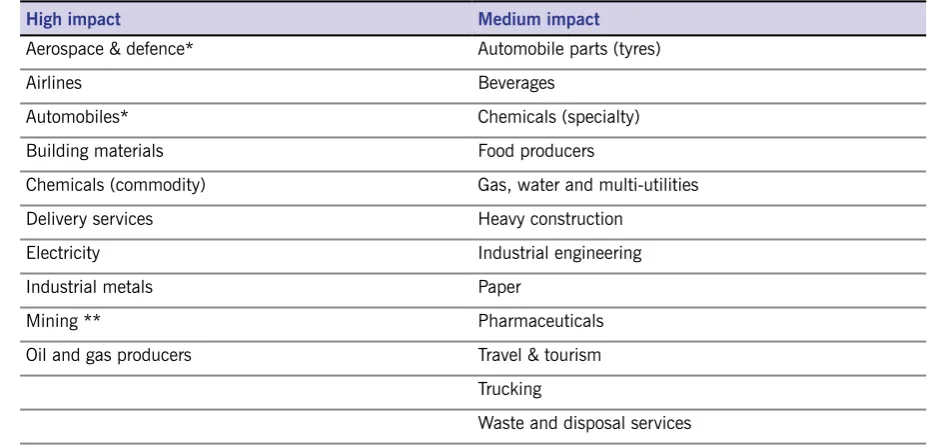
Awards for Sustainability Reporting. Of those, 42 were considered to be from high- or medium-impact sectors (for example, airlines, chemicals, electricity, oil and gas, construction, paper) and were included in the analysis. Fifteen companies were in the high-impact category and 27 in the medium-impact. Fourteen of these 42 companies were shortlisted, following the initial analysis by EIRIS, according to their total score against the criteria. These were then passed onto the FTSE4Good Climate Change Advisory Committee (which was convened by FTSE to help with the development of the criteria) where performance was discussed and examples of good-practice disclosures identified. There were a variety of different sectors in the sample and consequently a variety of different reporting techniques and approaches.
Table 1: breakdown of high and medium impact companies in the analysis.
high impact medium impact
Aerospace & defence* Automobile parts (tyres)
Airlines Beverages
Automobiles* Chemicals (specialty)
Building materials Food producers
Chemicals (commodity) Gas, water and multi-utilities
Delivery services Heavy construction
Electricity Industrial engineering
Industrial metals Paper
Mining ** Pharmaceuticals
Oil and gas producers Travel & tourism
Trucking
Waste and disposal services
* high product (medium operational) impact **high product and operational impact
Source: Climate Change: UK Corporate Reporting, ACCA (2007). CRiTERiA GROUPS
There were six criteria groups used in the analysis. The FTSE4Good climate change criteria were used as a starting point but those used for this study were concerned more with reporting and disclosure standards. The groups were:
• governance – whether there was clear, named responsibility for climate change and a policy statement outlining the organisation’s approach and aspirations to managing its climate change impacts (both operational and product related)
• policy context – whether the organisation has clearly stated the context within which its policy sits; eg public position statements supporting the Kyoto Protocol or other national initiatives and the scientific consensus of the causes of climate change
Section 1: Climate Change theme – analysis and results (continued)
• management – disclosures of short-term and long-term targets for emissions reductions both related to products and operations
• quantitative data – operational and product emissions data, auditing of the data, reference to reporting guidelines and standards, such as the Global Reporting Initiative (GRI) G3 Guidelines, and the GHG Protocol, an accounting tool developed by the World Resources Institute and the World Business Council for Sustainable Development
• data context – explanation of any trends and impacts
Just under half (45%) of
companies expressed support
for binding reduction targets
– most of which refer to those
in the EU Emissions Trading
Scheme (76%) and only
26% to the Kyoto Protocol
requirements.
GOvERNANCE ANAlySiS
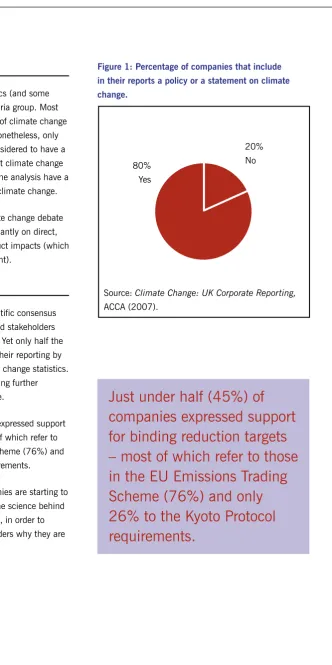
There were some encouraging statistics (and some not so encouraging ones) for this criteria group. Most companies (80%) include some kind of climate change policy statement in their reporting. Nonetheless, only 25% of those companies that are considered to have a high product impact include a product climate change policy and only 7% of companies in the analysis have a named senior person responsible for climate change.
This indicates the way that the climate change debate is moving forward, focusing predominantly on direct, operational impacts rather than product impacts (which for some companies are very important).
POliCy CONTExT – ANAlySiS
Explaining the policy context for scientific consensus is critical in explaining to investors and stakeholders the direction of the company’s policy. Yet only half the companies in the analysis do this in their reporting by describing the science behind climate change statistics. Only 12% refer to the IPCC as providing further evidence or explanation of the science.
Just under half (45%) of companies expressed support for binding reduction targets – most of which refer to those in the EU Emissions Trading Scheme (76%) and only 26% to the Kyoto Protocol requirements.
In some cases it appears that companies are starting to take on a quasi-educational role on the science behind climate change theories and statistics, in order to explain to readers and other stakeholders why they are doing what they do in the area.
[image:9.595.200.533.107.774.2]Section 1: Climate Change theme – analysis and results (continued)
Figure 1: Percentage of companies that include in their reports a policy or a statement on climate change.
20% No
Source: Climate Change: UK Corporate Reporting,
ACCA (2007). 80%
mANAGEmENT – ANAlySiS
Over half of reporters in the analysis disclose short- or medium-term targets in their reports but fewer than half provide long-term targets (defined as five years or more). Disappointingly, no organisation disclosed any product targets.
This is not to say, however, that these organisations do not have targets: they just may not disclose them publicly. If so, this is nonetheless a definite weakness, as publicly-disclosed targets demonstrate a vision for the company and give readers confidence that there is a structured management system in place to manage impacts. Many companies may be reluctant to disclose any long-term targets at present, because the policy framework is changing so rapidly. Another point to consider is that the long-term targets that many organisations set a few years ago are now coming to an end, so they now appear short-term (eg those targets in place for 2010).
QUANTiTATivE DATA – ANAlySiS
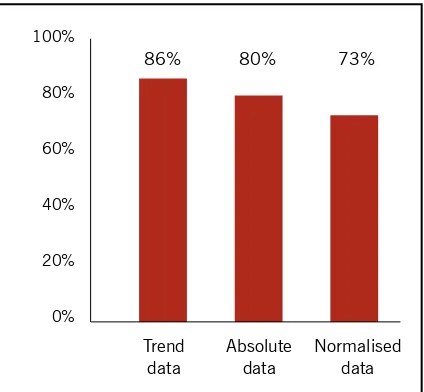
[image:10.595.323.538.212.390.2]The results in this criteria group were encouraging, with 89% of organisations providing some form of carbon data in their reporting. Breaking this down further, 86% of organisations gave trend data for carbon or GHG emissions, 80% absolute data and 73% normalised data, with 65% using both. Accurate carbon data are essential for energy-intensive companies, especially if involved in the EU Emissions Trading Scheme, which requires them. Although a large proportion of companies are reporting data, the format is still inconsistent (partly because there is currently no standard, universally applied method of reporting in this area) and comparisons are extremely difficult. Much needs to be done in this area to ensure that the data reported are useful to the report users, including investors.
Figure 2: Percentage of companies which disclose short- or medium-term targets relating to carbon emissions.
57% Yes 43%
No
Source: Climate Change: UK Corporate Reporting,
ACCA (2007). Trend data 86% Absolute data 80% Normalised data 73% 100% 80% 60% 40% 20% 0%
Figure 3: Percentage of companies that reported types of carbon data related to GhG emissions.
Source: Climate Change: UK Corporate Reporting,
ACCA (2007).
[image:10.595.327.539.526.722.2]Over half the organisations opted for independent verification of the data. Those that did not may have decided against it for resource reasons, because assurance is costly and time consuming (especially for the more detailed assurance projects). Only 14% refer to using a particular methodology, for example, the GHG Protocol, when preparing their carbon accounts.
DATA CONTExT – ANAlySiS
The results for this criteria group were encouraging, with 79% of companies providing a description of their climate change impacts and two-thirds stating any performance trends and explaining them. This helps readers and stakeholders to understand the performance data and put them into the context of the organisation’s history and operations, and to use them to make sector comparisons and in benchmark studies.
Over three quarters (79%)
of companies provide a
description of their climate
change impacts and
two-thirds (66%) explain
performance trends.
Generation of renewables
(31%) and fuel switching
(24%) have the highest
proportion of both descriptive
and quantitative disclosures.
TRANSFORmATiONAl iNiTiATivES (Tis) – ANAlySiS
Reporting on TIs is a relatively new area, with scope for new ways of reporting. There are currently a lot more qualitative descriptions of the initiatives in place in reporting, rather than quantitative reporting on how the initiative has actually helped drive improvements and reduce carbon emissions. As reporting becomes more advanced, this quantitative reporting should increase, which will make the qualitative descriptions of TIs more meaningful to readers.
Among the initiatives reported for this analysis, renewables generation and fuel switching have the most qualitative and quantitative reporting, with carbon capture and product innovation coming next.
ExAmPlES OF GOOD PRACTiCE iN REPORTiNG
There were examples of good practice in reporting in all criteria groups, with a particularly good variety and innovation in certain groups, for example, quantitative data. Nonetheless, at the shortlisting meeting with the FTSE4Good Climate Change Advisory Committee, it was agreed by all participants that there was no one company that reported well in all six criteria groups, showing that there is definite room for improvement for all organisations that took part.
Good practice examples
• Good variety and innovation in some areas, eg quantitative data
• Encouraging signs, eg policy and data context bUT room for improvement • No overall best practice example • New areas, eg transformational initiatives
and product disclosure have long way to go.
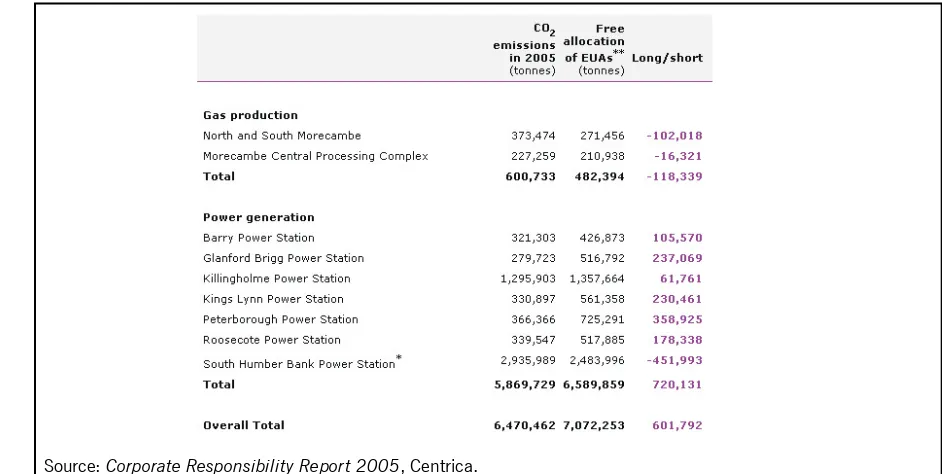
[image:12.595.68.539.513.750.2]Source: Corporate Responsibility Report 2005, Centrica.
Figure 4: Good practice example of GhG emissions disclosure – Centrica.
GOOD PRACTiCE – QUANTiTATivE DATA
Centrica was one of the few companies reporting not only its carbon dioxide emissions, but also its emissions in relation to the EU Emissions Trading Scheme (ETS) allocation permits. This format is useful for investors wishing to calculate the financial impact of Centrica’s carbon emissions and trading.
BG Group has broken down its absolute GHG data by source (electricity generation, distribution losses, fuel use, flaring, fugitive and venting), business (exploration and production, liquefied natural gas, power, and transmission and distribution) and GHG type (CO2, methane and total GHG in CO2 equivalents), while Anglo American provides an individual breakdown for managed companies, covering over 80 sites.
© EIRIS
Quantitative data
Absolute GHG data broken down by source
(venting, fugitive, flaring, fuel use, electricity
generation & distribution losses)
•Source: BG Group
© EIRIS
Quantitative data
High level of
detail –
individual
breakdown for
over 80
managed
companies
•
Source: Anglo American
Figure 5: Good practice example of GhG emissions disclosure – bG Group.Figure 6: Good practice example of GhG emissions disclosure – Anglo American. Source: Corporate Responsibility Report 2005, BG Group.
Source: Report to Society 2005, Anglo American.
GOOD PRACTiCE – DATA CONTExT
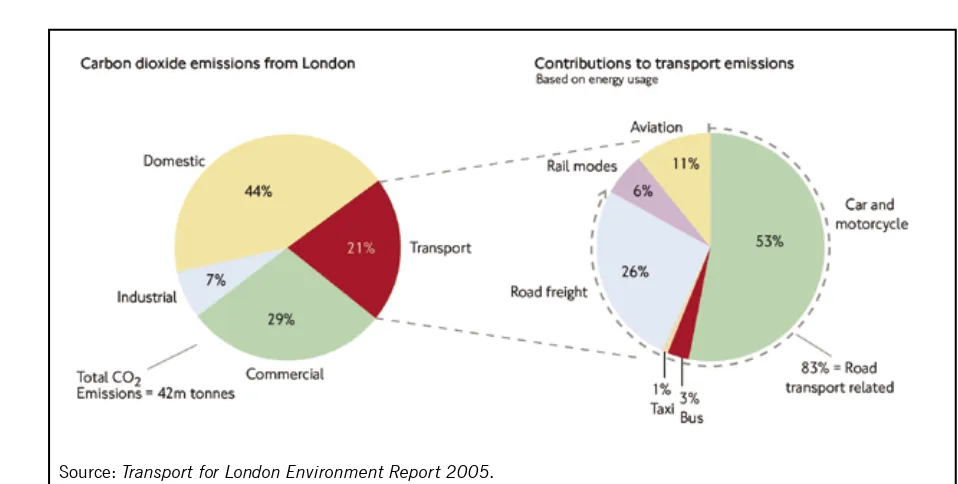
Transport for London (TfL) includes a clear description of the organisation’s impacts, including contextual information (such as total CO2 emissions from London and the proportion various modes of transport contribute to this). TfL also provides clear explanations of and reasons for their trends in climate change performance (see Figure 7).
GOOD PRACTiCE – mANAGEmENT
[image:14.595.61.540.509.751.2]National Grid both sets out a long-term target of 60% reduction of its own emissions by 2050 and puts this into the context of the wider UK government national target. Such long-range targeting helps align collective expectations about the scale of the challenge that we face in the coming decades (see Figure 8).
Figure 7: Good practice example of GhG emissions disclosure relating to the context of GhG data trends – Transport for london.
Source: Transport for London Environment Report 2005.
Source: Annual Report and Accounts 2005, National Grid.
Figure 8: Good practice example of disclosure relating to management of climate change performance – National Grid.
GOOD PRACTiCE – POliCy CONTExT
BAA plc makes clear in its report its view that air travel should be included in the EU ETS – therefore providing politically important support for imposing carbon constraints on air travel (see Figure 9).
Source: BAA Corporate Responsibility Report 2004.
Figure 9: Good practice example of disclosure relating to management of climate change policy – bAA.
RECOmmENDATiONS
• Policy: climate change policies would be more meaningful (and more useful) if they reflected specifically those particular climate change issues relevant to the company’s operations, products and business sector. More contextual information should also be provided so the rationale behind the policy and its objectives can be more clearly understood.
• Product impacts: companies whose products give rise to substantial carbon emissions tend to be poor at reporting these emissions or expressing their view of the appropriate allocation of responsibility for them. For those companies where product responsibility is a material issue, thorough reporting of their ‘downstream’ emissions is necessary. The company’s view of the nature of its responsibility for product emissions should also be a key part of any policy the company has on climate change.
• information and communication: good communication of climate change information to stakeholders is critical. The general picture currently is that much reporting tends to be buried or mixed with other issues. Navigation and accessibility could both be improved, as could the general location of climate change disclosures, particularly on corporate websites.
• Targets: disclosure of this information is important so that stakeholders can assess the relevance and suitability of targets, thereby understanding the company’s approach to this issue. Company targets should also be reported in the context of national and international targets set by government, or initiatives such as Kyoto.
• Assurance and verification: providing assurance is fundamental to adding credibility to any report. Where GHG emissions are significant it is important to ensure that emissions data are accurate and
reliable. Companies should also explain the process and boundaries behind the assurance procedure as well as the methodology, to add context for the report user.
• Context and quantification: more contextual information should be given when describing a company’s transformational initiatives to show how they will be or how they are expected to be genuinely transformational – it is not enough to give only a straightforward descript ate change data, for example, how the GHG data were calculated, and they should list any protocols that have been used and describe any time and geographical/site boundaries of the data. This allows any readers or users of the data to make comparisons easily with those of other reporters and to analyse any trends.
REPORTiNG iN ThE FUTURE
It is envisaged that future climate change reporting requirements of stakeholders will change as the issue becomes more urgent and prominent. Some possible implications are listed below.
• business strategy: climate change disclosures are expected to become more frequent and prominent in the annual report and accounts as companies develop their strategic responses to climate change and carbon constraints. In the UK this will overlap with new OFR/business review requirements for future-oriented reporting. Stakeholders need to see that the board is aware of and tackling difficult issues, and responding strategically.
• Public positioning: given the increasing political importance of climate change and the opportunity this brings for corporate influence, disclosing company public policy positions and lobbying policies will become a critical aspect of transparency. Companies should disclose what governance structures are in place to oversee the
company’s lobbying activities and approaches, public statements on any specific lobbying views held and an overview of what climate-change-related lobbying activities have occurred during the reporting period.
• Adaptation: as the science and understanding of climate change evolves, so must the corporate response develop to keep aligned with current thinking. It is becoming increasingly apparent from recent scientific papers that climate change is occurring much more quickly than predicted: companies should respond by demonstrating capabilities for adaptation in the short to medium term rather than in the long term.
• Normalisation: to ensure comparability of climate change information between companies, it is important for companies and their stakeholders to standardise the units used to normalise the data, so comparisons can be made both intra- and inter-sectorally.
• Transformational initiatives: these have a place in the future strategy mix for addressing climate change. Contextual information should, however, be added when describing transformational initiatives, eg quantification of emissions reduction, to explain how such initiatives could change/are changing the industry sector, not just the individual company.
• Financial risk: the increasing financial risks and opportunities associated with carbon emissions mean that provision of emissions data is increasingly crucial when reporting to shareholders. Where carbon emissions carry material risks, it is recommended that data are provided on a country, installation and/or source basis to improve their usefulness. Where companies operate in jurisdictions with carbon trading or taxation regimes in place, they should report the financial impact of those regimes, also, where appropriate, broken down by country or installation.
ThE FUTURE OF iNTERNATiONAl ClimATE ChANGE REPORTiNG
Dr Craig mackenzie, head of business Ethics, Centre for Ethics in Public Policy and Corporate Governance at Glasgow Caledonian University and Chair of FTSE4Good CCAC.
EUROPEAN POliCy
There have been several European policy developments over recent years, addressing Europe’s contribution to climate change and how it can be mitigated.
The main one is the introduction of the EU Emissions Trading Scheme. This was officially initiated in January 2005 but involved many years of planning beforehand. Designed to help Europe meet its emissions reduction targets under the Kyoto Protocol, the scheme uses a market-based method to provide incentives for the reduction of emissions through the allocation and trading of allowances throughout the EU. An overall ‘cap’, or limit, is set for each Member State (set out in National Allocation Plans or NAPs) on the number of allowances to issue to individual installations (power
Section 2: Overview of the international and national situation
regarding climate change
European policy
• The EU ETS Phase 1 failed to deliver.
• Phase 2 looks to be more promising with a carbon price of €17/tCO2e.
• There is a long-term EU policy goal of reducing emissions by 20% by 2020, using a wide range of instruments.
• National Kyoto targets and a patchwork of national instruments also contribute.
stations, etc) in the scheme – these allowances are then distributed. Individual installations can buy or sell allowances depending on whether their emissions fall below or exceed allowances – this trading takes place on a EU-wide market.
The first phase of the scheme runs from January 2005 until December 2007, the second from 2008–12 (the actual Kyoto period). It is commonly thought that, so far, the scheme has not been a particular success and has failed to deliver the emissions cuts that were hoped for, owing to an over-allocation of permits and, consequently, a low trading price for carbon. Price unpredictability has also reduced companies’ willingness to invest. This was only the first phase, however, so it has been something of a learning experience and it is hoped that Phase 2 will be more successful, with an estimated price of 17 euros per tonne of carbon by 2009.
US POliCy
There is a lot of state-level activity relating to climate change, especially in the north-east US and California. These include cap and trade schemes, similar to those in the EU. There are multiple bills before Congress at the moment, threatening mandatory control of carbon emissions, and enactment of one of them is likely before the end of the current Congress in 2008. The US Supreme Court also recently ruled against the EPA for its inaction on regulating carbon emissions. It is hoped that this landmark decision will help in the push for nationwide emissions cuts.
President Bush is currently reluctant to impose any strong controls on carbon emissions. Democrats have the dilemma of pushing now for bills that may not be as stringent as they desire, or waiting until a possibly more ‘pro-climate’ president is appointed in 2009.
GlObAl POliCy
The most renowned international initiative to combat climate change is the Kyoto Protocol, introduced in December 1997. This protocol assigns mandatory emission limitations for the reduction of greenhouse gas emissions to the (Annexe 1) signatory nations. By December 2006, a total of 169 countries had ratified the protocol. Notable exceptions to this are the US and Australia, two of the world’s largest energy consumers. Developing countries such as India and China have ratified the protocol, but are not required to commit to reducing their emissions. As a result of this, the Protocol has come under significant criticism – especially as China is about to become the world’s biggest emitter.
The Kyoto Protocol expires in 2012 and it is not yet clear what will replace it, though the June 2007 G8 meeting won commitment from the US and key developing nations to talks on this subject and a commitment to the principle to long-term emissions reductions.
Section 2: Overview of the international and national situation regarding climate change (continued)
US policy
• State-level activities are expanding.
• There are multiple bills before Congress with enactment likely to be by the end of the current session.
• The US Supreme Court ruled against the EPA for its inaction on emissions regulation.
• There is likely to be a new pro-climate President in 2009.
Global policy
• China is about to become the world’s biggest emitter.
• The Kyoto Protocol expires in 2012.
• It is not currently clear what will replace it.
why REPORT ON ClimATE ChANGE?
The main reason for companies to report on climate change performance is that stakeholders demand it. Investors, NGOs, etc have started to take a definite interest in organisations’ carbon management and reporting, putting increasing pressure on those who do not report to start doing so.
The Carbon Disclosure Project is the world’s largest collaboration of institutional investors. It is supported by 250 institutional investors with assets of $40 trillion. It represents an efficient process whereby many institutional investors collectively sign a single global request for disclosure of information on GHG emissions and around 1000 large organisations report through the website.
The Global Reporting Initiative, a multi-stakeholder process, has written Sustainability Reporting Guidelines for companies to report on their performance. They are the most universally used guidelines for reporting (so far) and contain indicators and guidance on reporting on climate change and energy use.
whAT TO REPORT?
There are a range of questionnaires, indices and standards, which all ask for different areas of disclosures on climate change. Organisations can use a combination of these, to help them decide the key areas relevant for their business to report on and to provide guidance on which indicators, etc are appropriate. This can depend on the size of the company, sector, stakeholder demands, etc.
For example, the Carbon Disclosure Project is generally supported by investors, and tends to focus on disclosures on emissions, targets, strategy and risk identification and management and governance.
Section 2: Overview of the international and national situation regarding climate change (continued)
GRi requirements
Disclosure of management Approach
• Goals and performance, policy, organizational responsibility, training and awareness, monitoring and follow-up.
main indicators
• EN16 – total direct and indirect greenhouse gas emissions by weight (core)
• EN17 – other relevant indirect greenhouse gas emissions by weight (core)
• EN18 – initiatives to reduce greenhouse gas emissions and reductions achieved (additional).
Other relevant indicators • EN5 – energy saved
• EN6 – initiatives to provide energy-efficient or renewable energy based products and services
• EN7 – initiatives to reduce indirect energy consumption
• EN29 – significant environmental impacts of transporting products.
The GRI G3 guidelines give an indicator approach to reporting on direct and indirect energy use and GHG emissions and other areas not as directly related to climate change, for example, energy savings. A significant proportion of the indicator framework is based on climate change. The GRI also provides sector-specific guidance.
ClimATE DiSClOSURE STANDARDS bOARD (CDSb)
This divergence of information available to
organisations on climate change reporting is not helpful and is often confusing. There should be a convergence of this information into a single standard.
The CDSB has recently been set up to address this need. Its formation was announced at the Annual Meeting of the World Economic Forum (WEF) in January 2007 and its objective is to ensure that companies use consistent reporting standards by building on and incorporating the significant work already carried out by the Carbon Disclosure Project, CERES, the California Climate Registry, WEF, World Resources Institute (WRI) and other members of the CDSB.
This initiative could lay the foundations for a more formal and mandatory framework for climate change reporting. It focuses on emissions, physical risks, regulatory risks and the strategic analysis of climate risk. Nonetheless, there could be objections in the future if the CDSB focuses too much on risk and the financial implications of climate change, rather than performance at reducing emissions.
Section 2: Overview of the international and national situation regarding climate change (continued)
Climate Disclosure Standards board (CDSb)
‘CDSB member organisations have agreed to align their core requests for information to ensure that companies report climate change-related information in a standardised way that facilitates easier comparative analysis by investors, managers and the public.’ January 2007
Focus on:
• total emissions
• assessment of the physical risks of climate change
• assessment of the regulatory risks of climate change
USES OF DATA
Carbon data can be used in a variety of ways, by many different stakeholder groups.
• The investment community can use them to assess financial risks.
• SRI investors can use the data to assess
performance and subsequent eligibility for inclusion on indices.
• NGOs can use data to assess whether an organisation is addressing the issues it should be and mitigating impacts.
• Customers and employees may wish to read reports as a way of choosing which company they wish to buy from or work for.
• Governments may use climate change reporting as a way of engaging in dialogue with companies to discuss ways to reduce emissions in line with targets.
DATA REQUiREmENTS FOR FiNANCiAl ANAlySiS
Financial analysts’ main aim is to calculate the short-term discounted cash flow implications of climate change. This is a difficult area because there are few companies for which there are material earnings implications associated with climate change over the short term (three years). Organisations are also sometimes reluctant to disclose emissions data, as they may give away commercially sensitive information, or regulators could end up using such data in the future.
Section 2: Overview of the international and national situation regarding climate change (continued)
DATA REQUiREmENTS FOR bENChmARkiNG PERFORmANCE
Most benchmarks are carried out by comparing corporate performance in responding to climate change – this seems to be an area most stakeholders are interested in and request information on.
Uk CARbON EmiSSiON TARGETS
The following pages gives an overview of current UK emission levels and future targets, and the various policy instruments being used to reduce emissions in the business and public sector.
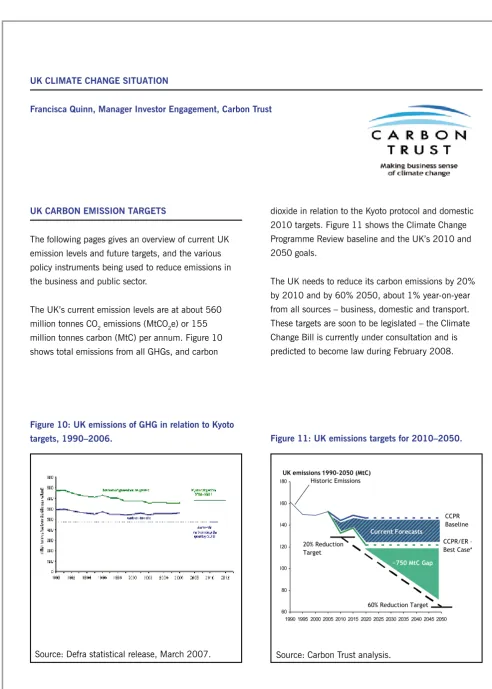
The UK’s current emission levels are at about 560 million tonnes CO2 emissions (MtCO2e) or 155 million tonnes carbon (MtC) per annum. Figure 10 shows total emissions from all GHGs, and carbon
Section 2: Overview of the international and national situation regarding climate change (continued)
dioxide in relation to the Kyoto protocol and domestic 2010 targets. Figure 11 shows the Climate Change Programme Review baseline and the UK’s 2010 and 2050 goals.
The UK needs to reduce its carbon emissions by 20% by 2010 and by 60% 2050, about 1% year-on-year from all sources – business, domestic and transport. These targets are soon to be legislated – the Climate Change Bill is currently under consultation and is predicted to become law during February 2008.
UK needs to implement step changes to meet
soon legislated climate change targets
UK Carbon Emission Targets
60 80 100 120 140 160 180
1990 1995 2000 2005 2010 2015 2020 2025 2030 2035 2040 2045 2050
Historic Emissions CCPR Baseline CCPR/ER – Best Case* 20% Reduction Target
60% Reduction Target
Current Forecasts
~750 MtC Gap
UK emissions 1990-2050 (MtC)
Source: Defra statistical release, March 29, 2007
Source: Carbon Trust analysis
UK needs to implement step changes to meet
soon legislated climate change targets
UK Carbon Emission Targets
60 80 100 120 140 160 180
1990 1995 2000 2005 2010 2015 2020 2025 2030 2035 2040 2045 2050
Historic Emissions CCPR Baseline CCPR/ER – Best Case* 20% Reduction Target
60% Reduction Target
Current Forecasts
~750 MtC Gap
UK emissions 1990-2050 (MtC)
Source: Defra statistical release, March 29, 2007
[image:22.595.55.548.93.783.2]Source: Carbon Trust analysis Figure 10: Uk emissions of GhG in relation to kyoto
targets, 1990–2006. Figure 11: Uk emissions targets for 2010–2050.
Source: Defra statistical release, March 2007. Source: Carbon Trust analysis. Uk ClimATE ChANGE SiTUATiON
In 2006, UK GHG emissions were 658 MtCO2e or 15% below 1990 level (775), but CO2 emissions were 561 MtCO2e, only 5% below their 1990 level (592). The cut in GHGs is mainly due to reductions in methane from landfill and coal mines and in nitrous oxide from industrial processes. Carbon dioxide is the most significant greenhouse gas and has seen the lowest reduction rates.
The CCPR sets out measures to try to make up shortfall in the domestic CO2 2010 goal (the latest package is expected to achieve a 15–18% cutback).
kyOTO AND EU EmiSSiONS TRADiNG SChEmE
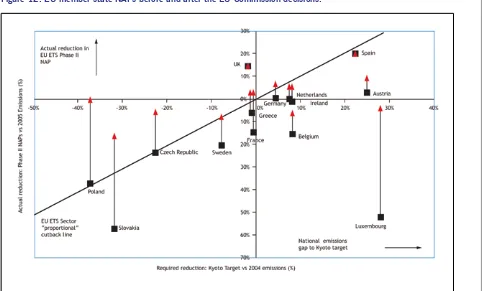
Figure 12 demonstrates the EU member state NAPs before and after the EU Commission decisions. The vertical axis shows the percentage cutback in national
[image:23.595.56.538.454.745.2]Section 2: Overview of the international and national situation regarding climate change (continued)
Figure 12: EU member state NAPs before and after the EU Commission decisions.
Source: EU ETS Phase II allocation: Implications and Lessons, Carbon Trust (2006).
allocation plans from verified emission levels in 2005 (negative values imply an increase).The horizontal axis shows the percentage reductions in national emissions required to achieve the national Kyoto target.
Consequently, the diagonal line shows the ‘equal share’ line if EU ETS sectors are to contribute an equal share of the national effort to deliver Kyoto targets domestically.
Allocation plans that fall below this line imply a significant burden on other policies to meet national targets – or a probable shortfall against Kyoto targets, which treasuries would need to make up through purchase of international Kyoto emission reduction credits.
Uk EmiSSiONS TARGETS
Figure 13 shows the split of UK carbon emissions by source and by end user in 2002.
Emission sources are primarily fuels consumed by the power companies, businesses and transport companies. The end-use emissions are based on energy consumption, such as energy used in production processes, heating, cooling, lighting.
The largest source of emissions is the power sector. Its emissions are anticipated to decrease by 1% per annum between now and 2020. These are largely covered by the EU ETS.
Looking at the end users, the largest source is business, with a share of 40%. Defra predicts annual emissions to decline by 0.6% annually between now and 2020. Transport emissions are the only source that is anticipated to rise.
Section 2: Overview of the international and national situation regarding climate change (continued)
ENERGy USAGE by TyPE OF bUSiNESS ENTiTy AND USAGE
Just 2000 of the 990,000 entities operating in the UK are large energy-intensive companies. These organisations are responsible for 45% of total UK business emissions. Sixty per cent of their emissions arise from their own manufacturing and 30% from the electricity use associated with manufacturing.
Looking at the rest of the business landscape, however, the picture is somewhat different. Among the remaining non-energy intensive companies, more than 60% of emissions come from buildings-related energy consumption. The situation for public sector companies and SMEs is largely the same.
[image:24.595.61.537.511.756.2]The largely different emissions profiles between companies makes it difficult to create generic policy instruments for reducing emissions from the business sector.
Figure 13: Split of Uk carbon emissions by source and by end user in 2002.
POliCy iNSTRUmENTS TARGETiNG ThE bUSiNESS AND PUbliC SECTOR
There are several policy instruments aimed at reducing the carbon emissions of business and the public sector. These are as follows:
• EU Emissions Trading Scheme (as discussed earlier)
• Climate Change Levy (CCL) – a tax on energy use for industry, commerce and the public to reduce climate change impacts
• Climate Change Agreements – agreements between government and business to reduce the tax payable for the CCL providing energy reduction targets are met
Section 2: Overview of the international and national situation regarding climate change (continued)
• Building Regulations and Energy Performance of Buildings Directive – new and updated requirements for buildings to reduce energy consumption (existing stock and new build); these are coming into effect over the next couple of years
• the Carbon Trust
• Energy Performance Commitment (EPC) – this proposal for a mandatory emissions trading scheme for commercial and public sector UK organisations is under consultation at the moment. This suggestion originally came out of Carbon Trust analysis and contribution to the 2006 Energy Review.
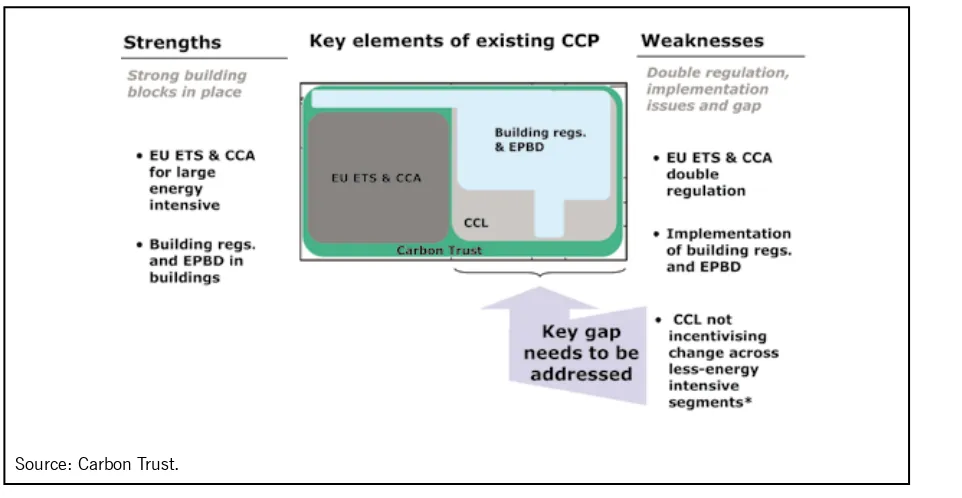
[image:25.595.55.536.514.763.2]Current climate change policy instruments have some strong building blocks (as indicated by the diagram in the slide to the right) but there are still some gaps and weaknesses to be addressed. The EU Energy Performance of Buildings Directive has not yet been
Figure 14: illustration of current climate change policy instruments.
implemented – many countries (including the UK) missed the original deadline. The climate change levy is not encouraging action in the smaller, less energy-intensive companies. Poor meter data, immaterial energy costs, high costs of obtaining accurate meter data are all barriers to restrict SMEs’ response.
ENERGy PERFORmANCE COmmiTmENT
As mentioned previously, this proposed scheme will use a mandatory emissions trading scheme to cap emissions of UK non-energy-intensive organisations. The aim is to reduce overall UK emissions and increase transparency of company performance. The government consultation closed in January.
If agreed, the scheme will run in a similar way to the EU ETS, with the introductory phase commencing in 2009. This will be largely a learning period, with carbon being sold at a fixed price. The cap and trade scheme will start in around 2013, with allowances allocated through auctions (and at a variable price).
Companies will be able to buy permits for emissions and at the end of each year, report back to the government on their emissions data. The proportion of ‘pay-back’ from the government will depend on the emissions levels, relative to the organisation ‘league table’.
Section 2: Overview of the international and national situation regarding climate change (continued)
The proposed Uk Energy Performance
Commitment (EPC) will cap CO2 from many non-EU ETS industries
• This proposed new UK trading scheme will cap carbon emissions growth in non-energy intensive sectors and increase transparency of company performance.
• It will be a mandatory, simplified ‘cap and trade’ scheme.
• It will apply to approximately 5,000 large organisations with significant energy use (eg, supermarkets, hotels, large office based service organisations, hospitals, government departments, local authorities).
• It will cover all electricity, gas, fuel and oil use (not including transport fuels).
• The introductory phase will start in 2009, during which allowances will be sold at a fixed price – this will be a learning period.
• From approximately 2013, allowances will be allocated through auctions with a diminishing number available over time.
• The scheme will operate outside the EU ETS, though with ‘buy-only’ linkage to keep credits below the EUA price.
Section 2: Overview of the international and national situation regarding climate change (continued)
ClimATE ChANGE bill
This draft blueprint for how the Government will tackle climate change and move towards a low-carbon economy, was published in March 2007 and is the first of its kind in any country.
The bill includes the following key points:
• a series of clear targets for reducing carbon dioxide emissions, including making the UK’s targets for a 60% reduction by 2050 and a 26% to 32% reduction by 2020 legally binding
• a new system of legally binding five-year ‘carbon budgets’, set at least 15 years ahead, to provide clarity on the UK’s pathway towards its key targets and increase the certainty that businesses and individuals need to enable them to invest in low-carbon technologies
• a new statutory body, the Committee on Climate Change, to provide independent expert advice and guidance to government on achieving its targets and staying within its carbon budgets
• new powers to enable the government to implement more easily policies to cut emissions
• a new system of annual open and transparent reporting to Parliament. The Committee on Climate Change will provide an independent progress report to which the government must respond. This will ensure the government is held to account every year on its progress towards each five-year carbon budget and the 2020 and 2050 targets
• a requirement for government to report at least every five years on current and predicted impacts of climate change, and on its proposals and policy for adapting to climate change.
At the time of writing (July 2007), the consultation for this draft bill had been closed. Following this consultation and Parliamentary scrutiny, the
ThE CARbON TRUST
The Carbon Trust is a private company set up in 2001 by the UK government in response to the threat of climate change, with the aim of accelerating the move to a low carbon economy. To achieve this aim, the Carbon Trust works in five complementary business areas: Insights, Solutions, Innovations, Enterprises and Investments which in turn explain, deliver, develop, create and finance low carbon enterprise. See www.carbontrust.co.uk for more information.
v
erification offset should always be verified by a third party according to a standard or protocolA
dditionality ensure reductions are additional to what would have happened in the absence of the projectl
eakages take into account negative impacts beyond the project boundaryi
mpermanency have the ability to maintain the reductions achieved over time (particularly critical for carbon sink projects) [image:28.595.57.545.109.764.2]D
ouble counting avoid offsets being used or counted more than onceFigure 15: To help customers purchase good quality offset Carbon Trust has developed a simple test to provide a minimum level of quality assurance.
Section 2: Overview of the international and national situation regarding climate change (continued)
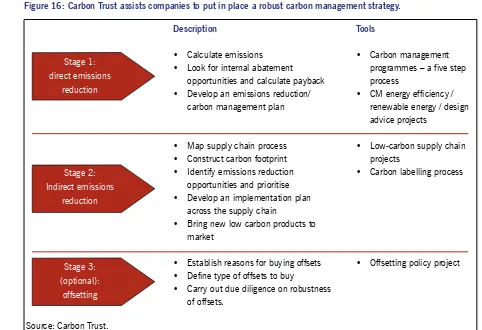
Stage 1: direct emissions reduction Stage 2: Indirect emissions reduction Stage 3: (optional): offsetting
Figure 16: Carbon Trust assists companies to put in place a robust carbon management strategy.
Description
• Calculate emissions • Look for internal abatement
opportunities and calculate payback • Develop an emissions reduction/
carbon management plan
• Map supply chain process • Construct carbon footprint • Identify emissions reduction
opportunities and prioritise • Develop an implementation plan
across the supply chain
• Bring new low carbon products to market
• Establish reasons for buying offsets • Define type of offsets to buy
• Carry out due diligence on robustness of offsets.
Tools
• Carbon management programmes – a five step process
• CM energy efficiency / renewable energy / design advice projects
• Low-carbon supply chain projects
• Carbon labelling process
• Offsetting policy project
[image:28.595.61.543.423.753.2]CARbON lAbElliNG PROGRAmmE
In March 2007, the Carbon Trust launched a Carbon Reduction Label that demonstrates a commitment from companies to reduce the carbon footprint of their products.
This labelling scheme was introduced following a low-carbon supply-chain pilot in 2005 with Martin Miller and is piloted by several companies, including Walkers Crisps, Innocent and Boots. A packet of Walkers cheese and onion crisps was the first product on the shelves to use the label.
Section 2: Overview of the international and national situation regarding climate change (continued)
[image:29.595.55.537.421.735.2]As part of the initial phase of the scheme, the methodology will be reviewed by a specially created Technical Advisory Group chaired by Jim Skea, research director of the UK Energy Resource Centre, with members from across government, business, environment and consumer groups. The review will include a detailed consultation with industry and stakeholders.
Figure 17: Carbon Trust’s carbon labelling programme – life cycle of a packet of walkers crisps.
The Carbon Labelling programme originated
from supply chain carbon management
Potato cultivation
Oil, plastic & foil production
Processing
Frying
Bagging
Transportation
Lighting & temperature control
Limited
impact Collection & landfill
Life-cycle of a packet of Walkers crisps
Carbon Footprints
g CO2 embedded in every packet sold
Carbon Footprint Process
Completed low-carbon supply chain pilot in late 2005 with Martin Miller
Developed process maps & gathered data from Walkers, suppliers and
distributors/retailers
Built carbon footprint models
Identified opportunities to cut emissions and save costs
Source: Low Carbon Supply Chain Pilot Project, 2005
33
44 41
Doritos Crisps Quavers
BACK
bP’S CARbON REPORTiNG
kevin ball, Director, low Carbon business Policy, bP.
TimEliNE
BP has a long history of reporting on its non-financial performance. Over the last 15 years its reporting has grown from its initial roots in health and safety reporting towards a fully-fledged sustainability report. The timeline is as follows.
1991 – Like many organisations, BP geared its first report heavily towards health and safety data, as well as more ‘end-of-pipe’ environmental data. It was important, however, as it was one of the first reports to set out clearly BP’s commitments to reducing and managing environmental impacts. At this point BP also started to include a limited set of health and safety and oil spills data in its annual report, making it one of the first companies to have non-financial data in its annual report to shareholders.
1995 – Supported by a detailed health, safety and environmental data report, BP’s first social report built on the initial health and safety focus of its early reports to give a wider picture of the approach to managing the workforce, outlining its approach to the social side of its aspirations in countries such as Angola and Colombia.
2000s – BP further consolidated its approach to reporting, with a move towards focusing on key achievements and challenges. In the early 2000s BP also started to supplement its reporting on the Web, giving interested readers the opportunity to examine its performance at a deeper level, using various online tools and information.
Section 3: Insights from corporate reporters
BP’s reports are getting longer and harder to write, because readers want concise reports that cover the key material issues. It is becoming increasingly difficult to meet the information needs, while at the same time keeping the report a manageable length.
EvOlUTiON OF bP’S SUSTAiNAbiliTy REPORT
• Based on extensive research and benchmarking BP developed a new approach in 2004.
• This moved towards a more integrated report that considered the environmental, social and ethical issues BP faces as a business in the context of its long-term business strategy.
• BP developed the report as a three-chapter structure. The first chapter – ‘BP our business’ – covers the business benefits and responsible operations: those things within the company’s direct control. The second and third chapters cover the major environmental and social issues where BP can have only a limited influence and need to work with others to address these challenges.
• As a further step, BP worked closely with its assurance providers, Ernst and Young, to develop a more robust verification approach. This involved the adoption of the AA1000 Assurance standard.
• All this resulted in a very different report in 2004. To reflect this change the report was re-named to reflect its more fundamental nature – hence the ‘BP sustainability report’.
• The current report addresses the key issues identified in BP’s materiality process, which it describes. This process uses a mixture of internal dialogue and external stakeholder engagement. The report also has been shortened to a more readable format, while the more detailed information is available on the BP website.
bP’S OvERAll REPORTiNG FRAmEwORk
BP’s reporting is split into two sections – financial and non-financial – with a degree of overlap between the two. The US reporting regulations require the Form 20F, which is an overview of any issues that will be a financial risk to shareholders. Areas such as climate change policy and strategy are not seen as a major risk topic in the 20F document at the moment but this may change in the coming years.
Section 3: Presentations from corporate reporters (continued)
Sustainability Report
Non-financial
Annual Report and Accounts
Annual Report Form 20F
Annual Review
Financial and Operating Information
[image:31.595.52.535.153.777.2]Financial
Figure 18: bP’s overall reporting framework.
Climate Change (Carbon) – Timeline
• BP’s first discloses global estimate for CO2 emissions – 1994
• BP makes external climate change commitments – 1997
• Corporate CO2 reporting protocol issued – 1997
• BP announces 10% below 1990 levels target – 1998
• BP merges with Amoco and doubles in size – 1999
• Corporate reporting protocol expanded to include Methane – 1999
• BP meets 10% target and announces new commitments – 2002
bP’S ClimATE ChANGE TimEliNE
BP was one of the first oil and gas companies to acknowledge climate change as being an issue, and made its first estimate of its own emissions in 1994, with external commitments first made in 1997. Another significant development was the inclusion of methane in data reporting, in line with the GHG Protocol.
CARbON REPORTiNG – DATA TRENDS
GHG per unit by sector is the best way to view overall performance (see Figure 19), recording total operational GHG emissions indicates to readers only the status of the portfolio rather than performance. BP therefore puts more emphasis on improving its per unit carbon emissions, rather than overall emissions.
It is not easy for all oil and gas companies to agree on which normalised data to use, making it difficult for comparisons to be made between different reporting organisations.
[image:32.595.325.538.199.734.2]Section 3: Presentations from corporate reporters (continued)
Figure 19: Examples of bP’s disclosures on GhG emissions.
PRODUCT EmiSSiONS
BP has been assessing its product emissions since 2003 and was one of the first companies to do so. This started off as an assessment of the hydrocarbons produced and processed by others and BP is now looking at the emissions from its own production and processing activities (rather than trading).
As far as BP’s alternative energy businesses go, it is developing internal reporting protocols to estimate emissions reductions achieved as a result of alternative energy projects and business. The current focus is on transformational initiatives and how they are achieving this (for example, low-carbon power plants), and how BP can turn the success of its low-carbon business strategy into carbon performance metrics.
[image:33.595.56.535.456.756.2]Section 3: Presentations from corporate reporters (continued)
Figure 20: bP’s annual GhG emissions from reporting units.
DATA ChAllENGES – COmPlETENESS
There is a conflict between materiality and completeness when BP collects its emissions data. Currently, 250 business units submit their carbon emissions quarterly; 50% of these business units are responsible for 95% of the emissions. So half the business units emit very little and there is a tension between collecting data from all units (and having complete, accurate, data) and estimating for those units that emit negligible amounts.
Section 3: Presentations from corporate reporters (continued)
DATA ChAllENGES – PERFORmANCE
[image:34.595.60.546.98.768.2]There are lots of areas that can affect emissions performance over the course of a reporting period (see Figure 21). These include mergers and acquisitions, sold business units, and unforeseen circumstances. It is essential when collecting data, reporting and analysing performance to have a clear overview of movements within reporting units, to understand where there have been actual reductions in carbon emissions and improved operational performance.
Figure 21: Factors that affect emissions performance.
[image:34.595.60.539.452.756.2]Section 3: Presentations from corporate reporters (continued)
SUmmARy
Reporting takes up a lot of BP’s (and all other organisations’) resources but it is seen as being an essential step in building capabilities for the future in terms of carbon accounting and reporting. Climate change and reporting should be part of core business strategy and not seen as an add-on and, for this reason, BP refers to it as corporate carbon performance, not climate change performance.
BP does not actually have an individual carbon target – for example – an emissions reduction target for each facility. Instead, it considers that carbon should be sufficiently built into its strategy and objectives, so that it is a given that emissions will be reduced. It is also difficult to set year-on-year targets for carbon as it takes on average three years for BP to conceive a project, execute it and then realise the benefit. What is more useful in BP’s case is to concentrate on embedding performance management and reporting into its business operations and carrying out inter-business benchmarking to share best practice and drive improvements.
BP is also trying to bridge the gap between its accountants and HSE experts, to ensure that the process of, and accountability for, collecting and collating the emissions data is not left entirely with the HSE experts, but that accountants have a part to play as well (rather than just auditing the data after it has been reported).
key points
Voluntary reporting takes a large effort but in a future carbon-constrained world, this is building essential capability.
BP’s diverse and changing portfolio requires regular review and challenge of reporting protocols to ensure ‘fit for purpose’ processes.
BP is seeking to embed ‘low carbon’ as a way of doing business, implying a movement to lower use of explicit annual targets, with more reliance on performance reporting and inter-business benchmarking.
NATiONAl GRiD’S ClimATE ChANGE EmiSSiONS (2005/6)
Methane forms 30% of National Grid’s GHG emissions, produced either unintentionally through pipe leaks or intentionally through venting. Other sources include 16% from operational use and non-operational use of energy, 4% from sulphur hexafluoride leakage, 1% from commercial fleet and cars. 49% occurs from electricity
Section 3: Presentations from corporate reporters (continued)
Greenhouse Gas Protocol initiative
Scope 1: emissions include methane venting and leakage, use of gas for operational and non-operational purposes, sulphur hexafluoride leakage and transport including own aircraft.
Scope 2: emissions cover purchased electricity.
Scope 3: emissions include electricity transmission losses and commercial air travel. transmission system losses. A very small proportion (less than 0.1%) is from commercial flights. These emissions came to a total of 10.2 million tonnes of CO2 equivalent in 2005/6, which is less than the previous year’s emissions. National Grid reports its greenhouse gas emissions in line with Scope 1, 2 and 3 of the GHG protocol, but the climate change strategy focuses on Scopes 1 and 2.
NATiONAl GRiD’S ENERGy DElivERy AND ClimATE ChANGE
[image:36.595.60.544.76.820.2]ian Gearing, Group Corporate Responsibility manager, National Grid
Figure 22: National Grid’s GhG emissions in 2005/6.
30% methane
16% operational use and non-operational use of energy 49%
electricity transmission system losses
4% sulphur hexafluoride leakage 1%
commercial fleet and cars
Total of 10.2 million tonnes of CO2 equivalent
Energy Delivery and Climate Change
Our climate change strategy
UK Scenario 8
0 1,000,000 2,000,000 3,000,000 4,000,000 5,000,000 6,000,000
2004 2005 2006 2007 2008 2009 2010 2011 2012 2013 2014 2015 2016 2017 2018 2019 2020 2021 2022 2023 2024 2025 2026 2027 2028 2029 2030 2031 2032 0 10,000,000 20,000,000 30,000,000 40,000,000 50,000,000 60,000,000
Gas Distribution SF6 1% of Inventory by 2025 (Estimated Inventory of 700t) SF6 1% of Inventory (assumed Y r on Yr Reduction) Gas T 9 Compressor stations Replaced.
Gas T 9 Compressor stations Replaced.(Assumed Yr on Y r Reduction) Carbon Neutral Elec. & 5% biofuels Carbon Neutral Elec. & 5% biofuels (Assumed Yr on Y r reduction) Carbon Cost Saving
Target (60% reduction) Kyoto Target (12.5% Reduction by 2012) UK Government Target (20% Reduction by 2010)
Example of GHG reduction scenarios
ClimATE ChANGE STRATEGy
National Grid has set itself a target of reducing its GHG emissions arising from processes, operations and offices by 60% by 2050. This will be achieved using a variety of different carbon reduction methods, including pipe replacement, new gas compressors, switching to renewable energy sources by 2010 and setting a lower CO2 emissions ceiling for company vehicles.
Transport is not seen as a significant area in which National Grid should concentrate its emissions reductions – safety and costs are more significant
Section 3: Presentations from corporate reporters (continued)
issues for that impact area. Even so, there are low-carbon cars being introduced into the transport fleet and cars are one area where employees can get actively involved in the drive for emissions reductions.
As part of this strategy, National Grid developed more than a dozen reduction scenarios, which consist of combinations of possible actions to meet this target (for example, moving to all-renewable energy sooner or later or changing differing numbers of gas-fuelled compressors to electric drive), before settling on the final plan for the UK and the US.
[image:37.595.58.537.449.761.2]Source: National Grid 2007.