IMAGE PROCESSING TECHNIQUES FOR THE RECOGNITON OF INDIAN SIGN
LANGUAGE IN IMAGE MINING: A SURVEY
1,*
Mrs. Kavitha, S. and
1
Department of Computer Science and Applications, Dayananda Sagar College of Arts, Science and Commerce
Kumaraswamy Layout, Bangalore, India
2
Department of Computer Science
ARTICLE INFO ABSTRACT
Sign Language Recognition System is one of the most growing researches today. Many new Techniques are having been developed recently in the field of Sign Language Recognition. This system becomes popular because it is only one of the efficient way through which the deaf and dumb people can convey their message to other people.
the various techniques used for image mining techniques like Histogram equlization,
different researchers.
Copyright © 2014 Mrs. Kavitha and Dr. Hanumanthappa.
permits unrestricted use, distribution, and reproduction in any medium, provided the original work is properly cited.
INTRODUCTION
Image mining is an interdisciplinary endeavor that draws upon expertise in various fields like computer
retrieval, matching and pattern recognition. allow image mining to have two different
method extracts images from image databases or collection of images. Second method mines a combination of associated alphanumeric data and collection of images. Research in Image mining can be broadly classified in two main directions (1) Domain specific applications (2) General applications. Both are used to extract most relevant image feature and later to generate image patterns. A vast amount of image data is generated in daily life and in various fields
astronomy, sports and all kinds of photographic images. still at the experimental stage and growing field of research. Lack of understanding in the research issues of
the obstacle to rapid progress (Gajjar et al., plays vital role in every aspect of the systems
hospitals, engineering and so on. Image mining normally deals with the study and development of new technologies that allow easy analysis and interpretation of the images. Image
not only the simple fact of recovering relevant images but is the innovation of image patterns that are noteworthy in a collection of images.
*Corresponding author: Mrs. Kavitha, S.
Department of Computer Science and Applications, Dayananda Sagar College of Arts, Science and Commerce Kumaraswamy Layout, Bangalore, India
ISSN: 0975-833X
Vol. 6, Issue, 11, pp.10154
Article History:
Received 15th August, 2014
Received in revised form
23rd September, 2014
Accepted 20th October, 2014
Published online 30th November,2014
Key words:
Indian Sign Language, Feature Extraction, Edge Detection, Hand Gesture recognition, Color, Texture.
RESEARCH ARTICLE
IMAGE PROCESSING TECHNIQUES FOR THE RECOGNITON OF INDIAN SIGN
LANGUAGE IN IMAGE MINING: A SURVEY
Mrs. Kavitha, S. and
2Dr. Hanumanthappa, M.
Computer Science and Applications, Dayananda Sagar College of Arts, Science and Commerce
Kumaraswamy Layout, Bangalore, India
Department of Computer Science and Applications, Bangalore University,
ABSTRACT
Sign Language Recognition System is one of the most growing researches today. Many new Techniques are having been developed recently in the field of Sign Language Recognition. This system becomes popular because it is only one of the efficient way through which the deaf and dumb people can convey their message to other people. The main aim of this paper is to present a survey of the various techniques used for image mining techniques for the Indian Sign Language Recognition like Histogram equlization, Neural Networks, RGB color Segmentation techniques etc., given by different researchers.
. Kavitha and Dr. Hanumanthappa. This is an open access article distributed under the Creative Commons Attribution License, which permits unrestricted use, distribution, and reproduction in any medium, provided the original work is properly cited.
Image mining is an interdisciplinary endeavor that draws upon expertise in various fields like computer vision, image retrieval, matching and pattern recognition. Some methods mining to have two different approaches. First method extracts images from image databases or collection of a combination of associated alphanumeric data and collection of images. Research in Image ed in two main directions (1) specific applications (2) General applications. Both are used to extract most relevant image feature and later to generate image patterns. A vast amount of image data is generated in daily life and in various fields like medical, astronomy, sports and all kinds of photographic images. It is still at the experimental stage and growing field of research. Lack of understanding in the research issues of image mining is 2012). Image data plays vital role in every aspect of the systems like business, hospitals, engineering and so on. Image mining normally deals of new technologies that allow easy analysis and interpretation of the images. Image mining is the simple fact of recovering relevant images but is the innovation of image patterns that are noteworthy in a given
Dayananda Sagar College of Arts, Science and Commerce Kumaraswamy Layout, Bangalore, India.
The establishment of image mining system is frequently an complicated process because it implies joining diverse techniques ranging from image retrieval and
up to data mining and pattern recognition. This paper presents many different views about retrieval, matching, pattern recognition which will be very useful while extracting features like shape, color, size, texture, imprint etc from large databases. The number of features required to represent an image can be very huge. Using all available features to recognize objects can suffer from curse dimensionality. Feature selection and extraction is the pre
mining. Main issues in analyzing images is the effective identification of features and another one is extracting them (Salam et al., 1996).
Shaikh Nikhat Fatma, 2012 describes the importance of Image mining in which images can be retrieved according to some requirement specifications. Image retrieval can have logical features like objects of a given type or individual objects or persons using edge detection techniques to retrieve the specified image. Continuing advancements in both hardware and software coupled with higher end image processing and image vision tools, have made it possible to store huge amount of images. This increase in number of images and image databases has necessitated
techniques.
International Journal of Current Research
Vol. 6, Issue, 11, pp.10154-10161, November,2014
IMAGE PROCESSING TECHNIQUES FOR THE RECOGNITON OF INDIAN SIGN
Computer Science and Applications, Dayananda Sagar College of Arts, Science and Commerce
Bangalore University, Bangalore, India
Sign Language Recognition System is one of the most growing researches today. Many new Techniques are having been developed recently in the field of Sign Language Recognition. This system becomes popular because it is only one of the efficient way through which the deaf and dumb The main aim of this paper is to present a survey of for the Indian Sign Language Recognition RGB color Segmentation techniques etc., given by
distributed under the Creative Commons Attribution License, which
The establishment of image mining system is frequently an because it implies joining diverse techniques ranging from image retrieval and indexing schemes mining and pattern recognition. This paper presents many different views about retrieval, matching, pattern recognition which will be very useful while extracting features like shape, color, size, texture, imprint etc from large image databases. The number of features required to represent an image can be very huge. Using all available features to recognize objects can suffer from curse dimensionality. Feature selection and extraction is the pre-processing step of image ain issues in analyzing images is the effective identification of features and another one is extracting them
describes the importance of Image mining in which images can be retrieved according to some equirement specifications. Image retrieval can have logical features like objects of a given type or individual objects or persons using edge detection techniques to retrieve the Continuing advancements in both hardware d with higher end image processing and image vision tools, have made it possible to store huge amount of images. This increase in number of images and image the need for image mining
Image mining an important research area not only from engineering point of view but also for its impact on the society. Sign languages are non verbal visual languages, different from spoken languages, but they serve the same function. There are different sign languages all over the world such as American Sign. Language (ASL), British Sign Language (BSL), Japanese Sign Language family (Japanese, Taiwanese and Korean Sign Languages), French Sign Language family (French, Italian, Irish, Russian and Dutch Sign Languages), Australian Sign Language, etc. Similarly Indian Sign Language was also developed for Indian deaf community. It is different in the phonetics, grammar, hand gestures and syntax from other country’s sign languages. Designing a hand gesture recognition system for ISL is more challenging than other sign languages due to the following reasons (Geetha et al., 2012):
ISL uses both hands to make gestures to represent most of
the alphabets.
ISL uses static and dynamic hand gestures.
Facial expressions are also included.
One hand moves faster than the other at times in dynamic hand gestures.
Many of the gestures result in obstruction.
Complicated hand shapes.
Locations of the hand with respect to body contribute to the Sign.
Head/Body postures.
ISL Involves both global and local hand motion.
Literature Review
An image retrieval system is a Computer system for Searching, browsing and retrieving images from large databases. Chary
et al. (2012) described the retrieval of images within a large
image collection based on color projections and different mathematical approaches which are introduced and applied for retrieval of images. Images are sub grouping using threshold values, they considered R,G,B color combinations for retrieval of images, which are implemented and results are included, and through results it is observed that it obtaining efficient results comparatively to the previous one and existing. This method provides the best solution in large image set compared with total of 10000 images with different categories. All suggested methods are helpful to perform the good results and based on query images required images retrieved from the database. So best one is to select the combinations of colors mean with median and standard deviation, expect best performs and good results.
Daniele Cerra and Mihai Datcu (2012) explains that almost ten seconds would be needed to process five RGB images of size 256x256, in the case of images datasets but cause a major drawback for compression-based analysis in real applications, where usually medium-tolarge datasets are involved. To avoid that problem another author Vamsidhar Enireddy et al. (2012) says that the digital medical images are stored in large databases for easy accessibility and Content based image retrieval (CBIR) is used to retrieve diagnostic cases similar to the query medical image. Haar wavelet is used for image compression without losses. Edge and texture features are
extracted from the medical compressed medical images using Sobel edge detector and Gabor transforms respectively. The classification accuracy of retrieval is evaluated using Naïve Bayes and Support Vector Machine. The digital medical images are stored in large databases for easy accessibility and Content based image retrieval (CBIR) is used to retrieve diagnostic cases similar to the query medical image. CBIR uses algorithms to extract relevant features from the image, on presenting a query image. CBIR retrieves images from the database based on the features such as color, texture, edge and shape in the images which are automatically extracted by CBIR systems. Stanchev (2003), using image mining in image retrieval, described a new method for image retrieval using high level semantic features. It is based on extraction of low level color, shape and texture characteristics and their conversion into high level semantic features using fuzzy production rules, derived with the help of an image mining technique. Dempster-Shafer theory of evidence is applied to obtain a list of structures containing information for the image high level semantic features.
Johannes Itten theory is adopted for acquiring high level color features. The main advantage of this method is the possibility of retrieval using high level image semantic features. After the full system realization it will be able to obtain statistic characteristics about the usefulness of the suggested method.
Aswini kumar mohanty et al. (2010) says that, before
proceeding to the first stage preprocessing it is necessary to improve the quality of image and make the feature extraction phase as an easier and reliable one. Feature extraction methodologies analyze objects and images to extract the most prominent features that are representative of the various classes of objects. Features are used as inputs to classifiers that assign them to the class that they represent. Janani et al. (2012), proves that Image mining is a vital technique which is used to mine knowledge from image. The function of image mining is to retrieve similar image from huge database. The development of the Image Mining technique is based on the Content Based Image Retrieval system. Color, texture, pattern, shape of objects and their layouts and locations within the image, etc are the basis of the Visual Content of the Image and they are indexed. Especially for the image retrieval, it is not a single image but a list of images ranked by their similarities with the query image. Many similarity measures have been developed for image retrieval based on empirical estimates of the distribution of features in recent years. Different similarity measures will affect retrieval performances of an image retrieval system significantly.
etc. all of these matching techniques have their own advantages and disadvantages. So, the matching technique should be chosen depending upon the application area in which it is to be applied. (Ruen, 1984) says that The Adaptive Least Squares Correlation is a very potent and flexible technique for all kinds of data matching problems. Here its application to image matching is outlined. It allows for simultaneous radiometric corrections and local geometrical image shaping, whereby the system parameters are automatically assessed, corrected, and thus optimized during the least squares iterations. The various tools of least squares estimation can be favourably utilized for the assessment of the correlation quality. Furthermore, the system allows for stabilization and improvement of the correlation procedure through the simultaneous consideration of geometrical constraints, e.g. the collinearity condition. Finally, the adaptive least squares correlation can be applied to a great variety of data matching problem, which focuses mainly on its utilization for image matching. The technique shows a number of attractive features, such as, high matching accuracy, monitoring of quality, precision and reliability measures are readily available.
Walia and Suneja (2010) describes an efficient matching technique should find similarity or dissimilarity in lesser time period. On the other hand, Salam and Rodrigues (1996) explains that research progress in image mining still has a big room for improvement, particularly in multimedia images. One of the greatest challenges is devising an effective automatic recognition and categorization. Peaks measureare essential for recognizing objects of different shapes, as the shape outline itself is insufficient. A larger number of peaks or higher readings occur where there is a significant change in shape, such as a sharp corner or a curve. Different shapes will be grouped accordingly. The system is capable of grouping new objects, that are objects that do not belong to any existing category by putting it into a new category. The research was carried out to test the capability of producing an automatic shape recognition system by mining relevant image features. From the experiments and the results it showed that the method is capable of producing a generic automatic shape recognition system that is invariant to rotation, translation, size and to a certain degree of distortion.
Balan and Devi (2012) explains that the retrieval process represents a visual query to the system and extracts the images
based on the user request such mechanism referred to as
query-by-example and used to compare some similarity metrics to compare query and target images. The greater demand for retrieval and management tools for visual data and visual information is a more capable medium of conveying ideas and is more closely related to human percept ion of the real world. In Text based Image Retrieval images are indexed and retrieved based on the descriptions such as their size, type, date and time of capture, identify of owner, keywords or some text description of the image. This is often called description based or text based image retrieval process. In Query Based Image Retrieval query image can be extracting the visual features and can be compared to find matches with the indices of the images stored in the database. These features are used to retrieve the similar images from the image database.
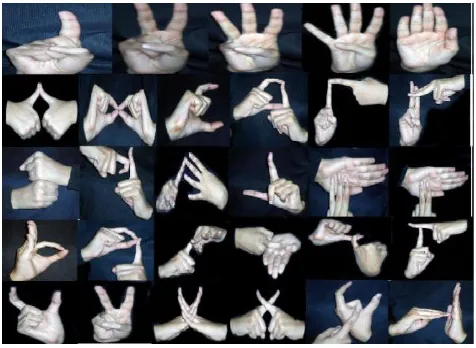
[image:3.595.315.553.79.253.2]Mining Color Images-ISL Dataset
Fig.1. Indian Sign Language (ISL) Dataset
Aura Conci., Everest Mathias M. M. Castro (Aura et al., 2004) proposed a framework for mining images by colour content. Their framework provides the possibility of use 5 distance function for evaluation of similarity among images and 2 type of quantization. Androutsos et al. (1999) presented a scheme
which implements a recursive HSV-space segmentation
technique to identify perceptually prominent color areas. The average color vector of these extracted areas is then used to build the image indices, requiring very little storage.
Sanjay Silakari et al. (2009) proposed a framework focuses on color as feature using Color Moment and Block Truncation Coding (BTC) to extract features for image dataset (Fig.1). Then K-Means clustering algorithm is conducted to group the image dataset into various clusters. Lukasz Kobylinski and Krzysztof Walczak (2007) proposed an application of Binary Thresholded Histogram (BTH), a color feature description method, to the creation of a metadatabase index of multiple image databases. Rajshree S. Dubey et al. (2010) described about an Image mining techniques which is based on the Color Histogram, texture of that Image. The query image is taken then the Color Histogram and Texture is produced and based on this the resultant Image is found. They have investigated a histogram-based search methods and color texture methods in two different color spaces, RGB and HSV. Histogram search differentiate an image by its color distribution. It is shown that images retrieved by using the global color histogram may not be semantically associated even though they share similar color distribution in some results (Fig.2). Carlos Ordonez and Edward Omiecinski et al. (1998) presented a data mining algorithm to find association rules in 2-dimensional color images. The algorithm has four main steps: feature extraction, object identification, auxiliary image creation and object mining and it does not rely on any type of domain knowledge.
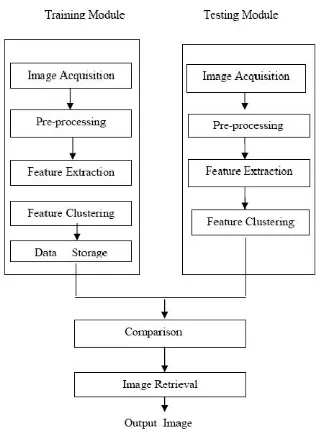
Fig. 2. Content Based Image Retrieval (CBIR) System Architecture
[image:4.595.70.537.383.704.2]Fig. 4. Block Diagram: Image Retrieval System
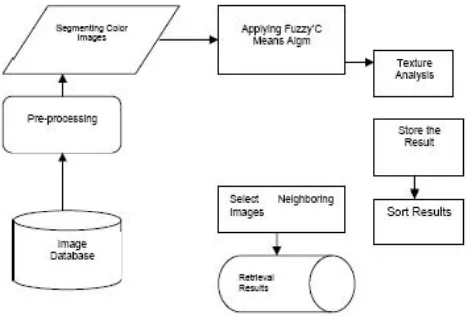
[image:5.595.141.462.295.732.2]Vitorino Ramos et al. (2000) formulated the segmentation problem upon images as an optimization problem and espouses evolutionary strategy of Genetic Algorithms for the grouping of small regions in colour feature space. The approach uses k-Means unsupervised clustering methods into Genetic Algorithms, for guiding Evolutionary Algorithm in the search for finding the finest or best data partition, task that as we know, requires a non-trivial search because of its intrinsic NP-complete nature. To solve this, the appropriate genetic coding is also discussed. Mohan et al. (2010) proposed a new technique Color Image Classification and Retrieval using a Image (Figure 3) for improving user interaction with image retrieval systems by fully exploiting the similarity information. In that technique retrieving the images from the image collection involves the steps like Preprocessing, Color image classification, Preclustering, Texture feature extraction, Similarity comparison and Neighboring target image selection.
Techniques in Image Mining
R. Brown, B. Pham (R.Brown et al., 2005) described in detail a general hierarchical image classifier approach, and illustrated the ease with which it can be trained to find objects in a scene using support vector machine concept. Ji Zhang et al. (2001) proposing new representation schemes for visual patterns and to facilitate fast and effective access we need to frame efficient content-based image indexing and retrieval techniques. Victor
et al. (2010) proposed an efficient retrieval technique for
images using enhanced univariate transformation approach. In this method they have treated images as a compilation of the representative prototypes selected from the training image corpus, and then used the resulted distribution in the descriptor space as a characterization of the image.
The words in the images, called visual words, are calculated to form a vocabulary of N words. Then each image was represented by a word histogram. The construction of visual words is evaluated in two steps: 1) Computation of local descriptors for a set of images 2) Cluster the previous descriptors by K-means. SIFT algorithm is then employed to extract the features due to its impressive performance in image recognition. Peter Stanchev (2003) proposed a new method for image retrieval using high level semantic features is proposed. It is based on removal of low level color, shape and texture characteristics and their translation into high level semantic features using fuzzy production rules derived using an image mining technique. One of the leading frameworks for image object mining is the bag-of-words (BOW) approach. The idea is to encode an image as a collection of visual words of the quantized local patches. Objects in the image can then be retrieved through inferring the semantic topics associated with the set of visual words. However, the visual BOW mining framework is apt to suffer from the so-called term-mismatch problem.
[image:6.595.75.512.71.339.2]Jen-Hao Hsio et al. (2008) proposed a novel language model- based approach with pseudo-relevance feedback for tackling the vocabulary problem in visual BOW mining. Due to improvements in image acquisition and storage technology, terabyte-sized of image databases leads to two basic problems: how to exploit images (image mining)? how to make it accessible to human beings (image retrieval)? The specificity of image mining /retrieval techniques operates on the whole collection of images, not a single one. Under these circumstances, it is natural that the time complexity of related algorithms plays an important role. Iwaszko et al. (2010) suggested a novel general approach applicable to image mining
and retrieval, using compact geometric structures which can be precomputed from a database. Rosalina Abdul Salam and Abdullah Zawawi Hj. Talib (2004) proposed a technique to test the capability of producing an automatic shape recognition system by mining relevant image features. The method has the capability to be extended to three-dimensional objects, which is currently under investigation. Color, depth and texture can be grouped together to form a set of new features. Mohan et al. (2010) formulated a new technique called Image retrieval based on optimal clusters is proposed for improving user interaction with image retrieval systems by fully exploiting the similarity information. The technique involves steps as shown in Figure 4. Dipesh Dugar et al. (2010) proposed a novel discriminative learning framework based on canonical correlations for object recognition with image sets.
Anthony et al. (2007) proposed a novel spatial mining algorithm, 9DLT-Miner. This is used to mine the spatial association rules from an image database. In the image database e every image is stored in 9DLT representation. Two phases are there in this method. First phase finds all lengthier frequent patterns. Second phase generates all candidate (k + 1)-patterns using frequent k-1)-patterns (k P1). For each candidate pattern generated, the frequent supporting patterns in the database were counted. The steps are repeated until no more frequent patterns can be found. Kun-Che Lu and Don-Lin Yang (2009) adopted the decision tree induction to recognize relationships between attributes and the target label from image pixels, and constructed a model for pixel-wised image processing according to a given training image dataset. And it is proved that the proposed model can be very competent and effectual for image processing and mining. Victor et al. (2010) propose minimum spanning tree based clustering algorithm using weighted Euclidean distance for edges to segment the image.
John Peter et al. (2010) propose a novel algorithm, Minimum Spanning Tree based Structural Similarity Clustering for Image Mining with Local Region Outliers (MSTSSCIMLRO) to segment the given image and to detect anomalous pattern (outliers). In that he used weighted Euclidean distance for edges, which is key element in building the graph from image. The algorithm uses a cluster validation criterion based on the geometric properties of data partition of the data set in order to find the proper number of segments. Two phased involved in this algorithm. First phase creates optimal number of clusters/segments, Second phase segments the optimal number of clusters/segments and detect local region outliers. Ashok
et al. (2004) presented a methodology for automatic knowledge
driven image mining using the theory of Mercer Kernels. Mercer Kernels are extremely nonlinear symmetric positive definite mappings from the original image space to a very high, probably infinite dimensional feature space. Rupali Sawant (2010) presented a framework of image mining based on concept lattice and cloud model theory shown in Figure 5. The methods of image mining from image texture and shape features are introduced here, which include the basic steps: pre-processing the images, using cloud model to extract concepts, and then using concept lattice to extract a series of image knowledge.
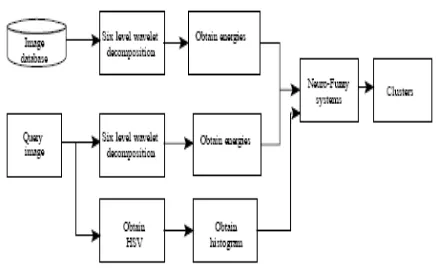
Balamurugan and Anandhakumar (2009) introduced a neuro-fuzzy based clustering approach for content based image retrieval using 2D-wavelet transform (2D-DWT) as shown in Figure 6.
Conclusion
This paper compared many of the proposed techniques in image mining used by the earlier researchers in the image retrieval, matching, pattern recognition etc, which is used while extracting features of the images like shape, color, size, texture, imprint etc for Indian sign language recognition. Because, Image mining presents special characteristics due to the richness of the data that an image can show. Effective evaluation of the results of image mining by content requires that the user point of view is used on the performance parameters. The query image is compared to each of database images to determine whether they are equivalent or not by comparing with all features. Some of the proposed techniques produced good results and some may not. However, to identify, the entire features the images are to be evaluated, in various views. The Main goal of image mining is the discovery of image patterns that are significant in a given collection of images for deaf languages. New techniques are being generated and many area left for the future enhancement and this study of review is found that still few more methods needed to identify the imprint which is one of the important notable feature of the image.
REFERENCES
Androutsos D., K. N. Plataniotis and A. N. Venetsanopoulos 1999. “A Novel Vector-Based Approach to Color Image Retrieval Using a Vector Angular-Based Distance
Measure” Computer Vision and Image Understanding,
Vol. 75, Nos. 1/2, July/August, pp. 46–58,
Anthony, J.T., Lee, Ruey-Wen Hong, Wei-Min Ko, Wen-Kwang Tsao, Hsiu-Hui Lin 2007. “Mining spatial
association rules in image databases” Information
Sciences, 177, 1593–1608.
Aswini Kumar Mohanty, Saroj Kumar Lenka, 2010. “Efficient
Image Mining Technique for Classification of
Mammograms to Detect Breast Cancer” Special Issue of IJCCT Vol. 2 Issue 2, 3, 4; 2010 for International Conference, [ICCT-2010], 3rd-5th December 2010. Aura Conci., Everest Mathias M. M. Castro 2004. “Image
Mining By Color Content” CEP 24 210-240, Feb 2004
AW GRUEN, 1984.”Adaptive least squares correlation: A powerful image matching technique”, cited.
Balamurugan, V. and Anandhakumar, P. 2009. “Neuro-Fuzzy Based Clustering Approach For Content Based Image
Retrieval Using 2DWavelet Transform” International
Journal of Recent Trends in Engineering, Vol. 1,No.1,
May 2009.
Balan, S. and Devi, T. 2012. ”Design and Development of an Algorithm for Image Clustering In Textile Image Retrieval
Using Color Descriptors”, International Journal of
Computer Science, Engineering and Applications,
(IJCSEA) Vol.2, No.3, June 2012.
11th International Multimedia Modelling Conference (MMM’05) 1550-5502/05 © 2005 IEEE
Carlos Ordonez and Edward Omiecinski 1998. “Image Mining: A New Approach for Data Mining”1998
Daniele Cerra* and Mihai Datcu, 2012. ”A Fast Compression-based Similarity Measure with Applications to Content-based Image Retrieval”, JVCIR, Vol.23,Issue 2, February 2012, Pages 293–302
Dipesh Dugar, M., Dinesh Kumar Jain, N., Raaja Sarabhoje Gopal, Haritha Ravi, Baskaran Alagappan, 2010. “Object Recognition of Image Sets Using Discriminative
Canonical Correlations” Preceedings of the IMCECS,
2010. Vol I, IMECS 2010.
Dr. Ashok, N., Srivastava, Dr. Nikunj oza 2004. “Knowledge Driven Image Mining With Mixture Density Mercer Kernels” Manuscript for the ESA-EUSC 2004
Dr. Ekta Walia, Anu Suneja,” A Conceptual Study on Image
Matching Techniques”, Global Journal of Computer
Science and Technology, Vol. 10 Issue 12 (Ver. 1.0)
ctober 2010 Page 83
Dr. S.P. Victor, S. John Peter “A Novel Minimum Spanning Tree Based Clustering Algorithm for Image Mining”
European Journal of Scientific Research, ISSN
1450-216X Vol.40 No.4 (2010), pp.540-546
Dr. S.P. Victor, V. Narayani and S. Rajkumar 2010. “Efficient Retrieval Techniques For Images Using Enhanced
Univariate Transformation Approach” International
Journal of Engineering Science and Technology, Vol.
2(8), 2010,3762-3768.
Dr. Sanjay Silakari, Dr. Mahesh Motwani and Manish Maheshwari 2009. “Color Image Clustering using Block Truncation Algorithm” IJCSI International Journal of
Computer Science Issues, Vol. 4, No. 2, 2009 ISSN
(Online): 1694-0784 ISSN (Print): 1694-0814
Dr. V. Mohan and A. Kannan 2010. “Color Image Classification and Retrieval using Image mining Techniques” International Journal of Engineering Science
and Technology, Vol. 2(5), 2010, 1014-1020
Gajjar T.Y., N.C.Chauhan ,”A review on image mining
frameworks and techniques” International Journal of
Computer Science and Information Technologies, vol3(3),
2012.
Geetha M, Manjusha U C, 2012. A Vision Based Recognition of Indian Sign Language Alphabets and Numerals Using B - Spline Approximation, IJCSE, Vol. 4 No. 03 March 2012
Iwaszko T., Mahmoud Melkemi and L. Idoumghar “A Geometric Data Structure Applicable to Image Mining and Retrieval, pp 364-373, 7th International Conference, ICIAR 2010, Portugal, June 21-23, 2010. Proceedings, Part I
Janani M., Dr.R. Manicka Chezian, 2012. ”A Survey on
Content Based Image Retrieval System, International
Journal of Advanced Research in Computer Engineering
and Technology Volume 1, Issue 5, July 2012.
Jen-Hao Hsiao, Chu-Song Chen and Ming-Syan Chen “A Novel Language-Model-Based Approach for Image Object Mining and Re-Ranking” 2008 Eighth IEEE International Conference on Data Mining
Ji Zhang, Wynne Hsu and Mong Li Lee “An Information-Driven Framework for Image Mining” Database and Expert Systems Applications in Computer Science, 2001, Volume 2113/2001, 232-242, DOI: 10.1007/3-540-44759-8_24
Kun-Che Lu And Don-Lin Yang 2009. “Image Processing and Image Mining using Decision Trees” Journal Of Information Science And Engineering 25, 989-1003. Lakshmi Devasena C., Sumathi, Dr. Hemalatha, T. 2011. An
Experiential Survey on Image Mining Tools, Techniques
and Applications, IJCSE, ISSN : 0975-3397 Vol. 3 No. 3
Mar 1155.
Lukasz Kobylinski and Krzysztof Walczak 2007. “Color Mining of Images Based on Clustering” Proceedings of the International Multiconference on Computer Science
and Information Technology, pp. 203–212 ISSN
1896-7094, PIPS
Peter Stanchev “Using Image Mining For Image Retrieval”, 2003. Rajshree S. Dubey “Image Mining using Content Based Image
Retrieval System” (IJCSE) International Journal on Computer
Science and Engineering, Vol. 02, No. 07, 2010,
2353-2356
Rosalina Abdul Salam, Abdullah Zawawi Hj. Talib, “Feature Extraction In Automatic Shape Recognition System”,19-23 April 2004,Pp:467 - 468
Rupali Sawant “Image Mining Using Texture and Shape
Feature” (IJCSE) International Journal on Computer
Science and Engineering, Vol. 02, No. 09, 2010,
2808-2815
Salam, R.A., Rodrigues, M.A.”Mining Image Features in an Automatic Two- Dimensional Shape Recognition System” International Journal of Applied Mathematics and
Computer Sciences, Volume 2 Number 1,cited 1996.
Shaikh Nikhat Fatma,” Image Mining Method and
Frameworks”, International Journal of Computational
Engineering Research, (ijceronline.com) Vol. Issue. 8.
Dec.2012
Vamsidhar Enireddy, Kiran Kumar Reddi, 2012. ”A Data Mining Approach for Compressed Medical Image
Retrieval“, International Journal of Computer
Applications, (0975 – 887) Volume 52– No.5, August
2012.
Venkata Ramana Chary R., Dr. D. Rajya Lakshmi and Dr. K.V.N Sunitha “feature extraction methods for color image similarity”Advanced Computing: An International
Journal (ACIJ), Vol.3, No.2, March 2012
Vitorino Ramos, Fernando Muge 2000. “Image Colour Segmentation by Genetic Algorithms.