Original Article
What are the differences in clinical outcomes between
the older and the younger patients with metastatic
epidural spinal cord compression after decompressive
surgery? A systematic comparison
Mingxing Lei1*, Shubin Liu1*, Yaosheng Liu1*, Ranyun Zhou2, Binbin Yang1, Xuyong Cao1
Departments of 1Orthopedic Surgery, 2Nursing, The Affiliated Hospital of Academy of Military Medical Sciences,
No. 8, Fengtaidongda Rd, Beijing, China. *Equal contributors and co-first authors.
Received May 14, 2016; Accepted September 25, 2016; Epub November 15, 2016; Published November 30, 2016
Abstract: This study aims to systematically compare the surgical results and prognostic factors between the older and the younger patients after decompressive surgery for metastatic epidural spinal cord compression (MESCC). Fifty-four older patients and sixty-five relatively younger patients with MESCC who were operated with decompres-sive surgery and spine stabilization were retrospectively analyzed in this study. Postoperative survival time, am-bulatory outcome, and surgery-related complications were compared between the two groups. Besides, we retro-spectively analyzed eleven preoperative characteristics for postoperative ambulatory outcome in both groups. The younger group (10.2 months, 95% CI, 6.2-12.8 months) had a relatively longer median overall survival than the older group (6.6 months, 95% CI, 4.5-10.8 months), but it reached no significance (P=0.24). The median overall ambulatory time of the older and younger groups was 3.7 months (95% CI, 3.0-6.6 months) and 6.0 months (95% CI, 3.7-8.6 months), respectively (P=0.03). In the multivariate analysis, primary site (P<0.01), preoperative ambula-tory status (P<0.01) and visceral metastases (P<0.01) were significant associated with postoperative ambulaambula-tory outcome in the older group, while preoperative ambulatory status (P=0.01), preoperative chemotherapy (P=0.02), time developing motor deficits (P=0.03), and radical surgery at primary site (P<0.01) were found to be significantly independent prognostic factors in the younger group. Surgery-related complications occurred in 27.8% patients in the older group and 10.8% patients in the younger group (P=0.02). MESCC in the older patients had a poorer ambulatory outcome and a relative higher surgery-related complication as compared with MESCC in the younger pa-tients. Primary site, preoperative ambulatory status and visceral metastases were independent prognostic factors for postoperative ambulatory outcome especially in the older patients with MESCC. Preoperative ambulatory status, preoperative chemotherapy, time developing motor deficits, and radical surgery at primary site were independent predictive factors in the younger patients with MESCC.
Keywords: Older patients, younger patients, metastatic epidural spinal cord compression, surgical decompression and spine stabilization, ambulatory outcome
Introduction
Metastatic epidural spinal cord compression (MESCC), a common and debilitating complica-tion of advanced cancers, is considered an oncologic emergency that can result in irrevers-ible loss of neurologic function if left untreated, negatively affecting the patents’ quality of remaining life [1]. Patients who die from can-cers have an estimated 3.4% annual incidence of MESCC and require hospitalization [2]. Notably, the situation is somewhat more
With careful patient selection, long duration of ambulation in aged patients with MESCC can be achieved by surgery, which would remark-ably improve patients’ quality of remaining life [5]. Besides, more radical procedures, such as total en bloc spondylectomy, should not be avoided due to advanced patient age [3]. Unfortunately, the selection criteria of the sur-gery in older patients still remains controver-sial. Individual therapy is needed to avoid surgi-cal treatment on those who are likely to die soon and should take into account postopera-tive survival prognosis and function outcome [6], which can be estimated by prognostic fac-tors. Surgical outcome and prognostic factors are somewhat different between the older and the younger patients, while there is no study systematically compared the surgical results and prognostic factors between the older and the younger patients with MESCC.
Therefore, in the present study, postoperative survival time, ambulatory outcome, and sur-gery-related complications were carefully com-pared between the older and the younger patients with MESCC. Besides, we retrospec-tively analyzed eleven preoperative character-istics for postoperative ambulatory outcome in the older and the younger groups.
Patients and methods
Fifty-four aged patients (age: 60 years old or
older) and sixty-five relatively younger patients
(age: 59 years old or younger) with MESCC were retrospectively analyzed in the study at the
Affiliated Hospital of Academy of Military
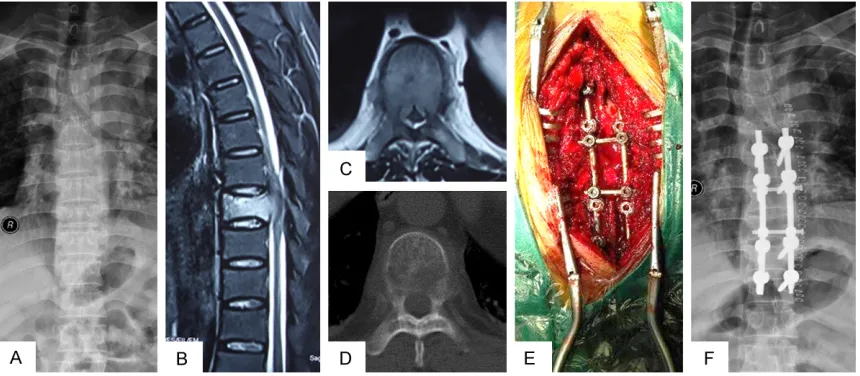
Medical Sciences, Beijing, between January 2011 and September 2015. Patients were operated with decompressive surgery and spine stabilization (Case report was shown in Figure 1). The indication for surgery was
neuro-logical deficit due to spinal cord compression
resulted from spine bone metastasis. The diag-nosis of bone metastasis was histologically
confirmed, and MESCC was confirmed by MRI.
Local radiotherapy, systemic chemotherapy, or endocrine therapy were routinely performed after the wound healed, about 3-4 weeks after the surgery, if applicable. Patients with very poor expected survival prognosis who were too poor to undergo surgery were excluded. This retrospective study was approved by the
Medical Research Ethics Board of the Affiliated Hospital of Academy of Military Medical
Sciences.
[image:2.612.93.523.73.261.2]number of involved vertebrae (1-2 vs. ≥3, con -formed to previous studies), visceral metasta-ses (no vs. yes), preoperative chemotherapy (no vs. yes), bone metastasis at cancer diagnosis (no vs. yes), the time developing motor deficits (≤14 days vs. >14 days, conformed to previous
studies), preoperative albumin (≤35 g/l vs. >35 g/l, conformed to previous studies), and radical surgery at primary site (no vs. yes).
Primary cancer was classified into three groups,
namely, tumors that exhibited slow growth, moderate growth, or rapid growth, which was developed from Katagiri et al. [7]. The
postop-erative survival was defined as the time
time. The univariate and multivariate analysis of postoperative ambulatory outcome were estimated by the simple and multiple Cox pro-portional hazards regression models, respec-tively. Chi-square test were performed to ana-lyze postoperative ambulatory status and surgery-related complications in both groups. Regression model was also used to identify the difference in key complications between older and younger.
Results
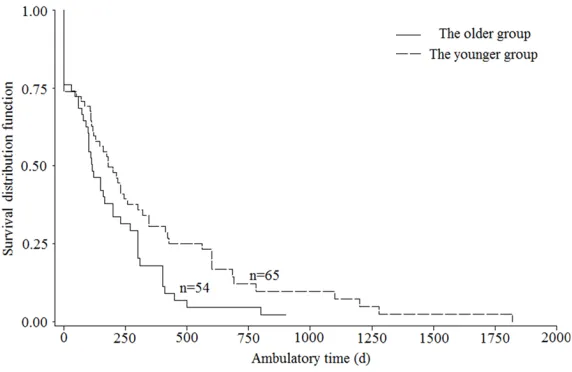
The median overall survival of the older and younger groups was 6.6 months (95% CI, 4.5-Figure 2. Kaplan-Meier survival curves for postoperative overall survival in
[image:3.612.90.378.74.262.2]the older and the younger groups (P=0.24, log-rank test).
Figure 3. Kaplan-Meier survival curves for postoperative ambulatory time in the older and the younger groups (P=0.03, log-rank test).
between the date of surgery and death or the latest follow-up, and patients who were alive at the last follow-up were censored in the postoperative survival analysis. Postoper- ative function outcome was graded based on Frankel grades preoperatively and about 4 weeks postoperative-ly. Time developing motor
def-icits was defined as the time
between deterioration of mo- tor function to disability or surgery. Deterioration of mo-
tor function was defined as a
change of at least one Frankel grade. Postoperative
ambula-tory time was defined as the
time between the date of regaining ambulatory status and the date of losing ambu-latory status after surgery or the last follow-up. Posto- perative ambulatory time was the measurement of postop-erative ambulatory outcome. Surgery-related complicatio- ns were recorded intraopera-tively or within 4 weeks posto- peratively.
Statistical analysis was per-formed using SAS 9.2 (SAS Institute Inc., Cary, NC), and
the significance level was set at P<0.05. The Kaplan-Meier
[image:3.612.92.378.312.498.2]10.8 months) and 10.2 months (95% CI, 6.2-12.8 months), respectively. The younger group had a relatively longer median overall survival
than the older group, but it reached no signifi
-cance (P=0.24, Figure 2). The corresponding 6-months survival rates of both groups were 57.9% and 63.8%, respectively, and the
[image:4.612.92.521.97.571.2]12-months survival rates were 31.8% and 39.2%, respectively. At the latest follow up, seven patients were alive with a mean follow-up of 10.7 months (range, 2.3-48.6 months) in the older group, and nine patients with a mean follow-up of 9.2 months (range, 2.1-22.1 months) in the younger group.
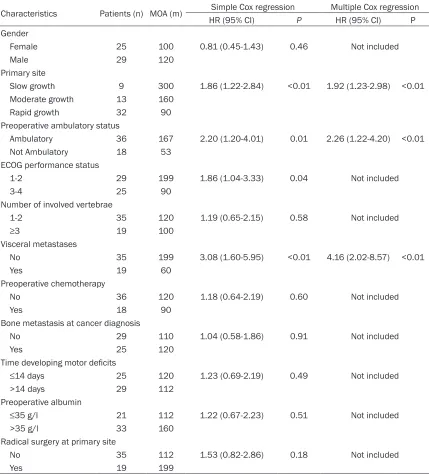
Table 1. Univariate and multivariate analysis of preoperative characteristics for postoperative ambu-latory outcome in older patients with MESCC
Characteristics Patients (n) MOA (m) Simple Cox regression Multiple Cox regression
HR (95% CI) P HR (95% CI) P
Gender
Female 25 100 0.81 (0.45-1.43) 0.46 Not included
Male 29 120
Primary site
Slow growth 9 300 1.86 (1.22-2.84) <0.01 1.92 (1.23-2.98) <0.01
Moderate growth 13 160
Rapid growth 32 90
Preoperative ambulatory status
Ambulatory 36 167 2.20 (1.20-4.01) 0.01 2.26 (1.22-4.20) <0.01
Not Ambulatory 18 53
ECOG performance status
1-2 29 199 1.86 (1.04-3.33) 0.04 Not included
3-4 25 90
Number of involved vertebrae
1-2 35 120 1.19 (0.65-2.15) 0.58 Not included
≥3 19 100
Visceral metastases
No 35 199 3.08 (1.60-5.95) <0.01 4.16 (2.02-8.57) <0.01
Yes 19 60
Preoperative chemotherapy
No 36 120 1.18 (0.64-2.19) 0.60 Not included
Yes 18 90
Bone metastasis at cancer diagnosis
No 29 110 1.04 (0.58-1.86) 0.91 Not included
Yes 25 120
Time developing motor deficits
≤14 days 25 120 1.23 (0.69-2.19) 0.49 Not included
>14 days 29 112
Preoperative albumin
≤35 g/l 21 112 1.22 (0.67-2.23) 0.51 Not included
>35 g/l 33 160
Radical surgery at primary site
No 35 112 1.53 (0.82-2.86) 0.18 Not included
Yes 19 199
Regarding ambulatory outcome, the median overall ambulatory time of the older and the younger groups was 3.7 months (95% CI, 3.0-6.6 months) and 6.0 months (95% CI, 3.7-8.6
months), respectively (P=0.03,Figure 3). In the univariate analysis of the older group, we
found primary site (HR, 1.86, 95% CI:
[image:5.612.93.518.98.571.2]1.22-2.84; P<0.01), preoperative ambulatory status (HR, 2.20, 95% CI: 1.20-4.01; P=0.01), ECOG performance status (HR, 1.86, 95% CI: 1.04-3.33; P=0.04), and visceral metastases (HR, 3.08, 95% CI: 1.60-5.95; P<0.01) were signifi -cantly associated with postoperative ambula-tory outcome (Table 1). According to the multi-ple Cox proportional hazards regression model, Table 2. Univariate and multivariate analysis of preoperative characteristics for postoperative ambu-latory outcome in younger patients with MESCC
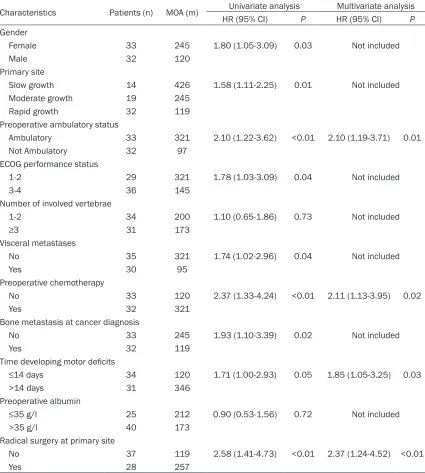
Characteristics Patients (n) MOA (m) Univariate analysis Multivariate analysis
HR (95% CI) P HR (95% CI) P
Gender
Female 33 245 1.80 (1.05-3.09) 0.03 Not included
Male 32 120
Primary site
Slow growth 14 426 1.58 (1.11-2.25) 0.01 Not included
Moderate growth 19 245
Rapid growth 32 119
Preoperative ambulatory status
Ambulatory 33 321 2.10 (1.22-3.62) <0.01 2.10 (1.19-3.71) 0.01
Not Ambulatory 32 97
ECOG performance status
1-2 29 321 1.78 (1.03-3.09) 0.04 Not included
3-4 36 145
Number of involved vertebrae
1-2 34 200 1.10 (0.65-1.86) 0.73 Not included
≥3 31 173
Visceral metastases
No 35 321 1.74 (1.02-2.96) 0.04 Not included
Yes 30 95
Preoperative chemotherapy
No 33 120 2.37 (1.33-4.24) <0.01 2.11 (1.13-3.95) 0.02
Yes 32 321
Bone metastasis at cancer diagnosis
No 33 245 1.93 (1.10-3.39) 0.02 Not included
Yes 32 119
Time developing motor deficits
≤14 days 34 120 1.71 (1.00-2.93) 0.05 1.85 (1.05-3.25) 0.03
>14 days 31 346
Preoperative albumin
≤35 g/l 25 212 0.90 (0.53-1.56) 0.72 Not included
>35 g/l 40 173
Radical surgery at primary site
No 37 119 2.58 (1.41-4.73) <0.01 2.37 (1.24-4.52) <0.01
Yes 28 257
three of above four factors, primary site (HR, 1.92, 95% CI: 1.23-2.98; P<0.01), preoperative ambulatory status (HR, 2.26, 95% CI: 1.22-4.20; P<0.01) and visceral metastases (HR, 4.16, 95% CI: 2.02-8.57; P<0.01) maintained significance. In the younger group, gender (HR, 1.80, 95% CI: 1.05-3.09; P=0.03), primary site (HR, 1.58, 95% CI: 1.11-2.25; P=0.01), preop
-erative ambulatory status (HR, 2.10, 95% CI: 1.22-3.62; P<0.01), ECOG performance status (HR, 1.78, 95% CI: 1.03-3.09; P=0.04), visceral metastases (HR, 1.74, 95% CI: 1.02-2.96; P=0.04), preoperative chemotherapy (HR, 2.37, 95% CI: 1.33-4.24; P<0.01), bone metastasis at cancer diagnosis (HR, 1.93, 95% CI: 1.10-3.39; P=0.02), and radical surgery at primary
site (HR, 2.58, 95% CI: 1.41-4.73; P<0.01) were significant in the univariate analysis (Table 2).
However, in the multivariate analysis, preopera
-tive ambulatory status (HR, 2.10, 95% CI: 1.19-3.71; P=0.01), preoperative chemotherapy (HR, 2.11, 95% CI: 1.13-3.95; P=0.02), time devel
-oping motor deficits (HR, 1.85, 95% CI: 1.05-3.25, P=0.03), and radical surgery at primary site (HR, 2.37, 95% CI: 1.24-4.52; P<0.01) had significant impact on postoperative ambulatory
outcome.
The ambulatory rate of the older group showed
no difference before and after surgery (P=0.29).
In details, 66.7% (36/54) patients were ambu-latory before surgery and 75.9% (41/54) patients had the ability to walk postoperatively
in the older group. However, 50.8% patients
were ambulatory before operation and 73.8% patients had the ability to walk postoperatively
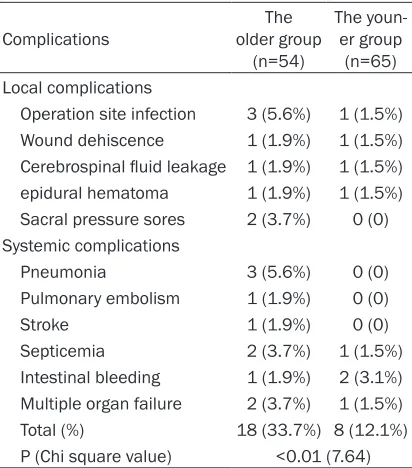
in the younger group (P<0.01, Table 3). Eighteen complications occurred within four weeks of surgery in 15 of the 54 patients in the older group and eight complications were recorded in 7 of the 65 patients in the younger group
(P=0.02). As compared with younger patients,
older patients with MESCC had higher risk of suffering from surgery-related complications
(odds ratio, 2.01; 95% CI: 0.76-5.38, P=0.16), but it didn’t reach significance. More details
were shown in Table 4.
Discussion
In the present study, we systematically com-pared the postoperative survival time, ambula-tory outcome, and surgery-related complica-tions between the older and the younger patients with MESCC. A multicenter prospec-tive study strongly showed that survival
expec-tancy was significantly longer in relatively
younger patients in a series of 1266 patients with spine metastasis or MESCC [8]. The young-Table 3. Neurological recovery and complications of the older and younger groups
Groups Patients (n) Neurological status1 Chi square value P2
Complica-tions3 Chi square
value P4
Ambulatory Nonambulatory Yes No
Older Pre- 54 36 18 1.13 0.29 15 39 5.66 0.02
Post- 41 13
Younger Pre- 65 33 32 7.37 <0.01 7 58
Post- 48 17
[image:6.612.92.522.87.174.2]1Four weeks postoperatively. 2P value for pre- and postoperative comparison. 3Within four weeks. 4P value for the older and younger comparison. Abbreviations: Pre-, preoperative; Post-, postoperative.
Table 4. Complications of surgery for the older and the younger patients with MESCC within 4 weeks after operation (patients may have more than one complication)
Complications older group The (n=54)
The youn-er group (n=65) Local complications
Operation site infection 3 (5.6%) 1 (1.5%) Wound dehiscence 1 (1.9%) 1 (1.5%) Cerebrospinal fluid leakage 1 (1.9%) 1 (1.5%) epidural hematoma 1 (1.9%) 1 (1.5%) Sacral pressure sores 2 (3.7%) 0 (0) Systemic complications
Pneumonia 3 (5.6%) 0 (0)
Pulmonary embolism 1 (1.9%) 0 (0)
Stroke 1 (1.9%) 0 (0)
Septicemia 2 (3.7%) 1 (1.5%)
Intestinal bleeding 1 (1.9%) 2 (3.1%) Multiple organ failure 2 (3.7%) 1 (1.5%)
Total (%) 18 (33.7%) 8 (12.1%)
P (Chi square value) <0.01 (7.64)
[image:6.612.91.297.267.501.2]er group (10.2 months) had a relatively longer median overall survival than the older group
(6.6 months), but it reached no significance in
our study. Regarding ambulatory outcome, the median overall ambulatory time of the older and the younger groups was 3.7 months (95% CI, 3.0-6.6 months) and 6.0 months (95% CI,
3.7-8.6 months), respectively (P=0.03), which
suggested that the younger group had a better postoperative ambulatory outcome as com-pared with the older group. Similar results were reported in other studies [8, 9].
Several studies have shown that the primary tumor histology, preoperative Frankel grades, and Tokuhashi scores in MESCC patients were the important prognostic factors for survival [8, 10-13]. Previously, we also proposed scoring systems to enable physicians to select appro-priate treatments for MESCC patients depend-ing on their survival and functional prognosis
[14-16]. However, those papers were not espe -cially for aged patients with MESCC. Besides, there was few article addressing the predictive factors for postoperative ambulatory outcome in MESCC patients. Notably, function outcome after surgery plays an important role in patient’s quality of remaining life [8, 17]. In the present study, we found primary site, preoperative ambulatory status, ECOG performance status,
and visceral metastases were significantly
associated with postoperative ambulatory out-come in the univariate analysis of the older group. According to the multiple Cox proportion-al hazards regression model, three of above four factors, primary site, preoperative ambula-tory status and visceral metastases maintained
significance. In the younger group, gender, pri -mary site, preoperative ambulatory status, ECOG performance status, visceral metasta-ses, preoperative chemotherapy, bone metas-tasis at cancer diagnosis, and radical surgery
at primary site were significant in the univariate analysis. However, in the multivariate analysis,
preoperative ambulatory status, preoperative
chemotherapy, time developing motor deficits, and radical surgery at primary site had signifi -cant impact on postoperative ambulatory out-come. Thus, the younger patients with MESCC
may benefit more from preoperative chemo -therapy and radical surgery at primary site, since they often had better general status and stronger tolerance to those treatments. Primary site, preoperative ambulatory status and vis-ceral metastases were independent prognostic
factors for postoperative ambulatory outcome especially in the older patients with MESCC, which indicated the older patients with rapid growth tumor, nonambulatory status and vis-ceral metastases may suffer from worse ambu-latory outcome, so surgery should not be con-sidered in those patients. Interestingly,
preoperative ambulatory status was significant -ly associated with ambulatory outcome both in the older and younger groups. Many studies have shown that preoperative ambulatory sta-tus was one of the most important predictive factors for postoperative ambulatory status [18-20]. The postoperative complication rate in
the older group (27.8%) was significantly higher
when compared with the younger group (10.8%,
P=0.02), mainly due to increased infection and
pulmonary disease. Notably, not all patients who were treated with surgery could
experi-ence benefit and the risk of surgical complica -tions, based on other reports, can be as high as
35% [21, 22]. Thus, the above identified prog -nostic factors may help properly identify appro-priate candidates for costly and potentially risky surgery.
In conclusion, MESCC in the older patients had a poorer ambulatory outcome and a relative higher surgery-related complications as com-pared with MESCC in the younger patients. Primary site, preoperative ambulatory status and visceral metastases were independent prognostic factors for postoperative ambulato-ry outcome especially in the older group. Preoperative ambulatory status, preoperative
chemotherapy, time developing motor deficits,
and radical surgery at primary site were predic-tive factors for postoperapredic-tive ambulatory out-come in the younger group. Those prognostic factors should be considered to help select the appropriate treatments especially for the older or younger patients with MESCC.
Acknowledgements
The work is supported by Beijing Municipal Science and Technology Commission (NO. Z131107002213052 and NO. Z161100000- 516101).
Disclosure of conflict of interest
None.
Hospital of Academy of Military Medical Sciences, No. 8, Fengtaidongda Rd, Beijing, China. Tel: 028-010-66947317; E-mail: [email protected]; Dr. Ranyun Zhou, Department of Nursing, The Affiliated Hospital of Academy of Military Medical Sciences, No. 8, Fengtaidongda Rd, Beijing 100071, China. E-mail: [email protected]
References
[1] Akram H and Allibone J. Spinal surgery for pal-liation in malignant spinal cord compression. Clin Oncol 2010; 22: 792-800.
[2] Mak KS, Lee LK, Mak RH, Wang S, Pile-Spell-man J, Abrahm JL, Prigerson HG and Balboni TA. Incidence and treatment patterns in hospi-talizations for malignant spinal cord compres-sion in the United States, 1998-2006. Int J Radiat Oncol Biol Phys 2011; 80: 824-831. [3] Murakami H, Kawahara N, Demura S, Kato S,
Yoshioka K, Sasagawa T and Tomita K. Periop-erative complications and prognosis for elderly patients with spinal metastases treated by sur-gical strategy. Orthopedics 2010; 10: 165-168.
[4] Patil CG, Lad SP, Santarelli J, Santarelli J and Boakye M. National inpatient complications and outcomes after surgery for spinal metas-tasis from 1993-2002. Cancer 2007; 110: 625-630.
[5] Itshayek E, Or O, Kaplan L, Schroeder J, Bar-zilay Y, Rosenthal G, Shoshan Y, Fraifeld S and Cohen JE. Are they too old? Surgical treatment for metastatic epidural spinal cord compres-sion in patients aged 65 years and older. Neu-ro Res 2014; 36: 530-543.
[6] Aebi M. Spinal metastasis in the elderly. Eur Spine J 2003; 12 Suppl 2: S202-S213. [7] Katagiri H, Okada R, Takagi T, Takahashi M,
Murata H, Harada H, Nishimura T, Asakura H, Ogawa H. New prognostic factors and scoring system for patients with skeletal metastasis. Cancer Med 2014; 3: 1359-1367.
[8] Amelot A, Balabaud L, Choi D, Fox Z, Crockard HA, Albert T, Arts CM, Buchowski JM, Bunger C, Chung CK, Coppes MH, Depreitere B, Fehlings MG, Harrop J, Kawahara N, Kim ES, Lee CS, Leung Y, Liu ZJ, Martin-Benlloch JA, Massicotte EM, Meyer B, Oner FC, Peul W, Qureshi N, Toku-hashi Y, Tomita K, Ulbricht C, Verlaan JJ, Wang M and Mazel C. Surgery for metastatic spine tumors in the elderly. Advanced age is not a contraindication to surgery. Spine J 2015; [Epub ahead of print].
[9] Chi JH, Gokaslan Z, McCormick P, Tibbs PA, Kryscio RJ, Patchell RA. Chi JH, Gokaslan Z, McCormick P, Tibbs PA, Kryscio RJ and Patch-ell RA. Selecting treatment for patients with malignant epidural spinal cord
compression-does age matter? results from a randomized clinical trial. Spine 2009; 34: 431-415. [10] Liang T, Wan Y, Zou X, Peng X and Liu S. Is
sur-gery for spine metastasis reasonable in pa-tients older than 60 years? Clin Orthop Relat Res 2013; 471: 628-639.
[11] Kataoka M, Kunisada T, Tanaka M, Takeda K, Itani S, Sugimoto Y, Misawa H, Senda M, Naka-hara S and Ozaki T. Statistical analysis of prog-nostic factors for survival in patients with spi-nal metastasis. Acta Med Okayama 2012; 66: 213-219.
[12] Tokuhashi Y, Matsuzaki H, Oda H, Oshima M and Ryu J. A revised scoring system for preop-erative evaluation of metastatic spine tumor prognosis. Spine 2005; 30: 2186-2191. [13] Lei M, Liu Y, Yan L, Tang C, Liu S and Zhou S.
Posterior decompression and spine stabiliza-tion for metastatic spinal cord compression in the cervical spine. A matched pair analysis. Eur J Surg Oncol 2015; 41: 1691-1698. [14] Lei M, Liu Y, Tang C, Yang S, Liu S and Zhou S.
Prediction of survival prognosis after surgery in patients with symptomatic metastatic spinal cord compression from non-small cell lung cancer. BMC Cancer 2015; 15: 853.
[15] Lei M, Li J, Liu Y, Jiang W, Liu S and Zhou S. Who are the best candidates for decompres-sive surgery and spine stabilization in patients with metastatic spinal cord compression (MSCC)? A new scoring system. Spine 2016; 41: 1469-76.
[16] Lei M, Liu Y, Liu S, Wang L, Zhou S and Zhou J. Individual strategy for lung cancer patients with metastatic spinal cord compression. Eur J Surg Oncol 2016; 42: 728-734.
[17] Fehlings MG, Nater A, Tetreault L, Kopjar B, Ar-nold P, Dekutoski M, Finkelstein J, Fisher C, France J, Gokaslan Z, Massicotte E, Rhines L, Rose P, Sahgal A, Schuster J and Vaccaro A. Survival and clinical outcomes in surgically treated patients with metastatic epidural spi-nal cord compression: results of the prospec-tive multicenter AOSpine study. J Clin Oncol 2016; 34: 268-276.
[18] Putz C, Gantz S, Bruckner T, Moradi B, Helbig L, Gerner HJ and Akbar M. Preoperative scoring and limits of prognostication: Functional out-come after surgical decompression in meta-static spinal cord compression. Oncology (Swit-zerland) 2014; 86: 177-184.
[19] Park JH and Jeon SR. Pre- and postoperative lower extremity motor power and ambulatory status of patients with spinal cord compres-sion due to a metastatic spinal tumor. Spine 2013; 38: E798-E802.
functional outcome and patients’ survival. Spine J 2012; 12: 1083-1092.
[21] Crnalic S, Hildingsson C, Wikström P, Bergh A, Löfvenberg R and Widmark A. Outcome after surgery for metastatic spinal cord compres-sion in 54 patients with prostate cancer. Acta Orthop 2012; 83: 80-86.