PROTOCOL AND SPECIMEN SET UP FOR MECHANICAL
EVALUATION OF COSMETIC PACKAGING
Priscilla Capra1, Giorgio Musitelli1, Marco Faccioli2, Benedetta Briasco1,
*
Paola Perugini1,3 1
Department of Drug Science, University of Pavia, Viale Taramelli 12, Pavia, Italy. 2
Eni S.p.A. Refining & Marketing and Chemicals, Via Pieve Del Cairo 20, Sannazzaro De’ Burgondi, Pavia, Italy.
3
Etic Hub S.r.l. Accademic Spin-Off, University of Pavia,Viale Taramelli 12, Pavia.
ABSTRACT
The main objective and the novelty of this study is to present an optimized procedure in order to evaluate mechanical properties of commercially available packaging used in cosmetic field in order to assure quality and safety of the final product as required from EU Legislation. Specifically, suitable designed specimens with modified dogbone shape are developed in order to obtain repeatable and standardized stress-strain curves. Poly (ethylene terephthalate)-glycol (PETG) containers are used to set up the procedure. Empty and filled bottles containing pH 2 solution are investigated before and after stress treatments performed in according to European Medicines Agency (EMA) guidelines; each sample was subjected to tensile test and stretched to the breaking point in order to study its stress-strain profile. Results highlighted that, starting from mechanical properties of polymer itself, it is possible to characterize, in a reproducibly way, commercially available PETg containers; after that it is possible to verify if the contact with extreme pH solution or specific treatments (heating or simulating solar irradiation), can lead to packaging modification. This research represents a starting point to study in detail the finished packaging and the possible product-package interactions in the pharmaceutical, cosmetic and nutraceutical fields.
KEYWORDS: mechanical characterization; polymeric packaging; formulation/packaging interactions; polyester; PETg.
Volume 5, Issue 2, 217-233. Research Article ISSN 2277– 7105
Article Received on 07 Dec 2015,
Revised on 28 Dec 2015, Accepted on 17 Jan 2016
*Correspondence for
Author
Prof. Paola Perugini
Department of Drug
Science, University of
Pavia, Viale Taramelli 12,
1. INTRODUCTION
Rigid and semi-rigid containers produced from polymeric materials are one of the fastest growing categories of cosmetic packaging. Bottles, jars, tubs, tubes, blister packages and drums are included in this category. Some of their most significant advantages compared to alternative materials are their light weight, resistance to damage, low in cost, pleasant to handle touch and in some cases, characterized by a good transparency grade, recyclable and obtainable from biobased sources.[1-3]
The choice of primary and/or secondary packaging materials depends on the degree of protection required, compatibility with the contents, the filling method, cost, but also on the attractiveness and the convenience for the user (e.g. size, weight, method of opening/reclosing, legibility of printing).[4-6]
The most important function of a packaging material is the quality preservation of the packed goods. It is well known from literature that the interaction with packaging can lead to a degradation of the packed product.[7-9] For these reasons it is absolutely necessary to be able to determine in advance which types of plastics are likely to provide suitable product shelf live and integrity for specific products under a variety of environmental conditions.
Manufacturers often cannot afford to invest time and money in evaluating candidate materials for new products. If there a thorough understanding of the interaction between products, packaging and their storage and distribution environments, then manufacturers could use knowledge about their product to determine, without a substantial investment in testing, whether a particular plastic pack meets their needs.[10]
Actually, there are no standard procedures for the evaluation of cosmetic product-packaging interactions. An appropriate assessment may be made based on the knowledge of the formulation and primary packaging materials and experienced expert judgment. In other words it is extremely important to verify that there is not incompatibility between materials that could compromise the formulation quality and its maintenance.
Some essential requirements for packaging materials are high tensile strength, ductility, flexibility, sometimes transparency and good barrier properties. In particular, cristallinity and density influence many polymer properties including hardness, tensile strength, stiffness and melting point.
Furthermore, the production process can also affect the distribution of the container wall temperature, thickness, crystallinity and orientation. These distributions are responsible for the final products mechanical, barrier, optical and orientation properties of the polymeric chains.
Finally, these properties could be also influenced from environmental conditions like temperature, humidity and UV-Vis irradiation.
In literature a substantial number of studies related to mechanical properties of polymeric materials have been reported.[7,10,12,13] Most of those studies focus on tension tests and the obtained tensile characteristics help to determine the mechanical properties of polymers. Specifically, official ISO 527 specifies the general principles for determining the tensile properties of plastics and plastic composites under defined conditions (ISO EN UNI 527-1996).[14] However, the method proposed in this official document are used to investigate mechanical properties of polymeric sheet or film. Plastic finished packaging are not included in this ISO document; in fact, it could be difficult or quite often impossible to obtain the specimens proposed into ISO document due to surface irregularity and manifold design of currently commercially available packaging.
(PET) since 2000 is the second most used plastic in bottles and other rigid and semi-rigid containers. Historically, the first use of PET bottles was for soft drinks. PET's barrier to carbon dioxide permitted the first successful commercial introduction of plastic soft drink containers for the carbonated beverage industry in about 1977.
The properties of thermoplastics can be controlled by chain length, by degree of crystallinity and by blending and plasticizing.
The large growth in PET use is related to several advantages of PET compared to HDPE. PET has a higher glass transition temperature (78°C) and melting temperature (245±265°C), and it has excellent clarity and sparkle, which allows it to compete with glass. Its impact properties give PET containers a considerable safety advantage over glass and its light weight brings transportation economy.
While PET's water vapor barrier is inferior to HDPE, it is a significantly better oxygen barrier and a much superior carbon dioxide barrier, especially when biaxially oriented. PET is also a better barrier to most odor and flavor compounds and to hydrocarbons. PET is chemically more reactive than HDPE and in particular, must be dry before processing to avoid hydrolysis at elevated temperatures.
A PET cousin is a copolymer, glycol-modified PET (PETG). Specifically, PETG is a random copolymer consisting of about 30 mol% PCT (poly1,4-cyclohexylenedimethylene terephthalate) and 70% PET. The letter G refers to the additional glycol group along the backbone of the copolymerizing agent PCT. Because of its decreased crystallinity and enhanced melt strength, it can be processed in ways that are not possible for most grades of PET, to make highly transparent bottles, blisters and other containers.
Poly (ethylene terephthalate)-glycol (PETG) does not occupy the same industrial niche as PET, precisely because it lacks the ability to undergo strain-induced crystallization. Instead, its uses are directed toward applications involving large, thermoformed parts.[15]
The main goal of this work is to define and to describe a new standard operation procedure to investigate commercially available packaging.
For this purpose PET-g bottles were investigated to verify the suitability and the reproducibility of the procedure herewith described.
The mechanical properties of containers were investigated also by evaluating the effect of chemical, physical and climatic environmental factors (humidity, solar irradiation and heat).
2. MATERIALS AND METHODS
PETG cosmetic packaging bottles of 150 mL volume, produced by extrusion blow molding, were obtained from an Italian Company.
The raw material is a polyethylene terephthalate glycol (PETG) copolyester 6763, produced by Eastman Easter Chemical Company, USA. It is a clear, amorphous material with glass transition temperature 80°C, average molecular weight (Mn) of about 26,000, density 1,27 g/ml.
2.1 Set up of sample for mechanical analysis
All samples were realized from polymeric containers maintained at standard conditions (23°C, 55% R.H.). Specimens were obtained from polymeric flat surfaces paying particular attention not to bend or fold in any way their surfaces cutting out from the flattest portion of the bottles (back end and neck were excluded); only middle area was considered. All the samples chosen are free of twist and free from scratches, pits, sink marks and flash.
Three different shapes and dimensions of test specimens were prepared. - rectangular shape, with a dimension of 30x100 mm,
- dog bone samples according to ISO specifications
Figure 1 – Scheme of dog-bone specimen.
For each PETG container, at least 3 standard samples were obtained.
Wall thickness distribution for each type specimen and sample width were measured at 3 different points using a digital microscope model BW 1008. This thickness control test allowed to determine if the plastic material was regularly distributed on the bottle surface. If not, it could consider that blow-moulding process conditions was not well optimized.
The section of each sample is calculated from thickness and width using a suitable software program (micromeasure vers.1.2).
2.2 Measurement of mechanical properties
Uniaxial tensile test was performed using the AGS 500ND tensile machine (Shimadzu corporation, Kyoto-Japan) equipped with a 500[N] load cell. Rectangular and dogbone strip were cut as described above. The polymeric samples were held between two clamps positioned at a distance of 17 mm, respectively, in according to specimen type. The clamping system is designed to not cause premature fracture at the grips and to avoid any slippage between the grips and the tested specimen.
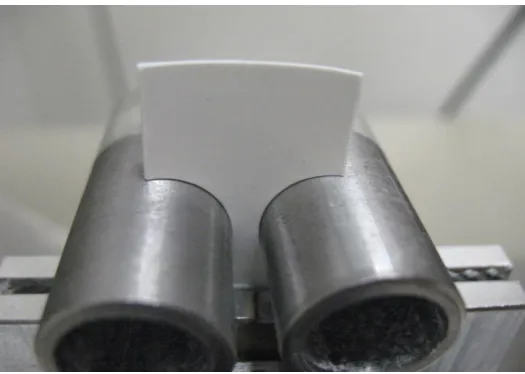
Figure 2 – Steel centering and alignment tool.
The tests were performed using a strain rate at 0.5 mm/min. Mechanical measurements were carried out at room temperature (23°C) and 55% R.H.
Of course where an obvious fault has resulted in premature failure, the sample was not included in the analysis.
For each container at least three samples were analyzed.
This procedure permitted to obtain a stress versus strain curve. Data were collected and elaborated by a suitable software (LJStream UD v. 1.14).
The tendency of materials to oppose to deformation until break, and the evaluation of the stress-strain curve profile were investigated.
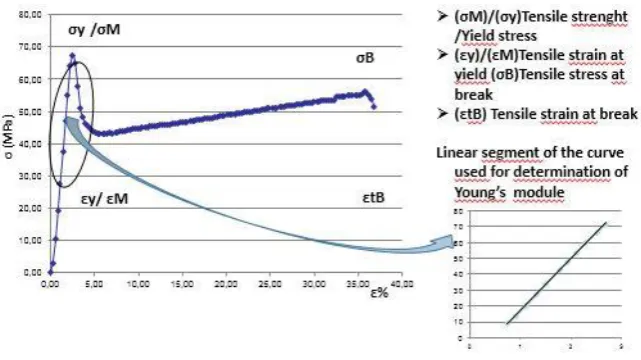
This kind of analysis permits to determine the tensile properties of plastics and plastic composites, as specified from ISO 527. In particular it is possible to estimate.
Elastic portion by a linear regression procedure (Et);
Stress properties: yield stress (σy), tensile strength ((σM) and tensile stress at break (σB); Tensile strain expressed as the increase in length: at yield (εy), at tensile strength (εM) and
at break (εtB).
Tensile test was performed on all type of test specimens.
Figure 3- Parameters investigated in stress versus strain curve profile.
In this work PETG is chosen as a representative example for packaging material.
It is possible to validate the procedure proposed in this research by comparison between mechanical properties of raw material (MSDS supplied from the producer) and results obtained experimentally from finished products.
2.3 Container test protocol
PETG bottles were numbered, weighted and washed. The washing procedure used at the beginning of the study and at the end of all treatments was the following: all bottles were washed for three times with 1% bicarbonate solution and then rinsed three times with distilled water to remove any residuals.
Empty bottles and bottles filled with pH 2 buffer solution were subjected to an accelerate stability test by incubation for 15 and 30 days into climatic room (Clima Cell 111 MMM) at 40°C with 75% R.H. and through a photostability test by simulating UV-visible ray irradiation using SUNTEST XLS +II (Atlas ®) for 24 and 96 hours. Bottles stored at room temperature were used as controls.
5/6 specimens were obtained from each containers at the beginning and at the end of all treatments. Finally, mechanical analysis was performed using only the optimized dog bone shape.
3. RESULTS AND DISCUSSION
The study here discussed aims to realize an easy and standardizable procedure to characterize mechanical properties of commercially available packaging. This procedure is based on a new simplified designed shape of the test specimen to respect to the International standard guidelines.[14]
3.1 Sample set up
Initially, specimens with rectangular shape have been realized.Rectangular sample was not useful for this work. In fact, in this case, ruptures happened randomly and mainly in the tightening area. Data were unreliable since extension behavior of samples were invalidated due to the anchorage. This phenomenon was due to micro-cracks correlated to sample-jaws interactions.
The following choice of dog bone shape to realize standard specimens was derived from the literature (BS EN ISO 527, 1996). Due to the different sort of commercially available packaging it is extremely difficult to obtain samples corresponding to ISO requirements especially for the thickness. Furthermore the variability of pack size and shape greatly affects the capability to obtain dog bone samples with smooth surface and free of buckling. Finally, the available area of the sample doesn’t allow quite often to obtain the shape required.
In both cases (rectangular and ISO-designed shapes) random results are obtained and therefore the strain-stress profile curves are not descriptive of material mechanical properties. For these reasons all following analyses were carried out only on optimized dog bone specimens.
The new sample design herewith developed and its dimensions are adequate to the common type of tensile instruments using multipurpose load cells obtaining an high grade of accuracy, precision and sensitivity. Furthermore, the new sample design is compatible with the area extractable from the most part of commercial packaging.
longitudinal axis, using a suitable jig, as shown in the Figure 2. The simplified design of this dog bone sample minimizes the complexity and the stress of the cutting process.
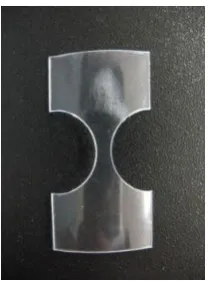
[image:10.595.246.351.179.320.2]Anyway it is essential to pay attention in the sample preparation because even the slightest inappropriate deformation can compromise the sample integrity (Figure 4).
Figure 4. Compromised sample by improper manipulation.
The dimensional gap between narrow (3 mm width) and clamping portions (20 mm width) permits to exclude the effects happening in the tightening area and to lead to a specific and constant break area. As it is possible to observe from the images (Figure 5 a,b) the section of container specimen reduced and it became matt because of traction. An initial stage of elongation where the sample does not appear to undergo irreversible deformation is present, until the moment in which the point of necking occurs. In this phase the fibers of the polymer begin to fail aligning in the direction of application of force, forming the peak yield strength. Continuing the traction the section of the specimen continues to shrink up to the breaking point. In particular the Figure 5 b shows clearly that specimen rupture occurred exactly in the expected zone, confirming the validity of the procedure.
[image:10.595.95.500.582.735.2]
3.2 Mechanical analysis
The tensile test is one of the most important method used to measure the strength of materials. During the tensile test a sample of material is elongated in uniaxial direction at a constant rate. The load necessary to produce the given elongation is measured as a dependent parameter.
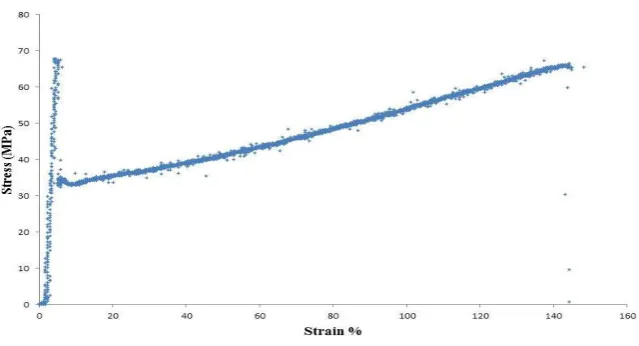
Each sample is subjected to tensile test and stretched to the break in order to study its stress-strain profile: the Figure 6 shows a typical stress stress-strain behaviour obtained from PETG bottle samples.
Figure 6- PETg stress-strain profile: mean values of specimens of the same container (S.D. < 5%).
The trend is represented by.
1. Initial linear growth: that is, the elastic phase, in which the specimen keeps its elastic properties and traction does not cause irreversible changes.
[image:11.595.140.460.284.457.2]The results highlighted that the mechanical characteristics of tough material with yield point, typical for the PETG raw material, are mantained in the finished packaging.
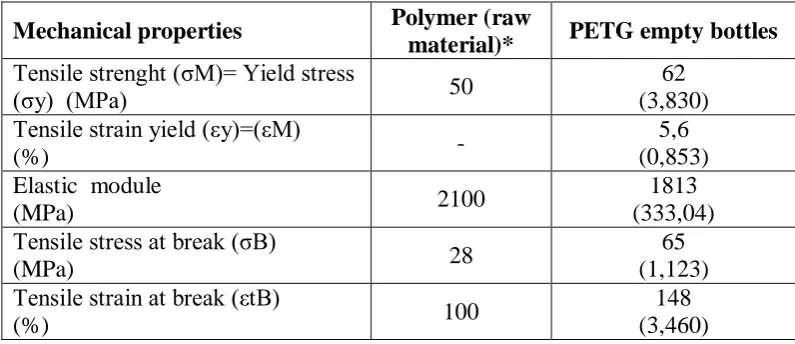
The Table 1 reports the tensile properties experimentally obtained from empty bottles and as resulting from raw material data sheet.
Table 1. Mean values (±S.D) of mechanical properties experimentally obtained from empty bottles and as resulting from raw material data sheet*.
Mechanical properties Polymer (raw
material)* PETG empty bottles Tensile strenght (σM)= Yield stress
(σy) (MPa) 50
62 (3,830) Tensile strain yield (εy)=(εM)
(%)
-5,6 (0,853) Elastic module
(MPa) 2100
1813 (333,04) Tensile stress at break (σB)
(MPa) 28
65 (1,123) Tensile strain at break (εtB)
(%) 100
148 (3,460)
Data highlight that the elastic module obtained from the new dog-bone shape bottle sample is comparable to the value of raw material. These results suggest that the bottle preparation process does not affect material mechanical properties. The results showed clearly that the new sample design fits perfectly to investigate processed materials tensile properties, such as packaging products.
Furthermore it is important to underline that this kind of analysis could not be used to compare results obtained using ISO specimen; the approach described in this work can successfully be employed to evaluate modification of packaging during ageing or during contact with the product packed in order to define the shelf life of the product.
For this purpose mechanical properties of empty and filled bottles, before and after stress testing procedures, were investigated. The stress-strain curve profile is useful to compare specimens subjected to environmental and chemical stress.
[image:12.595.98.496.223.395.2]The Figure 7 shows results obtained from mechanical analyses carried out on empty and filled bottles before and after stress test.
a)
b)
c)
[image:13.595.177.424.127.684.2]Temperature, water and electrolytes could be considered important factors that influence polymeric structure. In particular, water and electrolytes can penetrate and interact, with polymers chains, decreasing, in the first case, intermolecular forces producing a decrease of polymer chain cohesion.
Instead, heat treatment can determine a modification in mechanical parameters depending from the structure of the polymer tested.
The internal properties of the polymer are very influent on these mechanisms. In particular the amorphous phase greatly affect the polymer behavior already in the early stages of the tensile test in which it starts to align in the direction of traction.[19]
Comparing graphics in Figure 7 with the Table 1, it possible to observe the effects of these all factors. In particular, it is possible to observe a different effect in the empty samples, subjected to climatic room or simulated solar irradiation. Young modulus and tensile stress at break reduce in PETG containers treated in climatic room or solar simulator to respect to baseline, in according to heat effect and water activity.
Observing PETG samples treated with pH2 buffer, curve profiles and values parameters were different respect to corresponded empty sample. Electrolytes destabilize monomer-monomer bond by inducing a degradation of the sample. In Figure 7, it is clear as elastic modulus and yield stress decrease because of weakening of intermolecular bonds. Moreover, polymeric material becomes more fragile and consequently point break is anticipated.
Finally, all samples, independently from treatment, undergo to structure modifications that determine a dropping of point break.
CONCLUSION
In conclusion, the research, here presented, defined an opportune protocol to examine mechanical properties of polymeric material, used in a cosmetic packaging.
This procedure based on a new designed shape of the test specimen, can be successfully applied to the great part of commercially available packaging.
profiles. Thanks to graphics it was possible to evaluate some characteristic parameters by which it was possible to evaluate as environmental and chemical treatments can determine modifications and consequently, alterations of mechanical performances.
Thanks to this work it observed as PETG could be a critical packaging that could compromise content properties by polymer degradation during ageing. Consequently, PETG could lose its protective function.
This research represents a starting point to study in detail the possible interactions between container and contained in the pharmaceutical, cosmetic and nutraceutical fields.
The tensile test is one of the most important method used to measure the strength of materials and it could be successfully employed to evaluate content-container interaction that causes mechanical alterations.
The new sample design herewith developed and its dimensions are adequate to the common type of tensile instruments using multipurpose load cells obtaining an high grade of accuracy, precision and sensitivity.
In conclusion the optimized procedure presented in this work could successfully employed to evaluate interactions between content and commercially available packaging in order to assure quality and safety of the final product as required from EU Legislation.
REFERENCES
1. Lange J., Wyser Y., Recent Innovations in Barrier Technologies for Plastic Packaging, Packaging Tecnology and Science, 2003.
2. Shivsharan U.S., Raut E.S., Shaikh Z.M., Packaging of cosmetics: a review, Journal of Pharmaceutical and Scientific Innovation, 2014; 3(4): 286-293.
3. Chen Y.J, Bioplastics and their role in achieving global sustainability, Journal of Chemical and Pharmaceutical Research, 2014; 6(1): 226-231.
4. Who Expert Committee, Guidelines on Packaging for Pharmaceutical Products, WHO Technical Report Series, 2002; 902: 120-156.
6. Sabah A., Ahmed I., Arsalan A., Arif A., Tanwir S., Abbas A., Ahmed F.R., Features, Functions and Selection of Pharmaceutical Packaging Materials, International Journal of Pharmaceutical and Nutraceuticals Research, 2014; 1(1): 1-12.
7. Hirose K., Harte B.R., Giacin J.R., Miltz T., Stine C. Sorption of d-limonene by sealant films and effect on mechanical properties. In: Hotchkiss. Editor. Food and packaging interactions, 1988; V365: Washington, 28-41.
8. Slavica, G., Vojislav, A., Milan, V., Zoran, P., The effect of packing material on storage stability of sunflower oil, Quality of life, 2011; 2(3-4): 75-83.
9. Kim Y., Welt B.A, Talcott S.T., The Impact of Packaging Materials on the Antioxidant Phytochemical Stability of Aqueous Infusions of Green Tea (Camellia sinensis) and Yaupon Holly (Ilex vomitoria) during Cold Storage, Journal of Agricultural and Food Chemistry, 2011; 59: 4676-4683.
10.Petersen, Dr. Re Link, Md Newsham, Jr Giacin and Sp Singh. "Product/Package Interaction: Effect of Physical, Chemical, and Climatic Environments." Journal of Testing and Evaluation, 2000; 28(2): 103-108.
11.Regulation (EC) No 1223/2009 of the European Parliament and of the Council of the 30 November 2009 on cosmetic products.
12.Ayad R., Safa L., Marull S. Product-package system: thermal aging and its influence on the mechanical performances of blown bottles. Relationship with design and process conditions. Materials and design, 2002; 23: 441-447.
13.Galotto, M.J., Ulloa, P.A., Hernández, D., Fernández-Martín, F., Gavara, R., Guarda, A., Mechanical and thermal behaviour of flexible food packaging polymeric films under high pressure/temperature treatments, Packaging Technology and Science, 2008; 21: 297-308. 14.European Standard ISO EN UNI 527-1996: Plastics- determination of tensile properties. 15.Dupaixa R.B., Boyc M.C., Finite strain behavior of poly (ethylene terephthalate) (PET)
and poly (ethylene terephthalate)-glycol (PETG), Polymer, 2005; 46: 4827–4838.
16.Guidelines on stability testing of cosmetics product. Colipa guidelines, march 2004, http://www.packagingconsultancy.com/pdf/cosmeticscolipa-testing-guidelines.pdf.
17.Photostability testing of new active substances and medicinal products- ICH topic Q1B. EMEA, European medicines agency. January 1998, CPMP/ICH279/95.