The influence of the work environment on
training transfer
Master thesis
Researcher name J. G. Profijt (s1132326)1st supervisor Dr. M. D. Endedijk
2nd supervisor
MSC. A. Oude Groote Beverborg
Date
2
Abstract
Agencies invest billions in training with the intention to increase knowledge. Characteristics of the learners, the training design and the work environment all influence the increase of knowledge and skills in the workplace (training transfer). This study finds out if training enhances knowledge (generalization) and if this level of knowledge is maintained over time (maintenance). Finally, this study discovers to what extent seven aspects of a supporting work environment facilitate training transfer. A survey that measures the variables in this longitudinal study has been conducted among managers (training group and control group) within a cleaning agency. This research shows that training has an effect on the increase of knowledge (generalization) and maintenance of knowledge over time (maintenance). Beyond expectation, increase of knowledge was also evident in the control group. The participation in training spread over time may explain this increase of knowledge. Moreover, it is shown that young employees share more knowledge of Workplace Safety after this training than older employees do. Interestingly, the work environment only influences the control group, which shows that employees give feedback to several colleagues and have discussions with each other. Research could not be conducted on a number of factors due to validity problems; therefore longitudinal follow-up research with valid scales would be desirable.
Keywords
3
Contents
Introduction ... 4
Theoretical background ... 7
Present study ... 12
Method ... 15
Results ... 20
Discussion ... 31
References ... 37
Appendix A - Personal descriptions ... 45
Appendix B - Scales ... 46
4
Introduction
In 2010, companies in the Netherlands invested 44 billion Euros on the enhancement of knowledge (CBS). This money has been spent on computer software, research, and important to note for this research, on the development of the work force and training of employees. Approximately 40 percent of the employees in companies followed a formal training (Tanriseven & Veldhuizen, 2012). There are two main reasons why training is important in companies. First, companies need to stand out in order to keep up with competitors by having more knowledge in their company. Second, employees have to be able to function to the maximum and know their position in the labour market, which will lead to a better circulation of well-trained employees (SER, 2002; Branham, 2005; Michaels, Handfield-Jones & Axelrod, 2001).
Therefore, companies wonder what the effect of training is. The goal of training is the applying of learned knowledge and skills to the workplace. This is called training transfer (Burke & Hutchins, 2007; Blume, Ford, Baldwin, & Huang, 2010). Scientific research on training transfer concludes that in contrast to what the employees acquired during training, their behaviour improved only slightly. These results can vary between 50 and 60 percent improvement and can drop to between 10 and 30 percent a year later (Brown & Reed, 2002; Saks, 2002; Georgenson, 1982; Broad & Newstrom, 1992; Holton & Baldwin, 2003). This indicates that the maintenance of acquired knowledge and skills in the work place therefore asks for support. Research has found three types of factors that support training transfer: learning characteristics, training design and work environment (Baldwin & Ford, 1988; Kessels, 2001; Holton, Bates & Ruona, 2000; Burke & Hutchins, 2007; Blume et al., 2010). Learning characteristics are aspects of the employee, such as intelligence, educational background and also individual influences such as motivation to learn and self-esteem. Training design refers to learning principles, content of training, materials and learning aims of the training that are based on the theory of how employees learn effectively (Holton et al., 2000; Burke & Hutchins, 2007). Besides training design, the work environment influences training transfer. The work environment is the place where employees work and perform (Gielen, 1995; Baldwin & Ford, 1988; Burke & Hutchins, 2007; Blume et al., 2010).
5
into three factors: transfer climate, social support and opportunities to experiment1 (Burke & Hutchins, 2007; Rouiller & Goldstein, 1993; Tracey, Tannenbaum, & Kavanagh, 1995; Burke & Baldwin, 1999; Baldwin & Ford, 1988; Holton et al., 2000). Moreover, the seven aspects (feedback from colleagues, support from colleagues, involvement of the supervisor, exchange information with colleagues, opportunities to experiment, experiment with newly learned knowledge and time and resources) this research focuses on are important key features of the learning climate in the organization that participates in this research.
In a climate where learning is paramount, the transfer of acquired knowledge and skills to the workplace is possible. Both supervisors and colleagues play a role in this climate. Their stimulation contributes to the transfer of acquired knowledge and skills among employees (Axtell, Maitlis, & Yearta, 1997; Baldwin & Magjuka, 1991; Cromwell & Kolb, 2004; Brinkerhoff & Montesino, 1995; Baldwin & Ford, 1988; Enos, Kehrhahn, & Bell, 2003; Geijsel, Sleegers, Stoel, & Krüger, 2009; Pham, Segers, & Gijselaers, 2012). Besides stimulation, social support also has a positive influence on training transfer. Social support is related to learning in the workplace where sharing information with colleagues stimulates training transfer. Empirical research shows that sharing information with colleagues has a positive effect on training transfer (Van Woerkom, 2003; Van Woerkom, 2004; Cabrera & Cabrera, 2005; Burke & Hutchins, 2007; Dawes, Cresswell, & Pardo, 2009; Spillane, Kim & Frank, 2012). Moreover, optimal transfer requires that an employee should apply newly acquired knowledge and skills in the workplace by experimenting. Research shows that employees with opportunities to experiment have a higher training transfer compared to employees with none of those opportunities (Burke & Hutchins, 2007; Baldwin & Ford, 1988; Rouiller & Goldstein, 1993; Tracey, Tannenbaum, & Kavanagh, 1995; Burke & Baldwin, 1999).
Although all of these issues contribute significantly to training transfer, it is not yet obvious which aspects of the work environment mostly influence training transfer (Tracey et al., 1995; Gaudine & Saks, 2004; Ford & Weissbein, 1997). In addition, the effect of training should crystallize over time. As yet little attention has been paid to this topic in literature and research (Cromwell & Kolb, 2004; Gaudine & Saks, 2004; Saks & Belcourt, 2006; Axtell et al., 1997; Pidd, 2004). Therefore, longitudinal research is necessary. To gain more insight into this study, the influence of seven work environment factors on the transfer of newly acquired knowledge and skills to the workplace has been researched in this study on two occasions, namely one week and two months after the training (Burke & Hutchins, 2007; Baldwin & Ford, 1988; Rouiller & Goldstein, 1993; Tracey et al., 1995; Burke & Baldwin, 1999).
1The aspects were not included in our study, because they were not measured as being valid or are non
6
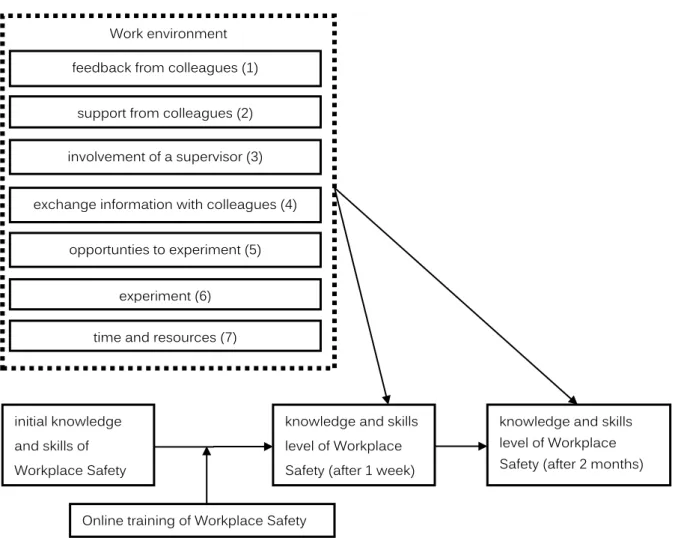
In Figure 1 the conceptual model of the course of training transfer over time and the influence of the work environment on it is represented. This model is based on earlier models about training transfer and the influence of the work environment (Holton, 1996; Baldwin & Ford, 1988; Nijman, 2004; Axtell et al., 1997).
Figure 1. Conceptual framework of the course of training transfer over two months, and the influence of the work environment on it. This study focused on a Workplace Safety training. Initial knowledge and skills are the starting level of an employee. The effect of the training has been measured one week and two months after the training. The work environment influences the knowledge and skills of an employee one week after the training (generalization) and two months after the training (maintenance).
initial knowledge and skills of Workplace Safety
knowledge and skills level of Workplace Safety (after 1 week)
knowledge and skills level of Workplace Safety (after 2 months)
Online training of Workplace Safety
wwwoworworkplace saworkplace ssafety
Work environment
feedback from colleagues (1)
exchange information with colleagues (4)
opportunties to experiment (5) involvement of a supervisor (3) support from colleagues (2)
experiment (6)
7
Theoretical background
Training transfer
Training transfer is defined as the application of newly acquired knowledge, skills and attitudes in the workplace, which makes employees change their behaviour over time as the result of training (Baldwin & Ford, 1988; Seyler, Holton, Bates Burnett, & Carvalho, 1998; Rajee, Madan, & Jayarajam, 2009; Blume, Ford, Baldwin, & Huang, 2010; Grossman & Salas, 2011; Weisweiller, Nikitopoulos, Netzel, & Frey, 2013; Mindtools, 2014). Applying these newly acquired knowledge, skills and attitudes is important to companies, because it leads to improving the performance of the employee (Bates & Khasawneh, 2005). In order to fully benefit from training, employees ought to use newly acquired skills and knowledge in different situations (generalization). In addition, employees should be able to maintain the changes in skills and behaviour (maintenance, Cheng & Hampson, 2008).
With generalization, acquired knowledge and skills are applied in the workplace, and extended to new situations. An example of a new situation is conducting a job interview while implementing the communication techniques that were acquired. Maintenance describes the process during which employees keep their acquired knowledge and skills, and go on generalizing. As for generalization and maintenance, besides formal training, informal training is important. By means of informal learning in the workplace, employees discover how acquired knowledge and skills can be applied (Billett, 2001; Watkins & Marsick, 2003; Burke & Hutchins, 2007; Blume et al., 2010).
8
Work environment
The employee’s (social) work environment is versatile. Depending on the company and the function, an employee has contacts with colleagues and their supervisor in the workplace and possibly with clients. Different factors, as mentioned before in the introduction, influence training transfer. The level of support of a supervisor during the application of acquired knowledge in the workplace contributes to training transfer (Holton et al., 2000; Geijsel et al., 2009). Furthermore, the degree of openness to change
also adds to this. Finally, the meaning of personal outcome is the degree in which an employee experiences a positive or negative outcome when applying knowledge and skills in the workplace (Holton et al., 2000). In this study, we focus on the seven presented factors. Two factors (feedback from colleagues and support form
colleagues) describe a stimulating amicable environment which, according to previous
research, leads to higher results in applying acquired knowledge and skills (Cromwell & Kolb, 2004; Baldwin & Ford, 1988; Geijsel et al., 2009; Spitzer, 1986; Montesino, 1995; Pham et al., 2012). Moreover, involvement of the supervisor contributes to a higher training transfer (Grossman & Salas, 2011; Rouiller & Goldstein, 1993; Rietdijk, 2009). Besides this stimulating environment, exchanging substantive information among
colleagues on the training that has been followed also contributes to training transfer.
Furthermore, it is shown that when an employee gets the opportunity to experiment, and actually does experiment, these will positively affect training transfer. Moreover,
time and resources need to be available in order to apply newly learned skills and knowlegde (Dawes, in Dawes, Cresswell, & Pardo, 2009; Spillane et al., 2012; Van Woerkom, 2003). The factors that are investigated in this study will be clarified in the seven sections below.
Feedback from colleagues
9
contributes to an open atmosphere, in which nobody has to feel ashamed when there has not been optimal performance yet (Van Woerkom, 2004; Baldwin & Ford, 1988; Geijsel et al, 2009). In conclusion, an open atmosphere and effective feedback contribute to training transfer (Van Woerkom, 2004; Baldwin & Ford, 1988; Geijsel et al, 2009).
Support from colleagues
Colleagues are supporting the employee’s learning process by encouraging and helping one another during the process of applying newly acquired knowledge and skills. Furthermore, paying compliments is a form of stimulation which causes the employees to be more willing to apply newly acquired knowledge and skills (Leahy, 2002; Spitzer, 1986; Montesino, 1995; Cromwell & Kolb, 2004; Baldwin & Ford, 1988; Geijsel et al., 2009). During this learning process it is important that employees should reflect on their performance and that colleagues stimulate each other in this (Geijsel et al., 2009). In conclusion, when encouraging colleagues in their application of acquired knowledge and skills, a positive way of communicating is important (Van Woerkom, 2004).
Involvement of a supervisor
Involvement of the supervisor positively contributes to the application of knowledge and skills that have been acquired earlier. A supervisor can show this involvement by asking questions about learning aims of the training that has been followed (Grossman & Salas, 2011). When an employee fails to apply newly acquired knowledge and skills, a supervisor may consult this person in order to find out the cause (Rouiller & Goldstein, 1993; Rietdijk, 2009). In addition, employees tend to apply newly acquired knowledge and skills more often when they are rewarded or being paid compliments as forms of encouragement (Cromwell & Kolb, 2004; Baldwin & Ford, 1988; Geijsel et al, 2009). Applying leads to increased performance and when rewarded it contributes to training transfer (Rouiller & Goldstein, 1993).
Exchange information with colleagues
Sharing work-related information with colleagues affects training transfer. In essence, sharing information with colleagues is sharing work-related information in order to learn from each other. This information contains sharing solutions to problems in the workplace, sharing new working methods and other relevant substantial information. Sharing and discussing this information are needed to give an insight into the problems colleagues are facing during work (Dawes, in Dawes, Cresswell, & Pardo, 2009; Spillane et al., 2012; Van Woerkom, 2003; Hawley & Barnard, 2005).
10
skills (Noe, Colquitt, Simmering & Alvarez, 2003; Cabrera & Cabrera, 2005; Minnet, 2003). This work-related information contributes to finding methods to work effectively, and ways that contribute to each other’s learning efficiency (Van Woerkom, 2003). When exchanging information, it is important that communication goes back and forth. In this way, colleagues learn from each other by communicating.
This communication can take place online or offline, realizing that it is important to deal confidentially with shared information (Spillane et al., 2012; Forsyth, 2001). In addition, confidential communication perpetuates interpersonal relations (Nahapiet & Ghoshal, 1998), which are important in order to take successful actions together (Bolino, Turnley, & Bloodgood, 2002; Leana & Van Buren, 1999). Furthermore, sharing information contributes to the way colleagues learn from each other and their approach to how newly acquired skills should be applied in practice (Van Woerkom, 2003; Cabrera & Cabrera, 2005).
Opportunities to experiment
In this study, the definition of opportunities to experiment is: creating opportunities by the supervisor to allow employees to make errors when applying new knowledge and skills (Leahy, 2002; Spitzer, 1986; Montesino, 1995; Cromwell & Kolb, 2004; Baldwin & Ford, 1988; Geijsel et al., 2009). In addition, it is important to discuss experiences of the training before and during the training with the supervisor, as this demonstrates involvement (Brinkerhoff & Motessino, 1995). A supervisor who encourages the employee to apply new knowledge and skills and gives room to make mistakes can have a positive effect on generalization and maintenance of training transfer (Tracey et al., 1995; Ford et al., 1992; Huczynski & Lewis, 1980).
Experiment
It is important that supervisors should offer opportunities to experiment, but the employee should take his responsibilities as well. He could seize the opportunities to actually experiment in order to embed generalization and maintenance of training transfer (Seyler et al. 1998; Ford et al., 1992; Lim & Johnson, 2002; Geijsel et al., 2009; Runhaar, 2008). The employee should have a creative attitude towards experimenting in the workplace. This creative attitude can be shown when solving work-related problems and presenting new effective working methods (De Jong & Den Hartog, 2010).
Time and resources
11
supervisor gives time to experiment with new knowledge and skills, training transfer will be stimulated (Russ-Eft, 2002; Van den Bossche, Segers, & Jansen, 2010; Holton et al., 2000; Gilpin-Jackson & Bushe, 2007). When the supervisor gives time for training transfer it is important to keep the workload of employees low. When an employee experiences too much workload there will be lack of time, energy and mental space to create training transfer (Russ-Eft, 2002; Nijman, 2004). Resources, such as internet and documents that are used during work, are needed when an employee is experimenting with newly acquired knowledge and skills (Russ-Eft, 2002; Rouiller & Goldstein, 1993; Tracey et al., 1995).
Hindrance of the work environment
Researchers show that the work environment can have a positive effect on the application of acquired knowledge and skills in the workplace, but could also be a
12
Present study
Research questions
Considering the theoretical framework, it is plausible that following a training leads to an increase of knowledge and skills and to the application of this knowledge and new skills in the workplace (generalization). But the question is whether this can be maintained over long periods of time (maintenance). A supportive work environment should have a positive impact on training transfer. These findings lead to the following research questions:
1. Does training enhance knowledge and skills, as has been measured after one week (generalization)?
2. To what extent will the level of knowledge that has been acquired be maintained after two months (maintenance)?
3. To what extent do the seven aspects of a supportive work environment facilitate training transfer?
In order to answer these questions a longitudinal research is needed, because transfer occurs over time, and not in one moment (Gaudine & Saks, 2004; Nesselroade & Baltes, 1979). This type of research can trace the impact of training, and to what extent knowledge and skills may change over time. In addition, stronger claims about the causal connection of environmental conditions and the influence on generalization and maintenance can be made with a longitudinal research. Based on the research questions this research will be working with a Latent Difference Score framework (LDS; see Figure 2; McArdle, 2009; McArdle & Prindle, 2008). The key element of an LDS model is the latent difference factor, which specifies the change scores at any point in time. In a ‘full’ LDS model latent difference scores are a function of both autoregressions and systematic growth rates (Ferrer & McArdle, 2010; McArdle & Hamagami, 2001; Sbarra & Allen, 2009). However, the expectations in this research are that knowledge and skills will increase only after training, and will remain constant afterwards. This implies that there is no constant change, therefore the latent difference scores will be modelled with autoregressions and estimated intercepts. This indicates that differences in knowledge and skills depend on the level when measured at a previous point in time. This type of method shows the differences between the estimated intercepts on three measuring occasions (McArdle & Prindle, 2008; McArdle, 2009; Eschleman & LaHuis, 2014).
13
2004; Cromwell & Kolb, 2004). Feedback from colleagues, support from colleagues, involvement of a supervisor, exchange information with colleagues, opportunities to experiment, experiment, and time and resources, will be used as predictors of the work environment (Muthén, & Muthén, 2007).
Context
The research was conducted within an organization of more than 10,000 employees who work in the field of cleaning and other related areas. This national agency is based in the Netherlands and has been divided into nine regions. Because of the large numbers of workers, they work in teams that are led by an object manager, who is the manager of about 80 to 100 workers. Approximately 250 object managers work in this agency and they are supervised by branch managers. From now on object managers will be referred to as employees, and branch managers as supervisors. (Schoonmaakbedrijf, 2013).
The employees follow courses in areas that need to be improved. During the trainings a combination of online learning (e-learning) and formal training (meetings with a trainer as leader) takes place. Trainings have been designed on the basis of the principle of blended learning. Blended learning is defined as a combination of formal and informal learning. Thus, the knowledge of the training can be transferred to the employee’s workplace (Oliver & Trigwell, 2005; Fransen, 2006; Schoonmaakbedrijf, 2013). In the online environment (this is called ‘the Learning House’ by the agency) the assignments are central and performed in the workplace. In addition, the training pays attention to different learning strategies (which blended learning endorses; Fransen, 2006) by adding test documents, videos, prezis and images to the training.
The work environment of the employee in this research consists of clients, personnel, colleagues and the supervisor. The employees work on targets that have been presented by the supervisor of that area. In this agency, employees are responsible for the objects they need to clean and for working individually on targets and results (personal communication, J. Brinkhuis, 2 December 2014). In the next paragraph a description will be given of the seven factors of the work environment in this particular agency.
14
progress and possibly send him a message in the Learning House. Besides, the meetings to discuss progress with the supervisor and employees are suitable moments to communicate with employees, but the frequency differs per region. Since supervisors are in charge of the Learning House, they may encourage experimenting with newly acquired skills. Furthermore, the supervisor may find out what the employee needs in order to apply acquired knowledge and skills in the workplace (personal communication, J. Brinkhuis, 2 December 2014).
Contents of the training
For the purpose of this study, the course called Workplace Safety has been selected to measure training transfer. This is based on the fact that this course is required for everyone in the company and that the subject matter is important for workers in order to work safely with machines, tools, equipment, materials and installations. Moreover, safe behaviour, instructions directed at working safely and shared responsibility among workers, employees and employer are important aspects to ensure a safe work environment (Arboportaal, n.d.). These aspects are subject matter during the training. Moreover, working safely is a special point of daily interest. Examples of this are that workers keep an eye on a safe work environment, that materials and resources are tested, that conversations are held with personnel about changes that affect the security and that analysis and plans are executed to ensure safety. Moreover, during the process of hiring new personnel the aspect of working safely is discussed, so that a new employee is also aware of the rules and procedures (personal communication, E. Boonstra, 2 December 2014).
In order to improve and be able to maintain knowledge and skills regarding safety in future, employees receive formal training. The training (based on e-learning only) has been divided into three chapters: Workplace Safety within the cleaning agency, Workplace Safety outside the agency and Workplace Safety in the workplace. The goals of the Workplace Safety training are:
1. Knowing the meaning and function of terms and tools in the field of security, such as the Risk Inventory and Evaluation (RI&E), a plan of action, safety data sheets, safety information sheets, a health and environment Checklist for Contractors (VCA), etc.
2. Knowing the responsibilities with regard to safety for you, your manager and the agency.
3. Updating a Risk Inventory & Evaluation (RI&E), making a plan of action and putting together or updating a book with safety information sheets.
15
Method
Design & Sample
In this study a quasi-experimental quantitative longitudinal research design was chosen to test the effects of the work environment on training transfer over time (Field, 2009; McArdle, 2009). The measuring occasions are: before training, one week after training and two months after training.
From the 250 object and project managers2 82 (32, 8 %) were willing to participate in this research. Owing to circumstances during this research 22 respondents (26, 8 %) stopped by request. The remaining 60 respondents (24, 0 %) were divided into two groups, 30 respondents per group. Group 1 followed the training Workplace Safety during the research (experimental group) and group 2 did not follow any training during this research (control group).
In this study 62 percent is female and 38 percent male. The percentage of young respondents (18-44) is 48, and older respondents (45-64+) is 52. The educational level has been subdivided into Secondary Vocational Education (70 %) and Higher Vocational Education (30 %). Furthermore, the regions the respondents work in vary as well: region 1 (13,3 %), region 2 (13,3 %), region 3 (21,7 %), region 4 (6,7 %), region 5 (15,0 %), region 6 (15,0 %), region 7 (5,0 %), region 8 (8,3 %) and region 9 (1,7 %). The respondents in this research are a mixed group with regard to their background. Thus the sample is reliable for generalization toward the population (See personal descriptions in Appendix A).
Data collection
Data were collected by using the online questionnaire program called Qualtrics. All employees were familiar with an iPad, which allowed them to participate in this study while being at work. Employees who were willing to participate in this research were informed by e-mail with the purpose, importance, instructions, and the consequences of their participation. To promote this study, the supervisors and the employees were informed about the purpose and importance of this research.
Measures of the variables
The whole questionnaire consists of 42 items. These items are scaled with a 7-point Likert scale (Likert, 1932; 1 = strongly disagree, 2 = disagree, 3 = slightly disagree, 4 = neutral, 5 = slightly agree, 6 = agree, 7 = strongly agree) and have been presented in Appendix B.In addition, respondents were interviewed on the control variables gender, age, educational level and region.
2 Project managers (20 percent of the sample) and object managers have equal responsibilities with
16
17 Table 1
Ten scales Workplace Safety and work environment
Scale Definition Items3 Cronbach’s alpha
T1 T2 T3 Workplace Safety within
the cleaning agency
Chapter 1 training 4 .696 - -
Workplace Safety outside the agency
Chapter2 training 4 .739 .858 .797
Workplace Safety in the workplace
Chapter 3 training 4 - - -
Feedback from colleagues
Receiving and asking feedback from colleagues and discussion on performance and improving it
3 .807 .850 .821
Support from colleagues
Colleagues stimulate each other to apply and reflect on newly acquired knowledge and skills in the workplace
3 .972 - -
Involvement supervisor The supervisor is involved with the learning process by asking about learning aims, giving compliments or having a conversation on training transfer.
3 .716 - -
Exchange information with colleagues
Sharing substantive knowledge on the contents of training.
3 .883 - -
Opportunities to experiment
Supervisor stimulates experimenting with newly acquired knowledge and skills and new, creative ideas by means of
encouragement and involvement.
4 .874 - -
Experiment Experimenting with newly acquired knowledge, skills and showing creativity.
3 .804 - -
Time and resources Time to apply newly acquired knowledge and skills and resources that are needed with it.
3 - - -
Note. T1 = measuring occasion 1, T2 = measuring occasion 2, T3 = measuring occasion 3; - indicates invalidity of the scale on that measuring occasion.
Analysis
Because the scales are reconstructed, a number of steps was taken to test whether the scales are valid. First, exploratory Factor Analyses and Confirmative Factor Analyses (EFA’s) are performed on data from measuring occasion 1. It is a prerequisite before further use of the items that the (sub-)concepts can be estimated as one factor from these items. Based on the EFA’s, items are selected and the factor structure is tested with the Confirmative Factor Analyses (CFAs). Subsequently, these factor loads need to be equal over time (measuring occasion 1, 2 and 3) in order to find out whether items are invariable over time. For that purpose the factor loads from the CFAs are inspected on the basis of three measuring occasions. The factor loads of the same items must be
18
reasonably equal (invariant) over the three measuring occasions. In order to test the invariance of the items per factor, CFAs are performed in which the factor loads of items have been fixed to be equal over time. All analyses have been performed on the entire sample and also on separate conditions (training, control). The invariance is essential for longitudinal research (McArdle & Prindle, 2013). When factor loads are not invariant, it means that it cannot be excluded whether the increase or decrease in value of a variable are based on chance (the ‘true score’ cannot be established). Additionally, it is tested if the autocorrelations are significant. Significant autocorrelations indicate that factors measured on different occasions respond to each other and correlate (McArdle & Prindle, 2013).
After having determined the valid scales, research questions 1 and 2 can be answered by using a univariate proportional change LDS model. In this model the means per measuring occasion are calculated in the formula (1) shown below:
Y
t= Y
t-1+ μ
ΔtY+ βY
t* Y
t-1 (1)In this formula the Yt is the mean value on an occasion, Yt-1 is the mean value in a previous occasion, μΔtYis the estimated intercept of the latent difference score, and βYtis the proportional regression parameter. The initial value can be taken as input for the calculation. For instance, the initial value is the mean of Workplace Safety outside the agency on measuring occasion 1, and has been fixed to be equal for the two groups. This is necessary, because before the training took place the values of the respondents in the two conditions had not been different from each other yet (Ferrer & McArdle, 2010; McArdle, 2009).
By means of this model we tested whether the level of knowledge and skills of Workplace Safety increased one week after training in the training condition (and not in the control condition). In addition, we tested to what extent the knowledge and skills of Workplace Safety appear to be equal after two months (for at least the training condition). Moreover, the effect of training was tested with the t-test (different score).
19
20
Results
Factor structure and invariance of the variables
The scales were newly constructed and a number of steps were taken to test whether the scales are valid and invariant. In this section results of analyses on the overall sample are reported. However, in order to control if the results of these analyses are equal for both conditions, analyses for the conditions control and training have also been made separately.
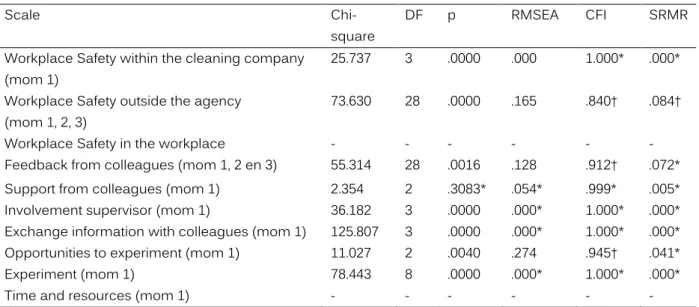
First, the results of the Exploratory Factor Analyses (EFA’s)4 on measuring occasion 1 indicate that for the ten scales only a few items form a factor together. Based on the EFA selected items per scale, Confirmative Factor Analyses (CFA’s) have been performed on occasion 1. The factor analyses indicate eight valid scales (See Table 2). These tests indicate two scales of Workplace Safety: Workplace Safety within the cleaning agency and Workplace Safety outside the agency. Additionally, six scales of the work environment were found: feedback from colleagues and support from colleagues, involvement supervisor, exchange information with colleagues, opportunities to experiment and experiment with newly learned knowledge.
After having performed the factor analyses (CFAs) on three measuring occasions, only two scales, which are Workplace Safety outside the agency and feedback from colleagues, proved to be invariant. The remaining scales are not invariant, because either the analysis on the separate conditions indicate an unacceptable fit, or the residual variances had been estimated negative. This means that there is no reliable and valid model. The scales, items, factor loads, and residual variances are presented in Appendix B.
Table 2 shows the fit measures of the CFAs of the ten initial scales on occasion 1 or occasions 1, 2 and 3 (CFAs for both conditions) in this research. The fit measures are a reliable and good fit when the value of Chi-square (Χ2(df)) is not significant, the RMSEA (Root Mean Square Error of Approximation) ≤ .06, the CFI (Comparative Fit
Index) > .95, and the SRMR (Root Mean Square Residual) ≤ .08 (Hu & Bentler, 1999;
Kenny, 2014).
21 Table 2
Fit measures CFA (both conditions)
Scale
Chi-square
DF p RMSEA CFI SRMR
Workplace Safety within the cleaning company (mom 1)
25.737 3 .0000 .000 1.000* .000*
Workplace Safety outside the agency (mom 1, 2, 3)
73.630 28 .0000 .165 .840† .084†
Workplace Safety in the workplace - - - - Feedback from colleagues (mom 1, 2 en 3) 55.314 28 .0016 .128 .912† .072* Support from colleagues (mom 1) 2.354 2 .3083* .054* .999* .005* Involvement supervisor (mom 1) 36.182 3 .0000 .000* 1.000* .000* Exchange information with colleagues (mom 1) 125.807 3 .0000 .000* 1.000* .000* Opportunities to experiment (mom 1) 11.027 2 .0040 .274 .945† .041* Experiment (mom 1) 78.443 8 .0000 .000* 1.000* .000*
Time and resources (mom 1) - - - -
Note. df = degree of freedom; mom = measuring occasion; * = good fit, † = marginal fit, - = no valid CFA
22
1 have a significant impact on occasions 2 and 3 and that the variables of occasion 2 also influence the values of occasion 3.
Striking is that the RMSEA values of all scales are below standards (> .06) This can be explained because in this study there is a low N and a low degree of freedom (Kenny, 2014). Finally, Cronbach’s alphas (α’s) of the factors with invariant items were
calculated in SPSS (version 20) per measuring occasion. The Cronbach’s Alpha indicates the internal consistence of the items. The α’s of the scales are higher than
.690 (See Table 1 and Appendix B). These values indicate a valid internal consistence of the items (Kines, Lappalainen, Mikkelsen, Olsen, Pousette, Tharaidsen, Tómasson, & Törner, 2011; De Vellis, 2003).
In other words, on the basis of all tests and results, this research will focus on the influence of feedback from colleagues on Workplace Safety outside the agency. In order to test the proportional change LDS models, the degrees of freedom have been reduced due to the low N. This has been done by averaging the items to means per scale.
Subsequently, proportional change LDS models were created in order to answer the research questions. The proportional change LDS model of Workplace Safety outside the agency has reasonably acceptable fit measures: Χ2(4) = 9.401 (p = .0518), RMSEA = .212, CFI = .925, SRMR = .087. Control variables have been added to this model, which resulted in a marginally acceptable fit: (4) = 8.717 (p = .086), RMSEA = .186, CFI = .948, SRMR = .037. Finally, the scale of feedback from colleagues has been linked to Workplace Safety outside the agency, which resulted in a bivariate proportional change LDS model, with a resonably acceaptable fit: Χ2(17) = 24.020 (p = .1189), RMSEA =.117, CFI =.953, SRMR = .081. The most important details of these three models are presented in the next sections.
Training transfer of Workplace Safety
23
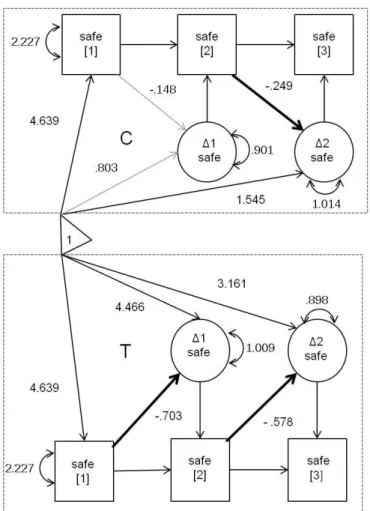
Figure 2. Representation of the univariate proportional change LDS model: Workplace Safety outside the agency
Unstandardized values (C = control group; T = training group), safe[t] represents safe measurement on time t. presents safe’s latent difference factor for different measuring occasions. Safe [1] is the initial factor of safe, which is equal for both conditions (4.639).The black arrows (no values) are fixed at 1. The curved lines with double arrows are variances. The black arrows with values are the significant intercepts. The autoregressions (β’s) are presented in black bold arrows. The light grey arrows are not significant intercepts or autoregressions
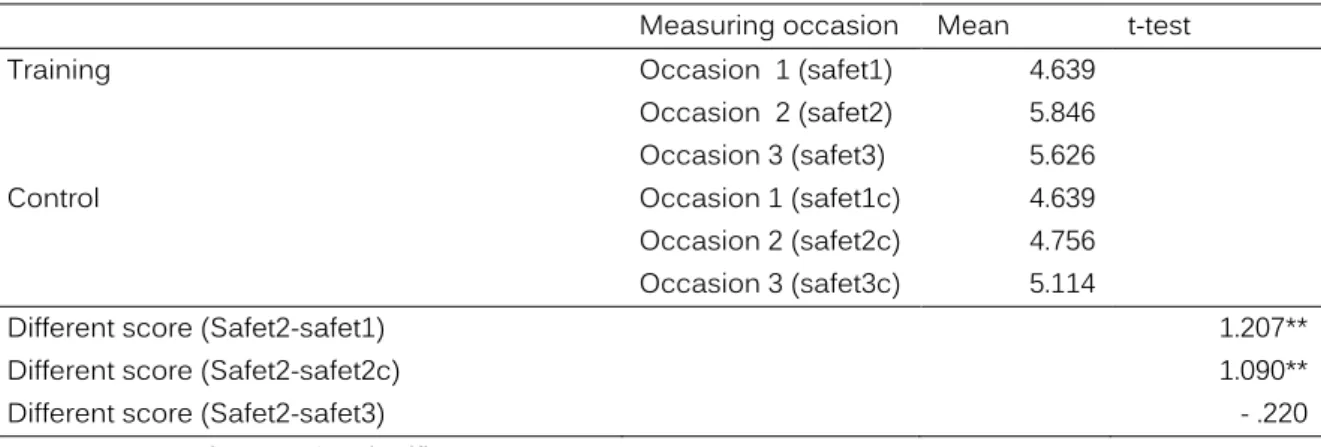
24 Table 3
Estimated means Working Safety outside the agency and t-test
Measuring occasion Mean t-test
Training Occasion 1 (safet1) 4.639
Occasion 2 (safet2) 5.846 Occasion 3 (safet3) 5.626
Control Occasion 1 (safet1c) 4.639
Occasion 2 (safet2c) 4.756 Occasion 3 (safet3c) 5.114
Different score (Safet2-safet1) 1.207**
Different score (Safet2-safet2c) 1.090**
Different score (Safet2-safet3) - .220
Note. c = control, ** p < .01, significant
Table 3 shows the estimated means of all measuring occasions in both conditions (training and control). The means of the initial value of Workplace Safety outside the agency have been fixed to be equal for both conditions in order to analyse the differences between these groups. All means are higher than 4.630, which indicates that the starting level of knowledge and skills of Workplace Safety is higher (on average) than the mean of the scale (scale 1-7, mean scale = 4). There are two reasons why the results indicate that training has a significantly positive influence on knowledge and skills of Workplace Safety outside the agency. Firstly, the means of the training condition (one week after training) are significantly higher than the initial values (veiligt2 -veiligt1 = 1.207, p = .000). Secondly, the means of the training condition (one week after training) prove to be significantly higher than the control condition (veiligt2 - veiligt2c = 1.090, p = .000). So the answer to research question 1 is that after training there is increase of knowledge (with 51 % compared to the possible 100 %).
25 Table 4
Estimated means, sd-, sd+, and t-test
T1 T2 T3 T-test
sd- Training 3.000 5.386 5.493
mean Training 4.667 4.768 5.675
sd+ Training 6.333 6.259 5.685
sd- Control 3.000 3.255 4.241
mean Control 4.667 4.768 5.132
sd+ Control 6.333 6.183 6.234
Different score (safet3c - safet2c) .358†
Different score (safet2 - safet2c) 1.090**
Different score (safet3 - safet3c) .511
Note. safe = Workplace Safety outside the agency, c = control group, T = measuring occasion, actual sd= 1,492, sd- = one sd subtracted from mean, sd+ = one sd added to mean ** p<.01, † marginal. The values on T2 and T3 are estimated based on the factor scores of the initial values (T1). Formula (1) is used with the factor scores on the place of x. The trajectory that best suited the means of Table 3 are presented.
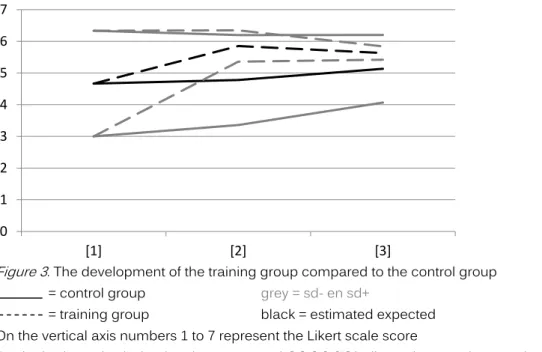
As shown in Table 4, the training has an effect and also within the control group knowledge and skills prove to have increased significantly. Based on the data of Table 4 a graph has been made to explicitly show how training transfer develops within the training group and the control group (See Figure 3).
Figure 3. The development of the training group compared to the control group = control group grey = sd- en sd+
= training group black = estimated expected On the vertical axis numbers 1 to 7 represent the Likert scale score
On the horizontal axis the time is represented: [1], [2], [3] indicate the actual measuring occasion
Figure 3 illustrates that the estimated mean of training group on occasion 3 compared to occasion 2 remains unchanged. So the answer to research question 2 is that there is maintenance. The striking thing in this graph is that the control group implies a marginally positive difference between measuring occasions 3 and 2. This marginal increase (safet3c – safet2 = .358, p = .064) implies that the control group has developed more knowledge and skills of Workplace Safety outside the agency
0 1 2 3 4 5 6 7
26
between measuring occasions 2 and 3. Finally, the training group did not appear to have any significant differences compared to the control group on occasion 3 (safet3 – safet3c = .551, p = .100). This means that the control group, when compared to the training group after two months, has an equal score. The explanation for these last two striking results will be clarified in the sections below.
Training transfer of Workplace Safety and personal characteristics
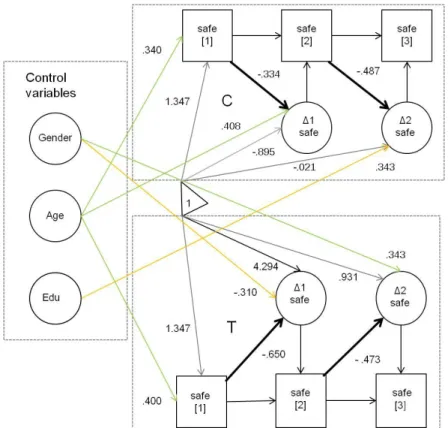
The additions of the control values and feedback from colleagues data to the initial model negatively influences the fit of the model. This is due to the low N and therefore the control variables (gender, age and educational level) have been added separately to the existing LDS model of Workplace Safety outside the agency. The standardized values were calculated in order to identify the influence of these variables. In this model the data have been split into control and training results again. Figure 4 represents the effect of the control variables gender, age and educational level on the knowledge and skills of Workplace Safety outside the agency.
Figure 4. Effect sizes of the control variables on Workplace Safety outside the agency.
Standardized values (safe = Workplace Safety outside the agency; C = control group; T = training group; Edu = educational level), Safe[t] represents safe measured on time t. represents safe’s latent
27
Figure 4 illustrates that gender and age influence the knowledge and skills of Workplace Safety outside the agency. However, there is no visible influence of the educational level, because the marginal significant influence is only visible in the control group on measuring occasion 3 (p = .071). These results can be neglected. The training group results illustrate that gender negatively influences Workplace Safety outside the agency on measering occasion 2 (effect size = -.310; p = .027) and that it is marginally positive on occasion 3 (effect size = .316; p = .070). The negative influence on measuring occasion 2 indicates that being a man has a greater effect on growth of knowledge of Workplace Safety outside the agency than being a woman. On the other hand, the (marginally) positive influence on measuring occasion 3 indicates that being a woman has a greater effect on the maintenance of knowlegde of Workplace Safety outside the agency than being a man. Furthermore, age also positively influences the initial values of Workplace Safety outside the agency (control group effect size = .340, p = .036; training group = .400, p = .005). In addition, one week after the training (measuring occasion 2; control group) age affects the values positively significantly (effect size = .408; p = .034), but not in the training group (effect size = -.164, p = .225). These results illustrate that the higher the age of the respondent, the more the initial values of Workplace Safety outside the agency in training and control are predicted. This effect is also shown in the control group on measuring occasion 2 (effect size = .408). However, on measuring occasion 3 (control group) and on measuring occasions 2 and 3 (training group) age does not have any effect. Given the low validity, the control variables cannot be included in the following analysis.
Training transfer of working safety and the influence of stimulation (and vice versa)
28
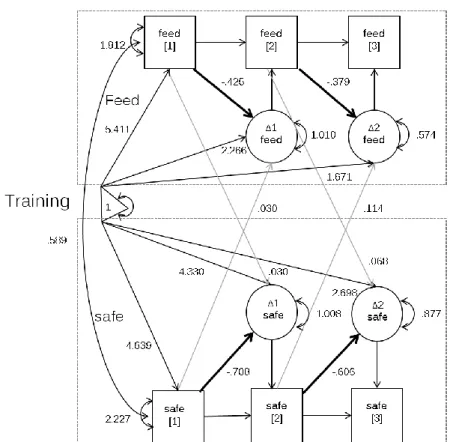
Figure 5. Influence of Workplace Safety on stim and vice versa in the training condition.
Unstandardized values (safe = Workplace Safety outside the agency, stim = feedback from colleagues). Safe[t] represents safe measurement on time t. presents safe’s latent difference factor for different measuring occasions. Stim[t] represents stim measurement on time t. presents stim’s latent difference factor for different measuring occasions. The black lines with values are the significant intercepts. The black arrows (no values) are fixed at 1. The curved lines with double arrows are variances. The proportional autoregressions (β’s) are presented in black bold arrows. The light grey arrows represent the values with the non-significant coupling parameters (y’s). Correlation is represented with two-sided black arrows (p’s ).
29
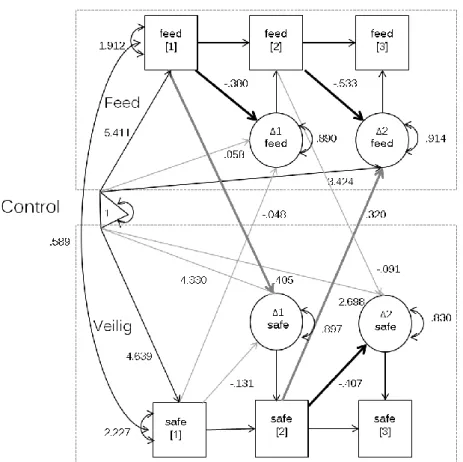
Figure 6. Influence of Workplace Safety on stim and vice versa in the control condition.
Unstandardized values (safe = Workplace Safety outside the agency; feed = feedback from colleagues). Safe[t] represents safe measurement on time t. presents safe’s latent difference factor for different measuring occasions. Feed[t] represents feedback from colleagues measurement on time t. presents feed’s latent difference factor for different measuring occasions. The black arrows with values are the significant intercepts, the light grey lines taken from the constant are non-significant intercepts. The black arrows (no values) are fixed at 1. The curved lines with double arrows are variances. The proportional autoregressions (β’s) are represented in black bold arrows. The invariant coupling parameters of variable feed to variable safe (and vice versa) are dark grey arrows with values (y’s). The light grey arrows represent the values with the non-significant coupling parameters (y’s). Correlation is represented with two-sided black arrows (p’s ).
30
1 can not so much be attributed to the level of knowledge of Workplace Safety outside the agency as to the degree of feedback from colleagues.
31
Discussion
In this longitudinal research it has been tested to what extent the work environment factors facilitate training transfer. The seven supporting work environment factors that have been measured illustrate a stimulating learning climate, an exchange of information with colleagues and opportunities to experiment. On three measuring occasions (pretest, one week after the training, and two months after the training) the perception of the work environment and the knowledge and skills of Workplace Safety was measured. The respondents (N = 60) were divided proportionally in the control group (followed no training) and in the experimental group (followed training). The discussion first concentrates on the extent to which the results correspond to previous studies that are similar to this one and in doing so, the focus is on the knowledge that was gained one week after the training (generalization). Subsequently, the results show that knowledge and skills have been retained two months after the training (maintenance). Then an explanation will be found for the increase of knowledge of the control group during the last measurement. In addition, the control variables gender and age influence the results. Finally, the influence of the work environment is discussed, which, interestingly, has no influence on the training group, but does have an influence on the control group.
Interestingly is that the analyses of the CFAs could only present one moderate valid scale of Workplace Safety and one of the factors of the work environment (applicable for longitudinal research). On moment occasion one eight scales seem valid, however over time the training group responds differ. One explanation for this change in the training group is the way measurements were carried out; the scales might not have been well-reconstructed. Another explanation is that the meaning of the scales changes for respondents. Previous studies show that the interpretation of respondents changed. This altered interpretation can be explained from the conceptual perspective. The meaning of scales can change after training, because an employee has acquired substantive phrases. As a result, an employee interprets and judges the theorems differently (Oort, Visser, & Sprangers, 2009).
32
maintenance of knowledge). Previous research showed a decrease of knowledge (after a year) of 20 percent (on average) compared to previously acquired knowledge and skills (Brown & Reed, 2002; Saks, 2002; Broad & Newstrom, 1992; Holton & Baldwin, 2003). Explanations for this increase of knowledge have been found by adding control variables to the model. Then, it was examined whether the work environment contributes to increase of knowledge in the training and the control conditions.
Secondly, it was found that two control variables influence the training transfer. As was expected, the level of education does not affect training transfer (Fourarge et al., 2009). Previous research shows that gender has no effect on training transfer (Pham et al., 2013). However, this research shows that immediately after the training, being a man contributes more to the value of Workplace Safety outside the agency than being a woman. Conversely, two months after the training it appears that being a woman has a greater influence on the value of Workplace Safety outside the agency than being a man. In conclusion, this shows that both men and women learn from training, but men start learning earlier than women. Moreover, this study shows that all ages learn from training and the initial knowledge is affected by age in both conditions. The higher the age of an employee is, the higher these initial values are. In addition, it appears that the younger the employees are in the control group, the more increase of knowledge occurs. This is consistent with research that indicates that younger employees learn more in an informal way (Borghans et al., 2006). An explanation for the increase of knowledge of the young employees could be that they share information with each other about a training or give feedback to each other in the control group. By analysing the work environment, an explanation has been found for this result and will be clarified below.
33
knowledge then leads to more feedback to colleagues, which facilitates the maintenance of knowledge. In addition, colleagues may exchange information with each other online (through the Learning House), during consultations at the agency of a particular area, during other trainings or other informal meetings. In the public library of the Learning House all information with regard to the training of Workplace Safety that could be consulted by employees can be found (cleaning company, 2013). Furthermore, the participation of employees in training spread out over time proves to contribute positively to sharing knowledge with colleagues who have not yet participated in the training. Desirable limitations, follow-up of research and implication for theory and practice of this study will be explained in the sections below.
Limitations
A strong point in this research is the comparison between the training condition and the control condition. This is important for a valid interpretation of the increase of knowledge. In addition, only the invariant scales have been included in the analyses. Moreover, the results are valid for the total population of employees, because a mixed group (based on background characteristics) participated in the study.
In this research, the periods of time between the measuring occasions differ per respondent. Within the training group measurements have been carried out before the training, one week and again two months after the training; they differ per respondent. The initial measurement in the control group is equal. The second measurement was carried out after employees in the training group had completed the training and the last measurement was two months later. In addition, the instruments rely in this study on the interpretation of the employees themselves. In this perspective triangulation is desirable. Triangulation is the use of multiple sources and measuring instruments in research (Van Staa & Evers, 2010). As a result, a more valid and reliable picture can be drawn of the work environment and the effect on training transfer. When measuring training transfer, it is advisable to make use of the interpretation of the respondents and their supervisor. Moreover, it is desirable to observe the transfer behaviour on the basis of observation scales (for example, on the basis of the four levels of Kirk Patrick) (MindTools, 2014). However, the presence of an observer affects the results as well. The use of video equipment may prevent this, but this is time-consuming and impractical from an organizational point of view (Phillips & Stone, 2002).
34
Future research
In this study the univariate proportional change LDS model has been chosen in order to do longitudinal research (McArdle, 2009; McArdle & Prindle, 2008). This model gives a precise interpretation of the differences in means and is a valid research method. However, with a low N this is a risky analysis. Other methods for longitudinal research are: multilevel analysis, growth models and repeated measures (Field, 2009). Multilevel analysis analyses linear regression and random regression. The expectations in this research are that increase or possible decrease of growth is possible, which makes multilevel analysis inappropriate (De Leeuw, & Meijer, 2008). The application of growth models on this study has also been excluded, because there is no scientific unanimity on the progress (decrease, increase or equal after two months) of training transfer (Field, 2009). Another method of longitudinal testing is Repeated Measures. In this method the changes of the variables are tested on the basis of conditions (for example stimulation), but no comparison has been made between an experimental and a control group. These tests are less valid and less capable when times between measuring occasions are unequal (Field, 2009). The most appropriate method for longitudinal comparisons between two conditions and changes of the individual is the univariate proportional change LDS model. This model gives longitudinal insight into how levels of knowledge develop after training and makes it possible to measure the influence of other variables on them (McArdle, 2009; Eschleman & Lahuis, 2014).
In future research, it is important to examine other influences as well, such as characteristics of the learner (McArdle, 2009; Eschleman & LaHuis, 2014). In addition to the work environment, characteristics of the learner and the training design prove to affect training transfer (Baldwin & Ford, 1988; Kessels, 2001; Holton et al., 2000; Burke & Hutchins, 2007; Blume et al., 2010). However, this has not been included in this research. Furthermore, the level of knowledge and skills that were measured two months after training could still drop a year later. In future research maintenance could ideally be measured two months, six months and one year after training. In this way more insight will be gained into how the development of maintenance crystallizes over time. In order to gain insight into the influence of the work environment on training transfer, the work environment could be measured on equal occasions. The work environment may change over time, therefore it is desirable to carry out measurements on several occasions.
35
items of other existing scales. In addition, previously used scales have not consistently been applied in previous research, which shows that it is a problem to find valid scales for longitudinal research when measuring the work environment (Holton et al., 2000). Therefore, the LTSI model or other existing valid scales could be used to measure the work environment (and other factors) in follow-up research. Future research with more power (higher N) and the use of existing scales would contribute to a valid longitudinal research. It is also possible to test self-constructed items in a pilot, as De Jong and Den Hartog (2010) illustrate in previous research. To sum up, in longitudinal research on training transfer it is important that: (1) the selected scales are valid for longitudinal research, (2) the scales are tested in such a way that they are attuned to the interpretation of the respondents.
Implications for theory and practice
Companies put a great deal of money into training. It is important for a company that training contributes to return on investment (Phillips & Stone, 2002; Tanriseven & Veldhuizen, 2012; Percival, Cozzarin, & Formaneck, 2013; Volet, 2013). In this study the cleaning agency and the financier of blended learning have interest in valid future research. This corresponds to a recent review of Weisweiller et al. (2013) who claim that valid longitudinal scales are desirable. Thus, more insight can be gained into training transfer and the influence of the learning characteristics, the training design and the work environment. In addition, follow-up research on feedback and specific scales that concern the way feedback is given, are desirable. In this way, it is clarified which kinds of feedback are effective. Moreover, Volet (2013) notes in an article that adaptive learning can also be linked to the transfer problem. This allows a better understanding of the problems and solutions of training transfer. Finally, it is desirable with blended learning to find out how sharing information takes place with one another and how it contributes to the maintenance of acquired knowledge and skills (Van Woerkom, 2003; Cabrera & Cabrera, 2005).
36
meetings. When there is a signal in the regions that knowledge and skills of a particular topic decline, an up- to- date revision training is a possibility.
Besides colleagues, supervisors play an important role in training transfer. Because of validity problems this has not been shown. Previous researchers, however, mention a number of factors with regard to the supervisor that can contribute to training transfer: involvement, stimulation of applying acquired skills in the workplace, provide scope to learn and formulation of learning objectives, learning and training (Holton et al., 2000; Russ-Eft, 2002; Van den Bossche et al., 2010; Nijman, 2004; Leahy, 2002; Spitzer, 1986; Montesino, 1995; Cromwell & Kolb, 2004; Baldwin & Ford, 1988; Geijsel et al, 2009). These factors can contribute to training transfer, which is why it is important to motivate supervisors to apply them. Then this can lead to optimized return on investment.
Conclusion
37
References
Arboportaal (n.d.). Veilig werken. [Working safety]. Retrieved from http://www.arboportaal.nl/onderwerpen/veilig-werken
Ashford, S., & Cummings, L. (1985). Proactive feedback seeking: the instrumental use of the information environment. Journal of Occupational Psychology, 58(1), 67– 79.
Axtell, C. M., Maitlis, S., & Yearta, S. K. (1997). Predicting immediate and longer term transfer of training. Personnel Review, 26(3), 201–213. doi: 10.1108/00483489710161413
Baldwin, T. T., & Ford, J. K. (1988). Transfer of training: A review and directions for future research. Personnel Psychology, 41, 63–105. doi:10.1111/j.1744-6570.198 8.tb00632.x
Baldwin, T. T., & Magjuka, R. J. (1991). Organisational training and signals of importance: Linking pretraining perceptions to intentions to transfer. Human
Resource Development Quarterly, 2, 25-36. doi: 10.1002/hrdq.3920020106
Bates, R., & Khasawneh, S. (2005). Organizational learning culture, learning transfer climate and perceived innovation in Jordanian organizations. International Journal of Training and Development, 9(2), 96-109. doi:10.1111/j.1468-2419.20 05.00224.x
Becker, T. E., & Klimoski, R. J. (1989). A field study of the relationship between the organizational feedback environment and performance. Personnel Psychology,
42, 343–58. doi:10.1111/j.1744-6570.1989.tb00662.x
Billett, S. (2001). Learning in the workplace: Strategies for effective practice. Sydney: Allen and Unwin. ISBN: 186508-364-X
Blume, B. D., Ford, J. K., Baldwin, T. T., & Huang, J. L. (2010). Transfer of Training: A Meta Analytic Review. Journal of Management 36(4), 1065-1105. doi:10.1177/0149206309352880
Bolino, M. C, Turnley, W.H., & Bloodgood, J.M. (2002). Citizenship Behaviour and the Creationof Social Capital in Organizalions. Academy of Management Review,
27(4), 505-22.
Borghans, L., Golsteyn, B., & De Grip, A. (2006). Meer werken is meer leren. Determinanten van Kennisontwikkeling [More working is more learning.
Determinants of knowledge development]. ’s-Hertogenbosch: CINOP.
Branham, L. (2005). The seven hidden reasons employees leave. New York: AMACOM. Broad, M. L., & Newstrom, J. W. (1992). Transfer of training: Action packed strategies to
ensure high payoff from training investments. Reading, MA: Addison-Wesley.
38
Burke, L. A., & Baldwin, T. T. (1999). Workforce training transfer: A study of the effect of relapse prevention training and transfer. Human Resource Management, 38(3), 227–243. doi:10.1002/(SICI)1099-050X(199923)38:3<227::AID-HRM5>3.0.CO;2-M Burke, L. A., & Hutchins, H. M. (2007). Training Transfer: An Integrative Literature Review.
Sage, 3, 263-296. doi:10.1177/1534484307303035
Cabrera, E. F., & Cabrera, A. (2005). Fostering knowledge sharing through people management practices. International Journal of Human Resource Management,
16(5), 720-735. doi:10.1080/09585190500083020
Cheng, E. W. L., & Hampson, I. (2008). Transfer of training: A review and new insights.
International Journal of Management Reviews. doi:10.1111/j.1468-23
70.2007.00230.x
Clarke, N. (2002). Job/work environment factors influencing training effectiveness within a human service agency: Some indicative support for Baldwin and Fords’ transfer climate construct. International Journal of Training and Development,
6(3), 146-162. doi:10.1111/1468-2419.00156
Colquitt, J.A., LePine, J.A., & Noe, R.A. (2000). Toward an integrative theory of training motivation: A meta-analytic path analysis of 20 years of research. Journal of
Applied Psychology, 85, 678–707.
Cromwell, S. E., & Kolb, J. A. (2004). An Examination of Work-Environment Support Factors Affecting Transfer of Supervisory Skills Training to the Workplace.
Human Resource Development Quarterly, 15(4), 449-471. doi:10.1002/hrdq.1115
Currie, K., Tolson, D. & Booth, J. (2007). Helping or hindering: the role of nurse managers in the transfer of practice development learning. Journal of Nursing
Management, 15, 585–594. doi:10.1111/j.1365-2834.2007.00804.x
Dawes, S. S., Cresswell, A. M., & Pardo, T. A. (2009). From “Need to Know” to “Need to Share”: Tangled Problems, Information Boundaries, and the Building of Public Sector Knowledge Networks. Public Administration Review, 392-404. doi:10.11 11/j.1540-6210.2009.01987_2.x
De Jong, J. & Den Hartog, D. (2010). Measuring Innovative Work Behaviour. Blackwell Q Publishing Ltd, 19(1), 23-36. doi:10.1111/j.1467-8691.2010.00547.x
De Leeuw, J., & Meijer, E. (2008). Handbook of multilevel analysis. Springer Science+Business Media, USA. ISBN: 978-0-387-73183-4. 1-498.
De Vellis, R. F. (2003). Scale development: theory and applications: theory and
application. Thousand Okas, CA: Sage.
DeNisi, A., & Kluger, A. (2000). Feedback effectiveness: can 360-degree feedback appraisals be improved? Academy of Management Executive, 14(1), 129–39. doi:10.5465/AME.2000.2909845
39
Enos, M. D., Kehrhahn, M. T., & Bell, A. (2003). Informal Learning and the Transfer of Learning: How Managers Develop Proficiency. Human resource development quarterly, 4(4), 369-387. doi:10.1002/hrdq.1074
Eschleman, K. J., & LaHuis, D. (2014). Advancing occupational stress and health research and interventions using latent difference score modeling. International
Journal of Stress Management, 21(1),112-136. doi:10.1037/a0033099
Ferdinandi, V. M. (1995). An analysis of transfer of training in a business setting.
Dissertation Abstracts International, 56(09), 3481A.
Ferrer, E., & McArdle, J. J. (2010). Longitudinal modeling of developmental changes in psychological research. Current Directions in Psychological Science, 19(3), 149-154.
Field, A. (2009). Discovering statistics using SPSS (pp. 1-856). London: Sage. ISBN: 9781847879073
Ford, J. K., & Weissbein, D. A. (1997). Transfer of training: an updated review and analysis. Performance Improvement Quarterly, 10(2), 22-41. doi:10.1111/j.1937-8 327.1997.tb00047.x
Ford, J. K., Quinones, M., Sego, D., & Sorra, J. (1992). Factors affecting the opportunity to perform trained tasks on the job. Personnel Psychology, 45, 511-27.
Fourarge, D., De Grip, A., & Nelen, A. (2009). Leren en werken [Learn and work]. Researchcentrum voor Onderwijs en Arbeidsmarkt. ISBN: 978-90-5321-474-9. Fransen, J. (2006). Blended Learning. 1-6.
Retrieved
from
www.scienceguide.nl/pdf/20060704.pdf
Gaudine, A. P., & Saks, A. M. (2004). A longitudinal quasi-experiment on the effects of post training transfer interventions. Human Resource Development Quarterly,
15(1), 57–76.
Geijsel, F. P., Sleegers, J. C., Stoel, R. D., & Krüger, M. L. (2009). The Effect of Teacher Psychological and School Organisational and Leadership Factors on Teachers' Professional Learning in Dutch Schools. The Elementary School Journal, 109 (4), 406-427. doi:10.1086/593940
Georgenson, D. L. (1982). The problem of transfer calls for partnership. Training and
Development Journal, 6(10), 75-78.
Gielen, E. W. M. (1995). Transfer of training binnen bedrijfsopleidingen (dissertatie)
[Transfer van training in a corporate setting (dissertation)]. Enschede:
Universiteit Twente.
Gilpin-Jackson, Y., & Bushe, G. R. (2007). Leadership development training transfer: a case study of post-training determinants. Journal of Management
Development, 6 (10), 980 - 1004. doi:10.1108/02621710710833423
Grossman, R., & Salas, E. (2011). The transfer of training: what really matters.
International Journal of Training and Development 15(2), ISSN 1360-3736.