Abstract—The intercarrier interference (ICI) resulted from fast fading channel destroys the orthogonality of the orthogonal frequency-division multiplexing (OFDM) signal and deteriorates receiver performance. In this paper, we propose two-stage interference canceller, which combines zero-forcing (ZF) equalizer with complex sphere decoder in a group-based version, to tackle the severe ICI on the OFDM. The algorithm is developed in accordance with the sparsity of ICI matrix, in which the channel power of subcarrier of interest primarily leaks to its neighboring subcarriers. First, we use the group-based ZF equalizer in place of direct ZF to obtain initial estimates. In so doing, prohibitive complexity of large matrix inversion can be avoided. Second, after removing the out-of-group ICI components, the complex sphere decoder (CSD) is presented further improving the accuracy of data estimates. The CSD algorithm is based on maximum-likelihood criterion and QR decomposition. Complexity analysis shows that the CSD algorithm use only a half of multipliers which is required in the real-valued SD. Finally, simulation results demonstrate the proposed two-stage canceller has superior performance than those of direct ZF and of direct CSD.
Index Terms—Intercarrier interference (ICI), fast fading, orthogonal-frequency-division multiplexing (OFDM), sphere decoding algorithm.
I. INTRODUCTION 1
Orthogonal frequency-division multiplexing (OFDM) is the technique most widely applied in multipath slow fading environment because of its simple one-tap frequency domain equalizer. However, intercarrier interference (ICI) resulted from fast fading channel destroys the orthogonality of the OFDM and thus deteriorates receiver performance. In literatures, number of algorithms have been proposed to mitigate the effect of ICI [1-2]. The minimum-mean- square-error (MMSE) and zero-forcing (ZF) algorithms have been proposed, but these algorithms could not effectively tackle the high Doppler spread effect. When the number of subcarriers becomes large, the prohibitive computation load leads it not feasible to be implemented.
Recently, sphere decoding (SD) algorithm is well studied in the multiple-input/multiple-output (MIMO) system, because it provides near maximum-likelihood (ML) performance but reduces exponential-order complexity into polynomial-order complexity. In [3], the Schnorr-Euchner strategy is employed in the SD algorithm, leading to O(lavgN) This research work was supported by National Science Council, Taiwan, under the Grant NSC-98-2218-E-033-007.
R.-L. Chung is with the Department of Electronic Engineering, Chung Yuan Christian University, Chungli City, 32023, Taiwan (Phone: +886-3-2654605; Fax: +886-3-2654699; e-mail: [email protected]).
C.-L Chen and H.-T. Chen finished their M.S. degrees from the Department of Electronic Engineering, Chung Yuan Christian University, Taiwan.
complexity, where lavg means the average number of loops for executing SD algorithm. In [4], the author first applies the SD algorithm to solve the Doppler-induced ICI problem on the OFDM. In so doing, frequency diversity gain can be well taken advantage of. However, complexity issue still sets the limit to the algorithm on the OFDM system with larger subcarriers size.
In this paper, we aim to solve the ICI problem of OFDM in a group-based version by using channel sparsity of the ICI matrix. The sparsity means dominant channel power is only leaking to the neighboring subcarriers of the interested subcarrier. Aware of this good property, we divide all the subcarriers by several successive groups, and propose moderate-complexity two-stage ICI canceller, which combines group-based zero-forcing (G-ZF) equalizer with modified sphere decoder. Simulation results demonstrate the proposed two-stage canceller has superior performance than those of direct ZF and of direct SD. The remainder of the paper is organized as follows. Section II formulates the Doppler-induced ICI problem of the OFDM system, and sparsity property is addressed. In the section III, we first re-formulate the ICI problem in the group-based version, and use G-ZF to obtain the initial data estimates. Then, we present modified SD algorithm to suit for group decoding to enhance the estimation accuracy. A double complexity reduction is further achieved by replacing the real-valued SD (RSD) algorithm with complex-valued algorithm. Simulation results and complexity analysis are shown in the section IV. Concluding remarks are made in the section V.
[image:1.595.340.545.698.762.2]II. SIGNAL MODEL FOR FAST-FADING MULTIPATH CHANNELS
Fig. 1 depicts an N-subcarrier OFDM transmitter, where S/P, and P/S denote serial-to-parallel, and parallel-to-serial. First, the data bits {bi} are modulated as data symbol X[k] at the kth subcarrier, for k=0,1,…,N-1. Let vectors
[ [0],...,X X N[ 1]]T
= −
X and x=[ [0],..., [x x N−1]]T denote the frequency-domain and the time-domain OFDM symbols, respectively. Thus, the relationship between x and X is given by
H
=
x F X (1)
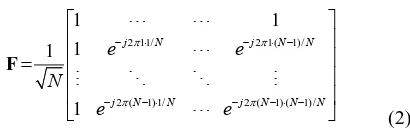
where F is a unitary FFT matrix, expressed by
2 11/ 2 1( 1)/
2 ( 1) 1/ 2 ( 1) ( 1)/
1 1
1 1
1
j N j N N
j N N j N N N
e e
N
e e
π π
π π
− ⋅ − ⋅ −
− − ⋅ − − ⋅ −
⎡ ⎤
⎢ ⎥
⎢ ⎥
=
⎢ ⎥
⎢ ⎥
⎣ ⎦
F
(2) For avoiding the inter-block interference and intersymbol
Group-Based ICI Canceller Combined with Complex
Sphere Decoding for Fast-Fading OFDM System
interference, the length of cyclic prefix (CP) of the OFDM, L, is assumed to be equal to or longer than the maximum channel delay spread. Next, let y=[ [0],..., [y y N−1]]T be the received data vector after removing the CP. We can then express y as
= +
y Hx w. (3)
where w is an N×1 white Guassian random vector with zero
mean and covariance matrix σ2
IN, and IN stands for N×N
identity matrix. The time-varying channel matrix H is expressed by
0 1 1
0 0 0
2 0 1
2 2 2
1 0
1 1
1 2 0
1 1 1
0
0
0
0
L
L L
L L L
L
L L
L L
N N N
h h h
h h h
h h
h h h
−
− −
− − −
−
− −
− −
− − −
⎡ ⎤
⎢ ⎥
⎢ ⎥
⎢ ⎥
= ⎢ ⎥
⎢ ⎥
⎢ ⎥
⎢ ⎥
⎢ ⎥
⎣ ⎦
H (4)
where hnl for n=0,...,N−1 and l=0,1,...,L−1, denotes the
fading coefficient of the lth path and the nth data symbol. Then, the frequency-domain received signal vector Y is the FFT of y
H
=
= +
= +
Y Fy
FHF X Fw
AX Z
(5)
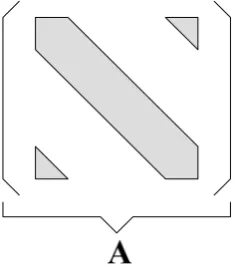
[image:2.595.111.483.57.195.2]where A=FHFH is called an ICI channel matrix.
Fig. 2. The illustration of ICI channel matrix A.
As for the flat fading channel or no frequency mismatch between transmitter and receiver, the ICI channel matrix A
[image:2.595.91.269.366.459.2]becomes a diagonal matrix. However, due to the fast fading channel, matrix A is not a diagonal matrix. Therefore, each subcarrier interference causes the channel spread as shown in Fig. 2. Because the FFT matrix F is unitary, the noise vector
[ [0],..., [Z Z N 1]]T
= −
Z is still white Gaussian noise.
III. GROUP-BASED ICICANCELLER
In this section, we present two-stage ICI canceller. In the first stage, we formulate the ICI problem in a group version, and use group ZF to obtain the initial data estimates. In the second stage, complex SD (CSD) is presented to improve the accuracy of estimates.
...
...
...
[0]
Y
[ −1]
Y N
0
e
1
− eG 0
Y
1
− YG
...
0ˆ X
1
ˆ
[image:2.595.310.543.426.527.2]G− X
Fig. 3. Block diagram of the two-stage group-based ICI canceller.
A. Group-Based Zero-Forcing (G-ZF) Algorithm
Noticing that ICI matrix inherits sparsity property, we rewrite (5) in a group version. We divide the received data vector Y of N-by-1 by G groups, Yn, for n=0, 1, …, G-1.
Thus, every group consists of M=N/G data samples. Collecting Yn = [Y(nM), Y(nM+1),…, Y(nM+M-1)] where
Y(n) is the nth element of Y, we rewrite the received data model in the group version as
, 0, 1, , 1,
n = n + n n= G−
Y A X Z (6)
where An=A(nM nM M: + -1,1:N) denotes the submatrix of A, and Zndenotes the corresponding noise vector for the n-th group. The notation A(i1:i2, j1:j2) stands for the
rectangular region of A determined by two diagonal points (i1, j1) and (i2, j2). Next, we let An=A(nM:nM+M-1,
nM:nM+M-1) denotes the diagonal block matrix of the nth group. Thus, (6) is rewritten as
S/P Modulation IFFT P/S InsertionCP Varying ChannelMultipath Time bit stream
{ }bi
[0]
X
[ −1]
X N
[0] x
[ −1]
x N
x
(a) [0]
y
[ −1]
y N
y Y[0]
[ −1]
Y N
0 ˆ X
1 ˆ
−
XG
ˆ X
(b)
[image:2.595.110.229.620.754.2], 0, 1, , 1. n = n n+ n+ n n= G−
Y A X W Z (7)
where Xn=[X(nM), X(nM+1),…, X(nM+M-1)], and Wn denotes the ICI effect on the Xn. Then, the G-ZF vector for detecting Xn is calculated by
1
( )
GZF H H
n n n n
−
=
C A A A . (8)
Finally, the initial data estimates is obtained by Xn= (CGZFn Yn)
Q , where ( )Qi denotes decision device. B. The G-ZF Combined with Complex Sphere Decoding
After the first-stage data estimates by the G-ZF, we then remove the out-of-group matrix effect on Xn, obtaining Yn. If total out-out-group ICI is removed, Yn is expressed by
, 0, 1, , 1. n= n n+ n n= G−
Y A X Z (9)
Next, the complex sphere decoding algorithm is employed to improve the estimation accuracy of information data. The algorithm is performed in the complex domain. First, note that the complex sphere decoding (CSD) algorithm is derived in the maximum-likelihood (ML) sense, and thus problem formulation is to find the sequence Xn such that the Euclidean distance is minimized, which is stated as follows
2
ˆ arg min
n
n n n n
S
∈
= −
X
X Y A X (10)
where S denotes the set of all possible signal sequences. In the complex sphere decoding algorithm, the searching radius will be limited to reduce complexity, i.e.,
2 2
n− n n ≤ρ
Y A X for ρ is the sphere decoding radius. The algorithm becomes ML detection when ρ = ∞. Now, to perform the SD algorithm more effectively, QR decomposition is taken on the ICI matrix, thus yielding
n = n n
A Q R (11)
where Qn and Rn are unitary matrix and upper triangular matrix [4]. Next, let Un =Q YnH n , where H stands for Hermitian operation, and using the Schnorr-Euchner based searching strategy to find the most probability closest lattice point [3]. We then define
1 GZF
n n n n n
−
= =
e R U C Y , (12)
In so doing, the cost function in (10) can be equal to 2 2
2
2
( )
( ) ( )
H H
n n n n n n n n n
n n n n n n
H H
n n n n n n
− = −
= −
= −
= − −
Y A X Q Y Q Q R X
U R X
R e X
e X R R e X
(13)
and then let 1 n
−
R be decomposed by two parts 1
1
−
−
⎡ ⎤
= ⎣ ⎦
Rn Rn vM (14)
where Rnis a an M×(M−1) matrix, and vM−1is M-
elements column vector which is decomposed to vertical vector vM− ⊥1, and parallel vector vM−1,||, thus
1 1, 1,
M− = M− ⊥+ M−||
v v v , where
1, [0 0 1]
T M− ⊥= vM−
v (15)
1, [ 0 2 0]
T M−||= v vM−
v (16)
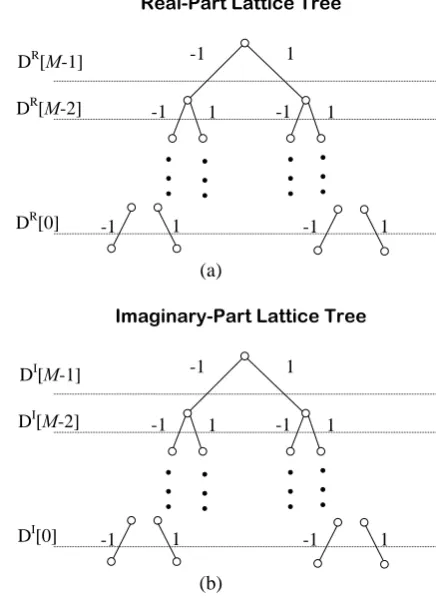
Next, figures 4 (a) and 4(b) show the lattice tree of the complex (modified) sphere decoding algorithm. In the decoding strategy, we estimate complex signal by real part and imaginary part, separately. First, we only estimate the real part of information data, and then only estimate the
imaginary part of the data. Finally, we combine two real sequences to form one complex sequence. In so doing, one possible bridge can be constructed, where we can apply the complex data from G-ZF to the SD algorithm. Although using this procedure incurs some information loss, the 0.2-dB performance degradation almost can be ignored, as compared to the RSD which will be shown in Fig. 5.
-1 1
-1
-1
-1
-1 1 1
1 DR[M-1]
DR[M-2]
DR[0]
Real-Part Lattice Tree
1
(a)
-1 1
-1
-1
-1
-1 1 1
1 DI[M-1]
DI[M-2]
DI[0]
Imaginary-Part Lattice Tree
1
(b)
Fig. 4. (a) The binary tree with M-dimensional lattice for real part of signal, and (b) The binary tree with M-dimensional lattice for imaginary part of signal.
The recursion part of the complex SD is summarized as follows. First, we obtain the last symbol estimate in the received block.
1,
2 1,
( [ 1]) [ 1]
[ 1] Re
[ 1]
M n
R n
M
M M
X M
M
− ⊥
− ⊥
⎛ − − ⎞
⎜ ⎟
− =
⎜ − ⎟
⎝ ⎠
v e
v
(17)
and
1,
2 1,
( [ 1]) [ 1]
[ 1] Im
[ 1]
M n
I n
M
M M
X M
M
− ⊥
− ⊥
⎛ − − ⎞
⎜ ⎟
− =
⎜ − ⎟
⎝ ⎠
v e
v
(18) where R, I
stand for real part, and imaginary part, and 1, [ ]
M− ⊥m
v , vM−1,||[ ]m , and en[ ]m denote the m-th element of
vectors vM− ⊥1, , vM−1,||, and en, respectively. The square of Euclidean distance is
2
1 2
0 1
2
1
[ , ]( [ ] [ ]
[ , ]
( [ ] [ ]))
[ , ] −
= −
= +
−
= −
+ −
∑
∑
U R X
e
e
n n n M
n n
m M
n n
l m
r m m m X m r m l
l X l r m m
[image:3.595.321.541.147.448.2]where r m m[ , ] denotes the (m,m)-th element of the matrix
n
R . Thus, the real part and imaginary part of the distance square in the last symbol in block are expressed by
[
2 *
2
[ 1] Re{ [ 1, 1]
( [ 1] [ 1]) }
/ 2 ρ − = − − ⋅ ⎤ − − − ⎦ ≤ e R n n
D M r M M
M X M (20)
and
[
2 *
2
[ 1] Im{ [ 1, 1]
( [ 1] [ 1]) }
/ 2 ρ − = − − ⋅ ⎤ − − − ⎦ ≤ e I n n
D M r M M
M X M (21)
The factor 1/2 in (20) and (21) is to reflect the fact that the searching dimension is reduced from two to one. After calculating the distance in the last row, we have to move up and cumulate distance in each row. The distance square of the second last symbol are computed by
[
*
2 *
2
[ 2] Re{ [ 1, 1]( [ 1]
[ 1]) [ 2, 2]
[ 2, 1]
( [ 2] [ 2]
[ 2, 2]
( [ 1] [ 1])) }
/2 ρ − = − − − − − + − − − − − − − + − − ⎤ − − − ⎦ ≤ e e e R n n n n n n
D M r M M M
X M r M M
r M M
M X M
r M M
M X M
(22) and
[
* 2 * 2[ 2] Im{ [ 1, 1]( [ 1]
[ 1]) [ 2, 2]
[ 2, 1]
( [ 2] [ 2]
[ 2, 2]
( [ 1] [ 1])) }
/2 ρ − = − − − − − + − − − − − − − + − − ⎤ − − − ⎦ ≤ e e e I n n n n n n
D M r M M M
X M r M M
r M M
M X M
r M M
M X M
(23) Next, the general representation for the mth symbol estimate
is given by
1 , ,|| 1 2 , ˆ ( [ ])( [ ] [ ] [ ])
[ ] Re
[ ] − ⊥ = + ⊥ ⎛ ⎞ − ⋅ ⎜ ⎟ ⎜ ⎟ = ⎜ ⎟ ⎜ ⎟ ⎝ ⎠
∑
v e v
v
M
m n n m
R i m
n
m
m m X i i
X m m (24) and 1 , ,|| 1 2 , ˆ ( [ ])( [ ] [ ] [ ])
[ ] Im
[ ] − ⊥ = + ⊥ ⎛ ⎞ − ⋅ ⎜ ⎟ ⎜ ⎟ = ⎜ ⎟ ⎜ ⎟ ⎝ ⎠
∑
v e v
v
M
m n n m
I i m
n
m
m m X i i
X m
m
(25)
where vm,⊥and vm,|| denote the vertical vector and parallel vector of the m-th column vector of 1
n
−
R . Finally, we combine two part of symbol estimate as
ˆ [ ] sgn{n nR[ ]} sgn{ nI[ ]}
X m = X m + ×j X m (26)
where sgn{x} denotes signum function, which returns -1 if x≤0 and 1 if x>0.
IV. SIMULATION RESULTS A. Performance Evaluation
In this section, we investigate the performance of the proposed ICI canceller on the OFDM system over the fast fading channels. The simulation parameters are set as follows. We study the OFDM system employing QPSK signal as data symbol and having N=256 subcarriers. The carrier frequency and the CP length are set to fc=2.4 GHzand N/8, respectively. The doubly selective channel used in the simulation is modeled as a six-tap exponential-decayed distribution with Jakes spectrum. We set the normalized Doppler frequency, i.e., the product of maximum Doppler spread (fd) and OFDM symbol duration (T), fdT, to be 0.1. Perfect channel estimation is assumed.
Fig. 5 first compares the performance of three ICI cancellers including the proposed group-based ICI canceller, direct complex sphere decoder, i.e., the case of G=1, direct zero-forcing equalizer. In the simulation, the subcarriers of the OFDM are divided by G=32 groups for the group-based canceller, and thus every group consists M=8 received data samples. From the figure, it can be seen that the proposed two-stage canceller with CSD is obviously better than the other two ICI cancellers. The error performance of real-valued sphere decoder (RSD) is also shown for comparison. It is shown that the performance of CSD is very close to that of the RSD. The 0.2-dB performance loss almost can be ignored.
To understand the effect of the group number on the proposed ICI canceller, Fig. 6 plots the error performance simulated under G={8, 16, 32}. The figure shows the better performance is achieved as the group size M becomes smaller. This is because noise enhancement of the GZF with larger group number becomes more severe, thus resulting in “poor” initial estimates in the first stage and introducing more background noise due to mismatched cancelling. In the figure, the performance of ZF detection under no ICI effect is also revealed for comparison.
B. Complexity Comparison
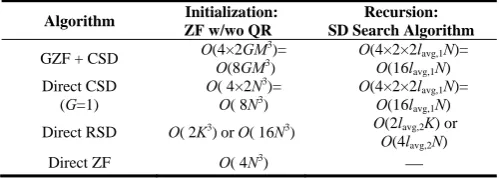
Table 1 lists the computing complexity comparison with four different ICI cancellers, including the proposed group-based ICI, direct CSD, direct real-valued SD (RSD), and direct ZF algorithms. The table consists of two parts for complexity analysis, which represents the requirements of real-valued multiplications every OFDM block.
First, the initialization part shows the complexity of the zero-forcing algorithm with/without QR decomposition for obtaining the initial data estimates. It is noted that the first three algorithms additionally need QR decomposition. The ZF requires matrix inversion, and its complexity is equal to QR decomposition. Assume both of them use Gauss- elimination method, thus having complexity Ο(N3
) [5]. Besides, note that one complex multiplication requires four real-valued multiplications. This factor also reflects in rows one, two, and four of the initialization part. For direct RSD, it requires 2N-dimneison QR decomposition [4]. To see the complexity reduction of the proposed algorithm, we set N=256, and G=32, for example. In such a case, the complexity reduction of proposed algorithm achieves 1,024 as compared to direct CSD (G=1). The reduction becomes 2,048 as compared to direct RSD.
number of loops for executing SD algorithm, and factor two means that the SD algorithm requires one scalar multiplication and one scalar division for calculating one data symbol, as given in (24) or (25). For complex sphere decoding algorithm, an extra factor “two” is also represented for denoting that the algorithm is executed both in real and imaginary parts. We let lavg,1 and lavg,2 be the number of average loops for CSD, and RSD, respectively. According to simulation results, lavg is less than N. Table 2 lists the average number of loops lavg,1 for different signal-to-noise ratios (SNRs.) In the recursion part, although the complexity of CSD is slightly larger than that of the RSD, the complexity increase almost can be ignored as compared to the initialization part.
[image:5.595.299.554.88.141.2]Finally, we conclude that our proposed group-based ICI canceller achieves better performance but with lower complexity than others.
Fig. 5. Performance comparisons between different ICI cancellers
[image:5.595.61.273.275.409.2]simulated under the normalized Doppler frequency of fdT=0.1.
Fig. 6. Performance comparisons of the proposed ICI canceller for
G={8, 16, 32}. Simulation is performed under the normalized
Doppler frequency of fdT=0.1.
TABLE1REQUIREMENTS OF REAL-VALUED MULTIPLICATIONS FOR
DIFFERENT ICICANCELLERS, WHERE K=2N, and M=N/G.
Algorithm Initialization: ZF w/wo QR
Recursion: SD Search Algorithm
GZF + CSD Ο(4×2GM
3)= Ο(8GM3)
Ο(4×2×2lavg,1N)= Ο(16lavg,1N)
Direct CSD (G=1)
Ο( 4×2N3)= Ο( 8N3)
Ο(4×2×2lavg,1N)= Ο(16lavg,1N)
Direct RSD Ο( 2K3) or Ο( 16N3) Ο(2lavg,2K) or Ο(4lavg,2N)
Direct ZF Ο( 4N3) ⎯
TABLE2AVERAGE NUMBER OF LOOPS FOR EXECUTING COMPLEX
SDALGORITHM FOR THE PROPOSED ICICANCELLER, WHERE N=256, G=32, AND M=8.
Average number of loops for executing SD algorithm SNR
(dB) 0 5 10 15 20 25 30
lavg,1 24.7 23.8 23.4 23.3 23.3 23.3 23.3
V. CONCLUSIONS
In this paper, we have proposed a reduced-complexity algorithm for ICI mitigation in the mobile OFDM system, which consists of two-stage canceller in a group version. The first-stage canceller aims to remove the out-of-group ICI effect, and the second-stage canceller refines the initial data by the sphere decoding algorithm. Simulation results demonstrate the proposed ICI canceller achieves better performance than those of direct ZF and of direct CSD. This is because the G-ZF has less noise enhancement than the other ones. Complexity analysis also indicates that the proposed algorithm has significant complexity reduction than both of direct ZF and of direct CSD. Finally, we conclude that the proposed receiver is a promising candidate for multipath fast-fading OFDM systems.
REFERENCES
[1] X. Huang, and H.C. Wu, “Robust and efficient intercarrier interference mitigation for OFDM systems in time-varying fading channels,” IEEE Trans. Vehicular Technology, vol. 56, pp. 2517-2528, Sep. 2007. [2] W. G. Jeon, K. H. Chang, and Y. S. Cho, “An equalization technique
for orthogonal frequency-division multiplexing systems in time-variant multipath channels,” IEEE Trans. Commun., vol. 47, pp. 27-32, Jan. 1999.
[3] E. Agrell, T. Eriksson, A. Vardy, and K. Zeger, “Closest point search in lattices,” IEEE Trans. Information Theory, vol. 48, pp. 2201-2214, Aug. 2002.
[4] Y. J. Kou, W.-S. Lu, and A. Antoniou,” Application of sphere decoding in intercarrier-interference reduction for OFDM systems” IEEE Pacific
Rim Conference, pp.360-363, Aug. 2005.
[image:5.595.60.274.451.579.2] [image:5.595.46.296.655.744.2]