Review Article
Does vasectomy increase prostate cancer risk?
An updated meta-analysis and systematic
review of cohort studies
Tao Wu1*, Xi Duan2*, Shulin Chen1, Chunyan Hu1, Ruichao Yu3, Shu Cui1
1Department of Urology, Affiliated Hospital of North Sichuan Medical College, Nanchong, Sichuan, China; 2Department of Dermatovenereology, Affiliated Hospital of North Sichuan Medical College, Nanchong, Sichuan,
China; 3Department of Pathophysiology and Molecular Pharmacology, Joslin Diabetes Center, Harvard Medical
School, Boston, MA, USA. *Equal contributors.
Received June 13, 2017; Accepted January 27, 2018; Epub April 15, 2018; Published April 30, 2018
Abstract: Introduction: A positive association between vasectomy and prostate cancer risk has been observed in
many case-control and cohort studies. However, additional studies reported no such association. Because clarifica -tion of the rela-tionship between vasectomy and prostate cancer incidence is warranted, we retrieved recent high-quality cohort studies up to 2016 to perform an updated meta-analysis to reevaluate this relationship. Methods: We searched online databases, including PubMed, EMBASE, Web of Science, Cochrane Library and Google Scholar, to identify suitable studies through the end of October 2016 with no lower date limit. Summary relative risks (RRs)
and 95% confidence intervals (CIs) were obtained using a random effects model. Results: Fourteen studies proved
eligible for inclusion, including 21,125 cases and 1,711,788 participants. The pooled RR estimate of 1.07 (95%
CI: 0.99-1.16) suggested the absence of a significant association between prostate cancer risk and vasectomy (P = 0.08). However, significant heterogeneity was observed in our study (I2 = 61%, P < 0.05). To reduce or explain
the high heterogeneity, we conducted a subgroup analysis among the studies using the follow-up duration in years
and the different geographic locations of the participants. Furthermore, we performed a sensitivity analysis to as -sess the heterogeneity by removing one study at a time. When two studies were excluded, the heterogeneity of the remaining 12 studies was acceptable. Conclusion: Our results demonstrate that vasectomy is not associated with prostate cancer risk and support vasectomy as a safe contraception method in men.
Keywords: Vasectomy, prostate cancer, meta-analysis
Background
Vasectomy is a common and permanent birth control method. However, a possible associa-tion between vasectomy and increased pros-tate cancer (PC) risk has raised concerns since the early 1990s, prompting questions about the long-term safety of vasectomy. Prostate cancer is the second most frequently
diag-nosed cancer in men and the fifth most com
-mon cancer reported in the world. Although positive associations between vasectomy and prostate cancer were observed in many case-control and cohort studies [1-9], additional studies found no relationship between them [10-22]. Among the latter, the two largest pro-spective cohort studies reached contrasting conclusions. Of these two studies, the report
(HPFS) considered that vasectomy was associ
-ated with a small increased risk of prostate cancer overall and particularly, an increased incidence of lethal prostate cancer [5]. In con-trast, a report that included an analysis of the Cancer Prevention Study II (CPS-II) and the CPS-II Nutrition Cohort did not support associa-tions between vasectomy and either prostate cancer incidence or prostate cancer mortality [10].
included 69,0333 participants published this year (2016) [10, 22]. Nayan, M., et al used a population based approach and relied on vali-dated, comprehensive databases [22]. Neither meta-analysis included the two large prospec-tive studies on this topic published this year (2016). These shortcomings may challenge the results obtained from the meta-analyses. Given the frequency of vasectomy, even a small increased risk of prostate cancer would consti-tute a major public health problem. It is better to make well-informed choices about long-term methods of birth control.
Identification of articles and data abstraction
The original published articles from 660 rele-vant citations were retrieved for full review using the following inclusion criteria: 1. the study used a cohort design; 2. the study report-ed the association between vasectomy and prostate cancer risk; 3. the study reported rela-tive risks (RRs) or hazard ratios (HRs) to esti-mate prostate cancer outcomes after
vasecto-my, and the corresponding 95% confidence
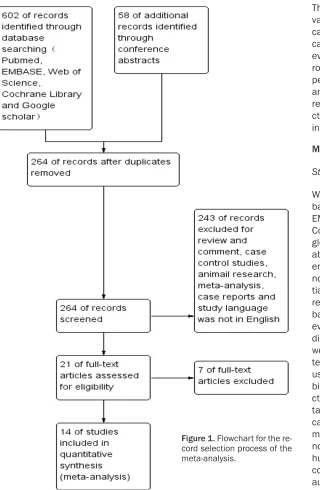
intervals (CIs); and 4. the study was published in English. We included 14 studies by this pro-Figure 1. Flowchart for the re
-cord selection process of the meta-analysis.
The association between vasectomy and prostate
cancer risk warrants clarifi -cation. Therefore, we retri- eved additional and more robust cohort studies to perform an updated meta-analysis to reevaluate the relationship between vase- ctomy and prostate cancer incidence up to 2016. Methods
Study search strategy
We searched online data-bases, including PubMed, EMBASE, Web of Science, Cochrane Library and Goo- gle Scholar, to identify suit-able studies through the end of October 2016 with no lower date limit. All
ini-tially identified studies we-re further filtewe-red on the
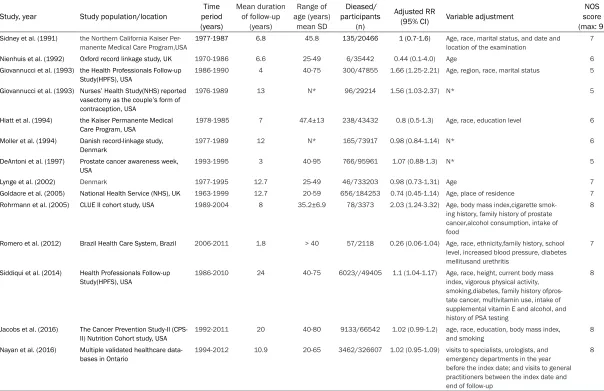
[image:2.612.95.415.68.558.2]Table 1. Characteristics of the 14 eligible studies
Study, year Study population/location period Time (years)
Mean duration of follow-up
(years)
Range of age (years)
mean SD
Dieased/ participants
(n)
Adjusted RR
(95% CI) Variable adjustment
NOS score (max: 9)
Sidney et al. (1991) the Northern California Kaiser
Per-manente Medical Care Program,USA
1977-1987 6.8 45.8 135/20466 1 (0.7-1.6) Age, race, marital status, and date and location of the examination
7
Nienhuis et al. (1992) Oxford record linkage study, UK 1970-1986 6.6 25-49 6/35442 0.44 (0.1-4.0) Age 6
Giovannucci et al. (1993) the Health Professionals Follow-up Study(HPFS), USA
1986-1990 4 40-75 300/47855 1.66 (1.25-2.21) Age, region, race, marital status 5
Giovannucci et al. (1993) Nurses’ Health Study(NHS) reported vasectomy as the couple’s form of contraception, USA
1976-1989 13 N* 96/29214 1.56 (1.03-2.37) N* 5
Hiatt et al. (1994) the Kaiser Permanente Medical Care Program, USA
1978-1985 7 47.4±13 238/43432 0.8 (0.5-1.3) Age, race, education level 6
Moller et al. (1994) Danish record-linkage study, Denmark
1977-1989 12 N* 165/73917 0.98 (0.84-1.14) N* 6
DeAntoni et al. (1997) Prostate cancer awareness week,
USA 1993-1995 3 40-95 766/95961 1.07 (0.88-1.3) N* 5
Lynge et al. (2002) Denmark 1977-1995 12.7 25-49 46/733203 0.98 (0.73-1.31) Age 7
Goldacre et al. (2005) National Health Service (NHS), UK 1963-1999 12.7 20-59 656/184253 0.74 (0.45-1.14) Age, place of residence 7 Rohrmann et al. (2005) CLUE II cohort study, USA 1989-2004 8 35.2±6.9 78/3373 2.03 (1.24-3.32) Age, body mass index,cigarette
smok-ing history, family history of prostate cancer,alcohol consumption, intake of food
8
Romero et al. (2012) Brazil Health Care System, Brazil 2006-2011 1.8 > 40 57/2118 0.26 (0.06-1.04) Age, race, ethnicity,family history, school level, increased blood pressure, diabetes mellitusand urethritis
7
Siddiqui et al. (2014) Health Professionals Follow-up Study(HPFS), USA
1986-2010 24 40-75 6023//49405 1.1 (1.04-1.17) Age, race, height, current body mass index, vigorous physical activity, smoking,diabetes, family history ofpros-tate cancer, multivitamin use, intake of supplemental vitamin E and alcohol, and history of PSA testing
8
Jacobs et al. (2016) The Cancer Prevention Study-II
(CPS-II) Nutrition Cohort study, USA 1992-2011 20 40-80 9133/66542 1.02 (0.99-1.2) age, race, education, body mass index, and smoking 8 Nayan et al. (2016) Multiple validated healthcare
data-bases in Ontario 1994-2012 10.9 20-65 3462/326607 1.02 (0.95-1.09) visits to specialists, urologists, and emergency departments in the year before the index date; and visits to general practitioners between the index date and end of follow-up
8
cess (Figure 1). No attempt was made to restri-
ct the search according to more specific meth
-odological characteristics. The studies were reviewed by two independent investigators (X.D. and XS.Y.) to determine whether they met the eligible criteria for inclusion. Discrepancies between the investigators regarding inclusion were resolved by discussion.
Quality assessment of the included studies
Each included article was appraised by two reviewers (X.D. and XS.Y.) who assessed the methodological quality of the selected studies independently from the included studies. Two reviewers assessed the representativeness and the applicability of the study groups, the comparability of the groups, the evaluation of the outcomes, the data source, the study peri-od, the study population characteristics, the total number of participants, the cases of pros-tate cancer and the follow-up duration. Data synthesis and data analysis
STATA version 14.0 (Stata Corporation, College
Station, TX, USA) was used to analyze the
strength of the association between vasectomy and prostate cancer risk from the summary RRs and 95% CIs using a random effects model. Statistical heterogeneity was assessed by the
chi-square Х2 test and was expressed by the I2
index as described by Higgins et al. P values < 0.05 was considered to indicate statistical
significance. I2 < 50% indicated acceptable
het-erogeneity. We conducted a single sensitivity analysis with one cohort trial omitted from the primary analysis at a time. Subgroup analysis was also used to evaluate the heterogeneity by dividing the group according to the patient geo-graphic location and follow-up duration. We used Begg’s adjusted rank correlation test and Egger’s regression asymmetry test to detect publication bias; P < 0.05 for both tests was
considered to represent significant statistical
publication bias. Results
Literature search and study characteristics
We identified 264 unique citations, whereas
[image:4.612.92.526.74.367.2]243 citations that did not meet one or more inclusion criteria (e.g., studies that were re- views, comments, case reports, case-control studies or other types of excluded studies). During full-text screening we excluded an
addi-tional 7 articles. Finally, 14 studies proved eli
-gible, including 21,125 cases and 1,711,788 participants (Figure 1) [5-10, 15-22].
Table 1 shows the study characteristics and methodology for selecting the 14 eligible stud-ies included in the systematic review. All were cohort studies. Eight studies were performed in
the United States (USA) [5, 7-10, 17, 19, 21], 4
were performed in Europe [15, 16, 18, 20], 1 was performed in Canada, and 1 was perfor- med in Brazil [6]. The follow-up periods ranged from 1.8 to 24 years. The number of partici-pants included in these studies ranged from 2,118 to 733,203. A total of 21,125 people was diagnosed with prostate cancer. The popu-lation data sources were almost all from large epidemiological investigations such as the
HPFS program. All publications reported similar
outcomes and provided RRs or HRs to estimate prostate cancer outcome after vasectomy, and the corresponding 95% CIs. Among these 14 studies, 4 studies reported a positive associa-tion between prostate cancer risk and vasec-tomy involving 6,497 cases and 129,847 par-ticipants [5, 7-9]; the other 10 studies conclud-ed that vasectomy was not associatconclud-ed with increased PC risk and included 14,628 cases and 1,581,941 participants [6, 10, 15-22]. Overall analysis and subgroup analysis
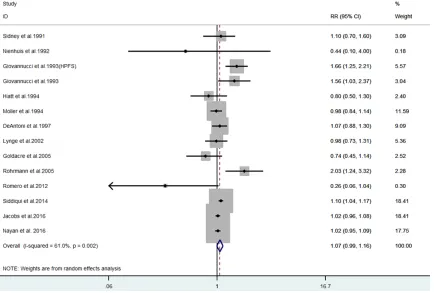
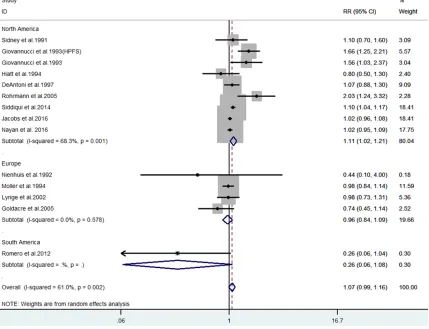
Overall, the pooled RR estimate was 1.07 (95% CI: 0.99-1.16) based on 14 studies using a
ran-dom effects model, suggesting no significant
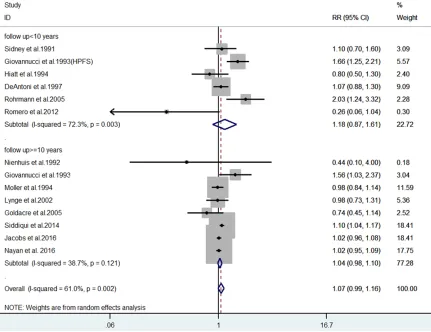
association between prostate cancer risk and vasectomy (P = 0.08) (Figure 2). Despite the random effects model used, the studies appea- red heterogeneous (I2 = 61%, P < 0.05). Next,
[image:5.612.91.522.73.405.2]ent ranges of follow-up years and the geo-graphic locations of these trials, two subgroup analyses were performed. The pooled RR was 1.18 (95% CI: 0.87-1.61) (P = 0.3), I2 = 72.3% (P
< 0.05) and 1.04 (95% CI: 0.98-1.1) (P = 0.18), I2 = 38.7% (P > 0.05) in the group with follow-up
lengths less than 10 years and in the group with follow-up lengths more than 10 years, respectively (Figure 3). The heterogeneity was acceptable among those studies with follow-up
for > 10 years. We found a significant positive
relationship between vasectomy and prostate cancer risk among North American participants with a RR of 1.11 (95% CI: 1.02-1.21) (P = 0.016); however, this positive association was not observed in European males, whose RR was 0.96 (95% CI: 0.84-1.09) (P = 0.49). Our pooled estimates for these studies moreover
showed significant heterogeneity for those
stu-dies conducted in North America (I2 = 68.3%, P = 0.008). However, no significant heterogeneity
was observed for the studies conducted in Europe (I2 = 0, P = 0.58) (Figure 4).
Sensitivity analysis
To further assess the heterogeneity in these pooled studies, a sensitivity analysis was
per-formed to thereby evaluate the influence of
individual studies on the overall risk of prostate cancer. The results are shown in Figure 5. We found that when two trials [7, 9] were excluded, the I2 of the pooled estimate decreased from 61% to 32.9%, suggesting that no significant
heterogeneity existed (P = 0.11). The pooled estimate of the RR of the remaining 12 studies was 1.04 (95% CI: 0.98-1.09), furthermore
indi-cating no significant difference in the associa
-tion between prostate cancer risk and vasec-tomy (P = 0.21) (Supplemental Figure 1). Publication bias
[image:6.612.94.523.77.406.2]No evidence of publication bias was observed by visual inspection of the funnel plots (Figure 6) or by the application of Begg’s test (P = 0.91) or Egger’s test (P = 0.91).
Discussion
We found no association between vasectomy and prostate cancer incidence by a meta-anal-ysis of the data from 14 large cohort studies to date that examined this question. The pooled RR was 1.07 (95% CI: 0.99-1.16). However,
sig-nificant heterogeneity was observed in our
study (I2 = 61%, P < 0.05). The differences in
the follow-up duration, populations and years since vasectomy may have introduced variabil-ity to this study. To reduce or explain the high heterogeneity, we conducted a subgroup
analy-were pooled, no relationship was observed between vasectomy and prostate cancer inci- dence.
Vasectomy is the foremost safe and effective male contraception operation performed by
[image:7.612.92.384.75.292.2] [image:7.612.92.506.75.546.2]urologists in the United States with a preva -lence rate of 15% [25]. Since the 1990s how-ever, some studies, including cohort and case-control studies, have suggested that vasecto-my may be associated with an increased pros-tate cancer risk [1-9, 26]. This controversy is ongoing considering that two large population Figure 5. Forest plot for sensitivity analysis.
Figure 6. Funnel plot to detect publication bias.
sis among the studies in- volving the number of fol-low-up years and different geographic locations of the participants. The heteroge-neity of the group with a follow-up duration of more than 10 years was lower than the group with a fol-low-up duration of less than 10 years. When the different geographic loca-tions of the participants
were considered, no signifi
-cant heterogeneity was ob- served for the trials
con-ducted in Europe.
Further-more, no association was observed between vasec-tomy and prostate cancer risk in the European group using a pooled estimate. We additionally performed a sensitivity analysis to assess the heterogeneity by removing one study at a time. When two studies were excluded, the hetero-geneity of the remaining 11 studies was acceptable. Both these two studies [7,
9] were from the United
States, one [7] from the
CLUE II cohort, which fol -lowed patients since 1989, and the other from the
HPFS population; both sug
studies on the association between vasectomy and prostate cancer risk published in 2014 and 2016 differed in their conclusions [5, 10]. Siddiqui, M. M., et al. reported that among the
49,405 U.S. men in the Health Professionals
Follow-Up Study, aged 40 to 75 years at base
-line in 1986, 6,023 patients were diagnosed with prostate cancer during follow-up to 2010, including 811 lethal cases (death or distant metastasis). They concluded that vasectomy was associated with a small increased risk of prostate cancer overall, and risk was elevated for high-grade (Gleason score 8 to 10) and lethal disease (death or distant metastasis) [5]. Jacobs, E. J., et al. showed that of the 363,726 men in the Cancer Prevention Study II cohort, 7,451 died as a result of prostate cancer during follow-up from 1982 to 2012. They concluded that in the CPS-II cohort, vasectomy was not associated with prostate cancer mortality. In the CPS-II Nutrition Cohort, vasectomy was not associated with either overall prostate cancer incidence or high-grade prostate cancer inci-dence [10].
Some potential molecular mechanisms have been proposed to explain the potentially incre- ased prostate cancer risk after vasectomy [27].
The expression of semen TGFβ-1 and TGFβ-3 in
men who underwent vasectomy was lower rela-tive to men who did not undergo vasectomy
[28]. Because TGFβR3 has an inhibitory effect on PC tumor growth, lower TGFβ levels may
contribute to higher PC risk [29]. A study report-ed that changes in sperm plasma protein
behavior may influence PC proliferation [28].
The increased proliferation effect was found in a rat study that examined the effects of vasec-tomy on the prostate [30]. However, the posi-tive link between vasectomy and prostate
can-cer risk in those studies may be influenced by
some bias, particularly detection bias [27, 31].
For example, in the study of Nayan, M., et al.,
the unadjusted analysis showed a positive association between vasectomy and PC risk. However, when they adjusted the number of visits to specialists and urologists in the year before the index date and the number of visits to general practitioners and admissions to hos-pitals between the index date and the end of follow-up, no association remained [22]. This
finding suggested that a patient undergoing a
vasectomy is more likely to undergo screening for prostate cancer before undergoing the
pro-cedure itself. Indeed, men who have a vasec-tomy require more medical attention and thus are screened more frequently, allowing more cancers to be detected, resulting in a con-founder [27].
Two 2015 meta-analyses that both included cohort studies attempted to clarify the associa-tion between vasectomy and prostate cancer
[23, 24]. However, some study flaws may have
undermined the strength of their results. Be- cause no adequate cohort studies on this topic were retrieved at that time, the lack of novel,
high-quality research might have influenced the
conclusions they obtained. Given the potential plausibility that vasectomy may be associated with PC risk, a current and comprehensive meta-analysis was warranted to clarify this
issue. First, our systematic review included 14
cohort trials that notably included the largest sized and highest quality study about the rela-tionship between vasectomy and prostate can-cer published this year [10]. Second, the cur-rent study also included the largest studied population, including 21,125 prostate cancer cases and 1,711,788 participants. These str- engths may have greatly reduced the potential for bias and permitted more reliable results to be obtained.
Conclusions
Our results demonstrated that vasectomy was not associated with prostate cancer risk. Based on this result, we suggest that physicians should not present an increased risk of pros-tate cancer in association with vasectomy in discussions with patients who are concerned about prostate cancer, in accordance with the
recommendation by the American Urological
Association [25]. This perspective also sup-ports vasectomy as a safe contraception meth-od for men.
Acknowledgements
Tao Wu has received grant from Natural Science
Foundation of Sichuan Provincial Department of Education (16ZB0227) and Scientific Resear-ch Foundation of Health and Family Planning
Commission of Sichuan Province (17PJ155). Disclosure of conflict of interest
Abbreviations
CI, confidence interval; CPS-II, Cancer Preven-tion Study II; HPFS, Health Professionals Follow-Up Study; MeSH, Medical Subject Heading; RR,
relative risk; HR, hazard ratio.
Address correspondence to: Dr. Shu Cui, Department
of Urology, Affiliated Hospital of North Sichuan
Me-dical College, Wenhua Road 57, Shunqing District, Nanchong 637000, China. Tel: 86-08172262409;
Fax: 86-08172262409; E-mail: shucui2015@126.
com
References
[1] Emard JF, Drouin G, Thouez JP and Ghadirian
P. Vasectomy and prostate cancer in Quebec, Canada. Health Place 2001; 7: 131-139. [2] Stanford JL, Wicklund KG, McKnight B, Daling
JR and Brawer MK. Vasectomy and risk of pros-tate cancer. Cancer Epidemiol Biomarkers Prev 1999; 8: 881-886.
[3] Platz EA, Yeole BB, Cho E, Jussawalla DJ, Giovannucci E and Ascherio A. Vasectomy and prostate cancer: a case-control study in India. Int J Epidemiol 1997; 26: 933-938.
[4] Hsing AW, Wang RT, Gu FL, Lee M, Wang T,
Leng TJ, Spitz M and Blot WJ. Vasectomy and prostate cancer risk in China. Cancer Epidemi-ol Biomarkers Prev 1994; 3: 285-288.
[5] Siddiqui MM, Wilson KM, Epstein MM, Rider JR, Martin NE, Stampfer MJ, Giovannucci EL and Mucci LA. Vasectomy and risk of aggres-sive prostate cancer: a 24-year follow-up study. J Clin Oncol 2014; 32: 3033-3038.
[6] Romero FR, Romero AW, Almeida RM, Oliveira FC, Jr. and Tambara Filho R. The significance of
biological, environmental, and social risk fac-tors for prostate cancer in a cohort study in
Brazil. Int Braz J Urol 2012; 38: 769-778.
[7] Rohrmann S, Paltoo DN, Platz EA, Hoffman SC, Comstock GW and Helzlsouer KJ. Association of vasectomy and prostate cancer among men in a Maryland cohort. Cancer Causes Control 2005; 16: 1189-1194.
[8] Giovannucci E, Tosteson TD, Speizer FE, Asche -rio A, Vessey MP and Colditz GA. A retrospec-tive cohort study of vasectomy and prostate
cancer in US men. JAMA 1993; 269: 878-882.
[9] Giovannucci E, Ascherio A, Rimm EB, Colditz GA, Stampfer MJ and Willett WC. A prospective cohort study of vasectomy and prostate cancer
in US men. JAMA 1993; 269: 873-877.
[10] Jacobs EJ, Anderson RL, Stevens VL, Newton CC, Gansler T and Gapstur SM. Vasectomy and prostate cancer incidence and mortality in a
large US cohort. J Clin Oncol 2016; 34:
3880-3885.
[11] Holt SK, Salinas CA and Stanford JL.
Vasecto-my and the risk of prostate cancer. J Urol 2008;
180: 2565-2567; discussion 2567-2568. [12] Schwingl PJ, Meirik O, Kapp N and Farley TM.
Prostate cancer and vasectomy: a hospital-based case-control study in China, Nepal and the Republic of Korea. Contraception 2009; 79: 363-368.
[13] Cox B, Sneyd MJ, Paul C, Delahunt B and Skegg DC. Vasectomy and risk of prostate cancer. JAMA 2002; 287: 3110-3115.
[14] Lesko SM, Louik C, Vezina R, Rosenberg L and Shapiro S. Vasectomy and prostate cancer. J
Urol 1999; 161: 1848-1852; discussion
1852-1843.
[15] Goldacre MJ, Wotton CJ, Seagroatt V and Yeates D. Cancer and cardiovascular disease after vasectomy: an epidemiological database
study. Fertil Steril 2005; 84: 1438-1443.
[16] Lynge E. Prostate cancer is not increased in
men with vasectomy in denmark. J Urol 2002;
168: 488-490.
[17] DeAntoni EP, Goktas S, Stenner J, O’Donnell C and Crawford ED. A cross-sectional study of va-sectomy, time since vasectomy and prostate cancer. Prostate Cancer Prostatic Dis 1997; 1: 73-78.
[18] Moller H, Mellemgaard A, Lindvig K and Olsen JH. Obesity and cancer risk: a Danish record-linkage study. Eur J Cancer 1994; 30a: 344-350.
[19] Hiatt RA, Armstrong MA, Klatsky AL and Sidney S. Alcohol consumption, smoking, and other risk factors and prostate cancer in a large
health plan cohort in California (United States).
Cancer Causes Control 1994; 5: 66-72. [20] Nienhuis H, Goldacre M, Seagroatt V, Gill L and
Vessey M. Incidence of disease after vasecto-my: a record linkage retrospective cohort study. BMJ 1992; 304: 743-746.
[21] Sidney S, Quesenberry CP Jr., Sadler MC, Guess HA, Lydick EG and Cattolica EV. Vasec-tomy and the risk of prostate cancer in a co-hort of multiphasic health-checkup examin-ees: second report. Cancer Causes Control 1991; 2: 113-116.
[22] Nayan M, Hamilton RJ, Macdonald EM, Li Q, Mamdani MM, Earle CC, Kulkarni GS, Jarvi KA and Juurlink DN. Vasectomy and risk of pros-tate cancer: population based matched cohort study. BMJ 2016; 355: i5546.
[23] Shang Y, Han G, Li J, Zhao J, Cui D, Liu C and Yi S. Vasectomy and prostate cancer risk: a meta-analysis of cohort studies. Sci Rep 2015; 5: 9920.
[24] Liu LH, Kang R, He J, Zhao SK, Li FT, Wan SP
[25] Sharlip ID, Belker AM, Honig S, Labrecque M, Marmar JL, Ross LS, Sandlow JI and Sokal DC.
Vasectomy: AUA guideline. J Urol 2012; 188:
2482-2491.
[26] Dersimonian R, Clemens J, Spirtas R and Perl-man J. Vasectomy and prostate cancer risk: methodological review of the evidence. J Clin Epidemiol 1993; 46: 163-172.
[27] Gaines AR, Vidal AC and Freedland SJ. Vasec -tomy: potential links to an increased risk of ag-gressive prostate cancer? Expert Rev Antican-cer Ther 2015; 15: 1123-1125.
[28] Batruch I, Lecker I, Kagedan D, Smith CR, Mul-len BJ, Grober E, Lo KC, Diamandis EP and Jarvi KA. Proteomic analysis of seminal plasma from normal volunteers and post-vasectomy
patients identifies over 2000 proteins and can -didate biomarkers of the urogenital system. J Proteome Res 2011; 10: 941-953.
[29] Sharifi N, Hurt EM, Kawasaki BT and Farrar WL. TGFBR3 loss and consequences in pros -tate cancer. The Pros-tate 2007; 67: 301-311. [30] Pereira S, Martinez M, Martinez F and Júnior
WM. Repercussions of castration and vasecto-my on the ductal system of the rat ventral pros-tate. Cell Biol Int 2006; 30: 169-174.
[31] Sokal DC, Labrecque M, Belker AM, Faraday