182
©IJRASET: All Rights are Reserved
Image Compression and De-Compression using
F-Transform and Sobel Filtering
Parvinder Kaur1, Jasdeep Singh Mann2, Sandeep Singh3
1
Research Scholar, CSE Department, Bhai Maha Singh College of Engineering, Sri Muktsar Sahib, Punjab 2, 3
Assistant Professor, CSE Department, Bhai Maha Singh College of Engineering, Sri Muktsar Sahib, Punjab
Abstract: Lossless image compression is needed for hospitals, technically drawings, space station pictures that all are utilized for existent reasons. A lossy compression technique is used a bitty foreiture in the picture recovery is accepted. Primarily the simple picture put up compressed with lossy technique at that place bit rate put up well faded with few bankable forfeit. F-transform was not mainly designed for picture compression and decompression, but at that place is demo that we can use it for this aim. Moreover this progress shows somewhat finer results than the default method via selecting different compression rates based on edges in a 8*8 blocks that need to be compressed. In present work, sobel edge detector is applied first to detect the edges in the image. Than whole image is divided into 8*8 non-overlapped blocks which are represented as low, mid and high edge pixels in the block. Then F-transform is applied by choosing three different compression rates i.e. low edge pixels are compressed to 3*3, mid value blocks to 5*5 and high edge blocks to 7*7 sizes. This will preserve the content in the images which when decompressed gives high quality of pixel content. To increase security of content, Huffman coding is applied to encrypt the compressed data. Similar process is applied in reversible to get the decompressed image on the receiver end. As there were artifacts produced after decompression hybrid median filter is applied to decrease the noise in the picture and to increase PSNR value of the image. Experimental results shows increase in PSNR value when presented method is applied and reduction in MSE value for almost all tested images.
Keywords: Image compression, F-transform, Sobel filter, hybrid median filter etc.
I. INTRODUCTION
Picture is a 2-D radio beam described in digital form. Ordinarily, the picture captured by the camera is in the analog form. All the same, to process, pass along and store, picture are changed into digital. Digital picture is fundamentally 2-D collection of pixels essentially, compress picture and compressing digital data are two various procedures [1]. Different Types of picture are utilized for assorted purposes such as remote detection, bio Aesculapian purposes and video processing techniques [2]. Compression is complete expelling repetitive or additional small bit from the picture. Picture quality and also the compression proportion relies on upon its system constant – epoch amount, momentum changeless, invisible layer nodes, and study rate [3].Compression results given on hexangular domain are much finer as analyze to those on hexangular domain [4].
1) Need of Compression: Uncompressed picture can involve an expensive measure of storage in RAM and other media, and take extra time in exchanging starting with one gadget then onto the next. For the uncompressed images, there is a requirement for adequate storage room and more transmission time is required is required for uncompressed picture.
2) Compression Principle: An image is generally a collection of different picture element [1]. For the captured picture, pixel of region is associated and that pixel includes insistent spot. Repetitive bits are expelled from the picture so estimate picture is lessened and that picture is compacted. Image compression has two principle divisions: Repetition decrease and immaterial information reduction. Excess diminishment is accomplished by expelling additional bits while immaterial reduction littlest or less critical data is discarded, which won’t be get by receiver.
3) Compression Algorithms: Generally, compression algorithm can be of 2 types: Lossless and Lossy.
A. Lossless Compression Techniques
183
©IJRASET: All Rights are Reserved
1) Run Length Encoding: The least complex picture compression methods in series of impression are recurrent by a combination which contains impression and duration at that the value is continual [5]. That broadly acknowledged compression’s methods in the telecommunicate.
2) Area Coding (AC): This is updated interpretation of the Run Length Encoding. AC is exceedingly powerful; it will afford good compression and also has definite limit it can be practical to nonlinear trans-formation.
3) LEPTON: In July 2016, Lepton decreases the document size of JPEG-encoded pictures (and that is a large portion of them) by as much as 22 percent, yet without losing a solitary piece of the original. One won't see any of this; this compression is just done on Drop box servers, where your information is put into cold storage. When you ask for it, Lepton's work is turned around (and quick) and you get the vanilla JPEG. It is open source.
4) MED Algorithm: A lossless (LS) picture compression strategy conjugation a logical thinking step with the integer wavelet transforms. The logical thinking step proposed in this technology is an improved version of the mid edge detector algorithm utilized with JPEG-LS. To begin with, picture is changed utilizing the expectation step and we will get a distinct picture. The calculation is basic and test outcomes demonstrate that as compared to competing techniques, it yields higher compression ratios.
B. Lossy Compression Method.
Loss in Compression method gives high compressed ratio in contrast to without loss compression. In lossy compression, the input picture and the compressed image are not same and there is some amount of loss in the image.
1) Harmony Search: Harmony Search is an algorithm inspired by music that duplicates the strategy of artists in searching for amicability while playing music [5]. The steps of the algorithm are as Initializing, Improvisation of Harmony and Selection 2) Fractal Compression Techniques: It is one of the image compression techniques which consider resemblances in diverse
portions of the image. This method works on at the establishment of the perception that as fractals can create impartially precise pictures then, it must be feasible to keep the given image as just a few elementary fractal patterns, together with the arrangement of rebuilding the image with the help of those fractals. Initially, the algorithm commences with the whole image, and the image is divided into various modest blocks [5]. It predominantly contains three sections:
a) Range block partition
b) Domain Block selection
c) Mapping
II. LITERATURE SURVEY
Ahmed Hagag et al. (2013) [8] proposed an effectual multispectral picture compression methods with optimal band series. This is depending on the multi color spectrum series, 3D DDWT, 2D DWT, simplex Huffman coder. We take complete advantage of the multi color spectrum bands for the next of band series and in the transform with the usage DDWT on the spectral magnitude. Mohammad H. Asghari et al. (2014) [9] familiarize a science-based modify that active picture compress with progressive spatial coherency. We took instant the variable Modular Distribution, a new density formula is supplier the instruction use for proposed picture compression. Observational results show that pre-compress use this techniques will modify a premiere for JPEG 2000 split. R. Khobaiz et al. (2014) proposed after combination of two methods picture compression techniques depend on Block Truncation Coding. The rating of concert using target including Mean Square Error and Peak signal to Noise Ratio exhibit it is the proposed technique accept a better compression rate than the performance of the reconstructed picture. A comparative analysis tween the updated hybrid technique.
N. Sikka et al. (2016) implemented a lossless picture compression technique using the hybrid combination of Hear wavelet and vector transform method. The values of different parameter like SNR, RMSE, CP, CR etc. shows the best performance of the proposed system as compared to existing systems like Integer to Integer techniques. Their work may be extended on implement some of the optimization algorithms. For the purpose of lossless compression. These algorithms must prove to be effective because these are meant for the situations where the solution domain is very large.
184
©IJRASET: All Rights are Reserved
B. Vidhya et al. (2018) proposed a picture compress technique depend on 2D DWT along with an exemplar depend on drawing. A method main aim to maintain the smoothness of a picture through dividing the picture Eden into smoothness primary and non-primary. The smoothness information employs interconnected matrix and rational determine to approach the smoothness divided up exterior. The ripple change is practical one by one at various regions so various compress frequency is take out one by one. From the Decoder side, inverse DWT is apply on the compressed picture area to retrace the picture area , exemplars' are wont to carry off the trap block consequences on the picture border line area effectively by exemplar depend on picture in painting.
C. Peter Devadoss et al. (2018) proposed and tested techniques for compression of medical images such as ultrasound, MRI, CT and X-Ray images with high quality. This method utilizes the features of hybrid fractal and BWCA algorithm. The hybrid fractal is implemented for compression for NROI region which overcomes longer encoding time of conventional fractal techniques. The block BWCA is implemented to compress the ROI region thereby ROI region is reconstructed accurately when compared with commonly used schemes in terms of PSNR by deliberately reducing the mean square error and CR.
III. IMPLEMENTATION
1) Step 1: Read image into Matlab. If (channel =3) (rgb)
a) Convert an image into gray scale.
b) Else.
2) Step 2: Obtain edge detection using sobel edge filter.
M s 2 s2 ; (M=it is a magnitude can calculated the x y
gradient direction, and s y sx is a derivative)
3) Step 3: intensity based compression using Fuzzytransformation.
a) Any size of image we can use and that image convert 256*256 sizes.
b) Divide Image into 8*8 blocks according intensity HI,MI,LI; LI- 8*8 blocks into 3*3 blocks(0-13px);MI- 8*8 blocks into 5*5
blocks(14-44px);HI-8*8 blocks into 7*7 blocks (44-60px);
c) We can get coded data.
4) Step4: Huffman encoding using to achieve low bit ratefor Compression blocks by Fuzzy compression. 5) Step 5: Fuzzy transform based Compression andDecompression.
1.Let R= (N*M) (grey image =pixel)
R (i, j) {1,…..N}*{1,……M}[0,1],R(I, j)
P (i, J) R (i ,j) =P (I, j)/255;
F M
j 1 iN 1 R (i , j ) Ak (i ) Bl ( j)
M
j 1 iN 1 Ak (i ) Bl ( j)
k l
6) Step 6: Compressed Image can be decoded.
a) Fb is decoded RnF(B)m(B) of size n (B)*m (B)
n ( B ) m ( B) b) RnF(B) m(B) (i , j ) FklB Ak (i ) Bi ( j),
k 1) i 1
7) Step7: Hybrid Median filter used for removing artifact /Noise at the receiver side.
a) Median value =X, +;
b) B= hmf (A, n)
c) Y=Hybrid Median Filter {MR, MD, C};
185
©IJRASET: All Rights are Reserved
[image:4.612.170.502.79.515.2]Flow chart of proposed work
Figure 1: flow chart for the proposed algorithm.
[image:4.612.183.426.550.718.2]186
©IJRASET: All Rights are Reserved
[image:5.612.194.411.99.246.2]After reading the RGB image into workspace, it is first converted to gray scale.
Figure 3: RGB image converted to gray scale
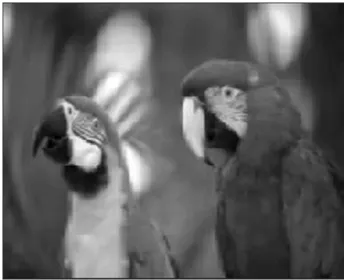
Then edge detection has been implemented as it decides the compression rate of the blocks to be compressed by Fuzzy transform. In these two methods has been implemented.
IV. RESULTS
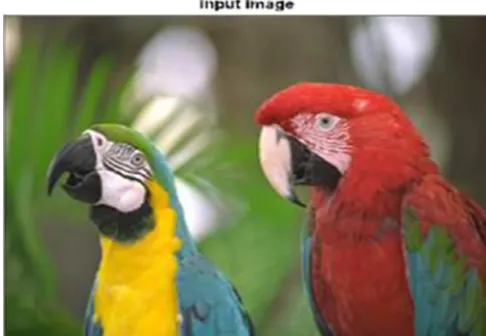
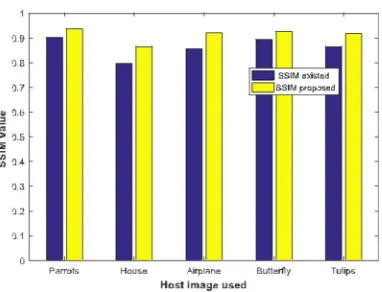
[image:5.612.219.379.381.499.2]Results have been carried out on number of images in which matlab 2017a software is used for implementation work. The results comes at different steps of the algorithm are shown below. Performance evaluation of the present algorithm has been carried out using quality metrics named as MSE, PSNR and SSIM. The result for the parameters is given in two-dimensional also as graph chart in this step, an image or picture to be compressed is selected. Figure below shows the image needed for compression
Figure 4: Edge detected image by sobel filter based edge detection
After that Fuzzy transform m is applied which compress the 8*8 non-overlapping blocks into 3*3, 5*5 or 7*7 blocks depending upon the number of edge pixels in that block. After this, Huffman coding is applied to compress more data. Similar reverse step happens for the decompression step in which Huffman decoder is applied and then inverse fuzzy transform is applied which results in the decompressed image.
[image:5.612.218.390.575.715.2]187
[image:6.612.205.383.86.201.2]©IJRASET: All Rights are Reserved
Figure 6: Artifact reduction in Decompressed parrot image using hybrid median filtering method
Similarly results are carried out on other images named as butterfly, house, airplane ,tulips ets.
[image:6.612.173.415.285.633.2]Table 1: MSE, PSNR and SSIM quality evaluation parameters for the images used
[image:6.612.197.415.577.720.2]Figure 7: Comparison of results using MSE quality metric
188
[image:7.612.212.403.82.228.2]©IJRASET: All Rights are Reserved
Figure 9: Comparison of results using SSIM quality metric
V. CONCLUSION
Therein research paper, an picture compression technique supported on fuzzy-transform along with the Huffman coding for security enhancement is proposed in which 8*8 square blocks are compressed with different ratio depending upon edge pixels in the block. Edge detection if first step in which sobel edge filter is applied than white pixels which represent edges in the image are counted and based on their value each 8*8 block id decided as low, mid and high intensity of edges in the block. Then Fuzzy transform is applied to compress the block into smaller size blocks. Fuzzy transform improvise additive procedure ordinary continue or distinct exponential complete area P into a value of distinct expansion definite on a fuzzy of P using direct and inverse Fuzzy-transform. The primary progress utilized in about the entire image developing application areas using Fuzzy-transform is measured of residuary, that has been earned every bit deduction tween real input and input signal prepared through direct and inverse Fuzzy transform. The main things of the Fuzzy transform is reduce of superior frequency from the input picture, the output image or pictures do not include superior frequency artifacts , crisp edges boundary . The gross value of reduced frequencies depending on number-of-components value. These methods firstly aim to carry on the roughness contour of the picture by dividing the picture area into roughness primary and non-primary area. Then Huffman coding is applied to encrypt the compressed information which is next used for transmission on channel and at the decipherer side, reverse Huffman coding apply forensic for the compressed picture data and inverse F-transform is forensic to retrace the picture area and also hybrid median filter is applied to eradicate the artifacts found after decompression process. Direct from the results that are determined for good picture fidelity of retrace picture with the similar original image fidelity is obtained in the proposed method.
REFERENCES
[1] Subramanian A.”Image Compression Technique,” potentials IEEE, Vol.20, issue 1, ppl19-23, Feb-March 2001
[2] Woods, R.C. 2008. Digital Image processing. New Delhi: Pearson Pentic Hall, Third Edition, Low price edition, Page 1-904
[3] Somanathan M. Athira Kalaichelvi V.,” An Intelligent Technique for Image Compression.” IJRDET Volume 2, Special Issue 4, June 2014 [4] M.K. Jeevan, Krishnakumar S.,” Compression of Images Represented in Hexagonal Lattice Using Wavelet and Gabor Filter” IC3I, 2014 [5] Majid Rabbani, Paul W.Jones” Digital Image Compression Techniques”, Edition-4, 1991.page 51.
[6] Deepak Gambhir ;Navin Rajpal,” Edge and Fuzzy Transform Based Image Compression Algorithm: edge Fuzzy.” Published in Artificial Intelligence and Computer Vision Volume 672 of the series Studies in Computational Intelligence pp 115-142
[7] Irina Perfilieva, Bernard De Baets,” Fuzzy transforms of monotone functions with application to image compression” published in Information Sciences 180 (2010) 3304–3315
[8] Ahmed Hagag, Mohamed Amin, Fathi E. Abd El-Samie, "Multispectral image compression with band ordering and wavelet transforms" Published in: Signal, Image and Video Processing May 2015, Volume 9, Issue 4, pp 769–778
[9] M. H. Asghari and B. Jalali, "Discrete Anamorphic Transform for Image Compression," in IEEE Signal Processing Letters, vol. 21, no. 7, pp. 829-833, July 2014. [survey4] J. García-Sobrino, J. Serra-Sagristà, V. Laparra, X. Calbet and G. Camps-Valls, "Statistical Atmospheric Parameter Retrieval Largely Benefits From Spatial–Spectral Image Compression," in IEEE Transactions on Geoscience and Remote Sensing, vol. 55, no. 4, pp. 2213-2224, April 2017.
[10]S. E. Ghrare and A. R. Khobaiz, "Digital image compression using Block Truncation Coding and Walsh Hadamard Transform hybrid technique," 2014 International Conference on Computer, Communications, and Control Technology (I4CT), Langkawi, 2014, pp. 477-480.
[11]N. Sikka, S. Singla and G. Pal Singh, "Lossless image compression technique using Haar wavelet and vector transform," 2016 International Conference on Research Advances in Integrated Navigation Systems (RAINS), Bangalore, 2016, pp. 1-5.
[12]N. Muthukumaran, R. Ravi, "Hardware Implementation of Architecture Techniques for Fast Efficient Lossless Image Compression System" Published in: Wireless Personal Communications October 2016, Volume 90, Issue 3, pp 1291–1315