C O M M E N T A R Y
Open Access
Implementation science in resource-poor
countries and communities
H. Manisha Yapa
1,2and Till Bärnighausen
2,3,4*Abstract
Background:
Implementation science in resource-poor countries and communities is arguably more important
than implementation science in resource-rich settings, because resource poverty requires novel solutions to ensure
that research results are translated into routine practice and benefit the largest possible number of people.
Methods:
We reviewed the role of resources in the extant implementation science frameworks and literature. We
analyzed opportunities for implementation science in resource-poor countries and communities, as well as threats
to the realization of these opportunities.
Results:
Many of the frameworks that provide theoretical guidance for implementation science view resources as
contextual factors that are important to (i) predict the feasibility of implementation of research results in routine
practice, (ii) explain implementation success and failure, (iii) adapt novel evidence-based practices to local
constraints, and (iv) design the implementation process to account for local constraints. Implementation science for
resource-poor settings shifts this view from
“
resources as context
”
to
“
resources as primary research object.
”
We find
a growing body of implementation research aiming to discover and test novel approaches to generate resources
for the delivery of evidence-based practice in routine care, including approaches to create higher-skilled health
workers
—
through tele-education and telemedicine, freeing up higher-skilled health workers
—
through task-shifting
and new technologies and models of care, and increasing laboratory capacity through new technologies and the
availability of medicines through supply chain innovations. In contrast, only few studies have investigated approaches
to change the behavior and utilization of healthcare resources in resource-poor settings. We identify three specific
opportunities for implementation science in resource-poor settings. First, intervention and methods innovations thrive
under constraints. Second, reverse innovation transferring novel approaches from resource-poor to research-rich
settings will gain in importance. Third, policy makers in resource-poor countries tend to be open for close collaboration
with scientists in implementation research projects aimed at informing national and local policy.
Conclusions:
Implementation science in resource-poor countries and communities offers important opportunities for
future discoveries and reverse innovation. To harness this potential, funders need to strongly support research projects
in resource-poor settings, as well as the training of the next generation of implementation scientists working on new
ways to create healthcare resources where they lack most and to ensure that those resources are utilized to deliver
care that is based on the latest research results.
Keywords:
Implementation, Resource-poor settings, Resources, Capacity, Reverse innovation, Research methods,
Capacity building
* Correspondence:[email protected]
2Africa Health Research Institute (AHRI), KwaZulu-Natal, South Africa 3Department of Global Health and Population, Harvard T.H. Chan School of
Public Health, Boston, USA
Full list of author information is available at the end of the article
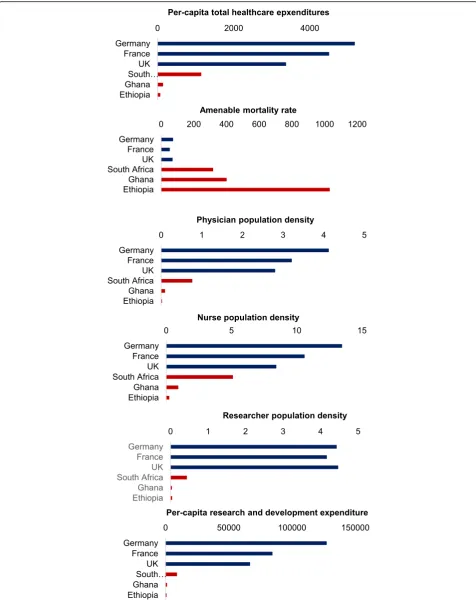
Many of the physical constraints that impede the routine
delivery of effective health interventions to those who
can benefit are (by definition) far more severe in
resource-poor than in resource-rich countries. For
in-stance, for each citizen, the resource-poor countries of
sub-Saharan Africa spend only a fraction of the amount
on health that the resource-rich countries of Western
Europe spend, and the numbers of doctors and nurses
per population are orders of magnitudes lower in Africa
than in Europe (Fig.
1
). At the same time, amenable
mortality—i.e., the mortality that existing effective
healthcare technologies could eliminate if they were
de-livered successfully to all those who can benefit—is far
higher in resource-poor countries than in resource-rich
ones (Fig.
1
) [
1
,
2
]. This
“inverse care law”
in
cross-country comparison—the
“availability of good
medical care tends to vary inversely with the need for it
in the population served”
[
3
]—is of course merely a
glo-bal version of the classic inverse care law, which
oper-ates across communities within both resource-rich and
resource-poor countries. In this editorial, we are
ad-dressing specific features of implementation science for
both resource-poor countries and resource-poor
com-munities, recognizing that scarcity and deprivation
af-fecting the delivery of evidence-based healthcare exist
worldwide and across all geographic areas and that there
is a continuum from resource poverty to resource wealth
in all countries.
An obvious approach to reduce the high levels of
amenable mortality in resource-poor countries and
com-munities is to increase the financial resources available
for healthcare. This approach, however, requires either
substantial economic growth—which may fail to emerge
in both resource-poor countries [
4
] and communities
[
5
]—a redistribution of existing resources across
sec-tors—which is difficult to achieve for obvious political
reasons [
6
]—or external assistance—which cannot be
re-lied on over the long term as donor priorities shift
fre-quently [
7
,
8
]. Another approach is to create new
resources to deliver effective health interventions given
the existing financial constraints. Implementation
sci-ence can contribute to this approach as the scisci-ence of
the discovery, design, and evaluation of novel
ap-proaches to deliver evidence-based healthcare practice.
Creating resources
The goal of implementation science is to discover and
test approaches
“to promote the systematic uptake of
re-search findings and other evidence-based practices into
routine practice, and, hence, to improve the quality and
effectiveness of health services”
[
9
]. Many of the
frame-works that provide theoretical guidance for
implementa-tion science feature resources and physical capacity to
deliver evidence-based practice—such as health workers,
drugs, supply chains, and healthcare facilities—as part of
the
context
of
implementation
[
10
–
27
].
In
these
frameworks, assessments of the resources context are used
to guide analysis or action, e.g., to (i) predict the
feasi-bility of implementation of a novel evidence-based
practice [
16
,
25
,
28
], (ii) explain implementation
suc-cess and failure [
11
–
13
,
24
,
26
,
29
], (iii) adapt a novel
evidence-based practice to local constraints [
15
,
19
,
20
,
23
,
30
], and (iv) design the implementation process to
account for local constraints [
17
,
22
,
30
]. As such, in
these theoretical frameworks—and in the implementation
science for resource-rich settings they have been derived
from and guide—resources are viewed as important
con-textual factors. Implementation science for resource-poor
settings shifts this view from
“resources as context”
to
“re-sources as primary research object”
[
31
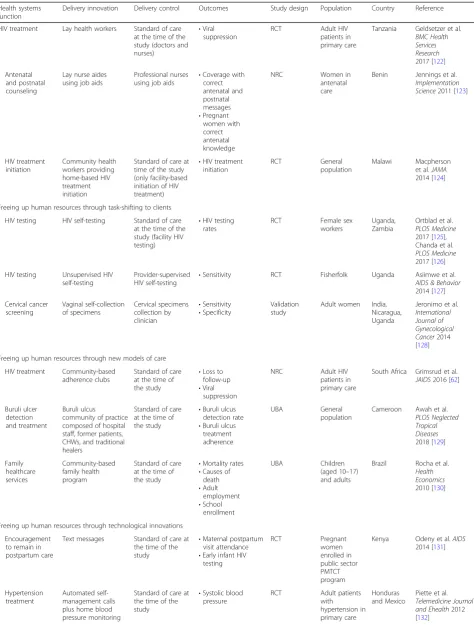
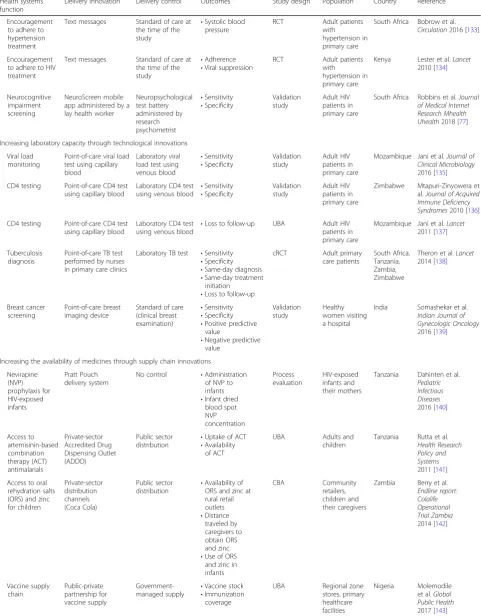
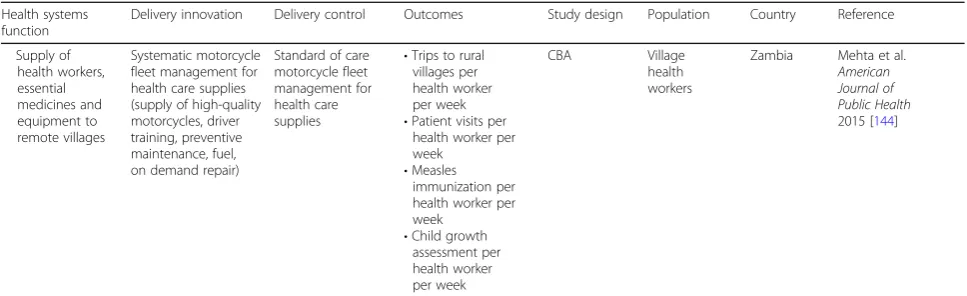
]. Table
1
shows
examples of implementation science in resource-poor
countries and communities testing approaches to expand
human resources for health—through education,
tele-medicine, task-shifting to lower-skilled health workers,
task-shifting to clients, new models of care, and
techno-logical innovation—and to increase laboratory capacity
and supplies. A large body of implementation science in
resource-poor countries and communities has focused on
creating resources for evidence-based healthcare. This
re-search is likely to continue with vigor because
“there need
to be minimal human resources, financing, drugs, and
supply systems before effective interventions can be
deliv-ered”
[
31
]. In particular, research developing and testing
community health worker programs [
32
]—which are
widely viewed as one of the few viable solutions to the
per-sistent health worker shortages in many resource-poor
countries and communities [
33
–
35
]—and information
and communication technologies—which can provide
af-fordable training and decision support for health workers
anywhere—will continue to attract increasing
implemen-tation research funding [
36
–
38
].
Changing behavior
Table 1
Implementation research to increase resources
Health systemsfunction
Delivery innovation Delivery control Outcomes Study design Population Country Reference
Creating higher-skilled human resources for health through tele-education Training on neonatal resuscitation Tele-education Conventional classroom teaching •Knowledge scores
•Skills scores
RCT Staff nurses India Jain et al.
Journal of Perinatology
2010 [112] Training on retinopathy of prematurity diagnosis Tele-education Standard onsite training
•Sensitivity of retinopathy of prematurity diagnosis
•Specificity of retinopathy of prematurity diagnosis
RCT Ophthalmology residents
Mexico Patel et al.
Ophthalmology
2017 [113]
Education on nursing, public health, child and adolescent health, mental health
Tele-education No control •Tele-education participation •User satisfaction Process evaluation Primary care staff
Brazil Joshi et al.
Journal of Telemedicine and Telecare
2011 [114]
Creating higher-skilled human resources for health through telemedicine Endocrine surgery Telemedicine (tele-education and surgical treatment planning, teleconsultation, telepathology, teleradiology, and telesurgical conferences)
Standard of care at the time of the study
•Endocrine surgery rate
UBA General surgeons
India Pradeep et al.
World Journal of Surgery
2007 [115]
Dermatological diagnosis Internet-based teledermatology system Face-to-face examination •Agreement between the two diagnostic approaches Validation study
Junior doctors Brazil Chao et al.
Telemedicine Journal and Ehealth2003 [116] Intensive care Tele-intensive care
unit
Standard of care at the time of the study
•Number of ICU patients per month
UBA Nurses Syria Moughrabieh et al.Annals of the American Thoracic Society
2016 [117] Freeing up human resources through task-shifting to lower-skilled health workers
HIV treatment initiation and management
Nurses Standard of care at the time of the study (doctors)
•Mortality
•Viral suppression
RCT Adult HIV patients in primary care
South Africa Fairall et al.
Lancet2012 [118] Depression
and anxiety screening, diagnosis and treatment
Lay village health workers together with primary care doctors, supported by an electronic decision support system
Standard of care at the time of the study (trained mental health professionals)
•Coverage with mental health treatment
•Depression score
•Anxiety score
UBA Members of rural scheduled tribe communities
India Maulik et al.
Journal of Global Health
2017 [119]
Hypertension treatment
Community health nurses delivering the WHO Package of Essential NCD Interventions (WHO PEN)
Standard of care at the time of the study
•Blood pressure RCT Patients visiting community health centers Ghana Ogedegbe et al. Implementation Science
2014 [120]
HIV and HIV risk screening and linkage to care for children
Community health workers
Standard of care at the time of the study •Identification of HIV-infected and HIV-exposed children
•Linkage to care
UBA Children born to mothers living with HIV
Malawi Ahmed et al.
Journal of the International AIDS Society
Table 1
Implementation research to increase resources
(Continued)
Health systems function
Delivery innovation Delivery control Outcomes Study design Population Country Reference
HIV treatment Lay health workers Standard of care at the time of the study (doctors and nurses)
•Viral suppression
RCT Adult HIV patients in primary care
Tanzania Geldsetzer et al.
BMC Health Services Research
2017 [122] Antenatal
and postnatal counseling
Lay nurse aides using job aids
Professional nurses using job aids
•Coverage with correct antenatal and postnatal messages •Pregnant women with correct antenatal knowledge
NRC Women in antenatal care
Benin Jennings et al.
Implementation Science2011 [123]
HIV treatment initiation Community health workers providing home-based HIV treatment initiation
Standard of care at time of the study (only facility-based initiation of HIV treatment)
•HIV treatment initiation
RCT General population
Malawi Macpherson et al.JAMA
2014 [124]
Freeing up human resources through task-shifting to clients HIV testing HIV self-testing Standard of care
at the time of the study (facility HIV testing)
•HIV testing rates
RCT Female sex workers
Uganda, Zambia
Ortblad et al.
PLOS Medicine
2017 [125], Chanda et al.
PLOS Medicine
2017 [126] HIV testing Unsupervised HIV
self-testing
Provider-supervised HIV self-testing
•Sensitivity RCT Fisherfolk Uganda Asiimwe et al.
AIDS & Behavior
2014 [127] Cervical cancer screening Vaginal self-collection of specimens Cervical specimens collection by clinician •Sensitivity •Specificity Validation study
Adult women India, Nicaragua, Uganda
Jeronimo et al.
International Journal of Gynecological Cancer2014 [128] Freeing up human resources through new models of care
HIV treatment Community-based adherence clubs
Standard of care at the time of the study
•Loss to follow-up
•Viral suppression
NRC Adult HIV patients in primary care
South Africa Grimsrud et al.
JAIDS2016 [62]
Buruli ulcer detection and treatment
Buruli ulcus community of practice composed of hospital staff, former patients, CHWs, and traditional healers
Standard of care at the time of the study
•Buruli ulcus detection rate
•Buruli ulcus treatment adherence
UBA General population
Cameroon Awah et al.
PLOS Neglected Tropical Diseases
2018 [129]
Family healthcare services Community-based family health program
Standard of care at the time of the study
•Mortality rates
•Causes of death •Adult employment •School enrollment UBA Children (aged 10–17) and adults
Brazil Rocha et al.
Health Economics
2010 [130]
Freeing up human resources through technological innovations Encouragement
to remain in postpartum care
Text messages Standard of care at the time of the study
•Maternal postpartum visit attendance
•Early infant HIV testing RCT Pregnant women enrolled in public sector PMTCT program
Kenya Odeny et al.AIDS
2014 [131]
Hypertension treatment
Automated self-management calls plus home blood pressure monitoring
Standard of care at the time of the study
•Systolic blood pressure
RCT Adult patients with hypertension in primary care
Honduras and Mexico
Piette et al.
Table 1
Implementation research to increase resources
(Continued)
Health systems function
Delivery innovation Delivery control Outcomes Study design Population Country Reference
Encouragement to adhere to hypertension treatment
Text messages Standard of care at the time of the study
•Systolic blood pressure
RCT Adult patients with hypertension in primary care
South Africa Bobrow et al.
Circulation2016 [133]
Encouragement to adhere to HIV treatment
Text messages Standard of care at the time of the study
•Adherence
•Viral suppression
RCT Adult patients with hypertension in primary care
Kenya Lester et al.Lancet
2010 [134]
Neurocognitive impairment screening
NeuroScreen mobile app administered by a lay health worker
Neuropsychological test battery administered by research psychometrist •Sensitivity •Specificity Validation study Adult HIV patients in primary care
South Africa Robbins et al.Journal of Medical Internet Research Mhealth Uhealth2018 [77]
Increasing laboratory capacity through technological innovations Viral load
monitoring
Point-of-care viral load test using capillary blood
Laboratory viral load test using venous blood •Sensitivity •Specificity Validation study Adult HIV patients in primary care
Mozambique Jani et al.Journal of Clinical Microbiology
2016 [135] CD4 testing Point-of-care CD4 test
using capillary blood
Laboratory CD4 test using venous blood
•Sensitivity •Specificity Validation study Adult HIV patients in primary care
Zimbabwe Mtapuri-Zinyowera et al.Journal of Acquired Immune Deficiency Syndromes2010 [136] CD4 testing Point-of-care CD4 test
using capillary blood
Laboratory CD4 test using venous blood
•Loss to follow-up UBA Adult HIV patients in primary care
Mozambique Jani et al.Lancet
2011 [137]
Tuberculosis diagnosis
Point-of-care TB test performed by nurses in primary care clinics
Laboratory TB test •Sensitivity
•Specificity
•Same-day diagnosis
•Same-day treatment initiation
•Loss to follow-up
cRCT Adult primary care patients
South Africa, Tanzania, Zambia, Zimbabwe
Theron et al.Lancet
2014 [138]
Breast cancer screening
Point-of-care breast imaging device
Standard of care (clinical breast examination)
•Sensitivity
•Specificity
•Positive predictive value
•Negative predictive value Validation study Healthy women visiting a hospital
India Somashekar et al.
Indian Journal of Gynecologic Oncology
2016 [139]
Increasing the availability of medicines through supply chain innovations Nevirapine (NVP) prophylaxis for HIV-exposed infants Pratt Pouch delivery system
No control •Administration of NVP to infants
•Infant dried blood spot NVP concentration Process evaluation HIV-exposed infants and their mothers
Tanzania Dahinten et al.
Pediatric Infectious Diseases
2016 [140]
Access to artemisinin-based combination therapy (ACT) antimalarials Private-sector Accredited Drug Dispensing Outlet (ADDO) Public sector distribution
•Uptake of ACT
•Availability of ACT
UBA Adults and children
Tanzania Rutta et al.
Health Research Policy and Systems
2011 [141] Access to oral
rehydration salts (ORS) and zinc for children Private-sector distribution channels (Coca Cola) Public sector distribution
•Availability of ORS and zinc at rural retail outlets •Distance traveled by caregivers to obtain ORS and zinc
•Use of ORS and zinc in infants
CBA Community retailers, children and their caregivers
Zambia Berry et al.
Endline report: Colalife Operational Trial Zambia
2014 [142]
Vaccine supply chain Public-private partnership for vaccine supply Government-managed supply •
Vaccine stock
•Immunization coverage
UBA Regional zone stores, primary healthcare facilities
Nigeria Molemodile et al.Global Public Health
interventions [
42
,
47
,
50
,
53
]
—
synthesized 820 primary
studies. Among these primary studies, which can be
viewed as the global knowledge base on strategies to
change health worker behavior, only 13 (or 1.6%) took
place in a low-income country and only 82 (10.0%) took
place in a middle-income country. There is thus strong
potential for resource-poor countries to learn from the
experiences in resource-rich countries. Clearly, some
evidence generated in resource-rich settings is highly
relevant for resource-poor settings
—
if
“
the
implemen-tation strategies considered
…
address a problem that is
important in low-income countries, would be feasible,
and would be of interest to decision-makers in
low-income countries
”
[
39
]. Equally clearly, however,
studies systematically investigating the transferability of
the large body of evidence on strategies to change
health worker behavior generated in resource-rich
countries are urgently needed. In addition to the
obvi-ous resources gradient, reasons why evidence on
effect-ive practice cannot be transferred from resource-rich to
resource-poor settings may include important
differ-ences in political and institutional factors [
54
–
56
].
While transfer of evidence from any one to any other
context will always need to take account of these
fac-tors, there will often be particularly large differences in
the answers to questions such as those posed by the
“
Tailored Implementation for Chronic Diseases
Check-list
”
(TICD Checklist) when considering evidence
transfer from resource-rich to resource-poor settings:
Do
“
influential
people
”
,
“
political
stability
”
,
and
“
corruption
” “
facilitate or hinder implementation of
ne-cessary changes?
”
[
30
]. In many cases, successful
imple-mentation of evidence-based practice in resource-poor
settings will thus require research to learn how to best
adopt
strategies
that
have
proven
effective
in
resource-rich settings, as well as the discovery and
evaluation of wholly new approaches.
Creativity and reverse innovation
Resource constraints, however, are not only an
import-ant object of implementation research in resource-poor
countries and communities, but they are also a powerful
stimulus for creativity [
57
]. The psychological and
mar-keting literature shows that creativity thrives when
choices are restricted [
58
–
60
]. It is likely that the severe
human and physical resources constraints in the health
systems of resource-poor countries and communities
have boosted discovery in implementation science for
health. Routine healthcare in resource-poor countries
and communities is often provided by nurses and
com-munity health workers, without access to basic medical
equipment, in primary care clinics or in homes without
reliable referral chains to higher-level care. As a result of
these constraints and the large differences between
“
ideal
”
and
“
real-world
”
delivery in resource-poor
coun-tries and communities, innovation is likely to thrive,
be-cause greater creativity is required to ensure that
scientific innovations can be delivered in routine
health-care practice.
The implementation research leading to novel
ap-proaches to deliver HIV care in resource-poor countries
and communities illustrates this creativity.
Implementa-tion researchers have worked with implementers to
discover, design, and test such highly innovative
ap-proaches as social clubs [
61
–
66
], street dispensing
ma-chines [
67
,
68
], and drones [
69
,
70
] to deliver HIV
antiretroviral drugs, as well as mobile phone technology
to provide HIV prevention education [
71
–
73
]. In many
other areas, major and minor innovations are
continu-ously increasing capacity and quality of care in
resource-poor countries and communities, such as the multitude
of novel eHealth [
74
,
75
], mHealth [
76
–
79
], and
telemedicine [
80
] applications. This creativity under
constraints leads to potential for
“
reverse innovation
”
[
81
,
82
], i.e., innovation arising first in resource-poor
Table 1
Implementation research to increase resources
(Continued)
Health systems function
Delivery innovation Delivery control Outcomes Study design Population Country Reference
Supply of health workers, essential medicines and equipment to remote villages
Systematic motorcycle fleet management for health care supplies (supply of high-quality motorcycles, driver training, preventive maintenance, fuel, on demand repair)
Standard of care motorcycle fleet management for health care supplies
•Trips to rural villages per health worker per week
•Patient visits per health worker per week
•Measles immunization per health worker per week
•Child growth assessment per health worker per week
CBA Village health workers
Zambia Mehta et al.
American Journal of Public Health
2015 [144]
settings and only later spreading to resource-rich
set-tings. According to a recent review, important areas for
future
“reverse innovation”
in healthcare include
“rural
health service delivery; skills substitution;
decentralisa-tion of management; creative problem-solving; educadecentralisa-tion
in communicable disease control; innovation in mobile
phone use; low technology simulation training; local
product manufacture; health financing; and social
entre-preneurship”
[
83
]. In several research areas—e.g., skills
substitution and innovation in mobile phone use
(Table
1
)—evidence is likely to continue to increase
sub-stantially in resource-poor—but not in resource-rich—
settings, opening up opportunities for
“reverse”
flows of
innovation and experience.
Methods innovations
The definitional characteristic of resource-poor settings,
resource poverty, also has implications for the methods
of implementation science, stimulating the development
of new approaches. For instance, the stepped-wedge
cluster randomized controlled trial—in which clusters,
such as communities or clinics, are randomized to an
exposure sequence over time rather than to one
time-invariant exposure as in the traditional parallel-arm
trial—was first envisioned, developed, and used for a
study in The Gambia in 1987 [
84
]. The stepped-wedge
trial remains a methods mainstay of implementation
sci-ence in resource-poor countries today [
85
–
89
]. One of
the motivations for choosing a stepped-wedge over a
parallel-arm design is that in the latter all communities
“within the study eventually receive the intervention,
thereby improving equity and acceptability”
[
90
]. In
con-trast, traditional parallel-arm cluster randomized trials
withhold the intervention that is tested from the
com-munities in the control arm over the entire course of the
study. This assignment can lead to political opposition
to a study, because community members perceive value
in the intervention to be tested. Such political
oppos-ition, in turn, is typically stronger in resource-poor than
in resource-rich communities, because the former often
lack many of the basic amenities and services that the
latter have good access to.
Other methods innovations in implementation science
in resource-poor countries have been driven by a lack of
resources for science. On average, low-income countries
spend far less money on science and have far fewer
sci-entists per population than high-income countries [
91
]
(Fig.
1
). To overcome resource constraints in research,
implementation scientists have developed novel
ap-proaches to collect and analyze data using information
and communication technologies. These innovations
in-clude field workers and community health workers using
mobile phones to collect survey data [
92
], screen for
dis-eases [
93
], and record healthcare utilization events [
94
].
Resource poverty can also cause or exacerbate
vari-ation in the scale-up of novel interventions across
com-munities
and—because
of
rationing—across
individuals [
95
]. Such exposure variations, in turn,
offer opportunities for innovative quasi-experiments
to evaluate implementations of health interventions.
Examples of such quasi-experimental designs include
regression discontinuity—which can be used when
threshold rules are used to determine eligibility for an
intervention [
96
,
97
]—and difference-in-differences—
which exploits changes in intervention exposure in
one set of communities while the exposure in another set
remains unchanged [
98
,
99
]. Quasi-experiments have the
added advantage that they are typically far cheaper to
carry out than experiments which require a prospective
research infrastructure and substantial investment in trial
processes. Finally, quasi-experiments take place in
“real-life”
without the distorting influences of experimental
intervention which can introduce artificiality into the
im-plementation context [
100
]. As such, quasi-experiments
have been popular to establish causal impacts of
interven-tions in resource-poor countries and communities [
101
],
but they are of course equally valuable in resource-rich
settings [
102
].
Creating research capacity
process, impact, and economic evaluation methods; and
approaches for knowledge dissemination and policy
translation. Despite these promising initiatives, the
avail-ability of researchers in resource-poor countries who
have been rigorously trained in quantitative, qualitative,
and mixed methods for implementation research
re-mains low [
105
].
Science for policy
An important counterpoint to the triad of high need,
high potential, and low capacity for implementation
science in resource-poor countries and communities
is the powerful opportunities for policy impact that
engagement
with
policy
makers
offer.
In
many
resource-poor countries, policy makers and
stake-holders are closely involved in implementation
re-search, ranging from the conception of research ideas
to the interpretation of findings and from leading
re-search agenda setting exercises with scientists [
106
,
107
] to principal investigator roles in scientific studies
[
87
]. Close collaboration between implementation
sci-entists and policy makers is not constrained to
resource-poor settings [
108
], but it is likely
particu-larly strong in those settings because of the higher
need for implementation evidence when the capacity
to deliver interventions is extremely scarce as well as
a culture of testing the delivery of scientific
innova-tions in
“demonstration projects”
to guide policy
deci-sions and the design for long-term routine practice.
For instance, many African countries are currently
considering adopting HIV pre-exposure prophylaxis
(PrEP) as routine health policy but are unsure which
delivery models work best in their specific contexts.
To fill this knowledge gap, more than 50 PrEP
dem-onstration projects in Africa are currently
experiment-ing with alternative delivery models [
109
,
110
].
Conclusion
In any setting, the results of implementation science can
lead
to
improved
routine
healthcare
practice.
In
resource-poor countries and communities, however, the
need for such results is arguably higher than in
resource-rich countries, while the capacity to carry out
implementation research is lower. Despite this
“
inverse
care law of implementation science,”
several specific
opportunities for implementation science in resource-poor
settings exist. First, intervention and methods innovations
thrive under constraints. Second, reverse innovation
trans-ferring
novel
approaches
from
resource-poor
to
research-rich settings will gain in importance. Third, policy
makers in resource-poor countries tend to be interested in
collaborating closely with scientists on implementation
re-search projects aimed at informing national and local
pol-icy. To realize these opportunities, several actions are
needed. Funders need to increase their commitments to
implementation science in resource-poor settings [
111
].
Funders and universities need to increase their investment
in training the next-generation of implementation
scien-tists who devote their careers to discovering and testing
novel approaches to create and influence healthcare
re-sources where they lack most. Finally, journal editors need
to signal strongly that they are interested in featuring
re-sults from rigorous implementation science originating in
resource-poor settings, to ensure that some of the brightest
graduate students can be recruited into this field. The
re-sults of such actions will likely lead to a double benefit—
generating major scientific advances and contributing to
improved health among the world
’
s poor.
Funding
TB was supported by the Alexander von Humboldt Foundation through the Alexander von Humboldt Professor award, funded by the Federal Ministry of Education and Research; the Wellcome Trust; and the NICHD of NIH (R01-HD084233), NIA of NIH (P01-AG041710), and NIAID of NIH (R01-AI124389 and R01-AI112339), as well as FIC of NIH (D43-TW009775).
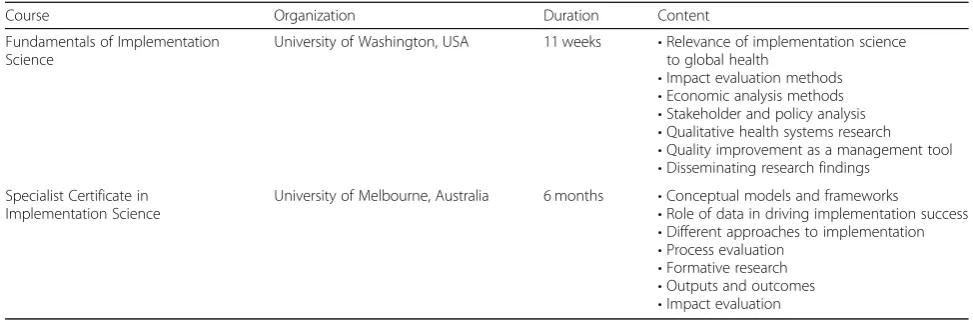
Table 2
Massive open online courses in implementation science
Course Organization Duration Content
Fundamentals of Implementation Science
University of Washington, USA 11 weeks •Relevance of implementation science to global health
•Impact evaluation methods
•Economic analysis methods
•Stakeholder and policy analysis
•Qualitative health systems research
•Quality improvement as a management tool
•Disseminating research findings Specialist Certificate in
Implementation Science
University of Melbourne, Australia 6 months •Conceptual models and frameworks
•Role of data in driving implementation success
•Different approaches to implementation
•Process evaluation
•Formative research
•Outputs and outcomes
HMY is supported by an Australian Government Research Training Program (RTP) Scholarship, University of New South Wales, Sydney, Australia. The Kirby Institute is funded by the Australian Government Department of Health and Ageing, and is affiliated with the Faculty of Medicine, UNSW Sydney. AHRI receives core funding from the UK Wellcome Trust grant 082384/Z/07/Z and Howard Hughes Medical Institute.
Availability of data and materials
Not applicable
Authors’contributions
HMY and TB jointly conceived and wrote the manuscript. TB edited the manuscript for intellectual content and provided supervision. Both authors read and approved the final manuscript.
Authors’information
Till Bärnighausen is the Alexander von Humboldt University Professor and Director of the Heidelberg Institute of Global Health (HIGH) at the University of Heidelberg, Heidelberg, Germany.
H. Manisha Yapa is a medical specialist in Infectious Diseases and a PhD candidate at the Kirby Institute, University of New South Wales, Sydney Australia.
Ethics approval and consent to participate
Not applicable
Consent for publication
Not applicable
Competing interests
The authors declare that they have no competing interests.
Publisher
’
s Note
Springer Nature remains neutral with regard to jurisdictional claims in published maps and institutional affiliations.
Author details 1
The Kirby Institute, University of New South Wales, Sydney, Australia.2Africa Health Research Institute (AHRI), KwaZulu-Natal, South Africa.3Department of Global Health and Population, Harvard T.H. Chan School of Public Health, Boston, USA.4Heidelberg Institute of Global Health, Medical Faculty and University Hospital, University of Heidelberg, INF 130.3, 69120 Heidelberg, Germany.
Received: 4 December 2018 Accepted: 5 December 2018
References
1. Nolte E, McKee M. Does healthcare save lives? Avoidable mortality revisited. London: Nuffield Trust; 2004.
2. GBD 2015 Healthcare Access and Quality Collaborators. Healthcare Access and Quality Index based on mortality from causes amenable to personal health care in 195 countries and territories, 1990–2015: a novel analysis from the Global Burden of Disease Study 2015. Lancet. 2017;390(10091): 231–66.
3. Hart JT. The inverse care law. Lancet. 1971;1(7696):405–12.
4. World Bank Group. Africa’s pulse, No. 16. Washington, DC: World Bank; 2017. 5. The Equality Trust. The cost of inequality. London: The Equality Trust; 2014. 6. WHO. The Abuja Declaration ten years on. Geneva: WHO; 2011.
7. Nattrass N, Hodes R, Cluver L. Changing donor funding and the challenges of integrated HIV treatment. AMA J Ethics. 2016;18(7):681–90.
8. Banks N, Hulme D, Edwards M. NGOs, states, and donors revisited: still too close for comfort? World Dev. 2014;66:707–18.
9. Eccles MP, Mittman BS. Welcome to implementation science. Implement Sci. 2006;1(1):1.https://www.ncbi.nlm.nih.gov/pmc/articles/PMC1436009/. 10. Nilsen P. Making sense of implementation theories, models and frameworks.
Implement Sci. 2015;10:53.
11. Cochrane LJ, Olson CA, Murray S, Dupuis M, Tooman T, Hayes S. Gaps between knowing and doing: understanding and assessing the barriers to optimal health care. J Contin Educ Heal Prof. 2007;27(2):94–102.
12. Durlak JA, DuPre EP. Implementation matters: a review of research on the influence of implementation on program outcomes and the factors affecting implementation. Am J Community Psychol. 2008;41(3–4):327–50. 13. Gurses AP, Marsteller JA, Ozok AA, Xiao Y, Owens S, Pronovost PJ. Using an
interdisciplinary approach to identify factors that affect clinicians’ compliance with evidence-based guidelines. Crit Care Med. 2010;38(8 Suppl):S282–91.
14. Huberman M. Research utilization: the state of the art. Knowl Policy. 1994; 7(4):13–33.
15. Davis SM, Peterson JC, Helfrich CD, Cunningham-Sabo L. Introduction and conceptual model for utilization of prevention research. Am J Prev Med. 2007;33(1 Suppl):S1–5.
16. Stetler CB. Refinement of the Stetler/Marram model for application of research findings to practice. Nurs Outlook. 1994;42(1):15–25. 17. Logan J, Graham I. Toward a comprehensive interdisciplinary model of
health care research use. Sci Commun. 1998;20:227–46.
18. Grol R, Wensing M. What drives change? Barriers to and incentives for achieving evidence-based practice. Med J Aust. 2004;180(6 Suppl):S57–60. 19. Pronovost PJ, Berenholtz SM, Needham DM. Translating evidence into practice:
a model for large scale knowledge translation. BMJ. 2008;337:a1714. 20. Field B, Booth A, Ilott I, Gerrish K. Using the knowledge to action framework in
practice: a citation analysis and systematic review. Implement Sci. 2014;9:172. 21. Damschroder LJ, Aron DC, Keith RE, Kirsh SR, Alexander JA, Lowery JC.
Fostering implementation of health services research findings into practice: a consolidated framework for advancing implementation science. Implement Sci. 2009;4:50.
22. Kitson AL, Rycroft-Malone J, Harvey G, McCormack B, Seers K, Titchen A. Evaluating the successful implementation of evidence into practice using the PARiHS framework: theoretical and practical challenges. Implement Sci. 2008;3:1.
23. Meyers DC, Durlak JA, Wandersman A. The quality implementation framework: a synthesis of critical steps in the implementation process. Am J Community Psychol. 2012;50(3–4):462–80.
24. Greenhalgh T, Robert G, Macfarlane F, Bate P, Kyriakidou O. Diffusion of innovations in service organizations: systematic review and
recommendations. Milbank Q. 2004;82(4):581–629.
25. Weiner BJ. A theory of organizational readiness for change. Implement Sci. 2009;4:67.
26. May C, Finch T, Mair F, Ballini L, Dowrick C, Eccles M, Gask L, MacFarlane A, Murray E, Rapley T, et al. Understanding the implementation of complex interventions in health care: the normalization process model. BMC Health Serv Res. 2007;7:148.
27. May CR, Mair F, Finch T, MacFarlane A, Dowrick C, Treweek S, Rapley T, Ballini L, Ong BN, Rogers A, et al. Development of a theory of
implementation and integration: normalization process theory. Implement Sci. 2009;4:29.
28. Stetler CB. Stetler model. In: Rycroft-Malone J, Bucknall T, editors. Models and frameworks for implementing evidence-based practice: linking evidence to action. Oxford: Wiley-Blackwell; 2010. p. 51–82.
29. Finch TL, Rapley T, Girling M, Mair FS, Murray E, Treweek S, McColl E, Steen IN, May CR. Improving the normalization of complex interventions: measure development based on normalization process theory (NoMAD): study protocol. Implement Sci. 2013;8:43.
30. Flottorp SA, Oxman AD, Krause J, Musila NR, Wensing M, Godycki-Cwirko M, Baker R, Eccles MP. A checklist for identifying determinants of practice: a systematic review and synthesis of frameworks and taxonomies of factors that prevent or enable improvements in healthcare professional practice. Implement Sci. 2013;8:35.
31. Santesso N, Tugwell P. Knowledge translation in developing countries. J Contin Educ Heal Prof. 2006;26(1):87–96.
32. World Health Organization. Global strategy on human resources for health: workforce 2030. Geneva: WHO; 2016.
33. De Neve JW, Garrison-Desany H, Andrews KG, Sharara N, Boudreaux C, Gill R, Geldsetzer P, Vaikath M, Bärnighausen T, Bossert TJ. Harmonization of community health worker programs for HIV: a four-country qualitative study in Southern Africa. PLoS Med. 2017;14(8):e1002374.
34. Kumar M, Nefdt R, Ribaira E, Diallo K. Access to healthcare through community health workers in East and Southern Africa. New York: UNICEF; 2014.
coverage: from fragmentation to synergy. Bull World Health Organ. 2013; 91(11):847–52.
36. E-collection‘RCTs - protocols/proposals (funded, already peer-reviewed, non-eHealth)’.http://www.researchprotocols.org/collection/view/242. Accessed 8 Aug 2018.
37. E-collection‘proposals (eHealth)’.http://www.researchprotocols.org/ collection/view/84. Accessed 8 Aug 2018.
38. Maher D, Cometto G. Research on community-based health workers is needed to achieve the sustainable development goals. Bull World Health Organ. 2016;94(11):786.
39. Pantoja T, Opiyo N, Lewin S, Paulsen E, Ciapponi A, Wiysonge CS, Herrera CA, Rada G, Peñaloza B, Dudley L, et al. Implementation strategies for health systems in low-income countries: an overview of systematic reviews. Cochrane Database Syst Rev. 2017;9:CD011086.
40. Giguere A, Legare F, Grimshaw J, Turcotte S, Fiander M, Grudniewicz A, Makosso-Kallyth S, Wolf FM, Farmer AP, Gagnon MP. Printed educational materials: effects on professional practice and healthcare outcomes. Cochrane Database Syst Rev. 2012;10:CD004398.
41. Cook DA, Levinson AJ, Garside S, Dupras DM, Erwin PJ, Montori VM. Internet-based learning in the health professions: a meta-analysis. J Am Med Assoc. 2008;300:1181–96.
42. Forsetlund L, Bjorndal A, Rashidian A, Jamtvedt G, O'Brien MA, Wolf F, Davis D, Odgaard-Jensen J, Oxman AD. Continuing education meetings and workshops: effects on professional practice and health care outcomes. Cochrane Database Syst Rev. 2009;2:CD003030.
43. Reeves S, Perrier L, Goldman J, Freeth D, Zwarenstein M. Interprofessional education: effects on professional practice and healthcare outcomes. Cochrane Database Syst Rev. 2013;3:CD002213.
44. Horsley T, Hyde C, Santesso N, Parkes J, Milne R, Stewart R. Teaching critical appraisal skills in healthcare settings. Cochrane Database Syst Rev. 2011;11: CD001270.
45. Sunguya BF, Poudel KC, Mlunde LB, Shakya P, Urassa DP, Jimba M, Yasuoka J. Effectiveness of nutrition training of health workers toward improving caregivers’feeding practices for children aged six months to two years: a systematic review. Nutr J. 2013;12:66.
46. Baskerville NB, Liddy C, Hogg W. Systematic review and meta-analysis of practice facilitation within primary care settings. Ann Fam Med. 2012;10(1):63–74. 47. O'Brien MA, Rogers S, Jamtvedt G, Oxman AD, Odgaard-Jensen J,
Kristoffersen DT, Forsetlund L, Bainbridge D, Freemantle N, Davis DA, et al. Educational outreach visits: effects on professional practice and health care outcomes. Cochrane Database Syst Rev. 2007;4:CD000409.
48. Pande S, Hiller JE, Nkansah N, Bero L. The effect of pharmacist-provided non-dispensing services on patient outcomes, health service utilisation and costs in low- and middle-income countries. Cochrane Database Syst Rev. 2013;2:CD010398.
49. Flodgren G, Parmelli E, Doumit G, Gattellari M, O'Brien MA, Grimshaw J, Eccles MP. Local opinion leaders: effects on professional practice and health care outcomes. Cochrane Database Syst Rev. 2011;8:CD000125.
50. Ivers N, Jamtvedt G, Flottorp S, Young JM, Odgaard-Jensen J, French SD, O'Brien MA, Johansen M, Grimshaw J, Oxman AD. Audit and feedback: effects on professional practice and healthcare outcomes. Cochrane Database Syst Rev. 2012, Issue 6. Art. No.: CD000259.
51. Ko CH, Turner TJ, Finnigan M. Systematic review of safety checklists for use by medical care teams in acute hospital settings - limited evidence for effectiveness. BMC Health Serv Res. 2011;11:211.
52. Baker R, Camosso-Stefinovic J, Gillies C, Shaw EJ, Cheater F, Flottorp S, Robertson N, Wensing M, Fiander M, Eccles MP, et al. Tailored interventions to address determinants of practice. Cochrane Database Syst Rev. 2015;4:CD005470. 53. Perrier L, Mrklas K, Shepperd S, Dobbins M, McKibbon KA, Straus SE.
Interventions encouraging the use of systematic reviews in clinical decision-making: a systematic review. J Gen Intern Med. 2011;26(4):419–26. 54. Nattrass N. AIDS and the scientific governance of medicine in
post-apartheid South Africa. Afr Aff. 2008;107(427):157–76.
55. Mackey TK, Liang BA. Combating healthcare corruption and fraud with improved global health governance. BMC Int Health Hum Rights. 2012;12:23. 56. Balabanova D, Mills A, Conteh L, Akkazieva B, Banteyerga H, Dash U, Gilson
L, Harmer A, Ibraimova A, Islam Z, et al. Good health at low cost 25 years on: lessons for the future of health systems strengthening. Lancet. 2013; 381(9883):2118–33.
57. Gibbert M, Hoegl M, Välikangas L. In praise of resource constraints. MIT Sloan Manag Rev. 2007;48(3):15.
58. Moreau C, Dahl D. Designing the solution: the impact of constraints on consumers’creativity. J Consum Res. 2005;32:13–22.
59. Sellier A, Dahl D. Focus! Creativity is enjoyed through restricted choice. J Mark Res. 2011;48(December):996–1007.
60. Dahl D, Moreau C. Thinking inside the box: why consumers enjoy constrained creative experiences. J Mark Res. 2007;44(August):357–69. 61. Grimsrud A, Sharp J, Kalombo C, Bekker L-G, Myer L. Implementation of
community-based adherence clubs for stable antiretroviral therapy patients in Cape Town, South Africa. J Int AIDS Soc. 2015;18(1):19984.
62. Grimsrud A, Lesosky M, Kalombo C, Bekker LG, Myer L. Implementation and operational research: community-based adherence clubs for the management of stable antiretroviral therapy patients in Cape Town, South Africa: a cohort study. J Acquir Immune Defic Syndr. 2016;71(1):e16–23. 63. Wilkinson LS. ART adherence clubs: a long-term retention strategy for
clinically stable patients receiving antiretroviral therapy. South Afr J HIV Med. 2013;14(2):48.
64. Tshuma N, Mosikare O, Yun JA, Alaba OA, Maheedhariah MS, Muloongo K, Nyasulu PS. Acceptability of community-based adherence clubs among health facility staff in South Africa: a qualitative study. Patient Prefer Adherence. 2017;11:1523–31.
65. Venables E, Edwards JK, Baert S, Etienne W, Khabala K, Bygrave H.“They just come, pick and go.”The acceptability of integrated medication adherence clubs for HIV and non communicable disease (NCD) patients in Kibera, Kenya. PLoS One. 2016;11(10):e0164634.
66. Decroo T, Koole O, Remartinez D, dos Santos N, Dezembro S, Jofrisse M, Rasschaert F, Biot M, Laga M. Four-year retention and risk factors for attrition among members of community ART groups in Tete, Mozambique. Tropical Med Int Health. 2014;19(5):514–21.
67. Friends of the Global Fight against AIDS TaM. The case for U.S. investment in the Global Fund and Global Health. Washington, DC: theglobalfght.org; 2017.
68. McVeigh T. South Africa’s latest weapon against HIV: street dispensers for antiretrovirals. In: The Guardian; 2016.
69. Rosen JW. Zipline’s ambitious medical drone delivery in Africa. In: MIT technology review; 2017.
70. Gaffey C. Drones will fly HIV drugs and vaccines across Tanzania in biggest national delivery network. In: Newsweek; 2017.
71. Suwamaru JK. An SMS-based HIV/AIDS education and awareness model for rural areas in Papua New Guinea. Stud Health Technol Inform. 2012;182: 161–9.
72. Phillips KA, Epstein DH, Mezghanni M, Vahabzadeh M, Reamer D, Agage D, Preston KL. Smartphone delivery of mobile HIV risk reduction education. AIDS Res Treat. 2013;2013:231956.
73. Jennings L, Ong’ech J, Simiyu R, Sirengo M, Kassaye S. Exploring the use of mobile phone technology for the enhancement of the prevention of mother-to-child transmission of HIV program in Nyanza, Kenya: a qualitative study. BMC Public Health. 2013;13(1):1131.
74. Blaya JA, Fraser HS, Holt B. E-health technologies show promise in developing countries. Health Aff. 2010;29(2):244–51.
75. Mars M. Building the capacity to build capacity in e-health in sub-Saharan Africa: the KwaZulu-Natal experience. Telemed J E Health. 2012;18(1):32–7. 76. Epstein D, Petersiel N, Klein E, Marcusohn E, Aviran E, Harel R, Azzam ZS,
Neuberger A, Fuchs L. Pocketsize pointofcare ultrasound in rural Uganda -a unique opportunity“to see”, where no imaging facilities are available. Travel Med Infect Dis. 2018;23:87-93.
77. Robbins RN, Gouse H, Brown HG, Ehlers A, Scott TM, Leu CS, Remien RH, Mellins CA, Joska JA. A mobile app to screen for neurocognitive impairment: preliminary validation of NeuroScreen among HIV-infected South African adults. JMIR mHealth uHealth. 2018;6(1):e5.
78. van Heerden A, Sen D, Desmond C, Louw J, Richter L. App-supported promotion of child growth and development by community health workers in Kenya: feasibility and acceptability study. JMIR mHealth uHealth. 2017; 5(12):e182.
79. Bardosh KL, Murray M, Khaemba AM, Smillie K, Lester R. Operationalizing mHealth to improve patient care: a qualitative implementation science evaluation of the WelTel texting intervention in Canada and Kenya. Glob Health. 2017;13(1):87.
80. Mars M. Telemedicine and advances in urban and rural healthcare delivery in Africa. Prog Cardiovasc Dis. 2013;56(3):326–35.
82. Bhatti Y, Taylor A, Harris M, Wadge H, Escobar E, Prime M, Patel H, Carter AW, Parston G, Darzi AW, et al. Global lessons in frugal innovation to improve health care delivery in the United States. Health Aff. 2017;36(11): 1912–9.
83. Syed SB, Dadwal V, Rutter P, Storr J, Hightower JD, Gooden R, Carlet J, Nejad SB, Kelley ET, Donaldson L, et al. Developed-developing country partnerships: benefits to developed countries? Glob Health. 2012;8(1):17. 84. The Gambia Hepatits Study Group. The Gambia Hepatitis Intervention
Study. Cancer Res. 1987;47:5782–7.
85. Canning D, Shah IH, Pearson E, Pradhan E, Karra M, Senderowicz L, Bärnighausen T, Spiegelman D, Langer A. Institutionalizing postpartum intrauterine device (IUD) services in Sri Lanka, Tanzania, and Nepal: study protocol for a cluster-randomized stepped-wedge trial. BMC Pregnancy Childbirth. 2016;16(1):362.
86. Fink G, Robyn PJ, Sie A, Sauerborn R. Does health insurance improve health?: evidence from a randomized community-based insurance rollout in rural Burkina Faso. J Health Econ. 2013;32(6):1043–56.
87. Walsh FJ, Bärnighausen T, Delva W, Fleming Y, Khumalo G, Lejeune CL, Mazibuko S, Mlambo CK, Reis R, Spiegelman D, et al. Impact of early initiation versus national standard of care of antiretroviral therapy in Swaziland's public sector health system: study protocol for a stepped-wedge randomized trial. Trials. 2017;18(1):383.
88. Pfeiffer JT, Napua M, Wagenaar BH, Chale F, Hoek R, Micek M, Manuel J, Michel C, Cowan JG, Cowan JF, et al. Stepped-wedge cluster randomized controlled trial to promote option B+ retention in Central Mozambique. J Acquir Immune Defic Syndr. 2017;76(3):273–80.
89. Praveen D, Patel A, McMahon S, Prabhakaran D, Clifford GD, Maulik PK, Joshi R, Jan S, Heritier S, Peiris D. A multifaceted strategy using mobile technology to assist rural primary healthcare doctors and frontline health workers in cardiovascular disease risk management: protocol for the SMARTHealth India cluster randomised controlled trial. Implement Sci. 2013;8:137.
90. McGuinness SL, O'Toole JE, Boving TB, Forbes AB, Sinclair M, Gautam SK, Leder K. Protocol for a cluster randomised stepped wedge trial assessing the impact of a community-level hygiene intervention and a water intervention using riverbank filtration technology on diarrhoeal prevalence in India. BMJ Open. 2017;7(3):e015036.
91. World Bank. World development indicators. Washington, DC: World Bank; 2017.
92. Tomlinson M, Solomon W, Singh Y, Doherty T, Chopra M, Ijumba P, Tsai AC, Jackson D. The use of mobile phones as a data collection tool: a report from a household survey in South Africa. BMC Med Inform Decis Mak. 2009; 9(1):51.
93. Soti DO, Kinoti SN, Omar AH, Logedi J, Mwendwa TK, Hirji Z, Ferro S. Feasibility of an innovative electronic mobile system to assist health workers to collect accurate, complete and timely data in a malaria control programme in a remote setting in Kenya. Malar J. 2015;14:430. 94. African Development Bank Group. Innovative e-Health solutions in Africa
award. Abidjan: African Development Bank; 2014.
95. Bärnighausen T, Eyal N, Wikler D. HIV treatment-as-prevention research at a crossroads. PLoS Med. 2014;11(6):e1001654.
96. Bor J, Fox MP, Rosen S, Venkataramani A, Tanser F, Pillay D, Bärnighausen T. Treatment eligibility and retention in clinical HIV care: a regression discontinuity study in South Africa. PLoS Med. 2017;14(11):e1002463. 97. Brennan AT, Bor J, Davies MA, Wandeler G, Prozesky H, Fatti G, Wood R,
Stinson K, Tanser F, Bärnighausen T, et al. Drug side effects and retention on HIV treatment: a regression discontinuity study of tenofovir implementation in South Africa and Zambia. Am J Epidemiol. 2018;187(9):1990-2001. 98. Tatah L, Delbiso TD, Rodriguez-Llanes JM, Gil Cuesta J, Guha-Sapir D. Impact
of refugees on local health systems: a difference-in-differences analysis in Cameroon. PLoS One. 2016;11(12):e0168820.
99. McGovern ME, Herbst K, Tanser F, Mutevedzi T, Canning D, Gareta D, Pillay D, Bärnighausen T. Do gifts increase consent to home-based HIV testing? A difference-in-differences study in rural KwaZulu-Natal, South Africa. Int J Epidemiol. 2016;45(6):2100–9.
100. Bärnighausen T, Rottingen JA, Rockers P, Shemilt I, Tugwell P. Quasi-experimental study designs series-paper 1: introduction: two historical lineages. J Clin Epidemiol. 2017;89:4–11.
101. Gertler PJ, Martinez S, Premand P, Rawlings LB, Vermeersch C. Impact evaluation in practice. Washington, DC: The World Bank; 2011. 102. European Commission. Social policy experiments in the European Union:
examples in member states. Brussels: European Commission; 2011.
103. Trans-NIH Programs.https://www.fic.nih.gov/Funding/Pages/Collaborations.aspx. Accessed 8 Aug 2018.
104. WHO TDR. Progress report on the TDR postgraduate training scheme during the period May 2015 - May 2017. Geneva: WHO TDR. p. 2017. 105. McKee M, Stuckler D, Basu S. Where there is no health research: what can
be done to fill the global gaps in health research. PLoS Med. 2012;9(4): e1001209.
106. Schwartz JI, Dunkle A, Akiteng AR, Birabwa-Male D, Kagimu R, Mondo CK, Mutungi G, Rabin TL, Skonieczny M, Sykes J, et al. Towards reframing health service delivery in Uganda: the Uganda initiative for integrated management of non-communicable diseases. Glob Health Action. 2015;8:26537. 107. Chanda-Kapata P, Ngosa W, Hamainza B, Kapiriri L. Health research priority
setting in Zambia: a stock taking of approaches conducted from 1998 to 2015. Health Res Policy Syst. 2016;14(1):72.
108. Lobb R, Colditz GA. Implementation science and its application to population health. Annu Rev Public Health. 2013;34:235–51.
109. Ongoing and planned PrEP demonstration and implementation studies.
https://www.avac.org/resource/ongoing-and-planned-prep-demonstration-and-implementation-studies. Accessed 8 Aug 2018.
110. Cowan FM, Delany-Moretlwe S, Sanders EJ, Mugo NR, Guedou FA, Alary M, Behanzin L, Mugurungi O, Bekker LG. PrEP implementation research in Africa: what is new? J Int AIDS Soc. 2016;19(7(Suppl 6)):21101.
111. Geldsetzer P, Bärnighausen T. Late-stage research for diabetes and related NCDs receives little funding: evidence from the NIH RePORTER tool. Lancet Diabetes Endocrinol. 2017;5(2):91–2.
112. Jain A, Agarwal R, Chawla D, Paul V, Deorari A. Tele-education vs classroom training of neonatal resuscitation: a randomized trial. J Perinatol: official journal of the California Perinatal Association. 2010;30(12):773–9. 113. Patel SN, Martinez-Castellanos MA, Berrones-Medina D, Swan R, Ryan MC,
Jonas KE, Ostmo S, Campbell JP, Chiang MF, Chan RVP. Assessment of a tele-education system to enhance retinopathy of prematurity training by international ophthalmologists-in-training in Mexico. Ophthalmology. 2017; 124(7):953–61.
114. Joshi A, Novaes MA, Iyengar S, Machiavelli JL, Zhang J, Vogler R, Hsu CE. Evaluation of a tele-education programme in Brazil. J Telemed Telecare. 2011;17(7):341–5.
115. Pradeep PV, Mishra A, Mohanty BN, Mohapatra KC, Agarwal G, Mishra SK. Reinforcement of endocrine surgery training: impact of telemedicine technology in a developing country context. World J Surg. 2007;31(8):1665–71. 116. Chao LW, Cestari TF, Bakos L, Oliveira MR, Miot HA, Zampese M, Andrade
CB, Bohm GM. Evaluation of an internet-based teledermatology system. J Telemed Telecare. 2003;9(Suppl 1):S9–12.
117. Moughrabieh A, Weinert C. Rapid deployment of international tele-intensive care unit services in war-torn Syria. Ann Am Thorac Soc. 2016;13(2):165–72. 118. Fairall L, Bachmann MO, Lombard C, Timmerman V, Uebel K, Zwarenstein M,
Boulle A, Georgeu D, Colvin CJ, Lewin S, et al. Task shifting of antiretroviral treatment from doctors to primary-care nurses in South Africa (STRETCH): a pragmatic, parallel, cluster-randomised trial. Lancet. 2012;380(9845):889–98. 119. Maulik PK, Kallakuri S, Devarapalli S, Vadlamani VK, Jha V, Patel A. Increasing use of mental health services in remote areas using mobile technology: a pre-post evaluation of the SMART mental health project in rural India. J Glob Health. 2017;7(1):010408.
120. Ogedegbe G, Plange-Rhule J, Gyamfi J, Chaplin W, Ntim M, Apusiga K, Khurshid K, Cooper R. A cluster-randomized trial of task shifting and blood pressure control in Ghana: study protocol. Implement Sci. 2014;9:73. 121. Ahmed S, Kim MH, Dave AC, Sabelli R, Kanjelo K, Preidis GA, Giordano TP,
Chiao E, Hosseinipour M, Kazembe PN, et al. Improved identification and enrolment into care of HIV-exposed and -infected infants and children following a community health worker intervention in Lilongwe, Malawi. J Int AIDS Soc. 2015;18:19305.
122. Geldsetzer P, Francis JM, Ulenga N, Sando D, Lema IA, Mboggo E, Vaikath M, Koda H, Lwezaula S, Hu J, et al. The impact of community health worker-led home delivery of antiretroviral therapy on virological suppression: a non-inferiority cluster-randomized health systems trial in Dar es Salaam, Tanzania. BMC Health Serv Res. 2017;17(1):160.
123. Jennings L, Yebadokpo AS, Affo J, Agbogbe M, Tankoano A. Task shifting in maternal and newborn care: a non-inferiority study examining delegation of antenatal counseling to lay nurse aides supported by job aids in Benin. Implement Sci. 2011;6:2.
of optional home initiation of HIV care following HIV self-testing on antiretroviral therapy initiation among adults in Malawi: a randomized clinical trial. J Am Med Assoc. 2014;312(4):372–9.
125. Ortblad K, Kibuuka Musoke D, Ngabirano T, Nakitende A, Magoola J, Kayiira P, Taasi G, Barresi LG, Haberer JE, McConnell MA, et al. Direct provision versus facility collection of HIV self-tests among female sex workers in Uganda: a cluster-randomized controlled health systems trial. PLoS Med. 2017;14(11):e1002458.
126. Chanda MM, Ortblad KF, Mwale M, Chongo S, Kanchele C, Kamungoma N, Fullem A, Dunn C, Barresi LG, Harling G, et al. HIV self-testing among female sex workers in Zambia: a cluster randomized controlled trial. PLoS Med. 2017;14(11):e1002442.
127. Asiimwe S, Oloya J, Song X, Whalen CC. Accuracy of un-supervised versus provider-supervised self-administered HIV testing in Uganda: a randomized implementation trial. AIDS Behav. 2014;18(12):2477–84.
128. Jeronimo J, Bansil P, Lim J, Peck R, Paul P, Amador JJ, Mirembe F, Byamugisha J, Poli UR, Satyanarayana L, et al. A multicountry evaluation of careHPV testing, visual inspection with acetic acid, and papanicolaou testing for the detection of cervical cancer. Int J Gynecol Cancer. 2014; 24(3):576–85.
129. Awah PK, Boock AU, Mou F, Koin JT, Anye EM, Noumen D, Nichter M. Developing a Buruli ulcer community of practice in Bankim, Cameroon: a model for Buruli ulcer outreach in Africa. PLoS Negl Trop Dis. 2018;12(3): e0006238.
130. Rocha R, Soares RR. Evaluating the impact of community-based health interventions: evidence from Brazil’s family health program. Health Econ. 2010;19(Suppl):126–58.
131. Odeny TA, Bukusi EA, Cohen CR, Yuhas K, Camlin CS, McClelland RS. Texting improves testing: a randomized trial of two-way SMS to increase postpartum prevention of mother-to-child transmission retention and infant HIV testing. AIDS. 2014;28(15):2307–12.
132. Piette JD, Datwani H, Gaudioso S, Foster SM, Westphal J, Perry W, Rodriguez-Saldana J, Mendoza-Avelares MO, Marinec N. Hypertension management using mobile technology and home blood pressure monitoring: results of a randomized trial in two low/middle-income countries. Telemed J E Health. 2012;18(8):613–20.
133. Bobrow K, Farmer AJ, Springer D, Shanyinde M, Yu LM, Brennan T, Rayner B, Namane M, Steyn K, Tarassenko L, et al. Mobile phone text messages to support treatment adherence in adults with high blood pressure (SMS-Text Adherence Support [StAR]): a single-blind, randomized trial. Circulation. 2016;133(6):592–600.
134. Lester RT, Ritvo P, Mills EJ, Kariri A, Karanja S, Chung MH, Jack W, Habyarimana J, Sadatsafavi M, Najafzadeh M, et al. Effects of a mobile phone short message service on antiretroviral treatment adherence in Kenya (WelTel Kenya1): a randomised trial. Lancet. 2010;376(9755):1838–45. 135. Jani IV, Meggi B, Vubil A, Sitoe NE, Bhatt N, Tobaiwa O, Quevedo JI, Loquiha
O, Lehe JD, Vojnov L, et al. Evaluation of the whole-blood Alere Q NAT point-of-care RNA assay for HIV-1 viral load monitoring in a primary health care setting in Mozambique. J Clin Microbiol. 2016;54(8):2104–8. 136. Mtapuri-Zinyowera S, Chideme M, Mangwanya D, Mugurungi O, Gudukeya
S, Hatzold K, Mangwiro A, Bhattacharya G, Lehe J, Peter T. Evaluation of the PIMA point-of-care CD4 analyzer in VCT clinics in Zimbabwe. J Acquir Immune Defic Syndr. 2010;55(1):1–7.
137. Jani IV, Sitoe NE, Alfai ER, Chongo PL, Quevedo JI, Rocha BM, Lehe JD, Peter TF. Effect of point-of-care CD4 cell count tests on retention of patients and rates of antiretroviral therapy initiation in primary health clinics: an observational cohort study. Lancet. 2011;378(9802):1572–9.
138. Theron G, Zijenah L, Chanda D, Clowes P, Rachow A, Lesosky M, Bara W, Mungofa S, Pai M, Hoelscher M, et al. Feasibility, accuracy, and clinical effect of point-of-care Xpert MTB/RIF testing for tuberculosis in primary-care settings in Africa: a multicentre, randomised, controlled trial. Lancet. 2014; 383(9915):424–35.
139. Somashekhar S, Vijay R, Ananthasivan R, Prasanna G. Noninvasive and low-cost technique for early detection of clinically relevant breast lesions using a handheld point-of-care medical device (iBreastExam): prospective three-arm triple-blinded comparative study. Indian J Gynecol Oncol. 2016;13:26.
140. Dahinten AP, Dow DE, Cunningham CK, Msuya LJ, Mmbaga BT, Malkin RA. Providing safe and effective preventative antiretroviral prophylaxis to HIV-exposed newborns via a novel drug delivery system in Tanzania. Pediatr Infect Dis J. 2016;35(9):987–91.
141. Rutta E, Kibassa B, McKinnon B, Liana J, Mbwasi R, Mlaki W, Embrey M, Gabra M, Shekalaghe E, Kimatta S, et al. Increasing access to subsidized artemisinin-based combination therapy through accredited drug dispensing outlets in Tanzania. Health Res Policy Syst. 2011;9:22.
142. Berry J, Berry S, Ramchandani R. Colalife operational trial Zambia (COTZ) --improving use, access, availability and awareness of ORS and zinc for the treatment of diarrhoea in the home: endline survey report. Lusaka: RuralNet Associates Ltd; 2014.
143. Molemodile S, Wotogbe M, Abimbola S. Evaluation of a pilot intervention to redesign the decentralised vaccine supply chain system in Nigeria. Glob Public Health. 2017;12(5):601–16.