O P I N I O N
Open Access
Collaborative action for person-centred
coordinated care (P3C): an approach to
support the development of a
comprehensive system-wide solution to
fragmented care
Helen M. Lloyd
1*, Mark Pearson
3,4, Rod Sheaff
2, Sheena Asthana
2, Hannah Wheat
1, Thava Priya Sugavanam
1,
Nicky Britten
3,4, Jose Valderas
3,4, Michael Bainbridge
5, Louise Witts
6, Debra Westlake
1, Jane Horrell
1and Richard Byng
1Abstract
Background:Fragmented care results in poor outcomes for individuals with complexity of need. Person-centred coordinated care (P3C) is perceived to be a potential solution, but an absence of accessible evidence and the lack of a scalable‘blue print’mean that services are‘experimenting’with new models of care with little guidance and support. This paper presents an approach to the implementation of P3C using collaborative action, providing examples of early developments across this programme of work, the core aim of which is to accelerate the spread and adoption of P3C in United Kingdom primary care settings.
Methods:Two centrally funded United Kingdom organisations (South West Collaboration for Leadership in Applied Health Research and Care and South West Academic Health Science Network) are leading this initiative to narrow the gap between research and practice in this urgent area of improvement through a programme of service change, evaluation and research. Multi-stakeholder engagement and co-design are core to the approach. A whole system measurement framework combines outcomes of importance to patients, practitioners and health organisations. Iterative and multi-level feedback helps to shape service change while collecting practice-based data to generate implementation knowledge for the delivery of P3C. The role of the research team is proving vital to support informed change and challenge organisational practice. The bidirectional flow of knowledge and evidence relies on the transitional positioning of researchers and research organisations.
(Continued on next page)
* Correspondence:[email protected] 1
Community and Primary Care Research Group, Clinical Trails and Population Studies, Peninsula School of Medicine and Dentistry, Room N14, ITTC Building, Plymouth Science Park, Derriford, Plymouth, Devon PL6 8BX, United Kingdom
Full list of author information is available at the end of the article
(Continued from previous page)
Results:Extensive engagement and embedded researchers have led to strong collaborations across the region. Practice is beginning to show signs of change and data flow and exchange is taking place. However, working in this way is not without its challenges; progress has been slow in the development of a linked data set to allow us to assess impact innovations from a cost perspective. Trust is vital, takes time to establish and is dependent on the exchange of services and interactions. If collaborative action can foster P3C it will require sustained commitment from both research and practice. This approach is a radical departure from how policy, research and practice traditionally work, but one that we argue is now necessary to deal with the most complex health and social problems.
Keywords:Person-centred coordinated care, Collaborative action, Integration
Background–the problem of fragmented health
and social care
Fragmented and poorly coordinated care are enduring problems for health and social care systems worldwide [1]. These problems impact most acutely on individuals with complex bio-psychosocial needs [2–8], older individuals considered as ‘frail’, and those with multiple long-term conditions [9–11]. Poor coordination occurs most often when care spans the health service and non-statutory and social care boundaries, but is not limited to those inter-faces [12]. Within healthcare in England (e.g. general prac-tice, community nursing, mental health services and acute hospitals), there is also a failure to ensure key clinical functions for the individual patient are delivered in a coor-dinated and person-centred manner. These include pre-venting and responding to urgent care needs, rational management of multiple long-term conditions (polyphar-macy, self-care) and support to promote social health along with mental and physical wellbeing. Furthermore, the burden of care for these individuals is high [13–15] in emotional, practical and financial terms, and impacts upon practitioner morale and patient outcomes [16, 17]. This paper describes a comprehensive approach to address the enduring problems of non-person-centred and fragmented care, by uniting researchers, professionals, patients and a range of delivery organisations to collect-ively address this problem.
In the United Kingdom, three potent and interacting problems have contributed to the fragmentation of health and social care over the last 25 years. The first resides in the increasing specialisation of medicine and professional roles, and the second in governments’ initiation of re-peated, rapid cycles of service reorganisation, privatisation and contracting [18]. The third problem, and the one ad-dressed through our programme of collaborative action, concerns the nature of the available evidence and the ac-cessibility of it to inform service delivery improvements. This paper details an innovative approach to knowledge mobilisation that we are using which combines evidence from research, knowledge from practice, and information from routinely collected data to flow around and be used within complex health and social care systems.
Current evidence concerning how to implement inte-grated care is hard to use in a meaningful way because of its disparate nature and the mismatch between long re-search cycles and the needs of service redesign. In addition, confusion between different but related concepts such as integration, care coordination and continuity of care [19], add further challenges. For example,‘integrated care’is related to previous ‘solutions’, such as shared care, chronic disease management and collaborative care [20–22], and was for a period focussed in health and social care, but has now also been deflected for quite different purposes such as cost containment [23, 24] and the vertical integration of care (i.e. the coordination of acute and community services by a single provider or a linked set of providers) [19].
Policy-makers and commissioners perceive this all-embracing concept of ‘integration’, with its focus on removing discontinuities in care, as the solution to frag-mented care. The problem here is that ‘integration’ is a diverse concept with numerous definitions and a multi-tude of interacting dimensions and interdependencies across a system [25]. Such complexity is not easily nor simply translated into implementation models, and with context often ignored, efforts towards imple-mentation are often hindered despite energised initia-tives (cf. United Kingdom Integration Pilots and Pioneers) [26].
Drawing upon organisational theory and empirical re-search, Leutz [27] and Sheaff [3] avoid the temptation of giving the term ‘integration’ a moral loading, defining the integrated organisation of care as:
Correspondingly, networks of organisations could be described as‘integrated’to the extent that they resemble this description. Notwithstanding the above definition, a model or ‘blue print’ for integrated care has yet to be established in terms of the necessary core features. The policy literature, although high on aspirations, also fails to provide details about how to implement core changes [28–30]. Given the lack of coherent guidance, it is un-surprising that healthcare systems have failed to sig-nificantly reduce fragmentation [31–35] and improve outcomes for those with complex healthcare needs [16, 36, 37].
A further challenge for services attempting integrated ini-tiatives is that many models have not been sufficiently and robustly tested, at least in the United Kingdom. This is partly a result of the fracture between general practice and community health services, which is built into the present architecture of the NHS. Indeed, it is one of the two big features that NHS structural ‘reforms’have left practically untouched (the other being NHS funding through tax-ation). For example, while policy prompted reconfigura-tions of hospital and community trusts can be imposed by internal management processes, it is harder to bring to-gether needs-rated social care with tax-based NHS care, and to integrate multiple general practices (small busi-nesses) with NHS bureaucratic trusts. Recent National Health Service England policy, outlined in the General Practice Forward View [38] and the Five Year Forward View [39], aspires to unify services by linking such service divisions. However, within the current United Kingdom context of purchaser provider splits and cumbersome con-tractual frameworks, it is still hard to envisage where and how these bridges will be built. It is unsurprising, therefore, that the most recent experiments with‘integrated care’(e.g. Integrated Care Pioneers) in the United Kingdom have failed to meet expectations to address the problems faced by patients [26, 40].
The following sections describe an approach to know-ledge mobilisation being tested in the south west of England to generate and share knowledge and evidence to support the implementation of a comprehensive model of person-centred coordinated care (P3C) [41].
The generation of accessible and timely knowledge through collaborative action to support the implementation of P3C
General approach
Health systems are responding actively to policy impera-tives for‘integration’and person-centred care, but these ef-forts are commonly piecemeal, untested, unevaluated and carried out in isolation, often in response to local leaders or crises. In the United Kingdom, whole system redesign has also begun to gain traction and, with this, the recognition that ‘culture’ change towards more integrated or
coordinated care, which is also person centred, requires support and energy spanning different organisational levels, i.e. from individual practitioner to multi-professional team to whole provider-organisation, commissioner (payers) and beyond [5, 42]. Without concurrent and rigorous formative evaluation [43], the learning from these innovations is often short lived or ignored. Furthermore, with little under-standing of how the context influences implementation, op-portunities to create a wealth of insight are often lost. Consequently,‘whole system’implementation knowledge is well timed and requires the appropriate melding of trad-itional approaches to research (e.g. large randomised con-trolled trials, etc.) with those that can flex and explore the role of context (e.g. quality improvement, realist evaluation, action research). In spite of this, there are few comprehen-sive programmes that aim to (1) support the implementa-tion of evidence-informed practice (where it exists) and (2) develop practice-based evidence about what works.
We have set about bringing together a‘whole systems’ realist evaluation [44] incorporating service redesign, im-plementation, education, evaluation and research. We are using co-designed ‘Collaborative Action’ [45] in the context of the South West Peninsula Collaboration for Applied Health Research and Care (SW CLAHRC). Our approach shares much with that of Glasgow et al.’s [46] ‘Evidence Integration Triangle’, namely, prioritising ac-tionable feedback to practice, a participatory implemen-tation process, the shared understanding by participants of key components, and practical and ongoing measure-ment within a multilevel context. We hope that this region-wide initiative of collaborative groups (researchers, com-missioners, providers and practitioners) will continue to bring a clarity of purpose and continued use of our common evaluation framework. Through this supportive process we are putting P3C into practice locally whilst also providing a receptive context to support more research, thus contribut-ing to a coherent body of knowledge.
Support for local initiatives: measurement, theory and learning from experiential and other evidence
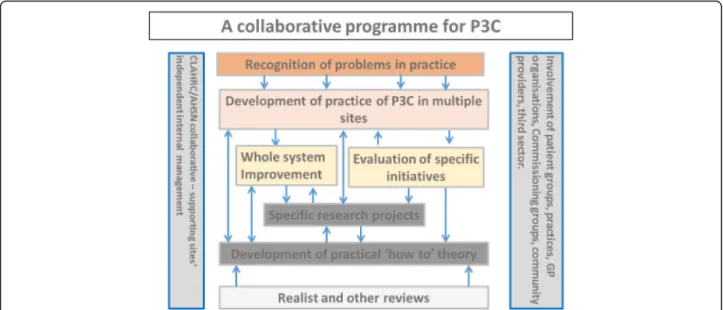
Using ‘Collaborative Action’ [45] and our evaluation framework, we are supporting the implementation of P3C. This involves expert practitioners, managers and re-searchers working together to help ensure progress in ser-vice provision by investigating how, where and why models work. This strategy presupposes that valuable know-ledge can be derived from the evaluation of innovations. It also entails accepting that, while we can inform practice by what we do know (using evidence where we have it), we (re-searchers, practitioners, managers, patients and their carers) also acknowledge what we do not know, and are ready to try things out and create opportunities for experiential learn-ing (includlearn-ing formalislearn-ing already existlearn-ing tacit or undocu-mented knowledge). This ‘Collaborative Action’is depicted in Fig. 1 (where the arrows represent a flow and exchange of different types of knowledge or activities).
This collaborative approach facilitates the transfer and synthesis of different types of knowledge (i.e. published evidence and that developed from local practice) between specific local and wider national/international settings. Generating knowledge this way has the potential to make research more relevant to local ways of delivering care, i.e. by generating more practice-based evidence [52]. These strands are then synthesised and fed back into an emer-ging understanding of what P3C is and how to support its implementation. This knowledge can also help develop an overarching causal framework (programme logic) to track how changes (e.g. team working, practitioner-patient in-teractions, etc.) occur and how they relate to improve-ments in outcomes (Fig. 2).
A consistent evaluation framework for P3C
Generating useful knowledge and improving practice models is facilitated by the use of a similar evaluation framework across settings. Based, therefore, on the changes anticipated in the overarching programme logic (Fig. 2), we are using a combination of co-selected met-rics across core domains of interest (e.g. practitioner and
patient experience [51, 53], patient activation [54], pa-tient well-being [55], morbidity, mortality, cost and or-ganisational processes [41]). Local services benefit from the results of the evaluation as these are used to shape the ongoing development of the model. We have found that supporting the development of specific evaluation frameworks for projects based on their objectives and targets improves quality, competency and ownership. Supporting health economies to develop the core mea-surements (e.g. cost of care, admission rates, experience of care, patient reported outcomes) and embed ways to collect data is helpful to monitor and understand the whole system. This will help create the knowledge that we need about how local care providers produce – or fail to – continuity of care for people with multiple chronic health problems. Crucially for P3C, this ap-proach helps identify the mechanisms that explain how causal relationships occur (through the interaction of people’s reasoning and the resources available to them) [56, 57].
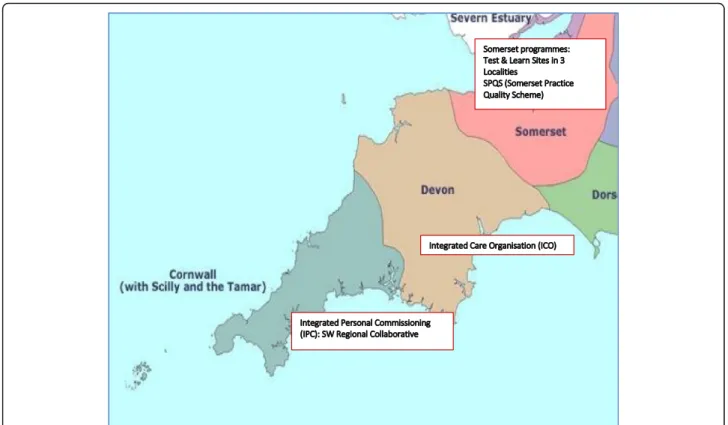
Over the past 2 years, our collaborative effort has in-volved engagement and working with diverse local sites (Fig. 3) using a consistent level and multi-perspective evaluation framework (Fig. 4) for the evalu-ation of specific P3C innovevalu-ations and system change. This framework reflects the complex interventions and organ-isational level changes that occur during P3C service reconfigurations. More importantly, however, it captures and uses the voice of patients and professionals to shape redesign efforts. For this purpose, we also collect multi-perspective data at both individual and group level (Fig. 4).
This evaluation framework assesses if service change and developments are achieving pre-specified outcomes towards P3C. Using a three tiered and multi-perspective longitudinal mixed methods approach, the framework encompasses qualitative data, questionnaire data and service use and data (Fig. 4). Service use data capture
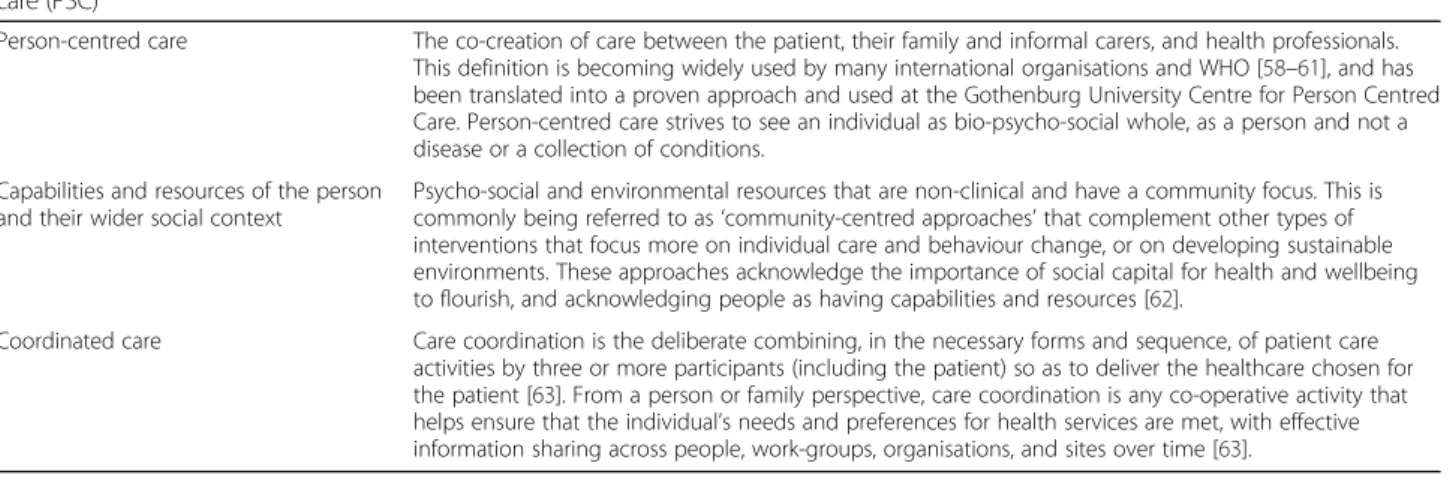
Table 1The extended South West Peninsula Collaboration for Applied Health Research and Care definition of person-centred coordinated care (P3C)
Person-centred care The co-creation of care between the patient, their family and informal carers, and health professionals. This definition is becoming widely used by many international organisations and WHO [58–61], and has been translated into a proven approach and used at the Gothenburg University Centre for Person Centred Care. Person-centred care strives to see an individual as bio-psycho-social whole, as a person and not a disease or a collection of conditions.
Capabilities and resources of the person and their wider social context
Psycho-social and environmental resources that are non-clinical and have a community focus. This is commonly being referred to as‘community-centred approaches’that complement other types of interventions that focus more on individual care and behaviour change, or on developing sustainable environments. These approaches acknowledge the importance of social capital for health and wellbeing to flourish, and acknowledging people as having capabilities and resources [62].
Fig. 1Collective action: an alignment of resources for promoting and supporting person-centred coordinated care (P3C). Grey vertical pillars represent the positioning and type of organisations that are partners in the Collaborative effort. The light grey box and orange box depict the ways in which we come to know of the challenges and potential solutions to service redesign for P3C, and how we use this knowledge to inform practice and our emerging theory. The dark grey boxes and the beige box represent how, through specific projects and service development innovations, we are able to develop insights about what works and how we feed this back into practical efforts to support on-going development. The yellow boxes represent the scale of change, this could be a specific service or a system wide approach and how knowledge from these initiatives flows into the development of practice, the development of theory or defining specific research projects. The blue arrows represent the flow of knowledge around the system
Fig. 3South West United Kingdom practice-based evaluations of person-centred coordinated care. This figure depicts a map of the South West of England showing the counties and the sites with which the collaborative works
allows for the assessment of patterns of service contact (GP attendance, hospital admissions, etc.) following ex-posure to an intervention with the intention to derive cost calculations. Staff experience data provides an insight into their perspective, whilst individual patients’ perspectives are sought to assess if care has improved or worsened [51], and if there are any perceived improvements in health, wellbeing, loneliness and self-management. We have included loneliness and self-management as meas-urement dimensions as these were hypothesised as im-portant to the target population of older people at risk of isolation with long-term conditions. This framework is be-ing used in the English counties of Somerset and Devon (Fig. 3) and was co-designed with local system commis-sioners and providers in each of the three Clinical Commissioning Groups. This is being used both to moni-tor the system as a whole over time, and to evaluate particular initiatives and innovations. Generalisable know-ledge is derived firstly through reviewing literature, using realist synthesis where feasible, and by comparison of data across the evaluation sites focusing on practitioner-patient interaction and organisational processes. We are also examining the process of implementation, both through the lens of existing knowledge about changing practice and quality improvement in the NHS, and also identifying specific organisational constraints and facilitators for de-veloping system-wide P3C.
Progress so far
Over the past 2.5 years, extensive efforts have been made to foster partnerships between researchers and health and social care organisations at various levels. This has involved researchers adopting an ‘embedded’ style of engagement to gain insider knowledge of or-ganisational systems and to build trust. Researchers have spent time attending management meetings, stra-tegic board meetings and training sessions across a variety of provider organisations ranging from clinical commissioning groups, hospital trusts, mixed stake-holder groups forming integration boards, social care and voluntary sector organisations. Co-design work-shops have taken place to create evaluation and devel-opment strategies for service innovations. In one site, we have two researchers in residence who have been funded by the Torbay Medical Research Fund to inves-tigate the ongoing process of integrating different ser-vices. In another site, a system-wide longitudinal formative evaluation has provided a rich picture of how services have developed P3C applying differential system leavers to support this process. Both sites have benefited from regular feedback to chart the develop-ment of the system and demonstrate where processes and outcomes are improving.
Figure 3 displays the geographical spread of the set-tings we are working with across the south west of
Table 2Examples of the service model innovations and organisational links
Name of service model Description of service model Links established as a result of the collaboration
Somerset Test and Learn
Roll out of the Symphony Complex Care model, developed in South Somerset, to other localities (Taunton and Mendips) across Somerset. Variations of linkage (networks) between primary, secondary and voluntary sector organisations.
South West Academic Health Science Network, Department of Community and Primary Care Research Group, Plymouth University, Health Connections Mendip (NGO), Village Agents (NGO), University of York, general practices across Somerset, Yeovil district hospital, Musgrove Park hospital, South West clinical support unit, Somerset County Council and Frome community hospital.
Somerset Practice Quality Scheme
General practitioners applying a‘system lever’ (discretion from pay for performance schemes) to enable the development of the above innovations
South West Academic Health Science Network, Department of Community and Primary Care Research Group, Plymouth University, 55 general practices in Somerset, Somerset Clinical Commissioning Group, Somerset County Council, Somerset Partnership Trust and National Health Service England.
Torbay
Integrated Care Organisation
The integration of acute and community services across five localities in South Devon. A range of around 30 service innovations and enabling functions are being rolled out in the new care model programme, including the deployment of Third Sector‘Well-being Coordinators’, enhanced intermediate care, and multi-disciplinary health and well-being teams in locality hubs with primary care input
South Devon Trust, Clinical Commissioning Group, Devon North East West Clinical Commissioning Group, Devon Partnership Trust, Torbay Council, Devon County Council, Healthwatch Torbay, Healthwatch Devon, Torbay Community Development Trust, Teignbridge Community and Voluntary Services, Volunteering in Health/Totnes Caring, Age UK Torbay, GP practices in Coastal Locality, South West Academic Health Science Network, Department of Community and Primary Care Research Group, Plymouth University and Oxford University.
Integrated Personal Commissioning
Two demonstrator sites (Torbay and Cornwall)
implementing a form of integrated personal budget that links services to personalised goals via a budget allocation. A range of statutory and non-statutory services are bro kered to achieve a coordinated and personalised plan based on the preferences of the individual patient.
England and Table 2 describes these settings, their models and the links that have been established or strengthened as a consequence of the collaboration.
The following two brief vignettes provide a more de-tailed snapshot of two of these service change models that we have been working with (Figs. 5 and 6).
While evaluation is, of course, crucial to establish what works well and what not so well within these new models of care, it is important to remember that these new models are attempting to change not only processes, but also prac-titioner and patient mindsets, within workplaces with highly ingrained cultures. Such changes take a substantial amount of time to embed. In addition, while it is important for models to learn and evolve, continued communication and some aspect of continuity is essential for service teams and patients if they are to feel engaged, important and part of a service.
Discussion
Our experience, so far, has been positive; services want support and engagement and to create an evidence base for monitoring and reflecting on what changes they make.
There have been challenges, and the pressure services are under, in the form of policy drivers and the high turnover of senior managers and frontline staff, are also barriers for us to overcome. However, sustained engagement from commissioners and a range of providers has helped to re-duce the impact that these barriers have imposed upon our evaluations and the services being delivered. The col-laboration between the southwest Academic Health Sci-ence Network and the SW CLAHRC has also been instrumental in supporting engagement and ensuring ro-bust evaluation. This is due to the active and trusted links that both organisations have with commissioning and ser-vice delivery organisations across the region and a stra-tegic commitment to work in partnership with the local health and social care sectors. However, this collaborative effort will only work with sustained support from commis-sioners and providers. By recognising and addressing the
current problems in the system as a collaborative effort, progress towards a more efficient and person-centred healthcare system becomes possible. The level of change required is profound and we should not be afraid to high-light the scale of the problem and the probable solutions.
Anecdotal evidence is beginning to suggest that the process is influencing practice. However, working in this way is not without its challenges, and we are a long way off from the development of a linked data set locally or across the region that will allow us to assess impact in-novations from a cost perspective. Trust is dependent on the exchange of services and interactions and this takes time to establish. We are beginning to see data flow and hope that this will continue in a constantly changing and open system.
At this stage, we need to acknowledge our state of uncertainty about which approaches to P3C are effective, whether it is possible to facilitate a sustained cultural change towards person-centred practice or whether this is context dependent. We are also currently unsure about whether the transactional costs required for coor-dinated care can be recouped by reductions in service costs and whether we can start to collect adequate data on the experience of care through everyday practice. It will be several years before we have enough data to bring together local evaluations and health economy metrics and dashboards for stakeholders and researchers to draw conclusions about what is effective.
Conclusions
The current pressures on health and social care systems, with the expectations to deliver more efficient and person-centred models of care, now require a new modus oper-andi. We are developing and testing an approach based on collaborative action where research and innovative practice are brought together as partners to reduce uncertainty and provide timely practical knowledge and evidence to support those at the coalface delivering new models of P3C.
Abbreviations
P3C:person-centred coordinated care; SW CLAHRC: South West Peninsula Collaboration for Leadership in Applied Health Research and Care
Acknowledgements
This research was supported by the National Institute for Health Research (NIHR) Collaboration for Leadership in Applied Health Research and Care South West Peninsula at the Royal Devon and Exeter NHS Foundation Trust. TS’s current post at the University of Oxford is funded by the NIHR Collaboration for Leadership in Applied Health Research and Care Oxford at Oxford Health NHS Foundation Trust. The views expressed are those of the authors and not necessarily those of the NHS, the NIHR or the Department of Health. This research was also funded by the South West Academic health Science Network (AHSN). The views expressed are those of the authors and not necessarily those of the AHSN.
Funding
The NIHR CLAHRC Programme fund the substantive posts of HML, RB, NB, HW, TPS and MP as members of the South West Peninsula CLARHC. All other co-authors are members of the wider collaboration and are substantially employed by their respective organisations.
Availability of data and materials
Data sharing is not applicable as no datasets were generated or analysed to produce this paper.
Authors’contributions
All authors commented on and edited drafts of the manuscripts. HL was the lead author and with RB conceived of the idea of the manuscript. HL and RB are leading the programme of work detailed in the manuscript. RS, TS, SA, NB, JV, MP, HL, LW, MB and RB are all involved in the work of the programme at a strategic level across Plymouth and Exeter Universities (as part of South West Peninsula CLARHC), SWAHSN and Somerset and South Devon and Torbay Clinical Commissioning Groups. JH, HW and TS contributed to the programme of work. All authors read and approved the final manuscript.
Ethics approval and consent to participate
Not applicable.
Consent for publication
Not applicable.
Competing interests
The authors declare that they have no competing interests.
Publisher’s Note
Springer Nature remains neutral with regard to jurisdictional claims in published maps and institutional affiliations.
Author details
1Community and Primary Care Research Group, Clinical Trails and Population
Studies, Peninsula School of Medicine and Dentistry, Room N14, ITTC Building, Plymouth Science Park, Derriford, Plymouth, Devon PL6 8BX, United Kingdom.2School of Law, Criminology and Government, University of Plymouth, Portland Villas, Plymouth, Devon PL4 8AA, United Kingdom.3NIHR
CLAHRC South West Peninsula (PenCLAHRC), Institute of Health Research, University of Exeter Medical School, St Luke’s Campus, Heavitree Road, Exeter EX1 2LU, United Kingdom.4Health Services & Policy Research, University of Exeter Collaboration for Academic Primary Care, APEx, University of Exeter Medical School, St Luke’s Campus, Heavitree Road, Exeter EX1 2LU, United Kingdom.5Primary Care Development Somerset Clinical Commissioning
Group, Working Together to Improve Health and Wellbeing, Wynford House, Lufton Way, Yeovil, Somerset BA22 8HR, United Kingdom.6South West
Academic Health Science Network, Pynes Hill Court, Pynes Hill, Exeter EX2 5AZ, United Kingdom.
Received: 10 March 2017 Accepted: 26 October 2017
References
1. Ryan J, Abrams MK, Doty MM, Shah T, Schneider EC. How high-need patients experience health care in the United States: findings from the 2016 Commonwealth Fund Survey of High-Need Patients. New York, NY: The Commonwealth Fund; 2016.
2. Curry N, Goodwin N, Naylor C, Robinson R. Practice based commissioning. Reinvigorate, replace or abandon? London: Kings Fund; 2008.
3. Sheaff RHJ, Øvretveit J, Byng R, Exworthy M, Peckham S, et al. Integration and continuity of primary care: polyclinics and alternatives, an organisational analysis. Health Serv Deliv Res. 2015;3:35. doi:10.3310/ hsdr03350.
4. National Voices. A Narrative for Person Centred Coordinated Care. 2013. https://www.nationalvoices.org.uk/publications/our-publications/narrative-person-centred-coordinated-care.
5. Royal College of Physicians. Putting the Pieces Together: Removing the Barriers to Excellent Patient Care. London: Royal College of Physicians; 2015. 6. Humphries R. Health and social care for older people: progress, problems
and priorities. Qual Ageing Older Adults. 2015;16(1):27–31.
7. Schoen C, Osborn R, Squires D, Doty M, Pierson R, Applebaum S. New 2011 survey of patients with complex care needs in eleven countries finds that care is often poorly coordinated. Health Affairs (Project Hope). 2011;30(12):2437. 8. Oliver D, Foot C, Humphries R. Making our Health and Care Systems Fit for
9. Barnett K, Mercer SW, Norbury M, Watt G, Wyke S, Guthrie B. Epidemiology of multimorbidity and implications for health care, research, and medical education: a cross-sectional study. Lancet. 2012;380(9836):37–43. 10. Goodwin N, Smith J, Davies A, Perry C, Rosen R, Dixon A, et al. Integrated
Care for Patients and Populations: Improving Outcomes by Working Together. London: The King’s Fund and the Nuffield Trust; 2012. 11. Kupeli N, Leavey G, Harrington J, Lord K, King M, Nazareth I, et al. What are
the Barriers to Care Integration for those at the Advanced Stages of Dementia Living in Care Homes in the UK? Health Care Professional Perspective. London: Dementia; 2016.
12. Walsh B, Addington-Hall J, Roberts HC, Nicholls PG, Corner J. Outcomes after unplanned admission to hospital in older people: ill-defined conditions as potential indicators of the frailty trajectory. J Am Geriatr Soc. 2012;60(11):2104–9.
13. Kasteridis P, Street A, Dolman M, Gallier L, Hudson K, Martin J, et al. Who would most benefit from improved integrated care? Implementing an analytical strategy in South Somerset. Int J Integr Care. 2015;15:e001. 14. Bock J-O, Konig H-H, Brenner H, Haefeli WE, Quinzler R, Matschinger H, et al.
Associations of frailty with health care costs–results of the ESTHER cohort study. BMC Health Serv Res. 2016;16:127.
15. Tian Y, Thompson J, Buck D. The cost of falls: exploring the cost of the whole system pathway for older people in a rural community in England. J Integr Care. 2014;22(4):173–65.
16. Sinnott C, Mc Hugh S, Browne J, Bradley C. GPs’perspectives on the management of patients with multimorbidity: systematic review and synthesis of qualitative research. BMJ Open. 2013;3(9):e003610. 17. Baird BC, Charles A, Honeyman M, Maguire D, Das P. Understanding
Pressures in General Practice. London: The Kings Fund; 2016.
18. Ham C. World Class Commissioning: a health policy chimera? J Health Serv Res Policy. 2008;13(2):116–21.
19. Armitage GD, Suter E, Oelke ND, Adair CE. Health systems integration: state of the evidence. Int J Integr Care. 2009;9:e82.
20. Kane RL. Strategies for improving chronic illness care: some issues for the NHS. Aging Health. 2007;3(3):333–42.
21. Beswick AD, Rees K, Dieppe P, Ayis S, Gooberman-Hill R, Horwood J, et al. Complex interventions to improve physical function and maintain independent living in elderly people: a systematic review and meta-analysis. Lancet. 2008;371(9614):725–35.
22. Helen F, Sally H, John F. Interventions in community settings that prevent or delay disablement in later life: an overview of the evidence. Qual Ageing Older Adults. 2012;13(3):212–30.
23. Pearson M, Sheaff R, Valderas-Martinez J, Byng R, Lloyd H, Brand S. From Programme Theory to Logic Models for Multi-Specialty Community Providers: A Realist Evidence Synthesis. National Institute for Health Research. 2017. http://clahrc-peninsula.nihr.ac.uk/research/from-programme- theory-to-logic-models-for-multispecialty-community-providers-a-realist-evidence-synthesis. Accessed 1 Nov 2017.
24. Sheaff R, Halliday J, Ovretveit J, Byng R, Exworthy M, Peckham S, et al. Integration and continuity of primary care: polyclinics and alternatives - a patient-centred analysis of how organisation constrains care co-ordination. Health Serv Deliv Res. 2015;3(35):201. 25. Dennis K. All together now: a conceptual exploration of integrated care.
Healthcare Quarterly. 2009;13(Sp):6–15.
26. Erens B, Wistow G, Mounier-Jack S, Douglas N, Jones L, Manacorda T, Mays N. Early Evaluation of the Integrated Care and Support Pioneers Programme. Final Report. Policy Innovation Research Unit (PIRU). Department of Health Services Research & Policy, London School of Hygiene and Tropical Medicine. 2016. www.piru.ac.uk/assets/files/Early_ evaluation_of_IC_Pioneers_Final_Report.pdf. Accessed 1 Nov 2017. 27. Leutz WN.‘Five Laws for Integrating Medical and Social Services: Lessons
from the United States and the United Kingdom’. Milbank Q. 1999;77(1):77. 28. Jarzabkowski P, Sillince JA, Shaw D. Strategic ambiguity as a rhetorical
resource for enabling multiple interests. Hum Relations. 2010;63(2):219–48. 29. Matland RE. Synthesizing the implementation literature: the ambiguity-conflict
model of policy implementation. J Public Adm Res Theory. 1995;5(2):145–74. 30. Ring PS, Perry JL. Strategic management in public and private
organizations: implications of distinctive contexts and constraints. Acad Manag Rev. 1985;10(2):276–86.
31. Noel PH, Frueh BC, Larme AC, Pugh JA. Collaborative care needs and preferences of primary care patients with multimorbidity. Health Expect. 2005;8(1):54–63.
32. Duguay C, Gallagher F, Fortin M. The experience of adults with multimorbidity: a qualitative study. J Comorbidity. 2014;4:11–21. 33. Wallace E, Salisbury C, Guthrie B, Lewis C, Fahey T, Smith SM. Managing
patients with multimorbidity in primary care. BMJ. 2015;350:h176. 34. Mercer SW, Gunn J, Bower P, Wyke S, Guthrie B. Managing patients with
mental and physical multimorbidity. BMJ. 2012;345:e5559.
35. Loffler C, Kaduszkiewicz H, Stolzenbach CO, Streich W, Fuchs A, van den Bussche H, et al. Coping with multimorbidity in old age–a qualitative study. BMC Fam Pract. 2012;13:45.
36. Smith SM, Soubhi H, Fortin M, Hudon C, O’Dowd T. Managing patients with multimorbidity: systematic review of interventions in primary care and community settings. BMJ. 2012;345:e5205.
37. France EF, Wyke S, Gunn JM, Mair FS, McLean G, Mercer SW. Multimorbidity in primary care: a systematic review of prospective cohort studies. Br J Gen Pract. 2012;62(597):e297–307.
38. NHS England. The General Practice Forward View. 2016. https://www.england. nhs.uk/wp-content/uploads/2016/04/gpfv.pdf. Accessed 1 Nov 2017. 39. NHS England. The Five Year Forward View. 2014. https://www.england.nhs.
uk/wp-content/uploads/2014/10/5yfv-web.pdf. Accessed 1 Nov 2017. 40. Gravelle H, Dusheiko M, Sheaff R, Sargent P, Boaden R, Pickard S, et al.
Impact of case management (Evercare) on frail elderly patients: controlled before and after analysis of quantitative outcome data. BMJ. 2007;334(7583):31.
41. Horrell JL, H., Sugavanam, T., Close, J., Byng, R. Creating and Facilitating Change for Person Centred Coordinated Care (P3C): The Development of the Organisational Change Tool (P3C-OCT). 2017. http://blogs.plymouth.ac. uk/communityandprimarycare/2017/10/11/creating-and-facilitating-change- for-person-centred-coordinated-care-the-organisational-change-tool-jane-horrell-and-helen-lloyd/. Accessed 1 Nov 2017.
42. Gilburt H. Supporting Integration through New Roles and Working Across Boundaries. London: Kings Fund; 2016.
43. Auerbach AD, Landefeld CS, Shojania KG. The tension between needing to improve care and knowing how to do it. N Engl J Med. 2007;357(6):608–13. 44. Pawson R, Tilley N. Realistic Evaluation. London: SAGE Publications; 1997. 45. Rycroft-Malone J, Wilkinson J, Burton CR, Harvey G, McCormack B, Graham I,
et al. Collaborative action around implementation in Collaborations for Leadership in Applied Health Research and Care: towards a programme theory. J Health Serv Res Policy. 2013;18(3 Suppl):13–26.
46. Glasgow RE, Green LW, Taylor MV, Stange KC. An evidence integration triangle for aligning science with policy and practice. Am J Prev Med. 2012;42(6):646–54.
47. NHS England. Integrated Personal Commissioning (IPC). 2017. https://www. england.nhs.uk/ipc/. Accessed 1 Nov 2017.
48. NHS England. Vanguards. 2017. https://www.england.nhs.uk/ourwork/new-care-models/vanguards/. Accessed 1 Nov 2017.
49. NHS England. Realising the Value. NHS England Launches Initiative to Empower Patients and Communities to take Control of their Health. 2014. https://www.england.nhs.uk/2014/11/realising-value/. Accessed 2 June 2016. 50. Lloyd H, Sugavanam, T, Wheat H, Horrell J, Close J. A Guide for
Commissioners on the Use Metrics for Person Centred Cooridnated Care for People with Long Term Conditions, Multiple Long Term Conditions and Those at the End of their Life. London: National Health Service England; 2017.
51. Sugavanam T, Byng R, Horrell J, Fosh B, Close J, Lloyd H. Co-designing a generic measure to probe person centred coordinated care from the perspective of the patient: the development of the P3CEQ. J Patient Experience. 2017. Ahead of print.
52. Green LW. Making research relevant: if it is an evidence-based practice, where's the practice-based evidence? Fam Pract. 2008;25 Suppl 1:i20–4. 53. Dow B. Development and initial testing of the Person-Centred Health Care
for Older Adults Survey. Int Psychogeriatr. 2013;25:1065–76.
54. Hibbard JH, Stockard J, Mahoney ER, Tusler M. Development of the Patient Activation Measure (PAM): conceptualizing and measuring activation in patients and consumers. Health Serv Res. 2004;39(4 Pt 1):1005–26. 55. Tennant R, Hiller L, Fishwick R, Platt S, Joseph S, Weich S, et al. The
Warwick-Edinburgh Mental Well-being Scale (WEMWBS): development and UK validation. Health Qual Life Outcomes. 2007;5:63.
56. Pawson R. The Science of Evaluation: A Realist Manifesto. London: Sage; 2013. 57. Pearson M, Brand SL, Quinn C, Shaw J, Maguire M, Michie S, Briscoe S,
platform for collaborative care in offender mental health. Implement Sci. 2015;10:134.
58. The King’s Fund. http://www.kingsfund.org.uk/blog/2014/11/power-people. Accessed 1 Nov 2017.
59. Health Foundation. http://www.health.org.uk/theme/person-centred-care. Accessed 1 Nov 2017.
60. Moore Foundation. http://patientfamilyengagement.org/. Accessed 1 Nov 2017.
61. Richards T. Listen to patients first. BMJ. 2014;349:g5765.
62. Public Health England & National Health Service England. A Guide to Community-Centred Approaches for Health and Wellbeing. Full Report. London: Public Health England; 2015.
63. Agency for Health Care Research and Quality (AHRQ). Care Coordination Measures Atlas. http://www.ahrq.gov/professionals/prevention-chronic-care/improve/coordination/atlas2014/chapter2.html. Accessed 1 Nov 2017.
• We accept pre-submission inquiries
• Our selector tool helps you to find the most relevant journal • We provide round the clock customer support
• Convenient online submission • Thorough peer review
• Inclusion in PubMed and all major indexing services • Maximum visibility for your research
Submit your manuscript at www.biomedcentral.com/submit