Please cite this article as: Taraz Z, Shams Shargh M, Samadi F, Ebrahimi P & Zerehdaran S. 2015. Effect of Chicory plant (Cichorium intybus L.)extract on performance and blood parameters in broilers exposed to heat stress with emphasis on antibacterial properties. Poult. Sci. J. 3(2): 151-158.
ISSN: 2345-6604 (Print), 2345-6566 (Online) http://psj.gau.ac.ir
Effect of Chicory Plant (
Cichorium intybus
L.)
Extract on Performance and Blood
Parameters in Broilers Exposed to Heat Stress with Emphasis on Antibacterial
Properties
Taraz Z1, Shams Shargh M1, Samadi F2, Ebrahimi P3 & Zerehdaran S4
1Department of Animal and Poultry Nutrition, Faculty of Animal Science, Gorgan University of Agricultural
Sciences and Natural Resources, Gorgan, Iran
2Department of Animal and Poultry Physiology, Faculty of Animal Science, Gorgan University of Agricultural
Sciences and Natural Resources, Gorgan, Iran
3Department of Chemistry, Faculty of Sciences, Golestan University, Gorgan, Iran
4Department of Animal Science, College of Agriculture, Ferdowsi University of Mashhad, Mashhad, Iran
Poultry Science Journal 2015, 3 (2): 151-158
Introduction
The harmful effects of heat stress on performance, health and physiology of broilers can be a cause of concern, especially in tropical
regions. The microbes of gastrointestinal tract play a key role in production efficiency, enhancing immunity and the health of the bird.
Abstract
Keywords
Probiotic Heat stress Performance Broiler chicken Chicory extract
The antimicrobial effectiveness of different extracts of Chicory (Cichorium
intybus L.) plant including methanolic, ethylic acetate, chloroformic, and aqueous extracts was evaluated by Disk Diffusion method. The ethylic
acetate extract showed higher antibacterial activity against E.coli compared
with others. Then, effects of different levels of ethylic acetate extract on growth performance and blood parameters of broilers subjected to high ambient temperature was investigated. The treatments were; a control diet, 3 levels of the Chicory ethylic acetate extract (150, 250, and 350 mg/kg feed) and one level of probiotic with 4 replicates of 20 broiler chicks in each. The temperature was increased to 35°C with 50% relative humidity for 5 h daily, starting from 11 d until 42 d of the experimental period. Results indicated that inclusion Chicory extract at 350 mg/kg and probiotic increased body weight gain and improved feed conversion ratio during
11-24 d and 0-42 d (P < 0.05). There were no significant differences in feed
intake of broilers treated with Chicory extract and probiotic compared with control. The serum concentrations of triglyceride and very low-density lipoprotein significantly decreased in birds received Chicory extract at the
levels of 250 and 350 mg/kg feed compared with the other treatments (P <
0.05). No significant difference was observed between treated groups and control for serum high-density lipoprotein and low-density lipoprotein concentrations. It seems that dietary supplementation of Chicory ethylic acetate extract at levels higher than 250 mg/kg feed has growth promoting effect which can result in improving growth performance and decreasing blood lipids of broilers exposed to heat stress condition.
Corresponding author
Zahra Taraz [email protected]
Article history
Poultry Science Journal 2015, 3 (2): 151-158
The imbalance in the microbes of the gastrointestinal tract, by weakening of beneficial microorganisms, causes more colonies of
pathogens to be formed (Lin et al., 2011).
Antibiotic growth promoters improve the public performance of birds with improving bowel and
strengthen beneficial microorganisms.
Furthermore, they prevent the creation of some pathogenic bacteria, but their harmful effects on human health due to antibiotic resistance and residues remaining in poultry products, results in an effort to find materials that can improve animal growth without adverse effects on
consumer’s health (Eckert et al., 2010).
Today, many materials have been introduced as an alternative to antibiotics such as probiotics,
prebiotics and medicinal plants. Probiotics
increase production efficiency by reducing the nutrients available for harmful bacteria and also reduce the production of toxic bacterial metabolites (Patterson & Burkholder, 2003). Chicory plant due to its special characteristics and ingredients is used as an herbal medicine. All parts of this plant especially roots have medicinally important compounds such as alkaloids, fructooligosaccharides, inulin (about 98%), flavonoids and variety of terpenoids
(Saxena et al., 2014). Active ingredients in the
herb Chicory have the property of increasing beneficial microbes (lactobacilli, bifidobacteria and butyrate-producing bacteria) and reducing
pathogenic bacteria (Escherichia coli and
Salmonella) in the intestines of chickens (Chow, 2002).
There are not many reports regarding the use of Chicory plant extract in broilers during heat stress. Therefore, in this study antibacterial properties of different extracts of Chicory (Cichorium intybus L.)plant was investigated and then the effects of the ethylic acetate extract as a growth-promoting additive on performance and blood parameters of broiler chickens was examined under heat stress condition.
Material and Methods
The protocol and all procedures were approved by Gonbad Kavous University, Gonbad-e-Kavous, Iran.
Preparation of extract
Chicory plant used in this experiment was collected in September 2013 from the mountains near Bojnoord, North Khorasan province, Iran. The collected plant was dried under 25ºC
shadow. The dried samples were grounded into 3 to 5 mm particles using a laboratory mill. Solvents (methanol, ethyl acetate, chloroform and water) were added to the powdered plant and kept for 4 to 5 days at room temperature and were filtrated through Whatman No. 1. The solvent was then removed using rotary evaporator. The extracts became viscous, dried on a water bath and then stored at 4ºC.
Antibacterial activity of different solvent extracts
The sensitivity of E. Coli to different Cichorium
intybus plant extracts was determined accordance with the Disc Diffusion method by Mueller Hinton agar medium plate (Merck Co., Germany). Antimicrobial discs of Gentamicin used as positive control for comparing with different Chicory extracts. The antimicrobial activity was evaluated by measuring the inhibition zone at 50 and 100 μg/mL.
Experimental design
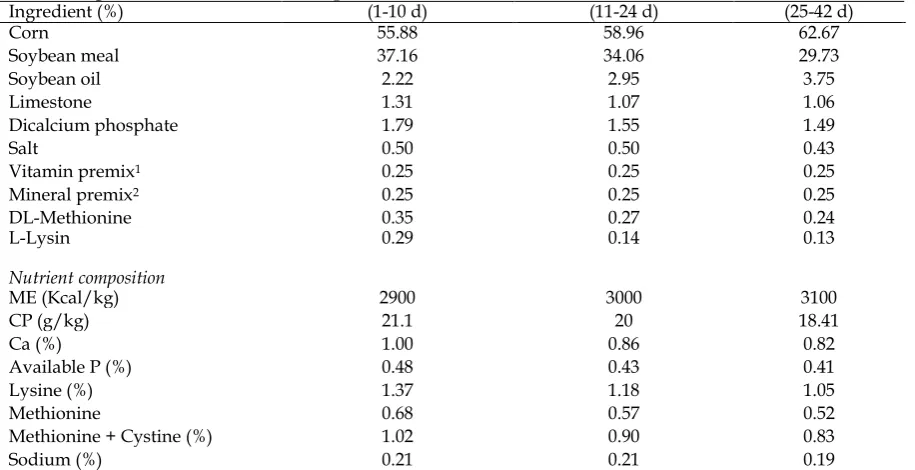
An experiment was conducted as a completely randomized design with 5 dietary treatments and 4 replicates of twenty broiler chicks (mixed sex) in each pen. For preparing dietary treatments, a basal diet was formulated to meet or exceed the nutrient recommendations for broiler chickens according to Ross 308 requirements (Avigen, 2009; Table 1). Then, five dietary treatments were prepared by addition of 4 levels (0, 150, 250, and 350 mg/kg feed) of the ethylic acetate Chicory plant extract and 1 level of probiotic Primalac to the basal diet. The ethylic acetate extract and probiotic were first mixed very well with corn and then gradually was added to the basal diet. Probiotic Primalac (StarLabs Inc., Clarksdale, MO, USA) contained
a total of 2×10⁸ colony forming unit of L.
Poultry Science Journal 2015, 3 (2): 151-158
Blood sampling
At 35 d of the age, after 6 h of fasting, two male chickens from each replicate were selected. Blood samples were collected from the brachial vein and Serum was obtained by centrifugation of the coagulated blood at 3000 × g for 10 min. The sera samples kept in the deep freezer until analysis for determining total protein, albumin
and globulin (Doumas et al., 1981), cholesterol,
High-density lipoprotein (HDL) (Wybenga et al.,
1970) and triglyceride (Neri & Frings, 1973). Very low-density lipoprotein (VLDL) was
determined by dividing triglyceride
concentration to five. Low-density lipoprotein (LDL) calculated by subtracting HDL and VLDL
from cholesterol concentration (Warnick et al.,
1990).
Statistical analysis
Analysis of variance was performed using the GLM procedure with SAS software (SAS, 2003) based on a completely randomized design. Significant differences among treatment means were determined by Duncan's multiple range test at a 5% probability level.
Table 1. Ingredients and nutrient composition of the basal diet
(25-42 d) (11-24 d) (1-10 d) Ingredient (%) 62.67 58.96 55.88 Corn 29.73 34.06 37.16 Soybean meal 3.75 2.95 2.22 Soybean oil 1.06 1.07 1.31 Limestone 1.49 1.55 1.79 Dicalcium phosphate 0.43 0.50 0.50 Salt 0.25 0.25 0.25 Vitamin premix1
0.25 0.25
0.25 Mineral premix2
0.24 0.27 0.35 DL-Methionine 0.13 0.14 0.29 L-Lysin Nutrient composition 3100 3000 2900 ME (Kcal/kg) 18.41 20 21.1 CP (g/kg) 0.82 0.86 1.00 Ca (%) 0.41 0.43 0.48 Available P (%)
1.05 1.18 1.37 Lysine (%) 0.52 0.57 0.68 Methionine 0.83 0.90 1.02 Methionine + Cystine (%)
0.19 0.21
0.21 Sodium (%)
1Each Kg of vitamin premix contained: vitamin A, 3,600,000 IU; vitamin D3, 800,000 IU; vitamin E, 7.2 g; vitamin K3, 0.8 g;
thiamine, 0.72 g; riboflavin, 3.3 g; pantothenic acid, 4 g; vitamin B6, 1.2 g; vitamin B12, 6 mg; niacin, 12 g; biotin, 40 mg; folic acid,
0.4 g; choline chloride, 100 g; antioxidant, 40 g.
2Each Kg of mineral premix contained: manganese, 40 g; zinc, 40 g; iron, 20 g; copper, 4 g; iodine, 0.4 g; selenium, 80 mg. Results
The results of the antibacterial effect of Chicory extracts are shown in Table 2. All extracts
showed good antibacterial activity against E. coli
but the greatest inhibition was seen on the ethylic acetate extract. The inhibition zone in ethylic acetate extract was significantly higher than the other extracts at both concentrations of 50 (7.4
mm) and 100 μg/mL (15.2 mm) (P < 0.05).
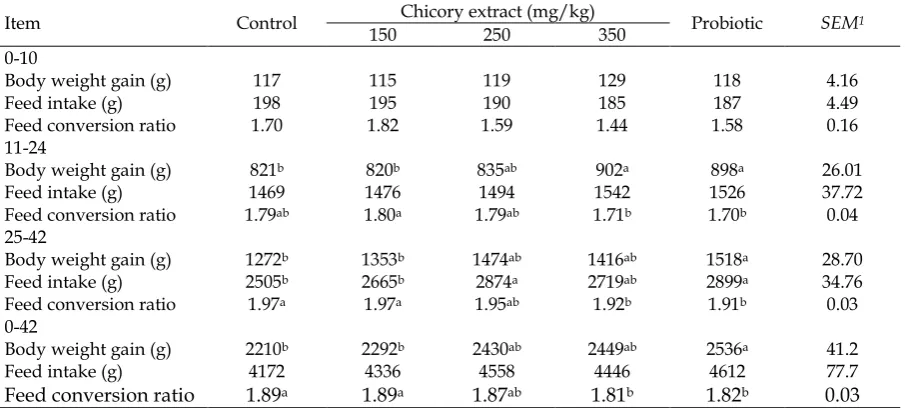
The effects of different levels of Chicory ethylic acetate extract and probiotic on the body weight gain, feed intake and feed conversion ratio are shown in Table 3. There was no significant difference between Body weight gain, feed intake and feed conversion ratio in birds received different dietary treatments at 1-10 d of age.
Table 2. Antibacterial activity of plant extracts of Chicory
Solvent
Zone of inhibition against E.Coli (mm) 50 μg/mL
concentration
100 μg/mL concentration
Chloroform 5.4c
7.4b 6.2bc 3.7d 10.5a 0.37 9.9d
Ethyl acetate 15.2b
Methanol 12.6c
Water 6.7e
Gentamicin1 22a
SEM2 0.53
1The positive control was Gentamicin; 2Standard error of
means.
a-eMeans within the same column without common letters
Poultry Science Journal 2015, 3 (2): 151-158
Table 3. The effect of feeding Chicory extract on performance parameters of broilers
Item Control Chicory extract (mg/kg) Probiotic SEM1
150 250 350
0-10
Body weight gain (g) 117 115 119 129 118 4.16
Feed intake (g) 198 195 190 185 187 4.49
Feed conversion ratio 1.70 1.82 1.59 1.44 1.58 0.16
11-24
Body weight gain (g) 821b 820b 835ab 902a 898a 26.01
Feed intake (g) 1469 1476 1494 1542 1526 37.72
Feed conversion ratio 1.79ab 1.80a 1.79ab 1.71b 1.70b 0.04
25-42
Body weight gain (g) 1272b 1353b 1474ab 1416ab 1518a 28.70
Feed intake (g) 2505b 2665b 2874a 2719ab 2899a 34.76
Feed conversion ratio 1.97a 1.97a 1.95ab 1.92b 1.91b 0.03
0-42
Body weight gain (g) 2210b 2292b 2430ab 2449ab 2536a 41.2
Feed intake (g) 4172 4336 4558 4446 4612 77.7
Feed conversion ratio 1.89a 1.89a 1.87ab 1.81b 1.82b 0.03
1Standard error of means. a,bMeans within the same row without common letters differ significantly (P < 0.05).
During 11 to 24 d of age, birds fed diets containing 350 mg/kg Chicory extract or
probiotic had greater body weight gain (P <
0.05) than birds fed other diets. However, no significant difference was found between control diet with 150 mg/kg and 250 mg/kg Chicory
extract. There was no significant difference
between dietary treatments for feed intake (g) at 11-24 d. Birds fed diets containing 350 mg/kg Chicory extract or probiotic had significantly better feed conversion ratio than those birds fed
150 mg/kg Chicory extract (P < 0.05).
The highest body weight gain belonged to probiotic treatment that had a significant difference with 150 mg/kg Chicory extract and
control treatments at 25-42 d (P < 0.05).
However, there was no significant difference between different levels of Chicory treatments for body weight gain during this period. Birds
fed diets containing probiotic or 250 mg/kg Chicory extract had significantly higher feed intake than those birds fed control and 150
mg/kg Chicory extract(P < 0.05). No significant
difference was found between treatments for feed conversion ratio during this period.
For the overall experimental period (0-42 d), there was no significant difference between different levels of Chicory extract for body weight gain; Although it was improved by increasing amounts of Chicory extract. The highest body weight gain was related to birds fed probiotic. Neither Chicory extract nor probiotic had a significant effect on feed intake during this period. Birds fed 350 mg/kg Chicory extract or probiotic had significantly better feed conversion ratio than those birds fed control or
150 mg/kg Chicory extract(P < 0.05).
Table 4. The effect of feeding Chicory extract on blood serum components in broilers at 35 d of age
Serum components Control Chicory extract (mg/kg) Probiotic SEM1
150 250 350
Total protein (g/dL) 3.12 3.24 3.16 3.25 3.23 0.17
Albumin (g/dL) 1.29 1.47 1.45 1.51 1.50 0.15
Globulin (g/dL) 1.83 1.77 1.71 1.74 1.73 0.09
Triglyceride (mg/dL) 95.90a 86.37ab 79.22b 69.30b 89.0ab 8.01
Cholesterol (mg/dL) 121.70ab 128.85a 118.62ab 115.21b 129.4a 4.17
HDL (mg/dL) 37.60 49.57 37.78 38.35 50.60 4.31
LDL (mg/dL) 65.00 62.00 65.00 63.00 61.00 5.60
VLDL(mg/dL) 19.10a 17.28ab 15.84b 13.86b 17.8ab 1.48
1Standard error of means. a,bMeans within the same row without common letters differ significantly (P < 0.05).
The effect of feeding Chicory plant extract and probiotic on some serum components in broilers at 35 d of age are shown in Table 4.
Broilers received 250 and 350 mg/kg Chicory
extract had significantly lower serum
Poultry Science Journal 2015, 3 (2): 151-158 concentrations than other treatments. These
amounts were decreased by elevating the levels of Chicory plant extract. There was no significant difference between broilers fed probiotic and control treatment. No significant effect was observed in serum total protein, albumin, globulin, HDL and LDL concentration
of treated groups and control (P < 0.05).
Discussion
There are some components in the extracts of
Chicory such as flavonoids, phenolic
compounds and alkaloids that have
antimicrobial properties (Saxena et al., 2014). The
antimicrobial and antioxidant effects of phenolic
compounds have been reported by Akbarian et
al. (2011) and Viveros et al. (2011). It has been
reported that ethylic acetate fraction showed
more strong activity against E. coli than
chloroformic and methanolic extracts (Petrovic et
al., 2004; Mehmood et al., 2012). The hexane and
ethyl acetate root extracts of Chicory showed a greater zone of inhibition than chloroformic,
petroleum ether and water extracts on E. coli
(Nandagopal et al., 2007). Flamini et al. (2001)
and Dendougui et al. (2006) showed that polar
compounds in the Chicory plant can be dissolved in polar solvents. The higher antimicrobial property of ethylic acetate extract may be related to this fact that flavonoids and phenols which are polar and semi-polar compounds can be dissolved in organic solvents such as ethyl acetate and chloroform (Ceksteryte
et al., 2007). Plant extracts in poultry diets can play an important role in improving animal performance by two mechanisms including endogenous enzyme stimulation and regulation of intestinal microflora balance (Deans and Waterman, 1993). Shapiro and Guggenheim,
(1995) and Stiles et al. (1995) reported that
terpenes and phenols propane have lipophilic properties and are able to penetrate the bacterial cell membrane and reach the inner membrane and are capable of disrupting the enzymatic activity of bacteria.
In agreement with our results, da Silva et al.
(2011), Safamehr et al. (2013) and Saeed et al.
(2015) reported better body weight gain in broilers consumed Chicory extract. The improvement in body weight gain may be attributed to better mucosal growth, villus height and width, crypt depth and ratio of villus height to crypt depth, which might have resulted in increased absorption of nutrients (Zyl
et al., 2010; Awad et al., 2011). It is expected that Chicory extract is more effective in improving broilers performance expose to heat stress when physiological and biochemical metabolites change. Reducing feed intake and lack of nutrient efficiency occurred in heat stress conditions (Cooper & Washburn, 1998). Birds consume energy to cool down body during heat stress. This energy has a significant impact on their performance and reduces the production
indexes (Tuzcu et al., 2008). No significant
difference was observed for feed intake between the birds received Chicory extract during the whole period of the experiment. This is in
accordance with findings of others (Liu et al.,
2011; Elrayeh and Yildiz, 2012; Saeed et al., 2015)
who reported that Chicory extract did not affect
feed intake. On the contrary, Behboud et al.
(2011) and Safamehr et al. (2013) reported a
significant increase in feed intake in birds that consumed Chicory extract.
Better feed conversion ratio in birds given Chicory ethylic acetate extract may probably be due to its complex carbohydrates such as oligofructose and oligosaccharides which might have resulted in efficient meat production (Park & Park, 2012), an improvement in digestibility of nutrients and reduction in pathogenic microbes
(Anderson et al., 2000). These findings are in
agreement with the results of da Silva et al.
(2011) and Saeed et al. (2015), however, the
findings of Liu et al. (2011) and Elrayeh and
Yildiz (2012) were different, in which they showed that feed conversion ratio of broilers treated with Chicory was not improved.
Plant extracts can stimulate secretions in the small intestinal, liver and pancreas, and increase
the rate of digestion (Khajuria et al., 2002).
Brenes and Roura (2010) reported that plant extracts may stimulate crypt cell proliferation. The Compounds derived from medicinal plant of Chicory such as inulin can remove pathogenic microbes and replace them with beneficial bacteria and improve the performance of poultry
(Biggs et al., 2007). The final product of
fermentation of inulin and oligofructose are short-chain fatty acids (SCFA) such as acetate,
propionate and butyrate (Blottiere et al., 1999).
Butyrate production increase microvilli height and absorption of nutrients in the digestive system and improve the growth performance of
broiler chickens (Van Leeuwen et al., 2005).
Poultry Science Journal 2015, 3 (2): 151-158
microbial population of the gastrointestinal tract
and serum parameters in broiler chickens (Lin et
al., 2011).
Our results on cholesterol are consistent with
Velasco et al. (2010) and Saeed et al. (2015). The
decrease in blood cholesterol level might be due to the properties of Chicory extract to stimulate lactic acid producing bacteria and secreting the
hydrolase enzyme (Hinton et al., 2000) that
converts bile salts into deconjugated bile acids and reduced serum cholesterol level (Safamehr
et al., 2013). Chicory inulin reduces serum triglycerides and lipoprotein levels by reducing fatty acid synthesis (Williams, 1999).
Conclusion
Ethylic acetate Chicory extract had more antibacterial activity and more effective
properties against E.coli compared to other
Chicory extracts. Supplementation of Chicory ethylic acetate extract at the level of 350 mg/kg has growth promoting effect and improves growth performance and decreases blood lipids in broilers exposed to heat stress.
Acknowledgement
The authors would like to thank Gorgan University of Agricultural Sciences and Natural Recources, Gonbad Kavous University and Golestan University for the financial and facilities supports.
References
Akbarian A, Golian A, Sheikh Ahmadi A & Moravej H. 2011. Effects of ginger root (Zingiber officinale) on egg yolk cholesterol, antioxidant status and performance of laying hens. Journal of Applied Animal Research,
39: 19–21. [Link]
Anderson DB, McCracken VJ, Aminov RI, Simpson JM, Mackie RI, Verstegen MW A & Gaskins H R. 2000. Gut microbiology and growth-promoting antibiotics in swine. Nutrition Abstracts and Reviews Series B, 70:
101-108. [Link]
Avigen. 2009. Ross 308 broiler nutrition
specifications. [Link]
Awad WA, Ghareeb K & Böhm J. 2011. Evaluation of the chicory inulin efficacy on ameliorating the intestinal morphology and modulating the intestinal electrophysiological properties in broiler chickens. Journal of Animal Physiology
and Animal Nutrition, 95: 65-72. [Link]
Behboud J, Ali R & Elmira H. 2011. Comparative
effect of Chicory (Cichorium intybus L.) and
Nigella sativa extract with an antibiotic on different parameters of broiler chickens. Journal of Applied Environmental and
Biological Sciences, 1: 525-528. [Link]
Biggs P, Parsons CM & Fahey GC. 2007. The effects of several oligosaccharides on growth performance, nutrient digestibility, and cecal microbial populations in young chicks.
Poultry Science, 86: 2327-2336. [Link]
Blottiere HM, Champ M, Hoebler C, Michel C & Cherbut C. 1999. Production and digestive effects of short chain fatty acids. Sciences des
Aliments, 19: 269–290. [Link]
Brenes A & Roura E. 2010. Essential oils in poultry nutrition: Main effects and modes of action. Animal Feed Science and Technology,
158: 1–14. [Link]
Ceksteryte V, Kazlauskas S & Racys J. 2006. Composition of flavonoids in Lithuanian
honey and beebread. Biologija, 2: 28-33.[Link]
Chow J. 2002. Probiotics & prebiotics: A brief overview. Journal of Renal Nutrition, 12:
76-86. [Link]
Cooper MA & Washburn KW. 1998. The relationships of body temperature to weight gain, feed consumption, and feed utilization in broilers under heat stress. Poultry Science,
77: 237–242. [Link]
da Silva WTM, Nunes RV, Pozza PC, Pozza MDS, Appelt MD & Eyng, C. 2011. Evaluation of inulin and probiotic for broiler chickens. Acta Scientiarum - Animal Sciences,
33: 19-24. [Link]
Deans SG & Waterman PG. 1993. Biological activity of volatile oils. In: Hay RKM & Waterman PG. (Eds). Volatile Oil Crops, their Biology, Biochemistry and Production. Longman Scientific and Technical, Essex.
Pages, 97-111. [Link]
Dendougui H, Jay M, Benayache F & Benayache S. 2006. Flavonoids from Anvillea radiata coss. and Dur. (Asteraceae). Biochemical
systematics and Ecology, 34: 718-720. [Link]
Doumas BT, Bayse DD, Carter RJ, Peters T & Schaffer R. 1981. A candidate reference method for determination of total protein in serum. I. Development and validation.
Clinical Chemistry, 27: 1642-1650. [Link]
Poultry Science Journal 2015, 3 (2): 151-158 Influence of probiotic administration by feed
or water on growth parameters of broilers reared on medicated and nonmedicated diets. Journal of Applied Poultry Research,
19: 59-67. [Link]
Elrayeh AS & Yildiz G. 2012. Effects of inulin and β-glucan supplementation in broiler diets on growth performance, serum cholesterol, intestinal length & immune system. Journal of Veterinary and Animal
Sciences, 36: 388-394. [Link]
Flamini G, Antognoli E & Morelli I. 2001. Two flavonoids and other compounds from the
aerial parts of Centaurea bracteata from Italy.
Phytochemistry, 57: 559-564. [Link]
Hinton Jr A, Buhr RJ & Ingram KD. 2000. Reduction of Salmonella in the crop of broiler chickens subjected to feed withdrawal.
Poultry Science, 79: 1566-1570. [Link]
Khajuria A, Thusu N & Zutshi U. 2002. Piperine modulates permeability characteristics of intestine by inducing alterations in membrane dynamics: influence on brush border membrane fluidity, ultrastructure and enzyme
kinetics. Phytomedicine, 9: 224-231. [Link]
Lin SY, Hung ATY & Lu JJ. 2011. Effects of
supplement with different level of Bacillus
coagulans as probiotic on growth performance and intestinal microflora populations of broiler chickens. Journal of Animal and
Veterinary Advances, 10: 111-114. [Link]
Liu HY, Iversson E, Jönsson L, Holm L, Lundh L & Lindberg JE. 2011. Growth performance, digestibility and gut development of broiler chickens on diets with inclusion of Chicory (Cichorium intybus L.). Poultry Science, 90:
815-823. [Link]
Mehmood N, Zubaır M, Rızwan K, Rasool N, Shahid M & Ahmad VU. 2012. Antioxidant, Antimicrobial and phytochemical analysis of
Cichorium intybus seeds extract and various organic fractions. Iranian Journal of Pharmaceutical Research, 11: 1145–1151.
[Link]
Nandagopal S & Ranjitha Kumari BD. 2007. Phytochemical and antibacterial studies of
Chicory (Cichorium intybus L.) - a
multipurpose medicinal plant. Advances in
Biological Research, 1: 17-21. [Link]
Neri BP & Frings CS. 1973. Improved method for determination of triglycerides in serum.
Clinical Chemistry, 19: 1201-1202. [Link]
Park SO & Park BS. 2012. Effect of feeding inulin oligosaccharides on cecum bacteria, egg
quality and egg production in laying hens. African Journal of Biotechnology, 11:
9516-9521. [Link]
Patterson JA & Burkholder KM. 2003. Application of prebiotics and probiotics in poultry production. Poultry Science, 82: 627–
631. [Link]
Petrovic J, Stanojkovic A, Comic LJ & Curcic S.
2004. Antibacterial activity of Cichorium
intybus. Fitoterapia, 75: 737-739. [Link] Saeed M, Baloch AR, Wang M, Soomro RN,
Baloch AM, Bux BA, Arian MA, Faraz SS &
Zakriya HM. 2015. Use of Cichorium intybus
leaf extract as growth promoter,
hepatoprotectant and Immune modulent in broilers. Journal of Animal Production
Advances, 5: 585-591. [Link]
Safamehr A, Fallah F & Nobakht A. 2013. Growth performance and biochemical parameters of broiler chickens on diets
consist of chicory (Cichorium intybus) and
nettle (Urtica dioica) with or without
multi-enzyme. Iranian Journal of Applied Animal
Science, 3: 131-137. [Link]
SAS Institute. 2003. SAS User Guide. Version 9.1.
SAS Institute, Cary, NC. [Link]
Shapiro S & Guggenheim B. 1995. The action of
thymol on oral bacteria. Oral Microbiology
and Immunology, 10: 241-246. [Link]
Saxena R, Sulakhiya KB & Rathore M. 2014.
Cichorium intybus: A review of
pharmacological profile. International
Journal of Current Pharmaceutical Research,
6: 11-15. [Link]
Stiles JC, Sparks W & Ronzio RA. 1995. The
inhibition of Candida albicans by oregano.
Journal of Applied Nutrition, 47: 96-102. Tuzcu M, Sahin N, Karatepe M, Cikim G, Kilinc
U & Sahin K. 2008. Epigallocatechin-3-gallate supplementation can improve antioxidant status in stressed quail. British Poultry
Science, 49:643-648. [Link]
Van Leeuwen P, Verdonk JMAJ, Wagenaars C MF & Kwakernaak C. 2005. Effects of fructooligosaccharide inclusion in diets on performance before and after inoculations
with Eimeria acervulina and Clostridium
perfringens in broilers. Animal Sciences Group Wagingen UR, Lelystad, Netherlands, Project 220.13180: 04.
Poultry Science Journal 2015, 3 (2): 151-158
metabolites, liver lipids, abdominal fat deposition, and tissue fatty acid composition in broiler chickens. Poultry Science, 89:
1651-1662. [Link]
Viveros A, Chamorro S, Pizarro M, Arija I, Centeno C & Brenes A. 2011. Effects of
dietary polyphenol-rich grape products on
intestinal microflora and gut morphology in broiler chicks. Poultry Science, 90: 566–578.
[Link]
Warnick GR, Knopp RH, Fitzpatrick V &
Branson L. 1990. Estimating low-density
lipoprotein, cholesterol by the Fried Wald equation is adequate for classifying patients on the basis of nationally recommended
cutpoints. Clinical Chemistry, 36: 15-19.
[Link]
Williams CM. 1999. Effects of inulin on lipid parameters in humans. Journal of Nutrition,
129: 1471-1473. [Link]
Wybenga, DR, Pileggi VJ, Dirstine PH & Giorgio JD. 1970. Direct manual determination of serum total cholesterol with a single stable reagent. Clinical Chemistry, 16: 980-984.
[Link]
Zyl ZV. 2010. Adding inulin to feed, obtained from chicory, improves villi properties in the intestines of broilers. Poultry Magazine, 28: