Geschke Center
Doctoral Dissertations Theses, Dissertations, Capstones and Projects
5-2018
Teaching Academic Concepts in a Play-Based
Preschool Environment: A Case Study of Guided
Play across Three Classrooms
Lisa M. Hansen
University of San Francisco, [email protected]
Follow this and additional works at:https://repository.usfca.edu/diss
Part of theEarly Childhood Education Commons, and theEducational Methods Commons
This Dissertation is brought to you for free and open access by the Theses, Dissertations, Capstones and Projects at USF Scholarship: a digital repository @ Gleeson Library | Geschke Center. It has been accepted for inclusion in Doctoral Dissertations by an authorized administrator of USF Scholarship: a digital repository @ Gleeson Library | Geschke Center. For more information, please [email protected].
Recommended Citation
Hansen, Lisa M., "Teaching Academic Concepts in a Play-Based Preschool Environment: A Case Study of Guided Play across Three Classrooms" (2018).Doctoral Dissertations. 432.
TEACHING ACADEMIC CONCEPTS IN A PLAY-BASED PRESCHOOL ENVIRONMENT: A CASE STUDY OF GUIDED PLAY ACROSS THREE
CLASSROOMS
A Dissertation Presented To
The Faculty of the School of Education Department of Leadership Studies Organization and Leadership Program
In Partial Fulfillment
Of the Requirements for the Degree Doctor of Education
by Lisa M. Hansen
ii
THE UNIVERSITY OF SAN FRANCISCO
Dissertation Abstract
Teaching Academic Concepts in a Play-Based Preschool Environment: A Case Study of Guided Play Across Three Classrooms
This qualitative study examined interactions between preschool children and
teachers during guided-play activities. These interactions were studied through
observations and interviews in a case-study format. Classrooms were observed for 1 hour
per week over the course of 4 weeks. Teachers were interviewed following each
observation. All three preschool classrooms were located in northern California and
belonged to the same chain of schools. A total of six teachers and 75 students participated
in the study.
Three main research questions drove the course of the study. The first research
question examined the types of interactions between experienced preschool teachers and
students during guided play. The second research question dealt with how preschool
children respond to different types of interactions during guided play. Finally, the third
research question involved recommendations for how school leaders can help teachers
use their knowledge of each child’s individual abilities to make guided play more
effective in the classroom.
The study revealed that teacher interactions were extremely beneficial to student
learning in a play-based environment. Teachers in each classroom organized a set of
hands-on activities each day through which the children rotated. The activities had
specific learning goals and objectives. Many activities were in the children’s zone of
proximal development (ZPD), which is defined as the area between “the most difficult
iii
1986, p.83). Working in the ZPD requires some teacher support and interaction, as these
are the types of activities children cannot do independently. Proper scaffolding is
necessary when children are working toward a goal that is slightly above what they can
do without assistance. Preschool teachers should take this into consideration when
planning lessons and guided play activities. School leaders can support teachers by
providing more training on how to manage guided play with a large group of children, as
individualized attention is necessary for successful implementation. Suggestions for
iv
and approved by the members of the committee, has been presented and accepted by the
Faculty of the School of Education in partial fulfillment of the requirements for the
degree of Doctor of Education. The content and research methodologies presented in this
work represent the work of the candidate alone.
Lisa Hansen May 10, 2018 Candidate
Dissertation Committee
Patricia Mitchell, Ph.D. May 10, 2018 Chairperson
Danfeng Soto-Vigil Koon, Ph.D. May 10, 2018
v DEDICATION
This work is dedicated to my daughter Brielle. She was born halfway through this
journey and is now a bright, inquisitive three year old, much like many of the children
who participated in this study. She has so graciously shared her mother with not only a
career, but also a dissertation. I hope she will be proud of me and one day understand
what has been accomplished. In the end, this work is for her and all children her age
eager to learn and explore the world around them. May you never lose your love for
vi
Many people supported me on this journey. A special thank you to my preschool
directors and teachers who graciously welcomed not only a researcher, but also their
boss, into their classrooms. I never stopped being amazed at the passion, drive, and talent
that these professionals gave to our young learners each day. You are truly what makes
this all possible.
A special thank you to Dr. Patricia Mitchell for your continued support and
encouragement. This has been a long journey for me, and learning to balance all of my
obligations, professional and personal, has been my biggest obstacle on the way to
graduation. You helped me along at the pace that worked, with the gentle nudges when I
needed them the most. Thank you!
Also, thank you to the other members of my committee, Dr. Maniates and Dr.
Koon, for your ongoing feedback and support. I appreciate all your time and attention to
detail. Your expertise and experience truly helped me fine tune this study.
Finally, thank you to my family for all the support and encouragement you gave
me over these past few years. Thank you to my husband, Zach, for always being there to
take over both at work and at home so I could study or write. Thank you to my parents,
Tom and Lori Sullivan, for believing in me and knowing that this dream could become a
reality. Also, to my sister, Katie Sullivan, and all the other members of my extended
vii
TABLE OF CONTENTS
Abstract ... ii
Signature Page ... iv
Dedication ...v
Acknowledgements ... vii
List of Tables ... ix
List of Figures ...x
Chapter I STATEMENT OF THE PROBLEM ...1
Background and Need ...5
Theoretical Framework ...8
Dewey ...8
Montessori...10
Vygotsky ...13
Purpose of the Study ...15
Research Questions ...15
Limitations of the Study ...15
Significance of the Study ...16
Definition of Terms ...17
CHAPTER II REVIEW OF THE LITERATURE...21
Play-Based Learning ...22
Free Play in the Preschool Classroom ...25
Teacher Interactions ...26
Using Guided Play to Reach Academic Goals ...33
Teaching Mathematics Through Guided Play ...34
Teaching Literacy Through Guided Play ...41
Summary ...47
CHAPTER III METHODOLOGY ...49
Restatement of the Purpose ...49
Research Design ...50
Research Setting...51
Population and Sample ...52
Instrumentation ...54
Data Collection ...54
Data Analysis ...57
Ethical Considerations ...58
viii
CHAPTER IV FINDINGS ...60
Overview ...60
Classroom 1 ...64
Classroom 2 ...65
Classroom 3 ...66
Findings ...67
Findings Research Question 1 ...67
Findings Research Question 2 ...85
Findings Research Question 3 ...95
Summary ...103
CHAPTER V SUMMARY, DISCUSSION, CONCLUSIONS, AND RECOMMENDATIONS ...105
Summary of the Study ...105
Discussion ...105
Research Question 1 ...105
Research Question 2 ...107
Research Question 3 ...109
Conclusions ...112
Recommendations for Future Research ...113
Recommendations for Practice ...113
Closing Remarks ...114
REFERENCES ...116
Appendix A Consent Form for Teacher Participants ...127
Appendix B Parental Consent Form for Student Participants ...128
Appendix C Teacher Interview Questions ...129
ix
LIST OF TABLES
x
LIST OF FIGURES
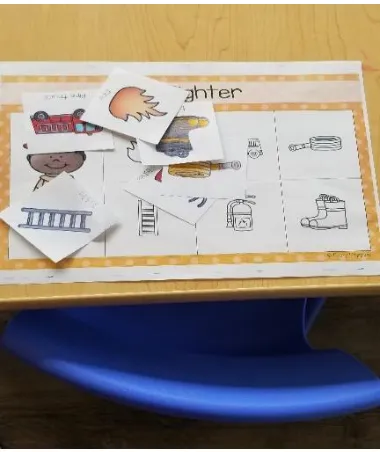
Figure 1. Community helper matching game. ...68
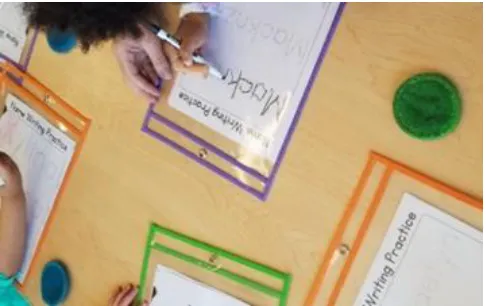
Figure 2. Dry-erase name tracing...70
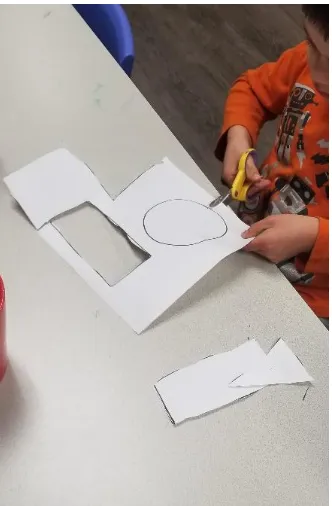
Figure 3. Cutting out paper shapes. ...71
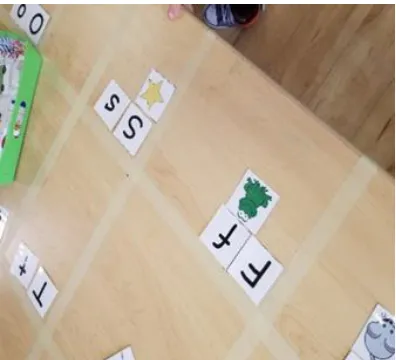
Figure 4. Phonics-matching activity. ...76
Figure 5. Linda taking down a student’s dictation. ...78
Figure 6. Dry-erase number cards and white boards. ...80
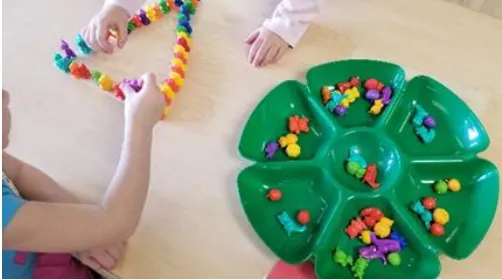
Figure 7. Making patterns on shapes with colored animals. ...81
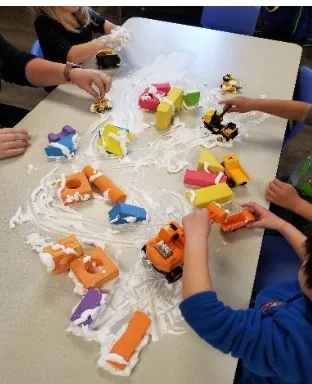
Figure 8. Construction vehicles, foam blocks, and shaving cream. ...83
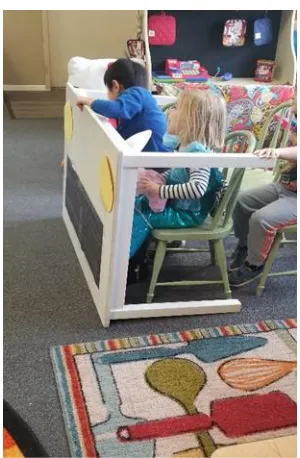
Figure 9. Jeep dramatic play. ...86
CHAPTER I
STATEMENT OF THE PROBLEM
Early childhood is a highly critical time period for learning. Students who attend
preschool programs typically come to kindergarten better prepared to start elementary
school, socially and academically (Kirp, 2007). Preschool-age children are capable of
reaching a plethora of academic goals. By the time they enter kindergarten, most children
can identify colors, basic shapes, numbers, and letters. Many can also read, write, and
solve simple mathematics problems (Singer, Golinkoff, & Hirsh-Pasek, 2006). The way
early childhood educators present this information to young children is often an area of
debate (Hirsh-Pasek, Golinkoff, Berk, & Singer, 2009; Wood & Bennett, 1998). The
State of California has recently expanded access to early childhood education by passing
the Pre-K for All Act of 2018, as well as expanding eligibility requirements for
transitional kindergarten. As preschool education becomes more accessible to a larger
number of children, it is more important than ever to identify best practices in the field.
Many early childhood experts believe in the importance of play and hands-on
experiences for young children (Engel, 2015; Hanline, Milton, & Phelps, 2010;
Sumsison, Grieshaber, McArdle, & Shield, 2014). Children at this age have a natural
desire to learn and explore their environment (Bruner, Jolly, & Sylva, 1976). Most
high-quality preschool programs emphasize the importance of free play and child-directed
learning, and early childhood educators heavily debate the introduction of academic
concepts (Glinkoff & Hirsh-Pasek, 2016; Walsh & Gardner, 2006). Some teachers
believe children should not be “pushed” to learn academics at such a young age. Other
and expectations (Kirp, 2007). As early childhood education ventures more into the realm
of public education, calls are sure to increase for more standards and accountability in
academic goals. Preschool-aged students and their educators can benefit from
instructional methods that purposefully teach academic goals through a play-based
approach, especially when empirical evidence supports this type of learning (Hirsh-Pasek
et al., 2009; Miller & Almon, 2009).
Weisberg, Hirsh-Pasek, and Golinkoff (2013) outlined a method called the guided
play approach to preschool classrooms. Guided play sits between free play and direct
instruction. Through the use of guided play, children engage in hands-on learning
opportunities, guided by adults.
The adult’s role in guided play is active, although not dictatorial; the adult in a
guided play situation might initiate the play context but does not direct the play
within that context. Rather, the adult follows the child’s lead and allows the child
to engage in discovery within the context of a prepared environment with subtle
scaffolding. (Weisberg et al., 2013, p. 106)
Guided play differs from free play because it includes clear learning objectives,
supported by teacher guidance and scaffolding. Teachers may model play for children,
play side by side with them, or ask open-ended questions. Teachers are also responsible
for setting up play experiences for students. To be effective, guided play requires
thoughtful observation and planning by the teacher and can be a practical way to address
curriculum standards in a context that is developmentally appropriate and meaningful to
The guided-play approach involves teacher-directed play, incorporating curricular
objectives and goals through less formal play-based interactions (Weisberg et al., 2013).
Many topics often covered through direct instruction could be introduced though a
guided-play approach. This approach builds on a child’s natural curiosity and desire to
play. However, unlike pure free play, students are presented with particular challenges,
tasks, or objectives. Teachers then guide them through these challenges (Hassinger-Das,
Hirsh-Pasek, & Golinkoff, 2017).
Despite the push for more academic concepts and standards in preschool, many
private programs remain solely play-based. However, these programs also come with
unique challenges and may benefit from more intentional teacher interactions through
guided play. Keeping preschool students engaged and challenged is sometimes difficult
in traditional play-based programs (Levine & Ducharme, 2012). Young children can
move quickly from one activity to the next when they are not challenged or engaged. This
often results in schools and teachers purchasing increasing numbers of items and
materials in hopes of better capturing their attention (Kirp, 2007). With teacher
scaffolding, teachers using guided play can introduce more options to engage with the
same set of manipulatives and extend the time spent with the students. This format not
only maximizes student learning, but provides financial benefits to the school and
program.
Preschool children thrive on stimulating, hands-on activities (Edwards, Gandini,
& Forman, 2012). Young children who are not in an intellectually stimulating
environment often seek stimulation and attention elsewhere (Ritz, Noltemeyer, Davis, &
behavior (Tobin, Wu, & Davidson, 1989). Helping teachers understand how to
effectively implement guided play and scaffolding in a preschool classroom will increase
learning time, thereby limiting some avoidable behavioral challenges (Tobin et al., 1989).
Preparing a classroom for play-based learning requires intentional planning and
preparation by the teacher. The Early Childhood Environment Rating Scale (ECERS), a
widely used assessment tool to measure the quality of preschool classrooms, requires
well-defined classroom centers that encourage play and hands-on learning (Harms,
Clifford, & Cryer, 2005; LaParo, Thomason, Lower, Kintner-Duffy, Cassidy, 2012).
Classrooms should include areas for music, dramatic play, art, block play, reading, and
science exploration (National Association for the Education of Young Children, 2017;
Wolfgang, Stannard, Jones, 2003).
However, setting up a classroom and providing play opportunities for children is
only one piece. Preschool teachers need to be intentional in both their planning and
implementation of activities as well as their interactions with the children while they
engage in these planned activities.
Some teachers may be intentional in planning, but do not use planned activities
and apply purposeful strategies. Others may be intentional when interacting with
children, but do not intentionally plan specific activities that support children’s
learning and development. (Jung & Conderman, 2013, p. 174)
Advocates for guided play argue that teacher interactions are just as important as the
materials provided for the children (National Association for the Education of Young
Weisberg et al. (2013) argued that guided play could offer preschool students a
more balanced approach to learning than direct instruction or free play alone.
We argue that guided play offers an appropriate middle-ground pedagogical
approach for preschool education. It allows for teaching rich content in a way that
incorporates elements of free play, discovery learning, and traditional pedagogy.
… In guided play, adults initiate the learning process, constrain the learning goals,
and are responsible for maintaining focus on these goals even as the child guides
his or her own discovery. This latter point is critical. (p. 105)
Despite current research, educators widely use direct instruction to introduce
academics to preschool children. Educators often reserve play to teach nonacademic
concepts, such as social skills (Hirsh-Pasek, Golinkoff, & Eyer, 2004). Although a great
deal of research supports play-based learning, many educators are still unclear about how
to effectively carry out play-based instructional methods, especially when introducing
academic concepts (Hassinger-Das et al., 2017). Preschool teachers and administrators
could benefit from concrete examples, illustrating how children can reach academic goals
through guided play and teacher scaffolding.
Background and Need
Educators and researchers have recently advocated for more play in the preschool
classroom (Hirsh-Pasek et al., 2009). Many researchers highlighted the benefits of play
for young children (Miller & Almon, 2009). Similarly, national common core standards
and other requirements call for children to come to kindergarten more prepared than ever
before. Many educators call kindergarten “the new first grade.” Kindergarten curriculum
2003). Students are expected to start school kindergarten already knowing the basics of
shapes, colors, numbers, and letters. They are also expected to have a foundation in
literacy such as letter recognition, phonics, concepts of print, and basic writing skills
(Kirp, 2007). If these concepts are not incorporated into the early childhood classroom,
students may be underprepared for elementary school (Singer et al., 2006).
Currently, two main approaches drive learning in many preschool classrooms:
direct instruction and free play (Hirsh-Pasek et al., 2004). Direct instruction involves
highly structured learning time when children receive information from the teacher. Free
play lies at the other end of the spectrum. Children are allowed to play freely with toys
and materials with little or no teacher influence. Both approaches can lead to learning in a
preschool classroom (Tegano & Burdette, 1991; Thomas, Warren, & deVries, 2011).
Direct instruction often results in children learning letters, numbers, or vocabulary. Free
play helps children develop important social skills, independence, and self-confidence
(Coolahan, Fantuzzo, Mendez, & McDermott, 2000; Denham, Basset, Zinsser, & Wyatt,
2014; Hirsh-Pasek et al., 2009; Sualy, Yount, Kelly-Vance, & Ryalls, 2011). Free play
can also help children develop important language skills while working and
communicating with their peers (Conner, Kelly-Vance, Ryalls, & Friehe, 2014).
Although some preschools purposefully self-identify their programs as
“structured” or “play-based,” many full-day programs offer a combination of approaches,
with designated times for direct instruction and free play. Although these types of
programs provide a well-balanced approach, some researchers believe preschool students
could benefit from an additional layer of learning (Fromberg & Bergen, 2015). Weisberg
The evidence suggests that preschool children benefit from a curriculum that is
structured and rich in cognitive stimulation. … We humbly submit that guided
play, with its focus on children’s own efficacy and exploration, provides the
model for precisely this kind of pedagogy, making it uniquely well suited to
conferring academic benefits to preschool children. (p. 109)
The guided-play approach combines instruction with play. “Guided play refers to
learning experiences that combine the child-directed nature of free play with a focus on
learning outcomes and adult mentorship” (Weisberg et al., 2013, p. 177). The teacher and
children are active participants in learning (Weisberg, Hirsh-Pasek, Golinkoff, Kittredge,
& Klahr, 2016).
Educators often use activities that include encouragement for playful learning
with the guided-play approach. Although teachers can introduce activities with specific
proposes, materials may also be open-ended. For example, a teacher could bring out a
collection of various fabrics for the dramatic play center. The teacher can then guide the
children to use the fabric in different ways. The fabric could be used as a skirt, hat, or
blanket. During play, the teacher can ask a range of academic questions related to the
fabric, such as What color is the fabric? Does it match anything in the room? How does it
feel? What could you make with it? “Guided play allows teachers to piggyback on
children’s joy and engagement to reinforce important skills” (p. 48).The goal of the
guided-play approach is to build on the play in which children naturally engage, and then
engage the children in the activity on a more complex level (Hassinger-Das et al., 2017).
Children will likely not learn academic concepts through free play alone, even if
One example used by Weisberg et al. (2016) was that “children cannot learn letter-pairing
or addition by running around a playground, even if that playground is covered in letters
and numbers” (p. 177). Thus, the teacher plays a vital role in the guided-play approach.
Determining the proper amount of interaction by the teacher is key to a successful
guided-play approach. Educators need more observations and research related to the
guided-play approach and teacher interactions as they learn to perfect this practice in
typical classroom settings.
Theoretical Framework
The theoretical framework used to guide this study was based on the works of
Dewey, Montessori, and Vygotsky. Guided play is a relatively new term, but the concept
of teaching young children through intentional teacher interactions and hands-on
materials is not a new concept. The educational theories developed by these three
influential figures include many components of the guided-play approach. Their
observations and philosophies regarding how children learn best provide much support
for the guided-play approach. Their theories and writings also provide historical
background and insight.
Dewey’s Balanced Approach
Dewey was a highly influential U.S. figure whose theories shaped the current
educational system (Mooney, 2000). Over the course of Dewey’s work, the scholar
focused on bridging the gaps between new ways of learning and old. Dewey believed
children learn best under the guidance of teachers and their peers. Dewey (1938)
criticized “progressive education,” which gave children too much freedom. This type of
the other end of the spectrum, Dewey criticized the “drill and practice” approach to
education (Dewey, 1910). This method resulted in students achieving one goal: the
student could merely repeat information but could not be creative or engage in further
exploration. Dewey had strong opinions about this type of approach.
Sheer imitation, dictation of steps to be taken, mechanical drill, may give results
more quickly and yet strengthen traits likely to be fatal to reflective power. The
pupil is enjoined to do this and that specific thing, with no knowledge of any
reason except that by so doing he gets his result most speedily; his mistakes are
pointed out and corrected for him; he is kept at pure repetition of certain acts till
they become automatic. Later, teachers wonder why the pupil reads with so little
expression, and figures with so little intelligent consideration of the terms of his
problem. (Dewey, 1910, p. 46)
To be an effective teacher, Dewey emphasized the importance of building on past
experiences, being organized, and planning a thoughtful curriculum (Dewey, 1902). In
turn, these three components continue to be important elements of the guided-play
approach. When teachers reflect on their students’ prior experiences, they are better able
to scaffold those experiences into new learning. Teachers need to be organized and come
prepared with a plan regarding what they want students to learn and how they will
achieve these goals.
Nothing is more absurd than to suppose that there is no middle term between
leaving a child to his own unguided fancies and likes or controlling his activities
by a formal succession of dictated directions. As just indicated, it is the teacher’s
child’s development, and what sorts of activity will bring these to helpful
expression, in order then to supply the requisite stimuli and needed materials.
(Dewey, 1902, p. 130)
Taking the time to plan well considered and meaningful curriculum that will engage
students in active learning goals is the educational method that Dewey deemed most
effective. In this regard, Dewey’s theories about instruction are quite similar to the
theories that drive the guided-play approach.
Learning Through Materials: The Montessori Method
Montessori, an Italian scientist and educational philosopher, incorporated many
aspects of guided play in an approach to early childhood education (Mooney, 2000). In
1907, Montessori opened the first “Casa dei Bambini,” or “Children’s House,” in the
slums of Rome. Its original purpose was simply to occupy the children of working
parents, but the school quickly became a model for educational theory and methods. By
1913, almost 100 schools in the United States followed the Montessori Method
(Standing, 1957).
Through the Montessori Method (Montessori, 1912), educators present preschool
children with academic materials in the classroom. These materials are carefully
constructed and designed to produce a specific learning outcome for the child. Although
the goal is for children to engage with the materials independently, the teacher does first
show the children how to use the materials properly (Lillard, 2013).
Montessori wrote extensively about observations of young children and was
1967b). Montessori lived when child-centered learning was a foreign concept to most
adults.
Adults have little time to spend on children since they are busy with their own
pressing duties … they are confined to their room or entrusted to the care of
strangers. They may not pass into that part of the house reserved for their parents.
There is no place where they feel that they are understood and where they can
carry out their own proper activities. They must be kept quiet and touch nothing,
since nothing is their own. Everything is inviolable, the exclusive property of
adults and, consequently, forbidden to children. (Montessori, 1966, pp. 1–2)
Montessori believed children deserved and needed to be acknowledged as legitimate
members of society. They needed a place of their own to learn and grow with child-sized
furniture and unrestrained access to learning materials, tools, and activities (Montessori,
1912).
With the Montessori Method, each activity in which the child engages is attached
to a specific learning objective. For example, sorting beads into numbered trays works on
counting goals, number identification, and fine motor skills. Activities are meant to
engage the child in a task and help them reach a learning goal through hands-on
exploration. This method is quite child centered and nothing like a traditional “drill and
practice” approach.
In the beginning, Montessori used tangible rewards with students but quickly
abandoned the practice. The learning goals attached to the activities in the Montessori
Method were their own intrinsic system of rewards. Children did not need tangible
motivated solely with the purpose of learning (Standing, 1957). Observers can see this
same motivation in the guided-play approach.
Although the Montessori Method is very much like the guided-play approach,
they differ in several significant ways. One interesting aspect of Montessori’s theory of
childhood was that it was unhealthy for children to engage in “adult fantasies.” Such
fantasies include fictional characters, such as Santa Claus, as well as fairy tales. In
addition to these “fantasies,” the Montessori Method also does not support pretend play.
For example, instead of cutting playdough and pretending to serve other children in the
class, students in a Montessori classroom would be cutting real fruit and vegetables in
preparation for an actual meal. Montessori believed children only engaged in pretend
play due to an intrinsic need to partake in the real activity. Thus, providing the child with
the real materials would eliminate the desire for pretend play (Lillard, 2013). Dollhouses,
dress-up clothes, play food, and even open-ended building blocks have no place in a
traditional Montessori classroom (Standing, 1957). Although these items do not focus on
academic concepts, social and emotional development and creative expression are
extremely important aspects of many play-based preschool programs, including those that
incorporate guided play (Lillard et al., 2013).
Another significant difference between the Montessori approach and guided play
lies with the materials. The Montessori Method uses a very specific set of materials for
each classroom level and subject. Teachers must show children how to use the materials
before they are allowed to use them independently, discouraging using the items for other
than their designated purpose (Lillard, 2013). Although teachers often show children how
student flexibility. A teacher using the guided-play approach can select from an unlimited
number of options in teaching materials and loose parts. In contrast, the Montessori
Method uses only designated materials.
Perhaps the most significant difference between the Montessori Method and
guided play lies with teacher interactions. Montessori emphasized the importance of
children working independently (Montessori, 1912), whereas guided play involves the
teacher as a more active participant in the child’s learning. In a Montessori program,
despite initial teacher interaction, the goal is to have the children working independently,
without teacher guidance. In a classroom using the guided-play approach effectively,
teachers continuously interact with children, scaffolding instruction at different levels.
Once students master a skill or concept and can work independently, a new and more
challenging notion is introduced.
Vygotsky: Scaffolding Toward a Higher Understanding
Vygotsky, a Russian educational theorist, believed educators should guide
children from one level of learning to the next (Mooney, 2000; Vygotsky, 1978).
Vygotsky studied the works of Montessori, but instead of stopping with a goal of children
working independently, believed learning should broaden and children should be
appropriately challenged to continue moving toward greater complexity. Vygotsky
(1986) developed the theory of the zone of proximal development (ZPD) and discussed
the importance of scaffolding student learning. Many researchers describe Vygotsky’s
ZPD, especially as it relates to the guided-play approach.
Vygotsky’s theories provide a very important framework for guided play. During
what they are ready to achieve next. Working in the ZPD—the space between “the most
difficult task a child can do alone and the most difficult task a child can do with help”
(Vygotsky, 1986, p. 83)—involves very careful observation as well as teacher guidance
and support. If teachers are aware of each child’s ZPD, they can better tailor educational
goals and expectations for each student. Teachers who do not acknowledge the ZPD risk
providing tasks that are too easy for the children, which could cause them to quickly lose
interest. In contrast, teachers may also choose tasks that are too challenging, which could
cause children to lose interest, or even worse, become frustrated or discouraged. It is
critical that teachers take time to observe students and plan activities that are in each
child’s ZPD for those particular activities.
The theories of Dewey, Montessori, and Vygotsky form the basis of the
guided-play approach. Dewey argued for a more hands-on approach to learning, rather than “drill
and practice” or direct instruction methods. Montessori argued for a child-centered
approach using hands-on materials designed for a specific educational purpose. Finally,
Vygotsky introduced the ZPD, crucial in planning for and implementing guided-play
activities. Awareness of each child’s ZPD, for each task or learning goal, can make
interactions between the teacher and students much more effective (Bodrova & Leong,
2007).
All three researchers emphasized the importance of observation in supporting
educational theory. Much of the work by Dewey, Montessori, and Vygotsky included
detailed observations of children. Countless scholars and educators have studied and
applied the theories sparked by these written observations. Given the highly variable
detailed observations (Mooney, 2000). The present study examines the effectiveness of
guided play through qualitative observations and real-life classroom scenarios.
Purpose of the Study
The purpose of this study was to examine student and teacher interactions during
the use of guided play in a preschool classroom. Through observations, video recordings,
and teacher interviews, the study results provide greater understanding of how guided
play can be effectively implemented with preschool-aged students. Particular attention
was given to teacher interactions involving intentional scaffolding. How students
responded to these types of interactions can help drive recommendations for teachers and
administrators in the field of early childhood education.
Research Questions
Three main research questions were explored in this study. The questions relate to
guided play and interactions between teachers and students.
What kinds of interactions do experienced preschool teachers use during
guided play?
How do preschool children respond to different types of teacher interactions
during guided play?
How can preschool leaders help teachers use their knowledge of each child’s
ZPD for a particular activity to make guided play more effective in the
classroom setting?
Limitations of the Study
Several limitations impact this study. One limitation is the lack of previous data.
guided play in a typical preschool classroom, specifically with an intentional focus on
scaffolding. Given the limited data and previous research, the present study was kept
quite broad. As more data accrues and similar studies are conducted, researchers studying
the concept of guided play will have the freedom to become more specific in their
research.
Another limitation is sample size. This study used a convenience sample of
teachers and children at three schools; thus, the schools represent a small portion of the
overall population of preschool teachers and students. All the schools were located in the
Sacramento area, so the study does not necessarily measure effects on preschool students
outside of this area.
In addition, the time spent on observations is fairly short. Each classroom was
only observed for a total of four hours. The study only took place over the course of four
weeks. A study covering a longer span of time with more observations would provide
significantly more data.
Finally, the researcher is also the owner of the three schools used in this study.
This was a benefit to the study because the children and teachers were already
comfortable with the researcher’s presence in the classroom. However, it could also be
seen as a limitation due to researcher bias and that the teachers were employed by the
researcher.
Significance of the Study
Early childhood education is a field in need of more research and data,
specifically on instructional methods (Hirsh-Pasek et al., 2004). With a goal of making
field. Educators, researchers, and administrators must work together to advocate for
developmentally appropriate practices that can also meet learning objectives and
standards. Evidence supporting these practices is needed to help find a common direction.
Despite current research, many misunderstandings persist around the best educational
strategies to use with young children. Play-based programs are often favored because of a
common philosophical belief that young children learn best through play; however, many
schools with play-based programs rely heavily on free play, with limited teacher
interactions. Teachers taking early childhood courses are often not thoroughly or
effectively taught how to guide children’s learning through play-based adult interactions
(Kirp, 2007). At the same time, many public transitional kindergarten programs often
desperately lack play-based learning (Hirsh-Pasek et al., 2009).
As early childhood education gains more funding and becomes accessible to a
larger population of students, it is extremely important to identify effective and
age-appropriate educational methods. Guided play is a method that may help preschool
children reach curricular goals while fulfilling their natural desire to play (Hirsh-Pasek et
al., 2009). More research suggesting positive outcomes associated with guided play and
scaffolding may encourage universities and community colleges to provide more training
on this topic to prospective preschool teachers (Trawick-Smith, 1999; Townsend, 2014).
Study results could also help guide curriculum implementation in private and public
preschool programs.
Definition of Terms
Several terms related to early childhood education are used frequently in this
have had varied definitions of each term. Clearly defining how each of these terms are
used in the context of this study will lead to a better understanding of the content.
Direct instruction: Direct instruction, sometimes referenced as didactic instruction
or “drill and practice,” is an approach to education that is teacher directed with little
student interaction or feedback. This type of instruction is most seen in elementary,
middle, and high schools but can still be observed in preschool programs. In a typical
preschool setting, direct instruction often occurs during circle time with flash cards or
books. Teachers may ask the students questions but they are often closed-ended and
sometimes scripted questions, depending on the type of curriculum used (Krip, 2007).
Free play: Free play is a type of play that is predominately student guided, with
little teacher interaction or direction. Children often play independently or engage with
their peers. Free play can occur inside or outside. When children are outside they may
play on a climbing structure or slide, dig in a sandbox, explore nature, or ride bicycles.
Teachers typically have designated areas for different types of play in the classrooms as
well. Common areas include a block center, dramatic play/home-living area, art center,
classroom library, puzzle and table-toy area, and possibly an area for gross motor
activities, depending on the age of the children. Some preschool programs focus only on
free play and do not offer any teacher-led activities; others offer free play at designated
times during the day (Weisberg et al., 2013)
Guided play: Guided play is an approach to education that is play-based, yet
structured carefully by the teacher. This type of play can be either teacher directed or
child-led, depending on the circumstance. Guided play involves hands-on, play-based
this type of instruction on classroom observations and a knowledge of each child’s ZPD
for a particular learning objective. During guided play, the teacher chooses materials
carefully and actively engages with the children in play-based activities, guiding them to
understand curricular goals through interactions, conversations, and open-ended
questions (Hirsh-Pasek et al., 2016).
Interactions: In this study, interactions include conversations between preschool
teachers and children as well as nonverbal signals, cues, and actions. Guided play relies
heavily on teacher interactions with students, so this was a focus of the study.
Play-based learning: Play-based learning, sometimes referenced as playful
learning, is an approach to education that involves hands-on experiences and a variety of
learning materials. Play-based learning is the approach used most often in preschool
programs; however some elementary programs use this approach as well. Learning is
typically child-led and teachers usually are followers in this type of approach. Teachers
can take an active or passive approach to this type of learning; however they typically set
up the environment for the children and help facilitate some of the play activities (Acer,
Gozen, Firat, Kefeli, & Aslan, 2016; Cutter-Mackenzie & Edwards, 2013). Most
preschool classrooms are formatted to encourage playful learning. Dramatic-play areas,
block areas, classroom libraries, and manipulatives help foster a play-based learning
environment (Harms et al., 2005).
Preschool: Preschool is early education in a group setting for children aged 2 to 5
years old. It can be center-based, home-based, or cooperative programs where parents can
participate. Many types of preschool programs are available. Montessori and play-based
are currently gaining momentum. Half-day and full-day programs are available at most
schools. Half-day preschool programs usually take place in the morning and students go
home before or shortly after lunch. Working parents typically use full-day preschool
programs and may include early morning and late-afternoon care. Most preschools are
privately owned; however public options are becoming more available to students.
Typically public options are available for children 4 years old or older who narrowly miss
a cutoff for kindergarten. Most school districts do not offer public preschool programs for
children under 4 years old (Singer et al., 2006).
Scaffolding: Scaffolding is the process of working in a student’s ZPD to provide
customized instruction. When teachers scaffold instruction they provide support, as
needed, and slowly remove that support as the student masters a skill or concept
(Vygotsky, 1986).
Zone of proximal development (ZPD): The ZPD, theorized by Vygotsky (1986),
defines the space between “the most difficult task a child can do alone and the most
difficult task a child can do with help”(Vygotsky, 1986, p. 83). When working in a
child’s ZPD, the task or skill should not be too easy or too hard and the child should be
CHAPTER II
REVIEW OF THE LITERATURE
Many studies and books have been published on the topic of play in the preschool
classroom. Based on this research, early childhood educators often favor play-based
learning (Hirsh-Pasek et al., 2009). For preschool children, the line between play and
education can be quite indistinct. Preschool classrooms abound with toys, manipulatives,
and hands-on materials. Children use these materials to explore and learn about the world
around them. Much of the learning in a preschool classroom involves hands-on
experiences.
Through teacher-guided play and scaffolding, children can learn additional ways
to navigate their environment and the materials accessible to them. Hirsh-Pasek et al.
(2009) argued for these points, “The best preschool programs are those that permit some
free play but are not limited to free play. The best programs also meld free play with
adult-guided instruction in playful ways” (p. 53). Many books and studies have been
published on the topic of play in the preschool classroom.
Most developed countries offer preschool programs with a somewhat universal
mix of approaches. Given that children in preschool programs have typically not been
exposed to other approaches to learning or educational philosophies, most research has a
high rate of external validity (Jung & Conderman, 2013). In theory, an approach that
works effectively for preschool students of one country is likely to also work with similar
aged students in another. Thus, one should examine U.S.-based and international
literature to gain a broader understanding of best practices among preschool-age children
Play-Based Learning
Hirsh-Pasek et al. (2009) discussed the importance of play and play-based
learning during the early childhood years.
The weight of the evidence, from random assignment to correlational or
interventional studies, suggests that both free play and playful learning create
optimal environments for achievement. In addition, children in developmentally
appropriate classrooms often show less anxiety and stronger social skills.
(Hirsh-Pasek et al., 2009, p. 4)
Despite overwhelming evidence supporting play-based learning, many preschool teachers
still feel pressure to use more structured approaches, specifically as the importance of
learning becomes greater in elementary school. Hirsh-Pasek et al. (2009) argued that
educators should resist this pressure: “children need both free play and guided, playful
learning to best prepare for the entrance into formal schooling” (p. 15).
Several meaningful examples that highlight the effectiveness of play-based
learning come from studies performed overseas. For example, Walsh et al. (2006)
published a study involving appropriate curriculum for 4–5 year old children in Ireland.
The study included 70 different classrooms, 38 using the Northern Ireland National
Curriculum and 32 the Enriched Curriculum. The Northern Ireland National Curriculum
has a structured and traditional approach whereas the Enriched Curriculum uses a more
hands-on, child-centered, approach. The Enriched Curriculum was created in response to
educators in Ireland recognizing the importance of less formal, play-based approaches for
young children. Using the Quality Learning Instrument, researchers assessed the two
Classes using the Enriched Curriculum significantly outperformed traditional
classes on all nine themes of the Quality Learning Instrument: Motivation, Concentration,
Confidence, Independence, Higher Order Thinking Skills, Multiple Skill Acquisition,
Well-being, Social Interaction, and Respect. The Enriched Curriculum did not rely solely
on play-based activities but also focused on appropriate interactions between children and
adults. Curriculum topics were more practical and child-led than the traditional National
Curriculum. In conclusion, Welsh et al. (2006) supported the notion that a less structured
and more hands-on curriculum better meets the needs of young learners.
Another comparison was performed in a study in Hong Kong. Chinese preschools
historically followed an academic approach to early childhood education (Tobin et al.,
1989). In a recent study, Pui-Wah, Reunamo, Cooper, Liu, and Vong (2015) examined
the differences between children in academic versus play-based programs in Hong Kong.
The researchers compared children’s agency perceptions in two preschools, one
academic-based (Preschool A) and the other play-based (Preschool B). One particular
point of interest in agency perceptions was how children addressed conflict.
Pui-Wah et al. (2015) studied 60 children between the ages of 4 and 5: 32 were
boys. The researchers used qualitative and quantitative methods in this study. An
interview-analysis tool presented the children with pictures and questions regarding 16
conflict situations to collect data on children’s agency perceptions. Situations involved
conflicts that might arise as the children interacted with peers and teachers. The
researchers asked children to describe their feelings and responses. In addition to the data
Pui-Wah et al. (2015) found that 16.7% of the responses from children attending
Preschool A, the academic-based school, expressed uncertainty during the interviews.
When asked how they would handle a conflict situation, the children provided responses
such as “I don’t know,” “I can’t think of it,” shook their heads, or simply did not answer.
This was a notable difference from students in Preschool B, the play-based preschool,
where only 3.8% of the responses were uncertain. This difference was even more notable
when comparing the responses of only boys. In Preschool A, 23% of the boys’ responses
were uncertain whereas in Preschool B only 4% were uncertain.
This study suggests that boys in Preschool A were at risk of not developing the
tools to interact and articulate their views to address common social difficulties
that they will encounter. This is likely to undermine their capacities for building
positive social relationships with their peers and teachers. (Pui-Wah et al., 2015,
p. 1840)
Children, specifically boys in the play-based preschool, appeared to be better equipped to
address conflict situations.
The Pui-Wah et al. (2015) study suggested that a play-based environment better
prepares preschool age children, especially boys, with important social tools needed to
react to conflict. Social-emotional development often provides the foundation for
academic learning and success in elementary school. The ability to react to conflict and
adjust accordingly is an important part of this development. However, the authors argued
for continuing academic learning, but in a play-based context. “One misconception about
play-based curriculum is that it does not include academic learning. Actually, in an
integrated with children’s experiences in the context of social interaction” (Pui-Wah et
al., 2015, p. 1841).
Free Play in the Preschool Classroom
Aras (2016) conducted a study aimed at examining teachers’ perceptions and
interactions during free play in preschool classrooms. Through interviews with four
preschool teachers in Turkey, the researcher concluded that the teachers often used free
play time to complete administrative tasks and prepare for the day, rather than engaging
with the children. Although allowing for this type of uninterrupted free play has several
perceived benefits, teachers can enhance free play with more meaningful teacher
interactions (Aras, 2016).
Through careful observations of their students, teachers can scaffold activities
during free play to extend the engagement of preschool children. One teacher in the Aras
(2016) study encouraged students to take their play further by suggesting the children try
making their block creations three-dimensional. This simple suggestion provided the
children with an incentive to engage with the materials much longer than they would
have without any teacher intervention.
Aras (2016) argued that teachers could benefit from more training as to when and
how to engage with children during play. “To increase developmental outcomes of play,
the role of the teacher should be more than observing. Teachers, through their
observations, need to effectively enhance children’s play through scaffolding and
modeling” (Aras, 2016, p. 1181). Teachers should be more than merely passive observers
Different types of play and levels of teacher interaction serve different purposes in
a preschool program (Aras, 2016). The teachers interviewed reported positive effects
when allowing children to engage in free play for at least an hour at the start of the school
day. This time allowed teachers to note ideas that may later have affected the students’
school day. For example, a student coming to school after experiencing a problem at
home often acted out that issue during dramatic play. The mood of the children during
free play time was also a good indicator of their mood for the rest of the school day
(Aras, 2016).
Teacher Interactions
Tsai (2015) examined the importance of proper teacher interactions during student
playtime. A classroom in Taiwan was set up with several different “learning areas”
including dolls and dramatic play, manipulatives, art, and language areas. Students spent
30 minutes playing in these areas each morning. The researcher observed the teacher, Ms.
Li, during this playtime two times per week for a total of 30 observations. Data accrued
through video recordings and interviews with Ms. Li (Tsai, 2015).
Over the course of the observations, Ms. Li interacted with the children in
different ways during their playtime. She was careful to scaffold interactions based on
previous interactions with the children (Tsai, 2015). She often provided assistance and
guidance, based on the children’s requests. For example, she helped one child count a
group of colored straws by giving step-by-step directions. Ms. Li occasionally engaged in
make-believe play with the children but was careful to allow the children to create their
own narratives. For example, 1 day, children in the doll area had set up a store and
questions such as, “What kind of store do you have?” or “What kind of food can I order?”
This helped ensure the children’s play was child-led rather than teacher-led (Tsai, 2015).
In one situation, Ms. Li approached a child in the language area and conducted a
“spot test” or type of quiz (Tsai, 2015). The child had been playing independently with a
device that helps children identify phonetic sounds. Ms. Li asked the child a series of
questions that were a bit too challenging and the child quickly became frustrated and lost
interest. This example highlights the importance of knowing each child’s capabilities
through careful observations. Interrupting this child’s play for a “quiz” that was clearly
outside of their ZPD did not serve an educational purpose because it only resulted in
frustration. Proper scaffolding and meeting the child at their current level would have
better supported learning in this situation (Tsai, 2015).
One very positive aspect of Ms. Li’s classroom was that she always took time to
show the children how to properly use new items and materials (Tsai, 2015). This is an
extremely important aspect of guided play. Ms. Li would first introduce the items to the
entire class and show them how they work. Then, after she placed the new items in the
learning areas, she would make herself available in those areas until the children were
comfortable with the new items. This type of scaffolding helps support student learning
and ensures children make the most of the available items (Tsai, 2015).
Tsai (2015) concluded that teacher interactions were an important component of
learning during student playtime. The importance of scaffolding these interactions was
apparent through the observations.
Thus, prior to participating, the teacher needs to first observe the situation, while
the teacher be able to participate in such a way as to enhance the children’s
ability. (Tsai, 2015, p. 1030)
Teachers need to be aware of each child’s capabilities and current ZPD to make the most
of their interactions.
Bonawitz et al. (2011) examined the effects of teacher instruction versus
discovery in two different experiments involving preschool-age children. The researchers
were interested to see if instruction could hinder a child’s engagement with a particular
toy and if allowing the child to discover the toy freely would lead to a higher level of
engagement. This study provides useful information related to guided play, even though
the interactions do not meet many of the expectations of the guided-play approach. The
researchers failed to use scaffolding and open-ended questions in their pedagogical
condition. They also did not conduct prior observations of the students to determine their
ZPD. These shortcomings are later discussed by the researchers and a framework for
more relevant future studies is outlined.
Bonawitz et al. (2011) conducted two experiments for this study. Both
experiments were conducted in an urban science museum using the same toy (a board
with PVC pipes, lights, and mirrors that made various noises). In the first experiment, 85
preschool children between the ages of 48 and 72 months participated in the study.
Children were assigned to one of four conditions. One was the pedagogical condition
whereas the other three were non-pedagogical: interrupted, naïve, and baseline.
In the pedagogical condition, the experimenter showed the child one function of
the toy (pulling a tube to produce a squeaking sound) and told the child “This is how my
demonstrated the squeaking function of the toy in the exact same way, but afterwards
interrupted themselves, making up an excuse to leave the child alone with the toy. In the
naive condition, the experimenter acted as if they did not know how the toy worked and
then discovered the squeaking by “accident” while showing the child. Finally, in the
baseline condition, the experimenter did not demonstrate any functions of the toy; instead
they simply looked at it with child and then left it on the table for them to play with
independently (Bonawitz et al., 2011).
The researchers measured total time spent with the toy across each condition
(Bonawitz et al., 2011). They also made note of the number of unique actions performed,
time spent playing with the squeaker, and the number of other functions discovered
during playtime. They found that children in the pedagogical condition played with the
toy significantly less time than the other three conditions. They also performed fewer
kinds of actions with the toy, spending more time playing with the squeaker than the
other functions. Children in the baseline condition spent the most amount of time playing
with the toy and engaged with the highest number of different functions, suggesting
teacher direction could potentially hinder discovery (Bonawitz et al., 2011).
For the second experiment in this study, Bonawitz et al. (2011) explored how
children in similar conditions interacted with the toy, based on information they
overheard relayed to another child at a similar developmental level rather than an adult.
They questioned whether the children would perform differently while listening to
“indirect child” verses “indirect adult” interactions with the researcher. The second
experiment entailed 64 children between the ages of 48 and 72. The setting and materials
four conditions: direct, indirect child, indirect adult, and intentional (Bonawitz et al.,
2011).
The direct condition in Experiment 2 was exactly the same as the pedagogical
condition in Experiment 1: the experimenter commented on the toy and then showed the
child how the toy “worked” by demonstrating one function (Bonawitz et al., 2011). The
indirect child condition involved the experimenter giving the child the toy and then going
over to a nearby table and demonstrating the same function of the toy to another child
participant. In the indirect adult condition, the experimenter demonstrated the toy to the
child’s parent at a nearby table. Finally in the intentional condition, the experimenter
introduced the toy to the child and then moved to a nearby table to engage with the
squeaking function of the toy while commenting to themselves aloud, “I like to make my
toy squeak. Wow! I’m going to do that again” (Bonawitz et al., 2011, p. 327).
As in Experiment 1, children in Experiment 2 engaged with few functions of the
toy in the direct/pedagogical condition. Researchers gave the children a score for each of
the undemonstrated functions discovered. Overall the mean score of children in the direct
condition was lower than the rest (direct:M = .50, indirect child:M = .75, indirect adult:
M = 1.31, and intentional:M = 1.00). These results are consistent with the first
experiment where more adult direction seemed to limit discovery (Bonawitz et al., 2011).
Although the results of this study are interesting and certainly appear to suggest
that free play, with limited adult interaction, could lead to higher levels of engagement,
the study had several significant limitations and did not replicate a true guided-play
condition (Bonawitz et al., 2011). First, the report did not indicate that the experimenter
simple task for preschool-age children, as with some of the other functions of the toy.
Second, the experimenter only showed the child one function of the toy in the
pedagogical/direct conditions and then gave the child the impression that was simply
“how the toy worked.” They did not ask any open-ended questions such as “do you think
the toy can do other things?” Third, the conditions did not replicate a natural setting for
the children. They engaged with the toy in a very controlled setting only once. In a
typical preschool classroom, children would have the ability to walk away from the toy,
engage with something else, and return at a later time (Bonawitz et al., 2011). The
researchers acknowledged some of these limitations and noted that an experienced
teacher may have shown the children all of the toy’s functions, thereby providing
different results (Bonawitz et al., 2011). These limitations pose additional questions
related to free play and guided play that could be further examined through classroom
observations, specifically when a child’s ZPD is deeply considered in a more natural
setting.
Alfieri, Brooks, Aldrich, and Tenenbaum (2011) wanted to explore the extent to
which discovery-based instruction enhances learning. They conducted two meta-analyses
using a sample of 164 studies. The first meta-analysis examined the effects of unassisted
discovery (i.e., free play) verses explicit instruction. The second meta-analysis examined
the effects of enhanced/assisted discovery (i.e., guided play) verses other types of
instruction, such as explicit and unassisted discovery. The data from the studies examined
suggested that unassisted discovery does not benefit students academically. However, in
contrast, elements found in guided play, such as feedback, worked examples, scaffolding,
Trawick-Smith and Dziurgot (2010) examined “good fit” teacher interactions
during play as they related to the teachers’ education and experience. Eight preschool
teachers were observed over a six month period. Three teachers were considered high
education/high experience, three were considered low education/high experience, and
two were considered low education/low experience. During the observations, each child’s
specific level of need was coded for different situations. The teacher interactions were
then labeled as “good fit” or “poor fit” based on the child’s level of need at the time. The
differences in these interactions as they related to each teacher’s level of education and
experience were examined. Four interviews were also conducted with the teachers as a
secondary data source.
The findings of this study suggest that teachers with high levels of education and
experience were more likely to perform “good fit” interactions with preschool students.
In the interviews, these teachers noted specific elements of their teacher education that
contributed to these interactions. Teachers with low levels of education and high
experience were more likely to engage in “poor fit” interactions. Most often they gave
direct support to children when none was actually needed. Teachers with low levels of
education and low experience were generally unpredictable in their interactions and often
failed to interact at all with the children when opportunities arose.
The Trawick-Smith and Dziurgot (2010) study suggests that teacher education,
rather than experience, is more influential when it comes to providing “good fit”
interactions with preschool children. Teachers in the high education/high experience
group often noted elements of their coursework that contributed to their approach in the
on day-to-day classroom management than the long-term developmental goals of the
children.
A conclusion from this study that may be conveyed to early childhood teacher
candidates is that playing with children is not simply an enjoyable way for
teachers to spend time in the classroom; it is a cognitively challenging act that
requires knowledge, reflection, and purpose. It is yet another example of why
teachers of young children must become thoughtful professionals if they are to
maximize outcomes in a play-based classroom. (Trawick-Smith & Dziurgot,
2010, p. 127)
Providing preschool teachers with more education and training around child development
and play interactions may increase the level of good-fit interactions in a classroom. Doing
so could create a more effective learning environment for the children.
Using Guided Play to Reach Academic Goals
Guided play can serve many purposes in the preschool classroom. One area where
research is growing involves intentionally using a guided-play approach to implement
academic content. Academic skills such as counting, shape recognition, phonics, and
literacy awareness can all be taught through teacher guided-play activities. As mentioned
before, applying the guided-play approach effectively involves careful planning, student
observations, and scaffolding on the part of the teacher.
Hyson (2003) outlined five key guidelines for effectively including academic
content in the preschool classroom: (a) Educators should select appropriate content, taken
from state standards and age-appropriate curriculum; (b) Teachers should focus on
positive approaches to learning and problem-solving skills to help prepare them for later
challenges; (c) Teachers should be well-prepared and trained to deliver curriculum
effectively in age-appropriate ways; (d) Teachers should use appropriate instructional
strategies, presenting academic content that is meaningful to the students; and (e)
Preschool teachers should use appropriate assessment methods. Preschool children should
not be assessed in a traditional sense; rather, teachers should use observations and other
age-appropriate assessment tools to draw conclusions about student learning.
Hyson (2003) argued that teachers did not need to make a choice between
academics and play; rather, they could intertwine both if programs followed the above
guidelines.
Instead, we are replacing the either/or thinking of 15 years ago, academics or
play; adult-directed instruction or free exploration, with a more complex and
realistic picture of appropriate, effective early childhood education. Excellent
prekindergarten, kindergarten, Head Start, and child care programs put academics
in their place as essential but not isolated components of an effective early
education system. (Hyson, 2003, p. 20)
It is possible to find a balance between play and academic learning, especially when
teachers select age-appropriate content and instructional methods.
Teaching Mathematics Through Guided Play
Trawick-Smith, Swaminathan, and Liu (2016) conducted a study that involved
teaching mathematics through play and teacher-guided interactions. This study examined
the classroom play interactions of 47 preschool children and their teachers. Researchers