Available online on 15.08.2019 at http://jddtonline.info
Journal of Drug Delivery and Therapeutics
Open Access to Pharmaceutical and Medical Research© 2011-18, publisher and licensee JDDT, This is an Open Access article which permits unrestricted non-commercial use, provided the original work is properly cited
Open Access
Research Article
Formulation Development and
In Vitro
Evaluation of Alendronate Buccal
Tablets
1
Sanjay Kumar Gupta*,
2Dr. Sradhanjali Patra
,
3Syed Adnan Akber
1 Associate Professor, Shadan College of Pharmacy, Peerancheru, Hyderabad, 500091, Telangana
2 Assistant Professor, University Department of Pharmaceutical Sciences, Utkal University, Bhubaneswar, Odisha, India
3 Shadan College of Pharmacy, Peerancheru, Hyderabad, 500091, Telangana
ABSTRACT
The aim of this work was to develop a mucoadhesive buccal tablet for the buccal delivery of the alendronate via buccal mucosa. Buccal tablets of alendronate are designed to release drug at mucosal site for extended period of time without wash out of drug by saliva. Alendronate sodium is a bisphosphonates which has antiresorptive effect which is implicated in the prophylaxis and treatment of osteoporosis. Sodium alginate, ethyl cellulose and carbopol were selected as mucoadhesive polymers on the basis of their matrix forming properties. The objective of the study is to improve the bioavailability of alendronate buccal tablets. Extensive literature survey was done for the collection of theoretical and technical data. The methodology part includes the explanation of implemented methods in the present study. In present study, an attempt was made to design mucoadhesive buccal tablets containing alendronate, sodium alginate, ethyl cellulose and carbopol using as polymers. The tablets were prepared by direct compression method. The formulations were evaluated for hardness, thickness, friability, weight variation, drug content estimation, surface pH determination, swelling index, in vitro drug release. In vitro bioadhesive strength & in vitro release studies showed that formulation F11 showed optimum bioadhesive & exhibited optimum drug release 97.6% in 7hr. Kinetics results reveals that the F11 formulation follows zero order kinetics as correlation coefficient (r2) values are higher than that of first- order release kinetics.Optimized formula F11 show drug is released by non-Fickian diffusion mechanism. Thestability studies of formulation F11 prepared mucoadhesive buccal tablets of alendronate were stable. Overall evaluations of the mucoadhesive of tablets show good mucoadhesive properties.
Keyword: mucoadhesive buccal tablet, alendronate, extended release, carbopol, sodium alginate
Article Info:Received 09 June 2019; Review Completed 19 July 2019; Accepted 20 July 2019; Available online 15 August 2019
Cite this article as:
Gupta SK, Patra S, Akber SA, Formulation Development and In Vitro Evaluation of Alendronate Buccal Tablets, Journal of
Drug Delivery and Therapeutics. 2019; 9(4-s):363-369 http://dx.doi.org/10.22270/jddt.v9i4-s.3253
*Address for Correspondence:
Sanjay Kumar Gupta, Associate Professor, Shadan College of Pharmacy, Peerancheru, Hyderabad, 500091, Telangana
INTRODUCTION:
Mucoadhesive drug delivery systems:
Since the early 1980s, the concept of mucoadhesion has gained considerable interest in pharmaceutical technology [1]. Adhesion can be defined as the bond produced by contact between a pressure sensitive adhesive and a surface. The American society of testing and materials has defined it as the state in which two surfaces are held together by interfacial forces, which may consist of valence forces, interlocking action or both. Mucoadhesive drug delivery systems prolong the residence time of the dosage form at the site of application or absorption. They facilitate an intimate contact of the dosage form with the underlying absorption surface and thus improve the therapeutic performance of the drug [2-3]. In recent years, many such mucoadhesive drug delivery systems have been developed for oral, buccal, nasal, rectal and vaginal routes for both systemic and local
charged molecules (belongs to the III class of biopharmaceutical classification system); short plasma half-time (T½ = 0.5-2 h); its chelatation by Ca2+ ions resulting in
non-absorbable complexes. Research in bisphosphonates in general aims to increase the bioavailability of these substances, to decrease side effects, to increase adherence to treatment especially for elderly patients[6-8].
In this study we have investigated the possibility of improving the oral bioavailability of alendronate by buccal tablet containing sodium alginate, ethyl cellulose and carbopol using as polymer.
MATERIALS AND METHODS:
Materials: Materials used for this formulation obtained from different sources. Alendronate is provided by Chandra labs, hydroxyl propyl methyl cellulose (HPMC), Micro crystalline cellulose, Guar gum procured from NRchem, Mumbai. Sodium alginate procured from Karnataka fine chem., Bangalore. Ethyl Cellulose (EC), Talk, PVP K-30 procured from S.D. Fine Chem. Ltd, Mumbai, India.
METHODS:
Pre formulation studies:
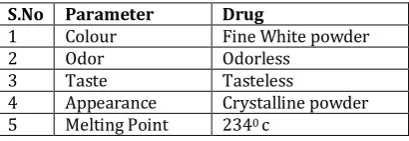
Pre-formulation is defined as study of physical and chemical properties of a drug substance alone prior to formulation. The overall objective of pre-formulation studies is to generate information useful to the formulator in developing stable dosage forms. The results of Preformulation are given table no-02
Formulation of mucoadhesive tablets of alendronate:
In this work, direct compression method has been employed to prepare buccal tablet with different polymers because with the dry granulation and wet granulation the hardness of tablets has increased because of which rate of drug release got decreased. For one tablet accurately weighed 300 mg was used in the formulation. All the ingredients were accurately weighed and passed through mesh # 60. In order to mix all ingredients thoroughly drug, polymers, micro crystalline cellulose, aspartame were blended geometrically in mortar and pestle for 10 minutes then magnesium stearate and talc were mixed for 1-2 min. The powder blends of various proportions were evaluated for angle of repose, carr’s compressibility index and compressed into tablets of diameter 9mm on cadmach press16 Station machine. Using stainless steel flat surface dies and punches by maintaining individual tablet weight constant at 300 mg [9-10].
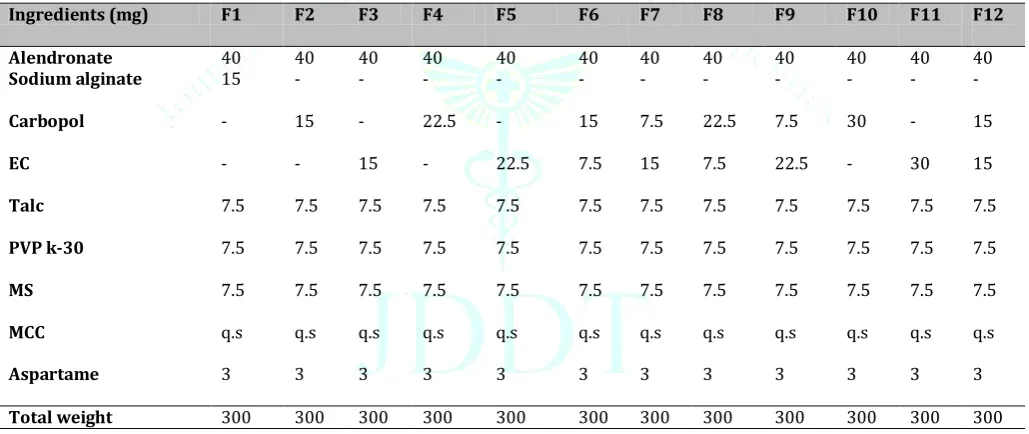
Table 1: Composition of alendronate buccal tablets
Ingredients (mg) F1 F2 F3 F4 F5 F6 F7 F8 F9 F10 F11 F12
Alendronate 40 40 40 40 40 40 40 40 40 40 40 40
Sodium alginate 15 - - - -
Carbopol - 15 - 22.5 - 15 7.5 22.5 7.5 30 - 15
EC - - 15 - 22.5 7.5 15 7.5 22.5 - 30 15
Talc 7.5 7.5 7.5 7.5 7.5 7.5 7.5 7.5 7.5 7.5 7.5 7.5
PVP k-30 7.5 7.5 7.5 7.5 7.5 7.5 7.5 7.5 7.5 7.5 7.5 7.5
MS 7.5 7.5 7.5 7.5 7.5 7.5 7.5 7.5 7.5 7.5 7.5 7.5
MCC q.s q.s q.s q.s q.s q.s q.s q.s q.s q.s q.s q.s
Aspartame 3 3 3 3 3 3 3 3 3 3 3 3
Total weight 300 300 300 300 300 300 300 300 300 300 300 300
Micrometrics properties:
The blends for buccoadhesive tablets were characterized with respect to angle of repose, bulk density, tapped density, carr’s index, and hausner’s ratio. Angle of repose was less than 30° and Carr’s index values were less than 20 for the blend of all the batches indicating excellent to good flowability and compressibility. Hausner’s ratio was less than 1.25 for all the batches indicating excellent flow properties [11]. The outcome are given table no-03.
Compatibility studies:
To investigate any possible interactions between the drug and excipients used, the FT-IR spectra of pure drug alendronate and physical mixture of optimized formulation F 11 by using thermo electron corporation (Nicolet IR 200 FTIR) spectrophotometer. The samples were prepared by 1 mg of drug is mixed with the 100 mg of spectroscopic grade of KBr and triturated for uniform mixing. The thin and transparent pellet is prepared by applying 150 lbs pressure.
The prepared pellet is exposed to IR beam and spectra are recorded by using FTIR scanned between 450-4000cm1
[12-13].
Thickness:
The thickness of the tablets is measured by vernier calipers and it is expressed in mm. The outcomes are given in the table no.04
Hardness:
Tablets require strength or hardness to withstand mechanical shocks of handling in manufacture, packing and shipping. Tablet hardness was measured by Monsanto hardness tester and results are expressed in Kg/cm2.The
outcomes are given in the table no.04
Weight variation test:
percentage difference in the weight variation should be within the permissible limits (±7.5%). The percent deviation was calculated using the following formula.The acceptance limits are as per Indian pharmacopoeia (I.P) [14-15].
Friability:
It was performed in Roche friabilator where the tablets were subjected to the combined effect of abrasion and shock by utilizing a plastic chamber that revolves at 25 rpm dropping the tablets at a distance of six inches with each revolution in chamber. Pre weighted samples of 20 tablets were placed in the Friabilator, which is then operated for 100 revolutions. The tablets are then dusted and reweighed [16]. Permitted friability limit is 1.0%. The percent friability was determined using the following formula-The outcomes are given in the table no.04
Determination of drug content
Twenty tablets were taken and triturated well. The quantity equivalent to 100mg of Alendronate was dissolved in 100ml of phosphate buffer pH 6.8 solutions on rotary shaker overnight. The solution was centrifuged and supernatant was collected. The absorbance was measured using UV-Visible spectrophotometer at 238nm [17]. The outcomes are given in the table no.04
Microenvironment pH study
The microenvironment pH of the tablets was determined by the method proposed by Bottenberg, et al, 1991. The tablets were allowed to swell for 2 hours in 2ml of pH 6.8 phosphate buffer (pH 6.8±0.05) in specially fabricated glass tubes and microenvironment pH was measured by placing the pH electrode in contact with the surface of the tablet and allowing it to equilibrate for 1 minute [18-19]. The outcomes are given in the table no.05
Swelling index
It is evaluated by determination of percent of swelling. Each tablet was weighed (W1) and placed in petri dish with 5ml of phosphate buffer pH6.8 and incubated at 370c for
predetermined times. After placing the formulation for specified time, the tablets were wiped off to remove excess of surface water by using filter paper and again reweighed (W2) [20]. The result outcomes are given in the table no.05
Where,
W 1=Initial weight of the tablet.
W2= Weight of tablet after swelling time interval
Determination of the In vivo residence time
The In vivo residence time was found using a locally modified USP disintegration apparatus. The disintegration medium was composed of 800 ml pH 6.8 phosphate buffer maintained at 37°C. The sheep buccal tissue was tied with thread to the central stand. The buccal tablet was hydrated with 0.5ml of pH 6.8 phosphate buffer and then the hydrated surface was brought in contact with the mucosal membrane
[21-22]. The tissue was allowed to run in such way that the tablet completely immersed in the buffer solution at the lowest point and was out at the highest point. The time taken for complete erosion or dislodgment of the tablet from the mucosal surface was noted.
In Vitro drug release study:
In vitro drug release study of mucoadhesive tablets were performed using standard USP dissolution apparatus type II (lab india USP XXII). The bowls of the dissolution apparatus was filled with 500ml of phosphate buffer pH 6.8 and maintained at a temperature of 37±0.50C. For each time
interval 5ml sample withdrawal and replacement of fresh media at predetermined time interval. The collected samples were filtered through the 0.45μm pore filter [23-24]. The samples were analyzed for drug content using double beam UV spectrophotometer at 238nm.
Drug Release Kinetics
To examine the release mechanism of alendronate from the prepared buccoadhesive tablets, the results were analyzed according to the following equation:
fi=Mt Ktn
Where t ∞ is the fractional drug released at time t, k is a kinetic constant incorporating structural and geometrical characteristics of drug / polymer system [device], and n is the diffusion exponent that characterizes the mechanism of drug release. Drug release is generally expressed by Fickian diffusion mechanism. For non-fickian release, the n value falls between 0.5 and 1.0 (0.5< n< 0.89) whereas in the case super case II transport n > 0.89 [25]. Data of the in-vitro release was fit in to different equations and kinetic models to explain the release kinetics of drug from buccal tablets. The kinetic models used were zero-order equation, first order equation , higuchi equation and korsemeyer-peppas equation.
Stability studies: Stability studies were performed at a temperature of 25±20c and 65±5%RH and 40±20c and
75±5%RH, over a period of three months (90 days) for the optimized buccal tablet i.e., formulation F11.Sufficient number of tablets were packed in amber colored screw capped bottles and kept in stability chamber maintained at 400±10C & 75 % RH. Samples were taken at monthly
intervals for drug content estimation [26-27]. At the end of three months period, dissolution test and drug content studies were performed to determine the drug release profiles and drug content.
RESULTS AND DISCUSSION:
Preformulation Study:
Table 02. Results of identification tests of drug
S.No Parameter Drug
1 Colour Fine White powder 2 Odor Odorless
3 Taste Tasteless
4 Appearance Crystalline powder 5 Melting Point 2340 c
Compatibility studies
The FTIR spectroscopy is used for identifying both organic and inorganic chemicals which utilized to quantify some components of an unknown mixture and can be used to analyze liquids, solids and gases. The FT-IR spectrum didn’t showed presence of any additional peaks for new functional
Individual weight – Average weight % Deviation = --- X100 Average weight
% Friability= (initial weight-final weight/initial weight) x100
% 𝑠𝑤𝑒𝑙𝑙𝑖𝑛𝑔𝑖𝑛𝑑𝑒𝑥 = (𝑊2) − (𝑊1) X 100
groups in optimize formulation F11 indicating there is no chemical interaction between drug and the used polymers.
Fig 1: FTIR Spectra of alendronate pure drug
Fig 2: FTIR spectra of alendronate sodium optimized formulation
Characterization of blend:
The blends for buccoadhesive tablets were characterized with respect to angle of repose, bulk density, tapped density, carr’s index, and hausner’s ratio. Angle of repose was less
than 30° and Carr’s index values were less than 20 for the blend of all the batches indicating excellent to good flowability and compressibility. Hausner’s ratio was less than 1.25 for all the batches indicating excellent flow properties.
Table 03: Physical properties of Pre-compression blend Formulations
Code Angle of repose Bulk Density (g/mL) Tapped Density (g/mL) Carr’s Index (%) Hausner’s ratio
F1 25.90±0.29 0.35±0.045 0.41±0.025 14.63±1.44 1.17±0.034
F2 27.20±0.75 0.32±0.025 0.38±0.071 15.79±1.21 1.19±0.022
F3 29.50±0.69 0.31±0.012 0.36±0.045 16.67±1.38 1.20±0.041
F4 26.40±0.87 0.38±0.038 0.37±0.042 16.22±0.87 1.19±0.055
F5 30.20±1.27 0.44±0.018 0.46±0.024 15.25±1.67 1.15±0.028
F6 27.40±0.43 0.43±0.055 0.51±0.027 15.69±1.12 1.19±0.061
F7 28.60±0.29 0.34±0.041 0.41±0.034 17.07±1.56 1.21±0.074
F8 29.30±0.41 0.37±0.023 0.44±0.027 15.91±1.33 1.19±0.034
F9 30.50±1.38 0.42±0.22 0.51±0.017 16.00±1.41 1.19±0.021
F10 27.90±0.77 0.36±0.044 0.43±0.034 16.28±0.87 1.19±0.037
F11 26.50±0.44 0.46±0.027 0.54±0.037 14.81±0.92 1.17±0.047
F12 27.30±0.52 0.44±0.031 0.51±0.083 13.73±1.85 1.16±0.012 *Average of three observations (n=3) *All the values are expressed as mean ± SD
Physical evaluation of buccoadhesive tablets:
The results of physical evaluation of buccoadhesive tablets are given in below table. All the tablets of different batches complied with the official requirements of uniformity of weight as their weights varied between 297 and 310 mg. The hardness of the tablets ranged from 4.0-4.4 kg/cm2 and the friability values were less than 0.5% indicating that the
Table 04: Post formulation parameters of alendronate sodium buccoadhesive tablets Formulation.
Code Hardness (kg/cm2)
Thickness
(mm) Weight (mg) Friability (%) Drug content (%)
F1 4.3±0.31 3.71±0.26 304±1.45 0.40±0.08 99.2±0.45 F2 4.2±0.64 3.75±0.61 310±1.15 0.39±0.11 100.3±0.72 F3 4.1±0.26 3.72±0.17 308±1.86 0.20±0.02 98.63±0.27 F4 4.2±0.24 3.70±0.25 297±1.84 0.22±0.07 99.02±0.37 F5 4.4±0.46 3.74±0.31 298±1.98 0.21±0.04 99.24±1.54 F6 4.5±0.41 3.76±0.22 301±0.87 0.26±0.14 98.56±2.35 F7 4.4±0.31 3.73±0.34 300±1.12 0.31±0.11 100.3±0.74 F8 4.3±0.54 3.72±0.12 306±1.76 0.38±0.06 101.6±0.58 F9 4.2±0.27 3.75±0.51 305±1.48 0.32±0.07 98.6±0.32 F10 4.0±0.45 3.72±0.33 304±1.67 0.36±0.12 97.4±0.84 F11 4.0±0.28 3.78±0.41 299±1.38 0.21±0.08 99.64±0.46 F12 4.3±0.18 3.74±0.24 303±1.95 0.26±0.04 100.1±1.17
*Average of three observations (n=3) *All the values are expressed as mean ± SD
Microenvironment pH study:
The surface pH of all formulations was found to be within ±1 units of neutral pH. The values are tabulated in the table no 05. As the pH is neutral it would not cause any irritation in buccal cavity.
Swelling Index:
The swelling behavior of a buccal adhesive system is an important properties uniform and prolonged release and effective mucoadhesion. The swelling index study indicated that the rate of swelling was directly proportional to Sodium alginate and polymer content. Swelling index was calculated with respect to time. The swelling index gives an indication
of the relative moisture absorption capacities of polymers and whether the formulations maintain their integrity after moisture absorption. The results of present formulation were tabulated in the table no. 05.
Mucoadhesion time:
In vivo residence time was determined by using sheep buccal mucosa. The mucoadhesion time is important to know how long the tablet could able to stick to the buccal mucosa. This adhesion time relates to the release rate of drug. The bioadhesive tablet is important for good mucoadhesion. bioadhesion characteristics are affected by the type and ratios of bioadhesive polymers The results were tabulated in the table no. 05.
Table 05: Surface pH,swelling index and mucoadhesion time Formulation
Code Surface pH Swelling Index Mucoadhesion time
F1 6.4±0.31 140 1hrs 32min
F2 7.2±0.24 120 2hrs 03min
F3 6.5±0.76 145 1hrs 45min
F4 7.1±0.33 130 3hrs 40min
F5 6.6±0.18 160 3hrs 50min
F6 6.5±0.61 150 3hrs 35 min
F7 6.8±0.38 165 4hrs 02min
F8 6.4±0.24 150 5hrs 39min
F9 6.1±0.85 120 4hrs 30min
F10 6.4±0.21 155 4hrs 47min
F11 6.6±0.41 165 6hrs 45min
F12 6.2±0.37 150 5hrs 55min
In-vitro drug release study:
The In-vitro drug release study has been done for various formulations (F1-F12). The different ratios of polymers were
used. The results shown that as the proportion of polymers in the formulation increases, cumulative percent drug released was found to be reduced.
Table 06: In-vitro release of formulation F1-F6 % Drug release
Time(Hrs.) F1 F2 F3 F4 F5 F6
0 0 0 0 0 0 0
0.5 32.1 21.1 23.8 25.1 29.2 22.6
1 57.2 48.3 46.4 50.8 46.8 43.1
2 98.6 71.2 70.8 73.4 70.6 68.1
4 99.7 98.6 84.3 85.1 87.2
5 100.1 100.8 99.8
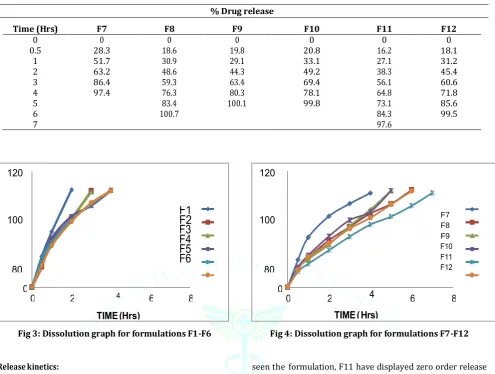
Table 07: In-vitro release of formulation F7-F12
% Drug release
Time (Hrs) F7 F8 F9 F10 F11 F12
0 0 0 0 0 0 0
0.5 28.3 18.6 19.8 20.8 16.2 18.1
1 51.7 30.9 29.1 33.1 27.1 31.2
2 63.2 48.6 44.3 49.2 38.3 45.4
3 86.4 59.3 63.4 69.4 56.1 60.6
4 97.4 76.3 80.3 78.1 64.8 71.8
5 83.4 100.1 99.8 73.1 85.6
6 100.7 84.3 99.5
7 97.6
Fig 3: Dissolution graph for formulations F1-F6 Fig 4: Dissolution graph for formulations F7-F12
Release kinetics:
For analyzing the release mechanism, the data obtained were fitted to various kinetic equations of zero order, first order, higuchi model and korsemeyer-peppas model. The regression coefficient was calculated. From the data, it can be
seen the formulation, F11 have displayed zero order release kinetics. From Peppas model it is evident that the drug is released by non-Fickian diffusion mechanism. The data of regression coefficient of different kinetic models were summarized in table no.08.
Table 08: Release kinetics for the optimized formulation F11
ZERO FIRST HIGUCHI PEPPAS
(% CDT VsT) (Log % remain VsT) %CDT Vs√T Log C Vs Log T
Slope 12.901 -0.18208893 36.88339627 1.076787696
Intercept 9.980166667 2.106740204 -7.29768667 1.100314385
R 2 0.975636613 0.824537248 0.971885439 0.490727483
Stability studies:
Results from stability studies indicate that the formulated Alendronate bucoadhesive tablet are stable for a period of 3
months under 2 different conditions at 25 25±20c and
65±5%RH and 40±20c and 75±5%RH.There were no remarkable
changes were observed during the period of storage.
Table 09: Release kinetics for the optimized formulation F11
Time Colour
Assay Cumulative % drug release
±20c and
65±5%RH 40±2
0c and
75±5%RH
25±20c and
65±5%RH 40±2
0c and
75±5%RH
0 days White 99.64 99.64 97.60 97.60 30 days White 99.06 99.42 97.02 97.01 60 days White 98.51 98.00 97.01 96.89 90 days White 98.46 97.41 96.88 96.77
CONCLUSION:
The study performed on “Development and evaluation of mucoadhesive buccal tablets of alendronate” reveals following conclusion. The mucoadhesive buccal tablets of alendronate could be prepared using ethyl cellulose and carbopol by direct compression method. The prepared mucoadhesive buccal tablets subject ted to FTIR study suggested that there was no drug-polymer and polymer-polymer interaction. The formulation F11 show the tablets were in acceptable range in all factors like friability, hardness, pH. The formulation F11 showed good swelling up to 6hr 45min in phosphate buffer pH6.8 maintaining the integrity of formulation which is required for bioadhesion. In vitro bioadhesive strength & in vitro release studies showed that formulation F11 showed optimum bioadhesive & exhibited optimum drug release 97.6% in 7hr. Kinetics results shown in table no-08 reveals that the F11 formulation follows zero order kinetics as correlation coefficient (r2) values are higher than that of first- order
release kinetics. The optimize formulation F11 show drug is released by non-Fickian diffusion mechanism. The stability studies of formulation F11 prepared mucoadhesive buccal tablets of alendronate were stable. Hence the mucoadhesive buccal tablets of alendronate can be prepared with enhanced bioavailability and prolonged therapeutic effect for the better management of hypercholesterolemia patients. The study conducted so far reveals a promising result suggesting scope for pharmacodynamics and pharmacokinetic evaluation.
AUTHORS CONTRIBUTIONS
All the author have contributed equally
CONFLICTS OF INTERESTS:
The author of this study declared no conflict of interest
REFERENCES:
1. Jain NK. Controlled and Novel Drug Delivery, 1st edition, published by CBS Publishers and Distributors, New Delhi. 1997; 52-81.
2. Patel KV, Patel ND, Dodiya HD, Shelat PK. Buccal bioadhesive drug delivery system: an overview. Ind. J. of Pharma. & Bio. Arch. 2011; 2(2): 600-609.
3. Shojaei Amir H, Buccal Mucosa as a Route for Systemic Drug Delivery: A Review; J Pharma Pharmaceut Sci (www.ualberta.ca/~csps) 1998; 1(1): 15- 30
4. Chueh HR, Zia H and Rhodes CT. Optimization of Sotalol floating and bioadhesive extended release tablet formulations. Drug Dev Ind. Pharm. 1995; 21(15): 1725-47.
5. K. P. R. Chowdary, B. Suresh, B. Sangeeta and G. Kamala Kara Reddy, Design And Evaluation Of Diltiazem Mucoadhesive Tablets For Oral Controlled Release, Saudi Pharmaceutical Journal 2003; 11(4): 201‐205.
6. Y. Sudhakar, K. Kuotsu, A.K. Bandyopadhyay, Buccal bioadhesive drug delivery-A promising option for orally less efficient drugs, J. Contr. Rel. 2006; 114(1): 15-40.
7. G. Ikinci, S.Senel, C.G. Wilson. Development of a buccal bioadhesive nicotine tablet formulation for smoking cessation. International Journal of Pharmaceutics. 2004; 27: 173- 198.
8.Calum R Park, Dale L. Munday. Development and evaluation of a biphasic buccal adhesive tablet for nicotine replacement therapy. International Journal of Pharmaceutics 2002;215- 226. 9.Vishnu M. Patel, Bhupendra G. Prajapati, Harsha V. Patel, and
Karshanbhi M. Patel. Mucoadhesive bilayer tablets of propranolol hydrochloride. AAPS Pharm. SciTech. 2007; 8(3): 77.
10.Saini M, Jain S and Kaur G. Chitosan based buccoadhesive tablets of Pentazocine hydrochloride in- vitro and in situ kinetics. Ind. J. Pharm. Sci. 2005; 743-7.
Agarwal V, Mishra B. Design, development, and biopharmaceutical properties of buccoadhesive compact of pentazocine. Drug Dev Ind Pharm. 1999; 25:701– 709.
12. Semalty A, Bhojwani N, Bhatt GK, Gupta GD and Shrivastav AK. Design and evaluation of mucoadhesive buccal films of Diltiazem hydrochloride. Ind. J. Pharm Sci. 2005; 67 (5): 548- 52. 13.Gazzi Shaker, Chegonda K.Kumar, Chandra SekharaRao
Gonugunta. Formulation and Evaluation of Bioadhesive Buccal Drug Delivery of Tizanidine Hydrochloride Tablets. AAPS Pharm. Sci Tech 2009; 10(2): 530–39.
14. Aungst BJ and Rogers NJ, Site Dependence of Absorption Promoting Actions of Laureth , Na Salicylate, Na EDTA, and Aprotinin on Rectal, Nasal, and Buccal Insulin Delivery, Pharm. Res,1988, 5 (5), 305–8.
15. Goudanavar PS et al, Formulation and In-vitro evaluation of mucoadhesive buccal films of Glibenclamide, Der pharmacia lettre, 2010, 2 (1),382-387.
16. Hirlekar R.et al.,Design and evaluation of buccoadhesive drug delivery system of Metoprolol Tartarate,Int J Pharm Tech Res. 2010; 2(1): 453-462
17. Pharmaceutics the science of dosage form Design 2nd edition edited by M. E. Aulton. Published by Harcourt publishers Limited. 2002; 198-200
18. Nakhat PD, Kondawar AA, Babla IB, Rathi LG and Yeole PG. Studies on buccoadhesive tablets of Terbutaline sulphate. Ind. J. Pharm. Sci 2008; 505-10.
19. Gandhi SD, Priyanka RP, Rahul U, Tambawala T, Shah MA. Mucoadhesive drug delivery systems-An unusual maneuver for site specific drug delivery system. An Int. J .Pharm. Sci. ISSN: 0976- 7908: 851-871.
20. Gandhi BR, and Robinson JR. (1988). Bioadhesion in drug delivery. Ind. J. Pharm. Sci. 1988; 50:145−152.
21. Nazila SM, Montakarn C, Thomas PJ. The use of mucoadhesive polymers in buccal drug delivery. Advanced Drug Delivery Reviews. 2005; 57:1666– 1691
22.Satyabrata B, Ellaiah P, Choudhury R, Murthy KVR, Bibhutibhusan P and Kumar MS, Design and evaluation of Methotrexate buccal mucoadhesive patches, Inter. J. Pharm. Biomed.Sci., 2010, 1(2), 31- 36.
23. Shidhaye SS, Saindane NS, Sutar S and Kadam V. Mucoadhesive bilayered patches for administration of Sumatriptan succinate, Pharm. Sci. Tech., 2008, 9(3), 909- 916.
24. Kumar DS, Reddy KS, Tiwari AM and Dey S. Design and evaluation of buccal patches of lornoxicam, Inter. J. Pharm. and Bio. Sci., 2010,1(4), 587-596.
25. Deshmane SV, Channawar MA, Chandewar AV, Joshi UM and Biyani K. Chitosan based sustained release mucoadhesive buccal patches containing Verapamil HCL, Inter. J. Pharm. and Pharm. Sci., 2009, 1(1), 216-229.
26. Manasa B, Gudas GK, Sravanthi N, Madhuri RA, Lavanya Y and Pranitha C. Formulation and evaluation of mucoadhesive buccal patches of Resperidone. J Chem. and Pharm. Res., 2010, 2(4), 866- 872.
27. Das R., Effective mucoadhesive buccal patches: wound healing activity of curcumin & centella asiatica extract compared to rhegf, Inter. J. Pharm. and Pharm. Sci., 2001, 3(1), 97-100. 28. Furtado S, Bharath S, Basavaraj BV, Abraham S, Deveswaran R
and Madhavan V. Development of chitosan based bioadhesive bilayered patches of Metoprolol tartarate, Inter. J.Pharm. Sci. Rev. and Res., 2010, 4(3), 198-202
29. Martin L, Wilson CG, Koosha F, Uchegbu IF. Sustained buccal delivery of the hydrophobic drug denbufylline using physically cross-linked palmitoyl glycol chitosan hydrogels. Eur J Pharm Biopharm. 2003;55:35–45.
30. Gavaskar Basani, B. Stephenrathina raj, S. Sudharshini, A Kishore Reddy, Gajanan V. Shinde: Design and evaluation of baclofen mucoadhesive buccal tablets. Int J Biomedical and Adv Res. Aug-2010; 1(1): 25-35