TO IMPROVE THE TCP
PERFORMANCE USING CROSS LAYER
IN WIRED CUM WIRELESS NETWORK.
VIMALA.D
SCSE, VIT University, Vellore, Tamil Nadu 632014, India.
KANNADASAN. R
Assistant professor SCSE, VIT University, Vellore, Tamil Nadu 632014, India.
Abstract:
Recent development mostly based on the high speed internet access of large amount of data at any time over wireless network. Packets loss can also occur due to link failure in wired cum wireless environment. To reduce the loss rate, packet delay, retransmission time, Wi-Max is proposed with cross layer design. In this paper, to improve the performance TCP in the WI-MAX flow its estimating bandwidth of the each packet, reduce the RTT in retransmission which gives more data transfer rate and also reduce the packet drop ratio. Some layers are merging their functions and provide traffic flow with ARQ in Wi-Max. Each node provides information through Access Point which can uplink and downlink feedback about packet as an ACK or NACK. Retransmission mechanism is used for NACK to resend the lost frame through the access point.
Keywords: Wi-max; cross layer; ARQ; retransmission; mapping. 1. Introduction
Demand for the advances application with high speed communication system is increasing in the field of the wireless network. One of the main issues in that able to handle the wide range of services with different traffic flow and quality of service for people. The IEEE 802.16 standard provides wireless broadband internet high speed data throughput over long distance range which able to handle different traffic flows using base station or access point. This technology aim is to provide all requirements from 802.16 which supporting for the fixed and fully mobile operation. The network with the infrastructure or centralized administration can manage the information about the uplink information and downlink information with the respective time. All layers are blend to perform faster in the wireless network in wide range using layer design for retransmission. WI-MAX is a connection oriented protocol, end-end relay provide connection between the networks using link layer protocol. The transport layer losses packet rather than congestion i.e., high loss link failure leads packet losses at that time network needed retransmission immediately.
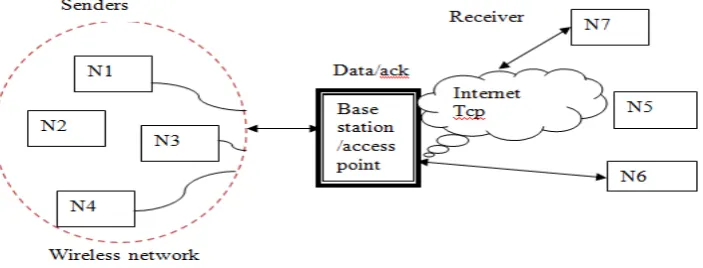
Figure 1 Network topology for data transfer from a access point
Cross layer [1] namely merging the adjacent layer function so the WI-MAX [8] [10] throughput will increase automatically is able to reduce the RTT. In WI-MAX/IP model network can communicate one by one with each layer this will take time to perform. Cross layer perform as full duplex, this is done by speed up the connection from upward to downward and downward to upward which made attractive efficiency. Cross layer perform fast recovery and retransmission using Wi-Max link layer protocol.
2. System architecture
In basic IEEE 802.16 architecture system will allow to transfer the data in high speed over the internet using Multiple-input Multi-output communication (MIMO) in high populated network. WI-MAX mostly follows the uni/bidirectional connectivity by using number of hops. Each one sending the packets between multi hops in full traffic it may increase the loss of packet, packet delay, and reduce the data speed rate. The connectivity of WI-MAX flow routed between source and receiver using intermediate node i.e., Access point or Base Station these requirements specify in the MIMO technology with Wi-Max which support independent and multiple transmit. The wireless routing protocol DSDV (destination Sequence Distance Vector) is used FTP in the WI-MAX.
802.16 support the different data service using
• Unsolicited Grant Service (UGS) - CBR (Constant Bit Rate) it provides services for real time data stream and fixed size data packets.
• Real Time Polling Service(rtps) – Variable Bit Rate (VBR-RT) services application suitable real time data stream i.e., video conferencing application
• Non- Real Time Polling Service(nrtps)- Variable Bit Rate (VBR-NRT) services application suitable non real time data stream like e-mail with FTP data rate
To establish a range of network access by AP/BS between the senders to receiver using REQ. DSA-RSP is response for the request from the sender or receiver. Now the AP/BS receives the uplink and downlink data information from the both sides. WI-MAX exist different flows which have a Service Flow Identifier (sfid). Service Flow ID services as a principals identifier for the service flow.
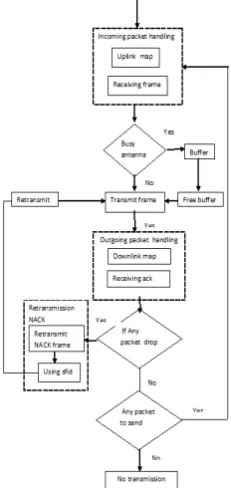
Figure 2: Uplink and Downlink using NACK Retransmission
DSA is Dynamic Service Addition is accepting or rejecting new service flow in traffic and generate message DSA-REQ OR DSA-RSP. If the transaction is successful then DSA-RSP message format include parameter like the Service Flow ID(sfid) with uplink map and downlink map information .DSD is Dynamic Service Deletion is sent by AP/BS to delete an existing service flow to maintain the mapping therefore it reduce the mean time for new service. The figure [2] MAC manages the information of incoming packet and outgoing packet from AP/BS. UL-MAP keeps the record for the incoming frames and DL-MAP keeps the record for the out coming frames. During transmission the buffer in AP/BS is not free for upcoming packet then packet drop will occur. The lost packet resend by using retransmission method with NACK frame Service Flow Identifier(sfid).By using this method reduce the cost of time and provide the good quality of services flow in the large network.
3. Related works
Because of the inability in the wireless network performs poorly in transmission it cause that packets lose due to congestion or no congestion so maximize throughput , increased in error rate are conceived by the Wi-Max connection . Several method already been proposed to improve the Wi-Max performance over wired and wireless networks. But the scheme requires more action on the intermediate part of the path from sender to receiver.
3.1 Split connection approach
In the split connection approach [2] split the flow into two separate Wi-Max connections. Multi Wi-Max connection carry information between sender to intermediate node and intermediate node to receiver shows the layered structure. An independent connection between the sender and receiver is maintained by common intermediate proxy. Packet transmission control method involves into node to node control and end to end control these improve the WI-MAX performance with good bandwidth. This approach with WI-MAX SACK selective acknowledgement reduces the number of the WI-MAX transmission and the RTT but the traffic load is unbalanced in the transfer of high speed data in the networks. The selection of the particular lose packet is difficult to selective acknowledgement.
3.2 Link layer notification based on ARQ
lost packet. This is very effective but delay over the voice communication. ARQ [4] is works in shorter control loop to retransmit loss of packet more quickly. ARQ only focus on the NACK packets from the receiver. The link layer adaptation mostly based on the (i) priority based scheduling (ii) application based scheduling (iii). Channel aware scheduling .The link layer protocol delivery each frame using technique CDMA and TDMA. TDMA retransmit the lose packet in order of time interval. Retransmission reduces the time when compared to RTT of the connection. CDMA mainly used for the voice transmission which uses the frequency based retransmission to recover error at transport layer. So retransmission will reduce bandwidth efficiency. The loss of recovery is used the technique with the combination of FEC and ARQ. But duplicate acknowledgement will cause the waste of bandwidth and RTO trigger the retransmit over the reliable connection.
3.3 End to end approach –
Snoop protocol: The snoop protocol [1] approach monitors every packet through the connection of the
intermediate snoop agent in the base station. The snoop agent maintains the cache of WI-MAX segment sent in bidirectional link i.e., from sender to mobile host or vice versa. If the packet loses occur in the mobile host then the base station retransmits the lost from the snoop agent using the duplicate acknowledgement. Base station performs as a sender to send the particular information from the snoop module by using in the link layer and transport layer. Which reduce the number of transmission over the network, but the new base station does not have any information about the duplicate acknowledgement, so the retransmit time will increase in snoop module when compare to other.
3.4 Explicit Congestion Notification (ECN)
ECN [1] end to end approach protocol used in the internet protocol for network congestion without packet dropping. ECN-Echo flag sets field in WI-MAX as congestion marked packet in the source to reach the destination as a other e eventually. WI-MAX uses the normal congestion control mechanisms of slow start with fast retransmission and recovery. ECN is used to improve the delay of the packet over wireless network for voice transmission. Rerouting takes place in the ECN for the lost packet in the network using the queue management. If the queue buffer is disabled or used more frame records for the packets then the improvement in WI-MAX performance become less.
4. Methodology
In Wi-MAX initially sense the range of the network to establish the admission and authentication process to carry the information in standard unique signature and allow the mapping process. One or single hop in 802.16 provides high flexibility for the real time application by using adaptive cross layer mapping algorithm. The pseudo codes for the modules are follows
4.1 Network Access and Initialization
(1) Begin
(i) To Access the ranging request from the Access point /Base station (ii) this section is for Connection Establishment
(2) If(CN_ EST)
(3) (DL_MAP ->RANG_REQ ) initially
(i) Then sender or receiver active in range reponse for request (4) (UL_MAP <-RANG_RSP) and ACK
//Access the channel descriptor for data transfer (5) If(buffer!=full)
(i) (UCD req+ack) //sender (ii) (DCD sfid ) //receiver
Else
(iii) Packet drop is occur Resend drop frame End if
(6) End
4.2 Algorithm for channel description
After access the network initialization, channel description is taken place for uplink mapping and downlink mapping. The mapping algorithm is based on the adaptive cross layer modulation mapping using content based channel access. The channel access the content for real time application with different service, so each service has different message format and information. The module UGS for fixed real time message and real time application.
(1) Begin
(i) DCD is check the MAC address for the packet using ARP protocol (2) Mapping occur content based
(i) if(data =UGS)
(ii) Service flow normal data frame in traffic (3) else
(4) (data = rtps||ertps)
(i) Service flow video data frame in traffic
(ii) RSP Respective receivers receives message in network (iii) End if
(5) UCD is check the MAC address using ARP protocol (6) End
4.3 Algorithm for retransmission phase with ARQ
The retransmission phase begin in the network at the time of link failure in WI-MAX flow. The real time application mostly needed sequence to produce the good quality of service.but service loss the frame due to link failure or buffer management. downlink mapping is used to recover the service lost information immediately using ARQ –Automatic Repeat Request algorithm.ARQ is used uplink mapping information receives Nack-negative acknowledgement from the receiver. To resend the lost information as fast as in the network by using Service Flow ID and again downlink mapping takes process.
(1) Begin (2) UL_MAP
(i) if(data =UGS)
(ii) Service flow normal data frame in traffic with REQ else if
(3) UL_MAP
(i) (data = rtps||erpts)
//Service flow video data frame in traffic Else
(4) DL_MAP
(i) packet drop happens RANG_REQ fails then NACK occur (ii) resend frame using NACK
(5) UL_MAP
(i) if(sfid=NACK)
(ii) resend the frame sfid in service flow using ARQ (iii) end if
(6) End
5. Module description
Network Simulation 2 is used for implementation. Figure 5.1 shows Network simulation consider Wi-Max network traffic scenario using cross layer mapping algorithm which involves in the different service flow like constant/ fixed data information or real time application like VIOP. The simulation scenario used 22 nodes as a wired cum wireless. The transmission packet size is 200.
5.1 Formation of wireless network
Network is access the initializing to sense the sender and receiver in the random way point. After initialization the network check range of access and also check the request with ack. 64 QAM –Quality Adaptive Modulation i.e., to reduce the high bit error in the ranging request. If the ranging response with ack is received by AP/BS then its starts mapping process for uplink and downlink.
Fig.5.1 Formation of Network
5.2 Establishing the channel Description
After the sense the range of the network access start multiple- input multiple –output using the channel description .here the LINK layer, MAC layer and PHY layer is interact to provide the address for the mapping information. The PHY layer provides the connection for UCD-Uplink Channel Description and DCD- Downlink Channel Description sends the information about the uplink and downlink around the network. Then the LINK and MAC layer takes places with Multiple-Input Multiple-Output for packet transmission while obtaining the information about the node list generated with address. MAC layer simultaneous check the mobility of the node packet drop using the Interface Queue.
5.3 Adaptive cross layer channel mapping
Each layer in AP/BS interacts with other and performs the content based packet transmission through the UL_MAP and DL_MAP. UL_MAP link is not available all the time in the network because sender must involve particular time in the network .On transmitting the packets initially to AP/BS then DL_MAP transmit the information to the response receiver. So no need to access all the information from sender instead of that the intermediate node or AP/BS store it. First AP/BS check the receiver is in the range of the network by using the RANG_REQ, after getting the RANG_RSP and ACK frame will transmit. The mapping algorithm performs the different quality of service flow like fixed size message, real time application and so on., for the each frame have service flow id (sfid) whenever packer drop occur then retransmission phase is handled.
5.4 Retransmission with ARQ
Mostly packet drop occurs based on congestion and link failure. In this scenario congestion does not takes place because one hop transmission then the other way to lost the packet is link failure. The network cover wide range of area it reduce the link failure, but when the mobility occur in the wireless network some of the node lost the range link so packet drop occur. Here retransmission is used with ARQ- selective acknowledgement. Each service flow maintain Service Flow Identifier (sfid) in the channel mapping. Retransmission depends the channel mapping information
in the network in the sequence order. To order the lost frame in the request –side the sfid is used. Automatic Repeat Request –reduce the amount of round trip time to retransmit the information because it handled only negative acknowledgement. Its improve the quality of services for real time application.
6. Result and discussion
The following figure discuss about the improve of TCP performance in the network environment
.
Fig 6.1 Service flow of data(UGS)
The figure 6.1 is shown the service of flow with sfid, mapping with address, for each frame.
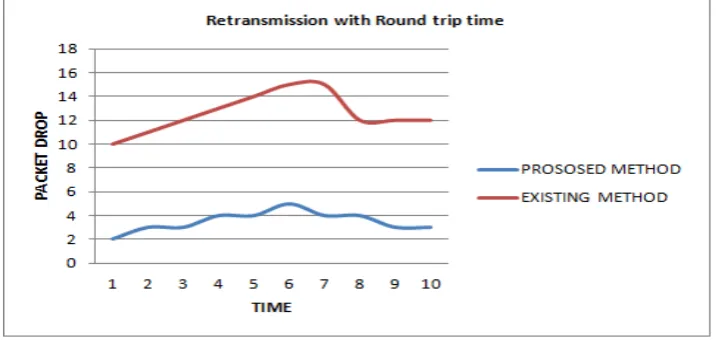
Fig 6.2 Retransmission with RTT-packet drop vs time .
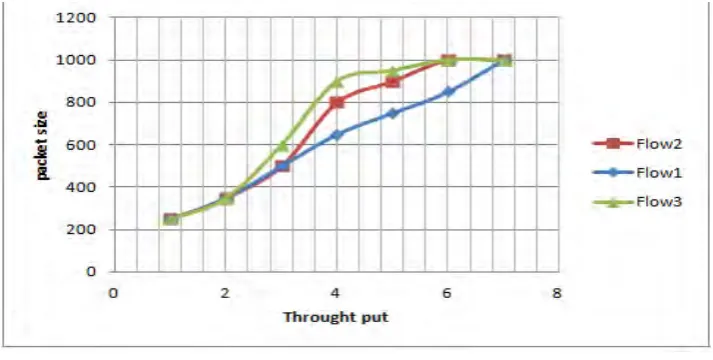
Fig 6.3 Service flow -packet size vs. throughput.
In the Fig 6.3 It compares the packet delivery ratio of the different service flow using the throughput .the service flow using packet values of the fixed message and real time application so the packet delivery ratio using mapping algorithm is also very high.
7. CONCLUSION
In this paper cross layer mapping algorithm for Wi-Max-802.16 has been evaluated for wired and wireless. In this approach one hop with Multiple-Input Multiple-Output used is mainly reduced packet drop, time (RTT), increase data delivery rate and energy of power among the nodes. The network simulation analysis the improvement TCP of WI-MAX using retransmission which reduces the time of packet delay in the heavy network along with that provides end to end relay. The cross layer mapping algorithm is increased the packet delivery ratio using retransmission. ARQ- Automatic Repeat Request for the Negative acknowledgements of the frame using cross layer overall it increases the quality of service for the real time application of the network. Finally simulation shows the improvement in high speed data delivery for the each service flow. Future work of this paper is extended real time application in dynamic mapping algorithm in the network.
References
[1] Manish D.Chawhan, Ramdeobab Kamla Nehru , (2010 )“Performance enhancement of WI-MAX using ECN and Snoop protocol for Wi-Max network” International Journal of Computer Applications, Volume 1 – No. 16 (0975 - 8887).
[2] Fath Elrahman Ismael, Sharifah K. Syed Yusof, Mazlan Abbas, Adnan Shahid Khan, and Norsheila Fisal , (2010) “WI-MAX Packet Loss Rate Reduction for MMR Wi-Max Networks using Cross Layer Design “3rd International Graduate Conference on Engineering, Science and Humanities (IGCESH) 2– 4 November
[3] Jin Hwang ., Sang Woo Son ; Byung Ho Rhee (2008) “Improving WI-MAX Performance over Wi-Max Networks Using Cross-Layer Design “ Convergence and Hybrid Information Technology,. ICCIT '11-13 Nov.
[4] Yi-Ting Mai, Chun-Chuan Yang and, Yu-Hsuan Lin (2007) “Cross-Layer QoS Framework in the IEEE 802.16 Network” ICACT ISBN 978-89-5519-131-8 93560 – 2090-2095 - Feb. 12-14,
[5] Juan J. Alcaraz, Fernando Cerdán (2006) “AQM--Combining ACK Rate Control and AQM to Enhance WI-MAX Performance over 3G Links” ACM conference October 2,.
[6] James She, Fen Hou, Basem Shihada and Pin-Han Ho (2011) “MAC-Layer Active Dropping for Real-time Video Streaming in IEEE 802.16 Networks “ GESJ: Computer Science and Telecommunications No.2(31) | ISSN 1512-1232 85
[7] Seifeddine Kadry, Issa Kamar, Ali Kalakech, Mohamad Smaili (2010) “Robust WI-MAX: An improvement on WI-MAX protocol” (IJCSE) International Journal on Computer Science and Engineering Vol. 02, No. 03, 2010, intelligent pages 451-456
[8] Granelli (2008). “Cross-Layer Error Control Optimization in Wi-Max” IEEE publication in the IEEE "GLOBECOM" 2008 proceedings. 978-1-4244-2324-8/08
[9] S. Sathya Priya and K. Murugan (2010) “Improving WI-MAX Performance over Wireless Networks Using Cross Layer” springerlink-verlang Volume 90 1-10, DOI: 10.1007/978-3-642-14493-6_1
[10] Dzmitry Kliazovich .Fabrizio Granelli , Mario Gerla (2007) “ Performance improvement in wireless networks using cross-layer ARQ” Elsevier comnet..06.002 doi:10.1016/j.