REVIEW
Advancing aged care: a systematic
review of economic evaluations of workforce
structures and care processes in a residential
care setting
Tiffany Easton
1,2,3*, Rachel Milte
2,3, Maria Crotty
2,3and Julie Ratcliffe
1,2Abstract
Long-term care for older people is provided in both residential and non-residential settings, with residential settings tending to cater for individuals with higher care needs. Evidence relating to the costs and effectiveness of different workforce structures and care processes is important to facilitate the future planning of residential aged care services to promote high quality care and to enhance the quality of life of individuals living in residential care. A systematic review conducted up to December 2015 identified 19 studies containing an economic component; seven included a complete economic evaluation and 12 contained a cost analysis only. Key findings include the potential to create cost savings from a societal perspective through enhanced staffing levels and quality improvement interventions within residential aged care facilities, while integrated care models, including the integration of health disciplines and the integration between residents and care staff, were shown to have limited cost-saving potential. Six of the 19 identified studies examined dementia-specific structures and processes, in which person-centred interventions demonstrated the potential to reduce agitation and improve residents’ quality of life. Importantly, this review highlights methodo-logical limitations in the existing evidence and an urgent need for future research to identify appropriate and mean-ingful outcome measures that can be used at a service planning level.
Keywords: Systematic review, Long-term care, Economic evaluation
© The Author(s) 2016. This article is distributed under the terms of the Creative Commons Attribution 4.0 International License
(http://creativecommons.org/licenses/by/4.0/), which permits unrestricted use, distribution, and reproduction in any medium,
provided you give appropriate credit to the original author(s) and the source, provide a link to the Creative Commons license, and indicate if changes were made. The Creative Commons Public Domain Dedication waiver (http://creativecommons.org/
publicdomain/zero/1.0/) applies to the data made available in this article, unless otherwise stated.
Background
The United Nations has reported population ageing in nearly every country in the world and projections suggest that the number of people aged 60 and over will more than double the 2013 level by 2050 [1]. Even greater will be the expected growth in the so-called ‘oldest old’ or those aged 80 years and older, with the population in this age group expected to rise from 4 to 10% of the popula-tion [2]. Two likely consequences of the ageing popula-tion will be an increase in the prevalence of dementia and a growing demand for residential aged care. Dementia prevalence increases dramatically with age from roughly
3% in those aged 70–74 to over 20% for those aged 85 and over [3]. Expert consensus estimates the number of people living with dementia will almost double every 20 years, reaching over 81 million people worldwide by 2040 [3].
Aged care is a significant responsibility for govern-ments. In most OECD countries, aged care accounts for roughly 1–1.5% of GDP in terms of government fund-ing [4], and on average roughly two-thirds of this fund-ing is allocated to residential care [5]. The proportion of the population receiving long-term care has also grown, rising to 2.3% of the population in OECD countries in 2013 [2]. Given the high prevalence of use of these ser-vices among older people, especially the rapidly growing ‘oldest old’, the need for these services is expected to con-tinue to grow, although to what extent is likely to depend upon the health status of individuals as they age, the
Open Access
*Correspondence: [email protected]
3 Rehabilitation, Aged and Extended Care, Flinders University, Adelaide,
Australia
presence of dementia, as well as other social trends, such as the ability of family members to provide informal care. It is estimated that over 50% of residents residing in resi-dential aged care facilities have a recorded diagnosis of dementia [6–9], and thus it is imperative for people with dementia to be included in research studies conducted in this setting. Several recent studies have indicated that for people with dementia with high levels of physical dependence, residential care can be less costly to provide than home-based care [10–12].
Residential care is in the midst of a ‘culture change’ movement, involving organisational change and a move toward providing more person-centred, individualised care [13]. Person-centred care is also increasingly being recognised as an important focus for the care of individu-als living with dementia. A social-psychological theory of dementia care, developed by Kitwood and Bredin [14], links agitation to negative contextual stimuli that neglect personhood. According to the theory, warm and com-passionate care interactions should increase well-being, while disrespectful and disengaged care interactions are thought to lead to decreased well-being and increased agitation. Questions remain, however, as to the optimal implementation approaches and staffing configurations to achieve a high quality residential care experience for residents.
The framework of economic evaluation is increasingly being applied in health and aged care services in an effort to promote efficiency in the design and delivery of ser-vices. Knowledge of the incremental costs and effective-ness of differing program design features is essential for well-informed resource allocation decisions in residential care. Program design features can be broken down into subcategories to assist in the assessment of quality (see Donabedian [15]). This review focuses on the economic evidence of program features which directly relate to how care is provided in terms of the workforce and its opera-tions (structures of care) and the services provided (pro-cesses of care).
To this end, the main objectives of this review were to answer the following questions:
1. Which structures and processes in residential aged care settings have been demonstrated to be cost effective?
2. How have the costs and outcomes for residents with dementia been assessed in economic evaluations?
Methods
Protocol and registration
A protocol for this systematic review was registered with the PROSPERO International Prospective Regis-ter of Systematic Reviews on 30 January 2015 (http://
www.crd.york.ac.uk/PROSPERO; registration number CRD42015015977).
Eligibility criteria
Eligible studies included full economic evaluations (e.g. effectiveness analyses, utility analyses, cost-benefit analyses), partial economic evaluations (e.g. cost analyses), and randomised trials reporting more limited information, such as estimates of resource use or costs of interventions, pertaining to structures and processes of care aimed at improving the quality of care for older adults in a residential aged care setting.
Structures of care were defined as the workforce and its operations, and included level of staffing, expertise of staff, hours of care per resident per day, and continuity of care. Processes of care included activity programs and services implemented in the context of care provision. These definitions were adapted from Donabedian’s qual-ity of care model incorporating structure, process, and outcome [15].
Studies pertaining to interventions that did not apply at a facility or unit level such as individualised pharmaceuti-cal interventions and feeding tubes were excluded from this review.
Search and study selection
Eight electronic bibliographic databases were searched from inception to the 8th October 2014, including Age-Line, CINAHL, Econlit, Informit (databases in Health; Business and Law; Social Sciences), Medline, ProQuest, Scopus, and Web of Science. An update search was run on 14 December 2015.
The search strategies were developed and reviewed with the assistance of two Health Sciences Librarians with expertise in systematic reviews. The strategy com-bined terms relating to nursing homes, economics, and older people, limited to English language. No study design or date limits were imposed on the search. The full search strategy is available on PROSPERO.
Due to the large number of results retrieved when searching the multidisciplinary database ProQuest, results were limited to scholarly journals, reports, disser-tations and theses, conference papers and proceedings, and working papers. Newspapers, trade journals, wire feeds, magazines, other sources, books, and encyclope-dias and reference works were excluded.
retrieved were reviewed independently by two review authors. Disagreement or uncertainty was resolved through discussion and consultation with a third review author. Reasons for excluding studies were documented.
Data extraction
The Joanna Briggs Institute Data Extraction Form for Economic Evaluations was used to extract data from the included studies [17]. The primary review author extracted all data. Neither the study selection nor the data extraction was blinded.
Data items extracted included descriptive data about the study and analysis including (i) study population/ participants, intervention, comparator(s) and outcomes; (ii) study methods including prices and currency used for costing, time period, sensitivity analyses and measures of resource use; (iii) study context (geographical, health care and broader service delivery setting and culture); (iv) analysis methods.
Results for the resource use and/or cost and/or cost-effectiveness measures and the author conclusions were also extracted.
Risk of bias assessment
Critical appraisal of studies was undertaken using the Joanna Briggs Institute Critical Appraisal Checklist for Economic Evaluations [17], adapted from the Drum-mond checklist [18], which addressed: the study ques-tion; description of alternatives; identification of costs and outcomes; establishment of clinical effectiveness; accuracy, credibility and timing of costs and outcomes; incremental analysis; sensitivity analyses; and generaliza-bility. The appraisal was conducted by the primary review author and ratified by a second reviewer.
Data synthesis
Data extracted from included studies were analysed and synthesized in a narrative summary to address the stated review objectives. No meta-analysis was conducted due to significant heterogeneity of service configurations in the included studies.
Results
Study selection
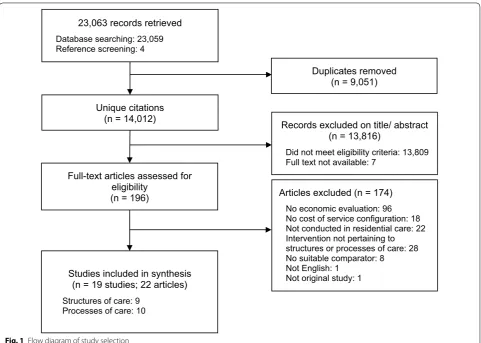
The study selection process is presented in Fig. 1. The electronic database search yielded a total of 23,059 cita-tions; an additional 4 citations were identified through searches of reference lists of included studies. A total of 14,012 unique citations were identified after duplicate removal. Full text reviews were conducted for 196 arti-cles and 19 studies, from 22 publications, met the inclu-sion criteria. The chance-corrected agreement between the abstracts selected by the primary and secondary
reviewers was almost perfect with a kappa statistic of 0.88 [19].
Overview of studies
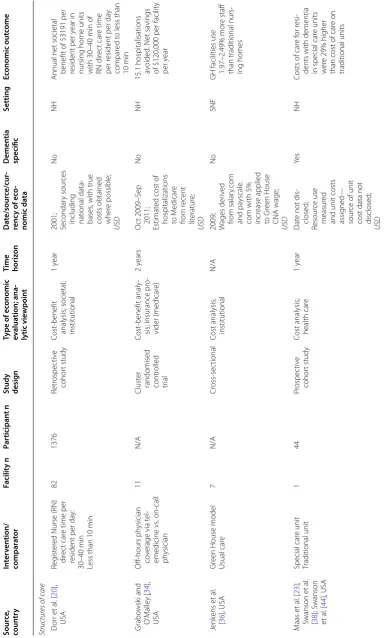
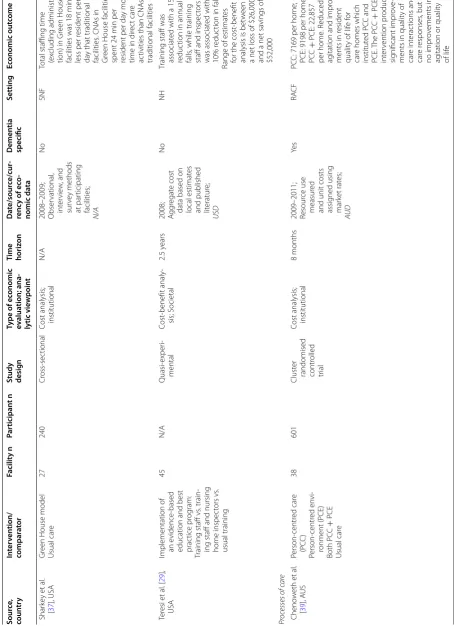
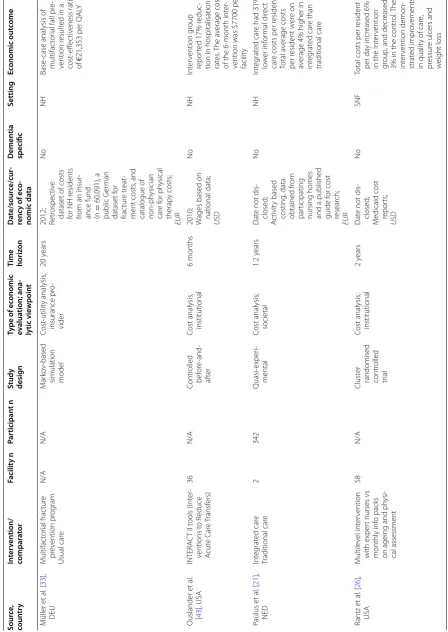
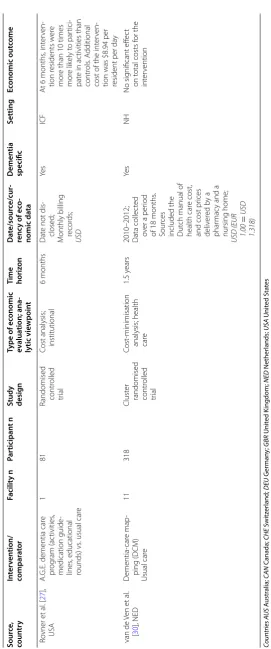
Table 1 presents the characteristics of studies included in the review. Of the 19 studies included in the review, 12 contained a partial economic evaluation in the form of a cost analysis. Seven studies conducted full economic evaluations, including three cost-benefit analyses, two cost-effectiveness analyses, one cost-utility analysis, and one cost-minimisation analysis. Approximately half of included studies (10/19) were evaluated from an institu-tional perspective, and only costs occurring within the facility itself were considered. Three studies were evalu-ated from a health care perspective, with resource use and costs calculated for items such as drugs, hospitalisa-tions and outpatient visits. Four studies were evaluated from a societal perspective, which implies that wider costs for resources consumed in all relevant sectors such as the residential facility, the heath care sector, and by the residents and family members themselves were taken into account. One study took a health and social services perspective, which included resources consumed in the health care sector as well as social services such as audi-ology, chiropody, and speech therapy. Two studies took the perspective of the insurance providers, including health insurance and long-term care insurance.
Ten (53%) of the included studies were conducted in the United States, three in the Netherlands, two in Can-ada, two in Australia, one in Germany, and one in the United Kingdom. Ten of the studies involved interven-tions pertaining to processes of care, while nine exam-ined structures of care. Six studies identified examexam-ined dementia-specific service configurations.
Study designs were varied. The most frequent study design was a cluster-randomised controlled trial (7/19), followed by cross-sectional (3/19), randomised con-trolled trial (2/19), and quasi-experimental (2/19). Other study designs included controlled before-and-after, non-randomised experimental trial, prospective cohort, retro-spective cohort, and a Markov simulation model.
The number of participating facilities per study ranged from 1 to 177 (mean: 30; median: 11). Thirteen of the studies recruited resident participants, with sample sizes ranging from 44 to 6663 (mean: 912; median: 301), while five studies assessed facility-level data only.
Risk of bias
societal viewpoint. A societal viewpoint is the broadest perspective that can be taken for an economic evaluation and resources consumed in all relevant sectors should ideally be captured using this approach. In an evalua-tion of enhanced Registered Nurse time, costs beyond the aged care facility e.g. informal carer time or social services consumption were excluded [20]. In a study evaluating the integration of residents with care staff via increased participation in daily activities (e.g. cook-ing), Paulus and colleagues [21] included costs for formal (staff) and informal (family and friends) care time, but did not include other relevant costs such as medications or hospitalisations.
In a study evaluating a multidisciplinary integrated care model, MacNeil Vroomen and colleagues [22] also chose a societal viewpoint. This study provides an example of a well-conducted robust analysis that captures all rele-vant resource use items and costs incurred in all relerele-vant sectors including general practitioner, physical therapy, psychosocial therapy, medical specialists, admission to hospital, informal care, as well as intervention-specific implementation costs.
In terms of the reporting of resource use and costs there were notable deficiencies in a number of stud-ies. Six out of 19 of the included studies did not dis-close the date for their cost data collection [21, 23–27]. Three studies did not disclose the source of their cost data [22, 23, 28], and one study also failed to disclose the currency used in the analysis [28]. There were also deficiencies in the source of cost data in two studies [29,
30]. In a study of dementia-care mapping, Van de Ven and colleagues [30] calculated nursing home staff costs for their analysis of 11 nursing homes based on the gross costs of a single nursing home. In this scenario, it is unclear whether the costs from a single facility can reliably be generalised to the 11 nursing homes which were included in the study. In an implementation study of evidence based education, Teresi and colleagues [29] were unable to obtain site-specific data for the 45 facili-ties that participated. Aggregated local estimates com-bined with cost data from published literature were utilised in lieu of site-specific data, which may not have been representative of the facilities included in the analysis.
23,063 records retrieved Database searching: 23,059 Reference screening: 4
Unique citations (n = 14,012)
Full-text articles assessed for eligibility
(n = 196)
Records excluded on title/ abstract (n = 13,816)
Did not meet eligibility criteria: 13,809 Full text not available: 7
Articles excluded (n = 174) No economic evaluation: 96 No cost of service configuration: 18 Not conducted in residential care: 22 Intervention not pertaining to structures or processes of care: 28 No suitable comparator: 8
Not English: 1 Not original study: 1 Studies included in synthesis
(n = 19 studies; 22 articles) Structures of care: 9
Processes of care: 10
Duplicates removed (n = 9,051)
Table
1
C
har
ac
teristics of included studies
Sour
ce
,
coun
tr
y
In
ter
ven
tion/
compar
at
or
Facilit
y n
Par
ticipan
t n
Study desig
n
Type of ec
onomic
ev
alua
tion; ana
-lytic vie
wpoin
t
Time horiz
on
Da
te/sour
ce/cur
-renc
y of ec
o-nomic da
ta
Demen
tia
specific
Setting
Ec
onomic out
come
Structur
es of c
ar
e
D
or
r et
al
. [
20
],
USA
Reg
ist
er
ed Nurse (RN)
dir
ec
t car
e time per
resident per da
y:
30–40
min
Less than 10
min
82
1376
Retr
ospec
tiv
e
cohor
t study
Cost
-benefit
analysis; societal; institutional
1
year
2001; Secondar
y sour
ces
including national data
-bases
, with true
costs obtained wher
e possible;
US
D
No
NH
Annual net societal benefit of $3191 per resident per y
ear in
nursing home units with 30–40
min of
RN dir
ec
t car
e time
per r
esident per da
y
compar
ed t
o less than
10
min
Grabo
wsk
i and
O
’M
alle
y
[
34
],
USA
O
ff-hours ph
ysician
co
verage via t
el
-emedicine vs
.
on-call
ph
ysician
11
N/A
Clust
er
randomised contr
olled
tr
ial
Cost
-benefit analy
-sis; insurance pr
o-vider (medicar
e)
2
years
O
ct 2009–S
ep
2011;
Estimat
ed cost of
hospitalizations to M
edicar
e
from r
ecent
lit
eratur
e;
US
D
No
NH
15.1 hospitalisations av
oided
. Net sa
vings
of $120,000 per facilit
y
per y
ear
J
enk
ens et
al
.
[
36
], USA
Gr
een House model
Usual car
e
7
N/A
Cr
oss-sec
tional
Cost analysis; institutional
N/A
2009; Wages der
iv
ed
from salar
y.com
and pa
yscale
.
com with 5% incr
ease applied
to Gr
een House
CNA wage;
US
D
No
SNF
GH facilities use 1.97–2.49% mor
e staff
than traditional nurs
-ing homes
M
aas et
al
. [
23
];
Swanson et
al
.
[
38
]; Swanson
et
al
. [
44
], USA
Special car
e unit
Traditional unit
1
44
Pr
ospec
tiv
e
cohor
t study
Cost analysis; health car
e
1
year
Dat
e not dis
-closed;
Resour
ce use
measur
ed
and unit costs assig
ned—
sour
ce of unit
cost data not disclosed;
US
D
Ye
s
NH
Costs of car
e f
or r
esi
-dents with dementia in special car
e units
w
er
e 29% higher
than cost of car
e on
Table
1
c
on
tinued
Sour
ce
,
coun
tr
y
In
ter
ven
tion/
compar
at
or
Facilit
y n
Par
ticipan
t n
Study desig
n
Type of ec
onomic
ev
alua
tion; ana
-lytic vie
wpoin
t
Time horiz
on
Da
te/sour
ce/cur
-renc
y of ec
o-nomic da
ta
Demen
tia
specific
Setting
Ec
onomic out
come
M
ehr and F
ries
[
24
], USA
Special car
e unit
Traditional unit
177
6663
Cr
oss-sec
tional
Cost analysis; institutional
N/A
Dat
e not dis
-closed;
Resour
ce use
data fr
om
the r
esident
status measur
e
database
, a
pr
eliminar
y
version of the national nursing home minimum Data set;
US
D
Ye
s
NH
Unadjust
ed r
esour
ce
use was 18% lo
w
er on
SCUs than other units in the facilit
y; when
adjust
ed f
or case mix
no sig
nificant diff
er
-ence in r
esour
ce use
was f
ound
P
rz
yb
ylsk
i et
al
.
[
28
], CAN
Ph
ysical T
herap
y
(PT
)
& O
ccupational
Therap
y (
O
T) staffing
le
vels:
1.0 FTE PT and 1.0 FTE O
T per 50 beds
1.0 FTE PT and 1.0 FTE O
T per 200 beds
1
115
Randomised contr
olled
tr
ial
Cost analysis; institutional
2
years
1993/1994; Direc
t car
e nursing
costs calculat
ed
based on the Alber
ta r
esident
classification syst
em (
case
mix measur
e)
which estimat
es
av
erage amount
of nursing car
e
requir
ed per
cat
egor
y. S
our
ce
of wage data not disclosed;
Curr
enc
y not
disclosed
.
No
NH
PT/O
T deliv
er
ed at a
1:50 ratio was mor
e
eff
ec
tiv
e at pr
omot
-ing
, maintaining
, or
limiting decline in func
tional
status
. T
he
resulting r
educ
tion
in r
equir
ed car
e
deliv
er
y r
esour
ces was
estimat
ed t
o pr
ovide
an annual cost sa
ving
of $283 per bed (a 1% cost r
educ
tion)
S
chneider et
al
.
[
35
], GBR
1.0 FTE occupational therapist Usual car
e
8
190
Non-ran
-domised exper
imen
-tal tr
ial
Cost analysis; health and social ser
vices
1
year
2002–2003; Published unit costs
, inflat
ed t
o
2005;
GBP
No
CH
Int
er
vention g
roup
sho
w
ed a sig
nificant
incr
ease in the lik
eli
-hood of using social services
. A
t 2005 le
vels
,
net cost of pr
oviding
occupational therap
y
was £16 per r
esident
per w
Table
1
c
on
tinued
Sour
ce
,
coun
tr
y
In
ter
ven
tion/
compar
at
or
Facilit
y n
Par
ticipan
t n
Study desig
n
Type of ec
onomic
ev
alua
tion; ana
-lytic vie
wpoin
t
Time horiz
on
Da
te/sour
ce/cur
-renc
y of ec
o-nomic da
ta
Demen
tia
specific
Setting
Ec
onomic out
come
Shar
ke
y et
al
.
[
37
], USA
Gr
een House model
Usual car
e
27
240
Cr
oss-sec
tional
Cost analysis; institutional
N/A
2008–2009; Obser
vational
,
int
er
vie
w
, and
sur
ve
y methods
at par
ticipating
facilities;
N/A
No
SNF
Total staffing time (ex
cluding administra
-tion) in Gr
een House
facilities was 18
min
less per r
esident per
da
y that traditional
facilities
. CNA
s in
Gr
een House facilities
spent 24
min per
resident per da
y mor
e
time in dir
ec
t car
e
ac
tivities than CNA
s in
traditional facilities
T
er
esi et
al
. [
29
],
USA
Implementation of an e
vidence
-based
education and best prac
tice pr
og
ram:
Training staff vs
. train
-ing staff and nurs-ing home inspec
tors vs
.
usual training
45
N/A
Quasi-exper
i-mental
Cost
-benefit analy
-sis; S
ocietal
2.5
y
ears
2008; Agg
regat
e cost
data based on local estimat
es
and published literatur
e;
US
D
No
NH
Training staff was associat
ed with a 15%
reduc
tion in annual
falls
, while training
staff and inspec
tors
was associat
ed with a
10% r
educ
tion in falls
.
Range of estimat
es
for the cost
-benefit
analysis is bet
w
een
a net loss of $26,000 and a net sa
vings of
$52,000
Pr
oc
esses of c
ar
e
Cheno
w
eth et
al
.
[
39
], A
US
Person-centr
ed car
e
(PC
C
)
Person-centr
ed en
vi
-ronment (PCE)
Both PC
C
+
PCE
Usual car
e
38
601
Clust
er
randomised contr
olled
tr
ial
Cost analysis; institutional
8
months
2009–2011; Resour
ce use
measur
ed
and unit costs assig
ned using
mar
ket rat
es;
AU
D
Ye
s
RA
CF
PC
C: 7169 per home; PCE: 9198 per home; PCC
+
PCE: 22,857
per home
. R
educed
ag
itation and impr
ov
e-ments in r
esident
qualit
y of lif
e f
or
car
e homes which
institut
ed PC
C and
PCE. T
he
PC
C
+
PCE
int
er
vention pr
oduced
sig
nificant impr
ov
e-ments in qualit
y of
car
e int
erac
tions and
car
e r
esponses
, but
no impr
ov
ements in
ag
itation or qualit
y
of lif
Table 1 c on tinued Sour ce , coun tr y In ter ven tion/ compar at or Facilit y n Par ticipan t n
Study desig
n Type of ec onomic ev alua tion; ana -lytic vie wpoin t
Time horiz
on Da te/sour ce/cur -renc y of ec o-nomic da ta Demen tia specific Setting Ec onomic out come Cheno w eth et al . [ 31 ]; Nor man et al . [ 32 ], A US Person-centr ed car e (PC C ) D ementia-car e map -ping (DCM) Usual car e 15 289 Clust er
randomised contr
olled tr ial Cost -eff ec tiv eness analysis; institu -tional 8 months 2008; Phar maceutical costs: A ustralian phar maceutical benefit schedule
Training costs: Bradf
or d Univ er -sit y, UK
Staff costs: C
om -mon w ealth G ov -er nment A ged Car e Nurses ’ A war d; AU D Ye s RA CF D ementia car e map
-ping was f
ound t
o
be a mor
e expensiv
e
and less eff
ec tiv e int er vention than person-centr ed car e.
The cost per negativ
e beha viour a ver ted in the person-centr ed car e g
roup was $8.01
post
-int
er
vention and
$6.43 at f
ollo w-up r ela -tiv e t
o usual car
e
M
acNeil Vroomen et
al . [ 22 ], NED M ultidisciplinar y I nt e-grat ed C ar e (MIC ) Usual car e 10 301 Clust er
randomised contr
olled tr ial Cost -eff ec tiv eness analysis; societal 6 months
2007; Health car
e utilisa
-tion collec
ted
via patient/ prox
y int
er
vie
w
and medical recor
ds
. S
our
ce
of cost data not disclosed
. CPI
figur
es sour
ced
from the Dut
ch
bur
eau of sta
-tistics; EUR No RH For func tional health and Q AL Ys , multidis -ciplinar y int eg rat ed car
e was not f
ound t o be cost -eff ec tiv e com -par ed t
o usual car
e. For patient -r elat ed qualit
y of car
e, the
pr
obabilit
y that the
int
er
vention was cost
-eff ec tiv e compar ed t o usual car
e was 0.95 or
mor
e f
or ceiling ratios
gr eat er than € 129 M ollo y et al . [ 25 ], CAN A dvance Dir ec tiv e pr og ram Usual car e 6 1292 Clust er
randomised contr
olled
tr
ial
Cost analysis; health car
e
1.5
y
ears
Dat
e not dis
-closed; Unit pr ices sour ced fr om
local and provincial f
ee schedules; CAD No NH Int er vention nursing homes r epor ted 44% fe w er hospitalisations per r
esident (0.27 v
er
-sus 0.48), and 33% less resour
ce use ($3490
versus $5239) than the contr
ol facilities
Table 1 c on tinued Sour ce , coun tr y In ter ven tion/ compar at or Facilit y n Par ticipan t n
Study desig
n Type of ec onomic ev alua tion; ana -lytic vie wpoin t
Time horiz
on Da te/sour ce/cur -renc y of ec o-nomic da ta Demen tia specific Setting Ec onomic out come M üller et al . [ 33 ], DEU M ultifac tor ial frac tur e pr ev ention pr og ram Usual car e N/A N/A M ar ko v-based
simulation model
Cost -utilit y analysis; insurance pr o-vider 20 y ears 2012; Retr ospec tiv e
dataset of costs for NH r
esidents
from an insur
-ance fund (n=
60,091), a public G er man dataset f or frac tur e tr eat -ment costs , and
catalogue of non-ph
ysician car e f or ph ysical therap y costs; EUR No NH Base
-case analysis of
multifac
tor
ial fall pr
e-vention r
esult
ed in a
cost -eff ec tiv eness ratio of €
21,353 per Q
AL Y Ouslander et al . [ 43 ], USA INTERA C
T II t
ools (I nt er -ventions t o R educe A cut e Car e T ransf ers) 36 N/A Contr olled bef or e-and-af ter
Cost analysis; institutional
6
months
2010; Wages based on national data; USD
No NH Int er vention g roup repor
ted 17% r
educ
-tion in hospitalisa-tion rates
. T
he a
verage cost
of the 6-month int
er
-vention was $7700 per facilit
y P aulus et al . [ 21 ], NED Int eg rat ed car e Traditional car e 2 342 Quasi-exper i-mental
Cost analysis; societal
1.2
y
ears
Dat
e not dis
-closed; A ctivit y based costing , data obtained fr om par ticipating
nursing homes and a published guide f
or cost resear ch; EUR No NH Int eg rat ed car
e had 31%
lo w er inf or mal dir ec t car
e costs per r
esident. Total a verage costs per r esident w er e on av
erage 4% higher in
int eg rat ed car e than traditional car e R antz et al . [ 26 ], USA M ultile vel int er vention with exper
t nurses vs
.
monthly inf
o packs
on ageing and ph
ysi -cal assessment 58 N/A Clust er
randomised contr
olled
tr
ial
Cost analysis; institutional
2
years
Dat
e not dis
-closed;
M
edicaid cost repor
ts;
US
D
No
SNF
Total costs per r
esident
per da
y incr
eased 6%
in the int
er
vention
gr
oup
, and decr
eased
3% in the contr
ol . T he int er vention demon -strat ed impr ov ements in qualit
y of car
e,
pr
essur
e ulcers and
w
Table
1
c
on
tinued
Sour
ce
,
coun
tr
y
In
ter
ven
tion/
compar
at
or
Facilit
y n
Par
ticipan
t n
Study desig
n
Type of ec
onomic
ev
alua
tion; ana
-lytic vie
wpoin
t
Time horiz
on
Da
te/sour
ce/cur
-renc
y of ec
o-nomic da
ta
Demen
tia
specific
Setting
Ec
onomic out
come
R
ovner et
al
. [
27
],
USA
A.G.E. dementia car
e
pr
og
ram (ac
tivities
,
medication guide
-lines
, educational
rounds) vs
. usual car
e
1
81
Randomised contr
olled
tr
ial
Cost analysis; institutional
6
months
Dat
e not dis
-closed;
M
onthly billing recor
ds;
US
D
Ye
s
ICF
A
t 6
months
, int
er
ven
-tion r
esidents w
er
e
mor
e than 10 times
mor
e lik
ely t
o par
tici
-pat
e in ac
tivities than
contr
ols
. A
dditional
cost of the int
er
ven
-tion was $8.94 per resident per da
y
van de
Ven et
al
.
[
30
], NED
D
ementia-car
e map
-ping (DCM)
Usual car
e
11
318
Clust
er
randomised contr
olled
tr
ial
Cost
-minimisation
analysis; health care
1.5
y
ears
2010–2012; Data collec
ted
ov
er a per
iod
of 18
months
.
Sour
ces
included the Dut
ch manual of
health car
e cost,
and cost pr
ices
deliv
er
ed b
y a
phar
mac
y and a
nursing home;
U
SD (EUR 1.00
=
U
SD
1.318)
Ye
s
NH
No sig
nificant eff
ec
t
on t
otal costs f
or the
int
er
vention
Countries A
U
S
A
ustr
alia;
CAN
C
anada;
CHE
S
witz
er
land;
DEU
G
er
man
y;
GBR
Unit
ed K
ingdom;
NED
Nether
lands;
US
A
Unit
ed S
ta
tes
Settings CH
car
e home;
ICF
in
ter
media
te car
e facilit
y;
SNF
sk
illed nursing facilit
y;
NH
nursing home;
RAC
F
residen
tial aged car
e facilit
y;
RH
residen
Five studies conducted sensitivity analyses [20, 22, 29,
31–33]. Eight studies were undertaken over a time hori-zon greater than one year [21, 25, 26, 28–30, 33, 34], of which one study made adjustments for differential timing of costs over the study period [33].
Structures of care
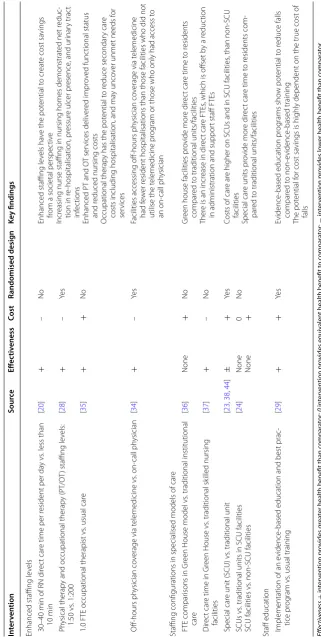
Table 3 provides a summary of the economic results reported in studies pertaining to structures of care.
Staffing levels
Four studies evaluated the costs and effects of enhanced staffing levels, including increasing the amount of direct nursing care time for each resident [20], employing a full-time occupational therapist [35], increasing the staffing level of both physical and occupational therapists [28], and implementing off-hours physician coverage via tel-emedicine [34]. Results suggest that enhanced staffing levels, whilst being associated with increases in staffing costs provide the potential for cost savings in other areas. For example, one study found that increasing registered nurse staffing in nursing homes to ensure 30–40 min of direct care time per resident per day reduced the inci-dence of pressure ulcers, hospitalisations, and urinary tract infection rates resulting in a net societal benefit of US$3191 per resident per year [20]. Similarly, another study reported that increasing the staff to resident ratio for physical therapists and occupational therapists was more effective at promoting, maintaining, or limiting decline in functional status. The resulting reduction in required care delivery resources was estimated to pro-vide an annual cost saving to the institution of $283 per resident [28]. A third study which evaluated the benefit of a full-time occupational therapist reported a significant reduction in secondary health care costs (including hos-pital admissions) and an increase in the use of social ser-vices, though the cost of providing occupational therapy was not offset by the savings in health care [35]. Finally, a fourth study found that increasing the availability of phy-sician care during the off-hours via a dedicated telemedi-cine service decreased annual hospitalisations by 11.3% annually [34]. Based on an average nursing home size of 113 beds, net savings to US Medicare were estimated to be $120,000 per annum for facilities which utilised the telemedicine service to a greater extent [34].
Another important finding from this review was the assimilation of currently available evidence relating to the costs and effectiveness of staffing levels in special-ised models of residential care, including Green House facilities and dementia special care units [23, 24, 36, 37]. Green House facilities provide a small, home-like model of care as an alternative living environment to the tra-ditional skilled nursing facilities in the United States. In
the Green House model, ten to twelve residents live in a self-contained residence designed to look and feel like a private home. Dementia special care units (SCUs) are separate units within a residential care facility that have been adapted specifically for people living with dementia.
Three out of four studies which evaluated staffing lev-els in specialised modlev-els of care (Green House facili-ties and dementia special care units) reported that these types of specialised models generally provided more direct care time to residents compared to traditional facilities [23, 36, 37]. Resource use and cost implications associated with staffing levels in specialised models of care, however, were conflicting across studies with no clear results. With regard to special care units, one study reported no difference in resource use once adjusted for case mix [24], while the other reported higher resource use but made no adjustments for case mix [23]. Of the two studies on Green House facilities, one reported lower staffing requirements than traditional units [37] while the other reported increased staffing requirements of 2.0–2.5% compared to traditional facilities [36]. None of the studies evaluating staffing levels in specialised facili-ties established clinical effectiveness. Swanson, Maas and Buckwalter [38] did report significant results found with indirect outcome measures in the form of reduced cata-strophic reactions and increased social interactions on special care units with the number of reactions decreas-ing from 156 pre-intervention to 48 at the 12-month fol-low-up in the SCU group compared to the control group which reported catastrophic reactions of 82 and 46 at pre-intervention and follow-up respectively (p = 0.035).
Staff education
One study evaluated the implementation of an evidence based staff education and best practice program target-ing ‘vision awareness’ to improve staff knowledge of visual impairments and to reduce the incidence of falls [29]. It was estimated that the intervention resulted in a reduction in the number of annual falls between 5 and 12 in a typical 200-bed nursing home in New York State. Depending on estimates used for the cost of falls, the net societal benefit ranges between a net loss of US$26,000 and a net saving of US$52,000 calculated in 2008 US dollars.
Processes of care
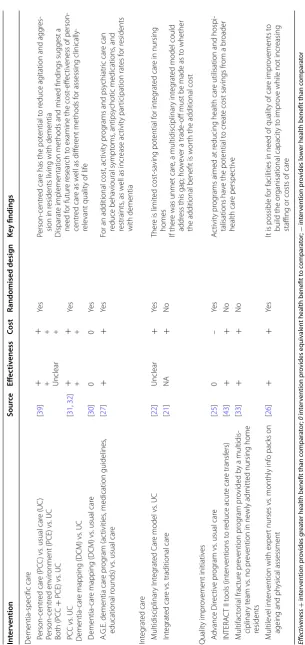
Table 4 provides a summary of the economic results reported in studies pertaining to processes of care.
Dementia‑specific care
Table 2 C ritic al appr aisal r esults f
or included studies using the JBI critic
al appr aisal check list f or ec onomic e valua tions So urce Q1 Q2 Q3 Q4 Q5 Q6 Q7 Q8 Q9 Q10 Q11 W
ell-defined question
Compr ehen -siv e descrip -tion of alt er -na tiv es A ll impor tan t and r el -ev an t c osts and out
-comes iden
tified
Clinical effec
tiv
eness
established
Costs and out
-comes measur
ed
ac
cur
at
ely
Costs and out
-comes v al -ued cr edibly
Costs and out
-comes adjust
ed for diff er en -tial timing Incr emen tal analy sis of c osts and c onse -quenc es Sensitivit y analy ses con -duc ted Study r esults
include all issues of c
on -cern t o users Results ar e gener alizable Cheno w eth et al . [ 31 ]; Nor man et al . [ 32 ] Ye s Ye s Ye s Ye s Ye s Ye s N/A Ye s Ye s Ye s Ye s Cheno w eth et al . [ 39 ] Ye s Ye s No No Unclear Ye s N/A No No No Unclear D or r et al . [ 20 ] Ye s Ye s No Ye s No Ye s N/A No Ye s No Ye s Grabo wsk i and O ’M alle y [ 34 ] Ye s Ye s Ye s Ye s No Unclear No No No No Unclear Jenk ens et al . [ 36 ] Ye s Ye s Ye s No Ye s Ye s N/A No No Ye s Ye s M aas et al . [ 23 ]; Swanson et al . [ 38 ]; Swanson et al . [ 44 ] Ye s Ye s Ye s No Unclear Unclear N/A No No No Unclear M acNeil V roomen et al . [ 22 ] Ye s Ye s Ye s Ye s Unclear Ye s N/A Ye s Ye s Ye s Unclear M
ehr and F
training [31, 32, 39] or dementia-care mapping [30, 31], and a dementia care program which aimed to reduce behaviour disorders [27].
Supporting personhood has been identified as a foun-dation for quality care for people living with dementia [40]. Person-centred care centres on relationships with others and the theory that warm and compassionate care interactions should increase well-being, while disrespect-ful and disengaged care interactions are thought to lead to decreased well-being and increased agitation [14]. Per-son-centred care can be implemented at residential care facilities in different ways.
Two methods of implementing person-centred care were evident from the identified studies. One method, which researchers called ‘person-centred care’ involved off-site staff training followed by a period of on-site supervision and telephone support [31, 39]. The sec-ond, more resource-intensive method was dementia-care mapping which required selected staff members to become certified through basic and advanced training. The mappers then completed systematic observation of residents with dementia, from which feedback was given to care staff and managers in order to assist with plan-ning, implementation and assessment of person-centred care [30, 31]. Chenoweth and colleagues [31] found that the first method of training and support dominated dementia-care mapping, as their results showed demen-tia-care mapping to be more expensive and less effective. Van de Ven and colleagues [30] on the other hand, found dementia-care mapping to be a cost-neutral endeavour.
The most common primary outcome assessed in this subgroup was agitation using the Cohen Mansfield Agita-tion Inventory (CMAI) [30, 31, 39]. Van de Ven [30] and Chenoweth [31] both found that dementia-care mapping had no significant effect on agitation with study follow-up times of 18 and 8 months respectively. Two studies by Chenoweth and colleagues [31, 39] reported small statis-tically significant decreases in agitation as a result of their person-centred care intervention, with follow up con-ducted at 14 and 8 months.
Other outcomes assessed (and measurement tools used) across this subgroup included emotional responses in care (ERIC), quality of life (DemQol, DemQol-proxy, Qualidem, EQ-5D, and QUALID), care interaction quality (Quality of Interactions Schedule), psychiatric symptoms (neuropsychiatric inventory), behavioural symptoms (Psychogeriatric Dependency Rating Scale Behaviour Subscale), antipsychotic drug and restraint use, cognition (mini-mental state examination, MMSE), level of nursing care (resource utilisation groups, RUG-II), and activity participation rates. Some small improve-ments were found in quality of care interactions, resident
care responses, and quality of life measured with the DemQol-proxy [39].
Rovner and colleagues [27] evaluated a dementia care initiative consisting of organised ‘day-care’ activities from 10AM-3PM daily, combined with psychotropic medica-tion guidelines, and educamedica-tional rounds performed by a psychiatrist. In contrast to the person-centred care interventions, the dementia care program was not based exclusively on relationships but was developed to provide structure and stimulation through scheduled activities such as music and games. While the study did not find any cost reductions to offset the intervention costs, the authors did report that intervention residents were over ten times more likely to participate in activities than the comparison group. The intervention was also found to decrease the prevalence of behaviour disorders and the use of antipsychotic drugs and restraints.
Integrated care
Two studies evaluating integrated care delivery found higher costs in the intervention group compared to usual care [21, 22]. Integration strategies aim to provide a level of service that is more individualised and sensitive to the personal circumstances of the resident [41], and can be applied to residential care at a number of levels [42].
Paulus and colleagues [21] examined integrated care in the sense of integration between residents and care staff. Residents lived in smaller-scale facilities with increased levels of social activities, more flexibility in daily routines, and the opportunity to engage in daily activities such as cooking, cleaning and laundry. Integrated care was shown to have lower informal care costs (care provided by family and friends) when compared to traditional care, while both the costs of formal care (provided by staff) and total average costs were higher in integrated care.
Table 3 Summar y of r esults p er taining t o str uc tur es of c ar e Effec tiv eness + in ter ven tion pr ovides g rea
ter health benefit than c
ompar at or ; 0 in ter ven tion pr ovides equiv alen
t health benefit t
o c ompar at or ; − in ter ven tion pr ovides lo w
er health benefit than c
ompar at or Cost + in ter ven tion c osts ar
e higher than c
ompar at or ; 0 in ter ven tion c osts ar
e equal t
o c ompar at or ; − in ter ven tion c osts ar e lo w
er than c
ompar at or In ter ven tion So urce Eff ec tiv eness Cost Randomised desig n Ke y findings
Enhanced staffing le
vels
30–40
min of RN dir
ec
t car
e time per r
esident per da
y vs
. less than
10 min [ 20 ] + – No
Enhanced staffing le
vels ha
ve the pot
ential t
o cr
eat
e cost sa
vings
from a societal perspec
tiv
e
Incr
easing nurse staffing in nursing homes demonstrat
ed net r
educ
-tion in r
e-hospitalisation, pr
essur
e ulcer pr
esence
, and ur
inar y trac t inf ec tions
Enhanced PT and O
T ser vices deliv er ed impr ov ed func tional status and r
educed nursing costs
O
ccupational therap
y has the pot
ential t
o r
educe secondar
y car
e
costs including hospitalisation, and ma
y unco
ver unmet needs f
or
ser
vices
P
hysical therap
y and occupational therap
y (PT/O
T) staffing le
vels: 1:50 vs . 1:200 [ 28 ] + – Ye s
1.0 FTE occupational therapist vs
. usual car
e [ 35 ] + + No O ff-hours ph ysician co
verage via t
elemedicine vs . on-call ph ysician [ 34 ] + – Ye s
Facilities accessing off-hours ph
ysician co
verage via t
elemedicine
had f
ew
er r
esident hospitalisations than those facilities who did not
utilise the t
elemedicine pr
og
ram or those who only had access t
o
an
on-call ph
ysician
Staffing configurations in specialised models of car
e
FTE compar
isons in Gr
een House model vs
. traditional institutional
car e [ 36 ] None + No Gr
een house facilities pr
ovide mor
e dir
ec
t car
e time t
o r
esidents
compar
ed t
o traditional units/facilities
Ther
e is an incr
ease in dir
ec
t car
e FTEs
, which is off
set b
y a r
educ
tion
in administration and suppor
t staff FTEs
Dir
ec
t car
e time in Gr
een House vs
. traditional sk
illed nursing facilities [ 37 ] + – No Special car
e unit (SCU) vs
. traditional unit
[ 23 , 38 , 44 ] ± + Ye s
Costs of car
e ar
e higher on SCUs and in SCU facilities
, than non-SCU
facilities
Special car
e units pr
ovide mor
e dir
ec
t car
e time t
o r
esidents com
-par
ed t
o traditional units/facilities
SCUs vs
. traditional units in SCU facilities
SCU facilities vs
. non-SCU facilities
[ 24 ] None None 0 + No
Staff education Implementation of an e
vidence
-based education and best prac
-tice pr
og
ram vs
. usual training
[ 29 ] + + Ye s Evidence
-based education pr
og rams sho w pot ential t o r educe falls compar ed t o non-evidence -based training The pot ential f
or cost sa
vings is highly dependent on the true cost of
Quality improvement initiatives
Four studies conducted facility-level interventions aimed at improving the quality of care [25, 26, 33, 43]. Inter-ventions included an advance directive program to edu-cate and assist residents with a written expression of their wishes to guide family and health care workers in their care choices [25], an intervention to reduce acute care transfers through the early identification, assess-ment, communication, and documentation of changes in resident status [43], a quality improvement interven-tion involving monthly visits and support by expert nurses [26], and a fracture prevention program for all residents upon admission to a residential care facility [33]. The advance directive program [25], the interven-tion to reduce acute care transfers [43], and the multi-factorial fracture prevention program [33] were all found to reduce hospitalisation rates, resulting in cost savings from a broader health care perspective. The quality inter-vention with expert nurses was found to improve qual-ity of care (measured with the Observable Indicators of Nursing Home Care Quality (OIQ) instrument.), and reduce the incidence of pressure ulcers and weight loss [26]. In all four studies, the increased costs associated with implementation of the interventions were borne by the aged care facility.
Discussion
In comparison with the health care sector, where eco-nomic evaluations are common practice for pharmaceu-ticals and medical technologies, this review identified a paucity of economic evidence relating to the structures and processes of care in the residential aged care sector. A total of 19 studies were identified by this review: 12 cost analyses, one minimisation analysis, one cost-utility analysis, two cost-effectiveness analyses, and three cost-benefit analyses.
Despite the heterogeneity of interventions and out-come measures, synthesis of study results revealed sev-eral common themes. Results from three studies suggest a potential for cost savings to the health care sector by increasing the amount of direct care time provided to each resident [20, 28, 35]. Benefits reported were wide ranging from reductions in the frequency of hospitalisa-tions to improved functional status for the residents. The best means of achieving these outcome improvements is unclear, however, as the included studies focused on a disparate array of staff positions including registered nurses, occupational therapists, and physiotherapists. These positive results highlight an opportunity for future research to explore cost-effective methods of increas-ing the amount of direct care time to residents, and the optimal skill set and configuration of staff (e.g. nurses, allied health professionals, and other aged care workers)
needed to achieve the best outcomes for individual residents.
Interestingly, increased levels of direct care time were found in the small, home-like ‘Green House’ model, as well as the dementia special care units. While we would expect to see cross-sectoral benefits (beyond the aged care sector and into the health care sector) similar to those reported in the enhanced staffing interventions, none of the studies actually measured costs in the health care sector. Three of the four did not report any effec-tiveness measures [24, 36, 37], while the fourth found no effect on cognitive or functional abilities [44]. By not including costs from all relevant sectors, these studies may be underestimating the potential value of specialised care settings.
Another aspect of residential care that was shown to create cost savings from a broader health care per-spective were quality improvement initiatives, such as activity programs and interventions aimed at reduc-ing health care utilisation and hospitalisations. While quality improvement initiatives tend to come at a cost to the facility in terms of planning and implementation, the flow-on effects of improving care quality is likely to extend to other areas of health services. Many of these initiatives, however, such as the quality improvement projects evaluated by Ouslander and colleagues [43], and Rantz and colleagues [26], along with more than half of included studies in this review, focused cost analyses on intervention and care costs incurred by the facility only.
The remaining studies are difficult to generalize, largely due to differing implementation methods. In terms of caring for individuals with dementia, recent research into person-centred care suggests its potential to reduce agitation and aggression [31, 39], though this was not a unanimous conclusion [30]. Despite the sound methodo-logical quality of these three studies, disparate implemen-tation methods render it difficult to draw any definitive conclusions. For instance, of the two studies that consid-ered dementia care mapping, one study had two expe-rienced, accredited researchers as well as two care staff from each facility to conduct the mapping [31] while the second study used two care staff from each facility but no researchers [30]. These disparities raise questions about the conclusions drawn, as the two studies described reported higher costs and cost-neutrality respectively.
Table 4 Summar y of r esults p er taining t o pr oc esses of c ar e Effec tiv eness + in ter ven tion pr ovides g rea
ter health benefit than c
ompar at or ; 0 in ter ven tion pr ovides equiv alen
t health benefit t
o c ompar at or ; − in ter ven tion pr ovides lo w
er health benefit than c
ompar at or Cost + in ter ven tion c osts ar
e higher than c
ompar at or ; 0 in ter ven tion c osts ar
e equal t
o c ompar at or ; − in ter ven tion c osts ar e lo w
er than c
ompar at or In ter ven tion So urce Eff ec tiv eness Cost Randomised desig n Ke y findings D ementia-specific car e P erson-centr ed car e (PC C ) vs
. usual car
e (UC ) P erson-centr ed en vir
onment (PCE) vs
. UC Both (PC C + PCE) vs . UC [ 39 ]
+ + Unclear
+ + + Ye s Person-centr ed car
e has the pot
ential t
o r
educe ag
itation and agg
res
-sion in r
esidents living with dementia
Disparat
e implementation methods and mix
ed findings suggest a
need f
or futur
e r
esear
ch t
o examine the cost
-eff
ec
tiv
eness of
person-centr
ed car
e as w
ell as diff
er
ent methods f
or assessing
clinically-rele
vant qualit
y of lif
e PC C vs . UC D ementia-car
e mapping (DCM) vs
. UC [ 31 , 32 ] + + + + Ye s D ementia-car
e mapping (DCM) vs
. usual car
e [ 30 ] 0 0 Ye s
A.G.E. dementia car
e pr
og
ram (ac
tivities
, medication guidelines
,
educational r
ounds) vs
. usual car
e [ 27 ] + + Ye s
For an additional cost, ac
tivit
y pr
og
rams and psy
chiatr ic car e can reduce beha vioural sympt oms , antipsy chotic medications , and restraints
, as w
ell as incr
ease ac tivit y par ticipation rat es f or r esidents with dementia Int eg rat ed car e M ultidisciplinar y I nt eg rat ed C ar
e model vs
. UC [ 22 ] Unclear + Ye s Ther
e is limit
ed cost -sa ving pot ential f or int eg rat ed car
e in nursing
homes
If ther
e was unmet car
e, a multidisciplinar
y int
eg
rat
ed model could
addr
ess this gap; ho
w
ev
er a trade
-off must be made as t
o whether
the additional benefit is w
or
th the additional cost
Int
eg
rat
ed car
e vs
. traditional car
e [ 21 ] NA + No Qualit y impr ov ement initiativ es A dvance Dir ec tiv e pr og ram vs
. usual car
e [ 25 ] 0 – Ye s A ctivit y pr og
rams aimed at r
educing health car
e utilisation and hospi
-talisations ha
ve the pot
ential t
o cr
eat
e cost sa
vings fr
om a br
oader health car e perspec tiv e INTERA C
T II t
ools (int er ventions t o r educe acut e car e transf ers) [ 43 ] + + No M ultifac tor ial frac tur e pr ev ention pr og ram pr ovided b
y a multidis
-ciplinar
y t
eam vs
. no pr
ev
ention in ne
wly admitt
ed nursing home
residents [ 33 ] + + No M ultile vel int er
vention with exper
t nurses vs
. monthly inf
o packs on
ageing and ph
ysical assessment [ 26 ] + + Ye s
It is possible f
or facilities in need of qualit
y of car
e impr
ov
ements t
o
build the or
ganisational capacit
y t
o impr
ov
e while not incr
easing
staffing or costs of car
and residents [21] considered only the costs of care, with no attempt to measure outcomes. The multidisciplinary integrated care method, which conducted full cost-effec-tiveness analyses, found that for resident-related quality of care, the probability that the intervention was cost-effective compared to usual care was 0.95 or more for ceiling ratios greater than €129, while the same interven-tion was not cost-effective in terms of funcinterven-tional health or quality adjusted life years.
Another issue affecting the generalizability of findings is the geographic concentration of research in the United States. Research conducted outside of the United States is sparse. More than half of the included studies were conducted in the United States, while the remaining third were split between the Netherlands, Germany, Canada, Australia, and the United Kingdom. While these findings are consistent with a recent systematic review of ran-domised controlled trials in care homes, which reported that 50% of the randomised controlled trials undertaken in care homes were from the United States [45], they do highlight a need for research in a wider array of countries and health systems to increase transferability of results.
Another important factor to facilitate transferabil-ity of findings in residential aged care, and particularly dementia-specific models of care, is the question of the most appropriate primary outcome measure to use in economic evaluation. All of the dementia-specific stud-ies into person-centred interventions used agitation as the primary outcome, and some small but significant decreases were detected for person-centred care and per-son-centred environments [31, 39]. Agitation is an out-come measure that is specific to dementia interventions, and therefore comparisons across a broader set of service configurations cannot be made. Given finite resources and a limited budget devoted to aged care, additional investment in one program will likely require a reduc-tion or de-investment in another program in order to free up the necessary resources. A broader outcome measure such as a quality of care and/or a quality of life instru-ment, which is designed to combine a range of outcomes into a single composite outcome, applicable to all aged care residents, would allow decision makers to make comparisons across differing programs. Each of the three studies focused on person-centred interventions incor-porated quality of life instruments as secondary outcome measures. Five different instruments were used: QUALID [31], DEMQOL [39], DEMQOL-proxy [39], EQ-5D [30], and Qualidem [30]. However none of the instruments were able to show significant group differences between the intervention and control groups with the exception of the DEMQOL-proxy, which is completed by a family member or carer on behalf of the person with dementia. Further research is needed to identify appropriate and
meaningful quality of care and quality of life instruments for residents of residential care homes, particularly those living with dementia or cognitive decline, which allows comparisons to be made at a service planning level.
Acknowledging that the economic evidence of program features which directly relate to how care is provided in terms of the workforce and its operations (structures of care) and the services provided (processes of care) is limited, we have selected a number of recommendations for change based on the best evidence available. Firstly, increasing the amount of direct care time provided to each resident appears to have wide-ranging benefits at both an institutional and health care level. While further research is needed, additional direct care time provided by nurses, allied health professionals, and other aged care workers all appear to provide benefit. Secondly, benefits arising from initiatives such as increased direct care time or quality improvement initiatives are likely to occur in the health care sector rather than the aged care sector. Future research and policy decisions surrounding resi-dential care initiatives should strive to include health care costs and benefits when considering resource allocation decisions.
In terms of methodological recommendations, our pri-mary suggestion is improved transparency in reporting study methods and results. Future economic evaluations in this area should strive to meet the quality standard for reporting economic evaluation as specified in the Con-solidated Health Economic Evaluation Reporting Stand-ards (CHEERS) statement [46] including the quantities of resources used in addition to costs and incorporating the measurement and valuation of service outcomes and quality of life. Disclosures should also be included to indi-cate the timing of cash flows and the sources of cost data. Secondly, we would strongly encourage future economic research in this area to evaluate both costs and effec-tiveness in the form of a full economic evaluation. The usefulness of studies containing only partial economic evaluations is limited for policy and decision makers, in that they do not present the case on whether the costs of a course of action is worthwhile in terms of benefits pro-vided to improve quality of care. Finally, we recommend that, where possible, future studies incorporate a societal perspective (especially in considering benefits that may occur in the healthcare sector offsetting costs accrued in the provision of social care) in order to better inform decision makers of the true benefit of an intervention.