Global Journal of Economics and Finance; Vol. 2 No. 1; January 2018 ISSN 2578-8795 (Online), 2578-8809 (Print)
Published by Research Institute for Progression of Knowledge
Investigating the Role of Tourism in the Conservation and Sustainable Development
of the Environment (with an Emphasis on the Geographic Approach)
Mahtab Jafari
M.A. in Political Geography
Department of political geography
Faculty of Geography
University of Tehran
Iran
Abstract
Tourism is always embracing economy, social and environmental impacts. For this reason, the policy of sustainable development of tourism, The general approach is that governments have paid attention to tourism ecologically in the long run is approved and financially self-sufficient, and from the perspective of social and moral for local communities is beneficial and promising. The aim of this study is to evaluate the effects of wetland ecosystem conservation and environmental sustainability of tourism in rural areas. The purpose of applied research and in terms of data collection is descriptive and analytical. The study population consists of 3 villages khawmirabad rural district, Sarkol Zarivar which in the whole 93 villages of this area, a number of villages were selected. Sample households of the village and randomly classified and 12 villages were selected. Cochran formula used to determine the sample size and questionnaire to 330 randomly selected villages were selected among heads of households. The validity of the test Cronbach's alpha was 0.77 percent. For statistical analysis of data from one sample -t- test, chi-square test and ANOVA test in spss software is used. The results show that tourism in economic and socio-cultural aspects have a positive impact on the wetland ecosystem conservation and sustainable rural environment. But after environmental ecological positive impact not only have negative effects
on the environment is stable and wetland ecosystems.
Key words: geographic approach, Conservation, Sustainable Development of the Environment , Tourism
Introduction
In the present era of tourism and tourism economy is becoming one of the fastest growth industries in the world, a tool for the creation of national income and the main pillars of the global economy and also of concepts, forms of development considered (Rattana suwongchai, 1998: 2). Natural tourism activity is a complex with other sectors of society and the economy, in common, have the effects and consequences of different which should be in the process of planning all its aspects considered the take up of negative factors and threat prevention and the effects of economic, social and environmental aspects related to the increase Reinholde, 2000)). Tourism and environment are mutually dependent. Thus, development and management of tourism so that the environment is a key factor in achieving sustainable development is taken into account (World Tourism Organization, 1379, 73. (Tourists need to be part of the natural environment and cultural and human, to the balance between them to maintain (Husain and Altinay, 2005: 274) because the vast majority of recreational activities directly on natural resources in the destination depends (Leich and Dolnicar, 2008: 672). negative environmental impact of tourism, including air pollution, soil pollution, water pollution, traffic congestion problems, poured spraying waste, damage to historical buildings, destruction of natural herbs, destruction of wildlife, etc. These are (Altinay and Husain, 2005: 277).
The regeneration of this natural ecosystems and restoring natural materials and rustic design of the most important research areas and many of the country's executive (Kirby, 2004). The aim of this study was to evaluate the effects of wetland ecosystem conservation and environmental sustainability of tourism in rural areas surrounding the Zarivar is located in the city of Marivan.
Theoretical Framework Tourism
Today, tourism development and tourism, socio-cultural and environmental and economic impact on tourist areas creates (zarabi, 2011: 39). Tourism as an important form of human activities has an important impact. The effects in the region where tourism destination with the local environment, economy, culture and society interact is very evident. Also in this context that a large part of the activities of tourism planning is done on the effects of tourism (Mason, 2003: 10). The effects of tourism development, the complex process of change and exchange between tourists and destination host settlements are included (Yoon, 2002: 14).
If tourism can improve the quality of life for residents with the support and acceptance of faces, but if the quality of life of residents through development of tourism more than just the fall, residents little support from the industry are not doing (Muzzo, 2013). Tourism as an important form of human activities has an important impact. The effects in the region where tourism destination with the local environment, economy, culture and society interact is very evident. Also in this context that a large part of the activities of tourism planning is done on the effects of tourism (Mason, 2003: 10). The effects of tourism development, the complex process of change and exchange between tourists and destination hosts include Settlements ways (yoon, 2002: 14). The environmental dimension of tourism, one of the favorite areas of geographers is the reason for this lies in the nature of geography with a robust approach in the field of human relations and the environment (Murphy and Mitchell, 1991: 57). Analysis of tourism on the environment and resources, an area in which natural and human geographers study problems related to tourism, are the sharing. However, because of the importance of tourism to the natural environment for activities (Page and Hall, 2002: 1).
Wetland ecosystems
Lagoon refers to a place where water is the main factor for the environment, plants and animals, so all areas, river, lake, littoral, mangrove forest, Hatcheries, channels, etc. the maximum water depth of more than 3 meters during low tide are not applicable (convection bureau, 2000). The need for environmental protection and utilization of natural resources, including sustainable development is necessity. Park managers, protected areas and wetlands are faced with the many decisions that need with detailed information of the status quo and causes it to adopt appropriate decision. Cover and dynamic monitoring of land use and landscape in protected areas and wetlands to understand how they Nagy effect on nature, the process of reconstruction and rehabilitation and to protect them in the long term is very important. Assessment of resource and ecological condition of these areas, managers need to make decisions helps (Jones, et al., 2009; Wang, et al: 2009).
www.gjefnet.com Global Journal of Economics and Finance Vol. 2 No. 1; January 2018
Fig. 1. Connections among wetland functions, uses and values.
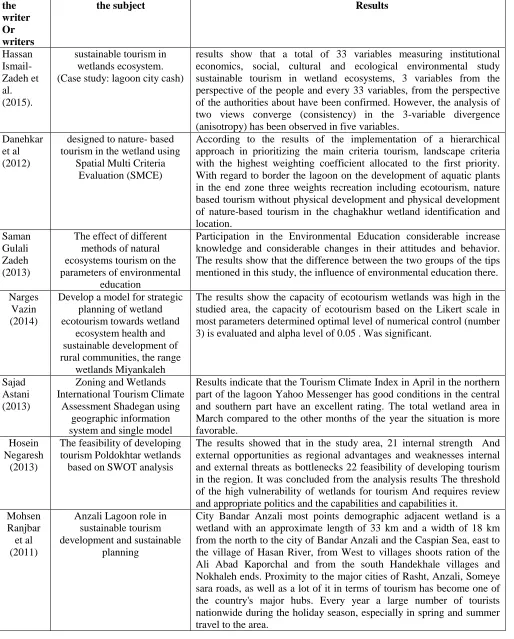
Table 1- National studies in the field of research
Results the subject
the writer Or writers
results show that a total of 33 variables measuring institutional economics, social, cultural and ecological environmental study sustainable tourism in wetland ecosystems, 3 variables from the perspective of the people and every 33 variables, from the perspective of the authorities about have been confirmed. However, the analysis of two views converge (consistency) in the 3-variable divergence (anisotropy) has been observed in five variables.
sustainable tourism in wetlands ecosystem. (Case study: lagoon city cash) Hassan
Ismail-Zadeh et al. (2015).
According to the results of the implementation of a hierarchical approach in prioritizing the main criteria tourism, landscape criteria with the highest weighting coefficient allocated to the first priority. With regard to border the lagoon on the development of aquatic plants in the end zone three weights recreation including ecotourism, nature based tourism without physical development and physical development of nature-based tourism in the chaghakhur wetland identification and location.
designed to nature- based tourism in the wetland using
Spatial Multi Criteria Evaluation (SMCE) Danehkar
et al (2012)
Participation in the Environmental Education considerable increase knowledge and considerable changes in their attitudes and behavior. The results show that the difference between the two groups of the tips mentioned in this study, the influence of environmental education there. The effect of different
methods of natural ecosystems tourism on the parameters of environmental
education Saman
Gulali Zadeh (2013)
The results show the capacity of ecotourism wetlands was high in the studied area, the capacity of ecotourism based on the Likert scale in most parameters determined optimal level of numerical control (number 3) is evaluated and alpha level of 0.05 . Was significant.
Develop a model for strategic planning of wetland ecotourism towards wetland
ecosystem health and sustainable development of rural communities, the range
wetlands Miyankaleh Narges
Vazin (2014)
Results indicate that the Tourism Climate Index in April in the northern part of the lagoon Yahoo Messenger has good conditions in the central and southern part have an excellent rating. The total wetland area in March compared to the other months of the year the situation is more favorable.
Zoning and Wetlands International Tourism Climate
Assessment Shadegan using geographic information system and single model Sajad
Astani (2013)
The results showed that in the study area, 21 internal strength And external opportunities as regional advantages and weaknesses internal and external threats as bottlenecks 22 feasibility of developing tourism in the region. It was concluded from the analysis results The threshold of the high vulnerability of wetlands for tourism And requires review and appropriate politics and the capabilities and capabilities it.
The feasibility of developing tourism Poldokhtar wetlands based on SWOT analysis Hosein
Negaresh (2013)
City Bandar Anzali most points demographic adjacent wetland is a wetland with an approximate length of 33 km and a width of 18 km from the north to the city of Bandar Anzali and the Caspian Sea, east to the village of Hasan River, from West to villages shoots ration of the Ali Abad Kaporchal and from the south Handekhale villages and Nokhaleh ends. Proximity to the major cities of Rasht, Anzali, Someye sara roads, as well as a lot of it in terms of tourism has become one of the country's major hubs. Every year a large number of tourists nationwide during the holiday season, especially in spring and summer travel to the area.
Anzali Lagoon role in sustainable tourism development and sustainable
planning Mohsen
Ranjbar et al (2011)
www.gjefnet.com Global Journal of Economics and Finance Vol. 2 No. 1; January 2018
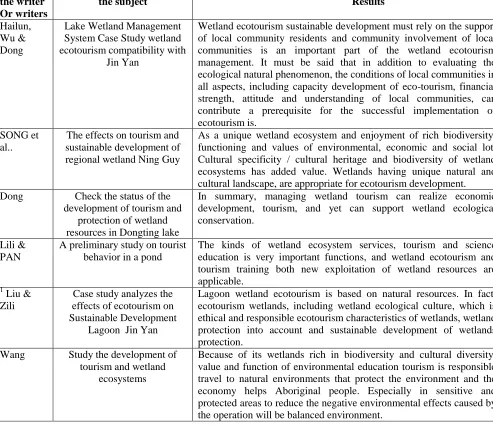
Table 1- international studies in the field of research
Results the subject
the writer Or writers
Wetland ecotourism sustainable development must rely on the support of local community residents and community involvement of local communities is an important part of the wetland ecotourism management. It must be said that in addition to evaluating the ecological natural phenomenon, the conditions of local communities in all aspects, including capacity development of eco-tourism, financial strength, attitude and understanding of local communities, can contribute a prerequisite for the successful implementation of ecotourism is.
Lake Wetland Management System Case Study wetland ecotourism compatibility with
Jin Yan Hailun,
Wu & Dong
As a unique wetland ecosystem and enjoyment of rich biodiversity, functioning and values of environmental, economic and social lot. Cultural specificity / cultural heritage and biodiversity of wetland ecosystems has added value. Wetlands having unique natural and cultural landscape, are appropriate for ecotourism development. The effects on tourism and
sustainable development of regional wetland Ning Guy SONG et
al..
In summary, managing wetland tourism can realize economic development, tourism, and yet can support wetland ecological conservation.
Check the status of the development of tourism and
protection of wetland resources in Dongting lake Dong
The kinds of wetland ecosystem services, tourism and science education is very important functions, and wetland ecotourism and tourism training both new exploitation of wetland resources are applicable.
A preliminary study on tourist behavior in a pond
Lili &
PAN
Lagoon wetland ecotourism is based on natural resources. In fact, ecotourism wetlands, including wetland ecological culture, which is ethical and responsible ecotourism characteristics of wetlands, wetland protection into account and sustainable development of wetlands protection.
Case study analyzes the effects of ecotourism on Sustainable Development
Lagoon Jin Yan
1
Liu & Zili
Because of its wetlands rich in biodiversity and cultural diversity, value and function of environmental education tourism is responsible travel to natural environments that protect the environment and the economy helps Aboriginal people. Especially in sensitive and protected areas to reduce the negative environmental effects caused by the operation will be balanced environment.
Study the development of tourism and wetland
ecosystems Wang
Source: Findings, 2017.
Methodology
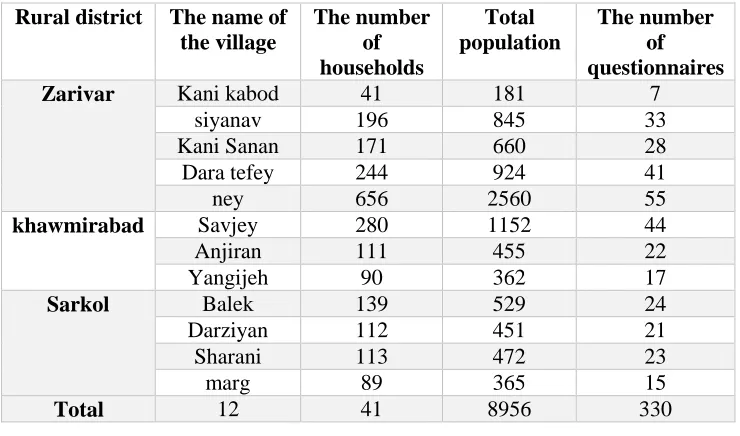
Table 2- Sample villages and distributed questionnaires among them
The number of questionnaires Total
population The number
of households The name of
the village Rural district
7 181
41 Kani kabod
Zarivar
33 845
196 siyanav
28 660
171 Kani Sanan
41 924
244 Dara tefey
55 2560
656 ney
44 1152
280 Savjey
khawmirabad
22 455
111 Anjiran
17 362
90 Yangijeh
24 529
139 Balek
Sarkol
21 451
112 Darziyan
23 472
113 Sharani
15 365
89 marg
330 8956
41 12
Total
Source: Findings, 2017.
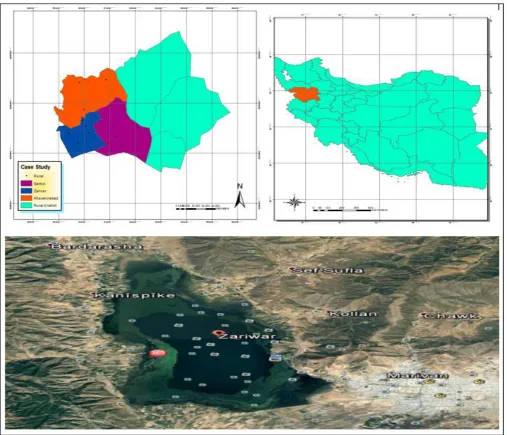
Research Area
www.gjefnet.com Global Journal of Economics and Finance Vol. 2 No. 1; January 2018
Figure 2- Location of the study area
Descriptive findings
Table 3- the individual characteristics of respondents in rural areas, border areas
Individual characteristics of respondents
index Classification frequenc
y
percent
Age
15 - 25 1338 100
25-35 0 0
35-45 33 15.1
45-55 73 33.5
55 > 66 30.3
Level of Educat
ion
illiterate 35 16.1
Primary 11 5.0
Guidance 4 1.8
High school 45 20.6
High school graduate or higher 63 28.9
main job
Farmer 59 27.1
Public services 47 21.6
government's employee 173 79.4
Working 20 9.2
Dehyaran 25 11.5
Other 81 37.2
Job Satisfa
ction
too much 44 20.2
alot 12 5.5
So much for 31 14.2
little 49 22.5
very little 1338 100
Source: Findings, 2017.
Table 5: dimensions and indicators measured in this study
Criteria Dimension
Diversity of flora and fauna, water resources management, management of wastewater agriculture, organic farming, water pollution lake, nature conservation and biodiversity, the pollution of the environment, increase public participation in protecting ecosystems, use of building materials suitable for harvesting allowed water from the wetland and watershed wetlands, lack of wastewater management alternatives, the harm to the animals wetlands) wildlife (land use changes as a result of tourism activities, shortage of farm and garden organ in the villages of the region, consuming large amounts of fertilizer and pesticides Chemicals in food production. Ecologica l _
environmental
Transport facilities, access to weekly markets, poor access to employment opportunities in the area, lack of eco-cottage industries in rural areas, rural women's employment, increase the purchasing power of the local community.
Economic
Recognition of the environment, the awareness of people about the connection between the village and the region, people's belief in wetland conservation as cultural heritage, lack of opportunities for public participation in decision-making and programs for the protection of wetlands, Development Education environmental learning, sense of cooperation in tourism development and maintenance of wetland ecosystems.
Sociocultural
www.gjefnet.com Global Journal of Economics and Finance Vol. 2 No. 1; January 2018
Table 6: Evaluation of the effects of wetland ecosystem conservation and environmental sustainability of tourism in rural areas of the respondents
Sig Chi-square Average very little little Somewha t much too much Variables Dimension .000 36.555 2.32 30.80 24.00 12.50 14.00 18.70
Diversity of flora and fauna
Ecologica l _ environment al 000 8.735 2.21 23.10 24.30 18.10 19.30 15.30 water resource management .000 12.941 2.10 24.00 23.70 16.50 14.00 21.80 Agricultural waste management .000 61.850 3.51 23.40 5.60 23.40 15.90 31.80 Organic farming 000 59.421 2.56 31.20 20.60 26.50 6.50 15.30 Reducing water
pollution in the lake
.000 23.097 2.85 25.50 25.90 16.50 11.80 20.20
Conservation of Nature and Biodiversity .000 109.078 2.73 37.40 27.70 18.70 4.00 12.10 Reduce the pollution of
the environment 000 26.523 3.27 12.10 19.60 17.80 29.90 20.60 Increase women's
participation in the protection of ecosystems .000 33.408 2.32 16.20 28.70 24.90 19.90 10.30
The use of appropriate building materials .000 143.377 3.82 10.00 6.20 11.80 32.40 39.60 Allowed to withdraw
water from the pond
000 8.798 2.60 24.90 22.40 19.60 16.80 16.20 Alternative Wastewater Management System .000 107.769 2.99 22.40 35.50 28.30 9.00 4.70 The damage to wetland animals .000 16.274 3.12 23.70 23.10 12.50 22.70 17.10
Land use change as a result of tourism activities 008 34.997 3.70 25.50 20.20 26.20 7.80 20.20 Organic farms and
gardens in rural area
.006 14.498 3.86 14.00 17.40 22.40 26.50 19.60
Fertilizer and chemical pesticides in agriculture
.001 72.442 3.44 5.00 16.20 20.90 34.00 24.00 Transport facilities Economic 000 104.218 3.48 10.30 18.10 18.40 30.20 23.10 Weekly market access
.000 153.938 2.50 32.70 29.00 13.40 5.60 19.30 Access to employment
opportunities in the area .000 182.598 2.50 25.20 25.90 15.30 17.40 16.20 Eco cottage industries
in villages .000 27.098 3.82 9.8 29.4 20.0 23.5 17.3
Employment for rural women
12.2 12.2
Increase the purchasing power of the local community .000 113.843 3.25 33.3 38.4 11.8 Recognizing the environmental area 000 12.660 3.86 13.40 18.40 22.10 25.20 20.90 Awareness of the
Source: Findings, 2017.
In this study in the context of assessing the impact of tourism in maintaining wetland ecosystem and environmental sustainability in rural areas, 27 indicators defined and each of these indicators in SPSS studied and analyzed, which results in Table (6) it has been shown. In this table the consent of respondents to each indicator, average and chi-square is studied. In the field of ecological and environmental dimensions, 15 indicators (diversity of flora and fauna, water resources management, agricultural waste management, organic farming, water pollution lake, nature conservation and biodiversity, the pollution of the environment, increase women's participation in the protection of ecosystems use of construction materials good, picked allow water from the wetland and watershed wetlands, lack of wastewater management alternatives, the harm to the animals wetlands) wildlife (land use changes as a result of tourism activities) used according the optimal numerical test (3), the average on most parameters to measure the low post Favorable than assessed value and alpha level of 0.00 was significant.
One of the main factors in more evaluations performed on the development of tourism in local communities has been emphasized, the economic effects of tourism. Tourism in recent years as a very important economic factor is of great concern. As well as all the places where the tourism industry will need to develop appropriate tourism professionals and executive management. The economic dimension in the study 6 index (transport facilities, access to weekly markets, poor access to employment opportunities in the area, lack of rural industries compatible with the environment in rural areas, employment of rural women, increase the purchasing power of the local community) used according to the mean square of each indicator, tourism had a positive effect on the economic situation of the rural areas of wetland ecosystems. programs for wetland protection, development of environmental education and learning, sense of cooperation in tourism development and maintenance of wetland ecosystems) have been used. According to the index mentioned that the social dimension of cultural tourism in rural areas of wetland cosystems flows have a positive impact.
Table 7. The test results T wetland ecosystem conservation and sustainable environment impact of tourism in rural areas
95% Confidence Interval of the
Difference Sig
Index T Standard
deviation Mean
Difference Index
Low upper
-.1139 -.3000
46306 0.007
1.209 2.1169
Ecologica l _ environmental
0.0444 0.0106
.89774 .000
4.374 3.8131
Economic
0.0046 0.0326
31268 0.003
1.479- 3.2764
Sociocultural
Source: Findings, 2017.
.000 21.134
2.83 19.90
26.80 24.60
14.03 14.30
People believed to protect the wetlands as cultural heritage Sociocultural
.000 102.629 3.68
8.40 11.20 13.70
37.40 29.30
Public participation in decision-making and wetland conservation programs
000 20.667 2.25
20.90 28.70
17.80 19.60
13.10 Development of
environmental
education and learning
.000 47.765
3.58 9.4
13.3 22.7
34.5 20.0
www.gjefnet.com Global Journal of Economics and Finance Vol. 2 No. 1; January 2018
In one sample T-test number 3 as desirable numerical or theoretical middle test is intended. If the lower and upper limits are positive Posts will be larger than the observed value And when both are negative numerical average calculated from the theoretical middle or utility of the test and show less favorable conditions is not. The analysis shows that the level of tourism in economic and socio-cultural aspects have a positive impact on the wetland ecosystem conservation and sustainable environment in rural areas. But after environmental ecological positive impact not only have negative effects on the environment is stable and wetland ecosystems.
Table 8. The analysis of the impact of wetland ecosystem conservation and environmental sustainability of tourism in rural areas
Sig. F Mean Square df Sum of Squares Index .000 24.367 23.907 22 27.814 Between Groups Ecologica l _
environmental Within Groups 260.461 357 .730
359 268.275 Total .000 10.318 2 15.517 Between Groups Economic 7.759 357 244.865 Within Groups .686 359 260.383 Total .000 653. 2 .826 Between Groups Sociocultural .6.543 357 277.507 Within Groups .777 359 278.333 Total
Source: Findings, 2017.
To explain whether the environmental factors of ecological, economic, social and cultural tourism in the wetland ecosystem conservation and environmental sustainability in rural areas there is a significant difference or not, the one-way analysis of variance was used. According to the results table (8) and the significance level (0.000) can be said to amount F for the impact of tourism on wetland ecosystem conservation and environmental sustainability in rural areas has been significant. In other words, this value indicates that at least there is a significant difference between the two, to check the claim of pairwise comparisons (Tukey) was used in the table (8) refer to it.
Table 8- ANOVA multiple comparisons test
95% Confidence Interval Sig . Std. Error Mean Difference (I-J) Rural Index exam type Lower Bound Upper Bound -.5508 -.0770 .000 .10066 .32389 Economic
Ecologica l _ environmental Tukey -.3052 .2941 .000 .12733 .00526 .0770 .5508 .001 .10066 -.32389 Sociocultural -.0095 .6262 .001 .13505 .33833 -.1103 .3492 .000 .09760 -.11944 Near Economic .2955 .8767 .000 .12346 .58611 -.3492 .1103 .001 .09760 .11944 Middle .1585 .7749 .000 .13095 .46667 -.3501 .1390 .000 .10391 -.10236 Near
Sociocultural -.06389 .13143 .001 .2454 -.3732
Meanwhile, the Kruskal-Wallis test results also show that The alpha level of 0.001 significant wetland ecosystem conservation and environmental impact of tourism in rural areas is sustainable. As the ratings show that an average rural flows to the highest allocated, That may be because it flows near the villages of the district wetland ecosystem in the region. Which impacts (positive and negative) tourism on the ecosystem in the villages.
Table 8-effect relationship between the villages wetland ecosystem conservation and environmental sustainability of tourism in rural areas Kruskal-Wallis test
Rural district Count Average ratings
Impact of tourism in wetland ecosystem conservation and sustainable environment
Khaw and Mirabad 83 163.46
Zarivar 96 199.36
Srkl 151 154.17
Total 330
Df 2
Sig 0.001
Source: Findings, 2017.
Results
Development of tourism in an area with tourist arrivals continue to change the landscape of human and natural, socio-cultural changes, economic and environmental ecology. Tourism to provide recreation areas for tourists and create jobs and income for residents of local communities without damaging the environment, local communities and natural ecosystems. One of the tourist areas, are wetland ecosystems that due to the wide range of ecological attractions and unique natural and cultural landscape is highly regarded. The results show that tourism in economic and socio-cultural aspects have a positive impact on the wetland ecosystem conservation and sustainable rural environment. But after environmental ecological positive impact not only have negative effects on the environment is stable and wetland ecosystems. The findings of the Kruskal-Wallis test shows that tourism in villages near the wetland ecosystem zarivar (Yangijeh, dara tefey, Siyanav, kani kabod, Kani Sanan and ney) are the most affected by the economic dimension of the rural areas studied have had. Also in the field of the environment (pollution of the lake water, lack of protection of nature and biodiversity, environment pollution, harm to animals, etc.) as well as the most negative impact on the region.
Suggestions
1. 1.brnamh planning and proper management to prevent water pollution and protect the environment and surrounding wetland ecosystem around the lake
2. Encourage people to protect nature and the ecosystem around the lagoon and also avoid harming wildlife wetland ecosystems
3. Provision of infrastructure and services needed by tourists and locals
4. Proper management of water resources and water are allowed harvesting of wetland for tourists and locals 5. Alternative wastewater management systems for rural areas, especially rural areas around the wetland
ecosystem.
6. Avoid the use of fertilizers and chemical pesticides in agriculture and horticulture
www.gjefnet.com Global Journal of Economics and Finance Vol. 2 No. 1; January 2018
References
Astani, S; Sobhan Ardekani, S., (2013). Zoning and Wetlands International Tourism Climate Assessment Shadegan using GIS and model TCI, Iranian Journal of Natural Environment Natural Resources, Volume 66, Number 2, Pages 127-136.
Ismail-Zadeh, H., Salehpour, SH. Ismail-Zadeh, Y. (2015). Sustainable tourism in wetlands ecosystems (Case Study: Wetlands city cash), Journal of Physical Geography, Issue 30, pp. 118-99.
Gulali Zadeh, S., Mohammad Javad, Karami, Sh., Yavari, AR. Gulali Zadeh, A., (2013). The effect of different methods of natural ecosystems tourism on the parameters of environmental education, research Journal of Iranian natural ecosystems, Fourth year, the first number, pp. 99-87.
Zarabi, A. Parikhani Islamic, S. (2011). Assess the effects of economic, socio-cultural and environmental development of tourism (city MeshkinShahr Case Study) study of human geography, No. 75, pp. 52-37. Negaresh, H., Parvane., B., Mehdi nasab. M. (1392). Poldokhtar wetlands feasibility of developing tourism based
on the analysis of SWOT, geopolitical landscape (human studies), Issue 22, pp. 13-1.
Nori, Gh., Mehdi nasab. M. (2014).) to evaluate the potential ecological and tourism development Gohar Lake based on SWOT, wetlands Quarterly, Issue five, Fall, pp. 41 33.
Wazin, N. (2014). Developing pattern of strategic planning for the development of wetland ecotourism towards wetland ecosystem health and sustainability of rural communities about the range of wetlands Miankale and lapo wetlands, Journal -Research spatial planning (Geography), Issue II (row 13), pp. 174-153. Altinay M., Hussain K., 2005, Sustainable Tourism Development: A Case Study of North Cyprus, International
Journal of Contemporary Hospitality Management, Volume:17, Issue:3. pp: 272 – 280.
Danielle Piagentini, Nejma (2006): The Science and Policy That Compels The Wetland Mitigation of Phosphate-Mined Lands, Master of Science Thesis, Co-Major Professor: Henry R. Mushin sky, Ph. D, University of South Florida.
Dong, M. H (2001) , Study on protection and development of wetland ecotourism resources in Dongting lake, Resources Science 23(5) ,82 – 86.
Freeland, J.A.; Richardson, J.L.; 1997. Soils and sediments as indicators of agriculturalimpacts on northern prairie wetlands. In: Peterson, S.A., Carpenter, L., Gun-tenspergen, G., Cowardin, L.M. (Eds.), Pilot Test of Wetland Condition Indicatorsin the Prairie Pothole Region of the United States. United States EnvironmentalProtection Agency, Duluth, MN, pp. 119–144.
Finlayson, C.M.; Rea, N.; (1999). Reasons for the loss and degradation of Australianwetlands. Wetlands Ecol. Manag. 7 (1–2), 1–11.
Hall, Michael and Stephan, 2002, the geography of tourism and space, London and new York. 10. Hall. C, Michael and Page, J, Stephen; The geography of tourism and recreation; Routledge.
Holland, C.C.; Honea, J.; Gwin, S.E.; Kentula, M.E.; (1995). Wetland degradation and lossin the rapidly urbanizing area of Portland, Oregon. Wetlands 15 (4), 336–345.
Hailun, Wu & Dong, Xu, (2011) , Construction of Wetland Ecotourism Management System, Case Study for Wetland in Jinyin Lake, International Conference of E Business and E Government (ICEE), China, 6-8 May.
Jones, D.A., et al .2009. Monitoring land use and cover around parks: A conceptual approach. Remote Sensing of Environment, 113, 1346– 1356 .
Johnston, C.A., Bridgham, S.D., Schubauer-Berigan, J.P., 2001. Nutrient dynamics inrelation to geomorphology of riverine wetlands. J. Am. Soil Sci. Soc. 65, 557–577.
Kirby, A., (2004), Self in Practice in an Ecological Community: Connecting Personal, Social, and Ecological Worlds at the Eco village at Ithaca; Doctor of Philosophy, University of New York.
Kent , D.M, Applied Wetlands Science and Technology. (second edition)Lewis Publishers, New York.
Muzzo, U. (2013). Quality of life of residents and sustainability in the destination community: emerging research areas. Conference of Tourism & Hospitality. The Highway to Sustainable Regional Development June 28-30, 2013, Yerevan, Armenia.
Mitchell, L. S. and Murphy, P. E., 1991, Geography and tourism, Annals of Tourism Research. Mitsch, W.J.; Gosselink J.G., (2000). Wetlands, (3rd edition)Van Nostrand Reinhold, New York.
Mason, p. Tourism Impacts, Planning and Management, Linacre House, Jordan Hill, Oxford OX2 8DP 200 Wheeler Road, pp: 1-208.
-Sara Dolnicar, Friedrich Leisch, 2008, Selective Marketing for Environmentally Sustainable Tourism, Tourism Management, Volume 29, Issue 4, Pages 672-680.
SONG, Chun-Ling and QUAN, Xiao-Hu (2007) , Sustainable Development of Wetland Ecotourism in Ningxia Hui Region, Wetland Science, Vol. 2.
Rattanasuwongchai, N., (1998): Rural Tourism The Impact on Rural Communities: II. Thailand, Food & Fertilizer Technology Center.
Turner, R.K, ; Turner, K. T.; J. Bergh, T.; Barendregt, J.; Straaten, and E. Maltby, (2000). Ecological-economic analysis of wetlands: scientific integration for management and policy, Ecological Economics Volume 35, P.P. 7–23.
Reinhold, T.K. and Diara, A., 2000. the role of the tourisim in development planning, Department of Businiess Management, PP, 96.
Wang, Y.Q., et al. 2009. Remote sensing of land-cover change and landscape context of the national parks: A case study of the Northeast Temperate Network. Remote Sensing of Environment, 113, 1453– 1461.