Solution of Ordinary Differential Equations with Variable Coefficients Using Elzaki
Transform
Anju Devi
1, Priyanka Roy
2and Vinod Gill
31Department of Mathematics, NIILM University, Kaithal, Haryana, India. 2&3Department of Mathematics, Amity University Rajasthan, Jaipur, India.
Article Received: 05 August 2017 Article Accepted: 30 September 2017 Article Published: 28 October 2017
1. INTRODUCTION
The term "differential equations" was proposed in 1676 by G. Leibniz. The first studies of these equations were
carried out in the late 17th century in the context of certain problems in mechanics and geometry. Ordinary
differential equations have important applications and are a powerful tool in the study of many problems in the
natural sciences and in technology; they are extensively employed in mechanics, astronomy, physics, and in many
problems of chemistry and biology. The reason for this is the fact that objective laws governing certain phenomena
(processes) can be written as ordinary differential equations, so that the equations themselves are a quantitative
expression of these laws. For instance, Newton's laws of mechanics make it possible to reduce the description of the
motion of mass points or solid bodies to solving ordinary differential equations. The computation of radio technical
circuits or satellite trajectories, studies of the stability of a plane in flight, and explaining the course of chemical
reactions are all carried out by studying and solving ordinary differential equations. The most interesting and most
important applications of these equations are in the theory of oscillations and in automatic control theory. Applied
problems in turn produce new formulations of problems in the theory of ordinary differential equations; the
mathematical theory of optimal control in fact arose in this manner.
Integral transform method is widely used to solve the several differential equations with the initial values or
boundary conditions, see [5-11]. In the literature there are numerous integral transforms and widely used in physics,
astronomy as well as in engineering. In order to solve the differential equations, the integral transform are
extensively used and thus there are several works on the theory and application of integral transform such as the
Laplace, Fourier, Mellin, and Hankel, to name but a few.
Elzaki transform [1-4] which is a modified general Laplace and Sumudu transforms [1], has been shown to solve
effectively, easily and accurately a large class of Linear Differential Equations. Elzaki Transform was successfully
applied to integral equations, partial differential equations [2], ordinary differential equations with variable
coefficients [4] and system of all these equations. The purpose of this paper is to solve Differential Equations with
A B S T R A C T
In this paper, we introduce a computational algorithm for solving ordinary differential equations with variable coefficients by using the modified versions of Laplace and Sumudu transforms which is called Elzaki transform. The Elzaki transform, whose fundamental properties are presented in this paper. Illustrative examples are presented to illustrate the effectiveness of its applicability.
Keywords: Elzaki transform and Differential equations with variable coefficients.
variable coefficients using Elzaki Transform. A new transform called the Elzaki transform defined for function of
exponential order, we consider functions in the set A defined by,
A= { ( ) | ( )|
| |
( ) )} (1)
For a given function in the set A, the constant M must be finite number, may be finite or infinite. The Elzaki transform denoted by the operator defined by the integral equations,
( )] ( ) ∫ ( ) . (2)
For more results, theorems, various existing conditions concern to Elzaki transform, see [1-4]. Even after that, we
mention here Elzaki transform of some functions, which are required in this paper.
2. ELZAKI TRANSFORM OF SOME FUNCTIONS
( ) ( )] ( )
1
( )
( )
( )
( )
( )
( )
( )
√ ( )
( )
The following theorems are very useful in the study of Differential Equations with Variable Coefficients.
Theorem I
If Elzaki transform of the function ( ) given by ( )] ( ), then:
( ) ( )] *
( )
( )+ * ( ) ( )+,
( ) ( )] *
( )
( )+,
( ) ( )] *
( )
( ) ( )+ * ( ) ( ) ( )+,
( ) ( )]
[ ( )
( ) ( )]
Proof
To prove ( ) we proceed the following way:
Let ( ) be Elzaki transform of the function ( ) in , then the function ( ) is in since ( ) is so. We now find ( ( )) and integrating by parts we find that
( ) ( ) ∫ ( ) ∫ * ( )+
∫ ( ( )) ∫ ( ) ( )] ( )]
( ) ( )] ( )]
Hence we obtain ( )]
( ) ( ) ( )
( )]
[ ( ( ))] ( )]
[
( )
( )] [ ( ) ( )]
( )] [ ( ) ( )]
To prove ( ) we use eq. ( ) ,
Now putting ( ) ( ) in ( ) we have
( )]
[ ( ( ))] ( )]
{ [ ( )
( )] [ ( ) ( )]} { [ ( ) ( )] [ ( ) ( )]}
[
( )
( )] [
( )
( )] [ ( ) ( )] [
( )
( )]
[ ( ) ( )]
*
( )
( )+.
Similarly we can prove ( ) and ( ) in the same manner of the above proving procedures and steps of ( ) and ( ).
3. APPLICATIONS
In this section, the effectiveness and the usefulness of Elzaki transform are demonstrated by finding exact solutions
of ordinary differential equations with variable coefficients with graph.
Example 3.1.
Solve the differential equation:
, ( ) ( ) .
By Using Elzaki transformation into the given equation and Theorem I, we have
[ ( )
( ) ( ( )) ( ) .
This is a Linear Differential Equation for unknown function E, having the solution in the form
( )
√
by Using the Elzaki Inverse transform we obtain the Solution
√
( ) ( ) ( ) We now determine „c‟ by applying the initial condition i.e.,
( ) ( ) Putting the value of „c‟ in ( ) we obtain the solution in the form of
( ) ( )
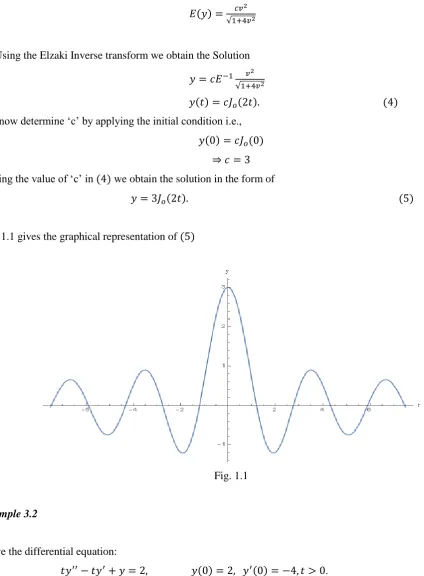
Fig. 1.1 gives the graphical representation of ( )
Fig. 1.1
Example 3.2
Solve the differential equation:
( ) ( ) .
[ ( )
( ) ( )] [ ( ) ( ) ( )] [ ( ) ( )] [ ( ) ( )]
( )
Using the Initial conditions we get
( ) ( )
This is a Linear Differential Equation for unknown function E, having the solution in the form
( )
By using the Elzaki Inverse Transform we obtain the Solution in the following way:
( ) ( ) ( )
( ) ( )
We now determine „c‟ by applying the Initial Condition
( ) ( )
Putting the value of „c‟ in ( ) we obtain the solution in the form of
( )
Example 3.3
Solve the differential equation:
( )
By using Elzaki transformation into the given equation and Theorem I, we have
[ ( )
( )] [ ( ) ( )]
Using the Initial Conditions we get
( )
( ) ∑ ( )( )
Substituting the condition into the above equation we get:
( ) ∑ ( )( )
By using Elzaki Inverse Transform we obtain the Solution
( ) (∑ ( )( )
)
( ) ∑ ( )
( ) ( ) ( )
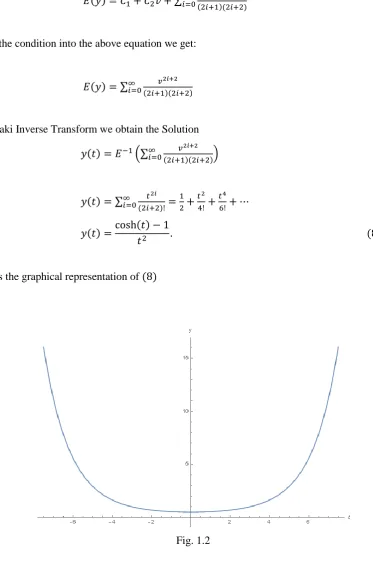
Fig. 1.2 gives the graphical representation of ( )
Fig. 1.2
Example 3.4
Solve the differential equation:
By using Elzaki Transformation into the given equation and Theorem I, we have
[ ( )
( ) ( )] [ ( ) ( ) ( )] [ ( ) ( )] [ ( ) ( )]
( )
Using the Initial Conditions we get
( ) ( ) ( )
This is a Linear Differential Equation for unknown function E, having the solution in the form
( ) ( )
By using the Elzaki Inverse Transform we obtain the Solution in the following way:
( ) ( ) ( )
( ) ( ) ( )
We now determine „c‟ by applying the Initial Condition i.e.,
( ) ( ) ( ) ( )
Putting the value of „c‟ in ( ) we obtain the solution in the form of
( )
4. CONCLUSION
In this work, Elzaki transform is applied to obtain the solution of ordinary differential equations with variable
coefficients. It may be concluded that Elzaki transform is very powerful and efficient in finding the solution for a
wide class of ordinary differential equations with variable coefficients.
REFERENCES
[1] Traig M. Elzaki, The New Integral Transform “Elzaki Transform” Global Journal of Pure and Applied
Mathematics, ISSN 0973-1768, Number 1(2011), pp. 57-64.
[2] Traig M. Elzaki & Salih M. Elzaki, Applications of New Transform “Elzaki Transform” to Partial Differential
[3] Traig M. Elzaki & Salih M. Elzaki, On the Connections between Laplace and Elzaki transforms, Advances in
Theoretical and Applied Mathematics, ISSN 0973-4554 Volume 6, Number 1(2011), pp. 1-11.
[4] Traig M. Elzaki & Salih M. Elzaki, On Elzaki Transform and Ordinary Differential Equation with Variable
Coefficients, Advances in Theoretical and Applied Mathematics. ISSN 0973-4554 Volume 6, Number 1 (2011),
pp. 13-18.
[5] Traig M. Elzaki & Salih M. Elzaki, On Elzaki Transform and Ordinary Differential Equation with Variable
Coefficients, Advances in Theoretical and Applied Mathematics. ISSN 0973-4554 Volume 6, Number1 (2011), pp.
41-46.
[6] Traig M. Elzaki & Salih M. Elzaki, On Elzaki and Sumudu Transform for Solving some Differential Equations,
Global Journal of Pure and Applied Mathematics. ISSN 0973-1768 Volume 8, Number 2 (2012), pp. 167-173.
[7] Tarig M. Elzaki and Salih M. Elzaki, On the new integral transform “Elzaki Transform” Fundamental
properties investigation and applications, Global Journal of Mathematical Sciences, 4(1) (2012), 1-13.
[8] Tarig M. Elzaki, Adem Kilicman, Hassan Eltayeb. On Existence and Uniqueness of Generalized Solutions for a
Mixed-Type Differential Equation, Journal of Mathematics Research, Vol. 2, No. 4 (2010) pp. 88-92.
[9] Lokenath Debnath and D. Bhatta. Integral transform and their Application second Edition, Chapman &
Hall-CRC (2006).
[10] J. Zhang, Asumudu based algorithm m for solving differential equations, Comp. Sci. J. Moldova15 (3) (2007),
pp. 303-313.
[11] Hassan ELtayeh and Adem kilicman, on Some Applications of a new Integral Transform, Int. Journal of Math