IJSRSET1848149 | Received : 05 July 2018 | Accepted : 20 July 2018 | July-August-2018 [ 4 (9) : 614-622 ]
614
Threshold-Based Energy-Estimated Distributed Routing
Algorithm in Wireless Sensor Network
1Umesh Kumbhalkar, 2Dr. Sharad Gangele*
1,2Department of Computer Science & Application, RKDF University, Bhopal, India
ABSTRACT
Wireless sensor networks (WSNs) have attracted many researchers due to its various significant applications in different areas. Recent advancements in Internet of Things (IoT) offered plenty of advantages over conventional sensors and provided the researchers to spring up tiny, low powered, low-cost and multi-functional sensor devices. So many algorithms have been proposed for battery power optimization to enhance the network lifetime of the wireless sensor network. WSNs have embedded one time battery backup and once the network is positioned, they works until battery power become dead. So the optimization of battery power in sensor node becomes a challenging issue for research point of view. In this paper, threshold-based energy-estimated distributed routing algorithm (TBEEDRA) as a reactive algorithm is proposed with three various energy levels. TBEEDRA utilizes the energy-estimated ratio to select cluster head in the distributed sensor network which significantly improves network lifetime and throughput.
Keywords: Wireless Sensor Networks, Clustering, Routing Algorithm, Energy Efficiency, Network Lifetime, Throughput, TBEEDRA.
I.
INTRODUCTIONWireless sensor networks (WSNs) are scattered network of sensor nodes, which is practically applied in environmental monitoring and sensing, and the reports are observed by the users [13]. In WSN, sensor nodes are basically electromechanical devices. The microelectronic mechanical systems (MEMS) [16] is a present innovativetechnology today for sensor device production and MEMS with wireless communication technologies have established small sized, low-power and low-cost multi-functional smart sensor nodes in a wireless sensor network (WSN) [19][18]. For monitoring physical and environmental conditions such as temperature, humidity, radiation, sound, vibration, motion, light and pressure the sensor nodes cooperate together to collect environmental information and data.
With the rapid development of Internet of Things (IoT) technologies, WSNs have upraised as a modern powerful technology applied in various
applications such as agriculture, military operations, healthcare and target trackingapplications [1][7].
In many industrial, commercial and consumer applications such as industrial process control and monitoring, instrument health monitoring,healthcare applications, traffic control system and home automation sensor networks are widely used [11]. The WSN consists of hundreds to thousands sensor nodes, where each sensor nodeis connected to several sensor nodes. There are several components of each such sensor node: a radio transceiver, a micro-controller, anelectronic circuit for interfacing to the sensors and a power source, an internal antenna or connection to an external antenna, typically a battery or an embedded form of energy source [6][12].
International Journal of Scientific Research in Science, Engineering and Technology (www.ijsrset.com)
615
corresponding limits on resources such as powerbackup, memory, computational speed, processing speed, durability, efficiency, accuracy and communications bandwidth [2][3].
There are various geographical topology and layout of the WSNs from asimple star network to an advanced multi-hop wireless mesh and hybrid network [20]. The data transmission techniques among the multiple hops of the sensor network are routing or flooding. The cluster based methods and algorithms have been initially proposed to resolve the scalability and expandability issues for the wire line networks. Nowadays, the clustering protocols are usedin WSNs to reduce the energy consumption [10]. Practically, once WSN is deployed, then the battery recharge or replacement of sensor nodes are not possible. Consequently, WSN need to operate without human handling or participation so our foremost effort is to increase the network lifetime, for this purpose many algorithms and methods have been presented and suggested [14].
II.
BACKGROUND
In this section, the fundamental clustering based energy efficient algorithms [10] such as LEACH [8], DEEC [15], DDEEC [17], EDEEC [17] and EDDEEC [9] are discussed, explored and analyzed, as base for comparison and implemention of proposed work.
2.1. LEACH (Low Energy Adaptive Clustering Hierarchy)
Heinzelman et al. [8] proposed initial clustering based routing protocol called Low Energy Adaptive Clustering Hierarchy (LEACH) as an application-specific protocol architecture for wireless microsensor networks for wireless sensor network. LEACH works as a proactive routing protocol. In the wireless sensor network, basically, the proactive routing protocols try to send latest sensed data to the base station continuously. Hundreds and thousands of sensor nodes distributed randomly for even distribution of workload among nodes in a network. These nodes sense data from the environment, transmit them to
their associated cluster heads (CHs) which first receive, collect it and finally send its data packets to the base station (BS).
Generally, LEACH is a time division multiple access (TDMA) based MAC protocol and which is integrated with idea of clustering and a simply routing protocol in wireless sensor networks (WSNs). LEACH [8] is usually a hierarchical routing protocol in which most sensor nodes transmit data packets to the cluster heads, and the cluster heads usually aggregate it in memory unit, compress this data, and simply forward it to the associated base station.
In the network, all the positioned sensor nodes are homogeneous and constrained in very limited battery power. An improve network life clusters are formed, the sensor node are made to become cluster head (CH) on turns for distribution of workload among nodes. Nodes randomly select themselves as CHs and it is done in a way that each node becomes CH once in the time period of 1/𝑃 round. CHs selection is done on probability basis, each sensor node produces a random number 𝑟 inclusive of 0 and 1, if the generated value is less than this threshold computed by formula given in equation (1), and then this node becomes CH.
𝑇𝑁=
{
𝑃
1 − 𝑃 [𝑟 𝑚𝑜𝑑 𝑃1]
, 𝑖𝑓 𝑛 ∈ 𝐺,
0, 𝑜𝑡ℎ𝑒𝑟𝑤𝑖𝑠𝑒
… (1)
where,
𝑇𝑁 = Threshold
𝑃 = Probability of being Cluster Head (CH)
𝑟 = Current round number
𝐺 = Set of nodes, which are not, became CH in 1/𝑃
round
Each sensing node will be a CH in 1/𝑃 rounds, Usually by using this threshold value, thus probability remaining nodes are CH must be increased, since there are fewer nodes that are eligible to become CH.
2.2. DEEC (Distributed Energy-Efficient Clustering)
International Journal of Scientific Research in Science, Engineering and Technology (www.ijsrset.com)
616
heterogeneous wireless sensor networks. DEEC is adistributed energy-efficient algorithm for clustering based heterogeneous wireless sensor networks, when the cluster-heads are elected by a probability based on the ratio between residual energy of each node and the average energy of the network.
DEEC adapt the model of rotating period of each node to its energy. The round number of the rotating period for each node is different according to its initial and residual energy. The nodes with high initial and residual energy will have more chances to be the cluster-heads than the low-energy nodes. Thus DEEC can prolong the network lifetime, especially the stability period, by heterogeneous aware clustering algorithm. This choice penalizes always the advanced nodes, especially when their residual energy deplete and become in the range of the normal nodes.
In this condition, the advanced nodes die quickly than the others. DEEC uses the initial and residual energy level of the nodes to select the cluster-heads. To avoid that each node needs to know the global knowledge of the networks, DEEC estimates the ideal value of network life-time, which is use to compute the reference energy that each node should expend during a round.
2.3. DDEEC (Developed Distributed Energy Efficient Clustering)
Elbhiri et al. [5] presented DDEEC (Developed Distributed Energy-Efficient Clustering) routing algorithm for heterogeneous wireless sensor networks. DDEEC is based on DEEC algorithm, where all nodes use the initial and residual energy level to define the cluster heads. To avoid that each node needs to have the global knowledge of the networks, DEEC and DDEEC estimate the ideal value of network lifetime, which is use to compute the reference energy that each node should expend during each 𝑛 round.
It is supposed that the base station (BS) is located at the center in uniformly distributed network, with
𝑁 nodes, within a 𝑀 × 𝑀 square region. The network is organized into a clustering hierarchy, and
the cluster heads collect measurements information from cluster nodes and transmit the aggregated data to the base station directly. Furthermore, this condition show a two-level heterogeneous network, where we have two categories of nodes, 𝑎(1 − 𝑚)𝑁
advanced nodes with initial energy 𝐸0(1 + 𝑎) and
𝑎(1 + 𝑚)𝑁 normal nodes, where the initial energy is equal to 𝐸0 . The total initial energy of the heterogeneous networks is given by:
𝐸𝑡𝑜𝑡𝑎𝑙= 𝑁(1 − 𝑚)𝐸0+ 𝑁𝑚𝐸0(1 + 𝑎)
= 𝑁𝐸0(1 + 𝑎𝑚) … (2)
Radio Model of DDEEC: On the first, for the purpose of this protocol it uses similar energy model and analysis as proposed in DEEC. According to the radio energy dissipation model and in order to achieve an acceptable Signal-to-Noise Ratio (SNR) in transmitting an 𝐿 bit message over a distance d, the energy expended by the radio is given by:
𝐸𝑇𝑋(𝐿, 𝑑) = {𝐿𝐸𝑒𝑙𝑒𝑐𝑡+ 𝐿𝐸𝑓𝑠𝑑
2, 𝑖𝑓 𝑑 < 𝑑 0,
𝐿𝐸𝑒𝑙𝑒𝑐𝑡+ 𝐿𝐸𝑚𝑝𝑑2, 𝑖𝑓 𝑑 ≥ 𝑑
0,
… (3)
where 𝐸𝑒𝑙𝑒𝑐 is the energy dissipated per bit to run the transmitter (𝐸𝑇𝑋) or the receiver circuit (𝐸𝑅𝑋). The
𝐸𝑒𝑙𝑒𝑐 depends on many factors such as the digital coding, the modulation, the filtering, and the spreading of the signal. 𝐸𝑓𝑠 and 𝐸𝑚𝑝 depend on the transmitter amplifier model used, and 𝑑 is the distance between the sender and the receiver. For the experiments described here, both the free space (𝑑2
power loss) and the multi path fading (𝑑4 power loss)
channel models were used, depending on the distance between the transmitter and the receiver. If the distance is less than a threshold, the free space (𝑓𝑠)
model is used; otherwise, the multi path (𝑚𝑝) model is used. we have fixed the value of do like on DEEC at
𝑑0= 80.
2.4. EDEEC (Enhanced Distributed Energy Efficient Clustering)
International Journal of Scientific Research in Science, Engineering and Technology (www.ijsrset.com)
617
in the network by introducing the super nodes havingenergy more than normal and advanced nodes and respective probabilities. EDEEC has better performance as compared to DEEC in terms of parameters used. It extends the lifetime and stability of the network. EDEEC for three types of nodes in prolonging the lifetime and stability of the network. Hence, it increases the heterogeneity and energy level of the network. Simulation results show that EDEEC performs better than DEEC with more stability and effective messages.
Properties of EDEEC Network: In the network model described in previous section some assumptions have been made for the sensor nodes as well as for the network. Hence the assumptions and properties of the network and sensor nodes are:
Sensor Nodes are uniformly randomly deployed in the network.
There is one Base Station which is located at the center of the sensing field.
Nodes always have the data to send to the base station.
Nodes are location-unaware, i.e. not equipped with GPS capable antennae.
All nodes have similar capabilities in terms of processing and communication and of equal significance. This motivates the need for extending the lifetime of every sensor.
Sensor nodes have heterogeneity in terms of energy and different energy levels. All nodes have different initial energy, some nodes are equipped with more energy than the normal nodes.
2.5. EDDEEC (Enhanced Developed Distributed Energy Efficient Clustering)
Javaid et al. [9] proposed EDDEEC (Enhanced Developed Distributed Energy Efficient Clustering) as an energy-efficient distributed clustering algorithm for heterogeneous WSNs. Heterogeneous WSNs may contain two, three, or multiple nodes with respect to their energy levels and termed as two, three, or multilevel heterogeneous WSNs, respectively. EDDEEC considers three-level heterogeneous
network that contains three different energy levels of nodes: normal, advanced, and super. Normal nodes have 𝐸0 energy. Advanced nodes of fraction m have a times more energy than normal nodes, i.e., 𝐸0(1 + 𝑎). Whereas, super nodes of fraction m0 have b times
more energy than the normal ones, means, 𝐸0(1 + 𝑏). As 𝑁 is the number of nodes in the network, then
𝑁𝑚𝑚0, 𝑁𝑚(1 − 𝑚0), and 𝑁(1 − 𝑚) are the numbers of super, advanced, and normal nodes in the network, respectively. The total initial energy of super nodes in WSN is as follows:
𝐸𝑠𝑢𝑝𝑒𝑟= 𝑁𝑚𝑚0𝐸0(1 + 𝑏) … (4)
The total initial energy of advanced nodes is as follows:
𝐸𝑎𝑑𝑣𝑎𝑛𝑐𝑒𝑑 = 𝑁𝑚(1 − 𝑚0)𝐸0(1 + 𝑎) … (5)
Similarly, the total initial energy of normal nodes in the network is calculated as follows:
𝐸𝑛𝑜𝑟𝑚𝑎𝑙 = 𝑁(1 − 𝑚)𝐸0 … (6)
The total initial energy of three-level heterogeneous WSNs is therefore calculated as:
𝐸𝑡𝑜𝑡𝑎𝑙 = 𝐸𝑠𝑢𝑝𝑒𝑟+ 𝐸𝑎𝑑𝑣𝑎𝑛𝑐𝑒𝑑 + 𝐸𝑛𝑜𝑟𝑚𝑎𝑙 … (7)
𝐸𝑡𝑜𝑡𝑎𝑙 = 𝑁𝐸0(1 + 𝑚(𝑎 + 𝑚0𝑏)) … (8)
The three-level heterogeneous WSN has 𝑚(𝑎 + 𝑚0𝑏)
times more energy as compared to the homogeneous WSN. A homogeneous WSN also turns into heterogeneous after some rounds due to unequal energy consumption of nodes. CH nodes consume more energy, as compared to member nodes. After some rounds, the energy level of all nodes becomes different, as compared to each other. Therefore, a protocol which handles heterogeneity is more important than the homogeneous protocol [9].
International Journal of Scientific Research in Science, Engineering and Technology (www.ijsrset.com)
618
data to base station and transmission consumes moreenergy compared to sensing.
EDDEEC is basically node heterogeneity aware protocols which improve network lifetime but the limitation of node heterogeneity is this that throughput is also increased which decrease lifetime of WSN. EDEEC and EDDEEC are prominent reactive network routing protocols where frequent data transmission is limited by threshold value.
III.
TBEEDRA (PROPOSED PROTOCOL)
TBEEDRA (Threshold-Based Energy-Estimated Distributed Routing Algorithm) in Wireless Sensor Network is the proposed protocol. This implements the idea of probabilities for CHs selection based on initial and residual energy of nodes as well as the average energy of the network. The average energy of
𝑟𝑡ℎround from is given by equation (9):
𝐸𝑎(𝑟) = 1
𝑁𝐸𝑡𝑜𝑡𝑎𝑙(1 −
𝑟
𝑅) … (9)
where,
𝑅 = the total rounds during the network lifetime. It is calculated by the equation.
𝑅 = 𝐸𝑡𝑜𝑡𝑎𝑙
𝐸𝑟𝑜𝑢𝑛𝑑 … (10)
where 𝐸𝑟𝑜𝑢𝑛𝑑 is the energy dissipated in a network during a single round. Now 𝑑𝐵𝑆 and 𝑑𝐶𝐻 can be calculated as equation (11) and equation (12):
𝑑𝐵𝑆 = 0.765𝑀
2 … (11)
𝑑𝐶𝐻 = 𝑀
√2𝜋𝐾 … (12)
By taking the derivative of 𝐸𝑟𝑜𝑢𝑛𝑑 with respect to 𝑘
and equating to zero, we can find the optimal number of clusters 𝑘𝑜𝑝𝑡 and is calculated by equation:
𝑘𝑜𝑝𝑡 =
√𝑁 √2𝜋√
𝜖𝑠𝑓 𝜖𝑚𝑝
𝑀
𝑑𝐵𝑆2 … (13)
At the start of each round, nodes decide on the basis of threshold whether to become CHs or not. The value of threshold is calculated by equation (14):
𝑇(𝑠𝑖) = {
𝑃𝑖
1 − 𝑃𝑖(𝑟 𝑚𝑜𝑑 𝑃1
𝑖)
, 𝑖𝑓 𝑆𝑖 ∈ 𝐺,
0 𝑜𝑡ℎ𝑒𝑟𝑤𝑖𝑠𝑒
… (14)
where 𝐺 is the set of nodes eligible to become CHs for round 𝑟 and 𝑝 is the desired probability of the CH. In real scenarios, WSNs have more than two types of heterogeneity. Therefore, in TBEEDRA, we use the concept of three-level heterogeneity and characterize the nodes as: normal, advanced, and super. The probability for three types of nodes given by TBEEDRA is given below:
𝑃𝑖 =
{
𝑃𝑜𝑝𝑡𝐸𝑖(𝑟)
(1 + 𝑚(𝑎 + 𝑚0𝑏))𝐸𝑎(𝑟)×
𝐸𝑐𝑢𝑟𝑟𝑒𝑛𝑡
𝐸0 , 𝑃𝑜𝑝𝑡(1 + 𝑎)𝐸𝑖(𝑟)
(1 + 𝑚(𝑎 + 𝑚0𝑏))𝐸𝑎(𝑟)×
𝐸𝑐𝑢𝑟𝑟𝑒𝑛𝑡
𝐸0 , 𝑃𝑜𝑝𝑡(1 + 𝑏)𝐸𝑖(𝑟)
(1 + 𝑚(𝑎 + 𝑚0𝑏))𝐸𝑎(𝑟)×
𝐸𝑐𝑢𝑟𝑟𝑒𝑛𝑡
𝐸0
… (15)
Equation (15) primarily illustrates the difference between DEEC [15], DDEEC [5], EDDEEC [9] and
proposed protocol TBEEDRA by defining
probabilities for CH selection as DEEC, DDEEC, EDEEC and EDDEEC use probability based cluster head (CH) selection, however, the proposed protocol uses energy levels by using the ratio of 𝐸𝑐𝑢𝑟𝑟𝑒𝑛𝑡
(current energy) to 𝐸0 (initial energy). It is the modification of the existing EDDEEC protocol. The objective of this expression is to balance the energy consumption between nodes such that the stability period and network lifetime are increased. However, soon after few rounds, super and advanced nodes might have the same residual energy as that of the normals. At this point, DEEC punishes advanced nodes, TBEEDRA punishes advanced as well as super nodes and TBEEDRA is only effective for repeatedly selecting the CH.
International Journal of Scientific Research in Science, Engineering and Technology (www.ijsrset.com)
619
limitations. So, TBEEDRA is not useful for those typesof applications where a sensed data is required frequently and continuously.
IV.
SIMULATION, PERFORMANCE
ANALYSIS AND RESULT
For simulation and analysis of the proposed protocol TBEEDRA, MATLAB as is used. The objective of estimating simulations is to compare the performance of TBEEDRA with DEEC [15], DDEEC [5], EDEEC [17] and EDDEEC [9] protocols on the basis of energy consumption, lifetime of the sensor network and throughput. Performance attributes used in this MATLAB simulations are as follows:
1. Network Lifetime – It is number of alive nodes during each round.
2. Throughput – It is number of packets sent from cluster heads to the base station.
For simulation of DEEC [15], DDEEC [5], EDEEC [17] and EDDEEC [9], some initial parameter values are taken as well as the same parameter values for this proposed protocol TBEEDRA. In this section, we present the simulation results for DEEC [15], DDEEC [5], EDEEC [17] and EDDEEC [9]: three-level and multi-level heterogeneous WSNs using MATLAB. WSN consists of 𝑁 = 100 nodes which are randomly deployed in a field of dimension 100 m × 100 m with a centrally located BS. For simplicity, we consider that all nodes are either fixed or micro-mobile and ignore the energy loss due to collision and interference between signals of different nodes. For the evaluation of the protocols the used performance metrics are: stability period, network lifetime, and number of packets sent to the BS.
Stability Period: It is the round number at which first node dies or the number of rounds from network initialization till the death of first node.
Network Lifetime: It is the round number at which all nodes die or the number of rounds from network initialization till the death of all nodes.
Number of packets sent to BS: It is the total number of packets that are directly sent to BS either from CHs or non-CH nodes.
Table 1 presents the parameters used for simulations. Results along with discussions are provided in the following subsections. These are considering that initially the WSN consists of 200 sensor
Table 1. Initial Parameter Settings Parameters Values
𝐸0 0:60 Joule
𝐸𝑒𝑙𝑒𝑐𝑡 60 nJoule/bits
𝑙 400 bits
𝜖𝑓𝑠 15 nJoue/bits/m2
𝜖𝑚𝑝 0.0015 pJoule/bits/m4
𝐸𝐷𝐴 6 nJoule/bits/signal
nodes, all sensor nodes are placed randomly in a region and a base station (BS) is located at the outside of that region.
Result metrics used in the simulations are based on the following:
1. Number of the alive nodes during each round (network lifetime).
2. Number of packets sent from the cluster heads (CHs) to the base station (throughput).
4.1. Result Analysis of Nodes Alive Per Round (Network Lifetime)
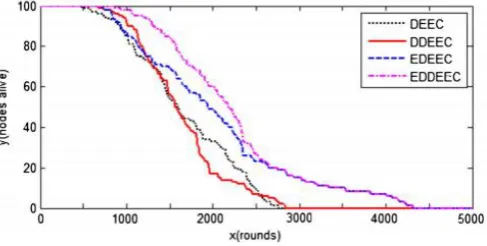
Figure 1 presents performance of DEEC with compared to DDEEC, EDEEC, EDDEEC protocols as network lifetime evaluation.
International Journal of Scientific Research in Science, Engineering and Technology (www.ijsrset.com)
620
Figure 2. Network Lifetime of Proposed ProtocolTBEEDRA
In figure 1, DEEC protocol is shown as the black curve, DDEEC protocol is shown as the red curve, EDEEC protocol is shown as dashed blue curve, EDDEEC is shown as magenta curve and the proposed protocol TBEEDRA is shown in figure 2 as dashed dark blue curve.
Figure 3. Throughput
Figure 4. Throughput of Proposed Protocol TBEEDRA The graph in figure 1 for DEEC [15], DDEEC [5], EDEEC [17] and EDDEEC [9] represents the graph of nodes alive during each round (network lifetime).
Again the proposed protocol TBEEDRA performs better as compared to other protocol as shown in the graph.
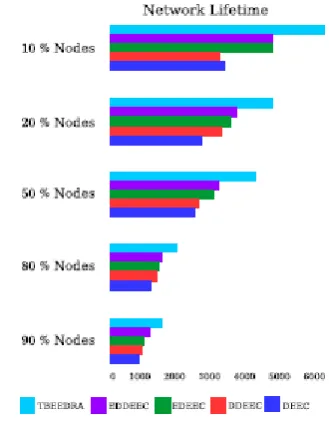
Figure 5. Comparison of Network Lifetime
4.2. Result Analysis of Throughput
The graph of figure 3 plots the data packets send to the base station (BS) or throughput. Again the same colored curve are used for DEEC [15], DDEEC [5], EDEEC [17] and EDDEEC [9] protocols. Figure 5 represents a comparative analysis of network lifetime and Figure 6 shows comparative throughput analysis of proposed algorithm with other protocols.
International Journal of Scientific Research in Science, Engineering and Technology (www.ijsrset.com)
621
For performance evaluation of TBEEDRA inMATLAB, the same initial parameter values are considered and the next parameter values as used in DEEC [15], DDEEC [5], EDEEC [17] and EDDEEC [9]. As shown in figure 3 and 4, the proposed protocol TBEEDRA presents maximum throughput as compared to these protocols.
V.
CONCLUSION
For energy efficiency, the protocols DEEC, DDEEC, EDEEC and EDDEEC use their own algorithm “TBEEDRA (Threshold-Based Energy-Estimated Distributed Routing Algorithm) in Wireless Sensor Network” as a reactive network routing protocol with considering three different levels of sensor node heterogeneity is simulated. TBEEDRA combines the best features of EDDEEC protocol and energy level evaluation method. Due to the concept of energy level based cluster head selection, hard and soft threshold value, three levels of node heterogeneity and being reactive routing network protocol TBEEDRA produces increase in energy efficiency, enhanced lifetime of network and also maximum throughput as shown in the simulation result. In comparison with DEEC, DDEEC, EDEEC and EDDEEC with the proposed strategy of TBEEDRA, it can be concluded that the protocol TBEEDRA performs well in small as well as large geographical networks and best suited for time critical applications. Due to three levels of heterogeneity and being reactive routing network protocol, TBEEDRA produces increased level in energy efficiency, enhanced network lifetime and throughput.
REFERENCES
[1]. Nicholas M. Boers, Pawel Gburzynski, Ioanis Nikolaidis, and Wlodek Olesinski, “Developing wireless sensor network applications in a virtual environment”, Telecommunication Systems, 45(2):165–176, 2010.
[2]. Lisane Brisolara, Paulo R. Ferreira, and Leandro Soares Indrusiak. Application modeling for performance evaluation on event-triggered wireless sensor networks. Design Automation for Embedded Systems, 20(04), 1–19, 2016. [3]. Suan Khai Chong, Mohamed Medhat Gaber,
Shonali Krishnaswamy, and Seng Wai Loke. Energy conservation in wireless sensor networks: a rule-based approach. Knowledge and Information Systems, 28(3):579– 614, 2011. [4]. Deiaa Eid, Amr Yousef, and Ali Elrashidi. Ecg
signal transmissions performance over wearable wireless sensor networks. Procedia Computer Science, 65:412–421, 2015.
[5]. B. Elbhiri, R. Saadane, S. El fldhi, and D. Aboutajdine. Developed distributed energy-efficient clustering (ddeec) for heterogeneous
wireless sensor networks. In I/V
Communications and Mobile Network
(ISVC),2010 5th International Symposium on, pages 1–4. IEEE, Sept 2010.
[6]. S. Emami. Parallel battery configuration for coin cell operated wireless sensor networks. In 2013 IEEE 24th Annual International Symposium on Personal, Indoor, and Mobile Radio Communications (PIMRC), pages 2317– 2320, Sept 2013.
[7]. Yang Gui, Zhi-gang Tao, Chang-jun Wang, and Xing Xie. Study on remote monitoring system for landslide hazard based on wireless sensor network and its application. Journal of Coal Science and Engineering (China), 17(4):464– 468, 2011.
[8]. Wendi Rabiner Heinzelman, Anantha
Chandrakasan, and Hari Balakrishnan. Energy efficient communication protocol for wireless micro sensor networks. In Proceedings of the 33rd Hawaii International Conference on System Sciences (HICSS-33), pages 1–10, New York, USA, 2010. IEEE.
International Journal of Scientific Research in Science, Engineering and Technology (www.ijsrset.com)
622
Ilahi. An energy-efficient distributed clusteringalgorithm for heterogeneous wsns. EURASIP Journal on Wireless Communications and Networking, 2015(1):1 – 11, June 2015.
[10]. L. Jian-qi, C. Bin-fang, W. Li, and W. Wen-Hu. Energy optimized approach based on clustering routing protocol for wireless sensor networks. In 2013 25th Chinese Control and Decision Conference (CCDC), pp 3710–3715. IEEE, May 2013.
[11]. Mauri Kuorilehto, Marko Hannikainen, and Timo D. Hamalainen. A survey of application distribution in wireless sensor networks. EURASIP Journal on Wireless Communications and Networking, 2005(5):1–15, 2005.
[12]. C. Ma and Y. Yang. Battery-aware routing for streaming data transmissions in wireless sensor networks. In 2nd International Conference on Broadband Networks, 2005., pages 464–473 Vol. 1. IEEE, Oct 2005.
[13]. Sudip Misra and Sumit Goswami. Routing in Wireless Sensor Networks. Wiley Telecom, 2014.
[14]. Sachi Pandey and R.P. Mahapatra. A centralized comparison of energy efficient routing protocol for mobile and static wireless sensor network. Procedia Computer Science, 48:467–471, 2015. [15]. Li Qing, Qingxin Zhu, and Mingwen Wang.
Design of a distributed energy-efficient clustering algorithm for heterogeneous wireless sensor networks. Computer Communications, 29(12):2230–2237, August 2006.
[16]. Hossain Saboonchi, Didem Ozevin, and Minoo Kabir. Mems sensor fusion: Acoustic emission and strain. Sensors and Actuators A: PhysicalVolume, 247(15):566–578, August 2016. [17]. P. Saini and A. K. Sharma. E-deec- enhanced distributed energy efficient clustering scheme for heterogeneous wsn. In Parallel Distributed and Grid Computing (PDGC), 2010 1st International Conference on, pages 205–210. IEEE, Oct 2010.
[18]. Hongwen Sun, Minqi Yin, Wangtong Wei, Jiacheng Li, Haibin Wang, and Xin Jin. Mems based energy harvesting for the internet of things: a survey. Microsystem Technologies, Feb 2018.
[19]. B. A. Warneke and K. S. J. Pister. Mems for distributed wireless sensor networks. In Electronics, Circuits and Systems, 2002. 9th International Conference on, volume 1, pages 291–294 vol.1. IEEE, 2002.
[20]. Ren Yueqing and Xu Lixin. A study on