Original Research Article
Diabetes registry and service in Nigerian suburban areas: experience at
a secondary healthcare facility
Chinedu O. Obodo
1, Eunice O. Igumbor
1, Otovwe Agofure
1, Fortunatus D. Gbeinbo
1,
Henzy Ocheli
2, Ezekiel U. Nwose
3*
INTRODUCTION
Disease registries help to provide information regarding components of epidemiology of diseases. Such registers provides electronic or manual information of patients with a specific chronic disease or condition, their socio demographic details, laboratory data, and medical history, amongst others.1 Registries play a critical and important role in chronic care models including diabetes
management.2-4 Registries also help to improve the adherence of clinicians to patients‟ treatment guidelines or plan as well as provide a system for patient follow-up.5 One of the aims of diabetes registry is to improve quality of diabetes care through innovative research and this includes an estimation of probabilities of e.g., diabetes complications including cardiovascular disease, end-stage renal disease and death.6
ABSTRACT
Background: Disease registries help to provide quality healthcare, including chronic care. As part of ongoing bringing research in diabetes to global environments and systems 2 project in Delta State, Nigeria; a preliminary concern is completeness of clinical assessments and data collection that would enable patients‟ follow-up. The aim of this piece of work is to investigate if data collected for local diabetes registry is complete and sufficient to provide better understanding of the disease epidemiology and treatment follow-up.
Methods: This was a purposive medical records audit at public secondary level hospital that followed initial development of diabetes register at the Catholic Hospital, Abbi with 44 pieces of clinical and demographic information. At the public hospitals, 93 patients‟ medical records were audited and the data were entered into the register and evaluated, descriptively.
Results: The results show that about 52% of the 44 itemized information were collected, of which completeness of data/documentation was as low as 3% in some items. Blood pressure assessment was done on 70% of patients and 16% of patients had diabetes complications. Lifestyle regimen monitoring was not documented. Neither incidence nor morbidity and mortality rate could be definitively ascertained.
Conclusions: Quality of clinical data documentation was poor. This study contributes a measure of community needs assessment for professional development training on diabetes.
Keywords: Contact details, Data collection completeness, Diabetes register, Patient follow-up
1
Public and Community Health department, Novena University, Kwale, Nigeria
2Medical Records Department, General Hospital Obiaruku, Delta State, Nigeria
3School of Community Health, Charles Sturt University, NSW, Australia
Received: 16 October 2019
Revised: 28 November 2019
Accepted: 07 December 2019
*Correspondence:
Dr. Ezekiel U. Nwose, E-mail: [email protected]
Copyright: © the author(s), publisher and licensee Medip Academy. This is an open-access article distributed under the terms of the Creative Commons Attribution Non-Commercial License, which permits unrestricted non-commercial use, distribution, and reproduction in any medium, provided the original work is properly cited.
There are three tier of public health facilities in Nigeria including primary, secondary and tertiary. These are typically managed by the local, State and Federal government, respectively.7 The quality of primary healthcare services is quite poor, the secondary facilities (Central or General hospitals) are situated at local governments‟ suburban towns.8 Diabetes services would
ideally be expected to be available at the secondary health facilities. However, it is general knowledge that specialist Endocrinologist are in short supply.9,10 Hence, a potential rationale for research study is „whether there is a register for diabetes care including patient‟s information that would enable sustainable public health and preventive activities.
A casual analysis and questioning of healthcare professionals infers that a diabetes registry was established by the Delta State Hospital Management Board in General Hospital Obiaruku in 1990. However, there is no assurance of existing register for the follow up from the Medical Records department. Thus, assuming that the DM registry exists, the research rationales constituting specific objectives for this study are if data documented in the record: is sufficient to assist in understanding the burden of the disease better, is complete with respect to all aspects of the disease including the types of treatment and can be used for the sustainable public health and preventive activities
Null hypothesis
Averaged proportion of necessary clinical information being collected and documented i.e., available are not different from what is left uncollected/unavailable.
METHODS
Research design
Medical records audit were done according to published method.11 The study was designed to develop a diabetes register from the medical record using the out-patient department and admission register.
Setting
Government owned General Hospital Obiaruku, which services Ukwani Local Government Area (LGA) of Delta State. Obiaruku is headquarter of Ukwani LGA, which is one of 25 in Delta State, Nigeria. One of the neighbouring communities is Amai, which is the host community of Public and Community Health department of Novena University.
Data collection
This involved development of diabetes registers with simultaneous audit of medical records during October 2017 to February 2019. First, at the Catholic Hospital
Abbi (CHA), the Australian diabetes register proforma was adopted and edited to develop Excel sheet on computer; with proposal for 44 pieces of clinical and demographic information. The editing of involved clinicians in one of the secondary health facilities. Afterwards, agenda for this study at General Hospital Obiaruku – i.e., audit of the medical records to determine which of the 44-items of data were recorded on the patient‟s file.
Selection criteria
Patients (n=93) indicated to living with diabetes in the medical records were included. The data were entered into the register and evaluated, descriptively.
Statistics
For objectives, absolute and/or relative frequencies were determined (i) the available register was reviewed if it contained information of persons living with diabetes, only. Age and gender distribution were also evaluated, (ii) the 44 pieces of information were earmarked to be checked in terms of „if‟, and „how much‟ were collected. Simple t-test was used to assess the hypothesis whether averaged proportion of available information was more than what was unavailable, (iii) adjunct to completeness of data collection, contact details that facilitate „follow up‟ were critically evaluated i.e., frequencies/levels of completeness of contact details and (iv) review was to determine type of diabetes diagnosed and incidence of yearly diagnosis.
RESULTS
For research question 1: ‘Is there a local diabetes registry with data sufficient to assist in understanding the epidemiology of the disease better?’
The first observation was that the diabetes registry did not exist. The existing document presumed to be diabetes registry was the outpatient records that contained searchable diabetes cases among other health issues. Second observation was that age and gender information were incomplete and 13/93 cases missing gender information were also missing data on age (Table 1). Among the 80 cases with these demographic information, women made up a higher proportion (60%) of the diabetes population and also appeared to be on about 10 years older than the male subgroup (Figure 1).
Table 1: Distribution of patients by gender.
N Available Age range
Females 48 9 39–89
Males 32 5 39–70
Figure 1: Descriptive comparison of gender distribution and highest age range.
On research question 2: ‘Are Data collected from local diabetes patients complete with respect to all aspects of the disease including the different types of treatment?’
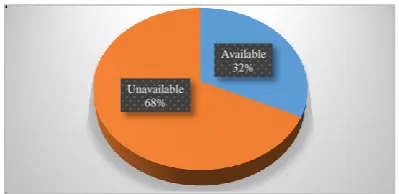
It was observed that out of the 44 pieces of information earmarked, 21/44 (≈48%) were not documented. All the undocumented information are grouped into four (Figure 2). Among the 23 pieces of information collected, only the names and home addresses were documented for all the patients. Others had varying degrees of completeness (Table 2). Further evaluation show that even among the pieces of information collected, the average amount available data was significantly less than the unavailable proportion (Figure 3).
Figure 2: List of data that was not documented in the accessed records.
Figure 3: Proportion of the 23 pieces of information available vs. unavailable (p<0.00001).
Table 2: Amount of data collected for the various clinical information (n=93).
Information Available Unavailable
Other illness 8 85
Medications 9 84
RBS 12 81
DOB 14 79
Height 15 78
Weight 15 78
BMI 15 78
FBS 19 74
Occupation 22 71
Religion 22 71
Name 23 70
Phone # 23 70
Relationship 23 70
Marital status 23 70
SBP 44 49
DBP 44 49
Phone# 50 43
Id# 60 33
Entry & follow-up 70 23
Sex 80 13
Fig 4: Proportion of cases without MRN and/or phone in cohort (n=93).
On question 3 that is adjunct to the second objective: ‘Can data collected by local diabetes registries be used for the sustainable follow up, which will help the clinicians to take decisions on the modality of treatment?’
Initial results presented on Figure 1 showed that documentation of „next appointment date‟ was missing on all patients. For the purpose of this adjunct objective, critical evaluation of data unavailability shows proportions of missing contact and demographic information (Table 3); as well as is the distribution of 60/93 cases that do not have MRN and/or phone numbers (Figure 4). Also, further results show that (Figure 5): (i) 85/93 (91%) cases were missing information on „other illness‟. Among this subpopulation, 26/85 were without associated MRN, out of which 14/26 (54%) do not have phone number to enable recall or tracking, (ii) on BMI information, 26/78 had no MRN, out of which 10/26
0 20 40 60 80
Proportion (%) Average age (years)
60 64
40
54.5
Females Males
Available 32% Unavailable
(38%) were without phone details for recall (iii) on blood glucose level, 21/63 did not have MRN, out of which 6/21 (29%) were without phone contact and (iv) on blood
pressure, 11 /49 did not have MRN and 6/11 (55%) were without phone contact.
Table 3: Frequencies of unavailable contact details and results requiring follow-up.
Info Unavailable Comment
MRN 35% 10/33 did not have entry/diagnosis date
Phone# 46% 16/43 did not have MRN including 3 without entry dates
Relationship 75% 13/23 without MRN; but 2/13 did not have phone numbers; 20/70 does not have MRN to recall
DOB 85% 42/79 did not have phone numbers including the 16/43 without MRN
Gender 14% All are part of 79 with no age info
Occupation 76% None had BMI measures; 42/71 did not have phone numbers including the 13/42 without MRN
Figure 5: Percentage unavailable MRN and/or phone among cases without clinical information.
On objective 4: ‘What is the incidence (new entries) rate of diabetes mellitus?’
30/93 cases had blood glucose results comprising FBS (n=12), RBS (n=19), including one who had both FBS and RBS results. Among these, none had information on type of diabetes diagnosed and 2/30 was not associated with entry date. Thus, only „n=28‟ could be included for assessment. The results show that only 1/28 was entered in 2015 while 17/28 were entered in 2018 (Table 4), which is an increase in the entries (Figure 6).
Table 4: Frequency distribution of blood glucose result entries by year (n=28).
N Frequency (%)
2015 1 3.6
2016 2 7.1
2017 8 28.6
2018 17 60.7
Figure 6: Sharp gradient increase in the record entries (n=28).
DISCUSSION
This study set out to assess the presumed existence of diabetes register, with a view to describe demographic
91%
31%
54% 84%
33%
38% 68%
33%
29% 53%
22%
55%
0% 10% 20% 30% 40% 50% 60% 70% 80% 90% 100%
Results MRN MRN-&-Phone†
Other illness BMI Blood sugar* Blood pressure
0.0% 10.0% 20.0% 30.0% 40.0% 50.0% 60.0% 70.0%
and clinical characteristics of patients; and if data collected from local diabetes patients (1) was complete with respect to all aspects of the disease including the different types of treatment; (2) can be used for the sustainable public health and preventive activities i.e., follow up including patient‟s recall by the hospital staff; and (3) was sufficient to determine incidence rate of diabetes mellitus in the community.
On the first objective
It was observed that there was a higher proportion of women (60%) constituting the diabetes population in the community by comparison with males (Figure 1). This is in agreement with other studies that have reported more women in their cross-sectional cohort.12,13 It is noteworthy from a meta-analysis report that prevalence among gender groups between different African regions.13,14 Therefore, one significance of this observation is contribution of epidemiological data from a rural region in Nigeria.
On the second rationale of study
The results identify areas of missing documentation and point to professional development need for healthcare staff. While this report indicates poor documentation as a factor of the system, it is imperative to note that the staff of medical records is only custodians of the data. The actual collection of data is done by staff in the in-patient, out-patient, laboratory and triage departments. This follows international opinion that the clinicians are the people to help when patients‟ information are incomplete or conflicting.6 Therefore, the necessary educational need of professional development is for the healthcare professionals in these other departments that collect the data. Medical records staffs are important in facilitating follow-ups i.e., when patients visit the hospital: medical record numbers (MRN) is used to trace the record file. Otherwise, a new one may be created and old records lost – previous clinicians‟ decision is not followed up and if patient fails clinical appointment: healthcare staff designated in public hospitals does not visit patients‟ homes and at best, phone numbers are used to recall patient.
In this study, „35% of cases in the accessed documents had no associating MRN, which represents the proportion of patients that were attended to without recourse to the Medical Records department‟. Further, 46% did not have phone numbers out of which 16/43 was without MRN (Table 3). Altogether, 60% of the participants did not have either MRN and/or phone numbers to facilitate recovery of patient‟s data during hospital visit (Figure 4). This demonstrates that even from this public health research evaluation, the patients had no medical records identity to trace other existing records, and could not be reached by phone. Such findings mitigate any attempts of follow-up.
Two points of observation are worthy of discuss as field notes. First, it is expected that occupation is a determinant of physical activity and obesity, which constitutes part of diabetes self-management to control blood glucose and pressure levels.15,16 In this study, 76% of cases were without information about their occupation (Table 3). While 84% were missing data on BMI measures, 33% had no MRN of which 38% were without phone details for recall, possibly demonstrating demonstrates that (i) if the 78-patients came back to hospital, 33% old records would not be traceable and (ii) if there were to be a delegated Medical Records staff to recall patients, 38% could not be reached by phone (Figure 5).
Second, bias in the diagnosis of T2DM is known to exist, especially with the discussion around medicinal treatment for prediabetes.17-19 However, the extent or incidence of T2DM diagnosis is unknown in government owned secondary health facilities, especially in suburban communities of low-mid income countries such as Obiaruku in Delta State, Nigeria. Hence, this finding of the second study objective contributes empirical additional data. For instance, it has been reported or implied that prevalence of hypertension among diabetes is higher among women; but another report from Nigeria indicates it may be higher in men.12,13,20 The significance of considering age is important since it constitutes a non-modifiable mechanism of cause and complication as an independent risk factor for prevalence of hypertension i.e., high blood pressure increases with age.21,22
On the third objective that borders on question of incidence
The rate of diabetes mellitus (new entries), the result show 100% non-documentation of date of diagnosis. Going by the date of record entries onto the document, a very sharp gradient is observed (Figure 6). It is inferred that a definitive assessment of incidence cannot be performed with the limited or dearth of information. This further highlights a gap in knowledge, attitude and practice vis-à-vis emphasizes the professional development need of the various healthcare personnel to improve on data collection.
CONCLUSION
ACKNOWLEDGEMENTS
This is part of the project “Development of diabetes registers in low-mid income country”, which was done under the aegis of ethical approval granted to Global Medical Research & Development Organization in collaboration with Public & Community Health Department, Novena University. Obodo and Gbeinbo participated in the work as part of their academic research works. The supports of staff at Medical Records Department, General Hospital Obiaruku are highly appreciated. Christabel Ogbolu, Godswill Adoh, Anthonia Okwelum and Pleasant Ndubueze are hereby acknowledged for support during data collection in this collaborative work. Dr Phillip Bwititi from Charles Sturt University supported to edit this manuscript.
Funding: No funding sources Conflict of interest: None declared
Ethical approval: Ethical approvals for this project included Novena University as well as Delta State Ministry of Health
REFERENCES
1. Khan L, Mincemoyer S, Gabbay RA. Diabetes registries: where we are and where are we headed? Diabetes Technol Ther. 2009;11:255-62.
2. Profili F, Bellini I, Zuppiroli A, Seghieri G, Barbone F, Francesconi P, et al. Changes in diabetes care introduced by a Chronic Care Model-based programme in Tuscany: a 4-year cohort study. European J Public Health. 2017;27:14-9.
3. Stellefson M, Dipnarine K, Stopka C. The chronic care model and diabetes management in US primary care settings: a systematic review. Preventing Chronic Dis. 2013;10:26.
4. Bongaerts BW, Mussig K, Wens J, Lang C, Schwarz P, Roden M, et al. Effectiveness of chronic care models for the management of type 2 diabetes mellitus in Europe: a systematic review and meta-analysis. BMJ Open. 2017;7:e013076.
5. Gabbay RA, Khan L, Peterson KL. Critical features for a successful implementation of a diabetes registry. Diabetes Technol Ther. 2005;7:958-67. 6. Ballotari P, Chiatamone Ranieri S, Vicentini M,
Caroli S, Gardini A, Rodolfi R, et al. Building a population-based diabetes register: an Italian
experience. Diabetes Res Clin Pract.
2014;103:79-87.
7. Fasanmade OA, Dagogo-Jack S. Diabetes Care in Nigeria. Annals of global health. 2015;81:821-9. 8. Uzochukwu BSC. Primary health care systems
(PRIMASYS): Case study from Nigeria. Available at: https://www.who.int/alliance-hpsr/projects/ alliancehpsr_nigeriaprimasys.pdf?ua=1. Accessed 20 August 2019.
9. Agwuna PM. 12m Nigerians suffering from
diabetes. Daily Sun; 2006.
10. Otovwe A, Oyewole OE, Igumbor EO, Nwose EU. Diabetes care in Delta State of Nigeria: An expository review. Diabetes Updates. 2018;1:1-8. 11. Cunningham SG, Carinci F, Brillante M, Leese GP,
McAlpine RR, Azzopardi J, et al. Core standards of the EUBIROD project. Defining a European diabetes data dictionary for dlinical audit and
healthcare delivery. Methods Inf Med.
2016;55:166-76.
12. Kilonzo SB, Gunda DW, Bakshi FA, Kalokola F, Mayala HA, Dadi H. Control of hypertension among diabetic patients in a referral hospital in Tanzania: A cross-sectional study. Ethiop J Health Sci. 2017;27:473-80.
13. Agyemang C, Meeks K, Beune E, Owusu-Dabo E, Mockenhaupt FP, Addo J, et al. Obesity and type 2 diabetes in sub-Saharan Africans - Is the burden in today's Africa similar to African migrants in Europe? The RODAM study. BMC medicine. 2016;14:166.
14. Hilawe EH, Yatsuya H, Kawaguchi L, Aoyama A. Differences by sex in the prevalence of diabetes mellitus, impaired fasting glycaemia and impaired glucose tolerance in sub-Saharan Africa: a systematic review and meta-analysis. Bull World Health Organ. 2013;91:671-82.
15. Silventoinen K, Tatsuse T, Martikainen P, Rahkonen O, Lahelma E, Sekine M, et al. Occupational class differences in body mass index and weight gain in Japan and Finland. J Epidemiol. 2013;23:443-50.
16. Barberio A, McLaren L. Occupational physical activity and body mass index (BMI) among Canadian adults: does physical activity at work help to explain the socio-economic patterning of body weight? Canadian J Public Health. 2011;102:169-73.
17. Colosia AD, Palencia R, Khan S. Prevalence of hypertension and obesity in patients with type 2 diabetes mellitus in observational studies: a systematic literature review. Diabetes Metab Syndr Obes. 2013;6:327-38.
18. Li YT, Wang HH, Liu KQ, Lee GK, Chan WM, Griffiths SM, et al. Medication adherence and blood pressure control among hypertensive patients with coexisting long-term conditions in primary care settings: A cross-sectional analysis. Medicine (Baltimore). 2016;95:e3572.
19. Twohig H, Hodges V, Mitchell C. Pre-diabetes: opportunity or overdiagnosis? The British journal of general practice: the journal of the Royal College of General Practitioners. 2018;68:172-3.
20. Unadike B, Eregie A, Ohwovoriole A. Prevalence of hypertension amongst persons with diabetes mellitus in Benin City, Nigeria. Nigerian J Clinical Practice. 2011;14:300-2.
association with confounding risk factors. J Cardiometab Syndr. 2006;1:95-101.
22. Arrieta F, Iglesias P, Pedro-Botet J, Becerra A, Ortega E, Obaya JC, et al. Diabetes mellitus and cardiovascular risk: Update of the recommendations of the Diabetes and Cardiovascular Disease working group of the Spanish Diabetes Society (SED, 2018). Clin Investig Arterioscler. 2018;30:137-53.