SECTION 2: MEASUREMENT
Neonatal Intensive Care: Satisfaction Measured From a Parent’s
Perspective
Jeanette M. Conner, MS, MN*; and Eugene C. Nelson, DSc, MPH‡
ABSTRACT. Health care systems today are complex, technically proficient, competitive, and market-driven. One outcome of this environment is the recent phenom-enon in the health care field of “consumerism.” Strong emphasis is placed on customer service, with organized efforts to understand, measure, and meet the needs of customers served. The purpose of this article is to de-scribe the current understanding and measurement of parent needs and expectations with neonatal intensive care services from the time the expectant parents enter the health care system for the birth through the discharge process and follow-up care. Through literature review, 11 dimensions of care were identified as important to par-ents whose infants received neonatal intensive care: as-surance, caring, communication, consistent information, education, environment, follow-up care, pain manage-ment, participation, proximity, and support. Five parent satisfaction questionnaires—the Parent Feedback Ques-tionnaire, Neonatal Index of Parent Satisfaction, Inpa-tient Parent Satisfaction–Children’s Hospital Minneapo-lis, Picker Institute-Inpatient Neonatal Intensive Care Unit Survey, and the Neonatal Intensive Care Unit-Par-ent Satisfaction Form—are critically reviewed for their ability to measure parent satisfaction within the frame-work of the neonatal care delivery process. An immense gap was found in our understanding about what matters most and when to parents going through the neonatal intensive care experience. Additional research is required to develop comprehensive parent satisfaction surveys that measure parent perceptions of neonatal care within the framework of the care delivery process. Pediatrics 1999;103:336 –349; parent satisfaction, questionnaires, neo-natal intensive care, pediatric.
ABBREVIATIONS. NICU, neonatal intensive care unit; NIPS, Neonatal Index of Parent Satisfaction; NICU–PSF, NICU Parent Satisfaction Form; SD, standard deviation.
H
ealth care systems today are characterized as complex, in flux, technically proficient, com-petitive, and market-driven. One outcome of this environment is the recent phenomenon in the health care field of “consumerism.” Strong emphasis is being placed on customer service, with organized efforts to understand, measure, and meet the needs of customers served. Evidence of this phenomenon is found in the numerous publications that focus on patient satisfaction as a key outcome measure of health care. Patient satisfaction, defined as the per-ception of patient needs and expectations being met, is rapidly becoming a primary indicator for evalua-tion and comparison of quality in health care plans.1,2 Currently, efforts are underway in the national ac-crediting organizations for unified, standardized pa-tient satisfaction measures, thus supporting the im-portance of measurement of customer needs and expectations. One newly developed satisfaction sur-vey, Consumer Assessment of Health Plans, is being lobbied widely as a leading instrument for compre-hensive measurement of patient (adult) satisfaction and for standardized comparisons of quality health plans.3– 6AIM
The aim of this article is to describe the current understanding and measurement of parent needs and expectations of neonatal intensive care services from the time the expectant parents enter the health care system for the birth through the discharge pro-cess and follow-up care. This article reviews the pe-diatric satisfaction literature, with particular atten-tion to neonatal care, addresses known concepts of care that are important to families, critically reviews parent satisfaction questionnaires, and offers recom-mendations for future studies.
CONCEPTUAL FRAMEWORK The Clinical Value Compass Approach
Important studies have been conducted to provide a theoretic yet “actionable” framework in which multiple outcomes of health care can be viewed as a process of care.7,8This work has expanded our think-ing from measurthink-ing purely clinical outcomes to mea-suring clinical and functional outcomes, patient sat-isfaction, and cost of care within the framework of the care delivery process. The process involves an episode of care beginning with patient entry into the health care system with needs and expectations and
From the *Department of Pediatrics, Dartmouth–Hitchcock Medical Center, Lebanon, New Hampshire; and the ‡Department of Quality Education, Measurement, and Research, The Hitchcock Clinic, Lebanon, New Hamp-shire.
Jeanette M. Conner, MS, MN, is a neonatal nurse practitioner at the Dart-mouth–Hitchcock Medical Center, Lebanon, NH, and a doctoral candidate in the Center for the Evaluative Clinical Sciences, Dartmouth Medical School, Hanover, NH.
Eugene C. Nelson, DSc, MPH, is Director of Quality Education, Measure-ment, and Research, The Hitchcock Clinic, Lebanon, NH, and a professor in the Department of Community and Family Medicine, Dartmouth Medical School, Hanover, NH.
Received for publication Sep 9, 1998; accepted Sep 9, 1998.
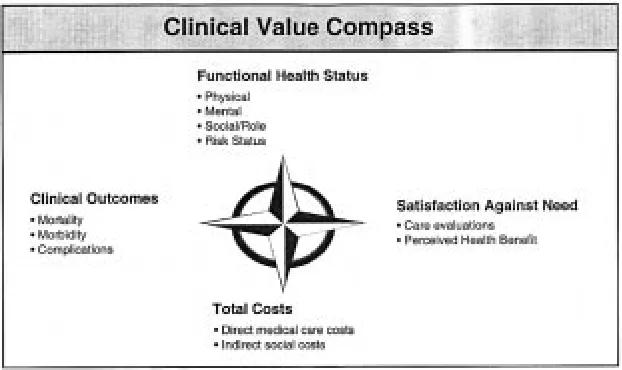
ends when the health care needs and expectations have been met (Fig 1). The episode of care begins with an expression of a need, such as an infant born prematurely and admitted to the neonatal intensive care nursery. The Clinical Value Compass on entry into the health care delivery process models the ini-tial state of the infant, including sociodemographic characteristics and four health outcomes: clinical, functional, patient (or parent) expectations, and cost. The Clinical Value Compass points (Fig 2) north, east, south, and west refer to the four health out-comes: functional health status, satisfaction against need, total costs, and clinical outcomes. Functional health status includes measurement of physical and mental abilities and social– emotional and role-func-tioning. Measuring expectations with the delivery of health care services can include measuring satisfac-tion with a procedure, a single patient visit, or an entire hospital stay. Measurement of the costs of health care includes both the direct costs (eg, expen-ditures for medical care) and the indirect costs of care such as time lost from studies. Clinical status in-cludes such measures as the presence or absence of a disease state, or physiologic parameters. The four Clinical Value Compass points provide a complete “picture” of patient needs and expectations at both
the entry and the exit points of the health care deliv-ery process.
CARE DELIVERY PROCESS FOR NEONATAL INTENSIVE CARE
Measuring satisfaction of a hospital stay needs to be performed within the framework of the health care delivery process. In other words, it is necessary to know at what point along the continuum of care certain aspects of care have greater weight and im-portance to parents. This is valuable for two reasons: first, the information gained is useful for targeting quality improvement efforts, and second, the infor-mation allows for judgment or comparison of the quality of health care services delivered. Further-more, by understanding where in the delivery pro-cess certain aspects of care are most important to parents, standardized comparisons can be made across health care plans.
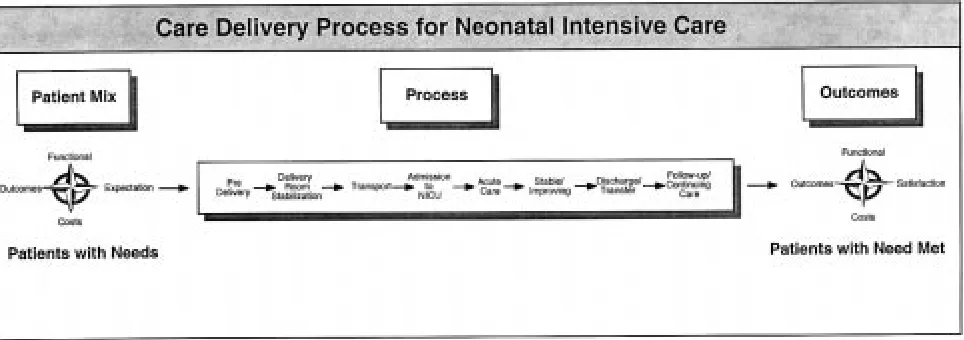
It is assumed that a basic continuum of care deliv-ery exists for the neonatal patient; this continuum can be described by distinct stages (Fig 3). The pro-cess begins before the infant is born, when parents anticipate the arrival of a “potentially” critical infant and envision uncertainty in events that may not be realized. Because this period has been identified as
Fig 1. The Clinical Value Compass illustrates the flow of the care delivery process and its results.
anxiety-provoking and important to parents,9it is the entry point for the neonatal continuum of care. The second step in the care delivery process is delivery room stabilization. From this point, care may flow directly into admission to the neonatal intensive care unit (NICU), or may involve a neonatal transport before NICU admission. The following stages in care delivery are defined as an acute/critical care phase, a stable-improving phase, a transfer-discharge phase, and a follow-up or continuing care phase. Fre-quently, there are feedback loops, when an infant may move back to a previous stage, such as moving back to an acute stage having once been stable and improving.
LITERATURE REVIEW
The care delivery process provides a framework to parents and families who receive health care services for thinking about what matters most and at what time. The literature review addresses the current state of knowledge of parent satisfaction with pedi-atric and neonatal health care services in the context of identifying concepts that matter within the frame-work of the care delivery process. The purpose of this review is to identify content areas of care to measure satisfaction and improve care delivery; it is not meant to reflect “bad” care delivery and dissat-isfied parents.
Patient satisfaction with adult health care ser-vices is not a new concept. There is an extensive body of adult patient satisfaction literature with many validated surveys available for measure-ment. In the pediatric and particularly the neonatal literature, there is scarce information that identi-fies important aspects of health care services to parents with only a handful of validated surveys available to measure parent satisfaction. A review of the literature was performed using the search engine OVID for the years 1988 to 1998. BIOSIS, CINAHL, HEALTHSTAR, and MEDLINE were searched using the following key terms: patient satisfaction, parent satisfaction, and consumer sat-isfaction. The search was cross-referenced with the terms pediatric and infant-newborn. Fifty-five
studies were identified to be relevant to parent satisfaction with pediatric and neonatal health care services. Criteria for relevance were those studies in which concepts of health care services were recognized as important to parents or in which parent satisfaction was measured within a hospital experience. These criteria were chosen because we believed they would identify aspects of care deliv-ery that mattered to parents within the continuum of care delivery. Of the 55 studies, only 11 identi-fied or measured aspects of neonatal health care services. The pediatric and neonatal literature is reported separately within the framework of the care delivery process. Because of the limited infor-mation available on parent satisfaction with neo-natal care, the pediatric literature is reported first, because it contains concepts similar to those in the neonatal literature.
Concepts of Parent Satisfaction: Pediatric
Table 1 summarizes aspects of pediatric health care reported by parents to matter while their child received services. Seventeen constructs of health care services were identified by parents as important enough to impact satisfaction reports (Table 1). These included access to provider, wait time, interpersonal relationships, support, chronic long-term care, infor-mation-giving, anticipatory guidance, competency of medical and nursing care, professional appearance, consistency of care, atmosphere, pain management, participation in decision-making, involvement in care, parent presence, and parent roles. Many of these aspects reflected similar concepts and, conse-quently, were combined into nine categories: access, caring, chronic care, communication, competency of care, continuity of care, environment, pain manage-ment, and participation in care.
The following constructs are identified in the liter-ature.
Access, Wait Time
tion with care. Of the 141 parents responding to the survey (89% response rate), 27% were less satisfied when they perceived that their child was not at-tended to quickly enough. The median wait time for less satisfied parents was twice that of the satisfied parent group (median, 85 minutes; range, 2 to 210 minutes; P5.001). A total of 125 parents of chroni-cally ill children reporting on 22 components of care ranked accessible and available health care services in the top two categories of a five-point importance scale.10
Caring
A sympathetic physician has been reported to be a significant contributor to parent satisfaction.11A total of 166 parents of children with disabilities were asked to recall the interaction when they were first told of their child’s disabilities. Factor analysis was performed to identify and correlate parent satisfac-tion with physician affect. Results demonstrated that a sympathetic physician was the most important pre-dictor of parent satisfaction (35.7% of variance; P , .001).
Chronic Long-term Care
Parents of chronically ill children ranked many other components of care in the top two categories, including continuity and consistency of care, diag-nosis, education and information, evaluation of chronic illness, parent involvement, and treatment of chronic illness.10Other studies have reported similar findings.12–14Some parents have reported greater sat-isfaction with having a technologically dependent child at home than hospitalized.13
Communication
Communication is the most reported domain of satisfaction with pediatric health care services.
Sev-eral dimensions of communication have been iden-tified, such as open and honest dialogue, sharing of factual information, providing complete informa-tion, and preparing parents for uncertainty. Parents want medical information communicated in a mean-ingful way that is interpretable to them.14 –16The way in which communication is delivered impacts parent perception and satisfaction of the interaction, a sym-pathetic approach being most favorable.11 Parents also want to be prepared for potential events and outcomes and, in some circumstances, parents prefer written guidelines when there is an expectation that their child will not survive.15,17,18
Competency
In a report of parents’ perceptions of children’s care while hospitalized for treatment of HIV/AIDS, parents stated they had greater satisfaction with the expertise of the pediatric specialist and less confi-dence in the care of the generalist at a nonspecialty hospital.17 Competence and appearance of emer-gency department care providers was found to be relevant in parent perceptions of care provided.19 Parents preferred a formal appearance over scrubs, although appearance did not necessarily equate with a less competent provider.
Continuity of Care
Consistency in care matters to parents of acute and chronically ill children. Parents of critically and chronically ill children report less satisfaction with health care when there is a lack in continuity of care providers.10,20
Environment
One article addressed the health care atmosphere and its effects on parent satisfaction.21 A small per-centage of parents (1%) were dissatisfied with the pediatric rheumatology ward where their child re-ceived care, whereas 35% were satisfied and 64% were very satisfied. Some parents commented on the desire for better facilities for the younger children (1 to 2 years of age) and for a quieter environment.
Pain Management
Pain management was reported as a problem af-fecting perceived quality of care by pediatric cancer patients and parents.20Pain during examination and induction of chemotherapy were sources of dissatis-faction for the pediatric patient. Survey results dem-onstrated that parents perceived their child’s pain as less than did their child and thus parents were more satisfied with pain management.
Participation
Parent involvement in care, particularly in the de-cision-making process over critical life decisions, was felt by 92% of parents of children with special needs to be best made through discussions with parents and physicians.15 Parent presence during anesthesia induction was evaluated with an experimental de-sign to determine the effect on parent anxiety and satisfaction.22Parents were randomly assigned to the experimental group (n541) and control group (n5 TABLE 1. Concepts of Caregiving Identified as Important to
Families Whose Children Received Pediatric Health Care Services
Aspects of Caregiving References
Access 10, 37–40
Accessibility of provider Wait time
Caring 11, 41, 42
Interpersonal relationships Support, emotional needs
Chronic care 10, 12, 43
Chronic long-term care
Communication 10–12, 17–20, 22, 23, 29, Information giving 38, 42, 44–50 Guidance, preparedness
Competency 19, 21, 23, 51–53
Medical care Nursing care
Professional appearance
Continuity 10, 22, 51
Consistency of care
Environment 23
Atmosphere
Pain management 22
Participation 17, 24, 25, 41, 54
34). No difference in satisfaction was found between parents who were present during induction and those who were not (P 5 .116). Others researchers report that parent participation in the care process is important to parent perceptions of care received.10,23
Procedures
There are a number of pediatric studies that in-clude parent reports of satisfaction with specific medical procedures, ranging from type of anesthe-sia for pain management to surgical procedures (Table 2).
Concepts of Parent Satisfaction: Neonatal
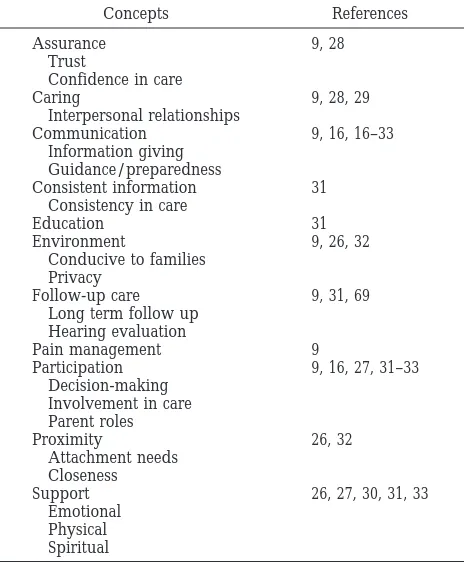
It is clear from the literature that parent satisfac-tion is a multidimensional concept. Many of the con-cepts represented in the pediatric satisfaction litera-ture are found consistently in the neonatal literalitera-ture. Eleven studies found in the literature explore 11 dimensions of neonatal care services and identify five neonatal parent satisfaction questionnaires (Ta-ble 3). The constructs analyzed include assurance, caring, communication, consistent information, edu-cation, environment, follow-up care, pain manage-ment, participation in care, proximity, and support. These dimensions were identified through explor-atory and focused interviews and through survey administration. Baas interviewed 36 married Cauca-sian parents older than 18 years of age to determine self-reported needs.24 Through content analysis, 13 categories were identified; those most frequently re-garded as important were information, person-related support, attachment/parenting, physical support, spiritual support, and staff support. Able-Boone and colleagues investigated parent percep-tions of the NICU experience via open-ended fo-cused interviews of health care providers and parents.25 Through an in-depth content analysis, a taxonomy of domains and related categories were developed that included communication, informa-tion, preparing parents, decision-making, parent and staff roles, support, interpersonal relationships, and the NICU environment. Perhaps the most poignant documentation of constructs of neonatal health care services from the parent’s perspective is found in the “Principles for Family-centered Neonatal Care.”9 This article was written and published by a group of concerned parents whose infants had received neo-natal intensive care services. The parents defined
communication, information sharing, decision-mak-ing, pain management, NICU environment, effica-cious treatments, parent and family involvement, fol-low-up care, and support as central themes requiring change.
The following constructs were identified in the literature.
Assurance
Trust was found to be an important aspect to par-ents and neonatal care providers who participated in item selection and reduction in the development of a parent satisfaction survey.26
Caring
The studies of Mitchell-DiCenso and colleagues identified a caring personality as an important do-main in parent satisfaction.26 Caring, such as a sym-pathetic approach, an opportunity to talk and be heard, and an effort to make parents feel better, has been reported by parents to be favorable approaches to care delivery that impact perceived satisfaction of care.11,27
Communication
Communication and information is one of the most reported content areas of neonatal care services. Parents whose infants were born with cleft lip and/or palate reported that they wanted more op-portunity to talk, show their feelings, have more information given to them, and more time for dis-cussion at the time they learned of their child’s di-agnosis. Parents wanted the physician to make them feel better and to be more caring and more confident. These parents wanted referrals to other parents for TABLE 2. Parent Satisfaction With Pediatric Procedures
Procedure References
Anesthesia, pain management 55–57
Antibiotic therapy 58, 59
Feeding practice 60
Gastroesophageal reflux 61
Gastrostomy button 62
Jejunosotomy 63
Physiotherapy 64
Surgical repair 65, 66
Clefts Short stay
Suturing lacerations 67
Sphincterotomy 68
TABLE 3. Concepts of Caregiving Identified as Important to Families Whose Infants Received Neonatal Health Care Services
Concepts References
Assurance 9, 28
Trust
Confidence in care
Caring 9, 28, 29
Interpersonal relationships
Communication 9, 16, 16–33
Information giving Guidance/preparedness
Consistent information 31
Consistency in care
Education 31
Environment 9, 26, 32
Conducive to families Privacy
Follow-up care 9, 31, 69
Long term follow up Hearing evaluation
Pain management 9
Participation 9, 16, 27, 31–33
Decision-making Involvement in care Parent roles
Proximity 26, 32
Attachment needs Closeness
Support 26, 27, 30, 31, 33
an opportunity to share with those who had had similar experiences. Similar findings are reported from parents whose infants were diagnosed with a severe disability.11A strong positive association was found between the nature and the timing of the interaction. Parents who were told at birth or early in their child’s life of the diagnosis were more satisfied than were parents told at later times (P , .05), and parents told in a sympathetic manner were more satisfied (P , .001). The need for honest and open communication is echoed in two reports.9,28
Consistent Information
Consistency in explanations regarding care was reported in a survey of 171 parents after their infant had received neonatal care.29 Of respondents, 9% described inconsistencies among staff on instructions regarding maternal involvement in care, and 26% reported inconsistencies about breastfeeding advice. Although these estimates are reported, there is no mention of these influencing parent satisfaction rat-ings.
Education
Teaching parents skills to prepare them for dis-charge has important implications for parents. Thirty-nine percent of parents perceived the teaching to be inadequate, whereas 94% felt they were ready for discharge and were satisfied overall with NICU care.29
Environment
The physical environment, such as needing a place to rest or having food available, has been reported by parents as high ratings of needs.24 Other parents reported needing a quiet place to rest, a waiting area, and overnight accommodations.30As a result of this knowledge, the first area targeted for quality im-provement was the NICU environment. One group of parents commented that the NICU environment was “bright, loud, intrusive, frequently painful, and unrelenting.”9These parents requested that neonatal intensive care environments be altered to protect the infants from unnecessary and invasive stimuli.
Follow-up Care
Many parents have described the need for compre-hensive follow-up services, partly because of the dif-ficulty of finding and coordinating such services and because of the numbers of infants lost to follow-up.9,25Other parents described feeling vulnerable af-ter discharge from the NICU because they did not receive home visit follow-up.29
Pain Management
Parents have reported dissatisfaction with their children’s unrelieved pain and would like to see ongoing attention paid to discussion and consider-ation of pain management.9
Participation
Many researchers have identified parental partici-pation in care and decision-making as important el-ements of parent satisfaction.9,14,25,31 Parents want to
have the ability to make treatment decisions and are frequently not given the opportunity to do so.9,14,25 Parents report that “in medical situations involving very high mortality and morbidity, great suffering, and/or significant medical controversy, fully in-formed parents should have the right to make deci-sions regarding aggressive treatment for their in-fants.”9 Satisfaction was found to be significantly higher in parents who were involved in the decision-making process in the management of their infant.14
Proximity
Parents have a need to be close to their infant while the infant is hospitalized. This concept was identified in two parent satisfaction surveys.24,30
Support
Emotional, physical, and spiritual support have been described by researchers to contribute to parent satisfaction of care.24,25,28,30,31 Parents have reported the need to express their feelings,25 to feel accepted and cared for,30to have a chaplain available,24,30and to be able to talk with and express feelings to nurs-es.24,30,31
NEONATAL PARENT SATISFACTION QUESTIONNAIRES
The five neonatal parent satisfaction question-naires identified are critically reviewed for their abil-ity to measure parent satisfaction with neonatal care within the framework of the care delivery process. The dimensions critiqued include the survey’s pur-pose, content, items and response categories, reliabil-ity, and validity. Two of the questionnaires were found in the literature review: the Parent Feedback Questionnaire30 and the Neonatal Index of Parent Satisfaction (NIPS).26 Two surveys were located through networking: the Children’s Health Care– Minneapolis Survey of Inpatient Parent Satisfaction and the NICU Picker Survey.4The fifth survey, the NICU Parent Satisfaction Form (NICU–PSF), devel-oped by one of the authors (J.M.C.) is reported here. No other survey measuring parent satisfaction with neonatal intensive care could be located through lit-erature review.
survey’s use. Content validity is determined by ex-pert and lay groups reporting on comprehensiveness of the survey. Construct validity refers to assessment of the patterns of relationships between the measure being validated and other variables related and un-related to it. The measure is said to have construct validity if it shows a direction and magnitude of relationship that was hypothesized from theory, ev-idenced by correlation coefficients. Criterion validity refers to the extent to which a measure or survey corresponds to an accurate or previously validated measure or survey of the same concept(s), such as a gold standard.
The Parent Feedback Questionnaire30
Aim
The Parent Feedback Questionnaire was devel-oped to obtain data about parents’ perceptions of specific aspects of their hospital experience. The sur-vey is used to monitor neonatal care and to target areas for improvement. The desired outcome is to have parent responses reflect that needs have been met and that they feel satisfied with the hospital experience.
Conceptual Basis
The survey measures five domains: informational needs, parenting/attachment needs, emotional/spir-itual needs, environmental needs, and overall satis-faction. Content was developed through literature review, findings from an expert panel of neonatal staff, and results of parent interview. The question-naire reads at the 6th-grade level, has been devel-oped into a computerized scannable form, and is translated into Spanish.
Description
A copy of the survey was not made available in the published report; therefore, instructions and total number of survey items are unknown. The end of the survey allows for narrative comments. The item re-sponse category is a five-point Likert scale, a fre-quency report ranging from never to always and not applicable. Items are worded so that the desired outcome is reflected in a positive response. Examples of two items of informational needs are 1) “I was told the truth about my baby’s condition,” and 2) “When my baby’s condition changed, I was told as soon as possible.”
Reliability
No testing was performed on the reliability of the Parent Feedback Questionnaire. The authors com-ment that the questionnaire was developed for the purposes of quality improvement and “the methods used in developing the survey were not intended to represent a research study.”30
Validity
Content validity was evaluated by literature re-view, findings from an expert panel of neonatal staff, and results of a convenience sample of parents. The Parent Feedback Questionnaire was revised and
written to a 6th-grade reading level and piloted with a convenience sample of 26 parents. Twenty-three parents reported that the items were important to them. No analyses were performed on the validity of the Spanish translation; no additional validity anal-yses were performed.
Commentary
The Parent Feedback Questionnaire was devel-oped to evaluate care and target areas for improve-ment. The concepts measured in the questionnaire are consistent with those found in the literature and reported by others, thus, it has established content validity. The questionnaire is limited in providing information about parent rating of care delivery. The frequency response scale provides information re-garding how often events occur identifying areas to target for quality improvement. What the response scale lacks is parent perception of importance (opin-ion rating) of the event. No analyses were performed to determine whether the survey is a reliable and valid measure of parent satisfaction. The Parent Feedback Questionnaire is completed at the time of discharge or may be taken home and mailed back. It is unknown if the survey is available.
NIPS26
Aim
The NIPS was developed to distinguish between parents who are satisfied and parents who are dis-satisfied with medical neonatal intensive care.
Conceptual Basis
The authors believed that because it is the parents’ perception that determines satisfaction, then parents should define the content of the questionnaire items. Steps were performed to develop the content of the NIPS. The initial phase began with survey item gen-eration developed through literature review and ex-pert opinion of 125 parents and 63 neonatal and pediatric clinicians. This was followed by item re-duction in which 60 parents were interviewed and instructed to rate the 154 items on a five-point scale from least important to most important. Items then were rated for importance and frequency of occur-rence. Those items identified as positive, most im-portant, and not frequently occurring; and negative, most important, and frequently occurring were in-cluded in the NIPS. Through an interview process, the survey then was pretested with 10 parents to ensure clarity and ease of administration. In its final form, the questionnaire measures three domains of parent satisfaction: confidence in quality of care, communication, and attitude or caring/personality. The questionnaire is worded in a manner to “encour-age otherwise reluctant respondents to express dis-satisfaction with health care.”26
Description
with.” The items included were those identified most frequently as sources of dissatisfaction, and those that were rated most important to parents. The item response scale is a seven-point frequency report, ranging from “none of the time” to “all the time.” The questionnaire is administered at time of dis-charge, and no specific information was given on the process of administration. It was reported that ad-ministration took between 15 and 30 minutes. Par-ents receive a telephone call once they were home to respond to three questions that pertain to the dis-charge process.
Examples of a few items are Q2) How often did these caregivers present your baby’s condition in a way which was scary or frightening?; Q10) How often did the caregivers fail to inform you about tests or Radiograph results?; and Q20) How satisfied were you with how often the caregivers offered to meet with you in private?
Responses to the items are scored on the seven-point scale, summed, and then interpreted from least satisfied (score of 27) to most satisfied (score of 189).
Reliability
Reliability testing was evaluated by administering the survey twice to 47 parents within a 1-week pe-riod. Three questions were left out of the reliability testing; these were the telephone-administered ques-tions relating to the discharge process. The mean age of parents surveyed was 29.5 years; 77% were women, 68% were married, and 47% completed post-secondary education. Ninety-one percent of their in-fants had been hospitalized 2 weeks or less. The intraclass correlation between the test–retest admin-istration was 0.71. Although the survey was intended to measure three domains of satisfaction, correlations between the scales (R 5 0.72) and with the instru-ment (R 5 0.87) were high. The authors concluded that the instrument should be used as a unidimen-sional measure of satisfaction.
Validity
Content validity was established through litera-ture review, findings from expert clinical and parent panels, and results of pilot testing. The dimensions identified— communication, caring, and confidence/ quality of care—are consistent with those reported in the literature. Criterion validity cannot be estab-lished, because there is no gold standard for compar-ative purposes. Construct validity, in this case, pre-dictive validity, was tested by determining how well the instrument would predict parent satisfaction with parent rating of global satisfaction and staff perception of parent rating of global satisfaction. Ad-ditional testing for construct validity was conducted by testing the hypothesis that parents who identified errors in medical care would have lower NIPS scores. The NIPS was administered to 832 parents with a mean age of 31 years. Sixty-six percent were women, 81% were married, and 51% had completed postsec-ondary education. Ninety-one percent had infants hospitalized for,2 weeks. The NIPS had a moderate correlation with parent’s global rating of satisfaction (R 5 0.61), and weak correlations with caregiver’s
perception of mother’s (R5 0.15) and father’s satis-faction (R50.16). The NIPS had a weak correlation with the parent’s perception of the infant’s health status (R 5 0.15). Parents who reported medical er-rors had a mean NIPS score of 127 (standard devia-tion [SD] 5 24.8), compared with parents who did not report errors (mean NIPS score, 141; SD 526.3;
P, .001).
Commentary
The NIPS was tested rigorously to identify con-structs of parent satisfaction with neonatal care. The instrument established content validity with these constructs, but it is not comprehensive in measuring the scope of parent satisfaction. The response scale measures frequency of events and does not measure parent reporting or opinion of care. This type of response scale is useful for targeting quality im-provement efforts, but provides little information about parent judgments of care. The instrument was tested for reliability and validity in a population of married, educated women of approximately 30 years of age, and can be considered reliable for this popu-lation. Reliability was moderate in test–retest (0.71), but intraclass correlation values tend to be lower.32 The test–retest time of 1 week is beneficial, although recall could be a factor in response. Three items concerning the discharge process were not tested in the test–retest process. Reliability estimates of how well items correlated with their scales were not given, yet it was reported that scales were highly correlated with each other. Thus, the instrument does not have discriminant validity. The instrument has some degree of construct validity supported by the predictive capabilities with global ratings of sat-isfaction. The NIPS correlated moderately with par-ent ratings of global satisfaction, and correlated weakly with caregiver perception of parent satisfac-tion. Items in the NIPS have been worded purposely with a negative tone to measure the “dissatisfied” range of the spectrum. The similarities in the nega-tive wording of the items introduces a response bi-as,33 although this was intended. It is important to recognize that measurement of parent satisfaction must include the entire spectrum of parent satisfac-tion from “dissatisfied” to “satisfied” parents to tar-get efforts at quality improvement and to evaluate caregiving practices. The NIPS may be available for use; inquiries should be directed to the author Mitchell-DiCenso.26
Inpatient Parent Satisfaction, Children’s Health Care Minneapolis
Aim
The Inpatient Parent Satisfaction Questionnaire is a standardized instrument used for all inpatient pe-diatric and neonatal patients.
Conceptual Basis
participa-tion in care, and the hospital environment. No pub-lished data were available to critique the question-naire fully.
Description
The instrument is a 57-item form that includes both generic and specific measures of satisfaction with multiple skip patterns. Item response categories are open-ended, categoric, dichotomous, evaluative, and endorsement scales. Examples of evaluative rat-ing scales include a three-point scale rangrat-ing from “important” to “not at all important,” and a four-point “very satisfied to very dissatisfied” rating scale. An example of an endorsement scale is a four-point “strongly agree to strongly disagree” scale. The survey appears to be interviewer-administered. The timing of administration is unknown. Two open-ended items allow for parents to report on their recommendation of changes for the neonatal or pe-diatric unit and for the hospital. Examples of a few items are Q12) How satisfied are you with Children’s Health Care–Minneapolis’s entire staff showing con-cern for your needs? Would you say you are very satisfied, satisfied, dissatisfied, or very dissatisfied? A) The entire staff showing concern for your needs? B) The overall communication of the staff? C) The entire staff viewed your child as a unique person with his/her own unique needs?
Reliability
No data were made available or could be found to establish reliability of the Inpatient Parent Satisfac-tion QuesSatisfac-tionnaire.
Validity
Content validity can be established by the consis-tency of concepts represented in the instrument with those in the literature for both pediatric and neonatal parents.
Commentary
The Inpatient Parent Satisfaction Questionnaire is a standardized instrument developed for the specific purpose of measuring care delivered at one medical center. The survey measures relevant satisfaction concepts of parents with hospitalized children and neonates. The instrument is administered by an in-terviewer, which increases response rates but can introduce potential bias unless the interviewer ad-ministers the form in a standard manner. The form measures expectations of parents and whether their needs were met through rating and reporting scales. It is unknown whether the instrument is available for use.
Picker Institute Inpatient NICU4
Aim
The Picker Institute Inpatient NICU was devel-oped to measure parent satisfaction with the NICU experience.
Conceptual Basis
The instrument measures the NICU experience be-ginning before the infant’s admission to the NICU, the admission process, care of the infant after birth, the discharge process, and follow-up care. The in-strument also measures access to care, respect for patients’ values, coordination of care, information and education, involvement of family and friends, physical comfort, emotional support, transition and continuity of care, and overall satisfaction. No pub-lished data were available regarding the Picker In-patient NICU survey. Some information about the Picker Institute and their survey instruments is avail-able through their Web site.
Description
The Picker NICU survey is an 81-item instrument with open- and close-ended questions and multiple skip patterns. The instructions state to circle the number that best describes experiences during the child’s recent hospital stay. Item response categories include categoric, dichotomous, evaluative rating, and frequency reporting scales. An example of a four-point frequency response scale ranged from “never” to “always.” A three-point response scale ranged from “yes, always” to “no.” An example of a five-point evaluative rating scale ranged from “ex-cellent” to poor.“ An open-ended question asks par-ents to report their suggested changes to the NICU. Dimensions measured on the survey are outlined in bold and include ”Admission to the NICU,“ ”Doc-tors,“ ”Nurses,“ ”NICU staff,“ ”Environment and Visiting policy,“ ”Information and participation in your infant’s care,“ ”Leaving the NICU,“ ”Overall impression,“ and ”Your background.“ Examples of items are Q3) Before your infant’s birth, did your discussions with the NICU staff help you to know what to expect after the birth? Q21) Sometimes in the hospital one doctor or nurse will say one thing and another will say something quite different. How of-ten did this happen during your infant’s stay in the NICU? Q54) Did someone from the NICU teach you what you needed to know to care for your infant at home?
Reliability
No published data were found or made available regarding the reliability of this instrument.
Validity
Content validity can be established by the consis-tency of the dimensions represented in the instru-ment with those in the literature. No published data were found or made available regarding validity testing for this instrument.
Commentary
weakness of the instrument is found in the response categories. Many of the item response categories are frequency, which limit interpretation of results. Fre-quency reporting does not provide information about parent judgments of care, but it is useful for targeting quality improvement efforts. Another lim-itation with this instrument is the lack of reported or accessible data on reliability and validity of the instrument. This instrument is available for use; inquiries should be directed to the Picker Institute at their Web address (http://www.picker.org/ patient/research.html#survey).
NICU–PSF (J.M.C.) Aim
The NICU–PSF was developed to make available a comprehensive neonatal parent satisfaction ques-tionnaire that measures parent perceptions of care, targets areas for improvement, and evaluates the quality of care delivered to meet and exceed the needs and expectations of parents and families who receive neonatal care services.
Conceptual Basis
The NICU–PSF was developed from results of lit-erature review, parent interviews, and parent and neonatal staff reports. A review of adult and pediat-ric literature was performed to identify recognized concepts of satisfaction. This step involved content analysis of parent interviews conducted at the time of discharge. Fifty-four parents who were surveyed responded to the open-ended question, “What one thing would you change in the intensive care nurs-ery?” A total of 100 statements made by parents were analyzed for content, categorized into dimensions of care, and identified as either positive or negative responses. Content analysis was performed sepa-rately by three researchers, and then combined. Three statements required consensus regarding the construct they represented. Seven dimensions of care were identified, including general satisfaction, assur-ance, continuity, information, proximity, communi-cation, and the NICU. Of responses, 43% were posi-tive, and 57% were negative. The next step included obtaining perceptions of care through a panel group. A 2-day panel meeting of 14 neonatal staff (neona-tologists, an ethicist, neonatal nurse practitioners, nurses, and a social worker) and 11 parents was held for an ongoing NICU project. Although the meeting was not held expressly for the identification of con-tent for survey development, core aspects of the neo-natal care delivery process were identified. Dimen-sions of care that arose were anticipation and preparedness, caring, communication, decision-mak-ing, environment, information, shared experience, support, and trust. Shared experience was defined as a need to find meaning out of a painful human experience and to have someone to share it with. A preliminary instrument was developed, sent to neo-natal staff for expert opinion, revised, and then pre-tested. The pretest involved mailing the self-admin-istered instrument to 10 selected parents whose infant had been discharged from the intensive care
nursery within 4 weeks. All the parents responded and completed all the questionnaire items. The par-ents were asked to report on the content of the ques-tions, the readability of the instrument, suggested changes, and their perception of the best time for administration. All reported that the survey ad-dressed the important issues and that the form was readable, but that the format was hard to follow. Most of the parents commented that the NICU expe-rience required some time to process, and they would prefer to be surveyed 4 to 8 weeks after dis-charge.
Description
The NICU–PSF is a 62-item instrument with closed- and open-ended questions. The concepts in-clude general satisfaction, continuity, communica-tion, informacommunica-tion, preparedness, participation in care, decision-making, support, spiritual needs, proximity, and follow-up care. The final questions ask about delights and disappointments with the hospital experience, suggestions for improvements, and demographics. Instructions at the top of the form ask parents to answer every question by marking the answer as indicated. If a parent is unsure of an answer, they are to mark the best answer possible. Item response categories are rating and reporting scales. An example of rating scales is the five-point scale ranging from “extremely satisfied” to “not at all satisfied” and a five-point rating scale ranging from “excellent” to “poor.” Examples of frequency reports include a five-point scale ranging from “all the time” to “none of the time” and a four-point scale ranging from “prepared” to “not nearly prepared.” Other response scales are dichotomous and categoric re-sponses. The instrument is self-administered, mailed 3 to 4 weeks after discharge or transfer. Follow-up telephone calls are placed 1 to 2 weeks after the initial mailing, followed by a second telephone call and a second mailing 1 week later.
Reliability
units should be approximately equivalent at 1.0. The responses chosen for the items were mostly favorable for a skewed distribution. The means and SD units for items within a scale were approximately equal, with the exception of a few problematic questions. The internal consistency reliability estimates for the scales met the minimum standard for group compar-isons (ric$0.7) for five of the nine scales. Reliability estimates for continuity (ric50.67), decision-making (ric50.66), support (ric50.65), and proximity (ric5 0.52) were below recommended standards. Certain items within scales were problematic, such as one continuity question with an item-scale correlation of 0.26. Item internal consistency is considered substan-tial if the item correlates $0.40 after correcting for item-scale overlap with its hypothesized scale.34 Analyses generally supported the hypothesized item-to-scale groupings with some problematic ques-tions. The instrument was not evaluated for test– retest reliability.
Validity
Content validity was established through litera-ture review, parent open-ended interviews, parent panel, neonatal staff review, and pilot pretesting. Discriminant validity was tested by determining the correlations of the items to their hypothesizes scales and comparing the correlations to other constructs. The decision-making scale was the only scale that achieved 100% scaling success. Continuity of care correlated highly with overall satisfaction and had a high degree of overlap. Discriminant validity was not achieved with the other scales. Criterion validity was not evaluated because of the lack of a gold standard instrument for comparison.
Commentary
The content measured in the instrument identified through literature review, parent interviews, and panel meetings was consistent with the content de-scribed by others. The instrument was developed and pilot-tested on a small sample of predominantly married women with a lower than desired response rate of 60%. Results would have been stronger with a larger sample size, greater response rate, and more heterogeneous population. The instrument takes ad-vantage of both rating and reporting scales of satis-faction, but the number of different response scales may impact ease and readability of the survey.
Meth-ods typically used to evaluate reliability include test– retest and estimating internal consistency. Most of the scales in the instrument were internally consis-tent. No test–retest was performed on the instru-ment. The survey had discriminate validity prob-lems, with some items having higher correlations with other scales. Criterion validity was not estab-lished because of a lack of a gold standard for com-parison. The NICU–PSF is in preliminary stages of development. Improvements can be made in internal consistency by dropping problematic questions. Ad-ditional analyses need to be performed on a large sample to replicate findings. The NICU–PSF is avail-able for use; inquiries should be directed to the au-thor J. M. Conner at the address listed in this publi-cation.
THE CARE DELIVERY PROCESS
Having identified aspects of neonatal intensive care that are pertinent to parents, it is important to place these dimensions of satisfaction within the framework of the neonatal care delivery process. Using the care delivery process allows providers to recognize “what matters where,” to target improve-ment efforts and to judge the quality of care. It is likely that most, if not all, of the identified constructs are significant to parents throughout the continuum of the care delivery process; however, there may be some concepts that have a greater significance to parents at specific points along the continuum of care. From the studies reviewed, a few constructs identified “where” in the care process parents per-ceived they were important (Table 4; Fig 3). None of the studies reviewed addressed constructs of parent satisfaction in the predelivery process. At the time of delivery or shortly thereafter, communication and information were identified as significant to some parents.11 During the acute/critical phase of care, decision-making was recognized as significant.9 Dur-ing the discharge and follow-up care phases, educa-tion and teaching were highlighted as substantial aspects of care for parents.29
It is helpful to conceptualize the parent satisfaction questionnaires within the same framework of the care delivery process (Table 5). The Parent Feedback Questionnaire measured most concepts occurring along the continuum of care. Two questions fall spe-cifically within the acute/critical phase and the dis-charge phase. The NIPS measures perceptions of care
TABLE 4. Dimensions of Neonatal Care Measured Within the Care Delivery Process
Dimension of Neonatal Care
Predelivery Delivery/ Stabilize
Admission Transport Acute/ Critical
Stable/ Improving
Discharge/ Transfer
Follow-up Continuing Care
Assurance X X
Caring X X
Communication X X
Consistent information X X
Education X X
Environment X X
Pain management X
Participation X X X
Proximity X X
Support
across the continuum, with a few measures of the discharge process. Most of the questions on the In-patient Parent Satisfaction Questionnaire measure care across the continuum. There are questions that measure care during the admission process, the acute/critical phase, and the discharge process. The Picker Inpatient NICU Survey measures care along the continuum and specific points: the predelivery phase, admission, inpatient care, discharge, and fol-low-up care. Many of the questions on the NICU– PSF measure care along the care delivery process. Two questions measure the discharge process, and three questions measure follow-up care.
RECOMMENDATIONS
It has been stated that there is a lack of compre-hensive information to understand parental needs during a stressful period with a critically ill infant.24 This has not been found to be the case. Parent per-ceptions of neonatal care are consistent with parent perceptions of pediatric care, and parents seem to be reporting their needs and expectations for their health care services. The following concepts of par-ent satisfaction with neonatal care have been idpar-enti- identi-fied as important, including accessibility and timeli-ness of care, assurance, caring, chronic long-term care, communication, competency, continuity, deci-sion-making, follow-up care, information, pain man-agement, participation in care, and support. What is lacking in this evidence is the knowledge of “where” during the care delivery process these aspects of care are most important to parents. Most of these dimen-sions of care are important across the care contin-uum, and a few make a difference in specific phases of care. As health care providers, we need to know what the important aspects of health care delivery are as an infant and family moves through the con-tinuum of care. In the first phase of predelivery, one might assume that parents want communication and information most to help prepare for the uncertain-ties ahead. This may not be the case; parents may only desire the knowledge that their infant will re-ceive immediate and competent attention. Given the lack of knowledge regarding parent’s expectations and needs at each point in the care delivery process, we make the following recommendations for future studies.
“Value” of Parent Satisfaction Measurement
Perhaps one of the most important recommenda-tions is to recognize the value in measuring parent
satisfaction with neonatal intensive care services. As providers of health care in a market-driven environ-ment, we must appreciate parents as the consumers of our services and maintain a strong interest in meeting and exceeding their needs and expectations. Patient satisfaction is rapidly becoming a primary measure of the quality of health care plans. Consum-ers are increasingly judging and choosing their health care plans by patient satisfaction reports. Health care providers are using patient satisfaction reports as a “report card,” providing a marker for improving and tracking care.
The Care Delivery Process
We believe that operating within a care delivery process is the right framework for measuring parent satisfaction. We recognize that our “basic” view of the neonatal care delivery process (Fig 3) is not spe-cific and serves only as a general descriptive model of the phases of neonatal care. Efforts need to be devoted to mapping out the important components of parent satisfaction within each phase of the care process, providing a foundation for additional re-search. Once the conceptual base within the frame-work is established, a parent satisfaction instrument can be developed. The effort will require qualitative and quantitative research approaches. The remaining sections outline some of the research considerations.
Population
Additional research in understanding what mat-ters most and when to parents going through the NICU experience must account for the heteroge-neous population. Parents vary in age, gender, socio-economic status, and marital status, and bring with them cultural and familial beliefs. All these charac-teristics will influence their expectations and percep-tions of neonatal care. Representative sampling is crucial to understanding parent satisfaction for all parents.
Content Development
Building on the current conceptual dimensions of parent satisfaction should begin with additional de-scriptive studies. These efforts can be focused on strengthening the current understanding of these di-mensions of care and determine where along the care delivery process they matter. Ideally, a collaborative approach would be taken, with numerous sites per-forming standardized parent interviews with the goal of describing parent perceptions of care delivery TABLE 5. Parent Satisfaction Surveys and Where Satisfaction is Measured Along the Care-Delivery Process
Predelivery Delivery/ Stabilize
Admission Transport Acute/ Critical
Stable/ Improving
Discharge/ Transfer
Follow-up Continuing
Care
Parent feedback X O X
Neonatal index of parent satisfaction O O X
Inpatient parent satisfaction X X X
Picker neonatal X X O O X X
Neonatal intensive care unit parent satisfaction
O O X X
during each phase of the care process. For example, during the interview process, parents could be que-ried about the dimensions of care, when they matter, and how they rank them for importance. This ap-proach has the advantage of a large heterogeneous sampling, relatively quick data collection, and attain-ment of conceptual knowledge for each phase of care. The disadvantage lies in the expense of inter-viewer training and administration. Other ap-proaches might include focus groups as well as ex-pert parent and neonatal staff panel reporting. Convening a focus group or an expert panel offers the advantages of interested groups meeting and agreeing on the issues, but there will be expenses to consider and the informants may not be representa-tive.
Questionnaire Development
Survey development is a complex process that re-quires considerable effort to create a reliable and valid instrument. The current health care environ-ment is encouraging measureenviron-ment of satisfaction as a means of evaluating the quality of the health care services delivered. With neonatal health care, it has been learned that there are few instruments available to measure parent satisfaction, all which have limi-tations. Although we do not recommend widespread adoption of these instruments, NICUs need to begin to measure parent satisfaction of the care provided. This can be achieved with selective use of the instru-ments currently available. An advantage to this ap-proach would be the enhanced understanding of parent needs and expectations and improvement in the instruments. However, this approach is not prac-tical for many medical centers, and other approaches should be considered. The NICU must first establish the purpose for measurement; will it be used to measure parent satisfaction during the entire hospi-talization, or will it be used to measure satisfaction with a specific component of health care services (such as the discharge process)? Having established a purpose, some centers might find a simple and prac-tical solution to measuring parent satisfaction by asking parents general open-ended questions about the care or general overall satisfaction questions such as “How satisfied were you with your hospital care?”
Until parent satisfaction questionnaires are docu-mented to be comprehensive, valid, and reliable, these alternative approaches might seem useful. The goal is to develop a comprehensive survey instru-ment that includes the phases of the care delivery process. We have outlined some important points to consider for designing a survey instrument.
The survey instrument should:
1. Be inexpensive, easy to administer in practice, and place little burden on parents.
2. Be standardized in format, language, mode of administration, data-collection methods, analy-sis, and reporting.
3. Be internally consistent.
4. Have established content and construct validity.
5. Measure the full range of distribution in parent reporting.
6. Use a combination of rating and reporting re-sponse categories.
7. Be analyzed in a standardized manner that al-lows results to be interpretable for comparative and evaluative purposes.
8. Be reported in a manner that is meaningful and interpretable.
9. Be reported in a manner that targets quality im-provement efforts.
10. Be reported in a manner that facilitates evalua-tive comparison.
11. Be reported in the public domain (for parents and providers).
CONCLUSION
There is a growing interest in patient satisfaction as an outcome of care and as an indicator of the quality of care. Interest in parent satisfaction with neonatal care is not new, yet the field of parent satisfaction research is limited. Substantial studies need to be conducted to build on the current concep-tual knowledge base and to define the constructs within the care delivery process. Few parent satisfac-tion quessatisfac-tionnaires are available, none of which are comprehensive in their measurement of parent sat-isfaction. These instruments have not been tested and validated fully; furthermore, they measure par-ent satisfaction in isolation of the care- delivery pro-cess. The goal for future studies is to determine what parents’ needs and expectations are at each stage in the neonatal continuum of care by developing a com-prehensive, valid, and reliable parent satisfaction questionnaire within the context of the health care delivery process.
ACKNOWLEDGMENTS
Special thanks to Coua Early and Tammy L. Weiner for prep-aration of this manuscript.
REFERENCES
1. Anonymous. How good is your health plan? Consumer Reports. 1996; August:28 – 42
2. Minnesota HDI. 1997 Clinic Survey Pilot Project. State of Minnesota: Minnesota Health Data Institute Performance Measurement Program; 1997
3. Ware JE. Personal Communication. 1998
4. Picker I. Through the Patient’s Eyes. Patient Centered Products. http:// www. Picker. Org/patient/survey.html; 1998
5. RAND C. Consumer Assessment of Health Plans Study (CAHPS). http:// www.rand.org/organization/health/highlights.html#cahps; 1998 6. AHCPR. AHCPR announces faculty of a new initiative to assist
consumers in selecting high-quality health plans. http:// www.cmhcsys.com/articles/manage34.htm.: 1996
7. Nelson EC, Batalden PB, Ryer J, eds. 70 Ways to Target Clinical Care and Costs. Oakbrook Terrace, IL: Joint Commission on Accreditation of Healthcare Organizations; 1998
8. Nelson EC, Splaine ME, Batalden PB, Plume SK. Measuring clinical outcomes at the front line. In: Caldwell C, ed. The Handbook for Managing Change in Health Care. Milwaukee, WI: ASQ Quality Press; 1998 9. Harrison H. The principles for family-centered neonatal care. Pediatrics.
1993;92:643– 650
10. Baine S, Rosenbaum P, King S. Chronic childhood illnesses: what as-pects of caregiving do parents value? Child Care Health Dev. 1995;21: 5291–5304
12. Elder JH. In-home communication intervention training for parents of multiply handicapped children. Scholarly Inquiry Nurs Prac. 1995;9:71–92 13. Fields AI, Coble DH, Pollack MM, Kaufman J. Outcome of home care
for technology-dependent children: success of an independent, commu-nity-based case management model. Pediatr Pulmonol. 1991;11:310 –317 14. Charney EB. Parental attitudes toward management of newborns with
myelomeningocele. Dev Med Child Neurol. 1990;32:14 –19
15. Wharton RH, Levine KR, Buka S, Emanuel L. Advance care planning for children with special health care needs: a survey of parental attitudes. Pediatrics. 1996;97:682– 687
16. Worchel FF, Prevatt BC, Miner J, Allen M, Wagner L, Nation P. Pedia-trician’s communication style: relationship to parent’s perceptions and behaviors. J Pediatr Psychol. 1995;20:633– 644
17. Barrett G, Victor CR. Services for children with HIV/AIDS: the views of parents. Professional Care of Mother and Child. 1995;5:107–112 18. Zenni EA, Robinson TN. Effects of structured encounter forms on pediatric
house staff knowledge, parent satisfaction, and quality of care: a random-ized, controlled trial. Arch Pediatr Adolesc Med. 1996;150:975–980 19. Gonzalez Del Rey JA, Paul RI. Preferences of parents for pediatric
emergency physicians’ attire. Pediatr Emerg Care. 1995;11:361–364 20. Kvist SB, Rajantie J, Kvist M, Siimes MA. Perceptions of problematic
events and quality of care among patients and parents after successful therapy of the child’s malignant disease. Soc Sci Med. 1991;33:249 –256 21. Vandvik IH, Hoyeraal HM, Fagertun H. The first stay in a pediatric rheumatology ward. Associations between parent satisfaction and dis-ease and psychosocial factors. Scand J Rheumatol. 1990;19:216 –222 22. Blesch P, Fisher ML. The impact of parental presence on parental
anxiety and satisfaction. AORN J. 1996;63:761–768
23. Simmeonsson RJ, Edmondson R, Smith T, Carnahan S, Bucy JE. Family involvement in multidisciplinary team evaluation: professional and parent perspectives. Child Care Health Dev. 1995;21:199 –214
24. Baas LS. What do parents need when their infant is a patient in the NICU? Neonatal Network. 1991;10:25–33
25. Able-Boone H, Dokecki PR, Smith MS. Parent and health care provider communication and decision making in the intensive care nursery. Child Health Care. 1989;18:133–141
26. Mitchell-Dicenso A, Guyatt G, Paes B, et al. A new measure of parent satisfaction with medical care provided in the neonatal intensive care unit. J Clin Epidemiol. 1996;49:313–318
27. Strauss RP, Sharp MC, Lorch SC, Kachalia B. Physicians and the com-munication of “bad news”: parent experiences of being informed of their child’s cleft lip and/or palate. Pediatrics. 1995;96:82– 89 28. Jacano J, Hicks G, Antonioni C, O’Brien C, Rasi M. Comparison of
perceived needs of family members between registered nurses and family members of critically ill patients in intensive care and neonatal intensive care units. Heart Lung. 1990;19:72–78
29. Stewart A. Carers or outsiders? The role of parents on a neonatal unit. Midwives Chronicle Nurs Notes. 1991;April:118 –124
30. Blackington SM, McLauchlan T. Continuous quality improvement in the neonatal intensive care unit: evaluating parent satisfaction. J Nurs Care Qual. 1995;9:78 – 85
31. Kenner C. Caring for the NICU parent. J Perinatal Neonatal Nurs. 1990; 4:78 – 87
32. McDowell I, Newell C. Measuring Health: A Guide to Rating Scales and Questionnaires. 2nd ed. New York, NY: Oxford University Press; 1996 33. Ware JEJ. Effects of acquiescent response set on patient satisfaction
ratings. Med Care. 1978;16:327–336
34. Ware JE. Multi Trait Analysis Program-Revised (MAP-R), Users Manual. Bos-ton, MA: The Health Assessment Laboratory, The Health Institute; 1998 35. Ashenberg MD, Lambert SA, Maier NP, McAliley LG. Easing the wait:
development of a pager program for families. Pediatr Nurs. 1996;22: 103–107
36. Brown K, Sheehan E, Sawyer M, Raftos J, Smyth V. Parent satisfaction with services in an emergency department located at a paediatric teach-ing hospital. J Pediatr Child Health. 1995;31:435– 439
37. Poole SR, Schmitt BD, Carruth T, Peterson-Smith A, Slusarski M. After-hours telephone coverage: the application of an area-wide telephone triage and advice system for pediatric practices. Pediatrics. 1993;92:670–679 38. Coulter ML, Scheurle J, Laude M, Habal MB. Psychological aspects of
parents of children with craniofacial anomalies. J Craniofacial Surg. 1991;2:9 –17
39. Stewart ES. Family-centered care for the bereaved. Pediatr Nurs. 1995; 21:181–184, 187
40. Sloper P. Needs and responses of parents following the diagnosis of
childhood cancer. Child Care Health Dev. 1996;22:187–202
41. Cullen JC, MacLeod JA, Williams PD, Williams AR. Coping, satisfac-tion, and the life cycle in families with mentally retarded persons. Issues Comprehensive Pediatr Nurs. 1991;14:193–207
42. Bartlett EE, Grayson M, Barker R, Levine DM, Golden A, Libber S. The effects of physician communications skills on patient satisfaction; recall, and adherence. J Chronic Dis. 1984;37:755–764
43. Bonheur BB. Measuring satisfaction with patient education. A hospital-wide program evaluation. J Nurs Staff Dev. 1995;11:35– 40
44. Clarkson JE, Merrick PL. Paediatricians’ reports to general practitioners: should parents receive copies? J Pediatr Child Health. 1993;29:451– 454 45. Lewis CC, Pantell RH, Sharp L. Increasing patient knowledge,
satisfac-tion, and involvement: randomized trial of a communication interven-tion. Pediatrics. 1991;88:351–358
46. Snowdon AW, Kane DJ. Parental needs following the discharge of a hospitalized child. Pediatr Nurs. 1995;21:425– 428
47. Finney JW, Brophy CJ, Friman PC, Golden AS, Richman GS, Ross AF. Promoting parent–provider interaction during young children’s health-supervision. J Applied Behav Anal. 1990;23:207–213
48. Street RL. Communicative styles and adaptations in physician–parent consultations. Soc Sci Med. 1992;34:1155–1163
49. Alcock D, Lawrence J, Goodman J, Ellis J. Formative evaluation: imple-mentation of primary nursing. Can J Nurs Res. 1993;25:15–28 50. Lieu TA, Forrest CB, Blum NJ, Cornfeld D, Polin RA. Effects of a
night-float system on resident activities and parent satisfaction [Erra-tum appears in Am J Dis Child. 1992;146:664]. Am J Dis Child. 1992;146: 307–310
51. Watters NE, Kristiansen CM. Two evaluations of combined mother–infant versus separate postnatal nursing care. Res Nurs Health. 1995;18:17–26
52. Bauchner H, Vinci R, Bak S, Pearson C, Corwin MJ. Parents and procedures: a randomized controlled trial. Pediatrics. 1996;98:861– 867 53. Foulk DA, Boakes J, Rab GT, Schulman S. The use of caudal epidural
anesthesia in clubfoot surgery. J Pediatr Orthop. 1995;15:604 – 607 54. Lawhorn CD, Boop F, Brown R, Andelman P. Epidural pain
manage-ment in the postrhizotomy patient. Pediatr Neurosurg. 1994;20:198 –202 55. Theroux MC, West DW, Corddry DH, et al. Efficacy of intranasal midazolam in facilitating suturing of lacerations in preschool children in the emergency department. Pediatrics. 1993;91:624 – 627
56. Bauchner H, Adams W, Barnett E, Klein J. Therapy for acute otitis media. Preference of parents for oral or parenteral antibiotic. Arch Pediatr Adolesc Med. 1996;150:396 –399. [See comments]
57. Bauchner H, Klein JO. Parental issues in selection of antimicrobial agents for infants and children. Clin Pediatr. 1997;36:201–205 58. Farber SD, Van Fossen RL, Koontz SW. Quantitative and qualitative
video analysis of infants feeding: angled and straight bottle feeding. J of Pediatr. 1995;126:S118 –S124
59. O’Neill JK, O’Neill PJ, Goth-Owens T, Horn B, Cobb LM. Care-giver evaluation of anti-gastroesophageal reflux procedures in neurologically impaired children: what is the real-life outcome? J Pediat Surg. 1996;31: 375–380
60. Stylianos S, Flanigan LM. Primary button gastrostomy: a simplified percutaneous, open, laparoscopy-guided technique. J Pediatric Surg. 1995;30:219 –220
61. DeCou JM, Shorter NA, Karl SR. Feeding Roux-en-Y jejunostomy in the management of severely neurologically impaired children. J Pediatr Surg. 1993;28:1276 –1280
62. Skinner K. Parent satisfaction survey: paediatric physiotherapy ser-vices. Aust Clin Rev. 1991;11:3–10
63. Marco MA, Gonzalvez PJ, Perez MA, Sabater FA, Marquez CS, Moya MM. Satisfaction of parents of children undergoing outpatient surgery. Cirugia Pediatrica. 1996;9:73–77
64. Broder HL, Smith FB, Strauss RP. Habilitation of patients with clefts: parent and child ratings of satisfaction with appearance and speech. Cleft Palate Craniofac J. 1992;29:262–267
65. Bonadio WA, Carney M, Gustafson D. Efficacy of nurses suturing pediatric dermal lacerations in an emergency department. Ann Emerg Med. 1994;24:1144 –1146
66. Cohen A, Dehn TC. Lateral subcutaneous sphincterotomy for treatment of anal fissure in children. Br J Surg. 1995;82:1341–1342
1999;103;336
Pediatrics
Jeanette M. Conner and Eugene C. Nelson
Neonatal Intensive Care: Satisfaction Measured From a Parent's Perspective
Services
Updated Information &
http://pediatrics.aappublications.org/content/103/Supplement_E1/336 including high resolution figures, can be found at:
References
#BIBL
http://pediatrics.aappublications.org/content/103/Supplement_E1/336 This article cites 54 articles, 7 of which you can access for free at:
Subspecialty Collections
http://www.aappublications.org/cgi/collection/neonatology_sub
Neonatology
sub
http://www.aappublications.org/cgi/collection/fetus:newborn_infant_
Fetus/Newborn Infant
following collection(s):
This article, along with others on similar topics, appears in the
Permissions & Licensing
http://www.aappublications.org/site/misc/Permissions.xhtml in its entirety can be found online at:
Information about reproducing this article in parts (figures, tables) or
Reprints
1999;103;336
Pediatrics
Jeanette M. Conner and Eugene C. Nelson
Neonatal Intensive Care: Satisfaction Measured From a Parent's Perspective
http://pediatrics.aappublications.org/content/103/Supplement_E1/336
located on the World Wide Web at:
The online version of this article, along with updated information and services, is
by the American Academy of Pediatrics. All rights reserved. Print ISSN: 1073-0397.