Conference report
UK vaccines network: Mapping priority pathogens of epidemic potential
and vaccine pipeline developments
Rob J. Noad
a, Karl Simpson
b, Anthony R. Fooks
c, Roger Hewson
d, Sarah C. Gilbert
e, Mark P. Stevens
f,
Margaret J. Hosie
g, Joann Prior
h, Anna M. Kinsey
i, Gary Entrican
j, Andrew Simpson
d,
Christopher J.M. Whitty
k, Miles W Carroll
d,⇑aPathobiology and Population Science, The Royal Veterinary College, Hawkshead Lane, Hatfield AL9 7TA, UK b
JKS Bioscience Ltd, 2 Midanbury Court, 44 Midanbury Lane, Southampton SO18 4HF, UK
c
Animal and Plant Health Agency, Weybridge, UK
d
National Infection Service, Public Health England, Porton Down, Salisbury, Wiltshire SP4 0JG, UK
e
Jenner Institute, University of Oxford, Old Road Campus Research Building, Oxford OX3 7DQ, UK
fThe Roslin Institute & Royal (Dick) School of Veterinary Studies, University of Edinburgh, Easter Bush, Midlothian EH25 9RG, UK
gMRC-University of Glasgow Centre for Virus Research, College of Veterinary, Medical and Life Sciences, Garscube Estate, Bearsden, Glasgow G61 1QH, UK h
CBR Division, Dstl Porton Down, Wiltshire SP3 4DZ, UK
i
Medical Research Council, One Kemble Street, London WC2B 4AN, UK
j
Moredun Research Institute, Pentlands Science Park, Bush Loan, Penicuik, Near Edinburgh, Scotland EH26 0PZ, UK
k
London School of Hygiene & Tropical Medicine, Keppel St., London WC1E 7HT, UK
a r t i c l e i n f o
Article history:
Received 4 June 2019
Received in revised form 1 September 2019 Accepted 3 September 2019
Available online 12 September 2019
Keywords:
Vaccine Epidemic Priority Pathogen Outbreak UKVN
a b s t r a c t
During the 2013–2016 Ebola outbreak in West Africa an expert panel was established on the instructions of the UK Prime Minister to identify priority pathogens for outbreak diseases that had the potential to cause future epidemics. A total of 13 priority pathogens were identified, which led to the prioritisation of spending in emerging diseases vaccine research and development from the UK. This meeting report summarises the process used to develop the UK pathogen priority list, compares it to lists generated by other organisations (World Health Organisation, National Institutes of Allergy and Infectious Diseases) and summarises clinical progress towards the development of vaccines against priority dis-eases. There is clear technical progress towards the development of vaccines. However, the availability of these vaccines will be dependent on sustained funding for clinical trials and the preparation of clini-cally acceptable manufactured material during inter-epidemic periods.
1. Introduction
The re-emergence of Zika virus since 2007 and the 2013–2016 Ebola outbreak in West Africa highlighted the risks that epidemic infectious diseases still pose. The outbreaks stimulated a re-examination of priorities in research and development of vaccines to these diseases at national and international levels. The UK Vac-cines Research and Development Network (UKVN) was set up under the instructions of the British Prime Minister in 2015 and an expert working group (WG1) was convened to map the priority pathogens capable of causing future epidemics. A subsequent meeting of the group occurred in 2017 and progress and revised priority pathogens were considered. This report summarises the findings of both meetings and reviews the international emerging disease vaccine research and development landscape.
https://doi.org/10.1016/j.vaccine.2019.09.009
Abbreviations:CEPI, Coalition for Epidemic Preparedness Innovations; CHIKV, Chikungunya virus; CCHF, Crimean-Congo Haemorrhagic Fever; MERS, Middle East Respiratory Syndrome; MVA, Modified vaccinia virus Ankara; NCBI, National Centre for Biotechnology Information; NIAID, US National Institute of Allergy and Infectious Diseases; SARS, Severe Acute Respiratory Syndrome; UKVN, UK Vaccine Research and Development Network; VSV, Vesicular Stomatitis Virus; WHO, World Health Organisation.
⇑ Corresponding author.
E-mail addresses:[email protected](R.J. Noad),[email protected]
(K. Simpson),[email protected](A.R. Fooks),[email protected]
(S.C. Gilbert),[email protected](M.P. Stevens), [email protected](M.J. Hosie),[email protected](J. Prior),[email protected]
(A.M. Kinsey),[email protected](G. Entrican),Andrew.simpson@phe. gov.uk(A. Simpson), [email protected] (C.J.M. Whitty), [email protected](M.W Carroll).
Contents lists available atScienceDirect
Vaccine
The 2013–2016 Ebola outbreak marked a paradigm shift in the attitude of governments and international organisations to high impact epidemic infectious diseases. Prior to this, disease epi-demics had been dealt with on a largely reactive basis, with co-ordinated development of disease control strategies, vaccines and antiviral drugs occurring only in response to large scale outbreaks. Although good academic research on the trends in emergence and basic biology of outbreak diseases was often available, it almost invariably stalled at the level of demonstrating that immunogens were effective in small scale trials in animal models [1–3]. The Ebola virus outbreak has followed the pattern of intensification of research effort following major outbreaks previously seen with other diseases (such as SARS and MERS coronaviruses). For exam-ple, a search of NCBI PubMed for ‘Ebola vaccine’ reveals 240 origi-nal scientific reports (excluding review articles) in the 37 year period 1976–2013 compared to 612 reports in a 3.5 year period between 2014 and July 2018. However, there is some hope that there will be co-ordinated clinical research for epidemic diseases following this outbreak and, critically, technology transfer to pilot methods suitable for large scale vaccine manufacture before large outbreaks of other pathogens arise.
Although there remain questions regarding the long term sus-tainability of commercial vaccines for emerging (and potentially emerging) epidemic diseases, some of the factors that previously limited vaccine development beyond a small laboratory scale are now being addressed. The possibility of conducting phase II/III clinical trials during an outbreak, at least as part of a ring vacci-nation strategy, has been demonstrated [4–7]. This has high-lighted that prototype vaccine trials need to be better integrated into emergency response protocols during an outbreak [8,9]. The caveat to this is that such trials need to be very care-fully managed and communities affected must be actively engaged to prevent misunderstandings about what researchers are doing [10,11]. Also, performing research during an outbreak presents extra challenges compared to similar research con-ducted on endemic diseases. Partnerships between researchers and local health authorities need to be quickly and effectively established; local regulatory and ethical approval must be granted for any vaccination trial; ideally local physicians should be recruited to deliver the vaccine and monitor patients; some-times these factors are additionally complicated by a lack of local infrastructure (power, water, internet access) hampering storage and administration of large batches of vaccine[8,12,13]. A funda-mental problem for funding trials for vaccines to emerging epi-demic diseases with outbreak potential is that such vaccines are not commercially attractive prior to an outbreak, or during inter-epidemic periods. Given the costs and extended timeframes of developing, licensing and manufacturing a new vaccine it is understandable that the commercial priority lies with endemic diseases in wealthy countries where there is a predictable market for the vaccine every year[14]. Emerging and outbreak diseases are sporadic by definition and although outbreaks can be large there can be long periods between outbreaks and therefore there is no guaranteed market for the vaccine product. In this context, the willingness of governments and inter-governmental organisa-tions such as WHO to support commercial scale vaccine develop-ment and to invest in establishing a bank of experidevelop-mental vaccines is key to preparedness for future outbreaks. It is impor-tant that the international community develops a strategic approach to avoid duplication and ensure all gaps are covered. Obviously the United States Government and other agencies have their own unique additional objectives to address vaccines for bioterror agents. Overall, WHO and the Coalition for Epidemic Preparedness Innovations (CEPI) are in a good position to pro-mote a cooperative approach to emerging disease vaccine development.
2. Process used to generate the UKVN priority list
As with all publicly funded initiatives limited resources demand prioritization of pathogens targeted for vaccine development. In the case of the UKVN, prioritization was based on expert review of available information on diseases that represent a known or potential threat for an epidemic disease cross referenced with the state of vaccine availability for those diseases. Specific criteria for inclusion on the list included: case fatality rate (CFR) and dis-ability burden of disease, regularity of outbreaks, evidence for geo-graphical spread, zoonotic impact and ease of transmission from animal hosts to humans where the disease was zoonotic, potential for human-to-human transmission, availability of diagnostic plat-forms and existing investment and development stage of current vaccines, and finally whether there was evidence that the infec-tion/disease could be treated effectively through another intervention.
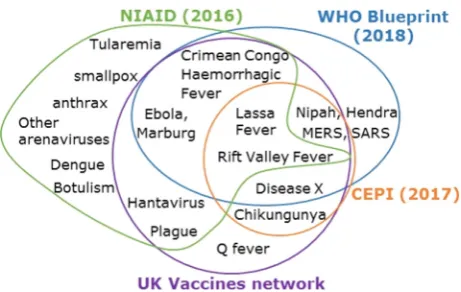
The review panel included individuals with expertise in epi-demiology and vaccine development, as well as infectious disease experts in human and animal health, and representatives of major UK funding bodies (MRC, BBSRC, Wellcome Trust, Department of Health and Social Care). The panel specifically focussed on diseases with the potential to cause high impact epidemics in humans. Ani-mal diseases were only included in the consideration when they had substantial zoonotic potential (for example, Rift Valley Fever). Influenza A virus was excluded on the grounds that there were, and remain, separate funding routes for the development of vaccines for emerging pandemic Influenza A subtypes. A long list of epi-demic diseases for which no suitable vaccine was available was devised, and subsequently reduced to a list of 14 priority patho-gens by the scientific experts on the panel by a voting system (Fig. 1). Based on its late stage of commercial vaccine development Dengue virus vaccine research was subsequently deprioritised. A total of £101 million (US$131 million), from the £120 M UKVN allocation, was spent on funding specific projects addressing the initial priority list and the original list was again reviewed after two years to identify any gaps or revisions necessary.
3. Comparison of priority lists between organisations.
and some new world arenaviruses (Lujo, Junin, Machupo, Gua-narito and Chapare viruses) in its priority A list. Hantavirus and plague are shared between the NIAID and UKVN lists only, and the emergence of an as yet unknown disease (Disease X) is specif-ically accounted for in the WHO Blueprint, CEPI and UKVN lists. These differences reflect both the different priorities of the organ-isations compiling the lists and the uncertain nature of prioritising diseases that are not currently, or are only intermittently, a prob-lem in different parts of the world. Very often the differences between lists is the result of small variations in the perceived risk of diseases by members of the review panel. In part, this is a con-sequence of the fact that surveillance data for many outbreak dis-eases is limited and the most important drivers contributing to outbreaks are poorly characterised. For example, the UKVN priori-tised Hantavirus, plague, Chikungunya and Q fever were all on the WHO long list, while Hendra and SARS were on the UKVN long list but not the final list. Future prioritisation exercises would be facil-itated by better surveillance information for all priority diseases. This would include serosurveillance data in ‘at risk’ populations, where they can be identified, to assess whether changes in immu-nity at a population level can be linked to the risk of an outbreak.
4. Progress towards disease control
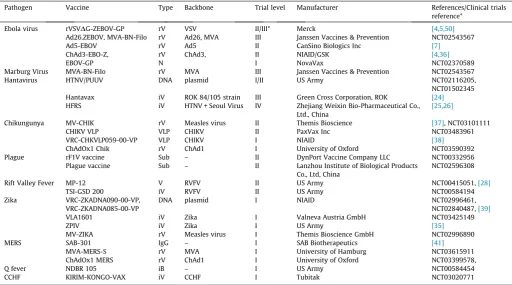
Since the onset of the West African Ebola virus outbreak in 2013 there has been some notable progress towards the control of some of the diseases on the priority lists, particularly Ebola virus. In 2015, there was no approved vaccine for Ebola virus and arguably this lack of an effective vaccine for use in emergency situations was one of the factors that contributed to the size and duration of that outbreak. While effective vaccines were produced and tested dur-ing the outbreak[4–6,17], which may prove important in future control, they were available too late to make a significant impact on disease control in 2013–2016[18]. It is notable that the Demo-cratic Republic of Congo, which has had repeated Ebola virus out-breaks since 1976, had outout-breaks in both 2014 (before vaccines were available) and 2018, after vaccines had been tested in West Africa. During the 2014 outbreak in Djera there were 66 cases and 49 deaths. During the 2018 outbreak in neighbouring Bikoro, Iboko, Wangata and Ntondo by June 14 there were 66 cases but only 28 deaths (14 from confirmed Ebola cases). By the same date, 2730 people in the country had been vaccinated with the rVSV-ZEBOV vaccine using a ring vaccination strategy[19]. Additionally, for the current the current outbreak in the east of DRC over 170 000 people have been vaccinated. As always, it is particularly chal-lenging to assess the impact of vaccination for a disease in an out-break situation, in particular to quantify the cases that do not occur due to vaccination rather than the number of observed cases. Unlike an endemic disease, where there is a baseline disease inci-dence, an emerging epidemic disease is by its nature relatively unpredictable in the number of cases that will occur without inter-vention. During a ring vaccination trial in Guinea, 10 cases of Ebola occurred where vaccination was delayed in contrast to no cases, after 10 days, in vaccinated individuals where vaccination provi-sion was immediate, thus providing evidence the vaccine may save lives [5]. In addition to the rVSV-ZEBOV vaccine, several other promising EBOV vaccines have undergone clinical or pre-clinical development since 2015 (Table 1).
For the other pathogens on the UKVN priority list the progress towards clinical development of vaccines has been mixed. There is now a licensed tetravalent Dengue vaccine manufactured by Sanofi Pasteur, which is a recombinant virus based on the yellow
Fig. 2.Priority pathogens compiled from WHO Blueprint (blue), Coalition for Epidemic Preparedness Innovations (Orange), UK Vaccine Research and Develop-ment Network (purple), National Institute of Allergy and Infectious Disease Priority A list.
fever 17D attenuated vaccine backbone[20,21]. Due to concerns over antibody dependent enhancement of disease, this vaccine is only recommended for particular age groups in endemic areas who have been pre-screened for antibody responses indicating prior Dengue exposure[22]. A second attenuated tetravalent Den-gue vaccine is under development by Takeda and has shown promising results in a phase 2 clinical trial [23]. There are now two licensed inactivated hantavirus vaccines which are available in South Korea (Hantavax), and China (HFRS vaccine) [24–26], but these vaccines are not available elsewhere. Inactivated plague vaccines have been manufactured since the 1890s[27]however there are currently no vaccines of this type being marketed. In terms of new vaccines against plague, there are two candidates that have reached phase 2 clinical trials (Table 1) both are subunit vaccines based on recombinant F1 and V plague antigens. Phase 2 trials have also been completed for vaccines against Chikungunya and Rift Valley Fever virus, although the Chikungunya vaccines are likely to reach the market faster since their development is being driven by commercial organisations. The RVFV vaccines were tested by the US Army and therefore may not be immediately available for the general population[28]. It is interesting to note that new RVFV vaccines are being developed for animal vaccina-tion but to date there have been no trials of these vaccines in humans[29–31]. Vaccines for other pathogens on the UKVN list are less well developed, immunogens for ZIKV, SARS, and CCHF have all reached phase I clinical trials. In the case of ZIKV there is also a good chance that these will be taken forward for more advanced clinical testing. Encouraging preclinical vaccine data exists for CCHFV[32]and in the 1970s the Bulgarian Ministry of Health produced a vaccine based on an inactivated CCHFV but no reliable human efficacy data exists. More recently a Turkish
forma-lin inactivated vaccine has been reported to have been tested cforma-lin- clin-ically in humans (Table 1). There is a Q fever vaccine that is available in Australia manufactured by Seqirus that is reported to be effective[33,34], however the vaccine is not currently licensed in other countries. For Lassa and Nipah no vaccine for use in humans has progressed beyond pre-clinical testing. However, CEPI has recently funded five large vaccine programmes for Lassa which are likely to lead to early clinical trials. One of the key observations emerging from consideration of existing and new vaccines is that differences between countries in the licencing process and the level of prior efficacy data required substantially affects the time new vaccines take to reach the market.
In terms of vaccine technologies, a range of different approaches have proven effective. Inactivated virus vaccines have been shown to be effective for a range of priority pathogens [24,25,35]and arguably have the lowest level of technology development required. The drawbacks are the safety issues related to growing and preparing hundreds of litres of highly pathogenic virus, the potential for incomplete inactivation, and the requirement for mul-tiple doses of vaccine to achieve immune protection. Recombinant virus vaccines, where the genome of one virus is modified to express antigen(s) from another pathogen have also been very suc-cessful, with VSV, MVA, human and chimp adenoviruses, and measles all effective for the delivery of foreign antigens to stimu-late strong immune responses[5,7,36,37]. The use of measles vec-tored vaccines has the additional advantage that it may provide some additional protection against an endemic human disease (measles). Subunit and VLP vaccines for plague and Chikungunya have also been tested in clinical trials [38]. There is also some evidence that nucleic acid (DNA, mRNA) based vaccines can be immunogenic in humans for some diseases[39,40]. Although not
Table 1
Vaccines reported as tested clinically against UKVN priority diseases.* where peer reviewed results are available the reference has been included, otherwise the ClinicalTrials.gov identifier has been listed. rV = Recombinant virus vaccine, iV = Inactivated virus vaccine, iB = inactivated Bacterial vaccine, VLP = Virus like particle vaccine, Sub = Subunit vaccine, N = Nanoparticle, IgG = Therapeutic antibody, DNA = DNA vaccine, VSV = Vesicular stomatitis virus, Ad5, Ad26 = replication defective Human Adenovirus type 5 and type 26 respectively, ChAd1 = Chimpanzee Adenovirus type 1, ChAd3 = Chimpanzee Adenovirus type 3, MVA = Modified Vaccinia virus Ankara, CHIKV = Chikungunya virus, CCHF = Crimean-Congo Haemorrhagic Fever virus, RVFV = Rift Valley Fever Virus, SARS = Severe Acute Respiratory Syndrome, MERS = Middle East Respiratory Syndrome.
Pathogen Vaccine Type Backbone Trial level Manufacturer References/Clinical trials reference*
Ebola virus rVSVDG-ZEBOV-GP rV VSV II/III* Merck [4,5,50]
Ad26.ZEBOV, MVA-BN-Filo rV Ad26, MVA III Janssen Vaccines & Prevention NCT02543567 Ad5-EBOV rV Ad5 II CanSino Biologics Inc [7]
ChAd3-EBO-Z, rV ChAd3, II NIAID/GSK [4,36]
EBOV-GP N I NovaVax NCT02370589
Marburg Virus MVA-BN-Filo rV MVA III Janssen Vaccines & Prevention NCT02543567 Hantavirus HTNV/PUUV DNA plasmid I/II US Army NCT02116205,
NCT01502345 Hantavax iV ROK 84/105 strain III Green Cross Corporation, ROK [24]
HFRS iV HTNV + Seoul Virus IV Zhejiang Weixin Bio-Pharmaceutical Co., Ltd., China
[25,26]
Chikungunya MV-CHIK rV Measles virus II Themis Bioscience [37], NCT03101111 CHIKV VLP VLP CHIKV II PaxVax Inc NCT03483961 VRC-CHKVLP059-00-VP VLP CHIKV I NIAID [38]
ChAdOx1 Chik rV ChAd1 I University of Oxford NCT03590392 Plague rF1V vaccine Sub – II DynPort Vaccine Company LLC NCT00332956
Plague vaccine Sub – II Lanzhou Institute of Biological Products Co., Ltd, China
NCT02596308 Rift Valley Fever MP-12 V RVFV II US Army NCT00415051,[28]
TSI-GSD 200 iV RVFV II US Army NCT00584194 Zika VRC-ZKADNA090-00-VP,
VRC-ZKADNA085-00-VP
DNA plasmid I NIAID NCT02996461, NCT02840487,[39]
VLA1601 iV Zika I Valneva Austria GmbH NCT03425149
ZPIV iV Zika I US Army [35]
MV-ZIKA rV Measles virus I Themis Bioscience GmbH NCT02996890 MERS SAB-301 IgG – I SAB Biotherapeutics [41]
MVA-MERS-S rV MVA I University of Hamburg NCT03615911 ChAdOx1 MERS rV ChAd1 I University of Oxford NCT03399578,
Q fever NDBR 105 iB – I US Army NCT00584454
strictly vaccines, the development of therapeutic antibodies that can be used post exposure during an outbreak, such as those developed against MERS coronavirus, may be particularly useful for outbreak type diseases provided that they are effective in the field[41].
5. Outstanding challenges
Significant challenges remain for the control of epidemic dis-eases, despite more clearly defined priorities in terms of pathogen selection. In particular, early identification and reaction to an out-break is critical[18], there is a need to provide sustained invest-ment in surveillance for disease outbreaks. Maps that predict outbreak risk may help to guide resource allocation with respect to infrastructure development and surveillance. The need for surveillance is further complicated by the requirement to monitor ‘Disease X’[15], the previously unknown pathogen that can have major impacts on health during an outbreak. Recent advances in sequencing technologies have led to the identification of many pre-viously unknown viruses[42–44]. This is likely to increase even further with efforts to sequence DNA and RNA from other eukary-otes including wildlife. While most of these new viruses do not pose a threat to human health, identifying those that do in a timely manner is one of the major challenges of modern surveillance. This underlines the importance of international collaboration including with low income/endemic disease countries. Another challenge is that of implementing the Nagoya Protocol with respect to the use of samples from low and middle income countries. Previously, countries could control the physical export of samples to ensure that there was agreement on how samples could be used. With the advent of portable sequencing devices that can be used in the field[45–49]and gene synthesis technologies it is now possible to design and produce a new vaccine starting with only sequence data, without physical transfer of material.
Currently there are relatively few diseases caused by bacteria that appear on the priority list. This is largely related to the effec-tiveness of antibiotic treatments. However, the threat of emer-gence of a previously unknown disease must be balanced against that of emergence of antimicrobial resistance in known bacterial pathogens.
Technical challenges around unwanted adverse effects of vacci-nes such as those associated with dengue vaccivacci-nes[21] and the development of vaccines useful in resource poor settings are real, but are likely to eventually be overcome. Other challenges are in addressing negative attitudes that result in vaccine hesitancy in populations that would benefit from routine vaccination for out-break type diseases to protect the wider community. The question of how and whether wildlife populations should be vaccinated if there is a zoonotic disease also needs to be addressed. Also, vacci-nating livestock against diseases that first infect livestock and then humans may be a highly effective way to prevent new human dis-ease outbreaks, and the time and costs required to achieve licen-sure of livestock vaccines are considerably lower than for human vaccines. Vaccination of sheep, cattle and goats against RVFV, pigs against Nipah, sheep against CCHFV and camels against MERS could prevent human infections, but in the last two examples the disease does not cause significant economic losses and vaccination of livestock would be more difficult to introduce. Indeed, if the pri-mary reason for livestock vaccination was to benefit human public health, uptake by farmers would be low unless the benefits to the community were clear and there was no commercial cost to the farmer from vaccination.
The commercial and political challenges associated with epi-demic diseases are significant. Since outbreaks are sporadic, invest-ment tends to wane between outbreaks for the establishinvest-ment of emerging diseases vaccine research and development, especially
progressing prototype vaccines to proof of clinical efficacy. This includes funding preclinical trials in nonhuman primates. The new WHO and CEPI initiatives may overcome this problem but it is important that this momentum towards the development of effective vaccines is maintained even in the absence of a recent outbreak. A second political challenge was highlighted in West Africa and in the more recent outbreak in DRC, it is vital that local communities are actively engaged in the vaccine testing process to avoid disinformation[10,11]. Furthermore, it is crucial that local government and healthcare agencies are fully integrated into any disease outbreak response.
6. The funding landscape
Since 2016 the arrival of CEPI has provided strong financial sup-port for the development of MERS, Nipah and Lassa vaccines towards Phase 2 studies. With donor commitments of >US$700 million to date, CEPI still lacks the financial force of the Wellcome Trust or the Gates Foundation (both of which are CEPI donors). The US government, through civil and military programmes is the lar-gest sponsor for vaccines on the priority list. Other significant state contributors include the UK and Norway. China and India have emerged as vaccine players, but government funding mechanisms are not transparent at this time. Corporate vaccine funding remains important, with global R&D spend estimated at up to US$7 billion (on a purchasing power parity basis), but only for commercially viable vaccines. As already discussed this is a particular issue for vaccines against epidemic diseases. Vaccine development from lab bench to registration can cost over US$1 billion, with large-scale manufacturing plants costing another US$1 billion. Without guaranteed sales, there is no incentive for a company to invest in vaccine development. Only in the case of biosecurity vaccines, such as anthrax or smallpox has the US government funded both man-ufacture and purchase of vaccine stockpiles. There is a question over whether the international public sector can guarantee pur-chase and manufacture of priority list vaccines. The use of platform technologies to develop both commercial and emerging pathogen vaccines would obviate the need to build separate large-scale man-ufacturing plants in order to produce a stockpile of the emerging pathogen vaccine. Of note is the growth of Indian vaccine manufac-ture – now making more doses each year than the top four vaccine manufacturers – this is backed by supply to the Indian public sec-tor market and growing sales to the international public secsec-tor (for example UNICEF).
7. Conclusions
References
[1] Friedrich BM, Trefry JC, Biggins JE, Hensley LE, Honko AN, Smith DR, et al. Potential vaccines and post-exposure treatments for filovirus infections. Viruses 2012;4:1619–50.https://doi.org/10.3390/v4091619.
[2] Jones KE, Patel NG, Levy MA, Storeygard A, Balk D, Gittleman JL, et al. Global trends in emerging infectious diseases. Nature 2008;451:990–3.https://doi. org/10.1038/nature06536.
[3] Allen T, Murray KA, Zambrana-Torrelio C, Morse SS, Rondinini C, Di Marco M, et al. Global hotspots and correlates of emerging zoonotic diseases. Nat Commun 2017;8:1124.https://doi.org/10.1038/s41467-017-00923-8. [4] Kennedy SB, Bolay F, Kieh M, Grandits G, Badio M, Ballou R, et al. Phase 2
placebo-controlled trial of two vaccines to prevent Ebola in Liberia. N Engl J Med 2017;377:1438–47.https://doi.org/10.1056/NEJMoa1614067.
[5] Henao-Restrepo AM, Camacho A, Longini IM, Watson CH, Edmunds WJ, Egger M, et al. Efficacy and effectiveness of an rVSV-vectored vaccine in preventing Ebola virus disease: final results from the Guinea ring vaccination, open-label, cluster-randomised trial (Ebola Ça Suffit!). The Lancet 2017;389:505–18.
https://doi.org/10.1016/S0140-6736(16)32621-6.
[6] Gsell P-S, Camacho A, Kucharski AJ, Watson CH, Bagayoko A, Nadlaou SD, et al. Ring vaccination with rVSV-ZEBOV under expanded access in response to an outbreak of Ebola virus disease in Guinea, 2016: an operational and vaccine safety report. Lancet Infect Dis 2017;17:1276–84. https://doi.org/10.1016/ S1473-3099(17)30541-8.
[7] Zhu F-C, Wurie AH, Hou L-H, Liang Q, Li Y-H, Russell JBW, et al. Safety and immunogenicity of a recombinant adenovirus type-5 vector-based Ebola vaccine in healthy adults in Sierra Leone: a single-centre, randomised, double-blind, placebo-controlled, phase 2 trial. The Lancet 2017;389:621–8.https:// doi.org/10.1016/S0140-6736(16)32617-4.
[8] Mooney T, Smout E, Leigh B, Greenwood B, Enria L, Ishola D, et al. EBOVAC-Salone: Lessons learned from implementing an Ebola vaccine trial in an Ebola-affected country. Clinical Trials 2018:174077451878067. doi: 10.1177/ 1740774518780678.
[9] Higgs ES, Dubey SA, Coller BAG, Simon JK, Bollinger L, Sorenson RA, et al. Accelerating vaccine development during the 2013–2016 West African Ebola Virus Disease Outbreak. Marburg- and Ebolaviruses, Springer, Cham; 2017, p. 229–61. doi: 10.1007/82_2017_53.
[10] Enria L, Lees S, Smout E, Mooney T, Tengbeh AF, Leigh B, et al. fairness and trust: understanding and engaging with vaccine trial participants and communities in the setting up the EBOVAC-Salone vaccine trial in Sierra Leone. BMC Public Health 2016;16. https://doi.org/10.1186/s12889-016-3799-x.
[11] Kummervold PE, Schulz WS, Smout E, Fernandez-Luque L, Larson HJ. Controversial Ebola vaccine trials in Ghana: a thematic analysis of critiques and rebuttals in digital news. BMC Public Health 2017;17. https://doi.org/ 10.1186/s12889-017-4618-8.
[12] Carter RJ, Idriss A, Widdowson M-A, Samai M, Schrag SJ, Legardy-Williams JK, et al. Implementing a multisite clinical trial in the midst of an Ebola outbreak: lessons learned from the Sierra Leone trial to introduce a vaccine against Ebola. J Infect Dis 2018;217:S16–23.https://doi.org/10.1093/infdis/jix657. [13] Hossmann S, Haynes AG, Spoerri A, Diatta ID, Aboubacar B, Egger M, et al. Data
management of clinical trials during an outbreak of Ebola virus disease. Vaccine 2017.https://doi.org/10.1016/j.vaccine.2017.09.094.
[14] Plotkin S, Robinson JM, Cunningham G, Iqbal R, Larsen S. The complexity and cost of vaccine manufacturing – an overview. Vaccine 2017;35:4064–71.
https://doi.org/10.1016/j.vaccine.2017.06.003.
[15] WHO. Blueprint for R&D preparedness and response to public health emergencies due to highly infectious pathogens. Geneva: WHO; 2015. [16] NIAID Emerging Infectious Diseases/Pathogens | NIH: National Institute of
Allergy and Infectious Diseases n.d. <https://www.niaid.nih.gov/research/ emerging-infectious-diseases-pathogens> [accessed June 25, 2018]. [17] Agnandji ST, Fernandes JF, Bache EB, Obiang Mba RM, Brosnahan JS, Kabwende
L, et al. Safety and immunogenicity of rVSVDG-ZEBOV-GP Ebola vaccine in adults and children in Lambaréné, Gabon: a phase I randomised trial. PLoS Med 2017;14.https://doi.org/10.1371/journal.pmed.1002402.
[18] Coltart CEM, Lindsey B, Ghinai I, Johnson AM, Heymann DL. The Ebola outbreak, 2013–2016: old lessons for new epidemics. Philos Trans R Soc Lond B Biol Sci 2017;372.https://doi.org/10.1098/rstb.2016.0297.
[19] RDC. EBOLA RDC - Evolution de la riposte de l’épidémie d’Ebola au Jeudi 14 juin 2018. Democratic republic of Congo; 2018.
[20] Guy B, Briand O, Lang J, Saville M, Jackson N. Development of the Sanofi Pasteur tetravalent dengue vaccine: One more step forward. Vaccine 2015;33:7100–11.https://doi.org/10.1016/j.vaccine.2015.09.108.
[21] Hadinegoro SR, Arredondo-García JL, Capeding MR, Deseda C, Chotpitayasunondh T, Dietze R, et al. Efficacy and long-term safety of a dengue vaccine in regions of endemic disease. Http://DxDoiOrg/101056/ NEJMoa1506223 2015. doi: 10.1056/NEJMoa1506223.
[22]Policy WHO. recommendations on the use of the first licensed dengue vaccine. Wkly Epidemiol Rec 2018;23:329–44.
[23] Sáez-Llorens X, Tricou V, Yu D, Rivera L, Jimeno J, Villarreal AC, et al. Immunogenicity and safety of one versus two doses of tetravalent dengue vaccine in healthy children aged 2–17 years in Asia and Latin America: 18-month interim data from a phase 2, randomised, placebo-controlled study. Lancet Infect Dis 2018;18:162–70. https://doi.org/10.1016/S1473-3099(17) 30632-1.
[24] Song JY, Woo HJ, Cheong HJ, Noh JY, Baek LJ, Kim WJ. Long-term immunogenicity and safety of inactivated Hantaan virus vaccine (HantavaxTM
) in healthy adults. Vaccine 2016;34:1289–95. https://doi.org/ 10.1016/j.vaccine.2016.01.031.
[25] Li Z, Zeng H, Wang Y, Zhang Y, Cheng L, Zhang F, et al. The assessment of Hantaan virus-specific antibody responses after the immunization program for hemorrhagic fever with renal syndrome in northwest China. Human Vac Immunotherapeutics 2017;13:802–7. https://doi.org/10.1080/ 21645515.2016.1253645.
[26] Zheng Y, Zhou B-Y, Wei J, Xu Y, Dong J-H, Guan L-Y, et al. Persistence of immune responses to vaccine against haemorrhagic fever with renal syndrome in healthy adults aged 16–60 years: results from an open-label2-year follow-up study. Infect Dis 2018;50:21–6. https://doi.org/10.1080/ 23744235.2017.1353704.
[27] Williamson ED. Plague. Vaccine 2009;27:D56–60. https://doi.org/10.1016/ j.vaccine.2009.07.068.
[28] Pittman PR, Norris SL, Brown ES, Ranadive MV, Schibly BA, Bettinger GE, et al. Rift Valley fever MP-12 vaccine Phase 2 clinical trial: Safety, immunogenicity, and genetic characterization of virus isolates. Vaccine 2016;34:523–30.
https://doi.org/10.1016/j.vaccine.2015.11.078.
[29] Njenga MK, Njagi L, Thumbi SM, Kahariri S, Githinji J, Omondi E, et al. Randomized controlled field trial to assess the immunogenicity and safety of rift valley fever clone 13 vaccine in livestock. PLoS Negl Trop Dis 2015;9:.
https://doi.org/10.1371/journal.pntd.0003550e0003550.
[30]Lo MM, Mbao V, Sierra P, Thiongane Y, Diop M, Donadeu M, et al. Safety and immunogenicity of Onderstepoort Biological Products’ Rift Valley fever Clone 13 vaccine in sheep and goats under field conditions in Senegal. Onderstepoort J Vet Res 2015;82:857.
[31] Warimwe GM, Gesharisha J, Carr BV, Otieno S, Otingah K, Wright D, et al. Chimpanzee adenovirus vaccine provides multispecies protection against rift valley fever. Sci Rep 2016;6:20617.https://doi.org/10.1038/srep20617. [32] Dowall SD, Carroll MW, Hewson R. Development of vaccines against
Crimean-Congo haemorrhagic fever virus. Vaccine 2017;35:6015–23.https://doi.org/ 10.1016/j.vaccine.2017.05.031.
[33] Bond KA, Franklin LJ, Sutton B, Firestone SM. Q-Vax Q fever vaccine failures, Victoria, Australia 1994–2013. Vaccine 2017;35:7084–7. https://doi.org/ 10.1016/j.vaccine.2017.10.088.
[34] Gilroy N, Formica N, Beers M, Egan A, Conaty S, Marmion B. Abattoir-associated Q fever: a Q fever outbreak during a Q fever vaccination program. Australian and New Zealand Journal of Public Health n.d.; 25:362–7. doi: 10.1111/j.1467-842X.2001.tb00595.x.
[35] Modjarrad K, Lin L, George SL, Stephenson KE, Eckels KH, De La Barrera RA, et al. Preliminary aggregate safety and immunogenicity results from three trials of a purified inactivated Zika virus vaccine candidate: phase 1, randomised, double-blind, placebo-controlled clinical trials. The Lancet 2018;391:563–71.https://doi.org/10.1016/S0140-6736(17)33106-9. [36] Ewer K, Rampling T, Venkatraman N, Bowyer G, Wright D, Lambe T, et al. A
monovalent chimpanzee adenovirus Ebola vaccine boosted with MVA. N Engl J Med 2016;374:1635–46.https://doi.org/10.1056/NEJMoa1411627.
[37] Ramsauer K, Schwameis M, Firbas C, Müllner M, Putnak RJ, Thomas SJ, et al. Immunogenicity, safety, and tolerability of a recombinant measles-virus-based chikungunya vaccine: a randomised, double-blind, placebo-controlled, active-comparator, first-in-man trial. Lancet Infect Dis 2015;15:519–27.
https://doi.org/10.1016/S1473-3099(15)70043-5.
[38] Chang L-J, Dowd KA, Mendoza FH, Saunders JG, Sitar S, Plummer SH, et al. Safety and tolerability of chikungunya virus-like particle vaccine in healthy adults: a phase 1 dose-escalation trial. The Lancet 2014;384:2046–52.https:// doi.org/10.1016/S0140-6736(14)61185-5.
[39] Gaudinski MR, Houser KV, Morabito KM, Hu Z, Yamshchikov G, Rothwell RS, et al. Safety, tolerability, and immunogenicity of two Zika virus DNA vaccine candidates in healthy adults: randomised, open-label, phase 1 clinical trials. The Lancet 2018;391:552–62.https://doi.org/10.1016/S0140-6736(17)33105-7. [40] Jones S, Evans K, McElwaine-Johnn H, Sharpe M, Oxford J, Lambkin-Williams R,
et al. DNA vaccination protects against an influenza challenge in a double-blind randomised placebo-controlled phase 1b clinical trial. Vaccine 2009;27:2506–12.https://doi.org/10.1016/j.vaccine.2009.02.061.
[41] Beigel JH, Voell J, Kumar P, Raviprakash K, Wu H, Jiao J-A, et al. Safety and tolerability of a novel, polyclonal human anti-MERS coronavirus antibody produced from transchromosomic cattle: a phase 1 randomised, double-blind, single-dose-escalation study. Lancet Infect Dis 2018;18:410–8.https://doi.org/ 10.1016/S1473-3099(18)30002-1.
[42] Stremlau MH, Andersen KG, Folarin OA, Grove JN, Odia I, Ehiane PE, et al. Discovery of novel rhabdoviruses in the blood of healthy individuals from West Africa. PLoS Negl Trop Dis 2015;9.. https://doi.org/10.1371/journal. pntd.0003631.
[43] Coffey LL, Page BL, Greninger AL, Herring BL, Russell RC, Doggett SL, et al. Enhanced arbovirus surveillance with deep sequencing: identification of novel rhabdoviruses and bunyaviruses in Australian mosquitoes. Virology 2014;448.
https://doi.org/10.1016/j.virol.2013.09.026.
[44] Geldenhuys M, Mortlock M, Weyer J, Bezuidt O, Seamark ECJ, Kearney T, et al. A metagenomic viral discovery approach identifies potential zoonotic and novel mammalian viruses in Neoromicia bats within South Africa. PLoS ONE 2018;13.https://doi.org/10.1371/journal.pone.0194527.
[45] Quick J, Loman NJ, Duraffour S, Simpson JT, Severi E, Cowley L, et al. Real-time, portable genome sequencing for Ebola surveillance. Nature 2016;530:228–32.
[46] Quick J, Grubaugh ND, Pullan ST, Claro IM, Smith AD, Gangavarapu K, et al. Multiplex PCR method for MinION and Illumina sequencing of Zika and other virus genomes directly from clinical samples. Nat Protoc 2017;12:1261–76.
https://doi.org/10.1038/nprot.2017.066.
[47] Walter MC, Zwirglmaier K, Vette P, Holowachuk SA, Stoecker K, Genzel GH, et al. MinION as part of a biomedical rapidly deployable laboratory. J Biotechnol 2017;250:16–22. https://doi.org/10.1016/j.jbiotec. 2016.12.006.
[48] Russell JA, Campos B, Stone J, Blosser EM, Burkett-Cadena N, Jacobs JL. Unbiased strain-typing of arbovirus directly from mosquitoes using nanopore
sequencing: a field-forward biosurveillance protocol. Sci Rep 2018;8:5417.
https://doi.org/10.1038/s41598-018-23641-7.
[49] Goordial J, Altshuler I, Hindson K, Chan-Yam K, Marcolefas E, Whyte LG. In situ field sequencing and life detection in remote (79°260N) Canadian high arctic
permafrost ice wedge microbial communities. Front Microbiol 2017;8:2594.
https://doi.org/10.3389/fmicb.2017.02594.