BASELINE STUDY IN ENVIRONMENTAL RISK ASSESSMENT –
Escalating need for computer models to be whole-system approach
T. E. Butt*1a,1b; H. M. Gouda2; A. Alam3; A. A. Javadi4; M. A. Nunns5; T. J. Allen6
*1aSchool of Architecture, Built & Natural Environments (SABNE), Faculty of Architecture,
Computing & Engineering (FACE), University of Wales Trinity Saint David (UWTSD), Mount Pleasant Campus, Swansea. Post-Code: SA1 6ED. Wales, UK
Email: [email protected]; Tel: ++44(0)7817139170.
1bCentre for Water Systems and 4Department of Engineering, College of Engineering, Mathematics
& Physical Sciences (CEMPS), The University of Exeter, Harrison Building, North Park Road, Exeter. Post-Code: EX4 4QF. England, UK.
2Department of Geography and Environmental Management, University of the West of England,
Coldharbour Lane, Bristol. Post-Code: BS16 1QY. England, UK.
3College of Earth and Environmental Sciences, University of the Punjab, Lahore, Pakistan.
5Environment Agency, Bromholme Lane, Brampton, Huntingdon. Post Code: PE28 4NE. England,
UK.
6Clean Harbors Surface Rentals, 4438 Sims Street, Dickinson, ND (North Dakota). Post-Code:
Abstract
Despite landfills having the potential to pollute the environment both during their operation and long after they have ceased to receive waste, they remain a dominant waste management option, particularly in the UK. In order to combat the environmental pollution caused by landfills, risk analysis is increasingly being employed through computer models. However, for a risk analysis process to be successful, its foundation has to be well established through a baseline study. This paper aims to identify knowledge gaps in software packages regarding environmental risk assessments in general, and especially those that have been developed specifically for landfills and landfill leachate. The research establishes that there is no holistic computer model for the baseline study of landfills, which risk assessors can use to conduct risk analyses specifically for landfill leachate. This paper also describes a number of factors and features that should be added to the baseline study system in order to render it more integrated – thereby enhancing quantitative risk analysis, and subsequently environmental risk management.
Keywords: baseline study; preliminary investigation; computer models; software packages; landfill leachate; risk analysis; risk assessment; waste disposal sites.
1.0 BACKGROUND
characterise human society; indeed in one sense it is an indicator of the health of modern economy (Tromans and Stiles, 2004). A most recent evidence of strong and directly proportional relationship between economic growth and waste generation is the deceleration impact of the current economic downturn on the amount of waste. Statistics in the USA alone indicate that waste generation had always been escalating until 2007, when the downturn struck. In the years following 2007 the generation of waste has reduced (EPA, 2010). The same has been the case in the UK in various sectors (MBD Ltd., 2011).
There are two main issues regarding waste. One is the amount of waste that is generated, and the second is how it is dealt with or managed - where landfilling still is the most predominant waste management option (among others that include re-use, recycling, composting, and incineration). Regardless of the economic downturn impact, due to increasing environmental legislation and socio-environmental pressures, overall reduction has been noticed on both fronts of waste – that is, in the generation of waste as well as in the amount of waste that is landfilled in various regions, states and countries. However, this is not the case everywhere around the world. Furthermore, the amount of waste that is generated today, irrespective of how much has yet been reduced varyingly around the globe (for whatever reasons), still remains a great concern for the environment and for sustainability - particularly when the predominant part of the total waste is still landfilled (Environment Agency, 2011a; Eurostat, 2011; EPA, 2010; Scottish Government, 2011).
landfilled. For instance, in England and Wales the amount of waste has fallen by around 46% since 2000 (for which one of the principal reasons is the implementation of the Landfill Directive) (Environment Agency, 2011a). In Scotland, between 2000 and 2010 the total waste sent to landfill decreased by 59% (6.6 million tonnes) (Scottish Government, 2011). Similarly, at the European level, overall statistics show reduction in the generation as well as landfilling of waste (Eurostat, 2011).
Sustainable waste management simply means managing waste by prioritising, as specified in the 'waste hierarchy' presented in The National Waste Strategy (DoE and the Welsh Office, 1995a; 1995b; SEPA, 1999; DETR, 2000; Wilson, 2000; DEFRA, 2005a; 2005b). This implies that waste prevention is the top-most priority (if possible). The other priorities (in descending priority order) are reduction, reuse, and recovery (via recycling, composting, energy-from-waste), and disposal (which includes landfill). Another note-worthy fact in the hierarchy is that landfill is not only strictly at the bottom of the list but also partly constitutes the ‘Recovery’ category (which is prior to the ‘Disposal’ group of waste management options) (Figure 1). This means that even for the waste-from-energy option of waste management practice, landfill can be an approach to derive landfill gas for energy generation either as electricity or heating or even combined heat and power (CHP) technology. Therefore, this is yet another scenario in which a human society may end up having landfills, irrespective of how much waste generation is reduced.
PREVENTION (as in zero or no waste at all)
REDUCTION (if zero waste not possible, then decrease at least)
RE-USE (the waste may undergo some degree of physical change but generally does not undergo any chemical/biochemical change)
RECOVERY (the waste may undergo some chemical/biochemical change) Recycling (may still give some waste at segregation stage)
Composting
Energy (recovered from landfill gas combustion, or waste incineration that reduces the waste volume by large but still some waste is left in the form of ashes which are generally landfilled)
DISPOSAL
Incineration (without energy recovery) Landfill (without gas energy recovery)
2.0 INTRODUCTION
2.1 Research aims and methodology used
From the perspective of significance of baseline study in risk assessments, the main aim of the paper is to identify knowledge gaps in existing computer models or software packages regarding environmental risk assessments in general, and especially those that specifically regard landfills and landfill leachate. With reference to previous research works by the principal author, the paper also presents an account of some new insights in how to bridge the identified knowledge gaps, and the importance of why these gaps need to be closed. For instance, the paper presents a conceptual model of a holistic and categorically integrated baseline study structure, thereby, paving a path in the direction of a full-on methodology development in future for a whole-system baseline study for landfill leachate risk assessment along with a corresponding computer-aided model. This way the paper not only establishes the-state-of-the-science but also presents a way forward for future research work in this area.
to review of the literature and publications (in the earlier sister paper). Thus, the study methodology applied in this paper constitutes of:
1. systematic selection of computer models and software packages to be investigated (i.e. firstly those which relate or can be related to risk assessment of landfills; and then those which regard risk analysis of environmental scenarios other than landfills);
2. With reference to the sister paper (Butt et. al., 2014), a list of knowledge gaps is described which is also used as a bench-mark to carry out the investigation of software packages against;
3. Some relevant environmental legislation is also referred to indicate how and why there is a need of whole-system approaches towards baseline study in computer models of landfill risk assessment.
2.2 Definition and scope
waste, by virtue of its nature, landfill leachate specifically can pollute all of the three aforesaid principal factors. For instance, leachate vapours or fumes can find their way into the ambient atmosphere in sufficient amounts to present danger to human health and the environment, whereas these vapours or fumes can be containing chemical and/or biological hazards, volatile organics, etc. Moreover, landfill gas also breaks through from landfill leachate. Leachate can be an extremely powerful pollutant of water both above and below ground level – hydrosphere and hydrogeosphere. In addition, leachate contaminants can pollute land/soils as they move through the ground either mixed with water or on its own (e.g. through the unsaturated zone under a landfill). Therefore, in general, landfill leachate can be seen as a lot more hazardous product of a given landfill than the other two – landfill gas and (more or less degraded) landfill waste. Therefore, the term ‘holistic’, in line with the sister paper, in this paper also implies an overall framework or system, covering all
aspects and factors of the baseline study from the start to end (only in the context of landfill
leachate).
Risk assessment is a relatively new and fast developing science. This is not just in relation to landfills and other environmental issues, but also in connection to other business fields, including the food industry, ecology, epidemiology, radiation, earthquakes, finance, construction management, contractual risk, insurance, economics, fire, landslides, ship navigation, and the oil industry (Rejda, 1995; Tweeds, 1996; WHO, 1997; Mitchell, 1998; HSE, 1998; CIWEM, 1999; CIWM, 2000; Butt and Oduyemi, 2003; Butt et. al., 2006). Regardless of the type of risk assessment and the environmental area of application, one of the important parts of any risk analysis is the baseline study (ICE, 1994; Asante-Duah, 1996; Blight and Fourie, 1998; CIRIA, 2001; Environment Agency, 2003a).
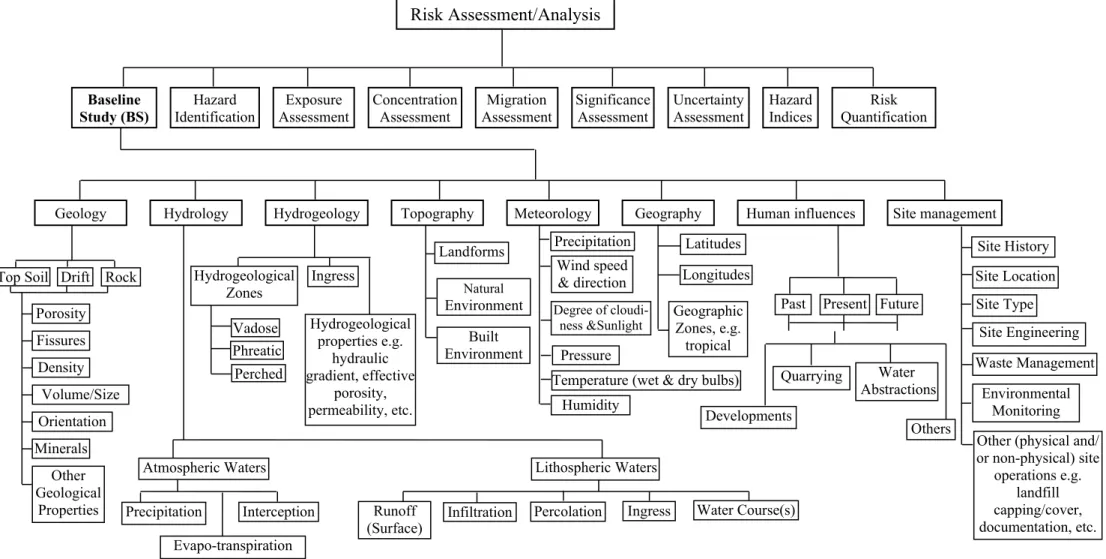
Figure 2: The Baseline Study modules and its position in relation to overall Risk Assessment Structure (Adapted, derived and concluded from the work of various authors including Peacock and Whyte, 1992; WDA, 1994; Tweeds, 1996; WHO, 1997; EPA, 2000a; TOSC, 2000; CIRIA, 2001;
Viswanathan et. al., 2002; CMSA, 2004, Butt et. al., 2016)
Hazard
Identification AssessmentExposure Concentration Assessment
Baseline
Study (BS) Significance Assessment Uncertainty Assessment Hazard Indices QuantificationRisk
Risk Assessment/Analysis
Migration Assessment
Geology Hydrology Hydrogeology Topography Meteorology Geography Human influences Site management
Landforms Natural Environment Built Environment Precipitation Wind speed & direction
Degree of cloudi-ness &Sunlight
Temperature (wet & dry bulbs) Pressure Humidity Site Engineering Waste Management Environmental Monitoring Site Type Site Location
Other (physical and/ or non-physical) site
operations e.g. landfill capping/cover, documentation, etc. Site History
Atmospheric Waters Lithospheric Waters
Precipitation
Evapo-transpiration
Interception Infiltration Percolation Ingress Water Course(s) Vadose Phreatic Hydrogeological properties e.g. hydraulic gradient, effective porosity, permeability, etc. Perched Ingress Hydrogeological Zones Geographic Zones, e.g. tropical Latitudes Longitudes Minerals Top Soil Drift Rock
3.0 SIGNIFICANCE OF BASELINE STUDY
The following four sub-sections explain why a strategic, integrated and whole-system baseline study is necessary with reference to landfill leachate from the perspective of risk analysis. For more details on these four sub-sections readers are referred to Butt et. al., 2014.
3.1 Inconsistency in risk assessment and baseline study
system is one of the crucial requirements to generate consistent and coherent risk assessments. This is explained further in Table 1 (Section 3.4). Since inconsistency among risk assessments also leads to compromise the degree of risk comparisons, therefore, consistency in risk assessments can help the issue of risk comparisons between two or more landfill scenarios in a number of ways e.g. where a new landfill can more safely be sited. Thus, a consistent baseline study system can also be useful in this regard.
3.2. Current and Future Legislation – becoming more and more holistic and integrated
Because of the significance and effectiveness of risk assessment in environmental management, environmental legislation has started to require risk analysis as a tool for meeting legal requirements associated with waste hazards (Environment Agency, 1997; 1999; 2003a). For instance, for the protection of groundwater from landfill leachate, a risk assessment requirement has been legislatively introduced in the UK from 1st May 1994, through Regulation 15 of the Waste Management Licensing Regulations (SI, 1994a; 2005) and the Groundwater Regulations (SI, 1998). The Landfill Directive is implemented in England and Wales through the Landfill Regulations (SI, 2002), made under the Pollution Prevention and Control (PPC) Act (England and Wales 1999). The equivalent legislation, which is called Landfill (Scotland) Regulations, has come out in Scotland (SSI, 2000; 2003; SEPA, 2005a; 2005b). It can be deduced from all these legislative instruments that the concept ‘out of sight, out of mind’ regarding wastes is no longer applicable. To achieve the maximum protection of the environment against the hazards associated with landfill sites, all potential hazards must be identified and risks associated with them assessed.
attention given to other environmental receptors, such as:
Receptors other than humans, for instance, aquatic and terrestrial flora and fauna (like fish, sheep, crops);
Natural and yet non-living receptors such as land/soil and air;
Built environment (for example human-made ponds, buildings, structures and infrastructures (e.g. clean-water pipeline networks));
Water courses, (other than used by humans for drinking), such as rivers of various water grades (SI, 1994b); and
Insufficient consideration of various exposure routes such as dermal contact, fish contamination, bioaccumulation in plants, food-web chain, etc.
The areas listed above become more important as environmental legislation is becoming more and more stringent, versatile, inclusive, and integrated. For instance, the Water Framework Directive (EC, 2000), which has been employed in the UK, includes new requirements for protection and restoration not only of ground waters but also surface waters and dependent ecological systems (Environment Agency, 2003a). Another directive, generally referred to as the Habitats Directive (EC, 1992), brings legal obligation to combat hazards in order to guard and enhance natural habitats and wild fauna and flora. Thus, a more integrated approach towards risk analysis is required. This necessitates baseline study to be more integrated and strategic; as without a holistic baseline study being conducted, a holistic risk analysis is not possible.
3.3. Non-integrated risk assessment
and Fourie, 1998; Environment Agency, 2003a) clearly shows that a baseline study is a crucial and primary factor in an environmental risk analysis. Moreover, this investigation led to the conclusion that a comprehensive, robust, detailed, and sound computer model or software package of risk assessment, incorporating a number of essential features (including baseline study) does not exist in an integrated manner. Examples of such essential features are:
Encompassing various types of landfill systems and their surroundings;
Taking into account all possible characteristics of landfills in terms of risks and quantification of risks posed by landfills; and
Embedding procedures of relevant modules (such as baseline study, hazard identification, hazard concentration assessment, exposure analysis, pollutants migration).
3.4. Non-integrated baseline study
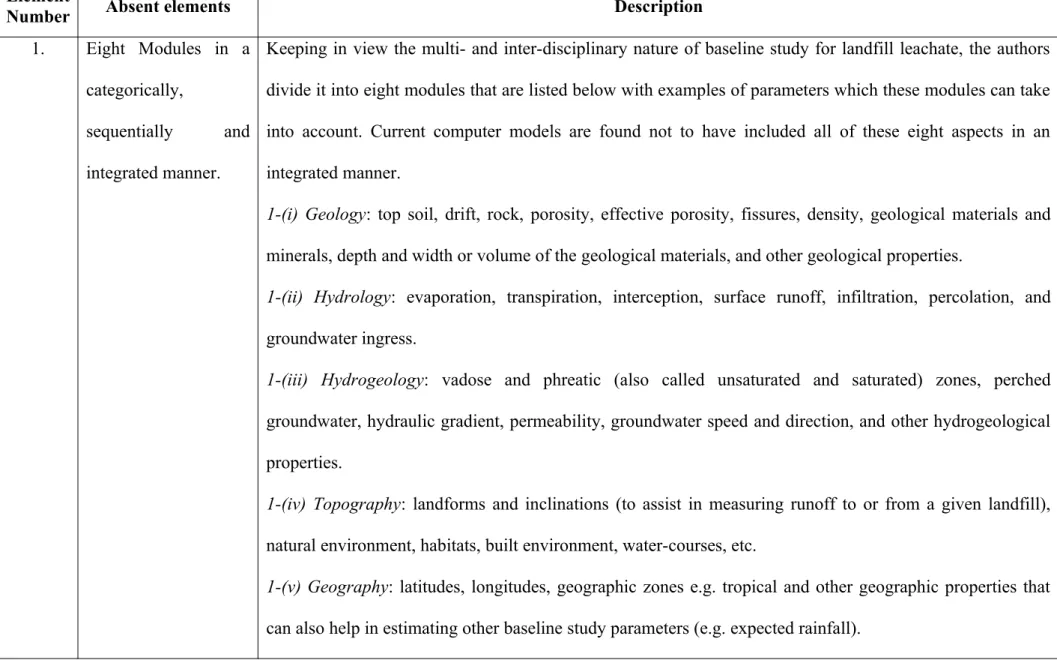
Table 1: Elements absent in baseline study – Criteria used as benchmarks to access existing computer models. Element
Number Absent elements Description
1. Eight Modules in a categorically,
sequentially and integrated manner.
Keeping in view the multi- and inter-disciplinary nature of baseline study for landfill leachate, the authors divide it into eight modules that are listed below with examples of parameters which these modules can take into account. Current computer models are found not to have included all of these eight aspects in an integrated manner.
1-(i) Geology: top soil, drift, rock, porosity, effective porosity, fissures, density, geological materials and minerals, depth and width or volume of the geological materials, and other geological properties.
1-(ii) Hydrology: evaporation, transpiration, interception, surface runoff, infiltration, percolation, and groundwater ingress.
1-(iii) Hydrogeology: vadose and phreatic (also called unsaturated and saturated) zones, perched groundwater, hydraulic gradient, permeability, groundwater speed and direction, and other hydrogeological properties.
1-(iv) Topography: landforms and inclinations (to assist in measuring runoff to or from a given landfill), natural environment, habitats, built environment, water-courses, etc.
1-(vi) Meteorology: precipitation (duration, frequency, intensity), wind speed and direction, wet and dry bulb temperatures, humidity, and degree of sunniness and cloudiness.
1-(vii) Human influences: past, present or future potential anthropogenic activities like quarrying, water abstraction, construction, and development.
1-(viii) Site management: site history, site type, site location, site design, and engineering (e.g. liners, drainage system), waste management activities, environmental monitoring, waste types.
2. Comprehensive, algorithmic, ready-to-use, step-by-step baseline study system.
The authors do not find evidence of a computer model which contains a comprehensive, algorithmic, ready-to-use, sequentially-linked, categorical, user-friendly-formatted, continual, and step-by-step baseline study system, which a risk assessor could follow from start to end in a self-guiding fashion to identify and categorise all landfill site characteristics that are needed in different subsequent stages of a risk assessment process for landfill leachate.
3. Uncertainty
assessment of all modules and sub-modules of the
baseline study.
4. Significant assessment of all modules and sub-modules of the baseline study.
There is a lack of significance assessment of all characteristics and parameters of modules and sub-modules of the baseline study. For instance, is the amount of interception and/or liquid waste for a given landfill significant enough to consider in leachate quantity measurement? What conservative measures are taken and for which parameters and why?
5. Systematic and categorical
consideration of data collation.
No consideration is given to means of data collation at baseline study stage that could assist in working out worst-case and most-likely risk scenarios in subsequent stages of a risk assessment process. Such means are indicated in points 6, 7, and 8 below.
6. Employment of statistical descriptions.
Lack of employment of statistical descriptions particularly in the context of maximum, minimum, and most-likely values of various parameters (e.g. evapo-transpiration, precipitation, interception, groundwater ingress, etc.). Such statistical descriptions can be helpful to figure out worst-case and most-likely risk scenarios; as well as to address uncertainties, and temporal and spatial variations.
temporal and spatial variations.
study modules and sub-modules. For instance, temporal variation of leachate quality in terms of its becoming mature over time; spatial variation of the unsaturated zone underneath a given landfill in order to figure out effective vadose thickness; etc.
8. Quantification of risk. For risk assessment to be quantitative, all appropriate parameters of baseline study modules and sub-modules need to be quantified. Examples of such parameters are interception, precipitation, and groundwater ingress. The more the objective measurement of such parameters is, the more successful the quantification of the risk will be.
9. Categorisation and consideration of landfill stages.
In order to integrate all these elements into a computer model or software package there is a need for a comprehensive, algorithmic, and systematic baseline study framework, which could provide guidelines on acquiring, sorting, and analysing all the data and/or information of preliminary investigation of a given landfill in such a useful format which could be systematically related to the subsequent stages of the risk analysis (Butt et. al., 2014).
4.0 COMPUTER MODELS OF RISK ANALYSIS AND BASELINE STUDY
The development of computational methods and the ability to model systems more precisely enables hazards to be quantified, their effects to be simulated and risk analyses to be pursued with greater accuracy, leading to more effective risk management. These developments are not only important for all areas of human endeavour, but have particular relevance to environmental issues where the risks involved are increasingly seen as substantial. However, the investigation of current computer models did not find a software package of risk assessment in a holistic format (McMahon et. al., 2001; Butt et. al., 2006). One of the elements which is found to be absent to a great extent in them all is an integrated and whole-system baseline study.A detailed account of features of a such a holistic baseline study is presented in Table 1 and a conceptual framework model is depicted in Figure 2.
4.1 Computer models/software – associated with landfills
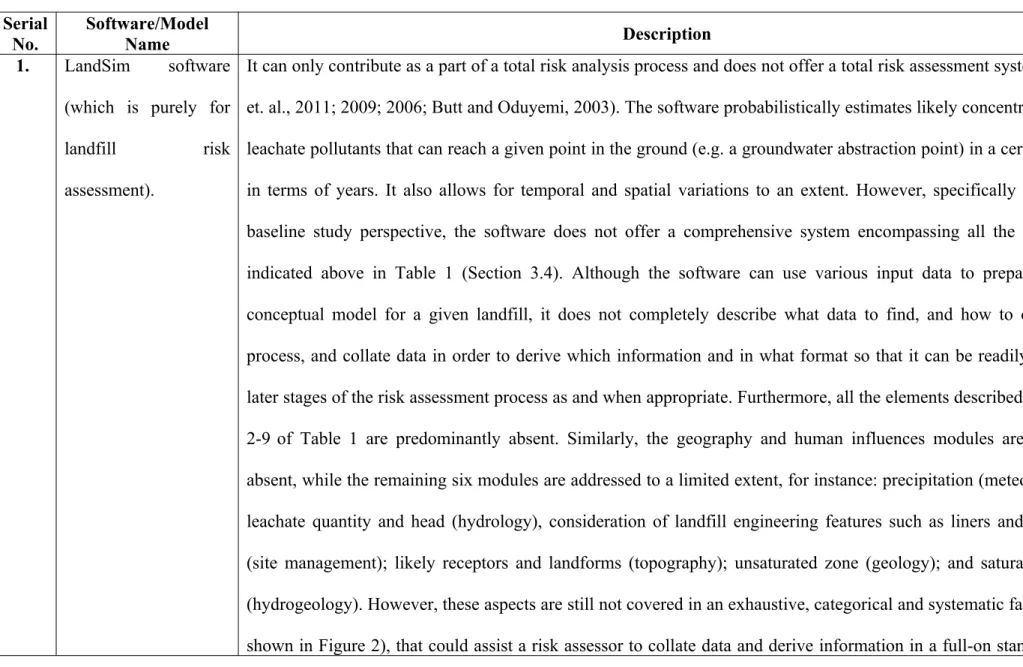
Table 2: Existing software packages closely associated with landfill risk assessment Serial
No.
Software/Model
Name Description
1. LandSim software (which is purely for landfill risk assessment).
format.
2. HELP program The HELP program contains only some aspects of landfill risk assessment. These are mainly the design features of landfill (such as liners, capping) and some other aspects (like precipitation, surface runoff and other water budget components). Its purpose is to guide the user through the design process of an open, partially closed or closed landfill. All these aspects can form part of the baseline study for a given landfill being assessed. However, the model does not and is not to offer a comprehensive baseline study system encapsulating many other facets indicated in Table 1 (Section 3.4) that could be applied as a complete preliminary investigation or foundation for a complete risk assessment of a landfill taking into account all potential hazards, pathways and receptors related to landfill leachate.
3. GasSim The software GasSim deals with some risk assessment modules (including gas generation, migration, impact and exposure); but as its name suggests, is designed for assessing landfill gas only, and not leachate. Even from the landfill gas perspective, this software does not address all the elements described in Table 1 (Section 3.4).
5. RIP Package The RIP package is an integrated probabilistic simulator for environmental systems and designed generally for any potential pollutant source in the ground (such as a chemical storage tank). However, the features of RIP were subsequently extended to take landfills into account on a comparatively large scale. Still, however, the RIP package predominantly remains to be a generic software, and risk assessors have to adapt it to their specific environmental scenarios and that includes landfills too. This adaptation is time consuming and not easy. (Miller, 1998). Although RIP can be applied to landfills for issues like contaminant release and transport, it does not readily provide such a straightforward total procedure either for risk analysis or baseline study for landfill leachate as shown in Figure 2, which a risk assessor could readily follow in a sequential and systematic fashion.
6. media, pathway, and Multi-receptor Risk Assessment (3MRA)
4.2 Computer models/software – associable with landfills
4.3 Other computer models/software – not closely associated or associable with landfills
Table 3: Other computer models/software Serial
No. Software/Model Name Description
1. (1-a) GoldSim (1-b) ConSim
GoldSim is a general-purpose simulation software to support a wider variety of applications, most of which fall into the following three categories: environmental systems modelling, business and economic modelling, and engineered system modelling (GoldSim Technology Group, 2003). Thus, it outgrows even the RIP software (discussed in Table 2) in terms of generics. Also, in parallel to RIP, users have to learn how to adapt GoldSim to their specific environmental problems. Similarly, the ConSim program is a tool for assessing the risks which are posed to groundwater quality by pollutants migrating from a contaminated land (Whittaker et. al., 2001; Golder Associates, 2004; 2012c). The authors find that this has not been specifically designed for use with landfills; particularly when landfills have a leachate head and/or liners, which is very likely with modern engineered landfills (Environment Agency, 2003c; Butt et. al., 2006). Neither GoldSim nor ConSim are specifically for landfills, let alone the fact that they do not contain a detailed baseline study framework with all the features highlighted in Table 1 (Section 3.4) and Figure 2 (Section 2.2) for any other environmental problems.
2. CLEA (Contaminated Land Exposure Assessment)
software waters (Environment Agency, 2003d). Pathways are considered only from the perspective of soil as an exposure medium (Environment Agency et. al., 2002). The CLEA program has been designed for use with contaminated land and not specifically for landfills (DEFRA and Environment Agency, 2002). CLEA does not offer a complete risk assessment model for landfill leachate or even contaminated land. Also, a detailed baseline study framework with all the features highlighted in Table 1 (Section 3.4) and Figure 2 (Section 2.2) do not fall within the scope of the software.
3. WRATE (Waste and Resources Assessment Tool for the Environment) software
The WRATE (Waste and Resources Assessment Tool for the Environment) software uses life cycle assessment and compares the environmental impacts of different municipal waste management systems (such as waste transportation, resources used and operation of a whole range of waste management processes with their environmental costs and benefits) (Environment Agency, 2011b; Golder Associates, 2012d). However, the software is still not specifically regarding comprehensive baseline study for landfill leachate as described in Table 1 and Figure 2, nor for any other waste management system.
4. HWIR (Hazardous Waste Identification Rule)
been developed to automate the HWIR system. The objective of the HWIR system is to reduce the possible over-regulation. Thus waste streams which qualify the HWIR rule (i.e. listed wastes that could meet the HWIR exit level criteria in a given scenario), would no longer be subject to the hazardous waste management system specified in RCRA (Resource Conservation and Recovery Act, United States). This way, HWIR can assist in sustainable waste management by supporting waste minimisation and the development of innovative waste treatment technologies. The HWIR approach covers a variety of natural and/or living receptors such as soil, fauna, mammals, and plants but does not address built environment constituents as receptors (e.g. underground pipeline infrastructures of gas, oil, clean-water, waste-water, etc.). The focus appears to be on wastes themselves rather than landfills (DOE, 1994; NERL, 2001; EPA, 1999a; 1999b; 2000; 2003; 2005). Furthermore, baseline study details for landfill leachate as described in Table 1 and shown in Figure 2 of the paper do not constitute the remit this system at all.
5. SADA (Spatial Analysis and Decision Assistance)
6. ARAMS (Adaptable Risk Assessment Modelling System)
ARAMS (Adaptable Risk Assessment Modelling System) is a computer-based, modelling, and database driven analysis system developed for the US Army for estimating the human and ecological health impacts and risks associated with military-relevant compounds (MRCs) and other constituents (ERDC, 2006). ARAMS takes various existing databases and models for exposure, intake, and health impacts, and incorporates them into conceptual site-models. The user may need to choose that which particular combination of model and database can be used appropriately for which scenario. The core of ARAMS is the object-oriented Conceptual Site Model (CSM) but that relies on yet another computer program called FRAMES (discussed below). Thus, it is not an easy task to ARAMS into a landfill leachate scenario every time if a landfill assessor decides to use ARAMS. Moreover, ARAMS appears to concentrate mostly on the exposure assessment facet of a risk analysis (which is just a part of a total risk assessment). It does not have other facilities such as a baseline study section (comprising, for instance: geology, hydrology, hydrogeology, and topography) that are necessarily required in a landfill risk analysis as explicitly described in Figure 2 (Section 2.2) and Table 1 (Section 3.4).
7. MEPAS (Multi-Media Environmental Pollutant
Assessment System) government, industrial, and international clients (PNNL, 2006a). The software integrates transport and exposure pathways for chemical and radioactive releases to determine their potential impact on the surrounding environment, individuals, and populations. MEPAS modules have been integrated in the FRAMES software platform to allow MEPAS models to be used with other environmental models to accomplish the desired analysis. In the context of landfills, the situation with MEPAS is not much different than ARAMS. Both computer programs are not intended to present and do not present an overall risk assessment methodology specifically for landfill leachate with the intent of holism; and the same is the case with the baseline study.
8. FRAMES (Framework for Risk Analysis Multi-Media Environmental Systems)
managers. FRAMES is the key to identifying, analysing, and managing potential environmental, safety, and health risks. As is obvious from this description that FRAMES is a hugely generic program; and yet it does not contain any software for landfill leachate analysis which could guide a landfill assessor to perform a landfill risk analysis along with a baseline study system comprising of the elements listed in Table 1 (Section 3.4).
9. RESRAD (9-a) RESRAD
(9-b) RESRADBUILD (9-c) RESRAD-CHEM. (9-d) RESRADBASELINE. (9-e) RESRAD-ECORISK. (9-f) RESRAD-RECYCLE. (9-g) RESRAD-OFFSITE.
The RESRAD is a combination of two words RESidual and RADiation (DMS, 2006), which is used as an acronym for 'residual radiation environmental analysis' (Farlex, 2006). The RESRAD is a suite of computer packages to provide a scientifically based answer to the question ‘how clean is clean?’ and to provide useful tools for evaluating human health risk from residual contamination (EAD, 2006a). These packages include (EAD, 2006a; 2006b):
(9-a) RESRAD, for soil contaminated with radio-nucleides;
(9-b) RESRADBUILD, for buildings contaminated with radio-nucleides; (9-c) RESRAD-CHEM, for soil contaminated with hazardous chemicals;
(9-d) RESRADBASELINE, for risk assessments against measured (baseline) concentrate-ns of both radio-nucleides and chemicals in environmental media;
(9-f) RESRAD-RECYCLE, for recycle and reuse of radio-logically contaminated metals and equipment; and
(9-g) RESRAD-OFFSITE, for off-site receptor dose/risk assessment.
10. RISC-HUMAN 3.1, RUM and Vlier-Humaan
RISC-HUMAN 3.1, RUM and Vlier-Humaan (Van Hall Institute of Business Center, 2000; 2001 and 2002, respectively) are three other software packages relating to risk analysis with a main emphasis on exposure assessment, not baseline study. Moreover, these are designed for use with contaminated land, and not specifically for landfills.
5.0 CONCLUDING REMARKS
A baseline study is not only one of the most important factors, but also the most fundamental initial stage of an effective risk analysis, as it leads to overall success of the risk assessment (and consequently of the risk management). In order to have a more inclusive, comprehensive, robust and integrated risk assessment, a correspondingly more holistic baseline study is required. On the other hand, current computer-aided approaches of risk analysis do not have a comprehensive, robust, and sound framework of risk assessment in a holistic manner, as a range of features are absent. One main absent feature is a holistic baseline study system which would encapsulate all necessary items that are needed to underpin a holistic risk analysis.
hazards.
Current software packages are just adequate in meeting the risk assessment requirements of the present environmental legislation, particularly in the UK. These computer-aided approaches are not holistic. Future environmental regulations, being derived from various European directives, are eminent to be more stringent and wider/inclusive in scope, and will encapsulate more environmental species including various food chain links, ecological systems, terrestrial and aquatic flora and fauna. Therefore a more comprehensive, yet concise, and robust risk analysis system, underpinned by well-integrated baseline study systems, will be needed. Based on the necessity and significance of a holistic baseline study in risk assessments of landfills, this research study has indicated knowledge gaps and limitations of computer models. A conceptual framework model of the holistic baseline study is also depicted. Therefore, this investigation paves a path for further research and study for developing a more complete and algorithmic computational procedure for holistic baseline study in an integrated fashion, specifically for landfill leachate. Furthermore, this paper comprehensively and yet categorically disseminates the state-of-the-science of computer software/packages regarding baseline study and risk assessment to a diverse range of stakeholders/audience (coming from the landfill industry in particular, and the fields of waste management and environmental management in general).
Acknowledgements
References
Adu-Gyamfi, K. A.; Villa, R. and Coulon, F. Renewable Energy, Landfill Gas and EfW: Now, Next and Future, Communications in Waste and Resource Management (CWRM), Vol. 10, Issue 1, pp. 4 – 12, The Chartered Institution of Wastes Management (CIWM), (February) 2010
Asante-Duah, D. K., Managing Contaminated Sites: Problem Diagnosis and Development of Site Restoration, John Wiley & Sons Ltd., 1996
Attenborough, G. M.; Hall, D. H.; Gregory, R. G.; and McGoochan, L., Development of a Landfill Gas Risk Assessment Model: GasSim. In: Proceedings for Solid Waste Association of North America, 25 Annual Landfill Gas Symposium, p. 25 – 28, Monterey, California, USA, March 2002
Blight, G. and Fourie, A. Graded Landfill Requirements in South Africa – Four years of Experience (Landfill Standards in South Africa), ‘Wastes Management’, CIWM (Chartered Institute of Wastes Management), Issue: September, p. 48 – 49, 1998
Booth, Pieter N. and Jacobson, Michael A., Development of Cleanup Standards at Superfund Sites: An Evaluation of Consistency, Journal of the Air & Waste Management Association, Vol. 42, Issue 6, pp. 762 – 766, 1992
Buss, S. R.; Herbert, A. W.; Morgan, P.; Thornton, S. F. and Smith, J. W. N., A review of ammonium attenuation in soil and groundwater, Journal of Engineering Geology and Hydrogeology, Vol. 37, pp. 347 – 359, (November) 2004
Butt, T. E. and Oduyemi, K. O. K., A Holistic Approach to Concentration Assessment of Hazards in the Risk Assessment of Landfill Leachate, Environment International, Elsevier Science Ltd., Vol. 28, Issue 7, p. 597 – 608, 2003
Butt, T. E.; Clark, M.; Coulon, M. and Oduyemi, K. O. K., A review of literature and computer models on exposure assessment, Environment Technology, Vol. 30, Issue 14, pp. 1487 – 1501, 2009
Butt, T. E.; Gouda, H. M.; Baloch, M. I.; Paul, P.; Javadi, A. A. and Alam, A. ‘Literature Review of Baseline Study for Risk Analysis’, Environment International, Vol. 63, pp. 149 – 162, 2014 Butt, T. E.; Ingles, A. J. D. and Baloch, M. I., A conceptual model outline for integrated exposure
assessment of waste disposal sites, Environmental Progress & Sustainable Energy, Vol. 30, No. 4, pp. 696 – 708, 2011
Total Environment, Vol. 569 – 570, pp. 815 – 829, 2016
Butt, T. E.; Mair, Nigel; and Oduyemi, K. O. K. Hazard Identification and Categorisation for Waste Disposal Sites: Part 1 – An integrated approach lacks, Risk Management, Vol. 8, Issue 2, pp. 133 – 148, 2006
Cabinet Office, Public Attitudes towards Recycling and Waste Management – Quantitative and Qualitative Review, Cabinet Office, (September) 2002
CEAM (Center for Exposure Assessment Modelling), National Exposure Research Laboratory, EPA (Environment Protection Agency). Multimedia, Multi-pathway, Multi-receptor Exposure and Risk Assessment (3MRA), http://www.epa.gov/ceampubl/ mmedia/3mra/ABSTRACT.TXT, (Viewed December), 2005
CEH (Centre for Ecology & Hydrology), Flood Estimation Handbook (FEH), http://www.ceh.ac.uk/data/feh.htm, 2008
CEH (Centre for Ecology & Hydrology), Flood Estimation Handbook: Introduction, http://www.nwl.ac.uk/feh/, 2002
CIRIA (Construction Industry Research and Information Association), remedial Engineering for Closed Landfill Sites, C 557, CIRIA, London, 2001
CIWEM (the Chartered Institution of Water and Environmental Management), Environmental Risk, Scottish Annual Symposium, Edinburgh Conference Centre, Organised by CIWEM Scottish Branch, (Tuesday, 16th November) 1999
CIWM (Chartered Institution of Waste Management), Risk Management: Criteria and Standards, ‘Wastes Management’, CIWM, Issue: May, p. 32 – 33, 2000
Davies, Jonathan. Diversion Ahead: Which route(s) to take? ‘Wastes Management’, CIWM (Chartered Institution of Waste Management), Issue: November, p. 32 – 33, 1999
DEFRA (Department for Environment, Food and Rural Affairs) and Environment Agency, The Contaminated Land Exposure Assessment Model (CLEA): Technical basis and algorithms, R & D Publication CLR 10, Document prepared by the National Groundwater and Contaminated Land Centre of the Environment Agency, 2002
DEFRA (Department for Environment, Food and Rural Affairs), Environmental Report on Changes to Waste Strategy 2000 for the Strategic Environmental Assessment, DEFRA, (January) 2005a DEFRA (Department for Environment, Food and Rural Affairs), Guidance on Municipal Waste
Management Strategies, DEFRA, (July) 2005b
DEFRA (Department for Environment, Food and Rural Affairs), The Environment in your pocket 2003 – National Statistics, Crown Copyright, 2003
2009), 2006
DETR (Department of the Environment, Transport and Regions), Waste Strategy 2000 – England and Wales (Part 1), Crown Copyright, 2000
DMS (Decision Mapping System), DMS Glossary, nalu.geog.washington.edu/dms/ glossary/_content.html, DMS, (ViewedNovember) 2006
DOE (Department of Energy), RCRA Corrective Action – Human Health Assessment, RCRA Information Brief. EH-231-045/0594, (May) 1994
DoE (Department of the Environment) and the Welsh Office, Making Waste Work – Summary, HMSO, London, 1995a
DoE (Department of the Environment) and the Welsh Office, Making Waste Work – A strategy for sustainable waste management in England and Wales, HMSO, London, 1995b
EAD (Environmental Assessment Division), RESRAD Program, http://www.ead.anl.gov/project/images/pa/20resrad.pdf, Argonne National Laboratory, 2006a EAD (Environmental Assessment Division), RESRAD Program,
http://web.ead.anl.gov/resrad/documents/anlrares.pdf, Argonne National Laboratory, 2006b EAD (Environmental Assessment Division), RESRAD-Chem,
http://web.ead.anl.gov/resrad/home2/chem.cfm, Argonne National Laboratory, (Viewed November) 2006c
EC (European Community) Directive on the Conservation of Natural Habitats and of Wild Fauna and Flora (the Habitats Directive), 92/43/EEC, 1992
EC (European Community), Water Framework Directive, 2000/60/EC, 2000
Environment Agency, Contaminant Impact on Groundwater: Simulation by Monte Carlo Method, ConSim Version 2, R & D Publication 132, Golder Associates, 2003c
Environment Agency, Contaminated Land Exposure Assessment (CLEA), http://www. environment−agency.gov.uk/subjects/landquality, (Viewed November) 2003d
Environment Agency, DEFRA (Department for Environment, Food and Rural Affairs) and SEPA (Scottish Environment Protection Agency), Contaminated Land Exposure Assessment (CLEA) Model, CLEA 2002 – Version 1.3, User Manual. Environment Agency, DEFRA and SEPA, 2002
Environment Agency, Draft Guidance on the Interpretation and Application of Regulation 15 of the Waste Management Licensing Regulations 1994 (The Groundwater Protection), HMSO, 1997 Environment Agency, GasSimLite User Manual, Website:
http:www.gassim.co.uk/GasSimLite/GASSIMLT_manual_v101.pdf, Viewed December 2003, Golder Associates, 2002
Directive and Integrated Pollution Prevention and Control (IPPC S5.02), Environment Agency, Bristol, (April) 2007
Environment Agency, Hydrogeological Risk Assessments for Landfill and the Derivation of Groundwater Control and Trigger Levels, Environment Agency, 2003a
Environment Agency, Internal Guidance on the Interpretation and Application of Regulation 15 of the Waste Management Licensing Regulations 1994 – The Protection of Groundwater with respect to Landfill, 1999
Environment Agency, LandSim 2.5 – groundwater risk assessment tool for landfill design, Environment Agency, Bristol. 2003b
Environment Agency, LandSim Performance Simulation by Monte Carlo Method (a LandSim Software Manual), Golder Associates, 1996
Environment Agency, LandSim, Release 2 (V.2.02) – Landfill Performance Simulation by Monte Carlo Method, Environment Agency, R & D Publication 120, 2001
Environment Agency, Waste and Resources Assessment Tool for the Environment (WRATE), http://www.environment-agency.gov.uk/research/commercial/102922.aspx, Viewed: April 2012, Last updated: 30 January 2012, Environment Agency, 2011b
Environment Agency, Waste Management 2010, http://www.environment-agency.gov.uk/ research/ library/data/132641.aspx, Viewed November 2011a, Environment Agency, 2011a
EPA (Environment Protection Agency) US, Data Requirements and Confidence Indicators for Ecological Benchmarks supporting Exemption Criteria for the Hazardous Waste Identification Rule – HWIR99, EPA, (October) 1999a
EPA (Environment Protection Agency) US, EPA’s Multimedia, Multipathway, and Multireceptor Risk Assessment (3MRA) Modelling System – A review by the 3MRA review panel of the EPA science advisory board, EPA-SAB-05-003, EPA, (November) 2004
EPA (Environment Protection Agency) US, Hazardous Waste Identification Rule (HWIR): Identification and Listing of Hazardous of Hazardous Wastes; Notice of Data Availability and Request for Comments, Federal Register Vol. 65, No. 138, (Tuesday) 18 July, p. 44491 – 44506, EPA, 2000
EPA (Environment Protection Agency) US, Hazardous Waste Identification Rule Assessment, http://www.epa.gov/nerl/research/2001/g5-1.html, (January) 2005
EPA (Environment Protection Agency) US, Proposed Revisions to the Hazardous Waste Identification Rule (HWIR) Fact Sheet, EPA530-F-03-003, http://www.epa.gov/cgi-bin/epaprintonly.cgi, (April) 2003
EPA (Environmental Protection Agency) US, Municipal solid waste generation, recycling and disposal in the United States: Facts and Figures for 2009. EPA-530-F-010-012, EPA, (December) 2010
ERDC (Engineer Research and Development Center), ARAMS, an Adaptable Risk Assessment Modelling System, US Army Corps of Engineers, http://www.erdc.usace.army.mil, (August) 2006
Eurostat, Waste Statistics, http://epp.eurostat.ec.europa.eu/statistics_explained/index.php/ Waste_Statistics, Viewed November 2011, Statistics Explained, (October) 2011
Evangelidis, Adrianos. FRAMES – A Risk Assessment Framework for e-Services, Electronic Journal of e-Government, Vol. 2, Issue 1, p. 21 – 30, 2003
Ewen, David. “Lancashire, Wales and Cheshire: our ‘local’ waste sites – We lift lid on real cost of rubbish recycling”, Evening Express, p. 4 – 5, (13 September) 2005
Farlex, Inc. The Free Dictionary, http://acronyms.thefreedictionary.com/RESRAD, Farlex, (1 November) 2006
FEMA (Federal Emergency Management Agency), HAZUS 99 – Estimated Annualized Earthquake Losses for the United States, FEMA 336, (February) 2001
FEMA (Federal Emergency Management Agency), HAZUS for Mitigation – A guide to using, FEMA, (April) 2002
FEMA (Federal Emergency Management Agency), Multi-Hazards – Overview of HAZUS-MH (Multi-Hazard), http://www.fema.gov/hazuz/hz_meth.shtm, FEMA, (Viewed July) 2004
FPLC, HELP Model (Landfill Design - Risk Assessment), http://www/fplc.edu/risk/ siteIndx.htm, FPLC, (April) 1997
Golder Associates, ConSim (Version 2.5), http://www.consim.co.uk/, (Viewed January) 2012c Golder Associates, GasSim – landfill gas risk assessment tool, GasSim Technical Summary (PDF
Format), http://www.gassim.co.uk/GasSim_TS_final.pdf, Golder Associates, (Viewed December) 2003
Golder Associates, GasSim (Version 2), http://www.gassim.co.uk/, (Viewed January) 2012b
Golder Associates, LandSim (Groundwater Risk Assessment Tool for Landfill Design), http://www.landsim.co.uk/ and http://www.golder.com/de/en/modules.php?name=Pages &sp_id=1220, (Viewed January) 2012a
Golder Associates, RIP (Repository Integration Program) (Integrated Probabilistic Simulator for Environmental Systems), Website Location: http://www.golder.com/rip/intro.htm#What, Golder Associates, 1998
Golder Associates, Software Development, http://www.golderassociates.com.ar/ en/modules.php?name=Pages&sp_id=1220, Viewed: April 2012, Golder Associates, 1212d Golder Associates, GasSim 2.5, Golder Associates, Website:
http://www.gassim.co.uk/Technical_Information.html, (Viewed: 16 August) 2016
GoldSim Technology Group LLC, GoldSim (Probabilistic User Environment), Version 8.01, User’s Guide, GoldSim Technology Group LLC, (October) 2003
HSE (Health and Safety Executive), Quantitative Risk Assessment for Offshore Installations – Risk Management, Offshore Research Focus, No. 123, p. 76, HSE, October 1998
ICE (Institution of Civil Engineers), ICE Design and Practice Guide: Contaminated Land Investigation, Assessment and Remediation, 1994
Johnson, C. A.; Schaap, M. G. and Abbaspour, K. C., Model comparison of flow through a municipal solid waste incinerator ash landfill, Journal of Hydrology, Vol. 243, pp. 55 – 772, 2001
Landcare Research (Manaaki Whenua Landcare Research – a New Zealand Crown Research Institute), Risk Assessment Model Reviews, http://www.contamsites.landcareresearch.co.nz/ risk_assessment_models_reviews.htm, 2003
Leavesley, George H. and Nicholson, Thomas J. Interagency Steering Committee on Multimedia Environmental Models (ISCMEM), http://www.iscmem.org/ WorkGroup_02.htm, (Viewed December), 2005
MBD (Market and Business Development), Press release: UK Waste Management Market Development Report, Market Review 2006-2010. http://www.mbdltd.co.uk/Press-Release/Waste-Management.htm, (Viewed November) 2011, MBD Ltd., (Released February) 2010
McMahon, A.; Heathcote, J.; Carey, M.; Erskine, A. and Barker, J. Guidance on Assigning Values to Uncertain Parameters in Subsurface Contaminants Fate and Transport Modelling, National Groundwater & Contaminated Land Centre Report NC/99/38/3, Environment Agency, (June) 2001,
Micro Drainage Ltd, WinDes – Floodflow System, Micro Drainage Ltd, www.microdrainage.co.uk, 2007
Miller, I., Personal Communication, Golder Associates, UK, 1998
Mitchell, J. K., Hazards in changing cities, Applied Geology, Vol. 18, Issue 1, p 1-6, 1998
Morris, Mark and Simm, Jonathan. Construction Risk in River and Estuary Engineering: A Guide Manual, Thomas Telford, 2000
Identification Rule (HWIR) Assessment, NERL Research Abstract, (October) 2001
PNNL (Pacific Northwest National Laboratory), FRAMES (Framework for Risk Analysis Multimedia Environmental Systems), PNL, http://mepas.pnl.gov/FRAMESV1/, 2006b
PNNL (Pacific Northwest National Laboratory), Introduction to MEPAS (Multimedia Environmental Pollutant Assessment System), PNL, http://mepas.pnl.gov/mepas/index/html, 2006a
Rejda, G. E., Principles of Risk Management and Insurance, Fifth Edition, Harper Collins College Publishers, 1995
Schnoor, Jerald L. Environmental Modelling – Fate and transport of pollutants in water, air and soil, John Wiley & Sons, Inc., 1996
Schroeder, Paul R.; Dozier, Tamsen S.; Zappi, Paul A.; McEnroe, Bruce M.; Sjostrom, John W. and Peyton, R. Lee. The Hydrologic Evaluation of Landfill Performance (HELP) Model, Engineering Documentation for Version 3, Interagency Agreement No. DW21931425, EPA (Environmental Protection Agency), Ohio 45268, (September) 1994
Scottish Executive, Key Scottish Environment Statistics 2004 – A Scottish Executive National Statistics Publication, Crown Copyright, 2004
Scottish Government, Waste – Waste sent to Landfill. http://www.scotland.gov.uk/Topics/ Statistics/Browse/Environment/TrendWasteLandfill, (Viewed November) 2011, Scottish Government, (September 21) 2011
SEPA (Scottish Environment Protection Agency), Guidance – Landfill Directive: Guidance on Monitoring of Landfill Leachate, Groundwater and Surface Water, http://www.sepa.org.uk/guidance/landfill_directive/monitoring.htm, SEPA, 2005b
SEPA (Scottish Environment Protection Agency), National Waste Strategy Scotland, SEPA, 1999 SEPA (Scottish Environment Protection Agency), SEPA Technical Guidance Note –
Hydrogeological Risk Assessment for Landfills and the Derivation of Control and Trigger Levels, Version 2.12, SEPA, (April) 2005a
SEPA (Scottish Environment Protection Agency). Position Statement WAT-PS-10-01 (Water use), Assigning groundwater assessment criteria for pollutant inputs, Version: 2.1, SEPA, 2011 SI (Statuary Instruments), Waste Management Regulations 1994, SI No. 1056, 1994a
SI (Statutory Instrument), Surface Water (River Ecosystem) (Classification) Regulations 1994, SI No. 1057, 1994b
SI (Statutory Instrument), the Groundwater Regulations 1998, SI No. 2746, Crown Copyright, 1998 SI (Statutory Instrument), the Landfill (England and Wales) Regulations, SI No. 1559, Crown
Copyright, 2002
Regulations 2005, SI No. 803, 2005
SSG (Scientific Software Group), Environmental Software & Publications (Catalogue), Washington, DC 20020 3041, http://www.siosoftware.com, 1997/98
SSG (Scientific Software Group), Environmental Software & Publications (Catalogue), Washington, DC 20020 3041, http://www.scisoftware.com/products/visual_help_details
/visual_help_details.html, 1998
SSG (Scientific Software Group). HELP Model, Landfill Design – Risk Assessment Models and Modelling/Modelling Software. http://www.geology-software.com/help.html, (Viewed January) 2012
SSI (Scottish Statuary Instrument), Landfill (Scotland) Regulations 2003, SSI No. 235, Crown Copyright, 2003
SSI (Scottish Statuary Instrument), the Pollution Prevention and Control (Scotland) Regulations 2000, SSI No. 323, Crown Copyright, 2000
Three Rivers District Council, Contaminated Land Inspection Strategy – Required under the provisions of the Environmental Protection Act 1990 Section 78B, Three Rivers District Council, (March) 2002
TIEM (The Institute of Environmental Modelling), SADA (Spatial Analysis and Decision Assistance), University of Tennessee Research Corporation, http://www.tiem.utk.edu/sada/, 2006
Tromans, Stephen and Stiles, Dean. The Practical Guide to Waste Management Law, Wastes Management, CIWM (The Chartered Institution of Wastes Management), Issue: August, p. 47, 2004
Tweeds, Laxton’s Guide to Risk Analysis & Management, (an imprint of Butterworth-Heinemann), 1996
UCF (University of Central Florida), the Hydrologic Evaluation of Landfill Performance (HELP) Model, UCF, 2001
Van Hall Instituut of Business Center, Software titles: RISC-HUMAN 3.1; RUM and; Vlier-Humaan (2000; 2001 and 2002, respectively), Leeuwarden, The Netherlands, http://www.risc-site.nl
Wallingford Software Ltd, InfoWorks CS (Combined System), InfoWorks CS Online Help, 2007, Wallingford Software Ltd.
Weinberg, Nadine; Henning, Miranda; Kladias, Michael; Killingstad, Marc. Technical Critique of the Multimedia, Multipathway, Multireceptor Risk Assessment Model, ‘Human and Ecological Risk Assessment’, Vol. 9, No. 7, p. 1679 – 1700, (December) 2003
Comparison of Selected Groundwater Risk Assessment Models, NGACLC (National Groundwater 7 Contaminated Land Centre) Report NC/00/14, Environment Agency, Dec. 2001 WHO (World Health Organization), HACCP – Introducing the Hazard Analysis and Critical
Control Point System, WHO, 1997
Wilson, David C. Hazardous Waste Management around the World, ‘Wastes Management’, IWM (Institute of Wastes Management), Issue: October, p. 49 – 52, 2000