R E V I E W
Open Access
The optic chiasm: a turning point in the evolution
of eye/hand coordination
Matz Larsson
1,2Abstract
The primate visual system has a uniquely high proportion of ipsilateral retinal projections, retinal ganglial cells that do not cross the midline in the optic chiasm. The general assumption is that this developed due to the selective advantage of accurate depth perception through stereopsis. Here, the hypothesis that the need for accurate eye-forelimb coordination substantially influenced the evolution of the primate visual system is presented. Evolutionary processes may change the direction of retinal ganglial cells. Crossing, or non-crossing, in the optic chiasm determines which hemisphere receives visual feedback in reaching tasks. Each hemisphere receives little tactile and proprioceptive information about the ipsilateral hand. The eye-forelimb hypothesis proposes that abundant ipsilateral retinal projections developed in the primate brain to synthesize, in a single hemisphere, visual, tactile, proprioceptive, and motor information about a given hand, and that this improved eye-hand coordination and optimized the size of the brain. If accurate eye-hand coordination was a major factor in the evolution of stereopsis, stereopsis is likely to be highly developed for activity in the area where the hands most often operate.
The primate visual system is ideally suited for tasks within arm’s length and in the inferior visual field, where most manual activity takes place. Altering of ocular dominance in reaching tasks, reduced cross-modal cuing effects when arms are crossed, response of neurons in the primary motor cortex to viewed actions of a hand, multimodal neuron response to tactile as well as visual events, and extensive use of multimodal sensory information in reaching maneuvers support the premise that benefits of accurate limb control influenced the evolution of the primate visual system. The eye-forelimb hypothesis implies that evolutionary change toward hemidecussation in the optic chiasm provided parsimonious neural pathways in animals developing frontal vision and visually guided forelimbs, and also suggests a new perspective on vision convergence in prey and predatory animals.
Keywords:Evolution, Dexterity, Ipsilateral retinal projection, Multisensory cues, Binocular vision, Optokinetic response, Primate, Predators, Prey
Introduction
It has been suggested that vision originated as a system for the control of distal movements [1-3]. The primate vis-ual system has a uniquely high proportion (approximately 45%) of retinal ganglial cells that do not cross the midline in the optic chiasm (OC): ipsilateral retinal projections (IRP) (Figure 1c) [4]. The most common explanation is that the proportion of IRP developed in combination with visual convergence due to the selective advantage of accurate depth perception, here called the stereopsis hypothesis [5]. Briefly, the assumption is that binocular
viewing creates two slightly different images, due to the positions of the eyes relative to the objects viewed. This binocular disparity provides information that the brain uses to estimate depth in the visual scene [6-9]. An add-itional idea, the "X-ray" hypothesis, proposed that the degree of binocular convergence maximizes the amount of visual information received, and that primate visual perception is improved by forward facing eyes, since binocularity confers the power of ‘seeing through’clutter in the visual field [10].
It is commonly suggested that binocular vision and stereopsis in primates was selected for due to the adap-tive value of accurate visual control of the hands [5,12]. Harris (1904) [13] stated that“binocular vision is clearly of great assistance in the accurate use of the hand for Correspondence:[email protected]
1
The Cardiology Clinic, Örebro University Hospital, SE−701 85, Örebro, Sweden 2The Institute of Environmental Medicine, Karolinska Institutet, SE-171 77,
Stockholm, Sweden
fine movements….” Others have also proposed an asso-ciation between binocular vision and eye-hand control [14-16]. According to Goodale [2,3], noteworthy paral-lels in the functional organization of the subcortical vis-ual system of amphibians, birds, and mammals suggest that independent, closed, and domain-specific processing modules for visuomotor control is an early developing characteristic of vertebrate brains. He proposed the exist-ence of two distinct and interacting systems, vision for per-ception and vision for action [2,3]. The aim of this review is to explore how stereopsis and other forms of spatial atten-tion are associated with visually mediated motor control of the hands, and to evaluate an eye/forelimb hypothesis in the light of this information.
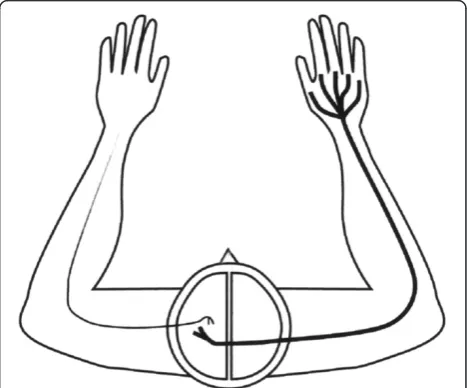
Vertebrate motor and somato-sensory areas associated with limb movements are largely located in the cerebral hemisphere contralateral to the limb involved (Figure 2). In primates, fibers from the left half of each retina go to the right hemisphere, and the fibers from the right half of each retina go to the left hemisphere. The result is that the left hemisphere receives information from the right visual field, and the right hemisphere receives infor-mation from the left visual field (Figure 1c) [17]. Studies have demonstrated that evolutionary processes mediated by regulatory genes may have influenced whether the axons of retinal ganglial cells cross the midline in the OC [18-21]. Retinal projections determine which hemisphere receives visual feedback about an operating forelimb. The
EF hypothesis suggests that evolutionary modification of the direction of retinal projections had selective value when the outcome was reduced length of neural pathways of motor and sensory neurons involved in forelimb coordin-ation via the elimincoordin-ation of inter-hemispheric connections
a
b
c
Figure 1Schematic of visual pathways in three types of vertebrates: Axonal routing in the optic chiasm is likely to be a reversible process in evolution influenced by the adaptive value of supervising body movements. (a)Optic pathways in limbless vertebrates*. Snakes and caecilians have developed reduced hemispherical specialization for visually guided steering of the body, and relatively high proportions of ipsilateral retinal projections, similar to phylogenetically less advanced, limbless, vertebrates e.g. cyclostomes [11]. The filled circles represent the superior colliculus (SC). Each hemisphere receives information from both visual hemifields. The SC is a component of the tectum, which integrates visual, somatosensory, and auditory information. It is the mammalian equivalent of the optic tectum in amphibians, reptiles, and birds [3].(b)Optic pathways in a vertebrate with lateralized visual fields and laterally placed forelimbs*. In animals with this anatomy, including the majority of dextropods with limbs, the hemispheres receive practically all, information from the contralateral visual hemifield. The dominance of contralateral retinal projections (CRP) will reduce the need for inter-hemispheric connections, since visual, motor, tactile, and proprioceptive (ViMoTaPro) information concerning the forelimb are processed in the contralateral hemisphere. Thus, when primitive limbless vertebrates began to develop limbs, evolutionary change towards more CRP is likely to have boosted the lateralization of visually guided limbs.(c)Optic pathways in a primate*. Due to the architecture of the OC, the hemispheres of primates** receive visual information solely from the contralateral visual hemifield. In species using forelimbs frontally, modification toward ipsilaterality in the temporal retina is associated with corresponding ViMoTaPro areas localized in the same hemisphere. (Only neural pathways to the SC and primary visual cortex are demonstrated). *The rectangles represent portions of the left and right visual hemifield. **Some other animals such as cats, arboreal marsupials, and fruit bats have similar visual systems.
in tectal and cortical regions when integrating visual infor-mation with somatosensory and motor inforinfor-mation about a limb. In addition, it postulates that this principle is a sig-nificant mechanism behind the varying proportions of IRP in vertebrate species, and that evolutionary change in the direction of retinal projections may be a reversible process that is influenced by an animal’s need for visual supervi-sion of body movements [12] (Figure 1). The brain hemi-spheres of limbless species receive a combination of visual information from left and right visual fields (Figure 1a). In species that mainly use the forelimbs in a lateral direction, the visual, motor, tactile, and proprioceptive neurons in-volved in eye/forelimb coordination are localized in the same hemisphere, with total crossing of retinal ganglial cells in the OC (Figure 1b). Animals such as primates, that have frontal eyes and regularly use the forelimbs in a frontal position also receive visual information in the ap-propriate hemisphere, but, in this case, it is due to incom-plete crossing (hemidecussation) in the OC (Figure 1c) [12]. Since the fundamental architecture of the brains in Figure 1b and 1c is analogous it may be more appropri-ate to say that short neural pathways among co-working neurons in the primate brain were “preserved” (rather than achieved) through evolutionary change in retinal projections.
Thus, the EF hypothesis proposes that the classic contralateral organization for visually mediated directing of limbs has been preserved in primates through evolu-tionary change in the visual system. If so, it is likely that components of the visual system that are largely involved in guiding the hand are functionally coupled with other sensory modalities and motor neurons involved in hand coordination. This would predict that the visual system is particularly suited for tasks in the space where the hand usually operates, i.e. the ipsilateral visual field, within arm’s length, and in the inferior portion of the visual field, since reaching movements in primates typically begin in the inferior quadrants of the visual field. This review ex-plores inter-hemispheric communication, the location of the hemidecussation line, the achiasmatic syndrome in humans, IRP influence on oculomotor function, hemi-spheric specialization in eye-hand control, multimodal perception, and frames of reference in hand coordin-ation. Links between the evolution of stereopsis and the evolution of eye-hand coordination are investigated. Im-plications for the evolution of vision convergence in mammals are also discussed.
Review
Communication between cerebral hemispheres
The primate lifestyle requires frequent relocations in space and coordinated movements of the eyes and hands to interact with objects [23]. Early evidence exists that the anatomy of visual pathways in the OC influences
eye-hand coordination. Poffenberger (1912) developed a proto-col to investigate sensory-motor integration between hemi-spheres [24]. Subjects were required to detect lateralized light flashes and to respond by moving either hand. He concluded that when subjects responded with the hand contralateral to the visual stimuli, at least one additional synapse was needed to transfer information from the hemisphere receiving sensory input to that controlling the motor output. The response time difference was pre-sumed to reflect the delay in conduction between the cerebral hemispheres and was designated the crossed/ uncrossed difference. Since then, studies have revealed more rapid motor responses to contralateral than to ipsilateral visual stimuli [25-27]. Thus, when for instance the left primate hand operates in the right visual field, the visual directing of the hand must rely on inter-hemispheric connections (Figure 1c). The secondary somatosensory cor-tex area (S2) appears to be fundamental in interhemispheric information transfer [28,29]. Disbrow et al. [28] suggested that extensive intra-hemispheric processing occurs before information is transferred to the opposite hemisphere.
Ringo et al. [30] proposed that hemispheric specialization developed because the temporal delay in conducting nerve impulses between hemispheres is too great in many in-stances to permit interhemispheric integration of neuronal computations. Hemispheric specialization means that the neural apparatus necessary to perform each high-resolution, time-critical task is located in a single hemisphere, which results in faster processing and, in addition, optimizes the size of the brain, as the exceedingly large human brain would be even larger without hemispheric specialization [30]. With increasing brain size and greater numbers of neurons, the proportional connectivity decreases, since the number of neurons that each neuron is connected to remains roughly the same [31]. If each neuron in the hu-man brain were connected to every other neuron, its diam-eter would be some 20 km [32], and metabolic costs would be enormous [33]. Thus, hemispheric specialization has been suggested to be an important principle optimizing the size of the brain while preserving functional con-nectivity among co-working neurons [30].
Ipsilateral retinal projections and oculomotor function
In albinism, the decussation line is moved into the temporal retina. This condition is also associated with nystagmus [38]. The optokinetic response refers to eye movement in response to movement in the surroundings, which serves to stabilize the visual image on the retina [40]. Lateral-eyed vertebrates show a characteristic asymmetry of the
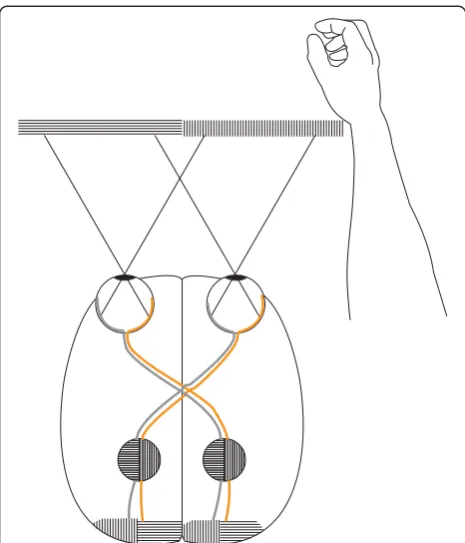
optokinetic response in the temporal to nasal direction under monocular stimulation, while frontal-eyed verte-brates such as cats and humans exhibit a vigorous opto-kinetic response in both directions [40]. The mechanism underlying this is unclear. However, a brain without uncrossed fibers in the OC may show asymmetry related problems in transmission of monocular visual information to eye muscle motor nuclei [37]. To produce conjugate eye movements, eye muscle nuclei in the hemispheres must coordinate [41]. Research in goldfish has demon-strated that the brain exploits visual feedback from the environment to fine-tune and stabilize the oculomotor system [42]. Visual feedback is essential in the regula-tion of saccadic eye-movements in humans [43], and the primate superior colliculus (SC) creates precisely coordi-nated visual to visuomotor maps related to extra-ocular eye muscle function [44]. When only one eye is used, visual feedback to eye muscle motor nuclei of one hemisphere is likely to be delayed in a primate without IRP, due to the requisite interhemispheric transfer (Figure 3). For example, nerve impulses to both eyes in conjugate eye-movements in right lateral gaze are initiated in the left hemisphere [41]. Due to hemidecussation, both hemispheres will re-ceive visual feedback in a monocular condition. There is evidence that this organization may preserve oculomotor function in case of loss of sight in one eye [32-34].
The split fovea
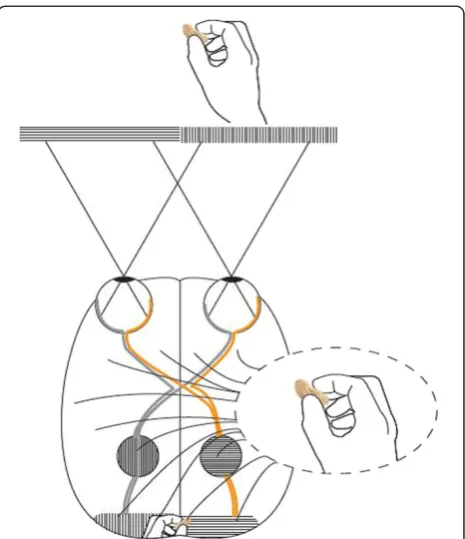
In humans, the nasal retina projects to the contralateral hemisphere, while the temporal retina projects ipsilaterally (Figure 1c). The line of decussation that divides crossed from uncrossed fibers normally coincides with the vertical meridian through the fovea [38]. Consequently, the right hemisphere receives afferent information from the left visual hemifield, and the left hemisphere receives infor-mation from the right visual hemifield. Increasing evi-dence suggest that the border is sharply delineated, with essentially no overlap of visual information between hemispheres. Harvey [45] presented visual targets to the left and right of vision fixation at various retinal loci and found a difference in reaction time between crossed and uncrossed responses at all loci. Even targets located no more than 0.25° and 0.50° from fixation produced a crossed/uncrossed time difference similar to other loci. This, and results of other studies [46-48], led to the split fovea theory, the assumption that, during fixation, objects presented immediately to the left of fixation are projected to and processed by the right cerebral hemisphere, and objects presented to the right of fixation are projected to and processed by the left cerebral hemisphere [49]. Lavidor and Walsh [49] and Ellis and Brysbaert [50] presented evidence that a split fovea affects reading of words at the fixation point. When fixation falls upon a written word, the letters that fall to the left of the Figure 3A primate visual system without ipsilateral retinal
fixation point project initially to the right cerebral hemi-sphere, whereas the letters that fall to the right of the fixation project to the left hemisphere. The split fovea may have implications for reaching tasks. Under natural conditions, in grasping an object, the eyes fixate on the target before the hand begins to move [51-53]. A conse-quence is that, when a primate visually fixates on an ob-ject before gripping it, visual information of the space between the hand and the object reaches the contralat-eral hemisphere first. For instance, when the right hand approaches a focused object, only the left hemisphere, which steers the hand, supervises the space through which the hand is moving (Figures 4 and 5).
Binocular vision in reaching tasks
Binocular cues have since long been considered the most important source of depth information [54-56]. Binocular viewing was shown to result in increased peak reaching velocities [54]. Melmoth and Grant [57] demonstrated that binocular vision is superior to monocular when a human reaches and grips a target. This was shown for real-time execution of the final low-velocity stage of the reach, for coordinating this with target contact, and for all aspects of grasping performance from planning the initial hand posture, through grip closure, to object manipulation.
In addition, their results indicated that, when binocular information was unavailable, subjects employed a more cautious strategy, opening the hand wider and more in advance of reaching the target object. Execution of the terminal reach and the grasp remained more inaccurate, error-prone, and variable under monocular than bin-ocular visual control [57].
Multisensory integration in grasp programming
Keefeet al. [58] argued against a special role for binocu-lar vision in grasp programming. They found that grip apertures were smaller when binocular and monocular cues were available than with either cue alone and sug-gested that this provides strong evidence that the visuo-motor system exploits the redundancy in multiple sources of information and integrates binocular and monocular Figure 4A primate right hand grip.A group of neurons that
creates a representation of the external world or the own body may resemble a 3 dimensional coordinate system. The object of attention (the berry) might be likethe origin(the crossing of the x-, y- and z-line). During the reaching maneuver, the right hemisphere receives no primary visual information about the hand. In gripping, the ipsilateral (right) hemisphere receives some visual information (the tip of the thumb and approximately half of the berry). The decussation line primarily follows the thumbnail cuticle. Right hemisphere information about the tip of the thumb, proprioception due to conjugate eye movements and left hemisphere information (touch, proprioception, vision, and motor signals related to the right arm/hand) may create many dimensions in such a coordinate system, contributing to the precision of the hand.
cues to improve grasping performance. Multisensory inte-gration is fundamental in adaptive behavior since it allows comprehensive perception of the world [59-61]. Visual, auditory, proprioceptive, somatosensory, and vestibular systems influence one another in a complex process from which perceptions emerge as an integrated product [62]. How are objects and events experienced as unitary when they stimulate receptors that give rise to different forms of information? Gibson [63] proposed that dissimilar forms of sensory stimulation are not a problem for the perception of unitary events but rather provide an im-portant basis for it. He argued that the senses should be regarded as a perceptual system with modules working together to access stimulation that is universal across the senses. One type of overlap involves amodal infor-mation, which is information that is not specific to a single sense modality but is redundant across more than one sense. For instance the dimensions of time, space, and intensity are typically conveyed by many senses [59], and animal as well as human infants are adept per-ceivers of amodal information [64]. The anatomy of the OC provides the executing hemisphere with amodal in-formation during visually directed reaching maneuvers. Visual information can be integrated with other modalities further downstream in the same hemisphere. Another consequence is that numerous neurons in the executing hemisphere will fire together, which is commonly pro-posed to promote learning [65].
Crossmodal cuing effects in hand coordination
Neurons in the primate SC are active prior to and during arm movements toward visual targets [66]. Neurons in the superficial layers of the SC are responsive nearly exclu-sively to visual stimuli at specific locations in the contra-lateral visual hemifield, while the deep layers express sensitivity to sensory stimuli of varying modalities (vision, audition, somatosensation) [67,68]. Multimodal neurons responding to tactile as well as to visual events have been identified in the SC [69-71]. The deep layers of the SC appear to be a coordinating domain [72,73] involved in integration of information and contributing to effective guidance of movements [67,74]. As mentioned, the pri-mate SC has precisely coordinated visual to visuomotor maps related to extra-ocular eye muscle function [44]. Due to IRPs emanating from the lateral retina, motor, tactile, proprioceptive, and visual information of the hand can be integrated in the contralateral region of the SC without interhemispheric communication when the hand operates in the ipsilateral visual hemifield (Figure 1c).
Multimodal neurons responding to tactile as well as to visual events have been observed also in the putamen [75] and in the parietal [76] and premotor [77] cortical regions. Studies utilizing visual images of alien, real, or false limbs have demonstrated that passive viewing of
such body-parts can influence the perception of somato-sensory stimuli [78,79]. Area 5 in the parietal lobe of the primate brain seems to be involved in monitoring the position and movement of the body. Neurons in this area have been found to encode the position of a monkey's arm while the arm was covered from view. Area 5 neurons responded to the position of a visible realistic false arm, and distinguished a right from a left arm [50,78]. Dushanova et al. [80] observed neurons in the primary motor cortex (M1), an area that is generally considered to initiate and guide movement, that responded to viewed actions. Ap-proximately half of the M1 neurons that were active when monkeys performed a task were also active when they observed a human performing the same action. These so-called ‘view’ neurons were found to be mixed with ‘do’neurons that are active only during movement [80]. Eisenberg et al. [81] suggested that visual aspects of movement are encoded in M1 only when they are coupled with motor consequences. Notably, when subjects crossed their arms, cross-modal cuing effects were reduced [79,82]. Because visually-based directing of the hands with crossed arms relies on inter-hemispheric communication, crossing arms may simulate a visual system without IRP.
Neural representations in reaching tasks
attention seems to have similarities with the origin, i.e. the point where the axes of the system intersect, in a Cartesian coordinate system (Figure 3). Feature-based attention, principally“vision for perception”[2,3], appears to operate across hemispheres [92,93], whereas spatial at-tention, largely associated with action, appears to operate over local groups of neurons within a hemisphere [92,93].
Frames of reference in movement planning
Humans are able to grip objects whether the objects are heard, seen, or touched. Consequently, information about the location of objects is recoded in a joint-centered frame of reference, despite of the sensory modality involved [94]. The location of reaching targets may be encoded in an eye-centered frame of reference whether the targets are visual, auditory, proprioceptive, or imaginary [94]. The recalled eye-centered location is updated following each eye and head movement and also when vision is not used, which may reflect a predominant role of vision in human spatial perception [94,95]. Behavioral studies in humans and studies of reach-related cerebral areas in primates have highlighted the dominance of eye-centered coordi-nates in movement planning [96]. Recent research has revealed that the frame of reference may shift. Parietal area V6A contains neurons modulated by the direction of gaze as well as neurons that code the direction of arm movement. The majority of V6A reaching neurons use a system that encompasses both of these reference frames [97]. The authors suggested that their results “are in line with the view of a progressive visuomotor transformation in the dorsal visual stream that changes the frame of reference from the retinocentric one, typically used by the visual system, to the arm-centred one, typic-ally used by the motor system”[97]. The dorsal aspect of the premotor cortex (PMd) is another area highly involved in visually guided reaching. In the PMd, some neurons en-code reaching goals using limb-centered reference frames, others employ eye-centered reference frames, while some cells encode reaching goals in a reference frame by the combined position of the eyes and hand [98]. Mulette et al. reported that, in the intraparietal cortex, the refer-ence frames of individual neurons ranged from predomin-antly eye-centered to predominpredomin-antly head-centered, with most neurons reflecting an intermediate, or hybrid, refer-ence frame involving a combination of head- and eye-centered information [99].
Studies of the SC [100], the ventral premotor cortex [101], and the dorsal premotor cortex [102] have identi-fied populations of neurons associated with arm move-ment that are either clearly eye-centered or consistent with eye-centered coding [96]. Studies of reaching move-ments to memorized targets in three-dimensional space with visual feedback of the moving extremity suggest a coordinated system that is centered on the line of sight
[103-105]. When visual feedback of the hand is altered, subjects alter the arm’s course so that the pathway appears visually straight [106,107]. Functional magnetic resonance imaging studies showed that the human premotor and posterior parietal cortex (PPC) contain neurons that spe-cifically encode visual stimuli close to the hand suggesting that the premotor and PPC are involved in a mechanism for the selective representation of visual stimuli near the body in hand-centered coordinates [108]. In the PPC there is considerable overlap among the regions that are import-ant for spatial working memory, visually guided actions, and navigation, and the PPC contains specialized subunits for the processing of spatial goals of saccades and reaching movements. Together these subunits are commonly labeled the parietal reach-region (PRR), which corresponds pri-marily to the medial intraparietal cortex [43]. Bhattacharyya et al. [109] showed that, when neurons in the PRR code depth in relation to a fixation point, gaze-centered coordi-nates are used. Sorrento and Henriques [110] studied the effects of gaze alterations on repeated arm movements toward a fixed target and found that, when the second movement was produced, it was guided by an updated, eye-centered, frame of reference. Based on this and other studies [111,112], Medendorp [43] suggested that gaze-centered coordinates are vital for achieving spatial reliability in the motor system. Hand movements are characteristic-ally initiated before the end of the orienting saccade to a target [113]. This indicates that the peripheral vision infor-mation available to plan eye and hand movements relative to a target is the same, and that this information is stored in the visual short-term memory. Thus, the central nervous system may use a common spatial representation of targets to plan both eye and hand movements [114]. Sighting dominance, i.e. the eye that is consistently favored under monocular viewing, has traditionally been considered to be a robust individual trait [115]. However, Khan and Crawford [116,117] found that subjects altered ocular dominance as a function of horizontal gaze direction in a reaching task. Notably, the alternating of ocular dom-inance depends on which hand is used to reach out and grasp the target [115,117].
The eye in service of the hand
reaching movements in favor of the lower visual field has been described [119-122]. It was proposed that this may account for the faster manual reaction times reported for the lower visual field; the lower field bias influences the capacity of primates to reach for, grasp, and manipu-late objects [123]. Thura et al. [124] demonstrated that hand position influenced saccadic activity in the mon-key brain frontal eye field (FEF). Single neurons were recorded in the FEF of two monkeys as they executed a visually guided saccade task while keeping the hand at specific locations on a touch screen. They concluded that visual and proprioceptive signals derived from the hand are integrated by FEF neurons, and showed that hand-related modulation is more pronounced in the lower than in the upper visual hemifield [124]. The medial posterior parietal cortex area, V6A, is proposed to be the earliest node of the dorsal visual stream where vis-ual, eye, and arm position-related information converge [23,115-127]. V6A contains arm movement related neu-rons that encode the direction of reach [128], hand orienta-tion [129], and grip formaorienta-tion [130]. Hence, multisensory encoding of space is likely to be realized in V6A [23,126]. A predominance of visual neurons with receptive fields typically representing the lower visual field, where the hand usually operates, has been demonstrated in area V6A [131,132]. The conjunction of visual and somato-sensory information is considered to form the represen-tation of peripersonal space in many primate brain areas [79,133,134]. Hadjidimitrakis et al. [23] studied neural sig-nals related to binocular eye position in a task requiring monkeys to perform saccades and fixate on targets at vari-ous locations in peripersonal and extrapersonal space. They found that neurons in area V6A are sensitive to visual fixation and the location of the foveated target in three-dimensional space, and that they are more highly acti-vated by gaze positions in the peripersonal space. The influence of a vergence signal on fixation has also been reported in the primary visual cortex [135] and in area V4 [136], and in both cases neurons were more activated by fixation points in space within arm‘s length. Viguer et al. suggested that vergent eye movements occur most fre-quently in the space corresponding to arm‘s length [137].
The explanatory potential of the EF hypothesis
The concept that binocular vision and abundant IRP result in stereopsis is well established. Studies have used the pres-ence of binocular vision as a verification of stereopsis in, for example, Macropodidae [138] and tyrannosaurs [139]. The wallaby, a small species of the Macropodidae, shows partial decussation of optic nerve fibers and has a binocular field of 50° [138]. This could also serve as evidence for the EF hypothesis, since visual control of forelimbs seems to be common in their foraging behavior [140]. Based on the fossil record, Stevens [139] concluded that Tyrannosaurus
rex and other coelurosaurs possessed functional stereop-sis. It may be that bipedal coelurosaurs commonly used the forelimbs in the binocular field. The anatomy of Tyrannosaurus rex and Troodon indicates considerable binocular vision below the axis of the head [139], where the forelimbs were likely to operate.
It has been proposed that mammals and birds may use binocular visual fields differently [141,142]. Martin pro-posed that binocularity in birds does not result in stereop-sis, with the possible exception of owls, rather its primary role is control of bill or feet position in foraging [142]. Such visual control of body appendages provides func-tional analogies with the EF hypothesis [12].
Evidence demonstrates that communication among vis-ual and motor neurons is slower when interhemispheric communication is required [24-27]. Multimodal sensory information used in hand coordination is likely to be transmitted slower in a primate brain without IRP. More-over, data on multimodal sensory information and a pri-mary role for gaze-centered coordinates in reaching tasks [43,94-96,109] indicate that supervision of the hands is largely integrated with motor control. Neurons in the primary motor cortex responding to viewed actions of a hand [80], visual feedback resulting in modification of arm movements [106,107], multimodal neurons responding to tactile as well as visual events [69-71,75-77], and the re-duction of cross-modal cuing effects when arms are crossed [79,82] (simulating a visual system without IRP) also support the EF hypothesis. The primate visual system is highly suited to supervision of tasks where the hand typically operates, within arm‘s length [23,135-137] and in the inferior visual field [119-124,131,132].
The placement of eyes in primates, predators, and prey
It is commonly suggested that binocular vision is espe-cially useful to predators for estimating the distance to prey, while animals preyed upon often have laterally situ-ated eyes, which provides an ability to scan a broad area of the surroundings without moving the head [144]. The law of Newton-Müller-Gudden (NGM) proposes that the number of optic nerve fibers that do not cross the mid-line is proportional to the size of the binocular visual field [145]. The majority of predatory mammals have frontally placed eyes and also a significant proportion of IRP [146], while mice, for example, have laterally situated eyes and no more than 3% IRP [18-21]. However, the NGM law has some inconsistencies. Predatory mammals such as dolphins display no IRP [147], and the variation in IRP among non-mammalian vertebrates has been suggested to be inexplicable and to lack association with a predatory lifestyle [11]. Therefore, the EF hypothesis seems to apply to a wider range of organisms than does the NGM law.
Heightened depth perception within the working space of the hand has adaptive value in arboreal primates. Arbor-eal marsupials, as well as fruit bats that use claws on the wing to manipulate fruits [148-150], possess a primate-like visual system with a high proportion of IRP. The domestic cat’s high proportions of IRP, around 30% [21] vs. 22% in the domestic dog [151], is in accordance with the EF hy-pothesis, since cats are tree-climbers and extensively direct the forelimbs using vision during prey capture [15].
Limitations and testability of the hypothesis
The EF hypothesis might be evaluated through compara-tive analyses of mammalian and non-mammalian associ-ations among IRP, eye convergence, and visual guidance of forelimbs. Ultimately it is DNA that determines whether the axon of a retinal ganglion cell crosses or not [18-21], and transcription factors play vital roles in this process [152-154]. There are indications that visual guidance of forelimbs may have influenced the morphogenesis of the retina and the regionalization of the OC area in numerous vertebrate species [12]. Many molecules and mechanisms involved in OC formation have been conserved in evolution [21], and the EF hypothesis may provide the opportunity to explore associations between visual guidance of forelimbs and alterations in the DNA. A predict of the EF hypothesis is that binocular vision should be expected in animals with forelimbs or similar appendages that habitually operate in front of the animal. This seems to be the case in praying mantises, insects that capture and manipulate prey with powerful forelimbs. The eyes of mantises offer a wide bin-ocular field, and, at close range, precise stereoscopic vision [155]. The proportion of IRP in mantises seems not to have been investigated, and offers opportunity for assessing the EF hypothesis in another phylum.Octopus vulgarismay be
another candidate. This species has been reported to com-bine arm location information with visual input to control complex goal directed movements [156].
Conclusions
This review supports the principle that evolutionary modifications in the proportions of IRP in the primate brain contributed to visual guidance of the hands, and emphasizes that stereopsis is largely associated with visual directing of the hand. Accurate movement of primate forelimbs depends on continuous and reciprocal interaction between motor and sensory systems. Goodale proposed that vision originally developed to control movement [1-3]. This review suggests that visual control of limbs continued to influence the evolution of vertebrate visual systems, and that the combination of convergent vision and increased proportions of IRP was a fundamental factor in the evo-lution of eye/hand coordination in primates. The EF hy-pothesis provides a rationale for the localization of eyes in primates and predatory mammals and is applicable in non-mammalian species. In addition, the EF-hypothesis suggests how the classic vertebrate cross-lateralized organi-zation for visually guided limb movements may have been preserved in early primates when they gradually changed their ecological niche to an arboreal lifestyle. It postulates that evolutionary change towards hemidecussation in the OC provided parsimonious and efficient neural pathways in animals with an increasing degree of frontal vision and frontally-directed, visually guided, motor behavior. Further studies may clarify the extent to which the optic chiasm was a turning point in the evolution of stereopsis.
Abbreviations
OC:Optic chiasm; IRP: Ipsilateral retinal projections; EF hypothesis: Eye-forelimb hypothesis; S2: Secondary somatosensory cortex area; SC: Superior colliculus; M1: Primary motor cortex; PMd: Dorsal aspect of the premotor cortex; PPC: Posterior parietal cortex; PRR: Parietal reach-region; FEF: Frontal eye field; NGM law: Law of Newton-Müller-Gudden.
Competing interests
The author declares that there are no competing interests.
Acknowledgements
Thanks to three anonymous reviewers for valuable comments, to Eric Warrant for information about invertebrate visual system, and Pieter Medendorp and Kaspar Meyer for reading an early version and giving editorial comments. I am grateful to Hans O. Richter for information about hand performance in the lower visual field and the Lucidus Consultancy for help with language and editorial advice. I thank Jesper Johanson, Örebro University for help with illustrations.
Received: 11 June 2013 Accepted: 9 July 2013 Published: 18 July 2013
References
1. Goodale MA:Vision as a sensorimotor system. InBehavioral approaches to brain research.Edited by Robinson TE. New York: Oxford University Press; 1983:41–61.
2. Goodale MA:Visuomotor modules in the vertebrate brain.Can J Physiol Pharmacol1996,74:390–400.
4. Fukuda Y, Sawai H, Watanabe M, Wakakuwa K, Morigiwa K:Nasotemporal overlap of crossed and uncrossed retinal ganglion cell projections in the Japanese monkey (Macaca fuscata).J Neurosci1989,9:2353–2373. 5. Heesy CP:Seeing in stereo: the ecology and evolution of primate
binocular vision and stereopsis.Evol Anthropol2009,18:21–35. 6. Barlow HB, Blakemor C, Pettigrew JD:Neural mechanism of binocular
depth discrimination.Journal of Physiology-London1967,193:327–342. 7. Cumming BG, DeAngelis GC:The physiology of stereopsis.Annu Rev
Neurosci2001,24:203–238.
8. Wheatstone C:On some remarkable, and hitherto unobserved, Phenomena of Binocular Vision, Contributions to the Physiology of Vision–Part the First. London: Philosophical Transactions of the Royal Society of London; 1838. 9. Campbell FW, Green DG:Monocular versus binocular visual acuity.Nature
1965,208:191–192.
10. Changizi MA, Shimojo S:"X-ray vision" and the evolution of forward-facing eyes.J Theor Biol2008,254:756–767.
11. Ward R, Reperant J, Hergueta S, Miceli D, Lemire M:Ipsilateral visual projections in non-eutherian species: random variation in the central nervous system?Brain Res Rev1995,20:155–170.
12. Larsson M:Binocular vision and ipsilateral retinal projections in relation to eye and forelimb coordination.Brain Behav Evol2011,77:219–230. 13. Harris W:Binocular and stereoscopic vision in man and other vertebrates,
with its relation to the decussation of the optic nerves, the ocular movements, and the pupil reflex.Brain1904,27:107–147. 14. Elliot Smith G:The new vision.Nature1928,121:680–681.
15. Hughes A:The topography of vision in mammals of contrasting life styles. InHandbook of Sensory Physiology: The visual system in vertebrates. Volume 7/5 A.Edited by Crescitelli F. Berlin, Heidelberg: Springer; 1977:613–756.
16. Le Gros Clarke WE:The early forrunners of man.London: Tindall & Cox; 1934. 17. Hellige JB:Hemispheric asymmetry: What’s right and what’s left.Cambridge,
MA: Harvard University Press; 1993.
18. Guillery RW, Mason CA, Taylor JS:Developmental determinants at the mammalian optic chiasm.J Neurosci1995,15:4727–4737.
19. Mason CA, Sretavan DW:Glia, neurons, and axon pathfinding during optic chiasm development.Curr Opin Neurobiol1997,7:647–653. 20. Sretavan DW:Specific routing of retinal ganglion cell axons at the
mammalian optic chiasm during embryonic development.J Neurosci 1990,10:1995–2007.
21. Herrera E, Mason CA:The evolution of crossed and uncrossed retinal pathways in mammals. InEvolution of nervous systems: Mammals. Volume 3.Edited by Krubitzer L, Kaas J. Oxford: Elsevier; 2007:307–317.
22. Gazzaniga MS:Cerebral specialization and interhemispheric
communication: does the corpus callosum enable the human condition?
Brain2000,123(Pt 7):1293–1326.
23. Hadjidimitrakis K, Breveglieri R, Placenti G, Bosco A, Sabatini SP, Fattori P:Fix your eyes in the space you could reach: neurons in the macaque medial parietal cortex prefer gaze positions in peripersonal space.PLoS One 2011,6:e23335.
24. Poffenberger AT:Reaction time to retinal stimulation with specific reference to the time lost in conduction through nerve centres.Archives of Psychology1912,23:1–73.
25. Berlucchi G, Heron W, Hyman R, Rizzolat G, Umilta C:Simple reactions times of ipsilateral and contralateral hand to lateralized visual stimuli.
Brain1971,94:419–430.
26. Fisk JD, Goodale MA:The organization of eye and limb movements during unrestricted reaching to targets in contralateral and ipsilateral visual space.Exp Brain Res1985,60:159–178.
27. Aziz-Zadeh L, Iacoboni M, Zaidel E:Hemispheric sensitivity to body stimuli in simple reaction time.Exp Brain Res2006,170:116–121.
28. Disbrow E, Roberts T, Poeppel D, Krubitzer L:Evidence for
interhemispheric processing of inputs from the hands in human S2 and PV.J Neurophysiol2001,85:2236–2244.
29. Stancak A, Hoechstetter K, Tintera J, Vrana J, Rachmanova R, Kralik J, Scherg M: Source activity in the human secondary somatosensory cortex depends on the size of corpus callosum.Brain Res2002,936:47–57.
30. Ringo JL, Doty RW, Demeter S, Simard PY:Time is of the essence: a conjecture that hemispheric specialization arises from interhemispheric conduction delay.Cereb Cortex1994,4:331–343.
31. Striedter G:Principles of brain evolution.Sunderland, MA: Sinauer Associates, Inc.; 2005.
32. Nelson ME, Bower JM:Brain maps and parallel computers.Trends Neurosci 1990,13:403–408.
33. Gazzaniga M:Who's in Charge? Free Will and the Science of the Brain. London: Constable & Robinson Ltd; 2011.
34. Dell'Osso LF, Daroff RB:Two additional scenarios for see-saw nystagmus: achiasma and hemichiasma.J Neuroophthalmol1998,18:112–113. 35. Biega TJ, Khademian ZP, Vezina G:Isolated absence of the optic chiasm: a rare
cause of congenital nystagmus.Am J Neuroradiol2007,28:392–393. 36. Victor JD, Apkarian P, Hirsch J, Conte MM, Packard M, Relkin NR, Kim KH,
Shapley RM:Visual function and brain organization in non-decussating retinal-fugal fibre syndrome.Cereb Cortex2000,10:2–22.
37. Dell'Osso LF, Hertle RW, Williams RW, Jacobs JB:A new surgery for congenital nystagmus: effects of tenotomy on an achiasmatic canine and the role of extraocular proprioception.J AAPOS1999,3:166–182. 38. Hoffmann MB, Lorenz B, Morland AB, Schmidtborn LC:Misrouting of the
optic nerves in albinism: estimation of the extent with visual evoked potentials.Invest Ophthalmol Vis Sci2005,46:3892–3898.
39. Guillery RW, Okoro AN, Witkop CJ Jr:Abnormal visual pathways in the brain of a human albino.Brain Res1975,96:373–377.
40. Huang YY, Neuhauss SCF:The optokinetic response in zebrafish and its applications.Front Biosci2008,13:1899–1916.
41. Vaughan D, Asbury T:Neuro-ophtalmology, General Ophthalmology. 8th edition. Los Altos, California: Lange; 1977.
42. Major G, Baker R, Aksay E, Mensh B, Seung HS, Tank DW:Plasticity and tuning by visual feedback of the stability of a neural integrator.Proc Natl Acad Sci USA2004,101:7739–7744.
43. Medendorp WP:Spatial constancy mechanisms in motor control.Philos Trans R Soc Lond B Biol Sci2011,366:476–491.
44. Schiller PH, Stryker M:Single-unit recording and stimulation in superior colliculus of alert rhesus-monkey.J Neurophysiol1972,35:915–924. 45. Harvey LO Jr:Single representation of the visual midline in humans.
Neuropsychologia1978,16:601–610.
46. Haun F:Functional dissociation of the hemispheres using foveal visual input.Neuropsychologia1978,16:725–733.
47. Lines CR, Milner AD:Nasotemporal overlap in the human retina investigated by means of simple reaction time to lateralized light flash.
Exp Brain Res1983,50:166–172.
48. Gazzaniga M:The Bisected Brain.New York: Appleton-Century-Crofts; 1970. 49. Lavidor M, Walsh V:The nature of foveal representation.Nat Rev Neurosci
2004,5:729–735.
50. Ellis AW, Brysbaert M:Split fovea theory and the role of the two cerebral hemispheres in reading: a review of the evidence.Neuropsychologia2010, 48:353–365.
51. Hayhoe MM, Shrivastava A, Mruczek R, Pelz JB:Visual memory and motor planning in a natural task.J Vis2003,3:49–63.
52. Land M, Mennie N, Rusted J:The roles of vision and eye movements in the control of activities of daily living.Percepion1999,28:1311–1328. 53. Pelisson D, Prablanc C, Goodale MA, Jeannerod M:Visual control of
reaching movements without vision of the limb. II. Evidence of fast unconscious processes correcting the trajectory of the hand to the final position of a double-step stimulus.Exp Brain Res1986,62:303–311. 54. Servos P, Goodale MA, Jakobson LS:The role of binocular vision in
prehension: a kinematic analysis.Vision Res1992,32:1513–1521. 55. Bishop PO:Vertical disparity, egocentric distance and stereoscopic
depth constancy: a new interpretation.Proc R Soc Lond B Biol Sci1989, 237:445–469.
56. Sheedy JE, Bailey IL, Buri M, Bass E:Binocular vs. monocular task performance.Am J Optom Physiol Opt1986,63:839–846.
57. Melmoth DR, Grant S:Advantages of binocular vision for the control of reaching and grasping.Exp Brain Res2006,171:371–388.
58. Keefe BD, Hibbard PB, Watt SJ:Depth-cue integration in grasp programming: no evidence for a binocular specialism.Neuropsychologia 2011,49:1246–1257.
59. Bahrick LE, Liekliter R, Flom R:Intersensory redundancy guides the development of selective attention, perception, and cognition in infancy.Curr Dir Psychol Sci2004,13:99–102.
60. Lewkowicz DJ, Ghazanfar AA:The emergence of multisensory systems through perceptual narrowing.Trends Cogn Sci2009,13:470–478. 61. Lewkowicz DJ, Kraebel K:The value of multimodal redundancy in the
62. Stein B, Meredith MA:The Merging of the Senses.Cambridge, MA: MIT Press; 1994. 63. Gibson JJ:The senses considered as perceptual systems.Boston: Houghton
Mifflin; 1966.
64. Lickliter R, Bahrick LE:The development of infant intersensory perception: advantages of a comparative convergent-operations approach.Psychol Bull2000,126:260–280.
65. Hebb DO:The organization of behavior.New York: Wiley & Sons; 1949. 66. Werner W:Neurons in the primate superior colliculus are active before
and during arm movements to visual targets.Eur J Neurosci1993, 5:335–340.
67. Gandhi NJ, Katnani HA:Motor functions of the superior colliculus.Annu Rev Neurosci2011,34:205–231.
68. Katnani HA, Gandhi NJ:Order of operations for decoding superior colliculus activity for saccade generation.J Neurophysiol2011,106:1250–1259. 69. Groh JM, Sparks DL:Saccades to somatosensory targets. I. Behavioral
characteristics.J Neurophysiol1996,75:412–427.
70. Groh JM, Sparks DL:Saccades to somatosensory targets. III. Eye-position-dependent somatosensory activity in primate superior colliculus.
J Neurophysiol1996,75:439–453.
71. Groh JM, Sparks DL:Saccades to somatosensory targets. II. Motor convergence in primate superior colliculus.J Neurophysiol1996,75:428–438. 72. Klier EM, Wang HY, Crawford JD:The superior colliculus encodes gaze
commands in retinal coordinates.Nat Neurosci2001,4:627–632. 73. May PJ:The mammalian superior colliculus: laminar structure and connections.
Progr Brain Res2006,151:321–378.
74. Damasio A:Self Comes to Mind: Constructing the Conscious Brain.New York: Pantheon; 2010.
75. Graziano MS, Gross CG:A bimodal map of space: somatosensory receptive fields in the macaque putamen with corresponding visual receptive fields.Exp Brain Res1993,97:96–109.
76. Graziano MS, Gross CG:The representation of extrapersonal space: A possible role for bimodal, visual-tactile neurons. InThe Cognitive Neuroscience. Edited by Gazzaniga MS. Cambridge: MIT Press; 1994:1021–1034. 77. Graziano MS, Yap GS, Gross CG:Coding of visual space by premotor
neurons.Science1994,266:1054–1057.
78. Graziano MS, Cooke DF, Taylor CS:Coding the location of the arm by sight.Science2000,290:1782–1786.
79. Macaluso E, Maravita A:The representation of space near the body through touch and vision.Neuropsychologia2010,48:782–795. 80. Dushanova J, Donoghue J:Neurons in primary motor cortex engaged
during action observation.Eur J Neurosci2010,31:386–398.
81. Eisenberg M, Shmuelof L, Vaadia E, Zohary E:The representation of visual and motor aspects of reaching movements in the human motor cortex.
J Neurosci2011,31:12377–12384.
82. Kennett S, Eimer M, Spence C, Driver J:Tactile-visual links in exogenous spatial attention under different postures: convergent evidence from psychophysics and ERPs.J Cogn Neurosci2001,13:462–478.
83. Tolman EC:Cognitive maps in rats and men.Psychol Rev1948,55:189–208. 84. Hesslow G:The current status of the simulation theory of cognition.Brain
Res2012,1428:71–79.
85. Haynes JD, Rees G:Decoding mental states from brain activity in humans.Nat Rev Neurosci2006,7:523–534.
86. Kravitz DJ, Saleem KS, Baker CI, Mishkin M:A new neural framework for visuospatial processing.Nat Rev Neurosci2011,12:217–230.
87. Burgess N:Spatial cognition and the brain.Ann N Y Acad Sci2008, 1124:77–97.
88. Iaria G, Chen JK, Guariglia C, Ptito A, Petrides M:Retrosplenial and hippocampal brain regions in human navigation: complementary functional contributions to the formation and use of cognitive maps.
Eur J Neurosci2007,25:890–899.
89. Epstein RA:Parahippocampal and retrosplenial contributions to human spatial navigation.Trends Cogn Sci2008,12:388–396.
90. Logie RH, Brockmole JR, Jaswal S:Feature binding in visual short-term memory is unaffected by task-irrelevant changes of location, shape, and color.Mem Cognit2011,39:24–36.
91. Treisman A:Object tokens, binding, and visual memory. InHandbook of binding and memory.Edited by HD Zimmer AM, Lindenberger U. Oxford: Oxford University Press; 2006.
92. Alvarez GA, Gill J, Cavanagh P:Anatomical constraints on attention: Hemifield independence is a signature of multifocal spatial selection.
J Vis2012,12(5):1–20. Article 9.
93. Cohen MR, Maunsell JH:Using neuronal populations to study the mechanisms underlying spatial and feature attention.Neuron2011, 70:1192–1204.
94. Pouget A, Ducom JC, Torri J, Bavelier D:Multisensory spatial representations in eye-centered coordinates for reaching.Cognition2002,83:B1–11. 95. Henriques DY, Klier EM, Smith MA, Lowy D, Crawford JD:Gaze-centered
remapping of remembered visual space in an open-loop pointing task.
J Neurosci1998,18:1583–1594.
96. Buneo CA, Andersen RA:The posterior parietal cortex: sensorimotor interface for the planning and online control of visually guided movements.Neuropsychologia2006,44:2594–2606.
97. Marzocchi N, Breveglieri R, Galletti C, Fattori P:Reaching activity in parietal area V6A of macaque: eye influence on arm activity or retinocentric coding of reaching movements?Eur J Neurosci2008,27:775–789. 98. Batista AP, Santhanam G, Yu BM, Ryu SI, Afshar A, Shenoy KV:Reference
frames for reach planning in macaque dorsal premotor cortex.J Neurophysiol 2007,98:966–983.
99. Mullette-Gillman OA, Cohen YE, Groh JM:Motor-related signals in the intraparietal cortex encode locations in a hybrid, rather than eye-centered reference frame.Cereb Cortex2009,19:1761–1775.
100. Stuphorn V, Bauswein E, Hoffmann KP:Neurons in the primate superior colliculus coding for arm movements in gaze-related coordinates.
J Neurophysiol2000,83:1283–1299.
101. Mushiake H, Tanatsugu Y, Tanji J:Neuronal activity in the ventral part of premotor cortex during target-reach movement is modulated by direction of gaze.J Neurophysiol1997,78:567–571.
102. Shen L, Alexander GE:Preferential representation of instructed target location versus limb trajectory in dorsal premotor area.J Neurophysiol 1997,77:1195–1212.
103. McIntyre J, Stratta F, Lacquaniti F:Viewer-centered frame of reference for pointing to memorized targets in three-dimensional space.J Neurophysiol 1997,78:1601–1618.
104. McIntyre J, Stratta F, Lacquaniti F:Short-term memory for reaching to visual targets: psychophysical evidence for body-centered reference frames.J Neurosci1998,18:8423–8435.
105. Soechting JF, Flanders M:Moving in three-dimensional space: frames of reference, vectors, and coordinate systems.Annu Rev Neurosci1992, 15:167–191.
106. Wolpert DM, Ghahramani Z, Jordan MI:Are arm trajectories planned in kinematic or dynamic coordinates? An adaptation study.Exp Brain Res 1995,103:460–470.
107. Bosco A, Breveglieri R, Chinellato E, Galletti C, Fattori P:Reaching activity in the medial posterior parietal cortex of monkeys is modulated by visual feedback.J Neurosci2010,30:14773–14785.
108. Brozzoli C, Gentile G, Petkova VI, Ehrsson HH:FMRI adaptation reveals a cortical mechanism for the coding of space near the hand.J Neurosci 2011,31:9023–9031.
109. Bhattacharyya R, Musallam S, Andersen RA:Parietal reach region encodes reach depth using retinal disparity and vergence angle signals.J Neurophysiol 2009,102:805–816.
110. Sorrento GU, Henriques DY:Reference frame conversions for repeated arm movements.J Neurophysiol2008,99:2968–2984.
111. Fernandez-Ruiz J, Goltz HC, DeSouza JF, Vilis T, Crawford JD:Human parietal "reach region" primarily encodes intrinsic visual direction, not extrinsic movement direction, in a visual motor dissociation task.Cereb Cortex2007,17:2283–2292.
112. Gail A, Andersen RA:Neural dynamics in monkey parietal reach region reflect context-specific sensorimotor transformations.J Neurosci2006, 26:9376–9384.
113. Helsen WF, Elliott D, Starkes JL, Ricker KL:Coupling of eye, finger, elbow, and shoulder movements during manual aiming.J Mot Behav2000,32:241–248. 114. Issen LA, Knill DC:Decoupling eye and hand movement control: visual
short-term memory influences reach planning more than saccade planning.J Vis2012,12(1):1–13. Article 3.
115. Carey DP, Hutchinson CV:Looking at eye dominance from a different angle: Is sighting strength related to hand preference?Cortex2012. [Epub ahead of print].
116. Khan AZ, Crawford JD:Ocular dominance reverses as a function of horizontal gaze angle.Vision Res2001,41:1743–1748.
118. van der Meer AL, van der Weel FR, Lee DN:The functional significance of arm movements in neonates.Science1995,267:693–695.
119. He S, Cavanagh P, Intriligator J:Attentional resolution and the locus of visual awareness.Nature1996,383:334–337.
120. Portin K, Vanni S, Virsu V, Hari R:Stronger occipital cortical activation to lower than upper visual field stimuli. Neuromagnetic recordings.Exp Brain Res1999,124:287–294.
121. Talgar CP, Carrasco M:Vertical meridian asymmetry in spatial resolution: visual and attentional factors.Psychon Bull Rev2002,9:714–722. 122. Richter HO, Wennberg P, Raudsepp J:The effects of inverting prisms on
the horizontal-vertical illusion: a systematic effect of downward gaze.
Exp Brain Res2007,183:9–15.
123. Danckert J, Goodale MA:Superior performance for visually guided pointing in the lower visual field.Exp Brain Res2001,137:303–308. 124. Thura D, Hadj-Bouziane F, Meunier M, Boussaoud D:Hand modulation of
visual, preparatory, and saccadic activity in the monkey frontal eye field.
Cereb Cortex2011,21:853–864.
125. Breveglieri R, Kutz DF, Fattori P, Gamberini M, Galletti C:Somatosensory cells in the parieto-occipital area V6A of the macaque.Neuro Report2002, 13:2113–2116.
126. Galletti C, Kutz DF, Gamberini M, Breveglieri R, Fattori P:Role of the medial parieto-occipital cortex in the control of reaching and grasping movements.Exp Brain Res2003,153:158–170.
127. Gamberini M, Galletti C, Bosco A, Breveglieri R, Fattori P:Is the medial posterior parietal area V6A a single functional area?J Neurosci2011, 31:5145–5157.
128. Fattori P, Kutz DF, Breveglieri R, Marzocchi N, Galletti C:Spatial tuning of reaching activity in the medial parieto-occipital cortex (area V6A) of macaque monkey.Eur J Neurosci2005,22:956–972.
129. Fattori P, Breveglieri R, Marzocchi N, Filippini D, Bosco A, Galletti C:Hand orientation during reach-to-grasp movements modulates neuronal activity in the medial posterior parietal area V6A.J Neurosci2009, 29:1928–1936.
130. Fattori P, Raos V, Breveglieri R, Bosco A, Marzocchi N, Galletti C:The dorsomedial pathway is not just for reaching: grasping neurons in the medial parieto-occipital cortex of the macaque monkey.J Neurosci2010, 30:342–349.
131. Galletti C, Fattori P, Battaglini PP, Shipp S, Zeki S:Functional demarcation of a border between areas V6 and V6A in the superior parietal gyrus of the macaque monkey.Eur J Neurosci1996,8:30–52.
132. Galletti C, Fattori P, Kutz DF, Gamberini M:Brain location and visual topography of cortical area V6A in the macaque monkey.Eur J Neurosci 1999,11:575–582.
133. Brozzoli C, Cardinali L, Pavani F, Farne A:Action-specific remapping of peripersonal space.Neuropsychologia2010,48:796–802.
134. Farne A, Iriki A, Ladavas E:Shaping multisensory action-space with tools: evidence from patients with cross-modal extinction.Neuropsychologia 2005,43:238–248.
135. Trotter Y, Celebrini S, Stricanne B, Thorpe S, Imbert M:Neural processing of stereopsis as a function of viewing distance in primate visual cortical area V1.J Neurophysiol1996,76:2872–2885.
136. Rosenbluth D, Allman JM:The effect of gaze angle and fixation distance on the responses of neurons in V1, V2, and V4.Neuron2002,33:143–149. 137. Viguier A, Clement G, Trotter Y:Distance perception within near visual
space.Percepion2001,30:115–124.
138. Wimborne BM, Mark RF, Ibbotson MR:Distribution of retinogeniculate cells in the tammar wallaby in relation to decussation at the optic chiasm.J Comp Neurol1999,405:128–140.
139. Stevens KA:Binocular vision in theropod dinosaurs.J Vertebr Paleontol 2006,26:321–330.
140. Lentle RG:Feeding strategies of the tammar wallaby (Macropus eugenii Desmarest), A thesis presented in partial fulfilment of the requirements for the degree of Doctor of Philosophy. Palmerston North, New Zeeland: Massey University, Ecology; 1998.
141. Heesy CP, Hall MI:The nocturnal bottleneck and the evolution of mammalian vision.Brain Behav Evol2010,75:195–203.
142. Martin GR:What is binocular vision for? A birds' eye view.J Vis2012, 12(1):1–13. Article 3.
143. Magnin M, Cooper HM, Mick G:Retinohypothalamic pathway: a breach in the law of Newton-Muller-Gudden?Brain Res1989,488:390–397.
144. Butler AB, Hodos W:Visual forebrain in amniotes. InComparative vertebrate anatomy–Evolution and adaptation.2nd edition. New York: Wiley Interscience; 2005:523–524.
145. Walls GL:The Vertebrate Eye and its Adaptive Radiation.New York: Hafner; 1942. 146. Jeffery G, Erskine L:Variations in the architecture and development of the
vertebrate optic chiasm.Prog Retin Eye Res2005,24:721–753.
147. Tarpley RJ, Gelderd JB, Bauserman S, Ridgway SH:Dolphin peripheral visual pathway in chronic unilateral ocular atrophy: complete decussation apparent.J Morphol1994,222:91–102.
148. Harman AM, Coleman LA, Beazley LD:Retinofugal projections in a marsupial,Tarsipes rostratus(honey possum).Brain Behav Evol1990, 36:30–38.
149. Royce GJ, Ward JP, Harting JK:Retinofugal pathways in two marsupials.
J Comp Neurol1976,170:391–413.
150. Rosa MGP, Schmid LM, Krubitzer LA, Pettigrew JD:Retinotopic organization of the primary visual cortex of flying foxes (Pteropus poliocephalusand Pteropus scapulatus).J Comp Neurol1993,335:55–72.
151. Lee I, Kim J, Lee C:Anatomical characteristics and three-dimensional model of the dog dorsal lateral geniculate body.Anat Rec1999,256:29–39. 152. Pak W, Hindges R, Lim YS, Pfaff SL, O'Leary DD:Magnitude of binocular
vision controlled by islet-2 repression of a genetic program that specifies laterality of retinal axon pathfinding.Cell2004,119:567–578. 153. Chung KY, Leung KM, Lin CC, Tam KC, Hao YL, Taylor JS, Chan SO:
Regionally specific expression of L1 and sialylated NCAM in the retinofugal pathway of mouse embryos.J Comp Neurol2004,471:482–498. 154. Herrera E, Garcia-Frigola C:Genetics and development of the optic
chiasm.Front Biosci2008,13:1646–1653.
155. Kral K:The functional significance of mantis peering behaviour.Eur J Entomol2012,109:295–301.
156. Gutnick T, Byrne RA, Hochner B, Kuba M:Octopus vulgaris uses visual information to determine the location of its arm.Curr Biol2011,21:460–462.
doi:10.1186/1742-9994-10-41
Cite this article as:Larsson:The optic chiasm: a turning point in the evolution of eye/hand coordination.Frontiers in Zoology201310:41.
Submit your next manuscript to BioMed Central and take full advantage of:
• Convenient online submission
• Thorough peer review
• No space constraints or color figure charges
• Immediate publication on acceptance
• Inclusion in PubMed, CAS, Scopus and Google Scholar
• Research which is freely available for redistribution