_____________________________________________________________________________________________________
Beneficiary Assessment of Development
Interventions Implemented by Rural Development
Animation Programme in Katsina and Kaduna
States, North-West Nigeria
O. Adeleye
1*and P. O. Adeleye
11Development Resource Initiative Sabo, Kaduna South, Kaduna State, Nigeria.
Authors’ contributions
This work was carried out in collaboration between both authors. Author OA designed the study, performed the statistical analysis, wrote the protocol and wrote the first draft of the manuscript. Authors OA and POA managed the analyses of the study. Author POA managed the literature searches. Both authors read and approved the final manuscript.
Article Information
DOI: 10.9734/SAJSSE/2018/v2i125825
Editor(s):
(1) Dr. Angel Paniagua Mazorra, Department of Economics and Politics, Scientific Researcher of OPIS, Instituto de Políticas y Bienes Públicos, Spain. (2) Dr. John M. Polimeni, Associate Professor, Department of Economics, Albany College of Pharmacy and Health Sciences, Albany, New York.
Reviewers:
(1) Iulia-Cristina Muresan, University of Agricultural Sciences and Veterinary Medicine of Cluj-Napoca, Romania. (2) Isidiho, Alphonsus Okpechi, Universiti Putra Malaysia. Complete Peer review History:http://prh.sdiarticle3.com/review-history/26444
Received 8th June 2018 Accepted 21st August 2018 Published 28th September 2018
ABSTRACT
A beneficiary assessment of the community development interventions implemented by Rural Development Animation Programme (RUDAP) in Katsina State and some parts of Kaduna State, Northwest Nigeria was conducted to determine the relevance of RUDAP’s interventions to the development priorities of the target groups and to assess the changes in the living conditions of the people due to RUDAP’s activities. The assessment was also aimed at ascertaining the level of participation of the target groups in the implementation of the development interventions by the organisation. The three (3) operational zones of RUDAP were purposively selected, and in each zone, 3 villages were selected to cover all the activities implemented by the organisation. In each village community, focus group discussions involving 15 persons were conducted separately for women and men beneficiaries. RUDAP’s interventions were support for construction of cereal bank/grain store, provision of the hand-driven borehole and sanitation enlightenment. The results showed that the interventions implemented by RUDAP were relevant to the critical issues identified
by the target groups for better life namely household food shortages, poor access to potable water and prevalence of unsanitary conditions. Changes in living conditions of the target groups attributable to RUDAP’s interventions included all year round household food supply, improved family cohesion among householders, increased income through the selling of surplus food grains in cereal banks when prices were more favourable. Others were reduced incidence of water- borne diseases, elimination of drudgery associated with fetching water from rivers and ease of maintaining personal hygiene. Participation of target groups in project implementation was in the form of financial and non-financial contribution. The findings from the beneficiary assessment underscored the importance of needs assessment prior to project design and implementation as well as the involvement of target groups in planning, implementation and evaluation of community development initiatives.
Keywords: RUDAP; beneficiary assessment; community development intervention; participation; cereal-bank; potable water; sanitation.
1. INTRODUCTION
Funders of development projects often commission an evaluation of such interventions to establish a case of value for money and probably to confirm that the project implemented has made a tangible difference in the level of living of the beneficiaries. However, conclusions from the evaluation of development projects are often made from the perspectives and interpretations of the evaluators, and the findings may not reflect the realities of the beneficiaries. Even when the beneficiaries are consulted mostly in the latter stage of the evaluation process, their contributions are limited due to little or non- involvement in the planning, design and implementation of the development projects. Mustapha [1] reported that non-involvement of project beneficiaries in the design and implementation can lead to bad project design, least cost- effectiveness and inequitable distribution of project benefits. This study focused on the assessment of community development interventions mainly from the perspectives and interpretations of the beneficiaries.
According to Salmen [2], beneficiary assessment is an approach to information gathering which assesses the value of activity as it is perceived by the principal users. The approach presents an opportunity for the voices of the beneficiaries to be heard as they narrate their experiences from their point of view and also from observations. Beneficiary Assessment draws heavily from the tradition in social science known as qualitative research that fundamentally depends on watching people in their territory and interacting with them in their language and terms [3]. Salmen [2] emphasised that the ultimate goal of beneficiary assessment is to reveal the meaning people give to particular aspects of their lives so
that development activities may better enhance people’s ability to improve their living conditions, as they see fit. Development effort at local or grassroots’ level is worsened when targets of such programmes are either left worse off than before or the project objectives were not relevant to the needs and aspirations of the people [4].
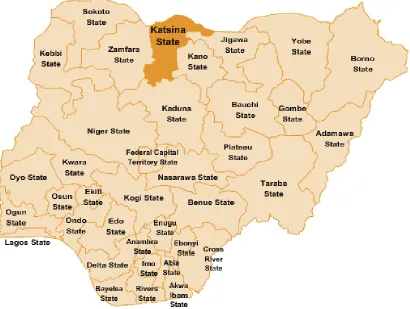
Rural Development Animation Programme (RUDAP) is a non-governmental and non-profit making organisation based in Funtua, Katsina State, North-West Nigeria. It is a development organisation under the auspices of Catholic Diocese of Sokoto State. RUDAP receives funding mainly from Misereor, Germany for the implementation of its development activities. The goal of RUDAP is to improve the living conditions of its beneficiaries. The activities carried out by the organisation include provision of potable water, empowerment of women through adult literacy and skills acquisition, food security and environmental protection and community development initiatives. Its beneficiaries are from Katsina and Kaduna States. The study was aimed at assessing the effects of the development interventions carried out by RUDAP from the perspectives of the beneficiaries.
2. ROLE OF NGOs IN RURAL AND COMMUNITY DEVELOPMENT
implementation of development intervention for desired change and assessment of the effects of development interventions on the level of living of the people. World Bank [6] considers NGOs as private organisations that pursue activities to relieve suffering, promote basic social services, and/or undertake community development. UNDP [7] defines “community development as the process by which the efforts of the people themselves are united with those of governmental authorities to improve the economic, social, and cultural condition of communities, to integrate the communities into the life of the nation and to enable them to contribute fully to national progress”. The community development process essentially involves the participation of the people themselves and the provision of technical and social services which encourage self-help and mutual understanding [8]. Apart from governmental authorities, non-governmental organisations have gained some recognition as important stakeholders in the community development process in many countries including Nigeria. For example, in a study on contributions of NGOs to rural community development in Anambra State, Nigeria; Iwuchukwu et al. [9] stated that NGOs were making effective contributions in the areas of sensitisation of masses on HIV/AIDS, training on food production and provision of support to widows as well as orphans. Omofonmwan and Odia [10] examined the role of NGOs in rural development and found that they contributed positively in the areas of environment, health and sanitation awareness creation, promotion of child rights law and community mobilisation. Similarly, the immense contribution of NGOs in the execution of self-help project for an improved standard of living of the people was reported by Ogunleye-Adetona and Oladeinde [11] in an assessment of the impact of self-help project in rural development in Kwara State, Nigeria. Enyioko [12] analysed the role of NGOs in rural development in Rivers State, Nigeria and found that NGOs are very prominent in effective implementation of government programmes towards sustainable rural development through third party activities in education, health, agriculture, community development, waste management, youth empowerment and poverty alleviation.
2.1 Assessment of Some Social Services in Nigeria
Nigeria has an estimated population of 186 million people as at 2015, making it the largest
country in Africa. There are 36 states in the country and a Federal Capital Territory (FCT) Abuja. The states are further divided into 774 local government areas. It was estimated that about 62.6% of the people live below the national poverty line [13]. Effect of poverty is more pronounced in the rural areas (69%) than in the urban (51.2%). The proportion of the population living in households with access to improved sanitation is 60.3% while the proportion of the population living in households with access to an improved water source is 69.6%. The prevalence of moderate food insecurity in the population is 26.4%, and that of severe food insecurity is 19.6%. UNICEF and WHO [14] examined the sanitary condition of an urban community in Akwa Ibom State, Nigeria and reported that tap water was the major source of water and unwholesome practices like open refuse dumping and building of pit latrines close to the houses was prevalent. Ekong [15] defines sanitation as the provision of facilities and services for the safe disposal of human urine and faeces. Ordinioha [16] surveyed water supply of some rural riverine communities in the Niger Delta region of Nigeria and found that the communities had easy access to water supply, but most of the facilities were either contaminated or non-functional.
3. DESCRIPTION OF PROJECT SITE
major food crops include maize, millet, guinea corn, cassava, Irish potato and cowpea.
3.1 Description of Target Groups
The beneficiaries of the projects implemented by RUDAP were drawn from 135 villages but only 9 villages were visited in the course of the beneficiary assessment exercise due to resource limitation. The estimated population of the nine villages visited ranged from 450 to 2250 with an average of 1500. The socioeconomic situation in the project area is characterised by increasing population and poor access to potable water and safe sanitation. There is a clear absence of functional primary health care services in all the villages visited, and facilities for power supply can hardly be seen. Majority of rural dwellers in the state are farmers and crops such as Sorghum, Millet, Rice, Maize, Soybean, Cowpea, Groundnut and Cotton are commonly grown by both women and men. Crop production is constrained by land resource degradation, drought, flooding, the emergence of parasitic
weed (striga), poor access to agricultural credit, untimely availability of fertiliser and other farm inputs. In some village communities both Christians and Muslims coexist while others are predominantly Christians or Muslims.
3.2 Objectives of Beneficiary Assessment
The beneficiary assessment was carried out among beneficiaries largely in Katsina State and in one Local Government Area in Kaduna State where RUDAP has been implementing rural development projects in the last seven years. The objectives of the exercise were to:
Determine the relevance of RUDAP’s interventions to the development priorities of the target groups;
Assess the changes in living conditions of the target groups attributable to RUDAP’s interventions; and
Ascertain the level of participation of the target groups in the implementation of RUDAP’s activities
4. METHODOLOGY
The assessment was accomplished in four stages namely planning, fieldwork, preliminary data analysis and debriefing as well as report writing between September 18 and October 14, 2017. The planning stage was accomplished essentially through a meeting with project staff and manager in Kaduna and further analysis and review of project documents to arrive at informed decisions concerning selection of sites for fieldwork. RUDAP operates in three zones namely Central, Mallumfashi and Funtua. The three zones were purposively selected for the beneficiary assessment. In each zone; three villages were selected to ensure the coverage of all the activities of the organisation. The planning stage was concluded in Funtua, Katsina State on October 9 while the fieldwork took place from October 11 to October 15.
The nine village communities selected for the evaluation mission represented 15% of the total number of villages covered by the project. Interview guides were prepared for the different categories of stakeholder groups. The issues addressed in the interview guides included the description of village community by the beneficiaries regarding population, absence or presence of social amenities such as primary health care centre, potable water, safe sanitation, electricity, primary school and market. Other issues were description of RUDAP’s activities in the village, identification of three most important activities of RUDAP in the village, local contribution to each of the three activities, observed changes in the living conditions of beneficiaries, capacity of beneficiaries to sustain the changes in their living conditions without further assistance from RUDAP, and suggestions for improvement in the outcomes of activities implemented by RUDAP in the future. The planning stage continued at the project site in Funtua on October 9 with a meeting with the project staff and project manager. The essence of the meeting was to firm up arrangements for field trips and interviews with other stakeholders. At the same time, the objectives of the assessment and the philosophy underpinning its methodology were shared with the project staff to engender common understanding. On October 10th, the second day of the mission, a meeting was held with the members of the beneficiary council and cereal bank committee drawn from the three zones to elicit their views on the activities implemented by RUDAP in their respective villages, at the project headquarters in
Funtua. The beneficiary council and cereal bank committee are two vital local structures constituted by RUDAP to support the management of project activities across the target groups in the three zones of its operations. Visits to the villages selected for the evaluation mission commenced on October 11 and continued until October 15.
In each village, focus group discussions were conducted separately for women and men beneficiaries. Each focus group consisted of 15 individuals. Individual in-depth interviews were also conducted where applicable. Data collected were analysed using descriptive statistics such as frequency, means and ranking. In addition, physical observations of facilities for improved better living conditions provided by the project were carried out. The facilities included a borehole, well, cereal bank, school building and tree nurseries. The field trips to benefiting villages were concluded on October 15. There was a debriefing session with the project manager and staff members on October 17 on the key findings of the beneficiary assessment. Report writing was done in Kaduna between
October 18-20, 2017. The first draft of the report was sent to the project manager on
October 31.
5. RESULTS AND DISCUSSION
5.1 Relevance
Table 1. Community development challenges identified by female beneficiaries in nine villages before the interventions by RUDAP
Community development challenge Frequency Percentage Position
Household food shortages 29 26.85 1
Poor access to potable water 23 21.30 2
Prevalence of open defecation 20 18.52 3
Lack of opportunity for women’s financial empowerment 18 16.67 4
Lack of reading skill in local language 6 5.56 5
Poor participation of women in leadership positions 5 4.63 6
Dilapidated primary school building 4 3.70 7
Threats to peaceful coexistence 3 2.78 8
Total 108 100.00
Source: Field survey 2017
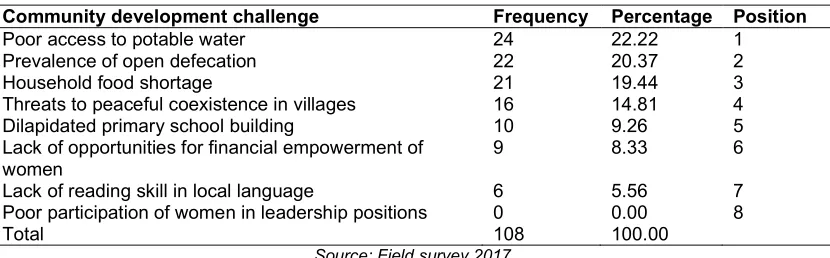
Table 2. Community development challenges identified by male beneficiaries in nine villages before the interventions by RUDAP
Community development challenge Frequency Percentage Position
Poor access to potable water 24 22.22 1
Prevalence of open defecation 22 20.37 2
Household food shortage 21 19.44 3
Threats to peaceful coexistence in villages 16 14.81 4
Dilapidated primary school building 10 9.26 5
Lack of opportunities for financial empowerment of women
9 8.33 6
Lack of reading skill in local language 6 5.56 7
Poor participation of women in leadership positions 0 0.00 8
Total 108 100.00
Source: Field survey 2017
The analysis of the most important activities of RUDAP based on combined choices made by both women and men is presented in Table 3. The results show that cereal bank was ranked as number 1 followed by provision of potable water, sanitation and microcredit for financial empowerment of women. There are appreciable alignment and harmony between the developmental challenges identified by the target groups and the most important activities of RUDAP. This shows that RUDAP’s interventions were very relevant to the developmental challenges experienced by the target groups. For example, provision of potable water through construction of borehole and protected wells was targeted for the problem of poor access to potable water and its associated prevalence of water- borne diseases especially among children. Construction of cereal bank was targeted for eradication of household food shortages which gets most pronounced in July and August every year. The cereal bank made it possible for the target groups to keep their food grains in safe conditions in the grain store managed by the community such that they have something to fall back on at food scarcity, and food prices become prohibitive. Prevalence of
unsanitary activities was addressed through improved access to potable water and community-wide enlightenment campaigns on sanitation practices like hand washing and eradication of open defecation. In this regard, the initial objectives of the project were still very much appropriate, and the planned activities and outputs were still to a large extent consistent with the objectives and developmental goal of the project. However, the project team could not provide information on planned activities and those implemented on a yearly basis to determine if there were differences and to tease out what might be responsible for the differences.
5.2 Changes in Living Conditions of
Target Groups after RUDAP’s
Interventions
5.2.1 Cereal bank/Grain store
the target groups were shortages of household food supply especially in July and August every year, lack of money to buy food grains when food prices become unaffordable, abandonment of household members by household heads in search of menial work in towns and cities. In addition, surplus food grains were sold at once shortly after harvest even when prices were low as there was no opportunity to store grains in the community. The situation was so bad that according to some of the beneficiaries, 60 to 70 out of every 100 people experienced food shortages every year. The construction of cereal banks across villages in the catchment area of RUDAP resulted in positive changes among the target groups. The changes include all year round food supply and improved family cohesion among household members, increased household income through storage of surplus food grain when the price is low and selling of it when prices have gone up. Others are increased capacity to procure farm inputs on account of better household income from storing surplus grains, procurement of bullock pair valued at N 140,000 for farm work from the profit made from storing grains in one of the villages, and enhanced household food security. Cereal banking is a community social safety net that is employed by communities in most arid and semiarid regions of the world, especially in food deficit countries or regions [19]. The World Bank [20] evaluated the impact of cereal banking in the Gambia and found that the scheme enhanced food and nutrition security at community, households and individual levels. The results further showed that communities that are relatively poorer and living farther away from markets and vulnerable to high inter-seasonal food price changes have a higher probability of adopting and sustaining cereal banking scheme.
5.2.2 Potable water supply
As for provision of potable water facilities, the living conditions of the target groups prior to RUDAP’s interventions was characterised by poor access to potable water, trekking of several kilometers by women and children as early as 4 am to 5 am to fetch contaminated water from rivers and streams, prevalence of water- borne diseases, difficulty in maintaining personal hygiene like hand washing, daily bathing and washing of dirty clothes, high medical bills due to frequent health challenges associated with drinking of contaminated water from the river, and shame associated with giving coloured water to visitors to drink.
The changes in living conditions attributable to the provision of potable water facilities by RUDAP as highlighted by the target groups included improved access to potable water, reduced incidence of water- borne diseases and elimination of drudgery associated with trekking a long distance to fetch water from the river. Others were ease of maintaining personal hygiene like daily bathing, hand washing and wearing neat clothes, reduced medical bills, and readiness to give drinking water to visitors. Omole et al. [21] conducted an assessment of water- related diseases in a Nigerian community and found that reasons for the high level of water related ailments were explained by the poor level of supply of potable water in the area; as well as poor sanitation practices by the residents. Several studies have established the links between water pollution and health problems [21,22]. Similarly, Raji and Ibrahim [23] in a study on the prevalence of water-borne infections in Northwest Nigeria reported that high incidences of water-borne diseases among the people were associated with poor access to potable water in the region. All these findings suggest that improved access to potable water is a catalyst for positive changes in the living conditions of people.
5.3 Participation of Target Groups in RUDAP’s Interventions
The level of participation of the target groups in project planning and implementation was quite pronounced and substantial. For example, a beneficiary council of 15 members comprising of 5 members from each zone of operation of the project was set up by the organisation to facilitate planning, feedback and sharing of information among the members and between the members and project team. The activities carried out by RUDAP in the villages were accompanied by some level of financial and non-financial local contribution. In the case of facilities for potable water like protected well and a borehole, local contribution included the provision of food and other refreshments for the workmen, site for the facility, stone and sand, digging of wells, functional management committee for the maintenance of the facilities. In one of the villages where the hand pump for the borehole broke down; the committee members quickly
mobilised funds internally and brought an artisan down from a neighbouring village to fix
the problem and got the hand pump working again.
Table 3. Analysis of most important activities of RUDAP identified by women and men in nine villages selected for beneficiary assessment
Activity Frequency Percentage Rank
Cereal bank/grain store 26 24.07 1
Provision of potable water 24 22.22 2
Sanitation 22 20.37 3
Microcredit for financial empowerment of women 12 11.11 4
Peace building 8 7.41 5
Primary school building 6 5.56 6
Sewing 4 3.70 7
Literacy 4 3.70 7
Formation of Community Development Organisation 2 1.85 9
Total 108 100.00
Source: Field survey 2017
For the cereal bank to become operational, the target groups provided land and built the store to lintel level while RUDAP provided roofing materials as well as doors and windows. More importantly, the running of the cereal bank was entirely being done by the committee set up in each village with no contribution from RUDAP. Regarding the women empowerment initiative, local contributions include payment of registration fee and partial payment of honorarium for the skills acquisition facilitator. In the village where RUDAP built a primary school, the people contributed N 140,000 for the making of chairs and tables. In addition, the village school committee mobilised resources for the hiring of day/night watch and payment of teachers’ salary. In this regard, several examples from the evaluation mission are supportive of the fact the philosophy of ‘working with people as opposed to working for them’ underpinning the operation of RUDAP is effective.
6. CONCLUSION AND RECOMMENDA-TIONS
The information gathered from the beneficiary assessment shows that the idea of working with the people to help them solve the problems identified by them is an effective model for community development initiative. The establishment of development priorities of the target groups by RUDAP before project implementation ensured that the interventions were relevant to the needs of the people thus stimulating their desire to participate actively in them. The involvement of the beneficiaries in project implementation through the various village committees set up by the organisation provided the catalyst for sustainability and empowerment of the people. Provision of basic rural facilities such as hand-driven borehole and
cereal banks for storing of grains are critical elements for improving the living conditions of rural dwellers. However, the provision of such rural facilities must be based on the priorities of the people. Participation of the beneficiaries in the community development initiatives through counterpart contributions in cash and kind enhance community ownership and maintenance of rural facilities provided. In view of the findings from the beneficiary assessment, it is recommended that organisations involved in community development initiatives should determine the development priorities of the people before embarking on project design and implementation. The objectives of community development initiatives should be aligned with the development priorities of the people to ensure the relevance of development efforts to the realities of the people. Involvement of beneficiaries in project design and implementation and their participation through counterpart contribution will enhance community ownership.
COMPETING INTERESTS
Authors have declared that no competing interests exist.
REFERENCES
1. Mustapha KY. The sub-project cycle of the second fadama development project. a paper delivered at the training workshop for facilitators and officers in local fadama desks, held at Abdulsalam Abubakar Youth Centre. Minna. 2004;1-2.
2. Salmen LF. Beneficiary assessment: An approach described. Paper No 10, The World Bank; 2002.
Series on qualitative research methods. Sage, Beverly Hills, California. 1989;1. 4. Paul C. Strategies and techniques for
enhancing participation in rural develop-ment. 2010;1(1):143-144.
5. Turner M, Hulme D. Governance, administration and development. Making the State Work. Palgrave; 1997.
6. World Bank. World faith development dialogue 1999: A different world vision transformational development indicators field guide. World Bank Report, Washington D.C.; 2001.
7. United Nations Development Programme. The Africa Governance Programme: Conceptual Framework, New York; 1997. 8. Akinbode IA, Laogun FA. Local
government services administration: The problems of community participation. In Dele Olowu (Ed): The administration of social services in Nigeria. The Challenges of Local Government, Ile-Ife Local Government Training Programme. University of Ife. 1981;112.
9. Iwuchukwu JC, Nwankwo OJ, Igbokwe EM. Providers and beneficiaries’ views of the contributions of state level non-governmental organisations to rural community development in Anambra State, Nigeria. Journal of Agricultural Extension and Rural Development. 2014;6(1):21-27.
10. Omofonmwan SI, Odia LO. The role of non-governmental organisations in community development: Focus on Edo State –Nigeria. Anthropologist. 2009;11(4): 247-254.
11. Ogunleye-Adetona CI, Oladeinde C. The role of community self-help projects in rural development of Kwara state, Nigeria. International Journal of Development and Sustainability. 2013;2(1):28-45.
12. Enyioko N. Role of NGOs in rural development: A study of the six listed NGOs in rivers state Nigeria; 2012.
Available:http://dx.doi.org/10.2139/ssm.21 78989
13. National Bureau of Statistics/SDGS/United Nations Development Programme. Nigeria: Sustainable Development Goals (SDGs) Indicators Baseline Report; 2016.
14. UNICEF and World Health Organisation. Progress on Drinking Water and Sanitation: Update WHO Geneva; 2012. 15. Ekong IE. An assessment of environmental
sanitation in an urban community in southern Nigeria. African Journal of Environmental Science and Technology. 2015;9(7):592-599.
16. Ordinioha B. A survey of the community water supply of some rural riverine communities in the Niger delta region: Health implications and literature search for suitable interventions. Nigeria Medical Journal. 2011;52(1):13-18.
17. Nigeria Demographic and Health Survey. National Population Commission, Federal Republic of Nigeria Abuja, Nigeria; 2013. 18. National Bureau of Statistics, Multiple
Indicator Cluster Survey; 2011.
19. Bhattamishra, Barrett. Community-based risk management arrangements: A review. World Development. 2010;38(7):923-932. 20. Available:http://www.worldbank.org/content /dam/Worldbank/Feature%20Story/Africa/a fr-raymond-jatta.pdf
21. Omole DO, Emenike CP, Tenebe IT, Akinde AO, Badejo AA. An assessment of water related diseases in a Nigerian community. Research Journal of Applied Sciences, Engineering and Technology. 2015;10(7):776-781.
22. Briggs D. Environmental pollution and the burden of disease. Brit. Medical Bulletin. 2003;68:1-24.
23. Raji MIO, Ibrahim YKE. Prevalence of water borne infections in Northwest Nigeria: A retrospective study. Journal of Public Health and Epidemiology. 2011; 3(8):382-385.
© 2018 Adeleye and Adeleye; This is an Open Access article distributed under the terms of the Creative Commons Attribution License (http://creativecommons.org/licenses/by/4.0), which permits unrestricted use, distribution, and reproduction in any medium, provided the original work is properly cited.
Peer-review history: