R E S E A R C H A R T I C L E
Open Access
Investigation of molecular biomarker
candidates for diagnosis and prognosis
of chronic periodontitis by bioinformatics
analysis of pooled microarray gene
expression datasets in Gene Expression
Omnibus (GEO)
Asami Suzuki
1*, Tetsuro Horie
2and Yukihiro Numabe
3Abstract
Background:
Chronic periodontitis (CP) is a multifactorial inflammatory disease. For the diagnosis of CP, it is
necessary to investigate molecular biomarkers and the biological pathway of CP. Although analysis of mRNA
expression profiling with microarray is useful to elucidate pathological mechanisms of multifactorial diseases, it is
expensive. Therefore, we utilized pooled microarray gene expression data on the basis of data sharing to reduce
hybridization costs and compensate for insufficient mRNA sampling. The aim of the present study was to identify
molecular biomarker candidates and biological pathways of CP using pooled datasets in the Gene Expression
Omnibus (GEO) database.
Methods:
Three pooled transcriptomic datasets (GSE10334, GSE16134, and GSE23586) of gingival tissue with CP in the
GEO database were analyzed for differentially expressed genes (DEGs) using GEO2R, functional analysis and biological
pathways with the Database of Annotation Visualization and Integrated Discovery database, Protein-Protein Interaction
(PPI) network and hub gene with the Search Tool for the Retrieval of Interaction Genes database, and biomarker
candidates for diagnosis and prognosis and upstream regulators of dominant biomarker candidates with the Ingenuity
Pathway Analysis database.
Results:
We shared pooled microarray datasets in the GEO database. One hundred and twenty-three common DEGs
were found in gingival tissue with CP, including 81 upregulated genes and 42 downregulated genes. Upregulated
genes in Gene Ontology were significantly enriched in immune responses, and those in the Kyoto Encyclopedia of
Genes and Genomes pathway were significantly enriched in the cytokine-cytokine receptor interaction pathway, cell
adhesion molecules, and hematopoietic cell lineage. From the PPI network, the 12 nodes with the highest degree
were screened as hub genes. Additionally, six biomarker candidates for CP diagnosis and prognosis were screened.
(Continued on next page)
© The Author(s). 2019Open AccessThis article is distributed under the terms of the Creative Commons Attribution 4.0 International License (http://creativecommons.org/licenses/by/4.0/), which permits unrestricted use, distribution, and reproduction in any medium, provided you give appropriate credit to the original author(s) and the source, provide a link to the Creative Commons license, and indicate if changes were made. The Creative Commons Public Domain Dedication waiver (http://creativecommons.org/publicdomain/zero/1.0/) applies to the data made available in this article, unless otherwise stated.
* Correspondence:[email protected]
1General Dentistry, The Nippon Dental University Hospital at Tokyo, 2-3-16
Fujimi, Chiyoda-ku, Tokyo 102-8158, Japan
(Continued from previous page)
Conclusions:
We identified several potential biomarkers for CP diagnosis and prognosis (e.g.,
CSF3, CXCL12
,
IL1B
,
MS4A1
,
PECAM1
, and
TAGLN
) and upstream regulators of biomarker candidates for CP diagnosis (
TNF
and
TGF2
). We also
confirmed key genes of CP pathogenesis such as
CD19
,
IL8
,
CD79A
,
FCGR3B
,
SELL
,
CSF3
,
IL1B
,
FCGR2B
,
CXCL12
,
C3
,
CD53
,
and
IL10RA
. To our knowledge, this is the first report to reveal associations of
CD53
,
CD79A
,
MS4A1
,
PECAM1
, and
TAGLN
with CP.
Keywords:
Chronic periodontitis, Biomarker candidates, Data sharing, Microarray gene expression dataset
Background
Chronic periodontitis (CP) is a multifactorial
inflamma-tory disease caused by genetic, immune, environmental,
and microbiological factors and lifestyle habits [
1
–
3
]. CP
is characterized by destruction of periodontal tissues,
especially gingival tissue inflammation and alveolar bone
resorption. Many previous studies of multiple gene
inter-actions and pathways have not completely elucidated the
biological mechanisms of CP.
Development of high-throughput experimental methods
in biological studies has yielded extensive omics data.
Additionally, transcriptomic studies using microarray
ana-lysis have advanced our understanding of the expression
landscape for biological mechanisms of multifactorial
diseases. Integration of multiple microarray datasets has
generated disease-associated mRNA profiles for screening.
While the experimental condition of each dataset is
clinic-ally and technicclinic-ally different, common differenticlinic-ally
expressed genes (DEGs) related to CP among multiple
datasets may identify key genes as potential targets for CP
diagnosis and prognosis.
At present, data sharing and integration of omics
data for investigating mechanisms of multifactorial
diseases
have
gained
attention.
Registration
of
biological experimental data in public databases has
also
been
recommended
to
help
facilitate
data
sharing. Use of pooled microarray gene expression
datasets is a method to reduce hybridization costs
and compensate for insufficient amounts of mRNA
sampling [
4
–
9
]. Many studies utilizing microarray
analysis to investigate mechanisms underlying
peri-odontitis have been conducted [
10
–
25
].
The National Center for Biotechnology Information
developed the Gene Expression Omnibus (GEO)
database to promote pooling and sharing of publically
available transcriptomic data to facilitate biomedical
re-search [
26
–
30
]. ArrayExpress is a public database for
high-throughput functional genomic data that consists
of two parts: the ArrayExpress Repository, which is the
Minimum Information About a Microarray Experiment
supportive public archive of microarray data, and the
ArrayExpress Data Warehouse, which is a database of
gene expression profiles selected from a repository that
is consistently reannotated [
31
].
In this study, we focused on gene expression in
gin-gival tissue from CP patients. We selected and analyzed
three pooled microarray platform datasets in the GEO
database. The aims of the present study were to identify
biomarker candidates for CP diagnosis and prognosis
based on functional and molecular analyses by
evalua-ting DEGs in gingival tissue between healthy control and
CP groups.
Methods
In the present study, we selected microarray datasets of
gingival tissue from CP patients in the GEO database
and investigated clinical biomarker candidates for CP
diagnosis and prognosis based on functional and
molecular pathway analyses of DEGs. We selected three
datasets
of
gingival
tissue
with
CP,
GSE10334,
GSE16134,
and
GSE23586,
using
the
following
keywords:
“
chronic
periodontitis,
” “
Homo
sapiens
,
”
“
gingival tissue,
”
and
“
microarray platform GPL570:
Affymetrix Human Genome U133 plus 2.0 Array.
”
These
three datasets were downloaded from the GEO database
(
http://www.ncbi.nlm.nih.gov/geo/
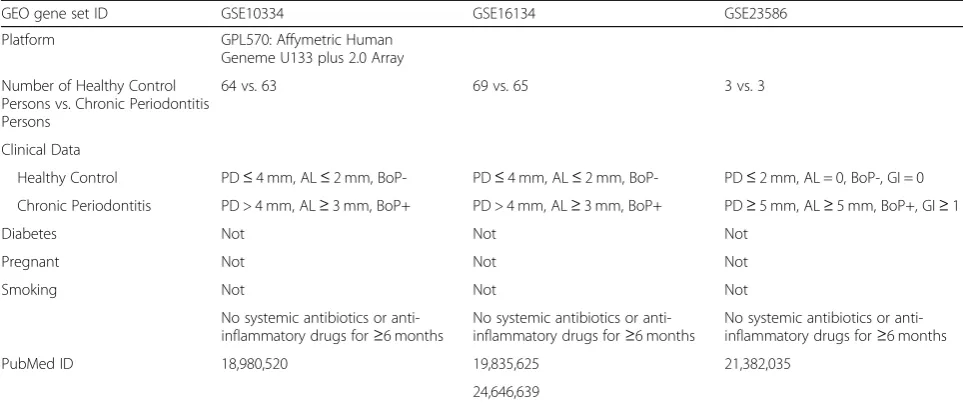
). A summary of the
individual studies is shown in Table
1
.
Identification of up/downregulated DEGs
Up- or downregulated DEGs in the three selected
data-sets were identified using GEO2R (
http://www.ncbi.nlm.
nih.gov/geo/geo2r/
). GEO2R is an interactive web tool
and an R-based web application for comparing two
groups of datasets in the GEO database, which we used
to compare normal healthy control and CP groups.
Common up- or downregulated DEGs in the three
se-lected datasets were extracted. We set
p
< 0.05 and |fold
change (FC)| > 2 as the cut-off criteria.
Functional analysis of DEGs
Protein-protein interaction (PPI) network construction and
hub gene identification
The PPI network was constructed using the Search Tool
for the Retrieval of Interacting Genes (STRING) database
(
http://string-db.org/
), which is an online repository that
imports PPI data from published literature. We used default
function in STRING. We calculated degrees of each protein
node, and the top 12 genes were identified as hub genes.
Common molecular biomarker candidates and molecular
pathways
Common molecular biomarker candidates for CP
diagnosis and prognosis among the three datasets were
investigated using Biomarker Analysis in QIAGEN
’
s
Ingenuity Pathway Analysis (IPA) software (
http://www.
ingenuity.com
). Applicable biomarkers were selected
based on IPA-biomarkers analysis. We set
p
< 0.05 and
|FC| > 2 as the cut-off criteria.
Upstream regulators of dominant biomarker candidates
Upstream regulators of dominant biomarker candidates
and molecular pathways were analyzed using Comparison
Analysis in IPA software. We set
p
< 0.05 and FDR < 5% as
the cut -off criteria. We then illustrated molecular
pathways including upstream regulators and dominant
biomarker candidates.
Functional and pathway enrichment analyses of upstream
regulators
Upstream
regulators
of
each
dominant
biomarker
candidate were analyzed based on GO and KEGG
data-bases using DAVID. We set p < 0.05 and FDR < 5% as the
cut-off criteria.
Results
We selected three gene expression microarray datasets
with CP in the GEO database and investigated
molecu-lar function, PPI, hub genes, molecumolecu-lar pathways, and
upstream regulators using DEGs to identify clinical
biomarker candidates for CP diagnosis and prognosis.
Identification of up/downregulated DEGs
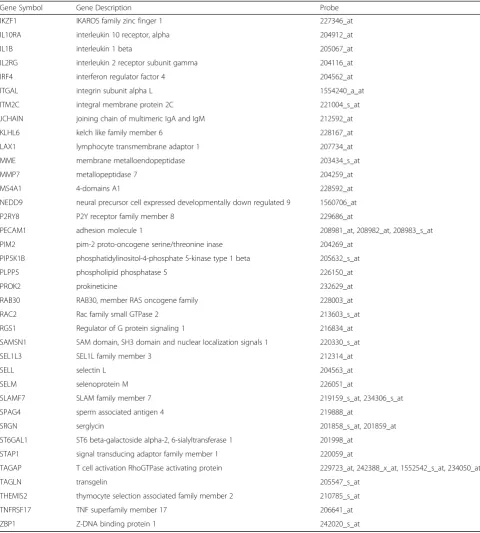
One hundred and twenty-three common DEGs among
GSE10334, GSE16134, and GSE23586 between normal
healthy control and CP groups were identified using
GEO2R. Specifically, 81 DEGs were significantly
upreg-ulated and 42 DEGs were significantly downregupreg-ulated
(Tables
2
and
3
).
Functional and pathway enrichment analyses of DEGs
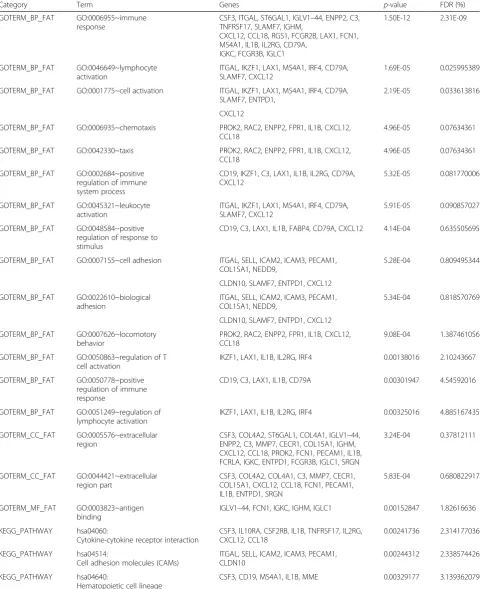
The results of functional enrichment analysis of up- or
downregulated DEGs in gingival tissue analyzed based on
GO Biological Process (BP), Cellular Component (CC),
and Molecular Function (MF) and pathway enrichment
analyzed based on the KEGG pathway using DAVID are
shown in Tables
4
and
5
.
Upregulated genes were significantly enriched in BP
related to immune response and cell adhesion.
Downregu-lated genes were significantly enriched in epidermis and
ectoderm development and keratinocyte, epidermal cell,
and epithelial cell differentiation.
Significantly enriched KEGG pathways of upregulated
genes included cytokine-cytokine receptor interaction,
adhesion molecules, and hematopoietic cell lineage. The
pathways of downregulated genes were not
signifi-cantly enriched.
Table 1
Summary of individual studies of chronic periodontitis
GEO gene set ID GSE10334 GSE16134 GSE23586
Platform GPL570: Affymetric Human
Geneme U133 plus 2.0 Array
Number of Healthy Control Persons vs. Chronic Periodontitis Persons
64 vs. 63 69 vs. 65 3 vs. 3
Clinical Data
Healthy Control PD≤4 mm, AL≤2 mm, BoP- PD≤4 mm, AL≤2 mm, BoP- PD≤2 mm, AL = 0, BoP-, GI = 0
Chronic Periodontitis PD > 4 mm, AL≥3 mm, BoP+ PD > 4 mm, AL≥3 mm, BoP+ PD≥5 mm, AL≥5 mm, BoP+, GI≥1
Diabetes Not Not Not
Pregnant Not Not Not
Smoking Not Not Not
No systemic antibiotics or anti-inflammatory drugs for≥6 months
No systemic antibiotics or anti-inflammatory drugs for≥6 months
No systemic antibiotics or anti-inflammatory drugs for≥6 months
PubMed ID 18,980,520 19,835,625 21,382,035
24,646,639
Table 2
Common upregulated DEGs (
p
< 0.05, FC > 2) in chronic periodontitis
Gene Symbol Gene Description Probe
ARHGAP9 pho GTPase activating protein 9 224451_x_at
ATP2A3 ATPase sarcoplasmic/endoplasmic reticulum Ca2+ transporting 3 207522_s_at
BHLHA15 basic helix-loop-helix family member A15 235965_at
C3 complement component 3 217767_at
CCL18 C-C motif chemokine ligand 18 209924_at
CD19 CD19 molecule 206398_s_at
CD53 CD53 molecule 203416_at
CD79A CD79a molecule 1555779_a_at
CECR1 adenosine deaminase 2 219505_at
CHST2 carbohydrate sulfotransferase 2 203921_at
CLDN10 claudin 10 205328_at
COL15A1 collagen type XV alpha 1 203477_at
COL4A1 collagen type IV alpha 1 211981_at
COL4A2 collagen type IV alpha 2 211964_at
CSF2RB colony stimulating factor 2 receptor beta 205159_at
CSF3 colony stimulating factor 3 207442_at
CXCL12 chemokine (C-X-C motif) ligand 12 203666_at
CXCL8 chemokine (C-X-C motif) ligand 8 202859_x_at
CYTIP cytohesin 1 interacting protein 209606_at
DENND5B DENN domain containing 5B 228551_at
DERL3 derlin 3 229721_x_at
EAF2 ELL associated factor 2 219551_at
ENPP2 ectonucleotide pyrophosphatase phosphodiesterase 2 209392_at, 210839_s_at
ENTPD1 ectonucleoside triphosphate diphosphohydrolase 1 207691_x_at, 209474_s_at
EVI2B ecotropic viral integration site 2B 211742_s_at
FABP4 fatty acid binding protein 4 203980_at
FAM30A family with sequence similarity 30 member A 206478_at
FCGR2B Fc fragment of IgG, low affinity IIb, receptor (CD32) 210889_s_at
FCGR3B Fc fragment of IgG, low affinity IIIb, receptor (CD16b) 204007_at
FCN1 ficolin 1 205237_at
FCRL5 Fc receptor like 5 224405_at
FCRLA Fc receptor like A 235372_at
FKBP11 FKBP prolyl isomerase 11 219117_s_at
FPR1 formyl peptide receptor 1 205119_s_at
HCLS1 hematopoietic cell-specific Lyn substrate 1 202957_at
ICAM2 intercellular adhesion molecule 2 213620_s_at, 204683_at
ICAM3 intercellular adhesion molecule 3 204949_at
IGHM immunoglobulin heavy constant mu 209374_s_at
IGKC immunoglobulin kappa constant 216207_x_at, 215217_at
IGKV1OR2–118 immunoglobulin kappa variable 1/OR2–118 217480_x_at
IGLC1 immunoglobulin lambda constant 1 211655_at
IGLJ3 immunoglobulin lambda joining 3 216853_x_at
IGLL5 immunoglobulin lambda like polypeptide 5 217235_x_at
PPI network construction and hub gene identification
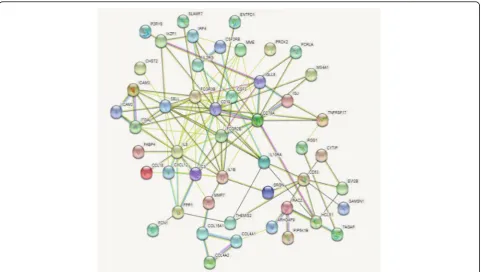
PPI networks of the identified DEGs were constructed
using STRING, which consisted of 130 edges and 76
nodes (Fig.
1
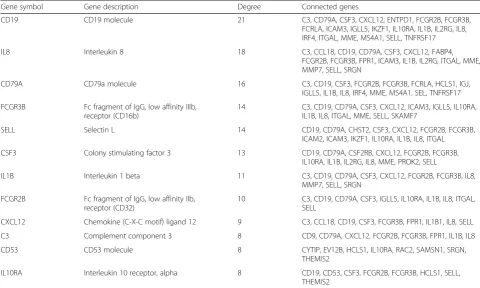
). The nodes with the higher degrees
were screened as hub genes including
cluster of
differ-entiation
(CD)
19
(
CD19
),
interleukin
(IL)
-8
(
IL8
),
CD79A
,
Fc fragment of IgG receptor
(
FCGR
)
IIIb
(
FCGR3B
),
selectin L
(
SELL
),
colony stimulating factor
3
(
CSF3
),
IL-1 beta
(
IL1B
),
FCGR IIb
(
FCGR2B
),
C-X-C motif chemokine ligand 12
(
CXCL12
),
comple-ment component 3
(
C3
),
CD53
, and
IL-10 receptor
subunit alpha
(
IL10RA
) (Table
6
).
Table 2
Common upregulated DEGs (
p
< 0.05, FC > 2) in chronic periodontitis
(Continued)
Gene Symbol Gene Description Probe
IKZF1 IKAROS family zinc finger 1 227346_at
IL10RA interleukin 10 receptor, alpha 204912_at
IL1B interleukin 1 beta 205067_at
IL2RG interleukin 2 receptor subunit gamma 204116_at
IRF4 interferon regulator factor 4 204562_at
ITGAL integrin subunit alpha L 1554240_a_at
ITM2C integral membrane protein 2C 221004_s_at
JCHAIN joining chain of multimeric IgA and IgM 212592_at
KLHL6 kelch like family member 6 228167_at
LAX1 lymphocyte transmembrane adaptor 1 207734_at
MME membrane metalloendopeptidase 203434_s_at
MMP7 metallopeptidase 7 204259_at
MS4A1 4-domains A1 228592_at
NEDD9 neural precursor cell expressed developmentally down regulated 9 1560706_at
P2RY8 P2Y receptor family member 8 229686_at
PECAM1 adhesion molecule 1 208981_at, 208982_at, 208983_s_at
PIM2 pim-2 proto-oncogene serine/threonine inase 204269_at
PIP5K1B phosphatidylinositol-4-phosphate 5-kinase type 1 beta 205632_s_at
PLPP5 phospholipid phosphatase 5 226150_at
PROK2 prokineticine 232629_at
RAB30 RAB30, member RAS oncogene family 228003_at
RAC2 Rac family small GTPase 2 213603_s_at
RGS1 Regulator of G protein signaling 1 216834_at
SAMSN1 SAM domain, SH3 domain and nuclear localization signals 1 220330_s_at
SEL1L3 SEL1L family member 3 212314_at
SELL selectin L 204563_at
SELM selenoprotein M 226051_at
SLAMF7 SLAM family member 7 219159_s_at, 234306_s_at
SPAG4 sperm associated antigen 4 219888_at
SRGN serglycin 201858_s_at, 201859_at
ST6GAL1 ST6 beta-galactoside alpha-2, 6-sialyltransferase 1 201998_at
STAP1 signal transducing adaptor family member 1 220059_at
TAGAP T cell activation RhoGTPase activating protein 229723_at, 242388_x_at, 1552542_s_at, 234050_at
TAGLN transgelin 205547_s_at
THEMIS2 thymocyte selection associated family member 2 210785_s_at
TNFRSF17 TNF superfamily member 17 206641_at
Table 3
Common downregulated DEGs (
p
< 0.05, FC <
−
2) in chronic periodontitis
Gene Symbol Gene Description Probe
AADAC arylacetamide deacetylase 205969_at
AADACL2 arylacetamide deacetylase like 2 240420_at
ABCA12 ATP binding cassette subfamily A member 12 215465_at
AHNAK2 AHNAK nucleoprotein 2 1558378_a_at
ARG1 arginase 1 206177_s_at
ATP6V1C2 ATPase H+ transporting V1 subunit C2 1552532_a_at
BPIFC BPI fold containing family C 1555773_at
CALML5 calmodulin like 5 220414_at
CLDN20 claudin 20 1554812_at
CWH43 cell wall biogenesis 43 C-terminal homolog 220724_at
CYP2C18 cytochrome P450 family 2 subfamily C member 18 215103_at
CYP3A5 cytochrome P450 family 3 subfamily A member 5 205765_at
DSC1 desmocollin 1 207324_s_at
DSC2 desmocollin 2 204750_s_at
ELOVL4 ELOVL fatty acid elongase 4 219532_at
EPB41L4B erythrocyte membrane protein band 4.1 like 4B 220161_s_at
EXPH5 exophilin 5 213929_at, 214734_at
FLG filaggrin 215704_at
FLG2 filaggrin family member 2 1569410_at
FOXN1 forkhead box N1 1558687_a_at
FOXP2 forkhead box P2 1555647_a_at, 235201_at, 1555516_at
GJA3 gap junction protein alpha 3 239572_at
KRT10 keratin 10 207023_x_at
LGALSL galectin like 226188_at
LOR loricrin 207720_at
LY6G6C lymphocyte antigen 6 family member G6C 207114_at
MAP 2 microtubule associated protein 2 225540_at
MUC15 mucin 15, cell surface associated 227241_at, 227238_at
NEFL neurofilament light 221916_at, 221805_at
NEFM neurofilament medium 205113_at
NOS1 nitric oxide synthase 1 239132_at
NPR3 natriuretic peptide receptor 3 219789_at
NSG1 neuronal vesicle trafficking associated 1 209570_s_at
POF1B POF1B actin binding protein 219756_s_at, 1555383_a_at
PTGER3 prostaglandin E receptor 3 213933_at
RORA RAR related orphan receptor A 210426_x_at, 210479_s_at, 235567_at, 226682_at
RPTN repetin 1553454_at
SH3GL3 SH3 domain containing GRB2 like 3, endophilin A3 205637_s_at
SLC16A9 solute carrier family 16 member 9 227506_at
SPAG17 sperm associated antigen 17 233516_s_at
WASL Wiskott-Aldrich syndrome like 205809_s_at
Table 4
Functional and pathway enrichment analyses of upregulated genes in chronic periodontitis
Category Term Genes p-value FDR (%)
GOTERM_BP_FAT GO:0006955~immune
response
CSF3, ITGAL, ST6GAL1, IGLV1–44, ENPP2, C3, TNFRSF17, SLAMF7, IGHM,
CXCL12, CCL18, RGS1, FCGR2B, LAX1, FCN1, MS4A1, IL1B, IL2RG, CD79A,
IGKC, FCGR3B, IGLC1
1.50E-12 2.31E-09
GOTERM_BP_FAT GO:0046649~lymphocyte
activation
ITGAL, IKZF1, LAX1, MS4A1, IRF4, CD79A, SLAMF7, CXCL12
1.69E-05 0.025995389
GOTERM_BP_FAT GO:0001775~cell activation ITGAL, IKZF1, LAX1, MS4A1, IRF4, CD79A,
SLAMF7, ENTPD1,
2.19E-05 0.033613816
CXCL12
GOTERM_BP_FAT GO:0006935~chemotaxis PROK2, RAC2, ENPP2, FPR1, IL1B, CXCL12,
CCL18
4.96E-05 0.07634361
GOTERM_BP_FAT GO:0042330~taxis PROK2, RAC2, ENPP2, FPR1, IL1B, CXCL12,
CCL18
4.96E-05 0.07634361
GOTERM_BP_FAT GO:0002684~positive
regulation of immune system process
CD19, IKZF1, C3, LAX1, IL1B, IL2RG, CD79A, CXCL12
5.32E-05 0.081770006
GOTERM_BP_FAT GO:0045321~leukocyte
activation
ITGAL, IKZF1, LAX1, MS4A1, IRF4, CD79A, SLAMF7, CXCL12
5.91E-05 0.090857027
GOTERM_BP_FAT GO:0048584~positive
regulation of response to stimulus
CD19, C3, LAX1, IL1B, FABP4, CD79A, CXCL12 4.14E-04 0.635505695
GOTERM_BP_FAT GO:0007155~cell adhesion ITGAL, SELL, ICAM2, ICAM3, PECAM1,
COL15A1, NEDD9,
5.28E-04 0.809495344
CLDN10, SLAMF7, ENTPD1, CXCL12
GOTERM_BP_FAT GO:0022610~biological
adhesion
ITGAL, SELL, ICAM2, ICAM3, PECAM1, COL15A1, NEDD9,
5.34E-04 0.818570769
CLDN10, SLAMF7, ENTPD1, CXCL12
GOTERM_BP_FAT GO:0007626~locomotory
behavior
PROK2, RAC2, ENPP2, FPR1, IL1B, CXCL12, CCL18
9.08E-04 1.387461056
GOTERM_BP_FAT GO:0050863~regulation of T
cell activation
IKZF1, LAX1, IL1B, IL2RG, IRF4 0.00138016 2.10243667
GOTERM_BP_FAT GO:0050778~positive
regulation of immune response
CD19, C3, LAX1, IL1B, CD79A 0.00301947 4.54592016
GOTERM_BP_FAT GO:0051249~regulation of
lymphocyte activation
IKZF1, LAX1, IL1B, IL2RG, IRF4 0.00325016 4.885167435
GOTERM_CC_FAT GO:0005576~extracellular region
CSF3, COL4A2, ST6GAL1, COL4A1, IGLV1–44, ENPP2, C3, MMP7, CECR1, COL15A1, IGHM, CXCL12, CCL18, PROK2, FCN1, PECAM1, IL1B, FCRLA, IGKC, ENTPD1, FCGR3B, IGLC1, SRGN
3.24E-04 0.37812111
GOTERM_CC_FAT GO:0044421~extracellular region part
CSF3, COL4A2, COL4A1, C3, MMP7, CECR1, COL15A1, CXCL12, CCL18, FCN1, PECAM1, IL1B, ENTPD1, SRGN
5.83E-04 0.680822917
GOTERM_MF_FAT GO:0003823~antigen
binding
IGLV1–44, FCN1, IGKC, IGHM, IGLC1 0.00152847 1.82616636
KEGG_PATHWAY hsa04060:
Cytokine-cytokine receptor interaction
CSF3, IL10RA, CSF2RB, IL1B, TNFRSF17, IL2RG, CXCL12, CCL18
0.00241736 2.314177036
KEGG_PATHWAY hsa04514:
Cell adhesion molecules (CAMs)
ITGAL, SELL, ICAM2, ICAM3, PECAM1, CLDN10
0.00244312 2.338574426
KEGG_PATHWAY hsa04640:
Hematopoietic cell lineage
CSF3, CD19, MS4A1, IL1B, MME 0.00329177 3.139362079
GOGene Ontology,BPBiological Process,CCCellular Component,MFMolecular Function
Common molecular biomarker candidates and molecular
pathways
Common molecular biomarker candidates for diagnosis,
prognosis, and other processes were identified using IPA
software (Table
7
). Among them,
CSF3
,
CXCL12
,
IL1B
,
and
transgelin
(
TAGLN
) were identified as common
bio-marker candidates for CP diagnosis, and
CXCL12
,
IL1B
,
membrane spanning 4-domains A1
(
MS4A1
), and
platelet
and endothelial cell adhesion molecule 1
(
PECAM1
) were
identified as candidates for CP prognosis. Molecular
pathways
of
biomarker
candidates
are
shown
in
Additional file
1
: Figure S1, Additional file
2
: Figure S2,
Additional file
3
: Figure S3, Additional file
4
: Figure S4,
Additional file
5
: Figure S5 and Additional file
6
: Figure S6.
Table 5
Functional and pathway enrichment analyses of downregulated genes in chronic periodontitis
Category Term Genes p-value FDR (%)
GOTERM_BP_FAT GO:0008544~epidermis development LOR, FLG, FOXN1, AHNAK2, KRT10, CALML5 4.02E-05 0.05644221
GOTERM_BP_FAT GO:0007398~ectoderm development LOR, FLG, FOXN1, AHNAK2, KRT10, CALML5 5.84E-05 0.082008699
GOTERM_BP_FAT GO:0030216~keratinocyte differentiation
LOR, FLG, FOXN1, AHNAK2 3.70E-04 0.519046373
GOTERM_BP_FAT GO:0009913~epidermal cell differentiation
LOR, FLG, FOXN1, AHNAK2 4.78E-04 0.67019525
GOTERM_BP_FAT GO:0030855~epithelial cell differentiation
LOR, FLG, FOXN1, AHNAK2 0.003062052 4.219242042
GOTERM_CC_FAT GO:0005856~cytoskeleton LOR, NOS1, FLG, RPTN, MAP 2, KRT10, WASL, EPB41L4B,
NEFL, NEFM, SPAG17
4.42E-04 0.488280071
GOTERM_CC_FAT GO:0001533~cornified envelope LOR, FLG, RPTN 0.001040385 1.146550038
GOTERM_MF_FAT GO:0005198~structural molecule activity
LOR, FLG, MAP 2, FLG2, KRT10, CLDN20, EPB41L4B, NEFL, NEFM
1.15E-04 0.127152153
GOTERM_MF_FAT GO:0005200~structural constituent of cytoskeleton
LOR, EPB41L4B, NEFL, NEFM 7.83E-04 0.865579593
Upstream regulators of dominant biomarker candidates
Upstream regulators of dominant biomarker candidates
are shown in Table
8
. Among them,
tumor necrosis
factor
(
TNF
) and
fibroblast growth factor 2
(
FGF2
) were
identified
as
upstream
regulators
of
dominant
biomarker candidates for CP diagnosis such as
CSF3
,
CXCL12
,
IL1B
, and
TAGLN
(Fig.
2
).
IL1B
, which is a
biomarker candidate for CP diagnosis and prognosis, is
an upstream regulator of
CSF3
and
CXCL12
.
Functional and pathway enrichment analyses of upstream
regulators
The results of functional and pathway enrichment
analyses are shown in Additional file
7
: Table S1,
Additional file
8
: Table S2, Additional file
9
: Table S3,
Additional file
10
: Table S4, Additional file
11
: Table S5
and Additional file
12
: Table S6.
In BP, upstream regulators of
CSF3
were significantly
enriched in positive regulation of the biosynthetic
process and the macromolecule metabolic process
(Additional file
7
: Table S1). Upstream regulators of
CXCL12
were significantly enriched in positive
regula-tion of the biosynthetic process, the cellular biosynthetic
process, and the nitrogen compound metabolic process
(Additional file
8
: Table S2). Upstream regulators of
IL1B
were significantly enriched in response to
wound-ing, regulation of programmed cell death, regulation of
cell death, defense response, and inflammatory response
(Additional file
9
: Table S3). Upstream regulators of
MS4A1
were significantly enriched in regulation of
gene-specific transcription, regulation of transcription
from RNA polymerase II promoter, and positive
regula-tion of gene-specific transcripregula-tion (Addiregula-tional file
10
:
Table S4). Upstream regulators of
PECAM1
were
signifi-cantly enriched in positive regulation of the
macromol-ecule metabolic process, the biosynthetic process, and
signal transduction (Additional file
11
: Table S5).
Additionally,
TAGLN
was significantly enriched in
positive regulation of the macromolecule biosynthetic
process, the nucleobase, nucleoside, nucleotide and
nucleic acid metabolic process, and the biosynthetic
process (Additional file
12
: Table S6).
In KEGG pathways, upstream regulators of
CSF3
were
significantly
enriched
in
cytokine-cytokine
receptor
interaction and the Toll-like receptor signaling pathway
(Additional file
7
: Table S1). Upstream regulators of
CXCL12
were significantly enriched in cytokine activity,
growth factor activity, and cytokine binding (Additional
file
8
: Table S2). Upstream regulators of
IL1B
were
significantly enriched in the Toll-like receptor signaling
pathway
and
cytokine-cytokine
receptor
interaction
(Additional file
9
: Table S3). Upstream regulators of
MS4A1
were significantly enriched in the intestinal
immune network for IgA production (Additional file
10
:
Table S4). Upstream regulators of
PECAM1
were
signifi-cantly enriched in cytokine activity, growth factor activity,
Table 6
Top 12 hub genes with higher degrees of connectivity in chronic periodontitis
Gene symbol Gene description Degree Connected genes
CD19 CD19 molecule 21 C3, CD79A, CSF3, CXCL12, ENTPD1, FCGR2B, FCGR3B,
FCRLA, ICAM3, IGLL5, IKZF1, IL10RA, IL1B, IL2RG, IL8, IRF4, ITGAL, MME, MS4A1, SELL, TNFRSF17
IL8 Interleukin 8 18 C3, CCL18, CD19, CD79A, CSF3, CXCL12, FABP4,
FCGR2B, FCGR3B, FPR1, ICAM3, IL1B, IL2RG, ITGAL, MME, MMP7, SELL, SRGN
CD79A CD79a molecule 16 C3, CD19, CSF3, FCGR2B, FCGR3B, FCRLA, HCLS1, IGJ,
IGLL5, IL1B, IL8, IRF4, MME, MS4A1, SEL, TNFRSF17
FCGR3B Fc fragment of IgG, low affinity IIIb,
receptor (CD16b)
14 C3, CD19, CD79A, CSF3, CXCL12, ICAM3, IGLL5, IL10RA,
IL1B, IL8, ITGAL, MME, SELL, SKAMF7
SELL Selectin L 14 CD19, CD79A, CHST2, CSF3, CXCL12, FCGR2B, FCGR3B,
ICAM2, ICAM3, IKZF1, IL10RA, IL1B, IL8, ITGAL
CSF3 Colony stimulating factor 3 13 CD19, CD79A, CSF2RB, CXCL12, FCGR2B, FCGR3B,
IL10RA, IL1B, IL2RG, IL8, MME, PROK2, SELL
IL1B Interleukin 1 beta 11 C3, CD19, CD79A, CSF3, CXCL12, FCGR2B, FCGR3B, IL8,
MMP7, SELL, SRGN
FCGR2B Fc fragment of IgG, low affinity IIb,
receptor (CD32)
10 C3, CD19, CD79A, CSF3, IGLL5, IL10RA, IL1B, IL8, ITGAL, SELL
CXCL12 Chemokine (C-X-C motif) ligand 12 9 C3, CCL18, CD19, CSF3, FCGR3B, FPR1, IL1B1, IL8, SELL
C3 Complement component 3 8 CD9, CD79A, CXCL12, FCGR2B, FCGR3B, FPR1, IL1B, IL8
CD53 CD53 molecule 8 CYTIP, EV12B, HCLS1, IL10RA, RAC2, SAMSN1, SRGN,
THEMIS2
IL10RA Interleukin 10 receptor, alpha 8 CD19, CD53, CSF3, FCGR2B, FCGR3B, HCLS1, SELL,
Table 7
Common molecular biomarker candidates for chronic periodontitis diagnosis, prognosis, and other processes
Gene symbol Gene description Up- or Down-regulated
Gene (p-value)
Biomarker applications
ALOX5 arachidonate 5-lipoxygenase upregulated gene (p< 0.01) diagnosis, efficacy
APOC1 apolipoprotein C1 upregulated gene (p< 0.05) prognosis, unspecified application
ARHGDIB Rho GDP dissociation inhibitor beta upregulated gene (p< 0.05) diagnosis
BDNF brain derived neurotrophic factor downregulated gene (p< 0.01) efficacy, response to therapy
CCL19 C-C motif chemokine ligand 19 upregulated gene (p< 0.01) disease progression, unspecified application
CCR7 C-C motif chemokine receptor 7 upregulated gene (p< 0.05) diagnosis, efficacy
CSF3 colony stimulating factor 3 upregulated gene (p< 0.05), logFc> 1 diagnosis
CXCL12 C-X-C motif chemokine ligand 12 upregulated gene (p< 0.05), logFc> 1 diagnosis, efficacy, prognosis, unspecified application
CXCR4 C-X-C motif chemokine receptor 4 upregulated gene (p< 0.05) diagnosis
CYGB cytoglobin upregulated gene (p< 0.05) diagnosis
EIF4E eukaryotic translation initiation factor 4E downregulated gene (p< 0.05) prognosis
EREG epiregulin downregulated gene (p< 0.05) prognosis, response to therapy
ESR1 estrogen receptor 1 upregulated gene (p< 0.01) diagnosis, disease progression, efficacy,
prognosis, response to therapy, unspecified application
IGH immunoglobulin heavy locus upregulated gene (p< 0.01) diagnosis, prognosis
IL1B interleukin 1 beta upregulated gene (p< 0.05), logFc> 1 diagnosis, efficacy, prognosis
KDR kinase insert domain receptor upregulated gene (p< 0.05) disease progression, efficacy, prognosis,
response to therapy, safety
LCK LCK proto-oncogene, Src family tyrosine kinase
upregulated gene (p< 0.05) diagnosis
LCP1 lymphocyte cytosolic protein 1 upregulated gene (p< 0.01) disease progression
LGALS1 galectin 1 upregulated gene (p< 0.05) diagnosis, prognosis
LYVE1 lymphatic vessel endothelial hyaluronan receptor 1
upregulated gene (p< 0.05) disease progression
MMP9 matrix metallopeptidase 9 upregulated gene (p< 0.05) diagnosis, disease progression, efficacy,
prognosis, unspecified application
MS4A1 membrane spanning 4-domains A1 upregulated gene (p< 0.05), logFc> 1 efficacy, prognosis, unspecified application
PAPPA pappalysin 1 upregulated gene (p< 0.05) diagnosis
PDGFRB platelet derived growth factor receptor beta upregulated gene (p< 0.05) prognosis, response to therapy, unspecified application
PECAM1 platelet and endothelial cell adhesion molecule 1
upregulated gene (p< 0.05), logFc> 1 disease progression, efficacy, prognosis
PRKCB protein kinase C beta upregulated gene (p< 0.05) diagnosis, efficacy, unspecified application
PTPRC protein tyrosine phosphatase, receptor type C
upregulated gene (p< 0.01) diagnosis, efficacy, unspecified application
SERPINA1 serpin family A member 1 upregulated gene (p< 0.01) diagnosis, unspecified application
SFRP2 secreted frizzled related protein 2 upregulated gene (p< 0.05) diagnosis
STRA6 stimulated by retinoic acid 6 upregulated gene (p< 0.05) diagnosis
TAGLN transgelin upregulated gene (p< 0.01), logFc> 1 diagnosis
TIMP4 TIMP metallopeptidase inhibitor 4 upregulated gene (p< 0.05) diagnosis, prognosis
TNFSF13B TNF superfamily member 13b upregulated gene (p< 0.05) efficacy, response to therapy
TPM1 tropomyosin 1 upregulated gene (p< 0.01) diagnosis
VIM vimentin upregulated gene (p< 0.05) diagnosis, efficacy, prognosis, unspecified
Table 8
Upstream regulators of dominant biomarker candidates
in chronic periodontitis
Dominant Biomarker Candidate Upstream Regulator CSF3 ABCG1,ADAM17,ANKRD42,ARNT, BIRC2,BIRC3,BMP4,C3AR1,C5 ,C5AR1,CARD9,CARM1,CD40 ,CEACAM1,CEBPA,CEBPB ,CLEC4M,CLEC7A,CSF2 ,CTNNB1EP300,ETS2,EZH2 ,FGF2,FLI1,FOS,FOSL1GLI2 ,IFNG,IL10,IL15,IL17A,IL17F ,IL17RA,IL1B,IL2,IL25,IL3,IL36GIL37 ,IL4,ITGB2JAK3,KRAS,KRT17 ,LECT2,LEP,LILRA2MAP3K8MYD88 ,NFKBIA,NFKBIE,NR1H2,OSM ,PPARGPRDM1,PRKCE,PTGS2 ,RARA,RBPJ,SIRPA,SOCS1,STAT3 ,TCF4,TGM2,TLR2,TLR3,TLR4 ,TLR5,TLR9,TNF,TNFRSF1A ,TNFRSF25,TNFSF11,TRAF6 ,VEGFA,WDR77,WNT5A CXCL12 ACVRL1,ADAM10,APP,AR,BMP2 ,BSG,CCL11,CCR2,CCR5,CD14 ,CD40,CHUK,CREBBP,CSF3,CSF3R ,CTNNB1,CXCL12,CXCR4,EBF1 ,EGFR,EPO,ERBB2,ERBB3 ,ERBB4,ESR1,ESR2,ETV5,F2R ,FGF2,FHL2,GDF2,HIF1A,HMOX1 ,HRAS,IFNG,IFNGR1,IKBKB ,IKBKG,IL10,IL15,IL17A,IL17RA ,IL18,IL1A,IL1B,IL1R1,IL2,IL22 ,ITGA9,LTBR,MKL1,MMP1,MMP9 ,MYD88,NFKB2,NFKBIA,NQO1,OSM ,PARP1,PRKAA1,PRKAA2 ,PRKCD,PTGS2,PTH,RARB ,RBPJ,RELB,SNAI2,SP1,SPP1 ,TGFB1,TNC,TNF,TNFRSF1B,TRAF3 ,TWIST1,VCAN,VEGFA,VHL ,WNT5A,YY1 IL1B ABCG1,ACTN4,ADM,ADORA2B ,AGER,AGT,AHR,AIMP1,ALB ,ANKRD42,ANXA1,APOE,APP ,ATF3,ATG7,B4GALNT1,BCL2 ,BCL2L1,BCL3,BCL6,BGN,BID ,BIRC3,BMP7,BRAF,BRD2,BSG ,BTG2,BTK,BTRC,C3,C3AR1,C5 ,C5AR1,C7,C9,CAMP,CARD9,CBL ,CCL11,CCL2,CCL3,CCR2,CD14 ,CD200,CD28,CD36,CD40,CD40LG ,CD44,CD69,CDK5R1,CEBPB ,CEBPD,CHUK,CLEC10A ,CLEC7A,CNR2,COCH,CR1L ,CR2,CREB1,CRH,CSF1,CSF2 ,CST3,CTNNB1,CTSG,CXCL12 ,CXCL8,CYBB,CYP2J2,CYR61 ,DICER1,DUSP1,EGF,EGFR,EGLN1 ,ELANE,ELN,EPHX2,ERBB2,ESR1 ,ESR2,F2,F2R,F2RL1,F3,FAS ,FASLG,FBXO32,FCGR2A,FGF2 ,FN1,FOSL1,FOXO1,GAS6 ,GHRHR,GLI2,GNRH1,HGF ,HIF1A,HMOX1,HRAS,HSPD1 ,HTR7,ICAM1,IFNAR1,IFNB1 ,IFNG,IFNGR1,IGF1,IGFBP3,IGHM ,IKBKB,IKBKG,IL10,IL10RA,IL11 ,IL12A,IL12B,IL13,IL17A,IL17RA ,IL18,IL1A,IL1B,IL1R1,IL1RN,IL2 ,IL22,IL25,IL26,IL27,IL27RA,IL3
Table 8
Upstream regulators of dominant biomarker candidates
in chronic periodontitis
(Continued)
Dominant Biomarker Candidate Upstream Regulator ,IL32,IL33,IL36A,IL36B,IL36RN ,IL37,IL4,IL4R,IL6R,INSR,IRAK1,IRAK2 ,IRAK4,IRF3,IRF4,IRF6 ,IRF8,ITCH,ITGA4 ,ITGA5,ITGA9,ITGAM,ITGAX ,ITGB1,ITGB3,JAG2,JAK2 ,JUN,KLF2,KNG1,KRAS ,KRT17,LBP,LCN2,LECT2 ,LEP,LGALS1,LGALS9 ,LIF,LILRB4,LPL,LTA ,LY6E,LYN,MAP 2 K3
and transcription regulator activity (Additional file
11
:
Table S5). Additionally, upstream regulators of
TAGLN
were significantly enriched in the transforming growth
factor beta (
TGF-
β
) signaling pathway (Additional file
12
:
Table S6).
Discussion
CP is a multifactorial disease associated with genetic,
en-vironmental, and microbiological factors, lifestyle habits,
and systemic diseases. The pathological mechanisms of
CP are complex and have not yet been fully delineated.
Microarray analysis of mRNA expression is a powerful
tool to elucidate screening profiles and is capable of
efficiently narrowing down candidate genes associated
with multifactorial diseases and investigating underlying
mechanisms of diseases and biomarkers for diagnosis
and prognosis [
4
–
9
,
32
,
33
]. Furthermore, the clinical
application of biomarkers at an early stage is important
for global health [
32
].
In this study, we focused on mRNA expression data in
gingival tissue from CP patients using pooled datasets in
the GEO database to elucidate characteristics of DEGs
and biomarker candidates for CP diagnosis and prognosis.
Eighty-one common upregulated DEGs and 42
down-regulated DEGs were found. Updown-regulated genes were
enriched in processes associated with immunity in GO
BP, which comprise immune response, regulation of the
immune response, regulation of the immune system
process, and positive regulation of the immune system
process and cytokine-cytokine receptor interaction, cell
adhesion molecules, and hematopoietic cell lineage in
the
KEGG
pathway.
Downregulated
genes
were
enriched in epidermis and ectoderm development and
keratinocyte, epidermal cell, and epithelial cell
differen-tiation, and no KEGG pathway was significant. The
association between immunity and CP was assumed.
Our analysis also suggested that
CD19
,
IL8
,
CD79A
,
FCGR3B
,
SELL
,
CSF3
,
IL1B
,
FCGR2B
,
CXCL12
,
C3
,
CD53
, and
IL10RA
are hub genes for the pathological
pathway of CP.
Guo et al reported several hub genes of periodontitis
using microarray analyses [
5
]. Similar to their report, we
also identified
SLAMF7
,
CD79A
,
MMP7
,
IL1B
,
LAX1
,
IGLJ3
,
CSF3
and
TNFRSF17
as DEGs. Common results
of GO enrichment analysis were immune response,
Table 8
Upstream regulators of dominant biomarker candidates
in chronic periodontitis
(Continued)
Dominant Biomarker Candidate
Upstream Regulator
,HDAC3,HDAC4,HMGA1,HOXC8 ,HOXD3,HRAS,HTT,KLF4,MAPK14 ,MDK,MKL1,MKL2,MMP1,NOTCH1 ,PDLIM2,PPARG,RHOA,ROCK2,RUNX2 ,S1PR3,SMAD3,SMAD7,SMARCA2,SMARCA4 ,SP1,SP3,SPHK1,STAT3,TAZ,TGFB1 ,TGFB2,TGFB3,TGFBR2,TNF ,TP63,VHL,YAP1,YY1
chemotaxis, and taxis.
Common
KEGG
pathways
included cytokine-cytokine receptor interaction and cell
adhesion molecules (CAMs). Common hub genes were
IL8
,
IL1B
,
CXCL12
,
CSF3
,
CD79A
, and
SELL
.
Song et al reported several DEGs and functional
enrich-ment analysis of inflammation and bone loss process in
periodontitis. With comparing the results of our present
study to them [
12
], common DEGs were
CD19
,
formyl
peptide receptor 1
(
FPR1
),
interferon regulatory factor 4
(
IRF4
), and
IL1B
. Common results of GO enrichment
ana-lysis in upregulated DEGs were cell activation, positive
regulation of immune system process, extracellular region,
extracellular region part, and antigen binding, while those
in downregulated DEGs were epidermis development,
keratinocyte differentiation, epidermal cell differentiation,
structural molecule activity, and structural constituent of
the cytoskeleton. Common KEGG pathways of
upregu-lated DEGs were cytokine-cytokine receptor interaction,
hematopoietic cell lineage, and CAMs appear to be related
to inflammation and bone loss process in periodontitis.
We also identified
CSF3
,
CXCL12
,
IL1B
, and
TAGLN
as biomarker candidates for CP diagnosis and
CXCL12
,
IL1B
,
MS4A1
, and
PECAM1
as biomarker candidates for
CP prognosis.
CSF3
,
CXCL12
,
IL1B
, and
MS4A1
are
related to immune response.
CXCL12
and
MS4A1
are
related to lymphocyte activation and cell activation.
PECAM1
is related to phagocytosis and endocytosis.
TAGLN
is a TGF-
β
1-inducible gene [
34
].
Furthermore,
TNF
and
FGF2
are common upstream
regulators of all biomarker candidates for CP diagnosis.
Mitogen-activated protein kinase 1 (
ERK
,
MAPK1
) is a
common upstream regulator of all biomarker candidates
for CP prognosis. Additionally,
IL1B
is one of the
up-stream regulators of
CSF3
and
CXCL12
. Furthermore,
vascular endothelial growth factor A and
prostaglandin-endoperoxide synthase 2 are upstream regulators of
CSF3
,
CXCL12
, and
IL1B
.
Among biomarker candidates and hub genes, the
associ-ation of
CD53
,
CD79A
,
MS4A1
,
PECAM1
, and
TAGLN
with CP has not been previously reported. Potential reason
is that biological information in databases for bioinformatics
analysis is continuously updated as omics data become
avail-able and developed functions of software improves.
CD53
plays a role in the regulation of growth.
CD79A
encodes the
Ig-alpha protein of the B-cell antigen component.
MS4A1
plays a role in the development and differentiation of B-cells
into plasma cells.
PECAM1
is a member of the
immuno-globulin superfamily and involved in leukocyte migration.
Furthermore,
CD53
,
CD79A
,
MS4A1
, and
PECAM1
are
as-sociated with immune responses to infection by
microor-ganisms. Lastly,
TAGLN
is a member of the calponin family
and expressed in vascular smooth muscle [
34
].
Biomarker candidates such as
CSF3
,
CXCL12
,
IL1B
,
MS4A1
, and
PECAM1
, upstream regulators such as
TNF
and
FGF2
, and hub genes such as
CD53
,
CD79A
,
MS4A1
and
PECAM1
are related to immune response
and inflammation.
Conclusions
In summary, our study, which analyzed pooled omics
datasets with distinct clinical and experimental baselines,
provided new clues for elucidating common genetic
fac-tors of multifactorial diseases such as CP. Data mining
and integration with sharing and using pooled omics data
could be useful tools to investigate biomarker candidates
for diagnosis and prognosis of diseases in clinical practice
and to understand complicated underlying molecular
mechanisms. We also identified key genes related to CP
pathogenesis such as
CSF3
,
CXCL12
,
IL1B
,
TAGLN
,
CD19
,
IL8
, and
CD79A
and upstream genes of biomarker
candi-dates such as
TNF
and
FGF2
, which could provide
poten-tial targets for CP diagnosis. For clinical application, a
combination of biomarkers would likely be necessary for
CP diagnosis or prognosis. Bioinformatics analysis of
pooled microarray datasets is useful for screening to
investigate biomarker candidates of CP. Further validation
of these predicted molecular biomarkers obtained from
bioinformatics analysis using experimental research
ap-proaches such as qRT-PCR is necessary.
Additional files
Additional file 1:Figure S1.Most relevant genetic network related to common biomarker candidate geneCSF3analyzed by IPA. (PDF 354 kb)
Additional file 2:Figure S2.Most relevant genetic network related to common biomarker candidate geneCXCL12analyzed by IPA. (PDF 503 kb)
Additional file 3:Figure S3.Most relevant genetic network related to common biomarker candidate geneIL1Banalyzed by IPA. (PDF 420 kb)
Additional file 4:Figure S4.Most relevant genetic network related to common biomarker candidate geneMS4A1analyzed by IPA. (PDF 407 kb)
Additional file 5:Figure S5.Most relevant genetic network related to common biomarker candidate genePECAM1analyzed by IPA. (PDF 442 kb)
Additional file 6:Figure S6.Most relevant genetic network related to common biomarker candidate geneTAGLNanalyzed by IPA. (PDF 398 kb)
Additional file 7:Table S1.Functional and pathway enrichment analyses of upstream regulators ofCSF3.(XLSX 41 kb)
Additional file 8:Table S2.Functional and pathway enrichment analyses of upstream regulators ofCXCL12.(XLSX 45 kb)
Additional file 9:Table S3.Functional and pathway enrichment analyses of upstream regulators ofIL1B. (XLSX 98 kb)
Additional file 10:Table S4.Functional and pathway enrichment analyses of upstream regulators ofMS4A1. (XLSX 11 kb)
Additional file 11:Table S5.Functional and pathway enrichment analyses of upstream regulators ofPECAM1. (XLSX 37 kb)
Additional file 12:Table S6.Functional and pathway enrichment analyses of upstream regulators ofTAGLN. (XLSX 41 kb)
Abbreviations
DEGs: Differentially expressed genes; FC: Fold change;FCGR2B: Fc fragment of IgG, low affinity IIb, receptor (CD32);FCGR3B: Fc fragment of IgG, low affinity IIIb, receptor (CD16b); FDR: False discovery rate;FGF2: Fibroblast growth factor 2;FPR1: Formyl peptide receptor 1; GEO: Gene Expression Omnibus; GO: Gene Ontology; IL: Interleukin;IL10RA: Interleukin-10 receptor, alpha;IL1B: Interleukin 1-beta; IPA: Ingenuity Pathway Analysis;
IRF4: Interferon regulatory factor 4; KEGG: Kyoto Encyclopedia of Genes and Genomes; MF: Molecular function;MS4A1: Membrane spanning 4-domains A1;PECAM1: Adhesion molecule 1; PPI: Protein-Protein Interaction; SELL: Selectin L; STRING: Search Tool for the Retrieval of Interaction Genes; TAGLN: Transgelin;TNF: Tumor necrosis factor
Acknowledgements
Not applicable.
Funding
The authors declare that there is no funding for the research.
Availability of data and materials
The datasets generated and analyzed during the current study are available in GEO DataSets repository,https://www.ncbi.nlm.nih.gov/gds.
Authors’contributions
AS conceived this study, participated in the design, and performed the statistical analysis. TH participated in the design and helped to draft the manuscript. YN participated in the design and helped to draft the manuscript. All authors read and approved the final manuscript.
Ethics approval and consent to participate
Not applicable.
Consent for publication
Not applicable.
Competing interests
The authors declare that they have no competing interests.
Publisher
’
s Note
Springer Nature remains neutral with regard to jurisdictional claims in published maps and institutional affiliations.
Author details
1General Dentistry, The Nippon Dental University Hospital at Tokyo, 2-3-16
Fujimi, Chiyoda-ku, Tokyo 102-8158, Japan.2Research Center for Odontology, The Nippon Dental University at Tokyo, 1-9-20 Fujimi, Chiyoda-ku, Tokyo 102-0071, Japan.3Department of Periodontology, The Nippon Dental University at Tokyo, 1-9-20 Fujimi, Chiyoda-ku, Tokyo 102-0071, Japan.
Received: 3 December 2018 Accepted: 13 March 2019
References
1. Bouchard P, Carra MC, Boillot A, Mora F, Rangé H. Risk factors in
periodontology: a conceptual framework. J Clin Periodontol. 2017;44:125–31. 2. Hajishengallis G. Immunomicrobial pathogenesis of periodontitis: keystones,
pathobionts, and host response. Trends Immunol. 2014;35:3–11. 3. Genco RJ, Borgnakke WS. Risk factors for periodontal disease. Periodontol
2000. 2013;62:59–94.
4. Xu Z, Zhou Y, Cao Y, Dinh TL, Wan J, Zhao M. Identification of candidate biomarkers and analysis of prognostic values in ovariancancer by integrated bioinformatics analysis. Med Oncol. 2016;33:130.
5. Guo X, Wang Y, Wang C, Chen J. Identification of several hub-genes associated with periodontitis using integratedmicroarray analysis. Mol Med Rep. 2015;11:2541–7.
6. Rudolf H, Nuernberg G, Koczan D, Vanselow J, Gempe T, Beye M, et al. On the relevance of technical variation due to building pools in microarray experiments. BMC Genomics. 2015;16:1027.
7. Zhang W, Carriquiry A, Nettleton D, Dekkers JC. Pooling mRNA in microarray experiments and its effect on power. Bioinformatics. 2007;23:1217–24.
8. Kendziorski C, Irizarry RA, Chen KS, Haag JD, Gould MN. On the utility of pooling biological samples in microarray experiments. Proc Natl Acad Sci U S A. 2005;102:4252–7.
9. Shih JH, Michalowska AM, Dobbin K, Ye Y, Qiu TH, Green JE. Effects of pooling mRNA in microarray class comparisons. Bioinformatics. 2004;20:3318–25. 10. Sima C, Aboodi GM, Lakschevitz FS, Sun C, Goldberg MB, Glogauer M.
Nuclear factor erythroid 2-related factor 2 down-regulation in oral neutrophils is associated with periodontal oxidative damage and severe chronic periodontitis. Am J Pathol. 2016;186:1417–26.
11. Ohshima M, Yamaguchi Y, Ambe K, Horie M, Saito A, Nagase T, et al. Fibroblast VEGF-receptor 1 expression as molecular target in periodontitis. J Clin Periodontol. 2016;43:128–37.
12. Song L, Yao J, He Z, Xu B. Genes related to inflammation and bone loss process in periodontitis suggested by bioinformatics methods. BMC Oral Health. 2015;15:105. 13. Schminke B, Vom Orde F, Gruber R, Schliephake H, Bürgers R, Miosge N. The
pathology of bone tissue during peri-implantitis. J Dent Res. 2015;94:354–61. 14. Rhodin K, Divaris K, North KE, Barros SP, Moss K, Beck JD, et al. Chronic
periodontitis genome-wide association studies: gene-centric and gene set enrichment analyses. J Dent Res. 2014;93:882–90.
15. Kebschull M, Demmer RT, Grün B, Guarnieri P, Pavlidis P, Papapanou PN. Gingival tissue transcriptomes identify distinct periodontitis phenotypes. J Dent Res. 2014;93:459–68.
16. Lakschevitz FS, Aboodi GM, Glogauer M. Oral neutrophil transcriptome changes result in a pro-survival phenotype in periodontal diseases. PLoS One. 2013.https://doi.org/10.1371/journal.pone.0068983. Print 2013. 17. Kebschull M, Guarnieri P, Demmer RT, Boulesteix AL, Pavlidis P, Papapanou
PN. Molecular differences between chronic and aggressive periodontitis. J Dent Res. 2013;92:1081–8.
18. Stoecklin-Wasmer C, Guarnieri P, Celenti R, Demmer RT, Kebschull M, Papapanou PN. MicroRNAs and their target genes in gingival tissues. J Dent Res. 2012;91:934–40.
19. Abe D, Kubota T, Morozumi T, Shimizu T, Nakasone N, Itagaki M, et al. Altered gene expression in leukocyte transendothelial migration and cell communication pathways in periodontitis-affected gingival tissues. J Periodontal Res. 2011;46:345–53.
20. Covani U, Marconcini S, Giacomelli L, Sivozhelevov V, Barone A, Nicolini C. Bioinformatic prediction of leader genes in human periodontitis. J Periodontol. 2008;79:1974–83.
21. Papapanou PN, Behle JH, Kebschull M, Celenti R, Wolf DL, Handfield M, et al. Subgingival bacterial colonization profiles correlate with gingival tissue gene expression. BMC Microbiol. 2009;9:221.
22. Wright HJ, Matthews JB, Chapple IL, Ling-Mountford N, Cooper PR. Periodontitis associates with a type 1 IFN signature in peripheral blood neutrophils. J Immunol. 2008;181:5775–84.
23. Demmer RT, Behle JH, Wolf DL, Handfield M, Kebschull M, Celenti R, et al. Transcriptomes in healthy and diseased gingival tissues. J Periodontol. 2008; 79:2112–24.
24. Sørensen LK, Havemose-Poulsen A, Sønder SU, Bendtzen K, Holmstrup P. Blood cell gene expression profiling in subjects with aggressive periodontitis and chronic arthritis. J Periodontol. 2008;79:477–85. 25. Papapanou PN, Sedaghatfar MH, Demmer RT, Wolf DL, Yang J, Roth GA, et
al. Periodontal therapy alters gene expression of peripheral blood monocytes. J Clin Periodontol. 2007;34:736–47.
26. Barrett T, Wilhite SE, Ledoux P, Evangelista C, Kim IF, Tomashevsky M, et al. NCBI GEO: archive for functional genomics data sets--update. Nucleic Acids Res. 2013;41(Database issue):D991–5.
27. Barrett T, Troup DB, Wilhite SE, Ledoux P, Evangelista C, Kim IF, et al. NCBI GEO: archive for functional genomics data sets--10 years on. Nucleic Acids Res. 2011;39(Database):D1005–10.
28. Barrett T, Troup DB, Wilhite SE, Ledoux P, Rudnev D, Evangelista C, et al. NCBI GEO: archive for high-throughput functional genomic data. Nucleic Acids Res. 2009;37(Database):D885–90.
29. Barrett T, Troup DB, Wilhite SE, Ledoux P, Rudnev D, Evangelista C, et al. NCBI GEO: mining tens of millions of expression profiles--database and tools update. Nucleic Acids Res. 2007;35(Database):D760–5.
30. Barrett T, Suzek TO, Troup DB, Wilhite SE, Ngau WC, Ledoux P, et al. NCBI GEO: mining millions of expression profiles--database and tools. Nucleic Acids Res. 2005;33(Database issue):D562–6.
32. Zeidán-Chuliá F, Gürsoy M, Neves de Oliveira BH, Özdemir V, Könönen E, Gürsoy UK. A systems biology approach to reveal putative host-derived biomarkers of periodontitis by network topology characterization of MMP-REDOX/NO and apoptosis integrated pathways. Front Cell Infect Microbiol. 2016;102.
33. Kebschull M, Hülsmann C, Hoffmann P, Papapanou PN. Genome-wide analysis of periodontal and Peri-implant cells and tissues. Methods Mol Biol. 2017;1537:307–26.