Prevalence, Consequences and Data Management Unit
Preventing opioid overdoses in Europe:
A critical assessment of known risk factors and
preventative measures
Final report
Martin Frisher (
1), Alex Baldacchino (
2)
Ilana Crome (
3), Roger Bloor (
3)
(
1)
School of Pharmacy, Keele University, UK
(
2)
Centre for Addiction Research & Education Scotland, University of
Dundee, UK
(
3)
Academic Psychiatry Unit, Keele University, UK
Contents
Introductory note...3
Summary...4
1. Introduction...6
2.Overdose prevention: recommendations, actions and barriers...19
3. Discussion...24
4.Recommendations...26
5.References...33
6. Appendix 1: Analysis of overdose papers...37
7. Appendix 2. Protocol and Creation of the Drug Deaths Database in Fife...55
8. Appendix 3. A Case Vignette of a Typical Drug Death Victim in Fife 2009...81
Tables
Table 1. Measure to reduce road traffic accidents (RTAs)...8Table 2. Safety ratio of drugs (assuming no build-up of tolerance)...12
Table 3. Risk factors classified into three levels: Individual, observers and organisational...17
Table 4. Protective factors classified into three levels: individual, observers and organisational...18
Table 5. Stages in the cycle of overdose management...25
Table 6. Overdose prevention: recommendations, barriers and expert assessment.26
Figures
Figure 1. People killed in road accidents (European Union, 27 countries)...8Figure 2. Number of ‘drug-induced deaths’ recorded in EU Member States according to national definitions...10
Figure 3. Top five reasons cited for a personal opiate overdose in a qualitative study of 44 Scottish drug users...14
Figure 4. Inappropriate intervention reported by bystanders witnessing an overdose in a qualitative study of 44 Scottish drug users...15
Figure 5. Appropriate intervention of bystanders witnessing an overdose in a qualitative study of 44 Scottish drug users...15
Figure 6. Mortality following methadone treatment — discharge status of 110 patients...16
Figure 7. Factors affecting a bystander’s decision to summon emergency services following witness of an overdose in a qualitative study of 61 Scottish drug users...21
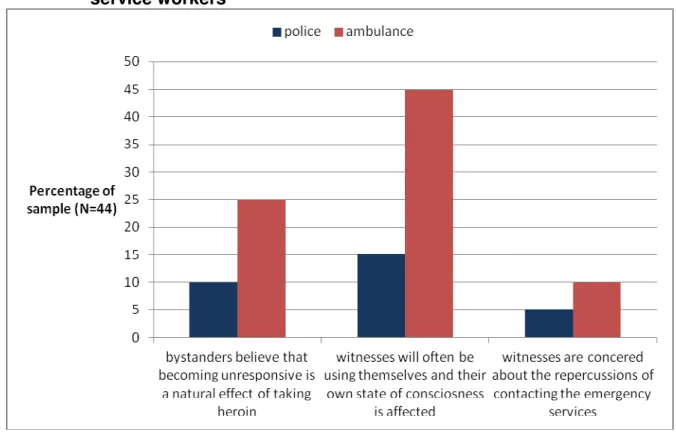
Figure 8. Why bystanders delay calling an ambulance according the emergency service workers...23
Introductory note
This report is the outcome of a project into opioid overdoses. The remit was to focus on finding practical methods of overdose prevention. In order to fulfil this remit, a critical review of existing knowledge on overdose prevention was conducted. The report adds value to existing information by developing a methodology to classify and analyse risk and protective factors stratified by those involved (drug users, observers and organisations). The report then assesses the extent to which risk and protective factors can be potentially modified at different levels, e.g. individual, treatment setting, organisational and strategic. The report therefore has the potential to be updated as new information emerges.
As a result of the review, we have attempted to draw out practical measures and
interventions that could reduce the likelihood of overdose being fatal, especially within the European context. In addition, we had the opportunity to filter the findings of the review through a Scottish expert group. The group included a wide range of professional groups who had day-to-day frontline experience of managing drug misusers and overdose. There are limitations which should be noted. This was not a comprehensive or systematic review (these may be found elsewhere). The studies we considered took place in relatively few countries, e.g. UK, Australia, North America. The expert group was ad-hoc and
geographically specific; other groups might have come to different conclusions.
The views expressed in the report are those of the authors and do not necessarily reflect those of the EMCDDA.
Summary
Introduction
The objective of this report is to review the literature on preventable risks of fatal overdose in heroin users. To the extent that such factors can be identified, prevention and treatment interventions for potentially fatal overdoses can be informed by research findings. Extant reports already make a range of recommendations regarding overdose with one review stating that ‘most overdoses and deaths are avoidable’. However, what ‘avoidable’ means in this context is unclear. Broadly speaking, the current state of knowledge is that the more individual, situational and organisational risk factors that are present, the greater the
likelihood that the overdose will be fatal. The degree to which this complex set of factors can be modified in order to reduce fatal overdose is the focus of this report.
Method
There were four steps. 1. Key reviews were identified (see Appendix 1). 2. Using these reviews, the aim was to identify risk/protective factors associated with non-fatal and fatal overdoses. 3. The analysis focused on assessing the impact of non-fatal overdoses on subsequent overdose experience and differentiating fatal and non-fatal opiate overdoses. 4. The information was reviewed by an expert panel at St Andrews University, Scotland in April 2010.The panel considered the efficacy and feasibility of sixteen measures identified by the review.
Key results
The single most important factor for fatal overdose appears to be using other depressant drugs at the same time as illicit opiates. It has previously been suggested that some
multifaceted combination of treatment options, e.g. increasing and improving treatment with opiate substitutes, community peer education, family support groups, supervised injecting facilities, and making naloxone available at home may be needed to have any practical effect on mortality from overdose. However, the review identified barriers at several levels; firstly, for drug users themselves, secondly for witnesses, thirdly for service providers and fourthly for society. These barriers need to be overcome in order to reduce overdose. Ultimately, without behavioural change on the part of drug users, there is unlikely to be a significant reduction in the level of fatal overdose. The expert panel also highlighted the fact that overdose is often a symptom of deeper underlying problems in the individual that initiate and exacerbate problematic drug use. Without addressing these problems (e.g. psychiatric conditions, combinations of depressant drugs), the impact of primary overdose prevention may be limited. The panel felt that practical interventions could occur in settings not identified in the literature, for example, when drug users are in police custody. However, there is no current evidence that such interventions do actually reduce fatal overdose. In summary, there are many reasons for fatal overdoses and the review did not identify any particular measure that is likely to have a significant impact. Rather there is evidence that many interventions may reduce overdose, particularly in settings where the drug user is in contact with treatment or emergency services. However, it is important to bear in mind the distinction between overdose prevention at the clinical and at the population level. At the clinical level, specific interventions are available and have been shown to be effective (e.g. pharmacological treatment). At the population level, where many drug users are not in contact with services, overdose reduction depends on behavioural change by drug users themselves (e.g. avoiding the mixture of opiates and other depressant drugs). Overdose
prevention is a multifaceted problem. Purely technological interventions were thought likely to have a relatively limited impact. Rather, overdose involves personal and societal issues; only when these are addressed is the level of fatal overdose in Europe likely to decrease.
Review of preventable risks of fatal overdose in heroin users
1. IntroductionThere have been several reviews on the nature and extent of drug overdoses (Best et al., 2000; 2001; Rome et al., 2008). These reviews have also sought to identify preventive measures that could reduce overdoses. A key issue that has been addressed is the nature and extent of factors that differentiate between non-fatal and fatal overdoses. To the extent that such factors can be identified, prevention and treatment of potentially fatal overdoses can be informed by research findings.
Reviews have focused on four sets of factors. The first set deals with the characteristics of the drug users themselves. The second deals with the circumstances in which the overdose occurred. The third deals with treatment interventions. The fourth deals with organisational response in the aftermath of an overdose.
The reviews make it clear that there are many interacting factors that determine whether or not an overdose will be non-fatal or fatal. While there are parameters associated with both non-fatal and fatal overdoses, for practical purposes interventions are focused on (a) overdose prevention (including opportunities for treatment) and (b) responses to overdose that have occurred.
Some responses are obvious, for example, if an overdose has occurred ensuring that bystanders take measures on the spot in terms of getting expert help. This might sound ‘obvious’, but there are barriers, e.g. knowledge of appropriate responses, fear of calling emergency services, bystanders’ own state of intoxication. These factors highlight an
important aspect of overdose that is sometimes forgotten or not acknowledged, namely that the act of drug taking is an event with its own set of rules. While the majority of drugs users engage in harm reduction in relation to HIV infection, it is unclear whether they are also willing to do so in relation to overdose. An important factor is the trade-off being the specific harm reduction measure and the (‘cost’) and the anticipated benefit. In relation to HIV infection, there is little cost in using clean injecting equipment (e.g. avoid sharing drugs), whereas the perceived cost of harm reduction measures, e.g. not mixing drugs, continuing high levels of drug use, for overdose may be higher. While there is evidence that drug users have engaged in some harm reduction in relation to overdose, it is difficult to quantify what effect this has had on reducing fatal overdoses.
Extant reports already make a range of recommendations regarding overdose. However, the circumstances (individual, social and cultural) often mean that recommendations cannot be implemented or are not relevant in certain settings.
One issue is whether overdose prevention should be equated with, say, heart attack prevention, where it is assumed that a ‘rational’ person would want to reduce the risk by taking appropriate measures. Many people who overdose have already done so on previous occasions. Thus, in some instances, previous overdoses do not appear to prevent further risky use.
Another issue is the setting and circumstances of overdose studies. How legitimate is it to extrapolate general conclusions from a study of overdose in one setting to different
valid, for example, to compare the results of different studies that have examined the role of aspirin in reducing heart attack. These studies are carefully controlled. In contrast, it is rarely possible to conduct controlled studies of overdose, which are primarily observational in nature. An exception is the current NALoxone InVEstigation (N-ALIVE) Pilot Randomised Controlled Trial (RCT). The hypothesis of the main trial is that giving naloxone on release to prisoners with a history of heroin use by injection will reduce heroin overdose deaths in this population by 28 % in the first 12 weeks after release. Factors that appear to be important in one study of overdose, say in Australia, may have different relevance in other countries, where drug use patterns and responses to overdose may be very different. This may be partly due to cultural factors and partly due to differences in study design, populations and outcomes.
It is important to bear in mind that every drug-taking event involves a complex set of factors, including:
Which drug or combinations of illicit, licit and prescription drugs were taken and by what route of administration?
How much? How frequently? How pure was the drug? What was the person’s tolerance?
Had the person recently been released from prison? Where did the overdose take place?
Did the person have a history of psychiatric problems? Did the person have physical health problems?
Had the person engaged with drug treatment and if so what were the outcomes?
Use of other depressant drugs at the same time (alcohol and benzodiazepines are the major drugs)
Age/duration of drug use Gender
When a drug overdose occurs, it is as a consequence of one or more of these (and perhaps other) factors. There is a spectrum along which overdoses lie, ranging from not feeling well through to fatality. It has already been noted that:
‘although there are clearly individual risk factors…and situational risks our ability to categorise and predict fatality remains poor’ (Petersen & Best, 2005). ‘While significant risk factors for opioid overdose fatality are well recognised, the mechanism of fatal overdose remains unclear’ (Warner-Smith et al., 2001). Thus, the severity of the overdose can only be predicted in probabilistic terms. Broadly speaking, the current state of knowledge is that the more individual, situational and
organisational risk factors that are present, the greater the likelihood that the overdose will be fatal. A parallel may be drawn with road traffic accidents (RTAs) whereby multiple methods (see Table 1) have resulted in reduction in the rate of RTAs (Charlton and Smith, 2003).
Table 1. Measure to reduce road traffic accidents (RTAs) 1. Use seat belts.
2. Enforcement of speed limits.
3. Prohibition of alcohol in excess of legal use while driving. 4. Prompt medical attention when an RTA occurs.
5. Put speed bumps along intersections. Drivers will be forced to reduce speed rather than speed up to beat a changing stoplight. Speeding through
intersections and running red lights are among the biggest cause of traffic accidents.
6. Zebra crossings should be provided for pedestrians for safe road crossings at appropriate places.
7. Signals for road crossings at important busy places where a large number of people have to cross the road everyday.
8. Road Safety Day/Road Safety Week in schools.
Figure 1 shows that the number of people killed in road accidents in Europe has been gradually declining since 1996.
Figure 1. People killed in road accidents (European Union, 27 countries)
Source: http://epp.eurostat.ec.europa.eu.
The key issue for this report is whether an analogous set of preventive measures for overdose can be identified and evaluated.
1.1 Policy relevance
Drug-related deaths are a major cause of mortality in Europe, particularly among people aged 15–49. One study found that 10 % and 23 % in this age group could be attributed to opioid use (Bargagli et al., 2005). During the period 1990–2006, between 6 400 and 8 500 drug-induced deaths were reported each year by EU Member States, Croatia, Norway and Turkey, adding up to more than 135 000 deaths. In 2006, the United Kingdom and Germany accounted for half of all reported deaths (EMCDDA, 2009). There appears to be a paradox in that levels of injecting drug use have been decreasing while the number of drug users in contact with treatment services has been increasing. The EMCDDA has considered a range of factors, including an ageing population becoming more vulnerable; increased levels of polydrug use; a failure of existing services to target or reach those most vulnerable; or even an increase in the numbers of relapsing opioid users leaving prison or treatment, who are known to be at particularly high risk (EMCDDA, 2009).
Figures on drug-related deaths are difficult to interpret (EMCDDA, 2009b). Figure 2 shows the fluctuating trends in drug related deaths. Thus, it is difficult to establish whether
preventative measures have had any impact. Between 2000 and 2003, most EU Member States reported a decrease followed by a subsequent increase in deaths between 2003 and 2008. Preliminary data available for 2009 suggest an overall figure equal to or slightly below that for 2008 (EMCDDA, 2011a, Vicente, 2010). The reasons for the sustained numbers of reported drug-induced deaths are difficult to explain, especially given the indications of decreases in injecting drug use and increases in the numbers of opioid users in contact with treatment and harm reduction services. Against this possible reduction in drug use in the at-risk population, stable or rising numbers of drug-induced deaths have become a major cause of concern.
A number of mortality cohort studies are currently underway in Europe (EMCDDA, 2011b, Giraudon, 2011). This type of study can determine overall and cause-specific mortality rates for the cohort, and can estimate the group’s excess mortality compared to the general population. Large-scale longitudinal cohort studies can be used to test hypotheses, for example, about the reasons for changes in the numbers of drug-induced deaths, as well as to monitor the overall risk and detect changing patterns in the causes of death.
Unfortunately, some countries show a low detection rate of overdose in the general mortality registries and, therefore, a significant proportion of deaths recorded with an ‘unknown’ or an insufficiently specified cause (e.g. cardiac arrest) might be overdoses (EMCDDA, 2009).
Figure 2. Number of ‘drug-induced deaths’ recorded in EU Member States according to national definitions
0 1000 2000 3000 4000 5000 6000 7000 8000 9000 1995 1996 1997 1998 1999 2000 2001 2002 2003 2004 2005 2006 2007 2008 Source: http://www.emcdda.europa.eu/stats11/drdtab2e
1.2 Scope of the review
It was agreed that this would be a descriptive process, whereby the existing reviews would be synthesised and gaps in the literature identified. As a result of this process,
recommendations for practice and policy might be outlined. It is, however, beyond the scope of this review to critically appraise all the individual studies on overdose. Furthermore, the review does not detail the complexities of factors in different countries that might operate to prevent or increase fatal overdose (such as the legal framework, accessibility to services, professional attitudes, resources and demands, quality of services, the demographics of the population, availability of different drugs).
The project objectives were to:
1. Undertake a review of the literature. This is based on the references listed in section 6 (Appendix 1).
2. Focus (where information is available) on the following key areas: a. Poly-substance misuse and injection;
b. Comorbid disorders including suicide, mental and physical health;
c. Care pathways including treatment (e.g. prescribing, interactions between illicit drugs and prescribed medications, methadone) and service models (e.g. detoxification, substitution, drop-outs);
d. Special groups, e.g. adolescents, prisoners (in particular, after prison release), pregnant drug users, and older people.
3. Focus on both fatal and non-fatal opiate overdoses. The topics covered include (again where information is available):
a. Assessment of impact of non-fatal overdose on subsequent overdose. b. Differentiate between fatal and non-fatal opiate overdose.
1.3 Method
Key reviews were identified (see Appendix 1). Reviews published from 2000 to 2008 in Europe, Australia and the USA were included. For this project, the aim was to identify risk/protective factors associated with non-fatal and fatal overdoses. With a few exceptions, we did not go back to source papers. Therefore, studies were considered only in terms of the information presented in the reviews. A total of 31 papers were analysed for this report. For each study, presented in these reviews, the following dimensions were categorised:
1. Prevention and treatment intervention, organisational response or other activities related to overdose.
2. Did the intervention/activity increase or decrease the likelihood of fatal overdose?
3. Study population e.g. treatment settings (e.g. recent prison release, drug injectors).
4. Defined outcome, e.g. non-fatal or fatal overdose. 5. Comments, e.g. clarifying an aspect of the study. 6. Country where the study was conducted.
1.4 Definitions Overdose
The EMCDDA definition of drug-related deaths (more precisely, drug-induced deaths) includes ‘people who die directly due to use of illegal substances, although these often occur in combination with other substances, such as alcohol or psychoactive medicines. These deaths occur generally shortly after the consumption of the substance’.
(http://www.emcdda.europa.eu/themes/key-indicators/drd) (EMCDDA, 2010). They are also
known as overdoses or poisonings. For the purpose of this review and because evidence of 8/10 reported cases of drug-induced deaths reported to the EMCDDA being related to
opiates, mainly heroin, we consider only opiate overdoses. The review does not cover overdoses related only to alcohol, overdoses related only to prescription drugs, or only to non-opioid drugs.
The International Classification of Diseases (ICD) is the international standard diagnostic classification for all general epidemiological and many health management purposes and clinical use (World Health Organization, 1992).
http://apps.who.int/classifications/apps/icd/icd10online/). The current edition (ICD-10) classifies overdoses in Chapter XIX: Injury, poisoning and certain other consequences of external causes (S00-T98). It has been noted that, ‘the lack of more specific codes in both the ICD-9 and the ICD-10 precludes perfect correspondence between unintentional heroin overdose deaths and a specific code’ (Landen et al., 2003).
(Sporer, 1999) discusses the complex clinical issues surrounding drug overdose. In their qualitative study of overdose, (Rome et al., 2008) defined an overdose as ‘a situation where after using, you or another person passed out and couldn’t wake up’. In essence, overdose may be defined by clinical or self-report criteria.
Safety (or lethal) ratio assuming no tolerance
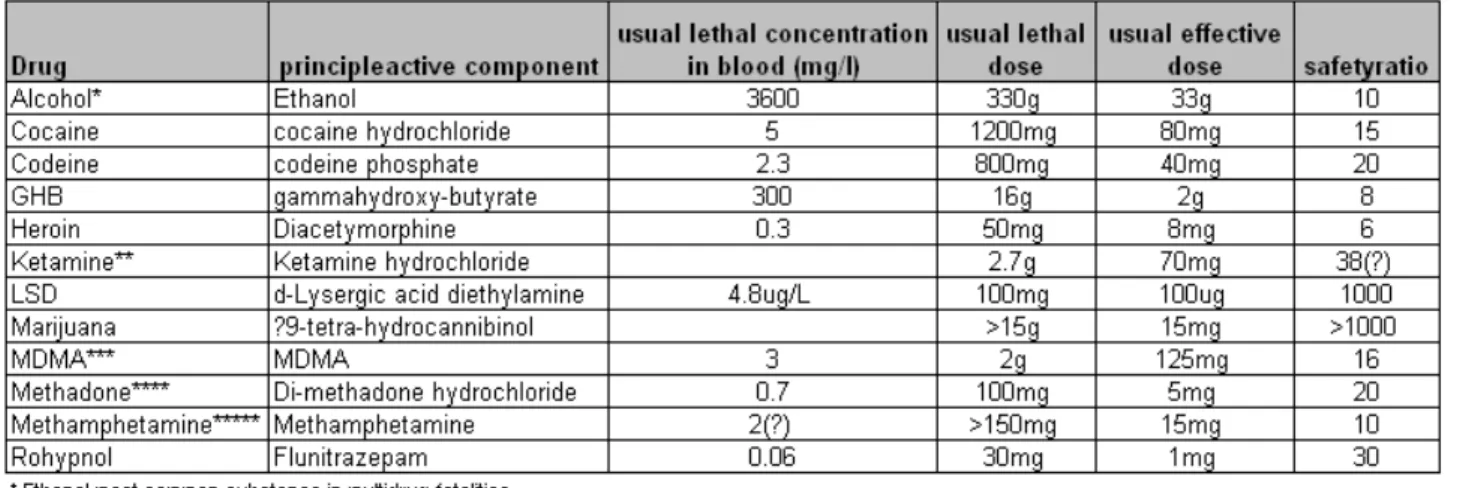
The safety ratio equals the number of standard or usual doses it takes to reach the median lethal dose (Caulkins & Menefee, 2009). The median lethal dose is the dose required to kill half the members of a tested population, thus, half of a population who consumed six times the average dose of heroin would die. This assumes that the person has not built up
tolerance to the drug. The range of safety ratios of abused drugs is wide (Leung, 2007). Table 2 shows some of the safety ratios given by Leung (2007).
Table 2. Safety ratio of drugs (assuming no build-up of tolerance)
Source: Leung (2007).
Table 2 shows that heroin has the lowest safety ratio. This means that a person with normal tolerance would have to take only six times the usual ‘effective’ dose to have a 50 % chance of fatality.
To put the information about overdose in perspective, the following key points were
extracted from the literature review. However, many of these facts may be context-specific and not generalisable to other settings; also, some of these points are the cited authors’ interpretation of their findings.
1.5 Drug users
• About 2 % of people who inject heroin die each year, which is six to 20 times
the rate expected in peer controls who do not use drugs (Sporer, 2003).
• In persons who regularly inject heroin, half of these deaths are attributable to
overdose (Sporer, 2003).
• On average, heroin users who overdose report having experienced three
overdoses, (mean 3.26, range 1–20) (Rome et al., 2008).
• Most experience overdose only once every few years, but a minority do so
far more often (Best et al., 2000) but see also (Rome et al., 2008).
• ‘Experience of overdose is neither a deterrent to future drug use nor a
motivator for seeking treatment’ (Zador, 2005, p. 7).
• Most users believed that the main reason for overdose was the quantity or
strength of the heroin (McGregor et al., 1998).
• Few deaths occur ‘instantaneously’ (Sporer, 1999) but see (Lenton &
Hargreaves, 2000).
• Instant death occurs in approximately 15 % of overdose cases (Lenton &
Hargreaves, 2000).
• Epidemiology of non-fatal overdoses is quite similar to that of fatal overdoses
(Sporer, 2003).
• 41 % of morphine positive deaths had morphine values below the ‘fatal’ level
of 0.15 mg/L and 29 % of methadone-positive deaths had methadone values below the ‘fatal’ level of 0.2 mg/L (Zador, 2005).
• Of the 77 resuscitated heroin users in two Scottish accident and emergency
departments, suicidal thoughts or feelings before overdosing was the underlying reason for the overdose in 49 % (Neale, 2000).
• Suicide and accidental drug overdose seemed to be less of a dichotomy and
more a spectrum of intention (Zador, 2005).
• 80 % of survivors of heroin overdose did not perceive themselves to be at
high risk of overdose, despite experiencing one in the previous six months (Darke & Ross, 1997).
Research commissioned by the Scottish Government sought the views of people who had directly or indirectly experienced an opiate overdose (Rome et al., 2008). Just under half of the participants had experienced a personal overdose. Figure 3 shows the top five
Figure 3. Top five reasons cited for a personal opiate overdose in a qualitative study of 44 Scottish drug users
Source: Rome et al., 2008.
1.6 Witnesses and bystanders
• Heroin users who witness an overdose are usually intoxicated themselves
(Darke et al., 1996).
• Inflicting physical pain was the most common intervention used by injecting
drug users to revive an overdose survivor (Zador, 2005).
• Less than half tried cardiopulmonary resuscitation (CPR) and in most cases
death had occurred by the time the ambulance arrived (Zador, 2005).
• In one in four of the cases where there was at least one witness reported as
being present, and the death was not reported as instantaneous, a different outcome could have occurred if the witness had acted more swiftly,
commenced CPR and called an ambulance at the first sign of trouble (Hickman et al., 2007).
• Approximately 60 % of deaths occur in the company of others (Lenton &
Hargreaves, 2000).
• Overdose witnesses only call an ambulance in about 10 % of cases (Rome et
al., 2008).
The Scottish Government report (Rome et al., 2008) also interviewed witnesses to an overdose. The report found that a range of interventions, classified by the authors as ‘inappropriate’ and ‘appropriate’ (Figure 5) were taken.
Figure 4 Inappropriate intervention reported by bystanders witnessing an overdose in a qualitative study of 44 Scottish drug users
Source: Rome et al., 2008.
Figure 5 Appropriate intervention of bystanders witnessing an overdose in a qualitative study of 44 Scottish drug users
1.7 Organisational response to drug users
• Prior to discharge from hospital, overdose patients are not routinely given
information about overdose prevention (Rome et al., 2008).
• Case records of people who have died from a drug-related death provide
histories of multiple overdoses and hospital attendance prior to death (Zador, 2005).
• Zanis and Woody (1998) undertook a study of one-year mortality rates
following methadone treatment discharge and found that death rates, especially overdose, are high among patients who are unfavourably discharged, or who drop out of methadone treatment.
• Bird and Hutchinson, S. (2003) studied the two weeks after release from
prison compared to other times of liberty. They found that drug-related
mortality was seven times higher in the first two weeks of liberty than at other times. In England, it has been estimated that 15 % of the 1 506 drug
overdose deaths in 2005 occurred in people recently released from prison (Department of Health, 2007).
Figure 6. Mortality following methadone treatment — discharge status of 110 patients
Source: Zanis & Woody, 1998.
1.8 Classification of risk factors
The studies described in the reviews were tabulated as described above and the results are shown in Appendix 1. From these tables, lists of risk and protective factors for non-fatal and fatal overdose were drawn up (Tables 3 and 4). It should be noted that the description of the factors is brief and on some occasions, its inclusion as risk or protection may not be obvious. For example, ‘immediate overdose onset’ is considered to be a protective factor (Best et al., 2001) because rapid overdoses are more likely to result in witnesses
Table 3. Risk factors classified into three levels: Individual, observers and organisational
Risk factors
Individual Observers Organisational
Drug use
• Topping up on a legitimate methadone prescription • Using someone else’s methadone prescription • Preferring illegal drug use in favour of prescribed
methadone
• Not always taking prescribed medication, which may reduce drug tolerance and increase withdrawals and susceptibility to overdose
• Unintentionally taking too many drugs, due to unexpected heroin purity, lower tolerance, or ingesting unknown tablets
• More frequent use of illicit methadone • Very high levels of drug intake with users
experiencing difficulty in controlling their drug intake • High levels of polydrug use and prescription drug
use
• Reduced tolerance to opioids • Benzodiazepine use
• Large quantities of alcohol • Injecting cocaine
• Length of time that people have used drugs • Sporadic use of heroin
Circumstances of overdose
• Slow overdose onset
• Two weeks after release from prison (compared to other times of liberty)
Experience of treatment
• Withdrawal from drug treatment • Leaving treatment
• Periods of induction and transition, such as when drug users (re)enter or discontinue treatment • Greater number of separate treatment episodes
Psychiatric/physical
• Suicidal ideation
• History of mental health problems, a current psychiatric diagnosis and prescription of psychotropic medicines
• Access to antidepressants, through genuine prescriptions, obtaining different antidepressants from different prescribers
• Feelings of indifference and carelessness • High levels of hepatitis and cirrhosis
Social
• More drug injectors in the social network
experiencing conflict with more network members • Life events: recently experienced bereavement of someone close to them, a relationship breakdown, accommodation problems
Circumstances
• Injecting drug use in public places affords less opportunity to test the sample strength
Consequences of intervening • Presence of bystanders, e.g. fear of police involvement • Fear of social repercussions Treatment
• Unable to access a methadone prescription
• Unable to obtain substitute medication
• Strict rules (for methadone programmes) increasing the risk of discharge resulting in a high mortality rate
• Take-home Naloxone (THN) • Methadone dose is increased too
quickly, or initial dose is too high • Poor treatment response • Increasing use of multiple
doctors
• Excessive increases in
psychoactive drug prescriptions
Emergency services
• Changes in police activity, whereby dealing and use at static sites, such as houses, is displaced to street dealing in other areas
Prison release
Table 4. Protective factors classified into three levels: individual, observers and organisational
Protective
Individual Observers Organisational
Circumstances of overdose • Immediate overdose onset • Methadone maintenance —
daily dose between 60 mg and 120 mg
Experience of treatment • Engaged in treatment
Availability of prescribed drugs • Availability of buprenorphine in
treatment settings
Experience of overdose • Past witnesses of a fatal
overdose
• Witnesses had received information on how to prevent overdose/revive a casualty
Reaction to overdose • Witnesses present at an
overdose event are willing to intervene • Witnesses remaining with
the casualty
• Witnesses who attempted CPR
• Public intervened to help overdosed or
unconscious drug users After calling an ambulance • Ensured still breathing
and place person in the recovery position
• Cleared space around the unconscious person for the ambulance crew to work on arrival
• If in a communal building, limited the number of non-essential persons at the scene
• Stayed at the scene to provide essential
information to ambulance staff
Emergency services
• Mapping high risk areas and identifying those repeatedly overdosing
• Reducing police attendance at the scene of an overdose and decreasing the risk of arrest • Ensuring that police officers do
not routinely attend ambulance call-outs to drug overdoses, unless a death has already occurred
• Role of emergency service operators
• Emergency units to provide contact and advice cards to known drug users following an overdose
Health services
• Periods of hospitalisation can provide an opportunity for appropriate interventions to be targeted at these high-risk patients
• Substance use specialist nurses within the accident and
emergency department to progress referral for drug overdose casualties
• Increasing the availability of treatment among heroin users, both in the community and in prison
• THN (Take-home Naloxone) • Safer injecting rooms (SIRs) Prison services
• Thorough care for drug users to make the post-release period less of an overdose hotspot
2 Overdose prevention: recommendations, actions and barriers
This section re-organises the material from the literature review into a more accessible form. The Frequently Asked Questions (FAQ) includes topics that the review was mandated to examine.
2.1 What perception do drug injectors have of the risk of overdose? • Experience of overdose is neither a deterrent to future drug use nor a
motivator for seeking treatment (Zador et al., 2005).
• Most users believed that the main reason for overdose was the quantity or
strength of the heroin (McGregor et al., 1998).
• 80 % of survivors of heroin overdose did not perceive themselves to be at
high risk of overdose (Darke & Ross, 1997).
• When they were asked why they thought they had survived their most recent
overdose, by far the most common response (n=25) was that someone else had been present at the time (Zador, 2005).
• There is a notion within the drug-using population that an overdose is an
‘occupational hazard’ (Independent Working Group on Drug Consumption Rooms, 2006).
• In Scotland, overdose survivors cite recent release from prison as the main
risk factor (Rome, 2008).
2.2 What proportion of drug injectors have had a non-fatal overdose?
• Most experience overdose only once every few years, but a minority do so
far more often (Best et al., 2000).
• Of active injecting heroin users, 23–33 % had a non-fatal overdose in the
past year (Sporer, 2003). This seems to conflict with the findings of Best et al., 2000.
• Approximately half report a history of non-fatal overdose (Kerr et al., 2007). 2.3 What measures do drug injectors take to reduce the risk of overdose?
• Inject with someone present (Zador, 2005).
• Measures suggested by drug users include safer injecting facilities,
information videos, legalisation of heroin and resuscitation classes (Zador, 2005).
2.4 What is the drug injectors’ experience of witnessing an overdose?
• 43 % have witnessed a heroin overdose in another user within the last year
(Sporer, 2003).
• Heroin users who witness an overdose are usually intoxicated themselves
(Darke et al., 1996).
• Fatal overdoses were witnessed by 55 of 312 injecting drug misusers —
18 % of the total sample and 33 % of those who had witnessed an overdose (Williamson & Gossop, 1999).
• Fourteen percent of those who had witnessed an overdose in the past year
reported that the outcome was death (Davidson et al., 2002).
2.5 What proportion of drug injectors have intervened when witnessing an overdose?
• Inflicting physical pain was the most common intervention used by injecting
• Less than half had tried CPR and in most cases death had occurred by the
time the ambulance arrived (Zador, 2005).
• Drug users who survive an overdose and go on to witness others having an
overdose are less likely to intervene (Tobin et al., 2007).
2.6 What practical recommendations are there for overdose reduction? • The Scottish review (Rome et al., 2008) made the following
recommendations:
— improve the quality of existing responses to overdose incidents (police and ambulance);
— improve the assessment of needs;
— improve and extend current care provision for drug users; — information and training for emergency service staff;
— information and training for drug users and significant others.
• Ways to reduce the damage include increasing access to treatment,
developing Naloxone interventions for when overdoses do occur, and offering anti-overdose training to addicts in treatment and out of treatment (Best et al., 2001).
• Some combination of increasing treatment with opiate substitutes, community
peer education, family support groups, supervised injecting facilities, and making Naloxone available at home may be needed to have any practical effect on mortality from overdose (Sporer, 2003).
• Interventions that provide drug treatment information and enhance motivation
for treatment in the medical setting are recommended, as are policies that reduce barriers to treatment entry among motivated drug users (Pollini et al., 2006).
2.7 What are the main underlying reasons for overdose?
• In 2003 in Scotland, most fatal overdoses (68 % of cases) were accidental,
while 13 % were classed as suicides (Zador, 2005).
• Neale (2000) interviewed 77 resuscitated heroin users in two Scottish
accident and emergency departments and found that 38 respondents (49 %) reported suicidal thoughts or feelings before overdosing.
• In contrast, deliberate heroin overdose as a method for attempting suicide
was reported by only 10 % (Darke & Ross, 2001).
• In another Australian study, a substantial minority (17 %) of the sample
indicated that they had ever taken an intentional overdose, and 67 % had had one within the last six months (11 % of the total sample) (Heale et al., 2003).
2.8 Why are bystanders both a risk factor and a protective factor? • Risk factors:
— inappropriate intervention when witnessing an overdose;
— bystanders are often users themselves and their own state of consciousness is affected;
— fear of the repercussions of contacting the emergency services;
— presence of other bystanders likely to decrease the probability of calling an ambulance;
— delay in summoning help for fear of possible repercussions, particularly if children are in the house.
— witnesses present at an overdose event are willing to intervene, for example, with CPR;
— witnesses are likely to call emergency services.
Figure 7 shows that fear of prosecution prevents 93 % of a sample of drug users from summoning help after witnessing an overdose. However, 31 % would call for help if they felt sure that there was no police involvement.
Figure 7. Factors affecting a bystander’s decision to summon emergency services following witness of an overdose in a qualitative study of 61 Scottish drug users
Source: Rome et al., 2008.
2.9 What aspects of polysubstance misuse contribute to fatal overdose? • Concurrent use of benzodiazepines (Stewart et al., 2002).
• Concurrent use of alcohol, especially heavy drinking (McGregor, C., Darke,
S., Ali, R. et al., 1998).
• Longer duration of injecting (Bartu et al., 2004). • Intermittent injecting (Oliver, P. & Keen, J., 2003).
• Additional psychoactive prescriptions perhaps due to mental health issues
(Oyefeso, A., Valmana, A., Clancy, C. et al,. 2000).
• ‘Top up’ opiate in addition to prescriptions (Neale, J., 2000). 2.10 What aspects of mental health contribute to fatal overdose?
• Suicidal ideation (Stewart et al., 2002).
• Access to antidepressants. (Oyefeso, A., Valmana, A., Clancy, C., et al.,
2000).
• History of mental health problems. (Oyefeso, A., Valmana, A., Clancy, C., et
al., 2000).
• Feelings of indifference and carelessness. (Rossow, I. & Lauritzen, G.,
1999).
• Treatment of mental health issues in different services (Oyefeso, A.,
2.11 In what ways do care pathways and service models impact on overdose? • Seeing multiple doctors is a risk factor (e.g. obtaining different drugs from
different doctors).
• Access to prescribed antidepressants (to prevent illicit drug cocktails). • Supervision and monitoring prescriptions (to prevent drug cocktails).
• Monitoring and assessing additional substance use ‘on top’ of prescriptions. • Appropriate arrangements for methadone reduction and/or leaving treatment
because of chaotic use.
• Treatment of mental health and physical health in different services. • Conflict with network of users (is it possible to influence drug user’s social
networks?).
2.12 What special groups were identified, e.g. adolescents, prisoners (in particular after prison release), pregnant drug users, and older people?
• Homeless drug users (including those with accommodation problems). • Recently released prisoners (especially at two weeks from prison release). • The review did not reveal anything about teenagers, pregnant drug users or
older people.
2.13 Is it possible to differentiate risk factors (individual, circumstances, and responses) between fatal and non-fatal opiate overdose?
• ‘…although there are clearly individual risk factors…and situational risks our
ability to categorise and predict fatality remains poor’ (Petersen & Best, 2005).
• ‘While significant risk factors for opioid overdose fatality are well recognised,
the mechanism of fatal overdose remains unclear’ (Warner-Smith et al., 2001).
• While the review did not reveal any new information on this point, the
decision analysis shows how predictors of fatality can be clarified.
2.14 What are the consequences of a non-fatal overdose (for example, on morbidity)? • No evidence (from this review) that behaviour is modified in such a way as
to reduce the likelihood of future overdoses.
• No evidence (from this review) that it has an impact on morbidity. However,
several papers have noted that heroin overdose can cause cognitive impairment and neurological deficits (e.g. Brvar et al., 2005).
2.15 What are the views of emergency services who attend the scene of an overdose? (see Figure 8)
• 25 % of respondents stated that, generally speaking, overdose incidents
they are called to occur in potentially dangerous and hostile situations (Rome et al., 2008).
• Where witnesses intervene, this is regarded by police and ambulance staff
to be largely helpful (Rome et al., 2008).
• Further medical help is often refused by the person who had the overdose
(Rome et al., 2008).
• The majority of police and ambulance staff (75 %) do not provide written
information to those present at the scene of an overdose (Rome et al., 2008).
• ‘In every single case, they (i.e. the drug users) are not interested. Family
members may take a bit of attention’. Scottish Paramedic (Rome et al., 2008).
Figure 8. Why bystanders delay calling an ambulance according the emergency service workers
3 Discussion
The review has highlighted factors that facilitate and impede overdose prevention. Before considering these, it is worthwhile highlighting previous recommendations.
Best et al. (2001) assert that ‘most overdoses and deaths are avoidable’. They suggest that ‘dose is rarely the sole cause — other factors turn the potential for risk into a real danger and these factors can be changed by the user and by interventions’. A very important factor appears to be using other depressant drugs (alcohol or benzodiazepines) at the same time. Risk factors that can potentially be targeted by interventions are injecting, suicidal
tendencies, resuming use after a break (often after imprisonment) and using in situations where no one else is available to summon help. The toxicity of available heroin and substitutes/supplements which are attractive to addicts can have a major impact on the death rate.
Best et al. (2001) recommend methadone maintenance as a treatment that ‘effectively reduces the risk of overdose’. Improving uptake and retention is an important way to reduce the death rate. However, they acknowledge barriers. Firstly, the addict has to remain in treatment. Secondly, without adequate controls, drugs diverted from maintenance prescribing can increase deaths among non-patients, but stringent controls could mean fewer addicts enter and stay in treatment, increasing their risk of overdose.
Best et al. (2001) recommend that services should be ‘providing information on the risks, encouraging users to protect themselves and others, and developing care plans based on an assessment of risk’. However, it is not clear to what extent services already do this. Finally, Best et al. (2001) recommend that, ‘if they witness an overdose, heroin users should be encouraged to immediately summon emergency services in the knowledge that only in exceptional circumstances would police be called to the scene and/or make an arrest’. However, a barrier to this is that ‘reassurance is contingent on local protocols being worked out’.
The review by Rome et al. (2008) made several recommendations:
1. Improve the quality of existing responses to overdose incidents (police and ambulance).
2. Improve the assessment of needs.
3. Improve and extend current care provision for drug users. 4. Information and training for emergency service staff.
5. Information and training for drug users and significant others.
Rome et al. (2008) highlight a ‘cycle of overdose management’. Column 2 of Table 5 contains an assessment of issues relating to each stage of the cycle.
Table 5. Stages in the cycle of overdose management
Stages in the cycles (Rome et al., 2008) Issues at each stage of the cycle
Assessment of needs This needs to be holistic; not just focusing on drug use. Where and when should assessment be made? How should overdose risk be
conceptualised?
Harm reduction strategies Various strategies have been suggested and implemented. It is unclear which strategies are effective (see ‘Table 6. Expert assessment of priority of overdose prevention measures’).
Reduce risk Drug users’ behaviour and knowledge may impede
efforts to reduce risk
Recognise overdose ‘Those who have witnessed an overdose can recognise the signs and symptoms. What is not clear is if they were able to do this before their experience of witnessing an overdose incident or not’ (Rome et al., 2008).
Manage overdose situation Witnesses may be willing and able but impeded by factors such as diffusion of responsibility, fear of police involvement, lack of confidence, own intoxication
Get person to hospital Possible negative attitudes of some health
professionals has been mentioned in the literature Manage medical emergency Lack of protocols or liaison between services
It is relatively straightforward to make recommendations that potentially could prevent overdoses. However, it is clear from the above that there are barriers at several levels — firstly for drug users, secondly for witnesses, and thirdly for service providers.
Without understanding the dynamics of these groups, the impact of recommendations is likely to be limited. For example, is a drug user willing to forgo the pleasure produced by injecting drugs to decrease their risk of overdose? If so, for how often? In what
circumstances? The importance of this is highlighted by the following quote: ‘If the reduction in utility associated with these factors outweighs the
improvements in utility associated with the health outcome, then from the patient’s perspective, the treatment represents a net reduction in well-being.’ (Birch & Ismail, 2002).
This statement was made in the context of dental treatment, but has obvious corollaries in relation to overdose. Thus, in the final section, we summarise recommendations, potential actions and the barriers to their implementation.
In Fife, Scotland Baldacchino and colleagues have developed a questionnaire in order to identify trends and patterns within such deaths with the aim of preventing future incidences. (see Appendix 2).
Appendix 3 is a case vignette of a typical drug death victim in Fife, Scotland. The vignette highlights the issues in implementing measures to prevent fatal overdose.
4 Recommendations
This section makes recommendations that could facilitate reduced fatal overdoses but also notes barriers. The content of the review was discussed and reviewed at a meeting in Dundee, Scotland on 1 April 2010. Attending the meeting were Martin Frisher (Keele
University), Alex Baldacchino (Consultant Psychiatrist NHS Fife and Clinical Senior Lecturer in Addictions, Centre for Addiction Research and Education Scotland (CARES), Dundee University), Kenny Cameron (Drugs Strategy Officer, Scottish Crime And Drug Enforcement Agency), Dr Julia Neufeind (Drug Deaths Researcher, Fife Alcohol and Drug Partnership and Researcher in CAMHS and Public Health, NHS Fife), Mandy Young, Fife ADP, Overdose Prevention Coordinator, Fife NHS Addiction Services, NHS Fife, Tahira Akbar (Researcher, Centre for Addiction Research and Education Scotland (CARES), Dundee University).
The group focused on the extent to which measures might impact among the population of opiate users for a while. As mentioned in the introductory note the expert group was ad-hoc and geographically specific; other groups might have come to different conclusions.
Table 6 gives an overview of recommendations based on the literature as well as barriers mentioned. It also includes the expert group assessment of feasibility and efficacy.
Table 6. Overdose prevention: recommendations, barriers and expert assessment Prevention -
Institutional
Recommendation • Barriers Expert
assessment of feasibility Expert assessment of efficacy Prison Coordinated release from prison • Identify and implement potential interventions that can reduce drug deaths in recently-released prisoners, e.g. links to treatment in the community. • EMCDDA recommends that pre-release counselling should be extended (EMCDDA, 2009). • If deaths following recent release from prison were eliminated, this could reduce fatal overdose by 15 %. (Department of Health, 2007) • Patient dynamics, e.g. desire to take drugs outweighs other considerations. • Ignorance of, or
not caring about, reduced tolerance. • Lack of coordination with community services e.g. housing, substance misuse other social services. • Day of release can be changed with little warning or take place on Friday or weekend. This depends on institutional arrangements in Member States. The expert group felt there was considerable regional variation. Police custody cells — Arrest referral Targeted
The expert group considered this to be an important point of access for at risk individuals.
At present little is done in this setting in some places. The expert group assessed this as having high feasibility. The expert group assessed this as potentially having a high
prevention of at risk individuals (Arrested individuals known to be drug users). level of efficacy having high feasibility. Prevention — Public Health
Recommendation Barriers Expert
assessment of feasibility Expert assessment of efficacy Pharmacology /Toxicology Disseminating information on purity levels, composition and quantity of drugs involved in fatal overdoses. • Create an environment where such information is available. • Consolidate links with toxicologists to produce detailed and accurate reports • Vignette: ‘Heath Ledger died from accidental drug overdose, medical examiner says’ http://seattletim es.nwsource.co m/html/movies/2 004168938_hea th07.html • Information systems are not adequate e.g. updated on changing risks of some drugs • Data is not shared and coordinated • Data is not disseminated to drug users and health professionals • Translation of analysis of information into user-friendly format • Health professionals have a role in making drug users aware • Will drug users
change their behaviour as a result? In principle it is a good idea to make drug users and health professionals more aware of the overdose risks of specific drugs and drug combinations. However, current information tends to be generic. Also the role of specific drugs in the death is not always clear or straightforward. Even if such information is available, its utility is unclear. It is difficult to specify efficacy. Information is often not available in a manner likely to influence drug users’ behaviour. Information Better exchange of information and recording of ‘near misses’. • Closer liaison between emergency services and other services e.g. substance misuse, mental health, Accident and Emergency (A & E), police and ambulance • Vignette: Emergency Services Crews confronted with heroin-fentanyl overdoses (ODs) http://www.jems.co m/article/medical-emergencies/clinical -alert-new-high • Collating and analysing this information. • Ensuring responders have access to the information. There is considerable regional variation on the quality of information. It is difficult to specify efficacy.
Decision support
Providing drug uses and health professionals with more targeted
information about overdose.
Improve the quality of interaction between health professionals and drug users by providing patient-specific assessment of overdose risk. • Engaging drug users. • Engaging health professionals Pilot scheme to evaluate decision support with health professionals and drug users is necessary by different methods in different settings. As yet, there are no trials of decision support systems. Computerised decision support has been shown to improve best practice (Kawamoto et al., 2005). Prevention — Treatment
Recommendation Barriers Expert
assessment of feasibility Expert assessment of efficacy Methadone maintenance • Increase provision • Ensure people do not leave because of strict monitoring • Create an environment where user understands the needs for monitoring due to the risks • Ensure person is in effective treatment program and is not using methadone or illicit drugs from other sources • Ensure optimal dose of between 60–120 mg • Vignette: Management of Opioid Dependence http://www.medsc ape.com/viewarti cle/452723 • Diversion to illicit market • Combining with other drugs alcohol, benzodiazepines and prescription drugs (medical use or non-medical use) • Many doctors do not want to prescribe higher range doses • Difficult to monitor in practice Experience has shown this measure is feasible (if controversial). Many studies have shown this measure to be efficacious. However, the barriers may have contributed to the problems as well (i.e. overdose caused by methadone).
Naloxone • Wider training and
implementation of Naloxone
• Vignettes: Overdose rescue kits save lives
http://www.npr.or g/templates/story/ story.php?storyId =17578955 • Not legally available • User might use more drugs than without Naloxone More pilot schemes are required. The expert group noted that other antidote drugs could also be considered.
Some studies have shown this measure to be efficacious.
• Medical and legal issues keep overdose antidote out of users’ hands http://www.mapin c.org/drugnews/v 00.n010.a04.html Assessment and treatment of physical and psychiatric/ psychological health and significant life events • Shared assessment and further integration of services should encourage sharing of information and treatment plans • Targeted interventions for high-risk patients • Users not in touch with services • Poor coordination between agencies • Willingness to engage with treatment • Attitude of health professionals • Is there evidence that such assessment is effective? Not directly considered, but see comments on efficacy (next column). The expert group felt that this was perhaps the most important factor in overdose prevention. Specialist nurses in Accident and Emergency departments
Ensure such nurses are in place Is there evidence for effectiveness? Unclear Difficult to quantify. Safe injecting rooms
Provide safe injecting
rooms • Resistance from communities, legal authorities, etc. • Do drug users want them? Depends on removal of barriers. Likely to be efficacious. Prevention — individual
Recommendation Barriers Expert
assessment of feasibility Expert assessment of efficacy Provide accurate information to drug users Disseminate information on key risk and protective factors • Do drug users act on such information? • Drug users often engage in inappropriate interventions • Previous overdose does not seem to be a deterrent Important to assess under what circumstances drug users would change their behaviour. Could be efficacious, depending on comments in feasibility column.
CPR training Provide CPR training • Would drug users participate or remember CPR training? • Not only drug
users, but friends and family Measure is feasible. The noted barrier means the efficacy of this measure is unclear. Use of antidepressant drugs • Ensure antidepressant drugs are not over-prescribed • Safety measures required, e.g. coordination of mental health and substance misuse Use of antidepressant drugs is part of their substance misuse but also part of treatment of comorbidity. • Difficult to implement • In what way? Could be dispensed frequently and monitored? Patient regularly reviewed for mental health Likely to be efficacious if implemented. Using the consultative and integrated models rather than serial or parallel models in comorbid conditions. Overdose response — Setting
Recommendation Barriers Expert
assessment of feasibility Expert assessment of efficacy Bystanders If individuals have others close to them at the time of overdose, this provides the opportunity for overdose training for these individuals. • Education, integration and delivery of effective interventions • Family members of drug users should be provided with overdose training so they can recognise signs of overdose, such as snoring • Family members, peers, general population ought to be provided with CPR training, which would allow them to intervene and, perhaps, prevent the death • Substance misusers do not want training • Bystanders are themselves intoxicated • Witnesses leave the scene of the overdose • Diffusion of responsibility • Drug users who survive an overdose and go on to witness others having an overdose are less likely to intervene (Tobin) • Possible repercussions, e.g. children are in the house Difficult to translate into action due to barriers. Depends on removal of the barriers.
Police Ensure police do not attend overdose unless a death has occurred Overdose incidents can occur in potentially dangerous and hostile This already happens in some place but there are other issues, e.g. child
environments, where police may have to attend.
protection.
Ambulance Trained in Naloxone use. Vignette: http://www.jems.co m/news_and_article s/articles/jems/3201/ clinical_alert_the_ne w_high.html
May not be routine in some areas. Should be feasible in most settings. Efficacious in dealing with near misses. Direct referrals from ambulance to treatment services as an option of improving therapeutic opportunities for those who have recently
overdosed.
After considering the information in Table 6, the expert groups discussed the measures. The key point is the group viewed overdose prevention as a multifaceted problem. Purely
technological interventions were though likely to have a relative limited impact. Rather, overdose involves personal and societal issues; only when these are addressed is the level of fatal overdose likely to decrease.
Acknowledgements
The authors would like to thank Isabelle Giraudon and Julian Vicente of the European Monitoring Centre for Drugs and Drug Addiction for their help with this project; also Phil Woodvine, who helped with literature reviewing and data analysisand Corrina Knight for help in proof reading the report.
5 References
Bargagli, A.M., Hickman, M., Davoli, M. et al. (2005), ‘Drug-related mortality and its impact on adult mortality in eight European countries’, European Journal of Public Health 16, pp. 198–202.
Bartu, A., Freeman, NC., Gawthorne, G.S., Codde, J.P., Holman, D.J. (2004), ‘Mortality in a cohort of opiate and amphetamine users in Perth, Western Australia’, Addiction, 99, pp. 53–60.
Best, D., Man, L-H., Zador, D., Darke, S., Bird, S., Strang, J. & Ashton, M. (2000), ‘Overdosing on opiates: Part I — Causes’, Drug and Alcohol Findings, 4, pp. 4–20.
Best, D., Man, L-H., Zador, D., Darke, S., Bird, S., Strang, J. & Ashton, M. (2001), ‘Overdosing on opiates: Part 2 – Prevention’, Drug and Alcohol Findings, 5, pp. 4–18.
Birch, S. & Ismail, A.I. (2002), ‘Patient preferences and the measurement of utilities in the evaluation of dental technologies’, Journal of Dental Research, 81, pp. 446–450.
Brvar, M., Ambrozic, J., Osredkar, J., Mozina, M. and Bunc, M. (2005), ‘S100B protein in heroin overdose: a pilot study’, Critical Care 2005, 9 (Supplement 1), p. 290, doi:10.1186/cc3353 Caulkins, J.P. & Menefee, R. (2009), ‘Is objective risk all that matters when it comes to drugs?’
Journal of Drug Policy Analysis, 2, Article 1.
Charlton, R. and Smith, G. (2003), ‘How to reduce the toll of road traffic accidents’, Journal of The Royal Society Of Medicine, 96(10), pp. 475–476
Darke, S. & Ross, J. (1997), ‘Polydrug dependence and psychiatric comorbidity among heroin injectors’, Drug and Alcohol Dependence, 48, pp. 135–141.
Darke, S., Ross, J. & Hall, W. (1996), ‘Overdose among heroin users in Sydney, Australia: II. Responses to overdose’, Addiction, 91, pp. 413–417.
Davidson, P.J., Ochoa, K.C., Hahn, J.A., Evans, J.L. & Moss, A.R. (2002), ‘Witnessing heroin-related overdoses: The experiences of young injectors in San Francisco’, Addiction, 97, pp. 1511– 1516.
Department of Health (2007), Reduction of drug-related harm: an action plan, Department of Health, London (http://www.dh.gov.uk/en/Publicationsandstatistics/Publications/ Publications Policy And Guidance/DH_074850).
EMCDDA (2009), Annual report on the state of the drugs problem in Europe, European Monitoring Centre for Drugs and Drug Addiction, Lisbon, November 2009.
EMCDDA (2010), The drug-related deaths (DRD) standard protocol, version 3.2, EMCDDA, Lisbon, 2010. Available from http://www.emcdda.europa.eu/themes/key-indicators/drd
EMCDDA (2011a), Annual report on the state of the drugs problem in Europe, European Monitoring Centre for Drugs and Drug Addiction, Lisbon, November 2011.
EMCDDA (2011b), ‘Mortality related to drug use — a comprehensive approach and public health implications’, Selected issue, European Monitoring Centre for Drugs and Drug Addiction,
Lisbon, November 2011.
Heale, P., Dietze, P. & Fry, C. (2003), ‘Intentional overdose among heroin overdose survivors’,
Journal of Urban Health, 80, pp. 230–237.
Hickman, M., Carrivick, S., Paterson, S., Hunt, N., Zador, D., Cusick, L. & Henry, J. (2007), ‘London audit of drug-related overdose deaths: Characteristics and typology and implications for prevention and monitoring’, Addiction, 102, pp. 317–323.
Independent Working Group on Drug Consumption Rooms (2006), Report of the Independent Working Group on Drug Consumption Rooms
http://www.jrf.org.uk/sites/files/jrf/9781859354711.pdf (accessed on 20 August 2009).
Kawamoto, K. et al. (2005), ‘Improving clinical practice using clinical decision support systems: a systematic review of trials to identify features critical to success’, British Medical Journal, 330, p. 765.
Kerr, T., Fairbairn, N., Tyndall, M., Marsh, D., Li, K., Montaner, J. & Wood, E. (2007), ‘Predictors of non-fatal overdose among a cohort of polysubstance-using injection drug users’, Drug and Alcohol Dependence, 87, pp. 39–45.
Landen, M.G., Castle, S., Nolte, K.B., Gonzales, M., Escobedo, L.G., Chatterjee, B.F., Johnson, K. & Sewell, C.M. (2003), ‘Methodological issues in the surveillance of poisoning, illicit drug overdose and heroin overdose deaths in New Mexico’, American Journal of Epidemiology, 157, pp. 273–278. Lenton, S.R. & Hargreaves, K.M. (2000), ‘Should we conduct a trial of distributing Naloxone to heroin users for peer administration to prevent fatal overdose?’ Medical Journal of Australia, 173, pp. 260–263.
Leung, S.P. (2007), Abused drug: overdose and death
http://www.hkcss.org.hk/fs/Sem_Dec3,%202007/Speeches_Dec3/Dr%20Leung%20SP.pdf
(accessed on 20 August 2009).
Mattick, R.P., Breen, C., Kimber, J. & Davoli, M. (2003), ‘Methadone maintenance therapy versus no opioid replacement therapy for opioid dependence (Cochrane review)’, The Cochrane Library, 3. McGregor, C., Darke, S., Ali, R. & Christie, P. (1998), ‘Experience of non-fatal overdose among heroin users in Adelaide, Australia: Circumstances and risk perceptions’, Addiction, 93, pp. 701– 711.
National Treatment Agency for Substance Misuse (2004), Reducing drug related deaths; guidance for drug treatment providers, NTA, London.
Neale, J. (2000), ‘Suicidal intent in non-fatal illicit drug overdose’, Addiction, 95, pp. 85–93.
Oliver, P., Keen, J. (2003), ‘Concomitant drugs of misuse and drug using behaviours associated with fatal opiate-related poisonings in Sheffield, UK, 1997–2000’, Addiction, 98(2), pp. 191–197.
Oyefeso, A., Valmana, A., Clancy, C., Ghodse, H., & Williams, H. (2000), ‘Fatal antidepressant overdose among drug abusers and non-drug abusers’, Acta Psychiatrica Scandinavia, 102, pp. 295–299.
Petersen, T. & Best, D. (2005), ‘Overdose prevalence predictors and prevention’, Injecting illicit drugs (eds. R. Pates, A. McBride & K. Arnold), Blackwell, Oxford, pp. 149–159.
Pollini, R.A., McCall, L., Mehta, S.H., Vlahov, D. & Strathdee, S.A. (2006), ‘Non-fatal overdose and subsequent drug treatment among injection drug users’, Drug and Alcohol Dependence, 28, pp. 104–110.