Teachers’ Construction of Technology Integration Practices Within a Technology Supported Environment
A DISSERTATION
SUBMITTED TO THE FACULTY OF THE UNIVERSITY OF MINNESOTA
BY
Yeng Lee Chang
IN PARTIAL FULFILLMENT OF THE REQUIREMENTS FOR THE DEGREE OF
DOCTOR OF PHILOSOPHY
J.B. Mayo, Advisor
i
Acknowledgements
Each PhD can only be earned by an individual, but its accomplishment is made possible with the support of many. I want to take this opportunity to thank the many people in my life that made this PhD journey possible for me.
Chue, thank you for your love and patience as I chased this dream
Sofie and Phoenix, thank you for your unconditional love, even when this journey took time away from being with you both. Thank you for helping me to dream bigger and fight harder to be an example that you can look up to! You two inspire me to do better and be better, so that I can help create a better future for our family
My mom, Lee Xiong, dad, Leepao Chang and parent in-laws, Yalor Moua and Mee Moua, thank you for laying out dreams for your children to pursue
Mom, thank you for showing me the power and value of education and for pushing me to pursue opportunities that you could only dream about doing yourself
To my siblings (Hong, Nou, Keecha, Ta Linda, David, and Peter) and sibling in-laws (Ber, Bee, Mai, Shua, Tong Pao, Kabao, Nos Neeg, Zia, Cheenou, Wendy, Linda, Ethan, Ting, Yang, Na, Pakou), thank you for taking on more familial duties that allowed me to work on class assignments, projects and my dissertation
ii
Amy, my work-sister and friend, thank you for making it possible to pursue this dream while teaching full-time
Tiffany, my colleague and friend, thank you for all the advice and support in navigating this journey
To my past and present committee members, Dr. Angel Pazurek, Dr. J.B. Mayo, Dr. Dave Earnst, Dr. Martha Bigelow, Dr. Cassie Scharber, Dr. Misti Sato and Dr. Aaron Doering, thank you for helping me be a better student, researcher and person through your guidance, expertise, and support
J.B., thank you for helping to smooth out what would have been a bumpy ride on the last leg of the journey
Angel, thank you for your mentorship, it has helped me stay on course and complete the journey
Maija, thank you for all your advice and support on writing this dissertation, your help and expertise made this dissertation a finished dissertation
iii Dedication
“If we teach today’s students as we taught yesterday’s, we rob them of tomorrow.” ~John Dewey
This dissertation is dedicated to my children, Sofie and Phoenix, nieces and nephews, Dynasty, Melody, Valerie, Dylan, Levi, Ivy, Emma, Samuel, Mitchell, Vicky, Breanna, Kendrick, Brandon, Gloria, Julie, Joselyn, Nick, Lillian, Nathan, Lani, Vincent, Alycia, Xavier, Audia, Joe, Giselle, Mason, YoYo (Ares), Titus, Kraven, Allura, Elspeth, Olivia, and all future nieces and nephews. Let’s work together to create a better tomorrow!
iv Abstract
Students have more access to technology, but teachers have identified “ineffective professional development” as an obstacle to integrating technology into classrooms (Schoology, 2017). This interpretative case study responds to the need to change current technology integration professional development practices by building upon teachers’ lived experiences. I foreground the voices of teachers who are doing the learning in order to inform the design of professional development. The study took place in a small, first-ring, suburban district with five teachers who taught in a 1:1 setting. I collected
participant artifacts, interview data, and field observations and subsequently analyzed the data through coding and three-dimensional narrative inquiry space. The following
research questions framed the focus of the study: 1) How do teachers construct technology integration practices in a technology supported environment? 2) What informs teachers’ technology integration practices? 3) What are the practices of secondary teachers related to tech integration? The findings indicate that four factors inform teachers’ technology integration practices: values and beliefs, narrative authority, knowledge of and access to resources, and narrative knowledge. The study also suggests that teachers enacted technology integration practices along a process-oriented and product-oriented spectrum. Taking these two findings into account, I developed the Pinwheel Framework in order to explain how teachers constructed their technology integration practices. This research shifts the conversation from designing technology integration professional development for teachers (a product-oriented approach) towards
v
using teachers’ lived experiences as part of technology integration professional development practices (a process-oriented approach).
vi
Table of Contents
ACKNOWLEDGEMENTS ... I DEDICATION ... III ABSTRACT ... IV LIST OF TABLES ... VIII LIST OF FIGURES ... IX CHAPTER 1: INTRODUCTION ... 1 STATEMENT OF PROBLEM ... 2 RESEARCH PURPOSE ... 7 RESEARCH QUESTION ... 8 SIGNIFICANCE OF STUDY ... 8 ASSUMPTIONS ... 10
OVERVIEW OF THE DISSERTATION ... 10
CHAPTER 2 LITERATURE REVIEW ... 13
WHAT IS TECHNOLOGY INTEGRATION? ... 14
WHAT ARE EFFECTIVE PROFESSIONAL DEVELOPMENT PRACTICES? ... 16
HOW HAS PROFESSIONAL DEVELOPMENT BEEN USED FOR TECHNOLOGY INTEGRATION? ... 20
WHAT ARE BARRIERS TO TECHNOLOGY INTEGRATION? ... 23
HOW DO BELIEFS IMPACT TECHNOLOGY INTEGRATION? ... 25
CONCEPTUAL FRAMEWORK ... 26
SUMMARY ... 39
CHAPTER 3: METHODOLOGY ... 39
QUALITATIVE CASE STUDY ... 40
SITE SELECTION ... 41
PARTICIPANT SELECTION ... 44
RESEARCHER POSITIONALITY ... 46
TECH FOR TEACHERS COURSE ... 47
DATA COLLECTION ... 49
DATA ANALYSIS ... 55
VALIDITY AND TRANSFERABILITY ... 57
SUMMARY ... 59
CHAPTER 4: FINDINGS ... 60
INTRODUCING EAST BROOKE SCHOOLS ... 61
INTRODUCING THE TEACHER PARTICIPANTS ... 64
vii
FINDING 1:TECHNOLOGY INTEGRATION FACTORS ... 67
FINDING 2:PROCESS AND PRODUCT ORIENTED LEANINGS:TECHNOLOGY INTEGRATION PRACTICES ... 95
FINDING 3:PINWHEEL METAPHOR:TEACHERS CONSTRUCTION OF TECHNOLOGY INTEGRATION PRACTICES ... 104
UNEXPECTED FINDINGS ... 115
SUMMARY ... 117
CHAPTER 5 DISCUSSION AND SUMMARY ... 118
SUMMARY OF RESEARCH ... 119
DISCUSSIONS OF THE FINDINGS ... 119
LIMITATIONS ... 130
RECOMMENDATIONS FOR FUTURE RESEARCH ... 131
CONCLUDING STATEMENT ... 132
REFERENCES ... 134
viii List of Tables
Table 1: Teachers’ Demographic Data ... 45
Table 2: Teacher Selected Quests, Projects, Activities ... 54
Table 3: Teachers’ Enactments ... 96
Table 4: Teachers’ Quest Completions ... 98
ix List of Figures
Figure 1. Visualization of the conceptual framework. ... 27
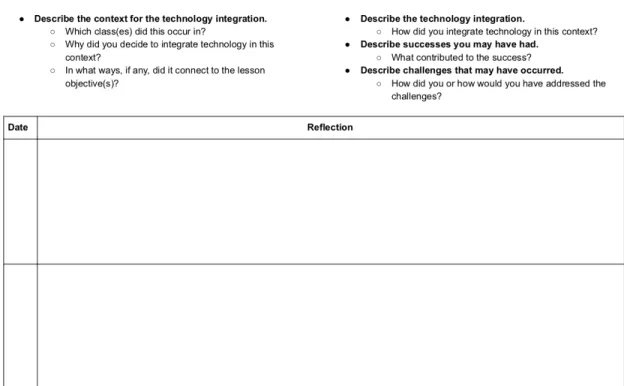
Figure 2. Example of a technology integration log. ... 51
Figure 3. List of Quest activities that teachers chose from to complete. ... 99
1
Chapter 1: Introduction
As Fiona and I sat next to each other in my office space, I wondered how I should start. I looked out the sidelight window into the hallway and listened to bodies shuffling by as students made their way through the crowded hall to their next classroom. There was a cacophony of voices and laughter competing to be heard as the passing time music signaled to students that they had a minute left to get to their destination. And finally, all that could be heard was the buzzing of the refrigerator, letting us know that one of us should make the first move.
Fiona was not one for small talk and broke the silence that had started to envelop the office. “You know, Owen wants me to put all my stuff online,” she stated, knowing full well Owen had already spoken to me about the situation. “I told Owen, if you want me to do this, you have to give me time with Yeng to work on it. I’m not about to figure this out by myself without help. So here we are.” Yes, here we are.
***
The vignette above represents an increasing trend for teachers to start integrating technology use into their classrooms. Fiona* (pseudonym) represents one of many teachers who had to re-examine her teaching practices as more technology became available to students. Nationwide, there is an increased expectation from administrators for teachers to use technology to increase student access and support student learning (Project Tomorrow, 2017 see https://tomorrow.org/speakup/speakup_data_findings.html). This is especially true in the state of Minnesota.
2 Statement of Problem
Many school districts in Minnesota have started, or are starting, 1:1 initiatives. These are programs in which each student in the school has access to a digital device- whether it be a laptop, iPad, or tablet. According to the Minnesota Department of
Education (2016), 55% of school districts in Minnesota have a 1:1 program, with 30 more programs expected to be implemented. Nationally, 54% of teachers and students were projected to have access to a school-issued computing device by 2016 (Molnar, 2015). With increased technology adoption, there are increased expectations for teachers to integrate technology into their curriculum. Lawless and Pellegrino (2007) have identified that more students have access to technology tools than to teachers who are able to effectively integrate them into the curriculum. Professional development efforts have been implemented to support teachers’ integration of technology for teaching and learning (Brinkerhoff, 2006; Ertmer, 1999; Glazer, Hannafin, & Song, 2005; Kopcha, 2012); but many teachers’ needs are not being met with the professional development they are receiving.
In a survey of 2,846 educators from 89 countries, conducted by Schoology.com (2017) on trends of digital learning in K-12 education, 41.8% of all administrators of the survey stated that providing relevant effective professional development was one of the top challenges to digital learning. In the same survey (Schoology.com, 2017), 32% of respondents said ineffective professional development was a major obstacle to integrating technology for teaching and learning. This was the identified major obstacle, coming
3
behind lack of time to incorporate technology and not enough devices for students to use (Schoology.com, 2017). These are not the only barriers to technology integration.
Barriers to technology integration need to be minimized to help teachers develop their technology integration practices. Barriers to technology integration can be
categorized as first-order barriers or second-order barriers. First-order barriers are factors that are out of the teacher's control, and may include lack of access to resources, absence of administrative vision for technology integration, or not enough time for teachers to implement new practices, added to the already identified ineffective offerings of
professional development (Ertmer, 1999). Second-order barriers have to do with teachers’ attitudes and beliefs about their own technology skill sets or the purpose of using
technology for teaching and learning (Ertmer, 1999). There is also debate around which barriers to address first.
There are mixed opinions on which barriers should be addressed first to support technology integration efforts. Some studies believe second-order barriers can only be addressed after attending to first-order barriers (Kopcha, 2012; Glazer et al., 2005; Sugar 2005; Hixon & Buckenmeyer, 2009). Other researchers disagree and believe that second-order barriers may influence the impact of first-second-order barriers, and at times prove more challenging to address (Ertmer, 1999; Hew and Brush, 2007). Deciding on which barrier to address first is contextually based on the needs of the teacher. Although both barriers should be tackled, current research (Ertmer, Offtenbreit-Leftwich, Sadik, Sendurer, & Sendurer, 2012; Ertmer and Ottenbreit-Leftwich, 2010; Ertmer, 2005) has shown that
4
first-order barriers have been reduced with more availability of and access to technology resources and training, making room to focus on second-order barriers.
There is a variety of research based on second-order barriers and technology integration, specifically addressing teachers’ beliefs and their implications on practice. Most of the research has examined teachers’ pedagogical beliefs (Ertmer, 2005; Ertmer et al., 2012; Tondeur et al., 2016) and its impact on constructivist practices of technology use. For example, Ertmer (2005) found that teachers who had constructivist beliefs tended to integrate technology through constructivist means. Others (Vongkulluksn et. al, 2018; Ottenbreit-Leftwich, Glazewski, Newby, & Ertmer, 2010; Hur, Shannon & Wolf, 2016) focused on teachers’ value of technology and its impact on their practice. For example, a study (Ottenbreit-Leftwich et al., 2010) found that teachers who valued the use of technology to support student learning and to prepare them for the future, "used technology as a tool to engage and motivate students, improve student comprehension and promote higher-level thinking, as well as a means to facilitate technology skill development that could transfer to future applications” (p. 1327-1328). How teachers value technology influences how they will use the technology. Some may argue that teachers’ mindsets may also influence their use of technology.
An aspect of teachers’ beliefs about technology integration may stem from teachers’ mindsets and how they view technology integration, whether it is product-oriented, product-oriented, or a continuum of both. Product-orientation and process-orientation help identify how teachers enact technology integration practices based on their beliefs about learning. There is a nuance to understanding the difference.
Product-5
oriented teachers view learning as acquiring knowledge or achieving a goal, with the purpose focused on attainment of the knowledge or goal. Process-oriented teachers view learning as a process and see the journey as part of the learning. Therefore, product-oriented teachers will focus on which tools to use and process-product-oriented teachers will focus on how the tool can be used to support learning. Product-orientation contextualizes the learning with a specific tool, whereas process-orientation focuses first on how one goes about the learning before identifying which tools can be used to support that process.
The concept of process- and product-orientation partly stems from Carol Dweck’s (2006) growth mindset research and the constructivist perspectives on learning that “...shift the focus from knowledge as a product to knowing as a process (Ültaner, 2012, p. p. 196-197). Growth mindset extends from previous research on implicit theories of intelligence. The concept of growth mindset is in contrast to that of a fixed mindset. Fixed mindset stems from entity theory and growth mindset stems from incremental theory (all part of implicit theories of intelligence). Implicit theories of intelligence take into consideration an individual’s behavior pattern, perceived present ability, goal orientation, and their views of intelligence (Dweck & Leggett, 1988). Entity theory postulates that individuals who believe their intelligence is fixed (fixed mindset) have performance goal orientation, where they “seek to establish the adequacy of their ability and to avoid giving evidence of its inadequacy” (Dweck & Leggett, 1988, p.259). Individuals with entity theory may engage in mastery-oriented behaviors (e.g., seek out challenges, has high persistence, focus on learning) or helpless behaviors (e.g., avoid
6
challenges, has low persistence, focus on their abilities), depending on whether they have high or low views of their abilities (Dweck & Leggett, 1988). In line with entity theory, a person with a fixed mindset gives up when they feel challenged (Dweck, 2006) and is product-oriented. Incremental theory, on the other hand, suggests that individuals who believe their intelligence is malleable (growth mindset) have learning goal orientation and “view achievement situations as opportunities to increase their competence and may pursue, in these situations, the goal of acquiring new skills or extending their mastery” (Dweck & Leggett, 1988, p.259). Individuals with incremental theory, whether they have high or low views of their ability, will engage in mastery-oriented behaviors (Dweck & Leggett, 1988). Aligned with incremental theory, a person with a growth mindset persists through learning difficulties (Dweck, 2006) and is process-oriented. So, a teacher with a growth mindset, who enacts process-oriented technology integration practices, may persist in trying to integrate technology into their classroom, despite facing technological fears and setbacks. Whereas a teacher with a fixed mindset, who is more
product-oriented, may give up after a failed attempt, or not even try, because of their fear of not knowing as much as their students about technology.
Something that is missing from the literature is examining how teachers construct their technology integration practices. There have been studies that examine what the technology integration practices are (Hsu, 2016; Palak & Walls, 2009; Judson, 2006), but not focused on how teachers have constructed those practices. There have been many studies that examine the influence beliefs have on the types of practices teachers engage in with technology (Ertmer, 1999; Ertmer & Ottenbreit-Leftwich, 2010; Kim, Kim, Lee,
7
Spector, & Demeester, 2013; Ertmer, 2005; Ertmer, Ottenbreit-Leftwich, Sadik, Sendurur, & Sendurur, 2012), but this inquiry regarding construction goes beyond looking at an isolated variable and allowing for multiple variables to inform the inquiry. Also, many of the research has examined technology integration prior to the ubiquitous presence of 1:1 personal devices in the educational setting and more teachers are now teaching within a technology supported environment (Ertmer et al., 2010). This research seeks to examine technology integration within this new context, where 1:1 initiatives are becoming the norm, moving away from desktop computers and laptops, with the
incorporation of applications and resources specifically developed for the use on personal devices. This new context also takes into consideration that teachers are faced with less first-order barriers than they had over a decade ago.
Research Purpose
This study seeks to understand how teachers are constructing their technology integration practices within a technology supported context. Specifically, by exploring what teachers are doing and identifying the factors teachers are using to inform and influence their technology integration practices, this may lead to a better understanding of teachers’ construction of technology integration practices. Professional development has been used as a way to support teachers’ technology integration needs, so participants were identified from a professional development course called Tech for Teachers. Also, being a part of the Tech for Teachers course adds on to their technology supported context. The Tech for Teachers course did not take the spotlight in the study, but served as a learning experience that helped teachers build on their beliefs and knowledge about
8
technology integration and served as a context from which to study teachers’ technology integration practices.
Research Question
This study aimed to look at how teachers construct their technology integration efforts. Through this line of inquiry, teachers’ technology integration practices are described and factors that influence their practice are identified. Particularly, by examining teachers who worked within a technology supported environment, where barriers such as technology access, resources, and support are minimized, we can focus on how teachers construct their technology integration practices. The following primary research question was used to guide this inquiry:
• How do teachers construct technology integration practices within a technology supported environment?
There are also two secondary questions used to support the exploration of the primary research question:
• What influences teachers’ technology integration practices?
• What are the practices of secondary teachers related to technology integration? The main focus of the study sought to understand the process(es) teachers undertook to construct their practices, moving away from the products of teachers’ technology integration efforts.
Significance of Study
Despite investment in resources and professional development for technology integration in the past thirty years, there has not been much return on investment
9
(Lowther, Inan, Strahl, and Ross, 2008). There needs to be a change in current practice. This study shifts the scholarship out of research using professional development
narratives and examines the narratives of teachers’ lived experiences. This study provided an opportunity to explore teachers’ lived experiences as informed by their past
interpretations about technology integration and how their current grasp of the concept is impacted with and between others, creating various possibilities for future constructions, enactments, and experiences. This scholarship moves the focus from an individual experience and examines the intersection of various experiences to inform teachers’ construction of technology integration. So, instead of viewing teachers’ construction of technology integration practices as something that happened linearly and informed through one perspective, this scholarship creates space to examine teacher’s technology construction practices to be viewed from multiple points of views that shift between past and present experiences.
Part of a critique about current studies on technology integration professional development has been that it is dependent upon self-reporting (Hew & Brush, 2007). This study places value on teachers’ self-reporting, their lived experiences. It positions the voice of those who are doing the learning to have value in helping highlight how certain experiences may be educative or non-educative (Dewey, 1938), leading to various constructions of technology integration practices. With the spotlight on how teachers’ past and present lived experience informs their technology integration practices, we can identify how to design professional development that extends and builds upon teachers’ knowledge and experience. This research will help shift the conversation from how to
10
design technology integration professional development for teachers (a product-oriented approach) towards using teachers’ lived experiences to inform a technology integration professional development (a process-oriented approach).
Assumptions
There are three assumptions I am making about how teachers constructed their technology integration practices. First, how teachers construct their technology
integration practices is not something that can be seen. This assumption is made by distinguishing between examining how a practice is formed and what is that practice. Teachers’ technology integration practices are the products of their construction. Before the products are formed, there is a process (or many processes) that teachers took to construct their practices. Second, identifying the products of teachers’ technology integration practices can help identify factors that influence teachers’ technology integration practices. This assumption is derived from literature that has linked teacher beliefs with teacher enactments. Third, knowing what factors influence teachers’ technology integration practices will help inform how teachers are constructing their practice. The literature informs the assumption that factors like values and beliefs influence teachers’ technology integration enactments.
Overview of the Dissertation
Chapter One discussed how an increase in 1:1 technology initiatives has led to a need to support teachers with technology integration. Although there is a need for
professional development to help teachers integrate technology for teaching and learning, these professional development efforts have been largely ineffective in helping teachers
11
to integrate technology into their practice. This study proposed to explore how teachers construct their technology integration practices, in order to gain a better understanding of how to support teachers’ practices of technology integration and add to the scholarship of technology integration.
Chapter Two provides a literature review of the scholarship informing and framing the study. First, there is a need to explore how other researchers have framed technology integration. Second, identification of effective professional development and how researchers have constructed their studies of technology integration professional development were examined. Third, barriers to technology integration were identified, defined, and explored. Fourth, the literature review investigated how other researchers studied the impact of belief on technology integration. Lastly, the chapter explored the conceptual framework used to construct the study.
Chapter Three details the methodology used in this study. It examines why case study methodology was used and how that informed the site and participant selection as well as the type of data collected. A description of the Tech for Teachers course is provided, and followed with a detailed list of the data collected. The chapter will end with a description of the data analysis methods (which included the use of Clandinin and Connelly’s (2000) three-dimensional narrative inquiry space and coding) and a discussion of the validity and transferability of the study.
Chapter Four explores the findings from the study. First, it will start with a narrative retelling (Clandinin & Connelly, 2000) of how the school district and I came into each other's stories (providing context for when I began working in the district and
12
describing the context of the district). Second, a narrative description of each teacher is provided to contextualize the relationships that had been present prior to the start of the study. These two narratives are important to address in this section. Some may argue that they would be best placed in the methodology section, but the decision was purposely made to place it in the Findings chapter because it represented the relationships and connections I (re)discovered as I analyzed and tried to make sense of the data. Lastly, the findings are shared.
Chapter Five concludes the dissertation. A summary of the study will be provided, followed by a discussion of implications of the study for secondary teachers’ professional development related to technology integration based on the findings. The chapter will end with limitations of the study and recommendations for future research.
13
Chapter 2 Literature Review
Fiona is a phenomenal teacher. She knows her subject matter well, gathers feedback from students to revise her class activities, utilizes assessment data to revise how content is taught, and truly cares about students. Fiona is intentional in the changes she makes to the curriculum and how she teaches; so, she was taken aback when she was told that she needed to do something to a curriculum that she had meticulously cultivated over the years. There was a disconnect here. Fiona knew she was a great teacher; Owen had even commended her in regards to her teaching, so why was she being asked to do something different with her curriculum? Why was she being asked to post her
curriculum online?
***
In trying to contextualize and ground the study, there were iterations of questions and lines of inquiry that were explored. The following questions were created to help narrow the literature review and identify research that would inform this study:
What is technology integration?
What are effective professional development practices?
How has professional development been used for technology integration? What are barriers to technology integration?
How do beliefs impact technology integration?
The first part of this literature review provides responses from the literature to answer the above-mentioned questions, provide a context of how the topic has evolved, reveal where the gaps are in the literature and help hone the focus of this study. The second part of the
14
literature review provides a conceptual framework that was used to help inform the formation of the study.
What is Technology Integration?
When it comes to technology integration, what does it entail? How do we know if technology is being integrated? Does the use of technology in a classroom represent technology integration? There is unclear scholarship on what constitutes technology integration (U.S. Department of Education, 2002; Hew & Brush, 2007). As there is lack of clarity in the literature, that may also be the case for how people come to interpret and enact their understanding of technology integration (Chen, 2008). This area of
scholarship will help to contextualize an understanding of technology integration for this study, so it can be used to intersect, combine and (re)define what is meant by technology integration.
The U.S. Department of Education (2002) described technology integration as “...the incorporation of technology resources and technology-based practices into the daily routines, work, and management of schools… it is important that integration be routine, seamless, and both efficient and effective in supporting school goals and
purposes.” Hew and Brush’s (2007) review of the literature found differing definitions of the term technology integration; but have found that there is a common understanding of the terminology: researcher’s use of the term connects the “use of computing device for instruction” (p. 225). Hooper and Rieber placed more emphasis on the role of technology in the classroom, emphasizing that integration occurs when “...teachers consciously decide to designate certain tasks and responsibilities to technology, so much so that the
15
lesson fails if the technology fails… (as cited in Bauer and Kenton, 1999, p. 522). Bauer and Kenton also saw technology integration as having a reliance on using technology as part of the daily instructional practices. So far, these definitions of technology integration are focused on what the teacher does with the technology for instruction and does not take into consideration students’ use of technology in the classroom.
Ertmer (1999) deviated from the above-mentioned definitions and moved her definition of technology integration beyond the use of technology as part of classroom practices towards how it is used to support student learning. Ertmer (1999) envisioned technology to not only support current learning, but to helping students prepare for futures that may not resemble the current status quo. She believed that technology integration was “...both curriculum-based and future-oriented... one that emphasizes preparing students for the future that they will inherit… technology adds value to the curriculum...” (Ertmer, 1999, p.49). Ertmer is not concerned about just using technology, but the purpose of how it is being used and for what purpose. Other researchers were also concerned about the purposes of technology use. Specifically, Inan and Lowther (2010) organized technology integration into three categories of purpose: “technology for instructional preparation, technology for instructional delivery, and technology as a learning tool” (p. 138). Each category of use is differentiated on whether it’s for teacher use, student use, or both.
Current researchers are also expanding on the definition of technology integration. Tiffany Nielson-Winkelman (2018), described technology integration as incorporating “... how practices using technology are leveraged in educational contexts to
16
impact people, learning and society through the relationships among educators, learners and the technologies to produce social change” (p. 30). Nielson-Winkelman extends technology integration towards creating social change, along with supporting teaching and learning. Aron Sterling’s (2009) definition contextualized technology use to:
• facilitate learning by allowing for differentiation of content, pace and learning style;
• allow wider, non-location and non time-dependent communication between the learner and his or her sources of education;
• enable learners to utilize high-order thinking skills by facilitating routine tasks; and
• engage the learner by heightening interest and enjoyment (p. 11). Sterling situates technology integration with student learning that expands beyond traditional pedagogies (i.e., lecture, bookwork) and transcends physical and temporal spaces.
For the purpose of this study, I will extend Hew and Brush’s (2007) definition and define technology integration as the process of using 1:1 devices (laptops, iPads,
Chromebooks) and digital tools (i.e. apps, learning management systems) with pedagogy to support teaching and learning for students and teachers. I have chosen to contextualize 1:1 devices with the definition because that is part of the context of my site and
participant selection. Although the definition contextualizes the use of tools, I want to reiterate that the focus is not on the tools (product), but rather the process of how to integrate technology for teaching and learning.
What are effective professional development practices?
There is a wide range of structures for teacher professional development.
17
sit and get—have been argued or shown not to be effective (Garet et al., 2001; Desimone, 2005; Darling-Hammond et al., 2005; Lawless & Pellegrino, 2005; Mouza, 2011). Teachers often return from professional development with no further support (e.g., time to implement what they learned) (Hawley & Valli, 1999; Garet et al., 2001; Desimone, 2005; Darling-Hammond et al., 2005; Lawless & Pellegrino, 2005). Fortunately, professional development types have moved beyond just sit and gets and into more reform-type (Garet et al., 2001), such as use of professional learning communities or coaching. The duration of professional development also varies, some may be an hour, a week, or even over years and may differ based on sessions within the overall professional development program. As there is a lack of coherence in structure, there is also no
common measurement of teachers’ learning from professional development.
With teacher professional development, there is no set of agreed upon principles to indicate effectiveness of professional development (Hawley & Valli, 1999; Garet et al., 2001; Desimone, 2005; Darling-Hammond et al., 2005; Lawless & Pellegrino, 2005; Mouza, 2011). The purpose of teachers attending professional learning is to be able to take back what they have learned and enact them in the classroom, in order to impact student learning (Garet et al., 2001; Desimone, 2005). There is not much data to support that this is happening (Hawley & Valli, 1999; Garet et al., 2001; Desimone, 2005; Darling-Hammond et al., 2005; Lawless & Pellegrino, 2005; Mouza, 2011). Much of the data that is collected is based on teachers’ self-reports on how they felt about the
professional development and not the impact their learning had on student outcomes (Garet et al., 2001; Desimone, 2005; Lawless & Pellegrino, 2005). Despite the lack of
18
correlation between professional development and its impact on student achievement, teachers’ self-reports about professional development are still important to help understand how teachers are taking (or not taking) up what they learned in the professional development sessions. Also, it is difficult to draw a line between
professional development efforts and student achievement outcomes because there are so many variables that influence students’ achievement (Holloway, 2006). These variables (e.g., the students themselves, their home life, schools, principals, peer effects, and
teachers (Hattie, 2003)) make it hard to isolate the sole factor for students’ achievements. There are various studies on what constitutes effective practices of professional development, but there is no consensus among the literature (Hawley & Valli, 1999; Garet et al., 2001; Desimone, 2009; Darling-Hammond et al., 2005) as to what those features are. Despite a lack of consensus on what are THE effective professional
development features, Desimone (2009) argues that there is “...research consensus on the main features of professional development that have been associated with changes in knowledge, practice, and, to a lesser extent, student achievement” (p. 183). Desimone argues that many studies have the same components, but just utilize different
terminologies. From the literature (Hawley & Valli, 1999; Garet et al., 2001; Desimone, 2005; Darling-Hammond et al., 2005), there are principles that can be applied to effective professional development. Desimone (2009) identified content focus, active learning, coherence, duration, and collective participation as five features of effective professional development. These features are the same features Garet et al. (2001) identified in their study, with activity type missing from Desimone’s (2009) list.
19
Garet et al. (2001) had conducted a large-scale empirical comparison of the features of professional development identified in the literature as effective and their impact on teacher’s knowledge and skills and teaching practices. Garet et al. (2001) found that three structural features of professional development in conjunction with three core features of professional development activities had a positive impact on teacher’s self-reported learning and practice. The three structural features are types of activity, collective participation, and duration. In terms of types of activity, this is in reference to the activities being traditional sit and get workshops that typically are conducted outside of the school day, or reform type activities where teachers engage in activities, like a lesson study, typically done during the school day. Collective participation is in reference to teams of teachers with similar teaching context engaging in professional development together. Duration examines the amount of time and the span of time of a professional development. These three professional development features work in conjunction with the three core features.
The three core features are professional development activities focused on content knowledge, opportunities for active learning, and coherence with teacher’s professional goals. Content knowledge is in reference to the subject matter that teachers participating in the professional development teach, or information about how students learn. Some examples of active learning activities include discussion, observation, or lesson design. Coherence involves connecting the professional development to other goals and activities the teacher is a part of (e.g. school goals) and aligned with state/district standards.
20
All six features, in conjunction with one another, led to results that supported teacher growth and change in practice. The following highlights some of the findings of the study in regards to the core features:
All three of our measures of the core features of activities have a positive influence on enhanced knowledge and skills… enhanced knowledge and skills have a substantial positive influence on change in teaching practice… teachers report changing practice more as a result of reform activities than traditional activities… (Garet et al., 2001, p. 933-935).
Just as there is a correlation between core features towards enhanced teacher learning and practice, this was also true of the structural features. The results showed that reform activity types tended to have longer duration (in span of time and contact hours), and a longer duration allowed for active learning and coherence opportunities (Garet et al., 2001).
How Has Professional Development Been Used for Technology Integration? Traditional professional development efforts. There are no agreed upon principles of effective technology integration professional development (Lawless & Pellegrino; Mouza, 2011; Hanover Report, 2014). In effect, when it comes to technology integration professional development, the described effective principles of teacher
development are ascribed to technology integration professional development (Lawless & Pellegrin; Mouza, 2011; Kopcha, 2012). Mouza (2011) builds on Garet et al. (2001) and Desimone’s (2005) framework and suggests the following: after teachers engage in technology integration professional development designed with effective professional development principles, they will gain skills/knowledge that they will enact in their
21
classroom, impacting student learning, causing teachers beliefs about technology integration to change. This is described as an iterative cycle.
Lawless and Pellegrino (2007) do suggest a framework on evaluating technology integration professional development in order to evaluate and define effective principles of technology integration. They argue that it is not clear what is effective professional development, what content is actually learned in the professional development, and if the evaluation is measuring the intended outcome. They proposed three phases to examine, 1) the structure of the professional development (i.e. type, duration, tech use,) 2) the content being taught (teacher’s knowledge, beliefs, and pedagogy), and 3) how the professional development is aligned with student achievement. These three phases are used to create clarity to identify effective principles of technology integration professional
development. Unclear understanding of effective technology integration professional development may result in professional development that are not meeting the needs of teachers.
Darling-Hammond, Wei, Andree, Richardson, and Orphanos (2009) indicate that many teachers are dissatisfied with the professional learning they take part in. Most professional development address subject-matter content, that covers breadth and not depth, or there is a lack of coherence between what they are learning and what they are expected to do in the classroom (Darling-Hammond et al., 2009; Lawless & Pellegrino, 2007). The purpose of teachers attending professional development is to be able to use what they learned to support student learning (Garet et al., 2001; Desimone, 2005); but this is not happening (Hawley & Valli, 1999; Garet et al., 2001; Desimone, 2005;
22
Darling-Hammond et al., 2009; Mouza, 2011). The clear consensus from many years of research is that technology integration professional development must change if teachers are expected to effectively integrate technology into their classrooms.
Changing professional development. Traditional sit and get professional development will not change teachers’ beliefs or practices. Research must move beyond learning to use technology (product-orientation) and move towards process-orientation, like connecting technology with pedagogy by using student-centered instruction (Ertmer, P., Gopalakrishnan, S., & Ross, E., 2001; Mouza, 2011; Ertmer, Ottenbreit-Leftwich, Sadik, Sendurur, & Sendurur, 2012; Kopcha, 2012; Ertmer & Ottenbreit-Leftwich, 2013; Ertmer & Ottenbreit-Leftwich, 2011). Connecting technology and pedagogy has started to replace technology integration professional development that has been focused on learning how to use technology (Ertmer et. al., 2012; Ertmer & Ottenbreit-Leftwich, 2011; Kopcha, 2012; Mouza, 2011). These are important moves in technology integration professional development, as they provide different experiences for teachers in coming to understand and enact their own technology integration practices. An area of research coming into its own is the use of situated professional development (Glazer et al., 2005; Kopcha, 2012; Sugar, 2005).
Situated professional development “...focuses on particular technology needs that teachers would like to learn and integrate in their classroom as opposed to dictating particular technology competencies that a teacher must exhibit and possess” (Sugar, 2005, p. 550). This means teachers receive support in the areas that they need and want― sometimes known as just-in-time support. In addition, Ball and Cohen (1999) emphasized
23
a need to learn content “situated in context” (p. 12). Putnam and Borko (2000)
emphasized situated learning needed to incorporate “authentic activities in classrooms… activities that are similar to what actual practitioners do” (p. 4). This meant learning how to use technology in the way teachers would use them in the classroom.
This area of scholarship informs the various ways teachers have engaged in technology integration professional development. The research gives voice to the
experiences of technology integration professional development that has come before, so the current context can be understood in how these different experiences intersect within this study. Along with understanding the literature on technology integration professional development, there must also be an understanding on the barriers to technology
integration.
What are barriers to technology integration?
Barriers to technology integration are known as first-order barriers and second-order barriers. First-second-order barriers are external challenges that teachers face, such as not having access or the knowledge of how to use certain technologies (Ertmer 1999). Second-order barriers are internal challenges, such as teachers’ values or beliefs about technology use for teaching and learning (Ertmer, 1999). Brickner (1995) first introduced this concept in her unpublished doctoral dissertation and Ertmer (1999) popularized the concept through her research. Ertmer et al.’s (1999) research indicated a connection between what teachers believe and how they enact their beliefs about technology
integration towards supplementing the curriculum, supporting the curriculum, or creating emerging curriculum. Teachers’ beliefs also impact how they respond to first-order
24
barriers. For example, a teacher who sees technology as a supplement, will feel they can’t do anything about technology integration if they are not given more computers; on the other hand, teachers who believe computers support the curriculum would find ways to address the same barrier, i.e., create stations so students may all have access to its use even if it is not at the same time (Ertmer et al., 1999). Her research has strengthened the need to help teachers address second-order barriers.
Some studies suggest second order barriers can be addressed only after addressing the first order barriers (Kopcha, 2012; Glazer et al., 2005). For instance, Kopcha (2012) attends to building teachers’ technological skills first before addressing their
technological beliefs. Others (Ertmer, 1999; Ertmer et al., 1999; Lawless & Pellegrino, 2007) disagree and state that first-order barriers and second-order barriers can shift in terms of being challenges. Whether to address first-order or second-order barriers first is contextually-based on the needs of the teacher; although it seems second-order barriers are harder to address (Ertmer, 1999; Ertmer et al., 1999). Ertmer (1999) writes, “it is generally acknowledged that first-order barriers can be significant obstacles to achieving technology integration, yet the relative strength of second-order barriers may reduce or magnify their effects” (p. 53).
Teachers’ experiences in regards to technology integration may influence their levels and/or ways of integrating technology into their practice. How teachers frame technology integration in context to their role in teaching and learning may heighten or lessen barriers for technology integration. An understanding of the scholarship of barriers
25
to technology integration helped contextualized barriers teachers may face when trying to integrate technology for teaching and learning.
How Do Beliefs Impact Technology Integration?
Beliefs have been identified as a second-order barrier to technology integration, but how do beliefs impact teachers’ change in practice? In regards to teacher change, Guskey (2002) wrote that teachers need to change their practice before their beliefs will change. As Guskey (2002) described:
... significant change in teachers’ attitudes and beliefs occurs primarily after they gain evidence of improvements in student learning. These improvements typically result from changes teachers have made in their classroom practices… The crucial point is that it is not the professional development per se, but the experience of successful implementation that changes teachers’ attitudes and beliefs. They believe it works because they have seen it work, and that experience shapes their attitudes and beliefs... (p. 383-384).
According to Guskey, teachers must change their practice first, and if they see improvement in student learning based on those changes, then they will change their beliefs. Application of Guskey’s model to technology integration means effective technology integration professional development should result in improvements in student learning before teachers will support the use of technology as part of their pedagogy. Research specifically looking at beliefs and technology integration does not align with Guskey’s proposal.
Other researchers ( Ertmer, 1999; Ertmer and Oftenbreit-Leftwich, 2010; Kim, Kim, Lee, Spector, & Demeester, 2013; Ertmer, 2005; Ertmer, Ottenbreit-Leftwich, Sadik, Sendurur, & Sendurur, 2012) have found that beliefs, specifically pedagogical beliefs, influenced teachers’ technology integration practices. In their exploratory mixed
26
methods study, Kim et al. (2013), found a significant correlation between teachers’ beliefs about effective teaching practices and how they chose to integrate technology into their classroom. They wrote:
the more sophisticated epistemology teachers had, their conceptions were closer to the student-centered approach… their status of technology integration showed a more seamless use of technology, meaning that the focus and emphasis remained on the learning rather than on the technology... (Kim et al., 2013, p. 81).
This meant that how teachers believed they should teach also influenced how they implemented technology integration practices into their classroom. Research on value beliefs and technology integration practices (Vongkulluksn, Xie, and Bowman’s, 2018; Ottenbreit-Leftwich, Glazewski, Newby, & Ertmer, 2010) found similar results. This meant that teachers who valued using technology incorporated it into their practice.
In contrast, Tondeur, van Braak, Ertmer, and Ottenbreit-Leftwich (2017) indicates the correlation may not be as clear-cut. Their meta-aggregative synthesis of qualitative studies around pedagogical beliefs and technology integration practices found that beliefs and technology integration practices had a bidirectional impact on one another (Tondeur, et. al., 2017). Sometimes beliefs influenced the practice and sometimes the practice influenced the belief.
Conceptual Framework
The review and critique of the literature, paired with my own experience,
contributed to the development of a conceptual framework to be used with this study. The conceptual framework incorporated constructivism, theory of experience, growth
27
mindsets, visitor-resident typology, three-dimensional narrative inquiry space, narrative knowledge, and narrative authority.
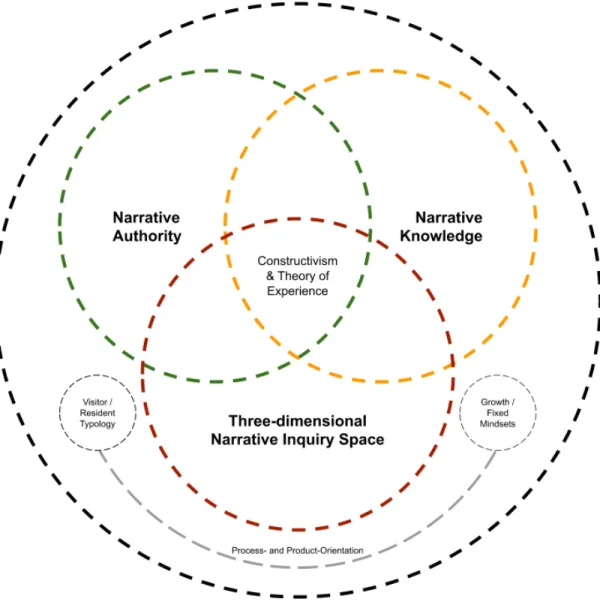
Figure 1. Visualization of the conceptual framework.
Figure 1 helps visualize which theories take center stage and which theories play supporting roles in the conceptual framework. The outer-most circle represents the conceptual framework of the study. The size of the circles symbolizes the leading or supporting role each theory has within the conceptual framework. The dashed lines of the
28
circle represent continual openness to incorporating and being influenced by other factors and experiences. The connections formed with the lines represent the connectedness of the theories to each other. Narrative authority, narrative knowledge and
three-dimensional narrative inquiry take center stage as leading theories with the largest circles. Three-dimensional narrative inquiry space helped me to interpret and make sense of the data. Narrative authority and narrative knowledge helped me to understand the
components that informed teachers’ integration practices.
Although Constructivism and Theory of Experience do not have their own circles, they exist at the center of the three interlinked circles. They are not as prominent in the conceptual framework, but both provide the foundational understandings upon which narrative authority, narrative knowledge and three-dimensional narrative inquiry space take their foundational ideas from—the understanding of knowledge as co-construction and learning through experiences. Without the ideals of Constructivism and Theory of Experience, narrative authority, narrative knowledge, and three-dimensional narrative inquiry space would not exist.
Growth/Fixed Mindsets and Visitor/Resident Typology play secondary roles within the conceptual framework. It is through these two theories that I developed the concept of Process/Product-orientations and the understanding that these orientations of technology integration practices exist along a spectrum that changes based on context. The following sections will provide more in-depth discussion of each theories in the conceptual framework.
29
Constructivism. There are many philosophers from which constructivist theory stems, such as Dewey, Piaget, and Vygotsky. The premise of constructivism is that learners are creating their own knowledge, individually and socially; when learners are constructing meaning, they are learning (Hein, 1991; Maxwell, 2013; Ültaner, 2012). Knowledge is not something that is “out there,” nor is it independent of the meaning we connect to the experience (Hein, 1991). Maxwell (2013) states that “what people perceive and believe is shaped by their assumptions and prior experiences as well as by the reality that they interact with” (n.p.). Knowledge is continually being constructed based on what the learner already knows and in the experiences the learner engages in. Learners must continually “engage in meaning-making” (Ültaner, 2012). This shifts knowledge from being a product to a process (Ültaner, 2012).
Constructivism supports the notion that past experiences inform the present and in order to grow in our learning, we must continually build on that experience. With
constructivism, knowledge is never complete or final, it is continually being constructed and reconstructed (Hein, 1991; Maxwell, 2013; Ültaner, 2012). Participants’
interpretation about technology integration is continually being formed based on past and present experiences. Jonassen (1999) states (in relation to constructivism), “Since
knowledge cannot be transmitted, instruction should consist of experiences that facilitate knowledge construction” (p. 217). In helping teachers construct their interpretations about technology integration, they must have learning experiences that help them to further build on their past experiences. By providing the Tech for Teachers course,
30
participants were provided a learning experience to help them build on and develop their beliefs and knowledge about technology integration.
Growth/Fixed mindsets. Dweck’s (2008, 2009, 2015) work was centered around helping students move from what she termed fixed mindsets to growth mindsets and the positive impact it had on their academic achievements. Fixed mindsets are in reference to students believing their abilities were things they could not change; whereas students with growth mindsets believed they had the power to develop their abilities (Dweck, 2008; 2009; 2015). People with fixed mindsets tend to believe people are born with a certain amount of talent and are afraid to try new things due to fear of failure (Dweck, 2008; 2009; 2015). They are concerned with how people will judge them and will only do things that they know they can accomplish (Dweck, 2008; 2009; 2015). On the other hand, people with growth mindsets tend to try new strategies or seek help when they get stuck (Dweck, 2008; 2009; 2015). They also acknowledge what their weaknesses are and search for ways to work with and through those weaknesses (Dweck, 2008; 2009; 2015). There has been much research on developing mindsets with students, but not much with teacher or technology integration.
In an interview with Education Week, Dweck (2015) stated that teachers who say they have a growth mindset, might actually have a fixed a mindset. In not recognizing their own beliefs about abilities, they may pass on fixed mindset messages to their students. For example, Rattan et. al.’s study (2012) found that participants with a fixed mindset attributed student’s low math test score to meaning they had low math skills instead of not having studied the material. These participants were also less likely to offer
31
support to the students to help them increase their math ability, and instead, consoled them on the fact that it was ok, not everyone is good at math (Rattan et. al., 2012). In helping teachers to develop a growth mindset (e.g. modeling how to work through struggles), this not only helps teachers see their students’ abilities as malleable, but may foster teachers’ belief in their own ability to integrate technology. Teachers’ growth mindsets may be developed through contextualizing the learning as process- and not product-oriented.
Process-oriented and product-oriented. Dweck’s (2008, 2009, 2015) research on growth and fixed mindsets helps to contextualize individual’s perception of learning as either a process or product. Those with a fixed mindset see learning as a product, something that they have attained or not. Whereas those with a growth mindset view learning as a process, something that is continuous where they can continually improve on. In conjunction with the constructivist understanding that “shift the focus from
knowledge as a product to knowing as a process” (Ültaner, 2012, p. 196-197), and growth mindset research, I offer the suggestion that technology integration can also be seen as process-oriented and product-oriented. Also, just like growth and fixed mindset is not meant to be a binary, where someone may have a fixed mindset with growth mindset tendencies (Dweck, 2015), teachers also have process and product-oriented leanings.
Leanings toward process-oriented practices. Process-oriented practices focus on pedagogy and doing. This focus is on what Jonassen (1996) termed “learning with” technology. There is more of a focus on constructivist practices and student-centered learning activities. Examples include collaborating through shared Google Docs or using
32
the capabilities of a tool to meet a need. Process-oriented practices look at ways of building community and using a tool to help facilitate a learning experience. The technology is used in a way to aide in learning. It is connected to growth mindset and pursuing learning goals, in which the purpose of using the technology is part of the process. Even if there are technology failures, this does not necessarily constitute failure in teaching/learning. Process-orientation practices engage in troubleshooting strategies to address technology failures.
Leanings toward product-oriented practices. Product-oriented practices focuses on the use of the tool. It is what Jonassen (1996) would describe as learning from and about technology. Product-oriented practices focus on how to use the tool, specifically based on what the tool was designed to accomplish. The tool is primarily used to deliver content, or serve as the main vehicle from which students learn. Examples include learning how to use an authoring tool or learning content by watching a video. These activities tend to be teacher-centered and technology is used to support teaching purposes rather than learning purposes. It is connected to a fixed mindset and pursues performance goals. Teachers have a limited view on how they can use technology for teaching and learning. If there is a failure that means more hesitation in wanting to use the technology again. Success on the lesson is dependent on whether the technology worked and not the overall lesson.
The lens through which I am looking at teachers’ experiences with technology integration is that of a growth mindset. Dweck’s (2008, 2009, 2015) research shows mindsets can be taught and changed. Growth mindset research supports the underlying
33
conceptual framework that if we can help create experiences for participants around technology integration being process-oriented and not product-oriented, this will help them to shift their technology integration practices that are in line with someone with a growth mindset. Also, understanding how teachers conceptualize their technology integration practices provide an understanding as to why teachers construct technology integration practices in a certain manner.
Visitor-Resident typology. As part of reframing tech-integration as process- versus product-oriented, there needs to also be a reframing around the narrative of digital natives and digital immigrants (Prensky, 2001). This typology has been spread in
education and created a narrative used by some teachers as to why these teachers cannot or should not have to try integrating technology into their practice. The concept of digital natives and digital immigrants creates a product-oriented typology. When one identifies with being a digital native or digital immigrant, there is a focus on the product (presence of digital medium) indicating one’s labeling. Being a native is an identity someone is born with, not something that can be changed. As an immigrant, one always will be identified as foreign and never truly part of the native landscape. There is an undertone that being a native is something that is good and that is what people should aspire to be. And being an immigrant is synonymous with being less-than… someone who can never fully become a native, no matter how hard they try. This promotes a narrative and rationale for why some teachers see themselves as never being able to catch up with the use of technology because they were not born with technology like their students (digital natives). This creates a tension of not knowing enough and a struggle for power, in terms
34
of knowledge and experience, between students and teachers. Instead, we need to reframe this typology and reinterpret this narrative.
White and Cornu (2011) offer a different typology, one that invites all to be on a spectrum of a visitor or resident in digital spaces and changes in context of its use for personal or professional purposes. This typology invites everyone to identify where they are on the spectrum based on their interaction with technology use and perception of technology as a tool or place. There is no binary space (White and Corn, 2011), but it allows for a person to shift back and forth and in-between their interactions with
technology. There is a blurring of when visiting shifts into residing. Being a resident and visitor is about a choice in how one wants to engage with the technology. It is not about being born into a category. Movement is expected along the spectrum, a drastic change from the stationary categories of native and immigrant. Although White and Cornu (2011) use this framework to talk about digital interaction, I am borrowing this
understanding to reframe how teachers see their relationship with the use of technology— towards being a spectrum and not fixed. This reframing helps teachers rebalance their roles when it comes to technology (i.e., capitalizing on their pedagogical knowledge to use technology to assist in the process of learning and not be a product for learning). They can tap into their knowledge as an educator to help students transition between being a resident and visitor in how they engage with technology for personal and professional settings.
The Visitor-Resident typology is important as part of my conceptual framework because it was an integral part of conversations with participants in framing and
35
reframing their experience. It has also been helpful as a practitioner to use this typology to help teachers leave the binary of digital immigrants and natives to a typology where they can see their place with technology for teaching and learning—moving along the spectrum as a visitor or resident user of technology. This typology helps teachers experience technology integration as being process-oriented, and not product-oriented.
Theory of experience. Dewey (1938) states, “...genuine education comes about through experience does not mean that all experiences are genuinely or equally
educative” (p. 25). Learning occurs through experience, but not all experiences support learning. Dewey (1938) philosophizes that there are two principles, continuity and interaction, that can be used to measure the “educative significance and value of an experience” (n.p.) Continuity considers that experiences are informed by past and current experiences to create conditions to allow for more growth in the future. Interactivity refers to how experiences influence the individual and how the individual interacts with others. Clandinin & Connelly (2000) built on this Deweyan view of experience to construct their process of studying experiences within a three-dimensional narrative inquiry space that utilizes three components: interaction, continuity and situation.
Three-dimensional narrative inquiry space: Interaction, continuity, and situation. Clandinin and Connelly interpret experiences as being temporal (past, present, future), spatial (space and place), and moving inward and outward (personal and social) (Clandinin & Connelly, 2000; Clandinin, 2006). These three components are used to “develop a narrative view of experience” (Clandinin, 2006, p. 46). There is a multiplicity to our lived experiences, as they are always intersecting between the past and present and
36
what we want for the future. We may understand, see, and experience in one way, but someone else’s lived experience might understand, see, and experience the same moment in different ways. Or our understanding about a moment in time may alter, shift, and morph based on new experiences that influence how we view our past experiences. Our interaction and connection with one another about that moment may shift each other’s understanding, seeing and experiencing of that same moment. It might not be that the act of the lived experience changes, but there is multiplicity in the understanding of the lived experience that shifts and changes with new information, new interactions, new
experiences, and new situations.
Both Dewey’s (1938) and Clandinin and Connelly’s (2000) interpretation of experience has helped frame my understanding of participants’ technology integration experiences as being intersections of past and present experiences, along with what they want for the future. These scholars’ ideas have helped to contextualize experiences as both educative and non-educative (Dewey, 1983), dependent on the context of the experience in consideration to temporality, continuity, and situation. I am also using this understanding later on to help me analyze the data. It is important to identify how participants’ past experiences influence their current construction of technology integration practices; some may have had experiences that made them deter further learning and engaging with technology integration. Studying the lived experiences includes acknowledgment of narrative authority and narrative knowledge.
Narrative knowledge and narrative authority. Narrative knowledge and narrative authority consider a teacher’s lived experience in helping to understand their
37
construction of technology integration practices. Narrative knowledge and narrative authority build on Dewey’s (1938) theory of experience and Clandinin and Connelly’s (2000) narrative inquiry. All takes into account a teacher’s lived experience in
constructing knowledge that is temporal, relational and situated. Clandinin and Connelly (1988) expressed personal practical knowledge as:
in the teacher’s past experience, in the teacher’s present mind and body, and in the future plans and actions. Personal practical knowledge is found in the teacher’s practice. It is, for any teacher, a particular way of reconstructing the past and the intentions of the future to deal with the exigencies of present situation (as cited in Clandinin, 2002, p. 1).
In other words, a teacher’s personal practical knowledge represents their lived experience and how they call upon that knowledge to respond to their current experiences.
Olson (1995a) speaks of personal practical knowledge as narrative knowledge, which is synonymous with personal practical knowledge. This study will also take up Olson’s typology. Olson (1995b) states, “Each of us constructs personal practical knowledge differently because of our individual continuity of experience and the particular interactions we experience” (p. 35). Teachers’ construction of narrative knowledge will be different from one another because their individual and collective experiences are not the same. Our differing narrative knowledge influences different forms of narrative authority.
Olson and Craig (2000) explain that, “narrative authority becomes the expression and enactment of a person’s personal practical knowledge that develops as individuals learn to authorize meaning in relationship with others” (p. 670). Experience is about knowledge that is transactional, making knowledge co-constructed. These experiences