UNIVERSITY OF TARTU
Institute of Computer Science
Cyber Security Curriculum
Lejla Islami
Assessing generational differences in
susceptibility to Social Engineering attacks.
A comparison between Millennial and Baby
Boomer generations.
Master’s Thesis (30 ECTS)
Supervisor(s): Olaf Manuel Maennel, PhD
Raimundas Matulevicius, PhD
2
Assessing generational differences in susceptibility to Social Engineering
attacks. A comparison between Millennial and Baby Boomer
generations.
Abstract:In the age of digital society Social Engineering attacks are very successful and unfortunately users still cannot protect themselves against these threats. Social Engineering is a very complex problem, which makes it difficult to differentiate among vulnerable users. These attacks not only target young users or employees, they select massively, regardless of the users' age. Due to the rapid growth of technology and its misuse, everyone is affected by these attacks, everyone is vulnerable to them (Purkait, 2012; Aggarwal et al., 2012). Users are considered the "weakest link" of security (Mohebzada et al., 2012; Mitnick and Simon, 2011) and as such, protecting confidential information should be the ultimate goal of all people. However, despite the fact that a number of different strategies exists to educate or train endusers to avoid these attacks, they still do, phishing still succeeds (Dhamija et al., 2006). This is mainly because the existing security awareness trainings, theoretical courses, or frameworks are expected to be equally effective for all users regardless of their age, but experience has shown that this is not true (Alseadoon, 2014). In order for these security trainings to be effective, it is essential that they are composed based on the Social Engineering security weaknesses attributed differently to different generations. Identifying unique characteristics (demographic and personality) of generations, determinants of their vulnerability is what this work aims to do. Then frameworks crafted based on that information (addressing these weaknesses) would be of use and worth implementing. Therefore, taking into consideration the complexity of this problem, this study suggests that there is a need to research it from a broader perspective, adding the "generation" element into the study focus to find out if there is indeed any difference in susceptibility among generational cohorts. In order to do so, this research will adapt both qualitative and quantitative methods towards reaching its objectives. Collected-data of users' performance in a phishing assessment are analyzed and psychological translation of results is provided. Thus, the first research question seeks to address what factors determinate endusers vulnerability to Social Engineering, and results from quantitative data (statistical analysis) show that generation is an important element to differentiate potential victims of Social Engineering, whilst computer-efficacy or educational level do not play any noteworthy role in predicting endusers' likelihood of falling for these threats. In consistency with the above elements and previous studies, also gender is shown no potentiality in predicting susceptibility (Parsons et al., 2013). The second research question deems to explain what makes generations differ in susceptibility and this study's findings propose that generation Y personality traits such as consciousness, extraversion and agreeableness are key influencers of their shown vulnerability. Finally, along with establishing strong foundations for future research in studying generations susceptibility to Social Engineering, this thesis employ these findings in proposing a framework aiming to lessen millennial likelihood to Social Engineering victimization. The originality of this study lies on its overall approach: starting with an exhaustive literature review towards identifying factors impacting generations' susceptibility level, then statistically measuring their vulnerability, to finish with a solution proposal crafted to suit the observed generational security weaknesses.
3
Social Engineering attacks, Phishing susceptibility, Millennial, Security awareness, Generational cohort, Baby Boomer.
CERCS:P170, Computer science, numerical analysis, systems, control
Põlvkondade erisuste hindamine sotsiaalse manipuleerimisrünnetega
(Social Engineering attacks). Y-põlvkonna (millennial) ja beebibuumi
ajastul sündinud põlvkonna võrdlus.
Lühikokkuvõte:
Digitaalse ühiskonna ajastul on sotsiaalse manipuleerimise ründed (social engineering attacks)väga edukad ja kahjuks kasutajad ei suuda ennast selliste rünnakute vastu kaitsta. Sotsiaalne manipuleerimine (social engineering) on keeruline probleem, mistõttu on väga raske eristada kõige kaitsetumaid kasutajaid. Sellised ründed ei ole suunatud ainult noorte ja töötajate vastu, vaid on laiaulatuslikud sõltumata vanusest. Tehnoloogia kiire kasvu ja selle ebasihipärase kasutamise tõttu on kõik selliste rünnakute poolt mõjutatud, kõik on haavatavad (Purkait, 2012; Aggarwal et al., 2012). Kasutajaid peetakse turvalisuse "nõrgimaks lüliks" (Mohebzada et al., 2012; Mitnick and Simon, 2011), ja seega konfidentsiaalse info kaitsmine peaks olema kõikide inimeste eesmärk. Hoolimata sellest, et on olemas erinevaid lahendusi kasutajate koolitamiseks selliste rünnakute vältimiseks, andmepüük on jätkuvalt edukas (Dhamija et al., 2006). See on eelkõige seetõttu, et küberteadlikkuse koolitused, teoreetilised kursused või raamistikud eeldatakse olevat võrdselt efektiivsed kõikidele kasutajatele vaatamata nende vanusest, kuigi kogemus näitab et see ei ole tõsi (Alseadoon, 2014). Selleks, et koolitused saaksid olla efektiivsed, on oluline et need on koostatud lähtudes sotsiaalse manipuleerimise turvanõrkustest, mis on erinevatel vanusegruppidel erinevad. Käesoleva töö eesmärgiks on põlvkondade unikaalsete tunnuste (demograafilised ja isikulised) ja nende haavatavuste faktorite määratlemine. Sellealusel on loodud raamistik, mis on võimalik rakendada ja mis addresseerib neid nõrkusi. Arvesse võttes probleemi keerikust, käesolev uurimistöö näitab, et on vaja läbi viia edasisi uurimusi laiemast perspektiivist lähtuvalt lisades "põlvkondade" elemendi uurimiseesmärkidesse, et kas on erinevusi haavatuse riskide osas läbi põlvkondade. Käesolev uurimistöö kasutab nii kvalitatiivseid kui kvantitatiivseid meetodeid eesmärkide saavutamiseks. Andmekogumise rünnaku efektiivsuse hindamisel analüüsitakse kasutajate käitumist ning antakse sellele psühholoogiline tõlgendus. Esimene uurimisküsimus keskendub sotsiaalne manipulatsiooni haavatavuse faktorite määratlemisele ja kvantitatiivsed andmed (statistiline analüüs) näitab, et põlvkond on oluline element potentsiaalsete sotsiaalse manipulatsiooni ohvrite eristamisel, kusjuures arvutikasutusoskus ja haridustase ei määra olulist rolli hindamaks kasutajate tõenäosust langeda selliste rünnakute ohvriks. Eelpool toodud faktorite ja ka eelnevate uuringute alusel, ei ole ka sugu määrav faktor haavatuvuse ennustamisel (Parsons et al., 2013). Teine uurimisküsimus püüab selgitada, mis põhjustab põlvkondade haavatuvuse erinevused ning uuringu tulemusel näitavad, et Y-põlvkonna isikuomadused, sh teadvus, ektravertsus, ja meeldivus on põhifaktorid mis mõjutavad haavatavust. Viimasena, lisaks tugeva aluse loomisel edaspidiseks põlvkondade haavatavuse uurimisel, pakub käesolev töö välja raamistiku, milles on eeltoodud leiud arvesse võetud ja mille eesmärk on vähendada Y-põlvkonna haavatuse vähendamine sotsiaalse manipuleerimise rünnakutele. Käesoleva magistritöö unikaalsus seisneb üldises lähenemisviisis: alates ulatusliku kirjanduse ülevaatega "põlvkondade" haavatavuse faktorite määratlemisega, statistilise analüüsiga
4
haavatavuste hindamiseks ja lõpetades lahenduse väljapakkumisega, mis aitab lahendada "põlvkondade" turvalisuse haavatavuse probleemi.
Võtmesõnad:
sotsiaalse manipuleerimise ründed, andmepüügi haavatavused, küberteadlikkus, põlvkondade kohort, y-põlvkond, beebibuumi ajastul sündinud põlvkond
CERCS ERIALA:P170 Arvutiteadus, arvutusmeetodid, süsteemid, juhtimine (automaatjuhtimisteooria)
5
Table of Contents
1 Introduction ... 8 1.1 Motivation ... 8 1.2 Research problem ... 9 1.3 Research questions ... 91.4 Significance of the study and contribution ... 10
1.5 Thesis Outline ... 11
2 Defining Terms ... 12
2.1 Acronyms and Abbreviations ... 12
2.2 Core Concepts ... 12
2.3 Studied Subjects ... 14
2.4 Summary ... 15
3 Related Work ... 16
3.1 Identifying factors impacting users' vulnerability ... 16
3.2 Millennials vs. Baby Boomers, who are more vulnerable? ... 18
3.3 Methods implemented to measure users' vulnerability ... 19
3.4 Gaps in literature ... 20
3.5 Summary ... 20
4 Conceptual Framework ... 21
4.1 Research question and hypothesis ... 21
4.2 Obtained dataset justification ... 21
4.2.1 Ethical Considerations ... 21 4.2.2 Legal Considerations ... 22 4.2.3 Getting Approvals ... 22 4.2.4 Significant sampling ... 23 4.3 Methodology used ... 23 4.3.1 Qualitative method ... 23 4.3.2 Quantitative method ... 23 4.3.3 Experimental variables ... 24 4.4 Summary ... 24 5 Quantitative Analysis ... 25 5.1 Descriptive statistics ... 25 5.1.1 Experimental Email ... 25 5.1.2 Experimental Subjects ... 25
6
5.1.3 Demographic distribution ... 26
5.2 Analysis of results ... 27
5.2.1 Susceptibility rates ... 27
5.2.2 Supporting the stated hypothesis ... 29
5.2.3 Groups and falling for phish ... 29
5.2.4 Estimating variables impact on susceptibility ... 30
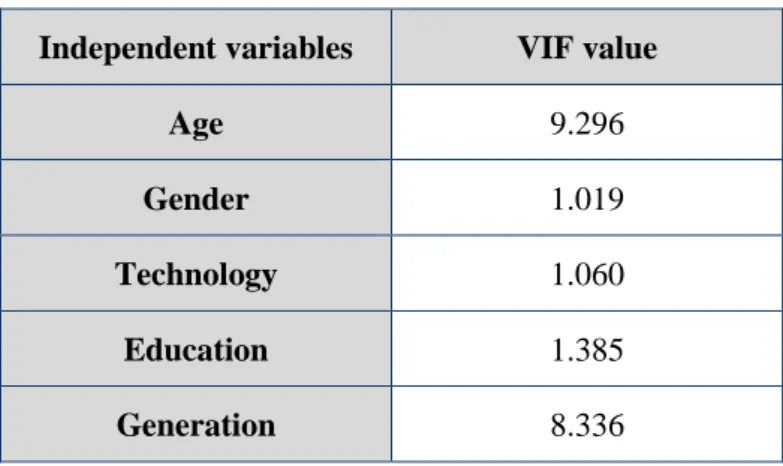
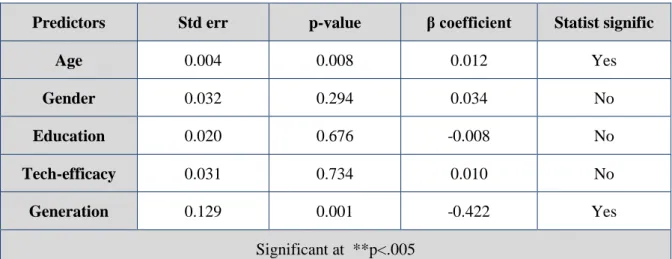
5.2.5 Multiple regression and Multicollinearity ... 31
5.4 Summary ... 33
6 Understanding gens shown susceptibility ... 34
6.1 Potential victims psychological profile ... 34
6.2 Awareness and training against SE ... 35
6.2.1 The best defense against Social Engineering ... 35
6.3 Program model and assets ... 36
6.4 Summary ... 38
7 Discussions ... 39
7.1 Drawing final conclusions ... 39
7.2 Practical limitations ... 40
7.3 Recommendations for future work ... 40
8 References ... 42
Appendix ... 53
I. The Social Engineering security awareness and training framework layout for any high school to corporate in its curricula ... 53
II. List of topics to be included in any high-school SE security awareness and training program ... 55
III. Students questionnaire to assess their general knowledge and viewpoint on the issue 57 IV. Evaluating the training effectiveness questionnaire ... 58
7
List of Tables
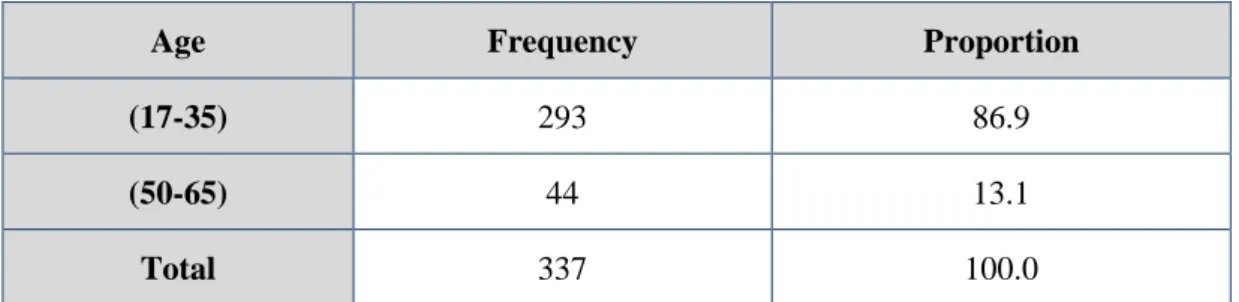
Table 1. Age distribution of subjects ... 26
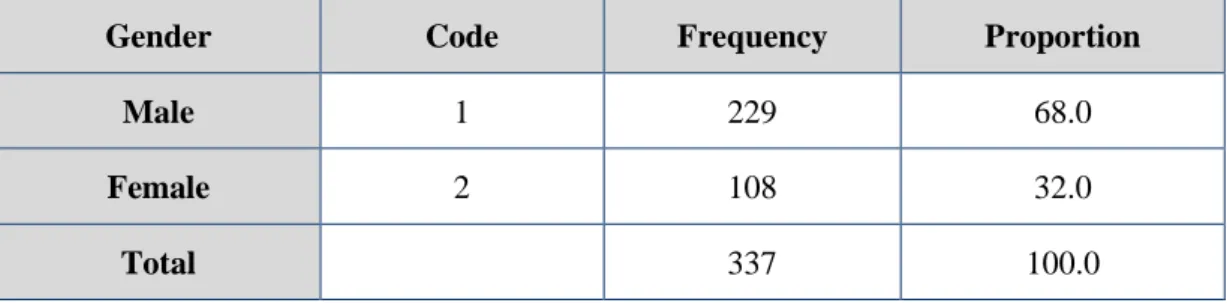
Table 2. Gender distribution of sample ... 27
Table 3. Computer efficacy of participants ... 27
Table 4. Education distribution of participants ... 27
Table 5. Generations extend of victimization ... 28
Table 6. Unpaired samples t-Test results ... 29
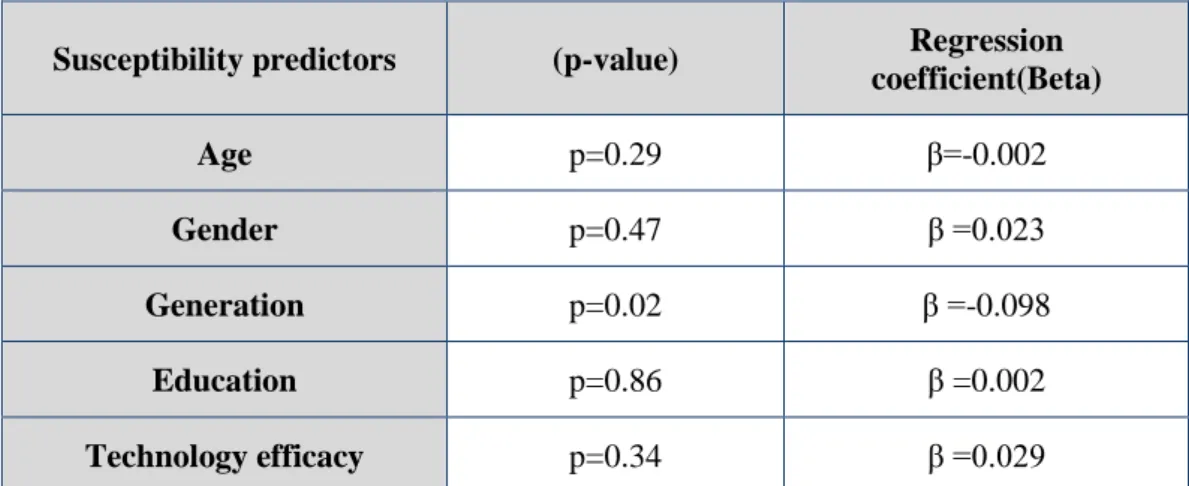
Table 7. Linear regression output ... 30
Table 8. Multicollinearity test results ... 32
Table 9. Multicollinearity test ... 32
Table 10. Multiple Regression output ... 33
List of Figures
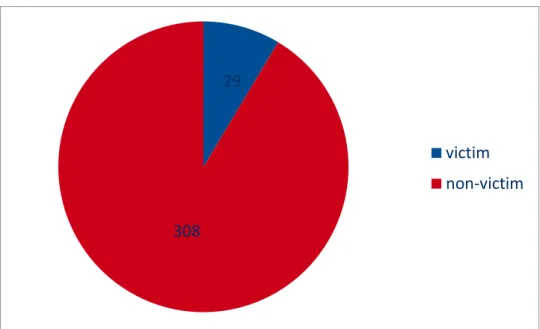
Figure 1. Participants victimization rates ... 288
1
Introduction
1.1 Motivation
In the digital age, technology has an unavoidable presence in the lives of people, they can now carry all of their everyday activities online: go shopping online, work online, vote online, in other words, all users now have another "residency" online. While involved in such online services they often forget or pay little attention to the security threats behind these activities. Users do not give equal attention to security, some lack doing it and become “easy prey” or favorite targets for the attackers. Their lack of attention towards these attacks is known as vulnerability or susceptibility, which is attributed differently to victims. Some authors claim that the current generation (a precise definition of what a generation is, is given by (Borges et al., 2006)) is extremely vulnerable to these attacks, (Alseadoon, 2014) although other studies have found their parents (older users) possess higher susceptibility rates to Social Engineering attacks. Therefore, it is essential to specify groups more vulnerable to these attacks.
In order to find out if there is any significant difference in the likelihood of falling victim to Social Engineering among generations, firstly it is necessary to identify factors which impact cohorts' vulnerability. Only then, it is possible to propose methods to reduce susceptibility of different groups to Social Engineering attacks, tailored specifically to their unique Social Engineering security weaknesses.
There are many works addressing reasons why users fall for Social Engineering attacks. For instance, some studies list lack of technology related knowledge at the top, while some others argue users' education as the most important factor. Thus, to mitigate their susceptibility to Social Engineering attacks as undoubtedly the most successful security attacks nowadays, this study seeks to first identify and understand these determinant factors on deeper grounds and then address them to determine the most appropriate defense strategy.
Social Engineering hereinafter SE, is considered to be "the act of manipulating a person to accomplish goals that may or may not be in the "target’s” best interest" (Hadnagy, 2010, p.32). From identity theft to financial losses, the damages that Social Engineering attacks bring both on individual and organizational scale are enormous. Phishing is the most commonly used form of Social Engineering attacks, there are around 150 million phishing emails sent every day stated in a study by Get Cyber Safe (2013).
Taking into consideration the dimensions of this problem it has been studied by previous works as well, where most researches focused on specific personality or demographic factors determining certain individual’s susceptibility to Social Engineering attacks and leaving the generational element fairly unaddressed. Furthermore, the literature has been studying users' phishing detection behavior and no attention (to the best of this thesis’ knowledge) has been given to generations, in terms of comparison of their vulnerability to Social Engineering attacks. What if there is indeed difference?
This thesis aims to properly address this question by assessing generations' real performance on Social Engineering attacks (particularly in phishing assessment). Moreover, a detailed focus to this problem is given in the following sections.
9
1.2 Research problem
Users exposing important credentials to attackers, is one of the biggest issues of security of today and many researchers believe that vigilance and education are the only ways to protect against Social Engineering as such (Aggarwal et al., 2012; Kumaraguru et al., 2007; Allen, 2006), since technology has demonstrated that it cannot do a lot in regards (Mitnick and Simon, 2011). However, no matter how much SE education frameworks are composed or how many SE security trainings are implemented, this problem has still remained unsolved, people still fall for SE attacks, they are still considered the easiest potential victims of the security chain (Purkait, 2012; Long, 2013). Therefore, the main reason why Social Engineering attacks are more successful than other security attacks, is because they target directly the human element since it is easier to manipulate people than technology (Mitnick, 2011). Mitnick and Simon explain that “cracking the human firewall is often easy, requires no investment beyond the cost of a phone call, and involves minimal risk” (2011, p. 4). In regards, previous works have lacked to cover all the reasons behind users' susceptibility, factors that influence their actual behavior when presented with actual Social Engineering attacks. Moreover, literature has a gap in identifying groups more vulnerable to Social Engineering attacks and understand each generation's SE security weaknesses.
This work will seek to find and propose the most adequate way to educate this "vulnerability link" not to be the easiest pray of these attacks via patching their SE security weaknesses.
For a proper approach towards the outlined problem, this thesis attempts to solve the following issues:
• Firstly, it identifies factors impacting generational groups' victimization to SE attacks.
• Then it assesses the differences in generational susceptibility via analyzing collected data from real-life performance on phishing assessment.
• Translation of statistical analysis findings to personality differences across the two generational groups is the next carried out step.
• Finally, it presents the most efficient SE security training program to fit the security requirements of specific generations.
1.3 Research questions
a. Is there any significant generational difference in susceptibility to Social Engineering attacks?
This research claims to assess the response of this question by quantitatively examining data collected from real phishing attack assessment. Statistical analysis is used to reveal any potential distinction in vulnerability among generational groups, along with providing a clear panorama of their actual likelihood of victimization. Nowadays, many organizations complain of the current generation, or young people of today born between 1982 and 2002 (Howe and Strauss, 2009), claiming that they are extremely vulnerable to SE threats (due to their distinct personality traits and heedless behavior) and that could put every organization into great security risks making organizations more and more unwilling to hire them. Is there indeed such a contrast in SE vulnerability among them or is it all overhyped?
10
Demographic factors are proven to indicate users tendency to respond to Social Engineering risks with many researchers suggesting women to be more susceptible than men (Janet et al., 2008) or others have found age group 18-25 more likely to become victims of these attacks. Besides age and gender, users scoring higher in computer-efficacy are inclined to defend from phishing (Parrish et al., 2009). On the other side, also Big Five model's personality traits are claimed to be important factors to differentiate among groups, thus understanding their impact on generations' possibility to SE victimization is trivial. Literature has shown that different cohorts share unique characteristics and attitudes (Sessa et al., 2007; Wey Smola and Sutton, 2002), even talking about security. Thus, these qualities affect their actual behavior (Coomes and DeBard, 2004) and at the same time are key to explain users' tendency of becoming victims of phishing attacks (Parrish et al., 2009). This thesis will dig deeper into understanding each of these factors' correlation with vulnerability to SE threats, in terms of determining their role in predicting the more susceptible groups. For instance, would a phishing attack affect equally one teenager who shows an over-sharing attitude on SNS, and a Baby Boomer who does not share the same weakness? Does Social Engineering have the same success rate in groups scoring differently on agreeableness trait?
c. How to craft the best solution to reduce cohorts vulnerability to Social Engineering threats?
The final contribution of the author to complete this research as a whole, is to propose the most proper strategy to mitigate generational groups’ found susceptibility based on their specific SE security needs and requirements. After identifying the generational cohort most vulnerable to these risks and listing its SE unique security weaknesses, it is meaningful to explore the most appropriate defense meeting all the covered issues throughout this research. The solution is thought to be planned matching the necessary behavior skills to the targeted audience based on their SE needs and weaknesses. Thus, the thesis aims to design a solution based on the CIA triad principles via balancing both attackers' and targets' motivation (note that end users are not motivated to protect themselves from Social Engineering). The originality and the value of the solution is tied to its main objective: train the enduser through motivation.
1.4 Significance of the study and contribution
Considering it an essential starting point in deploying the most adequate solution to mitigate users vulnerability, this thesis proposes a new way to differentiate potential victims of Social Engineering attacks based on generational cohorts.
This work strongly assumes that the existing frameworks fail to educate users against Social Engineering due to their generalized attribution or the wrong "tailoring" they give to all endusers, pretending equal effectiveness regardless of their security differences. Therefore, this thesis claims that via understanding and explaining how generational cohorts differ in perceiving Social Engineering risks (in terms of unique factors which make them fall for these attacks), it is easier to build up better mitigation methods or education frameworks to help lessen their susceptibility.
Thus, the next contribution of the author is emphasizing the importance of crafting unique SE mitigation strategies for every generational cohort (and not only) attempting to patch specific security weaknesses each group owns.
11
Then, this thesis' effort in comparing different generational groups' actual vulnerability to social engineering attacks to find out if there is any noteworthy difference they share, is considered its main contribution.
To achieve these goals, a great focus is given to identification of generations' factors influencing their likelihood to become potential victims. Hence, the first task is to identify and analyze different generations' specific personality attributes that play an important role in determining their degree of susceptibility with a systematic literature review performed. The second task is statistical analysis of the collected dataset from real phishing assessments. At the end as a full-packet, a defense strategy approaching findings is proposed.
Briefly, the specific contribution is to:
• explain the importance of measuring generational differences in vulnerability to Social Engineering attacks.
• explore the best way to measure generations' actual susceptibility.
• identify factors influencing cohort-groups' possibility to fall victims to SE attacks.
• measure susceptibility via statistical analysis of the phishing collected-dataset.
• explain found susceptibility difference across groups.
• propose solutions to reduce the generational gap in vulnerability level.
• propose future directions complying with this work's findings and implications. Moreover, the ability to identify groups more vulnerable to Social Engineering attacks should benefit the literature considerably in pursuing further research in mitigating these attacks and reducing the damages they bring. On the other side, this work can also be a big assistance to organizations as well since knowing your employees' weaknesses and vulnerability level is translated to risk assessment done to them. To this thesis best of knowledge no previous study has empirically examined the difference in susceptibility to Social Engineering attacks across these two specific generations.
1.5 Thesis Outline
The thesis is composed of 7 chapters.
▪ Chapter 1- Introduction- This chapter introduces the general background, its motivation, the research focus and research questions.
▪ Chapter 2- Definitions - This chapter explains further the core concepts of this thesis and gives an overview how the literature has defined them.
▪ Chapter 3 - Related Work- It performs an exhaustive literature review via analyzing the different approaches taken by previous works on the same topic.
▪ Chapter 4 - Methodology- It explains the theoretical framework and the research methodology used in this study.
▪ Chapter 5 - Implementation - This chapter focuses on carrying out a statistical analysis of the phishing assessment dataset and results are presented.
▪ Chapter 6 - Proposed Solution - It explains the found susceptibility differences among generations and outlines a solution proposal based on findings.
▪ Chapter 7 - Conclusion - At the end, this chapter concludes the research via a detailed presentation of results and discusses implications for future research to address.
12
2
Defining Terms
This chapter is mostly used to explain keywords crucial for this paper and discover how literature has defined them. Analyzing terms such as Social Engineering or security vulnerability in the context of this thesis is key before proceeding further. It also explains the core focuses of this thesis, the current generation (the millennial generation) and their parents (the Baby Boomer generation), seeking to gather more background knowledge on these subjects. Moreover, in this section abbreviations used throughout the thesis are explained.
2.1 Acronyms and Abbreviations
SE Social Engineering
NIST National Institute of Standards and Technology BYOD Bring your own device
SNS Social Networking Sites NDA Non-disclosure Agreement CSE Computer Self-Efficacy WWW World Wide Web
ENISA European Union Agency for Network and Information Security SAE Security Awareness Education
BB Baby Boomer
Gen Yer Generation Y member Gen Xer Generation X member
TUT Tallinn University of Technology
2.2
Core Concepts
Security awareness is one of the core terms of this work and a specific definition of it is essential in order to clarify possible misconceptions. Unfortunately, literature still lacks a precise definition of this term (Hänsch and Benenson, 2014) thus, researchers have come up with their own definitions implementing different approaches. Having said that, Hänsch and Benenson (2014) have carried out a deep systematic study in getting the definition of the term. They propose 3 different aspects of it to be defined: security awareness as perception, as protection and as behavior. Paying particular attention to all three categories, they emphasize the fact that users should know that danger exist and also how
13
to protect themselves against it. Similar to other papers, Shaw et al., differentiate between awareness programs and trainings (2009). They define security awareness as a combination of "perception, comprehension and projection" (2009, p.1). Amankwa et al., state that information security awareness is "any endeavor to focus employees' attention on information security in order to ensure that all employees understand their roles and responsibilities in protecting the information that is in their possession by using print or electronic media" (2014, p.3). However, there are other works that propose that security awareness aims to change behavior towards Social Engineering threats (Winkler and Manke, 2017).
Actually, there is no "right" or "wrong" security awareness (Hänsch and Benenson, 2014), but in this paper Social Engineering awareness is defined as a combination of knowledge and attitude towards Social Engineering threats. To put it simply, it is the actual behavior users present towards real Social Engineering attacks.
Social Engineering is the most crucial term to be defined as the main focus of this thesis. It is interesting to know that even users that almost do not have any relation to technology at all understand that Social Engineering is a problem and as such, it should be solved. A simple search on Wikipedia precisely highlights it being "psychological manipulation of people into performing actions or divulging confidential information". One of the creators of the http://www.social-engineer.org, Hadnagy deeply explains all the consecutive phases of Social Engineering attacks and the idea of persuasion behinds it (2010). Furthermore, Allsopp states that Social Engineering is "obtaining of confidential or privileged information by manipulating legitimate sources" (2010, p.51). Regarding the way how Social Engineering attacks are carried out, the traditional template is described in detail by Snyder (2015), explaining all phases from information gathering to persuasion.
There is an enormous number of definitions for Social Engineering, but the one to best fit this paper's perspective is "the act of manipulating a person to accomplish goals that may or may not be in the "target's" best interest" (Hadnagy, 2010, p.32).
In light of this thesis' aim, phishing is the next term that should be aptly defined. Actually, there are many disagreements among authors while categorizing phishing, as many of them do not consider it a form of Social Engineering attack (Snyder, 2015). However, definitions given to this term are very similar, even by quoting Wikipedia: "phishing is the attempt to obtain sensitive information such as usernames, passwords, and credit card details (and, indirectly, money), often for malicious reasons, by disguising as a trustworthy entity in electronic communication"(Wikipedia, 2017) one can get the idea behind it. In the context of this thesis it is described as: a method used by cybercriminals to steal mostly login-credentials or other relevant information by camouflaging emails to look legal for mainly financial fraud or identity theft (Alghamdi, 2017). Phishing attacks mostly deploy tricking techniques (sophisticating day by day) and different mediums (mainly emails or social networking sites) to make users give up personal information. Phishing attacks are not solely damaging end users by making them phish out log-in information or install malware on their computers (Hong, 2012), but can also ruin an organizations' reputation together with tremendous monetary losses. As far as users lack the proper security behavior in regards, phishing will continue being a step ahead of the current attempts to protect endusers against it.
Susceptibility to Social Engineering attacks is the likelihood that a person will respond to and become victim of a real Social Engineering attack. Others have also proposed similar definitions, defining it as "the inability of users to suspect a phishing email" (Alseadoon, 2014, p.67). A different aspect is defined by Parrish et al., though, in context
14
of phishing it is the time to respond to such attack or the time calculated that a person will interact with the attacker (the hook) (2009). It is the state of being inclined to respond to a SE attack.
Millennials are actually called people of the current generation or the first generation of the new millennium. Born and raised in the times of digital technology and social media, they are the first "always connected" generation (Palfrey and Gasser, 2011; Prensy, 2001). Many different categorizations exist regarding this generation's starting period, but in this study's scope it is from or after 1982 to the early 2000s (Howe and Strauss, 2009). Actually, there are also different points of view regarding this generation's endpoint, as there are researches that argue that millennials are still being born (Donnison, 2007). However, it is noticed that most of the studies use the span of 18-25 years to categorize them. Literature has called them by different nicknames: the Net Generation (Braber, 2016; Becker, 2015), digital natives (Stringfellow Otey, 2013; Palfrey and Gasser, 2011), Generation Y (Hurst and Good, 2009), Nexters (Ng et al., 2010) or Nexus Generation. All these labels are coined due to them being highly technology or internet-competent and the fact that they have a strong multitasking and BOYD attitude in their workplace. It is claimed they trust the virtual world like no previous generation, and moreover lack attention of their working organization's cyber security policies. It is also argued that users of age 18-25 are more susceptible to phishing attacks than older age-groups (Pattinson et al., 2012; Sheng et al., 2010). On the other hand, many researchers claim that this generation's members are more aware of phishing attacks due to being computer-savvy users. A detailed overview of the Millennial generation's unique qualities related to SE security awareness compared to the particular traits of the previous generation is presented in the following chapter.
On the other side are the Baby Bommers, the other studied subject of this thesis. People of this generation are born between 1946-1964 (Kumar and Lim, 2008). According to Borges et al., they have higher self-reliance than millennials (2006). Current literature has called them immigrants of the digital world (Jiang et al., 2016). In comparison to digital natives (current generation members) who have grown up with computers and the Internet, they "learned how to use email and social engineering late in life" (Palfrey and Gasser, 2011, p.4). Millennial, Baby Boomer, digital natives and digital immigrants or other alike terms are used interchangeably throughout this study.
2.3 Studied Subjects
As stated in the introduction as well, this study extends its concentration on two particular generational groups: Millennials and Baby Boomers. Actually, selecting solely these two generations to focus on, is not purposeless. The main motivation behind this choice, is due to the conflicting notions: digital natives v. digital immigrants. Comparing one cohort that has grown up with the internet being always there with a cohort group which learned to use the internet later on life (Palfrey and Gasser, 2011) and understanding this difference in respect to falling for Social Engineering attacks is trivial.
Secondly, this thesis is focused only on these two specific groups as they cover most of the today's workforce. Moreover, in the nearest future the boomers will retire and millennials will take over the workforce by making up the biggest percentage in the workforce (80% by end of 2020). Thus, it is a must to find out their susceptibility in comparison to the previous generations in the workforce, then organizations will know what to expect and
15
what to consider while crafting security policies. Here it is also safe to mention the organizations' recent unwillingness to hire employees of Generation Y due to the claims that they are much more likely to fall for these attacks. To aid the understanding of organizations' reluctance, it is crucial to seek out the real truth, their degree of vulnerability to falling for Social Engineering attacks.
Then, having experienced different historical events, they do not differ only on age, but also on personality which has relevant ramifications on their Social Engineering attitude and behavior. For instance, their SE security perception: the millennial generation consider themselves more protective to these threats compared to boomers and vice versa. It is relevant to study their perceptions towards these attacks in general and to identify their actual degree of susceptibility. Furthermore, sharing a strong relationship among them (parent-child) and having lived in two different societies (millennials are the internet kids), it is interesting to find out their SE security weaknesses.
On the other side, there exist many inconsistencies in generations starting dates (Solnet et al., 2012) (many researchers conflict on categorizing cohorts years span). Risking to lead to a possible generational overlap because of this reason, this study left out of its focus the generation in between the Baby Boomer and the Millennial generations (Generation X). As such, this research assumes a more precise differentiation among the targeted cohorts in regards to their vulnerability to Social Engineering.
Finally, the previous literature has claimed that specifically these two cohorts differ the most in terms of security awareness, it is time to solve this dilemma, do they indeed?
2.4 Summary
This chapter has identified and explained the main concepts of this work, defining them in the context of the studied problem. It discusses the central subjects of this thesis: the Boomers and Millennials and specifies the reasons why does it matter to direct the research on these particular generations. Furthermore, the list of abbreviations used throughout the thesis is provided here.
16
3
Related Work
In this chapter an exhaustive research on the current literature is carried out to help identify the relevant papers conducted on this topic, to help explain the academic context pursued towards writing this thesis. The way it approaches the previous research is via a systematic and exhaustive literature review, considering the research questions to be answered (Armitage and Keeble-Allen, 2008). Hence, many online libraries and other repositories are used as sources to gather previous related works. In order to find studies pertinent to this thesis focus, a combination of keywords such as : social engineering, phishing, vulnerability, susceptibility, millennial and generational cohort is used for the searching phase. Papers are then gathered for a brief abstract reading, to select the ones noteworthy for this thesis. As a matter of fact, this chapter identifies and digests factors proposed by current literature determining users' degree of vulnerability to analyze them later in the next chapter. It seeks to find out to which group the literature has coined the term "easy prey of SE attacks", to digital natives or to their parents? Apart from that, it seeks to understand reasons why standard trainings or awareness increasing materials have limited effect in reducing users' vulnerability.
3.1 Identifying factors impacting users' vulnerability
To defend from Social Engineering attacks organizations assign a considerable budget to protective measures such as technology or employees security trainings. However, due to different reasons they fail to properly protect their assets from these types of attacks. Thus, many researchers have addressed the problem of Social Engineering as an area of particular concern in terms of finding out what makes its attacks so successful.
One of the most explicit approaches to this question is taken by Dhamija et al., trying to understand why phishing works (2006). The answer to this question seems easy though: security is not the main concern of people (Purkait, 2012). Most of the researchers somehow ring the alarms, stressing that "Users are not motivated to learn about security; for most users, security is a secondary task" (Kumaraguru et al., 2010, p.1). Although, this is not that superficial since there are many other reasons behind this heedlessness, weaknesses that social engineers wisely exploit. What particular factors predict users' vulnerability to SE attacks?
Lack of knowledge related to Social Engineering in particular or technology in general is said to be one key factor influencing users' susceptibility. Literature uses the term computer self-efficacy (CSE) meaning in other words, the users' capability to successfully use computers (Compeau and Higgins, 1995). Dhamija et al., in their work explain that people lack the adequate knowledge to understand how operating systems, email or the entire web works and, phishing criminals exploit this weakness to get what they need. Furthermore, many endusers ignore security warnings because they find them technically difficult to understand (2006; Wu et al., 2006), and they risk more falling for phishing attacks. Along these lines, Downs et al., suggest a more detailed understanding of the web as such, could reduce vulnerability (2007). Therefore, technology sophistication decreases individuals' phishing susceptibility (Wright and Marett, 2010) since users' showing high computer knowledge tend to doubt more the authenticity of everything online (Wright et al., 2010).
17
However, deficiency in knowledge regarding technology is not the only factor influencing users' likelihood to become potential victims of SE attacks, their lack of awareness is another vital element (Aburrous et al., 2010; Wright and Marett, 2010). With Social Engineering attacks evolving day-by-day, users should be aware how to protect against and not simply know that they exist. The wrong decisions people usually make when faced with real phishing attacks are mainly due to their lack of awareness, demonstrating once more the great necessity of efficient phishing awareness trainings to deploy (Aburrous et al., 2010). Although, a contrary approach is assessed by Halevi et al., who disagree to translate users' susceptibility to lack of awareness (2015) since experience have shown that regardless possessing phishing awareness, many users yet fall for phishing attacks in great terms (Alseadoon, 2014).
"Big Five" personality model, made up of traits such as openness, conscientiousness, extraversion, agreeableness and neuroticism (Gosling et al., 2003) are found to be notable predictors of human behavior (Jagatic et al., 2007), and potential determinants of individuals' vulnerability to Social Engineering attacks (Uebelacker and Quiel, 2014; Halevi et al., 2013). Addressing the relation of personality and phishing email response, many studies have proposed neuroticism the trait mostly associated with responding to phishing emails (Halevi et al., 2013; Cho et al., 2016). Furthermore, Cho et al., on their study developed a mathematical model aimed to predict what personality elements are indicators of social engineering vulnerability and found that agreeableness and neuroticism have remarkable effects on decision performance (2016). However, in another work Halevi et al., via real-life spear-phishing attacks conducted in their study targeted conscientiousness the most relevant trait to determine phishing susceptibility (2015). On the other side, Parrish et al., suggest that extraversion in context of phishing could lead to increased vulnerability (2009). Supporting the same findings, Workman explains that extraversion is considerably related to high effective commitment, making users divulge personal information as they want to fit to some particular group (2008). Moreover, people's ability to detect deception is directly influenced by their emotions (Forgas et al., 2008) and characterized by positive emotions, extraverted people may easily fall for phishing while processing emails (Alseadoon et al., 2012). Parrish et al., in their work were focused mainly on trust as one of the main aspect of agreeableness and found it to be the strongest personality characteristic influencing peoples' susceptibility (2009; Modic and Lea, 2012). While users' phish out sensitive information, trust is highly involved (Weirich and Sasse, 2001).
It is known that Social Engineering attacks become even more successful when criminals are armed with enough information about targets beforehand, and social networks are the perfect repositories to provide such information. SNSs are recently converted into dangerous weapons in the hands of social engineers who may take criminal actions towards damaging endusers. In the same line with these studies Vishwanath et al., in their work implemented a research model to explain factors that best predict an individual's possibility to get phished, and apart from technological efficacy and email load, suggest also media habits as a major contributor to Social Engineering susceptibility (2011). With internet being no longer limited to anyone, people often just want to explore the online world but unfortunately happen to expose themselves to phishing (Furnell, 2010), mainly due to the over-sharing attitude on social media. Defining self-disclosure as personal-relevant information exchanged online in this paper's context, it is said to be a very dangerous asset in help of so-called social phishing attacks (Jagatic et al., 2007). As a matter of fact, Halevi et al., did the first work on studying the relationship among
18
personality, Facebook and phishing and found that people who tend to post more on Facebook are more vulnerable to privacy attacks (2013).
At the end, Mitnick and Simon quote: “as improvements are made in the technological weapons against security breaches, the social engineering approach… will certainly become significantly more frequent and attractive to information thieves” (2011, p. 259). It has passed a long time since then but unfortunately this statement is more accurate than never, Social Engineering attacks continue making the latest news and feasibly increase in the nearest future. This all means that there is still an enormous and rapid work that should be done in order to further study these and other factors influencing users' likelihood to become prey of Social Engineering attacks. In order to hopefully "patch" them in the nearest future it should further the investigations aiming to understand the human aspect of these semantic attacks. At the end of the day, this is not a problem with no solution, it is just a very complex issue. As Schneier quotes: "to target the people problem, not the math problem" (2000), these elements should be addressed and studied in deeper grounds and dimensions.
3.2 Millennials vs. Baby Boomers, who are more vulnerable?
Many researchers (Kumaraguru et al., 2009; Sheng et al., 2010; Workman, 2008; Dhamija et al., 2006; Alseadoon, 2014) agree that demographics explicitly impacts users' perceptions and decisions when dealing with phishing emails. Specifying solely "age" asset of demographics, they claim that it can anticipate users' likelihood to become potential victims. There are other works though, that found that user's demographic in general and age in particular, cannot predict users' vulnerability to phishing attacks (Mohebzada et al., 2012; Long, 2013). Considering these contradictions, it is safe to clarify that different works carry out different approaches to the division of age periods when categorizing groups and thus, may obtain distinct findings (Alseadoon, 2014). Emphasizing the lack of research studying demographics in context of phishing susceptibility Sheng et al., argue that via knowing groups more susceptible to phishing, it is easier to concentrate into anti-phishing education (2010). This work is the nearest to this thesis's focus, not only in terms of analyzing groups more vulnerable to phishing attacks, but also in studying the psychology behind their great potential to fall for such threats. Moreover, they found that targets of age 18-25 fell mostly for the attack (Sheng et al., 2010).
Being born on the glorious times of Web 2.0, the members of net generation are used to the tremendous amount of information online, as a result they can handle and process it better than any other generation (Parment, 2013). Moreover, it is undoubting that people of current generation are great multi-taskers and tech-savvy and also, it is suggested that these qualities can decrease the possibility of getting phished or social engineered. However, even-though the millennial group possess these unique characteristics in high rates, they still fall for phishing, mainly because they overestimate themselves to be able to evaluate certain cues in phishing emails (Stebila, 2010). This implies that they consider themselves enough computer-efficient to defend against these threats but actually, they are equally likely to get phished as others less technically sophisticated. Alseadoon also, in his PhD dissertation found that young people aged 18-25 are more vulnerable to these attacks as they tend to be more risk-takers (2014). To support the same findings, other authors explain that young people of today yet lack the sufficient security awareness to protect
19
themselves from internet vulnerabilities (Boyd, 2007; Livingstone et al., 2005). The National Study of Youth and Religion, stated that almost 60% of millennials believe in their own greatness to be able to distinguish what is right or wrong in terms of security (Stein, 2013), overestimating the ability to protect themselves online compared to older users (Miltgen and Peyrat-Guillard, 2014; Jiang et al., 2016). This generation's members have narcissistic perceptions (Bergman et al., 2010) and entitlement attitude (Ng et al., 2010; Bauer, 2009) due to the excessive praise gained by their parents, the Boomers. Other noteworthy studies attain their focus on agreeableness and stated that more agreeable individuals are at a higher rate of security risk and generally, younger people and women present higher values of agreeableness (Darwish et al., 2012).
On the other hand, contrasting the above findings there are studies that have found that older adults lack awareness and knowledge concerning security more compared to younger users (Jiang et al., 2016). Therefore, in their work Jiang et al., analyze differences in SE behavior among 3 generations: the Silent Generation, older Baby Boomers and Millennials. Hence, an interesting fact noticed on their findings is the SE security perceptions the groups have for each-other, such that older adults defined Millennials reckless and more vulnerable to online threats, while Millennials claimed to attribute this weakness to older adults, considering themselves knowledgeable enough not to fall for these threats (Jiang et al., 2016). In context of media over-sharing habits previous studies have showed previous generations' members less likely to post personal information on Facebook compared to digital natives (Christofides et al., 2012) decreasing their scale of vulnerability.
Actually, there exist different approaches taken by researchers to find out user age-groups more likely to become potential victims of Social Engineering attacks and as a result, different findings are presented. Although, the findings are not proportional due to distinct directions purchased and differences in groups' age division. Accordingly, this explains the fact that there is no previous work (to the best of this thesis knowledge) that focuses on studying generational-groups differences in likelihood to fall for SE attacks.
3.3 Methods implemented to measure users' vulnerability
Proportional with users' increase in vulnerability to Social Engineering attacks, have been the proposed attempts to lessen it. Experience has shown that it cannot be reduced what is not calculated, as such the approach should start from measuring end-users' vulnerability to later be able to try to mitigate it. There are different methodologies proposed to measure users' susceptibility to phishing or Social Engineering attacks in general, researchers have suggested many possible ways starting from the real attack scenario assessments to cognitive processing tests. Therefore, Kumaraguru et al. proposed the Cognitive Reflection Test(CRT), as an efficient way to measure users' vulnerability to phishing. They found that people who scored high on the CRT were more likely to fall for phishing emails (2007; Jensen,1998).
On the other side, Kevin Mitnick suggests security assessment as the best way to test employees' susceptibility to Social Engineering attacks (Mitnick and Simon, 2009). Sharing the same proposal, Jakobsson et al., argue that real-life attack assessments not only explain potential extend of victimization but at the same time identify the kind of attacks working the most among end users (2008). Shifting the attention to organizations, Nohlberg also stresses that the best way to measure employees' security awareness is testing them when they do now know they are being tested (2005). However, researchers
20
emphasize the fact that those assessments should be ethically and legally complying with security policies (Jakobsson and Ratkiewicz, 2006). Moreover, SANS Institute also proposes security awareness survey as the adequate method to measure employees' awareness within an organization (also the best way to identify gaps in regards to security awareness) (SANS Institute, 2017).
Each of these methods have drawbacks, some arise in more accurate results and some lack it, some involve ethical issues or risks of data disclosure. For instance, it is claimed that some methods produce less reliable data and others, can easily put subjects at risk through exposure of sensitive data (Hale et al., 2015). Aiming to reduce endusers vulnerability, many researchers propose education and training to prevent people from falling for this attacks (Jakobsson and Myers, 2006; Downl et al., 2006). Taking into consideration the failure on teaching the individual not to fall for Social Engineering attacks, is seems like "security user education is a myth" (Gorgling, 2006).
3.4 Gaps in literature
As the problem of social engineering is escalating and techniques deployed by attackers sophisticating, it is vital to investigate further this issue of great concern in deeper grounds, to possibly find out why educational programs and standard awareness trainings have not lessen endusers fallings for phishing (even-though they have been trained) (Karakasiliotis et al., 2006; Kumaraguru et al., 2009). In order to compose frameworks or tools aiming to reduce phishing susceptibility one must firstly understand how and why people fall for them (Downs et al., 2007). To do this, the literature yet lacks to further consider potential roles of individual attributes into predicting their vulnerability.
Secondly, there should be a fair balance in studying victims' SE detection and response behavior, in terms of difference in their susceptibility determination. Apart from that, almost all the existing work is focused on the individual to understand why he falls for these attacks, and little attention is given to other elements of study for instance, generational cohorts. In regards this work will purpose a new direction to pursue, claiming a meaningful correlation among generations and vulnerability to Social Engineering. Should it ever be considered that in lieu of composing more and more standard solutions that lack to fully achieve their goals, to address potential victims differently, perhaps into particular generational-groups. What if trying to tailor mitigation strategies to different audiences (generational groups) respectively in line of their needs and weaknesses in terms of vulnerability to SE attacks? Would this change anything?
3.5 Summary
This chapter has analyzed previous approaches taken to identify the main factors explaining users' likelihood of falling for Social Engineering attacks and at the same time have examined the proposed methods deemed to measure users' scale of vulnerability. All this done in purpose to possibly understand the extent of the gap in the literature and what is lacking in terms of directions to pursue in the future to properly address these issues. To finally find out who are more susceptible and what qualities makes them behave that way, to later be able to close this gap.
21
4
Conceptual Framework
This chapter presents the theoretical framework of the thesis and gives further insight to the importance of the research problem studied in this paper. Hereby, it explains the research methodology of data collection. The main research question and the reflective hypothesis are synthesized here. The factors identified by the previous studies are categorized and will be analyzed and digested to justify findings.
4.1 Research question and hypothesis
➢ RQ : Are generational cohorts equally vulnerable to Social Engineering attacks?
In order to deepen the focus on millennial generation, in this chapter the research question is slightly modulated to be: Is there any significant difference in susceptibility to Social Engineering attacks among the current generation and their parents' generation? To assess the response of this question, a holistic approach is taken combining an exhaustive literature review with analysis of quantitative data obtained from real-life phishing experiment conducted.
➢ H1: There is a notable difference in susceptibility to Social Engineering attacks among generation Y and Baby Boomers.
This study hypothesizes that indeed there is distinction in susceptibility among generational cohorts, specifically millennials may be more vulnerable and possess a greater likelihood of becoming potential victims of SE. To shed light to this problem of particular concern, this study will combine generations security weakness indicators supported by analysis of their real performance in phishing assessment. To reveal insights into how differently generations get Social Engineered, throughout this study generations are studied as groups rather than individuals, assuming them representatives of each whole generation (Fisher, 2015).
4.2 Obtained dataset justification
When trying to carry out a Social Engineering attack experiment or a phishing assessment in particular, there are a lot of constraints involved, be them ethical, legal, security or privacy related. Keeping in mind these considerations discussed below and the opportunity to get a proper dataset of sufficient quality for this study's research questions, the author does not conduct its own experiment and in lieu of, decides to use dataset from previously conducted phishing assessment.
4.2.1 Ethical Considerations
Even-though phishing experiments are considered one of the best ways to measure users' and employees' vulnerability to Social Engineering threats, there are also cases in which organizations avoid conducting them. Major contributors to this reluctance are ethical issues evolved. Social Engineering is strongly correlated with ethical considerations due to manipulation and deception techniques used. Moreover, these concerns are more present when running real-life phishing assessments since they have direct impact on participants.
22
Thus, they can damage them financially but most frightening is the psychological cost they leave to victims (Alseadoon, 2014; Aburrus et al., 2010). Experience has shown that most of the participants react really harsh to the assessment since they feel violated, mainly when they are not previously notified about the attack (Kumaraguru et al., 2009). "Some of the employees called the experiment unethical, inappropriate, illegal and unprofessional"(Aburrus et al., 2010, pg.251). The cases requiring researchers to be prosecuted are numerous, for instance in cases when participants' personal information from social-media is used.
Having a good dataset on hand (with respect to this thesis research questions), this work does not consider it necessary repeating the same study. However, before obtaining the dataset this study ensured that the sample group was not asked to provide any secret account information and also ensured to destroy the raw data at the end of this study. Anyway, to further the understanding of how to conduct ethical SE assessments, it is important to read the Jakobsson and Finn (2007) work, emphasizing three ethical principles to take into account: the respect for persons, beneficence, and justice, in terms of rights and the well-being of users (Jakobsson and Finn, 2007).
4.2.2 Legal Considerations
Apart from ethical constraints, while conducting an experiment researchers often have to assess legal considerations as well. There have been cases unintentionally resulted in law infringements and consequently, many researchers were being sued or prosecuted. Hence, everyone should be especially careful with risks of data breaches, data leakages or identity thefts. Unintentional leads to sensitive personal data harvesting or confidential information disclosure can occur, be this on individual or organizational scale. Data protection laws and regulations, protecting actors' privacy or security rights on internet should be strongly taken into account. On the other hand, companies' Terms and Conditions should be strictly respected and followed in cases where organizations are subjects of the experiment. Taking into account all these risks and having the opportunity to rely on others' data, this study avoids carrying out such risky experiments.
4.2.3 Getting Approvals
Besides ethical and legal considerations, getting the needed approvals on time is another serious element many authors have to ensure before conducting such studies. Hereby, one needs to get the appropriate approvals from the entities evolved in the assessment before setting-up such assessment. For instance, in this case it was aimed to conduct the experiment in a big organization and in a high school thus, getting the needed approvals would had not been an easy task, taking into account the fact that young teenagers and Baby Boomer employees would have been the experiments' feasible targets. On one side stand companies, which work for years to ensure employees' trust and on the other side stand the school's representatives or teenagers' parents who would not have been easily convinced to expose students to risks of this nature. Adding here the fact that getting the right approvals takes a lot of time, this study considered it be the case.
23
4.2.4 Significant sampling
Along these lines, the most important factor that should be taken into account while planning to conduct an experiment is the sampling. Getting a considerable sample to carry out the phishing attack is often difficult due to many limitations, and this leads to fail attaining statistically meaningful sample size and results as well. In this case, obtaining a truly representative sample of target users was difficult, nearly impossible. Apart from that, ensuring a homogeneous representative of the studied generations from the available dataset, is the main reason why this study does not involve conducting any form of Social Engineering attack assessment.
4.3 Methodology used
In this research a combination of data-collection techniques is used, a mix of quantitative and qualitative methods. Taking into account this research problem of particular concern, the methodology chosen aims to solve out the research questions (Gable, 1994). By combining these two complimenting methods, it is studied the interactive relationship between groups' security weaknesses and their actual susceptibility, to provide detailed insights into how and why generations get Social Engineered.
4.3.1 Qualitative method
In the first phase, the literature review is conducted to identify factors impacting users' possibility to fall for SE attacks, making up the qualitative data used in this study. The theoretical model carried out aims to investigate and digest the level of influence these factors have on groups' susceptibility. Their impact is tested and evaluated combining related works' findings with phishing email experiment's results. This work was reluctant in choosing other methods for the data collection (survey or questionnaire) due to high chances of outcomes overestimation, since users still limit the understanding of phishing (Jakobsson and Finn, 2007). As such, this research methodology assumes that each factor extracted from the literature review plays an important role in explaining users' vulnerability to Social Engineering attacks. The approach assessed does not assign every factor to a single generation, in a one-to-one relationship (Fisher, 2015) rather distributes them on each generation, based on their degree of appliance and level of presence. The generation showing higher occurrence of elements strongly related to victimization, is determined the most likely to fall for Social Engineering attacks, and hence, the most vulnerable. The detailed analysis is carried out in the next chapter. This thesis validates findings and assumptions analyzing the obtained dataset.
4.3.2 Quantitative method
Quantitative methodology is proven to be able to support findings, that is the main reason this study preferred to integrate it in the chosen methodology. On the other side, both literature and experience has shown that one of the best methods to gather data related to participants' behavior and their potential to fall for these attacks is via real-life phishing assessments. In distinct from other forms of attacks, phishing experiments have the benefit of being able to measure real performance results. In this way, the gathered data from the experiment provide a panoramic view of users' deployed decisions when faced with real-life phishing emails and hence, their degree of vulnerability.
24
The quantitative dataset taken from a phishing assessment is analyzed using appropriate tools, and details are given in the next chapter.
4.3.3 Experimental variables • Dependent variables: o Susceptibility • Independent variables: o Computer self-efficiency, o Generation, o Personality traits, o Education, o Gender, o Age
The identified qualities assumed to be primary indicators of groups' degree of vulnerability, make up the independent variables of the thesis statistical analysis. To better comprehend the relationship between independent variables with the dependent one, a detailed statistical analysis is carried out and findings are presented in the next chapter. Studied by previous works as well, all these elements are thought to play a significant impact on determining peoples' susceptibility and this study will seek to quantitatively validate assumptions in the next chapter.
4.4 Summary
This chapter has presented an overview of the research methodology, what approach is used in the thesis and how it is implemented. The justifications of obtained dataset is provided and hypothesis is stated. Hence, it has also revealed techniques used towards collection of both qualitative and quantitative data for analysis. The ethical and legal considerations are presented. Therefore, the evaluation framework that lays out the research questions is done on the next chapter.
25
5
Quantitative Analysis
This chapter describes the implementation of the conceptual framework presented in the previous chapter and its empirical evaluation. It also analyzes phishing assessment obtained dataset and report findings. Here are also outlined factors influencing phishing susceptibility dissimilarity among generations. The groups' found differences in the degree of vulnerability are explained using generations' unique characteristics synthesized from the literature review.
5.1 Descriptive statistics
In order to answer the main research question listed on chapter 1(Is there any significant generational difference in susceptibility to Social Engineering attacks?), the simulated phishing assessment dataset is analyzed. Despite its many constraints (mainly legal and ethical), phishing experiment is considered the best method to measure users' vulnerability since it can demonstrate users' actual likelihood of victimization (Jones, 2016). Along with assessing endusers' susceptibility, it can outline relevance to real world behavior users show when faced with any SE attacks.
5.1.1 Experimental Email
Simulated phishing experiment is used to measure users' actual susceptibility to SE attacks, as the most genuine way to assess their actual phishing management behavior. Adding particular value to this research, the collected-dataset is received from another researcher (Swapan Purkait). The type of phishing email sent to participants is a click email, aiming to direct participants to disclose sensitive information (specifically, their Gmail account login credentials) into a spoofed site.
Regarding the determination when one becomes victim of phishing, according to different studies and authors there are many definitions of "falling for the phish". Thus, a precise explanation of its meaning, is given by Sheng et al., (2010) however, in this thesis context falling for phish or getting social engineered, are considered cases when participants clicked on the provided link and submitted their personal information.
5.1.2 Experimental Subjects
A total of 430 people participated in the assessment but in order to draw more significant conclusions, the population considered for this study is focused on two particular generational cohorts : (the Millennial and the Baby Boomer generation). Thus, for this study only the data pertaining to these two specific groups is analyzed, the remaining data is deleted. The final sample size for this research is 337 (N=337). The sample is chosen to represent both groups, consisting of 337 participants of different background (age, education, gender, occupation). The targets selected for the assignment are part of the same university campus in India. As a matter of fact, the participants are considerably representative of this thesis's studied population. Thus, participants varies in elements like: