Graduate Theses and Dissertations Graduate College
2010
Technology-enhanced blended language learning
in an ESL class: A description of a model and an
application of the Diffusion of Innovations theory
Maja GrgurovicIowa State University
Follow this and additional works at:http://lib.dr.iastate.edu/etd
Part of theEnglish Language and Literature Commons, and theRhetoric and Composition Commons
This Dissertation is brought to you for free and open access by the Graduate College at Digital Repository @ Iowa State University. It has been accepted for inclusion in Graduate Theses and Dissertations by an authorized administrator of Digital Repository @ Iowa State University. For more
information, please [email protected].
Recommended Citation
Grgurovic, Maja, "Technology-enhanced blended language learning in an ESL class: A description of a model and an application of the Diffusion of Innovations theory" (2010).Graduate Theses and Dissertations.Paper 11667.
by
Maja Grgurovi
ć
A dissertation submitted to the graduate faculty
in partial fulfillment of the requirements for the degree of
DOCTOR OF PHILOSOPHY
Major: Applied Linguistics and Technology
Program of Study Committee:
Carol Chapelle, Major Professor
Dan Douglas
Volker Hegelheimer
Geoff Sauer
Mack Shelley
Iowa State University
Ames, Iowa
2010
To my dear husband Zoran, mother Slobodanka, and brother Ivan for their love, support, understanding, and encouragement
TABLE OF CONTENTS
List of Tables ... vii
List of Figures ...viii
ACKNOWLEDGEMENTS ... ix
ABSTRACT... x
CHAPTER 1: INTRODUCTION ... 1
Statement of the problem ... 1
Purpose of the study ... 3
Significance of the study ... 4
Organization of the dissertation ... 4
CHAPTER 2: LITERATURE REVIEW ... 5
Blended learning frameworks ... 5
CALL blended learning studies ... 8
Theoretical basis for blended learning ... 20
Diffusion of Innovations theory ... 21
Curricular Innovation Model ... 25
Research questions ... 27 Chapter summary ... 29 CHAPTER 3: METHODOLOGY ... 30 Research methodology ... 30 Setting ... 35 Participants ... 37 Students... 37 Instructors ... 41 Administrators ... 45
Position of the researcher ... 46
Ensuring quality of research findings ... 47
Pilot study ... 48 Materials ... 50 Data sources ... 54 Interviews... 55 Focus groups ... 57 Observations ... 59
LMS records ... 60
Student surveys ... 60
Procedures... 64
Student and teacher training... 65
Qualitative data analysis ... 67
Quantitative data analysis ... 69
Evaluation of measuring instruments: student surveys ... 71
Chapter summary ... 73
CHAPTER 4: RESULTS AND DISCUSSION ... 74
Research question 1: Blended learning model ... 76
Mode ... 76
Mode: Hypothetical class ... 85
Model of integration ... 86
Model of integration: Hypothetical class ... 91
Distribution of learning content ... 92
Distribution of learning content: Hypothetical class ... 96
Language teaching methods ... 97
Language teaching methods: Hypothetical class ... 100
Involvement of learning subjects ... 100
Interactional patterns ... 101
Participant roles ... 106
Involvement of learning subjects: Hypothetical class ... 108
Location ... 109
Location: Hypothetical class ... 112
Research question 2: Innovation ... 113
Teachers: Bill and Grace ... 114
Students... 119
Research question 2: Attributes of innovation ... 120
Relative advantage ... 120
Teachers: Bill ... 120
Teachers: Grace ... 123
Students ... 125
Complexity ... 131
Teachers: Bill ... 132
Teachers: Grace ... 134
Students ... 135
Innovation complexity and participants ... 138
Trialability and observability ... 140
Teachers: Bill and Grace ... 140
Innovation, its attributes and the hypothetical class ... 141
Research question 3: Attitudes towards blended learning and the innovation ... 142
Attitudes of Bill and Grace ... 142
Attitudes of students ... 144
Participant attitudes and the hypothetical class... 148
Research question 4: Innovation-decision process ... 149
Bill’s experience ... 149
Grace’s experience ... 153
Bill and Grace’s experience: Similarities and differences ... 155
Innovation diffusion and the hypothetical class teacher ... 156
Future of the innovation and IEOP as an organization... 157
Chapter summary ... 158
CHAPTER 5: DISCUSSION AND CONCLUSION ... 161
Research findings ... 161
Blended learning model ... 161
Innovation and its attributes ... 164
Attitudes of participants ... 168
Innovation decision process ... 169
Hypothetical class ... 169
Limitations ... 171
Implications for language programs and language teachers ... 172
Implications for Diffusion of Innovations theory ... 174
Implications for blended learning framework ... 175
Directions for future research ... 177
Conclusion ... 178
APPENDIX B ... 181 APPENDIX C ... 196 REFERENCES ... 199
LIST OF TABLES
Table 1. Overview of blended learning studies by type of study, number of participants,
language taught, and proficiency level ... 10
Table 2. Modes in blended learning classes ... 12
Table 3. Findings of comparison blended learning studies ... 18
Table 4. Number of students and their previous language learning experience ... 38
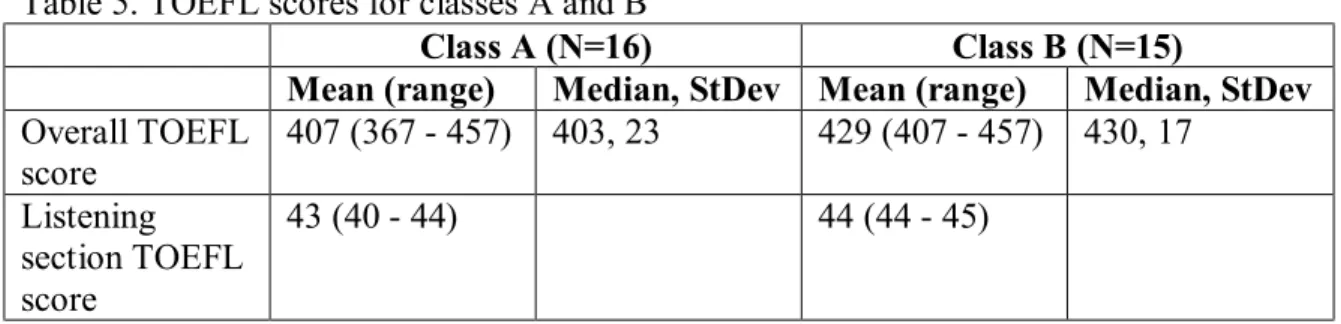
Table 5. TOEFL scores for classes A and B... 39
Table 6. Classes A and B’s responses about computer confidence level (in percentages) ... 40
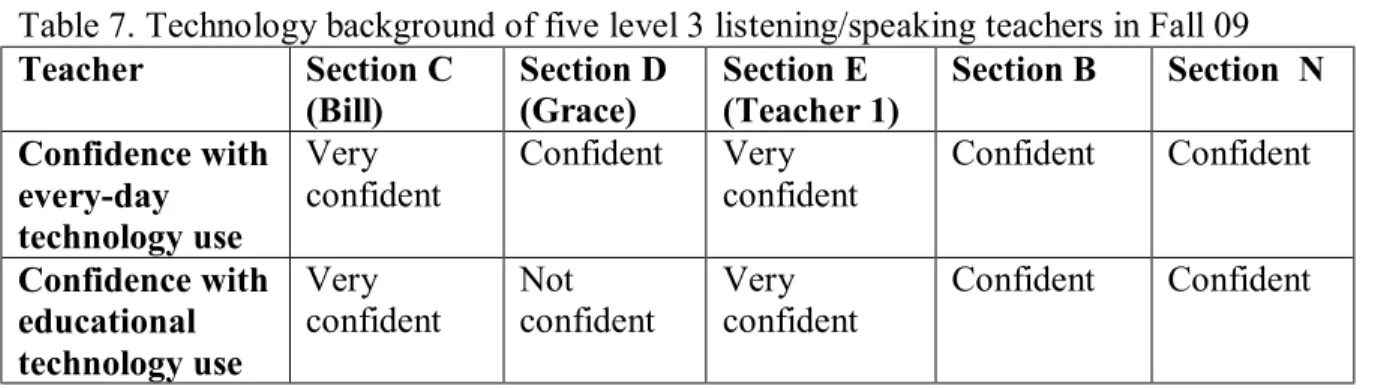
Table 7. Technology background of five level 3 listening/speaking teachers in Fall 09 ... 44
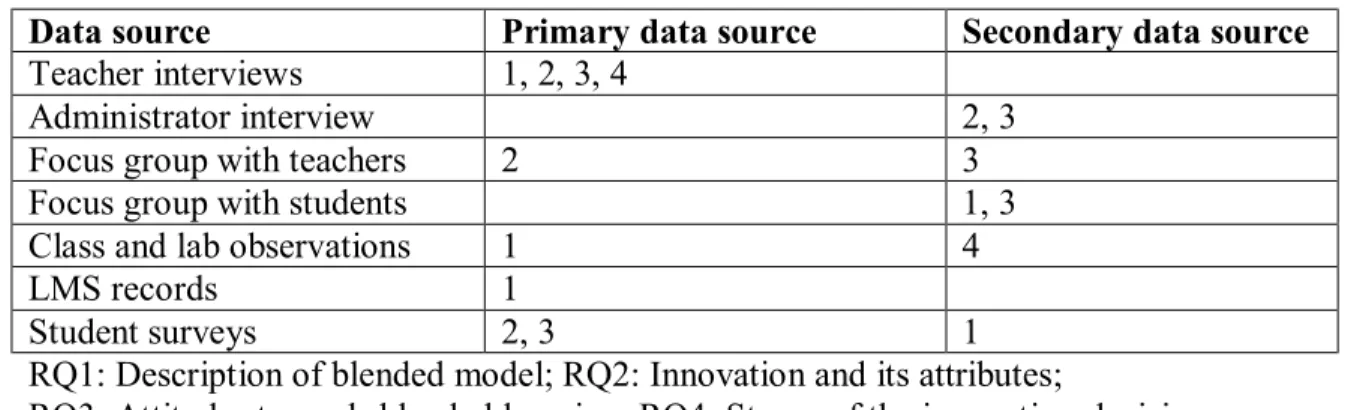
Table 8. Data sources by research questions ... 55
Table 9. Schedule of class and lab observations ... 59
Table10. Definitions of six constructs measured in surveys 2 and 3 ... 61
Table 11. Survey questions mapped to constructs and research questions ... 62
Table 12. Location and contact days for Classes A and B ... 76
Table 13A. Class A: Time in each mode per day (in minutes) and in total (in hours and minutes) ... 77
Table 13B. Class B: Time in each mode per day and in total (in hours and minutes) ... 80
Table 14. Distribution of modes ... 84
Table 15. Survey 2: Students’ views about the integration of face-to-face and CALL modes ... 90
Table 16. Survey 3: Students’ views about the integration of face-to-face and CALL modes ... 90
Table 17. Interactional patterns observed in this study by mode ... 101
Table 18. Students’ views about the access to the CALL mode (in percentages) ... 112
Table 19. Students’ previous experience with learning management systems and blended learning ... 119
Table 20. Survey 2: Students’ views about speaking, listening, and pronunciation activities in MNSL. ... 126
Table 21. Survey 3: Students’ views about speaking, listening, and pronunciation activities in MNSL. ... 127
Table 22. Survey 2: Students’ views about complexity of MNSL use ... 136
Table 23. Survey 3: Students’ views about complexity of MNSL use ... 137
Table 24. Survey 2: Students’ views about blended learning... 145
LIST OF FIGURES
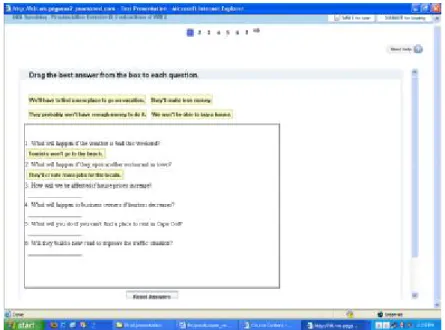
Figure 1. Basic types of designs for case studies according to Yin (2003) ... 32 Figure 2. Example of a machine-scored drag and drop activity ... 53 Figure 3. Example of a teacher-scored speaking activity... 54
ACKNOWLEDGEMENTS
There are many people I would like to acknowledge for their help during my doctoral program and for making this dissertation possible. First, I would like to thank my committee members for their support and helpful suggestions during all stages of this project. I would like to express my gratitude to my major professor Dr. Carol Chapelle for her excellent guidance and expertise. It was a privilege and pleasure to learn from and work with Dr. Chapelle over the years. I am also indebt to Dr. Dan Douglas and Dr. Volker Hegelheimer for their kindness and for being excellent role models to me. Special thanks to Dr. Geoff Sauer for his expertise. I am extremely grateful to Dr. Mack Shelley whose assistance with the quantitative data analysis in this dissertation and his insightful comments proved
invaluable. I was honored to work with Dr. Shelley who was always available to answer my questions and who sparked my interest in statistics in his class and through individual work with him.
I would also like to acknowledge IEOP program at Iowa State University for allowing me to conduct this research and being open to new ideas. I am especially grateful to program director and program coordinator who were so kind to provide me access to people, facilities, and materials I needed for this study. This dissertation would not have been possible without my main participants Bill and Grace and their students, two administrators, and five focus group teachers who all graciously gave their time and insights to help me along the way. I want to thank my friends and fellow graduate students Anne O’Bryan, Karina Silva, Jing Xu, Jim Ranalli, and Edna Monica Lopez Caballos who helped me by rating, offering suggestions, providing comments, and assisting with focus groups.
Finally, I do not have words to describe all the thanks that go to my husband and soul mate Zoran, my mother Slobodanka, and brother Ivan for their love, support, understanding, and encouragement. This dissertation is dedicated to you, my dear ones.
ABSTRACT
Blended learning, a combination of face-to-face and online instruction, is seen as one of the most important advancements of this century and a natural evolution of the learning agenda (Thorne, 2003). Blended learning studies that compared traditional and blended foreign language classes showed no significant differences in learner outcomes and indicated student satisfaction with their learning experience. However, these studies did not allow for a
sufficient description of what actually happens in an environment of a blended learning class because they lacked information about a number of characteristics such as teaching materials and methods, patterns of interaction, and participant roles. Moreover, some of the studies did not contain a theoretical base necessary to unify information about blended language
learning.
In view of these needs, this dissertation investigated a technology-enhanced blended learning in an ESL program. The study described the blended learning model using the framework for blended learning design proposed by Neumeier (2005). It also approached the investigation of blended learning as an innovation from two theoretical perspectives: Diffusion of
Innovations theory (Rogers, 2003) and Curricular Innovation Model (Markee, 1997) by examining the innovation, its attributes, and stages of the innovation-decision process. Case study methodology was used to describe a hypothetical blended learning ESL class situated within the context of an Intensive English Program. The description of the case, the hypothetical lower-intermediate listening/speaking class, was based on the analysis of two actual listening/speaking classes which constituted two embedded units of analysis. Main participants in two classes included two teachers and their thirty-one students in addition to five other teachers and two administrators. Two classes used a commercially-available learning management system (LMS), MyNorthStarLab, to combine face-to-face classroom teaching and online learning in the computer lab and for homework. Both qualitative data (in-depth teacher interviews, class and lab observations, and student and teacher focus groups) and quantitative data (student surveys and student LMS records) were analyzed.
The main findings indicate that participants could observe integration of face-to-face and CALL modes and that students could practice all language skills in both modes. A number of interactional patterns among the teacher, students, and computer were observed while
teachers exhibited a variety of roles. It was also found that the use of MyNorthStarLab in blended learning classes represented an innovation according to Rogers’ definition and that both positive and negative innovation attributes were present. Overall, teachers and most students had positive attitudes towards the innovation and teachers passed through the first four stages of the innovation-decision process.
The results of the study showed that innovations theory can have applications in applied linguistics and computer-assisted language learning. Case study methodology yielded
evidence about the blended learning model that previous comparison studies were not able to provide. This dissertation has practical implications for language programs and teachers and theoretical implications for the innovation and blended learning frameworks that informed it.
CHAPTER 1: INTRODUCTION
Statement of the problem
The widespread adoption of computer technology in all aspects of human lives in the last decade has led to its growing presence in educational settings. Teaching and learning do not have to take place in the traditional face-to-face classroom anymore and students increasingly expect some level of computer-mediated instruction in their college classes. This amount of computer-mediated instruction can vary from, for example, students accessing the class syllabus and notes online to students taking part in online simulations of lab experiments. According to Picciano (2009), classes where face-to-face and online activities are integrated in a planned, pedagogically valuable manner and where online activities replace a portion of face-to-face time are blended learning classes.
A general definition of blended learning is a combination of face-to-face and computer-mediated instruction (Graham, 2006). Blended learning is seen as natural evolution of the learning agenda and even as the most important advancements of this century (Thorne, 2003, p. 2). Graham (2006) goes as far as to claim that blended learning “may even become so ubiquitous that we will eventually drop the word blended and just call it learning” (p. 7). Along the same lines Ross and Gage (2006) argue:
In the long run, almost all courses offered in higher education will be blended. […] It is almost certain that blended learning will become the new traditional model of course delivery in ten years. […] What will differentiate institutions from one another will not be whether they have blended learning but rather how they do the blending and where they fall on the blended learning spectrum.” (p. 167)
What made these authors so enthusiastic about blended learning? How did researchers determine advantages of blended learning, in particular blended language learning of interest to this dissertation? They did so by comparing performance of students in blended and traditional classes; surveying views of teachers, students and administrators; and evaluating
blended learning initiatives. For example, a number of studies comparing blended foreign language classes against traditional classes found no statistically significant differences on a number of language performance indicators: (Barr, Leakey, & Ranchoux, 2005; Chenoweth & Murday, 2003; Chenoweth, Ushida, & Murday, 2006; Echavez-Solano, 2003; Green & Youngs, 2001; Scida & Scaury, 2006). Student and teacher input about their experience in blended learning courses indicated a trend of increasing satisfaction (Murday et al., 2008). A blended French program was evaluated in Adair-Hauck, Willingham-McLain, and Youngs (1999) and performance of students in blended and traditional classes found equal.
With the evidence for effectiveness of blended instruction at hand, it may appear that blended learning research agenda has been exhausted. This is far from truth. While there will always be interest in global effectiveness studies, some blended learning researchers suggest another line of inquiry. The second part of the quote from Ross and Gage (2006) above suggests a shift in focus: it is not a matter of whether an institution will blend but how that blend will be made. Similarly, White (2006) proposes a future research agenda: “a crucial avenue for research concerns how students work within environments comprising typically classroom instruction, independent learning and online learning environments both individual and collaborative” (p. 259-260).
To answer the question of how, descriptive research is needed to depict the environment of blended learning classes and many of its variables. The comparative methodology of effectiveness studies which requires equal conditions in blended and traditional classes so meaningful comparisons can be made, does not allow for the fine-grained portrayal of specific features in blended environments that make blended learning effective. Without knowing these features it is hard to say how learners performed the way they did or formed certain attitudes towards blended learning. The first step in the direction of descriptive research represents examination of blended learning models so that new models as effective as or better than those already researched can be created. Graham and Robinson (2007) state this research goal: “a good beginning point will be to develop well articulated examples, cases and models of how blended learning can work in a variety of different contexts” (p.
108). This description of the models needs to be guided by theory that systematically unifies information about a phenomenon and leads its research on a number of levels. However, blended language learning seems to lack theoretical conceptualization, research agenda, and qualitative research (Neumeier, 2005, p. 164). To address the need for descriptive research, blended learning models, theoretical conceptualization of blended learning, and qualitative data, this dissertation provides a thorough description of the blended learning model in ESL classes using case study methodology while it also approaches blended learning from the theoretical standpoint of an innovation.
Purpose of the study
The purpose of this case study is to describe the blended learning environment in an ESL class where use of online CALL materials delivered through a commercially-made learning management system, creates the blend. In this study technology-enhanced blended learning is defined as face-to-face teaching and learning supplemented by an online component
delivered through a learning management system (LMS). In this blend, the amount of face-to-face class time is not reduced and replaced by computer-assisted language learning (CALL) activities, but remains the same.
The first goal of the study is to describe the blended learning model using criteria previously outlined in the blended language learning literature (Neumeier, 2005). The study employs descriptive, single-case design with two embedded units of analysis. Next, the dissertation aims to establish whether the use of a learning management system in blended
listening/speaking classes represents an innovation according to definitions from Rogers’ Diffusion of Innovations theory (2003) and Markee’s Curricular Innovation Model (1997). An additional goal is to investigate the attributes which can help or hinder the diffusion of an innovation (Rogers, 2003). The third objective is to collect the attitudes of teachers and students towards the innovation. The final goal is to describe the stages of the innovation-decision process teachers go through (Rogers, 2003).
Significance of the study
I believe that knowledge obtained in this study can make contributions to the field of CALL and applied linguistics. The first benefit of this study is the description of the blended learning model and many of its features previously unaddressed in the literature on blended language learning. The study employs case study methodology which incorporates
qualitative and quantitative data to yield evidence earlier comparison blended learning studies were not able to provide. This work also applies the diffusion of innovations framework to the study of a CALL innovation thus showing that innovations theory can provide a theoretical foundation missing from some of the previous studies. Finally, this dissertation has practical implications for language programs and language teachers and theoretical implications for innovation-diffusion and blended learning frameworks that informed it.
Organization of the dissertation
This dissertation consists of five chapters. The first chapter introduces the study by defining blended learning, and presenting motivation for the study, its purpose and significance. Chapter 2 reviews the literature on blended language learning, introduces theoretical background and lists four research questions. It first presents the framework for blended learning design (Neumeier, 2005) that guides the review of literature and then situates the study within two theoretical frameworks: Diffusion of Innovations (Rogers, 2003) and Curricular Innovation Model (Markee, 1997). Chapter 3 introduces case study research methodology and describes the setting, participants, and materials followed by data sources and steps taken in the data analysis. Chapter 4 presents and discusses the results by research questions. Chapter 5 summarizes the results and brings into discussion limitations and implications. The chapter ends with directions for future research and general conclusions.
CHAPTER 2: LITERATURE REVIEW
This chapter reviews literature which influenced this dissertation and provided a starting point for investigation of blended learning. First, a discussion of two blended learning frameworks (Sloan-C’s and Neumeier’s (2005)) is presented and a case made for using the latter because it is more specific to the field of applied linguistics and computer-assisted language learning. Neumeier’s framework guides the description of the blended learning model researched in this study as well as the review of eleven blended language learning comparison and non-comparison studies. The thorough review indicated insufficient information about several important features of blended language courses (materials,
teaching methods, patterns of interaction, and participant roles), which created a need for the present study.
Second, the chapter discusses two theoretical frameworks, Diffusion of Innovations theory (Rogers, 2003) and Curricular Innovation Model (Markee, 1997), which situate the present research. Diffusion of Innovations guides the investigation of the use of a learning
management system in a technology-enhanced blended learning class, its classification as an innovation, its attributes, and stages of the innovation-decision process. The Curricular Innovation Model approaches the study of the innovation from the field of language teaching and learning and is used to look at innovation products.After the discussion of the literature which highlighted main gaps and description of theoretical frameworks which positioned the study, four research questions are presented.
Blended learning frameworks
The discussion of blended learning in higher education begins with the quality framework created by Sloan Consortium (Sloan-C). Sloan C is a non-profit organization dedicated to integration of online education into the mainstream of higher education (Sloan-C website). Although the framework was originally established to assess online learning, it has
increasingly been used to evaluate blended learning (Lorenzo & Moore, 2002; Laumakis, Graham, & Dziuban, 2009). The framework consists of five pillars: learning effectiveness,
student satisfaction, faculty satisfaction, cost effectiveness, and access (Lorenzo & Moore, 2002). According to the Sloan-C website, the goal of learning effectiveness is meeting or exceeding institutional standards, which can be demonstrated by measuring student progress. Students and faculty are satisfied with blended learning courses if they are pleased with their learning and teaching experience. Cost effectiveness aims at improving services and reducing costs while providing a fair return on tuition rates for the institution. Finally, access includes administrative and technical infrastructure and learner support services which allow access to all learners. This framework was successfully applied to a range of academic disciplines from psychology (Laumakis, Graham, & Dziuban, 2009) to management information systems (Larson & Sung, 2009) as judging by journal publications while the Sloan-C website publishes a current list of user-supplied effective practices related to any topic in online education.
Although guiding research in a variety of fields, I found some pillars overly broad for the study of blended learning in this dissertation. First, institutional aspects of the framework were not of immediate interest for this study which focused on the experience of individuals (teachers and students). Moreover, institutional cost effectiveness and access fell beyond the scope of this research. Finally, the purpose of the study was the description of the learning environment which did not include assessment of learning outcomes as a way to demonstrate learning effectiveness. Instead of Sloan-C’s framework, the framework for designing blended learning environments for language teaching and learning was employed in this work
(Neumeier, 2005) because it is more specific to the field of applied linguistics and computer-assisted language learning.
In this study, Neumeier’s framework (2005) allows for a fine-grained look at the number of components of the language classroom. Neumeier writes that the framework focuses on “requirements that are specific to the teaching and learning of languages” (2005, p. 176) and is the result of research and development of a blended learning course, Jobline, at Munich University. The course was designed to teach students at German universities how to apply
for a job in English through practice in writing CVs and cover letters and speaking in job interviews.
There are six parameters in the framework: 1) mode, 2) model of integration, 3) distribution of learning content and objectives, 4) language teaching methods, 5) involvement of learning subjects (students, tutors, and teachers), and 6) location. The framework guides the
description of the blended model in this study and represents a starting point for the
discussion of CALL blended learning studies later in this section. Each of the parameters is discussed next.
According to Neumeier, two major modes in blended environments are face-to-face and CALL. The mode which guides learners and where they spend most of the time is called the lead mode. Sequencing and negotiation of content is also done in the lead mode. The modes are further divided into components or sub-modes (for example, different teaching
methodologies in the face-to-face mode or synchronous and asynchronous communication in the CALL mode).
Neumeier finds the second parameter, model of integration, very important. Overall, integration is related to the obligatory or optional nature of activities. Moreover, level of integration is connected to sequencing of modes which can be alternating, parallel, or overlapping to name just a few. For example, the face-to-face mode can alternate with a CALL sub-mode (such as message board) or the message board can be available throughout the course parallel to the other sub-modes. A decision on how to sequence activities could be based on the degree of transactional distance defined as the “physical distance that leads to a communication gap” (Moore & Kearsley, 1996, p.203). Neumeier gives an example of a blended model where an activity with a low degree of transactional difference, a group face-to-face discussion, was scheduled after individual work on a CD-ROM with a little
Parameter three, distribution of learning content and objectives, can be implemented in two ways: parallel or isolated. Parallel distribution allows a certain language skill to be
incorporated and practiced in both modes. Neumeier’s blended course, Jobline, uses isolated distribution because speaking was only practiced in the face-to-face mode (Neumeier, 2005). Language teaching methods, parameter four, are influenced by online materials, the online tutor, and the face-to-face teacher. Neumeier claims that the CALL mode is often considered limited in comparison to face-to-face teaching regarding the range of teaching methods; therefore communicative language teaching methods should be employed to counterbalance CALL mode limitations.
Involvement of learning subjects, parameter five, refers to types of interaction that can take place in the blended environment. In addition to two major interaction patterns, human-to-human and human-to-human-to-computer, there are a number of variations (for example, student-to-student through computer). Another descriptor of this parameter is teacher and learner roles. In the blended environment both teachers and students assume new roles so teachers can become online tutors and students more autonomous learners. The final parameter, location, refers to the physical space were learning takes place. In addition to traditional locations such as classroom and home, new technologies (such as mobile phones) can allow for learning to take place elsewhere.
CALL blended learning studies
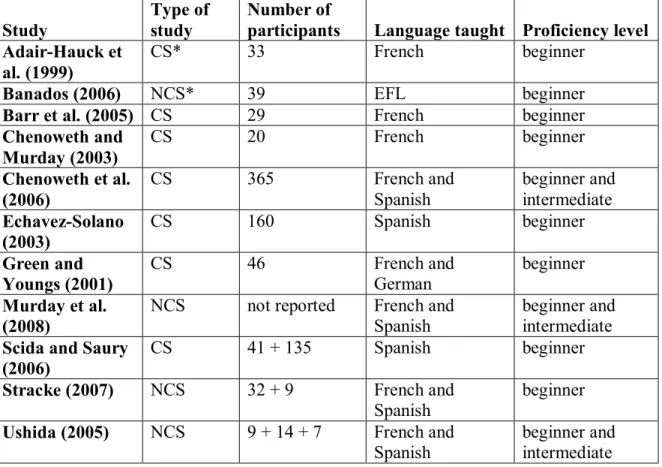
Previous CALL blended learning research and practice provided a background for this dissertation. In this section I reviewed eleven blended language learning studies (for the list see Table 1) using the previously described Neumeier’s framework (2005). In the review, I divided the studies into comparison and non-comparison based on their research design. Comparison blended learning studies (marked as CS in Table 1) examined the effectiveness of blended learning in higher education foreign language instruction by comparing blended instruction to-face together with CALL instruction) with traditional instruction (face-to-face without CALL instruction). Non-comparison studies (marked as NCS in Table 1) examined blended learning program design and implementation, and student and teacher
attitudes towards blended learning. This review highlighted the lack of information about important features of blended models in these studies, which ultimately motivated this study. Participants in comparison studies were students of French, Spanish, and German who received instruction either in the traditional class (control groups) or working on computer-based or web activities in addition to the traditional class (blended learning groups). Participants in non-comparison studies were students of English as a Foreign Language (EFL), Spanish, and French taking blended learning classes. Table 1 gives an overview of these studies including the type of study (comparison or non-comparison), number of participants, language taught, and proficiency level.
Table 1. Overview of blended learning studies by type of study, number of participants, language taught, and proficiency level
Study
Type of study
Number of
participants Language taught Proficiency level Adair-Hauck et
al. (1999)
CS* 33 French beginner
Banados (2006) NCS* 39 EFL beginner
Barr et al. (2005) CS 29 French beginner
Chenoweth and Murday (2003) CS 20 French beginner Chenoweth et al. (2006) CS 365 French and Spanish beginner and intermediate Echavez-Solano (2003) CS 160 Spanish beginner Green and Youngs (2001) CS 46 French and German beginner Murday et al. (2008)
NCS not reported French and Spanish
beginner and intermediate Scida and Saury
(2006)
CS 41 + 135 Spanish beginner
Stracke (2007) NCS 32 + 9 French and
Spanish
beginner Ushida (2005) NCS 9 + 14 + 7 French and
Spanish beginner and intermediate * CS: a comparison study, NCS: Non-comparison study
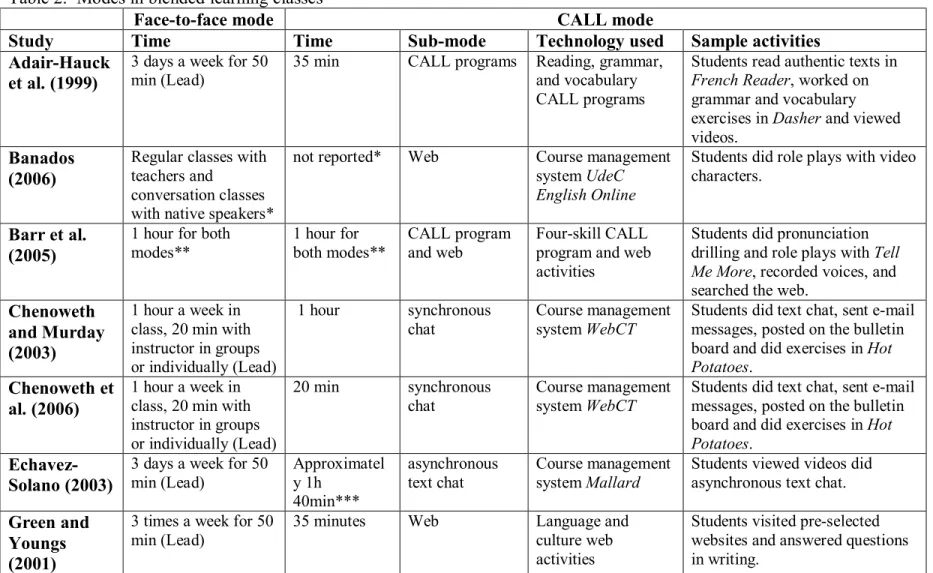
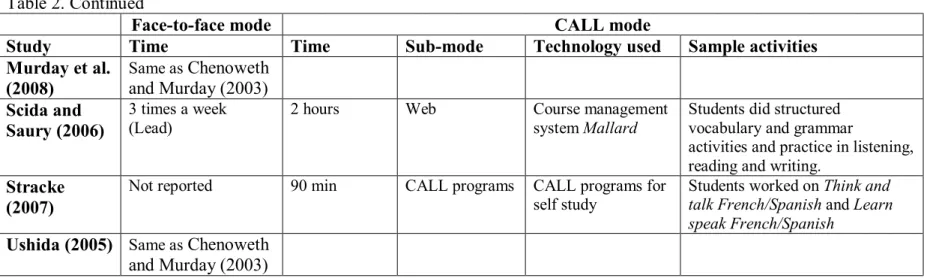
Blended learning classes in these studies combined two modes: face-to-face and CALL. The time spent in each mode per week ranged from 1 to 2.5 hours in the face-to-face mode and from 20 minutes to 2 hours in the CALL mode. As can be seen in Table 2, students spent most of the time in the face-to-face mode which was the lead mode in all studies. The
location of the face-to-face mode was the classroom and the location of the CALL mode was the computer lab or student home. The technology used in the CALL sub-mode included CALL programs, course management systems, and the web. Most of the studies used learning management systems -- LMSs (WebCT or Mallard) to deliver instruction, sometimes in conjunction with computer-mediated communication tools. For example, through WebCT, learners had access to course materials, quizzes, electronic bulletin boards, e-mail, and synchronous chat programs (Chenoweth & Murday, 2003; Chenoweth et al., 2006; Murday et al., 2008; Ushida, 2005). In these studies, French and Spanish students
participated in weekly text chat sessions with classmates in addition to weekly twenty-minute meetings with the instructor and one contact hour meeting in the classroom. While all authors in Table 2 described technology and some activities conducted in the CALL mode, they did not specifically address the teaching methods or activities used in the face-to-face mode. For example, no classroom observations were done in Stracke (2007) to determine how
instruction was conducted. The only three exceptions are Barr et al. (2005), Adair-Hauck et al. (1999), and Echavez-Solano (2003). Barr et al. (2005) mentioned that participants had group discussions and conversations in class while Adair-Hauck et al., (1999) reported students doing in-class speaking tasks. Echavez-Solano (2003) described structured input exercises students worked on both in the CALL and face-to-face mode and called in-class activities communicative probably because they were speaking tasks.
Table 2. Modes in blended learning classes
Face-to-face mode CALL mode
Study Time Time Sub-mode Technology used Sample activities
Adair-Hauck et al. (1999)
3 days a week for 50 min (Lead)
35 min CALL programs Reading, grammar, and vocabulary CALL programs
Students read authentic texts in
French Reader, worked on grammar and vocabulary exercises in Dasher and viewed videos.
Banados (2006)
Regular classes with teachers and
conversation classes with native speakers*
not reported* Web Course management system UdeC English Online
Students did role plays with video characters.
Barr et al. (2005)
1 hour for both modes** 1 hour for both modes** CALL program and web Four-skill CALL program and web activities
Students did pronunciation drilling and role plays with Tell Me More, recorded voices, and searched the web.
Chenoweth and Murday (2003)
1 hour a week in class, 20 min with instructor in groups or individually (Lead) 1 hour synchronous chat Course management system WebCT
Students did text chat, sent e-mail messages, posted on the bulletin board and did exercises in Hot Potatoes.
Chenoweth et al. (2006)
1 hour a week in class, 20 min with instructor in groups or individually (Lead) 20 min synchronous chat Course management system WebCT
Students did text chat, sent e-mail messages, posted on the bulletin board and did exercises in Hot Potatoes.
Echavez-Solano (2003)
3 days a week for 50 min (Lead) Approximatel y 1h 40min*** asynchronous text chat Course management system Mallard
Students viewed videos did asynchronous text chat.
Green and Youngs (2001)
3 times a week for 50 min (Lead)
35 minutes Web Language and culture web activities
Students visited pre-selected websites and answered questions in writing.
* Banados did not report the actual times neither in the face-to-face nor CALL mode
** Barr et al. reported class meetings lasting 1 hour. It is not clear how the time was divided between the modes.
*** Echavez-Solano did not report the time in CALL mode. The CALL mode replaced two class meetings so approximate time should be around 1hour and 40 minutes to make the group comparable to the control one
Table 2. Continued
Face-to-face mode CALL mode
Study Time Time Sub-mode Technology used Sample activities
Murday et al. (2008) Same as Chenoweth and Murday (2003) Scida and Saury (2006) 3 times a week (Lead)
2 hours Web Course management system Mallard
Students did structured vocabulary and grammar
activities and practice in listening, reading and writing.
Stracke (2007)
Not reported 90 min CALL programs CALL programs for self study
Students worked on Think and talk French/Spanish and Learn speak French/Spanish
Ushida (2005) Same as Chenoweth and Murday (2003)
In comparison studies materials used to assess learning goals were described in detail. This is not surprising given that the studies measured effectiveness of blended learning based on end-of-the-course performance measures such as tests of listening, speaking, reading,
writing, grammar, vocabulary, and culture knowledge. Additionally, the utmost attention was given to making materials the same or similar in blended and control groups. For instance, in Echavez-Solano (2003), the control group textbook was turned into an electronic book, that way exposing participants to the same content. In Green and Youngs (2001), two groups had the same syllabus, homework assignments, essays, and quizzes, and the control group did similar in-class activities. While the comparative research methodology required carefully designed and administered assessments and uniformity of materials used, the actual use of materials (especially in the face-to-face mode) remains unaddressed.
Due to the set-up of studies, some blended learning groups had only online materials (Chenoweth et al. (2006) and Stracke (2007)). Student interviews showed that this lack of printed materials presented a problem for some of them (Chenoweth et al. (2006), Murday et al., (2008), Stracke (2007)). Learners in Chenoweth et al. (2006) reported the need to print out large parts of course materials and wished they had a paper textbook. Additionally, students had difficulties in finding their way through materials on WebCT rich in images, audio files, and interactive exercises, which shows that design of materials needs to be carefully considered.
The authors paid attention to the integration of modes, the second parameter in Neumeir’s framework, by making the activities obligatory. Some such as Scida and Saury (2006) took advantage of CALL technology features to set deadlines for grammar and vocabulary exercises so students would complete them in a timely manner. Although the issue of
integration was considered in the course design, students in Chenoweth et al. (2006) reported needing more support from the instructor in addition to a more specific work plan that would lay out assignments and deadlines (Murday et al., 2008). Some students observed that lessons and exercises were not connected, which indicates low level of integration as perceived by end users. Lack of connection between classroom and individual work was one of the reasons
why some students dropped out of blended French and Spanish classes which employed face-to-face instruction and individual study with a CALL program (Stracke, 2007). All of these findings underscore the need to provide examples of well-integrated modes as well as describe the features that make the integration successful.
Distribution of learning content, the third feature of blended environments, was influenced by the type of technology employed in the CALL mode. For example, in Adair-Hauck et al. (1999) students did not work on speaking tasks in the CALL mode because the CALL
programs they were using in the lab targeted only reading (French Reader) and grammar and vocabulary (Dasher). Consequently, speaking was practiced only in the face-to-face mode. Similarly, the web activities in Green and Youngs (2001) involved reading on the Internet and writing so listening and speaking could not be practiced. As a result, in Adair-Hauck et al. (1999) and Green and Youngs (2001), the distribution of learning content or more precisely language skills was isolated with certain skills practiced only in one of the modes. In contrast, in Barr et al. (2005) and Banados (2006) students practiced speaking both in the CALL mode (role plays with the computer program) and face-to-face mode (class
discussions) making the distribution parallel. In other studies, the distribution of content or skills was not addressed and researchers did not specify how the distribution was made. Given the nature of the CALL task in Adair-Hauck et al. (1999) and Green and Youngs (2001), it may not be surprising that students expressed concerns about the development of their speaking and listening skills in the blended class. However, a similar concern was raised by learners in Chenoweth and Murday (2006) who had weekly text chat sessions in addition to small group meetings with the instructor. These results indicate the need to rethink the CALL tasks especially given new allowances for oral production that technology affords as well as to reconsider teaching methods used in the face-to-face mode.
Language teaching methods, the fourth of Neumeier’s parameter, was not discussed except in Scida and Saury (2006) who found the change of teaching methods in blended Spanish classes. Instructors in that study reported spending more class time on communicative activities and less on grammar and vocabulary presentations and mechanical practice, which
were available in the learning management system. For instance, all instructors spent 20% of class time or less on the presentation of new vocabulary.
The next parameter, involvement of learning subjects, Neumeier operationalized through types of interaction and participant roles. This parameter was often not addressed in blended learning studies, so the types of interaction which took place in each mode could only be speculated. Ushida (2005) briefly mentioned that different teachers utilized different types of interaction (teacher-class, teacher-student, student-student) depending on the perceived purpose of face-to-face meetings. The other evidence comes from Scida and Saury (2006) who reported increased student-computer interaction documented through computer logs and student surveys. The fact that instructors set a minimum passing score for some online activities prompted many students to attempt them multiple times, thus increasing student interaction. In addition, 78% of students reported that they always worked on online
activities until they got the perfect score. One of the authors, Echavez-Solano (2003), realizes the importance of interaction in blended environments and calls for future research in this area (2003, p. 143). Participant roles were only investigated in Adair-Hauck et al. (1999) and Banados (2006) who addressed the adjustments both teachers and students had to make in blended classes. Teachers needed to learn many new skills such as how to integrate materials, use hardware and software, and troubleshoot computer problems (Adair-Hauck et al., 1999). Students also needed to learn the new technology but also learn to be autonomous learners. Finally, Ushida (2005) and Muray et al. (2008) reported on the direct relationship between student motivation and student progress and stressed the importance of students taking responsibility for their learning. The lack of research into this blended learning feature
creates a gap in understanding how a blended environment functions and should be addressed in future studies.
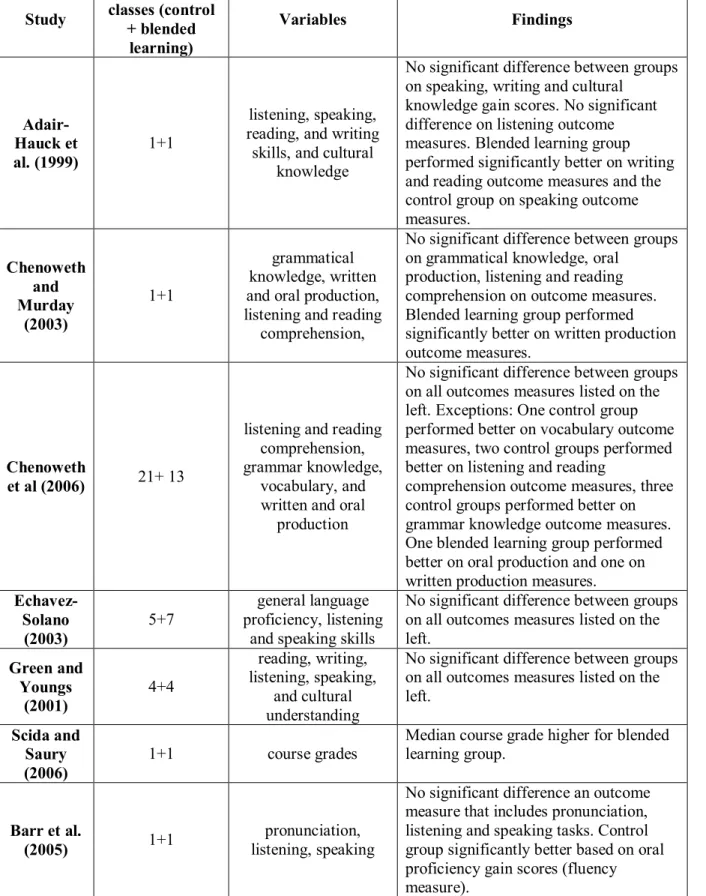
Although the comparison blended learning studies did not provide a detailed description of the environment judging by Neumier’s framework (2005), they did produce evidence about the effectiveness of blended classes. Overall, none of the studies found a significant
Scida and Saury (2006), who found overall better performance of the blended learning class (see Table 3). Some blended learning classes performed significantly better than control classes on writing (Adair-Hauck et al., 1999; Chenoweth et al., 2006; Chenoweth & Murday, 2003); reading (Adair-Hauck et al.,1999), and some oral production measures (Chenoweth et al., 2006). Performance of one blended class (intermediate Spanish I) in Chenoweth et al. (2006) on oral production was significantly better than that of the control group counterparts, which is an interesting finding given that the students in Chenoweth and Murday (2006) and Green and Youngs (2001) worried about the development of their speaking and listening skills in the blended class.
Table 3. Findings of comparison blended learning studies Study Number of classes (control + blended learning) Variables Findings Adair-Hauck et al. (1999) 1+1 listening, speaking, reading, and writing skills, and cultural
knowledge
No significant difference between groups on speaking, writing and cultural
knowledge gain scores. No significant difference on listening outcome measures. Blended learning group performed significantly better on writing and reading outcome measures and the control group on speaking outcome measures. Chenoweth and Murday (2003) 1+1 grammatical knowledge, written and oral production, listening and reading
comprehension,
No significant difference between groups on grammatical knowledge, oral
production, listening and reading comprehension on outcome measures. Blended learning group performed significantly better on written production outcome measures.
Chenoweth
et al (2006) 21+ 13
listening and reading comprehension, grammar knowledge,
vocabulary, and written and oral
production
No significant difference between groups on all outcomes measures listed on the left. Exceptions: One control group performed better on vocabulary outcome measures, two control groups performed better on listening and reading
comprehension outcome measures, three control groups performed better on grammar knowledge outcome measures. One blended learning group performed better on oral production and one on written production measures.
Echavez-Solano (2003) 5+7 general language proficiency, listening
and speaking skills
No significant difference between groups on all outcomes measures listed on the left. Green and Youngs (2001) 4+4 reading, writing, listening, speaking, and cultural understanding
No significant difference between groups on all outcomes measures listed on the left.
Scida and Saury (2006)
1+1 course grades
Median course grade higher for blended learning group.
Barr et al.
(2005) 1+1
pronunciation, listening, speaking
No significant difference an outcome measure that includes pronunciation, listening and speaking tasks. Control group significantly better based on oral proficiency gain scores (fluency measure).
To better understand findings in comparison blended learning studies, it is also important to look at cases when the control group exhibited better performance than the blended learning group. Control group students in Barr et al. (2005) exhibited larger gains in development of oral proficiency compared to their counterparts in the blended group. Similarly, Adair-Hauck et al. (2000) found better performance of the control group on the test of speaking skills at the end of the semester. In Chenoweth et al. (2006), elementary Spanish I and II control groups performed better on listening and reading comprehension, grammar knowledge, and vocabulary tests. To explain student performance, Adair-Hauck et al. (2000) and Chenoweth et al. (2006) interviewed participants in small groups and found that the blended learning group complained of technical difficulties as well as difficulties in finding their way through WebCT materials, as mentioned earlier. Along the same lines, students in Barr et al. (2005) lost time getting used to the technology and dealing with technical problems, the time that they should have used for oral practice. Most of the students in the blended learning classes in Echavez-Solano (2003) cited “difficulties involved in figuring the program out” (p. 142). Given all this, it can be concluded that technical problems and unfamiliarity with the online environment could be reasons blended learning may not have worked effectively.
In addition to comparable learner progress, one of the most encouraging findings from blended learning studies includes overall student satisfaction with their blended learning experience. Stracke (2007) used student and teacher questionnaires and semi-structured interviews to investigate learner attitudes and found students had predominantly positive views of blended learning. Positive views of blended learning were also found in Ushida (2005). Similarly, the student data from Murday et al. (2008) indicate “a trend of increasing satisfaction with online courses compared with traditional courses” (p. 125). Students in Green and Youngs (2001) and Adair-Hauck et al. (2000) reported making progress in the course. In Scida and Saury (2006) all students would recommend the course to others, 94% were satisfied or very satisfied with the course, and 92% benefited from the use of the learning management system. Some of the benefits of blended learning listed in Echavez-Solano (2003) and Scida and Saury (2006) included immediate feedback, individualized attention, greater control, and non-judgmental testing. While successful learner performance
and positive attitudes were valuable findings, descriptive methodologies could be employed to offer a richer understanding of blended learning environments.
Finally, the last component in the analysis of previous literature addressed theoretical background that should ideally inform blended learning investigation or at least some of its aspects. It was found that several comparison studies were grounded in previous research only since they did not mention any theoretical framework (Chenoweth & Murday, 2003; Chenoweth et al., 2006; Green & Youngs, 2001; Scida & Saury, 2006). Moreover, some non-comparison studies also lacked theoretical framing (Stracke, 2007; Murday et al., 2008). Theory informed program evaluation (Adair-Hauck et al., 1999) and development of course materials for English Online program in Banados (2006). In Echavez-Solano (2003) online materials were created based on premises of input-processing theory. Communicative and constructivist theories of SLA underpinned the pedagogy in Barr et al. (2005) while in Ushida (2005) two frameworks for L2 motivation helped interpret the results of the study; these are the only two studies with firm theoretical conceptualization. Sparse use of theory in blended learning research represents another gap which this dissertation aimed at addressing. Further discussion ensues in the next section.
Theoretical basis for blended learning
As the literature review in the previous section indicated, blended learning may lack
theoretical conceptualization which is especially true for some comparison studies. Without a theoretical background, it is difficult to make applications of findings to other blended
contexts. The theory helps systematically unify information about a phenomenon so findings from individual studies add to the body of knowledge and better understanding of the topic of investigation. Furthermore, theory can guide research on a number of levels: from
conceptualization of the study and development of methodology and research questions to interpretation of results (Chapelle, 2003). For example, the theory helped to conceptualize this dissertation as an innovation research because of blended learning novelty. Similarly, the theory helped direct the study of innovation towards two of its most salient aspects given the
setting and participants available. For these reasons, it was very important to clearly situate the present study within a theoretical framework.
In this study, blended learning and its elements are investigated from two theoretical perspectives: Diffusion of Innovations theory (Rogers, 2003), and Curricular Innovation Model (Markee, 1997). These theories were chosen because they help better understand the complex phenomenon of technology-enhanced blended learning. From the standpoint of Diffusion of Innovations theory, blended learning that uses an LMS is approached as an innovation since it is the first time it has been introduced into the setting. This theory guides the investigation through examination of innovation attributes and stages of the innovation-decision process. The scope of this theory is the largest because it paints a big picture of blended learning while the other focuses on one of its aspects. Curricular Innovation Model applies the blended learning innovation to the field of language teaching and is used to look at innovation products. Each theoretical perspective is discussed next.
Diffusion of Innovations theory
Diffusion of Innovations theory by Everett Rogers (2003) represents a well-established theory that explains a universal process of social change. The central tenet of this theory is any kind of innovation, its operation, and diffusion into the world. The theory examines innovation diffusion, development, innovation-decision process, its attributes and rate of adoption, adopter categories, diffusion networks, and many other aspects. Rogers’ Diffusion of Innovations originates in the field of agricultural innovations, in particular, hybrid seed corn diffusion in rural Iowa communities, which was one of the first studies Rogers worked on in mid 1950s. Since then, the theory has been adopted and used by scholars in a variety of disciplines such as sociology, communication, education, marketing, anthropology, and public health to name just a few. No matter how different these fields may be, they undertake diffusion research using similar qualitative and quantitative methodologies. Qualitative data sources include case studies, observations, and interviews while quantitative are mainly questionnaires. Statistical data analyses are performed in many disciplines, too.
Diffusion of Innovations is used to explain a wide range of innovative practices and objects from boiling water to prevent the spread of diseases in undeveloped countries, creating a car pool lane on highways, to owning personal computers by US households. What all of these practices and objects have in common is their novelty for users. Rogers defines innovation as “an idea, practice, or object that is perceived as new by an individual or other unit of
adoption” (p. 12). Newness of an innovation is a subjective characteristic and depends on the perception of the user.
The dissertation builds on two major strands of the theory: attributes of innovation and the innovation-decision process. Each innovation is characterized by five attributes that can help/hinder its diffusion: 1) relative advantage, 2) compatibility, 3) complexity, 4)
trialability, and 5) observability. Relative advantage is whether users perceive the innovation as advantageous. The more advantage the innovation brings, the more rapidly it will be adopted. The same relationship applies to compatibility—the perception of innovation as compatible with previous experiences and values of adopters. On the other hand, complexity has a negative effect on adoption because the more complex the innovation, the less likely it will be accepted. The fourth attribute, trialability, is the degree to which a user can try out the innovation. Finally, observability applies to the degree the innovation can be observed before adoption. The last two attributes have a positive effect on the rate of adoption. These
attributes of innovation are very important for understanding how users perceive the innovation, which is one of the goals of this study.
As in Rogers’ theory, relative advantage and complexity are important elements of another theoretical framework, Technology Acceptance Model which describes how people approach and employ new technology. In the Technology Acceptance Model (Davis, 1989; Bagozzi et al., 1992), Rogers’ attributes of relative advantage and complexity roughly translate into qualities of perceived usefulness and perceived ease of use. Perceived usefulness is the perceived level to which a piece of technology would improve one’s job performance while perceived ease of use represents the level a piece of technology would be considered effort-free. While the Technology Acceptance Model could be another valuable theoretical model
for the study of technological innovations, Diffusion of Innovations was found more appropriate for this dissertation because of its strength in another area: the study of the innovation-decision process.
Rogers’ model of the innovation-decision process explains stages an individual goes through from the first contact with an innovation to its complete adoption. There are five stages in this model: knowledge, persuasion, decision, implementation, and confirmation. In the first stage—knowledge—the individual is exposed to an innovation and learns about its purpose and function. Three types of knowledge about the innovation may be available in this stage (Rogers, 2003, p. 173): awareness-knowledge (information that the innovation exists), how-to knowledge (information on how how-to use the innovation), and principles-knowledge
(functioning principle of the innovation).
In the next stage-persuasion-individuals form an opinion about the innovation. This opinion may be positive or negative, which in turn influences whether the innovation will be further adopted or rejected. To see whether the innovation works in a specific context and to reduce uncertainty about its effectiveness, the individual seeks evaluation information from other individuals, scientific sources, or mass media. Peers are the major source of reinforcement in this stage and can provide a support system for the new adopter and decrease the uncertainty about innovation outcomes.
The decision to adopt the innovation is made in the decision stage. Before deciding to adopt, individuals try the innovation out to see its usefulness in their setting. They may also seek additional information from different sources. If the innovation is still viewed favorably after it has been piloted, the process is moved to the implementation stage which usually follows decision promptly.
Innovation is put to use in the implementation stage. This stage is characterized by the continued use of innovation, which eventually starts to be used on a regular basis. The adopters may seek support from others in form of technical assistance or positive
reinforcement. Once the innovation becomes institutionalized, the implementation stage ends and the confirmation stage begins. In this final stage, the innovation becomes completely integrated into the ongoing routine while the adopter may start promoting the innovation to others.
Although applied linguistics was not represented among nine major diffusion research disciplines (see Rogers, 2003, pp. 44-45), the field was, nevertheless, influenced by the diffusion theory and research. Bax (2002) and Chambers and Bax (2006) used the diffusion framework to study CALL as an innovation and how it becomes diffused and eventually normalized i.e. completely integrated into teaching and learning practices. Bax (2002) builds on the Rogers’ stages of the innovation-diffusion process and slightly alters them to suit his purpose and context in order to produce seven stages of normalization in CALL. Chambers and Bax (2006) approach the study of innovation through factors that influence CALL diffusion. Their work uses qualitative research methods of participant and class observations and teacher and administrator interviews to study the use of CALL at two institutions in England. In this study, Diffusion of Innovations helped authors conceptualize and situate their work. The results, eleven issues significant in the normalization of CALL, help inform the general theory of innovation as well as research and practices specific to CALL.
Rogers’ theoretical stance was also used by Wall (2000) in the area of language assessment as she investigated the influence of another innovation, in this case language tests. Wall was looking for a common framework to categorize findings about the impact of high stakes tests on teaching and learning and used Rogers’ qualities of the innovation as a starting point. The innovation-diffusion model Wall eventually employed was the one by Henrichsen (1989) because it applied the innovations ideas to the English language teaching context. Similar application and field-specification of the theory was done by Markee (1997) in his curricular innovation model discussed in the next section.
Curricular Innovation Model
Ideas of Rogers and other diffusion researchers were applied to language teaching and teacher education contexts by Numa Markee to create a theoretical framework of curricular innovation (1997). This framework is geared specifically towards language teaching professionals who are presented with principles of how an innovation may be designed, implemented, and maintained. According to Markee, curricular innovation is “a managed process of development whose principal products are teaching (and/or testing) materials, methodological skills, and pedagogical values that are perceived as new by potential adopters” (1997, p. 46).
In his book Markee sought evidence if a new task-based syllabus constituted a curricular innovation for teaching assistants (TAs) in the ESL program he directed. TAs created task-based materials, tried them out in their classrooms, and reflected on the experience. Markee, who also instructed the TAs, surveyed them, examined their papers, and in some cases collected samples of TA’s journals at the end of the semester. Markee found evidence that the first principal product, new teaching materials, were developed by all participants but evidence of the second product, development of new methodological practices, in five out of eleven TAs who taught that academic year. Markee wrote that he could not “document empirically the extent to which all TAs have developed new methodological skills” (1997, p. 156). One participant who exhibited a methodological change was Lori Chinitz who reported that the outcome of her task depended on how she had divided her students into groups which in turn changed her perspective on group composition. To document change in other
participants, Markee suggested collection of longitudinal data. Finally, Markee reported difficulties in determining the development of new pedagogical values due to their abstract nature and complexity. He concluded that “the implementation of methodological and attitudinal changes has been uneven and has not progressed as far as the implementation of changes in materials” (1997, p. 164).
Other innovation researchers were more successful in documenting curricular innovation using Markee’s framework. Todd (2006), for example, looked at the implementation and continuation of an innovation: task-based language teaching at a university in Thailand. The products of this innovation were teacher-created materials and changes made to them over the course of four years. To show that task-based curriculum is an innovation, Todd provided an extensive background that explained teachers’ dissatisfaction with the previous skills-based curriculum and the need for a curricular change that will better meet the needs of students. In addition to curricula, innovation in language teaching can take form of new practices such as “introduction and institutionalization of counseling in language learning centers” (Rubin, 2007, p. 4). Rubin claims that “introduction of counselors who promote LSM [learner self-management] is usually a new approach” and finds Markee’s work useful for researching this phenomena. Rubin provides evidence that language counseling is an innovation by citing the work of Reinders (2007) who gave examples of new materials and the work of Mozzon-McPherson (2007) and Karlsson, Kjisik, and Nordland (2007) who discuss the development of counseling philosophy which would constitute new pedagogical values and beliefs according to the Markee’s definition.
Although Markee (1997) does not mention educational technology innovations in his book (since his examples are different types of syllabi), his framework is applicable to the study of CALL as an innovation (for example, Zapata, 2002, 2004). In the study of five Spanish teaching assistants (TAs) at a large US university, Zapata (2002) investigated whether CALL (use of computers and the Internet, VCRs, tape and CD players), represents a true curricular innovation. TAs were all novice teachers in a language program that started with the
introduction of CALL into the curriculum. From six computer lab observations of TAs and subsequent interviews with them at three points over one semester, Zapata concluded that the participants varied in the use of CALL from no or minimal use to ample use of a variety of media. Overall, Zapata found that CALL failed to be a real curricular innovation because, for the majority of participants, it did not bring about a change in methodological practices but only physical location of the class. In order to investigate factors that contributed to this outcome, Zapata looked at attributes of innovation and participants’ roles.
In this study, Markee’s definition of curricular innovation is also used to determine if the use of a learning management system in a technology-enhanced blended class represents an innovation. Given Markee’s definition, it was necessary to determine if all three products of the innovation (materials, methodological skills, and pedagogical values) were perceived as new. To do so, several data sources were used to inquire about teachers’ previous exposure to materials and possible differences in teaching methods in the traditional and blended learning class.
Research questions
The purpose of this case study was to investigate the blended learning environment in an ESL class where the use of online CALL materials delivered through a commercially-made learning management system, created the blend. The study described the blended learning model using criteria previously outlined in the blended language learning literature
(Neumeier, 2005). This dissertation employed the innovation-diffusion theoretical framework (Rogers, 2003) to investigate the innovation, its attributes, stages of its adoption, and
attitudes towards it. The following research questions guided the study:
Question 1: How is the blended learning model used? How are the two modes, face-to-face and CALL, integrated?
The first research question investigates the blended learning model following the six-parameter framework proposed by Neumeier (2005). Although blended learning has been investigated in CALL, my review of literature indicated insufficient information about materials, teaching methods, patterns of interaction, and participant roles. Without knowing these features, it is difficult to create new models that could be as effective as or better than those already researched. Since previous research has highlighted the importance of
integration of modes (Bliuc et al., 2007; Neumeier, 2005; Stracke, 2007), this question explores the connection made between the CALL and face-to-face part of two classes. In particular, occurrences of episodes that point to the integration of modes and teacher and student feedback were collected to determine the level and success of integration in two classes and discuss integration in the hypothetical class.
Question 2: Do participants see the use of a commercial LMS in a technology-enhanced blended learning class as an innovation? How do participants perceive the innovation attributes?
The second research question asks about participants’ perception of innovation and its attributes (Rogers, 2003). The first step was to determine if the students and teachers saw the new practice as innovative (Rogers’ definition of innovation) and if the innovation resulted in new products (Markee’s definition of innovation). The second part of the question asks about five innovation attributes.
Question 3: What are the attitudes of teachers and students towards the innovation? In this research question attitudes of participants towards blended learning are examined. Some of the advantages of blended instruction reported by students in Echavez-Solano (2003) and Scida and Saury (2006) include immediate access to feedback and more control over learning. Students in Green and Youngs (2001) and Adair-Hauck et al. (2000) reported making progress in the courses. The data were collected from both teachers and students because the lack of multiple perspectives has been previously identified as a shortcoming in research on blended learning (Zapata, 2002).
Question 4: What stages of the innovation-decision process as described by Rogers (2003) do the teachers go through?
The fourth research question used Rogers’ Diffusion of Innovationsmodel (2003) to describe the stages of the innovation-decision process two teachers went through. Experiences of both teachers are presented and similarities and differences in the innovation process discussed.
Chapter summary
This chapter reviewed the literature that inspired this dissertation work. It first discussed two theoretical frameworks of blended learning and made a case that the framework by Neumeier (2005) is the most suitable for this dissertation. Then, this framework was used to guide a comprehensive review of previous literature on blended language learning which indicated a gap in the description of blended models and lack of theoretical conceptualization in some studies. Next, theoretical basis was presented through the discussion of Diffusion of Innovations theory (Rogers, 2003) and Curricular Innovations Model (Markee, 1997). Finally, the research questions were introduced. The next chapter explains the study’s research design followed by the description of participants, procedures, materials, data sources, and analytical methods.
CHAPTER 3: METHODOLOGY
This chapter describes case study methodology undertaken in this dissertation. It provides the rationale for the descriptive, single-case design with two embedded units of analysis. The case is the hypothetical lower-intermediate listening/speaking class described based on the analysis of two actual classes. The classes were followed during the first semester of
innovation use in their language program which is the context of the study. This dissertation employs both qualitative and quantitative data sources obtained from thirty-one ESL
students, seven instructors, and two administrators. A detailed description of the participants is given followed by the examination of the researcher’s position and procedures used to ensure the quality of research findings. Since the present study uses the data collected during the pilot study, a description of the pilot study is included. In the next section, textbook and online materials are described. Further, all data sources are presented and procedures outlined, including teacher and student training. A separate discussion of qualitative and quantitative data analysis ensues. The chapter closes with the evaluation of student survey instr