THE IMPACT OF COMPUTER-BASED PROGRAMS ON MIDDLE SCHOOL MATH ACHIEVEMENT
By
Kenyatta Gilmore Liberty University
A Dissertation Presented in Partial Fulfillment Of the requirements for the Degree
Doctor of Education
Liberty University April 2018
THE IMPACT OF COMPUTER-BASED PROGRAMS ON MIDDLE SCHOOL MATH ACHIEVEMENT
By Kenyatta Gilmore
A Dissertation Presented in Partial Fulfillment Of the Requirements for the Degree
Doctor of Education
Liberty University, Lynchburg, VA April 2018
APPROVED BY:
Jaunine Fouché, Ed.D., Committee Chair
. Gayle Tremble, Ed.D.
Verlyn Evans, Ed.D
ABSTRACT
The purpose of this correlation research study was to investigate the impact of computer-based learning on middle school math achievement of at-risk students. The participants for this study were drawn from a convenience sample of 83 middle school students located in
southeastern Georgia. At-risk middle school students were achieving below their grade
equivalent and failing to meet local and state proficiency standards. Computer-based instruction was implemented as an intervention to increase student achievement in mathematics. The study used a pretest-posttest control group design and used SPSS software to conduct the statistical analyses using an ANCOVA and t-test. The results indicated that the use of Math 180 did not result in a statistically significant increase in achievement of at-risk students. However, the observed power for each null hypothesis was very low, indicating the likelihood of a Type II error. Therefore, there may have been an effect of Math 180 on student achievement, but the sample sizes were too small to detect it. This type of intervention may be recommended for continued use; however, future research on other computer-based programs would be beneficial.
Dedication
This dissertation is dedicated to my family, who has supported and encouraged me along this journey. To my husband, Von, thank you for the love and patience, and for believing in me through this entire process. To my children, Bailey and Blake, thanks for your resilience and willingness to share your mom during this time. To my mom, your girl did it, again. To Moffett, thanks for always being there.
This dissertation is dedicated to my chair, Dr. Fouche, for her support, advice, guidance, and encouragement through this entire process. Immeasurable appreciation and gratitude are extended for the unwavering confidence you maintained in my ability to succeed. To my committee members, Dr. Tremble and Dr. Evans, thanks for your support and shared ideas.
Finally, this dissertation is dedicated to my grandmother, Pattie Sue, who genuinely believed her “Angel Child” could do anything. May the work I’ve done speak for me.
Table of Contents
ABSTRACT ………3
Dedication ...4
List of Tables ...8
List of Figures ...9
CHAPTER ONE: INTRODUCTION ...10
Overview ...10
Background ...10
Problem Statement ...13
Purpose Statement ...15
Significance of the Study ...15
Research Questions ...18
Null Hypotheses ...19
Definitions...19
CHAPTER TWO: REVIEW OF THE LITERATURE ...21
Overview ...21
Introduction ...21
Theoretical Framework ...22
Knowledge Space Theory ...22
Behaviorism ...23
Social Constructivism ...23
Related Literature...24
Effectiveness of Computer-based Instruction ...29
Impact on Student Achievement ...34
STAR Math ...38
MATH 180 ...39
Math Achievement Issues ...42
Summary ...49
CHAPTER THREE: METHODS ...51
Overview ...51
Design ...51
Research Questions ...52
Null Hypotheses ...52
Participants and Setting...52
Instrumentation ...54
Procedures ...55
Data Analysis ...56
CHAPTER FOUR: FINDINGS ...58
Overview ...58 Research Questions ...58 Null Hypotheses ...58 Descriptive Statistics ...59 Results ...59 Assumption Testing ...61 Summary ...71
CHAPTER FIVE: CONCLUSION...72
Overview ...72
Discussion ...72
Knowledge Space Theory ...72
Behaviorism ...73
Social Constructivism ...73
Null Hypothesis One ...74
Null Hypothesis Two ...75
Null Hypothesis Three ...75
Implications ...75
Limitations ...80
Recommendations for Further Study ...81
Summary ...82
REFERENCES ...83
APPENDIX A Liberty University IRB Approval Letter ...89
APPENDIX B School A Participant Letter ...90
List of Tables
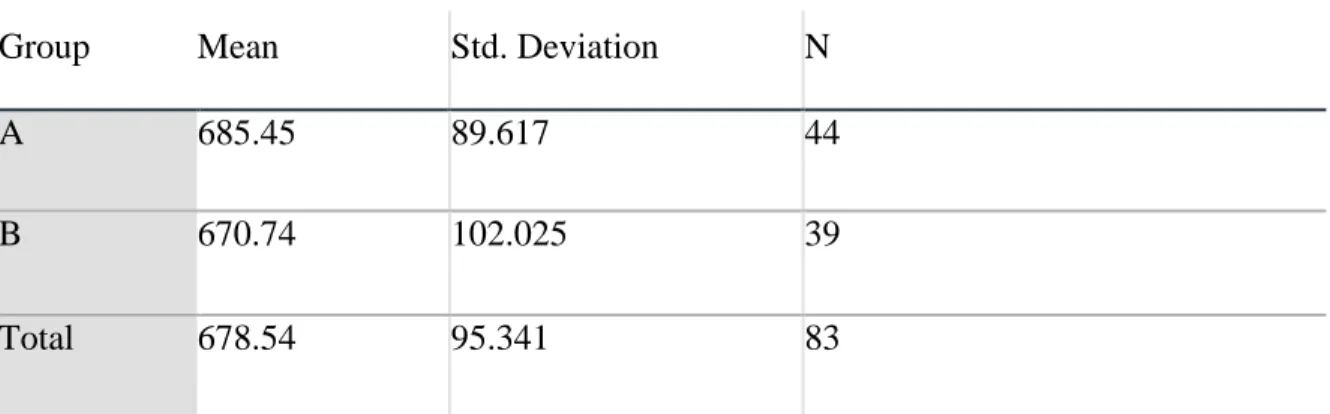
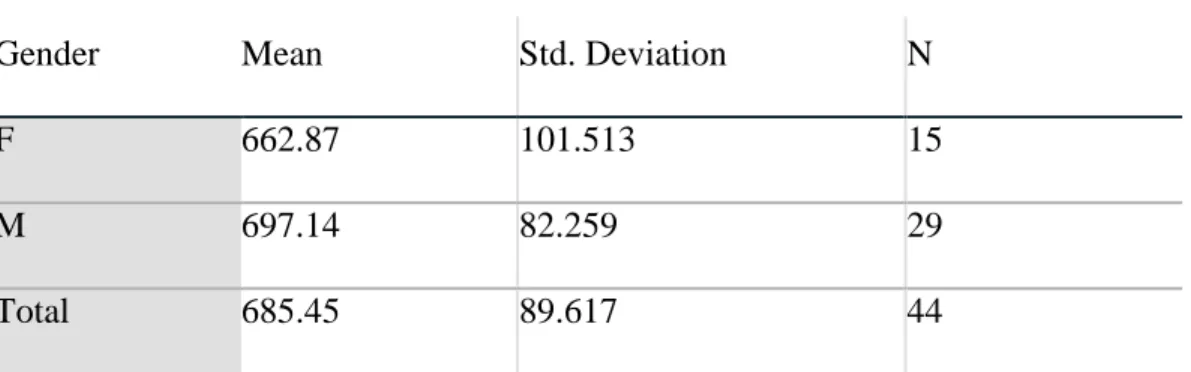
Table 1. Descriptive Statistics...60
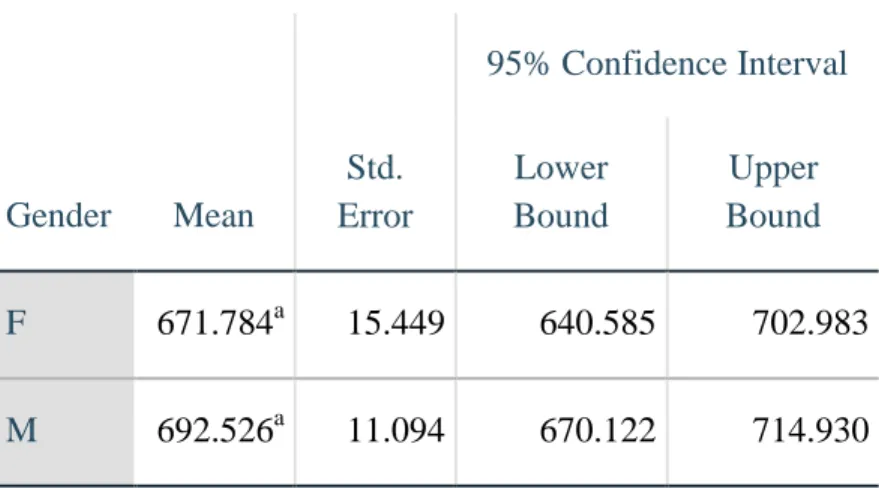
Table 2. Estimates of Descriptive Statistics ...60
Table 3. Disaggregated Descriptive Statistics ...64
Table 4. Gender Group Statistics ...65
Table 5. Race Group Statistics ...70
List of Figures
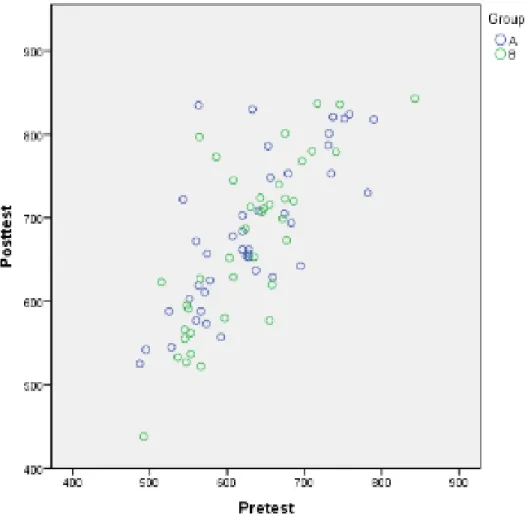
Figure A. Pretest/Posttest Scatterplot ...61
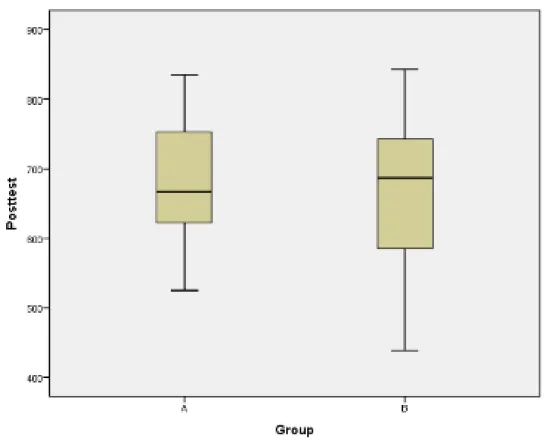
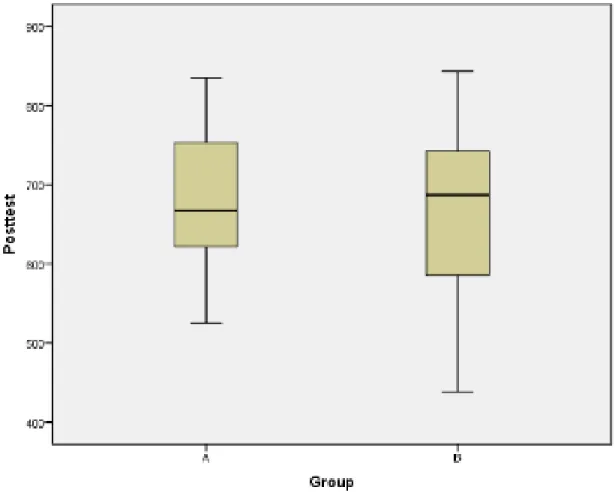
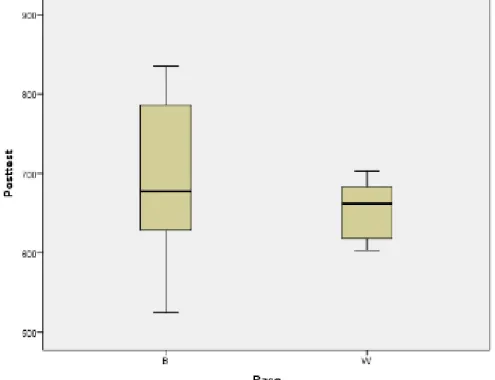
Figure B. Posttest Boxplot ...62
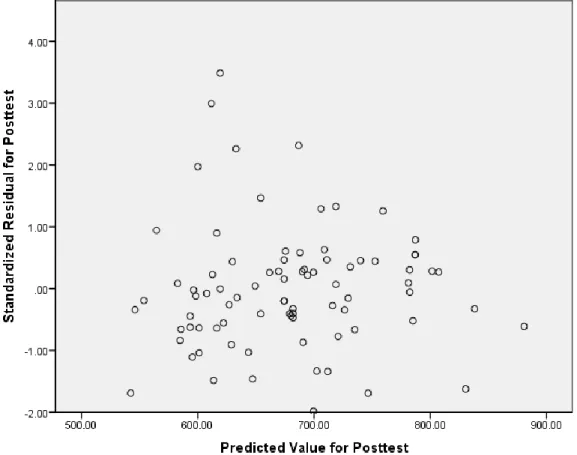
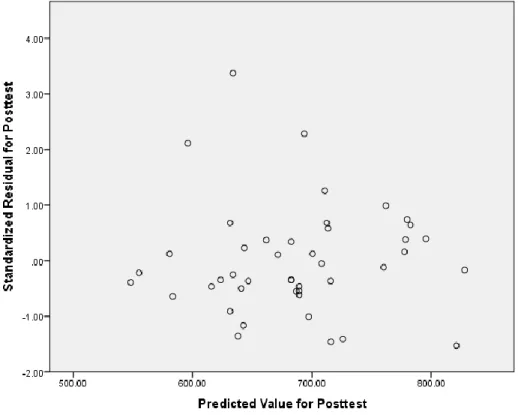
Figure C. Predicted Values Scatterplot ...63
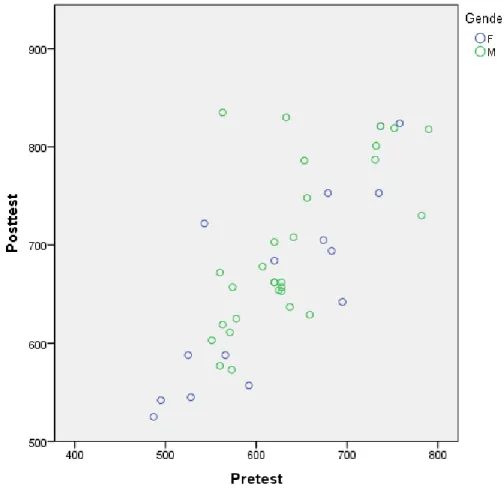
Figure D. Gender Scatterplot ...66
Figure E. Gender Boxplot ...67
Figure F. Posttest Scatterplot ...68
Figure G Race Boxplot ...69
CHAPTER ONE: INTRODUCTION Overview
Chapter One contains a brief explanation of the problem, purpose, and significance of this study, which investigates the impact of computer-based programs on middle school math achievement. It also details the research questions, hypotheses for the study, and definitions of items pertaining to the study.
Background
As students advance from grade to grade, they may tend to disengage from math and lose interest in the subject (Attard, 2010). Much of their success in mathematics relies on the fact that they must be able to comprehend mathematical concepts, as well as calculate effectively
(Stickney, Sharp, and Kenyon, 2012). The lack of basic skills that are needed to be successful in middle and high school mathematics courses may become a major issue for those who are recognized as at-risk students. Robertson (1997) suggested that problems are more likely to occur during a transitional year such as moving from elementary to middle school or from middle school to high school. During the transition from primary to secondary school, many students experience significant changes in the physical structure, teaching and learning practices, and expectations of school (Attard, 2010). In addition, they must face the stresses of entering a new school climate when entering secondary school. This change puts pressure on these students, and their math performance may suffer. Therefore, it is essential to ensure that highly effective math strategies are used with at-risk students. For this study, the term “at-risk” refers to students who have failed the state’s standardized test in mathematics or are performing two grade levels below in mathematics. These students are at-risk of failing mathematics, and may even
drop out of school as a result. This study will focus on the various strategies that could continue to be used to improve middle school at-risk students’ academic achievement in mathematics.
The reauthorization of the Elementary and Secondary Education Act in 2001, now known as the No Child Left Behind (NCLB) Act of 2001, set standards for improved student
performance nationwide. Although challenging, especially for states that have not developed an accountability system, the often-controversial act has been considered the federal government’s most far-reaching education bill in nearly four decades since the first Elementary and Secondary Education Act was drafted and authorized during the Johnson administration.
With the reauthorization of the NCLB Act of 2001, promotion for various grade levels depends on the students’ ability to pass standardized tests in mathematics that can be identified as high-stakes tests. Across the nation, school districts are struggling to meet these requirements and are also striving to make sure all students acquire the necessary skills to achieve in
mathematics. Students who are already performing poorly or failing in school are at-risk because they have not been successful with regular school mathematics curricula and will likely fall farther behind or drop out (Hixson & Tinzmann, 1990).
Although controversial, this legislation provided a framework for increasing student achievement and parent involvement and has forced educators to consider subgroups of students whose needs were not being met in the classroom. It has also highlighted the need for quality teachers and instituted reporting procedures to help the public and parents understand how their schools are performing. Across the nation, all states, school districts, and schools were being urged to review their use of high-stakes testing, and, thus, increase accountability. The primary goals of test-based educational accountability systems are to increase student achievement and to
increase equity in performance among racial-ethnic subpopulations and between students who are poor and their more affluent peers (Pelliger, 2014).
For Georgia middle school students, the states’ Criterion Reference Competency Test (CRCT) became an integral tool that weighed heavily in terms of making decisions for student achievement such as promotion or retention (Georgia Student Assessment Handbook, 2013). Although in effect for several years, only a minimum competency level was needed to move on to the next grade. In 2015, the state chose to increase the rigor and expectations for Georgia’s students and adopted a new student assessment, the Georgia Milestones Assessment System (GMAS) to provide a more realistic picture of academic progress and increase college and career readiness (Georgia Department of Education, 2015). With academic demands continuing to increase, it is essential that at-risk math students are receiving quality instruction, which leads to content mastery.
The term at-risk first appeared in education literature following the publication of the federal report, A Nation at Risk (National Commission on Excellence in Education, 1983). The National Commission of Excellence on Education argued that poor student achievement was putting the country at economic risk; as a result, reforms called for increased requirements, higher standardized test scores for promotion, and more testing overall for students. Many young adolescents struggle with at-risk conditions such as low achievement, and school programs have used various approaches to address at-risk conditions (Lee, 1993).
The number of students being identified as at-risk has increased (Balfanz & Byrnes, 2005); these students have not seen improvement in the area of mathematics. Many students enter middle school lacking the basic skills to achieve academically in mathematics (Attard,
2010). Unfortunately, at-risk students may not focus on how important, useful, and enjoyable mathematics can be.
The main theoretical framework for this study is Knowledge Space Theory. This theory enables the creation of computer algorithms for the construction and application of discipline-specific knowledge structures known as knowledge spaces. Knowledge space theory can determine a student’s knowledge state in approximately 25-30 questions. Knowledge Space Theory is based on two concepts which include the knowledge state that identifies a particular set of problems or skills that an individual is capable of solving correctly, and the knowledge structure which is a collection of these knowledge states (Conlan, O’Keefe, Hampson, & Heller, 2006). ALEKS, the computer program that will be used for this research, employs Knowledge Space Theory as the basis of the program.
Problem Statement
The problem addressed in this study is that at-risk Georgia middle school students are achieving far below their grade equivalent (GE) in mathematics and failing to meet the
proficiency standards for the state’s standardized high-stakes test. In society, a student can be labeled as being at-risk at any given time based on a variety of situations. Students who are identified as at risk often have not mastered the necessary skills for achievement in order to meet the required standards and may have displayed negative behaviors that may hinder them from learning in general. According to Robertson (1997), indicators of at-risk adolescents are attention problems, grade retention, poor grades, absenteeism, behavior problems, lack of
confidence, and limited connection to school life. Vaughn, Boss, and Schumm (2000) identified four factors associated with at-risk students: (a) remediation, (b) retention, (c) dropping out, and (d) substandard basic skills. All of these factors place students in a category of at risk that
increases as they reach high school. Although any one factor or even several factors do not necessarily place students at risk, combinations of circumstances identify the potential to drop out (Frymier & Gansneder, 1999). For students who are motivated by technology, computer based instruction may assist at-risk students in improving math achievement.
Computer-based instruction produces positive changes in student attitudes toward learning, and it reduces the amount of time needed for instruction (Kulik, 1991). Computer-based instruction is used to teach a variety of skills and subjects within the school setting. Although students are using devices, a gap in the literature still exists to determine how
computer-based learning impacts student achievement in mathematics. More students are using computers but little is known about the impact of computer-based instruction on student attitudes and student learning in mathematics. Effective methods are sought to change attitudes and motivate students about achievement in mathematics.
Suh, Suh, and Houston (2007) also identified a variety of circumstances that often place students at risk: individual, family, school, and community factors. Factors that have been identified for students in these circumstances include low expectations, lack of adequate
counseling, negative school climate, lack of relevant curriculum, passive instructional strategies, inappropriate use of technology, disregard of student learning styles, retentions, suspensions, and conflict between home and school (Suh, Suh, & Houston, 2007).
The experiences of at-risk students will vary; however, most of these students probably will experience the problem of academic failure because of learning deficiencies. Thus, all constituents in the education arena must be made aware of this problem and seek interventions to identify at-risk students as early as possible. According to Pinata and Walsh (1996), at-risk students should to be identified as early as possible and regularly reevaluated because their
family status and living situations can change. Solutions may include making provisions for continual support and implementing programs that will assist at-risk students to achieve academically.
Purpose Statement
The purpose of this study is to investigate the impact of computer-based learning on middle school math achievement of at-risk students. According to Mertens and Anfara (2006), student achievement is academic achievement as measured by standardized test scores such as state assessments like the Criterion-referenced Competency Test (CRCT) and Georgia Milestone Assessment System (GMAS). Across the state of Georgia, school districts have been
experiencing problems with student achievement in mathematics (Georgia Department of Education, 2014). On the GMAS 37.5 percent of 8th grade students, 37.3% of 7th graders, and 21.5% of sixth graders in the county’s middle school math scored at or above proficiency levels (GAPSC, 2016). When students enter elementary school, emphasis should be placed on teaching the students to solve basic mathematics problems. With that being said, such problems would less likely be carried over into the middle school or even the high school.
The need to differentiate instruction in mathematics is necessary to ensure the needs of all students are being met. Practice makes permanent, and the more practice, support, and guidance students receive in these areas, the greater the likelihood of increase in achievement. With all stakeholders working collaboratively and addressing the existing problems concerning
achievement in and mathematics for at-risk students, a deeper understanding can be gained. Significance of the Study
The NCLB Act of 2001 and its high expectations have caused school districts and educators nationwide to focus on accountability and student achievement. One of the major
areas of emphasis is mathematics. Realizing that at-risk students already lack the ability to deal effectively with the components of the cognitive processes in order to be successful in
mathematics, the researcher will focus on strategies of individualized instruction to help these students improve their academic success in mathematics.
Middle school students have difficulty in achieving proficiency in the area of
mathematics as measured by their performances on the state’s CRCT (Georgia Department of Education, 2014). The at-risk population is steadily increasing, and providing strategies to assist these students in becoming successful is long overdue. Education reform has brought many changes for the education system, and something has to be done to accommodate the increasing number of students who were being identified as at risk.
In the educational arena, accountability has increased and caused assessment to be more important than ever before. Assessments can be used as tools for determining the abilities of students in their classrooms and to see the effects from the teaching and learning process. Administrators depend on assessment tools for the purpose of making decisions about education for the school districts and schools. Consequently, states depend on federal funds as the main source for maintaining their school districts, and assessment is a tool that they depend on for obtaining those funds.
The intent of most states utilizing high-stakes testing for accountability purposes is admirable, but the negative consequences may outweigh the potential benefits. In terms of positives, high-stakes testing helps schools set performance goals, provides a focus for the curriculum, reveals academic progress to the public, and potentially provides additional funding support through federal programs (Faulker & Cook, 2006). Due to the pressures of educational reform and high-stakes assessment, a major focus of the Georgia CRCT is on mathematics. This
focus comes from the NCLB Act of 2001 that requires schools, school districts, and the state to be held accountable for the academic performance of all students.
In order for middle school students to pass the mathematics standardized test and to satisfy promotion requirements, effective instructional strategies must be implemented the first year the students enter middle school. A priority has to be placed on improving the students’ academic performances during their middle school years. According to Balfanz and Byrnes (2005), student achievement has risen slightly, but the academic growth that students show over the course of a school year has slowed, particularly for some minority groups.
The use of computer-based instruction and technology has become very popular for enhancing at-risk student achievement. Because computer-based instruction can be utilized in various ways to enhance student achievement, it becomes necessary to decide which method would best meet student needs. Integrating learning systems such as Math 180 may assist in managing individualized instruction and increasing math skills. Basic skills lend themselves to drill-and-practice activities, and computer-based instruction, with its ability to generate exercises is well suited to providing extensive practice.
Computer-based instruction has been identified as an effective strategy to improve the achievement of at-risk students (U.S. Department of Education, 2003). With the advancement of technology, the use of computers in schools has increased rapidly over the last 20 years. By 1996, fully 70% of 4th graders and 50% of 8th and 11th graders were using computers at school at least once a week, whereas less than 20% did so in 1982 (U.S. Department of Education, 2003).
Computer-based instruction improves instruction for at-risk students because the students receive immediate feedback and do not continue to wrongly practice skills. Because such programs are interactive, they capture the students’ attention and engage the students in a spirit of competitiveness to increase their scores. Due to the increased use of computers in general education classrooms and the increased availability of instructional materials in digital formats, computer-based approaches have become more flexible and, therefore, are able to address more learning needs of at-risk students (National Center for Education Statistics, 2014). Thus far, traditional classroom instruction and technology-based instruction have a tendency to complement each other while affording at-risk students the opportunity to enhance their
academic performances. In this study, the researcher will investigate the impact of computer-based learning on middle school math achievement on the STAR Math assessment.
Research Questions
RQ1: : Does computer-based instruction (Math 180) increase math achievement on the STAR Math assessment of middle school students while controlling for the math pretest?
RQ2: Do the STAR math achievement scores of students using computer-based instruction (Math 180) differ significantly by gender, while controlling for the previous math achievement?
RQ3: Do the STAR math achievement scores of students using computer-based instruction (Math 180) differ significantly by race/ethnicity?
Null Hypotheses
H₀1: While controlling for the math pretest, there will be no statistically significant difference in middle school students’ STAR Math assessment when participating in computer-based instruction (Math 180) compared to traditional math instruction.
H₀2: There will be no statistically significant difference in STAR math achievement by gender of students receiving computer-based instruction (Math 180) and students who do not, while controlling for the previous math achievement.
H₀3: There will be no statistically significant difference in STAR math achievement by race of students receiving computer-based instruction (Math 180) and students who do not.
Definitions
The following list of operational definitions assists in the understanding of key terms used in this study:
1. At-risk student -A student who faces school failure or has the potential to leave school early due to low educational achievement (Taite, 1990) and is at risk of becoming a dropout because educational needs are not being met (Frymier, 1997). For this study, at-risk students are those who failed the state’s standardized test in mathematics, failed one or more grades, or demonstrated academic performance below grade level in
mathematics.
2. Computer-based instruction- The use of computers to present instruction and for students to interact directly with the computer to learn basic skills. Computer-based instruction is designed to help students learn new material or enhance their knowledge of materials
previously learned. For this study, basic skills instruction will focus on mathematics using the Math 180 program.
3. Traditional instruction- The use of direct instruction delivered by a classroom teacher dispensing knowledge and demonstrating skills using lectures, discussions, and group work.
4. Mathematics achievement - A student’s performance determined by demonstrating competency by applying mathematics concepts and understanding basic operations and procedures in order to achieve the level of being proficient. For this study, mathematics achievement will be measured by the STAR math pretests and posttests.
5. Math 180– The artificial intelligent assessment and learning system, which uses adaptive questioning to quickly and accurately determine student math knowledge.
6. STAR Math – The standardized math assessment that provides information about student growth and achievement. It is given several times a year to measure growth in
mathematics.
7. CRCT- The Criterion Referenced Competency Test was Georgia’s standardized test prior to 2015.
8. GMAS- The Georgia Milestones Assessment of Skills is Georgia’s current standardized high-stakes assessment. The first assessment reports were made available October 2015. 9. SPSS- Statistical Package for Social Science is the software application for performing
CHAPTER TWO: REVIEW OF LITERATURE Overview
Chapter Two contains an in-depth review of the literature, which investigates the impact of computer-based programs on middle school math achievement. It details the theoretical framework, related literature, and a summary of the literature.
Introduction
In classrooms around the United States, there sits children wondering when the school day will end so the disappointment of school can come to a close. These children are numerous, and many find educational information, specifically mathematics, difficult to grasp. Fortunately, while the interest in math instruction may be virtually non-existent in the world of a child, the cyber-world is provoking problem-solving skills, reasoning skills, and making inferences. One promising new way to teach higher order thinking and problem solving skills is through web-based or computer-web-based techniques.
Many studies across the country and around the world are available on the advantages of a web-based learning environment. However, researchers have failed to fully assess the impact on those who are significantly behind in mathematics and are likely to not meet academic
standards. This omission leaves a gap in the literature and calls for subsequent study in this area. Learning and achievement in math have been on the downward spiral across the board, but in math classes, this affect may be increased exponentially. According to the Entertainment Software Association (ESA), 2015, 68% of American households now play video games. More than 150 Americans play video games and 42% of them play at least three hours per week.
Currently, more than 200 colleges, universities, and technical schools offer video game courses and degree programs. With so many children using computer-based games, implementing them in schools serves as a constructive way to keep students engaged. Computer games assist with planning and problem solving. Since students are already using these devices, it seems
appropriate to add math instruction to this toolbox. The impact of computer-based instruction on math achievement needs additional research that could make positive contributions to education. The study will focus on determining how computer-based instruction impacts struggling math students.
This literature review will address math achievement issues, the theoretical framework for which this study is based, the effectiveness of computer-based instruction, assessment, STAR math, and Math 180.
Theoretical Framework
Three learning theories closely relate to this research study: knowledge space theory, behaviorism, and social constructivism.
Knowledge Space Theory
The first framework for this study is Knowledge Space Theory (KST). This theory was developed in 1985 by Falmagne, Cosyn, Doignon, and Thiery. Knowledge Space Theory is a theory of knowledge representation and is based on precedence relation (Falmagne et al., 2004). It is logical, especially in mathematics, that some levels of knowledge normally precede other levels because of prerequisite requirements and logical steps. According to Falmagne et al. (2004), precedence relation may be used to design effective and efficient assessment mechanics.
There are three assumptions associated with precedence relations. First, from mastery of one problem, the mastery of other problems is assumed. Second, there are dependency relationships, which exist between problems of a set. And third, if a learner is capable of mastering a set, then he or she will be capable of mastering problems that are parts of the set.
In order to discover a student’s knowledge state, the student takes an individualized assessment that increases or decreases the rigor of the questions in response to the student’s answers. This computerized assessment is able to identify the student’s knowledge state using less than 30 math problems. All problems are open-ended, so there is no probability that the student will guess into an incorrect knowledge state.
Behaviorism
Behavioral learning theory is a concept that computer-based instruction is based. Edward Thorndike inferred that behavior was a result of two factors, frequency and pleasurable results (Catania, 1999). Students continue a behavior if positive feedback is shown. Thorndike called this the “law of effect.” If behavior is reinforced, then that behavior will increase (Rouse, 2007). With computerized instruction, students receive immediate feedback while working on
programs. This feedback paired with positive feedback from teachers may increase the amount of time students spend on computer-based instruction. B.F. Skinner concluded that if the
consequences were good, the actions would be more probable (Boylan & Saxon, 2015). The use of tests to measure observable learning behaviors, consequences in our school systems, and the breaking down of instruction are all examples of the behaviorist’s influence. The focus of behaviorism is on observable human behavior.
The ideas of Jean Piaget and Liv Vygotsky help us understand this learning theory. Constructivism focuses on a learner’s ability to mentally construct meaning of their own environment and to create their own learning. As a teaching practice, it is associated with different degrees of non-directed learning. Constructivists believe that all humans have the ability to construct knowledge in their own minds through a process of discovery and problem solving. When students work independently on iPads to complete tasks and gain further
understanding of concepts, this learning theory is being implemented. Students use background knowledge as well as skills learned from the teacher to discover new information.
Constructivism infers that students should be more responsible in the learning process and that they learn through interactions between their experiences and ideas. Social constructivism extended the focus of learning to address social aspects of learning. Social constructivism acknowledges the uniqueness and complexity of the learner and actually encourages, utilizes, and rewards it as an integral part of the learning process (Wertsch 1997). With computer-based instruction, students receive individualized instruction and rewards that assist in motivating the learner to achieve more.
Related Literature
Gordon Pask and O.M. Moore introduced computer-based instruction during the 1950s. These researchers worked to develop a learning theory that focused on artificial intelligence, logic, and linguistics. Pask and Moore were primarily concerned with information, feedback, identity, and purpose. As computer technology advanced in the 1960s, computer-based instruction began to evolve. The most common uses for computer-based instruction were for simulations of real situations and processes, tutorials, practice which increases fluency in new
skills, instructional games, and problem solving. These uses may be advantageous for middle school math students.
There are numerous advantages of computer-based instruction if done effectively. It can motivate learners and provide immediate feedback. It can store the performance of the learner for future use or further fine-tuning. Computer-based instruction can be adjusted depending on the level of the learner. It is usually a highly interactive method of learning.
Depending on the program, computer-based instruction does have some limitations. Equipment and software can be costly and difficult to acquire. Not all subjects can be supported efficiently by computer-based instruction. Also, choosing the appropriate program is essential as to not waste instructional time by just playing on the computer.
The use of computer-based instruction and technology has become very popular for enhancing at-risk student achievement. According to a report on technology and education reform (U.S. Department of Education, 1993), some of the first computer-based instruction programs were developed set standards for subsequent instructional software. After
systematically analyzing courses in mathematics and other subjects, Suppes (U.S. Department of Education, 1993) designed highly structured computer systems that featured learner feedback, lesson branching, and student record keeping.
Because computer-based instruction can be utilized in various ways to enhance student achievement, it, then, becomes the responsibility of the teacher to decide which method would be appropriate for all students. The uses can be whole-class group, small group, or individual. Basic skills lend themselves to drill-and-practice activities. Computer-based instruction, with its ability to generate exercises, is well suited to providing extensive drill and practice in basic skills. Students at risk of failing mathematics may lack basic skills and be unprepared to acquire
advanced-thinking skills. Thus, at-risk students become logical candidates for computer-based drill-and-practice instruction (U.S. Department of Education, 1993).
With the advancement of technology, the use of computers in schools has increased rapidly over the last 30 years. By 1996, 70% of 4th graders and 50% of 8th and 11th graders were using computers at school at least once a week, whereas less than 20% did so in 1982 (U.S. Department of Education, 2014). In 2014, 98% of students were using computers in school daily. Use of technology to improve student learning has become one of the major components in today’s education reform.
Computer-based instruction is among the range of strategies being used to improve student achievement in school subjects, including mathematics. Programs for computer-based instruction have come a very long way since they were first developed. These programs tutor and drill students, diagnose problems, keep records of student progress, and present material in print and other manifestations. It is believed that they reflect what good teachers do in the classroom (Soe et al., 2000).
Computer use in schools has become widespread from primary education through the university level and even in some preschool programs. Instructional computers are basically used in one of two ways: they provide a straightforward presentation of data, or they fill a tutorial role in which the student is tested on comprehension. Computer-based instruction provides one-to-one interaction with a student as well as an instantaneous response to the answers elicited. Computer-bases instruction programs allow students to proceed at their own pace. By using such programs diagnostically, students’ problems can be identified, and a focus can be placed on the problem area. Because of the privacy and individual attention afforded
through computer-based instruction, some students are relieved of the embarrassment of giving the incorrect answer publicly or of going more slowly through lessons than their classmates.
Personalizing information allows computer-based instruction to increase learner interest in the given tasks and to increase the internal logic and organization of the material. The animation of objects involved in the explanation of a particular concept increases learning by decreasing the cognitive load on the learner’s memory, thereby, allowing the learner to perform search and recognition processes and to make more informational relationships (Traynor, 2003).
Computer-based instruction improves instruction for at-risk students, including those with disabilities, because the students receive immediate feedback and do not continue to practice the wrong skills. Because such programs are interactive, they capture the students’ attention and engage the students in a spirit of competitiveness to increase their scores. Due to the increased use of computers in general education classrooms and the increased availability of instructional materials in digital formats, computer-based approaches have become more flexible and are able to address more learning needs of students with disabilities (National Center for Education Statistics, 2004). Traditional classroom instruction and technology-based instruction have a tendency to complement each other while affording at-risk students the opportunity to enhance their academic performances.
A significant finding in the research literature is that the use of computer-based instruction as a supplement to traditional, teacher-directed instruction produces achievement effects superior to those obtained with traditional instruction alone. Generally speaking, this finding holds true for students of different ages and abilities and for learning in different curricular areas.
At-Risk Students
Problems that contribute to students being labeled at risk may relate to poverty, crime, school, drinking, and various family problems. Many students in this category may feel left out and spend less time engaging in their academic. As a result, many fall behind in their
schoolwork. This can contribute to the at-risk student becoming frustrated due to not understanding the course work and, therefore, failing to master the necessary skills to be
successful in school. Such students must receive guidance and encouragement to do their best in school.
When students experience low achievement, they often fall into a rut and fail if
preventive measures are not put into place. Lee (1993) noted that effective programs have high expectations for at-risk students, regardless of the at-risk condition. At-risk programs for low achievers often fail to demand excellence from learners due to low expectations. Rather than allowing or even promoting mediocrity, at-risk programs should be challenging and rigorous and should have high expectations.
For many at-risk students, their self-concept and sense of confidence derive largely from their relationships with others. Parents and school staff are primary sources through which students make judgments about themselves as learners and about their potential to be successful in educational environments (Hixson & Tinzmann, 1990). It is important for at-risk students to possess positive attitudes and high self-concepts in order to achieve academically.
With the implementation of the NCLB Act of 2001, all states were required to ensure that all students become proficient in and mathematics. However, American students score below
average on international tests of mathematical knowledge and skills (Loveless, 2011), and nearly two-thirds of our nation’s eighth graders do not meet current mathematics standards (National Center for Education Statistics, 2015). The school district of the current study, just like many others, seemed to be pressured by accountability and by attempts to make sure students attain proficiency on Georgia’s standards-based achievement tests in mathematics.
It is very important for all students to acquire the necessary skills that will enable them to increase their achievement to progress from level to level in terms of grade placement.
Although several computer-based programs have been implemented to help students become successful, it is imperative that they be thoroughly researched to determine their effectiveness with at-risk students. These students tend to need extra help and special attention in order to remain in school. Early interventions enable at-risk students who are more likely to drop out of school to remain in school. The school system’s high school graduation rate in 2015 was 77% for students in Grades 9–12. One goal of the middle schools is to help prepare students for high school to help students become college and career ready.
Effectiveness of Computer-Based Instruction
Computer-based instruction is the use of computers or hand-held devices to deliver educational content to students. Computer programs or applications offer a one-to-one learning ratio and allows students to actively engage in the learning process. Computer-based instruction gives immediate feedback and promotes positive interactions.
Computer-based instruction is strongly associated with e-learning, a term that has been broadly used in education since the 1990s (Witte, Haelermans, & Rogge, 2014). It is the process
for teaching and learning initiatives that delivers content through the use of technology innovations. Researchers at the University of Memphis conducted a study to determine the effectiveness of ALEKS to close the racial score gaps in an undergraduate behavioral statistics course (Hu, Luellen, Okwumabua, Xu, & Mo, 2008). The study used 548 undergraduate students who took the course online and in a traditional classroom setting. The researchers compared the progress of the 137 students who took the course online versus the 411 students who took the course face-to-face. Results from the study determined that ALEKS helped close the racial gap by decreasing the initial difference in between groups by one letter grade.
With most states adopting the Common Core Standards, educators are continually searching for ways to increase student engagement. Mobile devices, such as iPads, have been used for drill and practice in mathematics. However, these devices would be more useful when research-based mathematics instruction is utilized. Countless math applications have been created for the iPad. Technology integration enhances teaching, learning, and student
engagement (Wright & Wilson, 2011). As students spend more time using these devices, they will become active learners and more motivated to learn and produce high-quality work (Franklin, 2011).
Due to an increased need to increase achievement in Title I public schools, a four year study of students in grades kindergarten through eighth grade was conducted to assess the effectiveness of a supplementary computer-based instruction program in math and language arts on underachieving low socioeconomic students (Suppes, Liang, Macken, & Flickinger, 2014). Students participated in computer-based courses where the program offered immediate
individualized feedback. Since the program was individualized, students were able to move on when ready if they mastered material. Individual remediation was a built-in component for
students having trouble mastering material. Results indicated that online computer-based
instruction was an effective way to improve achievement score for at-risk elementary and middle school students with low socioeconomic statuses. These findings are significant due to the large number of students involved in this study and the significant gains of the at-risk students.
Students are exposed to technology at home and school for entertainment,
communication, and other reasons. The relationship between students’ exposure to technology and their math and science achievement was examined (Delen & Bulut, 2011). Nearly 5000 students from 170 schools in Turkey were surveyed about technology use and accessibility. Results indicated that the greater the exposure to computers, the larger impact it had on their math and science achievement. This adds to previous evidence that computer usage can be beneficial to student achievement in mathematics.
Another country, Italy, has low math achievement and looks for ways to increase student achievement in this area. They too are searching for instructional practices and interventions to increase student achievement, specifically in mathematics. Through a large trial involving 175 middle schools, researchers assessed the effects of the [email protected] teacher training program had on students; math performance and on teachers’ behavior and instructional practices (Argentin et. al, 2014). Information about teacher and student engagement, attitude, and achievement were collected through questionnaires and national standardized test data. Results indicated that students of teachers who have completed the training program had more positive attitudes and a greater feeling of responsibility for their own learning. These teachers began to try more innovative ways to engage students in learning. Although teachers did not specifically use technology as a sole source of intervention, it was determined that teachers who used more innovative practices increase the opportunities for students to increase math achievement.
A study on personal devices such as iPads indicated that students with mobile devices prefer computer-based instruction to traditional teaching (Crighton, et al, 2012). Students were allowed to utilize iPads during the school day; however, they were not as likely to complete written homework assignments.
A controlled study of fifth grade students focused on the challenging topic of fractions. Although fractions are introduced as early as second grade, middle school and high school students generally experience difficulty when working with fractional numbers. In this study, students used a math app designed to help them strengthen their relationship between fractions, proportions, and percentages on the number line (Riconscente, 2013). Baseline data was
gathered on two groups that were tested using released state assessment items. Results revealed a significant increase in fraction knowledge in students who played
For years, whenever students struggled with a concept, administrators and teachers have quickly added additional time in that area. Although this strategy works well with reading, a study generated by Florida’s Miami-Dade County Schools reveals that additional time in math will not help struggling students retain math skills needed to be successful. The study
determined that math scores did increase during the initial implementation; however, students’ scores decreased when they returned to their regular schedules (Schaffhauser, 2014). Teacher and student anticipation and excitement of a new strategy may be the cause of the short-lived increase. However, it is constant student engagement that delivers more long-term results. Students are able to retain information better when it peaks their interests’. This is the type of engagement computer-based instruction delivers for students.
Evidence from a high-school study to determine if the use of a computer-based learning system impacts standardized Algebra scores indicated significant improvements in achievement scores. The study consisted of a pretest before nine months of intervention. Progress monitoring was completed each month. When results from the state standardized test were released, it was found that students who used the online program for at least two class periods per week showed a much larger gain on the state test compared to the national average (LaVergne, 2007).
In an article on mathematics web-based instruction, researchers analyzed how use of computer instruction in mathematics improved student motivation and parental communication (Al-A'ali, 2008). By using a web-based program, teachers were able to document an increase in students’ attitudes towards tackling math problems. Students were more willing to engage and felt less threatened when using computers versus participating in daily teacher-led direct instruction.
When student’s interests and engagement increases, they are motivated to continue working and complete more assignments. This was evidenced in a second grade teacher’s class she taught a lesson involving money related math skills. Students were actively engaged and did not want to put the devices down at the end of the lesson. Students worked in groups of two or three to answer questions with visual representations (Bennett, 2011). After using iPads for five months, the second grade teacher saw an increase in student motivation, attitudes, and overall math grades.
Since the addition of iPads at Northdale Middle School, students are more engaged, and these devices have become motivators for students to complete assignments (Baca, 2012). The largest impact that teachers initially noted was the decrease in negative classroom behaviors.
This decrease had a positive impact on the students’ math achievement. Teachers also noted that students were able to self-pace and required less prompting. If our students are going to be competitive after graduation, they must be intrinsically motivated and able to think without constant direction from teachers.
Impact on Student Achievement
The influence of hand-held devices on third grade student achievement was studied using a nine-week computer-based learning intervention (Kiger, Herro, & Prunty, 2012). Two classes were taught using traditional flashcards and direct instruction methods. Two other classes used a computer program called Everyday Math that focused on web applications as the primary
method of instruction. Students using web applications retained more information and outperformed the other group on a multiplication posttest.
Students involved in study at a Nebraska elementary school used hand-held devices during math instruction. According to standardized test results, the students performed significantly below grade level. After using computer-based instruction three days a week for six weeks, these three participants improved their subtraction scores by an average of 17% (Nordness, Haverkost, & Volberding, 2011). This study suggests that continued use of mobile devices will impact math achievement.
According to “Computer games for the math achievement of diverse students” (Kim & Chang, 2010), researchers examined the effects of math computer games on 4th-graders. Students completed survey questionnaires to get their insight on how they feel about math computer games. Students responded that math computer games were fun and they spent more
time solving math problems when working on computers. Students felt that they were able to learn more when using computer games.
Studies have been published on the use of computer-based math programs at various levels. A 2007 study was done because of the large number of Algebra 1 students struggling to achieve in a traditional classroom setting using a traditional math text. The researcher wanted to determine if an online intervention in addition to the traditional teaching would positively affect the standardized math scores of Algebra 1 students (LaVergne, 2007).
The study involved 98 participants, who used the computer program between 30 and 90 minutes per week. Standardized test results revealed the students using the program had an average improvement of 2.7 points while students who did not use the program showed only a one-point growth in the same district. The national average of growth that same year was 1.6 points. This growth was assessed after a pretest, nine months of twice per week use, and the stated assessment. Evidence from this study suggests that computer-based instruction slightly increased Algebra 1 math scores.
According to X. Hu (2009), Tennessee County Schools tracked the progress of 200 sixth graders during and after school program. Students performing in the bottom 40% of the
Tennessee Comprehensive Assessment were randomly assigned to work in a computer-based setting or a study hall (with teacher assistance) serving as a quiet place to complete extra math practice.
When researching the impact of technology-based mathematics, Craig, Hu, Graesser, & Bargagliotti (2013) implemented a computer-based program for 25 weeks as an afterschool math intervention. Students were compared to a control group who were taught by a classroom
teacher. Researchers wanted to compare math performance, behavior, and the need for assistance in completing tasks. The study revealed that students in the computer program performed as well as or better than the control group on the Tennessee state assessment. There was no statistically difference in math achievement. However, there was a decrease in the amount of assistance needed by the students who worked on the computer versus the students who were taught by a classroom teacher. From this article, it can be inferred that effective use of computer-based math interventions may lead to improved math achievement.
Although previous studies mentioned in this literature review occurred in the United States, Longfield Academy in Kent, England incorporated a high level of technology integration in the curriculum (Walsh, 2012). Students in the school had or were issued iPads to use daily. Three of the top ways students used the iPads were for online research, creating presentations, and group work. This study used surveys to assess the impact of iPad use on motivation, quality of work, achievement, collaboration, and other factors. Teachers reported the quality and
standard of quality of pupil work and progress began rising. Findings of the study included the following: 77% of faculty respondents felt that student achievement appeared to have risen since the introduction of the iPad, 73% of students and 67% of staff felt that the iPad helped students improve the quality of their work, 69% of students that completed the survey felt that using the iPad was motivating and that they worked better with it than without it, and 60% of faculty thought that students were more motivated by lessons that incorporate the iPad than those that did not (Walsh, 2012).
Assessment and Learning in Knowledge Spaces (ALEKS) is a web-based, artificially intelligent assessment and learning system, which uses adaptive questioning to quickly and accurately determine exactly what a student knows and doesn't know in a course (ALEKS,
2010). ALEKS then instructs the student on the topics she is most ready to learn. As a student works through a course, ALEKS periodically reassesses the student to ensure that topics learned are also retained. ALEKS courses are very complete in their topic coverage and have a
reliability of .984. Because of the artificial intelligence in ALEKS, students are almost always successful at learning the material ALEKS offers them. The level of instructor involvement doesn't affect this. The program gained notoriety in 1994 after numerous studies were reviewed, and it was determined that mathematics test scores increased significantly when students used an integrated learning system such as ALEKS.
The learning system is easy to use. Students begin with a tutorial, which shows them how to use the program’s tools. Then, an initial assessment is done to determine the students’ strengths and weakness. ALEKS will then create an individualized pie chart representing the student’s knowledge and skills. For middle school mathematics, the concepts covered are aligned with the Common Core Standards. Beginning in May 2012, ALEKS added a new component that reports detailed student performance data to support the creation of Individualized Education Plans. (ALEKS, 2012) This report may be beneficial in lesson planning, differentiation of instruction, and saving time by quickly identifying present levels of performance. In 2010, an RtI component was introduced to detect, prevent, and support schools in assisting struggling math students. This RtI component addresses all three tiers of the RtI process. ALEKS provides progress monitoring, individualized instruction, and detailed reporting of student mastery.
In 2013, Utah’s STEM Action Center was launched to help ensure middle school and high school students are properly equipped in the areas of science, technology, engineering, and
mathematics. ALEKS was chosen as the math curriculum for this initiative. All middle and high school students had access to ALEKS to engage in individualized student instruction.
In order to improve students’ initial math course placement, the University of Wisconsin-Milwaukee created a bridge program, which focused on increasing math performance with the use of the ALEKS program (Reisel, Jablonski, & Munson, 2012). Participants in the study were incoming students who failed to place into Calculus 1 on the university’s placement exam. For four weeks, these students used the individualized instruction of the ALEKS program to improve their mastery of material required for them to be successful in college-level math courses. It was determined that the ALEKS program was an effective tool for quickly advancing mathematical skills. Although the participants in this study may have been motivated to place into Calculus 1, middle school students may be as motivated to do well due to Georgia’s high-stakes testing in middle school mathematics.
Equipped with the research and knowledge of how computer-based instruction has impacted multiple schools, middles schools associated with this research study researched, and adopted the ALEKS program as its math intervention in 2011. Although the ALEKS program seemed to help some students, because of funding and inconsistency in teacher implementation, the school district opted to not renew the ALEKS contract. This left the district still in need of a research-based math intervention that was more cost-effective and was able to make an
immediate impact with struggling middle school math students. STAR Math
STAR Math is a computer-adaptive assessment designed to give accurate, reliable, and valid data about students’ math abilities (Renaissance Learning, 2010). It is designed for
students in grades 1-12. STAR Math is the most widely used math assessment in K12 schools. The test consists of 24 questions. The software uses student responses to adjust the levels of difficulty. After calculating a score for each student, a grade equivalency is determined. Schools tend to issue the STAR Math test several times a year to determine the trend in academic
achievement for individual students.
Teachers may use results from the STAR Math assessment to individual instruction and identify students in need of remediation and enrichment. Measuring student growth is essential to understanding the effects of instruction.
Math 180
Math 180 is a math intervention program specifically designed for middle school students who struggle with math concepts and skills. Math 180 was developed by a team of expert
mathematicians with input from key advisors. This team consisted of top university professors: Dr. Deborah Ball (University of Michigan), Dr. Ted Hasselbring (Vanderbilt University), Dr. Sybilla Beckmann (University of Georgia), and Dr. David Dockterman (Harvard University). Math 180 is structured to produce confidence in mathematics by allowing students to master content at their individualized paces. These math skills are necessary in order to meet the demands of rigorous standardized assessments. Middle school students are expected to be proficient in algebra readiness and problem-solving skills. Math 180 targets the development of strong mathematical skills and practices. It uses real-world situations to learn key concepts needed to be prepared for life after secondary school.
The goal of the founders of Math 180 was to develop a math intervention that equipped struggling middle school math students with knowledge, confidence, and motivation to excel in
high school mathematics and become college and career ready. This math program is based on three research-based principles: focus on what matter most, force multiplier for teaching, and have a growth mindset.
Math 180 focuses on specific sets of concepts and mathematical practices. It uses the eight standards for mathematical practice to accelerate learning and develop deep conceptual understanding. The concentration is on concepts along the progression to algebra. Students begin to understand how math is interdependent and cumulative in nature. The rigor is increased with opportunities for mathematical reasoning and higher-order thinking. Students learn to communicate mathematically with a richer math vocabulary. Older students who have not been successful in mathematics are able to focus on what matters most and build foundations in order to improve math competency. They learn to make connections and apply their understanding into new contexts.
Math 180 uses technology to provide data-powered differentiation. This enables the accommodation of students with a variety of abilities, interests, and learning needs. Students with special needs may receive supports in Math 180 that they may be unable to receive in a traditional classroom setting. Students are provided ongoing formative assessments and progress monitoring. Teachers receive interactive reports with recommendations, resources, and lesson plans to enhance student learning. These reports allow teachers to see growth and progress towards mastery.
Math 180 encourages a growth mindset by improving student attitudes towards mathematics. Students receive positive praise for working hard and persevering through the program. They learn that making a mistake is a natural part of learning. Through Math 180,
students develop a mindset that over time their math abilities will improve through effort and dedication. Math 180 presents concepts in ways that give purpose and value to mathematics. Students experience success by mastering concepts through practice.
Math 180 is a comprehensive personalized learning system of curriculum, instruction, and assessment tailored to engage and motivate middle school students through the use of technology. Students are not only motivated, but they play an integral part by taking ownership of their own learning. Prior research suggests that Math 180 may increase student achievement in mathematics.
A two-year study was conducted in a large California school district was completed to determine the impact of the Math 180 program on student math achievement. Math 180 was used as the principal math intervention for the district’s middle schools. The Modesto City School District, a Title 1 district, has approximately 82% of its students eligible for free or reduced-priced lunches. Math 180 was used for 55 minutes each day as an intervention tool for students who consistently performed poorly in their math classes, as well as state assessments. Results from the first year of Math 180 implementation revealed that students’ math achievement increased by an average of 137 points. In the second year of the study, participants’ achievement scored increased an average of 144 points. Modesto City Schools experienced significant gains in math achievement. Data from participant use revealed a positive correlation between the amount of time students used Math 180 and higher academic gains.
Six middle schools in Hillsborough County Public Schools (Florida) participated in a study to compare math intervention methods. Three of the schools used traditional teaching, and the other three used Math 180 as their remediation tool. Students were assigned to a control
group or a treatment group. Math 180 served as the math intervention program for the treatment group. All participants in the study continued in their regular sixth grade math course during the study. Results of the study indicated that students who used Math 180 as an intervention showed greater gains on the post assessments. Through student interviews, students who used Math 180 reported they were more confident with mathematics after the intervention.
Clark County School District in Las Vegas, Nevada examined the effectiveness of the first of two courses in Math 180. This course focuses on the foundational skills of mathematics. Ninety-seven middle school students used Math 180 as their math intervention for approximately one school year. These students completed a pretest and posttest to determine the impact of Math 180. Students in the control and treatment group had similar pretest scores. The posttest scores revealed that students in the treatment group experience greater growth results on the posttest.
Math Achievement Issues
Technology has continuously become incorporated into U.S. school systems. Computers have become a pervasive tool toward optimizing student learning. Traynor (2003) identified five mechanisms by which computer programs facilitate learning: (a) personalizing information, (b) animating objects on the screen, (c) providing practice activities that incorporate challenges and curiosity, (d) providing a fantasy context, and (e) providing a learner with choice over his or her own learning. When students receive appropriate instruction and technology instruction as support, the end result should be significant gains in academic achievement.
Math fact fluency continues to be an important prerequisite for math achievement. A study was conducted to examine how technology-enhanced fluency assessments affect
achievement patterns of low and typically achieving students (Stickney, Sharp, and Kenyon, 2012). It was found that although most students in the study did not meet grade level expectations for fact mastery, the higher the fluency level, the more likely students were to achieve mathematically. Students in early elementary grades used the STAR math test as a pretest. Students were then placed in groups according to their performances. After computerized practice, low-achieving students showed significant gains in math achievement. These results indicated that extra practice time with math fluency should be built into the math curriculum. This is not always done in middle grades where more emphasis is place on grade-level content mastery. The use of technology was advantageous, as students preferred to study math facts in this manner rather than flash cards.
According to Lee and Smith (2006), one of the first studies concerning the
implementation of middle school components and student achievement defined academic achievement as a composite score combining reading and mathematics. In order for at-risk students to be successful in school, they should be encouraged to stay in school and strive for success by achieving in these areas. Educators must seek means of addressing the needs of at-risk students and implement programs and strategies that will assist them.
National and international comparisons have found that the mathematics achievement levels of students in the United States fall far behind those of other developed nations, and within the US itself, the students who are falling behind come predominantly from high poverty and high minority areas (Balfanz & Byrnes, 2005). Now, several years later, while U.S. students are scoring higher on national math assessments than they did twenty years ago, they still rank around the middle of the pack in international comparisons, and behind many other advanced industrial nations (Desilver, 2015). There are several factors that help contribute to the middle
school math achievement gap. Achievement tests have been used to determine the capabilities of what students learn, know, or can do in various core content areas. The information gathered from such tests provides information for stakeholders to view concerning the outcomes of student learning. The NCLB Act of 2001 caused the use of testing to expand in more ways than one while focusing on student achievement. As a result, the NCLB Act of 2001 required all states to develop standards for their curriculum and state assessments for Grades 3-8. In order for students to achieve, an accountability system was put in place that would affect the lives of many in the arena. From that, evaluations would be done as a means of measuring student achievement by holding teachers, schools, and school districts accountable for achievement gains or losses. This requirement stretched out to include the achievement of different subgroups of students.
According to Desilver (2015), an overwhelming number of middle school students are not proficient in mathematics. In 2013, only 34% of eighth graders scored at or above the
proficient level in mathematics, which was an improvement over previous years (National Center for Education Statistics, 2014). Students are still not achieving the most basic level of
mathematics skills, and the gap between low and higher performers has persisted (National Center for Education Statistics, 2014). As long as the at-risk students are not meeting the proficient level, this gap will continue to increase because that group of students will fall further behind each year. School improvement plans set goals and guidelines to improve academic achievement. If schools are to meet these guidelines, they must strive to close the achievement gap to assure that all students achieve academic proficiency.
Smith and Geller (2004) reported the need for every student to master challenging mathematics, including the foundations of algebra and geometry. This basic goal for
mathematics by the end of eighth grade is essential and is also reflected in the objectives and academic standards being set throughout the U. S. at state and local levels. Unfortunately, many students, particularly those with learning disabilities, and other processing problems such as being at risk, may not be able to meet the standards necessary because teachers lack or do not implement effective strategies to foster understanding of basic concepts of algebra (Smith & Geller, 2004). This need is evidenced by the poor performance of students on standardized mathematics tests that, eventually, may prevent these students from receiving a regular diploma.
According to the U.S. Department of Education (2013), U.S. schools are not producing the mathematics excellence required for global economic leadership and homeland security in the 21st century, and, as a result, educators must ensure that schools use scientifically based methods with long-term records of success to teach mathematics and measure student progress. Mathematics is a critical subject, and educators must improve achievement to maintain U.S. economic leadership. Stagnant mathematics performance in schools diminishes students’ abilities to compete globally and endangers U.S. prosperity and security.
The National Council of Teachers of Mathematics (1989) produced standards for school mathematics and developed five goals for students that reflect the importance of mathematical literacy. These goals would enable students to learn to value mathematics, become confident in their own ability, become mathematical problem solvers, learn to communicate mathematically, and learn to reason mathematically.
In order for mathematics assessment to be effective, educators must make sure that the assessments are aligned with the goals of the curriculum. The guidelines that have been set by the NCLB Act of 2001 require states to set standards, and these standards should be aligned with