2015
Comparing team feedback in a Team Multiple
Errands Test
Jamiahus Walton Iowa State University
Follow this and additional works at:https://lib.dr.iastate.edu/etd Part of theEngineering Commons
This Thesis is brought to you for free and open access by the Iowa State University Capstones, Theses and Dissertations at Iowa State University Digital Repository. It has been accepted for inclusion in Graduate Theses and Dissertations by an authorized administrator of Iowa State University Digital Repository. For more information, please [email protected].
Recommended Citation
Walton, Jamiahus, "Comparing team feedback in a Team Multiple Errands Test" (2015).Graduate Theses and Dissertations. 14713. https://lib.dr.iastate.edu/etd/14713
Comparing team feedback in a Team Multiple Errands Test
by
Jamiahus Walton
A thesis submitted to the graduate faculty
in partial fulfillment of the requirements for the degree of MASTER OF SCIENCE
Major: Industrial Engineering Program of Study Committee: Stephen Gilbert, Major Professor
Michael Dorneich Eliot Winer
Iowa State University Ames, Iowa
2015
ACKNOWLEDGMENTS
I would like to thank my wife for her love and support during the development of this thesis. I would also like to thank my committee for helping and guiding me through my thesis. I would also like to thank Kelsey, Sam, and Anton for jumpstarting this work by developing the initial version of the final program used for this current work. It is also important to note that this research was supported in part by National Science Foundation Grant CNS-1156841.
TABLE OF CONTENTS
ACKNOWLEDGMENTS ... ii
LIST OF FIGURES ... v
LIST OF TABLES ... vii
ABSTRACT ... viii
CHAPTER 1 - INTRODUCTION ... 1
The Challenge of Giving Appropriate Feedback ... 1
Brief History of Intelligent Tutoring Systems ... 2
Teamwork Model ... 4
Research Questions ... 8
Thesis Organization ... 9
CHAPTER 2 - BACKGROUND ... 10
Feedback ... 10
Collaborative or Team-Based Intelligent Tutoring Systems ... 11
Gaps in previous work ... 16
Predicted Results ... 16
Multiple Errands Test ... 17
Team Multiple Errands Test (TMET) ... 18
CHAPTER 3 - METHOD ... 21 Introduction ... 21 Participants ... 21 Procedure ... 21 Participating in a Session ... 23 Surveys ... 24 Confederates ... 25 Feedback ... 26 Training ... 28 Testing Environment ... 28
Virtual Mall Environment ... 30
Experimental overview ... 35
Data Analysis Plan ... 36
Limitations / Assumptions ... 38
CHAPTER 4 – RESULTS ... 40
Participants ... 40
Overview of Confederates and the Three Independent Variables ... 42
Impact of Feedback on Items Collected for Individual and Team ... 54
Impact of Feedback on Errors for Individual and Team ... 66
Impact of Feedback on Time Left for Individual and Team ... 77
Observed Team Strategies ... 89
Communication ... 92
CHAPTER 5 – DISCUSSION AND CONCLUSIONS ... 94
Prediction Outcomes ... 94
Time Left ... 94
Items Collected ... 98 Conclusion ... 100 Limitations ... 101 Future Work ... 101 REFERENCES ... 103 APPENDICES ... 109
APPENDIX A – SHOPPING LIST ... 109
APPENDIX B – POST SESSION SURVEY ... 115
APPENDIX C – OVERALL-POST SESSION SURVEY ... 119
LIST OF FIGURES
Figure 1. Different characteristics of feedback adapted from (Walton et al., 2014) ... 10
Figure 2. Experimental conditions. Used with permission from Walton et al (2015). .... 26
Figure 3. Experimental setting for three participants. ... 29
Figure 4. Logitech web camera used to record audio and video of each participant. ... 29
Figure 5. Body Media sensor ... 29
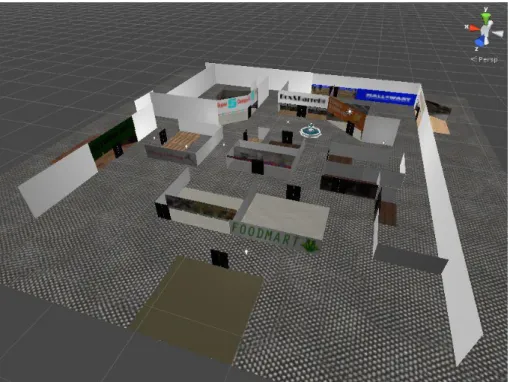
Figure 6. Overview of the entire VMall with its 12 stores. ... 32
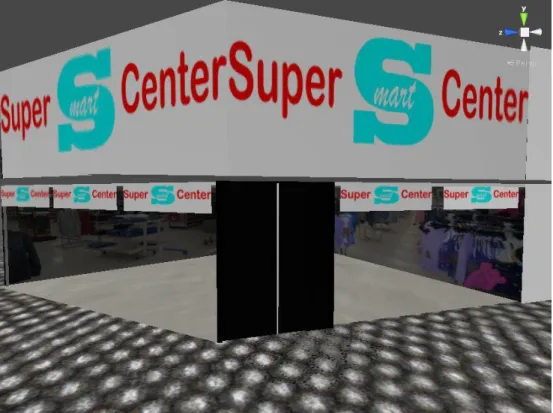
Figure 7. Store within the VMall. ... 33
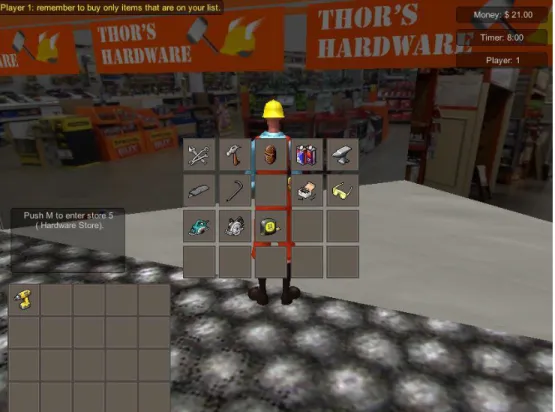
Figure 8. Example of user interface with game timer ... 34
Figure 9. Example of user interface and stacked feedback (upper left) ... 34
Figure 10. Individual items collected for each participant (Session 1) ... 43
Figure 11. Individual items collected for each participant (Session 2) ... 43
Figure 12. Individual items collected for each participant (Session 3) ... 44
Figure 13. Individual items collected for each participant (Session 4) ... 44
Figure 14. Time Left for each team (Session 1). ... 45
Figure 15. Time Left for each team (Session 2). ... 45
Figure 16. Time Left for each team (Session 3). ... 46
Figure 17. Time Left for each team (Session 4). ... 46
Figure 18. Individual errors for each participant (Session 1). ... 47
Figure 19. Individual errors for each participant (Session 2). ... 47
Figure 20. Individual errors for each participant (Session 3). ... 48
Figure 21. Individual errors for each participant (Session 4). ... 48
Figure 22. Team items collected for each participant (Session 1) ... 49
Figure 23. Team items collected for each participant (Session 2) ... 49
Figure 24. Team items collected for each participant (Session 3) ... 50
Figure 25. Team items collected for each participant (Session 4) ... 50
Figure 26. Time left for each team (Session 1). ... 51
Figure 27. Time left for each team (Session 2). ... 51
Figure 28. Time left for each team (Session 3). ... 52
Figure 29. Time left for each team (Session 4). ... 52
Figure 30. Error for each team (Session 1). ... 53
Figure 31. Error for each team (Session 2). ... 53
Figure 32. Error for each team (Session 3). ... 54
Figure 33. Error for each team (Session 4). ... 54
Figure 34. Average individual items collected (all sessions)... 56
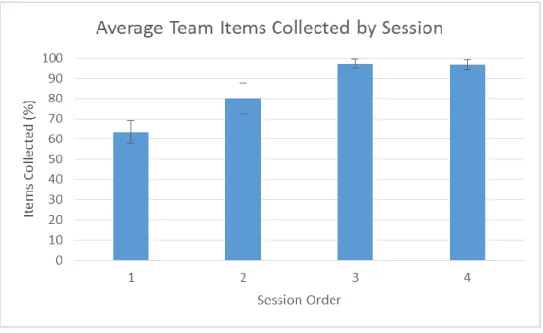
Figure 35. Average items collected of teams by session. ... 56
Figure 36. Average individual items collected (Session 1). ... 57
Figure 37. Average individual items collected (Session 2). ... 58
Figure 38. Average individual items collected (Session 3). ... 59
Figure 39. Average individual items collected (Session 4). ... 60
Figure 40. Average team items collected (all sessions). ... 61
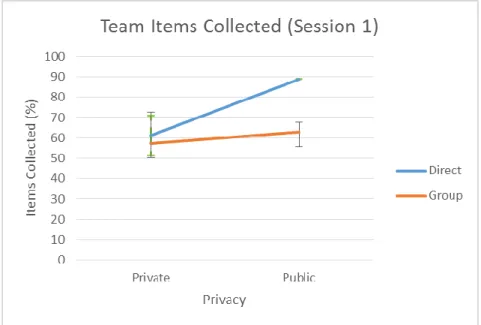
Figure 42. Average Team items collected (Session 1). ... 63
Figure 43. Average Team items collected (Session 2). ... 64
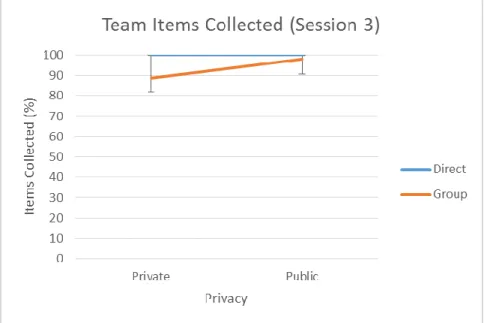
Figure 44. Average Team items collected (Session 3). ... 65
Figure 45. Average Team items collected (Session 4). ... 66
Figure 46. Average individual error (all sessions). ... 67
Figure 47. Average error of teams by session. ... 68
Figure 48. Average Individual Errors (Session 1). ... 69
Figure 49. Average Individual Errors (Session 2). ... 70
Figure 50. Average Individual Errors (Session 3). ... 71
Figure 51. Average Individual Errors (Session 4). ... 72
Figure 52. Average team error (all sessions). ... 73
Figure 53. Average error of teams by session. ... 73
Figure 54. Average Team Errors (Session 1). ... 74
Figure 55. Average Team Errors (Session 2). ... 75
Figure 56. Average Team Errors (Session 3). ... 76
Figure 57. Average Team Errors (Session 4). ... 77
Figure 58. Average individual time left (all sessions). ... 79
Figure 59. Average time left of individuals by session... 79
Figure 60. Average Individual Time Left (Session 1). ... 80
Figure 61. Average Individual Time Left (Session 2). ... 81
Figure 62. Average Individual Time Left (Session 3). ... 82
Figure 63. Average Individual Time Left (Session 4). ... 83
Figure 64. Average team time left (all sessions). ... 84
Figure 65. Average time left of teams by session. ... 85
Figure 66. Average Team Time Left (Session 1)... 86
Figure 67. Average Team Time Left (Session 2)... 87
Figure 68. Average Team Time Left (Session 3)... 88
Figure 69. Average Team Time Left (Session 4)... 89
LIST OF TABLES
Table 1. Outline of experimental procedure ... 23
Table 2. List of rules and the related feedback ... 27
Table 3. Details for dependent variables ... 35
Table 4. Participant Gender Demographics ... 41
Table 5. Participant Age Demographics ... 41
Table 6. Participant Weekly Game Experience ... 41
Table 7. Highest degree for participant... 41
Table 8. Participant team experience ... 42
Table 9. Average individual items collected (Session 1, n = 26) ... 57
Table 10. Average individual items collected (Session 2, n = 26) ... 58
Table 11. Average individual items collected (Session 3, n = 26) ... 59
Table 12. Average individual items collected (Session 4, n = 26) ... 60
Table 13. Average team items collected (Session 1, n = 10) ... 62
Table 14. Average team items collected (Session 2, n = 10) ... 63
Table 15. Average team items collected (Session 3, n = 10) ... 64
Table 16. Average team items collected (Session 4, n = 10) ... 65
Table 17. Average individual errors (Session 1, n = 26) ... 68
Table 18. Average individual errors (Session 2, n = 26) ... 69
Table 19. Average individual errors (Session 3, n = 26) ... 70
Table 20. Average individual errors (Session 4, n = 26) ... 71
Table 21. Average team errors (Session 1, n = 10) ... 74
Table 22. Average team errors (Session 2, n = 10) ... 75
Table 23. Average team errors (Session 3, n = 10) ... 76
Table 24. Average team errors (Session 4, n = 10) ... 77
Table 25. Average individual time left (Session 1, n=26) ... 80
Table 26. Average individual time left (Session 2, n = 26) ... 81
Table 27. Average individual time left (Session 3, n = 26) ... 82
Table 28. Average individual time left (Session 4, n = 26) ... 83
Table 29. Average team time left (Session 1, n = 10) ... 86
Table 30. Average team time left (Session 2, n = 10) ... 87
Table 31. Average team time left (Session 3, n = 10) ... 88
Table 32. Average team time left (Session 4, n = 10) ... 89
Table 33. Evolution of each team's strategy ... 91
ABSTRACT
The purpose of this research is to better understand how the privacy and audience component of feedback influence individual and team performance. A modified version of the Multiple Errands Tests (MET), the Team Multiple Errands Test (TMET), was developed for and used to evaluate teams. In the present task, three team members were given individual shopping lists and a team shopping list within a virtual mall. The group had to work together to ensure that all of the items were purchased. An expert system offered feedback to participants during the task, and feedback was given publically or privately (privacy variable) and directed at the group or at the individual (audience variable). Individual performance and team performance scores across four sessions conducted by 10 teams were not significantly impacted by the feedback modality. However, initial analysis of communication patterns over trials and team strategy used suggest trends that would be worth exploring with additional participants. This work does demonstrate the value of the TMET test bed as a new methodology for studying team behavior.
CHAPTER 1 - INTRODUCTION
The Challenge of Giving Appropriate Feedback
Teams have the capability to achieve goals that are difficult to obtain by an individual alone. One way to maintain high performance of a team is to implement effective team training. Effective team training is often demonstrated within sports teams (e.g., soccer or American football). During a pre-season training camp, players receive guidance and instruction on how to properly conduct an action in order to improve their skills. Similarly in education, students need guidance and instruction to improve theirs skill. For students, this guidance can come from instructors, or when appropriate, from software such as intelligent tutoring systems (ITSs) that attempt to simulate a human tutor. ITSs have been successful at instructing students individually (Aleven, Mclaren, Roll, & Koedinger, 2006; Hategekimana, Gilbert, & Blessing, 2008;
Koedinger, Aleven, Hockenberry, McLaren, & Heffernan, 2004). However, several challenges arise when an ITS attempts to train a team (R. Sottilare, Holden, Brawner, & Goldberg, 2011).
The distribution of feedback is one of several problems that arise when an ITS attempts to train a team. For example, if student makes a mistake or is unsuccessful in an individual setting, then it is clear that that student will receive feedback on his performance. If a student makes a mistake in a team setting, then it is not clear if feedback should be given solely to the student or to the student and the other team members. This issue raises the question of whether teams would perform more effectively when given individual or team feedback, and under what circumstances.
Another challenge arises regarding feedback distribution. As an example, assume that a student makes a mistake during a task in an individual setting. That student would receive feedback that is given only to her. Assume now that an individual makes a mistake in a team
setting. When the feedback is given to the individual, should the team know what feedback was given, or should the feedback that focuses on an individual's performance be private and only known to the individual? In other words, how might the privacy of the given feedback influence the performance of the team as a whole? To address these questions, it is worth exploring a brief history of ITSs, the contexts in which they've been used, and the forms of feedback that have given.
Brief History of Intelligent Tutoring Systems
Shute and Psotka (1996) give an overview of the history of intelligent tutoring systems. One of the early indications of “intelligent machines” being used for teach can be traced back as far the 1920. Many different forms of ITSs have since then been created for a wide variety of domains.
According to Hartley and Sleeman (1973) an ITS needs to have four educational components in order to be used for teaching purposes. These four components are:
1. A representation of the task being taught 2. A way to represent the student (student model)
3. A set of teaching instructions that can follow once component one and two have been completed (feedback)
4. A set of guidance rules (domain model)
In a team setting, one would complement the student model with a team model as well, representing how the team is performing. Developing the student model has been a challenge since the early days of ITSs (J. A. Self, 1974; J. Self, 1999), and the same challenges (and new ones) apply to developing a team model. One reason why modeling a team is difficult is because the model needs to incorporate the interactions among the multiple members of a team. The
amount of collected data that is needed for these interactions can grow quickly because when one member of a team is both perceiving their teammates and being perceived by their teammates (Eduardo Salas, Fiore, & Letsky, 2012). For example, consider a team with members A, B, and C. Assume that A interacts with B. An ITS will need to observe this interaction and answer two questions: “How is member A being perceived by member B?” and “How is member A
perceiving member B?” The same questions will also need to be answer for the interactions between members A and C as well as B and C. There may also be interactions by A with the other two members, B and C, simultaneously, etc. This example illustrates how the number of team interactions can quickly increase. However, these data are important, because they must be used to determine the type of content in feedback given to a team and its members.
The type of team is another factor that helps determine the type of content within feedback given to a team. Two types of teams that are of interests are learning-teams and work-teams. Learning-teams are defined as teams that learn while conducting a task, a problem, while work-teams are teams that effectively use their individual expertise to efficiently perform as a team to complete a given task or problem (Fransen, Weinberger, & Kirschner, 2013). Work-teams are different from learning-Work-teams because in work-Work-teams learning is an added value that may result from the collaboration but it is not the focus. These two team types, as well as other teams, can be described using other parameters as well. For example, teams can be described by characteristics of their structure, e.g., leadership, organization, communication, roles, and location. These characteristics, as well as many others, are described in work presented by Bonner et al. (2014). Effective feedback could help all of these forms of teams increase learning and retain knowledge, but for an ITS to give feedback to a team there needs to be a model of the team's characteristics and how it functions.
Teamwork Model
Salas et al. (2005) attempt to lay the theoretical foundation for using the Big Five personality model in teamwork. According to Salas et al., the five components of teamwork are team leadership, mutual performance monitoring, backup behavior, adaptability, and team orientation. Research results on the importance of team leadership are mixed, however. Fransen et al. (2013), for example, suggest that team leadership is oftentimes not important, while Zaccaro, Rittman, and Marks (2001) concluded that team leadership is important to the
effectiveness of a team. This current work agrees with research that supports the hypothesis that team leadership is important because there are certain functions the leadership needs to be capable of in order for a team to be effective (E. Salas et al., 2005). One way to support the team leadership is to provide feedback with content that focuses on the functions that need to be performed. In addition, the members of a team need to be able to trust the team leadership. This theory is a fundamental idea and has been supported by research (Dirks, 2000).
Previous research focuses on team leadership and how it influences team effectiveness (Zaccaro et al., 2001) but little research describes how the leadership in a team should give feedback. Butler and Jaffee (1974) focused on how public and private feedback influences the speech behavior of the team leadership when performing leadership functions. The three variables in that study were incentive (informed about a $5 incentive or not informed about the $5), feedback (positive or negative), and how feedback was given (private or public). They concluded that public or private feedback, when combined with incentive, has some general influence on the content and the amount of the leadership speech behavior. However, in this current study, the ITS will be providing written feedback instead of red and green lights used in
the Butler and Jaffee (1974), which may lead to different results. Also, team performance will be the focus and not the speech behavior of the leadership.
Below, we consider the five components of teamwork specifically and how the feedback parameters explored in this research may affect them. Mutual performance monitoring is the capability of members within a team to track other team members’ work while continuing to complete tasks, to ensure that things are functioning as expected and other members are following procedures (Dickinson & McIntyre, 1997; E. Salas et al., 2005). This component of the Big Five is important during a team task but it particularly important when a team and its members are under high levels of stress. The challenge with this component is the ability to measure it. This component is difficult to measure (E. Salas et al., 2005). It is important that teams have support when trying to obtain mutual performance monitoring skills (Albon & Jewels, 2014). One component of support is feedback.
This current work focuses on the privacy and audience level of feedback. The audience characteristic of feedback refers to the feedback content. The audience characteristic has two levels: Direct and Group. Feedback that has direct content will address the performance of a specific individual. Feedback that has group content will address the performance of a group as one entity. Little research has focused on how the privacy or audience of team feedback, pertaining to a team’s mutual performance, will influence the team’s ability to obtain mutual performance monitoring skills. Since this component is difficult to measure, then it is difficult to provide feedback to a team addressing their mutual performance monitoring. Consequently, it is difficult to study how the privacy or audience of feedback influence a team’s mutual
performance monitoring skill and a team’s overall performance. This research attempts to
the privacy and audience of feedback influence team’s performance. It could be the case that one of these components, audience or privacy of feedback, could strengthen mutual performance monitoring. Feedback that strengthens a team’s mutual performance monitoring could result in an increase in effective backup behavior.
Backup behavior can be defined as providing resources and support (related to a task) to other team members when it is noticed, by members who can provide backup, that there is imbalance with workload distribution within the team (Porter et al., 2003). There a many different ways team members can provide backup behavior. Three ways to provide backup behavior are for a team member to provide verbal feedback or coaching, for a team member to assist another team member in performing a task (Marks, Mathieu, & Zaccaro, 2001), and for a team member to complete an entire task for a member of the team (Marks et al., 2001). This component of the Big Five has the potential to be easier to measure but still comes with its challenges. For example, it would be easy to create an artificial task that is designed to overload a few members. It would not be too difficult to observe a team’s backup behavior (assuming the backup behaviors are clearly defined). Consequently, an ITS would have the ability to analyze the team's behavior accurately and provide feedback with content that helps support a team’s backup behavior ability. When distributing this feedback to teams, it is unclear how the privacy and audience of the feedback will influence the team’s behavior, i.e., whether feedback given publicly or privately would better encourage team members to exhibit backup behavior. However, creating a task that is intentionally designed to overload members of a team may not be desired by researchers for other experimental reasons. In this case there is a possibility that backup behavior may never occur because there is no need for it. Backup behavior may not be needed because the members of the team have enough skill and experience to handle the
workloads given to them. In this case, feedback may not be needed and no data can be collected on how backup behavior was conducted. Another reason that backup behavior may not occur is because a team and its members are adapting to the task.
Adaptability can be defined as the ability apply knowledge, skills, and attitudes that let members recognize deviations from a predicted action and modify actions appropriately (Priest, Burke, Munim, & Salas, 2002). Marks et al. (2001) describe adaptability as strategy formulation and planning. Marks et al argue that strategy formulation and planning have three dimensions: “deliberate planning, contingency planning, and reactive strategy adjustment” (Marks et al., 2001). Adaptability is perhaps one of the most important components of a teams, especially in complex situations (Uitdewilligen, Waller, & Pitario, 2013). In a simple task there are only a few situations that may occurring during the task. However, in complex tasks there are much more situations that can occur. Consequently, there is no way to plan and account for every possible situation. A team that does not have the ability to adapt to novel situations is likely to struggle completing a complex task. However, teams have great potential to have adaptability with the proper support and training (Burke, Stagl, Salas, Pierce, & Kendall, 2006). According to
theoretical considerations presented by Klein and Pierce (2001), feedback is important to internal and external adaptation. The feedback that is distributed to teams must build up a team and pertain information that focuses on the task itself (Klein & Pierce, 2001). For the feedback to be effective, it needs a way to correct wrong behavior or incorrect knowledge. Is it best to provide feedback publicly to teams to help encourage adaptability or should that feedback be private?
Team orientation focuses on the attitudinal aspect of the team members rather than the behavioral aspect. Higher team orientation can improve individual satisfaction, effort and performance (E. Salas et al., 2005), facilitate overall performance (Driskell & Salas, 1992; Eby
& Dobbins, 1997), enhance team cooperation (Eby & Dobbins, 1997). This final component of the Big Five is important because it has the potential to influence every other component. For example, if a member of the team has low individual satisfactions towards the team then that member’s motivation to perform well will mostly likely be very low. In turn, that member will not perform at their highest ability and their individual and team performance will suffer. In fact, Bell (2007) concluded from a meta-analysis that personality and collectivism are related to team perform in the field setting. An understanding of the team orientation is needed in order to give effective feedback. A data collection method (e.g., Wagner and Moch’s (1986) individualism collectivism measure) should be used to develop a better understanding of team’s orientation. Having a better understanding of a team’s orientation would allow an ITS to provide feedback that could either increase team orientation or help maintain team orientation. This component as well as the other components of the Big Five, are important to this current work because it gives a better understanding of effective teamwork. As well, the Big Five helps inform this current work of the possible influences feedback may have on teamwork.
There are many different methods that can be used to train teams to help improve
teamwork. This current work attempts to modify a well-established psychological task called the Multiple Errands Test (MET). This method will be explained in detail in the following section. A modified version of this task will be explained after the original version is described.
Research Questions
The work described in this thesis attempts to answer the following questions: 1. How does the privacy component of feedback influence team and individual
2. How does the audience of feedback influence the team and individual performance?
3. Can the Multiple Errands Task (MET) be adapted to a Team MET to differentiate teams' performance?
Thesis Organization
This current chapter introduces the current problem of how team ITSs should give feedback. This chapter also describes a brief history of ITSs and different components of team models. The rest of this thesis outlines the contribution to research on developing intelligent tutoring systems for teams and a new test domain for teams. Chapter 2 discuses previous research on developing collaborative ITSs, the multiple errands test (MET), general feedback, team feedback, and teamwork. Chapter 3 discusses the method used to explore the research questions mentioned and the new Team Multiple Errands Test (TMET). Chapter 4 presents the data gathered from this current work. Chapter 5 discusses the implications of the results
presented in Chapter 4 and describes areas of future work. The experimental design and methodology, as well as a portion of the literature review in this thesis, was published in the proceedings of the ACM Conference on Computer-Supported Collaborative Work (CSCW 2015) (Walton et al., 2015). Some ideas from Chapter 2 were also presented in more detail in Walton et al. (2014). However, the writing in this thesis is entirely original.
CHAPTER 2 - BACKGROUND
An important element of training in any domain is feedback. Feedback has many different functions within training. For example, feedback can guide individuals to a specific action. As well, feedback can highlight future rewards in order to motivate individuals to
perform better (Ilgen, Fisher, & Taylor, 1979). When discussing feedback within a team setting it is common for researchers to question if feedback should be given at an individual level or a team level (Tindale, 1989). Some studies conclude that effective team past performance feedback will have a positive influence on team performance (Passos & Caetano, 2005). Other studies suggest that performance is influenced by individual level feedback (Berkowitz & Levy, 1956). The purpose of this chapter is to describe the state of research of team feedback, especially as it relates to the stated Research Questions, and highlight gaps in the research and how this current work address these gaps.
Feedback Characteristics
Modality (audial, visual, tactile)
Privacy (public, private)
Focus level
(task, process, self-regulation, “self”) Audience
(direct, group) Timing
(delayed, immediate)
Figure 1. Different characteristics of feedback adapted from (Walton et al., 2014)
Feedback
Feedback can be defined as information given by a source that deals with the recipient’s past performance (Hattie & Timperley, 2007). Feedback is one of the central components of the
learning process (S. W. J. Kozlowski & Ilgen, 2006). As well, feedback also has many different characteristics; see Figure 1, adapted from Walton et al. (2014). Few researchers have
investigated the influences of feedback given by an ITS to a group. Feedback in a group setting is different than feedback in an individual setting. There are several elements to consider when studying the influence of feedback on performance. The elements of feedback that need to be considered are the following (Gabelica, Bossche, Segers, & Gijselaers, 2012):
1. Characteristics of the feedback
2. Type of dependent variables the feedback interventions targeted
3. Individual or team situation and characteristics 4. Perception of feedback
5. Processing feedback
6. The study design
7. The team type
The considerations of this current work will be narrowed by only focusing on four components of feedback: 1) characteristics of the feedback, 2) type of dependent variables the feedback interventions targeted, 6) the study design, and 7) the team type.
Collaborative or Team-Based Intelligent Tutoring Systems
This current research explores the nature of team feedback distributed by ITSs as
opposed to ITSs themselves. However, it is important to understand previous work that has been done on ITSs for teams. Though there are many elements that must be considered when focusing on teams, there have been ITSs that were created to facilitate collaborative learning or team training. For example, the Advanced Embedded Training System (AETS) was designed to
expand tactical training and reduce the amount of human support needed to implement the training for teams (Zachary et al., 1999).
There were number of conclusions pertaining to ITSs for teams discovered as a result from the work with the AETS. First, they concluded that there is no one ITS architecture that can be successfully applied to complex situations that are in the real-world. However, Sottilare and colleagues (2011; 2010), creators of the recent GIFT architecture would likely disagree. Second, Zachary et al. discovered that the AETS “could not rely on only one way to get things done” (p. 257) and could not depend on one source for fully reliable data all the time. The more data sources that were available to use, the better. Lastly, embedded training (ET) research can inform team ITS research. ET can be defined as “a built-in capability of an operational system that enables the operator to use the system in a situation where it was designed for, while that
situation is not actually available” (Wedzinga, 2006, p. 73). The hope for this embedded training was that it would produce training that is better and more cost efficient by removing the need for a training area outside of the main location (Zachary et al., 1999).
Another attempt at collaborative or team, training is an ITS architecture created by the Army Research Laboratory (ARL) called the Generalized Intelligent Framework for Tutoring (GIFT). GIFT is an open source tutor architecture that is intended to 1) assist in authoring an ITS, 2) keep track of tutoring instructions, and 3) evaluate the learning and performance of the user(s) being tutored (Sottilare, 2012). Currently, ARL is working towards adding a team component that would allow GIFT tutors to tutor teams. Feedback is an important component that needs to be considered as ARL develops GIFT. A number of these considerations have been outlined in work presented by Walton et al. (2014).
Other types of ITSs were created for team members that work together asynchronously. For example, Suh and Lee (2006) attempted to develop an extensible collaborative learning agent (ECOLA) that was intended to encourage members of a team to work collaboratively with one another and to “activate collaborative learning in an asynchronous text-based collaborative learning environment” (Suh & Lee, 2006, p. 461). This work described the rationale behind the design and development of the ECOLA presented. Suh and Lee also described different
challenges that exist with collaborative systems. One challenge is that most collaborative agents are made up of complex educational elements. One complex educational element is feedback and how it is distributed it to teams. This current work focuses on feedback and how it influences the performance of teams.
Team Feedback
Feedback can be defined as a distinct process in which a source gives a message to a receiver that contains content that evaluates the receiver (Ilgen et al., 1979). Feedback is an important element to training that has many different characteristics that can be examined. One of those characteristics is the setting in which the feedback is given. The setting that will be the focus in this current work is the team setting. There are a number of different studies that have focused on feedback within a team setting (DeShon, Kozlowski, Schmidt, Milner, &
Wiechmann, 2004; Dominick, Reilly, & Mcgourty, 1997; Peñarroja, Orengo, Zornoza, Sánchez, & Ripoll, 2015). Many of these studies have focused on many different components of feedback.
Individual vs. Team Feedback. Feedback for a team is different than feedback for an individual because of the capacity of team members to do something about the information. The types of feedback that are discussed throughout research are individual feedback and group feedback (Nadler, 1979). There have been a number of studies conducted on the individual and
team feedback. However, a frequently cited study on team feedback was conducted by DeShon et al (2004).
Team Feedback Model. The purpose of the work conducted by DeShon et al (2004) was to present and evaluate a model that describes how goals and performance feedback influences performance and learning. This model consisted of two loops that were connected to the behavior of individuals. These two loops are called the individual loop and the team loop. The model suggests that the behavior choices that are made by individuals within a team setting are driven by the most salient individual or team discrepancies.
To test this model, DeShon et al (2004) developed a number of hypothesis based on their model and then conducted an experiment that had 237 undergraduate psychology students. In this experiment the participants were given a PC-based simulation of radar tracking called TEAMSim (S. Kozlowski & DeShon, 2004). DeShon et al (2004) pointed out a number of different conclusions that was drawn from the results of this experiment. There are two
conclusions that are relevant to this current work. The researchers found that 1) participants will focus more on individual performance when they only receive individual (Direct) feedback and 2) participants will focus more on team performance when they only receive team-level (Group) feedback (DeShon et al., 2004). The more an individual focuses on her individual performance, the better the individual performs. As well, the more an individual focuses on his team
performance, the higher the team performance. These conclusions suggest that if the content of feedback given to participants has information that focuses on individual performance, then the individual performance will increase. Also, if the feedback content focuses on team performance, then team performance will increase. The question remains, however, how the content of the feedback in terms of focus level will affect performance.
Focus Level of Feedback. According to Hattie and Timperley (2007) there are four focus levels of feedback: 1) feedback can focus on whether or not the task at hand is correct or
incorrect, 2) feedback may focus on how (i.e., the process) the receiver completed a task, 3) feedback may focus on how well the receiver is able to self-regulate (e.g., self-evaluate), and 4) feedback may focus on the receiver’s “self.” Hattie and Timperley (2007) claim that both the process focus level (level number 2) and the self-regulated focus level of feedback (level number 3) are powerful with regards to processing and mastery of tasks. Processing and mastery are important because this will help improve teamwork. The focus level of the feedback presented in this current study focuses mainly on the process (level number 2) used to complete the task (i.e., the TMET tasks described in the Team Multiple Errands Task section).
Modality. Modality describes the method in which feedback is delivered to an individual or team. There are different modalities of feedback such as verbal, text, visual, and tactile. An example of an ITS that gives verbal and text-based feedback is the ITSPOKE (Litman &
Silliman, 2004). ITSPOKE is a speech-enabled ITS that engages with students through a spoken English dialogue. The goal of this dialogue is to help correct a user’s misunderstandings and draw out more complete and detailed answers or explanations. Another ITS, presented by Fletcher and Harris (1996), incorporates ITS techniques to train Remotely Operated Vehicle (ROV) pilots. This ITS uses audio, visual, and tactile modalities to deliver feedback to the users. The modality used in this current work is text that is displayed to users in the upper left hand corner of a display.
Feedback vs. Schedule of Reinforcement
It is important to note the difference between feedback and schedule of reinforcement. In general, a schedule of reinforcements describes the timing between responses and reinforcing
consequences (Groskreutz, 2013). This is different from feedback because feedback can be altered, dismissed, or accepted and may not have the power to influence or encourage other actions (Hattie & Timperley, 2007).
Gaps in previous work
There are still gaps among research even though there are a number of studies that focus on feedback, feedback in a team setting, and teamwork. Researchers agree on the types of feedback (individual or team) that can be given within a team setting (Nadler, 1979). Research agrees that individual and team feedback have some influence on the focus level of participants (DeShon et al., 2004). However, it is unclear exactly how much feedback, such as team-level feedback, influence the team performance, and which level of feedback promotes the greatest level of performance increase (Gabelica et al., 2012). The purpose of this current work is to better understand how the individual and team level feedback influence team’s performance.
Another characteristic of feedback that is important is the degree to which feedback is public (Gabelica et al., 2012). According to the review conducted by Gabelica and colleagues, there needs to be some level of publicness on the individual level feedback. However, there seems to be little research on the level of publicness needed on the team-level feedback.
Furthermore, there seems to be little research that examines the combination of the audience of feedback (individual vs. teams) and the privacy (private or public) of feedback. The results from this current work will address these gaps in research. This current work can influence many different domains by addressing these gaps in research to help improve team training.
Predicted Results
Imagine there is a team with three members, named A, B, and C. Individual members A and C are highly skilled at their task, and member B is not as skilled as the other two members.
Consequently, A and C would produce higher performance. However, member B’s performance increases when working together with A, B, and C on a conjunctive task. This phenomenon is called the Köhler effect (Kerr, Messe, Park, & Sambolec, 2005). Previous research conducted by Hertel et al. (2000) and Kerr et al. (2005) suggest that when we examine the impact that
feedback privacy has on performance, we should expect to find that members of the team should increase their performance depending on the information regarding team member performance that is given to the team. Therefore, the hypothesis for this current work is that the performance of a team will be higher when given feedback that is public and has content that is focused on the team’s performance than when given feedback that is public and has content that is focused on individual performance or when given feedback that is private and has content that is focused on individual or team performance.
Multiple Errands Test
In this current work a version of the Multiple Errands Test (MET) will be used to test the current hypothesis. The MET is a method that was originally used by Shallice and Burgess (1991) to investigate the ability of patients with prefrontal brain injuries to carry out different cognitive tasks. The purpose of the MET is to create a situation where it is possible for an unexpected event to occur. The patients are given a total of eight tasks (six simple tasks and two challenging tasks). For the six simple tasks the patients simply bought items in a shopping setting (e.g., brown loaf, packet of cough drops, etc.), and for the 2 challenging tasks the patients would be 1) required to meet at a certain place within fifteen minutes after starting the task and 2) obtain four sets of information. While completing these tasks the patients were given
little money as possible (within reason) and take as little time as possible (without rushing excessively)” (Shallice & Burgess, 1991, p. 739).
Over the years researchers have modified the MET in different ways. The MET -
Hospital Version (MET-HV) (Knight, Alderman, & Burgess, 2002) was designed specifically for the hospital setting with a focus on patients that were not able to be observed in a public setting. Later, the MET – Simplified Version (MET – SV) (Alderman, Burgess, Knight, & Henman, 2003) was created to study a wider spectrum of people that one may encounter inside different hospitals. The Virtual MET (VMET), created by Rand et al (2009), is an altered form of the MET – HV that was conducted in a Virtual Mall (VMall).
Team Multiple Errands Test (TMET)
When participating in this experiment, participants worked within teams of three. However, to our knowledge there has not yet been a version of the MET that has been adapted for teams. In this current research a modified version of the MET was developed for teams. This version of the MET is called the Team Multiple Errands Test (TMET). In the TMET, teams were given two sets of shopping lists in a VMall (see Chapter 3 for more VMall details): (1) an
individual list and (2) a team list (see Appendix A). The individual members of the team each had their own individual lists with items that they were responsible for purchasing in each shopping session (similarly to the original MET). The individual list was unknown to the other members of the team unless the member who possesses that list announced the items to the team. The members of the group were all given an identical team list. The team list had items that the team is responsible for buying. In other words, no one member of the team was responsible for buying any specific item on the team list. The team had to work together to buy the items on the team list.
Part of the MET paradigm is that when buying the items, a participant must follow a set of rules. In the TMET, team members must follow a set of rules that address both individual and team behaviors. When a rule is broken during the duration of the experiment it is a considered an error. The seven following rules were adapted from the original MET rules:
1. Do not spend over your allotted amount of money 2. If you enter a store, you must buy something. 3. You must only pick up one item from each store.
4. You can only visit a store once during the duration of a task. 5. You must buy only items that are on your list.
6. Meet up with your teammates at the fountain by when the timer is at 0:30 (30 seconds remaining) or earlier, after all your items are purchased.
7. Signal the researcher when you are finished.
The scores for both the individual and the team are based on the number of correct items collected. In this current work there are six items on the individual list and 18 items on the team list to collect, and teams have eight minutes to complete the task. The individual and team performance score were calculated based on their items purchases, errors made, and time remaining in a session (see Chapter 3 for details). Higher individual and team performance scores indicate higher performance.
Participants' error rate is calculated similarly to the performance score. The error rate is the total number of times an error was committed divided by the total duration of the task. The total number of errors committed by the members of the team was summed to calculate the error rate for the team. The higher the error rate, the less efficient the team or individual. The
The purpose of the TMET is to provide a way to evaluate and assess teams. This test bed was presented by Walton et al (2015). To determine if the TMET is an appropriate platform for evaluating teams, there should be a clear performance difference between high performing individuals and teams and low performing individual and teams.
CHAPTER 3 - METHOD Introduction
The purpose of this experiment was to explore the hypothesis that the performance of a group will be higher when given feedback that is public and has content that is focused on the team’s performance than when given feedback that is public and has content that is focused on individual performance or when given feedback that is private and has content that is focused on individual or team performance. The experimental objective was to better understand how feedback audience (i.e., Direct vs. Group) and privacy (i.e., public vs. private) impact team performance. This knowledge will help improve team training in a variety of contexts. This chapter describes the experimental method that was approved by IRB protocol 15-034.
Participants
Since this research is focused on team performance in a somewhat generic shopping task (see Chapter 2 for a description of the TMET task), participants could be drawn from a broad population. In this case, participants were sampled from the undergraduate and graduate student population at a large Midwestern university. Confederates were used when needed to ensure that groups of participants contained three people. Participants were excluded from this experiment if they were not able to use the Body Media sensor for electrodermal skin activity (EDA) or had any known metal allergies as per the Body Media manual (the metal on the Body Media sensor may cause redness or irritation). EDA data were gathered as part of this study but were not the focus of this current research, and will not be discussed in this document.
Procedure
Prior to arriving to the testing location the participants completed an online informed consent form. This consent form outlined the risks of participating in this experiment. When the
participants arrived they were told what they would do in the experiment but were not initially told the specific purpose of the experiment or that there might be confederates. After the introduction to the study, the members of the team participated in a training session within the virtual environment that lasted until they were comfortable and had no further questions, ranging 5-8 minutes. The purpose of this training session was to ensure that each team member had at least the same level of familiarity with the virtual environment and a similar level of
understanding on how to interact with objects within the environment. During the training the teams were shown how to control their avatar and were told the rules that they must abide by for each session.
Once the training was completed, the members of the team were each calibrated to their own Body Media sensor (SenseWear Armband Model MF) by finding the baseline for each member, a 10-minute activity. The EDA data were later normalized for each participant. Once the calibration was complete, the team began their first session (each session was capped at eight minutes). Immediately following the first session, the members of the team completed a NASA TLX (approximately 2-3 minutes). After the participants completed the NASA TLX, they completed a post-session survey (approximately 3-4 minutes). After that, the participants had five minutes to debrief the session with each other in free form conversation away from the VMall. Then, the participants began the second session. There were four sessions total. After the all of the sessions were completed (i.e., after the fourth post-session survey was completed), the participants completed an overall survey (approximately five minutes), and then they were debriefed. During the debriefing the participants were told the specific purpose of the experiment and that there may have been confederates involved and were asked not to describe any of the
details of the experiment to anyone. An overview of the procedure in the experiment is described in Table 1. A total team's session required approximately 1.75 hours.
Table 1. Outline of experimental procedure
Procedure
1. Online Consent Form and Pre-Survey 2. Introduction to Experiment
3. Training Session
4. Calibrate Body Media sensor 5. Session 1
6. NASA TLX Survey 7. Post Session Survey 8. Team Reflection 9. Session 2
10.NASA TLX Survey 11.Post Session Survey 12.Team Reflection 13.Session 3 14.NASA TLX Survey 15.Post Session 16.Session 4 17.NASA TLX Survey 18.Post Session Survey
19.Overall Post Session Survey 20.Debriefing
Participating in a Session
This section will describe the experience of someone participating in a session. Before the experiment began each participant was assigned a player number (i.e., Player 1, Player 2, or Player 3). The participants were asked to refer to one another by the name assigned to them. Each participant received a new individual and team shopping list before the start of every session. Each participant's individual shopping list was different from the other participants', and these were different in each session. Each team shopping list was the same for all participants in a given session, but they were different for each session. Lists were designed to be equal
After each session, the team was allowed to discuss with each other how they performed in the previous session and the strategy for the upcoming session.
Surveys
The surveys that were used in this experiment were a post session survey (Appendix B), overall-post session survey (Appendix C), and NASA TLX. Each survey was given online using Qualtrics.
Pre-survey
All of the participants completed a pre-survey before conducting this experiment. The purpose of this survey was to gather some basic demographic information about the participants (e.g., age, degree pursuing, corrected vision, etc.). This survey also asked open ended questions about how often participants worked with teams and the type of teams with which the
participants have had experience. The purpose of these questions are to better understand how familiar participants are with teams how often they work with teams to see if this has any influence on the participants performance.
NASA TLX
The NASA TLX is a measure of workload that was a result of a three year long research effort (Hart & Staveland, 1988). The NASA TLX was originally designed with aviation in mind. Today this index has been utilized in many different experiments in many different domains. This index is has six subscales: Mental, Physical, and Temporal Demands, Frustration, Effort, and Performance. The theory behind the NASA TLX is that the workload can be represented by some combination of these six dimensions (Hart, 2006). In this experiment the NASA TLX was given to the participants immediately after all four sessions.
Post-session survey and overall post-session survey
Participants were given a post-session survey and an overall post-session survey in this experiment. The post-session survey was given to the participants after each session, four
sessions in total. The purpose of this survey was to gain an understanding of how the participants perceived their performance in the previous session, as well as to gauge their immediate
perception of what they believe caused their level of performance. Also, this survey attempted to uncover any hidden influences that may otherwise not have been discovered by observation by asking open-ended questions pertaining to the different types of feedback given. Once all of the sessions were completed, the participants were given an overall-post session survey to complete. The purpose of this survey was to get an understanding of the participant’s confidence in her own performance. This survey also attempted to uncover any major influence during the
experiment, which may not have been initially considered, by asking a few open-ended questions to each of the participants. The questions pertained to the type of feedback given in the different sessions and the overall experience of the participants.
Confederates
It is common, especially in social psychology, to use confederates in an experimental design (Goethals & Reckman, 1973; Kuhlen & Brennan, 2013; Lockridge & Brennan, 2002). A confederate is a participant who is privy to the purpose of the experiment and the entire
experimental process. In this current work the goal of the confederate was to be “neutral.” In other words, the confederate would attempt to be an average player that would not encourage specific team strategies, would go along with any plan that the participants (non-confederate) devised during the experiment, would not hinder any team plan that was devised. If the team did
not create or discuss a plan, then the participant was given a script of general instructions to follow (see Appendix D).
Feedback
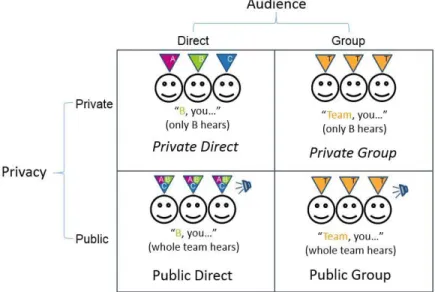
During each session the participants had the chance to receive either direct or group feedback. An example of group feedback is “Team, remember not to spend more money than budgeted.” An example of direct feedback is “Player 2, remember to always buy an item from every store you enter.” All of the feedback messages that the teams received were relevant to the rule that was broken (Table 2). The first two feedback sentences were used the first time the related rule was broken by an individual within a team. The third and fourth rule in the Related Feedback box were used when the related rule was broken 3 or more times. The privacy of feedback and the audience of feedback had one of four combinations as shown in Figure 2. If participants received multiple feedback responses then the feedback would stack above one another visually. The latest feedback was always at the top of the stack (see Figure 9 for a visual example).
Figure 2. Experimental conditions. Used with permission from Walton et al (2015). Created by student interns Hud, Mater, and Walker.
Table 2. List of rules and the related feedback
Rule Related Feedback
1. Do not spend over your allotted amount of money.
Player X, remember not to spend more money than budgeted.
Team, remember not to spend more money than budgeted.
Player X, you have spent more money than budgeted.
Team, at least one of your members has spent more money than budgeted.
2. If you enter a store, you must buy something
Player X, remember to always buy an item from every store you enter.
Team, remember to always buy an item from any store you enter.
Player X, you have forgotten Y times to buy something from a store you enter.
Team, your team has forgotten to buy something from a store you enter Y times.
3. You must only pick up one item from each store.
Player X, remember you may buy only 1 item from each store.
Team, remember you may buy only 1 item from each store.
4. You can only visit a store once during the duration of a session.
Player X, remember that you can only visit a store once during the duration of this session. Team, remember that you can only visit a store
once during the duration of this session.
Player X, Y times you have visited a store more than once.
Team, Y times members of your team have visited a store more than once.
5. You must buy only items that are on your list
Player X, remember to buy only items that are on your list.
Team, remember to buy only items that are on the list.
Player X, Y times now you have bought an item that was not your list.
Team, Y times members of your team have bought an item that was not on the list.
Table 2. Continued
6. Meet up with your teammates at the fountain by when the timer is at 0:30 (30 seconds remaining) or earlier, after all your items are purchased
Player X, remember to meet at the fountain with at least 30 seconds remaining.
Team, remember to meet at the fountain with at least 30 seconds remaining
Player X, you have X minutes remaining to return to the fountain.
Team, you have X minutes remaining to return to the fountain.
Training
Before conducting the experiment the participants underwent training to ensure that every participant had the same amount of familiarity with the virtual environment. The user interface was explained to the members of the team. They were told how to move their avatar, use the information on the user interface, how to interact with the different stores, and how to access their own inventory of items they had bought. The participants were told about the two shopping lists they would be given during each session. As well, they were also given the seven rules they must follow during every session. At the end of the training, the participants were told how to complete a NASA TLX workload scale properly.
Testing Environment
This experiment was conducted in the User Experience Laboratory at the Virtual Reality Application Center (VRAC) at Iowa State University. Each participant had his or her own desk, laptop computer, and space during the session. The following is the list of hardware and software used in this experiment:
3 laptop computers, for participants (Figure 3) 1 desktop computer (for researcher)
3 Logitech Web Cameras (Figure 4) Noldus - Media recorder
Dividers (x 2) for the participants (Figure 3) Unity 4
Photon Unity Network (PUN) 3 Body Media Sensors (Figure 5)
Figure 3. Experimental setting for three participants.
Figure 4. Logitech web camera used to record audio and video of each participant.
The fourth computer for the researcher was used to control the clock within the VMall. The three Logitech Web Cameras were used to record the facial expression and communication of the team during each session. The software that was used to record the participants in parallel was Noldus Media Recorder. The dividers were used to separate the participants so they could not see one another. The participants were able to talk to one another during each session by speaking out loud. The number of utterances that were spoken by the participants during each session were recorded and counted. The Unity game engine (v4) was used to create the entire virtual environment for the participants. The Photon Unity Network (PUN) is a free network script, found in the Unity Asset Store, which was used to handle the networking for the teams. This script was used instead of using stock Unity network commands.
Virtual Mall Environment
The virtual mall environment (VMall) that was used in this experiment was first
developed and created by National Science Foundation-funded SPIRE-EIT REU student interns Kelsey Walker, Anton Hud, and Samantha Mater in the summer of 2014 (see
http://wordpress.vrac.iastate.edu/REU2014/ and video https://youtu.be/mbltv_P_GDE). This REU research was supported in part by National Science Foundation Grant CNS-1156841. The VMall was created with the Unity Game engine (v4) (Figure 6) using C#. The REU student interns set the groundwork for this environment to be possible. They created the logic for participants to enter and exit the stores, buy items, populate the store, display prices for each item. They also designed the stores themselves, combining shapes and objects included in Unity with banners and background imagery found on the Internet. Reuse of existing commercial brands was avoided (Figure 7). However, due to time constraints, the REU students were not
able to produce a complete version of the virtual environment. Their excellent work was
continued in the present research to develop a more complete version of the virtual environment. The author of this work addressed bugs in the virtual environment and added new
features to support the present study. Specifically, the interface was adapted to display the amount of money the user had left to spend accurately, display an accurate game timer that was controlled only by the researcher, display the correct player name (e.g., “Player 1”) for the participant, and display feedback via text in the upper left hand corner. Shopping items were adjusted to fit the theme of the store (e.g., food store would have food). The author created logic that checked whether the items bought by the individuals matched the items on the lists
(individual and team) and checked the actions of the participant to verify that a rule was not broken. Logic was created that removed items bought by one team member from all team members' stores so that items could be bought only once. Scripts were created that handled the networking for the team so the members could see their respective avatars moving within the same world. Name tags were added above each avatar that displayed the assigned name for the entire team to see. A specific interaction between the stores and the users was also created.
To move around the world the participant used the A, W, S, and D or four arrow keys, whichever was more comfortable. It was important that the participants were comfortable with the controls because the avatar did not move exactly like avatars in customary commercial games. To enter a store the user needed to move the avatar towards the store until text appeared on the left side of the screen that told the users to press “M” to enter the respective store. When a user entered a store, that user was able to see all of the items that were available to buy. There were two different inventories, the user inventory (what the player possessed) and the store inventory (available items to purchase). If the user wanted to know what she bought from the
store then she could check her own inventory by pressing “i.” To buy an item the user needed to double click on an item desired for purchase. An item that was bought in a store by a specific user was not available to other members of the team (i.e., it was removed from the store inventory). To leave the store, the user moved away from the store until the store inventory disappeared (Figure 8).
Figure 8. Example of user interface with game timer, amount of money left, player name (upper right corner), and example of feedback given (upper left corner).
Experimental overview
This experiment is a 2 x 2 within-subjects factorial design. The two independent variables in this experiment are privacy of feedback (Public vs. Private) and audience of feedback (Group vs. Direct). The dependent variables are task performance, accuracy, and perception of team performance. Electrodermal skin activity (EDA) was also recorded for the purpose of future data exploration. Other measures were gathered as well in an effort to help establish whether they might be correlated with team performance (See Table 3). Because the same participants experience four consecutive sessions, Session can be explored as an additional main effect that might impact performance. To exploring communication as a predictor of team or individual performance, participants' utterances were counted. An utterance was defined as the collection of words spoken with a single intent, typically divided by a breath. E.g., "Hey should we all go together?" [breath] "Did you hear me? Should we all go together?" would be considered two utterances.
Table 3. Details for dependent variables
Construct Measure Method of Data Collection Individual Items Collected
Number of correct individual list items collected over the
number of possible correct items (6) X 100 Software Log Individual and
Team Time Remaining
The amount of time remaining at the end of each session
over the total amount of time given (480 secs) X 100 Software Log Individual Errors The sum of errors committed by an individual in a session Software Log
Team Items Collected
Number of correct team list items collected over the number
of possible correct items (6) X 100 Software Log Team Errors The sum of errors committed by the entire team in a session Software Log Accuracy Correct items collected over items collected Software Log
Error Rate Rules broken per second Software Log
Workload Mental Demand, Physical Demand, Temporal Demand, Performance, Effort, Frustration
NASA TLX Survey
feedback
Table 3. Continued
Communication Number of utterances by players/team
Manually counted within
audio recordings Team Strategy Any particular strategy team members used during the task.
Observation / Video playback
This study was counterbalanced by ensuring that teams did not experience each condition in the same order. The four conditions are private direct, public direct, private group, public group (Figure 2). It was expected that the public team condition would produce higher performance than the other conditions due to the Köhler Effect (Kerr et al., 2005).
Data Analysis Plan
The three dependent variables for this experiment were the number of items collected (team and individual), time remaining (team and individual), and errors (team and individual). Each of these measures was an important part of overall performance. An excellent team would succeed in all three of these measures and a poor team would produce poor results in all three of these areas. First, a high performing team would have a high percentage of items collected, and a low performing team would have a low percentage. Second, a high performing team would commit few or no errors, and a low performing team would commit a high number of errors. Lastly, a high performing team would have a high percentage of time left, and a low performing team would have a low percentage of time left.
The percentage for items collected was calculated as a percentage based on the number of correct items collected over the total number of items that needed to be collected. The total
number of items on an individual list was six, and the total number of items on a team list was 18. These items were separate from one another. In other words, the items that were on a players individual list was not on the team list, and vice versa. Consequently, the percentage of
individual items collected had no influence on the percentage of the team items collected. The highest items collected score was 100 and the lowest items collected score is zero.
The timing remaining variable was calculated as a percentage by taking the amount of time remaining at the end of a session and dividing it by the total amount of time given to complete a task. For each session a team was given eight minutes (480 seconds) to complete the shopping task. Theoretically, a team could have, at most, 480 seconds remaining at the end of the session if they did not need any time to complete the task. On the other hand, a team could use up all of the time available and have zero seconds remaining at the end of the session. Therefore, the amount of time remaining ranged from zero to 100. The time remaining score was the same for the team and for the individual. In the individual analysis, the same time remaining score was given to each participant. In the team analysis, the time remaining score was assigned to the team as a whole. For example, imagine a team had 20% of time remaining at the end of a session. For the team analysis a score of 20% was given to that team as a whole for that session. For the individual analysis, Players 1, 2, and 3 were each given a score of 20%.
The errors variable was calculated by adding up the total number of errors committed within a session. There were two different errors that were calculated for each session. One error was the total number of individual errors committed by a respective team member. The other error score was the team error that is the sum of all the errors committed by every member of the team. The error score, unlike the other dependent variables (Items Collected and Time